EP3958890B1 - Variants de bêta-amylase - Google Patents
Variants de bêta-amylase Download PDFInfo
- Publication number
- EP3958890B1 EP3958890B1 EP20794291.3A EP20794291A EP3958890B1 EP 3958890 B1 EP3958890 B1 EP 3958890B1 EP 20794291 A EP20794291 A EP 20794291A EP 3958890 B1 EP3958890 B1 EP 3958890B1
- Authority
- EP
- European Patent Office
- Prior art keywords
- amino acid
- variant polypeptide
- seq
- polypeptide
- amylase
- Prior art date
- Legal status (The legal status is an assumption and is not a legal conclusion. Google has not performed a legal analysis and makes no representation as to the accuracy of the status listed.)
- Active
Links
Images



Classifications
-
- A—HUMAN NECESSITIES
- A21—BAKING; EDIBLE DOUGHS
- A21D—TREATMENT OF FLOUR OR DOUGH FOR BAKING, e.g. BY ADDITION OF MATERIALS; BAKING; BAKERY PRODUCTS
- A21D8/00—Methods for preparing or baking dough
- A21D8/02—Methods for preparing dough; Treating dough prior to baking
- A21D8/04—Methods for preparing dough; Treating dough prior to baking treating dough with microorganisms or enzymes
- A21D8/042—Methods for preparing dough; Treating dough prior to baking treating dough with microorganisms or enzymes with enzymes
-
- A—HUMAN NECESSITIES
- A23—FOODS OR FOODSTUFFS; TREATMENT THEREOF, NOT COVERED BY OTHER CLASSES
- A23K—FODDER
- A23K20/00—Accessory food factors for animal feeding-stuffs
- A23K20/10—Organic substances
- A23K20/189—Enzymes
-
- A—HUMAN NECESSITIES
- A23—FOODS OR FOODSTUFFS; TREATMENT THEREOF, NOT COVERED BY OTHER CLASSES
- A23L—FOODS, FOODSTUFFS OR NON-ALCOHOLIC BEVERAGES, NOT OTHERWISE PROVIDED FOR; PREPARATION OR TREATMENT THEREOF
- A23L33/00—Modifying nutritive qualities of foods; Dietetic products; Preparation or treatment thereof
- A23L33/10—Modifying nutritive qualities of foods; Dietetic products; Preparation or treatment thereof using additives
- A23L33/17—Amino acids, peptides or proteins
- A23L33/18—Peptides; Protein hydrolysates
-
- A—HUMAN NECESSITIES
- A23—FOODS OR FOODSTUFFS; TREATMENT THEREOF, NOT COVERED BY OTHER CLASSES
- A23L—FOODS, FOODSTUFFS OR NON-ALCOHOLIC BEVERAGES, NOT OTHERWISE PROVIDED FOR; PREPARATION OR TREATMENT THEREOF
- A23L7/00—Cereal-derived products; Malt products; Preparation or treatment thereof
- A23L7/10—Cereal-derived products
- A23L7/104—Fermentation of farinaceous cereal or cereal material; Addition of enzymes or microorganisms
-
- C—CHEMISTRY; METALLURGY
- C11—ANIMAL OR VEGETABLE OILS, FATS, FATTY SUBSTANCES OR WAXES; FATTY ACIDS THEREFROM; DETERGENTS; CANDLES
- C11D—DETERGENT COMPOSITIONS; USE OF SINGLE SUBSTANCES AS DETERGENTS; SOAP OR SOAP-MAKING; RESIN SOAPS; RECOVERY OF GLYCEROL
- C11D3/00—Other compounding ingredients of detergent compositions covered in group C11D1/00
- C11D3/16—Organic compounds
- C11D3/38—Products with no well-defined composition, e.g. natural products
- C11D3/386—Preparations containing enzymes, e.g. protease or amylase
-
- C—CHEMISTRY; METALLURGY
- C12—BIOCHEMISTRY; BEER; SPIRITS; WINE; VINEGAR; MICROBIOLOGY; ENZYMOLOGY; MUTATION OR GENETIC ENGINEERING
- C12N—MICROORGANISMS OR ENZYMES; COMPOSITIONS THEREOF; PROPAGATING, PRESERVING, OR MAINTAINING MICROORGANISMS; MUTATION OR GENETIC ENGINEERING; CULTURE MEDIA
- C12N15/00—Mutation or genetic engineering; DNA or RNA concerning genetic engineering, vectors, e.g. plasmids, or their isolation, preparation or purification; Use of hosts therefor
- C12N15/09—Recombinant DNA-technology
- C12N15/63—Introduction of foreign genetic material using vectors; Vectors; Use of hosts therefor; Regulation of expression
- C12N15/79—Vectors or expression systems specially adapted for eukaryotic hosts
- C12N15/80—Vectors or expression systems specially adapted for eukaryotic hosts for fungi
- C12N15/81—Vectors or expression systems specially adapted for eukaryotic hosts for fungi for yeasts
- C12N15/815—Vectors or expression systems specially adapted for eukaryotic hosts for fungi for yeasts for yeasts other than Saccharomyces
-
- C—CHEMISTRY; METALLURGY
- C12—BIOCHEMISTRY; BEER; SPIRITS; WINE; VINEGAR; MICROBIOLOGY; ENZYMOLOGY; MUTATION OR GENETIC ENGINEERING
- C12N—MICROORGANISMS OR ENZYMES; COMPOSITIONS THEREOF; PROPAGATING, PRESERVING, OR MAINTAINING MICROORGANISMS; MUTATION OR GENETIC ENGINEERING; CULTURE MEDIA
- C12N9/00—Enzymes; Proenzymes; Compositions thereof; Processes for preparing, activating, inhibiting, separating or purifying enzymes
- C12N9/14—Hydrolases (3)
- C12N9/24—Hydrolases (3) acting on glycosyl compounds (3.2)
- C12N9/2402—Hydrolases (3) acting on glycosyl compounds (3.2) hydrolysing O- and S- glycosyl compounds (3.2.1)
- C12N9/2405—Glucanases
- C12N9/2408—Glucanases acting on alpha -1,4-glucosidic bonds
- C12N9/2411—Amylases
- C12N9/2425—Beta-amylase (3.2.1.2)
-
- C—CHEMISTRY; METALLURGY
- C12—BIOCHEMISTRY; BEER; SPIRITS; WINE; VINEGAR; MICROBIOLOGY; ENZYMOLOGY; MUTATION OR GENETIC ENGINEERING
- C12P—FERMENTATION OR ENZYME-USING PROCESSES TO SYNTHESISE A DESIRED CHEMICAL COMPOUND OR COMPOSITION OR TO SEPARATE OPTICAL ISOMERS FROM A RACEMIC MIXTURE
- C12P7/00—Preparation of oxygen-containing organic compounds
- C12P7/02—Preparation of oxygen-containing organic compounds containing a hydroxy group
- C12P7/04—Preparation of oxygen-containing organic compounds containing a hydroxy group acyclic
- C12P7/06—Ethanol, i.e. non-beverage
-
- C—CHEMISTRY; METALLURGY
- C12—BIOCHEMISTRY; BEER; SPIRITS; WINE; VINEGAR; MICROBIOLOGY; ENZYMOLOGY; MUTATION OR GENETIC ENGINEERING
- C12Y—ENZYMES
- C12Y302/00—Hydrolases acting on glycosyl compounds, i.e. glycosylases (3.2)
- C12Y302/01—Glycosidases, i.e. enzymes hydrolysing O- and S-glycosyl compounds (3.2.1)
- C12Y302/01002—Beta-amylase (3.2.1.2)
-
- C—CHEMISTRY; METALLURGY
- C12—BIOCHEMISTRY; BEER; SPIRITS; WINE; VINEGAR; MICROBIOLOGY; ENZYMOLOGY; MUTATION OR GENETIC ENGINEERING
- C12R—INDEXING SCHEME ASSOCIATED WITH SUBCLASSES C12C - C12Q, RELATING TO MICROORGANISMS
- C12R2001/00—Microorganisms ; Processes using microorganisms
- C12R2001/645—Fungi ; Processes using fungi
-
- Y—GENERAL TAGGING OF NEW TECHNOLOGICAL DEVELOPMENTS; GENERAL TAGGING OF CROSS-SECTIONAL TECHNOLOGIES SPANNING OVER SEVERAL SECTIONS OF THE IPC; TECHNICAL SUBJECTS COVERED BY FORMER USPC CROSS-REFERENCE ART COLLECTIONS [XRACs] AND DIGESTS
- Y02—TECHNOLOGIES OR APPLICATIONS FOR MITIGATION OR ADAPTATION AGAINST CLIMATE CHANGE
- Y02E—REDUCTION OF GREENHOUSE GAS [GHG] EMISSIONS, RELATED TO ENERGY GENERATION, TRANSMISSION OR DISTRIBUTION
- Y02E50/00—Technologies for the production of fuel of non-fossil origin
- Y02E50/10—Biofuels, e.g. bio-diesel
Definitions
- the present invention relates to variants of a beta-amylase which have an increased % residual exoamylase activity compared to the parent beta-amylase after heat treatment.
- the present invention also relates to methods of making the variant beta-amylase and the use of the variant beta-amylase in baking, detergents, personal care products, in the processing of textiles, in pulp and paper processing, in the production of ethanol, lignocellulosic ethanol or syrups and as viscosity breaker in oilfield and mining industries.
- Bread has been a staple of human nutrition for thousands of years.
- Bread is usually made by combining a flour, water, salt, yeast, and/or other food additives to make a dough or paste; then the dough is baked to make bread.
- Enzymes are known to be useful in baking because the enzymes' effects on the baking process may be similar or better than the effects of the chemical alternatives.
- Several different enzymes may be used for making bread, for example amylase enzymes have been known to help maintain freshness over time (anti-staling or hardness) and maintain resilience overtime.
- the staling of bread is caused by the crystallization of amylopectin which takes place in starch granules after baking. When bread stales, it loses softness and moisture of the crumbs which become less elastic.
- WO2015021601 relates to a process for producing high maltose syrup in which a starch substrate is contacted with a thermostable alpha amylase and a thermoresistant maltose-producing enzyme at a temperature zero to thirty degree above the starch gelatinization temperature.
- D2 discloses a Thermoanaerobacterium thermosulfurigenes beta-amylase (SEQ ID NO: 3) presenting 100% identity to SEQ ID NO: 1 of the present application.
- beta-amylase variants may be used in animal feed, detergents, personal care products, processing of textiles, pulp and paper processing, in the production of ethanol, in the production lignocellulosic ethanol, in the production of syrups, or as viscosity breakers in oilfield and mining industries.
- the present inventors have surprisingly found that introducing amino acid modifications in the amino acid sequence of an beta-amylase increases the exoamylase activity of the variant compared to the activity of the parent enzyme.
- the present invention relates to a variant polypeptide of the beta-amylase according to SEQ ID No. 1 having beta-amylase activity and comprising an amino acid sequence which is at least 80% identical to the sequence according to SEQ ID No. 1, which amino acid sequence comprises amino acid substitutions D25K, L27C, S220L, A364P, N369P, S398P and at least a first further amino acid modification at an amino acid residue position number 502 in the numbering of SEQ ID No. 1.
- the first further amino acid modification is an amino acid substitution, insertion, deletion, or any combination thereof.
- the first further amino acid modification is an amino acid substitution, and the amino acid substitution is a conservative amino acid substitution.
- the first further amino acid modification is the amino acid substitution T502E, in the numbering of SEQ ID No. 1.
- the first further amino acid modification is a combination of amino acid modifications
- the combination of amino acid modifications is a combination of amino acid substitutions which is selected from the group consisting of:
- the first further amino acid modification is a combination of amino acid modifications, and the combination of amino acid modifications is N419, T494E, T502 in the numbering of SEQ ID No. 1, and the polypeptide comprises at least a second further amino acid modification.
- the second further amino acid modification is an amino acid substitution, insertion, deletion, or any combination thereof.
- the second further amino acid modification is an amino acid substitution, and the amino acid substitution is a conservative amino acid substitution.
- the second further amino acid modification is an amino acid substitution selected from the group consisting of: P13S, A206W, V208C, Y236I, G276D, M318L, C375I, Y435P/E, N438K, and P463T or a combination thereof in the numbering of SEQ ID No. 1.
- the second further one amino acid modification is a combination of amino acid modifications
- the combination of amino acid modifications is a combination of amino acid substitutions which is selected from the group consisting of:
- the variant polypeptide has an increased % residual activity after exposure to a temperature of 80 to 95 degrees Celsius compared to the polypeptide of SEQ ID No. 1 or 2 .
- the variant polypeptide has an increased % residual activity after exposure to a temperature of 86 degrees Celsius compared to the polypeptide of SEQ ID No. 1 or 2 .
- the variant polypeptide has an increased % residual activity after exposure to a temperature of 90 degrees Celsius compared to the polypeptide of SEQ ID No. 1, 2, or 3.
- the variant polypeptide has an increased activity at pH 4.5-6 and a temperature of 80-85 degrees Celsius compared to the polypeptide of SEQ ID No. 1 or 2.
- the variant polypeptide has beta-amylase activity and is a fragment of the full length amino acid sequence.
- the variant polypeptide comprises a hybrid of at least one variant polypeptide according to any one of the preceding embodiments, and a second polypeptide having amylase activity, wherein the hybrid has beta-amylase activity.
- the present invention further relates to a composition comprising the variant polypeptide according to any one of the preceding embodiments.
- the composition further comprises a second enzyme.
- the second enzyme is selected from the group consisting of: an alpha-amylase, a lipase, a second beta-amylase, a G4-amylase, a xylanase, a protease, a cellulase, a glucoamylase, an oxidoreductase, a phospholipase, and a cyclodextrin glucanotransferase.
- the present invention further relates to a method of making a variant polypeptide comprising: providing a template nucleic acid sequence encoding the inventive polypeptide variant, transforming the template nucleic acid sequence into an expression host, cultivating the expression host to produce the variant polypeptide, and purifying the variant polypeptide.
- the expression host is selected from the group consisting of: a bacterial expression system, a yeast expression system, a fungal expression system, and a synthetic expression system.
- the bacterial expression system is selected from an E. coli , a Bacillus , a Pseudomonas , and a Streptomyces.
- the yeast expression system is selected from a Candida , a Pichia , a Saccharomyces , a Schizosaccharomyces.
- the fungal expression system is selected from a Penicillium , an Aspergillus , a Fusarium , a Myceliopthora , a Rhizomucor, a Rhizopus , a Thermomyces , and a Trichoderma.
- the present invention further relates to a method of preparing a dough or a baked product prepared from the dough, the method comprising adding an inventive variant polypeptide to the dough and eventually baking the dough.
- the baked product produced by the preceding method exhibits lower hardness and greater resilience after 10 days of storage than a baked product produced by an otherwise identical method in which no variant polypeptide is added.
- the present invention further relates to a use of the inventive variant polypeptide for processing starch.
- the present invention further relates to a use of the inventive variant polypeptide for cleaning or washing textiles, hard surfaces, or dishes.
- the present invention further relates to a use of the inventive variant polypeptide for making ethanol.
- the present invention further relates to a use of the inventive variant polypeptide for treating an oil well.
- the present invention further relates to a use of the inventive variant polypeptide for processing pulp or paper.
- the present invention further relates to a use of the inventive variant polypeptide for feeding an animal.
- the present invention further relates to a use of the inventive variant polypeptide for making syrup.
- first”, “second”, “third” or “(a)”, “(b)”, “(c)”, “(d)” etc. and the like in the description and in the claims, are used for distinguishing between similar elements and not necessarily for describing a sequential or chronological order. It is to be understood that the terms so used are interchangeable under appropriate circumstances and that the embodiments of the invention described herein are capable of operation in other sequences than described or illustrated herein.
- first, “second”, “third” or “(a)”, “(b)”, “(c)”, “(d)”, “i”, “ii” etc. relate to steps of a method or use or assay there is no time or time interval coherence between the steps, i.e. the steps may be carried out simultaneously or there may be time intervals of seconds, minutes, hours, days, weeks, months or even years between such steps, unless otherwise indicated in the application as set forth herein above or below.
- the present invention is based on the finding that variants of a beta-amylase have an increased exoamylase activity compared to the parent beta-amylase.
- the exoamylase activity is preferred, as it accomplishes the degradation of starch that leads to an anti-staling effect, but does not negatively affect the quality of the final baked product.
- endoamylase activity can negatively affect the quality of the final baked product, as it leads to an accumulation of branched dextrins which for example lead to the production of a sticky or gummy bread crumb.
- a “variant polypeptide” refers to an enzyme that differs from its parent polypeptide in its amino acid sequence.
- a “variant beta-amylase” refers to a beta-amylase that differs from its parent beta-amylase in its amino acid sequence and has beta-amylase activity. Variant polypeptides are described using the nomenclature and abbreviations for single amino acid molecules according to the recommendations of IUPAC for single letter or three letter amino acid abbreviations.
- a “parent" polypeptide amino acid sequence is the starting sequence for introduction of amino acid modifications (e.g. by introducing one or more amino acid substitutions, insertions, deletions, or a combination thereof) to the sequence, resulting in "variants" of the parent polypeptide amino acid sequence.
- a parent polypeptide includes both a wild-type polypeptide amino acid sequence or a synthetically generated polypeptide amino acid sequence that is used as starting sequence for the introduction of (further) changes.
- the parent polypeptide is preferably the polypeptide having the amino acid sequence according to SEQ ID No. 1.
- the parent polypeptide may be a polypeptide comprising an amino acid sequence which is at least 90% identical to the amino acid sequence according to SEQ ID No.
- An "intermediate parent" polypeptide amino sequence herein designated a polypeptide with the amino acid sequence of SEQ ID No. 2. It differs from SEQ ID No. 1 in that it comprises amino acid substitutions D25K, L27C, S220L, A364P, N369P, S398P.
- Beta-amylases also known as 1,4- ⁇ -D-glucan maltohydrolases, glycogenases, and saccharogen amylases, are enzymes that perform hydrolysis of (1->4)-alpha-D-glucosidic linkages in polysaccharides to remove successive maltose units from the non-reducing ends of the chains. They act on, e.g., starch, glycogen and related polysaccharides as well as oligosaccharides, and produce beta-maltose by an inversion. Beta amylases are widely used in manufacturing caramel, maltose, maltodextrin and brewing beer, alcohol and vinegar fermentation industry.
- Beta-amylases are characterized in higher plants and microbial sources, for example beta-amylases from microbial sources include those from Bacillus acidopullulyticus ( U.S. Patent 4,970,158 ) and Bacillus flexus ( Matsunaga, Okada and Yamagat, H. and Tsukagishi, N. 1987, J. Bacteriol. (169) 1564-1570 , and U.S. Patent 8,486,682 ).
- Other beta-amylases from microbial sources are those from Clostridium thermosulfurogenes (Kitaoto, 1988, Kitamoto, N., Yamagata, H., Kato, T., Tsukagoshi, N. and Udaka, S. 1998.
- beta-amylase originated from Clostridium thermosulfurogenes , acid-resistant beta-amylases were developed ( CN103695386 and CN 103881993 ).
- amylase enzymes are disclosed in, e.g., WO2002/068589 , WO2002/068597 , WO2003/083054 , WO2004/042006 , WO2008/080093 , WO2013/116175 , and WO2017/106633 .
- amylase enzymes used in food processing and baking include Veron ® from AB Enzymes; BakeDream ® , BakeZyme ® , and Panamore ® available from DSM; POWERSoft ® , Max-LIFE TM , POWERFlex ® , and POWERFresh ® available from DuPont; and Fungamyl ® , Novamyl ® , OptiCake ® , and Sensea ® available from Novozymes.
- the beta-amylase activity can be determined by various assays known to the person skilled in the art, including the BCA Reducing Ends Assay ( Smith, P.K. (1985) Anal. Biochem. 150 (1): 76-85 ), the PAHBAH assay ( Lever (1972) Anal. Biochem. 47: 273-279 ), the iodine assay ( Fuwa (1954) J. Biochem. 41: 583-603 ), the Betamyl-3 assay available from Megazyme.
- the variant polypeptides of the present invention are characterized in that they have an increased % residual exoamylase activity compared to the parent polypeptide, preferably compared to the polypeptide with the amino acid sequence according to SEQ ID No.1, and compared to the polypeptide with the amino acid sequence according to SEQ ID No. 2.
- the variant polypeptides of the present invention are further characterized in that they have an increased % residual exoamylase activity compared to the polypeptide with the amino acid sequence according to SEQ ID No. 3.
- exoamylase activity is intended to mean the cleavage of a starch molecule from the non-reducing end of the substrate as described above.
- endoamylase activity means that ⁇ -D-(1->4)-O-glucosidic linkages within the starch molecule are cleaved in a random fashion.
- % residual activity means the percentage of exoamylase activity that is still exhibited after thermal inactivation of the variant or parent polypeptide for a certain time compared with a reference sample which has not undergone thermal treatment.
- % residual exoamylase activity is determined by measuring the activity of a polypeptide (e.g. a variant polypeptide, a parent polypeptide, an intermediate parent polypeptide) before and after heat treatment, for example by PAHBAH assay (see above). The activity observed after heat treatment is then expressed as the percentage of the activity observed before heat treatment.
- a polypeptide e.g. a variant polypeptide, a parent polypeptide, an intermediate parent polypeptide
- An increased % residual exoamylase activity means that the % residual activity is higher for a variant polypeptide than for a parent or intermediate parent polypeptide.
- An example of such a determination is provided in the examples section herein.
- Sequence Identity means a comparison of a first amino acid sequence to a second amino acid sequence, or a comparison of a first nucleic acid sequence to a second nucleic acid sequence and is calculated as a percentage based on the comparison. The result of this calculation can be described as “percent identical” or “percent ID.”
- a sequence alignment can be used to calculate the sequence identity by one of two different approaches.
- first approach both mismatches at a single position and gaps at a single position are counted as non-identical positions in final sequence identity calculation.
- second approach mismatches at a single position are counted as non-identical positions in final sequence identity calculation; however, gaps at a single position are not counted (ignored) as non-identical positions in final sequence identity calculation. In other words, in the second approach gaps are ignored in final sequence identity calculation.
- the difference between these two approaches i.e. counting gaps as non-identical positions vs ignoring gaps, at a single position can lead to variability in the sequence identity value between two sequences.
- a sequence identity is determined by a program, which produces an alignment, and calculates identity counting both mismatches at a single position and gaps at a single position as non-identical positions in final sequence identity calculation.
- program Needle EMBOS
- Needleman and Wunsch Needleman and Wunsch, 1970, J. Mol. Biol. 48: 443-453
- a sequence identity can be calculated from a pairwise alignment showing both sequences over the full length, so showing the first sequence and the second sequence in their full length ("Global sequence identity").
- program Needle EMBOSS
- % sequence identity (# of identical residues / length of alignment) x 100)].
- a sequence identity can be calculated from a pairwise alignment showing only a local region of the first sequence or the second sequence ("Local Identity").
- program Blast NCBI
- % sequence identity (# of Identical residues / length of alignment) x 100)].
- a sequence alignment is calculated wherein mismatches at a single position are counted as non-identical positions in final sequence identity calculation; however, gaps at a single position are not counted (ignored) as non-identical positions in final sequence identity calculation.
- the sequence alignment is generated by using the algorithm of Needleman and Wunsch (J. Mol. Biol. (1979) 48, p. 443-453 ).
- the variant polypeptides are described by reference to an amino acid sequence which is at least n% identical to the amino acid sequence of the respective parent enzyme with "n" being an integer between 80 and 100.
- the variant polypeptides include enzymes that are at least 80%, at least 81%, at least 82%, at least 83%, at least 84%, at least 85%, at least 86%, at least 87%, at least 88%, at least 89%, at least 90%, at least 91%, at least 92%, at least 93%, at least 94%, at least 95%, at least 96%, at least 97%, at least 98% or at least 99% identical when compared to the full length amino acid sequence of the parent beta-amylase according to SEQ ID No. 1, wherein the enzyme variant has beta-amylase activity and an increased % residual exoamylase activity compared to the parent polypeptide according to SEQ ID No. 1 and the polypeptide according to SEQ ID No. 2.
- the variant polypeptide comprises amino acid substitutions D25K, L27C, S220L, A364P, N369P, S398P in the numbering of SEQ ID No. 1 and at least a first further amino acid modification at an amino acid residue position number 502 in the numbering of SEQ ID No. 1.. That is, in addition to the amino acid substitutions D25K, L27C, S220L, A364P, N369P, S398P, at least one further amino acid at an amino acid residue position number 502 in the numbering of SEQ ID No. 1.is modified.
- amino acid modification means that the amino acid sequence of the variant polypeptide is modified compared to the amino acid sequence of the parent polypeptide, preferably the polypeptide according to SEQ ID No. 1.
- amino acid modification is not intended to comprise modifications to an amino acid residue itself, such as, but not limited to, phosphorylation, myristoylation, palmitoylation, isoprenylation, acetylation, alkylation, amidation, gamma-carboxylation or glycoslation.
- amino acid modification includes amino acid substitution, amino acid insertion and amino acid deletion.
- the variant polypeptide of the present invention comprises at least a first further amino acid substitution, amino acid insertion and/or amino acid deletion compared to the parent polypeptide, preferably the polypeptide according to SEQ ID No. 1.
- the at least first further amino acid modification is at least one amino acid substitution at an amino acid residue position number 502 in the numbering of SEQ ID No. 1.
- amino acid substitutions are described by providing the original amino acid residue in the parent polypeptide followed by the number of the position of this amino acid residue within the amino acid sequence.
- a substitution of amino acid residue 13 means that the amino acid of the parent at position 13 can be substituted with any of the 19 other amino acid residues and is designated as P13.
- a substitution can be described by providing the original amino acid residue in the parent polypeptide followed by the number of the position of this amino acid residue within the amino acid sequence and followed by the specific substituted amino acid within the variant polypeptide.
- the substitution of glycine at position 22 with glutamine is designated as "Pro12Ser” or "P13S”. If more than one specific amino acid substitution follows the position number, e.g.
- C375I/V the parent amino acid (here: cysteine) at the indicated position (here: position 375) can be substituted by any one of the listed substituted amino acids (here: either isoleucine or valine).
- Combinations of substitutions are described by inserting comas between the amino acid residues, for example: G22Q, P35K, S59P, W128Y, D256A; represent a combination of substitutions of five different amino acid residues when compared to a parent polypeptide.
- Variants having a substitution on the amino acid level are encoded by a nucleic acid sequence which differs from the parent nucleic acid sequence encoding the parent polypeptide at least in the position encoding the substituted amino acid residue.
- the above variant polypeptides are characterized in that they have an increased % residual activity after exposure to a temperature of 80 to 95, e.g. degrees Celsius, e.g. 80°C, 81°C, 82°C, 83°C, 84°C, 85°C, 86°C, 87°C, 88°C, 89°C, 90°C, 91°C 92°C, 93°C, 94°C, 95°C, compared to the polypeptide of SEQ ID No. 1 or 2.
- the above variant polypeptides have an increased % residual activity after exposure to a temperature of 86 degrees Celsius compared to the polypeptide of SEQ ID No. 1 or 2.
- the second further amino acid modification is an amino acid substitution, insertion, deletion, or any combination thereof.
- the second further amino acid modification is an amino acid substitution, and wherein the amino acid substitution is a conservative amino acid substitution.
- the second further amino acid modification is an amino acid substitution selected from the group consisting of: P13S, A206W, V208C, Y236I, G276D, M318L, C375I, Y435P/E, N438K, and P463T or a combination thereof in the numbering of SEQ ID No. 1.
- the second further one amino acid modification is a combination of amino acid modifications
- the combination of amino acid modifications is a combination of amino acid substitutions which is selected from the group consisting of:
- the variant polypeptides comprising a second further amino acid modification have an increased % residual activity after exposure to a temperature of 90 degrees Celsius compared to the polypeptide of SEQ ID No. 1, 2, or 3.
- the variant polypeptide may be a fragment.
- a "fragment" of a beta-amylase is understood to refer to a smaller part of the beta-amylase which consists of a contiguous amino acid sequence found in the amino acid sequence of the beta-amylase and which has beta-amylase activity.
- the skilled person knows that for a fragment to be enzymatically active the fragment has to comprise at least the amino acids present in the catalytic center of the beta-amylase. These amino acids are either known for a given beta-amylase or can easily be identified by the skilled person, for example by homology screening or mutagenesis. Further the fragment must comprise the indicated modified residues.
- the fragment of the beta-amylase has an increased % residual exoamylase activity compared to the full-length polypeptide according to SEQ ID No. 1.
- the fragment comprises at least 70%, at least 80 %, at least 85%, at least 90 %, at least 95%, at least 96%, at least 97%, at least 98 %, or at least 99% of the amino acids of the full-length polypeptide according to SEQ ID No.1.
- the variant polypeptide may comprise a hybrid of at least one variant polypeptide and a second polypeptide having amylase activity, wherein the hybrid has beta-amylase activity.
- the variant polypeptide having beta-amylase activity may be a hybrid of more than one beta-amylase enzyme.
- a "hybrid” or “chimeric” or “fusion protein” means that a domain of a first variant polypeptide beta-amylase is combined with a domain of a second beta-amylase to form a hybrid amylase and the hybrid has beta-amylase activity.
- the hybrid beta-amylase has an increased % residual exoamylase activity compared to the polypeptide according to SEQ ID No. 1.
- a domain of variant polypeptides having beta-amylase enzyme activity can be combined with a domain of a commercially available amylase, such as Veron ® available from AB Enzymes; BakeDream ® , BakeZyme ® , and Panamore ® available from DSM; POWERSoft ® , Max-LIFE TM , POWERFlex ® , and POWERFresh ® available from DuPont; and Fungamyl ® , Novamyl ® , OptiCake ® , and Sensea ® available from Novozymes.
- domains from various amylase enzymes can be recombined into a single enzyme, wherein the enzyme has beta-amylase activity.
- the hybrid beta-amylase comprising domains from various amylase enzymes has an increased % residual exoamylase activity compared to the polypeptide according to SEQ ID No. 1.
- the variant polypeptides having beta-amylase activity may be a "mature polypeptide.”
- a mature polypeptide means an enzyme in its final form including any post-translational modifications, glycosylation, phosphorylation, truncation, N-terminal modifications, C-terminal modifications or signal sequence deletions.
- a mature polypeptide can vary depending upon the expression system, vector, promoter, and/or production process.
- Enzymatic activity means at least one catalytic effect exerted by an enzyme. Enzymatic activity is expressed as units per milligram of enzyme (specific activity) or molecules of substrate transformed per minute per molecule of enzyme (molecular activity). Enzymatic activity can be specified by the enzymes actual function and within the present invention means beta-amylase activity as described above.
- Enzymatic activity changes during storage or operational use of the enzyme.
- the term "enzyme stability” relates to the retention of enzymatic activity as a function of time during storage or operation.
- the "initial enzymatic activity" is measured under defined conditions at time zero (100%) and at a certain point in time later (x%). By comparison of the values measured, a potential loss of enzymatic activity can be determined in its extent. The extent of enzymatic activity loss determines the stability or non-stability of an enzyme.
- Parameters influencing the enzymatic activity of an enzyme and/or storage stability and/or operational stability are for example pH, temperature, and presence of oxidative substances.
- pH stability refers to the ability of a protein to function over a specific pH range. In general, most enzymes are working under conditions with rather high or rather low pH ranges.
- the variant polypeptide may be active over a broad pH at any single point within the range from about pH 4.0 to about pH 12.0.
- the variant polypeptide having beta-amylase activity is active over a range of pH 4.0 to pH 11.0, pH 4.0 to pH 10.0, pH 4.0 to pH 9.0, pH 4.0 to pH 8.0, pH 4.0 to pH 7.0, pH 4.0 to pH 6.0, or pH 4.0 to pH 5.0.
- the variant polypeptide having beta-amylase enzyme activity is active at pH 4.0, pH 4.1, pH 4.2, pH 4.3, pH 4.4, pH 4.5, pH 4.6, pH 4.7, pH 4.8, pH 4.9, pH 5.0, pH 5.1, pH 5.2, pH 5.3, pH 5.4, pH 5.5, pH 5.6, pH 5.7, pH 5.8, pH 5.9, pH 6.0, pH 6.1, pH 6.2, pH 6.3, pH 6.4, pH 6.5, pH 6.6, pH 6.7, pH 6.8, pH 6.9, pH 7.0, pH 7.1, pH 7.2, pH 7.3, pH 7.4, pH 7.5, pH 7.6, pH 7.7, pH 7.8, pH 7.9, pH 8.0, pH 8.1, pH 8.2, pH 8.3, pH 8.4, pH 8.5, pH 8.6 pH 8.7, pH 8.8 pH 8.9, pH 9.0, pH 9.1, pH 9.2, pH 9.3, pH 9.4, pH 9.5, pH 9.6, pH 9.7, pH 9.8, pH 9.9, pH 10.0, pH 10.1, pH 10.2, pH 10.3,
- thermal stability and “thermostability” refer to the ability of a protein to function over a temperature range. In general, most enzymes have a finite range of temperatures at which they function. In addition to enzymes that work at mid-range temperatures (e.g., room temperature), there are enzymes that are capable of working at very high or very low temperatures.
- Thermostability is characterized by what is known as the Tso value (also called half-life).
- the T 50 indicates the temperature at which 50% residual activity is still present after thermal inactivation for a certain time compared with a sample which has not undergone thermal treatment.
- thermotolerant and “thermotolerance” refer to the ability of a protein to function after exposure to a specific temperature, such as a very high or very low temperature.
- a thermotolerant protein may not function at the exposure temperature, but will function once returned to a favorable temperature, i.e. exhibit a high % residual activity. This is especially important in baking, where very high temperatures must be endured by enzymes in the dough during the baking process. A beta amylase added to the dough must thus be able to endure high baking temperatures, and, after cooling of the baking product, still exhibit activity at the lower temperatures to prevent staling.
- Variant polypeptides may be active over a broad temperature used at any time during a baking process, wherein the temperature is any point in the range from about 20°C to about 60°C.
- the variant polypeptides having beta-amylase enzyme activity are active at a temperature range from 20°C to 55°C, 20°C to 50°C, 20°C to 45°C, 20°C to 40°C, 20°C to 35°C, 20°C to 30°C, or 20°C to 25°C.
- the variant polypeptides having beta-amylase enzyme activity are active at a temperature of at least 19°C, 20°C, 21°C, 22°C, 23°C, 24°C, 25°C, 26°C, 27°C, 28°C, 29°C, 30°C, 31°C, 32°C, 33°C, 34°C, 35°C, 36°C, 37°C, 38°C, 39°C, 40°C, 41°C, 42°C, 43°C, 44°C, 45°C, 46°C, 47°C, 48°C, 49°C, 50°C, 51°C, 52°C, 53°C, 54°C, 55°C, 56°C, 57°C, 58°C, 59°C, 60°C, 61°C, 62°C, 63°C, 64°C, 65°C, 66°C, 67°C, 68°C, 69°C, 70°C, 71°C, 72°C,
- variant polypeptides having beta-amylase enzyme activity may be used or formulated alone or as a mixture of enzymes.
- the formulation containing the variant polypeptide of the present invention may be a solid form such as powder, a lyophilized preparation, a granule, a tablet, a bar, a crystal, a capsule, a pill, a pellet, or in a liquid form such as in an aqueous solution, an aerosol, a gel, a paste, a slurry, an aqueous/oil emulsion, a cream, a capsule, or in a vesicular or micellar suspension.
- a solid form such as powder, a lyophilized preparation, a granule, a tablet, a bar, a crystal, a capsule, a pill, a pellet, or in a liquid form such as in an aqueous solution, an aerosol, a gel, a paste, a slurry, an aqueous/oil emulsion, a cream, a capsule, or in a vesicular or micellar suspension.
- the variant polypeptide of the present invention may be used in combination with at least one other enzyme.
- the other enzyme may be from the same class of enzymes, for example, may be a second beta-amylase.
- the other enzyme may also be from a different class of enzymes, for example may be a lipase.
- the combination with at least one other enzyme may be a composition comprising at least three enzymes.
- the three enzymes may be from the same class of enzymes, for example the combination may comprise the variant polypeptide of the present invention, a second amylase, and a third amylase; or the enzymes may be from different class of enzymes for example the combination may comprise the variant polypeptide of the present invention, a lipase, and a xylanase.
- the second enzyme may be selected from the group consisting of: a second beta-amylase, an alpha-amylase, a glucan 1, 4-alpha-maltotetraohydrolase, also known as exo-maltotetraohydrolase, G4-amylase; a glucan 1,4-alpha-maltohydrolase, also known as maltogenic alpha-amylase, a cyclodextrin glucanotransferase, a glucoamylase; an endo-1,4-beta-xylanase; a xylanase, a cellulase, an oxidoreductase; a phospholipase A1; a phospholipase A2; a phospholipase C; a phospholipase D; a galactolipase, a triacylglycerol lipase, an arabinofuranosidase, a trans
- the present invention is also directed to a composition comprising the variant polypeptide of the present invention.
- composition comprising the variant polypeptide of the present invention may also comprise a second enzyme.
- the second enzyme is selected from the group consisting of: a second bet-amylase, a lipase, an alpha-amylase, a G4-amylase, a xylanase, a protease, a cellulase, a glucoamylase, an oxidoreductase, a phospholipase, and a cyclodextrin glucanotransferase.
- a second bet-amylase a lipase, an alpha-amylase, a G4-amylase, a xylanase, a protease, a cellulase, a glucoamylase, an oxidoreductase, a phospholipase, and a cyclodextrin glucanotransferase.
- composition of the present invention may be used in the preparation of bakery products.
- the present invention provides a method of making a variant polypeptide comprising: providing a template nucleic acid sequence encoding the polypeptide variant, transforming the template nucleic acid sequence into an expression host, cultivating the expression host to produce the variant polypeptide, and purifying the variant polypeptide.
- the variant beta-amylase according to the present invention is a recombinant protein which is produced using bacterial, fungal, yeast, or synthetic expression systems.
- “Expression system” also means a host microorganism, expression hosts, host cell, production organism, or production strain and each of these terms can be used interchangeably.
- expression systems include, but are not limited to: Aspergillus niger , Aspergillus oryzae , Hansenula polymorpha , Thermomyces lanuginosus , Fusarium oxysporum , Fusarium heterosporum , Escherichia coli , Bacillus , preferably Bacillus subtilis or Bacillus licheniformis , Pseudomonas , preferably Pseudomonas fluorescens , Pichia pastoris (also known as Komagataella phaffii ), Myceliopthora thermophila (C1), Schizosaccharomyces pombe , Trichoderma , preferably Trichoderma reesei and Saccharomyces, preferably Saccharomyces cerevisiae.
- Transforming means the introduction of exogenous DNA into an expression host by methods well known to the person skilled in the art.
- Baked products include, but are not limited to: bread, rolls, buns, pastries, cakes, flatbreads, pizza bread, pita bread, wafers, pie crusts, naan, lavish, pitta, focaccia, sourdoughs, noodles, cookies, doughnuts, deep-fried tortillas, pancakes, crepes, croutons, and biscuits.
- the baked product could also be an edible container such as a cup or a cone.
- Flour is generally made from wheat and may be milled for different purposes such as making bread, pastries, cakes, biscuits pasta, and noodles.
- Alternatives to wheat flour include, but are not limited to: almond flour, coconut flour, chia flour, corn flour, barley flour, spelt flour, soya flour, hemp flour, potato flour, quinoa, teff flour, rye flour, amaranth flour, arrowroot flour, chick pea (garbanzo) flour, cashew flour, flax meal, macadamia flour, millet flour, sorghum flour, rice flour, tapioca flour, and any combination thereof.
- Flour type is known to vary between different regions and different countries around the world.
- Treatment of flour or dough may include adding inorganic substances, organic substances such as fatty acids, carbohydrates, amino acids, proteins, and nuts.
- the flour or dough may be pretreated prior to baking by cooling, heating, irradiation, agglomeration, or freeze-drying.
- the flour or dough may be pretreated prior to baking by adding enzymes such as the variant polypeptide of the present invention, or micro-organisms, such as yeasts.
- Yeast breaks down sugars into carbon dioxide and water.
- a variety of Baker's yeast which are usually derived from Saccharomyces cerevisiae, are known to those skilled in the art including, but not limited to: cream yeast, compressed yeast, cake yeast, active dry yeast, instant yeast, osmotolerant yeasts, rapid-rise yeast, deactivated yeast.
- Other kinds of yeast include nutritional yeast, brewer's yeast, distiller's and wine yeast.
- Sweeteners which can be added to the dough include, but are not limited to: liquid sugar, syrups, white (granulated) sugars, brown (raw) sugars, honey, fructose, dextrose, glucose, high fructose corn syrup, molasses, stevia and artificial sweeteners.
- Emulsifiers which can be added to the dough include, but are not limited to, diacetyl tartaric acid esters of monoglycerides (DATEM), sodium stearoyl lactylate (SSL), calcium stearoyl lactylate (CSL), ethoxylated mono- and diglycerides (EMG), polysorbates (PS), and succinylated monoglycerides (SMG).
- DATEM diacetyl tartaric acid esters of monoglycerides
- SSL sodium stearoyl lactylate
- CSL calcium stearoyl lactylate
- EMG ethoxylated mono- and diglycerides
- PS polysorbates
- SMG succinylated monoglycerides
- Other food additives which may be used in the methods of baking include: lipids, oils, butter, margarine, shortening, butterfat, glycerol, eggs, diary, non-diary alternatives, thickeners, preservatives, colorants, and enzymes.
- Body volume is the volume of a baked good determined by using a laser scanner (e.g. Volscan Profiler ex Micro Stable System) to measure the volume as well as the specific volume.
- the term also includes the volume which is determined by measuring the length, the width and the height of certain baked goods.
- the use of the variant polypeptide of the present invention in a method of making a dough increases the resilience of the baked product prepared from the dough.
- the baked product may be stored for five days, 10 days, 15 days or 20 days, before resilience is determined.
- the resilience can be determined by a texture analyzer test using the Texture Profile Analysis (TPA).
- TPA Texture Profile Analysis
- the TPA is a two cycle compression test and the resilience is calculated by Recoverable work done divided by hardness work done by the texture analyzer.
- the resilience of a baked product prepared from dough using the variant polypeptide of the present invention is increased by at least 5% or 8%, preferably by at least 10% or 12%, more preferably by at least 15% or 20% and most preferably by at least 25% or 30%.
- the baked product produced by the method of preparing a baked product from a dough exhibits lower hardness and greater resilience after 10 days of storage than a baked product produced in an identical fashion in which no variant polypeptide is added to the dough.
- Residual activity was calculated by comparing the activity of each enzyme as measured using the PAHBAH assay before and after a heat challenge. After heating the sample for 10 or 15 minutes, the sample was cooled to room temperature or for 10 minutes to 4°C before being tested, using the PAHBAH assay, at 65°C.
- the parent enzyme according to SEQ ID No. 1 is described in KITAMOTO, "Cloning and Sequencing of the Gene Encoding Thermophilic B-amylase of Clostridium Thermosulfurogenes” (1988) J. Bacteriology Vol. 170, p. 5848-5854 ; NCBI_P19584.1 is AAA23204.1.
- An enzyme according to SEQ ID No. 2, corresponding to SEQ ID No. 1 containing amino acid substitutions D25K, L27C, S220L, A364P, N369P, and S398P, which exhibited improved beta-amylase activity compared to the beta amylase of SEQ ID No. 1 was designed.
- intermediate parent 2 which will be designated “intermediate parent” herein, was engineered in the lab to generate non-naturally occurring beta-amylase variant enzymes having an increased % residual exoamylase activity after compared to the intermediate parent enzyme.
- the variant polypeptide enzymes were created starting with the intermediate parent enzyme and evolving it using Gene Site Saturation Mutagenesis (GSSM) as described in at least US 6,562,594 , US 6,171,820 , and US 6,764,835 ; Error Prone PCR; and/or Tailored Multi-Site-Combinatorial Assembly (TMSCA), as described in U.S. Patent 9,476,078 .
- GSSM Gene Site Saturation Mutagenesis
- TMSCA Tailored Multi-Site-Combinatorial Assembly
- Patent 9,476,078 various of the above mutations obtained by GSSM were combined with those of BAV48 (SEQ ID No.3) in the intermediate parent polypeptide (SEQ ID No.2), and % residual activity after heat challenge as indicated was determined as described in Example 1: Table 4: Second round enzyme evolution Sample Name Further Mutation in SEQ ID No.2 % residual activity after heat challenge (90 °C, 10 min) % residual activity after heat challenge (88 °C, 15 min) BAV 49 V208C-G276D-N419G-T494E-T502E 49 BAV 50 C375I-N419G-T494E-T502E 58 BAV51 A206W-V208C-G276D-M318L-C375I-Y435P-N438K-P463T-N419G-T494E-T502E 45 BAV52 P13S-V208C-Y236I-G276D-M318L-C375I-Y435
- the variant polypeptides having beta-amylase activity were obtained by constructing expression plasmids containing the encoding polynucleotide sequences, transforming said plasmids into Pichia pastoris ( Komagataella phaffii ) and growing the resulting expression strains in the following way.
- Fresh Pichia pastoris cells of the expression strains were obtained by spreading the glycerol stocks of sequence-confirmed strains onto Yeast extract Peptone Dextrose (YPD) agar plates containing Zeocin. After 2 days, starter seed cultures of the production strains were inoculated into 100 mL of Buffered Glycerol complex Medium (BMGY) using cells from these plates, and grown for 20-24 hours at 30°C and 225-250 rpm. Seed cultures were scaled up by transferring suitable amounts into 2-4 L of BMMY medium in a baffled Fermenter. Fermentations were carried out at 30°C and under 1100 rpm of agitation, supplied via flat-blade impellers, for 48-72 hours.
- BMGY Buffered Glycerol complex Medium
- sterile-filtered methanol was added as feed whenever the dissolved oxygen level in the culture dipped below 30%. Alternatively, feed was added every 3 hours at 0.5% v/v of the starting batch culture. The final fermentation broth was centrifuged at 7000xg for 30 mins at 4°C to obtain the cell-free supernatant.
- variant polypeptides having beta-amylase activity were detected by assaying the supernatant for protein of interest expression by either SDS-PAGE or capillary electrophoresis.
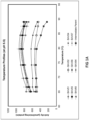
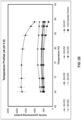
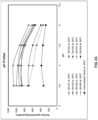
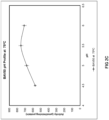
- pH profiles of variant beta-amylases were determined using PAHBAH assay as described in Example 1 to determine activity at pH 4.0, 4.5, 5.0, 5.5, and 6.0 at 80°C. The results are shown in Fig. 2A , 2B and 2C .
Landscapes
- Life Sciences & Earth Sciences (AREA)
- Chemical & Material Sciences (AREA)
- Engineering & Computer Science (AREA)
- Health & Medical Sciences (AREA)
- Organic Chemistry (AREA)
- Wood Science & Technology (AREA)
- Genetics & Genomics (AREA)
- Zoology (AREA)
- Bioinformatics & Cheminformatics (AREA)
- Microbiology (AREA)
- General Engineering & Computer Science (AREA)
- Biochemistry (AREA)
- General Health & Medical Sciences (AREA)
- Biotechnology (AREA)
- Food Science & Technology (AREA)
- Molecular Biology (AREA)
- Polymers & Plastics (AREA)
- Biomedical Technology (AREA)
- Mycology (AREA)
- Nutrition Science (AREA)
- Medicinal Chemistry (AREA)
- Chemical Kinetics & Catalysis (AREA)
- Proteomics, Peptides & Aminoacids (AREA)
- Oil, Petroleum & Natural Gas (AREA)
- Physics & Mathematics (AREA)
- General Chemical & Material Sciences (AREA)
- Biophysics (AREA)
- Plant Pathology (AREA)
- Animal Husbandry (AREA)
- Enzymes And Modification Thereof (AREA)
- Micro-Organisms Or Cultivation Processes Thereof (AREA)
- Paper (AREA)
- Detergent Compositions (AREA)
Claims (24)
- Polypeptide variant de la bêta-amylase selon la SEQ ID N° 1 ayant une activité de bêta-amylase et comprenant une séquence d'acides aminés qui est au moins 80 % identique à la séquence selon SEQ ID N° 1, laquelle séquence d'acides aminés comprend les substitutions d'acides aminés D25K, L27C, S220L, A364P, N369P, S398P et au moins une première autre modification d'acide aminé au niveau d'une position de résidu d'acide aminé numéro 502 dans la numérotation de la SEQ ID N° 1.
- Polypeptide variant selon la revendication 1, dans lequel la première autre modification d'acide aminé est une substitution, insertion, délétion d'acide aminé ou toute combinaison de celles-ci.
- Polypeptide variant selon la revendication 2, dans lequel la première autre modification d'acide aminé est une substitution d'acide aminé, et dans lequel la substitution d'acide aminé est une substitution d'acide aminé conservatrice.
- Polypeptide variant selon la revendication 2, dans lequel la première autre modification d'acide aminé est une substitution d'acide aminé de T502E dans la numérotation de la SEQ ID N° 1.
- Polypeptide variant selon la revendication 4, dans lequel la première autre modification d'acide aminé est une combinaison de modifications d'acides aminés, et la combinaison de modifications d'acides aminés est une combinaison de substitutions d'acides aminés qui est choisie dans le groupe constitué par :(h) T494E, T502E ; et(i) N419G, T494E, T502E ;dans la numérotation de la SEQ ID N° 1.
- Polypeptide variant selon la revendication 1, dans lequel la première autre modification d'acide aminé est une combinaison de modifications d'acides aminés, et la combinaison de modifications d'acides aminés est N419, T494E, T502 dans la numérotation de la SEQ ID N° 1, et dans lequel le polypeptide comprend au moins une deuxième autre modification d'acides aminés.
- Polypeptide variant selon la revendication 6, dans lequel la deuxième autre modification d'acide aminé est une substitution, insertion, délétion d'acide aminé ou toute combinaison de celles-ci.
- Polypeptide variant selon la revendication 7, dans lequel la deuxième autre modification d'acide aminé est une substitution d'acide aminé, et dans lequel la substitution d'acide aminé est une substitution d'acide aminé conservatrice.
- Polypeptide variant selon la revendication 6, dans lequel la deuxième autre modification d'acide aminé est une substitution d'acide aminé choisie dans le groupe constitué par : P13S, A206W, V208C, Y236I, G276D, M318L, C375I, Y435P/E, N438K et P463T ou une combinaison de celles-ci dans la numérotation de la SEQ ID N° 1.
- Polypeptide variant selon la revendication 9, dans lequel la deuxième autre modification d'acide aminé est une combinaison de modifications d'acides aminés, et la combinaison de modifications d'acides aminés est une combinaison de substitutions d'acides aminés qui est choisie dans le groupe constitué par :(j) A206W, V208C, G276D, M318L, C375I, Y435P, N438K, P463T ;(k) P13S, V208C, Y236I, G276D, M318L, C375I, Y435P, N438K, P463T ;(l) P13S, A206W, V208C, Y236I, G276D, M318L, C375I, Y435E, N438K, P463T ;(m) V208C, G276D, M318L, C375I, Y435P, N438K, P463T ;(n) V208C, G276D, C375I, Y435P, N438K, P463T ;(o) A206W, V208C, G276D, C375I, Y435E, N438K, P463T ;(p) A206W, V208C, G276D, C375I, Y435P, N438K, P463T ;(q) P13S, A206W, V208C, Y236I, G276D, C375I, Y435P, N438K, P463T ;(r) A206W, V208C, G276D, M318L, Y435E, N438K, P463T ;(s) A206W, V208C, G276D, M318L, C375I, Y435P, P463T ;(t) P13S, A206W, V208C, Y236I, G276D, M318L, C375I, N438K, P463T ;(u) P13S, V208C, Y236I, G276D, M318L, C375I, N438K, P463T ;(v) P13S, A206W, V208C, Y236I, G276D, M318L, C375I, N438K, P463T ;(w) P13S, A206W, V208C, Y236I, G276D, C375I, Y435P, P463T ;(x) V208C, G276D, M318L, Y435P ;(y) P13S, A206W, V208C, Y236I, G276D, M318L, P463T ;(z) A206W, V208C, G276D, M318L, P463T ;(aa) P13S, V208C, Y236I, G276D, N438K, P463T ;(bb) P13S, A206W, V208C, Y236I, G276D, M318L ;(cc) P13S, A206W, V208C, Y236I, G276D ;(dd) V208C, G276D, N419G, T494E, T502E ;(ee) C375I, N419G, T494E, T502E ;(ff) P13S, A206W, V208C, Y236I, G276D ;(gg) T90D, V91C, P269S, C375I ; et(hh) T90D, V91C, P269S, G276D, C375I ;dans la numérotation de la SEQ ID N° 1.
- Polypeptide variant selon l'une quelconque des revendications 1 à 10, dans lequel le polypeptide variant a un % d'activité résiduelle augmenté après exposition à une température de 80 à 95 degrés Celsius par rapport au polypeptide de la SEQ ID N° 1 ou 2.
- Polypeptide variant selon la revendication 11, dans lequel le polypeptide variant a un % d'activité résiduelle augmenté après exposition à une température de 86 degrés Celsius par rapport au polypeptide de la SEQ ID N° 1 ou 2.
- Polypeptide variant selon l'une quelconque des revendications 6 à 10, dans lequel le polypeptide variant a un % d'activité résiduelle augmenté après exposition à une température de 90 degrés Celsius par rapport au polypeptide de la SEQ ID N° 1, 2 ou 3.
- Polypeptide variant selon l'une quelconque des revendications 6 à 10, dans lequel le polypeptide variant a une activité augmentée à pH 4,5 à 6 et une température de 80 à 85 degrés Celsius par rapport au polypeptide de la SEQ ID N° 1 ou 2.
- Polypeptide variant selon l'une quelconque des revendications 1-14 ayant une activité de bêta-amylase, dans lequel le polypeptide variant est un fragment de la séquence d'acides aminés de pleine longueur.
- Polypeptide variant comprenant un hybride d'au moins un polypeptide variant selon l'une quelconque des revendications 1 à 15, et un deuxième polypeptide ayant une activité d'amylase, dans lequel l'hybride a une activité de bêta-amylase.
- Composition comprenant le polypeptide variant selon l'une quelconque des revendications 1 à 16.
- Composition selon la revendication 17, comprenant en outre une deuxième enzyme.
- Composition selon la revendication 18, dans laquelle la deuxième enzyme est choisie dans le groupe constitué par : une alpha-amylase, une lipase, une seconde bêta-amylase, une G4-amylase, une xylanase, une protéase, une cellulase, une glucoamylase, une oxydoréductase, une phospholipase, et une cyclodextrine glucanotransférase.
- Procédé de préparation d'un polypeptide variant comprenant : la fourniture d'une séquence d'acide nucléique de matrice codant pour le variant polypeptidique selon l'une quelconque des revendications 1 à 16, la transformation de la séquence d'acide nucléique de matrice en un hôte d'expression, la culture de l'hôte d'expression pour produire le polypeptide variant, et la purification du polypeptide variant.
- Procédé selon la revendication 20, dans lequel l'hôte d'expression est choisi dans le groupe constitué par : un système d'expression bactérienne, un système d'expression de levure, un système d'expression fongique et un système d'expression synthétique ;dans lequel le système d'expression bactérienne est choisi parmi E. coli, un Bacillus, Pseudomonas et un Streptomyces ;dans lequel le système d'expression de levure est choisi parmi un Candida, un Pichia, un Saccharomyces, un Schizosaccharomyces ; etdans lequel le système d'expression fongique est choisi parmi un Pénicillium, un Aspergillus, un Fusarium, un Myceliopthora, un Rhizomucor, un Rhizopus, un Thermomyces et un Trichoderma.
- Procédé de préparation d'une pâte ou d'un produit cuit préparé à partir de la pâte, le procédé comprenant l'ajout d'un polypeptide variant selon l'une quelconque des revendications 1-16 à la pâte et éventuellement la cuisson de la pâte.
- Procédé selon la revendication 22, dans lequel le produit cuit produit par le procédé présente une dureté inférieure et une résilience supérieure après 10 jours de stockage par rapport à un produit cuit produit par un procédé autrement identique dans lequel aucun polypeptide variant n'est ajouté.
- Utilisation du polypeptide variant selon l'une quelconque des revendications 1-16 pour traiter de l'amidon ; pour nettoyer ou laver des textiles, des surfaces dures ou de la vaisselle ; pour fabriquer de l'éthanol ; pour traiter un puits de pétrole ; pour traiter de la pâte ou du papier ; pour nourrir un animal ; pour fabriquer un sirop.
Priority Applications (1)
| Application Number | Priority Date | Filing Date | Title |
|---|---|---|---|
| EP24212501.1A EP4509600A3 (fr) | 2019-04-23 | 2020-04-21 | Variantes de bêta-amylase |
Applications Claiming Priority (2)
| Application Number | Priority Date | Filing Date | Title |
|---|---|---|---|
| US201962837328P | 2019-04-23 | 2019-04-23 | |
| PCT/US2020/029122 WO2020219450A1 (fr) | 2019-04-23 | 2020-04-21 | Variants de bêta-amylase |
Related Child Applications (1)
| Application Number | Title | Priority Date | Filing Date |
|---|---|---|---|
| EP24212501.1A Division EP4509600A3 (fr) | 2019-04-23 | 2020-04-21 | Variantes de bêta-amylase |
Publications (3)
| Publication Number | Publication Date |
|---|---|
| EP3958890A1 EP3958890A1 (fr) | 2022-03-02 |
| EP3958890A4 EP3958890A4 (fr) | 2023-05-03 |
| EP3958890B1 true EP3958890B1 (fr) | 2024-11-20 |
Family
ID=72941511
Family Applications (2)
| Application Number | Title | Priority Date | Filing Date |
|---|---|---|---|
| EP20794291.3A Active EP3958890B1 (fr) | 2019-04-23 | 2020-04-21 | Variants de bêta-amylase |
| EP24212501.1A Pending EP4509600A3 (fr) | 2019-04-23 | 2020-04-21 | Variantes de bêta-amylase |
Family Applications After (1)
| Application Number | Title | Priority Date | Filing Date |
|---|---|---|---|
| EP24212501.1A Pending EP4509600A3 (fr) | 2019-04-23 | 2020-04-21 | Variantes de bêta-amylase |
Country Status (7)
| Country | Link |
|---|---|
| US (1) | US20220220463A1 (fr) |
| EP (2) | EP3958890B1 (fr) |
| CN (2) | CN114096271B (fr) |
| CA (1) | CA3176520A1 (fr) |
| DK (1) | DK3958890T3 (fr) |
| PL (1) | PL3958890T3 (fr) |
| WO (1) | WO2020219450A1 (fr) |
Family Cites Families (23)
| Publication number | Priority date | Publication date | Assignee | Title |
|---|---|---|---|---|
| DK160563C (da) | 1986-02-19 | 1991-09-02 | Novo Industri As | Beta-amylase, fremgangsmaade til dens fremstilling samt praeparat indeholdende beta-amylasen |
| JPH01218589A (ja) | 1988-02-26 | 1989-08-31 | Juzo Udaka | 耐熱性β−アミラーゼ遺伝子 |
| US6562594B1 (en) | 1999-09-29 | 2003-05-13 | Diversa Corporation | Saturation mutagenesis in directed evolution |
| US6764835B2 (en) | 1995-12-07 | 2004-07-20 | Diversa Corporation | Saturation mutageneis in directed evolution |
| US6171820B1 (en) | 1995-12-07 | 2001-01-09 | Diversa Corporation | Saturation mutagenesis in directed evolution |
| US7323336B2 (en) | 2001-02-21 | 2008-01-29 | Verenium Corporation | Enzymes having alpha amylase activity and methods of use thereof |
| EP2292784A3 (fr) | 2001-02-21 | 2011-06-22 | Verenium Corporation | Enzymes dotées d'une activité alpha amylase et leurs procédés d'utilisation |
| US7741092B2 (en) | 2002-10-31 | 2010-06-22 | Verenium Corporation | Amylases, nucleic acids encoding them and methods for making and using them |
| GB0305685D0 (en) * | 2003-03-12 | 2003-04-16 | Danisco | Enzyme |
| US20080102497A1 (en) * | 2006-10-31 | 2008-05-01 | Dominic Wong | Enzymatic hydrolysis of starch |
| PL2479267T3 (pl) | 2006-12-21 | 2017-06-30 | Basf Enzymes Llc | Amylazy i glukoamylazy, kwasy nukleinowe kodujące te związki oraz sposoby wytwarzania tych związków oraz stosowania ich |
| CA2693102C (fr) | 2007-07-31 | 2020-03-10 | Verenium Corporation | Assemblage combinatoire multi-sites sur mesure |
| JP5528333B2 (ja) | 2008-05-08 | 2014-06-25 | 天野エンザイム株式会社 | β−アミラーゼ、それをコードする遺伝子及びその製造法 |
| WO2011058105A1 (fr) | 2009-11-13 | 2011-05-19 | Novozymes A/S | Procédé de brassage |
| GB2499463B (en) | 2012-01-31 | 2014-04-02 | Verenium Corp | Reduced sugar syrups and methods of making reduced sugar syrups |
| WO2015021600A1 (fr) | 2013-08-13 | 2015-02-19 | Danisco Us Inc. | Bêta-amylase et ses méthodes d'utilisation |
| WO2015021601A1 (fr) * | 2013-08-13 | 2015-02-19 | Danisco Us Inc. | Liquéfaction et malto-saccharification simultanées |
| CN103695386B (zh) | 2013-12-25 | 2015-09-16 | 南宁邦尔克生物技术有限责任公司 | 一种耐酸性高温β-淀粉酶突变体及其应用 |
| CN103881993B (zh) | 2014-03-13 | 2015-11-18 | 南宁邦尔克生物技术有限责任公司 | 一种耐酸性高温β-淀粉酶的突变体TBA-H2及其应用 |
| WO2017106633A1 (fr) | 2015-12-18 | 2017-06-22 | Basf Enzymes Llc | Formulation liquide d'alpha-amylase |
| CN110621162B (zh) * | 2017-05-12 | 2024-05-24 | 巴斯夫欧洲公司 | 脂肪酶 |
| MX2020004318A (es) * | 2017-10-25 | 2020-08-13 | Basf Se | Enzimas beta-amilasa. |
| WO2021074056A1 (fr) * | 2019-10-18 | 2021-04-22 | Basf Se | Procédé amélioré de préparation d'une pâte à pain ou d'un produit cuit à partir de celle-ci |
-
2020
- 2020-04-21 CA CA3176520A patent/CA3176520A1/fr active Pending
- 2020-04-21 DK DK20794291.3T patent/DK3958890T3/da active
- 2020-04-21 CN CN202080030423.1A patent/CN114096271B/zh active Active
- 2020-04-21 CN CN202410340644.9A patent/CN118086254A/zh active Pending
- 2020-04-21 PL PL20794291.3T patent/PL3958890T3/pl unknown
- 2020-04-21 WO PCT/US2020/029122 patent/WO2020219450A1/fr not_active Ceased
- 2020-04-21 US US17/605,919 patent/US20220220463A1/en active Pending
- 2020-04-21 EP EP20794291.3A patent/EP3958890B1/fr active Active
- 2020-04-21 EP EP24212501.1A patent/EP4509600A3/fr active Pending
Also Published As
| Publication number | Publication date |
|---|---|
| CN114096271B (zh) | 2024-04-12 |
| EP3958890A4 (fr) | 2023-05-03 |
| EP3958890A1 (fr) | 2022-03-02 |
| EP4509600A2 (fr) | 2025-02-19 |
| DK3958890T3 (da) | 2025-02-17 |
| WO2020219450A1 (fr) | 2020-10-29 |
| EP4509600A3 (fr) | 2025-06-25 |
| CN118086254A (zh) | 2024-05-28 |
| US20220220463A1 (en) | 2022-07-14 |
| PL3958890T3 (pl) | 2025-03-24 |
| CA3176520A1 (fr) | 2020-10-29 |
| CN114096271A (zh) | 2022-02-25 |
Similar Documents
| Publication | Publication Date | Title |
|---|---|---|
| US20230212544A1 (en) | Beta-amylase enzymes | |
| US20250297239A1 (en) | Amylase enzymes | |
| US10316306B2 (en) | Thermostable alpha amylase | |
| EP3958890B1 (fr) | Variants de bêta-amylase | |
| US20240108016A1 (en) | Improved method for preparing a dough or a baked product therefrom | |
| US20230323327A1 (en) | Alpha-amylase variants | |
| CN116471938B (en) | Baked and partially baked products with thermostable AMG variants from penicillium | |
| US20250019681A1 (en) | Alpha-amylase variants | |
| CN120344150A (zh) | 用热稳定葡糖淀粉酶变体在低ph下烘焙 | |
| EP4608147A1 (fr) | Procédé de cuisson avec un variant d'amg thermostable et une alpha-amylase | |
| CN116471938A (zh) | 具有来自青霉属的热稳定amg变体的烘焙和部分烘焙产品 | |
| US20190320665A1 (en) | Process for Preparing a Baked Product with Anti-Staling Amylase and Peptidase |
Legal Events
| Date | Code | Title | Description |
|---|---|---|---|
| STAA | Information on the status of an ep patent application or granted ep patent |
Free format text: STATUS: THE INTERNATIONAL PUBLICATION HAS BEEN MADE |
|
| PUAI | Public reference made under article 153(3) epc to a published international application that has entered the european phase |
Free format text: ORIGINAL CODE: 0009012 |
|
| STAA | Information on the status of an ep patent application or granted ep patent |
Free format text: STATUS: REQUEST FOR EXAMINATION WAS MADE |
|
| 17P | Request for examination filed |
Effective date: 20211123 |
|
| AK | Designated contracting states |
Kind code of ref document: A1 Designated state(s): AL AT BE BG CH CY CZ DE DK EE ES FI FR GB GR HR HU IE IS IT LI LT LU LV MC MK MT NL NO PL PT RO RS SE SI SK SM TR |
|
| DAV | Request for validation of the european patent (deleted) | ||
| DAX | Request for extension of the european patent (deleted) | ||
| REG | Reference to a national code |
Ref country code: DE Ref legal event code: R079 Ipc: C12N0009240000 Ref country code: DE Ref legal event code: R079 Ref document number: 602020041751 Country of ref document: DE Free format text: PREVIOUS MAIN CLASS: A61K0038470000 Ipc: C12N0009240000 |
|
| A4 | Supplementary search report drawn up and despatched |
Effective date: 20230403 |
|
| RIC1 | Information provided on ipc code assigned before grant |
Ipc: C12N 9/26 20060101ALI20230328BHEP Ipc: A61K 38/47 20060101ALI20230328BHEP Ipc: C12N 9/24 20060101AFI20230328BHEP |
|
| GRAP | Despatch of communication of intention to grant a patent |
Free format text: ORIGINAL CODE: EPIDOSNIGR1 |
|
| STAA | Information on the status of an ep patent application or granted ep patent |
Free format text: STATUS: GRANT OF PATENT IS INTENDED |
|
| INTG | Intention to grant announced |
Effective date: 20240611 |
|
| GRAS | Grant fee paid |
Free format text: ORIGINAL CODE: EPIDOSNIGR3 |
|
| GRAA | (expected) grant |
Free format text: ORIGINAL CODE: 0009210 |
|
| STAA | Information on the status of an ep patent application or granted ep patent |
Free format text: STATUS: THE PATENT HAS BEEN GRANTED |
|
| AK | Designated contracting states |
Kind code of ref document: B1 Designated state(s): AL AT BE BG CH CY CZ DE DK EE ES FI FR GB GR HR HU IE IS IT LI LT LU LV MC MK MT NL NO PL PT RO RS SE SI SK SM TR |
|
| REG | Reference to a national code |
Ref country code: GB Ref legal event code: FG4D |
|
| REG | Reference to a national code |
Ref country code: CH Ref legal event code: EP |
|
| REG | Reference to a national code |
Ref country code: DE Ref legal event code: R096 Ref document number: 602020041751 Country of ref document: DE |
|
| REG | Reference to a national code |
Ref country code: IE Ref legal event code: FG4D |
|
| REG | Reference to a national code |
Ref country code: DK Ref legal event code: T3 Effective date: 20250213 |
|
| REG | Reference to a national code |
Ref country code: NL Ref legal event code: FP |
|
| REG | Reference to a national code |
Ref country code: LT Ref legal event code: MG9D |
|
| PG25 | Lapsed in a contracting state [announced via postgrant information from national office to epo] |
Ref country code: HR Free format text: LAPSE BECAUSE OF FAILURE TO SUBMIT A TRANSLATION OF THE DESCRIPTION OR TO PAY THE FEE WITHIN THE PRESCRIBED TIME-LIMIT Effective date: 20241120 Ref country code: IS Free format text: LAPSE BECAUSE OF FAILURE TO SUBMIT A TRANSLATION OF THE DESCRIPTION OR TO PAY THE FEE WITHIN THE PRESCRIBED TIME-LIMIT Effective date: 20250320 Ref country code: PT Free format text: LAPSE BECAUSE OF FAILURE TO SUBMIT A TRANSLATION OF THE DESCRIPTION OR TO PAY THE FEE WITHIN THE PRESCRIBED TIME-LIMIT Effective date: 20250320 |
|
| PG25 | Lapsed in a contracting state [announced via postgrant information from national office to epo] |
Ref country code: FI Free format text: LAPSE BECAUSE OF FAILURE TO SUBMIT A TRANSLATION OF THE DESCRIPTION OR TO PAY THE FEE WITHIN THE PRESCRIBED TIME-LIMIT Effective date: 20241120 |
|
| REG | Reference to a national code |
Ref country code: AT Ref legal event code: MK05 Ref document number: 1743601 Country of ref document: AT Kind code of ref document: T Effective date: 20241120 |
|
| PG25 | Lapsed in a contracting state [announced via postgrant information from national office to epo] |
Ref country code: BG Free format text: LAPSE BECAUSE OF FAILURE TO SUBMIT A TRANSLATION OF THE DESCRIPTION OR TO PAY THE FEE WITHIN THE PRESCRIBED TIME-LIMIT Effective date: 20241120 |
|
| PG25 | Lapsed in a contracting state [announced via postgrant information from national office to epo] |
Ref country code: ES Free format text: LAPSE BECAUSE OF FAILURE TO SUBMIT A TRANSLATION OF THE DESCRIPTION OR TO PAY THE FEE WITHIN THE PRESCRIBED TIME-LIMIT Effective date: 20241120 |
|
| PG25 | Lapsed in a contracting state [announced via postgrant information from national office to epo] |
Ref country code: NO Free format text: LAPSE BECAUSE OF FAILURE TO SUBMIT A TRANSLATION OF THE DESCRIPTION OR TO PAY THE FEE WITHIN THE PRESCRIBED TIME-LIMIT Effective date: 20250220 |
|
| PG25 | Lapsed in a contracting state [announced via postgrant information from national office to epo] |
Ref country code: LV Free format text: LAPSE BECAUSE OF FAILURE TO SUBMIT A TRANSLATION OF THE DESCRIPTION OR TO PAY THE FEE WITHIN THE PRESCRIBED TIME-LIMIT Effective date: 20241120 Ref country code: GR Free format text: LAPSE BECAUSE OF FAILURE TO SUBMIT A TRANSLATION OF THE DESCRIPTION OR TO PAY THE FEE WITHIN THE PRESCRIBED TIME-LIMIT Effective date: 20250221 Ref country code: AT Free format text: LAPSE BECAUSE OF FAILURE TO SUBMIT A TRANSLATION OF THE DESCRIPTION OR TO PAY THE FEE WITHIN THE PRESCRIBED TIME-LIMIT Effective date: 20241120 |
|
| PG25 | Lapsed in a contracting state [announced via postgrant information from national office to epo] |
Ref country code: RS Free format text: LAPSE BECAUSE OF FAILURE TO SUBMIT A TRANSLATION OF THE DESCRIPTION OR TO PAY THE FEE WITHIN THE PRESCRIBED TIME-LIMIT Effective date: 20250220 |
|
| PG25 | Lapsed in a contracting state [announced via postgrant information from national office to epo] |
Ref country code: SM Free format text: LAPSE BECAUSE OF FAILURE TO SUBMIT A TRANSLATION OF THE DESCRIPTION OR TO PAY THE FEE WITHIN THE PRESCRIBED TIME-LIMIT Effective date: 20241120 |
|
| PGFP | Annual fee paid to national office [announced via postgrant information from national office to epo] |
Ref country code: DE Payment date: 20250428 Year of fee payment: 6 |
|
| PGFP | Annual fee paid to national office [announced via postgrant information from national office to epo] |
Ref country code: DK Payment date: 20250424 Year of fee payment: 6 |
|
| PG25 | Lapsed in a contracting state [announced via postgrant information from national office to epo] |
Ref country code: EE Free format text: LAPSE BECAUSE OF FAILURE TO SUBMIT A TRANSLATION OF THE DESCRIPTION OR TO PAY THE FEE WITHIN THE PRESCRIBED TIME-LIMIT Effective date: 20241120 |
|
| PG25 | Lapsed in a contracting state [announced via postgrant information from national office to epo] |
Ref country code: SK Free format text: LAPSE BECAUSE OF FAILURE TO SUBMIT A TRANSLATION OF THE DESCRIPTION OR TO PAY THE FEE WITHIN THE PRESCRIBED TIME-LIMIT Effective date: 20241120 |
|
| PGFP | Annual fee paid to national office [announced via postgrant information from national office to epo] |
Ref country code: TR Payment date: 20250404 Year of fee payment: 6 |
|
| PG25 | Lapsed in a contracting state [announced via postgrant information from national office to epo] |
Ref country code: CZ Free format text: LAPSE BECAUSE OF FAILURE TO SUBMIT A TRANSLATION OF THE DESCRIPTION OR TO PAY THE FEE WITHIN THE PRESCRIBED TIME-LIMIT Effective date: 20241120 |
|
| PG25 | Lapsed in a contracting state [announced via postgrant information from national office to epo] |
Ref country code: IT Free format text: LAPSE BECAUSE OF FAILURE TO SUBMIT A TRANSLATION OF THE DESCRIPTION OR TO PAY THE FEE WITHIN THE PRESCRIBED TIME-LIMIT Effective date: 20241120 |
|
| REG | Reference to a national code |
Ref country code: DE Ref legal event code: R097 Ref document number: 602020041751 Country of ref document: DE |
|
| PG25 | Lapsed in a contracting state [announced via postgrant information from national office to epo] |
Ref country code: SE Free format text: LAPSE BECAUSE OF FAILURE TO SUBMIT A TRANSLATION OF THE DESCRIPTION OR TO PAY THE FEE WITHIN THE PRESCRIBED TIME-LIMIT Effective date: 20241120 |
|
| PLBE | No opposition filed within time limit |
Free format text: ORIGINAL CODE: 0009261 |
|
| STAA | Information on the status of an ep patent application or granted ep patent |
Free format text: STATUS: NO OPPOSITION FILED WITHIN TIME LIMIT |
|
| 26N | No opposition filed |
Effective date: 20250821 |
|
| REG | Reference to a national code |
Ref country code: CH Ref legal event code: H13 Free format text: ST27 STATUS EVENT CODE: U-0-0-H10-H13 (AS PROVIDED BY THE NATIONAL OFFICE) Effective date: 20251125 |
|
| PG25 | Lapsed in a contracting state [announced via postgrant information from national office to epo] |
Ref country code: LU Free format text: LAPSE BECAUSE OF NON-PAYMENT OF DUE FEES Effective date: 20250421 |
|
| PG25 | Lapsed in a contracting state [announced via postgrant information from national office to epo] |
Ref country code: MC Free format text: LAPSE BECAUSE OF FAILURE TO SUBMIT A TRANSLATION OF THE DESCRIPTION OR TO PAY THE FEE WITHIN THE PRESCRIBED TIME-LIMIT Effective date: 20241120 |
|
| GBPC | Gb: european patent ceased through non-payment of renewal fee |
Effective date: 20250421 |
|
| REG | Reference to a national code |
Ref country code: BE Ref legal event code: MM Effective date: 20250430 |
|
| PG25 | Lapsed in a contracting state [announced via postgrant information from national office to epo] |
Ref country code: GB Free format text: LAPSE BECAUSE OF NON-PAYMENT OF DUE FEES Effective date: 20250421 |
|
| PG25 | Lapsed in a contracting state [announced via postgrant information from national office to epo] |
Ref country code: BE Free format text: LAPSE BECAUSE OF NON-PAYMENT OF DUE FEES Effective date: 20250430 |
|
| PG25 | Lapsed in a contracting state [announced via postgrant information from national office to epo] |
Ref country code: CH Free format text: LAPSE BECAUSE OF NON-PAYMENT OF DUE FEES Effective date: 20250430 |
|
| PG25 | Lapsed in a contracting state [announced via postgrant information from national office to epo] |
Ref country code: IE Free format text: LAPSE BECAUSE OF NON-PAYMENT OF DUE FEES Effective date: 20250421 |
|
| PGFP | Annual fee paid to national office [announced via postgrant information from national office to epo] |
Ref country code: RO Payment date: 20260330 Year of fee payment: 7 |
|
| PGFP | Annual fee paid to national office [announced via postgrant information from national office to epo] |
Ref country code: NL Payment date: 20260317 Year of fee payment: 7 |
|
| PGFP | Annual fee paid to national office [announced via postgrant information from national office to epo] |
Ref country code: FR Payment date: 20260309 Year of fee payment: 7 |
|
| PGFP | Annual fee paid to national office [announced via postgrant information from national office to epo] |
Ref country code: PL Payment date: 20260319 Year of fee payment: 7 |