EP3960141A1 - Hygieneartikel in höschenform - Google Patents
Hygieneartikel in höschenform Download PDFInfo
- Publication number
- EP3960141A1 EP3960141A1 EP20193645.7A EP20193645A EP3960141A1 EP 3960141 A1 EP3960141 A1 EP 3960141A1 EP 20193645 A EP20193645 A EP 20193645A EP 3960141 A1 EP3960141 A1 EP 3960141A1
- Authority
- EP
- European Patent Office
- Prior art keywords
- front part
- elastic threads
- threads
- back part
- article according
- Prior art date
- Legal status (The legal status is an assumption and is not a legal conclusion. Google has not performed a legal analysis and makes no representation as to the accuracy of the status listed.)
- Granted
Links
Images
Classifications
-
- A—HUMAN NECESSITIES
- A61—MEDICAL OR VETERINARY SCIENCE; HYGIENE
- A61F—FILTERS IMPLANTABLE INTO BLOOD VESSELS; PROSTHESES; DEVICES PROVIDING PATENCY TO, OR PREVENTING COLLAPSING OF, TUBULAR STRUCTURES OF THE BODY, e.g. STENTS; ORTHOPAEDIC, NURSING OR CONTRACEPTIVE DEVICES; FOMENTATION; TREATMENT OR PROTECTION OF EYES OR EARS; BANDAGES, DRESSINGS OR ABSORBENT PADS; FIRST-AID KITS
- A61F13/00—Bandages or dressings; Absorbent pads
- A61F13/15—Absorbent pads, e.g. sanitary towels, swabs or tampons for external or internal application to the body; Supporting or fastening means therefor; Tampon applicators
- A61F13/45—Absorbent pads, e.g. sanitary towels, swabs or tampons for external or internal application to the body; Supporting or fastening means therefor; Tampon applicators characterised by the shape
- A61F13/49—Absorbent pads, e.g. sanitary towels, swabs or tampons for external or internal application to the body; Supporting or fastening means therefor; Tampon applicators characterised by the shape specially adapted to be worn around the waist, e.g. diapers, nappies
- A61F13/496—Absorbent pads, e.g. sanitary towels, swabs or tampons for external or internal application to the body; Supporting or fastening means therefor; Tampon applicators characterised by the shape specially adapted to be worn around the waist, e.g. diapers, nappies in the form of pants or briefs
-
- A—HUMAN NECESSITIES
- A61—MEDICAL OR VETERINARY SCIENCE; HYGIENE
- A61F—FILTERS IMPLANTABLE INTO BLOOD VESSELS; PROSTHESES; DEVICES PROVIDING PATENCY TO, OR PREVENTING COLLAPSING OF, TUBULAR STRUCTURES OF THE BODY, e.g. STENTS; ORTHOPAEDIC, NURSING OR CONTRACEPTIVE DEVICES; FOMENTATION; TREATMENT OR PROTECTION OF EYES OR EARS; BANDAGES, DRESSINGS OR ABSORBENT PADS; FIRST-AID KITS
- A61F13/00—Bandages or dressings; Absorbent pads
- A61F13/15—Absorbent pads, e.g. sanitary towels, swabs or tampons for external or internal application to the body; Supporting or fastening means therefor; Tampon applicators
- A61F13/45—Absorbent pads, e.g. sanitary towels, swabs or tampons for external or internal application to the body; Supporting or fastening means therefor; Tampon applicators characterised by the shape
- A61F13/49—Absorbent pads, e.g. sanitary towels, swabs or tampons for external or internal application to the body; Supporting or fastening means therefor; Tampon applicators characterised by the shape specially adapted to be worn around the waist, e.g. diapers, nappies
- A61F13/49007—Form-fitting, self-adjusting disposable diapers
- A61F13/49009—Form-fitting, self-adjusting disposable diapers with elastic means
- A61F13/49011—Form-fitting, self-adjusting disposable diapers with elastic means the elastic means is located at the waist region
-
- A—HUMAN NECESSITIES
- A61—MEDICAL OR VETERINARY SCIENCE; HYGIENE
- A61F—FILTERS IMPLANTABLE INTO BLOOD VESSELS; PROSTHESES; DEVICES PROVIDING PATENCY TO, OR PREVENTING COLLAPSING OF, TUBULAR STRUCTURES OF THE BODY, e.g. STENTS; ORTHOPAEDIC, NURSING OR CONTRACEPTIVE DEVICES; FOMENTATION; TREATMENT OR PROTECTION OF EYES OR EARS; BANDAGES, DRESSINGS OR ABSORBENT PADS; FIRST-AID KITS
- A61F13/00—Bandages or dressings; Absorbent pads
- A61F13/15—Absorbent pads, e.g. sanitary towels, swabs or tampons for external or internal application to the body; Supporting or fastening means therefor; Tampon applicators
- A61F13/45—Absorbent pads, e.g. sanitary towels, swabs or tampons for external or internal application to the body; Supporting or fastening means therefor; Tampon applicators characterised by the shape
- A61F13/49—Absorbent pads, e.g. sanitary towels, swabs or tampons for external or internal application to the body; Supporting or fastening means therefor; Tampon applicators characterised by the shape specially adapted to be worn around the waist, e.g. diapers, nappies
- A61F13/49007—Form-fitting, self-adjusting disposable diapers
- A61F13/49009—Form-fitting, self-adjusting disposable diapers with elastic means
- A61F13/4902—Form-fitting, self-adjusting disposable diapers with elastic means characterised by the elastic material
-
- A—HUMAN NECESSITIES
- A61—MEDICAL OR VETERINARY SCIENCE; HYGIENE
- A61F—FILTERS IMPLANTABLE INTO BLOOD VESSELS; PROSTHESES; DEVICES PROVIDING PATENCY TO, OR PREVENTING COLLAPSING OF, TUBULAR STRUCTURES OF THE BODY, e.g. STENTS; ORTHOPAEDIC, NURSING OR CONTRACEPTIVE DEVICES; FOMENTATION; TREATMENT OR PROTECTION OF EYES OR EARS; BANDAGES, DRESSINGS OR ABSORBENT PADS; FIRST-AID KITS
- A61F13/00—Bandages or dressings; Absorbent pads
- A61F13/15—Absorbent pads, e.g. sanitary towels, swabs or tampons for external or internal application to the body; Supporting or fastening means therefor; Tampon applicators
- A61F13/53—Absorbent pads, e.g. sanitary towels, swabs or tampons for external or internal application to the body; Supporting or fastening means therefor; Tampon applicators characterised by the absorbing medium
- A61F13/531—Absorbent pads, e.g. sanitary towels, swabs or tampons for external or internal application to the body; Supporting or fastening means therefor; Tampon applicators characterised by the absorbing medium having a homogeneous composition through the thickness of the pad
- A61F13/532—Absorbent pads, e.g. sanitary towels, swabs or tampons for external or internal application to the body; Supporting or fastening means therefor; Tampon applicators characterised by the absorbing medium having a homogeneous composition through the thickness of the pad inhomogeneous in the plane of the pad
-
- A—HUMAN NECESSITIES
- A61—MEDICAL OR VETERINARY SCIENCE; HYGIENE
- A61F—FILTERS IMPLANTABLE INTO BLOOD VESSELS; PROSTHESES; DEVICES PROVIDING PATENCY TO, OR PREVENTING COLLAPSING OF, TUBULAR STRUCTURES OF THE BODY, e.g. STENTS; ORTHOPAEDIC, NURSING OR CONTRACEPTIVE DEVICES; FOMENTATION; TREATMENT OR PROTECTION OF EYES OR EARS; BANDAGES, DRESSINGS OR ABSORBENT PADS; FIRST-AID KITS
- A61F13/00—Bandages or dressings; Absorbent pads
- A61F13/15—Absorbent pads, e.g. sanitary towels, swabs or tampons for external or internal application to the body; Supporting or fastening means therefor; Tampon applicators
- A61F13/53—Absorbent pads, e.g. sanitary towels, swabs or tampons for external or internal application to the body; Supporting or fastening means therefor; Tampon applicators characterised by the absorbing medium
- A61F13/534—Absorbent pads, e.g. sanitary towels, swabs or tampons for external or internal application to the body; Supporting or fastening means therefor; Tampon applicators characterised by the absorbing medium having an inhomogeneous composition through the thickness of the pad
-
- A—HUMAN NECESSITIES
- A61—MEDICAL OR VETERINARY SCIENCE; HYGIENE
- A61F—FILTERS IMPLANTABLE INTO BLOOD VESSELS; PROSTHESES; DEVICES PROVIDING PATENCY TO, OR PREVENTING COLLAPSING OF, TUBULAR STRUCTURES OF THE BODY, e.g. STENTS; ORTHOPAEDIC, NURSING OR CONTRACEPTIVE DEVICES; FOMENTATION; TREATMENT OR PROTECTION OF EYES OR EARS; BANDAGES, DRESSINGS OR ABSORBENT PADS; FIRST-AID KITS
- A61F13/00—Bandages or dressings; Absorbent pads
- A61F13/15—Absorbent pads, e.g. sanitary towels, swabs or tampons for external or internal application to the body; Supporting or fastening means therefor; Tampon applicators
- A61F13/53—Absorbent pads, e.g. sanitary towels, swabs or tampons for external or internal application to the body; Supporting or fastening means therefor; Tampon applicators characterised by the absorbing medium
- A61F13/534—Absorbent pads, e.g. sanitary towels, swabs or tampons for external or internal application to the body; Supporting or fastening means therefor; Tampon applicators characterised by the absorbing medium having an inhomogeneous composition through the thickness of the pad
- A61F13/535—Absorbent pads, e.g. sanitary towels, swabs or tampons for external or internal application to the body; Supporting or fastening means therefor; Tampon applicators characterised by the absorbing medium having an inhomogeneous composition through the thickness of the pad inhomogeneous in the plane of the pad, e.g. core absorbent layers being of different sizes
-
- A—HUMAN NECESSITIES
- A61—MEDICAL OR VETERINARY SCIENCE; HYGIENE
- A61F—FILTERS IMPLANTABLE INTO BLOOD VESSELS; PROSTHESES; DEVICES PROVIDING PATENCY TO, OR PREVENTING COLLAPSING OF, TUBULAR STRUCTURES OF THE BODY, e.g. STENTS; ORTHOPAEDIC, NURSING OR CONTRACEPTIVE DEVICES; FOMENTATION; TREATMENT OR PROTECTION OF EYES OR EARS; BANDAGES, DRESSINGS OR ABSORBENT PADS; FIRST-AID KITS
- A61F13/00—Bandages or dressings; Absorbent pads
- A61F13/15—Absorbent pads, e.g. sanitary towels, swabs or tampons for external or internal application to the body; Supporting or fastening means therefor; Tampon applicators
- A61F13/53—Absorbent pads, e.g. sanitary towels, swabs or tampons for external or internal application to the body; Supporting or fastening means therefor; Tampon applicators characterised by the absorbing medium
- A61F13/539—Absorbent pads, e.g. sanitary towels, swabs or tampons for external or internal application to the body; Supporting or fastening means therefor; Tampon applicators characterised by the absorbing medium characterised by the connection of the absorbent layers with each other or with the outer layers
-
- A—HUMAN NECESSITIES
- A61—MEDICAL OR VETERINARY SCIENCE; HYGIENE
- A61F—FILTERS IMPLANTABLE INTO BLOOD VESSELS; PROSTHESES; DEVICES PROVIDING PATENCY TO, OR PREVENTING COLLAPSING OF, TUBULAR STRUCTURES OF THE BODY, e.g. STENTS; ORTHOPAEDIC, NURSING OR CONTRACEPTIVE DEVICES; FOMENTATION; TREATMENT OR PROTECTION OF EYES OR EARS; BANDAGES, DRESSINGS OR ABSORBENT PADS; FIRST-AID KITS
- A61F13/00—Bandages or dressings; Absorbent pads
- A61F13/15—Absorbent pads, e.g. sanitary towels, swabs or tampons for external or internal application to the body; Supporting or fastening means therefor; Tampon applicators
- A61F13/45—Absorbent pads, e.g. sanitary towels, swabs or tampons for external or internal application to the body; Supporting or fastening means therefor; Tampon applicators characterised by the shape
- A61F13/49—Absorbent pads, e.g. sanitary towels, swabs or tampons for external or internal application to the body; Supporting or fastening means therefor; Tampon applicators characterised by the shape specially adapted to be worn around the waist, e.g. diapers, nappies
- A61F13/49007—Form-fitting, self-adjusting disposable diapers
- A61F13/49009—Form-fitting, self-adjusting disposable diapers with elastic means
- A61F13/4902—Form-fitting, self-adjusting disposable diapers with elastic means characterised by the elastic material
- A61F2013/49025—Form-fitting, self-adjusting disposable diapers with elastic means characterised by the elastic material having multiple elastic strands
-
- A—HUMAN NECESSITIES
- A61—MEDICAL OR VETERINARY SCIENCE; HYGIENE
- A61F—FILTERS IMPLANTABLE INTO BLOOD VESSELS; PROSTHESES; DEVICES PROVIDING PATENCY TO, OR PREVENTING COLLAPSING OF, TUBULAR STRUCTURES OF THE BODY, e.g. STENTS; ORTHOPAEDIC, NURSING OR CONTRACEPTIVE DEVICES; FOMENTATION; TREATMENT OR PROTECTION OF EYES OR EARS; BANDAGES, DRESSINGS OR ABSORBENT PADS; FIRST-AID KITS
- A61F13/00—Bandages or dressings; Absorbent pads
- A61F13/15—Absorbent pads, e.g. sanitary towels, swabs or tampons for external or internal application to the body; Supporting or fastening means therefor; Tampon applicators
- A61F13/45—Absorbent pads, e.g. sanitary towels, swabs or tampons for external or internal application to the body; Supporting or fastening means therefor; Tampon applicators characterised by the shape
- A61F13/49—Absorbent pads, e.g. sanitary towels, swabs or tampons for external or internal application to the body; Supporting or fastening means therefor; Tampon applicators characterised by the shape specially adapted to be worn around the waist, e.g. diapers, nappies
- A61F13/49007—Form-fitting, self-adjusting disposable diapers
- A61F13/49009—Form-fitting, self-adjusting disposable diapers with elastic means
- A61F13/4902—Form-fitting, self-adjusting disposable diapers with elastic means characterised by the elastic material
- A61F2013/49033—Form-fitting, self-adjusting disposable diapers with elastic means characterised by the elastic material being elastic in transversal direction
Definitions
- the invention relates to a hygiene article in the form of panties.
- Hygiene articles in the form of panties are used to catch excretions from the human body, such as urine or stool. They are used in particular by people who suffer from incontinence, mainly the elderly. Pants of this type are made from fiber materials, in particular from fiber materials containing cellulose and/or containing superabsorbents, as well as from plastic films and nonwovens. These are single-use items (disposables) that are thrown away after a single use. Manufacturers strive to bring the properties of pants closer to those of conventional underwear in order to improve wearing comfort and consumer acceptance.
- hygiene articles in the form of panties have a front part, a back part and an insert part connecting the front part and back part to one another, with the front part and back part delimiting a hip opening at the upper edge, the front part, back part and insert part delimiting leg openings on two lateral edges, the insert part having an absorbent core in the crotch area and the front and back have elastic threads running parallel to the upper edges and gathering the front and back in the relaxed state.
- the elasticizing means are elastic threads (e.g. elastane threads) that are applied to the parts of the hygiene article in the tensioned state, so that they gather them in the relaxed state.
- the elasticizing means running parallel to the upper edge serve to fix the hygiene article in the area of the abdomen and hips.
- the hygiene article can have an elastic waistband.
- Elastication means present to fit the hygiene article snugly to the wearer's legs.
- Conventional pants have in the area of the front and back (collectively referred to as "chassis") on a few, widely spaced elastic threads.
- the distance from thread to thread is about 8 mm and the fiber thickness is 540 dtex.
- the elastic threads cut into the skin, making the chassis bulky and scratchy, and creating a foreign body sensation on the skin that is uncomfortable for the wearer.
- the elasticizing means are pronounced in the area of the waistband, so that the hygiene items are more gathered in the relaxed state, particularly at the hip opening, and are in contact with the hip area with the correspondingly high tension.
- the invention is based on the object of creating a panty-shaped hygiene article with improved wearing comfort.
- the panty-shaped hygiene article according to the invention has a front part and a back part as well as an insert part connecting the front part and back part to one another, with the front part and back part delimiting a hip opening at the upper edge, the front part, back part and insert part delimiting leg openings at two lateral edges, the insert part in the Crotch area has an absorbent core and front part and back part has elastic threads running parallel to one another and gathering the front part and back part in the relaxed state, characterized in that the elastic threads have an average density of at least two threads per centimeter, preferably at least 2.5 threads per centimeter, preferably at least four threads per centimeter in the direction perpendicular to the upper edge.
- the hygiene article according to the invention is based on the finding that there is a direct connection between the softness, flexibility, dimensional stability and a comfortable fit of the hygiene article on the bare skin of the wearer and the density of the elastic threads in the front and back parts.
- the number of elastic threads per unit length (centimeter) in a direction perpendicular to the upper edge is used as a measure of the density. It has been found that a hygiene article that has an average density of at least two threads per centimeter, preferably at least 2.5 threads per centimeter, preferably at least four threads per centimeter, is significantly more comfortable to wear.
- the mean density is the number of threads per centimeter, which is the quotient of the total number of elastic threads parallel to the upper edge of the front part/back part (i.e. the front part and/or the back part) and the maximum height of the main part of the Front part / back part results.
- the main part of the front/back body is that part of the front/back body which does not have an elastic waistband (belt) in which elastic threads are arranged with a higher density.
- the body is the portion of the front/back located under the belt, and for an unbelted front/back, the body is the entire front/back.
- the chassis ruffles less when relaxed, fits more smoothly to the wearer's body, and more securely holds the fitted position.
- the hygiene item can become tight and nestle against the bones in the pelvic area without the formation of material accumulations. This also makes it possible to apply the threads to the front and back parts with less pretension than with conventional pants, without the hygiene article slipping. Since the hygiene article is smooth and without cutting into the skin, sits securely, hugs the contours of the body, is not bulky and is not visible under clothing, wearing the hygiene article is felt to be particularly comfortable.
- the elastic threads run along axes parallel to the upper edge of the front/back piece. This is particularly advantageous for the production of hygiene articles in a high-speed process.
- the elastic threads run in a straight line or in waves (e.g. sinusoidal, rectangular, triangular or sawtooth shaped) along the axes.
- the rectilinear course is particularly advantageous for production.
- Elasticity of the hygiene article in a direction perpendicular to the parallel axes is achieved with a wavy profile.
- the elastic threads are evenly distributed over the front part and the back part in a direction perpendicular to the upper edge, at least in a portion of the front part and the back part. This prevents individual threads from cutting into the wearer's skin in a particularly effective manner and achieves a particularly uniform, comfortable, secure and adaptable fit of the hygiene article on the wearer's body.
- An even distribution of the elastic threads over the front part and the back part is understood to mean that the threads have the same distance from one another in a direction perpendicular to the upper edge.
- the threads are over the entire height of the front part and of the back evenly distributed.
- the threads are evenly distributed over the main body of the front/back body.
- the threads are evenly distributed over the elastic band.
- the hygiene article has a peripheral elastic band at the upper edge
- the elastic threads below the band are evenly distributed over the front part and the back part.
- the waistband also has elastic threads
- the elastic threads are evenly distributed over the entire height of the front part and the back part or are distributed differently in the area of the waistband than underneath.
- the threads in the main part of the front/back part have a different, preferably lower, average density than in the waistband.
- the mean density is 2.5 threads/cm in the body and 4 threads/cm in the waistband.
- the elastic threads have the same denier in a direction perpendicular to the upper edge, at least over a portion of the front piece and the back piece.
- the titre is a common measure of the fineness of threads. Because the elastic threads of the front and back parts have the same titre, a particularly smooth fitting, securely fitting and non-bulky hygiene article is achieved.
- the front part and the back part have elastic threads of the same denier over the entire height.
- the hygiene article has a circumferential elastic waistband at the upper edge and the elastic threads in the main part of the front part/back part below the waistband have the same titre.
- the elastic band also has elastic threads and the elastic threads in the area of the waistband have the same titer or a different titer, preferably larger titre, than the threads below the elastic waistband.
- the elastic threads have a linear density of 400 to 750 dtex.
- the elastic threads in the area of the main part of the front part/back part have a linear density of 400 to 600 dtex, preferably 450 to 500 dtex, preferably 470 dtex, and in the area of the waistband of 600 to 750 dtex, preferably 680 dtex.
- the front part and/or the back part have a laminate of two layers of non-woven fabric with elastic threads arranged between the two layers and fastened to at least one layer, or are formed by such a laminate.
- the design of the front part and/or back part as a laminate made of nonwoven fabric and elastic threads results in a particularly thin and skin-friendly design and a particularly high level of comfort.
- the elastic threads are glued to at least one layer of nonwoven fabric and/or fixed to at least one layer of nonwoven fabric by ultrasonic welding.
- the elastic threads, in the stretched state are applied to and attached to a layer of nonwoven fabric spread out flat.
- the elastic threads are applied and fixed to a layer of non-woven fabric in a direction perpendicular to the upper edge with the same pretension throughout.
- the front part is rectangular and/or the back part is rectangular in an upper section and trapezoidal in a lower section. This is beneficial for a fit that hugs the body closely The wearer fits snugly, sits securely, is not bulky, promotes freedom of movement for the legs and can be manufactured with relatively little outlay on materials.
- the hygiene article can have a fit that corresponds to the fit of underwear, which is referred to as hipsters.
- the front part and the back part are connected to one another in side seams on the side edges by hot-melt adhesive and/or embossing patterns, with strips of a fleece material preferably being inserted in the side seams between the overlapping side edges of the front part and back part, which are protrude from the inner edges of the side seams and cover the adjacent edge areas of the front and back pieces.
- the wearing comfort is further improved by the strips of fleece material, since they prevent direct contact of the side seams with the wearer's skin, which is perceived as uncomfortable.
- the end areas of the insert part cover lower edge areas of the front part and the back part and are attached to these and the elastic threads are severed in the area of the insert part. This prevents the stretching of the elastic threads from acting on the insert part and the absorbent core when the hygiene article is put on and from contracting or deforming them in some other way. This improves wearing comfort in the crotch area.
- the elastic threads are not attached to the nonwoven layers in the area of the insert.
- the elastic threads can each be composed of a large number of fibers or can be individual threads (continuous fibers).
- the elastic threads are elastane threads.
- Elastane threads are made from fibers of elastane formed threads.
- the elastic threads consist essentially or entirely of polyurethane (for example Lycra® ).
- the elastic threads are rubber threads.
- the terms “above” and “below”, terms derived therefrom such as “beneath” and “above” and “front part” and “back part” relate to the usage position of the hygiene article on the body of an upright user.
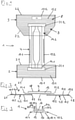
- the hygiene article 1 comprises a front part 2, a back part 3 and an insert part 4 connecting the front part 2 and back part 3 to one another.
- the front part 2 and back part 3 together form a chassis 5.
- the front part 2 is rectangular with an upper edge 6.1 and a lower edge 7.1 parallel thereto.
- the back part 3 has a rectangular upper section 8 with an upper edge 6.2 and a substantially trapezoidal lower section 9 with a lower edge 7.2, which runs at an acute angle to the upper edge on the sides, the height of the back part 3 increasing towards the insert part 4.
- the front part 2 and the back part 3 each have a collar 10.1, 10.2.
- the front part 2 and the back part 3 are each laminates, which consist of two layers 11.1, 11.2, 12.1, 12.2 of non-woven fabric with elastic threads 13.1, 13.2 arranged between the two layers.
- the elastic threads 13.1, 13.2 are aligned parallel to the upper edges 6.1, 6.2 of the front part 2 and back part 3.
- the waistband 10.1, 10.2 is delimited by an edge region of the outer layer of the laminate 11.1, 11.2 that is folded over towards the inside.
- two elastic threads 13.1 with the same titre (e.g. 470 dtex) and at a constant distance from one another (e.g. 4 mm) are arranged in the front part.
- the density of the elastic threads 13.1 below the collar 10.1 is z. B. 2.5 threads per centimeter.
- elastic threads 13.1 are arranged with the same titer and a constant distance from one another. The titer of these threads is greater (e.g. 680 dtex) than the titer of the ones below arranged threads.
- their spacing (z. B. 2.5 mm) is less than the spacing of the threads arranged underneath.
- the density is 4 threads/cm.
- elastic threads 13.2 with the same titer (e.g. 470 dtex) and the same distance (e.g. 4 mm) are arranged below the collar 10.2.
- the density of the elastic threads 13.2 below the collar 10.2 is z. B. 2.5 threads per centimeter.
- Elastic threads 13.2 with the same denier and a constant distance from one another are arranged within the bundle 10.2.
- the linear density of these elastic threads 13.2 is larger (e.g. 680 dtex) and the distance between these elastic threads 13.2 is smaller (e.g. 2.5 mm) than in the case of the threads below the collar 10.2.
- the density is 4 threads/cm.
- the end areas 14.1, 14.2 of the insert part 4 cover the lower edge areas of the front part 2 and back part 3 and are glued to them there using hot glue. In the overlapping areas of insert part 4 and front part 2 and back part 3, the elastic threads 13.1, 13.2 are severed and not attached to the laminates.
- the insert part 4 comprises an absorbent core 15, which has a middle layer 15.1 made from a mixture of cellulose fibers and superabsorbents and a bottom layer 15.2 and a top layer 15.3, each made from cellulose fibers (cf. 4 ).
- the absorbent core 15 has its greatest thickness (7 mm) in the middle and a thickness that decreases towards the ends (3-5 mm). The thickness of the absorbent core 15 decreases towards the ends in the end regions 14.2, 14.2 of the insert part 4 that cover the lower edge regions of the front part 2 and back part 3.
- An acquisition layer 16 is applied to the inside of the absorbent core 15 .
- the absorbent core 15 is wrapped in a nonwoven 17 that covers the underside and the two side edges of the absorbent core 15 and the edge areas of the acquisition layer 16 (C wrap).
- the absorbent core 15, the acquisition layer 16 and the nonwoven 17 are surrounded by a further nonwoven 18 as a top sheet.
- the top sheet has a lower part 18.1 and an upper part 18.2, which overlap one another at the two edges of the absorbent core 15.
- Elastic threads 19.1, 19.2 running in the longitudinal direction of the core are arranged there between the upper part 18.1 and lower part 18.2 and are attached to the other nonwoven 18 by means of hot glue and/or ultrasonic welding.
- nonwoven sealing strips 20.1, 20.2 are arranged on the two longitudinal sides of the additional nonwoven 18, on the outer edges of which additional elastic threads 21.1, 21.2 are attached, preferably by hot gluing or ultrasonic welding.
- the two narrow edges of the insert part 4 are covered by strip-shaped covers 22.1, 22.2 made of a fleece material.
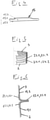
- the front part 2 and the back part 3 are fastened to one another at the two vertical lateral edges in side seams 23.1, 23.2 by means of embossing patterns 24.1, 24.2, which are produced by hot embossing (cf. Figures 5, 6 ).
- Two strips 24.1, 24.2, 25.1, 25.2 made of a fleece material are inserted into each side seam 23.123.2 and fixed by the embossed pattern 24.1, 24.2.
- the strips 24.1, 24.2, 25.1, 25.2 protrude from the inner edges of the side seams 23.1, 23.2 and cover the adjoining edge areas on the inside of the front part 2 and the back part 3.
- All elastic threads 13, 19, 21 are applied to the flat-lying materials in a pretensioned state, so that they can gather these materials when they are relieved and can be stretched when they are put on.
Landscapes
- Health & Medical Sciences (AREA)
- Epidemiology (AREA)
- Engineering & Computer Science (AREA)
- Biomedical Technology (AREA)
- Heart & Thoracic Surgery (AREA)
- Vascular Medicine (AREA)
- Life Sciences & Earth Sciences (AREA)
- Animal Behavior & Ethology (AREA)
- General Health & Medical Sciences (AREA)
- Public Health (AREA)
- Veterinary Medicine (AREA)
- Absorbent Articles And Supports Therefor (AREA)
Abstract
Description
- Die Erfindung betrifft einen Hygieneartikel in Höschenform.
- Hygieneartikel in Höschenform (Pants) dienen dem Auffangen von Ausscheidungen des menschlichen Körpers, wie Harn oder Stuhl. Sie werden insbesondere von Personen benutzt, die unter Inkontinenz leiden, vorwiegend von Senioren. Derartige Pants werden aus Fasermaterialien, insbesondere aus zellulosehaltigen und/oder Superabsorber enthaltenden Fasermaterialien, sowie aus Kunststofffolien und Vliesstoffen hergestellt. Es handelt sich hierbei um Einmalartikel (Disposables), die nach einmaligem Gebrauch weggeworfen werden. Die Hersteller sind bestrebt, die Eigenschaften von Pants denen von herkömmlicher Unterwäsche anzunähern, um Tragkomfort und Akzeptanz beim Verbraucher zu verbessern.
- Grundsätzlich weisen Hygieneartikel in Höschenform ein Vorderteil, ein Rückenteil sowie ein Vorderteil und Rückenteil miteinander verbindendes Einsatzteil auf, wobei Vorderteil und Rückenteil am oberen Rand eine Hüftöffnung umgrenzen, Vorderteil, Rückenteil und Einsatzteil an zwei seitlichen Rändern Beinöffnungen umgrenzen, das Einsatzteil im Schrittbereich einen Saugkern aufweist und Vorderteil und Rückenteil parallel zu den oberen Rändern verlaufende und im entspannten Zustand Vorderteil und Rückenteil raffende elastische Fäden aufweisen.
- Die Elastifizierungsmittel sind elastische Fäden (z. B. Elasthan-Fäden), die auf die Teile des Hygieneartikels im gespannten Zustand aufgebracht sind, sodass sie diesen im entspannten Zustand raffen. Die parallel zum oberen Rand verlaufenden Elastifizierungsmittel dienen dazu, den Hygieneartikel im Bereich des Unterleibes und der Hüfte zu fixieren. Zur Fixierung im Hüftbereich kann der Hygieneartikel einen elastischen Bund aufweisen. Vorzugsweise sind zusätzlich an den Beinöffnungen Elastifizierungsmittel vorhanden, um den Hygieneartikel eng an die Beine des Trägers anzulegen.
- Herkömmliche Pants weisen im Bereich von Vorderteil und Rückenteil (zusammenfassend als "Chassis" bezeichnet) wenige, weit auseinanderliegende elastische Fäden auf. Beispielsweise beträgt der Abstand von Faden zu Faden etwa 8 mm und die Faserstärke 540 dtex. Die elastischen Fäden schneiden in die Haut ein, machen das Chassis sperrig und kratzig und erzeugen auf der Haut ein Fremdkörpergefühl, dass vom Träger als störend empfunden wird. Zur sicheren Fixierung des Hygieneartikels am Körper des Trägers sind die Elastifizierungsmittel im Bereich des Bundes stark ausgeprägt, sodass die Hygieneartikel im entspannten Zustand insbesondere an der Hüftöffnung entsprechend stärker gerafft sind und mit der entsprechend hoher Spannung am Hüftbereich anliegt.
- Davon ausgehend liegt der Erfindung die Aufgabe zugrunde, einen Hygieneartikel in Höschenform mit verbessertem Tragekomfort zu schaffen.
- Die Aufgabe wird durch einen Hygieneartikel in Höschenform mit den Merkmalen von Anspruch 1 gelöst. Vorteilhafte Ausführungsarten des Hygieneartikels sind in Unteransprüchen angegeben.
- Der erfindungsgemäße Hygieneartikel in Höschenform weist ein Vorderteil und ein Rückenteil sowie einen Vorderteil und Rückenteil miteinander verbindendes Einsatzteil (Insert) auf, wobei Vorderteil und Rückenteil am oberen Rand eine Hüftöffnung umgrenzen, Vorderteil, Rückenteil und Einsatzteil an zwei seitlichen Rändern Beinöffnungen umgrenzen, das Einsatzteil im Schrittbereich einen Saugkern aufweist und Vorderteil und Rückenteil parallel zueinander verlaufende und im entspannten Zustand Vorderteil und Rückenteil raffende elastische Fäden aufweist, dadurch gekennzeichnet, dass die elastischen Fäden in senkrecht zum oberen Rand verlaufender Richtung im Mittel eine Dichte von mindestens zwei Fäden pro Zentimeter, vorzugsweise mindestens 2,5 Fäden pro Zentimeter, vorzugsweise mindestens vier Fäden pro Zentimeter aufweist.
- Dem erfindungsgemäßen Hygieneartikel liegt die Erkenntnis zugrunde, dass ein direkter Zusammenhang zwischen der Weichheit, der Flexibilität, Formstabilität und einem angenehmen Tragegefühl des Hygieneartikels auf der nackten Haut des Trägers und der Dichte der elastischen Fäden in Vorderteil und Rückenteil besteht. Als Maß für die Dichte wird die Anzahl der elastischen Fäden pro Längeneinheit (Zentimeter) in einer senkrecht zum oberen Rand verlaufenden Richtung herangezogen. Es wurde gefunden, dass bei einem Hygieneartikel, der im Mittel eine Dichte von mindestens zwei Fäden pro Zentimeter, vorzugsweise mindestens 2,5 Fäden pro Zentimeter, vorzugsweise mindestens vier Fäden pro Zentimeter aufweist, sich ein wesentlich verbesserter Tragekomfort einstellt. Dabei wird als Mittel der Dichte die Anzahl der Fäden pro Zentimeter verstanden, die sich aus dem Quotienten der gesamten Anzahl der zum oberen Rand parallelen elastischen Fäden des Vorderteils/Rückenteils (d.h. des Vorderteils und/oder des Rückenteils) und der maximalen Höhe des Hauptteils des Vorderteils/Rückenteils ergibt. Der Hauptteil des Vorderteils/Rückenteils ist derjenige Teil des Vorderteils/Rückenteils, der keinen elastischen Bund (Gürtel) aufweist, in dem elastische Fäden mit einer höheren Dichte angeordnet sind. Bei einem Vorderteil/Rückenteil mit Gürtel ist der Hauptteil also der unter dem Gürtel angeordnete Teil des Vorderteils/Rückenteils und bei einem Vorderteil/Rückenteil ohne Gürtel ist der Hauptteil das gesamte Vorderteil/Rückenteil.
- Aufgrund der hohen Dichte der elastischen Fäden bildet das Chassis im entspannten Zustand weniger Rüschen, legt sich glatter an den Körper des Trägers an und hält sicherer die angelegte Position ein. Insbesondere kann sich der Hygieneartikel eng und ohne Bildung von Materialanhäufungen an Knochen im Beckenbereich anschmiegen. Hierdurch ist es auch möglich, die Fäden mit einer geringeren Vorspannung als bei herkömmlichen Pants auf Vorderteil und Rückenteil aufzubringen, ohne dass der Hygieneartikel rutscht. Da der Hygieneartikel glatt und ohne Einzuschneiden an der Haut anliegt, sicher sitzt, sich an die Körperkontur anschmiegt, nicht aufträgt und sich unter der Kleidung nicht abzeichnet, wird das Tragen des Hygieneartikels als besonders angenehm empfunden.
- Gemäß einer Ausführungsart der Erfindung verlaufen die elastischen Fäden entlang zum oberen Rand von Vorderteil/Rückenteil parallelen Achsen. Dies ist besonders vorteilhaft für die Herstellung der Hygieneartikel in einem Hochgeschwindigkeitsprozess. Gemäß einer weiteren Ausführungsart verlaufen die elastischen Fäden geradlinig oder wellenförmig (z.B. sinus-, rechteck-, dreieck- oder sägezahnförmig) entlang der Achsen. Der geradlinige Verlauf ist besonders vorteilhaft für die Herstellung. Mit einem wellenförmigen Verlauf wird eine Elastizität des Hygieneartikels in einer senkrecht zu den parallelen Achsen verlaufenden Richtung erreicht.
- Gemäß einer weiteren Ausführungsart der Erfindung sind die elastischen Fäden in einer senkrecht zum oberen Rand verlaufenden Richtung zumindest in einem Abschnitt des Vorderteils und des Rückenteils gleichmäßig über das Vorderteil und das Rückenteil verteilt. Hierdurch wird ein Einschneiden von einzelnen Fäden in die Haut des Trägers besonders wirksam vermieden und ein besonders gleichmäßiger, angenehmer, sicherer und anpassungsfähiger Sitz des Hygieneartikels am Körper des Trägers erreicht. Unter einer gleichmäßigen Verteilung der elastischen Fäden über das Vorderteil und das Rückenteil wird verstanden, dass die Fäden in einer zum oberen Rand senkrechten Richtung den gleichen Abstand voneinander haben. Gemäß einer weiteren Ausführungsart sind die Fäden über die gesamte Höhe des Vorderteils und des Rückenteils gleichmäßig verteilt. Gemäß einer weiteren Ausführungsart sind die Fäden über das Hauptteil des Vorderteils/Rückenteils gleichmäßig verteilt. Gemäß einer weiteren Ausführungsart sind die Fäden über den elastischen Bund gleichmäßig verteilt. Gemäß einer weiteren Ausführungsart, bei dem der Hygieneartikel am oberen Rand einen umlaufenden elastischen Bund aufweist, sind die elastischen Fäden unterhalb des Bundes gleichmäßig über das Vorderteil und das Rückenteil verteilt. Gemäß einer weiteren Ausführungsart, bei dem auch der Bund elastische Fäden aufweist, sind die elastischen Fäden über die gesamte Höhe des Vorderteils und des Rückenteils gleichmäßig verteilt oder im Bereich des Bundes anders verteilt als darunter.
- Gemäß einer weiteren Ausführungsart haben die Fäden im Hauptteil des Vorderteils/Rückenteils im Mittel eine andere, vorzugsweise geringere, Dichte als im Bund. Gemäß einer weiteren Ausführungsart beträgt die mittlere Dichte im Hauptteil 2,5 Fäden/cm und im Bund 4 Fäden/cm.
- Gemäß einer weiteren Ausführungsart weisen die elastischen Fäden in einer senkrecht zum oberen Rand verlaufenden Richtung zumindest über einen Abschnitt des Vorderteils und des Rückenteils denselben Titer auf. In der Textiltechnik ist der Titer ein gebräuchliches Maß für die Feinheit von Fäden. Dadurch, dass die elastischen Fäden von Vorderteil und Rückenteil denselben Titer aufweisen, wird ein besonders glatt anliegender, sicher sitzender und nicht auftragender Hygieneartikel erreicht. Gemäß einer weiteren Ausführungsart weisen Vorderteil und Rückenteil über die gesamte Höhe elastische Fäden mit demselben Titer auf. Gemäß einer anderen Ausführungsart weißt der Hygieneartikel am oberen Rand einen umlaufenden elastischen Bund auf und weisen die elastischen Fäden im Hauptteil vom Vorderteil/Rückenteil unterhalb des Bundes denselben Titer auf. Gemäß einer weiteren Ausführungsart weist der elastische Bund ebenfalls elastische Fäden auf und weisen die elastischen Fäden im Bereich des Bundes denselben Titer oder einen anderen Titer, vorzugsweise größeren Titer, als die Fäden unterhalb des elastischen Bundes, auf.
- Gemäß einer weiteren Ausführungsart weisen die elastischen Fäden einen Titer von 400 bis 750 dtex auf. Gemäß einer weiteren Ausführungsart weisen die elastischen Fäden im Bereich des Hauptteils von Vorderteil/Rückenteil einen Titer von 400 bis 600 dtex, vorzugweise 450 bis 500 dtex, vorzugsweise von 470 dtex auf, und im Bereich des Bundes von 600 bis 750 dtex, vorzugsweise von 680 dtex.
- Gemäß einer weiteren Ausführungsart weisen das Vorderteil und/oder das Rückenteil ein Laminat aus zwei Lagen Vliesstoff mit zwischen den beiden Lagen angeordneten und an mindestens einer Lage befestigten elastischen Fäden auf oder sind durch ein solches Laminat gebildet. Durch die Ausbildung von Vorderteil und/oder Rückenteil als Laminat aus Vliesstoff und elastischen Fäden wird eine besonders dünne und hautfreundliche Ausführung und ein besonders hoher Tragekomfort erreicht.
- Die nachfolgenden Ausführungsarten sind insbesondere vorteilhaft für eine kostengünstige Herstellung mit hoher Geschwindigkeit: Gemäß einer Ausführungsart sind die elastischen Fäden an mindestens einer Lage aus Vliesstoff angeklebt und/oder durch Ultraschallbschweißen an mindestens einer Lage aus Vliesstoff befestigt. Gemäß einer weiteren Ausführungsart sind die elastischen Fäden im gedehnten Zustand auf eine Lage aus einem flach ausgebreiteten Vliesstoff aufgebracht und an dieser befestigt. Gemäß einer weiteren Ausführungsart sind die elastischen Fäden in einer senkrecht zum oberen Rand verlaufenden Richtung überall mit derselben Vorspannung auf eine Lage aus einem Vliesstoff aufgebracht und an dieser befestigt.
- Gemäß einer weiteren Ausführungsart weisen das Vorderteil und das Rückenteil am oberen Rand einen elastischen Bund auf. Gemäß einer bevorzugten Ausführungsart haben das Vorderteil und das Rückenteil innerhalb des elastischen Bundes parallel zum oberen Rand verlaufende und im entspannten Zustand den Bund raffende elastische Fäden. Durch den elastischen Bund wird der Hygieneartikel noch mehr an die Erscheinungsform herkömmlicher Unterwäsche angenähert. Ferner kann durch den elastischen Bund ein noch sicherer Sitz des Hygieneartikels am Körper des Trägers erreicht werden. Zudem kann der Hygieneartikel im Bereich des elastischen Bundes besonders reißfest ausgebildet werden, sodass der Hygieneartikel beim Anlegen nicht reißt. Der elastische Bund kann von den tiefer angeordneten Abschnitten (d.h. den unterhalb des Bandes angeordneten Abschnitten) von Vorderteil und Rückenteil durch eines oder mehrere der folgenden Merkmale abgegrenzt sein:
- (i) zwischen den tiefer angeordneten Abschnitten von Vorderteil und Rückenteil und dem elastischen Bund ist eine von elastischen Fäden freie Zone vorhanden,
- (ii) in dem elastischen Bund ist die Dichte der Fäden größer als in den tiefer angeordneten Abschnitten von Vorderteil und Rückenteil,
- (iii) in dem elastischen Bund weisen die elastischen Fäden einen höheren Titer auf als in den tiefer angeordneten Abschnitten von Vorderteil und Rückenteil,
- (iv) in dem elastischen Bund sind die elastischen Fäden mit einer größeren Vorspannung aufgebracht als in den tiefer angeordneten Abschnitten von Vorderteil und Rückenteil.
- Gemäß einer weiteren Ausführungsart ist das Vorderteil rechteckig und/oder ist das Rückenteil in einem oberen Abschnitt rechteckig und in einem unteren Abschnitt trapezförmig. Dies ist vorteilhaft für eine Passform, die sich eng an den Körper des Trägers anschmiegt, sicher sitzt, wenig aufträgt, Bein- und Bewegungsfreiheit begünstigt und mit relativ geringem Materialaufwand hergestellt werden kann.
- Der Hygieneartikel kann insbesondere eine Passform aufweisen, die der Passform von Unterwäsche entspricht, die als Hipster (Hüfthose) bezeichnet wird.
- Gemäß einer weiteren Ausführungsart sind das Vorderteil und das Rückenteil in Seitennähten an den seitlichen Rändern durch Heißkleber und/oder Prägemuster miteinander verbunden, wobei vorzugsweise in den Seitennähten zwischen den einander überlappenden seitlichen Rändern von Vorderteil und Rückenteil Streifen aus einem Vliesmaterial eingelegt sind, die von den inneren Rändern der Seitennähte vorstehen und die angrenzenden Randbereiche des Vorderteils und des Rückenteils überdecken. Durch die Streifen aus Vliesmaterial wird der Tragekomfort weiter verbessert, da diese einen direkten Kontakt der Seitennähte mit der Haut des Trägers verhindern, der als unangenehm empfunden wird.
- Gemäß einer weiteren Ausführungsart überdecken die Endbereiche des Einsatzteils untere Randbereiche des Vorderteils und des Rückenteils und sind an diesen befestigt und sind die elastischen Fäden im Bereich des Einsatzteils durchtrennt. Hierdurch wird verhindert, dass beim Anlegen des Hygieneartikels die Dehnung der elastischen Fäden auf das Einsatzteil und den Saugkern einwirkt und diese zusammenziehen oder anderweitig verformen. Hierdurch wird der Tragkomfort im Schrittbereich verbessert. Zu diesem Zweck sind gemäß einer weiteren Ausführungsart die elastischen Fäden im Bereich des Einsatzteils nicht an den Lagen aus Vliesstoff befestigt.
- Die elastischen Fäden können jeweils aus einer Vielzahl von Fasern zusammengesetzt oder Einzelfäden (Endlosfasern) sein. Gemäß einer weiteren Ausführungsart sind die elastischen Fäden Elasthanfäden. Elasthanfäden sind aus Fasern aus Elasthan gebildete Fäden. Gemäß einer weiteren Ausführungsart bestehen die elastischen Fäden im Wesentlichen oder vollständig aus Polyurethan (z.B. aus Lycra®). Gemäß einer anderen Ausführungsart sind die elastischen Fäden Gummifäden.
- Gemäß einer weiteren Ausführungsart umfasst der Hygieneartikel mindestens eines der folgenden Merkmale:
- Das Einsatzteil ist an den schmalen Seiten durch Streifen aus einem Vliesmaterial abgedeckt. Hierdurch wird ein besonders hoher Tragekomfort erreicht, da die schmalen Seiten des Einsatzteils direkt an der Haut des Trägers anliegen.
- Das Einsatzteil hat eine Breite von max. 110 mm bis 90 mm, vorzugsweise von 100 mm. Dabei wird ein besonders guter Tragekomfort im Schrittbereich ohne Einschränkung der Flüssigkeitsaufnahme erreicht.
- Der Saugkern umfasst mindestens eine Lage aus einem Gemisch aus Cellulosefasern und Superabsorber. Hierdurch wird eine besonders hohe Aufnahmekapazität von Körperflüssigkeit erreicht. Gemäß einer weiteren Ausführungsart umfasst der Saugkern eine mittlere Lage aus einem Gemisch aus Cellulosefasern und Superabsorbern und zwei äußeren Lagern aus Cellulosefasern.
- Der Saugkern hat in der Mitte seine größte Dicke und eine zu den Enden hin sich verringernde Dicke. Hierdurch wird eine besonders hohe Flüssigkeitsaufnahmekapazität im Bereich der Körperöffnungen erreicht und zugleich das Auftragen des Hygieneartikels im Bereich von Scham und Po verringert.
- Die Dicke des Saugkerns verringert sich zu den Enden des Kerns hin in den die unteren Randbereiche von Vorderteil und Rückenteil überdeckenden Endbereichen des Einsatzteils. Hierdurch wird das Auftragen im Bereich von Scham und Po weiter herabgesetzt.
- Der Saugkern ist in ein Nonwoven eingeschlagen, das den Saugkern C-förmig umhüllt. Hierdurch kann das Fasermaterial des Kerns bei der Produktion und beim Tragen zusammengehalten werden.
- Auf der Innenseite des Saugkerns ist eine Akquisitionsschicht aufgebracht. Hierdurch kann eine gleichmäßige Verteilung von Körperflüssigkeit Ausnutzung der Aufnahmekapazität des Kerns erreicht werden.
- Der Saugkern und die Akquisitions schicht sind von einem weiteren Nonwoven als Topsheet umschlossen. Hierdurch kann das Einsatzteil zusammengehalten und der Tragekomfort im Schrittbereich verbessert werden.
- An den seitlichen Randbereichen des Einsatzteils sind elastische Fäden aufgebracht. Hierdurch kann eine enge Anlage des Einsatzteils an dem Schrittbereich erreicht werden. Gemäß einer bevorzugten Ausführungsart bestehen die elastischen Fäden des Einsatzteils aus denselben Materialien wie die elastischen Fäden des Vorderteils und des Rückenteils.
- An den beiden Längsseiten des Saugkerns sind auf der Innenseite des Einsatzteils Abdichtstreifen (Cuffs) angeordnet, die an den äußeren Rändern mit elastischen Fäden verbunden sind. Hierdurch kann eine besonders gut abdichtende Anlage des Einsatzteils am Schrittbereich erreicht werden. Gemäß einer weiteren Ausführungsart handelt es sich bei den restlichen Fäden um dieselben Materialien wie bei den elastischen Fäden des Vorderteils und des Rückenteils.
- Die Abdichtstreifen haben eine Breite 25 bis 18 mm, vorzugsweise von 22 mm. Hierdurch wird eine besonders gute Abdichtung bei hohem Tragekomfort erreicht.
- Die Erfindung wird nachfolgend anhand der anliegenden Zeichnungen eines Ausführungsbeispiels näher erläutert. In den Zeichnungen zeigen:
- Fig. 1
- einen Hygieneartikel in Höschenform flach ausgebreitet in einer Draufsicht auf die Innenseite;
- Fig. 2
- derselbe Hygieneartikel in einem Längsschnitt;
- Fig. 3
- derselbe Hygieneartikel in einem Querschnitt
- Fig. 4
- Saugkern desselben Hygieneartikels in einem Längsschnitt;
- Fig. 5
- Seitennaht desselben Hygieneartikels in einer Perspektivansicht schräg von der Seite;
- Fig. 6
- Seitennaht desselben Hygieneartikels in einem Querschnitt.
- In der vorliegenden Anmeldung beziehen sich die Angaben "oben" und "unten", davon abgeleitete Angaben wie "darunter" und "darüber" sowie "Vorderteil" und "Rückenteil" auf die Gebrauchsstellung des Hygieneartikels am Körper eines aufrechtstehenden Benutzers.
- Gemäß
Fig. 1 bis 3 umfasst der Hygieneartikel 1 ein Vorderteil 2, ein Rückenteil 3 sowie ein Vorderteil 2 und Rückenteil 3 miteinander verbindendes Einsatzteil 4. Vorderteil 2 und Rückenteil 3 bilden gemeinsam ein Chassis 5. - Das Vorderteil 2 ist rechteckig mit einem oberen Rand 6.1 und einem dazu parallelen unteren Rand 7.1.
- Das Rückenteil 3 hat einen rechteckigen oberen Abschnitt 8 mit einem oberen Rand 6.2 und einen im Wesentlichen trapezförmigen unteren Abschnitt 9 mit einem unteren Rand 7.2, der an den Seiten spitzwinklig zum oberen Rand verläuft, wobei die Höhe des Rückenteils 3 zum Einsatzteil 4 hin zunimmt.
- Am oberen Rand 6.1, 6.2 haben das Vorderteil 2 und das Rückenteil 3 jeweils einen Bund 10.1, 10.2.
- Das Vorderteil 2 und das Rückenteil 3 sind jeweils Laminate, die aus zwei Lagen 11.1, 11.2, 12.1, 12.2 Vliesstoff mit zwischen den beiden Lagen angeordneten elastischen Fäden 13.1, 13.2 bestehen. Die elastischen Fäden 13.1, 13.2 sind parallel zu den oberen Rändern 6.1, 6.2 von Vorderteil 2 und Rückenteil 3 ausgerichtet. Zudem ist der Bund 10.1, 10.2 durch einen gegen die Innenseite umgeschlagenen Randbereich der äußeren Lage des Laminats 11.1, 11.2 begrenzt.
- Unterhalb des Bundes 10.1 sind im Vorderteil 2 elastische Fäden 13.1 mit demselben Titer (z. B. 470 dtex) und mit einem konstanten Abstand voneinander (z. B. 4 mm) angeordnet. Die Dichte der elastischen Fäden 13.1 unterhalb des Bundes 10.1 beträgt z. B. 2,5 Fäden pro Zentimeter. Im Bereich des Bundes 10.1 des Vorderteils 2 sind elastische Fäden 13.1 mit demselben Titer und konstantem Abstand voneinander angeordnet. Der Titer dieser Fäden ist größer (z. B. 680 dtex) als der Titer der darunter angeordneten Fäden. Außerdem ist ihr Abstand (z. B. 2,5 mm) geringer als der Abstand der darunter angeordneten Fäden. Zum Beispiel beträgt im Bereich des Bundes 10.1 die Dichte 4 Fäden/cm.
- Im Rückenteil 3 sind unterhalb des Bundes 10.2 elastische Fäden 13.2 mit demselben Titer (z. B. 470 dtex) und demselben Abstand (z. B. 4 mm) voneinander angeordnet. Die Dichte der elastischen Fäden 13.2 unterhalb des Bundes 10.2 beträgt z. B. 2,5 Fäden pro Zentimeter. Innerhalb des Bundes 10.2 sind elastische Fäden 13.2 mit demselben Titer und konstantem Abstand voneinander angeordnet. Der Titer dieser elastischen Fäden 13.2 ist größer (z. B. 680 dtex) und der Abstand dieser elastischen Fäden 13.2 ist kleiner (z. B. 2,5 mm) als bei den Fäden unterhalb des Bundes 10.2. Zum Beispiel beträgt im Bereich des Bundes 10.2 die Dichte 4 Fäden/cm.
- Die Endbereiche 14.1, 14.2 des Einsatzteils 4 überdecken die unteren Randbereiche von Vorderteil 2 und Rückenteil 3 und sind dort mit diesen mittels Heißleim verklebt. In den Überdeckungsbereichen von Einsatzteil 4 sowie Vorderteil 2 und Rückenteil 3 sind die elastischen Fäden 13.1, 13.2 durchtrennt und nicht an den Laminaten befestigt.
- Das Einsatzteil 4 umfasst einen Saugkern 15, der eine mittlere Lage 15.1 aus einem Gemisch aus Cellulosefasern und Superabsorbern und eine untere Lage 15.2 und eine obere Lage 15.3 jeweils aus Cellulosefasern aufweist (vgl.
Fig. 4 ). Der Saugkern 15 hat in der Mitte seine größte Dicke (7 mm) und eine zu den Enden hin sich verringernde Dicke (3-5 mm). Die Dicke des Saugkerns 15 verringert sich zu den Enden hin in den die unteren Randbereiche von Vorderteil 2 und Rückenteil 3 überdeckenden Endbereichen 14.2, 14.2 des Einsatzteils 4. - Auf die Innenseite des Saugkerns 15 ist eine Akquisitionsschicht 16 aufgebracht.
- Der Saugkern 15 ist in ein Nonwoven 17 eingeschlagen, dass die Unterseite und die beiden Seitenränder des Saugkerns 15 und die Randbereiche der Akquisitionsschicht 16 überdeckt (C-Einschlag).
- Der Saugkern 15, die Akquisitionsschicht 16 und das Nonwoven 17 sind von einen weiteren Nonwoven 18 als Topsheet umschlossen. Das Topsheet hat ein Unterteil 18.1 und ein Oberteil 18.2, die an den beiden Rändern des Saugkerns 15 einander überdecken. Dort sind zwischen Oberteil 18.1 und Unterteil 18.2 in Längsrichtung des Kerns verlaufende elastische Fäden 19.1, 19.2 angeordnet und mittels Heißleim und/oder durch Ultraschallschweißen am weiteren Nonwoven 18 befestigt.
- Oberhalb des Saugkerns 15 sind an den beiden Längsseiten des weiteren Nonwovens 18 Abdichtstreifen 20.1, 20.2 aus Nonwoven angeordnet, an deren äußeren Rändern weitere elastische Fäden 21.1, 21.2 befestigt sind, vorzugsweise durch Heißkleben oder durch Ultraschallschweißen.
- Die beiden schmalen Ränder des Einsatzteils 4 sind durch streifenförmige Abdeckungen 22.1, 22.2 aus einem Vliesmaterial abgedeckt.
- Das Vorderteil 2 und das Rückenteil 3 sind an den beiden vertikalen seitlichen Ränder in Seitennähten 23.1, 23.2 mittels Prägemustern 24.1, 24.2 aneinander befestigt, die durch Heißprägen erzeugt sind (vgl.
Fig. 5, 6 ). In jeder Seitennaht 23.123.2 sind zwei Streifen 24.1, 24.2, 25.1, 25.2 aus einem Vliesmaterial eingelegt und durch die Prägemuster 24.1, 24.2 fixiert. Die Streifen 24.1, 24.2, 25.1, 25.2 stehen an den inneren Rändern der Seitennähte 23.1, 23.2 vor und decken die angrenzenden Randbereiche an der Innenseite des Vorderteils 2 und des Rückenteils 3 ab. Sämtliche elastische Fäden 13, 19, 21 sind im vorgespannten Zustand auf die flachliegenden Materialien aufgebracht, sodass sie diese Materialien bei Entlastung raffen und beim Anlegen gedehnt werden können. - Aufgrund der hohen Dichte der elastischen Fäden 13.1, 13.2 im Bereich von Vorderteil 2 und Rückenteil 3 wird ein hoher Tragekomfort erreicht. Hierzu tragen auch die Ausbildung des Bundes 10 sowie die Abdeckungen 22.1, 22.2 der Enden des Einsatzteils 4 und der Seitennähte 23.1, 23.2 bei.
Claims (17)
- Hygieneartikel in Höschenform mit einem Vorderteil und einem Rückenteil sowie einem Vorderteil und Rückenteil miteinander verbindenden Einsatzteil, wobei Vorderteil und Rückenteil am oberen Rand eine Hüftöffnung umgrenzen, Vorderteil, Rückenteil und Einsatzteil an zwei seitlichen Rändern Beinöffnungen umgrenzen, das Einsatzteil im Schrittbereich einen Saugkern aufweist und Vorderteil und Rückenteil parallel zueinander verlaufende und im entspannten Zustand Vorderteil und Rückenteil raffende elastische Fäden aufweisen,
dadurch gekennzeichnet, dass
die elastischen Fäden in senkrecht zum oberen Rand verlaufender Richtung im Mittel eine Dichte von mindestens fünf Fäden pro Zentimeter, vorzugsweise mindestens acht Fäden pro Zentimeter, vorzugsweise mindestens zehn Fäden pro Zentimeter aufweisen. - Hygieneartikel nach Anspruch 1, bei dem die elastischen Fäden entlang von zum oberen Rand von Vorderteil und Rückenteil parallelen Achsen verlaufen.
- Hygieneartikel nach Anspruch 2, bei dem die elastischen Fäden geradlinig oder wellenförmig entlang der Achsen verlaufen.
- Hygieneartikel nach einem der Ansprüche 1 bis 3, bei dem die elastischen Fäden in einer senkrecht zum oberen Rand verlaufenden Richtung zumindest in einem Abschnitt des Vorderteils und des Rückenteils gleichmäßig über das Vorderteil und das Rückenteil verteilt sind.
- Hygieneartikel nach einem der Ansprüche 1 bis 4, bei dem die elastischen Fäden in einer senkrecht zum oberen Rand verlaufenden Richtung zumindest über einen Abschnitt des Vorderteils und des Rückenteils denselben Titer aufweisen.
- Hygieneartikel nach einem der Ansprüche 1 bis 5, bei dem das Vorderteil und/oder das Rückenteil ein Laminat aus zwei Lagen Vliesstoff mit zwischen den beiden Lagen angeordneten und an mindestens einer Lage befestigten elastischen Fäden umfassen oder durch ein solches Laminat gebildet sind.
- Hygieneartikel nach Anspruch 6, bei dem die elastischen Fäden an mindestens einer Lage aus Vliesstoff angeklebt und/oder durch Ultraschallschweißen an mindestens einer Lage aus Vliesstoff befestigt sind.
- Hygieneartikel nach einem der Ansprüche 1 bis 7, bei dem die elastischen Fäden im gedehnten Zustand auf eine Lage aus einem flach ausgebreiteten Vliesstoff aufgebracht und an dieser befestigt sind.
- Hygieneartikel nach Anspruch 8, bei dem die elastischen Fäden in einer senkrecht zum oberen Rand verlaufenden Richtung überall mit derselben Vorspannung auf eine Lage aus einem Vliesstoff aufgebracht und an dieser befestigt sind.
- Hygieneartikel nach einem der Ansprüche 1 bis 9, bei dem das Vorderteil und das Rückenteil am oberen Rand einen elastischen Bund aufweisen.
- Hygieneartikel nach Anspruch 10, bei dem das Vorderteil und das Rückenteil innerhalb des elastischen Bundes parallel zueinander verlaufende und im entspannten Zustand den Bund raffende elastische Fäden aufweisen.
- Hygieneartikel nach einem der Ansprüche 1 bis 11, bei dem das Vorderteil rechteckig ist und/oder bei dem das Rückenteil in einem oberen Abschnitt rechteckig und in einem unteren Abschnitt trapezförmig ist.
- Hygieneartikel nach einem der Ansprüche 1 bis 12, bei dem das Vorderteil und das Rückenteil in Seitennähten an den seitlichen Rändern durch Heißkleber und/oder Prägemuster miteinander verbunden sind, wobei vorzugsweise in den Seitennähten zwischen den einander überlappenden seitlichen Rändern von Vorderteil und Rückenteil Streifen aus einem Vliesmaterial eingelegt sind, die von den inneren Rändern der Seitennähte vorstehen und die angrenzenden Randbereiche des Vorderteils und des Rückenteils überdecken.
- Hygieneartikel nach einem der Ansprüche 1 bis 13, bei dem Endbereiche des Einsatzteils untere Randbereiche des Vorderteils und des Rückenteiles überdecken, an diesen befestigt sind und die die elastischen Fäden im Bereich des Einsatzteils durchtrennt sind.
- Hygieneartikel nach Anspruch 14, bei dem die elastischen Fäden im Bereich des Einsatzteils nicht an den Lagen aus Vliesstoff befestigt sind.
- Hygieneartikel nach einem der Ansprüche 1 bis 15, bei dem die elastischen Fäden Elasthanfäden oder Gummifäden sind.
- Hygieneartikel nach einem der Ansprüche 1 bis 16 umfassend mindestens eines der folgenden Merkmale:- das Einsatzteil ist an den schmalen Seiten durch Streifen aus einem Vliesmaterial abgedeckt,- der Saugkern umfasst mindestens eine Lage aus einem Gemisch aus Cellulosefasern und Superabsorbern,- der Saugkern hat in der Mitte seine größte Dicke und eine zu den Enden hin sich verringernde Dicke,- die Dicke des Saugkerns verringert sich zu den Enden des Saugkerns hin in den die unteren Randbereiche von Vorderteil und Rückenteil überdeckenden Endbereichen des Einsatzteils,- der Saugkern ist in ein Nonwoven eingeschlagen, wobei das Nonwoven den Saugkern vorzugsweise C-förmig umhüllt,- auf die Innenseite des Saugkerns ist eine Akquisitionsschicht aufgebracht, wobei die Akquisitionsschicht vorzugsweise auf der offenen Seite eines den Saugkern C-förmig umhüllenden Nonwovens angeordnet ist,- der Saugkern und die Akquisitionsschicht sind von einem weiteren Nonwoven als Topsheet umschlossen,- an den seitlichen Randbereichen des Einsatzteils sind elastische Fäden aufgebracht,- die elastischen Fäden sind zwischen zwei Lagen des weiteren Nonwovens angeordnet und an mindestens einer dieser Lagen befestigt,- auf der Innenseite des Einsatzteils sind den beiden Längsseiten des Saugkerns Abdichtstreifen (Cuffs) angeordnet, an deren äußeren Rändern elastische Fäden befestigt sind.
Priority Applications (3)
| Application Number | Priority Date | Filing Date | Title |
|---|---|---|---|
| EP20193645.7A EP3960141B1 (de) | 2020-08-31 | 2020-08-31 | Hygieneartikel in höschenform |
| EP21772997.9A EP4203880A1 (de) | 2020-08-31 | 2021-08-31 | Hygieneartikel in höschenform |
| PCT/EP2021/074022 WO2022043583A1 (de) | 2020-08-31 | 2021-08-31 | Hygieneartikel in höschenform |
Applications Claiming Priority (1)
| Application Number | Priority Date | Filing Date | Title |
|---|---|---|---|
| EP20193645.7A EP3960141B1 (de) | 2020-08-31 | 2020-08-31 | Hygieneartikel in höschenform |
Publications (3)
| Publication Number | Publication Date |
|---|---|
| EP3960141A1 true EP3960141A1 (de) | 2022-03-02 |
| EP3960141B1 EP3960141B1 (de) | 2024-02-14 |
| EP3960141C0 EP3960141C0 (de) | 2024-02-14 |
Family
ID=72292390
Family Applications (2)
| Application Number | Title | Priority Date | Filing Date |
|---|---|---|---|
| EP20193645.7A Active EP3960141B1 (de) | 2020-08-31 | 2020-08-31 | Hygieneartikel in höschenform |
| EP21772997.9A Withdrawn EP4203880A1 (de) | 2020-08-31 | 2021-08-31 | Hygieneartikel in höschenform |
Family Applications After (1)
| Application Number | Title | Priority Date | Filing Date |
|---|---|---|---|
| EP21772997.9A Withdrawn EP4203880A1 (de) | 2020-08-31 | 2021-08-31 | Hygieneartikel in höschenform |
Country Status (2)
| Country | Link |
|---|---|
| EP (2) | EP3960141B1 (de) |
| WO (1) | WO2022043583A1 (de) |
Citations (6)
| Publication number | Priority date | Publication date | Assignee | Title |
|---|---|---|---|---|
| EP1787610A1 (de) * | 2004-06-30 | 2007-05-23 | Daio Paper Corporation | Hosenähnliche einwegwindel |
| DE102010019702A1 (de) * | 2010-05-07 | 2011-11-10 | Paul Hartmann Ag | Verfahren zur Herstellung eines elastischen Vliesstoffverbundmaterials |
| WO2014208635A1 (ja) * | 2013-06-28 | 2014-12-31 | 花王株式会社 | パンツ型使い捨ておむつ |
| EP3117809A1 (de) * | 2014-03-12 | 2017-01-18 | Daio Paper Corporation | Einwegwindel vom hosentyp und herstellungsverfahren dafür |
| WO2018209629A1 (en) * | 2017-05-18 | 2018-11-22 | The Procter & Gamble Company | Absorbent article with belt having profiled elasticity |
| WO2019193906A1 (ja) * | 2018-04-02 | 2019-10-10 | 花王株式会社 | パンツ型吸収性物品 |
Family Cites Families (2)
| Publication number | Priority date | Publication date | Assignee | Title |
|---|---|---|---|---|
| CA2895643C (en) * | 2012-12-21 | 2017-11-07 | Sca Hygiene Products Ab | Elastic laminate and process for the manufacture of elastic laminate |
| US10828208B2 (en) * | 2016-11-21 | 2020-11-10 | The Procte & Gamble Company | Low-bulk, close-fitting, high-capacity disposable absorbent pant |
-
2020
- 2020-08-31 EP EP20193645.7A patent/EP3960141B1/de active Active
-
2021
- 2021-08-31 WO PCT/EP2021/074022 patent/WO2022043583A1/de not_active Ceased
- 2021-08-31 EP EP21772997.9A patent/EP4203880A1/de not_active Withdrawn
Patent Citations (6)
| Publication number | Priority date | Publication date | Assignee | Title |
|---|---|---|---|---|
| EP1787610A1 (de) * | 2004-06-30 | 2007-05-23 | Daio Paper Corporation | Hosenähnliche einwegwindel |
| DE102010019702A1 (de) * | 2010-05-07 | 2011-11-10 | Paul Hartmann Ag | Verfahren zur Herstellung eines elastischen Vliesstoffverbundmaterials |
| WO2014208635A1 (ja) * | 2013-06-28 | 2014-12-31 | 花王株式会社 | パンツ型使い捨ておむつ |
| EP3117809A1 (de) * | 2014-03-12 | 2017-01-18 | Daio Paper Corporation | Einwegwindel vom hosentyp und herstellungsverfahren dafür |
| WO2018209629A1 (en) * | 2017-05-18 | 2018-11-22 | The Procter & Gamble Company | Absorbent article with belt having profiled elasticity |
| WO2019193906A1 (ja) * | 2018-04-02 | 2019-10-10 | 花王株式会社 | パンツ型吸収性物品 |
Also Published As
| Publication number | Publication date |
|---|---|
| EP3960141B1 (de) | 2024-02-14 |
| EP3960141C0 (de) | 2024-02-14 |
| WO2022043583A1 (de) | 2022-03-03 |
| EP4203880A1 (de) | 2023-07-05 |
Similar Documents
| Publication | Publication Date | Title |
|---|---|---|
| DE69417753T3 (de) | Wegwerfbare monatsunterhose | |
| DE69617424T3 (de) | Elastisches Bekleidungsstück | |
| DE69610416T2 (de) | Lokalisiertes anbringen von feindenierfasern auf ein spinnvlies zur optimierung der hydrophobie von beinmanschetten in windeln und vorlagekissen | |
| DE60308321T2 (de) | Slipartiges wegwerf-kleidungsstück | |
| DE3718076C2 (de) | Menstruations- und Inkontinenzbinde | |
| DE60214783T2 (de) | Absorbierender Gegenstand | |
| DE60120695T2 (de) | Herstellungsverfahren für ein hosenähnliches absorbierendes produkt mit wiederverschliessbaren seitenteilen | |
| DE69636442T2 (de) | Absorbierender Artikel, bei dem ausdehnbare Beinbündchen eingesetzt werden | |
| DE60027984T2 (de) | Damenbinde | |
| DE69835598T2 (de) | Absorbierender wegwerfartikel mit einstückig geformten beinabschlüssen | |
| DE69224949T3 (de) | Dem Wachstum anpassbarer absorbierender Gegenstand | |
| DE60129523T2 (de) | Wegwerfunterwäsche | |
| DE60017335T2 (de) | Mehrschicht-Damenbinden | |
| DE69838982T2 (de) | Wegwerfunterhose und verfahren zu ihrer kontinuierlichen herstellung | |
| DE60125877T2 (de) | Wegwerfwindel | |
| DE69415680T2 (de) | Absorbierender artikel mit elastifiziertem verbundteil | |
| DE69838092T2 (de) | Verfahren zum Produzieren einer faserigen Schicht für einen absorbierenden Artikel | |
| DE69606536T2 (de) | Ein absorbierender artikel, wie eine windel, ein inkontinenzschutz, eine damenbinde oder ähnliches | |
| DE69811916T2 (de) | Formstabiler absorbierender artikel | |
| EP2849695B1 (de) | Inkontinenzartikel in höschenform | |
| EP2323604B1 (de) | Inkontinenzartikel in höschenform | |
| EP2849696B1 (de) | Inkontinenzartikel in höschenform | |
| WO2010127750A1 (de) | Inkontinenzartikel in höschenform | |
| DE112014005077T5 (de) | Absorber, absorbierender Artikel und Verfahren zu deren Herstellung | |
| EP4447886A1 (de) | Inkontinenzartikel mit kanal |
Legal Events
| Date | Code | Title | Description |
|---|---|---|---|
| PUAI | Public reference made under article 153(3) epc to a published international application that has entered the european phase |
Free format text: ORIGINAL CODE: 0009012 |
|
| STAA | Information on the status of an ep patent application or granted ep patent |
Free format text: STATUS: EXAMINATION IS IN PROGRESS |
|
| 17P | Request for examination filed |
Effective date: 20210831 |
|
| AK | Designated contracting states |
Kind code of ref document: A1 Designated state(s): AL AT BE BG CH CY CZ DE DK EE ES FI FR GB GR HR HU IE IS IT LI LT LU LV MC MK MT NL NO PL PT RO RS SE SI SK SM TR |
|
| RBV | Designated contracting states (corrected) |
Designated state(s): AL AT BE BG CH CY CZ DE DK EE ES FI FR GB GR HR HU IE IS IT LI LT LU LV MC MK MT NL NO PL PT RO RS SE SI SK SM TR |
|
| P01 | Opt-out of the competence of the unified patent court (upc) registered |
Effective date: 20230531 |
|
| GRAP | Despatch of communication of intention to grant a patent |
Free format text: ORIGINAL CODE: EPIDOSNIGR1 |
|
| STAA | Information on the status of an ep patent application or granted ep patent |
Free format text: STATUS: GRANT OF PATENT IS INTENDED |
|
| INTG | Intention to grant announced |
Effective date: 20230803 |
|
| GRAJ | Information related to disapproval of communication of intention to grant by the applicant or resumption of examination proceedings by the epo deleted |
Free format text: ORIGINAL CODE: EPIDOSDIGR1 |
|
| STAA | Information on the status of an ep patent application or granted ep patent |
Free format text: STATUS: EXAMINATION IS IN PROGRESS |
|
| INTC | Intention to grant announced (deleted) | ||
| GRAP | Despatch of communication of intention to grant a patent |
Free format text: ORIGINAL CODE: EPIDOSNIGR1 |
|
| STAA | Information on the status of an ep patent application or granted ep patent |
Free format text: STATUS: GRANT OF PATENT IS INTENDED |
|
| GRAS | Grant fee paid |
Free format text: ORIGINAL CODE: EPIDOSNIGR3 |
|
| GRAA | (expected) grant |
Free format text: ORIGINAL CODE: 0009210 |
|
| STAA | Information on the status of an ep patent application or granted ep patent |
Free format text: STATUS: THE PATENT HAS BEEN GRANTED |
|
| INTG | Intention to grant announced |
Effective date: 20231222 |
|
| AK | Designated contracting states |
Kind code of ref document: B1 Designated state(s): AL AT BE BG CH CY CZ DE DK EE ES FI FR GB GR HR HU IE IS IT LI LT LU LV MC MK MT NL NO PL PT RO RS SE SI SK SM TR |
|
| REG | Reference to a national code |
Ref country code: GB Ref legal event code: FG4D Free format text: NOT ENGLISH |
|
| REG | Reference to a national code |
Ref country code: CH Ref legal event code: EP |
|
| REG | Reference to a national code |
Ref country code: DE Ref legal event code: R096 Ref document number: 502020006989 Country of ref document: DE |
|
| REG | Reference to a national code |
Ref country code: IE Ref legal event code: FG4D Free format text: LANGUAGE OF EP DOCUMENT: GERMAN |
|
| U01 | Request for unitary effect filed |
Effective date: 20240228 |
|
| U07 | Unitary effect registered |
Designated state(s): AT BE BG DE DK EE FI FR IT LT LU LV MT NL PT SE SI Effective date: 20240306 |
|
| P04 | Withdrawal of opt-out of the competence of the unified patent court (upc) registered |
Effective date: 20240412 |
|
| PG25 | Lapsed in a contracting state [announced via postgrant information from national office to epo] |
Ref country code: IS Free format text: LAPSE BECAUSE OF FAILURE TO SUBMIT A TRANSLATION OF THE DESCRIPTION OR TO PAY THE FEE WITHIN THE PRESCRIBED TIME-LIMIT Effective date: 20240614 |
|
| PG25 | Lapsed in a contracting state [announced via postgrant information from national office to epo] |
Ref country code: GR Free format text: LAPSE BECAUSE OF FAILURE TO SUBMIT A TRANSLATION OF THE DESCRIPTION OR TO PAY THE FEE WITHIN THE PRESCRIBED TIME-LIMIT Effective date: 20240515 |
|
| PG25 | Lapsed in a contracting state [announced via postgrant information from national office to epo] |
Ref country code: HR Free format text: LAPSE BECAUSE OF FAILURE TO SUBMIT A TRANSLATION OF THE DESCRIPTION OR TO PAY THE FEE WITHIN THE PRESCRIBED TIME-LIMIT Effective date: 20240214 Ref country code: RS Free format text: LAPSE BECAUSE OF FAILURE TO SUBMIT A TRANSLATION OF THE DESCRIPTION OR TO PAY THE FEE WITHIN THE PRESCRIBED TIME-LIMIT Effective date: 20240514 |
|
| PG25 | Lapsed in a contracting state [announced via postgrant information from national office to epo] |
Ref country code: ES Free format text: LAPSE BECAUSE OF FAILURE TO SUBMIT A TRANSLATION OF THE DESCRIPTION OR TO PAY THE FEE WITHIN THE PRESCRIBED TIME-LIMIT Effective date: 20240214 |
|
| PG25 | Lapsed in a contracting state [announced via postgrant information from national office to epo] |
Ref country code: RS Free format text: LAPSE BECAUSE OF FAILURE TO SUBMIT A TRANSLATION OF THE DESCRIPTION OR TO PAY THE FEE WITHIN THE PRESCRIBED TIME-LIMIT Effective date: 20240514 Ref country code: NO Free format text: LAPSE BECAUSE OF FAILURE TO SUBMIT A TRANSLATION OF THE DESCRIPTION OR TO PAY THE FEE WITHIN THE PRESCRIBED TIME-LIMIT Effective date: 20240514 Ref country code: IS Free format text: LAPSE BECAUSE OF FAILURE TO SUBMIT A TRANSLATION OF THE DESCRIPTION OR TO PAY THE FEE WITHIN THE PRESCRIBED TIME-LIMIT Effective date: 20240614 Ref country code: HR Free format text: LAPSE BECAUSE OF FAILURE TO SUBMIT A TRANSLATION OF THE DESCRIPTION OR TO PAY THE FEE WITHIN THE PRESCRIBED TIME-LIMIT Effective date: 20240214 Ref country code: GR Free format text: LAPSE BECAUSE OF FAILURE TO SUBMIT A TRANSLATION OF THE DESCRIPTION OR TO PAY THE FEE WITHIN THE PRESCRIBED TIME-LIMIT Effective date: 20240515 Ref country code: ES Free format text: LAPSE BECAUSE OF FAILURE TO SUBMIT A TRANSLATION OF THE DESCRIPTION OR TO PAY THE FEE WITHIN THE PRESCRIBED TIME-LIMIT Effective date: 20240214 |
|
| PG25 | Lapsed in a contracting state [announced via postgrant information from national office to epo] |
Ref country code: PL Free format text: LAPSE BECAUSE OF FAILURE TO SUBMIT A TRANSLATION OF THE DESCRIPTION OR TO PAY THE FEE WITHIN THE PRESCRIBED TIME-LIMIT Effective date: 20240214 |
|
| U20 | Renewal fee for the european patent with unitary effect paid |
Year of fee payment: 5 Effective date: 20240718 |
|
| PG25 | Lapsed in a contracting state [announced via postgrant information from national office to epo] |
Ref country code: PL Free format text: LAPSE BECAUSE OF FAILURE TO SUBMIT A TRANSLATION OF THE DESCRIPTION OR TO PAY THE FEE WITHIN THE PRESCRIBED TIME-LIMIT Effective date: 20240214 |
|
| PG25 | Lapsed in a contracting state [announced via postgrant information from national office to epo] |
Ref country code: SM Free format text: LAPSE BECAUSE OF FAILURE TO SUBMIT A TRANSLATION OF THE DESCRIPTION OR TO PAY THE FEE WITHIN THE PRESCRIBED TIME-LIMIT Effective date: 20240214 |
|
| PG25 | Lapsed in a contracting state [announced via postgrant information from national office to epo] |
Ref country code: CZ Free format text: LAPSE BECAUSE OF FAILURE TO SUBMIT A TRANSLATION OF THE DESCRIPTION OR TO PAY THE FEE WITHIN THE PRESCRIBED TIME-LIMIT Effective date: 20240214 |
|
| PG25 | Lapsed in a contracting state [announced via postgrant information from national office to epo] |
Ref country code: SK Free format text: LAPSE BECAUSE OF FAILURE TO SUBMIT A TRANSLATION OF THE DESCRIPTION OR TO PAY THE FEE WITHIN THE PRESCRIBED TIME-LIMIT Effective date: 20240214 |
|
| PG25 | Lapsed in a contracting state [announced via postgrant information from national office to epo] |
Ref country code: SM Free format text: LAPSE BECAUSE OF FAILURE TO SUBMIT A TRANSLATION OF THE DESCRIPTION OR TO PAY THE FEE WITHIN THE PRESCRIBED TIME-LIMIT Effective date: 20240214 Ref country code: SK Free format text: LAPSE BECAUSE OF FAILURE TO SUBMIT A TRANSLATION OF THE DESCRIPTION OR TO PAY THE FEE WITHIN THE PRESCRIBED TIME-LIMIT Effective date: 20240214 Ref country code: RO Free format text: LAPSE BECAUSE OF FAILURE TO SUBMIT A TRANSLATION OF THE DESCRIPTION OR TO PAY THE FEE WITHIN THE PRESCRIBED TIME-LIMIT Effective date: 20240214 Ref country code: CZ Free format text: LAPSE BECAUSE OF FAILURE TO SUBMIT A TRANSLATION OF THE DESCRIPTION OR TO PAY THE FEE WITHIN THE PRESCRIBED TIME-LIMIT Effective date: 20240214 |
|
| REG | Reference to a national code |
Ref country code: DE Ref legal event code: R097 Ref document number: 502020006989 Country of ref document: DE |
|
| PLBE | No opposition filed within time limit |
Free format text: ORIGINAL CODE: 0009261 |
|
| STAA | Information on the status of an ep patent application or granted ep patent |
Free format text: STATUS: NO OPPOSITION FILED WITHIN TIME LIMIT |
|
| 26N | No opposition filed |
Effective date: 20241115 |
|
| REG | Reference to a national code |
Ref country code: CH Ref legal event code: PL |
|
| PG25 | Lapsed in a contracting state [announced via postgrant information from national office to epo] |
Ref country code: MC Free format text: LAPSE BECAUSE OF FAILURE TO SUBMIT A TRANSLATION OF THE DESCRIPTION OR TO PAY THE FEE WITHIN THE PRESCRIBED TIME-LIMIT Effective date: 20240214 Ref country code: CH Free format text: LAPSE BECAUSE OF NON-PAYMENT OF DUE FEES Effective date: 20240831 |
|
| PG25 | Lapsed in a contracting state [announced via postgrant information from national office to epo] |
Ref country code: IE Free format text: LAPSE BECAUSE OF NON-PAYMENT OF DUE FEES Effective date: 20240831 |
|
| U20 | Renewal fee for the european patent with unitary effect paid |
Year of fee payment: 6 Effective date: 20250813 |
|
| PGFP | Annual fee paid to national office [announced via postgrant information from national office to epo] |
Ref country code: GB Payment date: 20250818 Year of fee payment: 6 |
|
| PG25 | Lapsed in a contracting state [announced via postgrant information from national office to epo] |
Ref country code: CY Free format text: LAPSE BECAUSE OF FAILURE TO SUBMIT A TRANSLATION OF THE DESCRIPTION OR TO PAY THE FEE WITHIN THE PRESCRIBED TIME-LIMIT; INVALID AB INITIO Effective date: 20200831 |
|
| PG25 | Lapsed in a contracting state [announced via postgrant information from national office to epo] |
Ref country code: HU Free format text: LAPSE BECAUSE OF FAILURE TO SUBMIT A TRANSLATION OF THE DESCRIPTION OR TO PAY THE FEE WITHIN THE PRESCRIBED TIME-LIMIT; INVALID AB INITIO Effective date: 20200831 |