EP3960708A1 - Positivelektrodenaktivmaterial für sekundärbatterie mit wasserfreiem elektrolyt und sekundärbatterie mit wasserfreiem elektrolyt - Google Patents
Positivelektrodenaktivmaterial für sekundärbatterie mit wasserfreiem elektrolyt und sekundärbatterie mit wasserfreiem elektrolyt Download PDFInfo
- Publication number
- EP3960708A1 EP3960708A1 EP20794345.7A EP20794345A EP3960708A1 EP 3960708 A1 EP3960708 A1 EP 3960708A1 EP 20794345 A EP20794345 A EP 20794345A EP 3960708 A1 EP3960708 A1 EP 3960708A1
- Authority
- EP
- European Patent Office
- Prior art keywords
- positive electrode
- aqueous electrolyte
- active material
- electrode active
- secondary battery
- Prior art date
- Legal status (The legal status is an assumption and is not a legal conclusion. Google has not performed a legal analysis and makes no representation as to the accuracy of the status listed.)
- Withdrawn
Links
- 239000007774 positive electrode material Substances 0.000 title claims abstract description 47
- 239000011255 nonaqueous electrolyte Substances 0.000 title claims abstract description 46
- 239000002131 composite material Substances 0.000 claims abstract description 56
- 239000011572 manganese Substances 0.000 claims abstract description 48
- ZYXUQEDFWHDILZ-UHFFFAOYSA-N [Ni].[Mn].[Li] Chemical compound [Ni].[Mn].[Li] ZYXUQEDFWHDILZ-UHFFFAOYSA-N 0.000 claims abstract description 46
- 239000000203 mixture Substances 0.000 claims abstract description 41
- 229910052751 metal Inorganic materials 0.000 claims abstract description 40
- 229910052759 nickel Inorganic materials 0.000 claims abstract description 33
- 229910052748 manganese Inorganic materials 0.000 claims abstract description 32
- 238000007600 charging Methods 0.000 claims abstract description 27
- 238000007599 discharging Methods 0.000 claims abstract description 26
- 238000002441 X-ray diffraction Methods 0.000 claims abstract description 23
- 229910052744 lithium Inorganic materials 0.000 claims abstract description 23
- 239000002184 metal Substances 0.000 claims abstract description 23
- 229910014174 LixNiy Inorganic materials 0.000 claims abstract description 5
- PXHVJJICTQNCMI-UHFFFAOYSA-N nickel Substances [Ni] PXHVJJICTQNCMI-UHFFFAOYSA-N 0.000 description 48
- 239000010410 layer Substances 0.000 description 28
- 230000000052 comparative effect Effects 0.000 description 18
- -1 polytetrafluoroethylene Polymers 0.000 description 16
- 230000015556 catabolic process Effects 0.000 description 12
- 238000006731 degradation reaction Methods 0.000 description 12
- 239000007773 negative electrode material Substances 0.000 description 10
- 238000007789 sealing Methods 0.000 description 10
- WHXSMMKQMYFTQS-UHFFFAOYSA-N Lithium Chemical compound [Li] WHXSMMKQMYFTQS-UHFFFAOYSA-N 0.000 description 9
- 230000014759 maintenance of location Effects 0.000 description 9
- 239000000463 material Substances 0.000 description 9
- 229920005989 resin Polymers 0.000 description 9
- 239000011347 resin Substances 0.000 description 9
- RTZKZFJDLAIYFH-UHFFFAOYSA-N Diethyl ether Chemical compound CCOCC RTZKZFJDLAIYFH-UHFFFAOYSA-N 0.000 description 7
- 239000011230 binding agent Substances 0.000 description 7
- 238000004519 manufacturing process Methods 0.000 description 7
- 238000005259 measurement Methods 0.000 description 7
- 238000000634 powder X-ray diffraction Methods 0.000 description 7
- 229910003286 Ni-Mn Inorganic materials 0.000 description 6
- 229910052782 aluminium Inorganic materials 0.000 description 6
- 238000004458 analytical method Methods 0.000 description 6
- 239000003125 aqueous solvent Substances 0.000 description 6
- 239000011888 foil Substances 0.000 description 6
- 235000002639 sodium chloride Nutrition 0.000 description 6
- OKTJSMMVPCPJKN-UHFFFAOYSA-N Carbon Chemical compound [C] OKTJSMMVPCPJKN-UHFFFAOYSA-N 0.000 description 5
- PWHULOQIROXLJO-UHFFFAOYSA-N Manganese Chemical compound [Mn] PWHULOQIROXLJO-UHFFFAOYSA-N 0.000 description 5
- 239000000956 alloy Substances 0.000 description 5
- 229910045601 alloy Inorganic materials 0.000 description 5
- XGZVUEUWXADBQD-UHFFFAOYSA-L lithium carbonate Chemical compound [Li+].[Li+].[O-]C([O-])=O XGZVUEUWXADBQD-UHFFFAOYSA-L 0.000 description 5
- 229910052808 lithium carbonate Inorganic materials 0.000 description 5
- 150000003839 salts Chemical class 0.000 description 5
- 239000002002 slurry Substances 0.000 description 5
- SBLRHMKNNHXPHG-UHFFFAOYSA-N 4-fluoro-1,3-dioxolan-2-one Chemical compound FC1COC(=O)O1 SBLRHMKNNHXPHG-UHFFFAOYSA-N 0.000 description 4
- XAGFODPZIPBFFR-UHFFFAOYSA-N aluminium Chemical compound [Al] XAGFODPZIPBFFR-UHFFFAOYSA-N 0.000 description 4
- 239000003575 carbonaceous material Substances 0.000 description 4
- 238000001035 drying Methods 0.000 description 4
- 238000010304 firing Methods 0.000 description 4
- XLYOFNOQVPJJNP-UHFFFAOYSA-M hydroxide Chemical compound [OH-] XLYOFNOQVPJJNP-UHFFFAOYSA-M 0.000 description 4
- 238000005342 ion exchange Methods 0.000 description 4
- 229910003002 lithium salt Inorganic materials 0.000 description 4
- 159000000002 lithium salts Chemical group 0.000 description 4
- 238000002156 mixing Methods 0.000 description 4
- 229910052710 silicon Inorganic materials 0.000 description 4
- 229910052718 tin Inorganic materials 0.000 description 4
- UZKWTJUDCOPSNM-UHFFFAOYSA-N 1-ethenoxybutane Chemical compound CCCCOC=C UZKWTJUDCOPSNM-UHFFFAOYSA-N 0.000 description 3
- WEVYAHXRMPXWCK-UHFFFAOYSA-N Acetonitrile Chemical compound CC#N WEVYAHXRMPXWCK-UHFFFAOYSA-N 0.000 description 3
- OIFBSDVPJOWBCH-UHFFFAOYSA-N Diethyl carbonate Chemical compound CCOC(=O)OCC OIFBSDVPJOWBCH-UHFFFAOYSA-N 0.000 description 3
- XEKOWRVHYACXOJ-UHFFFAOYSA-N Ethyl acetate Chemical compound CCOC(C)=O XEKOWRVHYACXOJ-UHFFFAOYSA-N 0.000 description 3
- KMTRUDSVKNLOMY-UHFFFAOYSA-N Ethylene carbonate Chemical compound O=C1OCCO1 KMTRUDSVKNLOMY-UHFFFAOYSA-N 0.000 description 3
- YCKRFDGAMUMZLT-UHFFFAOYSA-N Fluorine atom Chemical compound [F] YCKRFDGAMUMZLT-UHFFFAOYSA-N 0.000 description 3
- 229910001290 LiPF6 Inorganic materials 0.000 description 3
- WMFOQBRAJBCJND-UHFFFAOYSA-M Lithium hydroxide Chemical compound [Li+].[OH-] WMFOQBRAJBCJND-UHFFFAOYSA-M 0.000 description 3
- HBBGRARXTFLTSG-UHFFFAOYSA-N Lithium ion Chemical compound [Li+] HBBGRARXTFLTSG-UHFFFAOYSA-N 0.000 description 3
- ZMXDDKWLCZADIW-UHFFFAOYSA-N N,N-Dimethylformamide Chemical compound CN(C)C=O ZMXDDKWLCZADIW-UHFFFAOYSA-N 0.000 description 3
- 239000002033 PVDF binder Substances 0.000 description 3
- 150000001875 compounds Chemical class 0.000 description 3
- 229910052802 copper Inorganic materials 0.000 description 3
- 239000010949 copper Substances 0.000 description 3
- 239000013078 crystal Substances 0.000 description 3
- 239000010408 film Substances 0.000 description 3
- 229910052731 fluorine Inorganic materials 0.000 description 3
- 239000011737 fluorine Substances 0.000 description 3
- GAEKPEKOJKCEMS-UHFFFAOYSA-N gamma-valerolactone Chemical compound CC1CCC(=O)O1 GAEKPEKOJKCEMS-UHFFFAOYSA-N 0.000 description 3
- 229910052742 iron Inorganic materials 0.000 description 3
- 229910001416 lithium ion Inorganic materials 0.000 description 3
- 238000000034 method Methods 0.000 description 3
- 239000012046 mixed solvent Substances 0.000 description 3
- 229910052750 molybdenum Inorganic materials 0.000 description 3
- 229920002981 polyvinylidene fluoride Polymers 0.000 description 3
- 229910052715 tantalum Inorganic materials 0.000 description 3
- YLQBMQCUIZJEEH-UHFFFAOYSA-N tetrahydrofuran Natural products C=1C=COC=1 YLQBMQCUIZJEEH-UHFFFAOYSA-N 0.000 description 3
- 229910052719 titanium Inorganic materials 0.000 description 3
- 229910052721 tungsten Inorganic materials 0.000 description 3
- XLYOFNOQVPJJNP-UHFFFAOYSA-N water Substances O XLYOFNOQVPJJNP-UHFFFAOYSA-N 0.000 description 3
- DHKHKXVYLBGOIT-UHFFFAOYSA-N 1,1-Diethoxyethane Chemical compound CCOC(C)OCC DHKHKXVYLBGOIT-UHFFFAOYSA-N 0.000 description 2
- VQKFNUFAXTZWDK-UHFFFAOYSA-N 2-Methylfuran Chemical compound CC1=CC=CO1 VQKFNUFAXTZWDK-UHFFFAOYSA-N 0.000 description 2
- YEJRWHAVMIAJKC-UHFFFAOYSA-N 4-Butyrolactone Chemical compound O=C1CCCO1 YEJRWHAVMIAJKC-UHFFFAOYSA-N 0.000 description 2
- 229920000178 Acrylic resin Polymers 0.000 description 2
- 239000004925 Acrylic resin Substances 0.000 description 2
- XTHFKEDIFFGKHM-UHFFFAOYSA-N Dimethoxyethane Chemical compound COCCOC XTHFKEDIFFGKHM-UHFFFAOYSA-N 0.000 description 2
- LFQSCWFLJHTTHZ-UHFFFAOYSA-N Ethanol Chemical compound CCO LFQSCWFLJHTTHZ-UHFFFAOYSA-N 0.000 description 2
- WEEGYLXZBRQIMU-UHFFFAOYSA-N Eucalyptol Chemical compound C1CC2CCC1(C)OC2(C)C WEEGYLXZBRQIMU-UHFFFAOYSA-N 0.000 description 2
- RJUFJBKOKNCXHH-UHFFFAOYSA-N Methyl propionate Chemical compound CCC(=O)OC RJUFJBKOKNCXHH-UHFFFAOYSA-N 0.000 description 2
- 239000004642 Polyimide Substances 0.000 description 2
- 239000004372 Polyvinyl alcohol Substances 0.000 description 2
- 238000003991 Rietveld refinement Methods 0.000 description 2
- WYURNTSHIVDZCO-UHFFFAOYSA-N Tetrahydrofuran Chemical compound C1CCOC1 WYURNTSHIVDZCO-UHFFFAOYSA-N 0.000 description 2
- ATJFFYVFTNAWJD-UHFFFAOYSA-N Tin Chemical compound [Sn] ATJFFYVFTNAWJD-UHFFFAOYSA-N 0.000 description 2
- 239000006230 acetylene black Substances 0.000 description 2
- 150000001336 alkenes Chemical class 0.000 description 2
- RDOXTESZEPMUJZ-UHFFFAOYSA-N anisole Chemical compound COC1=CC=CC=C1 RDOXTESZEPMUJZ-UHFFFAOYSA-N 0.000 description 2
- 229910052788 barium Inorganic materials 0.000 description 2
- 229910052790 beryllium Inorganic materials 0.000 description 2
- 229910052796 boron Inorganic materials 0.000 description 2
- 229910052791 calcium Inorganic materials 0.000 description 2
- 229910052804 chromium Inorganic materials 0.000 description 2
- 238000010280 constant potential charging Methods 0.000 description 2
- 238000010277 constant-current charging Methods 0.000 description 2
- MHDVGSVTJDSBDK-UHFFFAOYSA-N dibenzyl ether Chemical compound C=1C=CC=CC=1COCC1=CC=CC=C1 MHDVGSVTJDSBDK-UHFFFAOYSA-N 0.000 description 2
- USIUVYZYUHIAEV-UHFFFAOYSA-N diphenyl ether Chemical compound C=1C=CC=CC=1OC1=CC=CC=C1 USIUVYZYUHIAEV-UHFFFAOYSA-N 0.000 description 2
- 239000003792 electrolyte Substances 0.000 description 2
- 150000002148 esters Chemical class 0.000 description 2
- FJKIXWOMBXYWOQ-UHFFFAOYSA-N ethenoxyethane Chemical compound CCOC=C FJKIXWOMBXYWOQ-UHFFFAOYSA-N 0.000 description 2
- JBTWLSYIZRCDFO-UHFFFAOYSA-N ethyl methyl carbonate Chemical compound CCOC(=O)OC JBTWLSYIZRCDFO-UHFFFAOYSA-N 0.000 description 2
- FKRCODPIKNYEAC-UHFFFAOYSA-N ethyl propionate Chemical compound CCOC(=O)CC FKRCODPIKNYEAC-UHFFFAOYSA-N 0.000 description 2
- 238000001914 filtration Methods 0.000 description 2
- 229910002804 graphite Inorganic materials 0.000 description 2
- 239000010439 graphite Substances 0.000 description 2
- 229910052736 halogen Inorganic materials 0.000 description 2
- 150000002367 halogens Chemical group 0.000 description 2
- AMWRITDGCCNYAT-UHFFFAOYSA-L hydroxy(oxo)manganese;manganese Chemical compound [Mn].O[Mn]=O.O[Mn]=O AMWRITDGCCNYAT-UHFFFAOYSA-L 0.000 description 2
- AMXOYNBUYSYVKV-UHFFFAOYSA-M lithium bromide Chemical compound [Li+].[Br-] AMXOYNBUYSYVKV-UHFFFAOYSA-M 0.000 description 2
- KWGKDLIKAYFUFQ-UHFFFAOYSA-M lithium chloride Chemical compound [Li+].[Cl-] KWGKDLIKAYFUFQ-UHFFFAOYSA-M 0.000 description 2
- 229910052749 magnesium Inorganic materials 0.000 description 2
- ZAUUZASCMSWKGX-UHFFFAOYSA-N manganese nickel Chemical compound [Mn].[Ni] ZAUUZASCMSWKGX-UHFFFAOYSA-N 0.000 description 2
- 229940017219 methyl propionate Drugs 0.000 description 2
- JRZJOMJEPLMPRA-UHFFFAOYSA-N olefin Natural products CCCCCCCC=C JRZJOMJEPLMPRA-UHFFFAOYSA-N 0.000 description 2
- 229920001721 polyimide Polymers 0.000 description 2
- 229920005672 polyolefin resin Polymers 0.000 description 2
- 229920001343 polytetrafluoroethylene Polymers 0.000 description 2
- 239000004810 polytetrafluoroethylene Substances 0.000 description 2
- 229920002451 polyvinyl alcohol Polymers 0.000 description 2
- 229910052700 potassium Inorganic materials 0.000 description 2
- 239000000843 powder Substances 0.000 description 2
- RUOJZAUFBMNUDX-UHFFFAOYSA-N propylene carbonate Chemical compound CC1COC(=O)O1 RUOJZAUFBMNUDX-UHFFFAOYSA-N 0.000 description 2
- 238000005096 rolling process Methods 0.000 description 2
- 238000000926 separation method Methods 0.000 description 2
- 239000010703 silicon Substances 0.000 description 2
- 229910052708 sodium Inorganic materials 0.000 description 2
- 239000002904 solvent Substances 0.000 description 2
- 229910052712 strontium Inorganic materials 0.000 description 2
- 238000006467 substitution reaction Methods 0.000 description 2
- 239000002344 surface layer Substances 0.000 description 2
- ZUHZGEOKBKGPSW-UHFFFAOYSA-N tetraglyme Chemical compound COCCOCCOCCOCCOC ZUHZGEOKBKGPSW-UHFFFAOYSA-N 0.000 description 2
- 229910052723 transition metal Inorganic materials 0.000 description 2
- 150000003624 transition metals Chemical class 0.000 description 2
- ABDKAPXRBAPSQN-UHFFFAOYSA-N veratrole Chemical compound COC1=CC=CC=C1OC ABDKAPXRBAPSQN-UHFFFAOYSA-N 0.000 description 2
- 238000003466 welding Methods 0.000 description 2
- 229910052725 zinc Inorganic materials 0.000 description 2
- 229910052726 zirconium Inorganic materials 0.000 description 2
- RBACIKXCRWGCBB-UHFFFAOYSA-N 1,2-Epoxybutane Chemical compound CCC1CO1 RBACIKXCRWGCBB-UHFFFAOYSA-N 0.000 description 1
- ZZXUZKXVROWEIF-UHFFFAOYSA-N 1,2-butylene carbonate Chemical compound CCC1COC(=O)O1 ZZXUZKXVROWEIF-UHFFFAOYSA-N 0.000 description 1
- LZDKZFUFMNSQCJ-UHFFFAOYSA-N 1,2-diethoxyethane Chemical compound CCOCCOCC LZDKZFUFMNSQCJ-UHFFFAOYSA-N 0.000 description 1
- BGJSXRVXTHVRSN-UHFFFAOYSA-N 1,3,5-trioxane Chemical compound C1OCOCO1 BGJSXRVXTHVRSN-UHFFFAOYSA-N 0.000 description 1
- VDFVNEFVBPFDSB-UHFFFAOYSA-N 1,3-dioxane Chemical compound C1COCOC1 VDFVNEFVBPFDSB-UHFFFAOYSA-N 0.000 description 1
- WNXJIVFYUVYPPR-UHFFFAOYSA-N 1,3-dioxolane Chemical compound C1COCO1 WNXJIVFYUVYPPR-UHFFFAOYSA-N 0.000 description 1
- RYHBNJHYFVUHQT-UHFFFAOYSA-N 1,4-Dioxane Chemical compound C1COCCO1 RYHBNJHYFVUHQT-UHFFFAOYSA-N 0.000 description 1
- GDXHBFHOEYVPED-UHFFFAOYSA-N 1-(2-butoxyethoxy)butane Chemical compound CCCCOCCOCCCC GDXHBFHOEYVPED-UHFFFAOYSA-N 0.000 description 1
- GEWWCWZGHNIUBW-UHFFFAOYSA-N 1-(4-nitrophenyl)propan-2-one Chemical compound CC(=O)CC1=CC=C([N+]([O-])=O)C=C1 GEWWCWZGHNIUBW-UHFFFAOYSA-N 0.000 description 1
- DURPTKYDGMDSBL-UHFFFAOYSA-N 1-butoxybutane Chemical compound CCCCOCCCC DURPTKYDGMDSBL-UHFFFAOYSA-N 0.000 description 1
- RRQYJINTUHWNHW-UHFFFAOYSA-N 1-ethoxy-2-(2-ethoxyethoxy)ethane Chemical compound CCOCCOCCOCC RRQYJINTUHWNHW-UHFFFAOYSA-N 0.000 description 1
- UALKQROXOHJHFG-UHFFFAOYSA-N 1-ethoxy-3-methylbenzene Chemical compound CCOC1=CC=CC(C)=C1 UALKQROXOHJHFG-UHFFFAOYSA-N 0.000 description 1
- BPIUIOXAFBGMNB-UHFFFAOYSA-N 1-hexoxyhexane Chemical compound CCCCCCOCCCCCC BPIUIOXAFBGMNB-UHFFFAOYSA-N 0.000 description 1
- CRWNQZTZTZWPOF-UHFFFAOYSA-N 2-methyl-4-phenylpyridine Chemical compound C1=NC(C)=CC(C=2C=CC=CC=2)=C1 CRWNQZTZTZWPOF-UHFFFAOYSA-N 0.000 description 1
- JWUJQDFVADABEY-UHFFFAOYSA-N 2-methyltetrahydrofuran Chemical compound CC1CCCO1 JWUJQDFVADABEY-UHFFFAOYSA-N 0.000 description 1
- UNDXPKDBFOOQFC-UHFFFAOYSA-N 4-[2-nitro-4-(trifluoromethyl)phenyl]morpholine Chemical compound [O-][N+](=O)C1=CC(C(F)(F)F)=CC=C1N1CCOCC1 UNDXPKDBFOOQFC-UHFFFAOYSA-N 0.000 description 1
- SBUOHGKIOVRDKY-UHFFFAOYSA-N 4-methyl-1,3-dioxolane Chemical compound CC1COCO1 SBUOHGKIOVRDKY-UHFFFAOYSA-N 0.000 description 1
- 229920003043 Cellulose fiber Polymers 0.000 description 1
- 229910020596 CmF2m+1SO2 Inorganic materials 0.000 description 1
- RYGMFSIKBFXOCR-UHFFFAOYSA-N Copper Chemical compound [Cu] RYGMFSIKBFXOCR-UHFFFAOYSA-N 0.000 description 1
- ZAFNJMIOTHYJRJ-UHFFFAOYSA-N Diisopropyl ether Chemical compound CC(C)OC(C)C ZAFNJMIOTHYJRJ-UHFFFAOYSA-N 0.000 description 1
- 229910003796 Li1.08Ni0.5Mn0.5O2 Inorganic materials 0.000 description 1
- 229910011131 Li2B4O7 Inorganic materials 0.000 description 1
- 229910003253 LiB10Cl10 Inorganic materials 0.000 description 1
- 229910000552 LiCF3SO3 Inorganic materials 0.000 description 1
- 229910013406 LiN(SO2CF3)2 Inorganic materials 0.000 description 1
- 229910012752 LiNi0.5Mn0.5O2 Inorganic materials 0.000 description 1
- 229910012161 LiPF6-x Inorganic materials 0.000 description 1
- 229910012171 LiPF6−x Inorganic materials 0.000 description 1
- 229910016771 Ni0.5Mn0.5 Inorganic materials 0.000 description 1
- 239000004698 Polyethylene Substances 0.000 description 1
- 239000004743 Polypropylene Substances 0.000 description 1
- XBDQKXXYIPTUBI-UHFFFAOYSA-M Propionate Chemical compound CCC([O-])=O XBDQKXXYIPTUBI-UHFFFAOYSA-M 0.000 description 1
- GOOHAUXETOMSMM-UHFFFAOYSA-N Propylene oxide Chemical compound CC1CO1 GOOHAUXETOMSMM-UHFFFAOYSA-N 0.000 description 1
- VYPSYNLAJGMNEJ-UHFFFAOYSA-N Silicium dioxide Chemical compound O=[Si]=O VYPSYNLAJGMNEJ-UHFFFAOYSA-N 0.000 description 1
- XUIMIQQOPSSXEZ-UHFFFAOYSA-N Silicon Chemical compound [Si] XUIMIQQOPSSXEZ-UHFFFAOYSA-N 0.000 description 1
- FAPWRFPIFSIZLT-UHFFFAOYSA-M Sodium chloride Chemical group [Na+].[Cl-] FAPWRFPIFSIZLT-UHFFFAOYSA-M 0.000 description 1
- 229920002125 Sokalan® Polymers 0.000 description 1
- RTAQQCXQSZGOHL-UHFFFAOYSA-N Titanium Chemical compound [Ti] RTAQQCXQSZGOHL-UHFFFAOYSA-N 0.000 description 1
- BEKPOUATRPPTLV-UHFFFAOYSA-N [Li].BCl Chemical compound [Li].BCl BEKPOUATRPPTLV-UHFFFAOYSA-N 0.000 description 1
- KXKVLQRXCPHEJC-UHFFFAOYSA-N acetic acid trimethyl ester Natural products COC(C)=O KXKVLQRXCPHEJC-UHFFFAOYSA-N 0.000 description 1
- 150000001408 amides Chemical class 0.000 description 1
- 239000004760 aramid Substances 0.000 description 1
- 229920003235 aromatic polyamide Polymers 0.000 description 1
- 229910021383 artificial graphite Inorganic materials 0.000 description 1
- 125000004429 atom Chemical group 0.000 description 1
- QVGXLLKOCUKJST-UHFFFAOYSA-N atomic oxygen Chemical compound [O] QVGXLLKOCUKJST-UHFFFAOYSA-N 0.000 description 1
- 150000001642 boronic acid derivatives Chemical class 0.000 description 1
- YFNONBGXNFCTMM-UHFFFAOYSA-N butoxybenzene Chemical compound CCCCOC1=CC=CC=C1 YFNONBGXNFCTMM-UHFFFAOYSA-N 0.000 description 1
- 229910052799 carbon Inorganic materials 0.000 description 1
- 229920002678 cellulose Polymers 0.000 description 1
- 239000001913 cellulose Substances 0.000 description 1
- 238000004140 cleaning Methods 0.000 description 1
- 239000011248 coating agent Substances 0.000 description 1
- 238000000576 coating method Methods 0.000 description 1
- 239000000571 coke Substances 0.000 description 1
- 150000003983 crown ethers Chemical class 0.000 description 1
- 150000004292 cyclic ethers Chemical class 0.000 description 1
- 230000003247 decreasing effect Effects 0.000 description 1
- 230000006866 deterioration Effects 0.000 description 1
- 229940019778 diethylene glycol diethyl ether Drugs 0.000 description 1
- SBZXBUIDTXKZTM-UHFFFAOYSA-N diglyme Chemical compound COCCOCCOC SBZXBUIDTXKZTM-UHFFFAOYSA-N 0.000 description 1
- NKDDWNXOKDWJAK-UHFFFAOYSA-N dimethoxymethane Chemical compound COCOC NKDDWNXOKDWJAK-UHFFFAOYSA-N 0.000 description 1
- IEJIGPNLZYLLBP-UHFFFAOYSA-N dimethyl carbonate Chemical compound COC(=O)OC IEJIGPNLZYLLBP-UHFFFAOYSA-N 0.000 description 1
- POLCUAVZOMRGSN-UHFFFAOYSA-N dipropyl ether Chemical compound CCCOCCC POLCUAVZOMRGSN-UHFFFAOYSA-N 0.000 description 1
- 238000005516 engineering process Methods 0.000 description 1
- 150000002170 ethers Chemical class 0.000 description 1
- 229940093499 ethyl acetate Drugs 0.000 description 1
- CYEDOLFRAIXARV-UHFFFAOYSA-N ethyl propyl carbonate Chemical compound CCCOC(=O)OCC CYEDOLFRAIXARV-UHFFFAOYSA-N 0.000 description 1
- 238000011156 evaluation Methods 0.000 description 1
- 239000000835 fiber Substances 0.000 description 1
- XGNRVCMUGFPKEU-UHFFFAOYSA-N fluoromethyl propanoate Chemical compound CCC(=O)OCF XGNRVCMUGFPKEU-UHFFFAOYSA-N 0.000 description 1
- 239000007789 gas Substances 0.000 description 1
- 125000005843 halogen group Chemical group 0.000 description 1
- 230000020169 heat generation Effects 0.000 description 1
- 125000004435 hydrogen atom Chemical group [H]* 0.000 description 1
- 150000004679 hydroxides Chemical class 0.000 description 1
- 230000010220 ion permeability Effects 0.000 description 1
- 230000002427 irreversible effect Effects 0.000 description 1
- 239000003273 ketjen black Substances 0.000 description 1
- 238000010030 laminating Methods 0.000 description 1
- 239000007788 liquid Substances 0.000 description 1
- 239000011244 liquid electrolyte Substances 0.000 description 1
- 229910001547 lithium hexafluoroantimonate(V) Inorganic materials 0.000 description 1
- 229910001540 lithium hexafluoroarsenate(V) Inorganic materials 0.000 description 1
- HSZCZNFXUDYRKD-UHFFFAOYSA-M lithium iodide Inorganic materials [Li+].[I-] HSZCZNFXUDYRKD-UHFFFAOYSA-M 0.000 description 1
- FUJCRWPEOMXPAD-UHFFFAOYSA-N lithium oxide Chemical compound [Li+].[Li+].[O-2] FUJCRWPEOMXPAD-UHFFFAOYSA-N 0.000 description 1
- 229910001947 lithium oxide Inorganic materials 0.000 description 1
- MHCFAGZWMAWTNR-UHFFFAOYSA-M lithium perchlorate Chemical compound [Li+].[O-]Cl(=O)(=O)=O MHCFAGZWMAWTNR-UHFFFAOYSA-M 0.000 description 1
- 229910001486 lithium perchlorate Inorganic materials 0.000 description 1
- INHCSSUBVCNVSK-UHFFFAOYSA-L lithium sulfate Inorganic materials [Li+].[Li+].[O-]S([O-])(=O)=O INHCSSUBVCNVSK-UHFFFAOYSA-L 0.000 description 1
- 229910001537 lithium tetrachloroaluminate Inorganic materials 0.000 description 1
- 229910001496 lithium tetrafluoroborate Inorganic materials 0.000 description 1
- HSFDLPWPRRSVSM-UHFFFAOYSA-M lithium;2,2,2-trifluoroacetate Chemical compound [Li+].[O-]C(=O)C(F)(F)F HSFDLPWPRRSVSM-UHFFFAOYSA-M 0.000 description 1
- QSZMZKBZAYQGRS-UHFFFAOYSA-N lithium;bis(trifluoromethylsulfonyl)azanide Chemical compound [Li+].FC(F)(F)S(=O)(=O)[N-]S(=O)(=O)C(F)(F)F QSZMZKBZAYQGRS-UHFFFAOYSA-N 0.000 description 1
- IPJKJLXEVHOKSE-UHFFFAOYSA-L manganese dihydroxide Chemical compound [OH-].[OH-].[Mn+2] IPJKJLXEVHOKSE-UHFFFAOYSA-L 0.000 description 1
- 229940099596 manganese sulfate Drugs 0.000 description 1
- 235000007079 manganese sulphate Nutrition 0.000 description 1
- 239000011702 manganese sulphate Substances 0.000 description 1
- MIVBAHRSNUNMPP-UHFFFAOYSA-N manganese(2+);dinitrate Chemical compound [Mn+2].[O-][N+]([O-])=O.[O-][N+]([O-])=O MIVBAHRSNUNMPP-UHFFFAOYSA-N 0.000 description 1
- SQQMAOCOWKFBNP-UHFFFAOYSA-L manganese(II) sulfate Chemical compound [Mn+2].[O-]S([O-])(=O)=O SQQMAOCOWKFBNP-UHFFFAOYSA-L 0.000 description 1
- RCIJMMSZBQEWKW-UHFFFAOYSA-N methyl propan-2-yl carbonate Chemical compound COC(=O)OC(C)C RCIJMMSZBQEWKW-UHFFFAOYSA-N 0.000 description 1
- KKQAVHGECIBFRQ-UHFFFAOYSA-N methyl propyl carbonate Chemical compound CCCOC(=O)OC KKQAVHGECIBFRQ-UHFFFAOYSA-N 0.000 description 1
- YKYONYBAUNKHLG-UHFFFAOYSA-N n-Propyl acetate Natural products CCCOC(C)=O YKYONYBAUNKHLG-UHFFFAOYSA-N 0.000 description 1
- 229910021382 natural graphite Inorganic materials 0.000 description 1
- 229910000480 nickel oxide Inorganic materials 0.000 description 1
- LGQLOGILCSXPEA-UHFFFAOYSA-L nickel sulfate Chemical compound [Ni+2].[O-]S([O-])(=O)=O LGQLOGILCSXPEA-UHFFFAOYSA-L 0.000 description 1
- 229910000363 nickel(II) sulfate Inorganic materials 0.000 description 1
- BFDHFSHZJLFAMC-UHFFFAOYSA-L nickel(ii) hydroxide Chemical compound [OH-].[OH-].[Ni+2] BFDHFSHZJLFAMC-UHFFFAOYSA-L 0.000 description 1
- KBJMLQFLOWQJNF-UHFFFAOYSA-N nickel(ii) nitrate Chemical compound [Ni+2].[O-][N+]([O-])=O.[O-][N+]([O-])=O KBJMLQFLOWQJNF-UHFFFAOYSA-N 0.000 description 1
- 150000002825 nitriles Chemical class 0.000 description 1
- 229910021470 non-graphitizable carbon Inorganic materials 0.000 description 1
- 239000004745 nonwoven fabric Substances 0.000 description 1
- GNRSAWUEBMWBQH-UHFFFAOYSA-N oxonickel Chemical compound [Ni]=O GNRSAWUEBMWBQH-UHFFFAOYSA-N 0.000 description 1
- 229910052760 oxygen Inorganic materials 0.000 description 1
- 239000001301 oxygen Substances 0.000 description 1
- HPUOAJPGWQQRNT-UHFFFAOYSA-N pentoxybenzene Chemical compound CCCCCOC1=CC=CC=C1 HPUOAJPGWQQRNT-UHFFFAOYSA-N 0.000 description 1
- 230000002093 peripheral effect Effects 0.000 description 1
- 239000012071 phase Substances 0.000 description 1
- DLRJIFUOBPOJNS-UHFFFAOYSA-N phenetole Chemical compound CCOC1=CC=CC=C1 DLRJIFUOBPOJNS-UHFFFAOYSA-N 0.000 description 1
- 229920000573 polyethylene Polymers 0.000 description 1
- 229920000642 polymer Polymers 0.000 description 1
- 229920001155 polypropylene Polymers 0.000 description 1
- 238000002360 preparation method Methods 0.000 description 1
- 229940090181 propyl acetate Drugs 0.000 description 1
- 239000000523 sample Substances 0.000 description 1
- 229910052814 silicon oxide Inorganic materials 0.000 description 1
- 239000007787 solid Substances 0.000 description 1
- 239000007784 solid electrolyte Substances 0.000 description 1
- 238000010532 solid phase synthesis reaction Methods 0.000 description 1
- 229920003048 styrene butadiene rubber Polymers 0.000 description 1
- 230000001629 suppression Effects 0.000 description 1
- RBTVSNLYYIMMKS-UHFFFAOYSA-N tert-butyl 3-aminoazetidine-1-carboxylate;hydrochloride Chemical compound Cl.CC(C)(C)OC(=O)N1CC(N)C1 RBTVSNLYYIMMKS-UHFFFAOYSA-N 0.000 description 1
- 229920005992 thermoplastic resin Polymers 0.000 description 1
- 239000010409 thin film Substances 0.000 description 1
- XOLBLPGZBRYERU-UHFFFAOYSA-N tin dioxide Chemical compound O=[Sn]=O XOLBLPGZBRYERU-UHFFFAOYSA-N 0.000 description 1
- 229910001887 tin oxide Inorganic materials 0.000 description 1
- YFNKIDBQEZZDLK-UHFFFAOYSA-N triglyme Chemical compound COCCOCCOCCOC YFNKIDBQEZZDLK-UHFFFAOYSA-N 0.000 description 1
- NQPDZGIKBAWPEJ-UHFFFAOYSA-N valeric acid Chemical compound CCCCC(O)=O NQPDZGIKBAWPEJ-UHFFFAOYSA-N 0.000 description 1
- 229910052720 vanadium Inorganic materials 0.000 description 1
- 238000004804 winding Methods 0.000 description 1
- 239000002759 woven fabric Substances 0.000 description 1
Images
Classifications
-
- C—CHEMISTRY; METALLURGY
- C01—INORGANIC CHEMISTRY
- C01G—COMPOUNDS CONTAINING METALS NOT COVERED BY SUBCLASSES C01D OR C01F
- C01G53/00—Compounds of nickel
- C01G53/40—Complex oxides containing nickel and at least one other metal element
- C01G53/42—Complex oxides containing nickel and at least one other metal element containing alkali metals, e.g. LiNiO2
- C01G53/44—Complex oxides containing nickel and at least one other metal element containing alkali metals, e.g. LiNiO2 containing manganese
- C01G53/50—Complex oxides containing nickel and at least one other metal element containing alkali metals, e.g. LiNiO2 containing manganese of the type (MnO2)n-, e.g. Li(NixMn1-x)O2 or Li(MyNixMn1-x-y)O2
-
- H—ELECTRICITY
- H01—ELECTRIC ELEMENTS
- H01M—PROCESSES OR MEANS, e.g. BATTERIES, FOR THE DIRECT CONVERSION OF CHEMICAL ENERGY INTO ELECTRICAL ENERGY
- H01M4/00—Electrodes
- H01M4/02—Electrodes composed of, or comprising, active material
- H01M4/13—Electrodes for accumulators with non-aqueous electrolyte, e.g. for lithium-accumulators; Processes of manufacture thereof
- H01M4/131—Electrodes based on mixed oxides or hydroxides, or on mixtures of oxides or hydroxides, e.g. LiCoOx
-
- H—ELECTRICITY
- H01—ELECTRIC ELEMENTS
- H01M—PROCESSES OR MEANS, e.g. BATTERIES, FOR THE DIRECT CONVERSION OF CHEMICAL ENERGY INTO ELECTRICAL ENERGY
- H01M10/00—Secondary cells; Manufacture thereof
- H01M10/05—Accumulators with non-aqueous electrolyte
- H01M10/052—Li-accumulators
-
- H—ELECTRICITY
- H01—ELECTRIC ELEMENTS
- H01M—PROCESSES OR MEANS, e.g. BATTERIES, FOR THE DIRECT CONVERSION OF CHEMICAL ENERGY INTO ELECTRICAL ENERGY
- H01M10/00—Secondary cells; Manufacture thereof
- H01M10/05—Accumulators with non-aqueous electrolyte
- H01M10/056—Accumulators with non-aqueous electrolyte characterised by the materials used as electrolytes, e.g. mixed inorganic/organic electrolytes
- H01M10/0564—Accumulators with non-aqueous electrolyte characterised by the materials used as electrolytes, e.g. mixed inorganic/organic electrolytes the electrolyte being constituted of organic materials only
- H01M10/0566—Liquid materials
- H01M10/0568—Liquid materials characterised by the solutes
-
- H—ELECTRICITY
- H01—ELECTRIC ELEMENTS
- H01M—PROCESSES OR MEANS, e.g. BATTERIES, FOR THE DIRECT CONVERSION OF CHEMICAL ENERGY INTO ELECTRICAL ENERGY
- H01M4/00—Electrodes
- H01M4/02—Electrodes composed of, or comprising, active material
- H01M4/36—Selection of substances as active materials, active masses, active liquids
- H01M4/362—Composites
- H01M4/364—Composites as mixtures
-
- H—ELECTRICITY
- H01—ELECTRIC ELEMENTS
- H01M—PROCESSES OR MEANS, e.g. BATTERIES, FOR THE DIRECT CONVERSION OF CHEMICAL ENERGY INTO ELECTRICAL ENERGY
- H01M4/00—Electrodes
- H01M4/02—Electrodes composed of, or comprising, active material
- H01M4/36—Selection of substances as active materials, active masses, active liquids
- H01M4/48—Selection of substances as active materials, active masses, active liquids of inorganic oxides or hydroxides
- H01M4/50—Selection of substances as active materials, active masses, active liquids of inorganic oxides or hydroxides of manganese
- H01M4/505—Selection of substances as active materials, active masses, active liquids of inorganic oxides or hydroxides of manganese of mixed oxides or hydroxides containing manganese for inserting or intercalating light metals, e.g. LiMn2O4 or LiMn2OxFy
-
- H—ELECTRICITY
- H01—ELECTRIC ELEMENTS
- H01M—PROCESSES OR MEANS, e.g. BATTERIES, FOR THE DIRECT CONVERSION OF CHEMICAL ENERGY INTO ELECTRICAL ENERGY
- H01M4/00—Electrodes
- H01M4/02—Electrodes composed of, or comprising, active material
- H01M4/36—Selection of substances as active materials, active masses, active liquids
- H01M4/48—Selection of substances as active materials, active masses, active liquids of inorganic oxides or hydroxides
- H01M4/52—Selection of substances as active materials, active masses, active liquids of inorganic oxides or hydroxides of nickel, cobalt or iron
- H01M4/525—Selection of substances as active materials, active masses, active liquids of inorganic oxides or hydroxides of nickel, cobalt or iron of mixed oxides or hydroxides containing iron, cobalt or nickel for inserting or intercalating light metals, e.g. LiNiO2, LiCoO2 or LiCoOxFy
-
- C—CHEMISTRY; METALLURGY
- C01—INORGANIC CHEMISTRY
- C01P—INDEXING SCHEME RELATING TO STRUCTURAL AND PHYSICAL ASPECTS OF SOLID INORGANIC COMPOUNDS
- C01P2002/00—Crystal-structural characteristics
- C01P2002/20—Two-dimensional structures
-
- C—CHEMISTRY; METALLURGY
- C01—INORGANIC CHEMISTRY
- C01P—INDEXING SCHEME RELATING TO STRUCTURAL AND PHYSICAL ASPECTS OF SOLID INORGANIC COMPOUNDS
- C01P2002/00—Crystal-structural characteristics
- C01P2002/70—Crystal-structural characteristics defined by measured X-ray, neutron or electron diffraction data
- C01P2002/72—Crystal-structural characteristics defined by measured X-ray, neutron or electron diffraction data by d-values or two theta-values, e.g. as X-ray diagram
-
- C—CHEMISTRY; METALLURGY
- C01—INORGANIC CHEMISTRY
- C01P—INDEXING SCHEME RELATING TO STRUCTURAL AND PHYSICAL ASPECTS OF SOLID INORGANIC COMPOUNDS
- C01P2002/00—Crystal-structural characteristics
- C01P2002/70—Crystal-structural characteristics defined by measured X-ray, neutron or electron diffraction data
- C01P2002/76—Crystal-structural characteristics defined by measured X-ray, neutron or electron diffraction data by a space-group or by other symmetry indications
-
- C—CHEMISTRY; METALLURGY
- C01—INORGANIC CHEMISTRY
- C01P—INDEXING SCHEME RELATING TO STRUCTURAL AND PHYSICAL ASPECTS OF SOLID INORGANIC COMPOUNDS
- C01P2006/00—Physical properties of inorganic compounds
- C01P2006/40—Electric properties
-
- H—ELECTRICITY
- H01—ELECTRIC ELEMENTS
- H01M—PROCESSES OR MEANS, e.g. BATTERIES, FOR THE DIRECT CONVERSION OF CHEMICAL ENERGY INTO ELECTRICAL ENERGY
- H01M10/00—Secondary cells; Manufacture thereof
- H01M10/05—Accumulators with non-aqueous electrolyte
- H01M10/056—Accumulators with non-aqueous electrolyte characterised by the materials used as electrolytes, e.g. mixed inorganic/organic electrolytes
- H01M10/0564—Accumulators with non-aqueous electrolyte characterised by the materials used as electrolytes, e.g. mixed inorganic/organic electrolytes the electrolyte being constituted of organic materials only
- H01M10/0566—Liquid materials
- H01M10/0569—Liquid materials characterised by the solvents
-
- H—ELECTRICITY
- H01—ELECTRIC ELEMENTS
- H01M—PROCESSES OR MEANS, e.g. BATTERIES, FOR THE DIRECT CONVERSION OF CHEMICAL ENERGY INTO ELECTRICAL ENERGY
- H01M10/00—Secondary cells; Manufacture thereof
- H01M10/05—Accumulators with non-aqueous electrolyte
- H01M10/058—Construction or manufacture
- H01M10/0587—Construction or manufacture of accumulators having only wound construction elements, i.e. wound positive electrodes, wound negative electrodes and wound separators
-
- H—ELECTRICITY
- H01—ELECTRIC ELEMENTS
- H01M—PROCESSES OR MEANS, e.g. BATTERIES, FOR THE DIRECT CONVERSION OF CHEMICAL ENERGY INTO ELECTRICAL ENERGY
- H01M4/00—Electrodes
- H01M4/02—Electrodes composed of, or comprising, active material
- H01M2004/026—Electrodes composed of, or comprising, active material characterised by the polarity
- H01M2004/028—Positive electrodes
-
- H—ELECTRICITY
- H01—ELECTRIC ELEMENTS
- H01M—PROCESSES OR MEANS, e.g. BATTERIES, FOR THE DIRECT CONVERSION OF CHEMICAL ENERGY INTO ELECTRICAL ENERGY
- H01M2300/00—Electrolytes
- H01M2300/0017—Non-aqueous electrolytes
- H01M2300/0025—Organic electrolyte
- H01M2300/0028—Organic electrolyte characterised by the solvent
- H01M2300/0037—Mixture of solvents
-
- Y—GENERAL TAGGING OF NEW TECHNOLOGICAL DEVELOPMENTS; GENERAL TAGGING OF CROSS-SECTIONAL TECHNOLOGIES SPANNING OVER SEVERAL SECTIONS OF THE IPC; TECHNICAL SUBJECTS COVERED BY FORMER USPC CROSS-REFERENCE ART COLLECTIONS [XRACs] AND DIGESTS
- Y02—TECHNOLOGIES OR APPLICATIONS FOR MITIGATION OR ADAPTATION AGAINST CLIMATE CHANGE
- Y02E—REDUCTION OF GREENHOUSE GAS [GHG] EMISSIONS, RELATED TO ENERGY GENERATION, TRANSMISSION OR DISTRIBUTION
- Y02E60/00—Enabling technologies; Technologies with a potential or indirect contribution to GHG emissions mitigation
- Y02E60/10—Energy storage using batteries
Definitions
- the present invention relates to technology of a positive electrode active material for a non-aqueous electrolyte secondary battery and a non-aqueous electrolyte secondary battery.
- a non-aqueous electrolyte secondary battery which includes a positive electrode, a negative electrode, and a non-aqueous electrolyte and in which lithium ions or the like are moved between the positive electrode and the negative electrode to perform charging and discharging, has been widely used.
- a positive electrode active material used for a positive electrode of a non-aqueous electrolyte secondary battery for example, the material described below is known.
- Patent Literature 1 discloses a positive electrode active material containing a lithium-nickel-manganese-containing composite oxide which has a layered rock salt structure (O3 structure) not containing NiO as a secondary phase, has a Li/transition metal (molar ratio) of greater than or equal to 0.80 and less than or equal to 0.94, contains at least Ni and Mn as transition metals, has a Mn/Ni molar ratio of greater than 1.08, has a Ni atom occupancy in the Li main layer of greater than or equal to 0.0% and less than or equal to 6.0%, and has a Na content of less than or equal to 0.2 wt%.
- Li/transition metal molar ratio
- a positive electrode active material for a non-aqueous electrolyte secondary battery contains a lithium-nickel-manganese-containing composite oxide which is represented by composition formula Li x Ni y Mn z Me 1-y-z O 2 (where Me is a metal element other than Li, Ni, and Mn, x ⁇ 1.16, 0.3 ⁇ y ⁇ 0.7, and 0.3 ⁇ z ⁇ 0.7), has a layered structure belonging to space group R-3m, and has a diffraction peak at 2 ⁇ in the range of greater than or equal to 65° and less than or equal to 67° in an X-ray diffraction pattern when charging and discharging are performed until the charge voltage reaches 4.8 V.
- Li x Ni y Mn z Me 1-y-z O 2 where Me is a metal element other than Li, Ni, and Mn, x ⁇ 1.16, 0.3 ⁇ y ⁇ 0.7, and 0.3 ⁇ z ⁇ 0.7
- a non-aqueous electrolyte secondary battery includes the positive electrode active material for a non-aqueous electrolyte secondary battery.
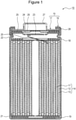
- Figure 1 is a cross-sectional view of a non-aqueous electrolyte secondary battery as an example of an embodiment.
- a positive electrode active material for a non-aqueous electrolyte secondary battery contains a lithium-nickel-manganese-containing composite oxide which is represented by composition formula Li x Ni y Mn z Me 1-y-z O 2 (where Me is a metal element other than Li, Ni, and Mn, x ⁇ 1.16, 0.3 ⁇ y ⁇ 0.7, and 0.3 ⁇ z ⁇ 0.7), has a layered structure belonging to space group R-3m, and has a diffraction peak at 2 ⁇ in the range of greater than or equal to 65° and less than or equal to 67° in an X-ray diffraction pattern when charging and discharging are performed until the charge voltage reaches 4.8 V.
- Li x Ni y Mn z Me 1-y-z O 2 where Me is a metal element other than Li, Ni, and Mn, x ⁇ 1.16, 0.3 ⁇ y ⁇ 0.7, and 0.3 ⁇ z ⁇ 0.7
- a positive electrode active material for a non-aqueous electrolyte secondary battery can suppress degradation in charge-discharge cycle characteristics even when charging and discharging are performed at a charge voltage of greater than or equal to 4.8 V.
- the diffraction peak at 2 ⁇ in the range of greater than or equal to 65° and less than or equal to 67° in an X-ray diffraction pattern is considered to be caused because metal elements are rearranged by charging at a voltage of greater than or equal to 4.8 V and discharging.
- a positive electrode active material for a non-aqueous electrolyte secondary battery according to an aspect of the present disclosure, by charging at a voltage of greater than or equal to 4.8 V and discharging, it is considered that the composition changes such that the ratio of metal elements to Li after charging and discharging is higher than that before charging, from which it is surmised that metal elements are rearranged.
- the occurrence of the diffraction peak shows that even when a large amount of Li is swept by charging and discharging, a change in the crystal structure is suppressed. Consequently, deterioration in the subsequent charge-discharge cycle can be suppressed. Furthermore, as the occupancy of metal elements other than Li existing in a Li layer increases, the suppression effect can be expected, and thus, the peak is likely to occur. When the occupancy is about 7 to 10%, stability in the layered structure can be improved, which is preferable.
- a non-aqueous electrolyte secondary battery including a positive electrode active material for a non-aqueous electrolyte secondary battery according to an aspect of the present disclosure can suppress degradation in charge-discharge cycle characteristics even when charging and discharging are repeatedly performed at a charge voltage of greater than or equal to 4.8 V.
- the use of the secondary battery is not limited to the method of use in which charging and discharging are repeatedly performed at a charge voltage of greater than or equal to 4.8 V, and the method of use in which charging and discharging are repeatedly performed at a charge voltage of less than 4.8 V may be employed.
- FIG. 1 is a cross-sectional view of a non-aqueous electrolyte secondary battery as an example of an embodiment.
- a non-aqueous electrolyte secondary battery 10 shown in Figure 1 includes a wound-type electrode body 14 in which a positive electrode 11 and a negative electrode 12 are wound with a separator 13 interposed therebetween, a non-aqueous electrolyte, insulating plates 18 and 19 which are placed on the upper side and the lower side of the electrode body 14, respectively, and a battery case 15 which accommodates the members described above.
- the battery case 15 includes a closed-bottom, cylindrical case main body 16 and a sealing body 17 which seals an opening of the case main body 16.
- an electrode body of another type such as a stacked-type electrode body in which positive electrodes and negative electrodes are alternately stacked with a separator interposed therebetween may be used.
- the battery case 15 include a metal case having a cylindrical shape, a prismatic shape, a coin shape, a button shape, or the like, and a resin case (laminate battery) formed by laminating resin sheets.
- the case main body 16 is, for example, a closed-bottom, cylindrical metal container.
- a gasket 28 is provided between the case main body 16 and the sealing body 17 so that airtightness inside the battery can be secured.
- the case main body 16 has a protruding portion 22 in which, for example, a part of a side portion protrudes toward the inside and which supports the sealing body 17.
- the protruding portion 22 is preferably formed in an annular shape along the circumferential direction of the case main body 16, and the upper surface thereof supports the sealing body 17.
- the sealing body 17 has a structure in which a filter 23, a lower valve body 24, an insulating member 25, an upper valve body 26, and a cap 27 are stacked in this order from the electrode body 14 side.
- the individual members constituting the sealing body 17 have, for example, a circular plate shape or a ring shape, and the members other than the insulating member 25 are electrically connected to one another.
- the lower valve body 24 and the upper valve body 26 are connected to each other at the central portions thereof, and the insulating member 25 is interposed between the peripheral portions thereof.
- the lower valve body 24 When the internal pressure of the non-aqueous electrolyte secondary battery 10 is increased by heat generation due to internal short circuit or the like, for example, the lower valve body 24 is deformed so as to push the upper valve body 26 up toward the cap 27 and is broken, and the current path between the lower valve body 24 and the upper valve body 26 is cut off. When the internal pressure is further increased, the upper valve body 26 is broken, and gas is exhausted from an opening of the cap 27.
- a positive electrode lead 20 attached to the positive electrode 11 extends through a through-hole of the insulating plate 18 to the sealing body 17 side, and a negative electrode lead 21 attached to the negative electrode 12 passes along the outside of the insulating plate 19 and extends to the bottom side of the case main body 16.
- the positive electrode lead 20 is connected by welding or the like to a lower surface of the filter 23 which is a bottom plate of the sealing body 17, and the cap 27 which is a top plate of the sealing body 17 electrically connected to the filter 23 serves as a positive electrode terminal.
- the negative electrode lead 21 is connected by welding or the like to an inner surface of the bottom of the case main body 16, and the case main body 16 serves as a negative electrode terminal.
- the positive electrode 11, the negative electrode 12, the non-aqueous electrolyte, and the separator 13 will be described in detail below.
- the positive electrode 11 includes a positive electrode current collector such as a metal foil, and a positive electrode active material layer formed on the positive electrode current collector.
- a positive electrode current collector such as a metal foil
- a positive electrode active material layer formed on the positive electrode current collector.
- a foil of a metal, such as aluminum, that is stable in the potential range of the positive electrode, a film in which the metal is disposed as a surface layer, or the like can be used.
- the positive electrode active material layer contains, for example, a positive electrode active material, a binder, an electroconductive material, and the like.
- the positive electrode 11 is obtained, for example, by applying a positive electrode mixture slurry containing a positive electrode active material, a binder, an electroconductive material, and the like to a positive electrode current collector, followed by drying to form a positive electrode active material layer on the positive electrode current collector, and rolling the positive electrode active material layer.
- the positive electrode active material contains a lithium-nickel-manganese-containing composite oxide which is represented by composition formula Li x Ni y Mn z Me 1-y-z O 2 (where Me is a metal element other than Li, Ni, and Mn, x ⁇ 1.16, 0.3 ⁇ y ⁇ 0.7, and 0.3 ⁇ z ⁇ 0.7) and has a layered structure belonging to space group R-3m.
- Li x Ni y Mn z Me 1-y-z O 2 where Me is a metal element other than Li, Ni, and Mn, x ⁇ 1.16, 0.3 ⁇ y ⁇ 0.7, and 0.3 ⁇ z ⁇ 0.7
- x represents the molar ratio of Li to the total amount of Ni, Mn, and Me, and as described above, x ⁇ 1.16 should be satisfied. From the viewpoint of high charge capacity retention ratio, preferably x ⁇ 1.08.
- the lower limit value of x in the composition formula may be set within a range that does not significantly impair the battery capacity. For example, preferably 0.95 ⁇ x, and more preferably 1.0 ⁇ x.
- y represents the molar ratio of Ni to the total amount of Ni, Mn, and Me, and as described above, 0.3 ⁇ y ⁇ 0.7 should be satisfied. From the viewpoint of battery capacity and thermal stability, preferably 0.4 ⁇ y ⁇ 0.6.
- z represents the molar ratio of Mn to the total amount of Ni, Mn, and Me, and as described above, 0.3 ⁇ y ⁇ 0.7 should be satisfied. From the viewpoint of thermal stability and structural stability, preferably 0.4 ⁇ y ⁇ 0.6.
- Me constituting the composition formula is not particularly limited as long as it is a metal element other than Li, Ni, and Mn.
- Me is at least one metal element selected from the group consisting of Co, Fe, Ti, Bi, Nb, W, Mo, Ta, Al, Mg, Si, Cr, Cu, Sn, Zr, Na, K, Ba, Sr, Be, Zn, Ca, and B.
- at least one metal element selected from the group consisting of Co, Fe, Ti, Bi, Nb, W, Mo, and Ta is preferable.
- the contents of elements constituting the lithium-nickel-manganese-containing composite oxide according to the embodiment can be measured by an inductively coupled plasma-atomic emission spectrometer (ICP-AES), an electron probe microanalyzer (EPMA), an energy-dispersive X-ray analyzer (EDX), or the like.
- ICP-AES inductively coupled plasma-atomic emission spectrometer
- EPMA electron probe microanalyzer
- EDX energy-dispersive X-ray analyzer
- the occupancy of metal elements other than Li existing in a Li layer of the layered structure belonging to space group R-3m is preferably in the range of 7% to 10%, and more preferably in the range of 8% to 10%.
- the occupancy of metal elements other than Li existing in the Li layer of the layered structure belonging to space group R-3m is within the range described above, compared with the case outside the range, the stability of the layered structure of the lithium-nickel-manganese-containing composite oxide is improved, and it is possible to suppress degradation in charge-discharge cycle characteristics when charging and discharging are performed at a charge voltage of greater than or equal to 4.8 V.
- the occupancy of metal elements other than Li existing in the Li layer of the layered structure belonging to space group R-3m is obtained from results of Rietveld analysis of an X-ray diffraction pattern obtained by X-ray diffraction measurement of the lithium-nickel-manganese-containing composite oxide.
- the X-ray diffraction pattern is obtained, using a powder X-ray diffractometer (manufactured by Rigaku Corporation, trade name "RINT-TTR", ray source Cu-K ⁇ ), by a powder X-ray diffraction method under the following conditions:
- PDXL2 (Rigaku Corporation) which is Rietveld analysis software is used.
- the lithium-nickel-manganese-containing composite oxide according to the embodiment has a diffraction peak at 2 ⁇ in the range of 65° to 67° in an X-ray diffraction pattern when a non-aqueous electrolyte secondary battery is charged until the charge voltage reaches 4.8 V.
- the lithium-nickel-manganese-containing composite oxide having the diffraction peak has a stable crystal structure, and therefore, even when charging and discharging are performed at a charge voltage of greater than or equal to 4.8 V, a change in the crystal structure of the composite oxide can be suppressed, and degradation in charge-discharge cycle characteristics can be suppressed.
- the lithium-nickel-manganese-containing composite oxide according to the embodiment has, besides the diffraction peak described above, usually, a diffraction peak of the (018) plane and a diffraction peak of the (110) plane at 2 ⁇ less than or equal to 65°.
- the diffraction peak of the (018) plane exists, for example, at 2 ⁇ in the range of 63.2° to 64.5°.
- the diffraction peak of the (110) plane exists, for example, at 2 ⁇ in the range of 64° to 65.3°.
- the full width at half maximum of the diffraction peak of the (018) plane is preferably, for example, in the range of 0.2° to 0.4°.
- the full width at half maximum of the diffraction peak of the (110) plane is preferably, for example, in the range of 0.25° to 0.45°.
- the full width at half maximum of the diffraction peak at 2 ⁇ in the range of 65° to 67° is preferably, for example, in the range of 0.15° to 0.3°.
- a so-called “solid phase method” including mixing a lithium source, a nickel source, a manganese source, and optionally, an Me source at a desired ratio, and firing the resulting mixture is desirable.
- lithium source examples include lithium oxide, lithium hydroxide, lithium carbonate, and the like.
- nickel source examples include nickel oxide, nickel hydroxide, nickel sulfate, nickel nitrate, and the like.
- manganese source examples include manganese oxide, manganese hydroxide, manganese sulfate, manganese nitrate, and the like.
- Me source examples include oxides, hydroxides, and the like of metal elements other than Li, Ni, Mn.
- the nickel source and the manganese source may be compounded together.
- a nickel-manganese-containing oxide, a nickel-manganese-containing hydroxide, or the like may be used.
- the Me source may be compounded with the nickel source and the manganese source.
- a nickel-Me-containing oxide, a nickel-Me-containing hydroxide, a manganese-Me-containing oxide, a manganese-Me-containing hydroxide, a nickel-manganese-Me-containing oxide, a nickel-manganese-Me-containing hydroxide, or the like may be used.
- the firing temperature is important.
- the firing temperature is preferably 800 to 1,000°C, and more preferably 850 to 950°C. If the firing temperature is outside the range described above, it will become difficult to obtain the lithium-nickel-manganese-containing composite oxide according to the embodiment in which the occupancy of metal elements other than Li existing in the Li layer of the layered structure belonging to space group R-3m is in the range of 7% to 10% and which has a diffraction peak at 2 ⁇ in the range of 65° to 67° in an X-ray diffraction pattern when a non-aqueous electrolyte secondary battery is charged until the charge voltage reaches 4.8 V.
- the mixing ratio of source materials is also important. It is preferable to mix the lithium source, the nickel source, the manganese source, and optionally, the Me source so that the molar ratio Li:metal elements other than Li (Ni, Mn, and optionally Me) is preferably in the range of 1:1 to 1:1.16, and more preferably in the range of 1:1.08 to 1:1.16. If the mixing ratio is outside the range described above, for example, the occupancy of metal elements other than Li existing in the Li layer of the layered structure belonging to space group R-3m may be decreased (for example, less than 7%).
- the content of the lithium-nickel-manganese-containing composite oxide according to the embodiment is, for example, from the viewpoint of more effectively suppressing degradation in charge-discharge cycle characteristics when charging and discharging are performed at a charge voltage of greater than or equal to 4.8 V, preferably greater than or equal to 80% by mass, and preferably greater than or equal to 90% by mass, relative to the total mass of the positive electrode active material.
- the positive electrode active material may contain, in addition to the lithium-nickel-manganese-containing composite oxide according to the embodiment, another lithium-containing composite oxide.
- another lithium-containing composite oxide for example, a lithium-nickel-manganese-containing composite oxide represented by composition formula Li ⁇ Ni ⁇ Mn ⁇ Me 1- ⁇ - ⁇ O 2 (where Me is a metal element other than Ni and Mn, ⁇ ⁇ 0.6, 0.8 ⁇ ⁇ ⁇ 1.0, and ⁇ ⁇ 0.2) is preferable.
- ⁇ represents the molar ratio of Li to the total amount of Ni, Mn, and Me, and as described above, ⁇ ⁇ 0.6 should be satisfied. From the viewpoint of battery capacity, preferably 0.4 ⁇ x ⁇ 0.6.
- ⁇ represents the molar ratio of Ni to the total amount of Ni, Mn, and Me, and as described above, 0.8 ⁇ y ⁇ 1.0 should be satisfied. From the viewpoint of battery capacity, preferably 0.85 ⁇ y ⁇ 0.95.
- ⁇ represents the molar ratio of Mn to the total amount of Ni, Mn, and Me, and as described above, ⁇ ⁇ 0.2 should be satisfied. From the viewpoint of battery capacity, preferably 0.05 ⁇ y ⁇ 0.15.
- Me constituting the composition formula is not particularly limited as long as it is a metal element other than Li, Ni, and Mn.
- Me is at least one metal element selected from the group consisting of Co, Fe, Ti, Bi, Nb, W, Mo, Ta, Al, Mg, Si, Cr, Cu, Sn, Zr, Na, K, Ba, Sr, Be, Zn, Ca, and B.
- Examples of the electroconductive material contained in the positive electrode active material layer include carbon powders, such as carbon black, acetylene black, Ketjen black, and graphite. These may be used alone or in combination of two or more.
- a fluorine-based resin such as polytetrafluoroethylene (PTFE) or polyvinylidene fluoride (PVdF), PAN, a polyimide-based resin, an acrylic resin, a polyolefin-based resin, or the like can be used. These may be used alone or in combination of two or more.
- the negative electrode 12 includes a negative electrode current collector such as a metal foil, and a negative electrode active material layer formed on the negative electrode current collector.
- a negative electrode current collector such as a metal foil
- a negative electrode active material layer formed on the negative electrode current collector.
- a foil of a metal, such as copper, that is stable in the potential range of the negative electrode, a film in which the metal is disposed as a surface layer, or the like can be used.
- the negative electrode active material layer contains, for example, a negative electrode active material, a binder, and the like.
- the negative electrode 12 is obtained, for example, by applying a negative electrode mixture slurry containing a negative electrode active material and a binder to a negative electrode current collector, followed by drying to form a negative electrode active material layer on the negative electrode current collector, and rolling the negative electrode active material layer.
- the negative electrode active material contained in the negative electrode active material layer is not particularly limited as long as it can occlude and release lithium ions.
- Examples thereof include a carbon material and a metal that can form an alloy with lithium or an alloy compound containing the metal.
- the carbon material that can be used include graphites, such as natural graphite, non-graphitizable carbon, and artificial graphite, and cokes.
- Examples of the alloy compound include those containing lithium and at least one metal that can form an alloy.
- silicon and tin are preferable, and silicon oxide, tin oxide, and the like in which these elements are bonded with oxygen can also be used.
- a mixture of the carbon material and a compound of silicon or tin can be used.
- a material whose charge and discharge potential with respect to lithium metal such as lithium titanate is higher than that of the carbon material or the like can also be used.
- a fluorine-based resin, PAN, a polyimide-based resin, an acrylic resin, a polyolefin-based resin, or the like can be used.
- the negative electrode mixture slurry is prepared using an aqueous solvent, styrene-butadiene rubber (SBR), CMC or a salt thereof, polyacrylic acid (PAA) or a salt thereof (PAA-Na, PAA-K, or the like; or may be a partially neutralized salt), polyvinyl alcohol (PVA), or the like may be used.
- the non-aqueous electrolyte includes a non-aqueous solvent and an electrolyte salt dissolved in the non-aqueous solvent.
- the non-aqueous electrolyte is not limited to a liquid electrolyte (non-aqueous electrolyte solution), but may be a solid electrolyte prepared using a gel polymer or the like.
- the non-aqueous solvent for example, an ester, an ether, a nitrile such as acetonitrile, an amide such as dimethylformamide, or a mixed solvent containing two or more of these solvents may be used.
- the non-aqueous solvent may contain a halogen substitution product in which at least part of hydrogen atoms of the solvent described above is substituted with halogen atoms, such as fluorine.
- ester examples include cyclic carbonate esters, such as ethylene carbonate (EC), propylene carbonate (PC), and butylene carbonate; chain carbonate esters, such as dimethyl carbonate (DMC), ethyl methyl carbonate (EMC), diethyl carbonate (DEC), methyl propyl carbonate, ethyl propyl carbonate, and methyl isopropyl carbonate; cyclic carboxylate esters, such as ⁇ -butyrolactone (GBL) and ⁇ -valerolactone (GVL); and chain carboxylate esters, such as methyl acetate, ethyl acetate, propyl acetate, methyl propionate (MP), ethyl propionate, and ⁇ -butyrolactone.
- cyclic carbonate esters such as ethylene carbonate (EC), propylene carbonate (PC), and butylene carbonate
- chain carbonate esters such as dimethyl carbonate (DMC), ethyl
- ether examples include cyclic ethers, such as 1,3-dioxolane, 4-methyl-1,3-dioxolane, tetrahydrofuran, 2-methyltetrahydrofuran, propylene oxide, 1,2-butylene oxide, 1,3-dioxane, 1,4-dioxane, 1,3,5-trioxane, furan, 2-methylfuran, 1,8-cineole, and crown ether; and chain ethers, such as 1,2-dimethoxyethane, diethyl ether, dipropyl ether, diisopropyl ether, dibutyl ether, dihexyl ether, ethyl vinyl ether, butyl vinyl ether, methyl phenyl ether, ethyl phenyl ether, butyl phenyl ether, pentyl phenyl ether, methoxytoluene, benzyl ethyl ether, di
- fluorinated cyclic carbonate esters such as fluoroethylene carbonate (FEC); fluorinated chain carbonate esters; and fluorinated chain carboxylate esters, such as fluoromethyl propionate (FMP) are preferably used.
- FEC fluoroethylene carbonate
- FMP fluorinated chain carboxylate esters
- the electrolyte salt is preferably a lithium salt.
- the lithium salt include LiBF 4 , LiClO 4 , LiPF 6 , LiAsF 6 , LiSbF 6 , LiAlCl 4 , LiSCN, LiCF 3 SO 3 , LiCF 3 CO 2 , Li(P(C 2 O 4 )F 4 ), LiPF 6-x (C n F 2n+1 ) x (1 ⁇ x ⁇ 6, n is 1 or 2), LiB 10 Cl 10 , LiCl, LiBr, LiI, lithium chloroborane, lower aliphatic lithium carboxylates, borates such as Li 2 B 4 O 7 and Li(B(C 2 O 4 )F 2 ), and imide salts such as LiN(SO 2 CF 3 ) 2 and LiN(C l F 2l+1 SO 2 ) (C m F 2m+1 SO 2 ) ⁇ l and m are integers of 0 or more ⁇ .
- lithium salts may be used alone or in a mixture of two or more.
- LiPF 6 is preferably used.
- the concentration of the lithium salt is preferably 0.8 to 1.8 mol per liter of the non-aqueous solvent.
- a porous sheet having ion permeability and an insulating property may be used.
- the porous sheet include a microporous thin film, woven fabric, and non-woven fabric.
- an olefin-based resin such as polyethylene or polypropylene, cellulose, or the like is preferably used.
- the separator 13 may be a layered body including a cellulose fiber layer and a thermoplastic resin fiber layer, such as an olefin-based resin, and a separator 13 having an aramid resin or the like applied on the surface thereof may be used.
- the fired product was washed with water to obtain a lithium-nickel-manganese-containing composite oxide.
- Results of composition analysis by ICP on the lithium-nickel-manganese-containing composite oxide showed that the molar ratio of Li to the total amount of Ni and Mn was 1 and the composite oxide had a composition represented by LiNi 0.5 Mn 0.5 O 2 .
- the lithium-nickel-manganese-containing composite oxide was subjected to powder X-ray diffraction measurement under the conditions described above to obtain an X-ray diffraction pattern. As a result, a diffraction line showing a layered structure belonging to space group R-3m was confirmed. Furthermore, the occupancy of metal elements other than Li existing in the Li layer was 9.5% by mole. This lithium-nickel-manganese-containing composite oxide was used as a positive electrode active material of Example 1.
- the positive electrode active material 95 Parts by mass of the positive electrode active material, 3 parts by mass of acetylene black serving as an electroconductive material, and 2 parts by mass of polyvinylidene fluoride serving as a binder were mixed.
- the resulting mixture was kneaded using a kneader (T. K. HIVIS MIX, manufactured by PRIMIX Corporation) to prepare a positive electrode mixture slurry.
- the positive electrode mixture slurry was applied to an aluminum foil with a thickness of 15 ⁇ m, and by drying the resulting coating film, a positive electrode active material layer was formed on the aluminum foil, thereby obtaining a positive electrode.
- LiPF 6 was dissolved at a concentration of 1 mol/L in a mixed solvent obtained by mixing fluoroethylene carbonate (FEC) and 3,3,3-trifluoromethyl propionate (FMP) at a mass ratio of 1:3 to prepare a non-aqueous electrolyte.
- FEC fluoroethylene carbonate
- FMP 3,3,3-trifluoromethyl propionate
- Example 1 The positive electrode of Example 1 and a negative electrode containing graphite as a negative electrode active material were stacked so as to face each other with a separator interposed therebetween, and by winding the stacked body, an electrode body was produced. Subsequently, by inserting the electrode body and the non-aqueous electrolyte into an outer case made of aluminum, a test cell was produced.
- a lithium-nickel-manganese-containing composite oxide was obtained as in Example 1 except that the Ni-Mn-containing oxide and Li 2 CO 3 were mixed so that the molar ratio between the total amount of Ni and Mn and Li was 1:1.08 in the production of a positive electrode active material.
- Results of composition analysis by ICP on the lithium-nickel-manganese-containing composite oxide showed that the molar ratio of Li to the total amount of Ni and Mn was 1.08 and the composite oxide had a composition represented by Li 1.08 Ni 0.5 Mn 0.5 O 2 .
- the lithium-nickel-manganese-containing composite oxide was subjected to powder X-ray diffraction measurement under the conditions described above to obtain an X-ray diffraction pattern.
- a diffraction line showing a layered structure belonging to space group R-3m was confirmed.
- the occupancy of metal elements other than Li existing in the Li layer was 8.2%.
- Example 2 Using this lithium-nickel-manganese-containing composite oxide as a positive electrode active material of Example 2, a test cell was produced as in Example 1.
- a lithium-nickel-manganese-containing composite oxide was obtained as in Example 1 except that the Ni-Mn-containing oxide and Li 2 CO 3 were mixed so that the molar ratio between the total amount of Ni and Mn and Li was 1:1.16 in the production of a positive electrode active material.
- Results of composition analysis by ICP on the lithium-nickel-manganese-containing composite oxide showed that the molar ratio of Li to the total amount of Ni and Mn was 1.16 and the composite oxide had a composition represented by Li 1.16 Ni 0.5 Mn 0.5 O 2 .
- the lithium-nickel-manganese-containing composite oxide was subjected to powder X-ray diffraction measurement under the conditions described above to obtain an X-ray diffraction pattern.
- a diffraction line showing a layered structure belonging to space group R-3m was confirmed.
- the occupancy of metal elements other than Li existing in the Li layer was 8.0%.
- Example 3 Using this lithium-nickel-manganese-containing composite oxide as a positive electrode active material of Example 3, a test cell was produced as in Example 1.
- the lithium-nickel-manganese-containing composite oxide was subjected to powder X-ray diffraction measurement under the conditions described above to obtain an X-ray diffraction pattern.
- a diffraction line showing a layered structure belonging to space group R-3m was confirmed.
- the occupancy of metal elements other than Li existing in the Li layer was 5%.
- a test cell was produced as in Example 1 except that this lithium-nickel-manganese-containing composite oxide was used as a positive electrode active material of Comparative Example 1, and a non-aqueous electrolyte solution prepared by dissolving lithium hexafluorophosphate at a concentration of 1 mol/L in a mixed solvent of ethylene carbonate and diethyl carbonate was used.
- Results of composition analysis by ICP on the lithium-nickel-manganese-containing composite oxide showed that the molar ratio of Li to the total amount of Ni and Mn was 1.08 and the composite oxide had a composition represented by Li 1.08 Ni 0.35 Co 0.35 Mn 0.30 O 2 .
- the lithium-nickel-manganese-containing composite oxide was subjected to powder X-ray diffraction measurement under the conditions described above to obtain an X-ray diffraction pattern.
- a diffraction line showing a layered structure belonging to space group R-3m was confirmed.
- the occupancy of metal elements other than Li existing in the Li layer was 1.8%.
- Example 2 Using this lithium-nickel-manganese-containing composite oxide as a positive electrode active material of Comparative Example 2, a test cell was produced as in Example 1.
- each of the test cells of Examples and Comparative Examples discharged after the charge cycles had been performed was disassembled in a dry room, and the positive electrode active material was collected.
- the collected positive electrode active material was subjected to powder X-ray diffraction measurement under the conditions described above to obtain an X-ray diffraction pattern.
- the results showed that each of the positive electrode active materials of Examples 1 to 3 had a diffraction peak of the (018) plane at 2 ⁇ in the range of 63.2° to 64.5° in the X-ray diffraction pattern, a diffraction peak of the (110) plane at 2 ⁇ in the range of 64° to 65.3°, and a diffraction peak at 2 ⁇ in the range of greater than or equal to 65° and less than or equal to 67°.
- the positive electrode active material of Comparative Example 1 had a diffraction peak of the (018) plane at 2 ⁇ in the range of 63.2° to 64.5° in the X-ray diffraction pattern and a diffraction peak of the (110) plane at 2 ⁇ in the range of 64° to 65.3°, and did not have a diffraction peak at 2 ⁇ in the range of greater than or equal to 65° and less than or equal to 67°.
- the positive electrode active material of Comparative Example 2 had a diffraction peak of the (018) plane at 2 ⁇ in the range of 63.2° to 64.5° in the X-ray diffraction pattern and a diffraction peak of the (110) plane at 2 ⁇ in the range of 64° to 65.3°, and did not have a diffraction peak at 2 ⁇ in the range of greater than or equal to 65° and less than or equal to 67°.
- Capacity retention % discharge capacity at the tenth cycle / discharge capacity at the first cycle ⁇ 100
- Table 1 summarizes the results of the discharge capacity at the first cycle and the capacity retention ratio in 10 cycles in each of Examples and Comparative Examples. A higher value of capacity retention ratio indicates that degradation in charge-discharge cycle characteristics is more suppressed.
- [Table 1] Lithium-nickel-manganese-containing composite oxide Battery characteristics Li/(Ni + Mn) molar ratio Presence or absence of peak at 2 ⁇ 65 ° to 67 ° Discharge capacity at first cycle (mAh/g) Capacity retention ratio in 10 cycles
- Example 1 1.0 Present 202 98
- Example 3 1.16 Present 215 100 Comparative Example 1 0.88 Absent 208 96
Landscapes
- Chemical & Material Sciences (AREA)
- General Chemical & Material Sciences (AREA)
- Chemical Kinetics & Catalysis (AREA)
- Electrochemistry (AREA)
- Engineering & Computer Science (AREA)
- Inorganic Chemistry (AREA)
- Materials Engineering (AREA)
- Manufacturing & Machinery (AREA)
- Composite Materials (AREA)
- Organic Chemistry (AREA)
- Physics & Mathematics (AREA)
- Condensed Matter Physics & Semiconductors (AREA)
- General Physics & Mathematics (AREA)
- Battery Electrode And Active Subsutance (AREA)
- Secondary Cells (AREA)
Applications Claiming Priority (2)
| Application Number | Priority Date | Filing Date | Title |
|---|---|---|---|
| JP2019085007 | 2019-04-26 | ||
| PCT/JP2020/017614 WO2020218475A1 (ja) | 2019-04-26 | 2020-04-24 | 非水電解質二次電池用正極活物質及び非水電解質二次電池 |
Publications (2)
| Publication Number | Publication Date |
|---|---|
| EP3960708A1 true EP3960708A1 (de) | 2022-03-02 |
| EP3960708A4 EP3960708A4 (de) | 2022-06-29 |
Family
ID=72942168
Family Applications (1)
| Application Number | Title | Priority Date | Filing Date |
|---|---|---|---|
| EP20794345.7A Withdrawn EP3960708A4 (de) | 2019-04-26 | 2020-04-24 | Positivelektrodenaktivmaterial für sekundärbatterie mit wasserfreiem elektrolyt und sekundärbatterie mit wasserfreiem elektrolyt |
Country Status (5)
| Country | Link |
|---|---|
| US (2) | US20220199967A1 (de) |
| EP (1) | EP3960708A4 (de) |
| JP (1) | JPWO2020218475A1 (de) |
| CN (1) | CN113784926B (de) |
| WO (1) | WO2020218475A1 (de) |
Family Cites Families (19)
| Publication number | Priority date | Publication date | Assignee | Title |
|---|---|---|---|---|
| JP2002124261A (ja) * | 1999-11-29 | 2002-04-26 | Mitsui Chemicals Inc | リチウム二次電池用正極活物質および電池 |
| JP4556377B2 (ja) * | 2001-04-20 | 2010-10-06 | 株式会社Gsユアサ | 正極活物質およびその製造方法、非水電解質二次電池用正極、並びに、非水電解質二次電池 |
| JP2003073127A (ja) * | 2001-08-29 | 2003-03-12 | Tosoh Corp | ニッケル−マンガン化合物、その製造方法及びこれを用いた用途 |
| JP4788579B2 (ja) | 2006-11-30 | 2011-10-05 | 東ソー株式会社 | リチウム−ニッケル−マンガン複合酸化物、及びその製造方法、並びにその用途 |
| US8574765B2 (en) * | 2007-03-05 | 2013-11-05 | Toda Kogyo Corporation | Li-Ni composite oxide particles for non-aqueous electrolyte secondary battery, process for producing the same, and non-aqueous electrolyte secondary battery |
| JP2010211925A (ja) * | 2009-03-06 | 2010-09-24 | Panasonic Corp | 非水電解質二次電池用正極活物質、その製造方法、および非水電解質二次電池 |
| JP5704056B2 (ja) * | 2011-11-18 | 2015-04-22 | 住友金属鉱山株式会社 | 二次電池用正極活物質の製造方法、二次電池用正極活物質、および、これを用いた二次電池 |
| JP2013137939A (ja) * | 2011-12-28 | 2013-07-11 | Panasonic Corp | 非水電解質二次電池 |
| CN103515606B (zh) * | 2012-06-21 | 2016-09-14 | 中国科学院宁波材料技术与工程研究所 | 高能量密度锂离子电池氧化物正极材料及其制备方法 |
| CN102931394B (zh) * | 2012-11-20 | 2016-01-06 | 奇瑞汽车股份有限公司 | 锂镍锰氧材料及其制备方法、含该材料的锂离子电池 |
| US10109853B2 (en) * | 2013-01-25 | 2018-10-23 | Kabushiki Kaisha Toyota Jidoshokki | Active material excelling in high-voltage characteristics |
| JP6229709B2 (ja) * | 2013-02-28 | 2017-11-15 | 日産自動車株式会社 | 正極活物質、正極材料、正極および非水電解質二次電池 |
| JP2015164109A (ja) * | 2014-02-28 | 2015-09-10 | 旭化成株式会社 | 非水電解液二次電池 |
| JP2015198052A (ja) | 2014-04-02 | 2015-11-09 | 旭化成株式会社 | リチウムイオン二次電池の使用方法及びリチウムイオン二次電池 |
| US10862106B2 (en) * | 2015-10-28 | 2020-12-08 | Samsung Electronics Co., Ltd. | Composite positive electrode active material, positive electrode including the same, and lithium battery including the positive electrode |
| JP6914483B2 (ja) * | 2015-12-15 | 2021-08-04 | 株式会社Gsユアサ | リチウム二次電池用正極活物質、前駆体の製造方法、リチウム二次電池用正極及びリチウム二次電池 |
| CN107026284B (zh) * | 2016-01-29 | 2019-10-11 | 比亚迪股份有限公司 | 一种电解液及含有该电解液和/或正极的锂离子电池 |
| TWI633692B (zh) * | 2016-03-31 | 2018-08-21 | 烏明克公司 | 供汽車應用的鋰離子電池組 |
| CN107069032A (zh) * | 2016-11-17 | 2017-08-18 | 北京师范大学 | 一种锂离子电池用空心球形富锂锰基正极材料的制备方法 |
-
2020
- 2020-04-24 CN CN202080031245.4A patent/CN113784926B/zh active Active
- 2020-04-24 WO PCT/JP2020/017614 patent/WO2020218475A1/ja not_active Ceased
- 2020-04-24 EP EP20794345.7A patent/EP3960708A4/de not_active Withdrawn
- 2020-04-24 US US17/604,625 patent/US20220199967A1/en not_active Abandoned
- 2020-04-24 JP JP2021516238A patent/JPWO2020218475A1/ja active Pending
-
2025
- 2025-02-04 US US19/045,250 patent/US20250183258A1/en active Pending
Also Published As
| Publication number | Publication date |
|---|---|
| CN113784926A (zh) | 2021-12-10 |
| JPWO2020218475A1 (de) | 2020-10-29 |
| WO2020218475A1 (ja) | 2020-10-29 |
| EP3960708A4 (de) | 2022-06-29 |
| US20220199967A1 (en) | 2022-06-23 |
| CN113784926B (zh) | 2023-07-21 |
| US20250183258A1 (en) | 2025-06-05 |
Similar Documents
| Publication | Publication Date | Title |
|---|---|---|
| US12142763B2 (en) | Positive electrode active material for non-aqueous electrolyte secondary cell, and non-aqueous electrolyte secondary cell | |
| EP3780176B1 (de) | Sekundärbatterie mit wasserfreiem elektrolyt | |
| US20230187629A1 (en) | Positive electrode active material for non-aqueous electrolyte secondary battery, and non-aqueous electrolyte secondary battery | |
| JP2024133202A (ja) | 非水電解質二次電池用正極活物質、及び非水電解質二次電池 | |
| JP7570003B2 (ja) | 非水電解質二次電池用正極活物質、非水電解質二次電池用正極活物質の製造方法及び非水電解質二次電池 | |
| US20200168907A1 (en) | Nonaqueous electrolyte secondary battery | |
| EP4023606A1 (de) | Positivelektrodenaktivmaterial für sekundärbatterien mit wasserfreiem elektrolyt und sekundärbatterie mit wasserfreiem elektrolyt | |
| EP4224572A1 (de) | Positivelektrodenaktivmaterial für sekundärbatterien mit wasserfreiem elektrolyt und sekundärbatterie mit wasserfreiem elektrolyt | |
| EP4071849B1 (de) | Sekundärbatterie mit wasserfreiem elektrolyt | |
| EP4071850B1 (de) | Sekundärbatterie mit wasserfreiem elektrolyt | |
| JP7668501B2 (ja) | 非水電解質二次電池用正極活物質、非水電解質二次電池用正極活物質の製造方法及び非水電解質二次電池 | |
| CN114008823B (zh) | 非水电解质二次电池用正极活性物质、非水电解质二次电池及非水电解质二次电池用正极活性物质的制造方法 | |
| EP4071847A1 (de) | Sekundärzelle mit wasserfreiem elektrolyt | |
| CN113994508B (zh) | 非水电解质二次电池用正极活性物质、非水电解质二次电池及非水电解质二次电池用正极活性物质的制造方法 | |
| US20230290941A1 (en) | Positive-electrode active material for nonaqueous-electrolyte secondary cell, and nonaqueous-electrolyte secondary cell | |
| US20250183258A1 (en) | Positive electrode active material for non-aqueous electrolyte secondary battery, and non-aqueous electrolyte secondary battery | |
| EP3955337B1 (de) | Positivelektrode für eine sekundärbatterie mit wasserfreiem elektrolyt und sekundärbatterie mit wasserfreiem elektrolyt | |
| US12506146B2 (en) | Method for producing lithium-nickel complex oxide | |
| EP4254541A1 (de) | Positivelektrode für eine sekundärbatterie mit wasserfreiem elektrolyt und sekundärbatterie mit wasserfreiem elektrolyt | |
| EP4270519A1 (de) | Positivelektrodenaktivmaterial für sekundärbatterien mit wasserfreiem elektrolyt und sekundärbatterie mit wasserfreiem elektrolyt | |
| EP4270523A1 (de) | Positivelektrodenaktivmaterial für sekundärbatterie mit wasserfreiem elektrolyt und sekundärbatterie mit wasserfreiem elektrolyt | |
| CN119604992A (zh) | 非水电解质二次电池用正极活性物质、和非水电解质二次电池 |
Legal Events
| Date | Code | Title | Description |
|---|---|---|---|
| STAA | Information on the status of an ep patent application or granted ep patent |
Free format text: STATUS: THE INTERNATIONAL PUBLICATION HAS BEEN MADE |
|
| PUAI | Public reference made under article 153(3) epc to a published international application that has entered the european phase |
Free format text: ORIGINAL CODE: 0009012 |
|
| STAA | Information on the status of an ep patent application or granted ep patent |
Free format text: STATUS: REQUEST FOR EXAMINATION WAS MADE |
|
| 17P | Request for examination filed |
Effective date: 20211019 |
|
| AK | Designated contracting states |
Kind code of ref document: A1 Designated state(s): AL AT BE BG CH CY CZ DE DK EE ES FI FR GB GR HR HU IE IS IT LI LT LU LV MC MK MT NL NO PL PT RO RS SE SI SK SM TR |
|
| A4 | Supplementary search report drawn up and despatched |
Effective date: 20220530 |
|
| RIC1 | Information provided on ipc code assigned before grant |
Ipc: H01M 10/052 20100101ALI20220523BHEP Ipc: H01M 4/36 20060101ALI20220523BHEP Ipc: H01M 4/131 20100101ALI20220523BHEP Ipc: H01M 4/525 20100101ALI20220523BHEP Ipc: H01M 4/505 20100101ALI20220523BHEP Ipc: C01G 53/00 20060101AFI20220523BHEP |
|
| DAV | Request for validation of the european patent (deleted) | ||
| DAX | Request for extension of the european patent (deleted) | ||
| STAA | Information on the status of an ep patent application or granted ep patent |
Free format text: STATUS: THE APPLICATION IS DEEMED TO BE WITHDRAWN |
|
| 18D | Application deemed to be withdrawn |
Effective date: 20230103 |