EP3961793A1 - Electric dc accumulator consisting of different energy sources - Google Patents
Electric dc accumulator consisting of different energy sources Download PDFInfo
- Publication number
- EP3961793A1 EP3961793A1 EP21386055.4A EP21386055A EP3961793A1 EP 3961793 A1 EP3961793 A1 EP 3961793A1 EP 21386055 A EP21386055 A EP 21386055A EP 3961793 A1 EP3961793 A1 EP 3961793A1
- Authority
- EP
- European Patent Office
- Prior art keywords
- battery
- supercapacitors
- ion
- array
- batteries
- Prior art date
- Legal status (The legal status is an assumption and is not a legal conclusion. Google has not performed a legal analysis and makes no representation as to the accuracy of the status listed.)
- Pending
Links
Images


Classifications
-
- H—ELECTRICITY
- H01—ELECTRIC ELEMENTS
- H01M—PROCESSES OR MEANS, e.g. BATTERIES, FOR THE DIRECT CONVERSION OF CHEMICAL ENERGY INTO ELECTRICAL ENERGY
- H01M16/00—Structural combinations of different types of electrochemical generators
-
- F—MECHANICAL ENGINEERING; LIGHTING; HEATING; WEAPONS; BLASTING
- F02—COMBUSTION ENGINES; HOT-GAS OR COMBUSTION-PRODUCT ENGINE PLANTS
- F02N—STARTING OF COMBUSTION ENGINES; STARTING AIDS FOR SUCH ENGINES, NOT OTHERWISE PROVIDED FOR
- F02N11/00—Starting of engines by means of electric motors
- F02N11/12—Starting of engines by means of mobile, e.g. portable, starting sets
-
- F—MECHANICAL ENGINEERING; LIGHTING; HEATING; WEAPONS; BLASTING
- F02—COMBUSTION ENGINES; HOT-GAS OR COMBUSTION-PRODUCT ENGINE PLANTS
- F02N—STARTING OF COMBUSTION ENGINES; STARTING AIDS FOR SUCH ENGINES, NOT OTHERWISE PROVIDED FOR
- F02N11/00—Starting of engines by means of electric motors
- F02N11/08—Circuits specially adapted for starting of engines
-
- H—ELECTRICITY
- H01—ELECTRIC ELEMENTS
- H01G—CAPACITORS; CAPACITORS, RECTIFIERS, DETECTORS, SWITCHING DEVICES, LIGHT-SENSITIVE OR TEMPERATURE-SENSITIVE DEVICES OF THE ELECTROLYTIC TYPE
- H01G11/00—Hybrid capacitors, i.e. capacitors having different positive and negative electrodes; Electric double-layer [EDL] capacitors; Processes for the manufacture thereof or of parts thereof
- H01G11/08—Structural combinations, e.g. assembly or connection, of hybrid or EDL capacitors with other electric components, at least one hybrid or EDL capacitor being the main component
-
- H—ELECTRICITY
- H01—ELECTRIC ELEMENTS
- H01M—PROCESSES OR MEANS, e.g. BATTERIES, FOR THE DIRECT CONVERSION OF CHEMICAL ENERGY INTO ELECTRICAL ENERGY
- H01M10/00—Secondary cells; Manufacture thereof
- H01M10/05—Accumulators with non-aqueous electrolyte
- H01M10/052—Li-accumulators
- H01M10/0525—Rocking-chair batteries, i.e. batteries with lithium insertion or intercalation in both electrodes; Lithium-ion batteries
-
- H—ELECTRICITY
- H01—ELECTRIC ELEMENTS
- H01M—PROCESSES OR MEANS, e.g. BATTERIES, FOR THE DIRECT CONVERSION OF CHEMICAL ENERGY INTO ELECTRICAL ENERGY
- H01M10/00—Secondary cells; Manufacture thereof
- H01M10/42—Methods or arrangements for servicing or maintenance of secondary cells or secondary half-cells
-
- H—ELECTRICITY
- H01—ELECTRIC ELEMENTS
- H01M—PROCESSES OR MEANS, e.g. BATTERIES, FOR THE DIRECT CONVERSION OF CHEMICAL ENERGY INTO ELECTRICAL ENERGY
- H01M10/00—Secondary cells; Manufacture thereof
- H01M10/42—Methods or arrangements for servicing or maintenance of secondary cells or secondary half-cells
- H01M10/425—Structural combination with electronic components, e.g. electronic circuits integrated to the outside of the casing
-
- H—ELECTRICITY
- H01—ELECTRIC ELEMENTS
- H01M—PROCESSES OR MEANS, e.g. BATTERIES, FOR THE DIRECT CONVERSION OF CHEMICAL ENERGY INTO ELECTRICAL ENERGY
- H01M10/00—Secondary cells; Manufacture thereof
- H01M10/42—Methods or arrangements for servicing or maintenance of secondary cells or secondary half-cells
- H01M10/44—Methods for charging or discharging
- H01M10/441—Methods for charging or discharging for several batteries or cells simultaneously or sequentially
-
- H—ELECTRICITY
- H01—ELECTRIC ELEMENTS
- H01M—PROCESSES OR MEANS, e.g. BATTERIES, FOR THE DIRECT CONVERSION OF CHEMICAL ENERGY INTO ELECTRICAL ENERGY
- H01M10/00—Secondary cells; Manufacture thereof
- H01M10/42—Methods or arrangements for servicing or maintenance of secondary cells or secondary half-cells
- H01M10/48—Accumulators combined with arrangements for measuring, testing or indicating the condition of cells, e.g. the level or density of the electrolyte
- H01M10/482—Accumulators combined with arrangements for measuring, testing or indicating the condition of cells, e.g. the level or density of the electrolyte for several batteries or cells simultaneously or sequentially
-
- H—ELECTRICITY
- H01—ELECTRIC ELEMENTS
- H01M—PROCESSES OR MEANS, e.g. BATTERIES, FOR THE DIRECT CONVERSION OF CHEMICAL ENERGY INTO ELECTRICAL ENERGY
- H01M10/00—Secondary cells; Manufacture thereof
- H01M10/42—Methods or arrangements for servicing or maintenance of secondary cells or secondary half-cells
- H01M10/48—Accumulators combined with arrangements for measuring, testing or indicating the condition of cells, e.g. the level or density of the electrolyte
- H01M10/488—Cells or batteries combined with indicating means for external visualization of the condition, e.g. by change of colour or of light density
-
- H—ELECTRICITY
- H01—ELECTRIC ELEMENTS
- H01M—PROCESSES OR MEANS, e.g. BATTERIES, FOR THE DIRECT CONVERSION OF CHEMICAL ENERGY INTO ELECTRICAL ENERGY
- H01M50/00—Constructional details or processes of manufacture of the non-active parts of electrochemical cells other than fuel cells, e.g. hybrid cells
- H01M50/20—Mountings; Secondary casings or frames; Racks, modules or packs; Suspension devices; Shock absorbers; Transport or carrying devices; Holders
-
- H—ELECTRICITY
- H02—GENERATION; CONVERSION OR DISTRIBUTION OF ELECTRIC POWER
- H02J—ELECTRIC POWER NETWORKS; CIRCUIT ARRANGEMENTS OR SYSTEMS FOR SUPPLYING OR DISTRIBUTING ELECTRIC POWER; SYSTEMS FOR STORING ELECTRIC ENERGY
- H02J7/00—Circuit arrangements for charging or discharging batteries or for supplying loads from batteries
- H02J7/34—Parallel operation in networks using both storage and other DC sources, e.g. providing buffering
-
- H—ELECTRICITY
- H02—GENERATION; CONVERSION OR DISTRIBUTION OF ELECTRIC POWER
- H02J—ELECTRIC POWER NETWORKS; CIRCUIT ARRANGEMENTS OR SYSTEMS FOR SUPPLYING OR DISTRIBUTING ELECTRIC POWER; SYSTEMS FOR STORING ELECTRIC ENERGY
- H02J7/00—Circuit arrangements for charging or discharging batteries or for supplying loads from batteries
- H02J7/34—Parallel operation in networks using both storage and other DC sources, e.g. providing buffering
- H02J7/345—Parallel operation in networks using both storage and other DC sources, e.g. providing buffering using capacitors as storage or buffering devices
-
- H—ELECTRICITY
- H01—ELECTRIC ELEMENTS
- H01G—CAPACITORS; CAPACITORS, RECTIFIERS, DETECTORS, SWITCHING DEVICES, LIGHT-SENSITIVE OR TEMPERATURE-SENSITIVE DEVICES OF THE ELECTROLYTIC TYPE
- H01G11/00—Hybrid capacitors, i.e. capacitors having different positive and negative electrodes; Electric double-layer [EDL] capacitors; Processes for the manufacture thereof or of parts thereof
- H01G11/10—Multiple hybrid or EDL capacitors, e.g. arrays or modules
-
- H—ELECTRICITY
- H01—ELECTRIC ELEMENTS
- H01G—CAPACITORS; CAPACITORS, RECTIFIERS, DETECTORS, SWITCHING DEVICES, LIGHT-SENSITIVE OR TEMPERATURE-SENSITIVE DEVICES OF THE ELECTROLYTIC TYPE
- H01G11/00—Hybrid capacitors, i.e. capacitors having different positive and negative electrodes; Electric double-layer [EDL] capacitors; Processes for the manufacture thereof or of parts thereof
- H01G11/74—Terminals, e.g. extensions of current collectors
- H01G11/76—Terminals, e.g. extensions of current collectors specially adapted for integration in multiple or stacked hybrid or EDL capacitors
-
- H—ELECTRICITY
- H01—ELECTRIC ELEMENTS
- H01M—PROCESSES OR MEANS, e.g. BATTERIES, FOR THE DIRECT CONVERSION OF CHEMICAL ENERGY INTO ELECTRICAL ENERGY
- H01M10/00—Secondary cells; Manufacture thereof
- H01M10/42—Methods or arrangements for servicing or maintenance of secondary cells or secondary half-cells
- H01M10/425—Structural combination with electronic components, e.g. electronic circuits integrated to the outside of the casing
- H01M2010/4271—Battery management systems including electronic circuits, e.g. control of current or voltage to keep battery in healthy state, cell balancing
-
- H—ELECTRICITY
- H01—ELECTRIC ELEMENTS
- H01M—PROCESSES OR MEANS, e.g. BATTERIES, FOR THE DIRECT CONVERSION OF CHEMICAL ENERGY INTO ELECTRICAL ENERGY
- H01M50/00—Constructional details or processes of manufacture of the non-active parts of electrochemical cells other than fuel cells, e.g. hybrid cells
- H01M50/20—Mountings; Secondary casings or frames; Racks, modules or packs; Suspension devices; Shock absorbers; Transport or carrying devices; Holders
- H01M50/204—Racks, modules or packs for multiple batteries or multiple cells
- H01M50/207—Racks, modules or packs for multiple batteries or multiple cells characterised by their shape
-
- H—ELECTRICITY
- H01—ELECTRIC ELEMENTS
- H01M—PROCESSES OR MEANS, e.g. BATTERIES, FOR THE DIRECT CONVERSION OF CHEMICAL ENERGY INTO ELECTRICAL ENERGY
- H01M50/00—Constructional details or processes of manufacture of the non-active parts of electrochemical cells other than fuel cells, e.g. hybrid cells
- H01M50/20—Mountings; Secondary casings or frames; Racks, modules or packs; Suspension devices; Shock absorbers; Transport or carrying devices; Holders
- H01M50/233—Mountings; Secondary casings or frames; Racks, modules or packs; Suspension devices; Shock absorbers; Transport or carrying devices; Holders characterised by physical properties of casings or racks, e.g. dimensions
- H01M50/24—Mountings; Secondary casings or frames; Racks, modules or packs; Suspension devices; Shock absorbers; Transport or carrying devices; Holders characterised by physical properties of casings or racks, e.g. dimensions adapted for protecting batteries from their environment, e.g. from corrosion
-
- H—ELECTRICITY
- H01—ELECTRIC ELEMENTS
- H01M—PROCESSES OR MEANS, e.g. BATTERIES, FOR THE DIRECT CONVERSION OF CHEMICAL ENERGY INTO ELECTRICAL ENERGY
- H01M50/00—Constructional details or processes of manufacture of the non-active parts of electrochemical cells other than fuel cells, e.g. hybrid cells
- H01M50/20—Mountings; Secondary casings or frames; Racks, modules or packs; Suspension devices; Shock absorbers; Transport or carrying devices; Holders
- H01M50/271—Lids or covers for the racks or secondary casings
-
- Y—GENERAL TAGGING OF NEW TECHNOLOGICAL DEVELOPMENTS; GENERAL TAGGING OF CROSS-SECTIONAL TECHNOLOGIES SPANNING OVER SEVERAL SECTIONS OF THE IPC; TECHNICAL SUBJECTS COVERED BY FORMER USPC CROSS-REFERENCE ART COLLECTIONS [XRACs] AND DIGESTS
- Y02—TECHNOLOGIES OR APPLICATIONS FOR MITIGATION OR ADAPTATION AGAINST CLIMATE CHANGE
- Y02E—REDUCTION OF GREENHOUSE GAS [GHG] EMISSIONS, RELATED TO ENERGY GENERATION, TRANSMISSION OR DISTRIBUTION
- Y02E60/00—Enabling technologies; Technologies with a potential or indirect contribution to GHG emissions mitigation
- Y02E60/10—Energy storage using batteries
-
- Y—GENERAL TAGGING OF NEW TECHNOLOGICAL DEVELOPMENTS; GENERAL TAGGING OF CROSS-SECTIONAL TECHNOLOGIES SPANNING OVER SEVERAL SECTIONS OF THE IPC; TECHNICAL SUBJECTS COVERED BY FORMER USPC CROSS-REFERENCE ART COLLECTIONS [XRACs] AND DIGESTS
- Y02—TECHNOLOGIES OR APPLICATIONS FOR MITIGATION OR ADAPTATION AGAINST CLIMATE CHANGE
- Y02E—REDUCTION OF GREENHOUSE GAS [GHG] EMISSIONS, RELATED TO ENERGY GENERATION, TRANSMISSION OR DISTRIBUTION
- Y02E60/00—Enabling technologies; Technologies with a potential or indirect contribution to GHG emissions mitigation
- Y02E60/13—Energy storage using capacitors
Definitions
- the present invention relates to a novel type of accumulators for use in various applications such as starting motors (compression ignition and spark ignition), AC photovoltaic installations, etc.
- All known types of batteries are based on the electrochemical reaction of a lead-acid cell (hereinafter referred to as "lead battery”).
- lead batteries contain lead as electrodes and H2SO4 sulfuric acid solution as electrolyte and a chemical process takes place during discharge and charging.
- the different types of lead batteries differ only in the construction of cells (shape and method of making electrodes, shape of cells, degreasing channels, valves, lead paste material that reduces lead consumption during construction, separators, electrolyte additives, etc.). None of the currently known types is completely hermetically sealed, the partial release of substances contained in the battery into the environment is always compatible during operation. With the most modern types, called AGM and gel batteries, this phenomenon can only occur when the battery is overcharged. All known types contain toxic (lead Pb) and hazardous (sulfuric acid solution H2SO4) substances within the meaning of Directive 2002/95 / EC, RoHS.
- Li-Ion batteries such as Li-Ion, Li-Pol and LiFePo4 are not capable of supplying or receiving high currents and are not capable of supplying or receiving energy efficiently at temperatures below -20 ° C.
- Li-Ion Lithium ion accumulators
- the positive electrode consists of the compound of lithium oxides and another metal (usually lithium oxide or cobalt Li2O, Co2O3), the negative is carbon mixed with other chemicals and the ester compound is the electrolyte, they have a nominal voltage of 3.7 V.
- the final voltage during charging must not be exceeded and discharge threshold a certain limit must be avoided, which is the job of the protection-management circuits of each cell (BMS).
- BMS protection-management circuits of each cell
- the supercapacitor is an electrolytic capacitor made with special technology, aiming to reach a high capacity of thousands of farads, while maintaining the characteristics of the capacitor, especially the ability to quickly charge and discharge.
- the capacitance of the capacitor is directly proportional to the surface of the electrodes and indirectly proportional to the distance of the electrodes (charges).
- the electrodes of the supercapacitor are made of powdered carbon, which is deposited on foil. The result is a polarized capacitor with very high capacitance and very low resistance, suitable for fast supply and storage of electricity.
- the electrical parameters of supercapacitors are comparable to the parameters of electrochemical sources (batteries - accumulators).
- the energy stored in the supercapacitor is 10 times higher than the energy stored in a common capacitor. Low internal resistance allows fast discharge.
- the power supply that can be provided by the supercapacitor reaches the values of Kw / kg weight of the supercapacitor.
- the electrical parameters of the capacitor are maintained even at low temperatures up to -40
- the problems solved by the present invention are: the high toxicity, overweight, slow charging rate of standard lead acid batteries.
- the problem of premature aging of these batteries when undergoing deep discharges is addressed, as well as continuous high current requirements from starting an internal combustion engine (with or without start-stop function) or from inverter operation in photovoltaic power plants.
- This invention allows the repair - replacement - upgrade of components within the device by an experienced technician.
- the present invention relates to a new type of battery accumulator, which is based on a suitable (serial or parallel) electrical connection of Lithium battery components (Li-Ion or LiFePO4) and supercapacitors in combination with the use of electronic control and management modules (BMS) of Lithium cells and these supercapacitors.
- Lithium battery components Li-Ion or LiFePO4
- BMS electronic control and management modules
- the principle of the new accumulator battery lies in the proper (serial or parallel) electrical connection of Li-Ion or LiFePO4 cells and supercapacitor arrays, in order to eliminate existing disadvantages of lead accumulators.
- the desired characteristics are ensured (internal resistance size, thermal conductivity, heat dissipation, electrical conductivity of connection conductors and terminals, electrical insulation and mechanical stability and stability of placement of individual components) operating in any environmental conditions (excessive humidity, corrosion elements in the atmosphere, oxidation of joints, etc.).
- Li-Ion or LiFePO4 batteries such as high battery capacity, fast charging capacity, power supply even if deeply discharged, relatively low internal resistance and the ability to supply power without being affected by the environment.
- Supercapacitors are used for their ability to provide, in the short term - instantaneous, high-intensity current without heat loss, have a low internal resistance thanks to which they provide high energy efficiency, can be charged by all types and types of batteries or by connected suitable DC power supply or a vehicle alternator in which they are installed in a very short time.
- This new type of battery accumulator can be discharged with short-term current, reaching at least the value of 1000A, always in correspondence with the selected elements of supercapacitors in terms of quality and characteristics.
- Charging of the new battery can be done by connecting a suitable DC power supply (charger) or a vehicle alternator with a parallel connection.
- the electronic control-monitoring modules regulate the charging process to a specific voltage as required by each embodiment of this invention. If the voltage is higher than the threshold voltage, the charge is terminated.
- the protection circuits in the array of capacitors regulate the charge evenly between the components of the supercapacitors.
Landscapes
- Engineering & Computer Science (AREA)
- Chemical & Material Sciences (AREA)
- Chemical Kinetics & Catalysis (AREA)
- Electrochemistry (AREA)
- General Chemical & Material Sciences (AREA)
- Manufacturing & Machinery (AREA)
- Power Engineering (AREA)
- Microelectronics & Electronic Packaging (AREA)
- Materials Engineering (AREA)
- Combustion & Propulsion (AREA)
- Mechanical Engineering (AREA)
- General Engineering & Computer Science (AREA)
- Electric Double-Layer Capacitors Or The Like (AREA)
- Secondary Cells (AREA)
- Charge And Discharge Circuits For Batteries Or The Like (AREA)
Abstract
Description
- The present invention relates to a novel type of accumulators for use in various applications such as starting motors (compression ignition and spark ignition), AC photovoltaic installations, etc.
- All known types of batteries are based on the electrochemical reaction of a lead-acid cell (hereinafter referred to as "lead battery"). All types of lead batteries contain lead as electrodes and H2SO4 sulfuric acid solution as electrolyte and a chemical process takes place during discharge and charging. The different types of lead batteries differ only in the construction of cells (shape and method of making electrodes, shape of cells, degreasing channels, valves, lead paste material that reduces lead consumption during construction, separators, electrolyte additives, etc.). None of the currently known types is completely hermetically sealed, the partial release of substances contained in the battery into the environment is always compatible during operation. With the most modern types, called AGM and gel batteries, this phenomenon can only occur when the battery is overcharged. All known types contain toxic (lead Pb) and hazardous (sulfuric acid solution H2SO4) substances within the meaning of Directive 2002/95 / EC, RoHS.
- Modern known Lithium (Li) batteries such as Li-Ion, Li-Pol and LiFePo4 are not capable of supplying or receiving high currents and are not capable of supplying or receiving energy efficiently at temperatures below -20 ° C.
- They come from primary lithium cells. The positive electrode consists of the compound of lithium oxides and another metal (usually lithium oxide or cobalt Li2O, Co2O3), the negative is carbon mixed with other chemicals and the ester compound is the electrolyte, they have a nominal voltage of 3.7 V. These can not be charged and discharged with high current and the disadvantage is the need to protect the power of the individual cells during charging and discharging. The final voltage during charging must not be exceeded and discharge threshold a certain limit must be avoided, which is the job of the protection-management circuits of each cell (BMS). The operating conditions of Li-Ion batteries, when stored for a long time, require them to be charged at least once a year to prevent them from being discharged below a certain limit, as the battery discharges automatically.
- It is a type of lithium-ion battery that uses LiFePO4 as the cathode material, and a carbon graphite electrode with metal support as the anode. The LiFePO4 battery has a lower operating voltage of 3.2V than the corresponding Li-Ion. Due to low cost, low toxicity, clearly defined performance, long-term stability, etc. LiFePO4 finds various roles for use in vehicles, as backup power etc.
- The supercapacitor is an electrolytic capacitor made with special technology, aiming to reach a high capacity of thousands of farads, while maintaining the characteristics of the capacitor, especially the ability to quickly charge and discharge. The capacitance of the capacitor is directly proportional to the surface of the electrodes and indirectly proportional to the distance of the electrodes (charges). The electrodes of the supercapacitor are made of powdered carbon, which is deposited on foil. The result is a polarized capacitor with very high capacitance and very low resistance, suitable for fast supply and storage of electricity. The electrical parameters of supercapacitors are comparable to the parameters of electrochemical sources (batteries - accumulators). The energy stored in the supercapacitor is 10 times higher than the energy stored in a common capacitor. Low internal resistance allows fast discharge. The power supply that can be provided by the supercapacitor reaches the values of Kw / kg weight of the supercapacitor. The electrical parameters of the capacitor are maintained even at low temperatures up to -40 ° C.
- The problems solved by the present invention are: the high toxicity, overweight, slow charging rate of standard lead acid batteries. The problem of premature aging of these batteries when undergoing deep discharges is addressed, as well as continuous high current requirements from starting an internal combustion engine (with or without start-stop function) or from inverter operation in photovoltaic power plants. This invention allows the repair - replacement - upgrade of components within the device by an experienced technician.
- Problems with standard lead-acid batteries include the use of corrosive acid and high concentrations of toxic lead as components. These batteries often leak acid and create acid corrosion that destroys the components. Typical lead batteries have a short life cycle and are slow to charge and extremely heavy. Excess weight of lead acid batteries increases the cost of transport fuel on the market and storage costs.
- Due to the nature of the capacitors and the internal equivalent series resistance (ESR) they have, to maintain the charging voltage it is necessary to use a battery.
- The present invention relates to a new type of battery accumulator, which is based on a suitable (serial or parallel) electrical connection of Lithium battery components (Li-Ion or LiFePO4) and supercapacitors in combination with the use of electronic control and management modules (BMS) of Lithium cells and these supercapacitors. This invention is concerned with finding a suitable alternative to existing lead batteries. The battery according to this invention is a new type of connection of known components, achieving better quantitative and qualitative characteristics than existing lead batteries.
- The principle of the new accumulator battery lies in the proper (serial or parallel) electrical connection of Li-Ion or LiFePO4 cells and supercapacitor arrays, in order to eliminate existing disadvantages of lead accumulators. By permanently connecting these components to a solid complex, the desired characteristics are ensured (internal resistance size, thermal conductivity, heat dissipation, electrical conductivity of connection conductors and terminals, electrical insulation and mechanical stability and stability of placement of individual components) operating in any environmental conditions (excessive humidity, corrosion elements in the atmosphere, oxidation of joints, etc.). This makes maximum use of advantageous Li-Ion or LiFePO4 batteries such as high battery capacity, fast charging capacity, power supply even if deeply discharged, relatively low internal resistance and the ability to supply power without being affected by the environment. Supercapacitors are used for their ability to provide, in the short term - instantaneous, high-intensity current without heat loss, have a low internal resistance thanks to which they provide high energy efficiency, can be charged by all types and types of batteries or by connected suitable DC power supply or a vehicle alternator in which they are installed in a very short time.
- When a high discharge current is required, this is mainly provided by the capacitors. Li-Ion or Li-Pol or LiFePO4 cells are not overcharged due to internal resistors, connection wires, individual junction terminals and the control module.
- This new type of battery accumulator can be discharged with short-term current, reaching at least the value of 1000A, always in correspondence with the selected elements of supercapacitors in terms of quality and characteristics.
- At temperatures below -20 ° C, where the maximum discharge current of the Li-Ion or LiFePO4 cells is reduced to the value reached at 20 ° C, the array of supercapacitors is capable of providing a sufficient amount of current and thus the battery functionality is guaranteed at temperatures up to -40 ° C. In terms of discharge levels this type of accumulator is able to supply currents up to 20 times the value of the rated capacity of Li-Ion or LiFePO4 cells, even if discharged deep due to the array of supercapacitors.
- The main advantages of the present invention:
- The new type of accumulator does not contain lead, sulfuric acid solution or other dangerous or toxic substances within the meaning of RoHS Directive 2002/95 / EC in non-binding form and is therefore environmentally friendly.
- The new type of battery can be used in a wider range of operating temperatures (-40 to + 60 ° C).
- Due to the composition of the battery and the combination of Li-Ion or LiFePO4 cells and supercapacitors, it is lighter and smaller in size than lead-acid batteries. The density of the stored energy, of the above combination, and depending on the selected elements and the application, starts from 150 Wh / dm3 while the lead accumulators usually have 50 Wh / dm3.
- Due to the construction of Li-Ion or LiFePO4 cells and supercapacitors, it is much more resistant to damage and vibration.
- Due to the fact that supercapacitors are in operation, it is possible to provide higher current in the short term over a full range of operating temperatures.
- The choice of the types and the number of used elements - Li-Ion or LiFePO4 cells as well as the corresponding supercapacitors depends on the application on which the new battery will be used as well as the special characteristics that we want to give to it as it is. the operating voltage the capacitance in Ah, instantaneous current intensity, weight, volume etc.
- Due to the choice of components - Li-Ion or LiFePO4 cells as well as the corresponding supercapacitors, it is necessary to use an electronic control and protection control unit (BMS) of these components in terms of charging and discharging, operating temperature, voltage balance between same items that are in a series connection. The real-time transmission of real-time operation information to the user, the new battery, is made possible by the selection of BMS corresponding capabilities that already exist in global use and in the global market, in order to manage it remotely with appropriate applications and programs.
- Charging of the new battery can be done by connecting a suitable DC power supply (charger) or a vehicle alternator with a parallel connection. The electronic control-monitoring modules regulate the charging process to a specific voltage as required by each embodiment of this invention. If the voltage is higher than the threshold voltage, the charge is terminated. The protection circuits in the array of capacitors regulate the charge evenly between the components of the supercapacitors.
- In order to better understand the invention, a method of carrying it out by way of nonlimiting example will be described with reference to the accompanying drawings and illustrations:
- Figure 1
- It is a waterproof battery case (6), in which is the new type of battery, whose dimensions are in accordance with the standard DIN, JIS, BCI, SAE of vehicle lead batteries on a case by case basis. The poles (1) of the new accumulator should be placed in the upper housing in dimensions and position in accordance with the standard according to DIN, JIS, BCl, SAE of vehicle battery batteries and depending on the application.
- Figure 2
- is the internal battery (9) consisting of an array of lithium cells (Li-Ion or LiFePO4) (2) and has an electronic battery management-monitoring unit (BMS) (3) which can send information and operating data of the battery wirelessly, using a mobile network, to the battery user who will be able to select how it works interactively with commands.
- Figure 3
- is the internal array of supercapacitors (9) consisting of components of supercapacitors (4) and electronic control-monitoring unit (5), electrically connected in parallel between the positive and negative poles (1).
- Figure 4
- is the connection of the internal battery (8) and the internal array of supercapacitors (9) to the poles (1) in the case (6).
- Figure 5
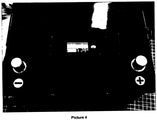
- is the display connection of multiple indications - information (7) with the poles (1).
-
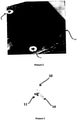
Picture 1 - It is the case (6) which consists of the upper (12) and lower (13) housing. The internal battery (8) and the internal array of supercapacitors (9) are housed inside the lower housing (13).
-
Pictures - and 3 The upper housing (12) of the case (6), which is mounted above the lower housing (13), bearing the apparatus of the invention. The
output 2 conductors of both the internal battery (8) and the supercapacitor array (9) are mounted with suitable terminals (10), bolts (11) and washers (14) in connection with the bottom of the poles (1) (asFigure 4 ) having an internal thread corresponding to the screws. -
Picture 4 - It is the multi-display - information screen (7) mounted on the upper housing of the device case (6).
Claims (1)
- The layout of the new energy accumulator includes:a. Two terminals which are the positive and negative terminals (1).b. An internal battery (8) consisting of an array of lithium cells (2) (Li-Ion or LiFePO4), with electronic battery management-monitoring unit (BMS) (3), the internal battery is connected in parallel between the positive and negative poles (1).c. An array of supercapacitors (9) consisting of components of a supercapacitor (4) with an electronic management-monitoring unit (5), is electrically connected in parallel between the positive and negative poles (1).
Applications Claiming Priority (1)
| Application Number | Priority Date | Filing Date | Title |
|---|---|---|---|
| GR20200100516A GR1009970B (en) | 2020-08-26 | 2020-08-26 | Electric dc accumulator consisting of different energy sources |
Publications (1)
| Publication Number | Publication Date |
|---|---|
| EP3961793A1 true EP3961793A1 (en) | 2022-03-02 |
Family
ID=76034318
Family Applications (1)
| Application Number | Title | Priority Date | Filing Date |
|---|---|---|---|
| EP21386055.4A Pending EP3961793A1 (en) | 2020-08-26 | 2021-08-20 | Electric dc accumulator consisting of different energy sources |
Country Status (2)
| Country | Link |
|---|---|
| EP (1) | EP3961793A1 (en) |
| GR (1) | GR1009970B (en) |
Families Citing this family (1)
| Publication number | Priority date | Publication date | Assignee | Title |
|---|---|---|---|---|
| GR1010287B (en) * | 2021-12-07 | 2022-08-24 | Ιωαννης Δημητριου Γρηγοριαδης | Electric dc accumulatior consisting of different energy sources |
Citations (4)
| Publication number | Priority date | Publication date | Assignee | Title |
|---|---|---|---|---|
| US20120074894A1 (en) * | 2010-09-24 | 2012-03-29 | Lite-On Clean Energy Technology Corp. | Hybrid battery module and battery management method |
| US20160176298A1 (en) * | 2011-03-16 | 2016-06-23 | Johnson Controls Technology Company | Energy Source System Having Multiple Energy Storage Devices |
| US20180202409A1 (en) * | 2017-01-13 | 2018-07-19 | Ford Global Technologies, Llc | Vehicle energy management |
| CN111555429A (en) * | 2020-06-11 | 2020-08-18 | 蠡县辉跃电子科技有限公司 | Starting battery provided with super capacitor and used for fuel vehicle and implementation method thereof |
Family Cites Families (3)
| Publication number | Priority date | Publication date | Assignee | Title |
|---|---|---|---|---|
| US20120259567A1 (en) * | 2011-04-07 | 2012-10-11 | 9058-5878 Québec Inc. (Video Assist) | Intelligent battery pack |
| WO2018006422A1 (en) * | 2016-07-08 | 2018-01-11 | 深圳市思倍生电子科技有限公司 | Portable starting power source |
| CN111416406A (en) * | 2020-03-28 | 2020-07-14 | 中国人民解放军96921部队 | an emergency starting power supply |
-
2020
- 2020-08-26 GR GR20200100516A patent/GR1009970B/en active IP Right Grant
-
2021
- 2021-08-20 EP EP21386055.4A patent/EP3961793A1/en active Pending
Patent Citations (4)
| Publication number | Priority date | Publication date | Assignee | Title |
|---|---|---|---|---|
| US20120074894A1 (en) * | 2010-09-24 | 2012-03-29 | Lite-On Clean Energy Technology Corp. | Hybrid battery module and battery management method |
| US20160176298A1 (en) * | 2011-03-16 | 2016-06-23 | Johnson Controls Technology Company | Energy Source System Having Multiple Energy Storage Devices |
| US20180202409A1 (en) * | 2017-01-13 | 2018-07-19 | Ford Global Technologies, Llc | Vehicle energy management |
| CN111555429A (en) * | 2020-06-11 | 2020-08-18 | 蠡县辉跃电子科技有限公司 | Starting battery provided with super capacitor and used for fuel vehicle and implementation method thereof |
Also Published As
| Publication number | Publication date |
|---|---|
| GR1009970B (en) | 2021-04-06 |
Similar Documents
| Publication | Publication Date | Title |
|---|---|---|
| US8993140B2 (en) | Rechargeable battery cell and battery | |
| Keshan et al. | Comparison of lead-acid and lithium ion batteries for stationary storage in off-grid energy systems | |
| US20190027790A1 (en) | Leadless starting accumulator battery, processing method and its use, particularly for combustion engines and motor vehicles | |
| Barsukov et al. | Battery power management for portable devices | |
| CN101657941A (en) | Electrochemical supercapacitor/lead-acid battery hybrid electrical energy storage device | |
| Rand et al. | Lead–acid battery fundamentals | |
| EP3961793A1 (en) | Electric dc accumulator consisting of different energy sources | |
| CN115276156B (en) | An unattended power supply system capable of autonomous charging | |
| US20240243368A1 (en) | Power storage system, power supply, driving device, power control device, and method for equalizing power storage statuses | |
| Aljamali et al. | Review on engineering designs for batteries | |
| GR1010287B (en) | Electric dc accumulatior consisting of different energy sources | |
| Roy et al. | Design and Analysis of Maintenance Free Lead Acid Battery System Used in UPS | |
| RU195900U1 (en) | Battery | |
| Spiers | Battery issues | |
| Amusan et al. | Experimental study of Optimum Working Temperature Range of Deep Cycled Lead Acid Solar Battery | |
| Barsukov | Battery selection, safety, and monitoring in mobile applications | |
| JP2013120680A (en) | Water electrolysis hybrid storage battery | |
| Level et al. | alkaline nickel battery 362 ageing 366 design 364 electrolyte 364 properties 366 | |
| Levy et al. | Batteries: portable power for the future | |
| Wallis et al. | Anodes-Technology review | |
| Amusan et al. | The Effect of Ambient Temperature on Self-Discharged Rate of Deep Cycle Lead-Acid Solar Battery | |
| Rand et al. | 3.1 Principles of operation | |
| Chandrabose et al. | ANALYSIS OF CHEMICAL CELLS IN DIFFERENT ASPECTS FOR OFF-GRID ENERGY SYSTEMS | |
| Barak | Recent developments in batteries and voltaic cells | |
| Pathan et al. | Performance Analysis of Industrial Battery |
Legal Events
| Date | Code | Title | Description |
|---|---|---|---|
| PUAI | Public reference made under article 153(3) epc to a published international application that has entered the european phase |
Free format text: ORIGINAL CODE: 0009012 |
|
| STAA | Information on the status of an ep patent application or granted ep patent |
Free format text: STATUS: THE APPLICATION HAS BEEN PUBLISHED |
|
| AK | Designated contracting states |
Kind code of ref document: A1 Designated state(s): AL AT BE BG CH CY CZ DE DK EE ES FI FR GB GR HR HU IE IS IT LI LT LU LV MC MK MT NL NO PL PT RO RS SE SI SK SM TR |
|
| STAA | Information on the status of an ep patent application or granted ep patent |
Free format text: STATUS: REQUEST FOR EXAMINATION WAS MADE |
|
| 17P | Request for examination filed |
Effective date: 20220506 |
|
| RBV | Designated contracting states (corrected) |
Designated state(s): AL AT BE BG CH CY CZ DE DK EE ES FI FR GB GR HR HU IE IS IT LI LT LU LV MC MK MT NL NO PL PT RO RS SE SI SK SM TR |
|
| R17P | Request for examination filed (corrected) |
Effective date: 20220506 |
|
| RAP3 | Party data changed (applicant data changed or rights of an application transferred) |
Owner name: GRIGORIADIS, IOANNIS |
|
| RIN1 | Information on inventor provided before grant (corrected) |
Inventor name: GRIGORIADIS, IOANNIS |