EP3962280B1 - Refroidissement des denrees alimentaires par pulverisation electrostatique - Google Patents
Refroidissement des denrees alimentaires par pulverisation electrostatique Download PDFInfo
- Publication number
- EP3962280B1 EP3962280B1 EP20728298.9A EP20728298A EP3962280B1 EP 3962280 B1 EP3962280 B1 EP 3962280B1 EP 20728298 A EP20728298 A EP 20728298A EP 3962280 B1 EP3962280 B1 EP 3962280B1
- Authority
- EP
- European Patent Office
- Prior art keywords
- spray
- foodstuff
- electrostatic sprayer
- electrostatic
- airflow
- Prior art date
- Legal status (The legal status is an assumption and is not a legal conclusion. Google has not performed a legal analysis and makes no representation as to the accuracy of the status listed.)
- Active
Links
Images


Classifications
-
- A—HUMAN NECESSITIES
- A23—FOODS OR FOODSTUFFS; TREATMENT THEREOF, NOT COVERED BY OTHER CLASSES
- A23B—PRESERVATION OF FOODS, FOODSTUFFS OR NON-ALCOHOLIC BEVERAGES; CHEMICAL RIPENING OF FRUIT OR VEGETABLES
- A23B4/00—Preservation of meat, sausages, fish or fish products
- A23B4/06—Freezing; Subsequent thawing; Cooling
- A23B4/08—Freezing; Subsequent thawing; Cooling with addition of chemicals or treatment with chemicals before or during cooling, e.g. in the form of an ice coating or frozen block
-
- A—HUMAN NECESSITIES
- A23—FOODS OR FOODSTUFFS; TREATMENT THEREOF, NOT COVERED BY OTHER CLASSES
- A23B—PRESERVATION OF FOODS, FOODSTUFFS OR NON-ALCOHOLIC BEVERAGES; CHEMICAL RIPENING OF FRUIT OR VEGETABLES
- A23B2/00—Preservation of foods or foodstuffs, in general
- A23B2/80—Freezing; Subsequent thawing; Cooling
- A23B2/803—Materials being transported through or in the apparatus, with or without shaping, e.g. in the form of powders, granules or flakes
-
- A—HUMAN NECESSITIES
- A23—FOODS OR FOODSTUFFS; TREATMENT THEREOF, NOT COVERED BY OTHER CLASSES
- A23B—PRESERVATION OF FOODS, FOODSTUFFS OR NON-ALCOHOLIC BEVERAGES; CHEMICAL RIPENING OF FRUIT OR VEGETABLES
- A23B4/00—Preservation of meat, sausages, fish or fish products
- A23B4/06—Freezing; Subsequent thawing; Cooling
- A23B4/062—Freezing; Subsequent thawing; Cooling the materials being transported through or in the apparatus with or without shaping, e.g. in the form of powder, granules or flakes
-
- A—HUMAN NECESSITIES
- A23—FOODS OR FOODSTUFFS; TREATMENT THEREOF, NOT COVERED BY OTHER CLASSES
- A23B—PRESERVATION OF FOODS, FOODSTUFFS OR NON-ALCOHOLIC BEVERAGES; CHEMICAL RIPENING OF FRUIT OR VEGETABLES
- A23B4/00—Preservation of meat, sausages, fish or fish products
- A23B4/26—Apparatus for preserving using liquids ; Processes therefor
- A23B4/30—Apparatus for preserving using liquids ; Processes therefor by spraying of liquids
-
- A—HUMAN NECESSITIES
- A23—FOODS OR FOODSTUFFS; TREATMENT THEREOF, NOT COVERED BY OTHER CLASSES
- A23B—PRESERVATION OF FOODS, FOODSTUFFS OR NON-ALCOHOLIC BEVERAGES; CHEMICAL RIPENING OF FRUIT OR VEGETABLES
- A23B7/00—Preservation of fruit or vegetables; Chemical ripening of fruit or vegetables
- A23B7/04—Freezing; Subsequent thawing; Cooling
- A23B7/0408—Materials being transported through or in the apparatus with or without shaping, e.g. in the form of powders, granules or flakes
-
- B—PERFORMING OPERATIONS; TRANSPORTING
- B05—SPRAYING OR ATOMISING IN GENERAL; APPLYING FLUENT MATERIALS TO SURFACES, IN GENERAL
- B05B—SPRAYING APPARATUS; ATOMISING APPARATUS; NOZZLES
- B05B12/00—Arrangements for controlling delivery; Arrangements for controlling the spray area
- B05B12/16—Arrangements for controlling delivery; Arrangements for controlling the spray area for controlling the spray area
- B05B12/18—Arrangements for controlling delivery; Arrangements for controlling the spray area for controlling the spray area using fluids, e.g. gas streams
-
- B—PERFORMING OPERATIONS; TRANSPORTING
- B05—SPRAYING OR ATOMISING IN GENERAL; APPLYING FLUENT MATERIALS TO SURFACES, IN GENERAL
- B05B—SPRAYING APPARATUS; ATOMISING APPARATUS; NOZZLES
- B05B13/00—Machines or plants for applying liquids or other fluent materials to surfaces of objects or other work by spraying, not covered by groups B05B1/00 - B05B11/00
- B05B13/02—Means for supporting work; Arrangement or mounting of spray heads; Adaptation or arrangement of means for feeding work
- B05B13/0221—Means for supporting work; Arrangement or mounting of spray heads; Adaptation or arrangement of means for feeding work characterised by the means for moving or conveying the objects or other work, e.g. conveyor belts
- B05B13/0264—Overhead conveying means, i.e. the object or other work being suspended from the conveying means; Details thereof, e.g. hanging hooks
-
- B—PERFORMING OPERATIONS; TRANSPORTING
- B05—SPRAYING OR ATOMISING IN GENERAL; APPLYING FLUENT MATERIALS TO SURFACES, IN GENERAL
- B05B—SPRAYING APPARATUS; ATOMISING APPARATUS; NOZZLES
- B05B5/00—Electrostatic spraying apparatus; Spraying apparatus with means for charging the spray electrically; Apparatus for spraying liquids or other fluent materials by other electric means
- B05B5/025—Discharge apparatus, e.g. electrostatic spray guns
- B05B5/03—Discharge apparatus, e.g. electrostatic spray guns characterised by the use of gas, e.g. electrostatically assisted pneumatic spraying
-
- B—PERFORMING OPERATIONS; TRANSPORTING
- B05—SPRAYING OR ATOMISING IN GENERAL; APPLYING FLUENT MATERIALS TO SURFACES, IN GENERAL
- B05B—SPRAYING APPARATUS; ATOMISING APPARATUS; NOZZLES
- B05B5/00—Electrostatic spraying apparatus; Spraying apparatus with means for charging the spray electrically; Apparatus for spraying liquids or other fluent materials by other electric means
- B05B5/08—Plant for applying liquids or other fluent materials to objects
- B05B5/082—Plant for applying liquids or other fluent materials to objects characterised by means for supporting, holding or conveying the objects
-
- B—PERFORMING OPERATIONS; TRANSPORTING
- B05—SPRAYING OR ATOMISING IN GENERAL; APPLYING FLUENT MATERIALS TO SURFACES, IN GENERAL
- B05B—SPRAYING APPARATUS; ATOMISING APPARATUS; NOZZLES
- B05B7/00—Spraying apparatus for discharge of liquids or other fluent materials from two or more sources, e.g. of liquid and air, of powder and gas
- B05B7/0075—Nozzle arrangements in gas streams
-
- A—HUMAN NECESSITIES
- A23—FOODS OR FOODSTUFFS; TREATMENT THEREOF, NOT COVERED BY OTHER CLASSES
- A23V—INDEXING SCHEME RELATING TO FOODS, FOODSTUFFS OR NON-ALCOHOLIC BEVERAGES AND LACTIC OR PROPIONIC ACID BACTERIA USED IN FOODSTUFFS OR FOOD PREPARATION
- A23V2002/00—Food compositions, function of food ingredients or processes for food or foodstuffs
-
- B—PERFORMING OPERATIONS; TRANSPORTING
- B05—SPRAYING OR ATOMISING IN GENERAL; APPLYING FLUENT MATERIALS TO SURFACES, IN GENERAL
- B05B—SPRAYING APPARATUS; ATOMISING APPARATUS; NOZZLES
- B05B12/00—Arrangements for controlling delivery; Arrangements for controlling the spray area
- B05B12/08—Arrangements for controlling delivery; Arrangements for controlling the spray area responsive to condition of liquid or other fluent material to be discharged, of ambient medium or of target ; responsive to condition of spray devices or of supply means, e.g. pipes, pumps or their drive means
- B05B12/12—Arrangements for controlling delivery; Arrangements for controlling the spray area responsive to condition of liquid or other fluent material to be discharged, of ambient medium or of target ; responsive to condition of spray devices or of supply means, e.g. pipes, pumps or their drive means responsive to conditions of ambient medium or target, e.g. humidity, temperature position or movement of the target relative to the spray apparatus
- B05B12/122—Arrangements for controlling delivery; Arrangements for controlling the spray area responsive to condition of liquid or other fluent material to be discharged, of ambient medium or of target ; responsive to condition of spray devices or of supply means, e.g. pipes, pumps or their drive means responsive to conditions of ambient medium or target, e.g. humidity, temperature position or movement of the target relative to the spray apparatus responsive to presence or shape of target
-
- B—PERFORMING OPERATIONS; TRANSPORTING
- B05—SPRAYING OR ATOMISING IN GENERAL; APPLYING FLUENT MATERIALS TO SURFACES, IN GENERAL
- B05B—SPRAYING APPARATUS; ATOMISING APPARATUS; NOZZLES
- B05B7/00—Spraying apparatus for discharge of liquids or other fluent materials from two or more sources, e.g. of liquid and air, of powder and gas
- B05B7/02—Spray pistols; Apparatus for discharge
- B05B7/08—Spray pistols; Apparatus for discharge with separate outlet orifices, e.g. to form parallel jets, i.e. the axis of the jets being parallel, to form intersecting jets, i.e. the axis of the jets converging but not necessarily intersecting at a point
- B05B7/0807—Spray pistols; Apparatus for discharge with separate outlet orifices, e.g. to form parallel jets, i.e. the axis of the jets being parallel, to form intersecting jets, i.e. the axis of the jets converging but not necessarily intersecting at a point to form intersecting jets
- B05B7/0815—Spray pistols; Apparatus for discharge with separate outlet orifices, e.g. to form parallel jets, i.e. the axis of the jets being parallel, to form intersecting jets, i.e. the axis of the jets converging but not necessarily intersecting at a point to form intersecting jets with at least one gas jet intersecting a jet constituted by a liquid or a mixture containing a liquid for controlling the shape of the latter
-
- B—PERFORMING OPERATIONS; TRANSPORTING
- B05—SPRAYING OR ATOMISING IN GENERAL; APPLYING FLUENT MATERIALS TO SURFACES, IN GENERAL
- B05B—SPRAYING APPARATUS; ATOMISING APPARATUS; NOZZLES
- B05B7/00—Spraying apparatus for discharge of liquids or other fluent materials from two or more sources, e.g. of liquid and air, of powder and gas
- B05B7/02—Spray pistols; Apparatus for discharge
- B05B7/12—Spray pistols; Apparatus for discharge designed to control volume of flow, e.g. with adjustable passages
- B05B7/1254—Spray pistols; Apparatus for discharge designed to control volume of flow, e.g. with adjustable passages the controlling means being fluid actuated
- B05B7/1263—Spray pistols; Apparatus for discharge designed to control volume of flow, e.g. with adjustable passages the controlling means being fluid actuated pneumatically actuated
- B05B7/1272—Spray pistols; Apparatus for discharge designed to control volume of flow, e.g. with adjustable passages the controlling means being fluid actuated pneumatically actuated actuated by gas involved in spraying, i.e. exiting the nozzle, e.g. as a spraying or jet shaping gas
-
- B—PERFORMING OPERATIONS; TRANSPORTING
- B05—SPRAYING OR ATOMISING IN GENERAL; APPLYING FLUENT MATERIALS TO SURFACES, IN GENERAL
- B05B—SPRAYING APPARATUS; ATOMISING APPARATUS; NOZZLES
- B05B7/00—Spraying apparatus for discharge of liquids or other fluent materials from two or more sources, e.g. of liquid and air, of powder and gas
- B05B7/16—Spraying apparatus for discharge of liquids or other fluent materials from two or more sources, e.g. of liquid and air, of powder and gas incorporating means for heating or cooling the material to be sprayed
- B05B7/1606—Spraying apparatus for discharge of liquids or other fluent materials from two or more sources, e.g. of liquid and air, of powder and gas incorporating means for heating or cooling the material to be sprayed the spraying of the material involving the use of an atomising fluid, e.g. air
- B05B7/1613—Spraying apparatus for discharge of liquids or other fluent materials from two or more sources, e.g. of liquid and air, of powder and gas incorporating means for heating or cooling the material to be sprayed the spraying of the material involving the use of an atomising fluid, e.g. air comprising means for heating the atomising fluid before mixing with the material to be sprayed
Definitions
- This disclosure relates generally to spray chilling. More particularly, this disclosure relates to electrostatic spray chilling.
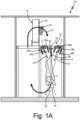
- Spray chilling system 10 is configured to rapidly cool foodstuff C during processing.
- spray chilling system 10 can rapidly cool a meat carcass after the animal is harvested/slaughtered.
- Spray chilling system 10 conveys foodstuff C through chilling tunnel in direction D and reduces the core temperature of foodstuff C via a chilled air flow and charged fluid sprays.
- the fluid can be of any type suitable for spraying onto foodstuffs during processing, such as water or water-based solutions such as a solution of sodium chloride or other allowed additives in water. While one foodstuff C is illustrated in FIG. 1B , it is understood that spray chilling system 10 is configured to simultaneously chill multiple foodstuffs.
- Chilling tunnel 12 is a space configured to chill foodstuffs after harvesting or slaughtering.
- One or more of conveyor 18 extends through chilling tunnel 12.
- Conveyor is configured to convey foodstuff C through chilling tunnel 12.
- Hook 38 is secured to conveyor slide rail 36 and traversed through chilling tunnel 12.
- Foodstuff C is mounted on hook 38.
- conveyor 18 is an overhead conveyor, but it is understood that conveyor 18 can be of any configuration suitable for supporting and conveying one or more meat carcasses C within and through chilling tunnel 12. While conveyor 18 is shown as extending straight through chilling tunnel 12, it is understood that conveyor 18 can be disposed in any configuration suitable for conveying meat carcasses C within spray chilling system 10.
- Primary blower 14 is disposed at one end of chilling tunnel 12. In some examples, primary blower 14 is disposed proximate the ceiling of chilling tunnel 12. Primary blower 12 is configured to generate a chilled primary airflow F1 and to blow that chilled primary airflow F1 into chilling tunnel 12. Chilled primary airflow F1 circulates within chilling tunnel 12. In some examples, the chilled primary air flows the length of cooling tunnel 12 along the ceiling of chilling tunnel 12 to the wall disposed opposite primary blower 14. The chilled primary air then flows back towards primary blower 14 along the floor of chilling tunnel 12, where the chilling primary air is recirculated by primary blower 14.
- Primary fans 22 blow the primary airflow chilled by cooling elements 20 into chilling tunnel 12.
- Primary fans 22 can be of any type suitably configured for blowing chilled primary airflow F1 through chilling tunnel 12.
- primary fans 22 can be configured to generate an airflow having a speed of between about 0.5-2.5 m/s (about 1.5-8.2 ft/s).
- the velocity of the primary airflow generated by primary fans 22 can be altered to any desired velocity based on the requirements of the foodstuff being chilled.
- the spray area is the area within which spray module 16 is activated to spray charged fluid droplets onto foodstuff C.
- reservoir 30 provides the fluid that is going to be sprayed onto foodstuff C. While each spray module 16 is shown as including a dedicated reservoir 30, it is understood that each reservoir 30 can be connected to supply fluid to one or more than one spray module 16.
- Spray module 16 is configured to continuously eject charged fluid sprays into the chilled primary airflow F1 so long as foodstuff C is present in the spray area of that spray module 16.
- Spray module 16 can be configured to stop spraying when no foodstuff C is present in the spray area.
- Each spray module 16 is individually controllable.
- Fluid supplies provide charged fluid for spraying by electrostatic sprayer 24a, 24b.
- Reservoirs 30 store fluid for spraying by electrostatic sprayers 24a, 24b and the fluid is pumped to electrostatic sprayers 24a, 24b.
- the fluid supply can draw fluid from a grounded source, such as the water grid, supply tank, etc.
- Reservoir 30 can be considered as storing charged fluid for supplying electrostatic sprayers 24a, 24b.
- Electrostatic sprayers 24a, 24b are fluidly connected to reservoir 30 by fluid lines 34 to receive fluid from reservoir 30.
- the fluid is charged to a desired spray voltage and sprayed onto and towards foodstuff C.
- the fluid is charged to a potential of at least about 10 kilovolts (kV).
- Charging the fluid to at least 10kV causes the fluid to break apart into extremely small droplets, such as droplets having an average diameter of about 15-25 micrometers, which droplets enhance cooling due to intense evaporation.
- the droplets have an average diameter of about 20 micrometers.
- the fluid is charged to a potential of about 10kV-60kV, and more specifically to a potential of about 20kV-50kV.
- the fluid can be charged in any desired manner, such as by an electrode (not shown) of electrostatic sprayer 24a, 24b, among other options.
- the fluid is conductive such that the charge can be provided at any desired location along the fluid supply path between the fluid supply and the electrostatic sprayer.
- the charge can be provided at the fluid supply, along fluid lines 34, or at the electrostatic sprayers 24a, 24b, among other options.
- Foodstuff C is grounded as it traverses chilling tunnel 12. As such, the charged fluid droplets are attracted to foodstuff C and wrap around and evenly coat foodstuff C.
- Electrostatic sprayer 24a is mounted on a first side of conveyor 18 and electrostatic sprayer 24b is mounted on a second side of conveyor 18. Electrostatic sprayers 24a, 24b atomize the fluid and eject the fluid in a spray fan, though it is understood that other spray configurations are possible. While each spray module 16 is described as including two electrostatic sprayers (electrostatic sprayers 24a, 24b), it is understood that each spray module 16 can include as few or as many electrostatic sprayers as desired. For example, each spray module 16 can include one, two, three, four, or more electrostatic sprayers. Each of the electrostatic sprayers can be mounted at similar or different angles relative to vertical.
- spray module 16 includes one or more of electrostatic sprayers 24a, 24b mounted above the foodstuff C and includes one or more of electrostatic sprayers 24a, 24b mounted below or beside foodstuff C.
- the electrostatic sprayers mounted above foodstuff C can be oriented to spray generally downward and the electrostatic sprayers mounted below foodstuff C can be oriented to spray generally upward.
- the compressed air is pressurized to at least about 150 kilopascal (kPa) (about 21.7 pounds per square inch (psi)), for example, about 150-300 kPa (about 21.7-43psi).
- kPa kilopascal
- psi pounds per square inch
- the combination of charged fluid and atomized spray is configured to generate extremely small droplets, such as droplets having a size of about 20 micrometers.
- Electrostatic sprayer 24a is configured to spray the charged fluid along spray axis A-A
- electrostatic sprayer 24b is configured to spray the charged fluid along spray axis B-B.
- Electrostatic sprayers 24a, 24b are configured to spray generally parallel to the vertical axis on which foodstuff C is hanging.
- Spray axis A-A is disposed at angle ⁇ relative to vertical such that electrostatic sprayer 24a ejects the charged fluid spray along and towards foodstuff C.
- spray axis B-B is disposed at angle ⁇ relative to a vertical axis such that electrostatic sprayer 24b ejects the charged fluid spray along and towards foodstuff C.
- electrostatic sprayers 24a, 24b can be disposed at any desired angle suitable for coating foodstuff C with the charged fluid.
- one or both of angles ⁇ and ⁇ can be 0 degrees relative to vertical, such that electrostatic sprayers 24a, 24b spray vertically and the electrostatic attraction pulls the charged droplets onto foodstuff C.
- angles ⁇ and ⁇ are between about 5-25 degrees, and more specifically between about 8-17 degrees. It is understood, however, that angles ⁇ and ⁇ can be of any desired angle depending on a variety of factors, such as the distance of electrostatic sprayers 24a, 24b from foodstuff C, the distance of spray module 16 from primary blower 14, and the type of foodstuff being chilled, among other factors.
- the chilled primary airflow F1 is relatively turbulent and circulates within chilling tunnel 12.
- the chilled primary airflow F1 flows transverse to the secondary airflow F2 from electrostatic sprayers 24a, 24b.
- Secondary fans 26a, 26b and air baffles 28a, 28b are configured to orient the chilled primary airflow F1 at spray module 16 to be generally longitudinally along spray axis A-A at electrostatic sprayer 24a and generally longitudinally along spray axis B-B at electrostatic sprayer 24b.
- Air baffles 28a, 28b are disposed proximate secondary fans 26a, 26b and electrostatic sprayers 24a, 24b. Air baffles 28a, 28b are disposed downstream of secondary fans 26a, 26b, respectively, to orient and guide the subflows generated by secondary fans 26a, 26b towards and along electrostatic sprayers 24a, 24b, respectively. Air baffles 28a, 28b further prevent diffusion of the subflows.
- Each air baffle 28a, 28b includes multiple baffles disposed on the inboard and outboard sides of electrostatic sprayers 24a, 24b relative to conveyor 18. Air baffles 28a, 28b can be of any type suitably configured to orient and guide the subflows. Air baffles 28a, 28b can also be disposed at any desired angle relative to spray axes A-A and B-B, respectively, to direct the first and second subflows.
- Hook detectors 32 are configured to sense when foodstuff C enters the spray area associated with the spray modules 16 associated with that hook detector 32.
- Spray modules 16 are configured to activate and begin spraying based on hook detector 32 sensing foodstuff C entering the spray area associated with that spray module 16.
- hook detector 32 can be a Hall Effect sensor, a mechanical sensor actuated by hook 38, or of any other type suitably configured for sensing foodstuff C entering the spray area.
- Spray chilling system 10 can include one or more controllers (not shown) configured to activate and deactivate spray modules 16 throughout the spray process.
- the controller can activate a spray module 16 based on a signal from an associated hook detector 32 and can deactivate the spray module 16 based on a set time period passing, based on a signal from a sensor at the end of the spray area, or based on any other desired factor.
- a foodstuff C is placed on conveyor 18 for chilling.
- foodstuff C can be a meat carcass of a freshly harvested animal can be hung from hook 38.
- Conveyor slide rail 36 pulls hook 38, and thus foodstuff C, through chilling tunnel 12.
- Primary blower 14 generates and blows the chilled primary airflow F1 into chilling tunnel 12.
- the very small charged droplets generated by electrostatic sprayers 24a, 24b wrap around foodstuff C and crate a thin, homogeneous fluid layer on the surface of foodstuff C. That thin, homogeneous fluid layer also prevents fluid channels from forming on the surface of foodstuff C, which fluid channels can cause discoloration of the foodstuff C.
- Secondary fans 26a, 26b redirect the chilled primary airflow F1 by respectively generating the first and second subflows of chilled primary air. Secondary fans 26a, 26b blow the first and second subflows towards electrostatic sprayers 24a, 24b. Air baffles 28a, 28b orient and guide the first and second subflows towards foodstuff C. Electrostatic sprayers 24a, 24b eject secondary airflows F2 of as part of the charged fluid sprays. The first and second subflows flow generally longitudinally with the secondary airflows F2, such that the first and second subflows further guide the charged fluid sprays towards foodstuff C. As discussed above, secondary fans 26a, 26b can be configured to generate first and second subflows having velocities substantially similar to the secondary airflows F2 generated by electrostatic sprayers 24a, 24b.
- Spray module 16 stops spraying once foodstuff C passes out of the spray area associated with spray module 16.
- Conveyor 18 continues to traverse foodstuff C through chilling tunnel 12 where foodstuff C is intermittently dosed with charged fluid from the multiple spray modules 16 in chilling tunnel 12.
- the relative positioning between spray modules 16 and/or speed of conveyor 18 can be based on when foodstuff C dries from the previous dosing. As such, foodstuff C is recoated with fluid droplets as soon as foodstuff C becomes dry, thereby further inhibiting weight loss during the chilling process. Foodstuff C continues to traverse chilling tunnel 12 until the core temperature has dropped to a desired level.
- Spray chilling system 10 provides significant advantages.
- the charged fluid is electrically attracted to the grounded foodstuff, thereby increasing the transfer efficiency of the fluid onto the foodstuff.
- the charged fluid wraps around and evenly coats the surface of the grounded foodstuff.
- the transfer yield e.g., the savings on weight loss/total amount of fluid sprayed
- the transfer yield increased from about 17% with uncharged fluid to about 40% with charged fluid.
- a foodstuff C would lose 2kg (about 4.41 lbs) during the chilling process without spraying but keeps the 2kg with spraying, as such the savings on weight loss would be 2kg. If the total liquid sprayed is 2L (about 68 fl oz), then the transfer yield would be 100%.
- the transfer efficiency (e.g., the percentage of fluid discharged from electrostatic sprayers 24a, 24b that contributes directly to the reduction of weight loss of the foodstuff C) also increased relative to uncharged water.
- Increasing the transfer efficiency reduces the amount of condensation depositing in chilling tunnel 12 and the amount of fluid droplets floating in the air, thereby producing a more sanitary chilling environment.
- the increased transfer efficiency also reduces waste, thereby reducing cost.
- the charged fluid also provides benefits in that the highly charged fluid (charge of 10kV or greater) breaks into extremely small droplets that deposit on the foodstuff.
- the extremely small droplets evaporate quickly, which accelerates the chilling process.
- the accelerated cooling process reduces weight loss of the foodstuff that can occur during the chilling process.
- Spray chilling system 10 can effectively chill foodstuff C, including meat carcasses, with weight losses of about 0.4-0.5% compared with weight losses of about 1.5% with forced air movement and weight loss of about 0.7-1.0% with forced air movement and uncharged water sprays.
- the rate of cooling increased about 10-20% relative to cooling utilizing uncharged fluid.
- spray chilling system 10 quickly cools foodstuff, thereby increasing the amount of foodstuff that can be processed, while limiting any weight losses, thereby increasing the yield of foodstuff during processing.
- FIG. 2A is an isometric view of electrostatic sprayer 24a.
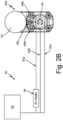
- FIG. 2B is a schematic diagram of pneumatic supply system 40 for electrostatic sprayer 24a.
- Electrostatic sprayer 24 includes sprayer body 42, power inlet 44, fluid inlet 46, air inlets 48a-48c, and air cap 50.
- Pneumatic supply system 40 includes air source 52, air lines 54a-54c, and heater 56.
- Electrostatic sprayer 24a is configured to emit a charged fluid spray during operation of spray chilling system 10 ( FIGS. 1A and 1B ).
- Sprayer body 42 can be mounted at any desired location for automatic operation of electrostatic sprayer 24. It is understood, however, that electrostatic sprayer 24a can be of any desired configuration suitable for applying a charged fluid spray to foodstuff C.
- Electrostatic sprayer 24a is substantially similar to electrostatic sprayer 24b and it is understood that the discussion of electrostatic sprayer 24a applies equally to electrostatic sprayer 24b.
- Fluid line 34 extends to fluid inlet 46 of electrostatic sprayer 24a. Fluid line 34 is configured to provide fluid from reservoir 30 ( FIG. 1B ) to electrostatic sprayer 24a. The fluid is ejected through air cap 50.
- Power inlet 44 of electrostatic sprayer 24a is configured to receive a power cable to provide power to charge an electrode (not shown) of electrostatic sprayer 24a. The electrode projects through air cap 50 and is configured to charge the fluid spray.
- electrostatic sprayer 24a does not include a power inlet 44 as the charge is applied to the fluid at a location upstream of electrostatic sprayer 24a.
- Air inlets 48a-48c are connected to pneumatic supply system 40 to receive compressed air from pneumatic supply system 40.
- Pneumatic supply system 40 is configured to provide compressed air to electrostatic sprayer 24a to generate the secondary airflow F2 ( FIG. 1A ).
- Air source 52 is configured to compress air and provide the compressed air to electrostatic sprayer 24a.
- Air source 52 can be of any type suitably configured to compress air.
- Air line 54a extends from air source 52 to air inlet 48a to provide a first portion of compressed air to electrostatic sprayer 24a.
- Air line 54b extends from air source 52 to air inlet 48b to provide a second portion of compressed air to electrostatic sprayer 24a.
- Air line 54c extends from air source 52 to air inlet 48c to provide a third portion of compressed air to electrostatic sprayer 24a.
- the first portion of compressed air is atomizing air that is ejected from air cap 50 and breaks up the charged fluid stream and controls droplet size.
- the second portion of compressed air is fan air that is ejected from air cap 50 and controls the shape and width of the spray pattern.
- the third portion of compressed air is trigger air that controls activation of electrostatic sprayer 24.
- the first portion of compressed air and the second portion of compressed air form the secondary airflow F2 ejected from electrostatic sprayer 24a.
Landscapes
- Life Sciences & Earth Sciences (AREA)
- Engineering & Computer Science (AREA)
- Chemical & Material Sciences (AREA)
- Wood Science & Technology (AREA)
- Zoology (AREA)
- Food Science & Technology (AREA)
- Polymers & Plastics (AREA)
- Chemical Kinetics & Catalysis (AREA)
- General Chemical & Material Sciences (AREA)
- Cold Air Circulating Systems And Constructional Details In Refrigerators (AREA)
- Freezing, Cooling And Drying Of Foods (AREA)
- Application Of Or Painting With Fluid Materials (AREA)
Claims (15)
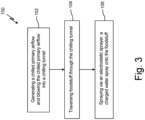
- Procédé de réfrigération par pulvérisation, le procédé comprenant :la génération d'un flux d'air primaire réfrigéré et le soufflage du flux d'air primaire dans un tunnel de réfrigération ;le passage, via une conduite de transport, d'une denrée alimentaire électriquement mise à la terre à travers le tunnel de réfrigération ;la génération d'un jet de fluide chargé ;l'application du jet de fluide chargé à la denrée alimentaire ; etl'orientation, via un déflecteur de guidage d'air, du flux d'air primaire le long d'un premier axe de pulvérisation d'un premier pulvérisateur électrostatique de sorte que le flux d'air primaire s'écoule globalement parallèlement au premier jet de fluide chargé généré par le premier pulvérisateur électrostatique.
- Procédé de la revendication 1, dans lequel l'étape de génération du flux d'air primaire réfrigéré comprend la réfrigération du flux d'air primaire à une température inférieure ou égale à 0 degré C.
- Procédé de la revendication 1, dans lequel la pulvérisation du fluide chargé sur la denrée alimentaire comprend :la pulvérisation d'un premier jet de fluide chargé sur la denrée alimentaire le long du premier axe de pulvérisation, le premier axe de pulvérisation étant disposé à un premier angle par rapport à la verticale, via le premier pulvérisateur électrostatique ; etla pulvérisation d'un second jet de fluide chargé sur la denrée alimentaire le long d'un second axe de pulvérisation, le second axe de pulvérisation étant disposé à un second angle par rapport à la verticale via un second pulvérisateur électrostatique.
- Procédé de la revendication 1, comprenant en outre :
la génération, via un premier ventilateur secondaire, d'un premier sous-flux du flux d'air primaire, le ventilateur secondaire soufflant le premier sous-flux vers un premier pulvérisateur électrostatique configuré pour émettre le jet de fluide chargé. - Procédé de la revendication 4, comprenant en outre :la génération, via un second ventilateur secondaire, d'un second sous-flux du flux d'air primaire, le second ventilateur secondaire soufflant le second sous-flux vers un second pulvérisateur électrostatique ;le guidage, via un premier déflecteur, du premier sous-flux le long d'un premier axe de pulvérisation du premier pulvérisateur électrostatique ; etle guidage, via un second déflecteur, du second sous-flux le long d'un second axe de pulvérisation du second pulvérisateur électrostatique.
- Procédé de la revendication 1, dans lequel l'application du jet de fluide chargé à la denrée alimentaire comprend :la génération d'un flux d'air secondaire et l'éjection du flux d'air secondaire d'un premier pulvérisateur électrostatique pour atomiser les gouttelettes de fluide dans le jet de fluide chargé ; etle chauffage du flux d'air secondaire avant l'éjection du flux d'air secondaire du premier pulvérisateur électrostatique.
- Procédé de la revendication 6, dans lequel la génération du flux d'air secondaire et l'éjection du flux d'air secondaire du premier pulvérisateur électrostatique pour atomiser les gouttelettes de fluide dans le jet de fluide chargé comprennent :
la mise sous pression du flux d'air secondaire à une pression d'au moins 150 kPa bar pour générer un flux d'air secondaire sous pression et l'éjection du flux d'air secondaire sous pression du premier pulvérisateur électrostatique. - Procédé de la revendication 1, comprenant en outre :
l'activation d'un pulvérisateur électrostatique sur la base d'un détecteur de crochet détectant la denrée alimentaire entrant dans une zone de pulvérisation du pulvérisateur électrostatique. - Procédé de la revendication 8, comprenant en outre :
la désactivation du pulvérisateur électrostatique sur la base de la sortie de la denrée alimentaire de la zone de pulvérisation. - Système de réfrigération par pulvérisation comprenant :une soufflante primaire configurée pour générer un flux d'air primaire réfrigéré ;une conduite de transport configurée pour le passage de denrée alimentaire électriquement mise à la terre dans un tunnel de réfrigération ;une pluralité de modules de pulvérisation disposés le long de la conduite de transport et configurés pour pulvériser un fluide chargé sur la denrée alimentaire, où un premier module de pulvérisation de la pluralité de modules de pulvérisation comprend :un premier pulvérisateur électrostatique configuré pour pulvériser un premier jet de fluide chargé sur la denrée alimentaire ; etun premier ventilateur secondaire disposé entre le premier pulvérisateur électrostatique et la soufflante primaire, le premier ventilateur secondaire étant configuré pour générer un premier sous-flux du flux d'air primaire réfrigéré et souffler le premier sous-flux vers le premier pulvérisateur électrostatique.
- Système de réfrigération par pulvérisation de la revendication 10, dans lequel le premier module de pulvérisation comprend en outre :
un premier déflecteur d'air disposé à proximité du premier pulvérisateur électrostatique et orienté pour guider le premier sous-flux le long d'un premier axe de pulvérisation du premier pistolet de pulvérisation électrostatique. - Système de réfrigération par pulvérisation de la revendication 11, dans lequel le premier module de pulvérisation comprend en outre :un second pulvérisateur électrostatique configuré pour pulvériser le second jet de fluide chargé sur la denrée alimentaire ;un second ventilateur secondaire disposé entre le second pulvérisateur électrostatique et la soufflante primaire, le second ventilateur secondaire étant configuré pour générer un second sous-flux du flux d'air primaire réfrigéré et souffler le second sous-flux vers le second pulvérisateur électrostatique ; etun second déflecteur d'air disposé à proximité du second pulvérisateur électrostatique et orienté pour guider le second sous-flux le long d'un second axe de pulvérisation du second pistolet de pulvérisation électrostatique.
- Système de réfrigération par pulvérisation de la revendication 12, dans lequel le premier pulvérisateur électrostatique est disposé sur un premier côté de la conduite de transport et le second pulvérisateur électrostatique est disposé sur un second côté de la conduite de transport.
- Système de réfrigération par pulvérisation de la revendication 13, dans lequel le premier axe de pulvérisation est orienté vers la conduite de transport par rapport à la verticale et le second axe de pulvérisation est orienté vers la conduite de transport par rapport à la verticale.
- Système de réfrigération par pulvérisation de l'une quelconque des revendications 10 à 14, comprenant en outre :une conduite pneumatique s'étendant à un premier pistolet de pulvérisation électrostatique pour fournir de l'air comprimé au pistolet de pulvérisation électrostatique, le premier pistolet de pulvérisation électrostatique étant configuré pour éjecter l'air comprimé en tant que flux d'air secondaire pour atomiser le premierr jet de fluide chargé ; etun dispositif de chauffage disposé sur la conduite pneumatique pour chauffer l'air comprimé de sorte que le flux d'air secondaire soit plus chaud que le flux d'air primaire.
Applications Claiming Priority (2)
| Application Number | Priority Date | Filing Date | Title |
|---|---|---|---|
| US16/402,811 US11419340B2 (en) | 2019-05-03 | 2019-05-03 | Electrostatic spray chilling of foodstuffs |
| PCT/US2020/031009 WO2020227087A1 (fr) | 2019-05-03 | 2020-05-01 | Réfrigération par pulvérisation électrostatique de produits alimentaires |
Publications (3)
| Publication Number | Publication Date |
|---|---|
| EP3962280A1 EP3962280A1 (fr) | 2022-03-09 |
| EP3962280B1 true EP3962280B1 (fr) | 2025-07-09 |
| EP3962280C0 EP3962280C0 (fr) | 2025-07-09 |
Family
ID=67616393
Family Applications (1)
| Application Number | Title | Priority Date | Filing Date |
|---|---|---|---|
| EP20728298.9A Active EP3962280B1 (fr) | 2019-05-03 | 2020-05-01 | Refroidissement des denrees alimentaires par pulverisation electrostatique |
Country Status (5)
| Country | Link |
|---|---|
| US (1) | US11419340B2 (fr) |
| EP (1) | EP3962280B1 (fr) |
| AU (1) | AU2020269272B2 (fr) |
| BR (1) | BR112021020388A2 (fr) |
| WO (1) | WO2020227087A1 (fr) |
Families Citing this family (4)
| Publication number | Priority date | Publication date | Assignee | Title |
|---|---|---|---|---|
| US10659048B2 (en) * | 2017-12-28 | 2020-05-19 | Invensense, Inc. | Mixed signal system |
| US11419340B2 (en) * | 2019-05-03 | 2022-08-23 | Graco Minnesota Inc. | Electrostatic spray chilling of foodstuffs |
| NL2033712B1 (en) | 2022-12-12 | 2024-06-17 | Van Laer Tech B V | Coflowing spraying system for spraying an area or surface of an object and use thereof |
| DK181648B1 (en) * | 2023-05-10 | 2024-08-30 | Scandi Standard Ab | A method of chilling poultry carcasses and a chilling system |
Citations (1)
| Publication number | Priority date | Publication date | Assignee | Title |
|---|---|---|---|---|
| EP1511390B1 (fr) * | 2002-05-29 | 2009-03-11 | Ansawina Beheer B.V. | Procede et appareil servant a refroidir les carcasses et des parties de carcasses d'animaux abattus |
Family Cites Families (30)
| Publication number | Priority date | Publication date | Assignee | Title |
|---|---|---|---|---|
| US4004733A (en) | 1975-07-09 | 1977-01-25 | Research Corporation | Electrostatic spray nozzle system |
| FR2389330A1 (en) | 1977-05-02 | 1978-12-01 | Krey Packing Cy | Bactericidal spray for freshly slaughtered hog carcasses - which are being chilled comprises an aq. chlorine dioxide of nonbleaching concn. |
| US4196221A (en) * | 1977-06-10 | 1980-04-01 | Dew Denise R | Method and equipment for processing food products |
| FR2422338A2 (fr) | 1978-04-12 | 1979-11-09 | Vermorel Denise | Procede et appareillage pour traiter des produits alimentaires par pulverisation d'eau dans un champ electrostatique |
| DE2733297C2 (de) | 1977-07-22 | 1982-11-25 | Electricité de France Service National, 75008 Paris | Verfahren zum Auftauen gefrorener oder tiefgekühlter Produkte |
| NZ191111A (en) | 1978-07-28 | 1982-12-07 | New Zealand Ind Gases | Refrigerating fresh killed carcasses initial cryogenic liquid contact |
| US4273293A (en) | 1978-12-20 | 1981-06-16 | Nordson Corporation | Nozzle assembly for electrostatic spray guns |
| US4271683A (en) | 1979-07-26 | 1981-06-09 | Hester Industries, Inc. | High humidity food chilling system |
| FR2591861B1 (fr) | 1985-12-20 | 1988-12-16 | Lamballe Coop Agric Eleveurs R | Procede et installation de traitement de viandes au cours de leur refrigeration. |
| AU729352B2 (en) | 1997-03-17 | 2001-02-01 | Ishikawa, Yasuo | Method and equipment for treating electrostatic field and electrode used therein |
| US6010729A (en) | 1998-08-20 | 2000-01-04 | Ecolab Inc. | Treatment of animal carcasses |
| EP1377172A1 (fr) | 2001-03-28 | 2004-01-07 | Andrew Butler | Procede de ressuage de carcasses |
| CA2355173C (fr) | 2001-08-15 | 2009-10-06 | Maple Leaf Foods Inc. | Procede et appareil de refrigeration de carcasses |
| NL1019298C2 (nl) | 2001-11-05 | 2003-05-07 | Stork Pmt | Werkwijze voor het conserveren van vlees van een geslachte vogel of deel daarvan. |
| US6845624B2 (en) | 2003-04-28 | 2005-01-25 | Maple Leaf Foods Inc. | Process for chilling animal carcasses |
| US6910402B2 (en) | 2003-08-13 | 2005-06-28 | National-Oilwell, L. P. | Pipe spinner |
| CN101031771A (zh) | 2004-09-30 | 2007-09-05 | 贝洱两合公司 | 热交换器及冷却增压空气的方法 |
| WO2007094549A1 (fr) | 2006-02-15 | 2007-08-23 | Lg Electronics, Inc. | Appareil de surfusion et son procédé de mise en marche |
| WO2008010874A1 (fr) | 2006-07-21 | 2008-01-24 | Zee Company, Inc. | Procédé de traitement anti-microbien des viandes |
| CN101006800B (zh) | 2006-12-30 | 2010-08-11 | 江苏省食品集团有限公司 | 一种用于冷却肉生产的雾化喷淋冷却方法 |
| NZ585074A (en) | 2007-11-06 | 2012-06-29 | Panasonic Corp | Refrigerator with an atomization device and a protection unit to supprss current flow to the user |
| CN101849152B (zh) | 2007-11-06 | 2013-01-23 | 松下电器产业株式会社 | 冷藏库 |
| JP5113502B2 (ja) | 2007-11-27 | 2013-01-09 | パナソニック株式会社 | 静電霧化装置 |
| US20100055270A1 (en) | 2008-06-10 | 2010-03-04 | Zee Company | Method and process for the controll of water weight loss in spray chill operations with the subsequent reduction of airborne bacterial load in air utilizing specialized chemistry in an air wash system in protein-based food processing plants |
| WO2010035707A1 (fr) | 2008-09-25 | 2010-04-01 | パナソニック電工株式会社 | Dispositif générateur de brouillard d’eau réduite et équipement électrique |
| WO2010109989A1 (fr) | 2009-03-27 | 2010-09-30 | 三菱電機株式会社 | Dispositif d'atomisation électrostatique, appareils, climatiseur, et réfrigérateur |
| US20120318884A1 (en) | 2011-06-20 | 2012-12-20 | Mccormick Stephen A | Electrostatic impingement plate atomizer apparatus and method |
| US9339042B2 (en) | 2012-03-27 | 2016-05-17 | Lp Solutions Llc | Carcass weight control |
| US20180092370A1 (en) | 2016-09-30 | 2018-04-05 | Arizona Board Of Regents On Behalf Of The University Of Arizona | Liquid and powder delivery systems for application of antimicrobials to meat products |
| US11419340B2 (en) * | 2019-05-03 | 2022-08-23 | Graco Minnesota Inc. | Electrostatic spray chilling of foodstuffs |
-
2019
- 2019-05-03 US US16/402,811 patent/US11419340B2/en active Active
-
2020
- 2020-05-01 WO PCT/US2020/031009 patent/WO2020227087A1/fr not_active Ceased
- 2020-05-01 EP EP20728298.9A patent/EP3962280B1/fr active Active
- 2020-05-01 AU AU2020269272A patent/AU2020269272B2/en active Active
- 2020-05-01 BR BR112021020388A patent/BR112021020388A2/pt unknown
Patent Citations (1)
| Publication number | Priority date | Publication date | Assignee | Title |
|---|---|---|---|---|
| EP1511390B1 (fr) * | 2002-05-29 | 2009-03-11 | Ansawina Beheer B.V. | Procede et appareil servant a refroidir les carcasses et des parties de carcasses d'animaux abattus |
Also Published As
| Publication number | Publication date |
|---|---|
| US11419340B2 (en) | 2022-08-23 |
| BR112021020388A2 (pt) | 2021-12-07 |
| WO2020227087A1 (fr) | 2020-11-12 |
| EP3962280C0 (fr) | 2025-07-09 |
| US20190254297A1 (en) | 2019-08-22 |
| AU2020269272A1 (en) | 2021-10-28 |
| EP3962280A1 (fr) | 2022-03-09 |
| AU2020269272B2 (en) | 2026-04-23 |
Similar Documents
| Publication | Publication Date | Title |
|---|---|---|
| EP3962280B1 (fr) | Refroidissement des denrees alimentaires par pulverisation electrostatique | |
| RU2102100C1 (ru) | Способ изготовления текучего порошка, включающего покрытые частицы на распылительно-сушильной или распылительно-охлаждающей установке | |
| US9572367B2 (en) | Tunnel | |
| JPH07506530A (ja) | 乾燥室における堆積物を最少にする方法および装置 | |
| EA016769B1 (ru) | Способ и устройство для получения аэрозоля | |
| CA3153745A1 (fr) | Appareil et procede de sechage par pulverisation a tres haut rendement | |
| WO2013034874A1 (fr) | Tunnel | |
| US4375755A (en) | Snow horns | |
| PL209620B1 (pl) | Sposób i urządzenie do uderzania płynem do obróbki w produkt żywnościowy | |
| EP3661617A1 (fr) | Appareil et procédé de séchage par pulvérisation à très haut rendement | |
| EP2981173B1 (fr) | Étrier pour le transport de volailles suspendues, unité de refroidissement de volailles et procédé de refroidissement de volailles suspendues | |
| JP6670701B2 (ja) | フィラメント引き延ばし式霧化装置 | |
| US3871190A (en) | Method and apparatus for flash freezing various products | |
| WO1998021535A1 (fr) | Dispositif de refroidissement d'un ruban et procede associe | |
| US20010055648A1 (en) | Apparatus and process for coating particles | |
| IE863349L (en) | Treatment of meat during refrigeration | |
| US6312521B1 (en) | Apparatus and process for coating particles | |
| EP2998668A1 (fr) | Appareil et procédé permettant d'appliquer une substance de transfert thermique | |
| JP6663812B2 (ja) | フィラメント引き延ばし式霧化装置 | |
| US2963284A (en) | Apparatus for producing a fine spray, fog, or mist | |
| WO2008010874A1 (fr) | Procédé de traitement anti-microbien des viandes | |
| NL1004163C2 (nl) | Poederspuitinrichting. | |
| US20040163588A1 (en) | Apparatus and system for spray coating an article | |
| JP3955461B2 (ja) | 冷却装置 | |
| CN1611153B (zh) | 用于冷却用于烟草产品的干燥设备的方法 |
Legal Events
| Date | Code | Title | Description |
|---|---|---|---|
| STAA | Information on the status of an ep patent application or granted ep patent |
Free format text: STATUS: UNKNOWN |
|
| STAA | Information on the status of an ep patent application or granted ep patent |
Free format text: STATUS: THE INTERNATIONAL PUBLICATION HAS BEEN MADE |
|
| PUAI | Public reference made under article 153(3) epc to a published international application that has entered the european phase |
Free format text: ORIGINAL CODE: 0009012 |
|
| STAA | Information on the status of an ep patent application or granted ep patent |
Free format text: STATUS: REQUEST FOR EXAMINATION WAS MADE |
|
| 17P | Request for examination filed |
Effective date: 20211203 |
|
| AK | Designated contracting states |
Kind code of ref document: A1 Designated state(s): AL AT BE BG CH CY CZ DE DK EE ES FI FR GB GR HR HU IE IS IT LI LT LU LV MC MK MT NL NO PL PT RO RS SE SI SK SM TR |
|
| DAV | Request for validation of the european patent (deleted) | ||
| DAX | Request for extension of the european patent (deleted) | ||
| GRAP | Despatch of communication of intention to grant a patent |
Free format text: ORIGINAL CODE: EPIDOSNIGR1 |
|
| STAA | Information on the status of an ep patent application or granted ep patent |
Free format text: STATUS: GRANT OF PATENT IS INTENDED |
|
| INTG | Intention to grant announced |
Effective date: 20250131 |
|
| GRAS | Grant fee paid |
Free format text: ORIGINAL CODE: EPIDOSNIGR3 |
|
| GRAA | (expected) grant |
Free format text: ORIGINAL CODE: 0009210 |
|
| STAA | Information on the status of an ep patent application or granted ep patent |
Free format text: STATUS: THE PATENT HAS BEEN GRANTED |
|
| RAP1 | Party data changed (applicant data changed or rights of an application transferred) |
Owner name: VAN LAER TECHNOLOGY B.V. Owner name: GRACO MINNESOTA INC. |
|
| AK | Designated contracting states |
Kind code of ref document: B1 Designated state(s): AL AT BE BG CH CY CZ DE DK EE ES FI FR GB GR HR HU IE IS IT LI LT LU LV MC MK MT NL NO PL PT RO RS SE SI SK SM TR |
|
| REG | Reference to a national code |
Ref country code: GB Ref legal event code: FG4D |
|
| REG | Reference to a national code |
Ref country code: CH Ref legal event code: EP |
|
| REG | Reference to a national code |
Ref country code: IE Ref legal event code: FG4D |
|
| REG | Reference to a national code |
Ref country code: DE Ref legal event code: R096 Ref document number: 602020054192 Country of ref document: DE |
|
| U01 | Request for unitary effect filed |
Effective date: 20250730 |
|
| U07 | Unitary effect registered |
Designated state(s): AT BE BG DE DK EE FI FR IT LT LU LV MT NL PT RO SE SI Effective date: 20250807 |
|
| PG25 | Lapsed in a contracting state [announced via postgrant information from national office to epo] |
Ref country code: IS Free format text: LAPSE BECAUSE OF FAILURE TO SUBMIT A TRANSLATION OF THE DESCRIPTION OR TO PAY THE FEE WITHIN THE PRESCRIBED TIME-LIMIT Effective date: 20251109 |
|
| PG25 | Lapsed in a contracting state [announced via postgrant information from national office to epo] |
Ref country code: NO Free format text: LAPSE BECAUSE OF FAILURE TO SUBMIT A TRANSLATION OF THE DESCRIPTION OR TO PAY THE FEE WITHIN THE PRESCRIBED TIME-LIMIT Effective date: 20251009 |
|
| PG25 | Lapsed in a contracting state [announced via postgrant information from national office to epo] |
Ref country code: HR Free format text: LAPSE BECAUSE OF FAILURE TO SUBMIT A TRANSLATION OF THE DESCRIPTION OR TO PAY THE FEE WITHIN THE PRESCRIBED TIME-LIMIT Effective date: 20250709 |
|
| PG25 | Lapsed in a contracting state [announced via postgrant information from national office to epo] |
Ref country code: GR Free format text: LAPSE BECAUSE OF FAILURE TO SUBMIT A TRANSLATION OF THE DESCRIPTION OR TO PAY THE FEE WITHIN THE PRESCRIBED TIME-LIMIT Effective date: 20251010 |
|
| PG25 | Lapsed in a contracting state [announced via postgrant information from national office to epo] |
Ref country code: PL Free format text: LAPSE BECAUSE OF FAILURE TO SUBMIT A TRANSLATION OF THE DESCRIPTION OR TO PAY THE FEE WITHIN THE PRESCRIBED TIME-LIMIT Effective date: 20250709 |
|
| PG25 | Lapsed in a contracting state [announced via postgrant information from national office to epo] |
Ref country code: RS Free format text: LAPSE BECAUSE OF FAILURE TO SUBMIT A TRANSLATION OF THE DESCRIPTION OR TO PAY THE FEE WITHIN THE PRESCRIBED TIME-LIMIT Effective date: 20251009 |
|
| PG25 | Lapsed in a contracting state [announced via postgrant information from national office to epo] |
Ref country code: ES Free format text: LAPSE BECAUSE OF FAILURE TO SUBMIT A TRANSLATION OF THE DESCRIPTION OR TO PAY THE FEE WITHIN THE PRESCRIBED TIME-LIMIT Effective date: 20250709 |
|
| PG25 | Lapsed in a contracting state [announced via postgrant information from national office to epo] |
Ref country code: SM Free format text: LAPSE BECAUSE OF FAILURE TO SUBMIT A TRANSLATION OF THE DESCRIPTION OR TO PAY THE FEE WITHIN THE PRESCRIBED TIME-LIMIT Effective date: 20250709 |
|
| PG25 | Lapsed in a contracting state [announced via postgrant information from national office to epo] |
Ref country code: CZ Free format text: LAPSE BECAUSE OF FAILURE TO SUBMIT A TRANSLATION OF THE DESCRIPTION OR TO PAY THE FEE WITHIN THE PRESCRIBED TIME-LIMIT Effective date: 20250709 |
|
| PG25 | Lapsed in a contracting state [announced via postgrant information from national office to epo] |
Ref country code: SK Free format text: LAPSE BECAUSE OF FAILURE TO SUBMIT A TRANSLATION OF THE DESCRIPTION OR TO PAY THE FEE WITHIN THE PRESCRIBED TIME-LIMIT Effective date: 20250709 |