EP3964221A1 - Agents antiviraux - Google Patents
Agents antiviraux Download PDFInfo
- Publication number
- EP3964221A1 EP3964221A1 EP20194880.9A EP20194880A EP3964221A1 EP 3964221 A1 EP3964221 A1 EP 3964221A1 EP 20194880 A EP20194880 A EP 20194880A EP 3964221 A1 EP3964221 A1 EP 3964221A1
- Authority
- EP
- European Patent Office
- Prior art keywords
- virus
- composition
- viral
- elom
- viruses
- Prior art date
- Legal status (The legal status is an assumption and is not a legal conclusion. Google has not performed a legal analysis and makes no representation as to the accuracy of the status listed.)
- Withdrawn
Links
- 239000003443 antiviral agent Substances 0.000 title description 7
- 239000000203 mixture Substances 0.000 claims abstract description 46
- 238000011282 treatment Methods 0.000 claims abstract description 45
- 240000002319 Citrus sinensis Species 0.000 claims abstract description 21
- 235000005976 Citrus sinensis Nutrition 0.000 claims abstract description 20
- 239000010642 eucalyptus oil Substances 0.000 claims abstract description 18
- 229940044949 eucalyptus oil Drugs 0.000 claims abstract description 18
- 239000010502 orange oil Substances 0.000 claims abstract description 17
- 208000036142 Viral infection Diseases 0.000 claims abstract description 15
- 230000009385 viral infection Effects 0.000 claims abstract description 15
- 238000000034 method Methods 0.000 claims abstract description 9
- 241000700605 Viruses Species 0.000 claims description 74
- 230000003612 virological effect Effects 0.000 claims description 28
- 208000015181 infectious disease Diseases 0.000 claims description 25
- 201000010099 disease Diseases 0.000 claims description 24
- 208000037265 diseases, disorders, signs and symptoms Diseases 0.000 claims description 24
- 208000025721 COVID-19 Diseases 0.000 claims description 21
- 241000711573 Coronaviridae Species 0.000 claims description 17
- 206010021143 Hypoxia Diseases 0.000 claims description 17
- 239000003921 oil Substances 0.000 claims description 16
- 235000019198 oils Nutrition 0.000 claims description 16
- 206010006451 bronchitis Diseases 0.000 claims description 13
- 208000018875 hypoxemia Diseases 0.000 claims description 12
- 208000023504 respiratory system disease Diseases 0.000 claims description 12
- 240000005125 Myrtus communis Species 0.000 claims description 11
- 235000013418 Myrtus communis Nutrition 0.000 claims description 11
- 235000019501 Lemon oil Nutrition 0.000 claims description 9
- 239000010501 lemon oil Substances 0.000 claims description 9
- 241001493065 dsRNA viruses Species 0.000 claims description 7
- 230000001154 acute effect Effects 0.000 claims description 6
- 201000009890 sinusitis Diseases 0.000 claims description 6
- 201000003176 Severe Acute Respiratory Syndrome Diseases 0.000 claims description 5
- 230000001684 chronic effect Effects 0.000 claims description 5
- 244000309711 non-enveloped viruses Species 0.000 claims description 5
- 206010001052 Acute respiratory distress syndrome Diseases 0.000 claims description 4
- 206010035737 Pneumonia viral Diseases 0.000 claims description 4
- 208000009421 viral pneumonia Diseases 0.000 claims description 4
- 241000712431 Influenza A virus Species 0.000 claims description 3
- 208000013616 Respiratory Distress Syndrome Diseases 0.000 claims description 3
- 201000000028 adult respiratory distress syndrome Diseases 0.000 claims description 3
- 241000712461 unidentified influenza virus Species 0.000 claims description 3
- 206010051513 Viral sinusitis Diseases 0.000 claims description 2
- 210000004027 cell Anatomy 0.000 description 35
- 241000709661 Enterovirus Species 0.000 description 32
- 241000725643 Respiratory syncytial virus Species 0.000 description 31
- 241000701161 unidentified adenovirus Species 0.000 description 27
- QVGXLLKOCUKJST-UHFFFAOYSA-N atomic oxygen Chemical compound [O] QVGXLLKOCUKJST-UHFFFAOYSA-N 0.000 description 25
- 239000001301 oxygen Substances 0.000 description 25
- 229910052760 oxygen Inorganic materials 0.000 description 25
- 230000000694 effects Effects 0.000 description 23
- 230000000840 anti-viral effect Effects 0.000 description 19
- 238000003556 assay Methods 0.000 description 16
- 235000020971 citrus fruits Nutrition 0.000 description 16
- 230000003253 viricidal effect Effects 0.000 description 16
- 239000000341 volatile oil Substances 0.000 description 15
- 241000207199 Citrus Species 0.000 description 14
- 238000013459 approach Methods 0.000 description 14
- LFQSCWFLJHTTHZ-UHFFFAOYSA-N Ethanol Chemical compound CCO LFQSCWFLJHTTHZ-UHFFFAOYSA-N 0.000 description 12
- 230000005764 inhibitory process Effects 0.000 description 12
- 230000000241 respiratory effect Effects 0.000 description 11
- 238000012360 testing method Methods 0.000 description 11
- 229940068196 placebo Drugs 0.000 description 10
- 239000000902 placebo Substances 0.000 description 10
- 239000002904 solvent Substances 0.000 description 10
- WEEGYLXZBRQIMU-UHFFFAOYSA-N 1,8-cineole Natural products C1CC2CCC1(C)OC2(C)C WEEGYLXZBRQIMU-UHFFFAOYSA-N 0.000 description 9
- 239000002609 medium Substances 0.000 description 9
- 230000002829 reductive effect Effects 0.000 description 9
- 210000002345 respiratory system Anatomy 0.000 description 9
- 108091032973 (ribonucleotides)n+m Proteins 0.000 description 8
- 244000276331 Citrus maxima Species 0.000 description 8
- 241001672694 Citrus reticulata Species 0.000 description 8
- 201000009240 nasopharyngitis Diseases 0.000 description 8
- 235000001938 Citrus medica Nutrition 0.000 description 7
- 240000004307 Citrus medica Species 0.000 description 7
- IWUCXVSUMQZMFG-AFCXAGJDSA-N Ribavirin Chemical compound N1=C(C(=O)N)N=CN1[C@H]1[C@H](O)[C@H](O)[C@@H](CO)O1 IWUCXVSUMQZMFG-AFCXAGJDSA-N 0.000 description 7
- 238000004113 cell culture Methods 0.000 description 7
- 229930003658 monoterpene Natural products 0.000 description 7
- 150000002773 monoterpene derivatives Chemical class 0.000 description 7
- 235000002577 monoterpenes Nutrition 0.000 description 7
- 230000003449 preventive effect Effects 0.000 description 7
- 230000009467 reduction Effects 0.000 description 7
- 229960000329 ribavirin Drugs 0.000 description 7
- HZCAHMRRMINHDJ-DBRKOABJSA-N ribavirin Natural products O[C@@H]1[C@H](O)[C@@H](CO)O[C@H]1N1N=CN=C1 HZCAHMRRMINHDJ-DBRKOABJSA-N 0.000 description 7
- 235000001759 Citrus maxima Nutrition 0.000 description 6
- WEEGYLXZBRQIMU-WAAGHKOSSA-N Eucalyptol Chemical compound C1C[C@H]2CC[C@]1(C)OC2(C)C WEEGYLXZBRQIMU-WAAGHKOSSA-N 0.000 description 6
- PSMFFFUWSMZAPB-UHFFFAOYSA-N Eukalyptol Natural products C1CC2CCC1(C)COCC2(C)C PSMFFFUWSMZAPB-UHFFFAOYSA-N 0.000 description 6
- RFFOTVCVTJUTAD-UHFFFAOYSA-N cineole Natural products C1CC2(C)CCC1(C(C)C)O2 RFFOTVCVTJUTAD-UHFFFAOYSA-N 0.000 description 6
- 230000000120 cytopathologic effect Effects 0.000 description 6
- 229940079593 drug Drugs 0.000 description 6
- 239000003814 drug Substances 0.000 description 6
- XMGQYMWWDOXHJM-UHFFFAOYSA-N limonene Chemical compound CC(=C)C1CCC(C)=CC1 XMGQYMWWDOXHJM-UHFFFAOYSA-N 0.000 description 6
- 239000000126 substance Substances 0.000 description 6
- 208000024891 symptom Diseases 0.000 description 6
- 241001678559 COVID-19 virus Species 0.000 description 5
- 235000005979 Citrus limon Nutrition 0.000 description 5
- 244000131522 Citrus pyriformis Species 0.000 description 5
- 206010057190 Respiratory tract infections Diseases 0.000 description 5
- DBMJMQXJHONAFJ-UHFFFAOYSA-M Sodium laurylsulphate Chemical compound [Na+].CCCCCCCCCCCCOS([O-])(=O)=O DBMJMQXJHONAFJ-UHFFFAOYSA-M 0.000 description 5
- 239000002775 capsule Substances 0.000 description 5
- 231100000673 dose–response relationship Toxicity 0.000 description 5
- 230000007954 hypoxia Effects 0.000 description 5
- 238000000338 in vitro Methods 0.000 description 5
- 230000000420 mucociliary effect Effects 0.000 description 5
- 244000052769 pathogen Species 0.000 description 5
- 102000004169 proteins and genes Human genes 0.000 description 5
- 108090000623 proteins and genes Proteins 0.000 description 5
- 230000035945 sensitivity Effects 0.000 description 5
- 238000002560 therapeutic procedure Methods 0.000 description 5
- XMGQYMWWDOXHJM-JTQLQIEISA-N (+)-α-limonene Chemical compound CC(=C)[C@@H]1CCC(C)=CC1 XMGQYMWWDOXHJM-JTQLQIEISA-N 0.000 description 4
- GRWFGVWFFZKLTI-IUCAKERBSA-N (-)-α-pinene Chemical compound CC1=CC[C@@H]2C(C)(C)[C@H]1C2 GRWFGVWFFZKLTI-IUCAKERBSA-N 0.000 description 4
- 208000006545 Chronic Obstructive Pulmonary Disease Diseases 0.000 description 4
- 102000004127 Cytokines Human genes 0.000 description 4
- 108090000695 Cytokines Proteins 0.000 description 4
- 241000315672 SARS coronavirus Species 0.000 description 4
- 206010001053 acute respiratory failure Diseases 0.000 description 4
- 230000003110 anti-inflammatory effect Effects 0.000 description 4
- 239000013553 cell monolayer Substances 0.000 description 4
- 231100000263 cytotoxicity test Toxicity 0.000 description 4
- 230000001965 increasing effect Effects 0.000 description 4
- 238000011534 incubation Methods 0.000 description 4
- 230000002757 inflammatory effect Effects 0.000 description 4
- 206010022000 influenza Diseases 0.000 description 4
- 238000006213 oxygenation reaction Methods 0.000 description 4
- 238000011160 research Methods 0.000 description 4
- UCSJYZPVAKXKNQ-HZYVHMACSA-N streptomycin Chemical compound CN[C@H]1[C@H](O)[C@@H](O)[C@H](CO)O[C@H]1O[C@@H]1[C@](C=O)(O)[C@H](C)O[C@H]1O[C@@H]1[C@@H](NC(N)=N)[C@H](O)[C@@H](NC(N)=N)[C@H](O)[C@H]1O UCSJYZPVAKXKNQ-HZYVHMACSA-N 0.000 description 4
- 230000000153 supplemental effect Effects 0.000 description 4
- 230000001225 therapeutic effect Effects 0.000 description 4
- 102000040650 (ribonucleotides)n+m Human genes 0.000 description 3
- 206010001076 Acute sinusitis Diseases 0.000 description 3
- 241000008904 Betacoronavirus Species 0.000 description 3
- 241000555678 Citrus unshiu Species 0.000 description 3
- 241000196324 Embryophyta Species 0.000 description 3
- 244000004281 Eucalyptus maculata Species 0.000 description 3
- 241000282412 Homo Species 0.000 description 3
- 241000725303 Human immunodeficiency virus Species 0.000 description 3
- 206010024971 Lower respiratory tract infections Diseases 0.000 description 3
- 231100000002 MTT assay Toxicity 0.000 description 3
- 238000000134 MTT assay Methods 0.000 description 3
- 241000127282 Middle East respiratory syndrome-related coronavirus Species 0.000 description 3
- 208000002606 Paramyxoviridae Infections Diseases 0.000 description 3
- 206010046306 Upper respiratory tract infection Diseases 0.000 description 3
- 230000003078 antioxidant effect Effects 0.000 description 3
- 230000005540 biological transmission Effects 0.000 description 3
- 238000002784 cytotoxicity assay Methods 0.000 description 3
- 230000001419 dependent effect Effects 0.000 description 3
- 239000002158 endotoxin Substances 0.000 description 3
- 244000309457 enveloped RNA virus Species 0.000 description 3
- 230000036541 health Effects 0.000 description 3
- 230000006872 improvement Effects 0.000 description 3
- 230000002401 inhibitory effect Effects 0.000 description 3
- 229940087305 limonene Drugs 0.000 description 3
- 235000001510 limonene Nutrition 0.000 description 3
- 150000002632 lipids Chemical class 0.000 description 3
- 229920006008 lipopolysaccharide Polymers 0.000 description 3
- 238000005399 mechanical ventilation Methods 0.000 description 3
- 229940126601 medicinal product Drugs 0.000 description 3
- 230000000510 mucolytic effect Effects 0.000 description 3
- 230000036961 partial effect Effects 0.000 description 3
- 230000007505 plaque formation Effects 0.000 description 3
- 238000002962 plaque-reduction assay Methods 0.000 description 3
- GRWFGVWFFZKLTI-UHFFFAOYSA-N rac-alpha-Pinene Natural products CC1=CCC2C(C)(C)C1C2 GRWFGVWFFZKLTI-UHFFFAOYSA-N 0.000 description 3
- 208000020029 respiratory tract infectious disease Diseases 0.000 description 3
- 210000001519 tissue Anatomy 0.000 description 3
- 238000009423 ventilation Methods 0.000 description 3
- 244000052613 viral pathogen Species 0.000 description 3
- 229940099369 (+)- limonene Drugs 0.000 description 2
- WTARULDDTDQWMU-RKDXNWHRSA-N (+)-β-pinene Chemical compound C1[C@H]2C(C)(C)[C@@H]1CCC2=C WTARULDDTDQWMU-RKDXNWHRSA-N 0.000 description 2
- WTARULDDTDQWMU-IUCAKERBSA-N (-)-Nopinene Natural products C1[C@@H]2C(C)(C)[C@H]1CCC2=C WTARULDDTDQWMU-IUCAKERBSA-N 0.000 description 2
- 201000001178 Bacterial Pneumonia Diseases 0.000 description 2
- 206010006458 Bronchitis chronic Diseases 0.000 description 2
- 235000008733 Citrus aurantifolia Nutrition 0.000 description 2
- 241000207203 Citrus cavaleriei Species 0.000 description 2
- 241000190410 Citrus longispina Species 0.000 description 2
- 240000003791 Citrus myrtifolia Species 0.000 description 2
- 235000000228 Citrus myrtifolia Nutrition 0.000 description 2
- 235000009088 Citrus pyriformis Nutrition 0.000 description 2
- 206010011224 Cough Diseases 0.000 description 2
- 208000028399 Critical Illness Diseases 0.000 description 2
- 102000004190 Enzymes Human genes 0.000 description 2
- 108090000790 Enzymes Proteins 0.000 description 2
- 206010016059 Facial pain Diseases 0.000 description 2
- WQZGKKKJIJFFOK-GASJEMHNSA-N Glucose Natural products OC[C@H]1OC(O)[C@H](O)[C@@H](O)[C@@H]1O WQZGKKKJIJFFOK-GASJEMHNSA-N 0.000 description 2
- 241000197306 H1N1 subtype Species 0.000 description 2
- 244000309467 Human Coronavirus Species 0.000 description 2
- ZDXPYRJPNDTMRX-VKHMYHEASA-N L-glutamine Chemical compound OC(=O)[C@@H](N)CCC(N)=O ZDXPYRJPNDTMRX-VKHMYHEASA-N 0.000 description 2
- 229930182816 L-glutamine Natural products 0.000 description 2
- 239000000232 Lipid Bilayer Substances 0.000 description 2
- 208000004852 Lung Injury Diseases 0.000 description 2
- 208000019693 Lung disease Diseases 0.000 description 2
- 241000711386 Mumps virus Species 0.000 description 2
- 241000699670 Mus sp. Species 0.000 description 2
- 206010028748 Nasal obstruction Diseases 0.000 description 2
- 206010068319 Oropharyngeal pain Diseases 0.000 description 2
- 229930182555 Penicillin Natural products 0.000 description 2
- JGSARLDLIJGVTE-MBNYWOFBSA-N Penicillin G Chemical compound N([C@H]1[C@H]2SC([C@@H](N2C1=O)C(O)=O)(C)C)C(=O)CC1=CC=CC=C1 JGSARLDLIJGVTE-MBNYWOFBSA-N 0.000 description 2
- 201000007100 Pharyngitis Diseases 0.000 description 2
- WTARULDDTDQWMU-UHFFFAOYSA-N Pseudopinene Natural products C1C2C(C)(C)C1CCC2=C WTARULDDTDQWMU-UHFFFAOYSA-N 0.000 description 2
- 239000009583 Sinupret Substances 0.000 description 2
- 206010069363 Traumatic lung injury Diseases 0.000 description 2
- 239000004480 active ingredient Substances 0.000 description 2
- 238000012387 aerosolization Methods 0.000 description 2
- XCPQUQHBVVXMRQ-UHFFFAOYSA-N alpha-Fenchene Natural products C1CC2C(=C)CC1C2(C)C XCPQUQHBVVXMRQ-UHFFFAOYSA-N 0.000 description 2
- MVNCAPSFBDBCGF-UHFFFAOYSA-N alpha-pinene Natural products CC1=CCC23C1CC2C3(C)C MVNCAPSFBDBCGF-UHFFFAOYSA-N 0.000 description 2
- 239000012080 ambient air Substances 0.000 description 2
- 230000000845 anti-microbial effect Effects 0.000 description 2
- 230000002238 attenuated effect Effects 0.000 description 2
- 230000003190 augmentative effect Effects 0.000 description 2
- 230000035559 beat frequency Effects 0.000 description 2
- 230000008901 benefit Effects 0.000 description 2
- WQZGKKKJIJFFOK-VFUOTHLCSA-N beta-D-glucose Chemical compound OC[C@H]1O[C@@H](O)[C@H](O)[C@@H](O)[C@@H]1O WQZGKKKJIJFFOK-VFUOTHLCSA-N 0.000 description 2
- 229930006722 beta-pinene Natural products 0.000 description 2
- 210000004369 blood Anatomy 0.000 description 2
- 239000008280 blood Substances 0.000 description 2
- 230000000572 bronchospasmolytic effect Effects 0.000 description 2
- 210000000234 capsid Anatomy 0.000 description 2
- 239000006143 cell culture medium Substances 0.000 description 2
- 238000006243 chemical reaction Methods 0.000 description 2
- 239000003795 chemical substances by application Substances 0.000 description 2
- 208000007451 chronic bronchitis Diseases 0.000 description 2
- 231100000135 cytotoxicity Toxicity 0.000 description 2
- 230000003013 cytotoxicity Effects 0.000 description 2
- 230000006378 damage Effects 0.000 description 2
- 239000006185 dispersion Substances 0.000 description 2
- 208000001780 epistaxis Diseases 0.000 description 2
- 238000011156 evaluation Methods 0.000 description 2
- 238000002474 experimental method Methods 0.000 description 2
- 239000010685 fatty oil Substances 0.000 description 2
- LCWMKIHBLJLORW-UHFFFAOYSA-N gamma-carene Natural products C1CC(=C)CC2C(C)(C)C21 LCWMKIHBLJLORW-UHFFFAOYSA-N 0.000 description 2
- 230000002068 genetic effect Effects 0.000 description 2
- 239000007902 hard capsule Substances 0.000 description 2
- 238000000099 in vitro assay Methods 0.000 description 2
- 238000001727 in vivo Methods 0.000 description 2
- 239000005414 inactive ingredient Substances 0.000 description 2
- 230000002458 infectious effect Effects 0.000 description 2
- 208000037797 influenza A Diseases 0.000 description 2
- 239000004615 ingredient Substances 0.000 description 2
- 230000002427 irreversible effect Effects 0.000 description 2
- 238000002955 isolation Methods 0.000 description 2
- 230000003902 lesion Effects 0.000 description 2
- 239000007788 liquid Substances 0.000 description 2
- 231100000515 lung injury Toxicity 0.000 description 2
- 230000000873 masking effect Effects 0.000 description 2
- 230000007246 mechanism Effects 0.000 description 2
- 238000002483 medication Methods 0.000 description 2
- 230000004048 modification Effects 0.000 description 2
- 238000012986 modification Methods 0.000 description 2
- 238000010172 mouse model Methods 0.000 description 2
- 230000007935 neutral effect Effects 0.000 description 2
- 230000035515 penetration Effects 0.000 description 2
- 229940049954 penicillin Drugs 0.000 description 2
- 230000000144 pharmacologic effect Effects 0.000 description 2
- 239000013641 positive control Substances 0.000 description 2
- 238000011084 recovery Methods 0.000 description 2
- 230000004044 response Effects 0.000 description 2
- 239000007901 soft capsule Substances 0.000 description 2
- 239000000243 solution Substances 0.000 description 2
- 241000894007 species Species 0.000 description 2
- 229960005322 streptomycin Drugs 0.000 description 2
- 150000003505 terpenes Chemical class 0.000 description 2
- 235000007586 terpenes Nutrition 0.000 description 2
- 238000002627 tracheal intubation Methods 0.000 description 2
- 238000011269 treatment regimen Methods 0.000 description 2
- 150000003626 triacylglycerols Chemical class 0.000 description 2
- 230000029812 viral genome replication Effects 0.000 description 2
- NOOLISFMXDJSKH-UTLUCORTSA-N (+)-Neomenthol Chemical compound CC(C)[C@@H]1CC[C@@H](C)C[C@@H]1O NOOLISFMXDJSKH-UTLUCORTSA-N 0.000 description 1
- 229930006718 (+)-alpha-pinene Natural products 0.000 description 1
- GRWFGVWFFZKLTI-RKDXNWHRSA-N (+)-α-pinene Chemical compound CC1=CC[C@H]2C(C)(C)[C@@H]1C2 GRWFGVWFFZKLTI-RKDXNWHRSA-N 0.000 description 1
- MZOFCQQQCNRIBI-VMXHOPILSA-N (3s)-4-[[(2s)-1-[[(2s)-1-[[(1s)-1-carboxy-2-hydroxyethyl]amino]-4-methyl-1-oxopentan-2-yl]amino]-5-(diaminomethylideneamino)-1-oxopentan-2-yl]amino]-3-[[2-[[(2s)-2,6-diaminohexanoyl]amino]acetyl]amino]-4-oxobutanoic acid Chemical compound OC[C@@H](C(O)=O)NC(=O)[C@H](CC(C)C)NC(=O)[C@H](CCCN=C(N)N)NC(=O)[C@H](CC(O)=O)NC(=O)CNC(=O)[C@@H](N)CCCCN MZOFCQQQCNRIBI-VMXHOPILSA-N 0.000 description 1
- 208000030090 Acute Disease Diseases 0.000 description 1
- 208000009304 Acute Kidney Injury Diseases 0.000 description 1
- 229920000936 Agarose Polymers 0.000 description 1
- 208000005748 Aggressive Fibromatosis Diseases 0.000 description 1
- 241000004176 Alphacoronavirus Species 0.000 description 1
- 206010003598 Atelectasis Diseases 0.000 description 1
- 206010003757 Atypical pneumonia Diseases 0.000 description 1
- 241000271566 Aves Species 0.000 description 1
- 241000894006 Bacteria Species 0.000 description 1
- ODINCKMPIJJUCX-UHFFFAOYSA-N Calcium oxide Chemical compound [Ca]=O ODINCKMPIJJUCX-UHFFFAOYSA-N 0.000 description 1
- 241000282465 Canis Species 0.000 description 1
- 208000031229 Cardiomyopathies Diseases 0.000 description 1
- 241000700198 Cavia Species 0.000 description 1
- VEXZGXHMUGYJMC-UHFFFAOYSA-M Chloride anion Chemical compound [Cl-] VEXZGXHMUGYJMC-UHFFFAOYSA-M 0.000 description 1
- 241001018076 Citrus australasica Species 0.000 description 1
- 241000682938 Citrus australis Species 0.000 description 1
- 241000468081 Citrus bergamia Species 0.000 description 1
- 241000548268 Citrus deliciosa Species 0.000 description 1
- 241001292310 Citrus glauca Species 0.000 description 1
- 240000000981 Citrus hystrix Species 0.000 description 1
- 235000002320 Citrus hystrix Nutrition 0.000 description 1
- 241001292316 Citrus japonica Species 0.000 description 1
- 241001001777 Citrus limetta Species 0.000 description 1
- 241000768027 Citrus mangshanensis Species 0.000 description 1
- 235000002555 Citrus medica var sarcodactylis Nutrition 0.000 description 1
- 240000007126 Citrus medica var. sarcodactylis Species 0.000 description 1
- 241000190409 Citrus nobilis Species 0.000 description 1
- 241000158474 Citrus sphaerocarpa Species 0.000 description 1
- 240000008701 Citrus sudachi Species 0.000 description 1
- 235000017727 Citrus sudachi Nutrition 0.000 description 1
- 241000273652 Citrus tamurana Species 0.000 description 1
- 241000369096 Citrus x microcarpa Species 0.000 description 1
- 235000017102 Citrus x nobilis Nutrition 0.000 description 1
- 240000000560 Citrus x paradisi Species 0.000 description 1
- 102000008186 Collagen Human genes 0.000 description 1
- 108010035532 Collagen Proteins 0.000 description 1
- 241000004175 Coronavirinae Species 0.000 description 1
- 241001505022 Crossocheilus reticulatus Species 0.000 description 1
- NOOLISFMXDJSKH-UHFFFAOYSA-N DL-menthol Natural products CC(C)C1CCC(C)CC1O NOOLISFMXDJSKH-UHFFFAOYSA-N 0.000 description 1
- 229940123014 DNA polymerase inhibitor Drugs 0.000 description 1
- 206010059352 Desmoid tumour Diseases 0.000 description 1
- 206010060902 Diffuse alveolar damage Diseases 0.000 description 1
- 208000035859 Drug effect increased Diseases 0.000 description 1
- 206010013975 Dyspnoeas Diseases 0.000 description 1
- 235000017316 Fortunella japonica Nutrition 0.000 description 1
- 241000008920 Gammacoronavirus Species 0.000 description 1
- 208000008745 Healthcare-Associated Pneumonia Diseases 0.000 description 1
- 208000013875 Heart injury Diseases 0.000 description 1
- 208000009889 Herpes Simplex Diseases 0.000 description 1
- 241000598436 Human T-cell lymphotropic virus Species 0.000 description 1
- 206010020591 Hypercapnia Diseases 0.000 description 1
- 206010061218 Inflammation Diseases 0.000 description 1
- 102000015271 Intercellular Adhesion Molecule-1 Human genes 0.000 description 1
- 108010064593 Intercellular Adhesion Molecule-1 Proteins 0.000 description 1
- PWKSKIMOESPYIA-BYPYZUCNSA-N L-N-acetyl-Cysteine Chemical compound CC(=O)N[C@@H](CS)C(O)=O PWKSKIMOESPYIA-BYPYZUCNSA-N 0.000 description 1
- 240000005183 Lantana involucrata Species 0.000 description 1
- 235000013628 Lantana involucrata Nutrition 0.000 description 1
- 241001299723 Limonia <Rutaceae> Species 0.000 description 1
- 102000004895 Lipoproteins Human genes 0.000 description 1
- 108090001030 Lipoproteins Proteins 0.000 description 1
- 241000124008 Mammalia Species 0.000 description 1
- 241000712079 Measles morbillivirus Species 0.000 description 1
- 235000000227 Microcitrus australasica Nutrition 0.000 description 1
- 235000008211 Microcitrus australis Nutrition 0.000 description 1
- 235000006677 Monarda citriodora ssp. austromontana Nutrition 0.000 description 1
- 208000034486 Multi-organ failure Diseases 0.000 description 1
- 241001292005 Nidovirales Species 0.000 description 1
- 102000011931 Nucleoproteins Human genes 0.000 description 1
- 108010061100 Nucleoproteins Proteins 0.000 description 1
- 235000019502 Orange oil Nutrition 0.000 description 1
- 229930040373 Paraformaldehyde Natural products 0.000 description 1
- 208000005228 Pericardial Effusion Diseases 0.000 description 1
- 206010035664 Pneumonia Diseases 0.000 description 1
- 235000016838 Pomo dAdamo Nutrition 0.000 description 1
- 206010036790 Productive cough Diseases 0.000 description 1
- 208000007123 Pulmonary Atelectasis Diseases 0.000 description 1
- 241000711798 Rabies lyssavirus Species 0.000 description 1
- 235000019484 Rapeseed oil Nutrition 0.000 description 1
- 208000033626 Renal failure acute Diseases 0.000 description 1
- 208000004756 Respiratory Insufficiency Diseases 0.000 description 1
- 241000710799 Rubella virus Species 0.000 description 1
- GBFLZEXEOZUWRN-VKHMYHEASA-N S-carboxymethyl-L-cysteine Chemical compound OC(=O)[C@@H](N)CSCC(O)=O GBFLZEXEOZUWRN-VKHMYHEASA-N 0.000 description 1
- 206010040047 Sepsis Diseases 0.000 description 1
- 241000700584 Simplexvirus Species 0.000 description 1
- 206010049418 Sudden Cardiac Death Diseases 0.000 description 1
- 206010042566 Superinfection Diseases 0.000 description 1
- 102000004142 Trypsin Human genes 0.000 description 1
- 108090000631 Trypsin Proteins 0.000 description 1
- 108060008682 Tumor Necrosis Factor Proteins 0.000 description 1
- 102000000852 Tumor Necrosis Factor-alpha Human genes 0.000 description 1
- 108010003533 Viral Envelope Proteins Proteins 0.000 description 1
- 108020000999 Viral RNA Proteins 0.000 description 1
- 241000726445 Viroids Species 0.000 description 1
- 208000027418 Wounds and injury Diseases 0.000 description 1
- 230000005856 abnormality Effects 0.000 description 1
- 238000010521 absorption reaction Methods 0.000 description 1
- 230000001944 accentuation Effects 0.000 description 1
- 229960004308 acetylcysteine Drugs 0.000 description 1
- 229960004150 aciclovir Drugs 0.000 description 1
- MKUXAQIIEYXACX-UHFFFAOYSA-N aciclovir Chemical compound N1C(N)=NC(=O)C2=C1N(COCCO)C=N2 MKUXAQIIEYXACX-UHFFFAOYSA-N 0.000 description 1
- 230000009471 action Effects 0.000 description 1
- 239000011149 active material Substances 0.000 description 1
- 230000009798 acute exacerbation Effects 0.000 description 1
- 201000011040 acute kidney failure Diseases 0.000 description 1
- 206010069351 acute lung injury Diseases 0.000 description 1
- 230000002411 adverse Effects 0.000 description 1
- 239000000443 aerosol Substances 0.000 description 1
- 239000000556 agonist Substances 0.000 description 1
- 208000037883 airway inflammation Diseases 0.000 description 1
- 208000007502 anemia Diseases 0.000 description 1
- 238000010171 animal model Methods 0.000 description 1
- 239000003242 anti bacterial agent Substances 0.000 description 1
- 229940088710 antibiotic agent Drugs 0.000 description 1
- 230000000890 antigenic effect Effects 0.000 description 1
- 229940121357 antivirals Drugs 0.000 description 1
- 230000006793 arrhythmia Effects 0.000 description 1
- 206010003119 arrhythmia Diseases 0.000 description 1
- 208000006673 asthma Diseases 0.000 description 1
- 230000001580 bacterial effect Effects 0.000 description 1
- 244000052616 bacterial pathogen Species 0.000 description 1
- 230000003115 biocidal effect Effects 0.000 description 1
- 230000033228 biological regulation Effects 0.000 description 1
- 239000000090 biomarker Substances 0.000 description 1
- 244000309466 calf Species 0.000 description 1
- 229960004399 carbocisteine Drugs 0.000 description 1
- 150000001720 carbohydrates Chemical class 0.000 description 1
- 235000014633 carbohydrates Nutrition 0.000 description 1
- 230000022131 cell cycle Effects 0.000 description 1
- 230000003833 cell viability Effects 0.000 description 1
- 230000002032 cellular defenses Effects 0.000 description 1
- 230000001413 cellular effect Effects 0.000 description 1
- 208000037976 chronic inflammation Diseases 0.000 description 1
- 208000037893 chronic inflammatory disorder Diseases 0.000 description 1
- 210000004081 cilia Anatomy 0.000 description 1
- 230000001886 ciliary effect Effects 0.000 description 1
- 238000011281 clinical therapy Methods 0.000 description 1
- 239000003240 coconut oil Substances 0.000 description 1
- 235000019864 coconut oil Nutrition 0.000 description 1
- 229920001436 collagen Polymers 0.000 description 1
- 230000001609 comparable effect Effects 0.000 description 1
- 150000001875 compounds Chemical class 0.000 description 1
- 238000011109 contamination Methods 0.000 description 1
- 239000002285 corn oil Substances 0.000 description 1
- 235000005687 corn oil Nutrition 0.000 description 1
- 239000003246 corticosteroid Substances 0.000 description 1
- 229960001334 corticosteroids Drugs 0.000 description 1
- 239000013078 crystal Substances 0.000 description 1
- JHIVVAPYMSGYDF-UHFFFAOYSA-N cyclohexanone Chemical compound O=C1CCCCC1 JHIVVAPYMSGYDF-UHFFFAOYSA-N 0.000 description 1
- 210000000805 cytoplasm Anatomy 0.000 description 1
- 230000003247 decreasing effect Effects 0.000 description 1
- 230000005860 defense response to virus Effects 0.000 description 1
- 230000006735 deficit Effects 0.000 description 1
- 230000008021 deposition Effects 0.000 description 1
- 238000013461 design Methods 0.000 description 1
- 230000006866 deterioration Effects 0.000 description 1
- 230000002542 deteriorative effect Effects 0.000 description 1
- 230000001627 detrimental effect Effects 0.000 description 1
- 238000011161 development Methods 0.000 description 1
- 239000008121 dextrose Substances 0.000 description 1
- 238000003745 diagnosis Methods 0.000 description 1
- 238000007865 diluting Methods 0.000 description 1
- 238000010790 dilution Methods 0.000 description 1
- 239000012895 dilution Substances 0.000 description 1
- 238000004821 distillation Methods 0.000 description 1
- 238000001035 drying Methods 0.000 description 1
- 239000003623 enhancer Substances 0.000 description 1
- 230000002708 enhancing effect Effects 0.000 description 1
- 210000002919 epithelial cell Anatomy 0.000 description 1
- 239000003172 expectorant agent Substances 0.000 description 1
- 238000009313 farming Methods 0.000 description 1
- 230000002349 favourable effect Effects 0.000 description 1
- 230000004927 fusion Effects 0.000 description 1
- 239000007789 gas Substances 0.000 description 1
- 239000008103 glucose Substances 0.000 description 1
- 239000005337 ground glass Substances 0.000 description 1
- 238000003384 imaging method Methods 0.000 description 1
- 230000028993 immune response Effects 0.000 description 1
- 208000027866 inflammatory disease Diseases 0.000 description 1
- 230000004054 inflammatory process Effects 0.000 description 1
- 230000000977 initiatory effect Effects 0.000 description 1
- 208000014674 injury Diseases 0.000 description 1
- 238000011081 inoculation Methods 0.000 description 1
- 230000003993 interaction Effects 0.000 description 1
- 230000009545 invasion Effects 0.000 description 1
- 238000011835 investigation Methods 0.000 description 1
- 210000003734 kidney Anatomy 0.000 description 1
- 231100000518 lethal Toxicity 0.000 description 1
- 230000001665 lethal effect Effects 0.000 description 1
- 238000012417 linear regression Methods 0.000 description 1
- 210000004185 liver Anatomy 0.000 description 1
- 210000004072 lung Anatomy 0.000 description 1
- 238000004519 manufacturing process Methods 0.000 description 1
- 239000000463 material Substances 0.000 description 1
- 230000001404 mediated effect Effects 0.000 description 1
- 229940057917 medium chain triglycerides Drugs 0.000 description 1
- 239000012528 membrane Substances 0.000 description 1
- 210000004779 membrane envelope Anatomy 0.000 description 1
- 229940041616 menthol Drugs 0.000 description 1
- BFBPISPWJZMWJN-UHFFFAOYSA-N methyl 2-[(7-hydroxy-3,7-dimethyloctylidene)amino]benzoate Chemical compound COC(=O)C1=CC=CC=C1N=CCC(C)CCCC(C)(C)O BFBPISPWJZMWJN-UHFFFAOYSA-N 0.000 description 1
- 239000007758 minimum essential medium Substances 0.000 description 1
- 230000002438 mitochondrial effect Effects 0.000 description 1
- 238000012544 monitoring process Methods 0.000 description 1
- 210000001616 monocyte Anatomy 0.000 description 1
- 229940066491 mucolytics Drugs 0.000 description 1
- 208000029744 multiple organ dysfunction syndrome Diseases 0.000 description 1
- 229940040493 myrtol Drugs 0.000 description 1
- 210000000440 neutrophil Anatomy 0.000 description 1
- 231100000065 noncytotoxic Toxicity 0.000 description 1
- 230000002020 noncytotoxic effect Effects 0.000 description 1
- 231100000028 nontoxic concentration Toxicity 0.000 description 1
- 231100000956 nontoxicity Toxicity 0.000 description 1
- 239000002773 nucleotide Substances 0.000 description 1
- 125000003729 nucleotide group Chemical group 0.000 description 1
- WWZKQHOCKIZLMA-UHFFFAOYSA-N octanoic acid Chemical compound CCCCCCCC(O)=O WWZKQHOCKIZLMA-UHFFFAOYSA-N 0.000 description 1
- 230000003287 optical effect Effects 0.000 description 1
- 210000000056 organ Anatomy 0.000 description 1
- 230000008520 organization Effects 0.000 description 1
- 238000002640 oxygen therapy Methods 0.000 description 1
- 229920002866 paraformaldehyde Polymers 0.000 description 1
- 239000002245 particle Substances 0.000 description 1
- 230000001717 pathogenic effect Effects 0.000 description 1
- 230000037361 pathway Effects 0.000 description 1
- 208000008494 pericarditis Diseases 0.000 description 1
- 230000002093 peripheral effect Effects 0.000 description 1
- 230000003285 pharmacodynamic effect Effects 0.000 description 1
- WTJKGGKOPKCXLL-RRHRGVEJSA-N phosphatidylcholine Chemical compound CCCCCCCCCCCCCCCC(=O)OC[C@H](COP([O-])(=O)OCC[N+](C)(C)C)OC(=O)CCCCCCCC=CCCCCCCCC WTJKGGKOPKCXLL-RRHRGVEJSA-N 0.000 description 1
- 238000000554 physical therapy Methods 0.000 description 1
- 230000003334 potential effect Effects 0.000 description 1
- XOFYZVNMUHMLCC-ZPOLXVRWSA-N prednisone Chemical compound O=C1C=C[C@]2(C)[C@H]3C(=O)C[C@](C)([C@@](CC4)(O)C(=O)CO)[C@@H]4[C@@H]3CCC2=C1 XOFYZVNMUHMLCC-ZPOLXVRWSA-N 0.000 description 1
- 229960004618 prednisone Drugs 0.000 description 1
- 230000002028 premature Effects 0.000 description 1
- 238000002360 preparation method Methods 0.000 description 1
- 230000008569 process Effects 0.000 description 1
- 238000012545 processing Methods 0.000 description 1
- 230000000750 progressive effect Effects 0.000 description 1
- 230000000770 proinflammatory effect Effects 0.000 description 1
- 230000002035 prolonged effect Effects 0.000 description 1
- 230000000644 propagated effect Effects 0.000 description 1
- 230000001681 protective effect Effects 0.000 description 1
- 230000005855 radiation Effects 0.000 description 1
- 230000001105 regulatory effect Effects 0.000 description 1
- 238000012959 renal replacement therapy Methods 0.000 description 1
- 230000010076 replication Effects 0.000 description 1
- 210000002966 serum Anatomy 0.000 description 1
- 230000035939 shock Effects 0.000 description 1
- FHHPUSMSKHSNKW-SMOYURAASA-M sodium deoxycholate Chemical compound [Na+].C([C@H]1CC2)[C@H](O)CC[C@]1(C)[C@@H]1[C@@H]2[C@@H]2CC[C@H]([C@@H](CCC([O-])=O)C)[C@@]2(C)[C@@H](O)C1 FHHPUSMSKHSNKW-SMOYURAASA-M 0.000 description 1
- 239000007787 solid Substances 0.000 description 1
- 238000001228 spectrum Methods 0.000 description 1
- 208000024794 sputum Diseases 0.000 description 1
- 210000003802 sputum Anatomy 0.000 description 1
- 239000011550 stock solution Substances 0.000 description 1
- 239000004094 surface-active agent Substances 0.000 description 1
- 230000004083 survival effect Effects 0.000 description 1
- 230000002195 synergetic effect Effects 0.000 description 1
- 230000009885 systemic effect Effects 0.000 description 1
- 230000008685 targeting Effects 0.000 description 1
- 230000000451 tissue damage Effects 0.000 description 1
- 231100000827 tissue damage Toxicity 0.000 description 1
- 231100000331 toxic Toxicity 0.000 description 1
- 230000002588 toxic effect Effects 0.000 description 1
- 210000005062 tracheal ring Anatomy 0.000 description 1
- 238000012546 transfer Methods 0.000 description 1
- 230000001052 transient effect Effects 0.000 description 1
- 230000014599 transmission of virus Effects 0.000 description 1
- 239000012588 trypsin Substances 0.000 description 1
- 241001430294 unidentified retrovirus Species 0.000 description 1
- 229960005486 vaccine Drugs 0.000 description 1
- 230000017613 viral reproduction Effects 0.000 description 1
- 210000002845 virion Anatomy 0.000 description 1
- 230000001790 virustatic effect Effects 0.000 description 1
- 230000000007 visual effect Effects 0.000 description 1
Images


Classifications
-
- A—HUMAN NECESSITIES
- A61—MEDICAL OR VETERINARY SCIENCE; HYGIENE
- A61P—SPECIFIC THERAPEUTIC ACTIVITY OF CHEMICAL COMPOUNDS OR MEDICINAL PREPARATIONS
- A61P11/00—Drugs for disorders of the respiratory system
-
- A—HUMAN NECESSITIES
- A61—MEDICAL OR VETERINARY SCIENCE; HYGIENE
- A61K—PREPARATIONS FOR MEDICAL, DENTAL OR TOILETRY PURPOSES
- A61K36/00—Medicinal preparations of undetermined constitution containing material from algae, lichens, fungi or plants, or derivatives thereof, e.g. traditional herbal medicines
- A61K36/18—Magnoliophyta (angiosperms)
- A61K36/185—Magnoliopsida (dicotyledons)
- A61K36/61—Myrtaceae (Myrtle family), e.g. teatree or eucalyptus
-
- A—HUMAN NECESSITIES
- A61—MEDICAL OR VETERINARY SCIENCE; HYGIENE
- A61K—PREPARATIONS FOR MEDICAL, DENTAL OR TOILETRY PURPOSES
- A61K36/00—Medicinal preparations of undetermined constitution containing material from algae, lichens, fungi or plants, or derivatives thereof, e.g. traditional herbal medicines
- A61K36/18—Magnoliophyta (angiosperms)
- A61K36/185—Magnoliopsida (dicotyledons)
- A61K36/75—Rutaceae (Rue family)
- A61K36/752—Citrus, e.g. lime, orange or lemon
-
- A—HUMAN NECESSITIES
- A61—MEDICAL OR VETERINARY SCIENCE; HYGIENE
- A61P—SPECIFIC THERAPEUTIC ACTIVITY OF CHEMICAL COMPOUNDS OR MEDICINAL PREPARATIONS
- A61P31/00—Antiinfectives, i.e. antibiotics, antiseptics, chemotherapeutics
- A61P31/12—Antivirals
- A61P31/14—Antivirals for RNA viruses
-
- A—HUMAN NECESSITIES
- A61—MEDICAL OR VETERINARY SCIENCE; HYGIENE
- A61P—SPECIFIC THERAPEUTIC ACTIVITY OF CHEMICAL COMPOUNDS OR MEDICINAL PREPARATIONS
- A61P31/00—Antiinfectives, i.e. antibiotics, antiseptics, chemotherapeutics
- A61P31/12—Antivirals
- A61P31/14—Antivirals for RNA viruses
- A61P31/16—Antivirals for RNA viruses for influenza or rhinoviruses
-
- A—HUMAN NECESSITIES
- A61—MEDICAL OR VETERINARY SCIENCE; HYGIENE
- A61K—PREPARATIONS FOR MEDICAL, DENTAL OR TOILETRY PURPOSES
- A61K2300/00—Mixtures or combinations of active ingredients, wherein at least one active ingredient is fully defined in groups A61K31/00 - A61K41/00
Definitions
- Viruses are involved in the aetiology of a large number of diseases and infections of the respiratory tract are among the most widespread.
- the common cold and its two manifestations, acute rhinosinusitis and bronchitis are globally occurring diseases of mainly viral aetiology which do not result from infection by one specific but several potential viruses ( Fokkens et al., Executive summary of EPOS 2020 including integrated care pathways. Rhinology. 2020 Apr 1;58(2):82-111 ).
- the most important pathogens are Rhinoviruses which itself are differentiated into three species (A-C) each with multiple types resulting in about 150 known different genotypes (Palmenberg and Gern, 2015).
- pathogens encompass viruses from several families like Respiratory Syncytial Virus, Influenza, Adenovirus, Coronavirus and Parainfluenza which can all be detected in nasal washes of patients with diseases of the upper respiratory tract (Mäkelä et al., 1998, DeMuri et al., 2016).
- the sensitivity to medical treatment differs between the different viruses and even between individual types of rhinoviruses (Glatthaar-Saalmüller et al., 2017).
- the viruses are easily spread among humans by hand-to-hand contact or via air-borne droplet infection with pronounced peaks of incidences of common colds in late autumn and late winter.
- the present invention relates to a composition for use in a method for the treatment of a viral infection comprising
- the citrus fruit may be Citrus medica, Citrus bergamia, Citrus ⁇ aurantium, Citrus ⁇ sinensis, Citrus medica var. sarcodactylis ⁇ Citrofortunella mitis, Citrus reticulata ⁇ maxima, Citrus myrtifolia , Citrus medica, Citrus reticulate, Citrus medica, Citrus glauca, Citrus medica, Citrus australasica, Citrus medica, Citrus ⁇ compassion, Citrus medica, Citrus tamurana, Citrus ⁇ iyo, Citrus sphaerocarpa, Citrus hystrix, Citrus aurantiifolia, Citrus nobilis ⁇ Citrus deliciosa, Citrus unshiu ⁇ Citrus sinensis, Citrus japonica, Citrus limon, Citrus reticulate, Citrus mangshanensis, Citrus ⁇ meyeri, Citrus medica, Cit
- the composition comprises eucalyptus oil and sweet orange oil.
- the composition comprises eucalyptus oil, sweet orange oil, myrtle oil and lemon oil.
- viral infection refers to the invasion of an organism's tissues or cells by viruses and related agents such as viroids, their multiplication and reaction with host cells, as well as the resulting conditions and diseases.
- the eucalyptus oil is preferably used in the form of a rectified essential oil, which preferably contains more than 70 percent of 1,8-cineol, as well as [alpha]-pinene, preferably (+)-[alpha]-pinene.
- the share of eucalyptus oil in comparison to the sum of all essential oils may be between 20 % (w/w) and 80 % (w/w), 30 % (w/w) and 70 % (w/w), 40 % (w/w) and 70 % (w/w), between 50 % (w/w) and 70 % (w/w) or between 60 % (w/w) and 70 % (w/w).
- the share of eucalyptus oil may be 30 % (w/w), 40 % (w/w), 50 % (w/w), 60 % (w/w), 70 % (w/w) or 80 % (w/w).
- the share of eucalyptus oil may be 61 % (w/w), 62 % (w/w), 63 % (w/w), 64 % (w/w), 65 % (w/w), 66 % (w/w), 67 % (w/w), 68 % (w/w), or 69 % (w/w).
- the share of eucalyptus oil is 66 % (w/w).
- the sweet orange oil used in the context of the present invention preferably contains predominantly limonene, especially (+)-limonene, that is, at least 90 percent by weight, preferably at least 93 percent by weight and particularly between 93 and 98 percent by weight of the total amount of orange oil.
- the share of sweet orange oil in comparison to the sum of all essential oils may be between 20 % (w/w) and 80 % (w/w), 30 % (w/w) and 70 % (w/w), 30 % (w/w) and 60 % (w/w), 30 % (w/w) and 50 % (w/w) or between 30 % (w/w) and 40 % (w/w).
- the share of sweet orange oil may be 10 % (w/w), 20 % (w/w), 30 % (w/w), 40 % (w/w), 50 % (w/w) or 60 % (w/w).
- the share of sweet orange oil may be 31 % (w/w), 32 % (w/w), 33 % (w/w), 34 % (w/w), 35 % (w/w), 36 % (w/w), 37 % (w/w), 38 % (w/w), or 39 % (w/w).
- the share of sweet orange oil is 32 % (w/w).
- the share of myrtle oil in comparison to the sum of all essential oils may be between 0.1 % (w/w) and 10 % (w/w), 0.1 % (w/w) and 8 % (w/w), 0.1 % (w/w) and 6 % (w/w), 0.1 % (w/w) and 3% (w/w) or between 0.1 % (w/w) and 2 % (w/w).
- the share of myrtle oil may be 0.1 % (w/w), 0.5 % (w/w), 0.8 % (w/w), 1 % (w/w), 1.2 % (w/w) or 1.5 % (w/w).
- the share of myrtle oil may be 0.5 % (w/w), 0.6 % (w/w), 0.7 % (w/w), 0.8 % (w/w), 0.9 % (w/w), 1 % (w/w), 1.1 % (w/w), 1.2 % (w/w), or 1.3 % (w/w).
- the share of myrtle oil is 1 % (w/w).
- the share of lemon oil in comparison to the sum of all essential oils may be between 0.1 % (w/w) and 10 % (w/w), 0.1 % (w/w) and 8 % (w/w), 0.1 % (w/w) and 6 % (w/w), 0.1 % (w/w) and 3% (w/w) or between 0.1 % (w/w) and 2 % (w/w).
- the share of lemon oil may be 0.1 % (w/w), 0.5 % (w/w), 0.8 % (w/w), 1 % (w/w), 1.2 % (w/w) or 1.5 % (w/w).
- the share of lemon oil may be 0.5 % (w/w), 0.6 % (w/w), 0.7 % (w/w), 0.8 % (w/w), 0.9 % (w/w), 1 % (w/w), 1.1 % (w/w), 1.2 % (w/w), or 1.3 % (w/w).
- the share of lemon oil is 1 % (w/w).
- the composition comprises 66 % (w/w) eucalyptus oil, 32 % (w/w) sweet orange oil, 1 % myrtle oil and 1 % lemon oil.
- Essential oils are available from different commercial suppliers. Eucalyptus oil, sweet orange oil and lemon oil are described in the European Pharmacopoeia as pharmaceutical ingredients. Distillation and rectification are basic processing steps well known to the persons skilled in the art.
- the composition is ELOM-080 ® .
- ELOM-080 ® represents the distillate of a mixture of 4 rectified essential oils: 66 % (w/w) eucalyptus, 32 % (w/w) sweet orange, 1 % myrtle and 1 % lemon.
- Safety and efficacy of ELOM-080 ® have been proven in numerous GCP conform prospective, double-blinded, randomized and controlled clinical trials by superior responses in comparison to placebo and active comparators and it is recommended in guidelines for treatment of acute and chronic bronchitis and rhinosinusitis (Fokkens et al., 2012, Stuck et al., 2017, Kardos et al., 2019).
- ELOM-080 ® is a trade mark of Desmoid Aktiengesellschaft, 20354 Hamburg, DE.
- a medicinal product containing ELOM-80 ® is sold as Gelomyrtol ® by Pohl Boskamp GmbH & Co. KG.
- the invention further relates to the use of a composition comprising eucalyptus oil, sweet orange oil, myrtle oil and lemon oil as an antiviral agent. All embodiments disclosed above also relate to this aspect of the invention.
- an enveloped virus is a virus with a lipoprotein envelope surrounding the nucleoprotein core of the virus.
- the virus is an enveloped virus.
- the virus may be selected from the group consisting of orthomyxoviruses, preferably influenza viruses, preferably influenza A virus, paramyxoviruses, preferably measles virus, mumps virus, or RSV (Respiratory Syncytial Virus), parainfluenzaviruses, coronaviruses, togaviruses, rubella virus, rhabdoviruses, rabies virus, retroviruses, preferably HIV (Human Immunodeficiency Virus) or human T-Cell lymphotropic virus.
- influenza viruses preferably influenza A virus
- paramyxoviruses preferably measles virus, mumps virus, or RSV (Respiratory Syncytial Virus
- parainfluenzaviruses coronaviruses, togaviruses, rubella virus, rhabdoviruses, rabies virus, retroviruses, preferably HIV (Human Immunodeficiency Virus
- the virus is an enveloped RNA virus.
- the composition used in the context of the present invention has been shown to be especially active against enveloped RNA viruses.
- the virus is selected from the group consisting of influenza viruses, RSV, coronaviruses, HIV, and parainfluenza virus.
- the virus is a coronavirus.
- Coronaviruses (order Nidovirales , family Coronaviridae , subfamily Coronavirinae ) are enveloped viruses with a positive sense, single-stranded RNA genome. With genome sizes ranging from 26 to 32 kilobases (kb) in length, CoVs have the largest genomes for RNA viruses. Based on genetic and antigenic criteria, CoVs have been organised into three groups: ⁇ -CoVs, ⁇ -CoVs, and ⁇ -CoVs.
- Coronaviruses primarily infect birds and mammals, causing a variety of lethal diseases that particularly impact the farming industry They can also infect humans and cause disease to varying degrees, from upper respiratory tract infections (URTIs) resembling the common cold, to lower respiratory tract infections (LRTIs) such as bronchitis, pneumonia, and even severe acute respiratory syndrome (SARS).
- URTIs upper respiratory tract infections
- LRTIs lower respiratory tract infections
- SARS severe acute respiratory syndrome
- HCVs human CoVs
- the coronavirus is SARS-CoV, SARS-CoV-2 or MERS-CoV.
- the corona virus is SARS-CoV-2.
- SARS-CoV-2 is a positive-sense single-stranded RNA (+ssRNA) virus which belongs to the beta-coronavirus family and shares substantial genetic and functional similarity with other pathogenic human beta-coronaviruses, including Severe Acute Respiratory Syndrome Coronavirus ("SARS-CoV", also called SARS-CoV-1) and Middle East Respiratory Syndrome Coronavirus (“MERS-CoV”).
- SARS-CoV Severe Acute Respiratory Syndrome Coronavirus
- SARS-CoV-1 Severe Acute Respiratory Syndrome Coronavirus
- MERS-CoV Middle East Respiratory Syndrome Coronavirus
- the virus may also be a non-enveloped virus, and may be a rhinovirus.
- composition used according to present invention may be administered prophylactically before viral infection to inhibit viral infection after exposure to virus. Alternatively or additionally, it may be administered after viral infection to inhibit or reduce viral replication and production of infectious progeny.
- the composition is administered during an ongoing viral infection to treat the infection.
- the composition may be administered subcutaneously, intramuscularly, intravenously, topically and preferably orally.
- the composition is administered orally in the form of soft or hard capsules or in liquid or semi-solid forms of administration.
- the composition may be administered in pure form or in combination with other biologically active materials, such as menthol, or in combination with conventional inactive ingredients.
- composition used in the context of the present invention may consist of the oils as defined above, or may comprise further ingredients.
- Solubilizers are preferred as inactive ingredients.
- organic solutions preferably ethanol, surfactants, preferably sodium dodecyl sulfate or sodium desoxycholate, carbohydrates, preferably glucose or dextrose, or lipids, preferably phosphatidylcholine, as well as mixtures of these materials can be used.
- solubilizers usually are employed in amounts of 0.1 to 20 percent by weight and preferably of 0.2 to 15 percent by weight, based on the amount of the oils comprised in the composition.
- the composition may further comprise additional oils as solvents, preferably a natural fatty oil or a neutral oil.
- additional oils preferably a natural fatty oil or a neutral oil.
- Preferred natural fatty oils are rapeseed oil, coconut oil and corn oil.
- Preferred neutral oils are medium chain length (C6-C12) triglycerides, especially caprylic and capric triglycerides, such as medium chain triglycerides according to the European Pharmacopoeia.
- the weight ratio of eucalyptus oil and sweet orange oil as defined above in the composition may be between 1:10 and 10:1, with a preferred ratio being 2:1.
- the weight content of eucalyptus oil and sweet orange oil, respectively, as defined above may be from 1-80%, 10-75%, or 40-70%.
- the content of the oils as defined above preferably ranges from 1 to 80 percent by weight, especially from 20 to 50 percent by weight and particularly from 30 to 40 percent by weight.
- One capsule preferably contains 40 to 350 mg and particularly 100 to 300 mg of the composition of the invention, preferably 300 mg.
- the capsule may also contain 400 to 700 mg of the composition of the invention, preferably 600 mg.
- the daily dose may be between 0.70 g to 4.8 g, preferably from 0.72 g to 4.8 g.
- Preferred daily dosages are 1.2 g (e.g. administered in 4 capsules a 300 mg) or 2.4 g (e.g. administered in 4 capsules a 600 mg).
- the administration may 1-4 times daily, preferably 2-4 or 3-4 times daily.
- the duration of the treatment may be 2-10 days, or one, two or three weeks.
- the viral infection causes hypoxemia or an acute respiratory distress syndrome. Such effects are often seen in the context of respiratory diseases caused by viruses.
- Hypoxemia refers to the low level of oxygen in blood, and the more general term hypoxia is an abnormally low oxygen content in any tissue or organ, or the body as a whole. Hypoxemia can cause hypoxia (hypoxemic hypoxia), but hypoxia can also occur via other mechanisms, such as anemia.
- the composition for use according to the present invention includes the treatment of a viral disease caused by the viral infection.
- the viral disease may be any disease caused by the virus as defined above.
- the viral disease is an acute or chronic viral respiratory disease, preferably a viral pneumonia, a viral sinusitis and rhinosinusitis or a viral bronchitis.
- the viral respiratory disease is COVID-19. This disease is provoked by SARS-CoV-2.
- the invention further relates to a composition as defined above for us in a method for treatment hypoxemia. All embodiments disclosed above with respect to the composition to be used for the treatment of a viral infection according to the present invention also apply to this aspect of the invention.
- hypoxemia is also defined above.
- the hypoxemia to be treated in the context of the present invention is an accompanying phenomenon of a respiratory disease.
- the respiratory disease may be any disease of the respiratory tract and is preferably a viral or bacterial respiratory disease.
- the respiratory disease is a viral respiratory disease as defined above.
- composition comprising eucalyptus oil and sweet orange oil as the major active ingredients has anti-viral properties and, therefore, is suitable in the treatment of viral infections.
- Viruses are involved in the aetiology of a large number of diseases and infections of the respiratory tract are among the most widespread.
- the common cold and its two manifestations, acute rhinosinusitis and bronchitis are globally occurring diseases of viral aetiology which do not result from infection by one specific but several potential viruses (Mäkelä et al., 1998).
- the most important pathogens are Rhinoviruses which itself are differentiated into three species (A-C) each with multiple types resulting in about 150 known different genotypes (Palmenberg and Gern, 2015).
- pathogens encompass viruses from several families like Respiratory Syncytial Virus, Influenza, Adenovirus, Coronavirus and Parainfluenza which can all be detected in nasal washes of patients with diseases of the upper respiratory tract (Mäkelä et al., 1998, DeMuri et al., 2016).
- the sensitivity to medical treatment differs between the different viruses and even between individual types of rhinoviruses (Glatthaar-Saalmüller et al., 2017).
- the viruses are easily spread among humans by hand-to-hand contact or via air-borne droplet infection with pronounced peaks of incidences of common colds in late autumn and late winter.
- ELOM-080 ® represents the distillate of a mixture of 4 rectified essential oils: eucalyptus, sweet orange, myrtle and lemon.
- the major monoterpenes 1,8-cineole, (+)-limonene and (+)- ⁇ -pinene serve as markers in vivo and in vitro, but it is unlikely they encompass the full pharmacological spectrum.
- ELOM-080 ® was diluted 1:5 in 96 % EtOH in order to obtain stock solutions which were further diluted with cell culture medium (MEM) leading to final drug concentrations of 0.9 - 2670 ⁇ g mL -1 in the assays.
- MEM cell culture medium
- virostatic ribavirin Virazol ® (abcam Biochemicals) at concentrations between 2.5 and 50 ⁇ g mL -1 and a plant-derived substance (trade name 'Sinupretgetex Cool', 10 ⁇ g mL -1 ) were included as reference drugs in order to validate the test system.
- Influenza A virus (Flu A, H1N1), Respiratory Syncytial Virus (RSV, type long strain) and Adenovirus C (AV, subtype 5) were obtained from the Interfaculty Institute of Microbiology and Infection Medicine at the University of Tübingen, Germany.
- Rhinovirus (RV, subtype 14) was obtained from the Institute of Virology at the Friedrich-Schiller - University, Jena, Germany.
- MEM minimum essential medium
- RV was grown on HeLa cells and AV and RSV were propagated on HEp-2 cells, both cell lines were cultured in MEM containing 2% (v/v) foetal calf serum (PAN-Biotech), 2 mmol L -1 of L-glutamine (PAN-Biotech) 100 U mL -1 of penicillin (PAN-Biotech) and 0.1 mg mL -1 of streptomycin (PAN-Biotech).
- IC 50 of non-infected and infected cells were assessed in cytotoxicity tests using the MTT assay over three days (Mosmann, 1983). The test quantifies mitochondrial enzyme activity which directly correlates with cell viability. Furthermore, cell monolayers were assessed microscopically based on the criteria cell morphology, vacuolization and destruction of cell monolayer. Cells were grown in dilutions of ELOM-080 ® between 0.2 and 4 x10 -4 ⁇ g mL -1 and cells kept in cell culture media without any test component served as controls.
- cytotoxicity assays revealed mean IC 50 values for ELOM-080 ® in non-infected MDCK, HeLa and HEp-2 of 289, 451 and 115 ⁇ g mL -1 , respectively (Tab. 1). No toxicity was observed for solvent controls at any tested EtOH concentration. In all cell types, toxic effects were most pronounced on the first day of the assay. On the subsequent days 2 and 3, cells initially affected recovered and returned to normal cell cycle as measured in the MTT assay ( Fig. 1 ).
- Infected cells were more sensitive to ELOM-080 ® and consequently IC 50 values were lower compared to non-infected cells: Table 1: Results of the cytotoxicity assays of ELOM-080 ® effects on non-infected and infected cell cultures.
- IC 50 ELOM-080 ® concentration resulting in 50 % mortality of cells.
- Cells MDCK HeLa Hep-2 mean IC 50 non-infected cells ( ⁇ g mL -1 ) 278,9 451,3 115,2 virus used for infection
- FluA RV RSV mean IC 50 infected cells ( ⁇ g mL -1 ) 267,9 178,6 89,3
- the antiviral activity of ELOM-080 ® was determined for FluA, RV and RSV using the plaque reduction assay and for AV applying the cytopathogenic effect (CPE) assay. This study investigated virucidal activity against cell free viruses and curative effects by application of ELOM-080 ® 1 h after infection of cells.
- viruses were pretreated for 2h or 24 h at 4°C with varying concentration of ELOM-080 ® (89-2673 ⁇ g mL -1 ). Subsequently, cells were infected with a multiplicity of infection (M.O.I.) of 0.5 thereby always diluting ELOM-080 ® to non-cytotoxic concentrations.
- M.O.I. multiplicity of infection
- Virus infectivity was assessed by quantifying plaque forming (PFU mL -1 ) units after two (FluA, RV) or three (RSV) days or tissue culture infectious dose (TCID50 mL -1 ) after Spearman Kärber for AV after five days (Kärber, 1931).
- Sodium dodecyl sulfate (SDS) served as positive control at concentrations corresponding to the maximally applied ELOM-080 ® concentration. EtOH was applied as solvent control and had no virucidal effect.
- SDS Sodium dodecyl sulfate
- cell monolayers were infected with M.O.I.s of 0.0005 for FluA, RV and RSV and 0.3 or 0.1 for AV. 1 hour after infection, an agarose overlay containing ELOM-080 ® at non-toxic concentrations between and 45 - 1786 ⁇ g mL -1 was added depending on cell and virus type.
- Antiviral activity was calculated from PFU and TCID in the virucidal approach and from the number of plaques (FluA, RV, RSV) in plaque reduction assay or lesions (AV) in CPE assay in the curative approach.
- Antiviral activity of ELOM-080 ® was normalized to the effect of the solvent control which was defined as 0 % inhibition.
- EC 50 values for each treatment were calculated from pooled data of replicated experiments using linear regressions in Statistica 13.
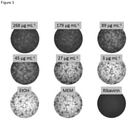
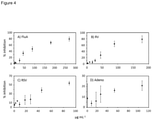
- ELOM-080 ® exhibited dose dependent antiviral effects in the curative approach when applied to cells cultures after infection. Representative examples visualize the significant reduction of plaques resulting from FluA infection in the cell monolayer when cultures were treated with increasing concentrations of ELOM-080 ® ( Fig. 3 ). Whereas solvent and medium controls exerted no antiviral effect, the active control Ribavirin prevented plaque formation almost completely ( Fig. 3 ). FluA induced plaque formation was inhibited by up to 79 % with an EC 50 of 134 ⁇ g mL -1 ( Fig 4A ). RV was similarly affected and inhibited by up to 78 % at an ELOM-080 ® concentration of 179 ⁇ g mL -1 ( Fig.
- the EC 50 for RV was 96 ⁇ g mL -1 : Table 2: Characteristics of viruses and test systems used in this study and the EC 50 for ELOM-080 ® in preventive (2h and 24 h) and curative assays.
- EC 50 ELOM-080 ® concentration resulting in 50 % virus inhibition.
- ELOM-080 ® antiviral activity Two different approaches of ELOM-080 ® antiviral activity were tested. First, a preventive approach which encompasses pretreatment of viruses with varying concentrations of ELOM-080 ® and subsequent assessment of remaining infectivity as a measure of virucidal action. And second, a curative approach in which initially infected cell cultures were treated with ELOM-080 ® in order to cure the infection. In both settings, ELOM-080 ® clearly exerted an antiviral activity against respiratory viruses as treatment resulted in lower infectivity and plaques counts in cell cultures. However, the extent to which ELOM-080 ® treatment decreased viral activity differed significantly between both approaches and in particular between the four tested viruses.
- Pretreatment of cell-free viruses with ELOM-080 ® resulted in maximal reductions of infectivity of FluA, RV and RSV by 79, 54 and 79 %, respectively, which corresponds to comparable efficacy of treatment as observed for the active control SDS.
- the treatment effect increased with concentration and incubation time. Whereas, the effect was less pronounced in RV, 24 h incubation in concentration of 2679 ⁇ g mL -1 resulted in almost complete disruption of infectivity of FluA and RSV.
- These effects resemble similar virucidal effects obtained for the monoterpenes ⁇ -pinene and limonene when applied against Herpes Simplex Virus (HSV, Astani and Schnitzler, 2014).
- the viral envelope consists of proteins and a lipid bilayer interactions of ELOM-080 ® with either component are at least possible explanations how pretreatment affects the ability of viruses to attach or penetrate cells and thereby reduce infectivity (Ivanova et al., 2015, Harrison, 2008).
- in the virucidal assay only irreversible changes of e.g. protein structure could have had effects on infectivity as ELOM-080 ® was not present during the infection itself. Therefore, proteins could have returned to their native state leading to recovery of functionality after the end of pretreatment.
- RNA-norovirus with oregano essential oils
- High ELOM-080 ® concentrations may have had a similar effect which is supported by the higher sensitivity of the three viruses using less stable RNA compared to the DNA virus.
- ELOM-080 ® inhibited AV, the only tested DNA virus, by only about 20 % compared to the solvent control.
- An absence of treatment effect on AV of eucalyptus' essential oils has already been reported before whereas the mumps virus which is an enveloped RNA-virus was affected (Cermelli et al., 2008).
- treatment of infected cells with sinupret served as an internal lab standard did not reach a reduction of 50 % and even established antivirals such as Ribavirin are reported to fail against 5 out of 6 AV species (Morfin et al., 2005).
- ELOM-080 ® had a clear dose-dependent effect on all three tested RNA viruses. Maximum inhibition was about 80% in FluA and RV and lower in RSV, which however, had lowest EC 50 .
- the curative approach covers all phases of the viral life cycle and ELOM-080 ® treatment may have a comparable therapeutic effect in cell culture as in clinical application. Although applied following infection, cell-free viruses are similarly exposed to the treatment when released from the host cell which potentially results in comparable effects as in the virucidal setting.
- pretreatment of cells initially not infected after inoculation with the test substance which may trigger a preventive immune response.
- Pretreatment of cells lowers baseline concentrations of cytokines and expression of the ICAM-1 receptor to which rhinoviruses attach in order to enter the cytoplasm (Casasnovas and Springer, 1994, Yamaya et al., 2014).
- cell pretreatment may to some extent be involved in the antiviral response (Astani et al., 2010, Astani and Schnitzler, 2014). Further research is needed to elucidate whether and how pretreatment with ELOM-080 ® upregulates cellular defense mechanisms against respiratory viruses.
- Attachment of viruses and fusion with the cellular membrane are the first two steps enabling entry of the viral genome into host cells, a process mediated by proteins of the capsid as well as lipids in case of enveloped viruses (Blaas, 2016).
- ELOM-080 ® may disturb entry by modification or masking of surface structures either on the virus itself, as mentioned already above, or on the host cell as hypothesized before (Astani and Schnitzler, 2014).
- the concentration needed to exert an inhibitory effect in the curative approach was much lower compared to the virucidal assays as proven by high maximal reduction and low EC 50 and emphasizes a potential antiviral effect of ELOM-080 ® in therapeutic treatment. This could result from the presence of ELOM-080 ® throughout the assay. Therefore not only irreversible but also transient masking and/or modifications of proteins or lipids could affect viral infectivity.
- RNA viruses may result from impacts of ELOM-080 ® on viral replication corresponding to the effect of ribavirin.
- Astani and coworkers reported reduction of Herpes simplex induced plaques by 30-40% when the monoterpenes 1,8-cineol and ⁇ -pinene were added to the assays after infection (Astani et al., 2010). The effects were less pronounced (10-20 %) for ⁇ -pinene and limonene in a comparable setting whereas the virus specific DNA-polymerase inhibitor acyclovir lead to 100 % inhibition (Astani and Schnitzler, 2014).
- ELOM-080 ® was shown to have strong antiviral effects against three of the four tested viruses in particular in the curative approach.
- the test design applied in his study was not intended to specifically determine by which mode of action ELOM-080 ® inhibits viruses.
- the volatility of ELOM-080 ® compounds observed in the cytotoxicity assay may have attenuated effects in the curative assay.
- the EC 50 values obtained in this study were in a comparable range as levels reported for single monoterpenes which significantly lower FluA viral load and improve survival of infected mice (Li et al., 2016, Lai et al., 2017).
- Pohl-Boskamp GmbH & Co. KG (“Pohl-Boskamp”) is a family-owned German pharmaceutical company. Pohl-Boskamp plans to carry out a randomised, placebo-controlled, double-blind, parallel-group trial in COVID-19 positive hospitalised in Germany.
- the investigational product is a high-dosed GeloMyrtol ® forte (ELOM-080 ® ) which should be masked as "PB432" for blinding purposes.
- the intended indication is atypical or viral pneumonia, in literature sometimes paraphrased as COVID-19 disease.
- the admission diagnosis is often coded as acute respiratory insufficiency (ARI).
- Eligible hospitalised patients are positive tested of COVID-19 and admitted to a separate isolation ward due to acute respiratory insufficiency (ARI).
- the clinical picture presents a stable patient with respiratory and/or systemic symptoms or signs at time of admission and a need for supplemental oxygen, but does not present any clinical features suggesting a complicated course of illness (non-ARDS), or need for transfer to intermediate (IMC) or intensive care unit (ICU) [ANZICS 2020, Brogan 2020, Dreher 2020, Gattinoni 2020, Siddiqu 2020, WHO 2020].
- the degree of hypoxemia is mild (SpO2 ⁇ 94 % and ⁇ 92 % for patients with known chronic lung diseases; alternatively: 200 mm Hg ⁇ PaO 2 /FiO 2 ⁇ 300 mm Hg) [Ranieri 2012].
- Typical imaging findings are consistent with early presentation of viral pneumonia (e.g. ground-glass opacification with or without consolidative abnormalities, L-phenotype acc. to preliminary classification [Brogan, 2020, Gattinoni, 2020, Pfeifer 2020]).
- the patient is able to maintain oxygen saturation above 92% (or above 90% for COPD patients/with chronic lung disease) with up to 5 L/min oxygen via nasal prongs (low flow system via nasal cannula).
- the degree of hypoxemia is mild (200 mm Hg ⁇ PaO 2 /FiO 2 ⁇ 300 mm Hg at ambient air) [Ranieri 2012].
- Profound hypoxemic respiratory failure from acute respiratory distress syndrome is the dominant finding in critically ill patients [Yang 2020, Wang 2020, Huang 2020, Arentz 2020, Bhatraju 2020, Grasselli 2020b, Zhou 2020, Wu 2020b, Chen 2020].
- the need for mechanical ventilation in those who are critically ill is high ranging from 42 to 100 percent [Yang 2020, Arentz 2020, Bhatraju 2020, Grasselli 2020b, Wu 2020b].
- Other complications included acute kidney injury (and many required renal replacement therapy), elevated liver enzymes and cardiac injury (e.g. cardiomyopathy, pericarditis, pericardial effusion, arrhythmia, and sudden cardiac death) [Yang 2020, Arentz 2020, Goyal 2020, Pfeifer 2020].
- ICU intensive care unit
- the World Health Organization suggests titrating oxygen to a target peripheral oxygen saturation (SpO 2 ) of ⁇ 90 percent [WHO 2020].
- SpO 2 peripheral oxygen saturation
- the lowest possible fraction of inspired oxygen (FiO 2 ) necessary to meet oxygenation goals ideally targeting a SpO 2 between 92 and 96 percent, if feasible [Brogan 2020, Brogan 2020b]. This will decrease the likelihood that adverse consequences of supplemental oxygen will develop, such as absorption atelectasis, accentuation of hypercapnia and parenchymal injury [Kamat 2016.]
- supplemental oxygenation with a low flow system via nasal cannula is regarded appropriate (ie, up to 5 L/min).
- Most cannulae can only provide oxygen at low flow rates - up to 5 litres per minute (L/min) - delivering an oxygen concentration of 28-44%, but usual tables for their conversion are not validated [Pfeifer 2020]. Rates above 5 L/min can result in discomfort to the patient, drying of the nasal passages, and possibly nose bleeds (epistaxis) [Wikipedia 2020].
- HFNC nasal cannulae
- NIV noninvasive ventilation
- HFNC high-flow nasal oxygen
- Mucolytics have been proven to reduce sputum viscosity and have also been shown to modulate airway inflammation by reducing the cytokine release and subsequent respiratory tract tissue damage [Khomich 2018; (for Myrtol) Begrow 2012, Beuscher 1998, Grclumann 2000, Kaschke 1997, Lai 2014, Rantzsch 2009].
- Experts suggested that consideration should be given to empirically add e.g. Carbocisteine [Imraan 2020] or N -acetylcysteine [Anon 2020] to the current treatment regimen in patients infected with COVID-19. Unfortunately, they are considered as nebulised therapy. However, nebulizers are associated with aerosolization and potentially increase the risk of virus transmission [ANZICS 2020].
- Enteric coated capsules containing 300 mg of PB432 (trade name in Germany: GeloMyrtol ® forte) are well established in the treatment of acute and chronic inflammatory diseases of the respiratory tract, bronchitis and sinusitis in particular, and are approved in many European and non-European countries.
- PB432 The efficacy, safety and tolerability of PB432 was investigated in well-designed, prospective, large scale, multi-centre, randomised, double-blind, placebo- and actively controlled, parallel-group trials; all trials were planned, conducted and reported according to the guidelines of "Good Clinical Practice".
- the current documentation constitutes the best available external evidence for a clinically relevant therapeutic benefit of the active ingredient in the treatment of acute and chronic inflammatory respiratory diseases, bronchitis and sinusitis, in particular.
- PB432 is recommended in several German and international treatment guidelines, independent organisations like Cochrane Collaboration reviewed clinical studies with a positive vote [@].
- PB432 displays a broad spectrum of pharmacological properties and its efficacy can be explained by its secretomucolytic, secretomotoric, and mucociliary clearance enhancing capabilities [Begrow 2012, Cao 2010, Kaschke 1997].
- PB432 has been shown to exert antioxidant properties [Graßmann 2000] and anti-inflammatory actions [Beuscher 1998, Rantzsch 2009].
- COPD chronic obstructive pulmonary disease
- PB432/1,8-cineol The anti-inflammatory properties of PB432/1,8-cineol have been shown in animal models, where airway inflammatory parameters were reduced or absent in 1,8-cineol treated OVA-sensitized guinea pigs, with reduced levels of TNF- ⁇ , IL-1 ⁇ in BALF [Bastos 2011] and in clinical trials on asthma, bronchitis, or COPD [Juergens 2003, Worth 2009, Fischer 2013].
- LPS lipopolysaccharide
- PB432 attenuated lipopolysaccharide (LPS)-induced lung injury by reducing neutrophil counts and levels of inflammatory cytokines [Yu 2016].
- LPS lipopolysaccharide
- PB432 in contrast to prednisone reduced lung coefficient and collagen deposition, and inhibited the release of pro-inflammatory cytokines [Zhao 2016].
- PB432 had a clear dose-dependent effect on all three tested RNA viruses, presumably resulting from a potential effect on integrity and functionality of viral RNA, indicating efficacy also for the treatment of diseases caused by viruses belonging to the Coronaviridae with a plus sense single stranded RNA genome.
- AECOPD acute exacerbations of COPD
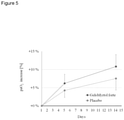
- PB432 demonstrated in a phase IV trial improvement of oxygen saturation versus placebo [Ulmer & Schött 1991].
- the partial pressure of oxygen was 62.8 ⁇ 6.5 mmHg in the PB432 group and 66.8 ⁇ 9.0 mmHg in the placebo group measured in an arterial blood gas (ABG) test.
- the oxygen saturation (approximated acc. to Severinghaus) was 92 % ⁇ 2 % in the PB432 group and 93 % ⁇ 3 % in the placebo group at treatment start.
- the P/F ratio (Horowitz index; FiO 2 21%, ambient air) was 299 ⁇ 31 mmHg and 318 ⁇ 43 mmHg (PB432, resp. Placebo).
- the latter effect supports strategies for hypoxemia (warrants a lowest possible fraction of inspired oxygen (FiO 2 ) and helps to prevent progression/deterioration and/or proceeding to HFNC/NIV modalities (on IMC) or even early intubation (on ICU) if the patient's course escalates beyond 6 L/min with continued hypoxemia or increased work of breathing).
- PB432 Given the essential role of inflammation and viral load within the course of COVID-19, treatment of these patients with high-dose PB432 is expected to result not only in the improvement of oxygen saturation but also in the decrease of viral load and inflammatory parameters.
Landscapes
- Health & Medical Sciences (AREA)
- Life Sciences & Earth Sciences (AREA)
- Natural Medicines & Medicinal Plants (AREA)
- Public Health (AREA)
- Animal Behavior & Ethology (AREA)
- Virology (AREA)
- Chemical & Material Sciences (AREA)
- Medicinal Chemistry (AREA)
- Veterinary Medicine (AREA)
- General Health & Medical Sciences (AREA)
- Pharmacology & Pharmacy (AREA)
- Engineering & Computer Science (AREA)
- General Chemical & Material Sciences (AREA)
- Organic Chemistry (AREA)
- Chemical Kinetics & Catalysis (AREA)
- Nuclear Medicine, Radiotherapy & Molecular Imaging (AREA)
- Medical Informatics (AREA)
- Epidemiology (AREA)
- Biotechnology (AREA)
- Botany (AREA)
- Pulmonology (AREA)
- Microbiology (AREA)
- Mycology (AREA)
- Alternative & Traditional Medicine (AREA)
- Molecular Biology (AREA)
- Oncology (AREA)
- Communicable Diseases (AREA)
- Bioinformatics & Cheminformatics (AREA)
- Medicines Containing Plant Substances (AREA)
- Medicinal Preparation (AREA)
- Pharmaceuticals Containing Other Organic And Inorganic Compounds (AREA)
Priority Applications (5)
| Application Number | Priority Date | Filing Date | Title |
|---|---|---|---|
| EP20194880.9A EP3964221A1 (fr) | 2020-09-07 | 2020-09-07 | Agents antiviraux |
| RU2020132771A RU2854421C2 (ru) | 2020-09-07 | 2020-10-06 | Противовирусные средства |
| PCT/EP2021/074502 WO2022049288A1 (fr) | 2020-09-07 | 2021-09-06 | Agents antiviraux |
| CN202180075211.XA CN116406278A (zh) | 2020-09-07 | 2021-09-06 | 抗病毒剂 |
| DE112021004710.8T DE112021004710T5 (de) | 2020-09-07 | 2021-09-06 | Antivirale wirkstoffe |
Applications Claiming Priority (1)
| Application Number | Priority Date | Filing Date | Title |
|---|---|---|---|
| EP20194880.9A EP3964221A1 (fr) | 2020-09-07 | 2020-09-07 | Agents antiviraux |
Publications (1)
| Publication Number | Publication Date |
|---|---|
| EP3964221A1 true EP3964221A1 (fr) | 2022-03-09 |
Family
ID=72428166
Family Applications (1)
| Application Number | Title | Priority Date | Filing Date |
|---|---|---|---|
| EP20194880.9A Withdrawn EP3964221A1 (fr) | 2020-09-07 | 2020-09-07 | Agents antiviraux |
Country Status (4)
| Country | Link |
|---|---|
| EP (1) | EP3964221A1 (fr) |
| CN (1) | CN116406278A (fr) |
| DE (1) | DE112021004710T5 (fr) |
| WO (1) | WO2022049288A1 (fr) |
Citations (3)
| Publication number | Priority date | Publication date | Assignee | Title |
|---|---|---|---|---|
| US20040076693A1 (en) * | 1999-09-16 | 2004-04-22 | Henning Ueck | Pharmaceutical composition, comprising eucalyptus oil and orange oil |
| WO2016014699A1 (fr) * | 2014-07-22 | 2016-01-28 | Ralco Nutrition, Inc. | Compositions antivirales et procédés |
| WO2020017619A1 (fr) * | 2018-07-20 | 2020-01-23 | 株式会社 資生堂 | Agent d'inactivation de virus |
-
2020
- 2020-09-07 EP EP20194880.9A patent/EP3964221A1/fr not_active Withdrawn
-
2021
- 2021-09-06 DE DE112021004710.8T patent/DE112021004710T5/de active Pending
- 2021-09-06 CN CN202180075211.XA patent/CN116406278A/zh active Pending
- 2021-09-06 WO PCT/EP2021/074502 patent/WO2022049288A1/fr not_active Ceased
Patent Citations (3)
| Publication number | Priority date | Publication date | Assignee | Title |
|---|---|---|---|---|
| US20040076693A1 (en) * | 1999-09-16 | 2004-04-22 | Henning Ueck | Pharmaceutical composition, comprising eucalyptus oil and orange oil |
| WO2016014699A1 (fr) * | 2014-07-22 | 2016-01-28 | Ralco Nutrition, Inc. | Compositions antivirales et procédés |
| WO2020017619A1 (fr) * | 2018-07-20 | 2020-01-23 | 株式会社 資生堂 | Agent d'inactivation de virus |
Non-Patent Citations (105)
| Title |
|---|
| "CDC COVID-19 Response Team. Severe Outcomes Among Patients with Coronavirus Disease 2019 (COVID-19) — United States", MMWR 2020, vol. 69, no. 12, 12 February 2020 (2020-02-12), pages 343 - 346, Retrieved from the Internet <URL:https://www.cdc.gov/mmwr/volumes/69/wr/pdfs/mm6912e2-H.pdf> |
| "Clinical management of severe acute respiratory infection when novel coronavirus (2019-nCoV) infection is suspected Interim guidance", 13 March 2020, WHO |
| "COVID-19. Hospital discharge management [German: COVID-19: Kriterien zur Entlassung aus dem Krankenhaus bzw. aus der hauslichen Isolierung", 24 April 2020, ROBERT KOCH INSTITUTE |
| "Diagnostik und Therapie von Patienten mit COVID-19", 17 April 2020, ROBERT KOCH INSTITUTE, article "Standiger Arbeitskreis der Kompetenz- und Behandlungszentren fur Krankheiten durch hochpathogene Erreger (STAKOB). Hinweise zu Erkennung" |
| ANONYMOUS: "Gut gewappnet für den Endspurt - So bleiben Sie bis zum Ende der Erkältungssaison fit", 11 February 2020 (2020-02-11), XP002802172, Retrieved from the Internet <URL:https://www.presseportal.de/pm/67141/4517071> [retrieved on 20210222] * |
| ANONYMOUS: "Treatment regimens of COVID-19 (Russian: Tepanmq COVID-19", April 2020, RUSSIAN FEDERAL MEDICAL-BIOLOGICAL AGENCY |
| APP, E. M.: "Stellenwert der Mukusclearance fur das Bronchialsystem-Pathophysiologie und therapeutische Ansatze", 2000, SPRINGER, article "Entzundliche Erkrankungen des Bronchialsystems - Ergebnisse der II. Sylter Sekretolyse-Gesprache" |
| ARENTZ MYIM EKLAFF L ET AL.: "Characteristics and Outcomes of 21 Critically III Patients With COVID-19 in Washington State", JAMA, 2020 |
| ARRUDA, E.PITKARANTA, A.WITEK, T.DOYLE, C. A.HAYDEN, F. G.: "Frequency and natural history of rhinovirus infections in adults during autumn", JOURNAL OF CLINICAL MICROBIOLOGY, vol. 35, 1997, pages 2864 - 2868 |
| ASIF MUHAMMAD ET AL: "COVID-19 and therapy with essential oils having antiviral, anti-inflammatory, and immunomodulatory properties", INFLAMMOPHARMACOLOGY, KLUWER ACADEMIC PUBLISHERS, DORDRECHT, NL, vol. 28, no. 5, 14 August 2020 (2020-08-14), pages 1153 - 1161, XP037257443, ISSN: 0925-4692, [retrieved on 20200814], DOI: 10.1007/S10787-020-00744-0 * |
| ASTANI, A.REICHLING, J.SCHNITZLER, P.: "Comparative study on the antiviral activity of selected monoterpenes derived from essential oils", PHYTOTHERAPY RESEARCH: AN INTERNATIONAL JOURNAL DEVOTED TO PHARMACOLOGICAL TOXICOLOGICAL EVALUATION OF NATURAL PRODUCT DERIVATIVES, vol. 24, 2010, pages 673 - 679 |
| ASTANI, A.SCHNITZLER, P.: "Antiviral activity of monoterpenes beta-pinene and limonene against herpes simplex virus in vitro", IRANIAN JOURNAL OF MICROBIOLOGY, vol. 6, 2014, pages 149 |
| AUSTRALIAN NATIONAL COVID-19 CLINICAL EVIDENCE TASKFORCE - NATIONAL COVID-19 CLINICAL EVIDENCE TASKFORCE. AUSTRALIAN GUIDELINES FOR THE CLINICAL CARE OF PEOPLE WITH COVID-19. VERSION 2.1, 23 April 2020 (2020-04-23), Retrieved from the Internet <URL:https:l/app.maqicapp.orq/app#/quideline/4179> |
| BAGGA, B.WOODS, C. W.VELDMAN, T. H.GILBERT, A.MANN, A.BALARATNAM, G.LAMBKIN-WILLIAMS, R.OXFORD, J. S.MCCLAIN, M. T.WILKINSON, T.: "Comparing influenza and RSV viral and disease dynamics in experimentally infected adults predicts clinical effectiveness of RSV antivirals", J ANTIVIR THER, vol. 18, 2013, pages 785 - 791 |
| BASTOS, V. P. ET AL.: "Inhaled 1, 8-Cineole Reduces Inflammatory Parameters in Airways of Ovalbumin-Challenged Guinea Pigs", BASIC & CLINICAL PHARMACOLOGY & TOXICOLOGY, vol. 108, 2011, pages 34 - 39 |
| BEGROW FBOCKENHOLDT CEHMEN MWITTIG THVERSPOHL EJ.: "Effects of Myrtol Standardized and Other Substances on the Respiratory Tract: Ciliary Beat Frequency and Mucociliary Clearance as Parameters", ADV THER, vol. 29, no. 4, 2012, pages 350 - 358 |
| BEGROW, F.BOCKENHOLT, C.EHMEN, M.WITTIG, T.VERSPOHL, E. J.: "Effect of myrtol standardized and other substances on the respiratory tract: ciliary beat frequency and mucociliary clearance as parameters", ADVANCES IN THERAPY, vol. 29, 2012, pages 350 - 358 |
| BEIGEL JH.: "Remdesivir for the Treatment of Covid-19 - Preliminary Report", 22 May 2020, NEJM.ORG. |
| BEUSCHER NKIETZMANN MBIEN E ET AL.: "Interference of Myrtol standardized with inflammatory and allergic mediators", ARZNEIM.-FORSCH./DRUG RES., vol. 48, 1998, pages 985 - 989 |
| BEUSCHER, N.BIEN, E.ELSTNER, E.KIETZMANN, M.AMON, U.: "Myrtol standardized in treatment of sinusitis and bronchitis-Pharmacodynamics and pharmacokinetics", Z PHYTOTHERAPIE ABSTRACTBAND, vol. 8, 1997, pages 9 - 10 |
| BEUSCHER, N.KIETZMANN, M.BIEN, E.CHAMPEROUX, P.: "Interference of Myrtol standardized with inflammatory and allergic mediators", ARZNEIMITTEL-FORSCHUNG, vol. 48, 1998, pages 985 - 989 |
| BHATRAJU PKGHASSEMIEH BJNICHOLS M ET AL.: "Covid-19 in Critically III Patients in the Seattle Region - Case Series", N ENGL J MED, 2020 |
| BLAAS, D.: "Viral entry pathways: the example of common cold viruses", WIENER MEDIZINISCHE WOCHENSCHRIFT, vol. 166, 2016, pages 211 - 226, XP035896688, DOI: 10.1007/s10354-016-0461-2 |
| BROGAN GCAMPBELL NDURIE MNICKSON C.: "Coronavirus disease 2019 (COVID-19", LITFL CRITICAL CARE COMPENDIUM, 19 April 2020 (2020-04-19), Retrieved from the Internet <URL:https://litfl.com/coronavirus-disease-2019-covid-19/> |
| BROGAN GCAMPBELL NDURIE MNICKSON C.: "Coronavirus disease 2019 (COVID-19", LITFL CRITICAL CARE COMPENDIUM, 30 May 2020 (2020-05-30), Retrieved from the Internet <URL:https://litfl.com/coronavirus-disease-2019-covid-19/#19-management-oxygenation-and-ventilation> |
| CAO, L. ET AL.: "Effect of Myrtol standardized on mucus hypersecretion and clearance of Pseudomonas aeruginosa in a rat model of chronic obstructive pulmonary disease", ARZNEIMITTEL-FORSCHUNG, vol. 61, 2010, pages 685 - 692 |
| CASASNOVAS, J. M.SPRINGER, T. A.: "Pathway of rhinovirus disruption by soluble intercellular adhesion molecule 1 (ICAM-1): an intermediate in which ICAM-1 is bound and RNA is released", JOURNAL OF VIROLOGY, vol. 68, 1994, pages 5882 - 5889 |
| CERMELLI, C.FABIO, A.FABIO, G.QUAGLIO, P.: "Effect of eucalyptus essential oil on respiratory bacteria and viruses", CURRENT MICROBIOLOGY, vol. 56, 2008, pages 89 - 92, XP019587436 |
| CHEN NZHOU MDONG X ET AL.: "Epidemiological and clinical characteristics of 99 cases of 2019 novel coronavirus pneumonia in Wuhan, China: a descriptive study", LANCET, vol. 395, 2020, pages 507, XP086050323, DOI: 10.1016/S0140-6736(20)30211-7 |
| CHEUNG JCHO LTCHENG JV ET AL.: "Staff safety during emergency airway management for COVID-19 in Hong Kong", LANCET RESPIR MED, vol. 8, 2020, pages e19 |
| DEMURI, G. P.GERN, J. E.MOYER, S. C.LINDSTROM, M. J.LYNCH, S. V.WALD, E. R.: "Clinical features, virus identification, and sinusitis as a complication of upper respiratory tract illness in children ages 4-7 years", THE JOURNAL OF PEDIATRICS, vol. 171, 2016, pages 133 - 139 |
| DESAI AGYAWALI B.: "Endpoints used in phase III randomized controlled trials of treatment options for COVID-19", ECLINICAL MEDICINE, 2020, Retrieved from the Internet <URL:https:/Idoi.org/10.1016/j.eclinm.2020.100403> |
| DOMINICA PETRIC: "The_spectrum_of_antimicrobial_activity_of_Gelomyrtol_R_capsules", April 2020 (2020-04-01), XP002802171, Retrieved from the Internet <URL:https://www.researchgate.net/publication/340385259_The_spectrum_of_antimicrobial_activity_of_Gelomyrtol_R_capsules> [retrieved on 20210219] * |
| DREHER MKERSTEN ABICKENBACH JBALFANZ PHARTMANN BCORNELISSEN CDAHER ASTOHR RKLEINES MLEMMEN SW: "The characteristics of 50 hospitalized COVID-19 patients with and without ARDS", DTSCH ARZTEBL INT, vol. 117, 2020, pages 271 - 8 |
| EHLKEN, B.ANASTASSOPOULOU, A.HAIN, J.SCHRODER, C.WAHLE, K.: "Germany-results of a database analysis", vol. 15, May 2010, BMC PUBLIC HEALTH, article "Cost for physician-diagnosed influenza and influenza-like illnesses on primary care level", pages: 578 |
| FISCHER, J.DETHLEFSEN, U.: "Efficacy of cineole in patients suffering from acute bronchitis: a placebo-controlled double-blind trial", COUGH, vol. 9, 2013, pages 25, XP021168633, DOI: 10.1186/1745-9974-9-25 |
| FOKKENS ET AL.: "Executive summary of EPOS 2020 including integrated care pathways", RHINOLOGY, vol. 58, no. 2, 1 April 2020 (2020-04-01), pages 82 - 111 |
| FOKKENS, W. J.LUND, V. J.MULLOL, J.BACHERT, C.ALOBID, I.BAROODY, F.COHEN, N.CERVIN, A.DOUGLAS, R.GEVAERT, P.: "EPOS 2012: European position paper on rhinosinusitis and nasal polyps 2012. A summary for otorhinolaryngologists", RHINOLOGY, vol. 50, 2012, pages 1 - 12 |
| FÜRST ROBERT ET AL: "ELOM-080 as Add-On Treatment for Respiratory Tract Diseases A Review of Clinical Studies Conducted in China", PLANTA MEDICA, vol. 85, no. 09/10, 5 June 2019 (2019-06-05), DE, pages 745 - 754, XP055773408, ISSN: 0032-0943, Retrieved from the Internet <URL:https://www.thieme-connect.de/products/ejournals/pdf/10.1055/a-0942-1993.pdf> DOI: 10.1055/a-0942-1993 * |
| GATTINONI L. ET AL.: "COVID-19 pneumonia: different respiratory treatment for different phenotypes?", INTENSIVE CARE MEDICINE, 2020 |
| GILLING, D. H.KITAJIMA, M.TORREY, J.BRIGHT, K. R.: "Antiviral efficacy and mechanisms of action of oregano essential oil and its primary component carvacrol against murine norovirus", JOURNAL OF APPLIED MICROBIOLOGY, vol. 116, 2014, pages 1149 - 1163 |
| GLATTHAAR-SAALMULLER, B.MAIR, K. H.SAALMULLER, A.: "Antiviral activity of aspirin against RNA viruses of the respiratory tract-an in vitro study", INFLUENZA OTHER RESPIRATORY VIRUSES, vol. 11, 2017, pages 85 - 92 |
| GOYAL PCHOI JJPINHEIRO LC ET AL.: "Clinical Characteristics of Covid-19 in New York City", N ENGL J MED, 2020 |
| GRAGMANN, J.HIPPELI, S.DORNISCH, K.ROHNERT, U.BEUSCHER , N.ELSTNER, E.: "Antioxidant Properties of Essential Oils. Possible explanantions for their anti-inflammatory effects", ARZNEIMITTELFORSCHUNG, vol. 50, 2000, pages 135 - 139 |
| GRAL3>MANN JHIPPELI SDORNISCH K ET AL.: "Antioxidant Properties of Essential Oils", ARZNEIMITTELFORSCHUNG, vol. 50, 2000, pages 135 - 139 |
| GRASSELLI GPESENTI ACECCONI M.: "Critical Care Utilization for the COVID-19 Outbreak in Lombardy, Italy: Early Experience and Forecast During an Emergency Response", JAMA, 2020 |
| GRASSELLI GZANGRILLO AZANELLA A ET AL.: "Baseline Characteristics and Outcomes of 1591 Patients Infected With SARS-CoV-2 Admitted to ICUs of the Lombardy Region, Italy", JAMA, 2020 |
| GREIN J ET AL.: "Compassionate Use of Remdesivir for Patients with Severe Covid-19", N ENGL J MED, vol. 382, 2020, pages 2327 - 36 |
| GUAN WJNI ZYHU Y ET AL.: "Clinical Characteristics of Coronavirus Disease 2019 in China", N ENGL J MED, 2020 |
| GYÖRGYI HORVATH ET AL: "Essential oils in the treatment of respiratory tract diseases highlighting their role in bacterial infections and their anti-inflammatory action: a review : Essential oils in the treatment of respiratory tract diseases", FLAVOUR AND FRAGRANCE JOURNAL., vol. 30, no. 5, 26 May 2015 (2015-05-26), GB, pages 331 - 341, XP055391769, ISSN: 0882-5734, DOI: 10.1002/ffj.3252 * |
| HANSEN, M. P.HOFFMANN, T. C.MCCULLOUGH, A. R.VAN DRIEL, M. L.DEL MAR, C. B.: "Antibiotic resistance: what are the opportunities for primary care in alleviating the crisis?", FRONTIERS IN PUBLIC HEALTH, vol. 3, 2015, pages 35 |
| HARRISON, S. C.: "Viral membrane fusion", NATURE STRUCTURAL MOLECULAR BIOLOGY, vol. 15, 2008, pages 690, XP037066000, DOI: 10.1038/nsmb.1456 |
| HUANG CWANG YLI X ET AL.: "Clinical features of patients infected with 2019 novel coronavirus in Wuhan, China", LANCET, vol. 395, 2020, pages 497, XP086050317, DOI: 10.1016/S0140-6736(20)30183-5 |
| HUI DSCHOW BKTHOMAS LOOWEN TVTSANG FW. KOSS, NG TGIN MCHAN TV.: "Exhaled air dispersion during high-flow nasal cannula therapy versus CPAP via different masks", EUROPEAN RESPIRATORY JOURNAL, vol. 53, no. 4, 2019, Retrieved from the Internet <URL:https://doi.orq/10.1183/13993003.02339-2018> |
| IMRAAN F. JHETAM.: "Rapid response to Vetter P. Covid-19: a puzzle with many missing pieces", BMJ, vol. 368, 2020, pages m627 |
| IVAN OVA, P. T.MYERS, D. S.MILNE, S. B.MCCLAREN, J. L.THOMAS, P. G.BROWN, H. A.: "Lipid Composition of the Viral Envelope of Three Strains of Influenza Virusn Not All Viruses Are Created Equal", ACS INFECTIOUS DISEASES, vol. 1, 2015, pages 435 - 442 |
| JACOBS, S. E.LAMSON, D. M.GEORGE, K. S.WALSH, T. J.: "Human rhinoviruses", CLINICAL MICROBIOLOGY REVIEWS, vol. 26, 2013, pages 135 - 162 |
| JUERGENS, U. ET AL.: "Anti-inflammatory activity of 1.8-cineol (eucalyptol) in bronchial asthma: a double-blind placebo-controlled trial", RESPIRATORY MEDICINE, vol. 97, 2003, pages 250 - 256 |
| JUERGENS, U. R. ET AL.: "Inhibitory activity of 1, 8-cineol (eucalyptol) on cytokine production in cultured human lymphocytes and monocytes", PULMONARY PHARMACOLOGY & THERAPEUTICS, vol. 17, 2004, pages 281 - 287, XP004599066, DOI: 10.1016/j.pupt.2004.06.002 |
| KARBER, G.: "Beitrag zur kollektiven Behandlung pharmakologischer Reihenversuche", NAUNYN-SCHMIEDEBERGS ARCHIV FUR EXPERIMENTED PATHOLOGIE UND PHARMAKOLOGIE, vol. 162, 1931, pages 480 - 483 |
| KARDOS, P.DINH, Q.FUCHS, K.GILLISSEN, A.KLIMEK, L.KOEHLER, M.SITTER, HWORTH, H.: "Guidelines of the German Respiratory Society for diagnosis and treatment of adults suffering from acute, subacute and chronic cough", PNEUMOLOGIE, vol. 73, 2019, pages 143 - 180 |
| KASCHKE OBEHRBOHM HSYDOW K.: "The influence of a secretolytic drug on mucociliary clearance of the maxillary sinus", J RHINOL., vol. 4, no. 1, 1997, pages 29 - 33 |
| KASCHKE, O.BEHRBOHM, H.SYDOW, K.: "The influence of a secretolytic drug on mucociliary clearance of the maxillary sinus", JOURNAL OF RHINOLOGY, vol. 4, 1997, pages 29 - 33 |
| KHOMICH OKOCHETKOV SBARTOSCH B ET AL.: "Redox Biology of Respiratory Viral Infections", VIRUSES, vol. 10, 2018, pages 392 |
| KLUGE SJANSSENS UWELTE TWEBER-CARSTENS SMARX GKARAGIANNIDIS C: "Recommendations for critically ill patients with COVID-19", MED KLIN INTENSIVMED NOTFMED, 2020 |
| LAI YDILIDAER DCHEN BXU GSHI JLEE RJCOHEN NA.: "In vitro studies of Myrtol on upper airway physiology pertaining to mucociliary clearance", AMERICAN JOURNAL OF RHINOLOGY & ALLERGY, vol. 28, no. 3, 2014, pages 244 - 248 |
| LAI, Y. N.LI, Y.FU, L. C.ZHAO, F.LIU, N.ZHANG, F. X.XU, P. P.: "Combinations of 1, 8-cineol and oseltamivir for the treatment of influenza virus A (H3N2) infection in mice", JOURNAL OF MEDICAL VIROLOGY, vol. 89, 2017, pages 1158 - 1167 |
| LEMIENGRE, M. B.VAN DRIEL, M. L.MERENSTEIN, D.LIIRA, H.MAKELA, M.DE SUTTER, A. I: "Antibiotics for acute rhinosinusitis in adults", COCHRANE DATABASE OF SYSTEMATIC REVIEWS, 2018 |
| LENZEN-SCHULTE M.: "Richtig beatmen bei COVID-19", DTSCH ARZTEBL, vol. 117, no. 18, 2020, pages A938 |
| LI, Y.LAI, Y.WANG, Y.LIU, NZHANG, F.XU, P.: "Cineol protect against influenza-virus-induced pneumonia in mice", INFLAMMATION, vol. 39, 8 January 2016 (2016-01-08), pages 1582 - 1593, XP036009809, DOI: 10.1007/s10753-016-0394-3 |
| LIVINGSTON EBUCHER K.: "Coronavirus Disease 2019 (COVID-19) in Italy", JAMA, 2020 |
| MAKELA, M. J.PUHAKKA, T.RUUSKANEN, O.LEINONEN, M.SAIKKU, P.KIMPIMAKI, M.BLOMQVIST, S.HYYPIA, T.ARSTILA, P.: "Viruses and bacteria in the etiology of the common cold", JOURNAL OF CLINICAL MICROBIOLOGY, vol. 36, 1998, pages 539 - 542, XP055073860 |
| MENDANHA, S. A.ALONSO, A.: "Effects of terpenes on fluidity and lipid extraction in phospholipid membranes", BIOPHYSICAL CHEMISTRY, vol. 198, 2015, pages 45 - 54 |
| MENTER THASLBAUER JDNIENHOLD R ET AL.: "Post-mortem examination of COVID19 patients reveals diffuse alveolar damage with severe capillary congestion and variegated findings of lungs and other organs suggesting vascular dysfunction", HISTOPATHOLOGY, 4 May 2020 (2020-05-04), Retrieved from the Internet <URL:https://pubmed.ncbi.nlm.nih.gov/32364264/> |
| MOGHIMI, H. R.SHIRAZI, F. H.ARDESTANI, M. S.OGHABIAN, M. A.SAFFARI, M.SOJOUDI, J.: "In vitro and in vivo enhancement of antitumoral activity of liposomal antisense oligonucleotides by cineole as a chemical penetration enhancer", JOURNAL OF NANOMATERIALS, vol. 16, 2015, pages 345 |
| MORFIN, F.DUPUIS-GIROD, S.MUNDWEILER, S.FALCON, D.CARRINGTON, D.SEDLACEK, P.BIERINGS, M.CETKOVSKY, P.KROES, A.VAN TOL, M.: "In vitro susceptibility of adenovirus to antiviral drugs is species-dependent", ANTIVIR THER, vol. 10, 2005, pages 225 - 229 |
| MOSMANN, T.: "Rapid colorimetric assay for cellular growth and survival: application to proliferation and cytotoxicity assays", JOURNAL OF IMMUNOLOGICAL METHODS, vol. 65, 1983, pages 55 - 63, XP023973702, DOI: 10.1016/0022-1759(83)90303-4 |
| NAMENDYS-SILVA SA.: "Respiratory support for patients with COVID-19 infection", LANCET RESPIR MED, vol. 8, 2020, pages e18 |
| PALMENBERG, A. C.GERN, J. E.: "Rhinoviruses", 2015, SPRINGER, article "Classification and evolution of human rhinoviruses" |
| PENG-JIU YULI-MEI WANSHAN-HE WANWEN-YING CHENHUI XIEDONG-MEI MENGJIA-JIE ZHANGXIANG-LIN XIAO: "Standardized myrtol attenuates lipopolysaccharide induced acute lung injury in mice", PHARMACEUTICAL BIOLOGY, vol. 54, 2016, pages 3211 - 3216 |
| PFEIFER MEWIG SVOSHAAR TRANDERATH WBAUER TGEISELER JDELLWEG DWESTHOFF MWINDISCH WSCHONHOFER B, POSITIONSPAPIER ZUR PRAKTISCHEN UMSETZUNG DER APPARATIVEN DIFFERENZIALTHERAPIE DER AKUTEN RESPIRATORISCHEN INSUFFIZIENZ BEI COVID-19, 17 April 2020 (2020-04-17), Retrieved from the Internet <URL:https://pneumologie.de/fileadmin/userupload/COVID-19/20200417DGPapp.DifferenzialtherapieARICOVID-19.pdf> |
| PRALL SEBASTIAN ET AL: "Effects of essential oils on symptoms and course (duration and severity) of viral respiratory infections in humans: A rapid review", ADVANCES IN INTEGRATIVE MEDICINE, vol. 7, no. 4, 3 August 2020 (2020-08-03), pages 218 - 221, XP055778009, ISSN: 2212-9588, Retrieved from the Internet <URL:http://dx.doi.org/10.1016/j.aimed.2020.07.005> DOI: 10.1016/j.aimed.2020.07.005 * |
| RABOUD JSHIGAYEVA AMCGEER ABONTOVICS ECHAPMAN MGRAVEL D ET AL.: "Risk Factors for SARS Transmission from Patients Requiring Intubation: A Multicentre Investigation in Toronto, Canada", PLOS ONE, vol. 5, no. 5, 2010, pages e10717 |
| RANIERI VMRUBENFELD GDTHOMPSON BT ET AL.: "Acute respiratory distress syndrome: the Berlin Definition", JAMA, vol. 307, 2012, pages 2526 - 33 |
| RANTZSCH GVACCA RDUCK RGILLISSEN A.: "Anti-inflammatory effects of Myrtol standardized and other essential oils in alveolar macrophages from patients with chronic obstructive pulmonary disease", EUR J MED RES, vol. 14, 2009, pages 205 - 209, XP021130248, DOI: 10.1186/2047-783X-14-S4-205 |
| RANTZSCH, U.VACCA, G.DUCK, R.GILLISSEN, A.: "Anti-inflammatory effects of Myrtol standardized and other essential oils on alveolar macrophages from patients with chronic obstructive pulmonary disease", EUROPEAN JOURNAL OF MEDICAL RESEARCH, vol. 14, 2009, pages 205 - 209, XP021130248, DOI: 10.1186/2047-783X-14-S4-205 |
| SCHINKO, H.FUNK, G.MESCHKAT, M. ET AL.: "Arterielle Blutgasanalyse", WIEN. KLIN. WOCHENSCHR. EDUC, vol. 12, 2017, pages 115 - 130, XP036387466, DOI: 10.1007/s11812-017-0085-5 |
| SIDDIQU HKMEHRA MR.: "COVID-19 Illness in Native and Immunosuppressed States: A Clinical-Therapeutic Staging Proposal", JOURNAL OF HEART AND LUNG TRANSPLANTATION |
| SIMONDS AK, HANAK A, CHATWIN M: "Evaluation of droplet dispersion during non-invasive ventilation, oxygen therapy, nebuliser treatment and chest physiotherapy in clinical practice: implications for management of pandemic influenza and other airborne infections.", HEALTH TECHNOL ASSESS, vol. 14, 2010, pages 131 - 172 |
| SMITH, S. M.FAHEY, T.SMUCNY, J.BECKER, L. A.: "Antibiotics for acute bronchitis", COCHRANE DATABASE OF SYSTEMATIC REVIEWS, 2017 |
| STUCK, B. A.POPERT, U.BEULE, A.JOBST, D.KLIMEK, L.LAUDIEN, M.LELL, M.VOGL, T.: "Rhinosinusitis. Leitlinie der Deutschen Gesellschaft fur Hals-Nasen-Ohren-Heilkunde", KOPF- UND HALS-CHIRURGIE, 2017 |
| ULMER W. T.SCHOTT D.: "Chronic obstructive Bronchitis. Effect of GeloMyrtol forte in a placebo-controlled double-blind study", FORTSCHRITTE DER MEDIZIN, vol. 109, no. 27, 1991, pages 547 - 550 |
| ULMER WTNOLTE DLECHELER J.SCHAFER TH.: "Die Lungenfunktion", 2003, THIEME VERLAGSGRUPPE, article "Methodik und klinische Anwendung" |
| VIMALANATHAN, S.HUDSON, J.: "Anti-influenza virus activity of essential oils and vapors", AMERICAN JOURNAL OF ESSENTIAL OILS NATURAL PRODUCTS, vol. 2, 2014, pages 47 - 53, XP055676675 |
| WANG DHU BHU C ET AL.: "Clinical Characteristics of 138 Hospitalized Patients With 2019 Novel Coronavirus-Infected Pneumonia in Wuhan, China", JAMA, 2020 |
| WANG Y ET AL.: "Remdesivir in Adults with Severe COVID-19: A Randomised, Double-Blind, Placebo-Controlled, Multicentre Trial", LANCET, 2020, Retrieved from the Internet <URL:https:/Iwww.thelancet.com/action/showPdf?pii=S0140-6736%2820%2931022-9> |
| WICHMANN DSPERHAKE JPLUTGEHETMANN M ET AL.: "Autopsy Findings and Venous Thromboembolism in Patients With COVID-19", ANN INTERN MED., 6 May 2020 (2020-05-06), Retrieved from the Internet <URL:https://www.acpiournals.org/doi/10.7326/M20-2003> |
| WORTH, H.SCHACHER, C.DETHLEFSEN, U.: "Concomitant therapy with Cineole (Eucalyptole) reduces exacerbations in COPD: a placebo-controlled double-blind trial.", RESPIR RES, vol. 10, 2009, pages 69, XP021055549, DOI: 10.1186/1465-9921-10-69 |
| WU CCHEN XCAI Y ET AL.: "Risk Factors Associated With Acute Respiratory Distress Syndrome and Death in Patients With Coronavirus Disease 2019 Pneumonia in Wuhan, China", JAMA INTERN MED, 2020 |
| WU ZMCGOOGAN JM.: "Characteristics of and Important Lessons From the Coronavirus Disease 2019 (COVID-19) Outbreak in China: Summary of a Report of 72 314 Cases From the Chinese Center for Disease Control and Prevention", JAMA, 2020 |
| YAMAYA, M.NISHIMURA, H.NADINE, L. K.OTA, C.KUBO, H.NAGATOMI, R.: "Ambroxol inhibits rhinovirus infection in primary cultures of human tracheal epithelial cells", ARCHIVES OF PHARMACAL RESEARCH, vol. 37, 2014, pages 520 - 529, XP035312356, DOI: 10.1007/s12272-013-0210-7 |
| YANG XYU YXU J: "Clinical course and outcomes of critically ill patients with SARS-CoV-2 pneumonia in Wuhan, China: a single-centered, retrospective, observational study", LANCE, 2020 |
| YUNG-FANG TU ET AL.: "A Review of SARS-CoV-2 and the Ongoing Clinical Trial", INTERNATIONAL JOURNAL OF MOLECULAR SCIENCES, 2020 |
| ZHAO DYHONG-JINQU JIA-MINGGUO HAI-NANZHAO YAN-YONGYANG PEI ZHANGKUN CAO XIAOLEI JIAN-GUOCUI CONGLIU JIAN-MING: "Protective Effects of Myrtol Standardized Against Radiation-Induced Lung Injury", CELL. PHYSIOL. BIOCHEM., vol. 38, 2016, pages 619 - 634 |
| ZHOU FYU TDU R ET AL.: "Clinical course and risk factors for mortality of adult inpatients with COVID-19 in Wuhan, China: a retrospective cohort study", LANCET, vol. 395, 2020, pages 1054, XP086105445, DOI: 10.1016/S0140-6736(20)30566-3 |
Also Published As
| Publication number | Publication date |
|---|---|
| DE112021004710T5 (de) | 2023-07-06 |
| WO2022049288A1 (fr) | 2022-03-10 |
| RU2020132771A (ru) | 2022-04-06 |
| CN116406278A (zh) | 2023-07-07 |
Similar Documents
| Publication | Publication Date | Title |
|---|---|---|
| Asif et al. | COVID-19 and therapy with essential oils having antiviral, anti-inflammatory, and immunomodulatory properties | |
| El‐Missiry et al. | Polyphenols are potential nutritional adjuvants for targeting COVID‐19 | |
| Fiorini et al. | Antiviral activity of brazilian green propolis extract against sars-cov-2 (Severe acute respiratory syndrome-coronavirus 2) infection: Case report and review | |
| Dissook et al. | Luteolin-rich fraction from Perilla frutescens seed meal inhibits spike glycoprotein S1 of SARS-CoV-2-induced NLRP3 inflammasome lung cell inflammation via regulation of JAK1/STAT3 pathway: A potential anti-inflammatory compound against inflammation-induced long-COVID | |
| El Sayed et al. | Promising preventive and therapeutic effects of TaibUVID nutritional supplements for COVID-19 pandemic: towards better public prophylaxis and treatment (A retrospective study) | |
| Wilkin et al. | The undiscovered potential of essential oils for treating SARS-CoV-2 (COVID-19) | |
| Lai et al. | Combinations of 1, 8‐cineol and oseltamivir for the treatment of influenza virus A (H3N2) infection in mice | |
| US20160166624A1 (en) | Anti-viral compositions | |
| US20090186101A1 (en) | Use of Elderberry Extract | |
| US20110236482A1 (en) | Composition For The Prevention And Treatment Of Viral Infections | |
| Zhang et al. | Insights into the mechanism of action of pterostilbene against influenza A virus-induced acute lung injury | |
| Gern et al. | Inhibition of rhinovirus replication in vitro and in vivo by acid-buffered saline | |
| Pu et al. | Anti-influenza A virus effect of Hypericum perforatum L. extract | |
| EP3964221A1 (fr) | Agents antiviraux | |
| AKBAŞ et al. | COVID-19 and Phytotherapy | |
| Osuntokun | Synergistic efficacy of Aframomum melegueta [Roscoe] K. Schum and Spondias mombin (Linn), A predictive treatment of SARS-CoV-2 (COVID-19) Infection | |
| RU2854421C2 (ru) | Противовирусные средства | |
| Ferrer et al. | A nasal spray solution of grapefruit seed extract plus xylitol displays virucidal activity against SARS-Cov-2 in vitro | |
| CN103720650A (zh) | 一种具有抗流感病毒作用的黄芩苷注射剂 | |
| Al-Noaemi et al. | COVID-19 and Hydroxychloroquine relationship in the Past, Present, and Future | |
| US11395819B1 (en) | Antiviral and virucidal lung nebulizer compositions and related treatment methods | |
| Palai et al. | Essential oils: an effective therapeutic strategy against SARS-CoV-2 | |
| Hanum et al. | The Effectiveness of High-dose N-acetylcysteine in Severe COVID-19 Patients | |
| WO2019041239A1 (fr) | Utilisations du cannabidiol dans la préparation de médicaments pour résister à la grippe | |
| CN110055355B (zh) | 中药诃子和西青果抗流感活性的筛选方法 |
Legal Events
| Date | Code | Title | Description |
|---|---|---|---|
| PUAI | Public reference made under article 153(3) epc to a published international application that has entered the european phase |
Free format text: ORIGINAL CODE: 0009012 |
|
| STAA | Information on the status of an ep patent application or granted ep patent |
Free format text: STATUS: THE APPLICATION HAS BEEN PUBLISHED |
|
| AK | Designated contracting states |
Kind code of ref document: A1 Designated state(s): AL AT BE BG CH CY CZ DE DK EE ES FI FR GB GR HR HU IE IS IT LI LT LU LV MC MK MT NL NO PL PT RO RS SE SI SK SM TR |
|
| TPAC | Observations filed by third parties |
Free format text: ORIGINAL CODE: EPIDOSNTIPA |
|
| STAA | Information on the status of an ep patent application or granted ep patent |
Free format text: STATUS: THE APPLICATION IS DEEMED TO BE WITHDRAWN |
|
| 18D | Application deemed to be withdrawn |
Effective date: 20220910 |