EP3965012B1 - Dynamische transaktionskarte mit kernschicht und kartenträger - Google Patents
Dynamische transaktionskarte mit kernschicht und kartenträger Download PDFInfo
- Publication number
- EP3965012B1 EP3965012B1 EP21199228.4A EP21199228A EP3965012B1 EP 3965012 B1 EP3965012 B1 EP 3965012B1 EP 21199228 A EP21199228 A EP 21199228A EP 3965012 B1 EP3965012 B1 EP 3965012B1
- Authority
- EP
- European Patent Office
- Prior art keywords
- transaction card
- dynamic transaction
- card
- data
- account
- Prior art date
- Legal status (The legal status is an assumption and is not a legal conclusion. Google has not performed a legal analysis and makes no representation as to the accuracy of the status listed.)
- Active
Links
Images







Classifications
-
- G—PHYSICS
- G06—COMPUTING OR CALCULATING; COUNTING
- G06K—GRAPHICAL DATA READING; PRESENTATION OF DATA; RECORD CARRIERS; HANDLING RECORD CARRIERS
- G06K19/00—Record carriers for use with machines and with at least a part designed to carry digital markings
- G06K19/06—Record carriers for use with machines and with at least a part designed to carry digital markings characterised by the kind of the digital marking, e.g. shape, nature, code
- G06K19/067—Record carriers with conductive marks, printed circuits or semiconductor circuit elements, e.g. credit or identity cards also with resonating or responding marks without active components
- G06K19/07—Record carriers with conductive marks, printed circuits or semiconductor circuit elements, e.g. credit or identity cards also with resonating or responding marks without active components with integrated circuit chips
- G06K19/077—Constructional details, e.g. mounting of circuits in the carrier
- G06K19/07749—Constructional details, e.g. mounting of circuits in the carrier the record carrier being capable of non-contact communication, e.g. constructional details of the antenna of a non-contact smart card
- G06K19/07766—Constructional details, e.g. mounting of circuits in the carrier the record carrier being capable of non-contact communication, e.g. constructional details of the antenna of a non-contact smart card comprising at least a second communication arrangement in addition to a first non-contact communication arrangement
- G06K19/07769—Constructional details, e.g. mounting of circuits in the carrier the record carrier being capable of non-contact communication, e.g. constructional details of the antenna of a non-contact smart card comprising at least a second communication arrangement in addition to a first non-contact communication arrangement the further communication means being a galvanic interface, e.g. hybrid or mixed smart cards having a contact and a non-contact interface
-
- G—PHYSICS
- G06—COMPUTING OR CALCULATING; COUNTING
- G06Q—INFORMATION AND COMMUNICATION TECHNOLOGY [ICT] SPECIALLY ADAPTED FOR ADMINISTRATIVE, COMMERCIAL, FINANCIAL, MANAGERIAL OR SUPERVISORY PURPOSES; SYSTEMS OR METHODS SPECIALLY ADAPTED FOR ADMINISTRATIVE, COMMERCIAL, FINANCIAL, MANAGERIAL OR SUPERVISORY PURPOSES, NOT OTHERWISE PROVIDED FOR
- G06Q20/00—Payment architectures, schemes or protocols
- G06Q20/30—Payment architectures, schemes or protocols characterised by the use of specific devices or networks
- G06Q20/34—Payment architectures, schemes or protocols characterised by the use of specific devices or networks using cards, e.g. integrated circuit [IC] cards or magnetic cards
- G06Q20/355—Personalisation of cards for use
- G06Q20/3552—Downloading or loading of personalisation data
-
- G—PHYSICS
- G06—COMPUTING OR CALCULATING; COUNTING
- G06K—GRAPHICAL DATA READING; PRESENTATION OF DATA; RECORD CARRIERS; HANDLING RECORD CARRIERS
- G06K19/00—Record carriers for use with machines and with at least a part designed to carry digital markings
- G06K19/02—Record carriers for use with machines and with at least a part designed to carry digital markings characterised by the selection of materials, e.g. to avoid wear during transport through the machine
-
- G—PHYSICS
- G06—COMPUTING OR CALCULATING; COUNTING
- G06K—GRAPHICAL DATA READING; PRESENTATION OF DATA; RECORD CARRIERS; HANDLING RECORD CARRIERS
- G06K19/00—Record carriers for use with machines and with at least a part designed to carry digital markings
- G06K19/04—Record carriers for use with machines and with at least a part designed to carry digital markings characterised by the shape
- G06K19/041—Constructional details
- G06K19/042—Constructional details the record carrier having a form factor of a credit card and including a small sized disc, e.g. a CD or DVD
- G06K19/045—Constructional details the record carrier having a form factor of a credit card and including a small sized disc, e.g. a CD or DVD the record carrier being of the non-contact type, e.g. RFID, and being specially adapted for attachment to a disc, e.g. a CD or DVD
-
- G—PHYSICS
- G06—COMPUTING OR CALCULATING; COUNTING
- G06K—GRAPHICAL DATA READING; PRESENTATION OF DATA; RECORD CARRIERS; HANDLING RECORD CARRIERS
- G06K19/00—Record carriers for use with machines and with at least a part designed to carry digital markings
- G06K19/06—Record carriers for use with machines and with at least a part designed to carry digital markings characterised by the kind of the digital marking, e.g. shape, nature, code
- G06K19/067—Record carriers with conductive marks, printed circuits or semiconductor circuit elements, e.g. credit or identity cards also with resonating or responding marks without active components
- G06K19/07—Record carriers with conductive marks, printed circuits or semiconductor circuit elements, e.g. credit or identity cards also with resonating or responding marks without active components with integrated circuit chips
- G06K19/077—Constructional details, e.g. mounting of circuits in the carrier
- G06K19/07701—Constructional details, e.g. mounting of circuits in the carrier the record carrier comprising an interface suitable for human interaction
- G06K19/07703—Constructional details, e.g. mounting of circuits in the carrier the record carrier comprising an interface suitable for human interaction the interface being visual
- G06K19/07707—Constructional details, e.g. mounting of circuits in the carrier the record carrier comprising an interface suitable for human interaction the interface being visual the visual interface being a display, e.g. LCD or electronic ink
-
- G—PHYSICS
- G06—COMPUTING OR CALCULATING; COUNTING
- G06K—GRAPHICAL DATA READING; PRESENTATION OF DATA; RECORD CARRIERS; HANDLING RECORD CARRIERS
- G06K19/00—Record carriers for use with machines and with at least a part designed to carry digital markings
- G06K19/06—Record carriers for use with machines and with at least a part designed to carry digital markings characterised by the kind of the digital marking, e.g. shape, nature, code
- G06K19/067—Record carriers with conductive marks, printed circuits or semiconductor circuit elements, e.g. credit or identity cards also with resonating or responding marks without active components
- G06K19/07—Record carriers with conductive marks, printed circuits or semiconductor circuit elements, e.g. credit or identity cards also with resonating or responding marks without active components with integrated circuit chips
- G06K19/077—Constructional details, e.g. mounting of circuits in the carrier
- G06K19/0772—Physical layout of the record carrier
- G06K19/07722—Physical layout of the record carrier the record carrier being multilayered, e.g. laminated sheets
-
- G—PHYSICS
- G06—COMPUTING OR CALCULATING; COUNTING
- G06K—GRAPHICAL DATA READING; PRESENTATION OF DATA; RECORD CARRIERS; HANDLING RECORD CARRIERS
- G06K19/00—Record carriers for use with machines and with at least a part designed to carry digital markings
- G06K19/06—Record carriers for use with machines and with at least a part designed to carry digital markings characterised by the kind of the digital marking, e.g. shape, nature, code
- G06K19/067—Record carriers with conductive marks, printed circuits or semiconductor circuit elements, e.g. credit or identity cards also with resonating or responding marks without active components
- G06K19/07—Record carriers with conductive marks, printed circuits or semiconductor circuit elements, e.g. credit or identity cards also with resonating or responding marks without active components with integrated circuit chips
- G06K19/077—Constructional details, e.g. mounting of circuits in the carrier
- G06K19/0772—Physical layout of the record carrier
- G06K19/07733—Physical layout of the record carrier the record carrier containing at least one further contact interface not conform ISO-7816
-
- G—PHYSICS
- G06—COMPUTING OR CALCULATING; COUNTING
- G06K—GRAPHICAL DATA READING; PRESENTATION OF DATA; RECORD CARRIERS; HANDLING RECORD CARRIERS
- G06K19/00—Record carriers for use with machines and with at least a part designed to carry digital markings
- G06K19/06—Record carriers for use with machines and with at least a part designed to carry digital markings characterised by the kind of the digital marking, e.g. shape, nature, code
- G06K19/067—Record carriers with conductive marks, printed circuits or semiconductor circuit elements, e.g. credit or identity cards also with resonating or responding marks without active components
- G06K19/07—Record carriers with conductive marks, printed circuits or semiconductor circuit elements, e.g. credit or identity cards also with resonating or responding marks without active components with integrated circuit chips
- G06K19/077—Constructional details, e.g. mounting of circuits in the carrier
- G06K19/07749—Constructional details, e.g. mounting of circuits in the carrier the record carrier being capable of non-contact communication, e.g. constructional details of the antenna of a non-contact smart card
- G06K19/0775—Constructional details, e.g. mounting of circuits in the carrier the record carrier being capable of non-contact communication, e.g. constructional details of the antenna of a non-contact smart card arrangements for connecting the integrated circuit to the antenna
- G06K19/07754—Constructional details, e.g. mounting of circuits in the carrier the record carrier being capable of non-contact communication, e.g. constructional details of the antenna of a non-contact smart card arrangements for connecting the integrated circuit to the antenna the connection being galvanic
-
- G—PHYSICS
- G06—COMPUTING OR CALCULATING; COUNTING
- G06K—GRAPHICAL DATA READING; PRESENTATION OF DATA; RECORD CARRIERS; HANDLING RECORD CARRIERS
- G06K19/00—Record carriers for use with machines and with at least a part designed to carry digital markings
- G06K19/06—Record carriers for use with machines and with at least a part designed to carry digital markings characterised by the kind of the digital marking, e.g. shape, nature, code
- G06K19/067—Record carriers with conductive marks, printed circuits or semiconductor circuit elements, e.g. credit or identity cards also with resonating or responding marks without active components
- G06K19/07—Record carriers with conductive marks, printed circuits or semiconductor circuit elements, e.g. credit or identity cards also with resonating or responding marks without active components with integrated circuit chips
- G06K19/077—Constructional details, e.g. mounting of circuits in the carrier
- G06K19/07749—Constructional details, e.g. mounting of circuits in the carrier the record carrier being capable of non-contact communication, e.g. constructional details of the antenna of a non-contact smart card
- G06K19/07773—Antenna details
-
- G—PHYSICS
- G06—COMPUTING OR CALCULATING; COUNTING
- G06Q—INFORMATION AND COMMUNICATION TECHNOLOGY [ICT] SPECIALLY ADAPTED FOR ADMINISTRATIVE, COMMERCIAL, FINANCIAL, MANAGERIAL OR SUPERVISORY PURPOSES; SYSTEMS OR METHODS SPECIALLY ADAPTED FOR ADMINISTRATIVE, COMMERCIAL, FINANCIAL, MANAGERIAL OR SUPERVISORY PURPOSES, NOT OTHERWISE PROVIDED FOR
- G06Q20/00—Payment architectures, schemes or protocols
- G06Q20/30—Payment architectures, schemes or protocols characterised by the use of specific devices or networks
- G06Q20/34—Payment architectures, schemes or protocols characterised by the use of specific devices or networks using cards, e.g. integrated circuit [IC] cards or magnetic cards
-
- G—PHYSICS
- G06—COMPUTING OR CALCULATING; COUNTING
- G06Q—INFORMATION AND COMMUNICATION TECHNOLOGY [ICT] SPECIALLY ADAPTED FOR ADMINISTRATIVE, COMMERCIAL, FINANCIAL, MANAGERIAL OR SUPERVISORY PURPOSES; SYSTEMS OR METHODS SPECIALLY ADAPTED FOR ADMINISTRATIVE, COMMERCIAL, FINANCIAL, MANAGERIAL OR SUPERVISORY PURPOSES, NOT OTHERWISE PROVIDED FOR
- G06Q20/00—Payment architectures, schemes or protocols
- G06Q20/30—Payment architectures, schemes or protocols characterised by the use of specific devices or networks
- G06Q20/34—Payment architectures, schemes or protocols characterised by the use of specific devices or networks using cards, e.g. integrated circuit [IC] cards or magnetic cards
- G06Q20/341—Active cards, i.e. cards including their own processing means, e.g. including an IC or chip
-
- G—PHYSICS
- G06—COMPUTING OR CALCULATING; COUNTING
- G06Q—INFORMATION AND COMMUNICATION TECHNOLOGY [ICT] SPECIALLY ADAPTED FOR ADMINISTRATIVE, COMMERCIAL, FINANCIAL, MANAGERIAL OR SUPERVISORY PURPOSES; SYSTEMS OR METHODS SPECIALLY ADAPTED FOR ADMINISTRATIVE, COMMERCIAL, FINANCIAL, MANAGERIAL OR SUPERVISORY PURPOSES, NOT OTHERWISE PROVIDED FOR
- G06Q20/00—Payment architectures, schemes or protocols
- G06Q20/30—Payment architectures, schemes or protocols characterised by the use of specific devices or networks
- G06Q20/34—Payment architectures, schemes or protocols characterised by the use of specific devices or networks using cards, e.g. integrated circuit [IC] cards or magnetic cards
- G06Q20/352—Contactless payments by cards
-
- G—PHYSICS
- G06—COMPUTING OR CALCULATING; COUNTING
- G06Q—INFORMATION AND COMMUNICATION TECHNOLOGY [ICT] SPECIALLY ADAPTED FOR ADMINISTRATIVE, COMMERCIAL, FINANCIAL, MANAGERIAL OR SUPERVISORY PURPOSES; SYSTEMS OR METHODS SPECIALLY ADAPTED FOR ADMINISTRATIVE, COMMERCIAL, FINANCIAL, MANAGERIAL OR SUPERVISORY PURPOSES, NOT OTHERWISE PROVIDED FOR
- G06Q20/00—Payment architectures, schemes or protocols
- G06Q20/30—Payment architectures, schemes or protocols characterised by the use of specific devices or networks
- G06Q20/34—Payment architectures, schemes or protocols characterised by the use of specific devices or networks using cards, e.g. integrated circuit [IC] cards or magnetic cards
- G06Q20/354—Card activation or deactivation
-
- G—PHYSICS
- G06—COMPUTING OR CALCULATING; COUNTING
- G06Q—INFORMATION AND COMMUNICATION TECHNOLOGY [ICT] SPECIALLY ADAPTED FOR ADMINISTRATIVE, COMMERCIAL, FINANCIAL, MANAGERIAL OR SUPERVISORY PURPOSES; SYSTEMS OR METHODS SPECIALLY ADAPTED FOR ADMINISTRATIVE, COMMERCIAL, FINANCIAL, MANAGERIAL OR SUPERVISORY PURPOSES, NOT OTHERWISE PROVIDED FOR
- G06Q20/00—Payment architectures, schemes or protocols
- G06Q20/38—Payment protocols; Details thereof
- G06Q20/40—Authorisation, e.g. identification of payer or payee, verification of customer or shop credentials; Review and approval of payers, e.g. check credit lines or negative lists
- G06Q20/401—Transaction verification
- G06Q20/4016—Transaction verification involving fraud or risk level assessment in transaction processing
-
- G—PHYSICS
- G06—COMPUTING OR CALCULATING; COUNTING
- G06Q—INFORMATION AND COMMUNICATION TECHNOLOGY [ICT] SPECIALLY ADAPTED FOR ADMINISTRATIVE, COMMERCIAL, FINANCIAL, MANAGERIAL OR SUPERVISORY PURPOSES; SYSTEMS OR METHODS SPECIALLY ADAPTED FOR ADMINISTRATIVE, COMMERCIAL, FINANCIAL, MANAGERIAL OR SUPERVISORY PURPOSES, NOT OTHERWISE PROVIDED FOR
- G06Q20/00—Payment architectures, schemes or protocols
- G06Q20/38—Payment protocols; Details thereof
- G06Q20/40—Authorisation, e.g. identification of payer or payee, verification of customer or shop credentials; Review and approval of payers, e.g. check credit lines or negative lists
- G06Q20/405—Establishing or using transaction specific rules
-
- G—PHYSICS
- G06—COMPUTING OR CALCULATING; COUNTING
- G06K—GRAPHICAL DATA READING; PRESENTATION OF DATA; RECORD CARRIERS; HANDLING RECORD CARRIERS
- G06K19/00—Record carriers for use with machines and with at least a part designed to carry digital markings
- G06K19/06—Record carriers for use with machines and with at least a part designed to carry digital markings characterised by the kind of the digital marking, e.g. shape, nature, code
- G06K19/067—Record carriers with conductive marks, printed circuits or semiconductor circuit elements, e.g. credit or identity cards also with resonating or responding marks without active components
- G06K19/07—Record carriers with conductive marks, printed circuits or semiconductor circuit elements, e.g. credit or identity cards also with resonating or responding marks without active components with integrated circuit chips
- G06K19/0701—Record carriers with conductive marks, printed circuits or semiconductor circuit elements, e.g. credit or identity cards also with resonating or responding marks without active components with integrated circuit chips at least one of the integrated circuit chips comprising an arrangement for power management
- G06K19/0702—Record carriers with conductive marks, printed circuits or semiconductor circuit elements, e.g. credit or identity cards also with resonating or responding marks without active components with integrated circuit chips at least one of the integrated circuit chips comprising an arrangement for power management the arrangement including a battery
Definitions
- the present disclosure relates to a dynamic transaction card with antennas mounted on the protective layers of the dynamic transaction card.
- antennas Preferably to avoid a necessity of the antennas being implemented as traces on the main printed circuit board (PCB).
- PCB main printed circuit board
- Smart cards using EMV TM technology may receive data from, for example, a mobile device in connection with the dynamic transaction card via an antenna.
- the antennas are typically placed on a printed circuit board (PCB), which includes the electronic components and connections that power the smart card.
- PCB printed circuit board
- the antennas take up a significant amount of space on a smart card PCB that could be used for other components, additional functionality or design alternatives, such as display orientation, display size, and greater battery size.
- Various embodiments of the present disclosure provide a dynamic transaction card, systems supporting a dynamic transaction card, and methods for operating a dynamic transaction card.
- WO 2016/168457 A1 discloses a printed circuit board with a power source.
- the printed circuit board can be comprised by a dynamic transaction card.
- the power source can be charged when the card is inserted into a transaction terminal.
- US 2011/0080774 A1 discloses a semiconductor device comprising a memory layer of a memory element and a resistive layer of a resistor, wherein the memory layer and the resistive layer are formed of the same material and can be manufactured in the same step.
- US 2011/0222336 A1 discloses a semiconductor device comprising an organic memory including a plurality of memory cells, a control circuit and a wire for connecting an antenna.
- Each of the memory cells comprises a transistor and a memory element.
- the memory element comprises an organic compound layer that is provided between a first and a second conductive layer, wherein the second conductive layer is formed in a linear shape.
- US 2006/0205129 A1 discloses a method for forming a sidewall of silicon nitride on a side surface of a gate electrode.
- the invention suggests a dynamic transaction card of claim 1 and a process for manufacturing a dynamic transaction card of claim 8.
- a dynamic transaction card may include a transaction card having a number of layers, each of which may be interconnected. The layers may be assembled using a cold or hot lamination process.
- a dynamic transaction card includes a front protective layer, which includes one or more antenna (e.g., Bluetooth TM antenna, NFC antenna, and the like); and a core layer, which may include a potting layer, a sensor layer (e.g., touch sensor layer), a display layer (including, for example, LEDs, a dot matrix display, and the like), a microcontroller storing firmware, Java applets, Java applet integration, and the like, an EMV TM chip, an energy storage component (e.g., battery), one or more antenna (e.g., Bluetooth TM antenna, NFC antenna, and the like), a power management component, a flexible printed circuit board (PCB), a chassis, and/or a card backing layer, which may include a back protective layer, which may include one or more antenna (e.g., Bluetooth TM antenna, N
- An EMV TM terminal may include an input slot to receive an EMV TM card, an EMV TM reader, a display, a processor, an input/output component, one or more antenna (e.g., antenna supporting NFC, RFID, Bluetooth TM , WiFi Direct, and/or the like), memory, a magnetic stripe reader, and/or the like.
- antenna e.g., antenna supporting NFC, RFID, Bluetooth TM , WiFi Direct, and/or the like
- memory e.g., a magnetic stripe reader, and/or the like.
- a dynamic transaction card may include a number of interactive components, including for example, components that may execute on a microprocessor, which may interact with an secure payment processor chip, such as an EMV TM chip, via an Application Program Interface (API) defined for the secure payment processor chip, in this case an EMV TM chip.
- an secure payment processor chip such as an EMV TM chip
- API Application Program Interface
- the microprocessor could run applications, such as an application that allows a customer to select a particular financial account to use when executing a transaction, applications that alert a customer of an account balance, applications that allow a customer to view account information (e.g., recent transactions, spending per category, budgeting information, and/or the like), applications that allow customers to activate an additional account (e.g., where a customer has an existing debit account, that customer may activate a new credit account), and/or other applications that allow a customer to interact with an account and/or account data.
- applications such as an application that allows a customer to select a particular financial account to use when executing a transaction, applications that alert a customer of an account balance, applications that allow a customer to view account information (e.g., recent transactions, spending per category, budgeting information, and/or the like), applications that allow customers to activate an additional account (e.g., where a customer has an existing debit account, that customer may activate a new credit account), and/or other applications that allow a customer to interact with an
- an application may allow a customer to select from a credit account, a savings account, a debit account, and/or the like, where each account has information regarding the account stored on the microprocessor.
- an application may generate a display (e.g., dot matrix, LED display, OLED display, and/or the like) to illustrate various features of an account such as account data (e.g., account balance, account limit, transaction history, budget balance, budget limit, and/or the like) and/or transaction data (e.g., transaction amount, effect of transaction on a budget and/or account balance, and/or the like).
- account data e.g., account balance, account limit, transaction history, budget balance, budget limit, and/or the like
- transaction data e.g., transaction amount, effect of transaction on a budget and/or account balance, and/or the like.
- data for display may be received at the dynamic transaction card via the antenna from, for example, a mobile device in connection with the dynamic transaction card.
- the dynamic transaction card may request connection to a mobile device via an antenna (e.g. a Bluetooth TM antenna, an NFC antenna, and/or the like).
- the dynamic transaction card may request updated account information for accounts stored on the dynamic transaction card.
- a mobile device may store an application associated with the financial institution that maintains the account(s) associated with the dynamic transaction card and, upon receiving a request for updated account information from the dynamic transaction card, the financial institution application stored on the mobile device may be activated to request updated financial account information from a backend system of the financial institution maintaining the account.
- the financial institution application on the mobile device allows for a secure connection to be established between the mobile device and a backend system of the financial institution.
- An account holder may control these features using device settings (e.g., iOS or Android settings that manage security and/or application settings) and/or mobile application(s) associated with the financial institution maintaining the account.
- the financial institution also may rely on the fact that a dynamic transaction is paired with a mobile device to enable requesting information from a backend system by the mobile device.
- the dynamic transaction card may include security features that enable the dynamic transaction card to pair with a mobile device.
- U.S. Patent Application No. 14/290,347, filed on May 29, 2014 describes example methods for pairing a contactless attachment with a mobile device.
- U.S. Application No. 14/977,730 filed on December 22, 2015 , describes example methods and systems for pairing a transaction card with a mobile device.
- a dynamic transaction card may receive input from a sensor such as a capacitive touch sensor, a piezoelectric sensor, via load cells, an accelerometer, and/or the like.
- the input component e.g., sensor
- the input component may be located at any position on the dynamic transaction card.
- an input component may be located around the edges of a dynamic transaction card and/or at a particular point on a dynamic transaction card.
- An input may include a security feature, such as a biometric feature (e.g., fingerprint, eye scan, voice recognition, and/or the like).
- a sensor may include technology to receive a security input, similar to the Apple ® Touch ID which reads a fingerprint to activate features of a mobile device such as payment and unlocking a device.
- a dynamic transaction card may generate and transmit a request for information associated with the accounts stored on the dynamic transaction card.
- the information may be displayed as described herein. Accordingly, the information may be displayed upon receiving any type of input as described herein.
- the accounts stored on the dynamic transaction card may be related to any transaction account associated with a financial institution.
- the dynamic transaction card also may store accounts related to multiple financial institutions.
- the dynamic transaction card may store account identifiers (e.g., account number, account ID, account nickname, account holder name, account holder ID, and/or the like), account balance data (e.g., account balance, spending limit, daily spending limit, and/or the like), recent transaction data (e.g., transaction amount, merchant name, transaction date, transaction time, and/or the like), and/or account history data (e.g., payment amounts, payment dates, transaction history, and/or the like).
- the dynamic transaction card also may receive data via a mobile device and/or financial institution backend upon request to reduce the amount of data stored on the dynamic transaction card.
- a dynamic transaction card may include, for example, NFC, WiFi Direct and/or Bluetooth TM technologies, such as various hardware and software components that use Bluetooth TM , or a wireless technology standard for exchanging data over short distances.
- Bluetooth TM , WiFi Direct or NFC technology may include technology to transmit data using packets, such that each packed is transmitted over a channel.
- a Bluetooth TM channel may have a bandwidth of 1 MHz or 2 MHz with the number of channels being 79 or 40, respectively.
- Hardware that may be included in Bluetooth TM , WiFi Direct, and/or NFC technology includes a Bluetooth TM /NFC/WiFi Direct device or chipset with a transceiver, a chip, and an antenna.
- the transceiver may transmit and receive information via the antenna and an interface.
- the chip may include a microprocessor that stores and processes information specific to a dynamic transaction device and provides device control functionality.
- Device control functionality may include connection creation, frequency-hopping sequence selection and timing, power control, security control, polling, packet processing, and the like.
- the data may be displayed and/or an indication of the data may be displayed via the display components in the dynamic transaction card.
- a series of LED lights and/or a light pipe may indicate a balance associated with an account via color, via the number of LED lights illuminated, via a pattern of illumination, and/or the like.
- a dot matrix may display various alpha-numeric characters to display account data, transaction data, and/or any other data requested from an account holder in possession of the dynamic transaction card.
- a dynamic transaction card may remain active until a user deactivates an input associated with the dynamic transaction card (e.g., removing input from the capacitive touch sensors, piezoelectric sensors and/or load cells).
- a dynamic transaction card may remain active until a user provides additional input to input components associated with the dynamic transaction card (e.g., by touching for a second time a capacitive touch sensor, and/or the like).
- a financial institution and system supporting a financial institution are used as examples for the disclosure.
- the disclosure is not intended to be limited to financial institutions only. For example, many other account providers may exist, such as retail stores, loyalty programs, membership programs, transportation providers (e.g., a fare card), a housing provider, and the like.
- an EMV TM card is used as an example of a dynamic transaction card.
- a dynamic transaction card may include any type of transaction card that includes a microcontroller-enabled card used in any type of transaction, including, for example, debit cards, credit cards, pre-paid cards, cards used in transportation systems, membership programs, loyalty programs, hotel systems, and the like.
- a dynamic transaction card may include enhanced features, including hardware, software, and firmware, beyond the traditional features of a magnetic stripe or basic EMV TM card.
- the use of "mobile device" in the examples throughout this application is only by way of example. Any type of device capable of communicating with a dynamic transaction card may also be used, including, for example, personal computers, tablets, gaming systems, televisions, or any other device capable of communicating with a dynamic transaction card.
- a dynamic transaction card and systems and methods for using a dynamic transaction card may include, for example, a transaction card including various components to facilitate the notifications, alerts, and/or other output on a dynamic transaction card to an account holder associated with the dynamic transaction card.
- Notifications, alerts, and output may be provided in the form of LED lights and/or colors, LED lighting patterns, dot matrix displays, and/or the like, which as situated on and/or within a dynamic transaction card.
- Interactive elements of a dynamic transaction card may be activated, triggered, and/or made available via an input component on the dynamic transaction card.
- a dynamic transaction card may include a capacitive touch sensor, a piezoelectric sensor, via load cells, and/or the like. These types of sensors may activate, trigger, and/or make available display and/or LED lighting information to alert and/or notify a dynamic transaction card holder.
- Providing the alerts, notifications, and/or other output on a dynamic transaction card could be provided with the assistance of a network environment, such as a cellular or Internet network.
- a mobile device may request and/or receive data indicative of notifications, alerts, and/or output to be displayed on a dynamic transaction card from a financial institution system via a network.
- a mobile device may then relay the data via a network (e.g., NFC, Bluetooth TM , and/or the like) to the dynamic transaction card for storage and/or to activate, trigger, and/or output notifications and/or alerts.
- a network e.g., NFC, Bluetooth TM , and/or the like
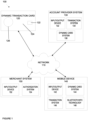
- Figure 1 depicts an example system 100 including a dynamic transaction card.
- an example system 100 may include one or more dynamic transaction cards 120, one or more account provider systems 130, one or more user devices 140, and one or more merchant systems 150 connected over one or more networks 110.
- network 110 may be one or more of a wireless network, a wired network or any combination of wireless network and wired network.
- network 110 may include one or more of a fiber optics network, a passive optical network, a cable network, an Internet network, a satellite network, a wireless LAN, a Global System for Mobile Communication (“GSM”), a Personal Communication Service (“PCS”), a Personal Area Network (“PAN”), Wireless Application Protocol (WAP), Multimedia Messaging Service (MMS), Enhanced Messaging Service (EMS), Short Message Service (SMS), Time Division Multiplexing (TDM) based systems, Code Division Multiple Access (CDMA) based systems, D-AMPS, Wi-Fi, Fixed Wireless Data, IEEE 802.11b, 802.15.1, 802.11n and 802.11g, a Bluetooth TM network, or any other wired or wireless network for transmitting and receiving a data signal.
- GSM Global System for Mobile Communication
- PCS Personal Communication Service
- PAN Personal Area Network
- WAP Wireless Application Protocol
- MMS Multi
- network 110 may include, without limitation, telephone lines, fiber optics, IEEE Ethernet 902.3, a wide area network ("WAN"), a local area network (“LAN”), a wireless personal area network (“WPAN”), or a global network such as the Internet.
- network 110 may support an Internet network, a wireless communication network, a cellular network, or the like, or any combination thereof.
- Network 110 may further include one network, or any number of the example types of networks mentioned above, operating as a stand-alone network or in cooperation with each other.
- Network 110 may utilize one or more protocols of one or more network elements to which they are communicatively coupled.
- Network 110 may translate to or from other protocols to one or more protocols of network devices.
- network 110 may comprise a plurality of interconnected networks, such as, for example, the Internet, a service provider's network, a cable television network, corporate networks, and home networks.
- User device 140 and/or merchant system 150 may include, for example, one or more mobile devices, such as, for example, personal digital assistants (PDA), tablet computers and/or electronic readers (e.g., iPad TM , Kindle Fire TM , Playbook TM , Touchpad TM , etc.), wearable devices (e.g., Google Glass TM ), telephony devices, smartphones, cameras, music playing devices (e.g., iPod TM , etc.), televisions, set-top-box devices, and the like.
- PDA personal digital assistants
- tablet computers and/or electronic readers e.g., iPad TM , Kindle Fire TM , Playbook TM , Touchpad TM , etc.
- wearable devices e.g., Google Glass TM
- telephony devices smartphones, cameras, music playing devices (e.g., iPod TM , etc.), televisions, set-top-box devices, and the like.
- smartphones such as, for example, personal digital assistants (PDA),
- Account provider system 130, user device 140, and/or merchant system 150 also may include a network-enabled computer system and/or device.
- a network-enabled computer system and/or device may include, but is not limited to: e.g., any computer device, or communications device including, e.g., a server, a network appliance, a personal computer (PC), a workstation, a mobile device, a phone, a handheld PC, a personal digital assistant (PDA), a thin client, a fat client, an Internet browser, or other device.
- the network-enabled computer systems may execute one or more software applications to, for example, receive data as input from an entity accessing the network-enabled computer system, process received data, transmit data over a network, and receive data over a network.
- account provider system may include components such as those illustrated in Figure 3 and/or Figure 9 .
- Merchant system may include, for example, components illustrated in Figure 8 and/or Figure 9 .
- Data storage may also include storage media or other suitable type of memory (e.g., such as, for example, RAM, ROM, programmable read-only memory (PROM), erasable programmable read-only memory (EPROM), electrically erasable programmable read-only memory (EEPROM), magnetic disks, optical disks, floppy disks, hard disks, removable cartridges, flash drives, any type of tangible and non-transitory storage medium), where the files that comprise an operating system, application programs including, for example, web browser application, email application and/or other applications, and data files may be stored.
- RAM random access memory
- ROM read-only memory
- PROM programmable read-only memory
- EPROM erasable programmable read-only memory
- EEPROM electrically erasable programmable read-only memory
- magnetic disks e.g., magnetic disks, optical disks, floppy disks, hard disks, removable cartridges, flash drives, any type of tangible and non-transitory storage medium
- the data storage of the network-enabled computer systems may include electronic information, files, and documents stored in various ways, including, for example, a flat file, indexed file, hierarchical database, relational database, such as a database created and maintained with software from, for example, Oracle ® Corporation, Microsoft ® Excel TM file, Microsoft ® Access TM file, a solid state storage device, which may include an all flash array, a hybrid array, or a server-side product, enterprise storage, which may include online or cloud storage, or any other storage mechanism.
- a flat file indexed file, hierarchical database
- relational database such as a database created and maintained with software from, for example, Oracle ® Corporation, Microsoft ® Excel TM file, Microsoft ® Access TM file
- a solid state storage device which may include an all flash array, a hybrid array, or a server-side product
- enterprise storage which may include online or cloud storage, or any other storage mechanism.
- the contact points positions on the exterior of card 120 may be connected to an EMV TM processor sing a form of wired connection (e.g.., electrical wiring, plastic jumpers, and/or the like) such that the EMV TM processor may be positioned at any location in the interior of card 120 as described in U.S. Provisional Application 62/270,648 .
- EMV TM processor sing a form of wired connection (e.g.., electrical wiring, plastic jumpers, and/or the like) such that the EMV TM processor may be positioned at any location in the interior of card 120 as described in U.S. Provisional Application 62/270,648 .
- Account provider system 130 may include an input/output device 132, a transaction system 134, and a dynamic transaction card system 136.
- Input/output device 132 may include for example, I/O devices, which may be configured to provide input and/or output to providing party system 130 (e.g., keyboard, mouse, display, speakers, printers, modems, network cards, etc.).
- Input/output device 132 also may include antennas, network interfaces that may provide or enable wireless and/or wire line digital and/or analog interface to one or more networks, such as network 110, over one or more network connections, a power source that provides an appropriate alternating current (AC) or direct current (DC) to power one or more components of account provider system 130, and a bus that allows communication among the various components of account provider system 130.
- Input/output device 132 may include a display, which may include for example output devices, such as a printer, display screen (e.g., monitor, television, and the like), speakers, projector, and the like.
- each account provider system 130 may include one or more encoders and/or decoders, one or more interleavers, one or more circular buffers, one or more multiplexers and/or de-multiplexers, one or more permuters and/or depermuters, one or more encryption and/or decryption units, one or more modulation and/or demodulation units, one or more arithmetic logic units and/or their constituent parts, and the like.
- Transaction system 134 may include various hardware and software components to communicate between a merchant, acquisition system, account provider system, and/or a user device to process a transaction, such as a user purchase.
- dynamic transaction card system 136 may include various hardware and software components, such as data storage (not shown) to store data associated with a dynamic transaction card (e.g., card number, account type, account balance, account limits, budget data, recent transactions, pairing data such as time and date of pairing with a mobile device, and the like) and cardholder data (e.g., cardholder name, address, phone number(s), email address, demographic data, and the like).
- user device 140 could be an iPhone, iPod, iPad, and/or Apple Watch from Apple ® or any other mobile device running Apple's iOS TM operating system, any device running Google's Android ® operating system, including, for example, smartphones running the Android ® operating system and other wearable mobile devices, such as Google Glass TM or Samsung Galaxy Gear TM any device running Microsoft's Windows ® Mobile operating system, and/or any other smartphone or like device.
- User device 140 may include for example, an input/output device 142, a location system 144, and a transaction system 146.
- Input/output device 142 may include, for example, a Bluetooth TM device or chipset with a Bluetooth TM transceiver, a chip, and an antenna.
- the transceiver may transmit and receive information via the antenna and an interface.
- the chip may include a microprocessor that stores and processes information specific to a dynamic transaction device and provides device control functionality.
- Device control functionality may include connection creation, frequency-hopping sequence selection and timing, power control, security control, polling, packet processing, and the like.
- the device control functionality and other Bluetooth TM -related functionality may be supported using a Bluetooth TM API provided by the platform associated with the user device 140 (e.g., The Android platform, the iOS platform).
- a Bluetooth API an application stored on a mobile device 140 (e.g., a banking application, a financial account application, etc.) or the device may be able to scan for other Bluetooth TM devices (e.g., a dynamic transaction card 120), query the local Bluetooth TM adapter for paired Bluetooth TM devices, establish RFCOMM channels, connect to other devices through service discovery, transfer data to and from other devices or a transaction card 120, and manage multiple connections.
- a Bluetooth TM API used in the methods, systems, and devices described herein may include an API for Bluetooth TM Low Energy (BLE) to provide significantly lower power consumption and allow a mobile device 140 to communicate with BLE devices that have low power requirements, such dynamic transaction card 120.
- BLE Bluetooth TM Low Energy
- Input/output device 142 may include a display, which may include for example output devices, such as a printer, display screen (e.g., monitor, television, and the like), speakers, projector, and the like.
- each mobile device 140 may include one or more encoders and/or decoders, one or more interleavers, one or more circular buffers, one or more multiplexers and/or de-multiplexers, one or more permuters and/or depermuters, one or more encryption and/or decryption units, one or more modulation and/or demodulation units, one or more arithmetic logic units and/or their constituent parts, and the like.
- Input/output device 142 may be capable of utilizing standardized transmission protocols, for example but not by way of limitation, ISO/IEC 14443 A/B, ISO/IEC 18092, MiFare, FeliCa, tag/smartcard emulation, and the like. Also, input/output device 142 may be able to utilize transmission protocols and methods that are developed in the future using other frequencies or modes of transmission. Input/output device 142 may also be backwards-compatible with existing techniques, for example RFID. Also, the system may support transmission requirements to meet new and evolving standards including internet based transmission triggered by NFC.
- Merchant 904 may be any merchant that accepts payment from a cardholder 902 in exchange for goods, for example.
- Merchant 904 may be any retailer, service provider, business entity, or individual that accepts payments.
- Merchant 904 may include software, firmware and hardware for accepting and/or processing payments.
- merchant 904 may include a terminal 906 and a payment gateway 908.
- Terminal 906 and payment gateway 908 may comprise the physical or virtual device(s) used by merchant 904 to communicate information to front-end processor 912 of acquirer 910.
- Terminal 906 may be similar to a PoS system.
- Terminal 906 may include an EMV TM card reader to interact with a dynamic transaction card.
- Payment gateway 908 may be an e-commerce application service provider service that authorizes payments for merchants. As such, payment gateway 908 may be a virtual equivalent of a PoS terminal and interface with, for example, a billing system of merchant 904 and pass data to front-end processor 912 of acquirer 910.
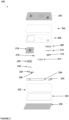
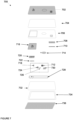
- a dynamic transaction card 200 further includes a top protective layer 204, such as a clear scratch-resistant coating and/or scratch-proof material to protect the underlying components.
- various scratch-resistant materials include materials coated with a scratch resistant chemical coating, such as a UV curable chemical coating.
- Scratch-proof materials may include a mineral glass, a sapphire glass, thin film alloys, ITO, ZnO, , PVC, PET, BoPET (e.g., Mylar), polyvinylidene fluoride (e.g., Kynar), polyvinylidene difluoride, PC and/or PET-G.
- a dynamic transaction card may include a potting 206 or filler epoxy around the electrical components to provide strength and/or water resistance.
- a potting 206 may include a light guide, which may be constructed of optical grade materials such as acrylic, resin, polycarbonate, epoxies, and/or glass. Potting 206 may also include injection molding, such as over molding and/or multi-shot to encapsulate the components of card 200.
- injection molding may include ABS, thermoplastic elastomers (TPE), thermoplastic vulcanizate (TPV), thermoplastic polyurethane (TPU), PET, polycarbonates (PC), cold lamination of the outer films to the body of the card using thermoactive adhesives, hot lamination of the outer films to the body of the card using thermoactive adhesives, and/or silicone.
- a dynamic transaction card 200 may further include a Java Applet 208 and Java Applet integration 210. Although a Java Applet 208 is used through the specification, any other similar type of code application may be used. Moreover, although Java Applet integration 210 is used throughout this specification, any type of interface may be used to allow the microcontroller to interact with the EMV TM chip.
- a Java Applet 208 may include code that executes payments, such as payment made using an EMV TM chip.
- a Java Applet 208 may include account-provider specific code to execute display functionality specific to the account provider.
- Java Applet integration 210 may include coded interfaces to allow the microcontroller to interact with the EMV TM chip 212.
- An EMV TM chip 212 may include a number of contacts that may interact with and/or be connected to a terminal configured to read data stored on a processor of an EMV TM chip 212.
- application cryptograms may be used to send and receive data packets between the dynamic transaction card 200 and a terminal, such as a merchant terminal, which may be similar to a terminal included at a merchant 150.
- data packets may include user authentication information which an acquisition system and/or issuing financial institution may use to authenticate a transaction card 200 during a transaction.
- Various cryptographic protocols and/or methods may be used in this data transmission and reception process.
- issuing financial institutions and/or acquisition systems may return script commands to the EMV TM chip 212 via a terminal. These script commands and/or data packets may be transmitted between parties over a network. Script commands may be used, for example, to block transactions, change transaction data stored on the EMV TM chip (e.g., transaction history, account limits, account balance, and/or the like).
- Offline data authentication may also take place using, for example public key cryptography to perform payment data authentication. For example, offline data authentication may use Static Data Authentication (SDA), Dynamic Data Authentication (DDA), and/or Combined Data Authentication (CDA).
- SDA Static Data Authentication
- DDA Dynamic Data Authentication
- CDA Combined Data Authentication
- Dynamic transaction card 200 may also include one or more sensors 214 to receive input. Sensors 214 may include an activation sensor and/or an operation sensor, which may be combined and/or separate. An activation sensor may activate the dynamic transaction card 214 and an operation sensor may instruct the dynamic transaction card 200 to perform an action based on the received input. An activation sensor may require a security input, such as a biometric input (e.g., fingerprint, eye scan, voice recognition, and/or the like), input indicative of a paired mobile device (e.g., BLE and/or Bluetooth TM pairing), input indicative of a password (e.g., a password received via a sensor on the dynamic transaction card and/or a password received on a paired mobile device), and/or the like.
- a biometric input e.g., fingerprint, eye scan, voice recognition, and/or the like
- input indicative of a paired mobile device e.g., BLE and/or Bluetooth TM pairing
- a password e.g., a password received
- An operation sensor may change a display 216 based on received input, conduct a transaction via, for example an EMV TM chip 212 and/or contactless payment technologies based on received input, attempt a pairing of a card 200 and a mobile device, and/or the like.
- a sensor 214 may include a capacitive touch sensor, a piezoelectric sensor, an inductive sensor, load cells, a light sensor, a temperature sensor, a resistive touchscreen, including for example an analogue matrix real (AMR) sensors, and/or the like.
- Sensors 214 may include accelerometers and/or photosensors to detect motion input. Although the sensor 214 is depicted at a particular spot in the transaction card 200, a sensor 214 may be placed at any portion of the card to detect, for example, touch, light, heat, energy, and/or the like. For example, a sensor may be placed around the outer edges of a dynamic transaction card 200 or at any spot within the dynamic transaction card 200. Sensor 214 also may include the entire exterior surface of transaction card 200.
- a display 216 may be illuminated using a particular color to relay to the cardholder balance information of an account associated with a transaction card, such as an RGB LED matrix panel and/or RGB LED displays.
- a red light display may indicate that the account balance is within a first predetermined dollar amount or a first predetermined percentage of the total spending limit, a particular budget, a particular budget category, and/or the like.
- a yellow light display may indicate that the account balance is within a second predetermined dollar amount or a second predetermined percentage of the total spending limit, a particular budget, a particular budget category, and/or the like.
- a display 216 may include a number of LED or OLED lights and/or light pipes that may be lit in a particular pattern to indicate transaction and/or account information.
- a display 216 may include a circle, semicircle, or other shape of LED or OLED lighting and/or light pips, where the number of lights illuminated indicates a dollar amount or a percentage of the total spending limit, a particular budget, a particular budget category, and/or the like.
- a display 216 may be activated via a sensor 214, which may include any type of sensor describe herein.
- a display may be activated via a touch sensor, where a user is required to tap a location on dynamic transaction card 200 a specific number of times and/or for a specific length of time (e.g., double tap, triple tap, one long tap followed by one short tap, and/or the like).
- a display 216 may be activated to display particular data, such as data associated with a transaction history, account balance, spending limit, budget categories, budget spending, budget limits, and/or the like.
- a number of LED or OLEDs may be illuminated to display the percentage of a budget consumed (e.g., if a budget is $10,000 and a user has spent $3,000, then 3 out of 10 LEDs or OLEDs may be illuminated to illustrate that 30% of the $10,000 budget has been consumed).
- a display may be altered and/or modified, for example, depending on which account or card is selected to be used.
- display components 216 may reflect the card number, security code, expiration date, and/or other necessary data indicative of the account (e.g., second credit account) that is being used to execute a transaction.
- a display may be altered and/or modified when, for example, a dynamic transaction card 200 receives new card data and/or new account data from an account holder's mobile device via a wireless connection. For example, where an account has been marked as associated with fraudulent activity, an account holder and/or issuing financial institution may deactivate the card associated with the account and issue a new card.
- new card data may be transmitted from the issuing financial institution to, for example, an account holder's mobile device via a network, and then from an account holder's mobile device to dynamic transaction card 200 via a wireless connection.
- a display may also be altered and/or modified when dynamic transaction card 200 activates a new account.
- new account data may be transmitted to dynamic transaction card 200.
- New account data may be received at an account holder's mobile device from an issuing financial institution via a network (e.g. , using a mobile application, mobile optimized website, and/or the like).
- New account data may then be transmitted from an account holder's mobile device to dynamic transaction card 200 via a wireless connection (e.g., BLE, RFID, NFC, WiFi, and/or the like) or a contact connection (e.g., using a terminal in contact with an EMV TM processor and/or other microchip).
- a wireless connection e.g., BLE, RFID, NFC, WiFi, and/or the like
- a contact connection e.g., using a terminal in contact with an EMV TM processor and/or other microchip.
- card 200 may be fully or partially pre-loaded with account and/or card data.
- an applet and placeholder data (or actual data) may be stored within dynamic transaction card 200.
- the new account data and/or activation signal may be received from an account holder's mobile device via a wireless connection or a contact connection (e.g., using a terminal in contact with an EMV TM processor and/or other microchip) and a new account and/or card may be activated and able to be displayed on dynamic transaction card 200.
- a dynamic transaction card 200 may include firmware 220 and/or a bootloader 222.
- a bootloader 222 may include code to be executed as a dynamic transaction card 200 is activated and before any operating system, firmware, or other code is executed on the dynamic transaction card 200.
- a bootloader may be activated via a sensor 214 and energy storage component 228 of the dynamic transaction card 200.
- Bootloader 222 may be activated and/or load an application and/or program upon detection that card 200 has been inserted into a terminal, charger, and/or the like.
- Bootloader 222 may be activated using only one technique described herein, using multiple techniques described herein, and/or using a card holder or card provider selected technique(s) described herein.
- PCB 232 may be combined with an energy component (e.g., battery component, power component, etc.) as described in U.S. Patent Application No. 62/266,324 .
- a flexible PCB may also provide antenna support.
- a flexible printed circuit (FPC) may be used in place of or in conjunction with flexible PCB 232.
- FPC 232 may be fabricated with photolithographic technology, such as light exposure of a film material laminated to substrate and/or conductive layers.
- FPC 232 may be printed, silkscreened, and/or the like.
- FPC 232 may be used as a structural member for the electronic components of card 200 and/or for the card system as a whole 200.
- Dynamic transaction card 200 may include a chassis 234 as a frame or supporting structure.
- chassis 234 is constructed out of a conductive material
- a dielectric constant of chassis 234 and/or card 200 may be monitored to detect handling of card 200.
- a chassis 234 may be used to detect the handling of card 200 via a strain gauge.
- Chassis 234 may be included within or separate from a card backing 236.
- Card backing 236 may include a magnetic stripe that may be read using a magnetic stripe reader.
- a magnetic stripe may store tracks of data that are used to conduct a transaction using a dynamic transaction card 200.
- a magnetic stripe may be dynamically altered.
- a dynamic transaction card 200 that is paired to a mobile device via, for example, Bluetooth TM , BLE, RFID, WiFi Direct and/or other wireless technologies, may receive new track data.
- the new track data may be unformatted, encrypted, encoded, and/or the like when the new track data is transmitted from the mobile device to the dynamic transaction card 200.
- the new track data may be routed to a microprocessor, such the processor of EMV TM chip 212 and/or microcontroller 224.
- EMV TM chip 212 and/or microcontroller 224 may convert, decrypt, and/or decode the received new track data to ensure compliance with any standards.
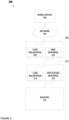
- Figure 3 illustrates a system associated with the use of a dynamic transaction card.
- the example system 300 in Figure 3 may enable a financial institution, for example, to provide network services to its cardholders, and may include providing transaction card data, account data, and/or any other data to a mobile device that may in turn provide that data to a dynamic transaction card.
- a financial institution may include a front-end controlled domain 306, a back-end controlled domain 312, and a backend 318 as part of account provider system 130
- a mobile device 302 may include mobile device 140
- a dynamic transaction card may include dynamic transaction card 120.
- a dynamic transaction card may be similar to a dynamic transaction card of cardholder 902; a financial institution may include a front-end controlled domain 306, a back-end controlled domain 312, and a backend 318 as part of card issuer system 918 and/or association/interchange 916; and a mobile device may be similar to a mobile device of cardholder 902.
- the example system 300 also may enable a merchant, for example, to provide network services to its customers, and may include providing sales, loyalty account data, and/or any other data to a mobile device that may in turn provide that data to a dynamic transaction card.
- system 300 may include a mobile device 302, a network 304, a front-end controlled domain 306, a back-end controlled domain 312, and a backend 318.
- Front-end controlled domain 306 may include one or more load balancers 308 and one or more web servers 310.
- Back-end controlled domain 312 may include one or more load balancers 314 and one or more application servers 316.
- Mobile device 302 may include an iPhone TM , iPod TM , iPad TM from Apple ® or any other mobile device running Apple's iOS TM operating system, any device running Google's Android ® operating system, including for example, Google's wearable device, Google Glass TM , any device running Microsoft's Windows ® Mobile operating system, and/or any other smartphone or like wearable mobile device. Mobile device 302 also may be similar to mobile device 140 as shown and described in Figure 1 .
- Front-end controlled domain 306 may be implemented to provide security for backend 318.
- Load balancer(s) 308 may distribute workloads across multiple computing resources, such as, for example computers, a computer cluster, network links, central processing units or disk drivesLoad balancer(s) 310 may distribute workloads across, for example, web server(s) 316 and/or backend 318 systems.
- Load balancing aims to optimize resource use, maximize throughput, minimize response time, and avoid overload of any one of the resources. Using multiple components with load balancing instead of a single component may increase reliability through redundancy.
- Load balancing is usually provided by dedicated software or hardware, such as a multilayer switch or a Domain Name System (DNS) server process.
- DNS Domain Name System
- Load balancers 308 may be implemented in hardware and/or software. Load balancer(s) 308 may implement numerous features, including, without limitation: asymmetric loading; Priority activation: SSL Offload and Acceleration; Distributed Denial of Service (DDoS) attack protection; HTTP/HTTPS compression; TCP offloading; TCP buffering; direct server return; health checking; HTTP/HTTPS caching; content filtering; HTTP/HTTPS security; priority queuing; rate shaping; content-aware switching; client authentication; programmatic traffic manipulation; firewall; intrusion prevention systems.
- DDoS Distributed Denial of Service
- a user agent such as, for example, a web browser, web crawler, or native mobile application, may initiate communication by making a request for a specific resource using HTTP/HTTPS and web server 310 may respond with the content of that resource or an error message if unable to do so.
- the resource may be, for example a file on stored on backend 318.
- Web server(s) 310 also may enable or facilitate receiving content from mobile device 302 so mobile device 302 may be able to, for example, submit web forms, including uploading of files.
- Web server(s) also may support server-side scripting using, for example, Active Server Pages (ASP), PHP, or other scripting languages. Accordingly, the behavior of web server(s) 310 can be scripted in separate files, while the actual server software remains unchanged.
- ASP Active Server Pages
- PHP PHP
- Load balancers 314 may be similar to load balancers 308 as described above.
- Application server(s) 316 may include hardware and/or software that is dedicated to the efficient execution of procedures (e.g., programs, routines, scripts) for supporting its applied applications.
- Application server(s) 316 may comprise one or more application server frameworks, including, for example, Java application servers (e.g., Java platform, Enterprise Edition (Java EE), the .NET framework from Microsoft ® , PHP application servers, and the like).
- Java application servers e.g., Java platform, Enterprise Edition (Java EE), the .NET framework from Microsoft ® , PHP application servers, and the like.
- the various application server frameworks may contain a comprehensive service layer model.
- application server(s) 316 may act as a set of components accessible to, for example, a financial institution, or other entity implementing system 300, through an API defined by the platform itself.
- these components may be performed in, for example, the same running environment as web server(s) 310, and application servers 316 may support the construction of dynamic pages.
- Application server(s) 316 also may implement services, such as, for example, clustering, fail-over, and load-balancing.
- application server(s) 316 are Java application servers
- the web server(s) 316 may behaves like an extended virtual machine for running applications, transparently handling connections to databases associated with backend 318 on one side, and, connections to the Web client (e.g., mobile device 302) on the other.
- Backend 318 may include hardware and/or software that enables the backend services of, for example, a financial institution, merchant, or other entity that maintains a distributed system similar to system 300.
- backend 318 may include, a system of record, online banking applications, a rewards platform, a payments platform, a lending platform, including the various services associated with, for example, auto and home lending platforms, a statement processing platform, one or more platforms that provide mobile services, one or more platforms that provide online services, a card provisioning platform, a general ledger system, and/or a location system, which may include additional capabilities, such as transaction card data generation, transaction processing, and/or transmission of account and/or transaction data.
- a dynamic display may be a display that is altered by activating new card data such as, a new card number, a new security code (e.g., CCV code), a new expiration date, and/or other card/account data.
- a dynamic display may be a display that is altered by activating new account data, such as a new account number, a new card number, a new security code, a new expiration date, and/or other card/account data.
- New account and/or new card data may be fully pre-loaded, partially pre-loaded, and/or received from a wireless connection.
- fully pre-loaded data may include a full account number, card number, security code, expiration date, and/or other account data that is loaded onto a dynamic transaction card (e.g., dynamic transaction card 200, 700) upon personalization at a backend facility.
- Fully pre-loaded data may also include an associated applet that interacts with the account and/or card data to execute transactions, manipulate dynamic displays, and/or perform any of the functionality described herein.
- Fully pre-loaded data may be activated upon receiving an activation signal from, for example, an account holder device via a wireless connection.
- a wireless device may receive an activation signal from an issuing financial institution via a network connection using, for example, a mobile application and/or mobile-enhanced website associated with the issuing financial institution.
- fully pre-loaded and/or partially pre-loaded data may also include keys (e.g., public/private key pairs, private key pairs, and/or the like) that may be used by an EMV TM circuit to execute transactions using the EMV TM processor on the card.
- keys e.g., public/private key pairs, private key pairs, and/or the like
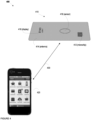
- Figure 4 illustrates a system associated with the use of a dynamic transaction card.
- the example system 400 in Figure 4 may enable a mobile device 420 storing a mobile banking application, for example, to provide data updates to a dynamic transaction card 410 via network 430.
- data received at mobile device 420 may be transmitted to dynamic transaction card 410 where it is received via antenna 414.
- Data may be received and/or transmitted using, for example a mobile banking application that maintains and/or creates a secure connection with a financial institution to send and/or receive data related to an account associated with the financial institution.
- a mobile banking application may include send and/or receive data related to a credit account, a debit account, a prepaid account, a loyalty account, a rewards account, and/or the like.
- Data may also include track data that may be updated upon demand.
- a data request may be transmitted to a mobile device 420 for updated information, where mobile device 420 may request updated data from a financial institution (not shown) as described in Figure 3 .
- Data received at dynamic transaction card 410 may be stored on microchip 412 and/or may be displayed via display 416.
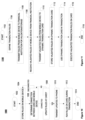
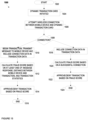
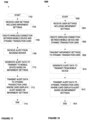
- FIG. 5 and 6 illustrate example methods of updating and using a dynamic transaction card.
- the method 500 may start at block 502.
- a dynamic transaction card may be activated.
- a dynamic transaction card may be activated via input received at a sensor on the dynamic transaction card (e.g., an accelerometer, a light sensor, a capacitive touch sensor, a heat sensor, and/or the like), by inserting the dynamic transaction card into a reader, such as an EMV TM reader where the EMV TM reader connects with the dynamic transaction card via an EMV TM chip, when the dynamic transaction card is being used in a contactless payment transaction (e.g., by received a signal from a PoS terminal that a transaction has been initiated), via an activation signal received from a mobile device (e.g., a signal received from a mobile device that has been paired to the dynamic transaction card via, for example Bluetooth TM or BLE), and/or the like.
- a sensor on the dynamic transaction card e.g., an accelerometer, a
- a dynamic transaction card may request updated data via, for example, a mobile device, an EMV TM terminal, and/or any computing device capable of communicating with a financial institution.
- a request may be transmitted wirelessly, using Bluetooth TM , Bluetooth TM Low Energy (BLE), RFID, WiFi Direct, and/or NFC technologies.
- a request may be transmitted via contacts, such as EMV TM contacts.
- a request may be processed using the systems described in Figures 1 , 2 , 3 , 7 , 8 , 9 , and 19 .
- a mobile banking application and/or a financial institution application may provide a secure connection and/or security features (e.g., cryptographic keys, protocol, hash algorithm, digital signatures, passwords, checksums, and/or the like) to conduct secure communications with a financial institution backend and receive updated financial data to transmit, via RFID, BLE, Bluetooth TM , NFC, and/or the like, to a dynamic transaction card for storage and/or display.
- a secure connection and/or security features e.g., cryptographic keys, protocol, hash algorithm, digital signatures, passwords, checksums, and/or the like
- data updates such as transaction data, transaction history, account balance, account limit, budget category, remaining budget amount, spending per category, and/or like may be received at the dynamic transaction card via an antenna, such as antenna 226, 726, 1926 or 1927, or contact points of an EMV TM chip, such as EMV TM chip 212.
- Data updates may be stored within the dynamic transaction card and recalled on the dynamic transaction card at any time upon activation.
- a dynamic transaction card may store data in storage associated with a microcontroller such as microcontroller 224, an EMV TM chip such as EMV TM chip 212, and or software storage (e.g., firmware and/or an application) such as 220, 208 in the dynamic transaction card.
- a dynamic transaction card may generate a display account to the updated data using a display such as display 216, display driver such as display driver 218, and/or other components of a dynamic transaction card, including, for example, firmware, such as firmware 220 and/or applications, such as application 208.
- a dynamic transaction card with a dot matrix display may generate an alphanumeric display indicative of the updated data, such as a balance amount, a transaction amount, a budget amount, a transaction date, account holder name, account number, transaction card number, expiration date, account holder data, a spending limit, and/or the like.
- a dynamic transaction card display includes an LED and/or an OLED display
- a dynamic transaction card may generate a display pattern with the LED and/or OLED lights indicative of the updated data.
- a display may indicate an amount remaining in an account (e.g., $143 left).
- a display may include a shape, such as a circle, a ring, and/or the like, indicative of an account balance, a budget balance, and/or the like where a portion of the shape is illuminated to indicate an account balance against an account limit. For example, where a spending limit or budgeted amount is $500 and a balance or amount spent is $100, the shape may be illuminated to indicate 20% of the spending limit or budgeted amount has been spent. In this example, the shape may be illuminated to indicate 80% of the spending limit or budgeted amount has not been spent. In another example, various colors and/or patterns may be illuminated to indicate an amount spent and/or an amount not spent to a card holder (e.g., an LED or OLED patterns and/or colors, edge lighting patterns, and/or the like).
- a dynamic transaction card and/or display on a dynamic transaction card may be deactivated. Deactivation may occur after a certain amount of time after activation. Deactivation may occur by receiving a predetermined input via a sensor. For example, a first input to a sensor may activate a dynamic transaction card and a second input to a sensor may deactivate a dynamic transaction card. A predetermined input pattern also may deactivate a dynamic transaction card. Deactivation may occur by removing a dynamic transaction card from a terminal. Deactivation may occur when a dynamic transaction card is unpaired from a mobile device.
- a wireless connection e.g., BLE, Bluetooth TM , RFID, NFC, WiFi Direct, and/or the like
- Deactivation may occur upon receiving an input that a mobile device and financial institution have ceased connection.
- the account holder may log out or a connection may timeout.
- a mobile device may transmit a signal to a dynamic transaction card wirelessly via BLE, Bluetooth TM , RFID, NFC, WiFi Direct, and/or the like to deactivate the display on the dynamic transaction card.
- the method 500 may end.
- a dynamic transaction card may be activated.
- a dynamic transaction card may be powered up or activated via input received at a sensor on the dynamic transaction card (e.g., an accelerometer, a light sensor, a capacitive touch sensor, a heat sensor, and/or the like), by inserting the dynamic transaction card into a reader, such as an EMV TM reader where the EMV TM reader connects with the dynamic transaction card via contact points of an EMV TM chip, when the dynamic transaction card is being used in a contactless payment transaction (e.g., by received a signal from a PoS terminal that a transaction has been initiated), via an activation signal received from a mobile device (e.g., a signal received from a mobile device that has been paired to the dynamic transaction card via, for example Bluetooth TM , BLE, NFC, WiFi Direct, RFID, and/or the like), and/or the like.
- a sensor on the dynamic transaction card e.g., an accelerometer, a light sensor, a capacitive touch sensor
- a dynamic transaction card may transmit a transaction request to a point-of-sale (PoS) terminal at a merchant, similar to merchant 150.
- a dynamic transaction card may interact with a merchant terminal (e.g., Figure 9 , 906) to initiate a transaction.
- a dynamic transaction card may communicate wirelessly (e.g., RFID, NFC, BLE, WiFi Direct) or using a contact connection (e.g., an EMV TM processor connection at a terminal) with a merchant terminal.
- a cardholder may select a specific card to use for a transaction.
- a dynamic transaction card may store a number of different accounts (e.g., debit account, credit account, prepaid card account, gift card account, and/or the like).
- a dynamic transaction card may also store a specific applet that executes with each account and an account identifier (AID) associated with the account and/or applet.
- AID account identifier
- a cardholder may select which account to use for a transaction, either via a dynamic transaction card interface or via a mobile device application that may communicate wirelessly with a dynamic transaction card to relay transaction instructions (e.g., use credit account, use debit account, and/or the like).
- a cardholder may preselect which account to use for specific transactions by setting up account rules (e.g., use credit account to maximize rewards, use debit account when credit balance is at a predetermined level, use credit account at a specific merchant type, and/or the like).
- account rules may be stored on a dynamic transaction card and/or an account holder's mobile device (which may then be pushed to a dynamic transaction card at the time a transaction is initiated).
- a dynamic transaction card may receive updated data based on the current transaction at block 608.
- Updated data may include the transaction amount, an account balance prior to the transaction, an account balance after transaction approval, an account number, account holder data, , budget category, remaining budget amount, spending per category, and/or the like.
- Data updates may be stored within the dynamic transaction card and recalled on the dynamic transaction card at any time upon activation. For example, a request may be processed using the systems described in Figures 1 , 2 , 3 , 7 , 8 , 9 , and 19 .
- a mobile device 302 may send data to and receive data from a financial institution, for example, through a network 304 using a number of load balancers 308, 314 a web server 310, an application server 316, and/or a backend server 318. In this manner, data may be securely transmitted between a mobile device 302 and a financial institution.
- a mobile banking application and/or a financial institution application may provide a secure connection and/or security features (e.g., cryptographic keys, protocol, hash algorithm, digital signatures, passwords, checksums, and/or the like) to conduct secure communications with a financial institution backend and receive updated financial data to transmit, via RFID, BLE, Bluetooth TM , NFC, and/or the like, to a dynamic transaction card for storage and/or display.
- a secure connection and/or security features e.g., cryptographic keys, protocol, hash algorithm, digital signatures, passwords, checksums, and/or the like
- a dynamic transaction card may generate a display account to the updated data using a display, display driver, and/or other components of a dynamic transaction card.
- a dynamic transaction card with a dot matrix display may generate an alphanumeric display indicative of the updated data, such as a balance amount, a transaction amount, a budget amount, a transaction date, account holder name, account number, transaction card number, expiration date, account holder data, a spending limit, and/or the like.
- a dynamic transaction card display includes and LED and/or an OLED display
- a dynamic transaction card may generate a display pattern with the LED and/or OLED lights indicative of the updated data.
- a dynamic transaction card may be deactivated. Deactivation may occur after a certain amount of time after activation. Deactivation may occur by receiving a predetermined input via a sensor. For example, a first input to a sensor may activate a dynamic transaction card and a second input to a sensor may deactivate a dynamic transaction card. A predetermined input pattern also may deactivate a dynamic transaction card. Deactivation may occur by removing a dynamic transaction card from a terminal. Upon deactivation, the method 600 may end.
- Figure 10 illustrates an example method 1000 of communication between a dynamic transaction card and, for example, a mobile device.
- Dynamic transaction card may be similar to, for example, dynamic transaction card 200 or dynamic transaction card 700.
- Mobile device may be similar to, for example, mobile device 140.
- an account holder and/or financial institution may store transaction rules associated with a dynamic transaction card on a mobile device.
- Transaction rules may include for example, rules pertaining to allowing or denying transactions based on a purchase amount, the time of day, the date, the day of the week, the merchant, the geographical location of the transaction, the type of merchant, and/or the like.
- a dynamic transaction card and/or mobile device may determine whether a connection exists between a dynamic transaction card and a mobile device. For example, a connection may be made by pairing a dynamic transaction card and a mobile device using NFC, BLE, Bluetooth TM , RFID, WiFi Direct, and/or other connection technologies.
- the updated rules may be transmitted from the mobile device to the dynamic transaction card via, for example, NFC, BLE, Bluetooth TM , RFID, WiFi Direct, and/or other technologies. Updates may be transmitted as a full reset of transaction rules thereby replacing the transaction rules previously stored on the dynamic transaction card. Updates may be transmitted as the changes between the current transaction rules stored on a dynamic transaction card and the updated transaction rules stored on a mobile device.
- Figure 11 also illustrates a method for communication between a financial institution, mobile device, and/or dynamic transaction card.
- a mobile device may communicate with a financial institution to transmit and validate a set of transaction rules.
- a financial institution system may store a link between a mobile device identifier (e.g., mobile device number, mobile device carrier, mobile device application identifier, device UUID, device UDID), an account identifier (e.g., account holder name, account holder username, account number, and/or the like) and a transaction card (e.g., transaction card identifier, transaction card number, and/or the like).
- a financial institution using the information linking a mobile device identifier, account identifier, and a transaction card, a financial institution may transmit validated transaction rules to a mobile device that may be paired with the transaction card associated with the validated transaction rules.
- the transaction rules may be transmitted from a mobile device and/or Internet connected device to a financial institution associated with the transaction card for which transaction rules are device, where the backend system of the financial institution may be stored and validated.
- a financial institution system may transmit validated transaction rules to a mobile device associated with the transaction card at block 1108.
- a financial institution system may store an association between a transaction card and a mobile device.
- a financial institution system may store a link between a mobile device identifier (e.g., mobile device number, mobile device carrier, mobile device application identifier, device UUID, device UDID), an account identifier (e.g., account holder name, account holder username, account number, and/or the like) and a transaction card (e.g., transaction card identifier, transaction card number, and/or the like).
- a financial institution using the information linking a mobile device identifier, account identifier, and a transaction card, a financial institution may transmit validated transaction rules to a mobile device that may be paired with the transaction card associated with the validated transaction rules.
- the microcontroller, microprocessor, and/or other element of the dynamic transaction card that executes the validated transaction rules may transmit the transaction determination to the EMV TM processor via EMV TM contacts of the dynamic transaction card, which may interact with a reader at a PoS device to relay the transaction determination to the PoS device. If the determination is to deny the transaction, the PoS device will no longer proceed with the transaction and the method may end. If the determination is to affirm the transaction, a PoS device may continue processing the transaction, which may include, for example, transmitting transaction information to an authorization system and/or financial institution system as described herein.
- Figure 13 illustrates a terminal 1310 and dynamic transaction card 1320 included in a system 1300.
- an applet 1340 may be in communication with a terminal 1310, whereby the applet 1340 may act as a conduit between the EMV TM processor 1330 and terminal 1310.
- the plaintext data responses may be read and processed using the applet 1340 and/or microprocessor 1350.
- applet 1340 may pass any received data to microprocessor 1350 where the data may be processed according to any method described herein.
- Microprocessor may then transmit the processed data to the applet 1340 where the data may be used to generate and/or change a display.
- Figure 14 illustrates a terminal 1410 and dynamic transaction card 1420 included in a system 1400.
- a microprocessor 1450 may be in communication with a terminal 1410, whereby the microprocessor 1450 may act as a conduit between the EMV TM processor 1430 and terminal 1410.
- the plaintext data responses may be read and processed using the microprocessor 1450.
- microprocessor 1450 may have processed the response data according to any method described herein.
- Microprocessor 1450 may then transmit the processed data to the applet 1440 where the data may be used to generate and/or change a display.
- Figure 15 illustrates a method 1500 for detecting fraud using a dynamic transaction card 200/700 in a transaction.
- the techniques and technologies used to detect fraud in a transaction may be similar to those described in U.S. Patent Application No. 14/977,730 .
- the method 1500 may be used in conjunction with existing fraud detection methods and/or technologies and/or newly developed fraud detection methods and technologies.
- a dynamic transaction card such as card 200 or 700
- a dynamic transaction card may be initiated upon removing a card from a wallet via light sensors, touch sensors, and/or other types of sensors described herein.
- dynamic transaction card may attempt to pair with a known mobile device, such as an account holder's smartphone, at block 1506.
- a determination regarding a connection is stored within the dynamic transaction card.
- a transaction may be initiated.
- the transaction data e.g., merchant identifier, purchase price, and/or the like
- data indicating that no connection was made between the dynamic transaction card and a mobile device may be included.
- a backend system may transmit a message to a known mobile device associated with the dynamic transaction card.
- a message may include a notification of a non-pairing transaction, a request for approval of a non-pairing transaction, and/or the like.
- a backend system may continue to calculate a fraud score based on the non-pairing transaction alone or in conjunction with additional fraud calculations already in place or may wait for a response from the known mobile device that received the transmitted message.
- the non-pairing data as well as the response data may be included with the transaction data to calculate a fraud score for the transaction.
- This calculation of a fraud score may be based on any of the following data, either alone, or in conjunction with existing fraud calculations: responds data, transaction data, pairing data, and location data.
- a fraud score may be calculated for a non-pairing transaction.
- a fraud score may be based on a transaction amount, a merchant identifier, as well as, the response data, the non-pairing data, a distance between a known mobile device and the transaction and/or transaction statistics associated with the account holder of the dynamic transaction card.
- Transaction statistics may include, a number of transactions that occur without pairing, a percentage of transactions that occur without pairing, a number of transactions approved without pairing, a percentage of transactions approved without pairing, and/or the like.
- a transaction may be approved or denied based on the calculated fraud score.
- a transaction may be initiated.
- the transaction data e.g., merchant identifier, purchase price, and/or the like
- data indicating that a connection was made between the dynamic transaction card and a mobile device may be included.
- a fraud score may be calculated based on a successful pairing.
- a fraud score may be based on a transaction amount, a merchant identifier, as well as, the response data, the non-pairing data, a distance between a known mobile device and the transaction and/or transaction statistics associated with the account holder of the dynamic transaction card.
- Transaction statistics may include, a number of transactions that occur without pairing, a percentage of transactions that occur without pairing, a number of transactions approved without pairing, a percentage of transactions approved without pairing, and/or the like.
- a transaction may be approved or denied based on the calculated fraud score.
- the method 1500 may end.
- Figure 16 illustrates a method 1600 used after a fraud detection, either using methods disclosed herein or existing fraud detection methods, to automatically activate new card data on a dynamic transaction card (e.g., dynamic transaction card 200, dynamic transaction card 700).
- a dynamic transaction card e.g., dynamic transaction card 200, dynamic transaction card 700.
- the method 1600 may begin at block 1602 when a backend financial institution system detects a fraudulent transaction. Once a fraudulent transaction is detected at a backend financial institution system, a notification may be transmitted to the account data storage to block the account associated with the fraudulent transaction from being used (block 1606). At block 1604, a backend financial institution system may generate new card data (e.g., a new card activation signal, a new card number, a new security code, a new expiration date, and/or the like). At block 1608, a backend financial system may push or transmit the new card data to an account data storage to associate the new card data with the account that was marked as associated with a fraudulent transaction.
- new card data e.g., a new card activation signal, a new card number, a new security code, a new expiration date, and/or the like.
- a backend financial system may push or transmit the new card data to an account data storage to associate the new card data with the account that was marked as associated with a fraudulent transaction.
- a backend financial institution system may transmit (e.g., push) a notification to the mobile device of the account holder associated with the fraud detection and new card data.
- a notification may include data indicating that fraud has been detected, data indicating that the account data currently stored on a dynamic transaction card is no longer active, and/or data indicating that new card data must be requested.
- an account holder associated with the mobile device may request new card data (e.g., pull the data) from a backend financial institution system using, for example, a financial institution mobile application and/or a mobile optimized website.
- the account holder's mobile device may receive, via a wireless network, new card data from a backend financial institution system.
- the new card data received at the mobile device may be transmitted to the currently paired dynamic transaction card, where it may be stored on a microcontroller, microprocessor, and/or EMV TM processor.
- new card data and/or new account data may be fully or partially pre-loaded onto a dynamic transaction card.
- the received new card data may include only an activation signal that when received and executed on a microcontroller, microprocessor, and/or EMV TM processor of a dynamic transaction card, instructs the card to activate pre-stored new card data and/or pre-stored new account data.
- a microcontroller may initialize an EMV TM processor with the financial institution application ID.
- the EMV TM processor may associate a particular application ID associated with a specific account application running on the dynamic transaction card with the new account data.
- an application running on the dynamic transaction card may update the active card data stored on the dynamic transaction card with the new account data received and/or pre-stored on the dynamic transaction card.
- the application running on the dynamic transaction card may transmit a response to the microcontroller to confirm that the active card data stored on the dynamic transaction card has been successfully updated with the new card data.
- a microcontroller on the dynamic transaction card may transmit the confirmation of a successful update to the mobile device associated with the account holder via the paired wireless connection. This confirmation may then be transmitted from the mobile device to a backend financial institution system where the account data may be updated to reflect the confirmation. Once confirmation that the account has been successfully activated on the dynamic transaction card is received at the backend financial institution system, the backend financial institution system may then change the status associated with the new card data from inactive to active.
- a dynamic EMV TM card may be used in conjunction with settings stored on a mobile device to provide a dynamic transaction card interface that may be understood by users with visual/audio impairments.
- a user of a mobile device may provide impairment setting to the mobile device, such as mobile device 140. These setting may indicate a particular visual impairment, such as nearsightedness, farsightedness, glaucoma, or other visual impairments, or audio impairments.
- the impairment setting may be stored in memory within the mobile device (e.g., nonvolatile memory).
- the impairment setting may be transmitted along with a data alert to the dynamic transaction card via a network, such as WiFi, RFID, or BLE.
- the mobile device associated with the dynamic transaction card may receive data from a backend system storing account information associated with the dynamic transaction card and/or from the dynamic transaction card itself (block 1708).
- the data may indicate a balance, a credit limit, a budget balance, a transaction amount, and the like.
- the mobile device may generate alert data to transmit the information received from the backend server to the dynamic transaction card for display (block 1712).
- the alert data that is generated may include data that can instruct the dynamic transaction card to generate a visual display indicating the particular alert.
- the alert data also may include data that can instruct the dynamic transaction card to generate a visual display specific to the impairment data.
- a plasma film is deposited onto the surface of the protective layer.
- the plasma film may be etched, at block 2008, to fabricate an antenna trace layout.
- the trace layout may be sized and shaped to accommodate the frequency characteristics of the antenna radio used. For example, a NFC radio may use around a 13.56 MHz base frequency, and a BLE radio may use around a 2.5 GHz frequency.
Landscapes
- Engineering & Computer Science (AREA)
- Business, Economics & Management (AREA)
- Physics & Mathematics (AREA)
- Theoretical Computer Science (AREA)
- General Physics & Mathematics (AREA)
- Microelectronics & Electronic Packaging (AREA)
- Accounting & Taxation (AREA)
- General Business, Economics & Management (AREA)
- Strategic Management (AREA)
- Computer Networks & Wireless Communication (AREA)
- Computer Hardware Design (AREA)
- Computer Security & Cryptography (AREA)
- Finance (AREA)
- Development Economics (AREA)
- Economics (AREA)
- Credit Cards Or The Like (AREA)
- User Interface Of Digital Computer (AREA)
- Details Of Aerials (AREA)
Claims (13)
- Dynamische Transaktionskarte, umfassend:eine äußere Schutzschicht (204, 704,1904) mit einer Außenkante;eine Kernschicht (1938), die Komponenten der dynamischen Transaktionskarte (120, 200, 410, 700, 1220, 1320, 1420) enthält; undeinen Kartenrücken (236, 1936) mit einer Außenkante, wobei die Außenkante des Kartenrückens und die äußere Schutzschicht (204, 704, 1904) entlang der jeweiligen Außenkanten miteinander verbunden werden, um eine Hülle für eine Kernschicht (1938) zu bilden;wobei die dynamische Transaktionskarte (1900) gekennzeichnet ist durch:eine obere Außenschicht (202, 702, 1902), die eine Folienabdeckung ist, wobei die obere Außenschicht (202, 702, 1902) die äußere Schutzschicht (204, 704, 1904) bedeckt; undeine Antenne (1926), die auf der Folienabdeckung aufgenommen ist;wobei die Antenne (1926) mit der Kernschicht (1938) über eine Leiterbahn verbunden ist.
- Dynamische Transaktionskarte nach Anspruch 1, wobei die Komponenten der Kernschicht (1938) umfassen:einen EuroPay-Mastercard-Visa-, EMV™, Chip (122, 212, 712) mit einer EMV™-Platine, die von der äußeren Schutzschicht zugänglich ist, und einem EMV™-Prozessor (1230, 1330, 1430); und/odereine gedruckte Leiterplatte, PCB, (1932) zur Bereitstellung einer Integration zwischen den Komponenten der dynamischen Transaktionskarte (120,...), wobei die Antenne (226, 414, 726, 1926, 1927) mit der Kernschicht (1938) auf der PCB über die Leiterbahn verbunden ist.
- Dynamische Transaktionskarte nach Anspruch 1 oder 2, wobei die Antenne eine Nahfeldkommunikations-, NFC, Antenne, eine Bluetooth™-Antenne, eine Bluetooth™ Low Energy-, BLE, Antenne, eine WiFi-Direktantenne, und/oder eine Radio-Frequency-Identification-, RFID, Antenne umfasst.
- Dynamische Transaktionskarte nach einem der Ansprüche 1 bis 3, wobei die äußere Schutzschicht (204, 704, 1904) aus einem Kunststoff hergestellt ist;
oderwobei die äußere Schutzschicht (204, 704, 1904) aus einer klaren kratzbeständigen Beschichtung und/oder einem kratzfesten Material mit einer UV-härtbaren chemischen Beschichtung, einem Mineralglas, Saphirglas, Dünnschichtlegierungen, ITO, ZnO, Polyvinylchlorid, PVC, Polyethylenterephthalat, PET, BoPET, Polyesterfolie oder Kunststofffolie, Polyvinylidenfluorid, Polyvinylidendifluorid, Polycarbonat, PC, und/oder Polyethylenterephthalat glykolmodifiziert, PET-G, hergestellt ist;
oderwobei die äußere Schutzschicht (204, 704, 1904) aus einem kratzbeständigen und/oder kratzfesten Material hergestellt ist, das Polyvinylchlorid, PVC, Polymilchsäure, PLA, Acrylnitril-Butadien-Styrol, ABS, Polyethylenterephthalat, PET, Polyethylenterephthalat glykolmodifiziert, PET-G, Polyesterfolie oder Kunststofffolie, Polycarbonat, PC, und/oder ein klares Epoxid umfasst. - Dynamische Transaktionskarte nach einem der Ansprüche 1 bis 4, wobei die Leiterbahn leitende Epoxide umfasst.
- Dynamische Transaktionskarte nach einem der Ansprüche 1 bis 5, wobei die Kernschicht (1938) und die äußere Schutzschicht (204, 704, 1904) zusammenlaminiert werden, indem ein fotohärtbarer Klebstoff verwendet wird, der ein leitendes Epoxid und/oder ein dielektrisches Material enthält.
- Dynamische Transaktionskarte nach einem der Ansprüche 1 bis 6, wobei die Antenne (1926) eine leitfähige Tinte umfasst, die auf die Folienabdeckung gedruckt wird.
- Verfahren zur Herstellung einer dynamischen Transaktionskarte (120, 200, 410, 700, 1220, 1320, 1420) mit einer Antenne (1926), wobei das Verfahren umfasst:Laminieren einer äußeren Schutzschicht (204, 704, 1904) und einer Kernschicht (1938);Aufbringen eines Plasmafilms auf eine Oberfläche der Schutzschicht (204, 704, 1904);Drucken eines Antennen-Basismaterials auf den Plasmafilm, indem eine leitfähige Tinte verwendet wird;
undVerbinden der Antenne mit der Kernschicht (1938), indem eine Leiterbahn verwendet wird. - Verfahren zur Herstellung einer dynamischen Transaktionskarte nach Anspruch 8, wobei die äußere Schutzschicht (204, 704, 1904) und/oder die Druckschicht aus einem Kunststoffmaterial hergestellt werden; oder
wobei die äußere Schutzschicht (204, 704, 1904) aus einer klaren kratzbeständigen Beschichtung und/oder kratzfestem Material mit einer UV-härtbaren chemischen Beschichtung, einem Mineralglas, Saphirglas, Dünnschichtlegierungen, ITO, ZnO, Polyvinylchlorid (PVC), Polyethylenterephthalat (PET), BoPET, Polyesterfolie oder Kunststofffolie, Polyvinylidenfluorid, Polyvinylidendifluorid, Polycarbonat (PC), und/oder Polyethylenterephthalat glykolmodifiziert (PET-G) hergestellt ist. - Verfahren zur Herstellung einer dynamischen Transaktionskarte nach Anspruch 8 oder 9, wobei die Leiterbahn leitende Epoxide umfasst.
- Verfahren zur Herstellung einer dynamischen Transaktionskarte nach einem der Ansprüche 8 bis 10, wobei die äußere Schutzschicht (204, 704, 1904) und die Kernschicht (1938) zusammenlaminiert werden, indem ein fotohärtbarer Klebstoff verwendet wird.
- Verfahren zur Herstellung einer dynamischen Transaktionskarte nach Anspruch 11, wobei der fotohärtbare Klebstoff ein leitendes Epoxid und/oder ein dielektrisches Material enthält.
- Verfahren zur Herstellung einer dynamischen Transaktionskarte nach einem der Ansprüche 8 bis 12, wobei das Zusammenlaminieren der äußeren Schutzschicht und der Kernschicht das Zusammenlaminieren von vorderen und hinteren äußeren Schutzschichten mit Vorder- und Rückseiten der Kernschicht umfasst, wobei der Plasmafilm auf jede dieser vorderen und hinteren äußeren Schutzschichten aufgebracht wird, und wobei das Verfahren weiter das Drucken einer ersten Antenne auf den Plasmafilm auf der vorderen äußeren Schutzschicht und das Drucken einer zweiten Antenne auf den Plasmafilm auf der hinteren äußeren Schutzschicht umfasst.
Applications Claiming Priority (2)
| Application Number | Priority Date | Filing Date | Title |
|---|---|---|---|
| US15/394,906 US10474941B2 (en) | 2015-04-14 | 2016-12-30 | Dynamic transaction card antenna mounting |
| EP17211210.4A EP3343455B1 (de) | 2016-12-30 | 2017-12-29 | Befestigung einer antenne einer dynamischer transaktionskarte und verfahren zur herstellung einer dynamischen transaktionskarte |
Related Parent Applications (1)
| Application Number | Title | Priority Date | Filing Date |
|---|---|---|---|
| EP17211210.4A Division EP3343455B1 (de) | 2016-12-30 | 2017-12-29 | Befestigung einer antenne einer dynamischer transaktionskarte und verfahren zur herstellung einer dynamischen transaktionskarte |
Publications (3)
| Publication Number | Publication Date |
|---|---|
| EP3965012A2 EP3965012A2 (de) | 2022-03-09 |
| EP3965012A3 EP3965012A3 (de) | 2022-04-27 |
| EP3965012B1 true EP3965012B1 (de) | 2025-07-02 |
Family
ID=60953618
Family Applications (2)
| Application Number | Title | Priority Date | Filing Date |
|---|---|---|---|
| EP21199228.4A Active EP3965012B1 (de) | 2016-12-30 | 2017-12-29 | Dynamische transaktionskarte mit kernschicht und kartenträger |
| EP17211210.4A Active EP3343455B1 (de) | 2016-12-30 | 2017-12-29 | Befestigung einer antenne einer dynamischer transaktionskarte und verfahren zur herstellung einer dynamischen transaktionskarte |
Family Applications After (1)
| Application Number | Title | Priority Date | Filing Date |
|---|---|---|---|
| EP17211210.4A Active EP3343455B1 (de) | 2016-12-30 | 2017-12-29 | Befestigung einer antenne einer dynamischer transaktionskarte und verfahren zur herstellung einer dynamischen transaktionskarte |
Country Status (3)
| Country | Link |
|---|---|
| EP (2) | EP3965012B1 (de) |
| CN (1) | CN108268919A (de) |
| CA (1) | CA2990227A1 (de) |
Families Citing this family (7)
| Publication number | Priority date | Publication date | Assignee | Title |
|---|---|---|---|---|
| US11151437B2 (en) | 2017-09-07 | 2021-10-19 | Composecure, Llc | Metal, ceramic, or ceramic-coated transaction card with window or window pattern and optional backlighting |
| US11222339B2 (en) * | 2019-12-17 | 2022-01-11 | Capital One Services, Llc | Computer-based systems and methods configured for one or more technological applications for authorizing a credit card for use by a user |
| US10860914B1 (en) * | 2019-12-31 | 2020-12-08 | Capital One Services, Llc | Contactless card and method of assembly |
| AU2021211627B2 (en) * | 2020-01-24 | 2023-09-21 | Composecure, Llc | Metal, ceramic, or ceramic-coated transaction card with window or window pattern and optional backlighting |
| US20250094977A1 (en) * | 2020-03-05 | 2025-03-20 | Payrange Llc | Self-Service Controlled Dispensing System and Method |
| CN113988247A (zh) * | 2021-11-15 | 2022-01-28 | 中国银行股份有限公司 | 一种支付卡及支付方法 |
| US12153978B2 (en) * | 2023-01-19 | 2024-11-26 | Capital One Services, Llc | Transaction card with displaceable beads |
Family Cites Families (14)
| Publication number | Priority date | Publication date | Assignee | Title |
|---|---|---|---|---|
| US5857079A (en) * | 1994-12-23 | 1999-01-05 | Lucent Technologies Inc. | Smart card for automatic financial records |
| US5940510A (en) * | 1996-01-31 | 1999-08-17 | Dallas Semiconductor Corporation | Transfer of valuable information between a secure module and another module |
| US20050274811A1 (en) * | 2004-06-14 | 2005-12-15 | Zercher J M | Identification card utilizing an integrated circuit with a foil antenna |
| US7960719B2 (en) * | 2004-12-03 | 2011-06-14 | Semiconductor Energy Laboratotry Co., Ltd. | Semiconductor device |
| US20060205129A1 (en) * | 2005-02-25 | 2006-09-14 | Semiconductor Energy Laboratory Co., Ltd. | Method for manufacturing semiconductor device |
| JP5641840B2 (ja) | 2009-10-01 | 2014-12-17 | 株式会社半導体エネルギー研究所 | 半導体装置 |
| CN102129594B (zh) * | 2010-01-13 | 2015-09-02 | 耀众科技股份有限公司 | 可挠式显示型卡片 |
| CN201886505U (zh) * | 2010-12-07 | 2011-06-29 | 北京握奇智能科技有限公司 | 一种sd存储卡及其非接触式天线 |
| US9105025B2 (en) | 2011-10-17 | 2015-08-11 | Capital One Financial Corporation | Enhanced near field communications attachment |
| TWI512651B (zh) * | 2013-10-02 | 2015-12-11 | Abomem Technology Corp | 具天線之用戶身份模塊卡 |
| CN105576358A (zh) * | 2014-10-31 | 2016-05-11 | 陕西高华知本化工科技有限公司 | 一种适用于it设备的标签天线 |
| CA2982779A1 (en) * | 2015-04-14 | 2016-10-20 | Capital One Services, Llc | Dynamic transaction card power management |
| EP3284028A4 (de) * | 2015-04-14 | 2018-11-07 | Capital One Services, LLC | Dynamische transaktionskarte mit emv-schnittstelle und verfahren zur herstellung |
| CN107924476A (zh) * | 2015-04-14 | 2018-04-17 | 第资本服务公司 | 用于动态交易卡的系统、方法和设备 |
-
2017
- 2017-12-28 CA CA2990227A patent/CA2990227A1/en active Pending
- 2017-12-29 EP EP21199228.4A patent/EP3965012B1/de active Active
- 2017-12-29 EP EP17211210.4A patent/EP3343455B1/de active Active
-
2018
- 2018-01-02 CN CN201810001651.0A patent/CN108268919A/zh active Pending
Also Published As
| Publication number | Publication date |
|---|---|
| CA2990227A1 (en) | 2018-06-30 |
| CN108268919A (zh) | 2018-07-10 |
| EP3965012A2 (de) | 2022-03-09 |
| EP3343455A1 (de) | 2018-07-04 |
| EP3343455B1 (de) | 2021-09-29 |
| EP3965012A3 (de) | 2022-04-27 |
Similar Documents
| Publication | Publication Date | Title |
|---|---|---|
| US12456111B2 (en) | System, method, and apparatus for updating an existing dynamic transaction card | |
| US10783423B2 (en) | Dynamic transaction card antenna mounting | |
| US10891619B2 (en) | Dynamic transaction card protected by gesture and voice recognition | |
| US10997588B2 (en) | Dynamic transaction card protected by dropped card detection | |
| US10380581B2 (en) | System, method, and apparatus for a dynamic transaction card | |
| US10360557B2 (en) | Dynamic transaction card protected by dropped card detection | |
| EP3284049B1 (de) | System, verfahren und vorrichtung zur aktualisierung einer bestehenden dynamischen transaktionskarte | |
| EP3343455B1 (de) | Befestigung einer antenne einer dynamischer transaktionskarte und verfahren zur herstellung einer dynamischen transaktionskarte | |
| CA2990245C (en) | A dynamic transaction card protected by dropped card detection | |
| CA2990209A1 (en) | A dynamic transaction card protected by gesture and voice recognition |
Legal Events
| Date | Code | Title | Description |
|---|---|---|---|
| PUAI | Public reference made under article 153(3) epc to a published international application that has entered the european phase |
Free format text: ORIGINAL CODE: 0009012 |
|
| STAA | Information on the status of an ep patent application or granted ep patent |
Free format text: STATUS: THE APPLICATION HAS BEEN PUBLISHED |
|
| AC | Divisional application: reference to earlier application |
Ref document number: 3343455 Country of ref document: EP Kind code of ref document: P |
|
| AK | Designated contracting states |
Kind code of ref document: A2 Designated state(s): AL AT BE BG CH CY CZ DE DK EE ES FI FR GB GR HR HU IE IS IT LI LT LU LV MC MK MT NL NO PL PT RO RS SE SI SK SM TR |
|
| PUAL | Search report despatched |
Free format text: ORIGINAL CODE: 0009013 |
|
| AK | Designated contracting states |
Kind code of ref document: A3 Designated state(s): AL AT BE BG CH CY CZ DE DK EE ES FI FR GB GR HR HU IE IS IT LI LT LU LV MC MK MT NL NO PL PT RO RS SE SI SK SM TR |
|
| RIC1 | Information provided on ipc code assigned before grant |
Ipc: G06K 19/07 20060101ALN20220319BHEP Ipc: G06K 19/077 20060101AFI20220319BHEP |
|
| STAA | Information on the status of an ep patent application or granted ep patent |
Free format text: STATUS: REQUEST FOR EXAMINATION WAS MADE |
|
| 17P | Request for examination filed |
Effective date: 20221026 |
|
| RBV | Designated contracting states (corrected) |
Designated state(s): AL AT BE BG CH CY CZ DE DK EE ES FI FR GB GR HR HU IE IS IT LI LT LU LV MC MK MT NL NO PL PT RO RS SE SI SK SM TR |
|
| STAA | Information on the status of an ep patent application or granted ep patent |
Free format text: STATUS: EXAMINATION IS IN PROGRESS |
|
| 17Q | First examination report despatched |
Effective date: 20230804 |
|
| GRAP | Despatch of communication of intention to grant a patent |
Free format text: ORIGINAL CODE: EPIDOSNIGR1 |
|
| STAA | Information on the status of an ep patent application or granted ep patent |
Free format text: STATUS: GRANT OF PATENT IS INTENDED |
|
| RIC1 | Information provided on ipc code assigned before grant |
Ipc: G06K 19/07 20060101ALN20250127BHEP Ipc: G06K 19/077 20060101AFI20250127BHEP |
|
| INTG | Intention to grant announced |
Effective date: 20250207 |
|
| GRAS | Grant fee paid |
Free format text: ORIGINAL CODE: EPIDOSNIGR3 |
|
| GRAA | (expected) grant |
Free format text: ORIGINAL CODE: 0009210 |
|
| STAA | Information on the status of an ep patent application or granted ep patent |
Free format text: STATUS: THE PATENT HAS BEEN GRANTED |
|
| AC | Divisional application: reference to earlier application |
Ref document number: 3343455 Country of ref document: EP Kind code of ref document: P |
|
| AK | Designated contracting states |
Kind code of ref document: B1 Designated state(s): AL AT BE BG CH CY CZ DE DK EE ES FI FR GB GR HR HU IE IS IT LI LT LU LV MC MK MT NL NO PL PT RO RS SE SI SK SM TR |
|
| REG | Reference to a national code |
Ref country code: GB Ref legal event code: FG4D |
|
| REG | Reference to a national code |
Ref country code: CH Ref legal event code: EP |
|
| REG | Reference to a national code |
Ref country code: DE Ref legal event code: R096 Ref document number: 602017090387 Country of ref document: DE |
|
| REG | Reference to a national code |
Ref country code: IE Ref legal event code: FG4D |
|
| REG | Reference to a national code |
Ref country code: NL Ref legal event code: MP Effective date: 20250702 |
|
| PG25 | Lapsed in a contracting state [announced via postgrant information from national office to epo] |
Ref country code: PT Free format text: LAPSE BECAUSE OF FAILURE TO SUBMIT A TRANSLATION OF THE DESCRIPTION OR TO PAY THE FEE WITHIN THE PRESCRIBED TIME-LIMIT Effective date: 20251103 |
|
| PG25 | Lapsed in a contracting state [announced via postgrant information from national office to epo] |
Ref country code: NL Free format text: LAPSE BECAUSE OF FAILURE TO SUBMIT A TRANSLATION OF THE DESCRIPTION OR TO PAY THE FEE WITHIN THE PRESCRIBED TIME-LIMIT Effective date: 20250702 |
|
| REG | Reference to a national code |
Ref country code: AT Ref legal event code: MK05 Ref document number: 1810068 Country of ref document: AT Kind code of ref document: T Effective date: 20250702 |
|
| PG25 | Lapsed in a contracting state [announced via postgrant information from national office to epo] |
Ref country code: IS Free format text: LAPSE BECAUSE OF FAILURE TO SUBMIT A TRANSLATION OF THE DESCRIPTION OR TO PAY THE FEE WITHIN THE PRESCRIBED TIME-LIMIT Effective date: 20251102 |
|
| PGFP | Annual fee paid to national office [announced via postgrant information from national office to epo] |
Ref country code: DE Payment date: 20251126 Year of fee payment: 9 |
|
| PGFP | Annual fee paid to national office [announced via postgrant information from national office to epo] |
Ref country code: GB Payment date: 20251120 Year of fee payment: 9 |
|
| PG25 | Lapsed in a contracting state [announced via postgrant information from national office to epo] |
Ref country code: NO Free format text: LAPSE BECAUSE OF FAILURE TO SUBMIT A TRANSLATION OF THE DESCRIPTION OR TO PAY THE FEE WITHIN THE PRESCRIBED TIME-LIMIT Effective date: 20251002 |
|
| REG | Reference to a national code |
Ref country code: LT Ref legal event code: MG9D |
|
| PG25 | Lapsed in a contracting state [announced via postgrant information from national office to epo] |
Ref country code: AT Free format text: LAPSE BECAUSE OF FAILURE TO SUBMIT A TRANSLATION OF THE DESCRIPTION OR TO PAY THE FEE WITHIN THE PRESCRIBED TIME-LIMIT Effective date: 20250702 |
|
| PG25 | Lapsed in a contracting state [announced via postgrant information from national office to epo] |
Ref country code: FI Free format text: LAPSE BECAUSE OF FAILURE TO SUBMIT A TRANSLATION OF THE DESCRIPTION OR TO PAY THE FEE WITHIN THE PRESCRIBED TIME-LIMIT Effective date: 20250702 |
|
| PG25 | Lapsed in a contracting state [announced via postgrant information from national office to epo] |
Ref country code: HR Free format text: LAPSE BECAUSE OF FAILURE TO SUBMIT A TRANSLATION OF THE DESCRIPTION OR TO PAY THE FEE WITHIN THE PRESCRIBED TIME-LIMIT Effective date: 20250702 |
|
| PGFP | Annual fee paid to national office [announced via postgrant information from national office to epo] |
Ref country code: FR Payment date: 20251120 Year of fee payment: 9 |
|
| PG25 | Lapsed in a contracting state [announced via postgrant information from national office to epo] |
Ref country code: GR Free format text: LAPSE BECAUSE OF FAILURE TO SUBMIT A TRANSLATION OF THE DESCRIPTION OR TO PAY THE FEE WITHIN THE PRESCRIBED TIME-LIMIT Effective date: 20251003 |
|
| PG25 | Lapsed in a contracting state [announced via postgrant information from national office to epo] |
Ref country code: CZ Free format text: LAPSE BECAUSE OF FAILURE TO SUBMIT A TRANSLATION OF THE DESCRIPTION OR TO PAY THE FEE WITHIN THE PRESCRIBED TIME-LIMIT Effective date: 20250702 Ref country code: SE Free format text: LAPSE BECAUSE OF FAILURE TO SUBMIT A TRANSLATION OF THE DESCRIPTION OR TO PAY THE FEE WITHIN THE PRESCRIBED TIME-LIMIT Effective date: 20250702 |
|
| PG25 | Lapsed in a contracting state [announced via postgrant information from national office to epo] |
Ref country code: LV Free format text: LAPSE BECAUSE OF FAILURE TO SUBMIT A TRANSLATION OF THE DESCRIPTION OR TO PAY THE FEE WITHIN THE PRESCRIBED TIME-LIMIT Effective date: 20250702 |
|
| PG25 | Lapsed in a contracting state [announced via postgrant information from national office to epo] |
Ref country code: PL Free format text: LAPSE BECAUSE OF FAILURE TO SUBMIT A TRANSLATION OF THE DESCRIPTION OR TO PAY THE FEE WITHIN THE PRESCRIBED TIME-LIMIT Effective date: 20250702 Ref country code: BG Free format text: LAPSE BECAUSE OF FAILURE TO SUBMIT A TRANSLATION OF THE DESCRIPTION OR TO PAY THE FEE WITHIN THE PRESCRIBED TIME-LIMIT Effective date: 20250702 |
|
| PG25 | Lapsed in a contracting state [announced via postgrant information from national office to epo] |
Ref country code: RS Free format text: LAPSE BECAUSE OF FAILURE TO SUBMIT A TRANSLATION OF THE DESCRIPTION OR TO PAY THE FEE WITHIN THE PRESCRIBED TIME-LIMIT Effective date: 20251002 |
|
| PG25 | Lapsed in a contracting state [announced via postgrant information from national office to epo] |
Ref country code: ES Free format text: LAPSE BECAUSE OF FAILURE TO SUBMIT A TRANSLATION OF THE DESCRIPTION OR TO PAY THE FEE WITHIN THE PRESCRIBED TIME-LIMIT Effective date: 20250702 |
|
| PG25 | Lapsed in a contracting state [announced via postgrant information from national office to epo] |
Ref country code: RO Free format text: LAPSE BECAUSE OF FAILURE TO SUBMIT A TRANSLATION OF THE DESCRIPTION OR TO PAY THE FEE WITHIN THE PRESCRIBED TIME-LIMIT Effective date: 20250702 |
|
| PG25 | Lapsed in a contracting state [announced via postgrant information from national office to epo] |
Ref country code: SM Free format text: LAPSE BECAUSE OF FAILURE TO SUBMIT A TRANSLATION OF THE DESCRIPTION OR TO PAY THE FEE WITHIN THE PRESCRIBED TIME-LIMIT Effective date: 20250702 |
|
| PG25 | Lapsed in a contracting state [announced via postgrant information from national office to epo] |
Ref country code: DK Free format text: LAPSE BECAUSE OF FAILURE TO SUBMIT A TRANSLATION OF THE DESCRIPTION OR TO PAY THE FEE WITHIN THE PRESCRIBED TIME-LIMIT Effective date: 20250702 |
|
| PG25 | Lapsed in a contracting state [announced via postgrant information from national office to epo] |
Ref country code: IT Free format text: LAPSE BECAUSE OF FAILURE TO SUBMIT A TRANSLATION OF THE DESCRIPTION OR TO PAY THE FEE WITHIN THE PRESCRIBED TIME-LIMIT Effective date: 20250702 |
|
| PG25 | Lapsed in a contracting state [announced via postgrant information from national office to epo] |
Ref country code: SK Free format text: LAPSE BECAUSE OF FAILURE TO SUBMIT A TRANSLATION OF THE DESCRIPTION OR TO PAY THE FEE WITHIN THE PRESCRIBED TIME-LIMIT Effective date: 20250702 Ref country code: EE Free format text: LAPSE BECAUSE OF FAILURE TO SUBMIT A TRANSLATION OF THE DESCRIPTION OR TO PAY THE FEE WITHIN THE PRESCRIBED TIME-LIMIT Effective date: 20250702 |
|
| PLBE | No opposition filed within time limit |
Free format text: ORIGINAL CODE: 0009261 |
|
| STAA | Information on the status of an ep patent application or granted ep patent |
Free format text: STATUS: NO OPPOSITION FILED WITHIN TIME LIMIT |