EP3965332A1 - Rückkopplungsverfahren für semistatische übertragung, netzwerkvorrichtung und endgerät - Google Patents
Rückkopplungsverfahren für semistatische übertragung, netzwerkvorrichtung und endgerät Download PDFInfo
- Publication number
- EP3965332A1 EP3965332A1 EP19927287.3A EP19927287A EP3965332A1 EP 3965332 A1 EP3965332 A1 EP 3965332A1 EP 19927287 A EP19927287 A EP 19927287A EP 3965332 A1 EP3965332 A1 EP 3965332A1
- Authority
- EP
- European Patent Office
- Prior art keywords
- harq
- ack codebook
- downlink transmission
- transmission occasion
- ack
- Prior art date
- Legal status (The legal status is an assumption and is not a legal conclusion. Google has not performed a legal analysis and makes no representation as to the accuracy of the status listed.)
- Pending
Links
- 230000005540 biological transmission Effects 0.000 title claims abstract description 241
- 238000000034 method Methods 0.000 title claims abstract description 82
- 238000004590 computer program Methods 0.000 claims abstract description 37
- 230000015654 memory Effects 0.000 claims description 42
- 238000004891 communication Methods 0.000 claims description 32
- 230000003213 activating effect Effects 0.000 claims description 12
- 238000010586 diagram Methods 0.000 description 12
- 230000011664 signaling Effects 0.000 description 12
- 230000001360 synchronised effect Effects 0.000 description 8
- 230000006870 function Effects 0.000 description 6
- 230000003068 static effect Effects 0.000 description 4
- 230000008878 coupling Effects 0.000 description 3
- 238000010168 coupling process Methods 0.000 description 3
- 238000005859 coupling reaction Methods 0.000 description 3
- 230000008569 process Effects 0.000 description 3
- 238000001514 detection method Methods 0.000 description 2
- 238000005516 engineering process Methods 0.000 description 2
- 230000007774 longterm Effects 0.000 description 2
- 230000004913 activation Effects 0.000 description 1
- 230000008901 benefit Effects 0.000 description 1
- 230000010365 information processing Effects 0.000 description 1
- 230000007246 mechanism Effects 0.000 description 1
- 230000003287 optical effect Effects 0.000 description 1
- 238000005457 optimization Methods 0.000 description 1
- 239000002699 waste material Substances 0.000 description 1
Images





Classifications
-
- H—ELECTRICITY
- H04—ELECTRIC COMMUNICATION TECHNIQUE
- H04W—WIRELESS COMMUNICATION NETWORKS
- H04W72/00—Local resource management
- H04W72/12—Wireless traffic scheduling
- H04W72/1263—Mapping of traffic onto schedule, e.g. scheduled allocation or multiplexing of flows
- H04W72/1273—Mapping of traffic onto schedule, e.g. scheduled allocation or multiplexing of flows of downlink data flows
-
- H—ELECTRICITY
- H04—ELECTRIC COMMUNICATION TECHNIQUE
- H04L—TRANSMISSION OF DIGITAL INFORMATION, e.g. TELEGRAPHIC COMMUNICATION
- H04L1/00—Arrangements for detecting or preventing errors in the information received
- H04L1/12—Arrangements for detecting or preventing errors in the information received by using return channel
- H04L1/16—Arrangements for detecting or preventing errors in the information received by using return channel in which the return channel carries supervisory signals, e.g. repetition request signals
- H04L1/18—Automatic repetition systems, e.g. Van Duuren systems
- H04L1/1829—Arrangements specially adapted for the receiver end
- H04L1/1861—Physical mapping arrangements
-
- H—ELECTRICITY
- H04—ELECTRIC COMMUNICATION TECHNIQUE
- H04L—TRANSMISSION OF DIGITAL INFORMATION, e.g. TELEGRAPHIC COMMUNICATION
- H04L1/00—Arrangements for detecting or preventing errors in the information received
- H04L1/12—Arrangements for detecting or preventing errors in the information received by using return channel
- H04L1/16—Arrangements for detecting or preventing errors in the information received by using return channel in which the return channel carries supervisory signals, e.g. repetition request signals
- H04L1/18—Automatic repetition systems, e.g. Van Duuren systems
- H04L1/1812—Hybrid protocols; Hybrid automatic repeat request [HARQ]
-
- H—ELECTRICITY
- H04—ELECTRIC COMMUNICATION TECHNIQUE
- H04L—TRANSMISSION OF DIGITAL INFORMATION, e.g. TELEGRAPHIC COMMUNICATION
- H04L1/00—Arrangements for detecting or preventing errors in the information received
- H04L1/12—Arrangements for detecting or preventing errors in the information received by using return channel
- H04L1/16—Arrangements for detecting or preventing errors in the information received by using return channel in which the return channel carries supervisory signals, e.g. repetition request signals
- H04L1/18—Automatic repetition systems, e.g. Van Duuren systems
- H04L1/1829—Arrangements specially adapted for the receiver end
- H04L1/1854—Scheduling and prioritising arrangements
-
- H—ELECTRICITY
- H04—ELECTRIC COMMUNICATION TECHNIQUE
- H04L—TRANSMISSION OF DIGITAL INFORMATION, e.g. TELEGRAPHIC COMMUNICATION
- H04L1/00—Arrangements for detecting or preventing errors in the information received
- H04L1/12—Arrangements for detecting or preventing errors in the information received by using return channel
- H04L1/16—Arrangements for detecting or preventing errors in the information received by using return channel in which the return channel carries supervisory signals, e.g. repetition request signals
- H04L1/18—Automatic repetition systems, e.g. Van Duuren systems
- H04L1/1867—Arrangements specially adapted for the transmitter end
- H04L1/1896—ARQ related signaling
-
- H—ELECTRICITY
- H04—ELECTRIC COMMUNICATION TECHNIQUE
- H04L—TRANSMISSION OF DIGITAL INFORMATION, e.g. TELEGRAPHIC COMMUNICATION
- H04L5/00—Arrangements affording multiple use of the transmission path
- H04L5/003—Arrangements for allocating sub-channels of the transmission path
- H04L5/0053—Allocation of signalling, i.e. of overhead other than pilot signals
-
- H—ELECTRICITY
- H04—ELECTRIC COMMUNICATION TECHNIQUE
- H04W—WIRELESS COMMUNICATION NETWORKS
- H04W72/00—Local resource management
- H04W72/04—Wireless resource allocation
- H04W72/044—Wireless resource allocation based on the type of the allocated resource
- H04W72/0446—Resources in time domain, e.g. slots or frames
-
- H—ELECTRICITY
- H04—ELECTRIC COMMUNICATION TECHNIQUE
- H04W—WIRELESS COMMUNICATION NETWORKS
- H04W72/00—Local resource management
- H04W72/20—Control channels or signalling for resource management
- H04W72/23—Control channels or signalling for resource management in the downlink direction of a wireless link, i.e. towards a terminal
Definitions
- the present invention relates to the field of information processing technology and, in particular to a feedback method for semi-static transmission, a network device, a terminal device, a chip, a computer-readable storage medium, a computer program product and a computer program.
- SPS semi-persistent scheduling
- NR Rel 16 considering that an SPS period is shortened, the shortest one may be as short as 2 symbols. If an existing mechanism is still used, that is, an SPS feedback window is the same as a dynamic feedback window, because the SPS period is shortened, the amount of feedback of the SPS may increase sharply under the same size of the dynamic feedback window, resulting in that one physical uplink control channel (Physical Uplink Control Channel, PUCCH) will carry tens of bits of HARQ-ACK.
- PUCCH Physical Uplink Control Channel
- hybrid automatic repeat request-acknowledgement Hybrid Automatic Repeat request-acknowledgement, HARQ-ACK
- HARQ-ACK Hybrid Automatic Repeat request-acknowledgement
- a skipped SPS technology is considered to be used, that is, SPS resources are configured semi-statically. However, whether to use the resources depends on service conditions, so there will be idle SPS resources. Feeding back HARQ-ACK for the idle SPS resources will not only cause waste of PUCCH resources, but also affect reliability of effective HARQ-ACK feedback due to the excessive amount of carried information.
- Embodiments of the present invention provide a feedback method for semi-static transmission, a network device, a terminal device, a chip, a computer-readable storage medium, a computer program product and a computer program, to solve the above technical problem.
- a first aspect provides a feedback method for semi-static transmission, applied to a terminal device, where the method includes:
- a second aspect provides a feedback method for semi-static transmission, applied to a network device, where the method includes: receiving a first HARQ-ACK codebook sent by a terminal device; where the first HARQ-ACK codebook includes a second HARQ-ACK codebook and/or a third HARQ-ACK codebook that are combined; a downlink transmission occasion window corresponding to the second HARQ-ACK codebook is independent from a downlink transmission occasion window corresponding to the third HARQ-ACK codebook.
- a third aspect provides a terminal device, including:
- a fourth method provides a network device, including: a second communication unit, configured to receive a first HARQ-ACK codebook sent by a terminal device; where the first HARQ-ACK codebook includes a second HARQ-ACK codebook and/or a third HARQ-ACK codebook that are combined; a downlink transmission occasion window corresponding to the second HARQ-ACK codebook is independent from a downlink transmission occasion window corresponding to the third HARQ-ACK codebook.
- the setting of the downlink transmission occasion boxes can be optimized by independently configuring the downlink transmission occasion windows corresponding to multiple combined feedback codebooks, thereby avoiding aggregated feedback of abundant resources, which causes a problem of transmission resources being overloaded and affecting transmission reliability; on the other hand, invalid feedback can be avoided and transmission efficiency is improved.
- LTE Long Term Evolution
- FDD Frequency Division Duplex
- TDD Time Division Duplex
- the communication system 100 may include a network device 110, and the network device 110 may be a device that communicates with a UE 120 (or called a communication terminal, a terminal).
- the network device 110 may provide communication coverage for a specific geographic area, and may communicate with UEs located in the coverage area.
- the network device 110 may be an evolutional network device (Evolutional Node B, eNB or eNodeB) in an LTE system, or a wireless controller in a cloud radio access network (Cloud Radio Access Network, CRAN), or the network device may be a mobile switching center, a relay station, an access point, a vehicle-mounted device, a wearable device, a hub, a switch, a bridge, a router, a network side device in a 5G network, or a network device in a public land mobile network (Public Land Mobile Network, PLMN) that is evolved in the future, etc.
- Evolutional Node B, eNB or eNodeB in an LTE system
- CRAN Cloud Radio Access Network
- the network device may be a mobile switching center, a relay station, an access point, a vehicle-mounted device, a wearable device, a hub, a switch, a bridge, a router, a network side device in a 5G network, or a network device in a public land
- the communication system 100 further includes at least one UE 120 located within the coverage of the network device 110.
- the UE 120 and the network device 110 may be connected through a wireless or wired connection.
- a UE that is wirelessly connected to the network device 110 may be referred to as a "wireless communication terminal", a “wireless terminal” or a “mobile terminal”.
- device to device (Device to Device, D2D) communication may be performed between UEs 120.
- D2D Device to Device
- An embodiment of the present invention provides a terminal device. As shown in FIG. 2 , the method includes the following steps.
- Step 21 determine a first HARQ-ACK codebook; where the first HARQ-ACK codebook includes a second HARQ-ACK codebook and/or a third HARQ-ACK codebook that are combined; a downlink transmission occasion window corresponding to the second HARQ-ACK codebook is independent from a downlink transmission occasion window corresponding to the third HARQ-ACK codebook.
- that the downlink transmission occasion window corresponding to the second HARQ-ACK codebook is independent from the downlink transmission occasion window corresponding to the third HARQ-ACK codebook described above may also refer to that: the downlink transmission occasion window corresponding to the second HARQ-ACK codebook is different from the downlink transmission occasion window corresponding to the third HARQ-ACK codebook, or refer to that: both of the downlink transmission occasion window corresponding to the second HARQ-ACK codebook and the downlink transmission occasion window corresponding to the third HARQ-ACK codebook are set independently.
- Step 22 send the first HARQ-ACK codebook.
- the second HARQ-ACK codebook is for dynamic transmission, and/or, the third HARQ-ACK codebook is for SPS transmission.
- a feedback method for semi-static transmission is applied to a network device.
- the method includes: step 31: receive the first HARQ-ACK codebook sent by the terminal device; where the first HARQ-ACK codebook includes the second HARQ-ACK codebook and/or the third HARQ-ACK codebook that are combined; the downlink transmission occasion window corresponding to the second HARQ-ACK codebook is independent from the downlink transmission occasion window corresponding to the third HARQ-ACK codebook.
- the network device configures SPS transmission and a HARQ feedback parameter, as well as a HARQ feedback parameter of dynamic transmission for the terminal device; the network device activates SPS, and an SPS activation signaling includes a PDSCU transmission occasion; the terminal device performs HARQ feedback on an SPS resource to the network device.
- a first downlink transmission occasion window corresponding to the second HARQ-ACK codebook is determined according to a first HARQ-ACK timing set.
- a second downlink transmission occasion window corresponding to the third HARQ-ACK codebook is configured by a network side or agreed by a protocol.
- a network side configuration includes at least one of the following: a semi-static configuration and a dynamic configuration.
- the first downlink transmission occasion window is all or a part of elements of a set of ⁇ HARQ-ACK feedback slot n - HARQ-ACK timing k ⁇ .
- the first downlink transmission occasion window corresponding to the HARQ-ACK codebook fed back in slot n is ⁇ n-7, n-6,...n-1 ⁇ .
- the downlink transmission occasion window corresponding to the second HARQ-ACK codebook is independent from the downlink transmission occasion window corresponding to the third HARQ-ACK codebook.
- the downlink transmission occasion window corresponding to the third HARQ-ACK codebook is one slot and is smaller than a feedback window of dynamic transmission, and HARQ-ACK of SPS can be fed back in refined segments to avoid excessive concentration of the HARQ-ACK of the SPS and an excessive PUCCH load, which affects PUCCH reliability.
- Step 1 the network side configures a feedback parameter of SPS transmission and a HARQ-ACK feedback parameter of dynamic transmission.
- the network side configures SPS resources for the terminal device to support a small packet service or a low-latency service.
- the parameter of the SPS transmission includes at least: an SPS period. For example, for a low-latency service, the network side configures SPS resources with a period of 2 symbols.
- the network side configures the HARQ-ACK feedback parameter of the dynamic transmission for the terminal device, and the HARQ-ACK feedback parameter includes at least: a feedback mode. Further, the HARQ-ACK feedback parameter may also include a PDSCH-to-HARQ-ACK timing set.
- the feedback mode includes a dynamic HARQ-ACK codebook and a semi-static HARQ-ACK codebook.
- the former only provides feedback for a transmission and SPS PDSCH release indicated by a downlink assignment index (Downlink Assignment Index, DAI) within the feedback window, while the latter provides feedback for all non-overlapping transmission occasions within the feedback window.
- DAI Downlink Assignment Index
- a DTX occupation is used for the case of no data transmission. See section 9.1 of 38.213 for details.
- the PDSCH-to-HARQ-ACK timing set is used to configure a value range of a PDSCH-to-HARQ-ACK timing, and in addition, a HARQ-ACK feedback window can also be determined based on this set.
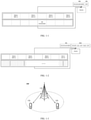
- the PDSCH-to-HARQ-ACK timing set configured for the dynamic transmission by the network side is ⁇ 1,2,3,4,5,6,7,8 ⁇ , then the feedback window corresponding to the HARQ-ACK codebook fed back in slot n is ⁇ n-7,n-6,...n-1 ⁇ , as shown in FIG. 5 .
- Step 2 the terminal side receives the feedback parameter of the SPS transmission and the HARQ-ACK feedback parameter of the dynamic transmission.
- Step 3 the network side activates SPS through downlink control information (Downlink Control Information, DCI).
- DCI Downlink Control Information
- the DCI may include a second HARQ-ACK timing (PDSCH-to-HARQ-ACK timing) set for the second downlink transmission occasion window.
- PDSCH-to-HARQ-ACK timing PDSCH-to-HARQ-ACK timing
- a PDSCH-to-HARQ-ACK timing set is ⁇ 1 ⁇ . Then the network side sends data in slot m, and then detects, in slot m+1, the HARQ-ACK corresponding to all SPS transmission occasions in slot m. For another example, if the time window agreed by the protocol is 2 slots, then the HARQ-ACK corresponding to all SPS transmission occasions in slot m and slot m-1 is detected in slot m+1.
- Step 4 the terminal side receives the DCI, and detects downlink data on a corresponding SPS resource.
- Step 5 the terminal side feeds back on the SPS transmission based on a detection result of step 4 and the feedback parameter of the SPS transmission.
- step 5.1 the terminal side determines a HARQ-ACK feedback format.
- the terminal device receives SPS data in slot m, and then sends, in slot m+x (x is determined by PDSCH-to-HARQ-ACK feedback timing in step 3), the HARQ-ACK corresponding to all SPS transmission occasions within slot m (determined by the size of an SPS feedback window agreed by the protocol).
- the HARQ-ACK corresponding to all SPS transmission occasions in slot m is sent in slot m+x.
- the HARQ-ACK of 7 SPS resources taking SPS with a period of 2 symbols as an example, there are 7 SPS resources in 1 slot
- slot m is fed back in slot m+x. If there is no data transmission on an SPS resource, then a DTX occupation is used. Further, if there is no data transmission on all SPS resources within the feedback window (slot m), then no HARQ-ACK is fed back.
- the HARQ-ACK feedback of the SPS transmission and the dynamic transmission are multiplexed.
- the first part is the HARQ-ACK feedback for the dynamic transmission.
- the feedback content depends on the HARQ-ACK feedback mode and the feedback window of the dynamic transmission (configured in step 1).
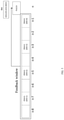
- FIG. 6 shows an example of a dynamic HARQ-ACK codebook, that is, only feeding back for a transmission indicated by DAI/total DAI.
- the second part is the HARQ-ACK feedback for the SPS.
- the feedback format is HARQ-ACK for all SPS transmission occasions within the SPS feedback window (1 slot agreed by the protocol).
- the SPS feedback window is shortened and is smaller than the feedback window of the dynamic transmission, and the HARQ-ACK of the SPS can be fed back in refined segments to avoid excessive concentration of the HARQ-ACK of the SPS and an excessive PUCCH load, which affects PUCCH reliability.
- Step 5.2 the terminal side sends HARQ-ACK feedback content determined in step 5.1.
- Step 6 the network side receives the HARQ-ACK feedback from the terminal side.
- the HARQ-ACK format is the same as that described above.
- the second downlink transmission occasion window corresponding to the third HARQ-ACK codebook is configured by the network side, or agreed by the protocol.
- the size of the second downlink transmission occasion window corresponding to the third HARQ-ACK codebook is configured by the network side or agreed by the protocol.
- the network side also needs to configure the SPS HARQ-ACK, that is, the size of the second downlink transmission occasion window.
- the feedback window may be directly configured or indicated by other parameters.
- the size of the feedback window is determined by the SPS period, and the size of the feedback window is the length of 1 SPS period.
- the network side can configure the size of an SPS HARQ-ACK feedback window according to service transmission and/or PUCCH conditions, thereby optimizing system design.
- the SPS HARQ-ACK feedback window may be 1 subslot (2 symbols), which can also reduce feedback delay of the SPS HARQ-ACK.
- a system is configured with multiple SPS resources, a service or logical channel carried by each SPS resource is independently configured (which may be configured explicitly or implicitly), and HARQ-ACK feedback windows of SPS resources carrying different services or corresponding to different logical channels are independently configured.
- an SPS HARQ-ACK feedback window for carrying an eMBB (VOIP) service is determined by the feedback window of the dynamic transmission.
- a value of an SPS HARQ-ACK feedback window for carrying a URLL service is determined by a network side configuration.
- the SPS HARQ-ACK feedback window for carrying the eMBB (VOIP) service is determined by an eMBB feedback window of the dynamic transmission; the SPS HARQ-ACK feedback window for carrying the URLLC service is determined by a URLLC feedback window of the dynamic transmission.
- VOIP eMBB feedback window
- URLLC URLLC feedback window
- Scenario 2 This scenario is different from scenario 1 in that this scenario focuses on dynamically indicating the length of a feedback window of HARQ-ACK for SPS.
- step 5 The difference from the above scenario is in step 5. Specifically,
- the second downlink transmission occasion window corresponding to the third HARQ-ACK codebook is determined by a second HARQ-ACK timing.
- the terminal device receives SPS data in slot m, and then sends, in slot m+x (x is determined by the PDSCH-to-HARQ-ACK feedback timing in step 3), the HARQ-ACK corresponding to all SPS transmission occasions within slot m (determined by the size of the SPS feedback window agreed by the protocol).
- the HARQ-ACK corresponding to all SPS transmission occasions in slot m is sent in slot m+x.
- the HARQ-ACK of 7 SPS resources taking SPS with a period of 2 symbols as an example, there are 7 SPS resources in 1 slot
- the DTX occupation is used.
- no HARQ-ACK is fed back.
- the HARQ-ACK feedback of the SPS transmission and the dynamic transmission are multiplexed.
- the first part is the HARQ-ACK feedback for the dynamic transmission.
- the feedback content depends on the HARQ-ACK feedback mode and the feedback window of the dynamic transmission (configured in step 1).
- FIG. 4 shows an example of a dynamic HARQ-ACK codebook, that is, only feeding back for a transmission indicated by DAI/total DAI.
- the second part is the HARQ-ACK feedback for the SPS.
- the feedback format is HARQ-ACK for all SPS transmission occasions within the SPS feedback window indicated in a scheduling signaling of the last dynamic transmission.
- Step 5.2 the terminal side sends the HARQ-ACK feedback content determined in step 5.1.
- this embodiment may also provide the following processing.
- Indicating an end position of the second downlink transmission occasion window by a dynamic configuration includes: using n slots before the slot indicated by the dynamic configuration as the second downlink transmission occasion window, where n is an integer greater than or equal to 1.
- a position of the SPS HARQ-ACK feedback window (that is, the second downlink transmission occasion window) is further accurately determined according to a dynamic indication, such as last n SPS resources within m slots.
- a dynamic indication such as last n SPS resources within m slots.
- m slots may be first determined as a candidate downlink transmission occasion window of the SPS using the foregoing method, and then the end position thereof is further indicated through the dynamic configuration, so as to obtain n of them as the second downlink transmission occasion window corresponding to the SPS.
- the SPS HARQ-ACK feedback window is further refinedly indicated, which avoids the HARQ-ACK feedback from being too concentrated, and can adapt to actual transmission situations and avoid/reduce invalid HARQ-ACK feedback.
- the second downlink transmission occasion window further includes: m slots after the slot indicated by the dynamic configuration; m is an integer greater than or equal to 1.
- the feedback format is previous n slots including the current slot indicated in a scheduling signaling for the dynamic transmission (that is, slot m-n to slot m, where slot m is the slot where the scheduling signaling is located, the size of a dynamic feedback window of the SPS HARQ-ACK). If the dynamic feedback window contains multiple scheduling signalings of the dynamic transmission, then a final SPS feedback format is formed by cascading each SPS HARQ-ACK feedback window indicated dynamically.
- the dynamic configuration is: an indication by DCI for scheduling dynamic transmission.
- An implementation thereof may include adding an indication field of the SPS HARQ-ACK feedback window on the basis of the existing DCI; or, the existing DCI field is multiplexed, for example, an MCS field is compressed from 5 bits to 3 bits, and extra 2 bits are used to indicate the SPS HARQ-ACK feedback window.
- the setting of the downlink transmission occasion boxes can be optimized by independently configuring the downlink transmission occasion windows corresponding to multiple combined feedback codebooks, thereby avoiding aggregated feedback of abundant resources, which causes a problem of transmission resources being overloaded and affecting transmission reliability; on the other hand, invalid feedback can be avoided and transmission efficiency is improved.
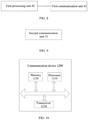
- An embodiment of the present invention provides a terminal device, as shown in FIG. 8 , including: a first processing unit 42, which determines a first HARQ-ACK codebook; where the first HARQ-ACK codebook includes a second HARQ-ACK codebook and/or a third HARQ-ACK codebook that are combined; a downlink transmission occasion window corresponding to the second HARQ-ACK codebook is independent from a downlink transmission occasion window corresponding to the third HARQ-ACK codebook.
- that the downlink transmission occasion window corresponding to the second HARQ-ACK codebook is independent from the downlink transmission occasion window corresponding to the third HARQ-ACK codebook described above may also refer to that: the downlink transmission occasion window corresponding to the second HARQ-ACK codebook is different from the downlink transmission occasion window corresponding to the third HARQ-ACK codebook, or refer to that: both of the downlink transmission occasion window corresponding to the second HARQ-ACK codebook and the downlink transmission occasion window corresponding to the third HARQ-ACK codebook are set independently.
- a first communication unit 41 sends the first HARQ-ACK codebook.
- the second HARQ-ACK codebook is for dynamic transmission, and/or, the third HARQ-ACK codebook is for SPS transmission.
- this embodiment provides a network device, as shown in FIG. 9 , including: a second communication unit 51, which receives the first HARQ-ACK codebook sent by the terminal device; where the first HARQ-ACK codebook includes the second HARQ-ACK codebook and/or the third HARQ-ACK codebook that are combined; the downlink transmission occasion window corresponding to the second HARQ-ACK codebook is independent from the downlink transmission occasion window corresponding to the third HARQ-ACK codebook.
- a first downlink transmission occasion window corresponding to the second HARQ-ACK codebook is determined according to a first HARQ-ACK timing set.
- a second downlink transmission occasion window corresponding to the third HARQ-ACK codebook is configured by a network side or agreed by a protocol.
- a network side configuration includes at least one of the following: a semi-static configuration and a dynamic configuration.
- the first downlink transmission occasion window is all or a part of elements of a set of ⁇ HARQ-ACK feedback slot n - HARQ-ACK timing k ⁇ .
- the downlink transmission occasion window corresponding to the second HARQ-ACK codebook is independent from the downlink transmission occasion window corresponding to the third HARQ-ACK codebook.
- the downlink transmission occasion window corresponding to the third HARQ-ACK codebook is one slot and is smaller than a feedback window of dynamic transmission, and HARQ-ACK of SPS can be fed back in refined segments to avoid excessive concentration of the HARQ-ACK of the SPS and an excessive PUCCH load, which affects PUCCH reliability.
- the second downlink transmission occasion window corresponding to the third HARQ-ACK codebook is configured by the network side, or agreed by the protocol.
- the size of the second downlink transmission occasion window corresponding to the third HARQ-ACK codebook is configured by the network side or agreed by the protocol.
- Scenario 2 This scenario is different from scenario 1 in that this scenario focuses on dynamically indicating the length of a feedback window of HARQ-ACK for SPS.
- the second downlink transmission occasion window corresponding to the third HARQ-ACK codebook is determined by a second HARQ-ACK timing.
- indicating an end position of the second downlink transmission occasion window by a dynamic configuration includes: using n slots before the slot indicated by the dynamic configuration as the second downlink transmission occasion window, where n is an integer greater than or equal to 1.
- a position of an SPS HARQ-ACK feedback window (that is, the second downlink transmission occasion window) is further accurately determined according to a dynamic indication, such as last n SPS resources within m slots.
- a dynamic indication such as last n SPS resources within m slots.
- m slots may be first determined as a candidate downlink transmission occasion windows of SPS using the foregoing method, and then the end position thereof is further indicated through the dynamic configuration, so as to obtain n of them as the second downlink transmission occasion window corresponding to the SPS.
- the SPS HARQ-ACK feedback window is further refinedly indicated, which avoids the HARQ-ACK feedback from being too concentrated, and can adapt to actual transmission situations and avoid/reduce invalid HARQ-ACK feedback.
- the second downlink transmission occasion window further includes: m slots after the slot indicated slot by the dynamic configuration; m is an integer greater than or equal to 1.
- the feedback format is previous n slots including the current slot indicated in a scheduling signaling for the dynamic transmission (that is, slot m-n to slot m, where slot m is the slot where the scheduling signaling is located, the size of a dynamic feedback window of the SPS HARQ-ACK). If the dynamic feedback window contains multiple scheduling signalings of the dynamic transmission, then a final SPS feedback format is formed by cascading each SPS HARQ-ACK feedback window indicated dynamically.
- the dynamic configuration is: an indication by DCI for scheduling dynamic transmission.
- An implementation thereof may include adding an indication field of the SPS HARQ-ACK feedback window on the basis of the existing DCI; or, the existing DCI field is multiplexed, for example, an MCS field is compressed from 5 bits to 3 bits, and extra 2 bits are used to indicate the SPS HARQ-ACK feedback window.
- the setting of the downlink transmission occasion boxes can be optimized by independently configuring the downlink transmission occasion windows corresponding to multiple combined feedback codebooks, thereby avoiding aggregated feedback of abundant resources, which causes a problem of transmission resources being overloaded and affecting transmission reliability; on the other hand, invalid feedback can be avoided and transmission efficiency is improved.
- FIG. 10 is a schematic structural diagram of a communication device 1200 provided by an embodiment of the present application.
- the communication device in this embodiment may be specifically the terminal device or the network device in the foregoing embodiments.
- a communication device 1200 shown in FIG. 12 includes a processor 1210, and the processor 1210 can call and run a computer program from a memory to implement the methods in the embodiments of the present application.
- the communication device 1200 may further include a memory 1220.
- the processor 1210 can call and run a computer program from the memory 1220 to implement the methods in the embodiments of the present application.
- the memory 1220 may be a separate device independent of the processor 1210, or may be integrated in the processor 1210.
- the communication device 1200 may further include a transceiver 1230, and the processor 1210 may control the transceiver 1230 to communicate with other devices, and specifically, to send information or data to other devices, or receive information or data sent by other devices.
- the processor 1210 may control the transceiver 1230 to communicate with other devices, and specifically, to send information or data to other devices, or receive information or data sent by other devices.
- the transceiver 1230 may include a transmitter and a receiver.
- the transceiver 1230 may further include an antenna, and the number of the antenna may be one or more.
- the communication device 1200 may specifically be the terminal device in the embodiments of the present application, and the communication device 1200 may implement corresponding procedures implemented by the mobile terminal/terminal device in the methods of the embodiments of the present application, which will not be repeated here for the sake of brevity.
- FIG. 11 is a schematic structural diagram of a chip of an embodiment of the present application.
- a chip 1300 shown in FIG. 12 includes a processor 1310, and the processor 1310 can call and run a computer program from a memory to implement the methods in the embodiments of the present application.
- the chip 1300 may further include a memory 1320.
- the processor 1310 may call and run a computer program from the memory 1320 to implement the methods in the embodiments of the present application.
- the memory 1320 may be a separate device independent of the processor 1310, or may be integrated in the processor 1310.
- the chip 1300 may further include an input interface 1330.
- the processor 1310 can control the input interface 1330 to communicate with other devices or chips, and specifically, to obtain information or data sent by other devices or chips.
- the chip 1300 may further include an output interface 1340.
- the processor 1310 can control the output interface 1340 to communicate with other devices or chips, and specifically, to output information or data to other devices or chips.
- the chip can be applied to the terminal device or the network device in the embodiments of the present application, and the chip can implement corresponding procedures implemented by the terminal device in the methods of the embodiments of the present application, which will not be repeated here for the sake of brevity.
- the chip mentioned in the embodiments of the present application may also be referred to as a system-level chip, a system-on-chip, an SoC, or a system-on-chip chip, etc.
- the processor may be an integrated circuit chip with the capability of processing signals.
- the steps of the foregoing method embodiments can be completed by an integrated logic circuit in hardware of the processor or by instructions in the form of software.
- the above processor may be a general-purpose processor, a digital signal processor (Digital Signal Processor, DSP), an application specific integrated circuit (Application Specific Integrated Circuit, ASIC), a field programmable gate array (Field Programmable Gate Array, FPGA) or other programmable logic devices, discrete gates or transistor logic devices, discrete hardware components, which can implement or perform the methods, steps, and logical block diagrams disclosed in the embodiments of the present application.
- DSP Digital Signal Processor
- ASIC Application Specific Integrated Circuit
- FPGA Field Programmable Gate Array
- the general-purpose processor may be a microprocessor, or the processor may also be any conventional processor or the like.
- the steps of the methods disclosed in combination with embodiments of the present application can be directly embodied as being executed and completed by a hardware decoding processor, or being executed and completed by a combination of hardware and software modules in a decoding processor.
- the software modules can be located in a storage medium which is mature in the art, such as a random access memory, a flash memory, a read-only memory, a programmable read-only memory, an electrically erasable programmable memory, a register, etc.
- the storage medium is located in a memory, and the processor reads information in the memory and completes the steps of the above methods in combination with hardware thereof.
- the memory in embodiments of the present application may be a volatile memory or a non-volatile memory, or may include both volatile and non-volatile memories.
- the non-volatile memory may be a read-only memory (Read-Only Memory, ROM), a programmable read-only memory (Programmable ROM, PROM), an erasable programmable read-only memory (Erasable PROM, EPROM), an electrically erasable programmable read-only memory (Electrically EPROM, EEPROM) or a flash memory.
- the volatile memory may be a random access memory (Random Access Memory, RAM), which is used as an external cache.
- various RAMs are available, such as a static random access memory (Static RAM, SRAM), a dynamic random access memory (Dynamic RAM, DRAM), a synchronous dynamic random access memory (Synchronous DRAM, SDRAM), a double data rate synchronous dynamic random access memory (Double Data Rate SDRAM, DDR SDRAM), an enhanced synchronous dynamic random access memory (Enhanced SDRAM, ESDRAM), a synchlink dynamic random access memory (Synchlink DRAM, SLDRAM) ) and a direct rambus random access memory (Direct Rambus RAM, DR RAM).
- static random access memory Static RAM, SRAM
- DRAM dynamic random access memory
- DRAM synchronous dynamic random access memory
- SDRAM double data rate synchronous dynamic random access memory
- Enhanced SDRAM, ESDRAM enhanced synchronous dynamic random access memory
- Synchlink DRAM, SLDRAM synchlink dynamic random access memory
- Direct Rambus RAM Direct Rambus RAM
- the memory in embodiments of the present application may also be a static random access memory (static RAM, SRAM), a dynamic random access memory (dynamic RAM, DRAM), a synchronous dynamic random access memory (synchronous DRAM, SDRAM), a double data rate synchronous dynamic random access memory (double data rate SDRAM, DDR SDRAM), an enhanced synchronous dynamic random access memory (enhanced SDRAM, ESDRAM), a synch link dynamic random access memory (synch link DRAM, SLDRAM) ) and a direct rambus random access memory (Direct Rambus RAM, DR RAM), etc.
- static random access memory static random access memory
- DRAM dynamic random access memory
- DRAM dynamic random access memory
- SDRAM synchronous dynamic random access memory
- double data rate SDRAM double data rate SDRAM
- DDR SDRAM double data rate SDRAM
- ESDRAM enhanced synchronous dynamic random access memory
- synch link dynamic random access memory synch link dynamic random access memory
- DRAM direct rambus random access memory
- DR RAM direct rambus random access memory
- FIG. 12 is a schematic block diagram of a communication system 1400 according to an embodiment of the present application. As shown in FIG. 12 , the communication system 1400 includes a terminal device 1410 and a network device 1420.
- the terminal device 1410 can be used to implement corresponding functions implemented by the terminal device in the above methods, and the network device 1420 can be used to implement corresponding functions implemented by the network device in the above methods, which will not be repeated here for the sake of brevity.
- An embodiment of the present application also provides a computer-readable storage medium for storing computer programs.
- the computer-readable storage medium may be applied to the network device in the embodiments of the present application, and the computer program causes a computer to execute corresponding procedures implemented by the network device in the methods of the embodiments of the present application, which will not be repeated here for the sake of brevity.
- the computer-readable storage medium may be applied to the terminal device in the embodiments of the present application, and the computer program causes a computer to execute corresponding procedures implemented by the mobile terminal/terminal device in the methods of the embodiments of the present application, which will not be repeated here for the sake of brevity.
- An embodiment of the present application also provide a computer program product, including computer program instructions.
- the computer program product may be applied to the network device in the embodiments of the present application, and the computer program instructions cause a computer to execute corresponding procedures implemented by the network device in the methods of the embodiments of the present application, which will not be repeated here for brevity.
- the computer program product may be applied to the mobile terminal/terminal device in the embodiments of the present application, and the computer program instructions cause a computer to execute corresponding procedures implemented by the mobile terminal/terminal device in the methods of the embodiments of the present application, which will not be repeated here for the sake of brevity.
- An embodiment of the present application also provides a computer program.
- the computer program may be applied to the network device in the embodiments of the present application.
- a computer is caused to execute corresponding procedures implemented by the network device in the methods of the embodiments of the present application, which will not be repeated here for the sake of brevity.
- the computer program may be applied to the mobile terminal/terminal device in the embodiments of the present application.
- the computer program runs on a computer, the computer is caused to execute corresponding procedures implemented by the mobile terminal/terminal device in the methods of the embodiments of the present application, which will not be repeated here for the sake of brevity.
- the systems, the apparatuses and the methods disclosed in the several embodiments provided in the present application may be implemented in other ways.
- the apparatus embodiments described above are merely illustrative.
- the division of the units is merely a logical function division.
- the displayed or discussed mutual coupling or direct coupling or communication connection may be an indirect coupling or communication connection through some interfaces, apparatuses or units, and may be in electrical, mechanical or other forms.
- Units described as separate components may or may not be physically separated, and components displayed as units may or may not be physical units, that is, they may be located in one place, or may be distributed on a plurality of network units. Some or all of the units may be selected according to actual requirements so as to achieve objectives of solutions of the embodiments.
- the various functional units in the various embodiments of the present application may be integrated into one processing unit, or each unit may physically exist alone, or two or more units may be integrated into one unit.
- the functions are implemented in the form of software functional units and sold or used as an independent product, they can be stored in a computer-readable storage medium. Based on this understanding, the essence, or the portion contributing to the prior art, or part of the technical solutions of the present application can be embodied in the form of a software product.
- the computer software product is stored in a storage medium, including several instructions used to cause a computer device (which may be a personal computer, a server, or a network device, etc.) to perform all or parts of the steps of the methods described in the various embodiments of the present application.
- the aforementioned storage medium includes various media that can store program codes, such as a U disk, a mobile hard disk, a read-only memory (Read-Only Memory, ROM), a random access memory (Random Access Memory, RAM), a magnetic disk or an optical disk.
- program codes such as a U disk, a mobile hard disk, a read-only memory (Read-Only Memory, ROM), a random access memory (Random Access Memory, RAM), a magnetic disk or an optical disk.
Landscapes
- Engineering & Computer Science (AREA)
- Signal Processing (AREA)
- Computer Networks & Wireless Communication (AREA)
- Mobile Radio Communication Systems (AREA)
Applications Claiming Priority (1)
| Application Number | Priority Date | Filing Date | Title |
|---|---|---|---|
| PCT/CN2019/085387 WO2020220360A1 (zh) | 2019-04-30 | 2019-04-30 | 一种半静态传输的反馈方法、网络设备、终端设备 |
Publications (2)
| Publication Number | Publication Date |
|---|---|
| EP3965332A1 true EP3965332A1 (de) | 2022-03-09 |
| EP3965332A4 EP3965332A4 (de) | 2022-04-27 |
Family
ID=73029631
Family Applications (1)
| Application Number | Title | Priority Date | Filing Date |
|---|---|---|---|
| EP19927287.3A Pending EP3965332A4 (de) | 2019-04-30 | 2019-04-30 | Rückkopplungsverfahren für semistatische übertragung, netzwerkvorrichtung und endgerät |
Country Status (4)
| Country | Link |
|---|---|
| US (1) | US12170997B2 (de) |
| EP (1) | EP3965332A4 (de) |
| CN (1) | CN113785515A (de) |
| WO (1) | WO2020220360A1 (de) |
Cited By (1)
| Publication number | Priority date | Publication date | Assignee | Title |
|---|---|---|---|---|
| US20230156698A1 (en) * | 2021-11-17 | 2023-05-18 | Qualcomm Incorporated | Indicating a number of empty transmission occasions of a group of semi-persistent transmission occasions |
Families Citing this family (7)
| Publication number | Priority date | Publication date | Assignee | Title |
|---|---|---|---|---|
| CN113785515A (zh) | 2019-04-30 | 2021-12-10 | Oppo广东移动通信有限公司 | 一种半静态传输的反馈方法、网络设备、终端设备 |
| CN111800867B (zh) * | 2019-08-16 | 2023-05-09 | 维沃移动通信有限公司 | 半持续调度物理下行共享信道的反馈方法及终端设备 |
| US11737125B2 (en) * | 2020-03-09 | 2023-08-22 | Qualcomm Incorporated | User equipment feedback reduction for semipersistent scheduling |
| CN115516954B (zh) * | 2020-03-26 | 2025-09-19 | 上海诺基亚贝尔股份有限公司 | 调度释放反馈 |
| US12149480B2 (en) * | 2020-11-11 | 2024-11-19 | Qualcomm Incorporated | NACK-only or ACK-only feedback selection for semi-persistent scheduling configurations |
| US11601967B2 (en) * | 2020-11-25 | 2023-03-07 | Qualcomm Incorporated | Techniques for semi-static codebook design |
| JP7589816B2 (ja) * | 2020-12-21 | 2024-11-26 | 日本電気株式会社 | 端末装置、ネットワーク装置、及び方法 |
Family Cites Families (31)
| Publication number | Priority date | Publication date | Assignee | Title |
|---|---|---|---|---|
| CN101807981B (zh) * | 2010-04-02 | 2015-05-20 | 中兴通讯股份有限公司 | 码本使用的预处理方法及通讯系统 |
| KR102155566B1 (ko) * | 2015-07-01 | 2020-09-14 | 엘지전자 주식회사 | 무선 통신 시스템에서 신호의 전송 방법 및 장치 |
| JP6092347B1 (ja) * | 2015-11-05 | 2017-03-08 | 株式会社Nttドコモ | ユーザ端末、無線基地局及び無線通信方法 |
| WO2017161541A1 (zh) * | 2016-03-24 | 2017-09-28 | 华为技术有限公司 | 下行数据的混合式自动重传请求反馈方法以及装置 |
| DK3455988T3 (da) * | 2016-05-13 | 2021-06-21 | Ericsson Telefon Ab L M | CSI-feedback med flere opløsninger |
| CN120658353A (zh) * | 2017-05-03 | 2025-09-16 | 交互数字专利控股公司 | 用于提升eMBB的HARQ反馈性能的方法和装置 |
| EP3665925B1 (de) * | 2017-08-11 | 2024-01-03 | Lenovo (Beijing) Limited | Verfahren und vorrichtung zur verwendung von redundanten bits in halbstatisch konfiguriertem harq-ack-codebuch |
| CN117318905A (zh) * | 2017-09-29 | 2023-12-29 | 北京三星通信技术研究有限公司 | 上行传输方法和相应设备 |
| WO2019066630A1 (en) * | 2017-09-29 | 2019-04-04 | Samsung Electronics Co., Ltd. | UPLINK TRANSMISSION METHOD AND CORRESPONDING EQUIPMENT |
| CN109639398B (zh) * | 2017-10-09 | 2021-12-31 | 华为技术有限公司 | Harq-ack反馈码本的发送方法、装置及设备 |
| CN110138514B (zh) * | 2018-02-08 | 2020-10-20 | 电信科学技术研究院有限公司 | 一种进行混合自动重传请求反馈的方法和终端 |
| CN110138531B (zh) * | 2018-02-09 | 2021-08-03 | 大唐移动通信设备有限公司 | 混合自动重传请求应答的传输方法及其装置 |
| CN110149173B (zh) * | 2018-02-13 | 2021-03-05 | 电信科学技术研究院有限公司 | 一种半持续调度传输方法、网络侧设备及用户终端 |
| BR112020016671A2 (pt) * | 2018-02-15 | 2020-12-15 | Telefonaktiebolaget Lm Ericsson (Publ) | Manuseio de liberação de sps para livro código de harq-ack dinâmico baseado em grupo de bloco de código |
| CN110351022A (zh) * | 2018-04-03 | 2019-10-18 | 北京展讯高科通信技术有限公司 | 动态harq-ack码本的长度确定方法及装置、存储介质、终端 |
| US20210153204A1 (en) * | 2018-04-04 | 2021-05-20 | Ntt Docomo, Inc. | User terminal and radio base station |
| US11368260B2 (en) * | 2018-05-03 | 2022-06-21 | Mediatek Singapore Pte. Ltd. | Method and apparatus for reporting hybrid automatic repeat request-acknowledge information in mobile communications |
| CN110475359A (zh) * | 2018-05-10 | 2019-11-19 | 北京三星通信技术研究有限公司 | 传输上行控制信息的方法及设备 |
| CN110505697B (zh) * | 2018-05-18 | 2022-04-05 | 大唐移动通信设备有限公司 | 一种混合自动重传请求的传输方法、终端及基站 |
| CN112042142A (zh) * | 2018-06-28 | 2020-12-04 | Oppo广东移动通信有限公司 | 传输反馈信息的方法和计算机可读存储介质 |
| EP3852292A4 (de) * | 2018-09-13 | 2021-09-15 | Guangdong Oppo Mobile Telecommunications Corp., Ltd. | Verfahren zur bestimmung eines harq-ack-codebuchs, endgerät und netzwerkvorrichtung |
| CN110943805B (zh) * | 2018-09-21 | 2021-06-04 | 电信科学技术研究院有限公司 | 一种harq-ack的传输方法、终端设备及网络设备 |
| US11503587B2 (en) * | 2018-12-20 | 2022-11-15 | Qualcomm Incorporated | Semi-persistent scheduling with multiple transmit-receive points |
| WO2020034533A1 (en) * | 2018-12-21 | 2020-02-20 | Zte Corporation | Hybrid automatic repeat request acknowledgement (harq-ack) feedback techniques |
| KR102640665B1 (ko) * | 2019-01-21 | 2024-02-27 | 엘지전자 주식회사 | 무선통신시스템에서 사이드링크 harq 피드백을 전송하는 방법 |
| US10993141B2 (en) * | 2019-02-20 | 2021-04-27 | Asustek Computer Inc. | Method and apparatus for handling sidelink and uplink HARQ-ACK feedback in a wireless communication system |
| US20220166541A1 (en) * | 2019-03-22 | 2022-05-26 | Ntt Docomo, Inc. | User terminal and radio communication method |
| WO2020194459A1 (ja) * | 2019-03-25 | 2020-10-01 | 株式会社Nttドコモ | ユーザ端末及び無線通信方法 |
| WO2020194514A1 (ja) * | 2019-03-26 | 2020-10-01 | 株式会社Nttドコモ | ユーザ端末及び無線通信方法 |
| US12550140B2 (en) * | 2019-03-30 | 2026-02-10 | Lg Electronics Inc. | Method for transmitting HARQ-ACK codebook, user equipment, device and storage medium, method for receiving HARQ-ACK codebook, and base station |
| CN113785515A (zh) | 2019-04-30 | 2021-12-10 | Oppo广东移动通信有限公司 | 一种半静态传输的反馈方法、网络设备、终端设备 |
-
2019
- 2019-04-30 CN CN201980095961.6A patent/CN113785515A/zh active Pending
- 2019-04-30 WO PCT/CN2019/085387 patent/WO2020220360A1/zh not_active Ceased
- 2019-04-30 EP EP19927287.3A patent/EP3965332A4/de active Pending
-
2021
- 2021-10-29 US US17/515,221 patent/US12170997B2/en active Active
Cited By (2)
| Publication number | Priority date | Publication date | Assignee | Title |
|---|---|---|---|---|
| US20230156698A1 (en) * | 2021-11-17 | 2023-05-18 | Qualcomm Incorporated | Indicating a number of empty transmission occasions of a group of semi-persistent transmission occasions |
| US12238709B2 (en) * | 2021-11-17 | 2025-02-25 | Qualcomm Incorporated | Indicating a number of empty transmission occasions of a group of semi-persistent transmission occasions |
Also Published As
| Publication number | Publication date |
|---|---|
| EP3965332A4 (de) | 2022-04-27 |
| US20220053535A1 (en) | 2022-02-17 |
| US12170997B2 (en) | 2024-12-17 |
| CN113785515A (zh) | 2021-12-10 |
| WO2020220360A1 (zh) | 2020-11-05 |
Similar Documents
| Publication | Publication Date | Title |
|---|---|---|
| US12170997B2 (en) | Feedback method for semi-static transmission, network device and terminal device | |
| US11984994B2 (en) | HARQ-ACK sending method, receiving method, terminal and base station | |
| US11552749B2 (en) | Data transmission method and terminal device | |
| US20250048082A1 (en) | Delaying Transmission Depending on Transmission Type and UE Processing Capabilities | |
| US11570786B2 (en) | Wireless communication method and device | |
| EP3993535B1 (de) | Multiplexing einer überlappenden pucch-übertragung | |
| US9826544B2 (en) | Method for use in wireless communication device reporting ACK/NACK in dynamic TDD configurations, wireless communication device, and computer-readable product | |
| WO2020248101A1 (zh) | 上报csi的方法和终端设备 | |
| WO2021088260A1 (zh) | 传输反馈信息的方法、终端设备和网络设备 | |
| KR102687984B1 (ko) | 데이터를 전송하는 방법, 네트워크 장치와 단말 장치 | |
| US11057104B2 (en) | Information transmission method and apparatus | |
| US20220256578A1 (en) | Method and Apparatus for Overhead Reduction for Configured Grant Based Uplink Transmission | |
| JP2022546903A (ja) | Harqコードブック決定方法及び装置、端末装置、ネットワーク装置 | |
| KR20210149843A (ko) | Harq 코드북 결정 방법, 단말 장치 및 네트워크 장치 | |
| CN119895761A (zh) | 一种无线通信方法及装置、设备、存储介质 | |
| US20180102891A1 (en) | Determination of Feedback Timing | |
| IL263647A (en) | Method, device and computer program product for determination of feedback timing in a wireless communications network |
Legal Events
| Date | Code | Title | Description |
|---|---|---|---|
| STAA | Information on the status of an ep patent application or granted ep patent |
Free format text: STATUS: THE INTERNATIONAL PUBLICATION HAS BEEN MADE |
|
| PUAI | Public reference made under article 153(3) epc to a published international application that has entered the european phase |
Free format text: ORIGINAL CODE: 0009012 |
|
| STAA | Information on the status of an ep patent application or granted ep patent |
Free format text: STATUS: REQUEST FOR EXAMINATION WAS MADE |
|
| 17P | Request for examination filed |
Effective date: 20211130 |
|
| AK | Designated contracting states |
Kind code of ref document: A1 Designated state(s): AL AT BE BG CH CY CZ DE DK EE ES FI FR GB GR HR HU IE IS IT LI LT LU LV MC MK MT NL NO PL PT RO RS SE SI SK SM TR |
|
| A4 | Supplementary search report drawn up and despatched |
Effective date: 20220329 |
|
| RIC1 | Information provided on ipc code assigned before grant |
Ipc: H04L 1/16 20060101ALI20220323BHEP Ipc: H04L 5/00 20060101ALI20220323BHEP Ipc: H04L 1/18 20060101AFI20220323BHEP |
|
| DAV | Request for validation of the european patent (deleted) | ||
| DAX | Request for extension of the european patent (deleted) | ||
| STAA | Information on the status of an ep patent application or granted ep patent |
Free format text: STATUS: EXAMINATION IS IN PROGRESS |
|
| 17Q | First examination report despatched |
Effective date: 20230630 |