EP3965657B1 - Vermittlung von in-vivo-analytsignalabnahme - Google Patents
Vermittlung von in-vivo-analytsignalabnahme Download PDFInfo
- Publication number
- EP3965657B1 EP3965657B1 EP20802211.1A EP20802211A EP3965657B1 EP 3965657 B1 EP3965657 B1 EP 3965657B1 EP 20802211 A EP20802211 A EP 20802211A EP 3965657 B1 EP3965657 B1 EP 3965657B1
- Authority
- EP
- European Patent Office
- Prior art keywords
- acid
- sensor
- compounds
- dithio
- thio
- Prior art date
- Legal status (The legal status is an assumption and is not a legal conclusion. Google has not performed a legal analysis and makes no representation as to the accuracy of the status listed.)
- Active
Links
Images
Classifications
-
- A—HUMAN NECESSITIES
- A61—MEDICAL OR VETERINARY SCIENCE; HYGIENE
- A61B—DIAGNOSIS; SURGERY; IDENTIFICATION
- A61B5/00—Measuring for diagnostic purposes; Identification of persons
- A61B5/145—Measuring characteristics of blood in vivo, e.g. gas concentration or pH-value ; Measuring characteristics of body fluids or tissues, e.g. interstitial fluid or cerebral tissue
- A61B5/1468—Measuring characteristics of blood in vivo, e.g. gas concentration or pH-value ; Measuring characteristics of body fluids or tissues, e.g. interstitial fluid or cerebral tissue using chemical or electrochemical methods, e.g. by polarographic means
- A61B5/1473—Measuring characteristics of blood in vivo, e.g. gas concentration or pH-value ; Measuring characteristics of body fluids or tissues, e.g. interstitial fluid or cerebral tissue using chemical or electrochemical methods, e.g. by polarographic means invasive, e.g. introduced into the body by a catheter
- A61B5/14735—Measuring characteristics of blood in vivo, e.g. gas concentration or pH-value ; Measuring characteristics of body fluids or tissues, e.g. interstitial fluid or cerebral tissue using chemical or electrochemical methods, e.g. by polarographic means invasive, e.g. introduced into the body by a catheter comprising an immobilised reagent
-
- A—HUMAN NECESSITIES
- A61—MEDICAL OR VETERINARY SCIENCE; HYGIENE
- A61B—DIAGNOSIS; SURGERY; IDENTIFICATION
- A61B5/00—Measuring for diagnostic purposes; Identification of persons
- A61B5/145—Measuring characteristics of blood in vivo, e.g. gas concentration or pH-value ; Measuring characteristics of body fluids or tissues, e.g. interstitial fluid or cerebral tissue
- A61B5/14532—Measuring characteristics of blood in vivo, e.g. gas concentration or pH-value ; Measuring characteristics of body fluids or tissues, e.g. interstitial fluid or cerebral tissue for measuring glucose, e.g. by tissue impedance measurement
-
- A—HUMAN NECESSITIES
- A61—MEDICAL OR VETERINARY SCIENCE; HYGIENE
- A61B—DIAGNOSIS; SURGERY; IDENTIFICATION
- A61B5/00—Measuring for diagnostic purposes; Identification of persons
- A61B5/145—Measuring characteristics of blood in vivo, e.g. gas concentration or pH-value ; Measuring characteristics of body fluids or tissues, e.g. interstitial fluid or cerebral tissue
- A61B5/1455—Measuring characteristics of blood in vivo, e.g. gas concentration or pH-value ; Measuring characteristics of body fluids or tissues, e.g. interstitial fluid or cerebral tissue using optical sensors, e.g. spectral photometrical oximeters
- A61B5/1459—Measuring characteristics of blood in vivo, e.g. gas concentration or pH-value ; Measuring characteristics of body fluids or tissues, e.g. interstitial fluid or cerebral tissue using optical sensors, e.g. spectral photometrical oximeters invasive, e.g. introduced into the body by a catheter
-
- A—HUMAN NECESSITIES
- A61—MEDICAL OR VETERINARY SCIENCE; HYGIENE
- A61B—DIAGNOSIS; SURGERY; IDENTIFICATION
- A61B5/00—Measuring for diagnostic purposes; Identification of persons
- A61B5/68—Arrangements of detecting, measuring or recording means, e.g. sensors, in relation to patient
- A61B5/6846—Arrangements of detecting, measuring or recording means, e.g. sensors, in relation to patient specially adapted to be brought in contact with an internal body part, i.e. invasive
- A61B5/6847—Arrangements of detecting, measuring or recording means, e.g. sensors, in relation to patient specially adapted to be brought in contact with an internal body part, i.e. invasive mounted on an invasive device
- A61B5/686—Permanently implanted devices, e.g. pacemakers, other stimulators, biochips
-
- A—HUMAN NECESSITIES
- A61—MEDICAL OR VETERINARY SCIENCE; HYGIENE
- A61L—METHODS OR APPARATUS FOR STERILISING MATERIALS OR OBJECTS IN GENERAL; DISINFECTION, STERILISATION OR DEODORISATION OF AIR; CHEMICAL ASPECTS OF BANDAGES, DRESSINGS, ABSORBENT PADS OR SURGICAL ARTICLES; MATERIALS FOR BANDAGES, DRESSINGS, ABSORBENT PADS OR SURGICAL ARTICLES
- A61L31/00—Materials for other surgical articles, e.g. stents, stent-grafts, shunts, surgical drapes, guide wires, materials for adhesion prevention, occluding devices, surgical gloves, tissue fixation devices
- A61L31/04—Macromolecular materials
- A61L31/041—Mixtures of macromolecular compounds
-
- A—HUMAN NECESSITIES
- A61—MEDICAL OR VETERINARY SCIENCE; HYGIENE
- A61L—METHODS OR APPARATUS FOR STERILISING MATERIALS OR OBJECTS IN GENERAL; DISINFECTION, STERILISATION OR DEODORISATION OF AIR; CHEMICAL ASPECTS OF BANDAGES, DRESSINGS, ABSORBENT PADS OR SURGICAL ARTICLES; MATERIALS FOR BANDAGES, DRESSINGS, ABSORBENT PADS OR SURGICAL ARTICLES
- A61L31/00—Materials for other surgical articles, e.g. stents, stent-grafts, shunts, surgical drapes, guide wires, materials for adhesion prevention, occluding devices, surgical gloves, tissue fixation devices
- A61L31/08—Materials for coatings
- A61L31/10—Macromolecular materials
-
- A—HUMAN NECESSITIES
- A61—MEDICAL OR VETERINARY SCIENCE; HYGIENE
- A61L—METHODS OR APPARATUS FOR STERILISING MATERIALS OR OBJECTS IN GENERAL; DISINFECTION, STERILISATION OR DEODORISATION OF AIR; CHEMICAL ASPECTS OF BANDAGES, DRESSINGS, ABSORBENT PADS OR SURGICAL ARTICLES; MATERIALS FOR BANDAGES, DRESSINGS, ABSORBENT PADS OR SURGICAL ARTICLES
- A61L31/00—Materials for other surgical articles, e.g. stents, stent-grafts, shunts, surgical drapes, guide wires, materials for adhesion prevention, occluding devices, surgical gloves, tissue fixation devices
- A61L31/14—Materials characterised by their function or physical properties, e.g. injectable or lubricating compositions, shape-memory materials, surface modified materials
- A61L31/145—Hydrogels or hydrocolloids
-
- C—CHEMISTRY; METALLURGY
- C07—ORGANIC CHEMISTRY
- C07C—ACYCLIC OR CARBOCYCLIC COMPOUNDS
- C07C323/00—Thiols, sulfides, hydropolysulfides or polysulfides substituted by halogen, oxygen or nitrogen atoms, or by sulfur atoms not being part of thio groups
- C07C323/50—Thiols, sulfides, hydropolysulfides or polysulfides substituted by halogen, oxygen or nitrogen atoms, or by sulfur atoms not being part of thio groups containing thio groups and carboxyl groups bound to the same carbon skeleton
- C07C323/51—Thiols, sulfides, hydropolysulfides or polysulfides substituted by halogen, oxygen or nitrogen atoms, or by sulfur atoms not being part of thio groups containing thio groups and carboxyl groups bound to the same carbon skeleton having the sulfur atoms of the thio groups bound to acyclic carbon atoms of the carbon skeleton
- C07C323/52—Thiols, sulfides, hydropolysulfides or polysulfides substituted by halogen, oxygen or nitrogen atoms, or by sulfur atoms not being part of thio groups containing thio groups and carboxyl groups bound to the same carbon skeleton having the sulfur atoms of the thio groups bound to acyclic carbon atoms of the carbon skeleton the carbon skeleton being acyclic and saturated
-
- C—CHEMISTRY; METALLURGY
- C07—ORGANIC CHEMISTRY
- C07C—ACYCLIC OR CARBOCYCLIC COMPOUNDS
- C07C323/00—Thiols, sulfides, hydropolysulfides or polysulfides substituted by halogen, oxygen or nitrogen atoms, or by sulfur atoms not being part of thio groups
- C07C323/50—Thiols, sulfides, hydropolysulfides or polysulfides substituted by halogen, oxygen or nitrogen atoms, or by sulfur atoms not being part of thio groups containing thio groups and carboxyl groups bound to the same carbon skeleton
- C07C323/51—Thiols, sulfides, hydropolysulfides or polysulfides substituted by halogen, oxygen or nitrogen atoms, or by sulfur atoms not being part of thio groups containing thio groups and carboxyl groups bound to the same carbon skeleton having the sulfur atoms of the thio groups bound to acyclic carbon atoms of the carbon skeleton
- C07C323/56—Thiols, sulfides, hydropolysulfides or polysulfides substituted by halogen, oxygen or nitrogen atoms, or by sulfur atoms not being part of thio groups containing thio groups and carboxyl groups bound to the same carbon skeleton having the sulfur atoms of the thio groups bound to acyclic carbon atoms of the carbon skeleton the carbon skeleton containing six-membered aromatic rings
-
- C—CHEMISTRY; METALLURGY
- C08—ORGANIC MACROMOLECULAR COMPOUNDS; THEIR PREPARATION OR CHEMICAL WORKING-UP; COMPOSITIONS BASED THEREON
- C08K—Use of inorganic or non-macromolecular organic substances as compounding ingredients
- C08K5/00—Use of organic ingredients
- C08K5/36—Sulfur-, selenium-, or tellurium-containing compounds
- C08K5/37—Thiols
-
- A—HUMAN NECESSITIES
- A61—MEDICAL OR VETERINARY SCIENCE; HYGIENE
- A61B—DIAGNOSIS; SURGERY; IDENTIFICATION
- A61B2562/00—Details of sensors; Constructional details of sensor housings or probes; Accessories for sensors
- A61B2562/12—Manufacturing methods specially adapted for producing sensors for in-vivo measurements
-
- A—HUMAN NECESSITIES
- A61—MEDICAL OR VETERINARY SCIENCE; HYGIENE
- A61B—DIAGNOSIS; SURGERY; IDENTIFICATION
- A61B2562/00—Details of sensors; Constructional details of sensor housings or probes; Accessories for sensors
- A61B2562/18—Shielding or protection of sensors from environmental influences, e.g. protection from mechanical damage
Definitions
- the present invention relates generally to continuous reduction of in vivo degradation of analyte sensor moieties when measuring an analyte in a medium of a living animal using a system including a sensor implanted (partially or fully) or inserted into the living animal.
- the present invention relates to a sensor that utilizes one or more additives, which may be incorporated within an analyte indicator and/or a material covering at least a portion of the analyte indicator.
- a sensor may be implanted (partially or fully) within a living animal (e.g., a human) and used to measure an analyte (e.g. , glucose, oxygen, cardiac markers, low-density lipoprotein (LDL), high-density lipoprotein (HDL), or triglycerides) in a medium (e.g ., interstitial fluid (ISF), blood, or intraperitoneal fluid) within the living animal.
- analyte e.g. , glucose, oxygen, cardiac markers, low-density lipoprotein (LDL), high-density lipoprotein (HDL), or triglycerides
- LDL low-density lipoprotein
- HDL high-density lipoprotein
- triglycerides e.g., triglycerides
- the sensor may include a light source (e.g., a light-emitting diode (LED) or other light emitting element), indicator molecules, and a photodetector (e.g ., a photodiode, phototransistor, photoresistor or other photosensitive element).
- a light source e.g., a light-emitting diode (LED) or other light emitting element
- indicator molecules e.g., a light-emitting diode (LED) or other light emitting element
- a photodetector e.g ., a photodiode, phototransistor, photoresistor or other photosensitive element. Examples of implantable sensors employing indicator molecules to measure an analyte are described in U. S. Pat. Nos. 5,517,313 and 5,512,246 .
- a sensor may include an analyte indicator, which may be in the form of indicator molecules embedded in a graft ( i.e., layer or matrix).
- indicator molecules may reversibly bind glucose and, when irradiated with excitation light (e.g., light having a wavelength of approximately 378 nm), emit an amount of light (e.g., light in the range of 400 to 500 nm) that depends on whether glucose is bound to the indicator molecule.
- a sensor is implanted in the body of a living animal, the animal's immune system may begin to attack the sensor. For instance, if a sensor is implanted in a human, white blood cells may attack the sensor as a foreign body, and, in the initial immune system onslaught, neutrophils may be the primary white blood cells attacking the sensor.
- the defense mechanism of neutrophils includes the release of highly caustic substances known as reactive oxygen species.
- the reactive oxygen species include, for example, hydrogen peroxide.
- Hydrogen peroxide and other reactive species such as reactive oxygen and nitrogen species may degrade the indicator molecules of an analyte indicator.
- hydrogen peroxide may degrade the indicator molecules by oxidizing the boronate group, thus disabling the ability of the indicator molecule to bind glucose.
- US 2015/057509 Al discloses an optical sensor comprising a sensor housing, an analyte indicator covering at least a portion of the sensor housing, and one or more therapeutic agents.
- the one or more therapeutic agents may reduce deterioration of the analyte indicator.
- the one or more therapeutic agents may be incorporated within the analyte indicator, a membrane covering at least a portion of the analyte indicator, and/or one or more drug eluting polymer matrices, which may be external to or within the sensor housing.
- US 2011/236989 Al discloses analyte sensors having antioxidant protection. By combining antioxidant and/or scavenger agents into polymer matrices that contain sensor moieties, the sensor moieties are protected from reactive oxygen species. Also disclosed are methods of making analyte sensors and methods of inhibiting oxidative degradation of sensing components in hydrated, polymerized analyte sensor systems.
- the present invention overcomes the disadvantages of prior systems by providing, among other advantages, reduced analyte indicator degradation.
- One aspect of the present invention provides a sensor as defined in claim 1 that may be for implantation or insertion within a living animal and measurement of an analyte in a medium within the living animal.
- the senor may include at least one additive-containing polymer graft, and the one or more additives may be co-polymerized with or dispersed within the additive-containing polymer graft.
- the additive-containing polymer graft may cover at least a portion of the sensor housing. In some embodiments, the additive-containing polymer graft may be within the sensor housing.
- the one or more additives may be incorporated with the analyte indicator, e.g., as a co-monomer.
- the sensor may include a material, e.g., a membrane, covering at least a portion of the analyte indicator, and the one or more additives are incorporated within the material.
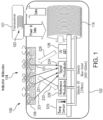
- FIG. 1 is a schematic view of a sensor system embodying aspects of the present invention.
- the system may include a sensor 100 and an external transceiver 101.
- the sensor 100 may be an implantable sensor configured to be fully or partially implanted in a living animal ( e.g., a living human).
- the sensor 100 may be implanted, for example, in a living animal's arm, wrist, leg, abdomen, peritoneum, or other region of the living animal suitable for sensor implantation.
- the sensor 100 may be implanted beneath the skin ( i.e., in the subcutaneous or peritoneal tissues).
- the sensor 100 may be a transcutaneous sensor.
- a transceiver 101 may be an electronic device that communicates with the sensor 100 to power the sensor 100, provide commands and/or data to the sensor 100, and/or receive data from the sensor 100.
- the received data may include one or more sensor measurements.
- the sensor measurements may include, for example and without limitation, one or more light measurements from one or more photodetectors of the sensor 100 and/or one or more temperature measurements from one or more temperature sensors of the sensor 100.
- the transceiver 101 may calculate analyte (e.g., glucose) concentrations from the measurement information received from the sensor 100.
- the transceiver 101 may be a handheld device or an on-body/wearable device.
- the transceiver 101 may be held in place by a band (e.g., an armband or wristband) and/or adhesive, and the transceiver 101 may convey ( e.g ., periodically, such as every two minutes, and/or upon user initiation) measurement commands (i.e., requests for measurement information) to the sensor 100.
- a band e.g., an armband or wristband
- measurement commands i.e., requests for measurement information
- the transceiver 101 is a handheld device, positioning (i.e., hovering or swiping/waving/passing) the transceiver 101 within range over the sensor implant site ( i.e., within proximity of the sensor 100) may cause the transceiver 101 to automatically convey a measurement command to the sensor 100 and receive a data from the sensor 100.
- the transceiver 101 may include an inductive element 103, such as, for example, a coil.
- the transceiver 101 may generate an electromagnetic wave or electrodynamic field ( e.g., by using a coil) to induce a current in an inductive element 114 of the sensor 100.
- the sensor 100 may use the current induced in the inductive element 114 to power the sensor 100.
- the sensor 100 may be powered by an internal power source (e.g., a battery).
- the transceiver 101 may convey data (e.g ., commands) to the sensor 100.
- the transceiver 101 may convey data by modulating the electromagnetic wave generated by the inductive element 103 (e.g ., by modulating the current flowing through the inductive element 103 of the transceiver 101).
- the sensor 100 may detect/extract the modulation in the electromagnetic wave generated by the transceiver 101.
- the transceiver 101 may receive data (e.g., one or more sensor measurements) from the sensor 100.
- the transceiver 101 may receive data by detecting modulations in the electromagnetic wave generated by the sensor 100, e.g ., by detecting modulations in the current flowing through the inductive element 103 of the transceiver 101.
- the sensor 100 may include a sensor housing 102 (i.e., body, shell, capsule, or encasement), which may be rigid and biocompatible.
- sensor housing 102 may be formed from a suitable, optically transmissive polymer material, such as, for example, acrylic polymers (e.g ., polymethylmethacrylate (PMMA).
- the sensor 100 may include an analyte indicator 106.
- the analyte indicator 106 may be a polymer graft coated, diffused, adhered, or embedded on at least a portion of the exterior surface of the sensor housing 102.
- the analyte indicator 106 e.g ., polymer graft
- the analyte indicator 106 may be disposed on the outer surface of the sensor housing 102 in other ways, such as by deposition or adhesion.
- the analyte indicator 106 may be a fluorescent glucose indicating polymer.
- the polymer is biocompatible and stable, grafted onto the surface of sensor housing 102, designed to allow for the direct measurement of glucose in interstitial fluid (ISF), blood, or intraperitoneal fluid after implantation of the sensor 100.
- the analyte indicator 106 may be a hydrogel.
- the analyte indicator 106 (e.g. , polymer graft) of the sensor 100 may include indicator molecules 104.
- the indicator molecules 104 may be distributed throughout the entire analyte indicator 106 or only throughout one or more portions of the analyte indicator 106.
- the indicator molecules 104 may be fluorescent indicator molecules (e.g., TFM having the chemical name 9-[N-[6-(4,4,5,5,-tetramethyl-1,3,2-dioxaborolano)-3-(trifluoromethyl)benzyl]-N-[3-(methacrylamido)propylamino]methyl]-10-[N-[6-(4,4,5,5,-tetramethyl-1,3,2-dioxaborolano)-3-(trifluoromethyl)benzyl]-N-[2-(carboxyethyl)amino]methyl]anthracene sodium salt) or light absorbing, non-fluorescent indicator molecules.
- TFM fluorescent indicator molecules
- the indicator molecules 104 may reversibly bind an analyte (e.g., glucose, oxygen, cardiac markers, low-density lipoprotein (LDL), high-density lipoprotein (HDL), or triglycerides).
- an analyte e.g., glucose, oxygen, cardiac markers, low-density lipoprotein (LDL), high-density lipoprotein (HDL), or triglycerides.
- an analyte e.g., glucose, oxygen, cardiac markers, low-density lipoprotein (LDL), high-density lipoprotein (HDL), or triglycerides.
- an analyte e.g., glucose, oxygen, cardiac markers, low-density lipoprotein (LDL), high-density lipoprotein (HDL), or triglycerides.
- the indicator molecule 104 may become fluorescent, in which case the indicator molecule 104 is capable of absorbing (or being excited by)
- the sensor 100 may include a light source 108, which may be, for example, a light emitting diode (LED) or other light source that emits radiation, including radiation over a range of wavelengths that interact with the indicator molecules 104.
- the light source 108 may emit the excitation light 329 that is absorbed by the indicator molecules in the matrix layer/polymer 104.
- the light source 108 may emit excitation light 329 at a wavelength of approximately 378 nm.
- the senor 100 may also include one or more photodetectors (e.g. , photodiodes, phototransistors, photoresistors or other photosensitive elements).
- photodetectors e.g. , photodiodes, phototransistors, photoresistors or other photosensitive elements.
- sensor 100 has a first photodetector 224 and a second photodetector 226.
- this is not required, and, in some alternative embodiments, the sensor 100 may only include the first photodetector 224.
- the one or more photodetectors may be sensitive to fluorescent light emitted by the indicator molecules 104 such that a signal is generated by a photodetector (e.g ., photodetector 224) in response thereto that is indicative of the level of fluorescence of the indicator molecules and, thus, the amount of analyte of interest (e.g ., glucose).
- a photodetector e.g ., photodetector 224
- the amount of analyte of interest e.g ., glucose
- the excitation light 329 emitted by the light source 108 may be reflected from the analyte indicator 106 back into the sensor 100 as reflection light 333, and some part of the absorbed excitation light may be emitted as emitted (fluoresced) light 331.
- the emitted light 331 may have a different wavelength than the wavelength of the excitation light 329.
- the reflected light 333 and emitted (fluoresced) light 331 may be absorbed by the one or more photodetectors (e.g ., first and second photodetectors 224 and 226) within the body of the sensor 100.
- Each of the one or more photodetectors may be covered by a filter 112 (see FIG. 3 ) that allows only a certain subset of wavelengths of light to pass through.
- the one or more filters 112 may be thin glass filters.
- the one or more filters 112 may be thin film (e.g., dichroic) filters deposited on the glass and may pass only a narrow band of wavelengths and otherwise reflect most of the received light.
- the filters may be thin film (dichroic) filters deposited directly onto the photo detectors and may pass only a narrow band of wavelengths and otherwise reflect most of the light received thereby.
- the filters 112 may be identical (e.g. , both filters 112 may allow signals to pass) or different ( e.g ., one filter 112 may be a reference filter and another filter 112 may be a signal filter).
- the second (reference) photodetector 226 may be covered by a reference photodiode filter that passes light at the same wavelength as is emitted from the light source 108 (e.g., 378 nm).
- the first (signal) photodetector 224 may detect the amount of fluoresced light 331 that is emitted from the molecules 104 in the analyte indicator 106.
- the peak emission of the indicator molecules 104 may occur around 435 nm, and the first photodetector 224 may be covered by a signal filter that passes light in the range of about 400 nm to 500 nm.
- higher glucose levels/concentrations correspond to a greater amount of fluorescence of the molecules 104 in the analyte indicator 106, and, therefore, a greater number of photons striking the first photodetector 224.
- the sensor 100 may include a substrate 116.
- the substrate 116 may be a circuit board (e.g., a printed circuit board (PCB) or flexible PCB) on which circuit components (e.g ., analog and/or digital circuit components) may be mounted or otherwise attached.
- the substrate 116 may be a semiconductor substrate having circuitry fabricated therein.
- the circuitry may include analog and/or digital circuitry.
- circuitry in addition to the circuitry fabricated in the semiconductor substrate, circuitry may be mounted or otherwise attached to the semiconductor substrate 116.
- a portion or all of the circuitry which may include discrete circuit elements, an integrated circuit (e.g., an application specific integrated circuit (ASIC)) and/or other electronic components, may be fabricated in the semiconductor substrate 116 with the remainder of the circuitry is secured to the semiconductor substrate 116, which may provide communication paths between the various secured components.
- ASIC application specific integrated circuit
- the one or more of the sensor housing 102, analyte indicator 106, indicator molecules 104, light source 108, photodetectors 224, 226, temperature transducer 670, substrate 116, and inductive element 114 of sensor 100 may include some or all of the features described in one or more of U.S. Application Serial No. 13/761,839, filed on February 7, 2013 , U.S. Application Serial No. 13/937,871, filed on July 9, 2013 , U.S. Application Serial No. 13/650,016, filed on October 11, 2012 , U.S. 9,681,824 (Colvin and Jiang ), and U.S. 9,427,181 (Emken et al ).
- the structure and/or function of the sensor 100 and/or transceiver 101 may be as described in one or more of U.S. Application Serial Nos. 13/761,839 , 13/937,871 , and 13/650,016 .
- the senor 100 may include a transceiver interface device, and the transceiver 101 may include a sensor interface device.
- the transceiver interface device may include the inductive element 114 of the sensor 100, and the sensor interface device may include the inductive element 103 of the transceiver 101.
- the transceiver interface device and sensor interface device may include the wired connection.
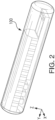
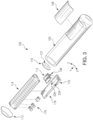
- FIGS. 2 and 3 illustrate a non-limiting embodiment of a sensor 100 embodying aspects of the present invention that may be used in the sensor system illustrated in FIG. 1 .
- FIGS. 2 and 3 illustrate perspective and exploded views, respectively, of the non-limiting embodiment of the sensor 100.
- the sensor housing 102 may include an end cap 113.
- the sensor 100 may include one or more capacitors 118.
- the one or more capacitors 118 may be, for example, one or more tuning capacitors and/or one or more regulation capacitors.
- the one or more capacitors 118 may be too large for fabrication in the semiconductor substrate 116 to be practical. Further, the one or more capacitors 118 may be in addition to one or more capacitors fabricated in the semiconductor substrate 116.
- the sensor 100 may include a reflector 119 (i.e., mirror).
- Reflector 119 may be attached to the semiconductor substrate 116 at an end thereof.
- reflector 119 may be attached to the semiconductor substrate 116 so that a face portion 121 of reflector 119 is generally perpendicular to a top side of the semiconductor substrate 116 ( i.e., the side of semiconductor substrate 116 on or in which the light source 108 and one or more photodetectors 110 are mounted or fabricated) and faces the light source 108.
- the face 121 of the reflector 119 may reflect radiation emitted by light source 108. In other words, the reflector 119 may block radiation emitted by light source 108 from exiting the axial end of the sensor 100.
- an application for which the sensor 100 was developed is measuring various biological analytes in the living body of an animal (including a human).
- sensor 100 may be used to measure glucose, oxygen, toxins, pharmaceuticals or other drugs, hormones, and other metabolic analytes in, for example, the human body.
- the specific composition of the analyte indicator 106 and the indicator molecules 104 may vary depending on the particular analyte the sensor is to be used to detect and/or where the sensor is to be used to detect the analyte (e.g. , in the in subcutaneous tissues, blood, or peritoneum).
- the analyte indicator 106 facilitates exposure of the indicator molecules 104 to the analyte.
- the indicator molecules 104 may exhibit a characteristic (e.g ., emit an amount of fluorescence light) that is a function of the concentration of the specific analyte to which the indicator molecules 104 are exposed.
- the senor 100 may include at least one drug eluting polymer matrix and/or a layer of catalyst and/or one or more therapeutic agents that may be provided on, incorporated in, or dispersed within the analyte indicator or sensor housing as described in U.S. Pat. No. 9,931,068 (Huffstetler et al ).
- the one or more therapeutic agents may be incorporated in the analyte indicator 106.
- the sensor 100 may include a membrane covering at least a portion of the analyte indicator 106, and the one or more therapeutic agents may be incorporated within the membrane.
- the one or more therapeutic agents include dexamethasone, triamcinolone, betamethasone, methylprednisolone, beclometasone, fludrocortisone, derivatives thereof, and analogs thereof, a glucocorticoid, an anti-inflammatory drug, e.g., a non-steroidal anti-inflammatory drug including but not limited to acetylsalicylic acid, isobutylphenylpropanoic acid.
- an anti-inflammatory drug e.g., a non-steroidal anti-inflammatory drug including but not limited to acetylsalicylic acid, isobutylphenylpropanoic acid.
- a medical device such as a bio-sensor
- the implantation or insertion of a medical device, such as a bio-sensor, into a user/patient's body can cause the body to exhibit adverse physiological reactions that are detrimental to the functioning of the device.
- the reactions may range from infections due to implantation surgery to the immunological response of a foreign object implanted in the body. That is, the performance of the implantable bio-sensor can be hindered or permanently damaged in vivo via the immunological response to an infection or the device itself.
- the performance of the analyte indicator 106 may be deteriorated by the immunological response of the body into which the sensor 100 is implanted. For example, as explained above, white blood cells, including neutrophils, may attack an implanted sensor 100.
- the neutrophils release, inter alia , hydrogen peroxide, which may degrade indicator molecules 104 (e.g., by oxidizing a boronate group of an indicator molecule 104 and disabling the ability of the indicator molecule 104 to bind glucose).
- the analyte indicator 106 may include one or more additives that interact or react with one or more degradative species without compromising signal integrity or performance of the sensor device.
- the degradative species may include one or more of hydrogen peroxide, a reactive oxygen species, a reactive nitrogen species, a free radical, an enzyme, and a metal ion.
- the additive may be incorporated into the analyte indicator 106 that may cover at least a portion of the sensor housing 102.
- the additive may be copolymerized with the indicator molecules 104.
- the one or more additives may be provided in the analyte indicator 106 (e.g., polymer graft).
- the one or more additives may interact and/or react with degradative species. In some embodiments, the one or more additives may neutralize the degradative species. In some embodiments, the one or more additives may bind to the degradative species. In some embodiments, the one or more additives may sequester the degradative species so as to inhibit, reduce, and/or prevent degradation of the analyte indicator by the degradative species. Accordingly, in some embodiments, the one or more additives reduce deterioration of the analyte indicator 106.
- the one or more additives may be dithio-, thio-, or mercapto-containing moieties that interact with degradative species without compromising signal integrity or performance of the sensor.
- a sensor 100 for measurement of an analyte e.g., glucose
- a medium e.g., interstitial fluid
- a living animal e.g., a human
- an analyte e.g., glucose
- a medium e.g., interstitial fluid
- a living animal e.g., a human
- a sensor housing 102 e.g., a light source 108 within the sensor housing 102 configured to emit excitation light 329; an analyte indicator 106 covering a portion of the sensor housing 102; one or more indicator molecules 104 that are part of (e.g.
- the analyte indicator 106 reversibly bind the analyte, are positioned to be irradiated by the excitation light 329, and are configured to emit light 331 indicative of the amount of the analyte in the medium within the living animal; one or more photodetectors 224 within the sensor housing 102 that are sensitive to light 331 emitted by the one or more indicator molecules 104 and configured to generate a signal indicative of the amount of the analyte in the medium within the living animal; one or more photodetectors 226 within the sensor housing 102 that are sensitive to reflection light 333 and configured to generate a reference signal indicative of the amount of received reflection light 333; and one or more compounds having dithio-, thio- or mercapto-containing moieties that interact with degradative species without compromising signal integrity or performance of the sensor 100.
- the sensor 100 may include a drug eluting matrix and/or a layer of catalyst provided on or incorporated in the ana
- one or more of the compounds having dithio-, thio- or mercapto-containing moieties may be:
- the one or more compounds having dithio-, thio- or mercapto-containing moieties are selected from: 3,3'-Dithiodipropionic acid; 3,3'-Dithiodipropionic acid di(N-hydroxysuccinimide ester); 4,4'-Dithiodibutyric acid; Dithiodiglycolic acid; 2-Hydroxyethyl disulfide; S,S'-Methylenebis (3-Mercaptopropionic acid); Dimethyl 3,3'-dithiopropionimidate dihydrochloride; 3-Mercaptopropionic acid; 6,6'-Dithiodinicotinic acid; Dimethyl 3,3'-dithiopropionimidate dihydrochloride; Lipoic acid; 1,2-Dithiolane-3-pentanoic acid; Lipoic acid, reduced; Thioctic acid; ditridecyl thiodipropionate; distearyl
- the one or more compounds having dithio-, thio- or mercapto-containing moieties are selected from cysteine and derivatives thereof including but not limited to N-Acetyl Cysteine, cysteic acid, homocysteic acid, cysteine sulfinic acid, and compounds represented by Formula IV:
- the salts, hydrates, esters, or solvates of the basic compounds may be prepared either by dissolving the free base of a oxathiazin-like compound in an aqueous or an, aqueous alcohol solution or other suitable solvent containing the appropriate acid or base, and isolating the salt by evaporating the solution.
- the free base of the oxathiazin-like compound may be reacted with an acid, as well as reacting the oxathiazin-like compound having an acid group thereon with a base, such that the reactions are in an organic solvent, in which case the salt separates directly or can be obtained by concentrating the solution.
- the one or more compounds having dithio-, thio- or mercapto-containing moieties may be provided in the analyte indicator 106 (e.g., polymer graft or hydrogel) of the analyte sensor 100.
- the one or more compounds having dithio-, thio- or mercapto-containing moieties are entrapped in a hydrogel covering at least a portion of the sensor housing, and the hydrogel entrapping the one or more compounds having dithio-, thio- or mercapto-containing moieties is separate and distinct from the analyte indicator.
- one or more compounds having dithio-, thio- or mercapto-containing moieties may be incorporated into the analyte indicator 106 by a method including one or more of the followings steps: (i) providing the analyte indicator 106 on the outer surface of the sensor housing 102, (ii) preparing a composition including the one or more compounds having dithio-, thio- or mercapto-containing moieties (e.g., preparing a solution of the one or more compounds having dithio-, thio- or mercapto-containing moieties in a solvent), (iii) inserting the analyte sensor 100 into the composition for an amount of time sufficient to effect soaking of the composition into the analyte indicator 106 on the sensor housing 102, (iv) removing the analyte sensor 100 from the composition, and (v) drying the analyte sensor 100.
- a method including one or more of the followings steps: (i) providing the an
- the solvent may include, for example and without limitation, an alcohol (e.g., isopropanol, ethanol, or methanol), water, or a combination thereof.
- the composition may include, for example and without limitation, about 0.01 to about 25% by weight of the compounds having one or more compounds having dithio-, thio- or mercapto-containing moieties (e.g., 0.01, 0.05, 0.1, 0.5, 1, 2, 5, 10, 15, 20, 25% by weight, or any integer or fraction thereof falling in the range between 0.01 and 25% by weight of the composition of the compounds having one or more compounds having dithio-, thio- or mercapto-containing moieties).
- the analyte sensor 100 may remain in the composition for amount of time in a range from about 5 minutes to about 24 hours (e.g., 5, 10, 20, 30, 40, 50, or 60 minutes, or 2, 4, 6, 8, 10, 12, 14, 16, 18, 20, 22, or 24 hours, or any specific time period falling in the range between 5 minutes and 24 hours).
- the analyte sensor 100 may be air dried.
- the one or more compounds having dithio-, thio- or mercapto-containing moieties may be polymerized as a co-monomer with an indicator monomer and one or more acrylate monomers.
- one or more compounds having dithio-, thio- or mercapto-containing moieties may be provided as co-monomers of four monomers according to Formula V: ABCD [Formula V], wherein A is an indicator monomer, B is a methacrylate monomer, C is a polyethylene glycol monomer, and D is a dithio-, thio- or mercapto-containing moiety monomer, wherein A is 0 to 10 % by weight, B is 1 to 99 % by weight, C is 1 to 99 % by weight, and D is 1 to 99% by weight of the total polymer.
- the analyte indicator 106 may contain: (i) the TFM fluorescent indicator, (ii) hydroxyethylmethacrylate (HEMA), which is a methacrylate, (iii) polyethylene glycol (PEG), and (iv) one or more compounds having dithio-, thio- or mercapto-containing moieties.
- the PEG may be polyethylene glycol methacrylate (PEG-methacrylate) or polyethylene glycol diacrylate (PEG-diacrylate or PEGDA).
- i) through iv) may be provided in specific weight ratios.
- the analyte indicator 106 may comprise 0.001 to 10% by weight
- HEMA may comprise 1 to 99% by weight
- PEGDA may comprise 1 to 99% by weight of the total polymer
- the one or more compounds having dithio-, thio- or mercapto-containing moieties may comprise 0.01 to 200% by weight of the total polymer.
- the relative molar percent of the one or more compounds having dithio-, thio- or mercapto-containing moieties may be within a specific range. In some embodiments, the relative mass percent of the one or more compounds having dithio-, thio- or mercapto-containing moieties ranges between 0.01 and 200 percent of the total polymer.
- the PEGDA may act as a cross-linker and create a sponge-like matrix/hydrogel.
- the PEG-containing graft/hydrogel may become clear if a sufficient amount of additional PEG is added to the mixture (i.e., if it is fabricated with a higher concentration of PEG), and a clear polymer graft 106 may be made from such a formulation.
- the polymer graft may be synthesized using conventional free radical polymerization.
- an implanted sensor including an additive-containing analyte indicator may have improved performance over a sensor that does not include an additive-containing analyte indicator.
- the additive may improve the longevity and/or functionality of the sensor 100.
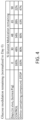
- FIG. 4 shows experimental results of sensor longevity comparing sensors having no dithio-, thio- or mercapto-containing moieties (Control) with non-limiting embodiments of sensors 100 having one or more compounds having dithio-, thio- or mercapto-containing moieties in the analyte indicator 106 implanted subcutaneously in guinea pigs for up to 90 days.
- Device samples were produced by first making the controls where the indicator hydrogels did not contain dithio or other additives.
- the investigational devices were produced by taking some of the control devices, and thereafter soaking for one hour at ambient temperature inside 5% (by weight) solutions of 3,3-dithiodipropionic acid (DTDP) in ethanol, followed by air-drying for 16 hours.
- Controls and investigational devices were implanted in the subcutaneous regions of guinea pigs. Necropsies were conducted after different points of time (0, 30, 48, 65, and 90 days), and the fluorescence signals of the explanted devices were measured using fluorometers.
- FIG. 4 shows that the % modulations of control as well as investigational devices diminished with increasing durations of being implanted.
- the analyte sensor 100 may be an optical sensor, this is not required, and, in one or more alternative embodiments, the analyte sensor may be a different type of analyte sensor, such as, for example, an electrochemical sensor, a diffusion sensor, or a pressure sensor.
- the analyte sensor 100 may be an implantable sensor, this is not required, and, in some alternative embodiments, the analyte sensor may be a transcutaneous sensor having a wired connection to an external transceiver.
- the analyte sensor 100 may be located in or on a transcutaneous needle ( e.g., at the tip thereof).
- the analyte sensor instead of wirelessly communication using an antenna (e.g., inductive element 114), the analyte sensor may communicate with the external transceiver using one or more wires connected between the external transceiver and a transceiver transcutaneous needle including the analyte sensor.
- the analyte sensor may be located in a catheter (e.g. , for intravenous blood glucose monitoring) and may communicate (wirelessly or using wires) with an external transceiver.
Landscapes
- Health & Medical Sciences (AREA)
- Life Sciences & Earth Sciences (AREA)
- Chemical & Material Sciences (AREA)
- Organic Chemistry (AREA)
- Physics & Mathematics (AREA)
- Veterinary Medicine (AREA)
- Animal Behavior & Ethology (AREA)
- Heart & Thoracic Surgery (AREA)
- Public Health (AREA)
- General Health & Medical Sciences (AREA)
- Surgery (AREA)
- Molecular Biology (AREA)
- Biophysics (AREA)
- Medical Informatics (AREA)
- Engineering & Computer Science (AREA)
- Biomedical Technology (AREA)
- Pathology (AREA)
- Epidemiology (AREA)
- Vascular Medicine (AREA)
- Chemical Kinetics & Catalysis (AREA)
- Optics & Photonics (AREA)
- Polymers & Plastics (AREA)
- Medicinal Chemistry (AREA)
- General Chemical & Material Sciences (AREA)
- Dispersion Chemistry (AREA)
- Emergency Medicine (AREA)
- Spectroscopy & Molecular Physics (AREA)
- Measurement Of The Respiration, Hearing Ability, Form, And Blood Characteristics Of Living Organisms (AREA)
Claims (15)
- Sensor (100) zur Messung eines Analyts in einem Medium innerhalb eines lebenden Lebewesens, wobei der Sensor umfasst:ein Sensorgehäuse (102);einen Analytindikator (104), welcher mindestens einen Teil des Sensorgehäuses bedeckt; und eine oder mehrere Verbindungen, welche dithio-, thio- oder mercaptohaltige Gruppen aufweisen, wobei:die eine oder mehreren Verbindungen, welche dithio-, thio- oder mercaptohaltige Gruppen aufweisen, mit einer degradativen Spezies interagieren oder reagieren, ohne die Signalintegrität oder Leistung der Sensorvorrichtung zu beeinträchtigen,die degradative Spezies Wasserstoffperoxid, eine reaktive Sauerstoffspezies, eine reaktive Stickstoffspezies, ein Enzym, ein freies Radikal oder ein Metallion ist,die eine oder mehreren Verbindungen, welche dithio-, thio- oder mercaptohaltige Gruppen aufweisen, die abbauende Spezies sequestrieren, sodass der Abbau des Analytindikators durch die degradative Spezies verringert und/oder verhindert wird, unddie eine oder mehreren Verbindungen, welche dithio-, thio- oder mercaptohaltige Gruppen aufweisen, ausgewählt sind aus:(a) Cystein und Verbindungen, dargestellt durch Formel IV:
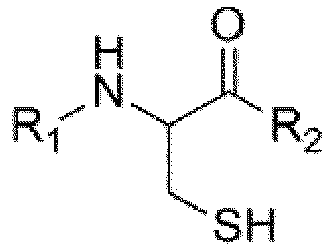 1: R1= Bz, R2= OCH32: R1= Bz, R2 = OH3: R1= Bz, R2 = O-4: R1= Ac, R2= OCH35: R1= Ac, R2= OH6: R1= Ac, R2= O-7: R1= H, R2= OCH2CH3 [Formel IV], oder ein Salz, Ester, Hydrat, Solvat oder Amid davon, oder(b) 3,3'-Dithiodipropionsäure; 3,3'-Dithiodipropionsäuredi(N-hydroxysuccinimidester); 4,4'-Dithiodibuttersäure; Dithiodiglykolsäure; 2-Hydroxyethyldisulfid; S,S'-Methylenbis(3-mercaptopropionsäure); Dimethyl-3,3'-dithiopropionimidat-dihydrochlorid; 3-Mercaptopropionsäure; 6,6'-Dithiodinicotinsäure; Dimethyl-3,3'-dithiopropionimidat-dihydrochlorid; 1,2-Dithiolan-3-pentansäure; Thioctsäure; Ditridecylthiodipropionat; Distearylthiodipropionat; Dimyristylthiodipropionat; Dilaurylthiodipropionat; 3,3'-Thiodipropionsäure; Didodecyl-3,3'-thiodipropionat; 2,2'-Thiodiessigsäure; 4,4'-Thiodiphenol; Thiodipropionsäuredilaurylester; 3,3'-Thiodipropanol; 2,2'-(Ethylendithio)diessigsäure; Ergothionein; Methionin; 3-Mercaptopropan-1,2-dio; Thioglykolat-Salze; Thiomalat-Salze; oder Lipoyllysin.
- Sensor nach Anspruch 1, wobei der Sensor mindestens eines der folgenden Merkmale umfasst:der Sensor ist in ein lebendes Lebewesen implantierbar, undder Analytindikator ist ein Hydrogel.
- Sensor nach einem der Ansprüche 1 und 2, wobei die eine oder mehreren Verbindungen, welche dithio-, thio- oder mercaptohaltige Gruppen aufweisen, in den Analytindikator integriert sind.
- Verfahren zum Fabrizieren eines Sensors (100) zur Messung eines Analyts in einem Medium innerhalb eines lebenden Lebewesens, wobei das Verfahren umfasst:
Inserieren des Sensors in eine Zusammensetzung für eine Zeitspanne, welche ausreicht, um ein Eindringen der Zusammensetzung in einen Analytindikator (106) zu bewirken, wobei:der Sensor ein Sensorgehäuse (102) und den Analytindikator umfasst, welcher mindestens einen Teil des Sensorgehäuses bedeckt,die Zusammensetzung eine oder mehrere Verbindungen umfasst, welche dithio-, thio- oder mercaptohaltige Gruppen aufweisen,die eine oder mehreren Verbindungen, welche dithio-, thio- oder mercaptohaltige Gruppen aufweisen, mit einer degradativen Spezies interagieren oder reagieren, ohne die Signalintegrität oder Leistung der Sensorvorrichtung zu beeinträchtigen,die degradative Spezies Wasserstoffperoxid, eine reaktive Sauerstoffspezies, eine reaktive Stickstoffspezies, ein Enzym, ein freies Radikal oder ein Metallion ist,die eine oder mehreren Verbindungen, welche dithio-, thio- oder mercaptohaltige Gruppen aufweisen, die degradative Spezies sequestrieren, um den Abbau des Analytindikators durch die degradative Spezies zu verringern und/oder zu verhindern, unddie eine oder mehreren Verbindungen, welche dithio-, thio- oder mercaptohaltige Gruppen aufweisen, ausgewählt sind aus:(a) Cystein und Verbindungen, dargestellt durch Formel IV: 1: R1= Bz, R2= OCH32: R1= Bz, R2 = OH3: R1= Bz, R2 = O-4: R1= Ac, R2= OCH35: R1= Ac, R2= OH6: R1= Ac, R2= O-7: R1= H, R2= OCH2CH3 [Formel IV], oder ein Salz, Ester, Hydrat, Solvat oder Amid davon, oder(b) 3,3'-Dithiodipropionsäure; 3,3'-Dithiodipropionsäure-di(N-hydroxysuccinimidester); 4,4'-Dithiodibuttersäure; Dithiodiglykolsäure; 2-Hydroxyethyldisulfid; S,S'-Methylenbis(3-mercaptopropionsäure); Dimethyl-3,3'-dithiopropionimidat-dihydrochlorid; 3-Mercaptopropionsäure; 6,6'-Dithiodinicotinsäure; Dimethyl-3,3'-dithiopropionimidat-dihydrochlorid; 1,2-Dithiolan-3-pentansäure; Thioctsäure; Ditridecylthiodipropionat; Distearylthiodipropionat; Dimyristylthiodipropionat; Dilaurylthiodipropionat; 3,3'-Thiodipropionsäure; Didodecyl-3,3'-thiodipropionat; 2,2'-Thiodiessigsäure; 4,4'-Thiodiphenol; Thiodipropionsäuredilaurylester; 3,3'-Thiodipropanol; 2,2'-(Ethylendithio)diessigsäure; Ergothionein; Methionin; 3-Mercaptopropan-1,2-dio; Thioglykolat-Salze; Thiomalat-Salze; oder Lipoyllysin; und Entfernen des Sensors aus der Zusammensetzung.
- Verfahren nach Anspruch 4, ferner umfassend das Applizieren des Analytindikators auf das Sensorgehäuse des Sensors, sodass der applizierte Analytindikator mindestens einen Teil des Sensorgehäuses vor dem Insertionsschritt bedeckt.
- Verfahren nach Anspruch 4 oder 5, ferner umfassend das Herstellen der Zusammensetzung, umfassend die eine oder mehreren Verbindungen, welche dithio-, thio- oder mercaptohaltige Gruppen aufweisen, vor dem Insertionsschritt.
- Verfahren nach einem der Ansprüche 4-6, wobei die Zeitspanne ausreichend ist, um das Eindringen der Zusammensetzung in den Analytindikator zu bewirken und/oder zwischen etwa 5 Minuten und etwa 24 Stunden liegt.
- Verfahren nach einem der Ansprüche 4-7, wobei die Zusammensetzung die eine oder mehreren Verbindungen, welche dithio-, thio- oder mercaptohaltige Gruppen aufweisen, und ein Lösungsmittel umfasst.
- Verfahren nach Anspruch 8, wobei das Lösungsmittel einen Alkohol, Wasser oder eine Kombination davon umfasst.
- Verfahren nach einem der Ansprüche 4-9, wobei die Zusammensetzung etwa 0,01 bis etwa 25 Gew.-% der Verbindungen umfasst, welche eine oder mehrere Verbindungen aufweisen, welche dithio-, thio- oder mercaptohaltigen Gruppen aufweisen.
- Sensor nach einem der Ansprüche 1 und 2 oder Verfahren nach einem der Ansprüche 4-10, wobei die eine oder mehreren Verbindungen, welche dithio-, thio- oder mercaptohaltige Gruppen aufweisen, in einem Hydrogel eingeschlossen sind, welches mindestens einen Teil des Sensorgehäuses bedeckt, und das Hydrogel, welches die eine oder mehreren Verbindungen, welche dithio-, thio- oder mercaptohaltige Gruppen aufweisen, einschließt, getrennt und verschieden von dem Analytindikator ist.
- Sensor oder Verfahren nach einem der Ansprüche 1-11, wobei die eine oder mehreren Verbindungen, welche dithio-, thio- oder mercaptohaltige Gruppen aufweisen, Oxidation und/oder eine Abbaurate des Analytindikators verringern.
- Sensor oder Verfahren nach einem der Ansprüche 1-12, wobei die eine oder mehreren Verbindungen, welche dithio-, thio- oder mercaptohaltige Gruppen aufweisen, an die degradative Spezies binden.
- Sensor oder Verfahren nach einem der Ansprüche 1-13, wobei die eine oder mehreren Verbindungen, welche dithio-, thio- oder mercaptohaltige Gruppen aufweisen, ausgewählt sind aus N-Acetylcystein, Cysteinsäure, Homocysteinsäure, Cysteinsulfinsäure oder einem Salz, Ester, Hydrat, Solvat oder Amid davon.
- Sensor oder Verfahren nach einem der Ansprüche 1-13, wobei die eine oder mehreren Verbindungen, welche dithio-, thio- oder mercaptohaltige Gruppen aufweisen, ausgewählt sind aus 3,3'-Dithiodipropionsäure; 3,3'-Dithiodipropionsäure-di(N-hydroxysuccinimidester); 4,4'-Dithiodibuttersäure; Dithiodiglykolsäure; 2-Hydroxyethyldisulfid; S,S'-Methylenbis(3-mercaptopropionsäure); Dimethyl-3,3'-dithiopropionimidat-dihydrochlorid; 3-Mercaptopropionsäure; 6,6'-Dithiodinicotinsäure; Dimethyl-3,3'-dithiopropionimidat-dihydrochlorid; 1,2-Dithiolan-3-pentansäure; Thioctsäure; Ditridecylthiodipropionat; Distearylthiodipropionat; Dimyristylthiodipropionat; Dilaurylthiodipropionat; 3,3'-Thiodipropionsäure; Didodecyl-3,3'-thiodipropionat; 2,2'-Thiodiessigsäure; 4,4'-Thiodiphenol; Thiodipropionsäuredilaurylester; 3,3'-Thiodipropanol; 2,2'-(Ethylendithio)-diessigsäure; Ergothionein; Methionin; 3-Mercaptopropan-1,2-dio; Thioglykol-Salze; Thiomalat-Salze; oder Lipoyllysin.
Applications Claiming Priority (2)
| Application Number | Priority Date | Filing Date | Title |
|---|---|---|---|
| US201962845020P | 2019-05-08 | 2019-05-08 | |
| PCT/US2020/031916 WO2020227555A1 (en) | 2019-05-08 | 2020-05-07 | Mediation of in vivo analyte signal degradation |
Publications (3)
| Publication Number | Publication Date |
|---|---|
| EP3965657A1 EP3965657A1 (de) | 2022-03-16 |
| EP3965657A4 EP3965657A4 (de) | 2022-12-28 |
| EP3965657B1 true EP3965657B1 (de) | 2025-03-05 |
Family
ID=73046205
Family Applications (1)
| Application Number | Title | Priority Date | Filing Date |
|---|---|---|---|
| EP20802211.1A Active EP3965657B1 (de) | 2019-05-08 | 2020-05-07 | Vermittlung von in-vivo-analytsignalabnahme |
Country Status (5)
| Country | Link |
|---|---|
| US (1) | US12419551B2 (de) |
| EP (1) | EP3965657B1 (de) |
| CA (1) | CA3137757A1 (de) |
| ES (1) | ES3021196T3 (de) |
| WO (1) | WO2020227555A1 (de) |
Families Citing this family (1)
| Publication number | Priority date | Publication date | Assignee | Title |
|---|---|---|---|---|
| US11963761B2 (en) * | 2019-05-16 | 2024-04-23 | Senseonics, Incorporated | Mediation of in vivo analyte signal degradation |
Family Cites Families (20)
| Publication number | Priority date | Publication date | Assignee | Title |
|---|---|---|---|---|
| US5512246A (en) | 1989-09-21 | 1996-04-30 | Anthony P. Russell | Method and means for detecting polyhydroxyl compounds |
| US5517313A (en) | 1995-02-21 | 1996-05-14 | Colvin, Jr.; Arthur E. | Fluorescent optical sensor |
| US6560471B1 (en) * | 2001-01-02 | 2003-05-06 | Therasense, Inc. | Analyte monitoring device and methods of use |
| US8364229B2 (en) | 2003-07-25 | 2013-01-29 | Dexcom, Inc. | Analyte sensors having a signal-to-noise ratio substantially unaffected by non-constant noise |
| US8615282B2 (en) * | 2004-07-13 | 2013-12-24 | Dexcom, Inc. | Analyte sensor |
| JP2005315871A (ja) * | 2004-03-31 | 2005-11-10 | Terumo Corp | 体内物質測定用構成物、体内物質測定用構成物の製造方法、および埋込型物質センサー |
| US8277713B2 (en) * | 2004-05-03 | 2012-10-02 | Dexcom, Inc. | Implantable analyte sensor |
| JP4520272B2 (ja) * | 2004-10-14 | 2010-08-04 | テルモ株式会社 | 糖類測定用蛍光モノマー化合物、糖類測定用蛍光センサー物質および体内埋め込み用の糖類測定用センサー |
| US8126554B2 (en) * | 2006-05-17 | 2012-02-28 | Cardiac Pacemakers, Inc. | Implantable medical device with chemical sensor and related methods |
| DK1972275T3 (en) * | 2007-03-20 | 2016-02-08 | Hoffmann La Roche | A system for in-vivo measurement of an analyte concentration |
| US8940544B2 (en) | 2010-02-08 | 2015-01-27 | Medtronic Minimed, Inc. | Antioxidant protection of a chemical sensor |
| CN103533884B (zh) | 2011-03-15 | 2016-06-01 | 传感技术股份有限公司 | 氧化敏感性材料的集成催化保护 |
| WO2013055962A1 (en) | 2011-10-11 | 2013-04-18 | Senseonics, Incorporated | Electrodynamic field strength triggering system |
| US9693714B2 (en) | 2012-02-10 | 2017-07-04 | Senseonics, Incorporated | Digital ASIC sensor platform |
| US9414775B2 (en) | 2012-03-29 | 2016-08-16 | Senseonics, Incorporated | Purification of glucose concentration signal in an implantable fluorescence based glucose sensor |
| CN104955383B (zh) | 2012-12-28 | 2017-11-17 | 传感技术股份有限公司 | 用于氧化稳定性和光学稳定性的分析物可渗透的膜片系统 |
| US10172791B2 (en) * | 2013-03-14 | 2019-01-08 | Massachusetts Institute Of Technology | Multi-layer hydrogel capsules for encapsulation of cells and cell aggregates |
| CN105530867B (zh) * | 2013-08-21 | 2018-11-13 | 传感技术股份有限公司 | 用于生物感测分析物的体内保护的药物洗脱 |
| WO2015054484A1 (en) * | 2013-10-09 | 2015-04-16 | The University Of Akron | Integrated zwitterionic conjugated polymers for bioelectronics, biosensing, regenerative medicine, and energy applications |
| CN107206119B (zh) * | 2014-12-09 | 2021-01-29 | 实体科学公司 | 具有生物相容性层的医疗设备涂层 |
-
2020
- 2020-05-07 EP EP20802211.1A patent/EP3965657B1/de active Active
- 2020-05-07 CA CA3137757A patent/CA3137757A1/en active Pending
- 2020-05-07 WO PCT/US2020/031916 patent/WO2020227555A1/en not_active Ceased
- 2020-05-07 ES ES20802211T patent/ES3021196T3/es active Active
- 2020-05-07 US US16/869,161 patent/US12419551B2/en active Active
Also Published As
| Publication number | Publication date |
|---|---|
| US20200352492A1 (en) | 2020-11-12 |
| US12419551B2 (en) | 2025-09-23 |
| WO2020227555A1 (en) | 2020-11-12 |
| CA3137757A1 (en) | 2020-11-12 |
| ES3021196T3 (en) | 2025-05-26 |
| EP3965657A4 (de) | 2022-12-28 |
| EP3965657A1 (de) | 2022-03-16 |
Similar Documents
| Publication | Publication Date | Title |
|---|---|---|
| JP7541018B2 (ja) | 生きている動物内の媒質中の分析物を測定するためのセンサー及びその作製方法 | |
| EP3840637B1 (de) | Vermittelte wirkstoffabgabe zur verringerung des in-vivo-analytindikatorabbaus | |
| US20230293064A1 (en) | Catalytic reactive oxygen species scavenger hydrogel | |
| US12419551B2 (en) | Mediation of in vivo analyte signal degradation | |
| EP4057900A1 (de) | Identifizierung einer abbauenden spezies | |
| US20240341633A1 (en) | Mediation of in vivo analyte signal degradation | |
| US12495992B2 (en) | Mediation of in vivo analyte signal degradation | |
| EP4058786B1 (de) | Vermittlung von in-vivo-analytsignalabnahme | |
| CA3110179C (en) | Mediated drug release for reducing in vivo analyte indicator degradation | |
| HK40065878B (en) | Mediation of in vivo analyte signal degradation | |
| HK40065878A (en) | Mediation of in vivo analyte signal degradation |
Legal Events
| Date | Code | Title | Description |
|---|---|---|---|
| STAA | Information on the status of an ep patent application or granted ep patent |
Free format text: STATUS: THE INTERNATIONAL PUBLICATION HAS BEEN MADE |
|
| PUAI | Public reference made under article 153(3) epc to a published international application that has entered the european phase |
Free format text: ORIGINAL CODE: 0009012 |
|
| STAA | Information on the status of an ep patent application or granted ep patent |
Free format text: STATUS: REQUEST FOR EXAMINATION WAS MADE |
|
| 17P | Request for examination filed |
Effective date: 20211021 |
|
| AK | Designated contracting states |
Kind code of ref document: A1 Designated state(s): AL AT BE BG CH CY CZ DE DK EE ES FI FR GB GR HR HU IE IS IT LI LT LU LV MC MK MT NL NO PL PT RO RS SE SI SK SM TR |
|
| DAV | Request for validation of the european patent (deleted) | ||
| DAX | Request for extension of the european patent (deleted) | ||
| A4 | Supplementary search report drawn up and despatched |
Effective date: 20221128 |
|
| RIC1 | Information provided on ipc code assigned before grant |
Ipc: G16H 40/40 20180101ALI20221122BHEP Ipc: A61B 5/1495 20060101AFI20221122BHEP |
|
| P01 | Opt-out of the competence of the unified patent court (upc) registered |
Effective date: 20230511 |
|
| STAA | Information on the status of an ep patent application or granted ep patent |
Free format text: STATUS: EXAMINATION IS IN PROGRESS |
|
| 17Q | First examination report despatched |
Effective date: 20231108 |
|
| GRAP | Despatch of communication of intention to grant a patent |
Free format text: ORIGINAL CODE: EPIDOSNIGR1 |
|
| STAA | Information on the status of an ep patent application or granted ep patent |
Free format text: STATUS: GRANT OF PATENT IS INTENDED |
|
| INTG | Intention to grant announced |
Effective date: 20240514 |
|
| RIN1 | Information on inventor provided before grant (corrected) |
Inventor name: HUFFSTETLER, PHILIP Inventor name: MOHANTY, SANAT Inventor name: CHATTERJEE, JOON |
|
| GRAS | Grant fee paid |
Free format text: ORIGINAL CODE: EPIDOSNIGR3 |
|
| GRAJ | Information related to disapproval of communication of intention to grant by the applicant or resumption of examination proceedings by the epo deleted |
Free format text: ORIGINAL CODE: EPIDOSDIGR1 |
|
| GRAL | Information related to payment of fee for publishing/printing deleted |
Free format text: ORIGINAL CODE: EPIDOSDIGR3 |
|
| STAA | Information on the status of an ep patent application or granted ep patent |
Free format text: STATUS: EXAMINATION IS IN PROGRESS |
|
| INTC | Intention to grant announced (deleted) | ||
| GRAP | Despatch of communication of intention to grant a patent |
Free format text: ORIGINAL CODE: EPIDOSNIGR1 |
|
| STAA | Information on the status of an ep patent application or granted ep patent |
Free format text: STATUS: GRANT OF PATENT IS INTENDED |
|
| INTG | Intention to grant announced |
Effective date: 20241011 |
|
| GRAA | (expected) grant |
Free format text: ORIGINAL CODE: 0009210 |
|
| STAA | Information on the status of an ep patent application or granted ep patent |
Free format text: STATUS: THE PATENT HAS BEEN GRANTED |
|
| AK | Designated contracting states |
Kind code of ref document: B1 Designated state(s): AL AT BE BG CH CY CZ DE DK EE ES FI FR GB GR HR HU IE IS IT LI LT LU LV MC MK MT NL NO PL PT RO RS SE SI SK SM TR |
|
| REG | Reference to a national code |
Ref country code: GB Ref legal event code: FG4D |
|
| REG | Reference to a national code |
Ref country code: CH Ref legal event code: EP |
|
| REG | Reference to a national code |
Ref country code: DE Ref legal event code: R096 Ref document number: 602020047299 Country of ref document: DE |
|
| REG | Reference to a national code |
Ref country code: IE Ref legal event code: FG4D |
|
| REG | Reference to a national code |
Ref country code: ES Ref legal event code: FG2A Ref document number: 3021196 Country of ref document: ES Kind code of ref document: T3 Effective date: 20250526 |
|
| PG25 | Lapsed in a contracting state [announced via postgrant information from national office to epo] |
Ref country code: RS Free format text: LAPSE BECAUSE OF FAILURE TO SUBMIT A TRANSLATION OF THE DESCRIPTION OR TO PAY THE FEE WITHIN THE PRESCRIBED TIME-LIMIT Effective date: 20250605 |
|
| PG25 | Lapsed in a contracting state [announced via postgrant information from national office to epo] |
Ref country code: FI Free format text: LAPSE BECAUSE OF FAILURE TO SUBMIT A TRANSLATION OF THE DESCRIPTION OR TO PAY THE FEE WITHIN THE PRESCRIBED TIME-LIMIT Effective date: 20250305 |
|
| REG | Reference to a national code |
Ref country code: NL Ref legal event code: MP Effective date: 20250305 |
|
| REG | Reference to a national code |
Ref country code: LT Ref legal event code: MG9D |
|
| PG25 | Lapsed in a contracting state [announced via postgrant information from national office to epo] |
Ref country code: NO Free format text: LAPSE BECAUSE OF FAILURE TO SUBMIT A TRANSLATION OF THE DESCRIPTION OR TO PAY THE FEE WITHIN THE PRESCRIBED TIME-LIMIT Effective date: 20250605 |
|
| PG25 | Lapsed in a contracting state [announced via postgrant information from national office to epo] |
Ref country code: HR Free format text: LAPSE BECAUSE OF FAILURE TO SUBMIT A TRANSLATION OF THE DESCRIPTION OR TO PAY THE FEE WITHIN THE PRESCRIBED TIME-LIMIT Effective date: 20250305 |
|
| PG25 | Lapsed in a contracting state [announced via postgrant information from national office to epo] |
Ref country code: LV Free format text: LAPSE BECAUSE OF FAILURE TO SUBMIT A TRANSLATION OF THE DESCRIPTION OR TO PAY THE FEE WITHIN THE PRESCRIBED TIME-LIMIT Effective date: 20250305 |
|
| PG25 | Lapsed in a contracting state [announced via postgrant information from national office to epo] |
Ref country code: GR Free format text: LAPSE BECAUSE OF FAILURE TO SUBMIT A TRANSLATION OF THE DESCRIPTION OR TO PAY THE FEE WITHIN THE PRESCRIBED TIME-LIMIT Effective date: 20250606 Ref country code: BG Free format text: LAPSE BECAUSE OF FAILURE TO SUBMIT A TRANSLATION OF THE DESCRIPTION OR TO PAY THE FEE WITHIN THE PRESCRIBED TIME-LIMIT Effective date: 20250305 |
|
| REG | Reference to a national code |
Ref country code: AT Ref legal event code: MK05 Ref document number: 1772136 Country of ref document: AT Kind code of ref document: T Effective date: 20250305 |
|
| PG25 | Lapsed in a contracting state [announced via postgrant information from national office to epo] |
Ref country code: NL Free format text: LAPSE BECAUSE OF FAILURE TO SUBMIT A TRANSLATION OF THE DESCRIPTION OR TO PAY THE FEE WITHIN THE PRESCRIBED TIME-LIMIT Effective date: 20250305 |
|
| PG25 | Lapsed in a contracting state [announced via postgrant information from national office to epo] |
Ref country code: SE Free format text: LAPSE BECAUSE OF FAILURE TO SUBMIT A TRANSLATION OF THE DESCRIPTION OR TO PAY THE FEE WITHIN THE PRESCRIBED TIME-LIMIT Effective date: 20250305 |
|
| PG25 | Lapsed in a contracting state [announced via postgrant information from national office to epo] |
Ref country code: SM Free format text: LAPSE BECAUSE OF FAILURE TO SUBMIT A TRANSLATION OF THE DESCRIPTION OR TO PAY THE FEE WITHIN THE PRESCRIBED TIME-LIMIT Effective date: 20250305 |
|
| PG25 | Lapsed in a contracting state [announced via postgrant information from national office to epo] |
Ref country code: PT Free format text: LAPSE BECAUSE OF FAILURE TO SUBMIT A TRANSLATION OF THE DESCRIPTION OR TO PAY THE FEE WITHIN THE PRESCRIBED TIME-LIMIT Effective date: 20250707 |
|
| PG25 | Lapsed in a contracting state [announced via postgrant information from national office to epo] |
Ref country code: PL Free format text: LAPSE BECAUSE OF FAILURE TO SUBMIT A TRANSLATION OF THE DESCRIPTION OR TO PAY THE FEE WITHIN THE PRESCRIBED TIME-LIMIT Effective date: 20250305 |
|
| PG25 | Lapsed in a contracting state [announced via postgrant information from national office to epo] |
Ref country code: AT Free format text: LAPSE BECAUSE OF FAILURE TO SUBMIT A TRANSLATION OF THE DESCRIPTION OR TO PAY THE FEE WITHIN THE PRESCRIBED TIME-LIMIT Effective date: 20250305 |
|
| PG25 | Lapsed in a contracting state [announced via postgrant information from national office to epo] |
Ref country code: CZ Free format text: LAPSE BECAUSE OF FAILURE TO SUBMIT A TRANSLATION OF THE DESCRIPTION OR TO PAY THE FEE WITHIN THE PRESCRIBED TIME-LIMIT Effective date: 20250305 Ref country code: EE Free format text: LAPSE BECAUSE OF FAILURE TO SUBMIT A TRANSLATION OF THE DESCRIPTION OR TO PAY THE FEE WITHIN THE PRESCRIBED TIME-LIMIT Effective date: 20250305 |
|
| PG25 | Lapsed in a contracting state [announced via postgrant information from national office to epo] |
Ref country code: RO Free format text: LAPSE BECAUSE OF FAILURE TO SUBMIT A TRANSLATION OF THE DESCRIPTION OR TO PAY THE FEE WITHIN THE PRESCRIBED TIME-LIMIT Effective date: 20250305 |
|
| PG25 | Lapsed in a contracting state [announced via postgrant information from national office to epo] |
Ref country code: SK Free format text: LAPSE BECAUSE OF FAILURE TO SUBMIT A TRANSLATION OF THE DESCRIPTION OR TO PAY THE FEE WITHIN THE PRESCRIBED TIME-LIMIT Effective date: 20250305 |
|
| PG25 | Lapsed in a contracting state [announced via postgrant information from national office to epo] |
Ref country code: IS Free format text: LAPSE BECAUSE OF FAILURE TO SUBMIT A TRANSLATION OF THE DESCRIPTION OR TO PAY THE FEE WITHIN THE PRESCRIBED TIME-LIMIT Effective date: 20250705 |
|
| REG | Reference to a national code |
Ref country code: DE Ref legal event code: R097 Ref document number: 602020047299 Country of ref document: DE |
|
| REG | Reference to a national code |
Ref country code: CH Ref legal event code: H13 Free format text: ST27 STATUS EVENT CODE: U-0-0-H10-H13 (AS PROVIDED BY THE NATIONAL OFFICE) Effective date: 20251223 |
|
| PLBE | No opposition filed within time limit |
Free format text: ORIGINAL CODE: 0009261 |
|
| STAA | Information on the status of an ep patent application or granted ep patent |
Free format text: STATUS: NO OPPOSITION FILED WITHIN TIME LIMIT |
|
| PG25 | Lapsed in a contracting state [announced via postgrant information from national office to epo] |
Ref country code: DK Free format text: LAPSE BECAUSE OF FAILURE TO SUBMIT A TRANSLATION OF THE DESCRIPTION OR TO PAY THE FEE WITHIN THE PRESCRIBED TIME-LIMIT Effective date: 20250305 |
|
| REG | Reference to a national code |
Ref country code: CH Ref legal event code: L10 Free format text: ST27 STATUS EVENT CODE: U-0-0-L10-L00 (AS PROVIDED BY THE NATIONAL OFFICE) Effective date: 20260114 |
|
| PG25 | Lapsed in a contracting state [announced via postgrant information from national office to epo] |
Ref country code: LU Free format text: LAPSE BECAUSE OF NON-PAYMENT OF DUE FEES Effective date: 20250507 |
|
| PG25 | Lapsed in a contracting state [announced via postgrant information from national office to epo] |
Ref country code: CH Free format text: LAPSE BECAUSE OF NON-PAYMENT OF DUE FEES Effective date: 20250531 |
|
| REG | Reference to a national code |
Ref country code: BE Ref legal event code: MM Effective date: 20250531 |
|
| PG25 | Lapsed in a contracting state [announced via postgrant information from national office to epo] |
Ref country code: MC Free format text: LAPSE BECAUSE OF FAILURE TO SUBMIT A TRANSLATION OF THE DESCRIPTION OR TO PAY THE FEE WITHIN THE PRESCRIBED TIME-LIMIT Effective date: 20250305 |
|
| 26N | No opposition filed |
Effective date: 20251208 |
|
| PG25 | Lapsed in a contracting state [announced via postgrant information from national office to epo] |
Ref country code: IE Free format text: LAPSE BECAUSE OF NON-PAYMENT OF DUE FEES Effective date: 20250507 |
|
| PG25 | Lapsed in a contracting state [announced via postgrant information from national office to epo] |
Ref country code: BE Free format text: LAPSE BECAUSE OF NON-PAYMENT OF DUE FEES Effective date: 20250531 |
|
| PG25 | Lapsed in a contracting state [announced via postgrant information from national office to epo] |
Ref country code: LT Free format text: LAPSE BECAUSE OF FAILURE TO SUBMIT A TRANSLATION OF THE DESCRIPTION OR TO PAY THE FEE WITHIN THE PRESCRIBED TIME-LIMIT Effective date: 20250305 |
|
| PGFP | Annual fee paid to national office [announced via postgrant information from national office to epo] |
Ref country code: ES Payment date: 20260610 Year of fee payment: 7 |
|
| PGFP | Annual fee paid to national office [announced via postgrant information from national office to epo] |
Ref country code: GB Payment date: 20260424 Year of fee payment: 7 |
|
| PGFP | Annual fee paid to national office [announced via postgrant information from national office to epo] |
Ref country code: IT Payment date: 20260428 Year of fee payment: 7 |
|
| PGFP | Annual fee paid to national office [announced via postgrant information from national office to epo] |
Ref country code: DE Payment date: 20260428 Year of fee payment: 7 |
|
| PGFP | Annual fee paid to national office [announced via postgrant information from national office to epo] |
Ref country code: FR Payment date: 20260511 Year of fee payment: 7 |
|
| PG25 | Lapsed in a contracting state [announced via postgrant information from national office to epo] |
Ref country code: CY Free format text: LAPSE BECAUSE OF FAILURE TO SUBMIT A TRANSLATION OF THE DESCRIPTION OR TO PAY THE FEE WITHIN THE PRESCRIBED TIME-LIMIT Effective date: 20250305 |