EP3968342A1 - Appareil de production de radionucléide et procédé de production de radionucléide - Google Patents
Appareil de production de radionucléide et procédé de production de radionucléide Download PDFInfo
- Publication number
- EP3968342A1 EP3968342A1 EP20802005.7A EP20802005A EP3968342A1 EP 3968342 A1 EP3968342 A1 EP 3968342A1 EP 20802005 A EP20802005 A EP 20802005A EP 3968342 A1 EP3968342 A1 EP 3968342A1
- Authority
- EP
- European Patent Office
- Prior art keywords
- radionuclide
- fluid
- raw material
- producing
- circulation passage
- Prior art date
- Legal status (The legal status is an assumption and is not a legal conclusion. Google has not performed a legal analysis and makes no representation as to the accuracy of the status listed.)
- Granted
Links
Images


Classifications
-
- G—PHYSICS
- G21—NUCLEAR PHYSICS; NUCLEAR ENGINEERING
- G21G—CONVERSION OF CHEMICAL ELEMENTS; RADIOACTIVE SOURCES
- G21G1/00—Arrangements for converting chemical elements by electromagnetic radiation, corpuscular radiation or particle bombardment, e.g. producing radioactive isotopes
- G21G1/04—Arrangements for converting chemical elements by electromagnetic radiation, corpuscular radiation or particle bombardment, e.g. producing radioactive isotopes outside nuclear reactors or particle accelerators
- G21G1/12—Arrangements for converting chemical elements by electromagnetic radiation, corpuscular radiation or particle bombardment, e.g. producing radioactive isotopes outside nuclear reactors or particle accelerators by electromagnetic irradiation, e.g. with gamma or X-rays
-
- G—PHYSICS
- G21—NUCLEAR PHYSICS; NUCLEAR ENGINEERING
- G21G—CONVERSION OF CHEMICAL ELEMENTS; RADIOACTIVE SOURCES
- G21G1/00—Arrangements for converting chemical elements by electromagnetic radiation, corpuscular radiation or particle bombardment, e.g. producing radioactive isotopes
- G21G1/001—Recovery of specific isotopes from irradiated targets
- G21G2001/0036—Molybdenum
-
- G—PHYSICS
- G21—NUCLEAR PHYSICS; NUCLEAR ENGINEERING
- G21G—CONVERSION OF CHEMICAL ELEMENTS; RADIOACTIVE SOURCES
- G21G1/00—Arrangements for converting chemical elements by electromagnetic radiation, corpuscular radiation or particle bombardment, e.g. producing radioactive isotopes
- G21G1/001—Recovery of specific isotopes from irradiated targets
- G21G2001/0089—Actinium
Definitions
- the present invention relates to an apparatus for producing a radionuclide using an accelerator, and more particularly, to an apparatus for producing a radionuclide in which a radionuclide that emits alpha rays, which is represented by actinium-225 (Ac-225) and is in great demand as a raw material for a therapeutic agent, can be efficiently produced with a small-sized and lightweight apparatus.
- a radionuclide that emits alpha rays which is represented by actinium-225 (Ac-225) and is in great demand as a raw material for a therapeutic agent
- actinium-225 which is a nuclide emitting alpha rays used for research and development as a raw material nuclide for a therapeutic agent
- Th-229 thorium-229
- ITU Institute for Transuranium Elements
- ORNL Oak Ridge National Laboratory
- IPPE Institute of Physics and Power Engineering
- Th-229 is not found in nature and is generated by decay of uranium-233 (U-233), but U-233 will not be produced in the future due to nuclear protection, so that a producible amount of Ac-225 in the world is only an amount generated by decay of Th-229 that is to be generated by decay of U-233 currently held in the world. The amount is sufficient for use in preclinical testing or the like, but a large shortage in the future is expected, and production using an accelerator is desired.
- a production method that uses an Ra-226 (p, 2n) Ac-225 reaction in which naturally occurring radium-226 (Ra-226) is irradiated with protons accelerated in a cyclotron and two neutrons are emitted relative to one irradiation proton has been known from Patent Literature 1 or the like.
- the production method has been tested by the ORNL and the National Institutes for Quantum and Radiological Science and Technology, but has not been commercialized.
- the production method using the cyclotron has a problem that since a range of the accelerated protons in a Ra-226 target is short, mass production cannot be achieved even if the Ra-226 target is thickened.
- the production method has a problem that a temperature of the target rises because most energy of the accelerated protons is lost in the target, but it is difficult to remove heat, so that a current value and the energy cannot be improved for mass production.
- radium-225 (Ra-225) is produced by an Ra-226 (n, 2n) Ra-225 reaction in which an Ra-226 target is irradiated with fast neutrons and two neutrons are emitted relative to one irradiation neutron, and Ac-225 is produced by beta decay of the obtained Ra-225.
- the accelerated neutrons are generated by irradiating a target of carbon or a target of a metal or the like having tritium occluded therein with deuterons accelerated by a cyclotron.
- the fast neutrons have a long range in Ra-226.
- Patent Literature 2 discloses a purification method in which a Ra-226 target containing Ac-225 is dissolved in nitric acid, and then Ac-225 is separated and extracted from Ra-226 by chromatography.
- Patent Literatures 3 and 4 disclose methods in which a target for braking radiation rays is irradiated with electrons accelerated by a small-sized electron beam accelerator to generate braking radiation rays ( ⁇ rays) and a raw material is irradiated with the generated braking radiation rays.
- ⁇ rays braking radiation rays
- a desired radionuclide can be produced by emitting neutrons from the raw material by a ( ⁇ ,n) reaction.
- molybdenum-99 Mo-99
- Mo-100 molybdenum-100
- Te-99m can be produced by beta decay of Mo-99 .
- Te-99m is used for applications such as being administered to a subject during imaging with a single photon emission computed tomography (SPECT) apparatus.
- SPECT single photon emission computed tomography
- Apparatuses of the above Patent Literatures 3 and 4 are configured to heat the raw material, make vaporized technetium oxide flow and move with gas, and separate the participating technetium from the gas, in order to take out the generated Te-99m.
- the raw material target is heated to a temperature equal to or higher than a boiling point of a radionuclide, which is desired to be taken out, in a state of being disposed at a position to be irradiated with braking radiation rays, and the vaporized radionuclide flows with gas and is separated. It is not easy to heat the raw material target, which is being irradiated with the radiation rays, to the temperature equal to or higher than the boiling point of the radionuclide desired to be taken out. Therefore, it is difficult to take out the radionuclide while continuously irradiating a raw material with the radiation rays.
- the boiling point of the radionuclide desired to be taken out needs to be higher than a boiling point of the raw material, and a combination of the raw material and the radionuclide to be taken out is limited.
- An object of the invention is to efficiently produce a radionuclide.
- an apparatus for producing a radionuclide of the invention includes: a circulation passage along which a fluid containing a raw material is circulated; a radiation generator configured to emit radiation rays to at least a part of the circulation passage to generate a first radionuclide from the raw material; and a separation device configured to take out, from the fluid circulating in the circulation passage, a substance containing at least a part of the first radionuclide and a second radionuclide generated from the first radionuclide, and return the fluid containing the remaining raw material to the circulation passage.
- the raw material can be supplied to an irradiation position of radiation rays, and a desired radionuclide can be separated by moving the fluid from the irradiation position to a separation device after the irradiation.
- a desired radionuclide can be separated by moving the fluid from the irradiation position to a separation device after the irradiation.
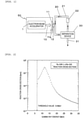
- an apparatus for producing a radionuclide of the present embodiment includes a circulation passage 21 along which a fluid 20 containing a raw material is circulated, a radiation generator 50, and a separation device 30.
- the production apparatus irradiates the fluid 20 with radiation rays 12 from the radiation generator 50 midway along the circulation passage while circulating the fluid 20 containing the raw material along the circulation passage 21, so as to generate a first radionuclide in the fluid 20 from the raw material. Further, while the fluid 20 is circulated along the circulation passage 21, the separation device 30 takes out, from the fluid 20, a substance containing at least a part of the first radionuclide and a second radionuclide generated from the first radionuclide, and returns the fluid 20 containing the remaining raw material to the circulation passage again for circulation.
- the fluid 20 containing the raw material while the fluid 20 containing the raw material is circulated, the fluid is irradiated with radiation rays midway, then a desired radionuclide is taken out, the remaining raw material is returned to the circulation passage again, and whereby the desired radionuclide can be generated and the generated radionuclide can be taken out from the fluid 20 by continuously irradiating the fluid 20 with the radiation rays while the fluid 20 containing the raw material is constantly circulated. Therefore, production efficiency of the radionuclide can be improved.
- the apparatus for producing a radionuclide of the present embodiment can repeatedly circulate the raw material that has not been converted into the radionuclide while having a simple configuration
- the circulation passage functions as a supply mechanism for the raw material and as a movement mechanism for taking out the radionuclide, and further, also functions as a storage mechanism for the raw material or the generated radionuclide, so that the configuration of the apparatus can be simplified.
- the fluid 20 can be constantly circulated, an excessive temperature rise of the raw material caused by irradiation with the radiation rays can be prevented.
- a cooling apparatus or a heating apparatus for the fluid 20 can be easily disposed midway along the circulation passage and in a region that is not irradiated with the radiation rays, a temperature of the fluid 20 can also be easily cooled or heated to a desired temperature .
- a production amount of the radionuclide can be easily adjusted by adjusting a circulation speed of the fluid 20 and a concentration of the raw material, included in the fluid 20 or adjusting a take-out amount of the radionuclide.
- the radiation generator 50 may be any apparatus as long as the apparatus can irradiate the fluid 20 with radiation rays, and for example, an accelerator that accelerates charged particles can be used.
- an electron beam accelerator, a cyclotron, a synchrotron, and a synchrocyclotron can be used, for example.
- the electron beam accelerator that emits an accelerated electron beam is suitable for a small-sized apparatus for producing a radionuclide since the electron beam accelerator can be set smaller in size and simpler than other accelerators.
- a linear electron beam accelerator is suitable because of being small in size.
- the radiation generator 50 one including an electron beam accelerator 1 and a holding unit 11a that holds a target for braking radiation rays 11 at a position to be irradiated with an electron beam emitted from the electron beam accelerator can be used.
- the fluid 20 can be irradiated with the braking radiation rays ( ⁇ rays) 12 generated from the target for braking radiation rays 11 irradiated with the electron beam
- the radionuclide can be produced from the raw material by a ( ⁇ ,n) reaction in which one neutron is generated by irradiating the raw material with one beam of braking radiation rays ( ⁇ ray).
- any one of a dissolved solution in which the raw material is dissolved in a solvent, a dispersion solution in which the raw material is dispersed in a solvent, and dispersion gas in which the raw material is dispersed in gas can be used.
- the raw material may be any raw material as long as a radionuclide is generated by irradiation with radiation rays.
- any one of Ra-226 (a number after an element symbol represents a mass number), Mo-100, Zn-68, Ge-70, Zr-91, Pd-106, and Hf-178, and oxides, nitrides, carbonates, hydrides, chlorides, and carbides of the above elements, specifically, molybdenum trioxide, zinc oxide, zinc carbonate, germanium monoxide, germanium dioxide, germanium hydride, zirconium dioxide, zirconium chloride, palladium hydride, hafnium chloride, hafnium carbide, or the like can be used.
- any solvent may be used as long as the raw material can be dissolved therein.
- the raw material is Ra-226, an aqueous solution, a hydrochloric acid solution, or a nitric acid solution can be used as the fluid 20.
- slurry can be used which is obtained by using a solvent in which the raw material does not dissolve and dispersing particles of the raw material in the solvent.
- the dispersion gas When the dispersion gas is used as the fluid 20, inert gas in which fine particles of the raw material are dispersed can be used. In addition, gas containing vapor of the raw material may be used as the fluid 20.
- the apparatus for producing a radionuclide of the present embodiment can be configured such that the raw material is radium-226 (Ra-226), the aqueous solution, the hydrochloric acid solution, or the nitric acid solution thereof is used as the fluid 20, and the fluid is irradiated with the braking radiation rays from the radiation generator using the electron beam accelerator, and whereby radium-225 (Ra-225) as the first radionuclide can be generated in the fluid 20 by the ( ⁇ ,n) reaction.
- Ra-225 decays in the fluid 20 and becomes actinium-225 (Ac-225) as the second radionuclide.
- the separation device is configured to separate actinium-225 (Ac-225) from the fluid 20.
- the raw material is molybdenum-100 (Mo-100) or molybdenum trioxide 100
- the hydrochloric acid or nitric acid solution thereof is used as the fluid 20
- the fluid is irradiated with neutron rays from the radiation generator, and whereby molybdenum-99 (Mo-99) as the first radionuclide can be generated in the fluid 20 by a (n,2n) reaction.
- Mo-99 decays and becomes technetium-99m (Te-99m) as the second radionuclide.
- the separation device 30 is configured to separate Te-99m from the fluid 20.
- the separation device 30 may be any configuration as long as at least a part of the first radionuclide and the second radionuclide can be taken out.
- the separation device 30 is configured such that a column filled with a stationary phase (or carrier) is used, and the fluid 20 passes through the column, and whereby the first radionuclide or the second radionuclide is separated from the raw material by chromatography, and the first radionuclide or the second radionuclide is taken out from a take-out portion 31. At this time, a liquid containing the raw material after separation is returned to a circulation loop 21 again.
- the separation device 30 may be configured such that a material that binds to and precipitates the first radionuclide and the second radionuclide is added to the fluid 20, the first radionuclide and the second radionuclide are taken out by collecting and recovering precipitates, and the liquid containing the raw material that has not been precipitated is returned to the circulation loop 21.
- the separation device 30 may be configured such that the fluid is heated to a temperature equal to or higher than a boiling point of the first radionuclide or the second radionuclide, the first radionuclide or the second radionuclide is taken out by recovering and cooling vapor, and the solvent is added again to the raw material which has not become vapor and is returned to the circulation loop 21 as slurry.
- the target for braking radiation rays 11 may be any target as long as braking radiation rays are generated by irradiating the target with an electron beam 10, and for example, a metal having a large atomic number such as tungsten, platinum, lead, or bismuth is used.
- a configuration of an apparatus for producing a radionuclide of a first embodiment will be described with reference to FIG. 1 .
- the apparatus for producing a radionuclide of the present embodiment generates the braking radiation rays ( ⁇ rays) 12 by irradiating the target for braking radiation rays 11 held by the holding unit 11a with the electron beam 10 accelerated by the electron beam accelerator 1.
- a pump 22 that circulates the fluid 20 and the separation device 30 that separates a desired radionuclide are disposed midway along the circulation passage (hereinafter, referred to as the circulation loop) 21.
- the fluid (here, a solution) 20 containing the raw material circulates in the circulation loop 21.
- the fluid 20 containing the raw material is irradiated with the braking radiation rays 12 emitted from the target for braking radiation rays 11 when passing through the circulation loop 21 disposed close to the target for braking radiation rays 11.
- the first radionuclide is generated from the raw material nuclide in the fluid 20 by the ( ⁇ ,n) reaction in which one neutron is generated by irradiating the fluid 20 with one beam of braking radiation rays.
- the fluid 20 containing the generated radionuclide and the raw material further moves in the circulation loop 21, during which the first radionuclide partially decays and becomes the second radionuclide.
- the fluid 20 reaches the separation device 30, and at least a part of the first radionuclide and the second radionuclide is taken to the outside by the separation device 30 from the take-out portion 31.
- the fluid containing the first radionuclide, the second radionuclide, and the raw material, which have not been taken out, moves again through the circulation loop 21, and is irradiated with the braking radiation rays 12.
- Ra-226 can be used as the raw material, and the aqueous solution, the hydrochloric acid solution, or the nitric acid solution of the raw material can be used as the fluid 20.
- the fluid 20 containing the raw material Ra-226 repeatedly circulates in the circulation loop 21, and each time the fluid 20 is irradiated once with the braking radiation rays 12, Ra-225 is generated from the raw material nuclide Ra-226 in the fluid 20 by the ( ⁇ ,n) reaction.
- the generated Ra-225 undergoes beta decay with a half-life of 14.8 days, and a part thereof becomes Ac-225 which is a progeny nuclide during circulating. Therefore, the fluid 20 flowing through the circulation loop 21 contains the raw material Ra-226 and the generated Ra-225 and Ac-225.
- Ac-225 which is a raw material for a therapeutic agent, can be produced by the production apparatus of the present embodiment.
- FIG. 2 shows a theoretical value of a reaction cross section of a reaction in which one neutron is generated by irradiating Ra-226 with gamma rays. From FIG. 2 , it can be seen that Ra-225 can be generated by irradiating Ra-226 with the ⁇ rays (radiation rays) 12 having energy equal to or higher than a threshold value.
- the electron beam accelerator 1 can be made smaller in size as compared with a proton accelerator or a heavy particle accelerator if acceleration energy and an acceleration current value are substantially the same.
- a generation cross section of the ( ⁇ ,n) reaction in which Ra-225 is generated from Ra-226 is substantially the same as a cross section in which Ac-225 is generated by a method (Ra-226 (p, 2n) Ac-225) for irradiating Ra-226 with the accelerated protons. Therefore, the apparatus for producing a radionuclide of the present embodiment in which the electron beam accelerator 1 is used can be made smaller in size than an apparatus for producing a radionuclide using the proton accelerator or the heavy particle accelerator.
- the number of neutrons generated from the target for braking radiation rays is relatively small and most of the neutrons are the braking radiation rays that can be easily shielded by lead or the like, so that a shielding of the target for braking radiation rays and a periphery thereof can be made smaller in size, and thus the apparatus for producing a radionuclide can be made smaller in size.
- the electron beam accelerator 1 is shown to be smaller than the circulation loop 21, but the actual electron beam accelerator 1 has a length of several meters, whereas the circulation loop 21 can have a loop diameter of 1 m or less.
- the proton accelerator or the heavy particle accelerator as the radiation generator.
- the above (Ra-226(p,2n)Ac-225) reaction may be used, or (Ra-226(n,2n)Ra-225) reaction may be used.
- Ra-226, which is the raw material nuclide in the fluid 20 remains as the raw material nuclide instead of nuclear-reacting with the braking radiation rays 12.
- Ra-225 generated by the braking radiation rays 12 reacting with the raw material is difficult to be separated and purified from Ra-226 in the separation device 30, Ra-226 and Ra-225 circulate in a state of being contained in the fluid 20.
- Ra-225 is also irradiated with the braking radiation rays 12 each time the fluid 20 circulates once, but since an amount of Ra-226 in the fluid 20 is very small as compared with that of Ra-226, an amount of a nuclide generated by a nuclear reaction between Ra-225 and the braking radiation rays is very small and causes no problem.
- Ra-225 undergoes the beta decay and decays into Ac-225 while the fluid 20 circulates in the circulation loop 21, and Ac-225 is separated and taken out from the take-out portion 31 each time the fluid 20 passes through the separation device 30. Therefore, Ac-225 can be taken out continuously or as needed from the take-out portion 31, and the circulation loop 21 can also functions to store the raw material nuclide.
- Ac-225 which is useful as the raw material of the therapeutic agent, becomes Fr-221 which is a progeny nuclide with a half-life of 10.0 days. Fr-221 becomes At-217 with a half-life of 4.9 minutes, and At-217 becomes Bi-213 with a half-life of 32 milliseconds.
- Ac-225 and the progeny nuclides thereof are useful as the raw material for the therapeutic agent, but Ra-226 and Ra-225 are unnecessary nuclides as the raw material for the therapeutic agent since Ra-226 and Ra-225 are not nuclides that emit alpha rays, and need to be separated and purified from Ac-225.
- Ra-226 and Ra-225 can be separated from Ac-225 and circulated again and reused.
- the radiation generator of the first embodiment can efficiently produce the radionuclide by irradiating the fluid with the radiation rays while circulating the fluid containing the raw material.
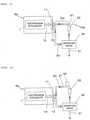
- the apparatus for producing a radionuclide of the second embodiment has a configuration similar to that of the apparatus of FIG. 1 of the first embodiment, but the second embodiment is different from the first embodiment in that a linear region 21a is provided in the circulation loop 21 and the radiation generator 50 is disposed such that a central axis 12a of the braking radiation rays 12 passes through the linear region 21a of the circulation loop 21.
- the radiation generator 50 of the second embodiment generates the braking radiation rays by irradiating the target for braking radiation rays 11 with an electron beam 2 accelerated by the electron beam accelerator 1.
- the target for braking radiation rays 11 is irradiated with an electron beam having relatively high energy such as the electron beam 2 emitted from the electron beam accelerator 1
- the central axis 12a at which intensity of the generated braking radiation rays 12 is the largest coincides with an irradiation axis direction of the electron beam.
- a portion (the linear region 21a) of the circulation loop 21 is provided such that a longitudinal direction thereof coincides with the central axis 12a at which the strong braking radiation rays 12 are generated.
- a range of the braking radiation ray's 12 in the fluid (solution) 20 containing the raw material is very long as compared to a range of the charged particles such as protons or deuterons. Therefore, by providing the portion (the linear region 21a) of the circulation loop 21 such that the longitudinal direction thereof coincides with the central axis 12a of the braking radiation rays 12, a reaction amount of the raw material nuclide in the circulation loop 21 with the braking radiation rays increases. Therefore, when the fluid 20 contains Ra-226 as the raw material as in the example described in the first embodiment, the amount of Ra-225 generated by the production apparatus of the second embodiment is larger than that generated by the production apparatus of the first embodiment.
- the present embodiment has a configuration in which the linear region 21a is provided in the circulation loop 21 and the longitudinal direction of the linear region 21a coincides with the central axis 12a of the braking radiation rays 12, but the invention is not limited to this configuration, and other structures can be provided in the circulation loop 21 to increase the distance that the braking radiation rays 12 pass through the circulation loop 21.
- a diameter of the circulation loop 21 in a direction of the central axis 12a may be increased.
- the apparatus for producing a radionuclide of the third embodiment has a configuration similar to that of the apparatus of the first embodiment, but is different from that of the first embodiment in that a discharge port 40 for gas is provided in the circulation loop 21.
- a gaseous nuclide generated by decay of the radionuclide contained in the fluid 20 can be discharged by providing the discharge port 30.
- the fluid 20 can be prevented from containing gas, and the fluid 20 can be stably circulated by the pump 22.
- description will be made in detail.
- Ra-226 When Ra-226 is used as the raw material nuclide in the circulation loop for a radionuclide production solution, Ra-226 undergoes alpha decay with a half-life of 1600 years to produce radon-222 (Rn-222) .
- Rn-222 belongs to a rare gas element and exists as gas of a monatomic molecule in a standard state. For example, assuming that the solvent for the fluid 20 is water at 20°C, since a solubility of Rn-222 in the water is 24.5 ml per 100 ml, Rn-222 exists as gas in the fluid 20 when there is a water-insoluble amount of Rn-222 in the circulation loop 21.
- the pump 22 may not operate normally.
- a volume of the gas is large, when the gas is mixed in the fluid 20, an amount of the raw material nuclide Ra-226 contained in the fluid 20 in a region to be irradiated with the braking radiation rays 12 is reduced. Therefore, the amount of Ra-225 generated from the raw material is reduced.
- the gas contained in the fluid 20 is discharged by providing the discharge port 40 in the circulation loop 21.
- the above inconvenience due to the gas being mixed in the fluid 20 can be eliminated, and the desired nuclide can be stably produced.
- Discharging the gas from the discharge port 40 may not necessarily be performed at all times, and may be performed at a regular or irregular discharge timing depending on a generation amount of the gaseous nuclide such as Rn-222, a solubility of the gas in the solution of the fluid 20, and the like.
- the apparatus for producing a radionuclide of the fourth embodiment has a configuration similar to that of the first embodiment, but is different from the first embodiment in that all or a part of a piping 23 of the circulation loop 21 is made of a material of the target for braking radiation rays 11 and also serves as the target for braking radiation rays 11.
- the radiation generator 50 emits the electron beam 10 toward the piping of the circulation loop 21 made of the material that generates the braking radiation rays.
- the braking radiation rays 12 are generated from the piping, and the fluid 20 flowing inside the circulation loop 21 is irradiated with the braking radiation rays 12.
- a metal having a large atomic number such as tungsten or platinum can be used as the material constituting all or a part of the piping 23 of the circulation loop 21, which also serves as the target for braking radiation rays 11.
- a part of the piping of the circulation loop 21 also serves as the target for braking radiation rays 11
- a distance from a position where the braking radiation rays 12 are generated (target 11) to the raw material nuclide in the fluid 20 is shortened.
- the intensity of the braking radiation rays 12 with which the raw material nuclide is irradiated increases, so that the generation amount of the desired radionuclide (for example, Ra-225) increases.
- the target 11 In the target for braking radiation rays 11, a temperature of the target 11 rises due to loss of the energy of the electron beam 10, but the target 11 can be cooled by the fluid 20 since the fluid 20 circulates. That is, the fluid 20 can cool the target 11 by receiving heat by heat conduction at a position in contact with the target for braking radiation rays 11 and radiating the received heat in a region of the circulation loop 21 which does not serve as the target 11.
- a cooling unit 24 that cools the fluid 20 may be disposed midway along the circulation loop 21. As a result, the target for braking radiation rays 11 can be efficiently cooled by the fluid 20.
- a temperature adjustment unit having both heating and cooling functions may be disposed instead of the cooling unit 24.
- the temperature adjustment unit 24 can heat or cool the fluid 20 to maintain a temperature at which the radionuclide production solution is not vaporized or a temperature at which a solubility of the raw material nuclide is maximized.
- a control unit 60 that controls the temperature adjustment unit 24 and the pump 22 may be disposed.
- the control unit 60 controls an operation time and a stop time of the pump 22 and a flow rate during an operation.
- the control unit 60 controls an operation of the temperature adjustment unit 24 of heating or cooling the fluid 20.
- the control unit 60 can adjust the temperature of the fluid 20 to a predetermined temperature range by controlling both the pump 22 and the temperature adjustment unit 24.
- control unit 60 may adjust the flow rate of the pump 22 according to an amount of the radionuclide desired to be taken out from the separation device 30. That is, when it is desired to reduce the amount of the radionuclide to be taken out from the separation device 30, the control unit 60 reduces the flow rate of the pump 22.
- the production amount can be controlled by adjusting the flow rate of the pump 22.
- the apparatus for producing a radionuclide of the fifth embodiment has a configuration similar to that of the apparatus of the first embodiment, but is different from the first embodiment in that a plurality of radiation generators 50 are provided around the circulation loop 21.
- Each of the plurality of radiation generators 50 irradiates the circulation loop 21 with radiation rays.
- twice the amount of the radionuclide for example, Ra-225 can be produced as compared with a case where one radiation generator 50 of FIG. 1 is used, so that the production efficiency can be improved.
- the apparatus of the fifth embodiment includes the plurality of radiation generators 50, even when one radiation generator 50 fails,' the production can be continued by using another one, so that a risk that the generated nuclide cannot be produced at all can be reduced.
- a metal having a large atomic number such as tungsten or platinum may be used for all the piping of the circulation loop 21 or a part of a plurality of locations of the piping of the circulation loop 21, and the piping of the circulation loop 21 may serve as the target for braking radiation rays 11 at the plurality of locations.
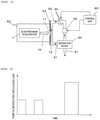
- the apparatus for producing a radionuclide of the sixth embodiment has a configuration similar to that of the apparatus of the first embodiment, but is different from the first embodiment in that the circulation loop 21 is provided with a bypass passage 25, which bypasses the separation device 30, and a flow passage switch 27.
- the apparatus for producing a radionuclide of the first embodiment has the configuration where the fluid 20 passes through the separation device 30 each time the fluid 20 circulates once in the circulation loop 21, the radionuclide is constantly taken out from the separation device 30 during operation of the apparatus.
- the bypass passage 25 is provided, and whether the fluid 20 flows through the bypass passage 25 or flows through the separation device 30 can be selected by the flow passage switch 27.
- the radionuclide is not taken out when the fluid 20 flows through the bypass passage 25, and the radionuclide is taken out only when the fluid 20 flows through the separation device 30. Therefore, according to the apparatus for producing a radionuclide of the sixth embodiment, a timing at which the radionuclide is taken out can be controlled.
- Ac-225 can be produced from Ra-226 which is the raw material.
- FIG. 9 shows an example of amounts of Ra-225 and Ac-225 in the fluid 20 when the fluid 20 containing Ra-226 is irradiated with the braking radiation rays 12 for 20 hours that is a time shorter than the half-life of Ra-225.
- FIG. 9 shows an example of amounts of Ra-225 and Ac-225 in the fluid 20 when the fluid 20 containing Ra-226 is irradiated with the braking radiation rays 12 for 20 hours that is a time shorter than the half-life of Ra-225.
- an irradiation time of the braking radiation rays 12 is much shorter than the half-life of Ra-225, so that the amount of Ra-225 increases with time during irradiation with the braking radiation rays 12 and gradually decreases due to beta decay with the half-life of 14.8 days after the end of the irradiation.
- Ac-225 increases with a delay from an increase of Ra-225 during irradiation with the braking radiation rays 12, increases in response to the gradual decrease of Ra-225 caused by beta decay thereof even after the end of the irradiation, and reaches a maximum amount at about 428 hours after the irradiation, but decreases as Ac-225 is changed to Fr-221which is the progeny nuclide with the half-life of 10.0 days.
- the apparatus for producing a radionuclide of the present embodiment can set the flow passage switch 27 so as to allow the fluid 20 to pass through the separation device 30 during the irradiation and after the irradiation, and Ac-225 is continuously separated and taken out from the take-out portion 31.
- Ac-225 can be intermittently taken out.
- FIG. 10 shows an example of amounts of Ra-225 and Ac-225 in the fluid 20 when the fluid 20 containing Ra-226 is irradiated with the braking radiation rays 12 for 20 hours that is a time shorter than the half-life of Ra-225 as in FIG. 9 .
- the increase and the gradual decrease of Ra-225 in FIG. 10 are similar to those in FIG. 9 .
- Ac-225 increases and reaches a maximum amount at about 428 hours after the irradiation with the braking radiation rays 12, which is also similar to that in FIG. 9 .
- the flow passage switch 27 causes the fluid 20 to flow through the bypass passage 25 during a period of 428 hours after the irradiation with the braking radiation rays 12, but the flow passage switch 27 causes the fluid 20 to flow through the separation device 30 at a time point of 428 hours after the irradiation, and all of Ac-225 in the fluid 20 in the circulation loop 21 is taken out (first separation and purification).
- the flow passage switch 27 causes the fluid 20 to flow through the bypass passage 25 or the circulation in the circulation loop 21 is stopped. Even when the fluid 20 is not irradiated with the braking radiation rays 12, Ac-225 is generated by the beta decay of Ra-225 already generated in the fluid 20, so that the amount of Ac-225 increases again and reaches a maximum amount again at about 428 hours after the first take-out as shown in FIG. 10 . Therefore, in the example of FIG. 10 , the flow passage switch 27 causes the fluid 20 to flow through the separation device 30, and all of Ac-225 in the fluid 20 in the circulation loop 21 is taken out (second separation and purification).
- the flow passage switch 27 causes the fluid 20 to flow through the bypass passage 25 or the circulation in the circulation loop 21 is stopped, and at about 428 hours after the second take-out, the flow passage switch 27 causes the fluid 20 to flow through the separation device 30 and all of Ac-225 in the fluid 20 in the circulation loop 21 is taken out (third separation and purification).
- Ac-225 may be continuously taken out, or may be intermittently taken out.
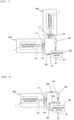
- the radiation generator 50 is not necessary while Ac-225 is continuously or intermittently taken out after the irradiation with the braking radiation rays 12, and therefore, as shown in FIG. 11 , the circulation loop 21 is moved away from in front of the radiation generator 50 and another raw material nuclide 15 or another circulation loop 21 is provided in a portion where the circulation loop 21 has been moved, and whereby the radionuclide in the another nuclide or the another circulation loop 21 can be produced.
- a form of the another raw material nuclide 15 may be a solid or a liquid.
Landscapes
- Physics & Mathematics (AREA)
- Engineering & Computer Science (AREA)
- General Engineering & Computer Science (AREA)
- High Energy & Nuclear Physics (AREA)
- Chemical & Material Sciences (AREA)
- Chemical Kinetics & Catalysis (AREA)
- General Chemical & Material Sciences (AREA)
- Physical Or Chemical Processes And Apparatus (AREA)
- Particle Accelerators (AREA)
Applications Claiming Priority (2)
| Application Number | Priority Date | Filing Date | Title |
|---|---|---|---|
| JP2019089200A JP7194637B2 (ja) | 2019-05-09 | 2019-05-09 | 放射性核種製造装置、および、放射性核種製造方法 |
| PCT/JP2020/005352 WO2020225951A1 (fr) | 2019-05-09 | 2020-02-12 | Appareil de production de radionucléide et procédé de production de radionucléide |
Publications (3)
| Publication Number | Publication Date |
|---|---|
| EP3968342A1 true EP3968342A1 (fr) | 2022-03-16 |
| EP3968342A4 EP3968342A4 (fr) | 2023-01-18 |
| EP3968342B1 EP3968342B1 (fr) | 2024-05-01 |
Family
ID=73044216
Family Applications (1)
| Application Number | Title | Priority Date | Filing Date |
|---|---|---|---|
| EP20802005.7A Active EP3968342B1 (fr) | 2019-05-09 | 2020-02-12 | Appareil de production de radionucléide et procédé de production de radionucléide |
Country Status (4)
| Country | Link |
|---|---|
| US (1) | US20220199277A1 (fr) |
| EP (1) | EP3968342B1 (fr) |
| JP (1) | JP7194637B2 (fr) |
| WO (1) | WO2020225951A1 (fr) |
Families Citing this family (7)
| Publication number | Priority date | Publication date | Assignee | Title |
|---|---|---|---|---|
| WO2020260210A1 (fr) * | 2019-06-25 | 2020-12-30 | The European Union, Represented By The European Commission | Procédé de production d'actinium 225 à partir de radium 226 |
| JP7576509B2 (ja) * | 2021-04-27 | 2024-10-31 | 株式会社日立ハイテク | 放射性核種製造システムおよび放射性核種製造方法 |
| JP7755979B2 (ja) * | 2021-11-25 | 2025-10-17 | 株式会社日立ハイテク | 放射性核種製造システムおよび放射性核種製造方法 |
| JP7641884B2 (ja) * | 2021-12-01 | 2025-03-07 | 株式会社日立ハイテク | 放射性核種製造システムおよび放射性核種製造方法 |
| JP7765340B2 (ja) * | 2022-04-19 | 2025-11-06 | 株式会社日立ハイテク | 放射性核種製造システムおよび放射性核種製造方法 |
| CN115472316A (zh) * | 2022-09-16 | 2022-12-13 | 中国核动力研究设计院 | 一种燃料棒、棒束组件及倒料方法 |
| DE102023129218A1 (de) * | 2023-10-24 | 2025-04-24 | ERT GmbH - European Radiopharmacy Technologies | System und Verfahren für die Erzeugung von Radionukliden |
Family Cites Families (11)
| Publication number | Priority date | Publication date | Assignee | Title |
|---|---|---|---|---|
| LU87684A1 (de) * | 1990-02-23 | 1991-10-08 | Euratom | Verfahren zur erzeugung von aktinium-225 und wismut-213 |
| EA200100079A1 (ru) * | 1998-06-26 | 2001-10-22 | Пол М. Браун | Обработка радиоактивных отходов посредством стимулированного радиоактивного распада |
| RU2260217C2 (ru) * | 1999-11-30 | 2005-09-10 | Скотт ШЕНТЕР | Способ получения актиния-225 и его дочерних элементов |
| JP2002221600A (ja) * | 2001-01-25 | 2002-08-09 | Mitsubishi Heavy Ind Ltd | 照射装置用ターゲット、および照射装置 |
| DE102004022200B4 (de) * | 2004-05-05 | 2006-07-20 | Actinium Pharmaceuticals, Inc. | Radium-Target sowie Verfahren zu seiner Herstellung |
| JP4618732B2 (ja) * | 2006-10-20 | 2011-01-26 | 独立行政法人 日本原子力研究開発機構 | 放射性モリブデンの製造方法と装置 |
| EP2250649B1 (fr) * | 2008-02-05 | 2012-05-09 | The Curators Of The University Of Missouri | Production de radio-isotopes et traitement d une solution d un matériau cible |
| US8270554B2 (en) * | 2009-05-19 | 2012-09-18 | The United States Of America, As Represented By The United States Department Of Energy | Methods of producing cesium-131 |
| US9196389B2 (en) * | 2012-11-13 | 2015-11-24 | General Atomics | Systems and methods for efficiently preparing plutonium-238 with high isotopic purity |
| JP6478558B2 (ja) * | 2014-10-20 | 2019-03-06 | 株式会社日立製作所 | 放射性薬剤製造システム、放射性薬剤製造装置および放射性薬剤の製造方法 |
| JP6873484B2 (ja) * | 2016-02-03 | 2021-05-19 | 国立研究開発法人理化学研究所 | ミュオン照射による放射性物質の製造方法 |
-
2019
- 2019-05-09 JP JP2019089200A patent/JP7194637B2/ja active Active
-
2020
- 2020-02-12 EP EP20802005.7A patent/EP3968342B1/fr active Active
- 2020-02-12 WO PCT/JP2020/005352 patent/WO2020225951A1/fr not_active Ceased
- 2020-02-12 US US17/601,467 patent/US20220199277A1/en not_active Abandoned
Also Published As
| Publication number | Publication date |
|---|---|
| JP7194637B2 (ja) | 2022-12-22 |
| JP2020183926A (ja) | 2020-11-12 |
| EP3968342B1 (fr) | 2024-05-01 |
| WO2020225951A1 (fr) | 2020-11-12 |
| US20220199277A1 (en) | 2022-06-23 |
| EP3968342A4 (fr) | 2023-01-18 |
Similar Documents
| Publication | Publication Date | Title |
|---|---|---|
| EP3968342B1 (fr) | Appareil de production de radionucléide et procédé de production de radionucléide | |
| Habs et al. | Production of medical radioisotopes with high specific activity in photonuclear reactions with γ-beams of high intensity and large brilliance | |
| EP2606489B1 (fr) | Procédé de production d'isotopes et plus particulièrement procédé de production de radio-isotopes par irradiation avec un faisceau de rayons gamma | |
| EP2862181B1 (fr) | Appareil et procédés servant à la transmutation d'éléments | |
| EP2788989B1 (fr) | Générateur de radionucléides comprenant un premier et un second atome d'un premier élément | |
| JP2013511046A (ja) | Mo−99/tc−99m等の医療同位元素ならびにi−131を含む放射性ヨウ素同位元素のオンデマンド生成のための技術 | |
| US20150332799A1 (en) | Methods and apparatus for the production of isotopes | |
| JP2022536990A (ja) | ラジウム-226からアクチニウム-225を製造するための方法 | |
| Grundler et al. | The metamorphosis of radionuclide production and development at Paul Scherrer Institute | |
| Radford et al. | Methods for the Production of Radionuclides for Medicine | |
| Pang et al. | Progress of photonuclear cross sections for medical radioisotope production at the SLEGS energy domain | |
| US20220215979A1 (en) | Method and system for producing medical radioisotopes | |
| Vallabhajosula | Production of radionuclides | |
| JP5522564B2 (ja) | 放射性同位元素の製造方法及び装置 | |
| WO2018013733A1 (fr) | Production de radionucléide à base d'ammoniac n-13 | |
| JP5522567B2 (ja) | 放射性同位元素の製造方法及び装置 | |
| Lundqvist | Radionuclide production | |
| Pashentsev | Production of radionuclides for cyclotron positron-emission tomography | |
| EP4332994A1 (fr) | Système de production de radionucléides et procédé de production de radionucléides | |
| Khan et al. | A Systematic Review of Medical Cyclotron, Producing F-18 & FDG Radio Isotopes for Pet Scan Imaging | |
| Luo | Preparation of radionuclides | |
| EP4542581A1 (fr) | Système de production de radionucléides et procédé de production de radionucléides | |
| WO2026050682A1 (fr) | Systèmes et procédés de production d'isotopes à l'aide de sources de neutrons rapides alimentées par des accélérateurs à faible énergie | |
| Loveless et al. | Production of Therapeutic Radionuclides | |
| Poggenburg | The nuclear reactor and its products |
Legal Events
| Date | Code | Title | Description |
|---|---|---|---|
| STAA | Information on the status of an ep patent application or granted ep patent |
Free format text: STATUS: THE INTERNATIONAL PUBLICATION HAS BEEN MADE |
|
| PUAI | Public reference made under article 153(3) epc to a published international application that has entered the european phase |
Free format text: ORIGINAL CODE: 0009012 |
|
| STAA | Information on the status of an ep patent application or granted ep patent |
Free format text: STATUS: REQUEST FOR EXAMINATION WAS MADE |
|
| 17P | Request for examination filed |
Effective date: 20211209 |
|
| AK | Designated contracting states |
Kind code of ref document: A1 Designated state(s): AL AT BE BG CH CY CZ DE DK EE ES FI FR GB GR HR HU IE IS IT LI LT LU LV MC MK MT NL NO PL PT RO RS SE SI SK SM TR |
|
| DAV | Request for validation of the european patent (deleted) | ||
| DAX | Request for extension of the european patent (deleted) | ||
| A4 | Supplementary search report drawn up and despatched |
Effective date: 20221216 |
|
| RIC1 | Information provided on ipc code assigned before grant |
Ipc: G21G 1/00 20060101ALN20221212BHEP Ipc: G21K 5/08 20060101ALI20221212BHEP Ipc: G21G 1/12 20060101ALI20221212BHEP Ipc: G21G 4/08 20060101AFI20221212BHEP |
|
| GRAP | Despatch of communication of intention to grant a patent |
Free format text: ORIGINAL CODE: EPIDOSNIGR1 |
|
| STAA | Information on the status of an ep patent application or granted ep patent |
Free format text: STATUS: GRANT OF PATENT IS INTENDED |
|
| RIC1 | Information provided on ipc code assigned before grant |
Ipc: G21G 1/00 20060101ALN20231108BHEP Ipc: G21K 5/08 20060101ALI20231108BHEP Ipc: G21G 1/12 20060101ALI20231108BHEP Ipc: G21G 4/08 20060101AFI20231108BHEP |
|
| INTG | Intention to grant announced |
Effective date: 20231123 |
|
| GRAS | Grant fee paid |
Free format text: ORIGINAL CODE: EPIDOSNIGR3 |
|
| GRAA | (expected) grant |
Free format text: ORIGINAL CODE: 0009210 |
|
| STAA | Information on the status of an ep patent application or granted ep patent |
Free format text: STATUS: THE PATENT HAS BEEN GRANTED |
|
| AK | Designated contracting states |
Kind code of ref document: B1 Designated state(s): AL AT BE BG CH CY CZ DE DK EE ES FI FR GB GR HR HU IE IS IT LI LT LU LV MC MK MT NL NO PL PT RO RS SE SI SK SM TR |
|
| REG | Reference to a national code |
Ref country code: GB Ref legal event code: FG4D |
|
| REG | Reference to a national code |
Ref country code: CH Ref legal event code: EP |
|
| REG | Reference to a national code |
Ref country code: IE Ref legal event code: FG4D |
|
| REG | Reference to a national code |
Ref country code: DE Ref legal event code: R096 Ref document number: 602020030290 Country of ref document: DE |
|
| REG | Reference to a national code |
Ref country code: NL Ref legal event code: FP |
|
| REG | Reference to a national code |
Ref country code: LT Ref legal event code: MG9D |
|
| PG25 | Lapsed in a contracting state [announced via postgrant information from national office to epo] |
Ref country code: IS Free format text: LAPSE BECAUSE OF FAILURE TO SUBMIT A TRANSLATION OF THE DESCRIPTION OR TO PAY THE FEE WITHIN THE PRESCRIBED TIME-LIMIT Effective date: 20240901 |
|
| PG25 | Lapsed in a contracting state [announced via postgrant information from national office to epo] |
Ref country code: BG Free format text: LAPSE BECAUSE OF FAILURE TO SUBMIT A TRANSLATION OF THE DESCRIPTION OR TO PAY THE FEE WITHIN THE PRESCRIBED TIME-LIMIT Effective date: 20240501 |
|
| PG25 | Lapsed in a contracting state [announced via postgrant information from national office to epo] |
Ref country code: FI Free format text: LAPSE BECAUSE OF FAILURE TO SUBMIT A TRANSLATION OF THE DESCRIPTION OR TO PAY THE FEE WITHIN THE PRESCRIBED TIME-LIMIT Effective date: 20240501 Ref country code: HR Free format text: LAPSE BECAUSE OF FAILURE TO SUBMIT A TRANSLATION OF THE DESCRIPTION OR TO PAY THE FEE WITHIN THE PRESCRIBED TIME-LIMIT Effective date: 20240501 |
|
| PG25 | Lapsed in a contracting state [announced via postgrant information from national office to epo] |
Ref country code: GR Free format text: LAPSE BECAUSE OF FAILURE TO SUBMIT A TRANSLATION OF THE DESCRIPTION OR TO PAY THE FEE WITHIN THE PRESCRIBED TIME-LIMIT Effective date: 20240802 |
|
| PG25 | Lapsed in a contracting state [announced via postgrant information from national office to epo] |
Ref country code: PT Free format text: LAPSE BECAUSE OF FAILURE TO SUBMIT A TRANSLATION OF THE DESCRIPTION OR TO PAY THE FEE WITHIN THE PRESCRIBED TIME-LIMIT Effective date: 20240902 |
|
| REG | Reference to a national code |
Ref country code: AT Ref legal event code: MK05 Ref document number: 1683557 Country of ref document: AT Kind code of ref document: T Effective date: 20240501 |
|
| PG25 | Lapsed in a contracting state [announced via postgrant information from national office to epo] |
Ref country code: ES Free format text: LAPSE BECAUSE OF FAILURE TO SUBMIT A TRANSLATION OF THE DESCRIPTION OR TO PAY THE FEE WITHIN THE PRESCRIBED TIME-LIMIT Effective date: 20240501 |
|
| PG25 | Lapsed in a contracting state [announced via postgrant information from national office to epo] |
Ref country code: AT Free format text: LAPSE BECAUSE OF FAILURE TO SUBMIT A TRANSLATION OF THE DESCRIPTION OR TO PAY THE FEE WITHIN THE PRESCRIBED TIME-LIMIT Effective date: 20240501 |
|
| PG25 | Lapsed in a contracting state [announced via postgrant information from national office to epo] |
Ref country code: PL Free format text: LAPSE BECAUSE OF FAILURE TO SUBMIT A TRANSLATION OF THE DESCRIPTION OR TO PAY THE FEE WITHIN THE PRESCRIBED TIME-LIMIT Effective date: 20240501 |
|
| PG25 | Lapsed in a contracting state [announced via postgrant information from national office to epo] |
Ref country code: LV Free format text: LAPSE BECAUSE OF FAILURE TO SUBMIT A TRANSLATION OF THE DESCRIPTION OR TO PAY THE FEE WITHIN THE PRESCRIBED TIME-LIMIT Effective date: 20240501 |
|
| PG25 | Lapsed in a contracting state [announced via postgrant information from national office to epo] |
Ref country code: PT Free format text: LAPSE BECAUSE OF FAILURE TO SUBMIT A TRANSLATION OF THE DESCRIPTION OR TO PAY THE FEE WITHIN THE PRESCRIBED TIME-LIMIT Effective date: 20240902 Ref country code: PL Free format text: LAPSE BECAUSE OF FAILURE TO SUBMIT A TRANSLATION OF THE DESCRIPTION OR TO PAY THE FEE WITHIN THE PRESCRIBED TIME-LIMIT Effective date: 20240501 Ref country code: NO Free format text: LAPSE BECAUSE OF FAILURE TO SUBMIT A TRANSLATION OF THE DESCRIPTION OR TO PAY THE FEE WITHIN THE PRESCRIBED TIME-LIMIT Effective date: 20240801 Ref country code: LV Free format text: LAPSE BECAUSE OF FAILURE TO SUBMIT A TRANSLATION OF THE DESCRIPTION OR TO PAY THE FEE WITHIN THE PRESCRIBED TIME-LIMIT Effective date: 20240501 Ref country code: IS Free format text: LAPSE BECAUSE OF FAILURE TO SUBMIT A TRANSLATION OF THE DESCRIPTION OR TO PAY THE FEE WITHIN THE PRESCRIBED TIME-LIMIT Effective date: 20240901 Ref country code: HR Free format text: LAPSE BECAUSE OF FAILURE TO SUBMIT A TRANSLATION OF THE DESCRIPTION OR TO PAY THE FEE WITHIN THE PRESCRIBED TIME-LIMIT Effective date: 20240501 Ref country code: GR Free format text: LAPSE BECAUSE OF FAILURE TO SUBMIT A TRANSLATION OF THE DESCRIPTION OR TO PAY THE FEE WITHIN THE PRESCRIBED TIME-LIMIT Effective date: 20240802 Ref country code: FI Free format text: LAPSE BECAUSE OF FAILURE TO SUBMIT A TRANSLATION OF THE DESCRIPTION OR TO PAY THE FEE WITHIN THE PRESCRIBED TIME-LIMIT Effective date: 20240501 Ref country code: ES Free format text: LAPSE BECAUSE OF FAILURE TO SUBMIT A TRANSLATION OF THE DESCRIPTION OR TO PAY THE FEE WITHIN THE PRESCRIBED TIME-LIMIT Effective date: 20240501 Ref country code: BG Free format text: LAPSE BECAUSE OF FAILURE TO SUBMIT A TRANSLATION OF THE DESCRIPTION OR TO PAY THE FEE WITHIN THE PRESCRIBED TIME-LIMIT Effective date: 20240501 Ref country code: AT Free format text: LAPSE BECAUSE OF FAILURE TO SUBMIT A TRANSLATION OF THE DESCRIPTION OR TO PAY THE FEE WITHIN THE PRESCRIBED TIME-LIMIT Effective date: 20240501 Ref country code: RS Free format text: LAPSE BECAUSE OF FAILURE TO SUBMIT A TRANSLATION OF THE DESCRIPTION OR TO PAY THE FEE WITHIN THE PRESCRIBED TIME-LIMIT Effective date: 20240801 |
|
| PG25 | Lapsed in a contracting state [announced via postgrant information from national office to epo] |
Ref country code: DK Free format text: LAPSE BECAUSE OF FAILURE TO SUBMIT A TRANSLATION OF THE DESCRIPTION OR TO PAY THE FEE WITHIN THE PRESCRIBED TIME-LIMIT Effective date: 20240501 |
|
| PG25 | Lapsed in a contracting state [announced via postgrant information from national office to epo] |
Ref country code: EE Free format text: LAPSE BECAUSE OF FAILURE TO SUBMIT A TRANSLATION OF THE DESCRIPTION OR TO PAY THE FEE WITHIN THE PRESCRIBED TIME-LIMIT Effective date: 20240501 |
|
| PG25 | Lapsed in a contracting state [announced via postgrant information from national office to epo] |
Ref country code: CZ Free format text: LAPSE BECAUSE OF FAILURE TO SUBMIT A TRANSLATION OF THE DESCRIPTION OR TO PAY THE FEE WITHIN THE PRESCRIBED TIME-LIMIT Effective date: 20240501 |
|
| PG25 | Lapsed in a contracting state [announced via postgrant information from national office to epo] |
Ref country code: SK Free format text: LAPSE BECAUSE OF FAILURE TO SUBMIT A TRANSLATION OF THE DESCRIPTION OR TO PAY THE FEE WITHIN THE PRESCRIBED TIME-LIMIT Effective date: 20240501 Ref country code: RO Free format text: LAPSE BECAUSE OF FAILURE TO SUBMIT A TRANSLATION OF THE DESCRIPTION OR TO PAY THE FEE WITHIN THE PRESCRIBED TIME-LIMIT Effective date: 20240501 |
|
| PG25 | Lapsed in a contracting state [announced via postgrant information from national office to epo] |
Ref country code: SM Free format text: LAPSE BECAUSE OF FAILURE TO SUBMIT A TRANSLATION OF THE DESCRIPTION OR TO PAY THE FEE WITHIN THE PRESCRIBED TIME-LIMIT Effective date: 20240501 |
|
| PG25 | Lapsed in a contracting state [announced via postgrant information from national office to epo] |
Ref country code: SM Free format text: LAPSE BECAUSE OF FAILURE TO SUBMIT A TRANSLATION OF THE DESCRIPTION OR TO PAY THE FEE WITHIN THE PRESCRIBED TIME-LIMIT Effective date: 20240501 Ref country code: SK Free format text: LAPSE BECAUSE OF FAILURE TO SUBMIT A TRANSLATION OF THE DESCRIPTION OR TO PAY THE FEE WITHIN THE PRESCRIBED TIME-LIMIT Effective date: 20240501 Ref country code: RO Free format text: LAPSE BECAUSE OF FAILURE TO SUBMIT A TRANSLATION OF THE DESCRIPTION OR TO PAY THE FEE WITHIN THE PRESCRIBED TIME-LIMIT Effective date: 20240501 Ref country code: EE Free format text: LAPSE BECAUSE OF FAILURE TO SUBMIT A TRANSLATION OF THE DESCRIPTION OR TO PAY THE FEE WITHIN THE PRESCRIBED TIME-LIMIT Effective date: 20240501 Ref country code: DK Free format text: LAPSE BECAUSE OF FAILURE TO SUBMIT A TRANSLATION OF THE DESCRIPTION OR TO PAY THE FEE WITHIN THE PRESCRIBED TIME-LIMIT Effective date: 20240501 Ref country code: CZ Free format text: LAPSE BECAUSE OF FAILURE TO SUBMIT A TRANSLATION OF THE DESCRIPTION OR TO PAY THE FEE WITHIN THE PRESCRIBED TIME-LIMIT Effective date: 20240501 |
|
| REG | Reference to a national code |
Ref country code: DE Ref legal event code: R097 Ref document number: 602020030290 Country of ref document: DE |
|
| PG25 | Lapsed in a contracting state [announced via postgrant information from national office to epo] |
Ref country code: IT Free format text: LAPSE BECAUSE OF FAILURE TO SUBMIT A TRANSLATION OF THE DESCRIPTION OR TO PAY THE FEE WITHIN THE PRESCRIBED TIME-LIMIT Effective date: 20240501 |
|
| PLBE | No opposition filed within time limit |
Free format text: ORIGINAL CODE: 0009261 |
|
| STAA | Information on the status of an ep patent application or granted ep patent |
Free format text: STATUS: NO OPPOSITION FILED WITHIN TIME LIMIT |
|
| 26N | No opposition filed |
Effective date: 20250204 |
|
| PG25 | Lapsed in a contracting state [announced via postgrant information from national office to epo] |
Ref country code: SI Free format text: LAPSE BECAUSE OF FAILURE TO SUBMIT A TRANSLATION OF THE DESCRIPTION OR TO PAY THE FEE WITHIN THE PRESCRIBED TIME-LIMIT Effective date: 20240501 |
|
| PG25 | Lapsed in a contracting state [announced via postgrant information from national office to epo] |
Ref country code: SE Free format text: LAPSE BECAUSE OF FAILURE TO SUBMIT A TRANSLATION OF THE DESCRIPTION OR TO PAY THE FEE WITHIN THE PRESCRIBED TIME-LIMIT Effective date: 20240501 |
|
| PG25 | Lapsed in a contracting state [announced via postgrant information from national office to epo] |
Ref country code: MC Free format text: LAPSE BECAUSE OF FAILURE TO SUBMIT A TRANSLATION OF THE DESCRIPTION OR TO PAY THE FEE WITHIN THE PRESCRIBED TIME-LIMIT Effective date: 20240501 |
|
| REG | Reference to a national code |
Ref country code: CH Ref legal event code: PL |
|
| PG25 | Lapsed in a contracting state [announced via postgrant information from national office to epo] |
Ref country code: LU Free format text: LAPSE BECAUSE OF NON-PAYMENT OF DUE FEES Effective date: 20250212 |
|
| PG25 | Lapsed in a contracting state [announced via postgrant information from national office to epo] |
Ref country code: CH Free format text: LAPSE BECAUSE OF NON-PAYMENT OF DUE FEES Effective date: 20250228 |
|
| PG25 | Lapsed in a contracting state [announced via postgrant information from national office to epo] |
Ref country code: FR Free format text: LAPSE BECAUSE OF NON-PAYMENT OF DUE FEES Effective date: 20250228 |
|
| PG25 | Lapsed in a contracting state [announced via postgrant information from national office to epo] |
Ref country code: IE Free format text: LAPSE BECAUSE OF NON-PAYMENT OF DUE FEES Effective date: 20250212 |
|
| PGFP | Annual fee paid to national office [announced via postgrant information from national office to epo] |
Ref country code: NL Payment date: 20260218 Year of fee payment: 7 |
|
| PGFP | Annual fee paid to national office [announced via postgrant information from national office to epo] |
Ref country code: GB Payment date: 20260219 Year of fee payment: 7 |
|
| PGFP | Annual fee paid to national office [announced via postgrant information from national office to epo] |
Ref country code: DE Payment date: 20260228 Year of fee payment: 7 |
|
| PGFP | Annual fee paid to national office [announced via postgrant information from national office to epo] |
Ref country code: BE Payment date: 20260218 Year of fee payment: 7 |