EP3970965A1 - Mehrschichtiger aufbau mit dämpfungseigenschaften - Google Patents
Mehrschichtiger aufbau mit dämpfungseigenschaften Download PDFInfo
- Publication number
- EP3970965A1 EP3970965A1 EP20196740.3A EP20196740A EP3970965A1 EP 3970965 A1 EP3970965 A1 EP 3970965A1 EP 20196740 A EP20196740 A EP 20196740A EP 3970965 A1 EP3970965 A1 EP 3970965A1
- Authority
- EP
- European Patent Office
- Prior art keywords
- layer
- mol
- multilayer construction
- sensitive adhesive
- pressure sensitive
- Prior art date
- Legal status (The legal status is an assumption and is not a legal conclusion. Google has not performed a legal analysis and makes no representation as to the accuracy of the status listed.)
- Withdrawn
Links
- 238000010276 construction Methods 0.000 title claims abstract description 106
- 238000013016 damping Methods 0.000 title claims description 37
- 125000006850 spacer group Chemical group 0.000 claims abstract description 83
- 239000000203 mixture Substances 0.000 claims abstract description 82
- 239000004820 Pressure-sensitive adhesive Substances 0.000 claims abstract description 71
- 239000002243 precursor Substances 0.000 claims abstract description 59
- 229920001577 copolymer Polymers 0.000 claims abstract description 37
- 239000000463 material Substances 0.000 claims description 36
- 239000002131 composite material Substances 0.000 claims description 32
- 230000005855 radiation Effects 0.000 claims description 21
- 229920001971 elastomer Polymers 0.000 claims description 7
- 238000004519 manufacturing process Methods 0.000 claims description 7
- 239000005060 rubber Substances 0.000 claims description 7
- 229920003023 plastic Polymers 0.000 claims description 6
- 239000004033 plastic Substances 0.000 claims description 6
- 239000004814 polyurethane Substances 0.000 claims description 6
- 229920002635 polyurethane Polymers 0.000 claims description 6
- 239000004952 Polyamide Substances 0.000 claims description 5
- 239000011521 glass Substances 0.000 claims description 5
- 239000002184 metal Substances 0.000 claims description 5
- 229910052751 metal Inorganic materials 0.000 claims description 5
- 150000002739 metals Chemical class 0.000 claims description 5
- 229920002647 polyamide Polymers 0.000 claims description 5
- 229910052782 aluminium Inorganic materials 0.000 claims description 4
- XAGFODPZIPBFFR-UHFFFAOYSA-N aluminium Chemical compound [Al] XAGFODPZIPBFFR-UHFFFAOYSA-N 0.000 claims description 4
- 239000004417 polycarbonate Substances 0.000 claims description 4
- 229920000515 polycarbonate Polymers 0.000 claims description 4
- 229920000728 polyester Polymers 0.000 claims description 4
- 229920002725 thermoplastic elastomer Polymers 0.000 claims description 4
- 229910052799 carbon Inorganic materials 0.000 claims description 3
- 239000000919 ceramic Substances 0.000 claims description 3
- 229920001169 thermoplastic Polymers 0.000 claims description 3
- 239000012815 thermoplastic material Substances 0.000 claims description 3
- 239000004416 thermosoftening plastic Substances 0.000 claims description 3
- 229920002126 Acrylic acid copolymer Polymers 0.000 claims description 2
- OKTJSMMVPCPJKN-UHFFFAOYSA-N Carbon Chemical compound [C] OKTJSMMVPCPJKN-UHFFFAOYSA-N 0.000 claims description 2
- 239000004721 Polyphenylene oxide Substances 0.000 claims description 2
- RTAQQCXQSZGOHL-UHFFFAOYSA-N Titanium Chemical compound [Ti] RTAQQCXQSZGOHL-UHFFFAOYSA-N 0.000 claims description 2
- 239000000956 alloy Substances 0.000 claims description 2
- 229910045601 alloy Inorganic materials 0.000 claims description 2
- 239000004927 clay Substances 0.000 claims description 2
- 229920002239 polyacrylonitrile Polymers 0.000 claims description 2
- 229920000098 polyolefin Polymers 0.000 claims description 2
- 229920006380 polyphenylene oxide Polymers 0.000 claims description 2
- 229920000915 polyvinyl chloride Polymers 0.000 claims description 2
- 239000010935 stainless steel Substances 0.000 claims description 2
- 229910001220 stainless steel Inorganic materials 0.000 claims description 2
- 239000010936 titanium Substances 0.000 claims description 2
- 229910052719 titanium Inorganic materials 0.000 claims description 2
- 229910052570 clay Inorganic materials 0.000 claims 1
- 239000010410 layer Substances 0.000 description 188
- 239000000178 monomer Substances 0.000 description 34
- 125000000524 functional group Chemical group 0.000 description 32
- 238000000034 method Methods 0.000 description 21
- 239000012855 volatile organic compound Substances 0.000 description 20
- CERQOIWHTDAKMF-UHFFFAOYSA-N Methacrylic acid Chemical compound CC(=C)C(O)=O CERQOIWHTDAKMF-UHFFFAOYSA-N 0.000 description 17
- 238000012360 testing method Methods 0.000 description 14
- 238000010998 test method Methods 0.000 description 13
- 230000009286 beneficial effect Effects 0.000 description 12
- -1 polypropylene Polymers 0.000 description 11
- 239000003981 vehicle Substances 0.000 description 11
- 229920000642 polymer Polymers 0.000 description 10
- 238000004458 analytical method Methods 0.000 description 9
- 239000012965 benzophenone Substances 0.000 description 8
- 150000008366 benzophenones Chemical class 0.000 description 8
- 238000005259 measurement Methods 0.000 description 8
- 150000001875 compounds Chemical class 0.000 description 7
- 239000004743 Polypropylene Substances 0.000 description 6
- 238000001723 curing Methods 0.000 description 6
- 238000003795 desorption Methods 0.000 description 6
- 229920003122 (meth)acrylate-based copolymer Polymers 0.000 description 5
- NIXOWILDQLNWCW-UHFFFAOYSA-M Acrylate Chemical compound [O-]C(=O)C=C NIXOWILDQLNWCW-UHFFFAOYSA-M 0.000 description 5
- 229920001155 polypropylene Polymers 0.000 description 5
- 239000000758 substrate Substances 0.000 description 5
- 238000005452 bending Methods 0.000 description 4
- 239000003999 initiator Substances 0.000 description 4
- 239000003190 viscoelastic substance Substances 0.000 description 4
- YXFVVABEGXRONW-UHFFFAOYSA-N Toluene Chemical compound CC1=CC=CC=C1 YXFVVABEGXRONW-UHFFFAOYSA-N 0.000 description 3
- 230000008901 benefit Effects 0.000 description 3
- 229920001400 block copolymer Polymers 0.000 description 3
- 239000012943 hotmelt Substances 0.000 description 3
- 239000002954 polymerization reaction product Substances 0.000 description 3
- 238000010526 radical polymerization reaction Methods 0.000 description 3
- 239000002994 raw material Substances 0.000 description 3
- 229920006132 styrene block copolymer Polymers 0.000 description 3
- SMZOUWXMTYCWNB-UHFFFAOYSA-N 2-(2-methoxy-5-methylphenyl)ethanamine Chemical compound COC1=CC=C(C)C=C1CCN SMZOUWXMTYCWNB-UHFFFAOYSA-N 0.000 description 2
- JAHNSTQSQJOJLO-UHFFFAOYSA-N 2-(3-fluorophenyl)-1h-imidazole Chemical compound FC1=CC=CC(C=2NC=CN=2)=C1 JAHNSTQSQJOJLO-UHFFFAOYSA-N 0.000 description 2
- GOXQRTZXKQZDDN-UHFFFAOYSA-N 2-Ethylhexyl acrylate Chemical compound CCCCC(CC)COC(=O)C=C GOXQRTZXKQZDDN-UHFFFAOYSA-N 0.000 description 2
- NIXOWILDQLNWCW-UHFFFAOYSA-N 2-Propenoic acid Natural products OC(=O)C=C NIXOWILDQLNWCW-UHFFFAOYSA-N 0.000 description 2
- DXPPIEDUBFUSEZ-UHFFFAOYSA-N 6-methylheptyl prop-2-enoate Chemical compound CC(C)CCCCCOC(=O)C=C DXPPIEDUBFUSEZ-UHFFFAOYSA-N 0.000 description 2
- UYWQUFXKFGHYNT-UHFFFAOYSA-N Benzylformate Chemical class O=COCC1=CC=CC=C1 UYWQUFXKFGHYNT-UHFFFAOYSA-N 0.000 description 2
- SOGAXMICEFXMKE-UHFFFAOYSA-N Butylmethacrylate Chemical compound CCCCOC(=O)C(C)=C SOGAXMICEFXMKE-UHFFFAOYSA-N 0.000 description 2
- VZCYOOQTPOCHFL-OWOJBTEDSA-N Fumaric acid Chemical compound OC(=O)\C=C\C(O)=O VZCYOOQTPOCHFL-OWOJBTEDSA-N 0.000 description 2
- 229930040373 Paraformaldehyde Natural products 0.000 description 2
- 239000004698 Polyethylene Substances 0.000 description 2
- 229910000831 Steel Inorganic materials 0.000 description 2
- 125000005396 acrylic acid ester group Chemical group 0.000 description 2
- 239000004676 acrylonitrile butadiene styrene Substances 0.000 description 2
- XXROGKLTLUQVRX-UHFFFAOYSA-N allyl alcohol Chemical compound OCC=C XXROGKLTLUQVRX-UHFFFAOYSA-N 0.000 description 2
- MTAZNLWOLGHBHU-UHFFFAOYSA-N butadiene-styrene rubber Chemical compound C=CC=C.C=CC1=CC=CC=C1 MTAZNLWOLGHBHU-UHFFFAOYSA-N 0.000 description 2
- 150000001735 carboxylic acids Chemical class 0.000 description 2
- 239000003795 chemical substances by application Substances 0.000 description 2
- 230000000052 comparative effect Effects 0.000 description 2
- 239000000839 emulsion Substances 0.000 description 2
- BXOUVIIITJXIKB-UHFFFAOYSA-N ethene;styrene Chemical group C=C.C=CC1=CC=CC=C1 BXOUVIIITJXIKB-UHFFFAOYSA-N 0.000 description 2
- 238000005227 gel permeation chromatography Methods 0.000 description 2
- DCAYPVUWAIABOU-UHFFFAOYSA-N hexadecane Chemical compound CCCCCCCCCCCCCCCC DCAYPVUWAIABOU-UHFFFAOYSA-N 0.000 description 2
- 229920001903 high density polyethylene Polymers 0.000 description 2
- 239000004700 high-density polyethylene Substances 0.000 description 2
- 238000003475 lamination Methods 0.000 description 2
- 238000007726 management method Methods 0.000 description 2
- 125000005397 methacrylic acid ester group Chemical group 0.000 description 2
- LVHBHZANLOWSRM-UHFFFAOYSA-N methylenebutanedioic acid Natural products OC(=O)CC(=C)C(O)=O LVHBHZANLOWSRM-UHFFFAOYSA-N 0.000 description 2
- 239000004005 microsphere Substances 0.000 description 2
- ULDDEWDFUNBUCM-UHFFFAOYSA-N pentyl prop-2-enoate Chemical compound CCCCCOC(=O)C=C ULDDEWDFUNBUCM-UHFFFAOYSA-N 0.000 description 2
- 229920003229 poly(methyl methacrylate) Polymers 0.000 description 2
- 229920000573 polyethylene Polymers 0.000 description 2
- 238000006116 polymerization reaction Methods 0.000 description 2
- 239000004926 polymethyl methacrylate Substances 0.000 description 2
- 229920006324 polyoxymethylene Polymers 0.000 description 2
- 238000012545 processing Methods 0.000 description 2
- 238000003847 radiation curing Methods 0.000 description 2
- 150000003254 radicals Chemical class 0.000 description 2
- 229920005604 random copolymer Polymers 0.000 description 2
- 238000012764 semi-quantitative analysis Methods 0.000 description 2
- 239000000243 solution Substances 0.000 description 2
- 239000010959 steel Substances 0.000 description 2
- 239000000126 substance Substances 0.000 description 2
- VZCYOOQTPOCHFL-UHFFFAOYSA-N trans-butenedioic acid Natural products OC(=O)C=CC(O)=O VZCYOOQTPOCHFL-UHFFFAOYSA-N 0.000 description 2
- 238000012546 transfer Methods 0.000 description 2
- 239000001124 (E)-prop-1-ene-1,2,3-tricarboxylic acid Substances 0.000 description 1
- 229920002818 (Hydroxyethyl)methacrylate Polymers 0.000 description 1
- WMUBNWIGNSIRDH-UHFFFAOYSA-N 2,3,3-trichloroprop-2-enoic acid Chemical compound OC(=O)C(Cl)=C(Cl)Cl WMUBNWIGNSIRDH-UHFFFAOYSA-N 0.000 description 1
- WDQMWEYDKDCEHT-UHFFFAOYSA-N 2-ethylhexyl 2-methylprop-2-enoate Chemical compound CCCCC(CC)COC(=O)C(C)=C WDQMWEYDKDCEHT-UHFFFAOYSA-N 0.000 description 1
- OMIGHNLMNHATMP-UHFFFAOYSA-N 2-hydroxyethyl prop-2-enoate Chemical compound OCCOC(=O)C=C OMIGHNLMNHATMP-UHFFFAOYSA-N 0.000 description 1
- GNSFRPWPOGYVLO-UHFFFAOYSA-N 3-hydroxypropyl 2-methylprop-2-enoate Chemical compound CC(=C)C(=O)OCCCO GNSFRPWPOGYVLO-UHFFFAOYSA-N 0.000 description 1
- QZPSOSOOLFHYRR-UHFFFAOYSA-N 3-hydroxypropyl prop-2-enoate Chemical compound OCCCOC(=O)C=C QZPSOSOOLFHYRR-UHFFFAOYSA-N 0.000 description 1
- YYPNJNDODFVZLE-UHFFFAOYSA-N 3-methylbut-2-enoic acid Chemical compound CC(C)=CC(O)=O YYPNJNDODFVZLE-UHFFFAOYSA-N 0.000 description 1
- CYUZOYPRAQASLN-UHFFFAOYSA-N 3-prop-2-enoyloxypropanoic acid Chemical compound OC(=O)CCOC(=O)C=C CYUZOYPRAQASLN-UHFFFAOYSA-N 0.000 description 1
- XFOFBPRPOAWWPA-UHFFFAOYSA-N 6-hydroxyhexyl 2-methylprop-2-enoate Chemical compound CC(=C)C(=O)OCCCCCCO XFOFBPRPOAWWPA-UHFFFAOYSA-N 0.000 description 1
- NQSLZEHVGKWKAY-UHFFFAOYSA-N 6-methylheptyl 2-methylprop-2-enoate Chemical compound CC(C)CCCCCOC(=O)C(C)=C NQSLZEHVGKWKAY-UHFFFAOYSA-N 0.000 description 1
- 229910000838 Al alloy Inorganic materials 0.000 description 1
- 229920000049 Carbon (fiber) Polymers 0.000 description 1
- 229920002943 EPDM rubber Polymers 0.000 description 1
- 229920002430 Fibre-reinforced plastic Polymers 0.000 description 1
- 235000015842 Hesperis Nutrition 0.000 description 1
- WOBHKFSMXKNTIM-UHFFFAOYSA-N Hydroxyethyl methacrylate Chemical compound CC(=C)C(=O)OCCO WOBHKFSMXKNTIM-UHFFFAOYSA-N 0.000 description 1
- 235000012633 Iberis amara Nutrition 0.000 description 1
- AFCARXCZXQIEQB-UHFFFAOYSA-N N-[3-oxo-3-(2,4,6,7-tetrahydrotriazolo[4,5-c]pyridin-5-yl)propyl]-2-[[3-(trifluoromethoxy)phenyl]methylamino]pyrimidine-5-carboxamide Chemical compound O=C(CCNC(=O)C=1C=NC(=NC=1)NCC1=CC(=CC=C1)OC(F)(F)F)N1CC2=C(CC1)NN=N2 AFCARXCZXQIEQB-UHFFFAOYSA-N 0.000 description 1
- 239000004677 Nylon Substances 0.000 description 1
- 229920002292 Nylon 6 Polymers 0.000 description 1
- 229920007019 PC/ABS Polymers 0.000 description 1
- 239000005062 Polybutadiene Substances 0.000 description 1
- 239000004793 Polystyrene Substances 0.000 description 1
- OFOBLEOULBTSOW-UHFFFAOYSA-N Propanedioic acid Natural products OC(=O)CC(O)=O OFOBLEOULBTSOW-UHFFFAOYSA-N 0.000 description 1
- 239000002174 Styrene-butadiene Substances 0.000 description 1
- 150000008065 acid anhydrides Chemical class 0.000 description 1
- 229940091181 aconitic acid Drugs 0.000 description 1
- XECAHXYUAAWDEL-UHFFFAOYSA-N acrylonitrile butadiene styrene Chemical compound C=CC=C.C=CC#N.C=CC1=CC=CC=C1 XECAHXYUAAWDEL-UHFFFAOYSA-N 0.000 description 1
- 229920000122 acrylonitrile butadiene styrene Polymers 0.000 description 1
- 239000000853 adhesive Substances 0.000 description 1
- 230000001070 adhesive effect Effects 0.000 description 1
- 239000002390 adhesive tape Substances 0.000 description 1
- 150000001408 amides Chemical class 0.000 description 1
- 150000001412 amines Chemical class 0.000 description 1
- 239000010426 asphalt Substances 0.000 description 1
- 150000001539 azetidines Chemical class 0.000 description 1
- 150000001541 aziridines Chemical class 0.000 description 1
- PVEOYINWKBTPIZ-UHFFFAOYSA-N but-3-enoic acid Chemical compound OC(=O)CC=C PVEOYINWKBTPIZ-UHFFFAOYSA-N 0.000 description 1
- CQEYYJKEWSMYFG-UHFFFAOYSA-N butyl acrylate Chemical compound CCCCOC(=O)C=C CQEYYJKEWSMYFG-UHFFFAOYSA-N 0.000 description 1
- 150000001718 carbodiimides Chemical class 0.000 description 1
- 239000004917 carbon fiber Substances 0.000 description 1
- 238000006243 chemical reaction Methods 0.000 description 1
- 239000007795 chemical reaction product Substances 0.000 description 1
- GTZCVFVGUGFEME-IWQZZHSRSA-N cis-aconitic acid Chemical compound OC(=O)C\C(C(O)=O)=C\C(O)=O GTZCVFVGUGFEME-IWQZZHSRSA-N 0.000 description 1
- 238000007334 copolymerization reaction Methods 0.000 description 1
- 238000004132 cross linking Methods 0.000 description 1
- 239000003431 cross linking reagent Substances 0.000 description 1
- LDHQCZJRKDOVOX-NSCUHMNNSA-N crotonic acid Chemical compound C\C=C\C(O)=O LDHQCZJRKDOVOX-NSCUHMNNSA-N 0.000 description 1
- 238000013500 data storage Methods 0.000 description 1
- 238000004851 dishwashing Methods 0.000 description 1
- 239000006185 dispersion Substances 0.000 description 1
- 238000001035 drying Methods 0.000 description 1
- 238000010894 electron beam technology Methods 0.000 description 1
- 230000007613 environmental effect Effects 0.000 description 1
- 230000005284 excitation Effects 0.000 description 1
- 238000000605 extraction Methods 0.000 description 1
- 239000000835 fiber Substances 0.000 description 1
- 239000011151 fibre-reinforced plastic Substances 0.000 description 1
- 239000011152 fibreglass Substances 0.000 description 1
- 239000000945 filler Substances 0.000 description 1
- 239000004088 foaming agent Substances 0.000 description 1
- 239000001530 fumaric acid Substances 0.000 description 1
- VOZRXNHHFUQHIL-UHFFFAOYSA-N glycidyl methacrylate Chemical compound CC(=C)C(=O)OCC1CO1 VOZRXNHHFUQHIL-UHFFFAOYSA-N 0.000 description 1
- 229920005555 halobutyl Polymers 0.000 description 1
- LNCPIMCVTKXXOY-UHFFFAOYSA-N hexyl 2-methylprop-2-enoate Chemical compound CCCCCCOC(=O)C(C)=C LNCPIMCVTKXXOY-UHFFFAOYSA-N 0.000 description 1
- LNMQRPPRQDGUDR-UHFFFAOYSA-N hexyl prop-2-enoate Chemical compound CCCCCCOC(=O)C=C LNMQRPPRQDGUDR-UHFFFAOYSA-N 0.000 description 1
- 229930195733 hydrocarbon Natural products 0.000 description 1
- 150000002430 hydrocarbons Chemical class 0.000 description 1
- 125000002887 hydroxy group Chemical group [H]O* 0.000 description 1
- 238000010348 incorporation Methods 0.000 description 1
- 238000002347 injection Methods 0.000 description 1
- 239000007924 injection Substances 0.000 description 1
- 230000003993 interaction Effects 0.000 description 1
- 125000000959 isobutyl group Chemical group [H]C([H])([H])C([H])(C([H])([H])[H])C([H])([H])* 0.000 description 1
- 239000012948 isocyanate Substances 0.000 description 1
- 150000002513 isocyanates Chemical class 0.000 description 1
- 239000007788 liquid Substances 0.000 description 1
- VZCYOOQTPOCHFL-UPHRSURJSA-N maleic acid Chemical compound OC(=O)\C=C/C(O)=O VZCYOOQTPOCHFL-UPHRSURJSA-N 0.000 description 1
- 239000011976 maleic acid Substances 0.000 description 1
- FPYJFEHAWHCUMM-UHFFFAOYSA-N maleic anhydride Chemical compound O=C1OC(=O)C=C1 FPYJFEHAWHCUMM-UHFFFAOYSA-N 0.000 description 1
- 239000000155 melt Substances 0.000 description 1
- VNWKTOKETHGBQD-UHFFFAOYSA-N methane Chemical compound C VNWKTOKETHGBQD-UHFFFAOYSA-N 0.000 description 1
- 125000003136 n-heptyl group Chemical group [H]C([H])([H])C([H])([H])C([H])([H])C([H])([H])C([H])([H])C([H])([H])C([H])([H])* 0.000 description 1
- 229920001778 nylon Polymers 0.000 description 1
- NZIDBRBFGPQCRY-UHFFFAOYSA-N octyl 2-methylprop-2-enoate Chemical compound CCCCCCCCOC(=O)C(C)=C NZIDBRBFGPQCRY-UHFFFAOYSA-N 0.000 description 1
- ANISOHQJBAQUQP-UHFFFAOYSA-N octyl prop-2-enoate Chemical compound CCCCCCCCOC(=O)C=C ANISOHQJBAQUQP-UHFFFAOYSA-N 0.000 description 1
- 150000002894 organic compounds Chemical class 0.000 description 1
- RPQRDASANLAFCM-UHFFFAOYSA-N oxiran-2-ylmethyl prop-2-enoate Chemical compound C=CC(=O)OCC1CO1 RPQRDASANLAFCM-UHFFFAOYSA-N 0.000 description 1
- 150000002924 oxiranes Chemical class 0.000 description 1
- 239000002245 particle Substances 0.000 description 1
- GYDSPAVLTMAXHT-UHFFFAOYSA-N pentyl 2-methylprop-2-enoate Chemical compound CCCCCOC(=O)C(C)=C GYDSPAVLTMAXHT-UHFFFAOYSA-N 0.000 description 1
- 230000021715 photosynthesis, light harvesting Effects 0.000 description 1
- HZLFQUWNZMMHQM-UHFFFAOYSA-N piperazin-1-ylmethanol Chemical compound OCN1CCNCC1 HZLFQUWNZMMHQM-UHFFFAOYSA-N 0.000 description 1
- 150000003053 piperidines Chemical class 0.000 description 1
- 229920000058 polyacrylate Polymers 0.000 description 1
- 229920002857 polybutadiene Polymers 0.000 description 1
- 229920001195 polyisoprene Polymers 0.000 description 1
- 239000003505 polymerization initiator Substances 0.000 description 1
- 229920000346 polystyrene-polyisoprene block-polystyrene Polymers 0.000 description 1
- 239000004800 polyvinyl chloride Substances 0.000 description 1
- 238000002360 preparation method Methods 0.000 description 1
- 239000000047 product Substances 0.000 description 1
- 150000003235 pyrrolidines Chemical class 0.000 description 1
- 239000011347 resin Substances 0.000 description 1
- 229920005989 resin Polymers 0.000 description 1
- 230000000717 retained effect Effects 0.000 description 1
- 239000002356 single layer Substances 0.000 description 1
- 239000002904 solvent Substances 0.000 description 1
- 239000011115 styrene butadiene Substances 0.000 description 1
- 229920003048 styrene butadiene rubber Polymers 0.000 description 1
- 229920000468 styrene butadiene styrene block copolymer Polymers 0.000 description 1
- 239000000725 suspension Substances 0.000 description 1
- GTZCVFVGUGFEME-UHFFFAOYSA-N trans-aconitic acid Natural products OC(=O)CC(C(O)=O)=CC(O)=O GTZCVFVGUGFEME-UHFFFAOYSA-N 0.000 description 1
- LDHQCZJRKDOVOX-UHFFFAOYSA-N trans-crotonic acid Natural products CC=CC(O)=O LDHQCZJRKDOVOX-UHFFFAOYSA-N 0.000 description 1
- ZTWTYVWXUKTLCP-UHFFFAOYSA-N vinylphosphonic acid Chemical compound OP(O)(=O)C=C ZTWTYVWXUKTLCP-UHFFFAOYSA-N 0.000 description 1
- 238000005406 washing Methods 0.000 description 1
- XLYOFNOQVPJJNP-UHFFFAOYSA-N water Substances O XLYOFNOQVPJJNP-UHFFFAOYSA-N 0.000 description 1
Images
Classifications
-
- C—CHEMISTRY; METALLURGY
- C09—DYES; PAINTS; POLISHES; NATURAL RESINS; ADHESIVES; COMPOSITIONS NOT OTHERWISE PROVIDED FOR; APPLICATIONS OF MATERIALS NOT OTHERWISE PROVIDED FOR
- C09J—ADHESIVES; NON-MECHANICAL ASPECTS OF ADHESIVE PROCESSES IN GENERAL; ADHESIVE PROCESSES NOT PROVIDED FOR ELSEWHERE; USE OF MATERIALS AS ADHESIVES
- C09J7/00—Adhesives in the form of films or foils
- C09J7/30—Adhesives in the form of films or foils characterised by the adhesive composition
- C09J7/38—Pressure-sensitive adhesives [PSA]
- C09J7/381—Pressure-sensitive adhesives [PSA] based on macromolecular compounds obtained by reactions involving only carbon-to-carbon unsaturated bonds
- C09J7/385—Acrylic polymers
-
- B—PERFORMING OPERATIONS; TRANSPORTING
- B32—LAYERED PRODUCTS
- B32B—LAYERED PRODUCTS, i.e. PRODUCTS BUILT-UP OF STRATA OF FLAT OR NON-FLAT, e.g. CELLULAR OR HONEYCOMB, FORM
- B32B15/00—Layered products comprising a layer of metal
- B32B15/04—Layered products comprising a layer of metal comprising metal as the main or only constituent of a layer, which is next to another layer of the same or of a different material
- B32B15/043—Layered products comprising a layer of metal comprising metal as the main or only constituent of a layer, which is next to another layer of the same or of a different material of metal
-
- B—PERFORMING OPERATIONS; TRANSPORTING
- B32—LAYERED PRODUCTS
- B32B—LAYERED PRODUCTS, i.e. PRODUCTS BUILT-UP OF STRATA OF FLAT OR NON-FLAT, e.g. CELLULAR OR HONEYCOMB, FORM
- B32B15/00—Layered products comprising a layer of metal
- B32B15/04—Layered products comprising a layer of metal comprising metal as the main or only constituent of a layer, which is next to another layer of the same or of a different material
- B32B15/046—Layered products comprising a layer of metal comprising metal as the main or only constituent of a layer, which is next to another layer of the same or of a different material of foam
-
- B—PERFORMING OPERATIONS; TRANSPORTING
- B32—LAYERED PRODUCTS
- B32B—LAYERED PRODUCTS, i.e. PRODUCTS BUILT-UP OF STRATA OF FLAT OR NON-FLAT, e.g. CELLULAR OR HONEYCOMB, FORM
- B32B15/00—Layered products comprising a layer of metal
- B32B15/04—Layered products comprising a layer of metal comprising metal as the main or only constituent of a layer, which is next to another layer of the same or of a different material
- B32B15/08—Layered products comprising a layer of metal comprising metal as the main or only constituent of a layer, which is next to another layer of the same or of a different material of synthetic resin
-
- B—PERFORMING OPERATIONS; TRANSPORTING
- B32—LAYERED PRODUCTS
- B32B—LAYERED PRODUCTS, i.e. PRODUCTS BUILT-UP OF STRATA OF FLAT OR NON-FLAT, e.g. CELLULAR OR HONEYCOMB, FORM
- B32B15/00—Layered products comprising a layer of metal
- B32B15/18—Layered products comprising a layer of metal comprising iron or steel
-
- B—PERFORMING OPERATIONS; TRANSPORTING
- B32—LAYERED PRODUCTS
- B32B—LAYERED PRODUCTS, i.e. PRODUCTS BUILT-UP OF STRATA OF FLAT OR NON-FLAT, e.g. CELLULAR OR HONEYCOMB, FORM
- B32B15/00—Layered products comprising a layer of metal
- B32B15/20—Layered products comprising a layer of metal comprising aluminium or copper
-
- B—PERFORMING OPERATIONS; TRANSPORTING
- B32—LAYERED PRODUCTS
- B32B—LAYERED PRODUCTS, i.e. PRODUCTS BUILT-UP OF STRATA OF FLAT OR NON-FLAT, e.g. CELLULAR OR HONEYCOMB, FORM
- B32B17/00—Layered products essentially comprising sheet glass, or glass, slag, or like fibres
- B32B17/06—Layered products essentially comprising sheet glass, or glass, slag, or like fibres comprising glass as the main or only constituent of a layer, next to another layer of a specific material
- B32B17/061—Layered products essentially comprising sheet glass, or glass, slag, or like fibres comprising glass as the main or only constituent of a layer, next to another layer of a specific material of metal
-
- B—PERFORMING OPERATIONS; TRANSPORTING
- B32—LAYERED PRODUCTS
- B32B—LAYERED PRODUCTS, i.e. PRODUCTS BUILT-UP OF STRATA OF FLAT OR NON-FLAT, e.g. CELLULAR OR HONEYCOMB, FORM
- B32B3/00—Layered products comprising a layer with external or internal discontinuities or unevennesses, or a layer of non-planar shape; Layered products comprising a layer having particular features of form
- B32B3/26—Layered products comprising a layer with external or internal discontinuities or unevennesses, or a layer of non-planar shape; Layered products comprising a layer having particular features of form characterised by a particular shape of the outline of the cross-section of a continuous layer; characterised by a layer with cavities or internal voids ; characterised by an apertured layer
- B32B3/30—Layered products comprising a layer with external or internal discontinuities or unevennesses, or a layer of non-planar shape; Layered products comprising a layer having particular features of form characterised by a particular shape of the outline of the cross-section of a continuous layer; characterised by a layer with cavities or internal voids ; characterised by an apertured layer characterised by a layer formed with recesses or projections, e.g. hollows, grooves, protuberances, ribs
-
- B—PERFORMING OPERATIONS; TRANSPORTING
- B32—LAYERED PRODUCTS
- B32B—LAYERED PRODUCTS, i.e. PRODUCTS BUILT-UP OF STRATA OF FLAT OR NON-FLAT, e.g. CELLULAR OR HONEYCOMB, FORM
- B32B5/00—Layered products characterised by the non- homogeneity or physical structure, i.e. comprising a fibrous, filamentary, particulate or foam layer; Layered products characterised by having a layer differing constitutionally or physically in different parts
- B32B5/18—Layered products characterised by the non- homogeneity or physical structure, i.e. comprising a fibrous, filamentary, particulate or foam layer; Layered products characterised by having a layer differing constitutionally or physically in different parts characterised by features of a layer of foamed material
-
- B—PERFORMING OPERATIONS; TRANSPORTING
- B32—LAYERED PRODUCTS
- B32B—LAYERED PRODUCTS, i.e. PRODUCTS BUILT-UP OF STRATA OF FLAT OR NON-FLAT, e.g. CELLULAR OR HONEYCOMB, FORM
- B32B7/00—Layered products characterised by the relation between layers; Layered products characterised by the relative orientation of features between layers, or by the relative values of a measurable parameter between layers, i.e. products comprising layers having different physical, chemical or physicochemical properties; Layered products characterised by the interconnection of layers
- B32B7/04—Interconnection of layers
- B32B7/12—Interconnection of layers using interposed adhesives or interposed materials with bonding properties
-
- B—PERFORMING OPERATIONS; TRANSPORTING
- B32—LAYERED PRODUCTS
- B32B—LAYERED PRODUCTS, i.e. PRODUCTS BUILT-UP OF STRATA OF FLAT OR NON-FLAT, e.g. CELLULAR OR HONEYCOMB, FORM
- B32B9/00—Layered products comprising a layer of a particular substance not covered by groups B32B11/00 - B32B29/00
- B32B9/005—Layered products comprising a layer of a particular substance not covered by groups B32B11/00 - B32B29/00 comprising one layer of ceramic material, e.g. porcelain, ceramic tile
- B32B9/007—Layered products comprising a layer of a particular substance not covered by groups B32B11/00 - B32B29/00 comprising one layer of ceramic material, e.g. porcelain, ceramic tile comprising carbon, e.g. graphite, composite carbon
-
- B—PERFORMING OPERATIONS; TRANSPORTING
- B32—LAYERED PRODUCTS
- B32B—LAYERED PRODUCTS, i.e. PRODUCTS BUILT-UP OF STRATA OF FLAT OR NON-FLAT, e.g. CELLULAR OR HONEYCOMB, FORM
- B32B9/00—Layered products comprising a layer of a particular substance not covered by groups B32B11/00 - B32B29/00
- B32B9/04—Layered products comprising a layer of a particular substance not covered by groups B32B11/00 - B32B29/00 comprising such particular substance as the main or only constituent of a layer, which is next to another layer of the same or of a different material
- B32B9/041—Layered products comprising a layer of a particular substance not covered by groups B32B11/00 - B32B29/00 comprising such particular substance as the main or only constituent of a layer, which is next to another layer of the same or of a different material of metal
-
- B—PERFORMING OPERATIONS; TRANSPORTING
- B62—LAND VEHICLES FOR TRAVELLING OTHERWISE THAN ON RAILS
- B62D—MOTOR VEHICLES; TRAILERS
- B62D29/00—Superstructures, understructures, or sub-units thereof, characterised by the material thereof
- B62D29/04—Superstructures, understructures, or sub-units thereof, characterised by the material thereof predominantly of synthetic material
- B62D29/043—Superstructures
-
- C—CHEMISTRY; METALLURGY
- C09—DYES; PAINTS; POLISHES; NATURAL RESINS; ADHESIVES; COMPOSITIONS NOT OTHERWISE PROVIDED FOR; APPLICATIONS OF MATERIALS NOT OTHERWISE PROVIDED FOR
- C09J—ADHESIVES; NON-MECHANICAL ASPECTS OF ADHESIVE PROCESSES IN GENERAL; ADHESIVE PROCESSES NOT PROVIDED FOR ELSEWHERE; USE OF MATERIALS AS ADHESIVES
- C09J133/00—Adhesives based on homopolymers or copolymers of compounds having one or more unsaturated aliphatic radicals, each having only one carbon-to-carbon double bond, and at least one being terminated by only one carboxyl radical, or of salts, anhydrides, esters, amides, imides, or nitriles thereof; Adhesives based on derivatives of such polymers
- C09J133/04—Homopolymers or copolymers of esters
- C09J133/06—Homopolymers or copolymers of esters of esters containing only carbon, hydrogen and oxygen, the oxygen atom being present only as part of the carboxyl radical
- C09J133/08—Homopolymers or copolymers of acrylic acid esters
-
- B—PERFORMING OPERATIONS; TRANSPORTING
- B32—LAYERED PRODUCTS
- B32B—LAYERED PRODUCTS, i.e. PRODUCTS BUILT-UP OF STRATA OF FLAT OR NON-FLAT, e.g. CELLULAR OR HONEYCOMB, FORM
- B32B2266/00—Composition of foam
- B32B2266/02—Organic
- B32B2266/0214—Materials belonging to B32B27/00
- B32B2266/0278—Polyurethane
-
- B—PERFORMING OPERATIONS; TRANSPORTING
- B32—LAYERED PRODUCTS
- B32B—LAYERED PRODUCTS, i.e. PRODUCTS BUILT-UP OF STRATA OF FLAT OR NON-FLAT, e.g. CELLULAR OR HONEYCOMB, FORM
- B32B2307/00—Properties of the layers or laminate
- B32B2307/50—Properties of the layers or laminate having particular mechanical properties
- B32B2307/56—Damping, energy absorption
-
- B—PERFORMING OPERATIONS; TRANSPORTING
- B32—LAYERED PRODUCTS
- B32B—LAYERED PRODUCTS, i.e. PRODUCTS BUILT-UP OF STRATA OF FLAT OR NON-FLAT, e.g. CELLULAR OR HONEYCOMB, FORM
- B32B2605/00—Vehicles
-
- B—PERFORMING OPERATIONS; TRANSPORTING
- B60—VEHICLES IN GENERAL
- B60R—VEHICLES, VEHICLE FITTINGS, OR VEHICLE PARTS, NOT OTHERWISE PROVIDED FOR
- B60R13/00—Elements for body-finishing, identifying, or decorating; Arrangements or adaptations for advertising purposes
- B60R13/08—Insulating elements, e.g. for sound insulation
- B60R13/0838—Insulating elements, e.g. for sound insulation for engine compartments
-
- C—CHEMISTRY; METALLURGY
- C09—DYES; PAINTS; POLISHES; NATURAL RESINS; ADHESIVES; COMPOSITIONS NOT OTHERWISE PROVIDED FOR; APPLICATIONS OF MATERIALS NOT OTHERWISE PROVIDED FOR
- C09J—ADHESIVES; NON-MECHANICAL ASPECTS OF ADHESIVE PROCESSES IN GENERAL; ADHESIVE PROCESSES NOT PROVIDED FOR ELSEWHERE; USE OF MATERIALS AS ADHESIVES
- C09J2203/00—Applications of adhesives in processes or use of adhesives in the form of films or foils
- C09J2203/35—Applications of adhesives in processes or use of adhesives in the form of films or foils for aeronautic or naval applications
-
- C—CHEMISTRY; METALLURGY
- C09—DYES; PAINTS; POLISHES; NATURAL RESINS; ADHESIVES; COMPOSITIONS NOT OTHERWISE PROVIDED FOR; APPLICATIONS OF MATERIALS NOT OTHERWISE PROVIDED FOR
- C09J—ADHESIVES; NON-MECHANICAL ASPECTS OF ADHESIVE PROCESSES IN GENERAL; ADHESIVE PROCESSES NOT PROVIDED FOR ELSEWHERE; USE OF MATERIALS AS ADHESIVES
- C09J2203/00—Applications of adhesives in processes or use of adhesives in the form of films or foils
- C09J2203/354—Applications of adhesives in processes or use of adhesives in the form of films or foils for automotive applications
-
- C—CHEMISTRY; METALLURGY
- C09—DYES; PAINTS; POLISHES; NATURAL RESINS; ADHESIVES; COMPOSITIONS NOT OTHERWISE PROVIDED FOR; APPLICATIONS OF MATERIALS NOT OTHERWISE PROVIDED FOR
- C09J—ADHESIVES; NON-MECHANICAL ASPECTS OF ADHESIVE PROCESSES IN GENERAL; ADHESIVE PROCESSES NOT PROVIDED FOR ELSEWHERE; USE OF MATERIALS AS ADHESIVES
- C09J2301/00—Additional features of adhesives in the form of films or foils
- C09J2301/40—Additional features of adhesives in the form of films or foils characterized by the presence of essential components
- C09J2301/416—Additional features of adhesives in the form of films or foils characterized by the presence of essential components use of irradiation
-
- C—CHEMISTRY; METALLURGY
- C09—DYES; PAINTS; POLISHES; NATURAL RESINS; ADHESIVES; COMPOSITIONS NOT OTHERWISE PROVIDED FOR; APPLICATIONS OF MATERIALS NOT OTHERWISE PROVIDED FOR
- C09J—ADHESIVES; NON-MECHANICAL ASPECTS OF ADHESIVE PROCESSES IN GENERAL; ADHESIVE PROCESSES NOT PROVIDED FOR ELSEWHERE; USE OF MATERIALS AS ADHESIVES
- C09J2433/00—Presence of (meth)acrylic polymer
-
- F—MECHANICAL ENGINEERING; LIGHTING; HEATING; WEAPONS; BLASTING
- F16—ENGINEERING ELEMENTS AND UNITS; GENERAL MEASURES FOR PRODUCING AND MAINTAINING EFFECTIVE FUNCTIONING OF MACHINES OR INSTALLATIONS; THERMAL INSULATION IN GENERAL
- F16F—SPRINGS; SHOCK-ABSORBERS; MEANS FOR DAMPING VIBRATION
- F16F1/00—Springs
- F16F1/36—Springs made of rubber or other material having high internal friction, e.g. thermoplastic elastomers
- F16F1/3605—Springs made of rubber or other material having high internal friction, e.g. thermoplastic elastomers characterised by their material
-
- F—MECHANICAL ENGINEERING; LIGHTING; HEATING; WEAPONS; BLASTING
- F16—ENGINEERING ELEMENTS AND UNITS; GENERAL MEASURES FOR PRODUCING AND MAINTAINING EFFECTIVE FUNCTIONING OF MACHINES OR INSTALLATIONS; THERMAL INSULATION IN GENERAL
- F16F—SPRINGS; SHOCK-ABSORBERS; MEANS FOR DAMPING VIBRATION
- F16F2222/00—Special physical effects, e.g. nature of damping effects
- F16F2222/10—Adhesion
-
- F—MECHANICAL ENGINEERING; LIGHTING; HEATING; WEAPONS; BLASTING
- F16—ENGINEERING ELEMENTS AND UNITS; GENERAL MEASURES FOR PRODUCING AND MAINTAINING EFFECTIVE FUNCTIONING OF MACHINES OR INSTALLATIONS; THERMAL INSULATION IN GENERAL
- F16F—SPRINGS; SHOCK-ABSORBERS; MEANS FOR DAMPING VIBRATION
- F16F2224/00—Materials; Material properties
- F16F2224/02—Materials; Material properties solids
- F16F2224/025—Elastomers
-
- F—MECHANICAL ENGINEERING; LIGHTING; HEATING; WEAPONS; BLASTING
- F16—ENGINEERING ELEMENTS AND UNITS; GENERAL MEASURES FOR PRODUCING AND MAINTAINING EFFECTIVE FUNCTIONING OF MACHINES OR INSTALLATIONS; THERMAL INSULATION IN GENERAL
- F16F—SPRINGS; SHOCK-ABSORBERS; MEANS FOR DAMPING VIBRATION
- F16F2230/00—Purpose; Design features
- F16F2230/40—Multi-layer
-
- F—MECHANICAL ENGINEERING; LIGHTING; HEATING; WEAPONS; BLASTING
- F16—ENGINEERING ELEMENTS AND UNITS; GENERAL MEASURES FOR PRODUCING AND MAINTAINING EFFECTIVE FUNCTIONING OF MACHINES OR INSTALLATIONS; THERMAL INSULATION IN GENERAL
- F16F—SPRINGS; SHOCK-ABSORBERS; MEANS FOR DAMPING VIBRATION
- F16F9/00—Springs, vibration-dampers, shock-absorbers, or similarly-constructed movement-dampers using a fluid or the equivalent as damping medium
- F16F9/30—Springs, vibration-dampers, shock-absorbers, or similarly-constructed movement-dampers using a fluid or the equivalent as damping medium with solid or semi-solid material, e.g. pasty masses, as damping medium
- F16F9/306—Springs, vibration-dampers, shock-absorbers, or similarly-constructed movement-dampers using a fluid or the equivalent as damping medium with solid or semi-solid material, e.g. pasty masses, as damping medium of the constrained layer type, i.e. comprising one or more constrained viscoelastic layers
Definitions
- free-radical curable precursor is meant to designate a composition which can be cured using an initiator containing or able to produce a free-radical.
- free-radical curable functional group is meant to designate a functional group which can be cured using free-radicals.
- Free radicals can be produced by an initiator containing or able to produce a free-radical.
- the term "initiator” is meant to refer to a substance or a group of substances able to start or initiate or contribute to the curing process of the curable precursor.
- free radicals can be produced without the presence of an initiator by direct exposure to actinic radiation for instance electron beam or gamma radiation.
- low surface energy substrates is meant to refer to those substrates having a surface energy of less than 34 dynes per centimeter. Included among such materials are polypropylene, polyethylene (e.g., high density polyethylene or HDPE), and blends of polypropylene (e.g. PP/EPDM, TPO).
- the multilayer construction of the present disclosure comprises at least one layer of a precursor of a pressure sensitive adhesive composition comprising a (viscoelastic) radiation-curable (co)polymeric base component having a weight-average molecular weight (Mw) no greater than 500.000 g/mol.
- the (co)polymeric base component is selected from the group consisting of thermoplastic materials, elastomeric materials, thermoplastic elastomer materials, thermoplastic non-elastomeric materials, and any combinations or mixtures thereof.
- the (co)polymeric base component for use herein is selected from the group consisting of rubber-based (thermoplastic) elastomeric materials. More advantageously, the (co)polymeric base component for use herein is selected from the group consisting of olefinic block copolymers, acrylate block copolymers, styrenic block copolymers, styrene-isoprene-styrene block copolymers, styrene-butadienestyrene block copolymers, styrene-ethylene/butadiene-styrene block copolymers, styrene-ethylene/propylene-styrene block copolymers, styrene-butadiene random copolymers, polyisoprene polymers, polybutadiene polymers, halogenated butyl rubbers, and any combinations or mixtures thereof.
- the radiation-curable (co)polymeric base component for use herein is free-radical curable, in particular curable with the provision of (high-energy actinic) radiation, more in particular UV radiation, e-beam radiation or gamma radiation, more in particular UV-C radiation.
- the radiation-reactive functional group (X) for use herein is a free-radical curable functional group, in particular selected from the group consisting of Norrish type (I) free-radical curable functional groups, Norrish type (II) free-radical curable functional groups, and any combinations or mixtures thereof.
- the radiation-reactive functional group (X) for use herein is selected from the group consisting of Norrish type (II) free-radical curable functional groups, in particular from the group consisting of benzophenones, substituted benzophenones, and any combinations or mixtures thereof.
- the at least one reactive functional group (Y) for use in the present disclosure is not capable of chemically reacting with the at least one radiation-reactive functional group (X).
- the at least one reactive functional group (Y) for use herein is selected from the group consisting of carboxylic acids, and any combinations or mixtures thereof.
- the radiation-curable (co)polymeric base component for use herein comprises a (meth)acrylate-based (co)polymer component, wherein the (co)polymeric base component comprises the (co)polymerization reaction product of a (co)polymerizable material comprising:
- the ethylenically unsaturated monomer units (ii) having the at least one radiation-reactive functional group (X) for use herein are selected from the group consisting of C 1 -C 18 methacrylic acid ester monomer units comprising a free-radical curable functional group (X) selected from the group consisting of Norrish type (II) free-radical curable functional groups, in particular from the group consisting of benzophenones, substituted benzophenones, benzyl formates, thioxanthones, and any combinations or mixtures thereof.
- the ethylenically unsaturated monomer units (ii) having the at least one radiation-reactive functional group (X) are selected from the group consisting of C 1 -C 18 methacrylic acid ester monomer units comprising a free-radical curable functional group (X) selected from the group consisting of benzophenones, substituted benzophenones, and any combinations or mixtures thereof.
- the optional further ethylenically unsaturated monomer units (iii) comprising the at least one reactive functional group (Y) are selected from the group consisting of (meth)acrylic acid monomers, in particular acrylic acid monomers, and any combinations or mixtures thereof.
- the optional further ethylenically unsaturated monomer units (iii) comprising the at least one reactive functional group (Y) for use herein are selected from the group consisting of C 1 -C 18 (meth)acrylic acid ester monomer units.
- the radiation-curable (meth)acrylate-based (co)polymer component for use herein may be prepared by processes familiar to the skilled person, with particular advantage by conventional free-radical polymerizations or controlled radical polymerizations.
- a variety of conventional free radical polymerization methods including solution, bulk (i.e., with little or no solvent), dispersion, emulsion, and suspension processes, which processes are familiar to the skilled person.
- the particular method used may be influenced by the use of the final pressure sensitive adhesive composition.
- the reaction product of the polymerizable materials can be random or block copolymers.
- the layer of the precursor of a pressure sensitive adhesive has a thickness in the range from 20 to 5000 micrometers, from 50 to 5000 micrometers, from 100 to 5000 micrometers, or even from 100 to 3000 micrometers.
- the layer of the precursor of a pressure sensitive adhesive is continuous or discontinuous.
- the layer of the precursor of a pressure sensitive adhesive for use herein has a peel adhesion strength value greater than 3 N/cm, greater than 4 N/cm, greater than 5 N/cm, or even greater than 6 N/cm, when measured at 23°C according to a 90° peel adhesion test.
- the multilayer construction of the present disclosure further comprises at least one constraining layer.
- Constraining layers for use herein are not particularly limited. Suitable constraining layers for use herein may be easily identified by those skilled in the art, in the light of the present disclosure.
- the overall damping performance is improved by adding at least one constraining layer (constrained layer damping - CLD) to multilayer construction.
- constraining layer constrained layer damping - CLD
- the constraining layer for use herein in the multilayer construction is arranged adjacent to, and in contact with the layer of the pressure sensitive adhesive.
- the constraining layer for use herein comprises a material selected from the group consisting of aluminum, aluminum alloys, and any combinations or mixtures thereof.
- the constraining layer for use herein comprises a material selected from the group consisting of plastics, in particular selected from the group consisting of polycarbonates, and any combinations or mixtures thereof.
- the constraining layer for use herein comprises a material selected from the group consisting of polymers and composites, in particular selected from the group consisting of non-woven and woven polymers, fiber composite mats, composite plates, composite sheets, plastic impregnated fiberglass mats, carbon fiber polymeric composite sheets, and any combinations or mixtures thereof.
- the spacer layer for use herein typically fulfils the function of transporting the deformation or vibration of the panel to be damped (or vibrating surface) to the dissipating layer (also referred to herein as the layer of a precursor of a pressure sensitive adhesive composition) thereby generating an increased strain within the dissipating layer, which increases the damping.
- the spacer layers are also known as "stand-off layers and act as a strain magnifier.
- the kinetic spacer layer for use herein provides multiple spacer elements that are arranged between the constraining layer and the vibrating surface, when used for damping the vibrating surface.
- each spacer element for use herein interacts with the at least one layer of the pressure sensitive adhesive such that energy is dissipated within the multilayer construction through movement of the at least one end of each of the multiple spacer elements.
- the at least one layer of the pressure sensitive adhesive is arranged so as to separate the constraining layer from the kinetic spacer layer.
- the (kinetic) spacer elements are arranged equally spaced apart from each other within the kinetic spacer layer.
- the (kinetic) spacer elements are arranged non-homogeneously or non-uniformly at locations within the kinetic spacer layer.
- the (kinetic) spacer elements are uniformly shaped and sized.
- the (kinetic) spacer elements are non-uniformly shaped and sized.
- the (kinetic) spacer elements for use herein cylindrical, pyramidal, barrel or spherical shaped.
- the kinetic spacer layer further comprises a base layer, wherein the kinetic spacer elements extend out of (or project from) the base layer.
- the base layer for use herein may be made out of (or comprises) the same material as the kinetic spacer elements. Alternatively, the base layer for use herein may be made out of (or comprises) a different material than the kinetic spacer elements.
- the kinetic spacer elements for use herein comprise a material selected from the group consisting of ceramics, glass, metals (in particular aluminum), carbon, clay, foamed polyurethane, plastics (in particular polyester, polypropylene, polyethylene, acrylonitrile butadiene styrene, nylon, polyamides), and any combinations or mixtures thereof.
- the base layer for use herein has a thickness in the range from 100 to 3000 micrometers.
- the base layer comprises apertures and/or slits.
- the layer of the precursor of a pressure sensitive adhesive is cured, wherein the curing step is performed in particular by a free-radical curing process, in particular an actinic radiation curing process, more in particular UV radiation, more in particular UV-C radiation.
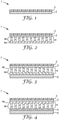
- a multilayer construction according to another exemplary aspect of the present disclosure is schematically represented in FIG. 2 , wherein the multilayer construction 1 comprises a layer of a precursor of a pressure sensitive adhesive composition 2, a constraining layer 3 and a spacer layer 4, and wherein the spacer layer 4 comprises a base layer 4a and a plurality of spacer elements 4b extending out of the base layer.
- the multilayer construction of the present disclosure has a peel adhesion strength value greater than 3 N/cm, greater than 4 N/cm, greater than 5 N/cm, or even greater than 6 N/cm, when measured at 23°C according to a 90° peel adhesion test.
- the multilayer construction exhibits no slippage, when measured at 105°C according to a peel creep test.
- the multilayer construction exhibits a slippage no greater than 1 mm, when measured at 150°C according to a peel creep test.
- the multilayer construction has a Oberst loss factor greater than 0.10, greater than 0.15, greater than 0.20, greater than 0.25, or even greater than 0.30, when measured at 20°C according to the Oberst loss factor test described in the experimental section.
- the multilayer construction has a Volatile Organic Compound (VOC) value of less than 1500 ppm, less than 1200 ppm, less than 1000 ppm, less than 800 ppm, less than 700 ppm, less than 600 ppm, less than 500 ppm, less than 450 ppm, less than 400 ppm, or even less than 350 ppm, when measured by thermal desorption analysis according to test method VDA278.
- VOC Volatile Organic Compound
- the multilayer construction has a Volatile Fogging Compound (FOG) value of less than 4000 ppm, less than 3000 ppm, less than 2500 ppm, less than 2000 ppm, less than 1500 ppm, or even less than 1300 ppm, when measured by thermal desorption analysis according to test method VDA278.
- FOG Volatile Fogging Compound
- the present disclosure relates to a composite article comprising a multilayer construction as described above applied on at least part of the surface of the article.
- the composite article is selected from the group consisting of vehicle components, industrial machine components, household appliance components, and any combinations thereof.
- the industrial machines of the present disclosure are selected from the group consisting of energy generator systems, thermal management systems, air management systems, data storage systems, transportation systems, and any combinations thereof.
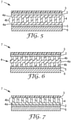
- a composite article according to still another exemplary aspect of the present disclosure is schematically represented in FIG. 5 , wherein the composite article 7 comprises a multilayer construction 1 comprising a first layer of a precursor of a pressure sensitive adhesive composition 2, a constraining layer 3, a spacer layer 4 comprising two base layers 4a and a plurality of spacer elements 4b extending out of the base layer 4a, a second layer of a precursor of a pressure sensitive adhesive composition 5, and wherein the composite article 7 further comprises a vibrating panel 6 adhered to the multilayer construction 1 via its second layer of a precursor of a pressure sensitive adhesive composition 5.
- a composite article according to still another exemplary aspect of the present disclosure is schematically represented in FIG. 6 , wherein the composite article 7 comprises a multilayer construction 1 comprising a first layer of a precursor of a pressure sensitive adhesive composition 2, a constraining layer 3, a spacer layer 4 comprising a base layers 4a and two pluralities of spacer elements 4b extending out of the base layer 4a, a second layer of a precursor of a pressure sensitive adhesive composition 5, and wherein the composite article 7 further comprises a vibrating panel 6 adhered to the multilayer construction 1 via its second layer of a precursor of a pressure sensitive adhesive composition 5.
- a composite article according to still another exemplary aspect of the present disclosure is schematically represented in FIG. 7 , wherein the composite article 7 comprises a multilayer construction 1 comprising a layer of a precursor of a pressure sensitive adhesive composition 2, a constraining layer 3, a spacer layer 4 comprising a base layer 4a and a plurality of spacer elements 4b extending out of the base layer 4a, and wherein the composite article 7 further comprises a vibrating panel 6 adhered to the multilayer construction 1 via its layer of a precursor of a pressure sensitive adhesive composition 2.
- the present disclosure relates to a method of manufacturing a multilayer construction as described above, which comprises the steps of:
- the method further comprises the step of applying a second layer of a precursor of a pressure sensitive adhesive composition on the major surface of the at least one (kinetic) spacer layer opposite to the major surface of the at least one (kinetic) spacer layer which is in contact with the first layer of a precursor of a pressure sensitive adhesive composition.
- the steps of applying the various layers onto each other are performed by lamination.
- the present disclosure relates to a method of manufacturing a composite article, which comprises the step of applying a multilayer construction as described above on at least part of the surface of an article as described above.
- the present invention relates to the use of a multilayer construction as described above for industrial applications, in particular for construction, household and transportation applications, more in particular for body-in-white bonding applications for the automotive industry, and more in particular for damping operations for the automotive, aeronautic and aerospace industries.
- the present invention relates to the use of a multilayer construction as described above for damping vibration (and/or noise) of a vibrating article or surface.
- the present invention relates to the use of a (layer of a) precursor of a pressure sensitive adhesive composition as described above for damping vibration (and/or noise) of a vibrating article or surface.
- the damping behaviour of the exemplary multilayer constructions is measured using the Oberst method according to DIN 53440 and ISO 5721. Using this method, the damping performance is determined by vibrational excitation of a steel beam covered with damping material and clamped at the uncovered end.
- the system damping loss factor can be calculated from the shape and width of so-called transfer functions at bending resonance modes. The measurements are performed in an environmental chamber at temperatures between 0°C and 60°C with a temperature increment of 20°C, and at single bending resonant frequencies (resonance orders 2, 3, and 4).
- VDA method 278 is a test method used for the determination of organic emissions from non-metallic trim components used to manufacture the interior of motor vehicles (VDA stands for "Verband der Automobilindustrie", the German Association of Automobilists). The method classifies the emitted organic compounds into two groups:
- multilayer construction samples of 30mg +/- 5mg are weighed directly into empty glass sample tubes.
- the volatile and semi-volatile organic compounds are extracted from the samples into the gas stream and are then re-focused onto a secondary trap prior to injection into a GC for analysis.
- An automated thermal desorber (Markes International Ultra-UNITY system) is hereby used for the VDA 278 testing.
- the test method comprises two extraction stages:
- VOC values expressed are the average of two measurements per sample. The higher value of the measurements is indicated as the result, as described in the VDA278 test method.
- the second sample is retained in the desorption tube after the VOC analysis and reheated to 120 °C for 60 minutes.
- the odor test is executed based on a method derived from VDA test method 270 C3 as per the following procedure.
- the samples of the exemplary multilayer constructions having an area of about 200 cm 2 are placed into 1000 mL glass bottles which are placed in an oven at 80°C. After 2 hours, the bottles are taken from the oven and allowed to cool to a temperature of 60°C and then rated by six testers according to the scale used in VDA270 (see below). The testing is performed in two rounds so every tester rates every sample 2 times. 1 Not perceptible 2 Strongly offensive 3 Clearly perceptible 4 Offensive 5 Strongly offensive 6 Unbearable
- Table 1 The raw materials and starting products used are summarized in Table 1 below.
- Table 1 Raw material list. Name Description Supplier AcResin A204 UV-curable acrylate copolymer. BASF AcResin A250 UV-curable acrylate copolymer. BASF AcResin A260 UV-curable acrylate copolymer. BASF ATP S-4710 AG Polyacrylic adhesive tape having a total thickness of 0.10 mm. ATP Adhesive Systems
- a kinetic spacer layer is produced from polypropylene resin as described in U. S. Patent No. 5,792,411 (Morris et al. ), whereby the spacer layer comprises a plurality of cylindrical stem elements (acting as kinetic spacer elements) which have a diameter of about 0.76 mm and which are spaced apart from each other approximately by a distance of 1.35 mm.
- the cylindrical stem elements are about 0.44 mm high and they extend from a base layer having a thickness of about 0.12 mm.
- Example 1 2 3 CE-1 4 5 CE-2 Layer 1 Alu (250 ⁇ m) Alu (250 ⁇ m) Alu (250 ⁇ m) Alu (250 ⁇ m) Alu (125 ⁇ m) Alu (125 ⁇ m) Alu (125 ⁇ m) Layer 2 A204 (100 ⁇ m) A250 (100 ⁇ m) A260 (100 ⁇ m) ATP 4710 (100 ⁇ m) A250 (100 ⁇ m) A260 (100 ⁇ m) ATP 4710 (100 ⁇ m) Layer 3 - - - - - Kinetic spacer layer (2575 ⁇ m) Kinetic spacer layer (2575 ⁇ m) Kinetic spacer layer (2575 ⁇ m) Layer 4 - - - - A250 (100 microns) A260 (100 microns) ATP 4710 (100 microns)
Landscapes
- Chemical & Material Sciences (AREA)
- Engineering & Computer Science (AREA)
- Ceramic Engineering (AREA)
- Organic Chemistry (AREA)
- Chemical Kinetics & Catalysis (AREA)
- Architecture (AREA)
- Structural Engineering (AREA)
- Combustion & Propulsion (AREA)
- Transportation (AREA)
- Mechanical Engineering (AREA)
- Laminated Bodies (AREA)
Priority Applications (2)
| Application Number | Priority Date | Filing Date | Title |
|---|---|---|---|
| EP20196740.3A EP3970965A1 (de) | 2020-09-17 | 2020-09-17 | Mehrschichtiger aufbau mit dämpfungseigenschaften |
| PCT/IB2021/058466 WO2022058933A1 (en) | 2020-09-17 | 2021-09-16 | Multilayer construction with damping properties |
Applications Claiming Priority (1)
| Application Number | Priority Date | Filing Date | Title |
|---|---|---|---|
| EP20196740.3A EP3970965A1 (de) | 2020-09-17 | 2020-09-17 | Mehrschichtiger aufbau mit dämpfungseigenschaften |
Publications (1)
| Publication Number | Publication Date |
|---|---|
| EP3970965A1 true EP3970965A1 (de) | 2022-03-23 |
Family
ID=72560504
Family Applications (1)
| Application Number | Title | Priority Date | Filing Date |
|---|---|---|---|
| EP20196740.3A Withdrawn EP3970965A1 (de) | 2020-09-17 | 2020-09-17 | Mehrschichtiger aufbau mit dämpfungseigenschaften |
Country Status (2)
| Country | Link |
|---|---|
| EP (1) | EP3970965A1 (de) |
| WO (1) | WO2022058933A1 (de) |
Cited By (1)
| Publication number | Priority date | Publication date | Assignee | Title |
|---|---|---|---|---|
| WO2024149549A1 (en) * | 2023-01-09 | 2024-07-18 | Sika Technology Ag | Pressure sensitive adhesive composition having improved heat-stability and use thereof |
Citations (9)
| Publication number | Priority date | Publication date | Assignee | Title |
|---|---|---|---|---|
| US2069413A (en) | 1935-12-06 | 1937-02-02 | Burgess Lab Inc C F | Sound and vibration damping construction |
| US5186996A (en) | 1989-12-29 | 1993-02-16 | Matec Holding Ag | Sound damping multi-layer structure |
| US5624763A (en) * | 1991-05-23 | 1997-04-29 | Minnesota Mining And Manufacturing Company | Silicone/acrylate vibration dampers |
| US5637646A (en) | 1995-12-14 | 1997-06-10 | Minnesota Mining And Manufacturing Company | Bulk radical polymerization using a batch reactor |
| US5792411A (en) | 1993-06-11 | 1998-08-11 | Minnesota Mining And Manufacturing Company | Laser machined replication tooling |
| EP1034090A1 (de) * | 1997-11-12 | 2000-09-13 | Collins & Aikman Products Co. | Vibrationsdämpfendes verbundmaterial |
| EP1704197A1 (de) * | 2003-10-31 | 2006-09-27 | 3M Innovative Properties Company | Verfahren zur herstellung eines haftklebemittels |
| EP2748269A1 (de) * | 2011-08-23 | 2014-07-02 | Avery Dennison Corporation | Druckempfindliches adhäsionslaminat für hochleistungsanwendungen zur geräusch- und schwingungsdämpfung |
| EP3308054A1 (de) * | 2015-06-15 | 2018-04-18 | 3M Innovative Properties Company | Mehrschichtiges dämpfungsmaterial |
-
2020
- 2020-09-17 EP EP20196740.3A patent/EP3970965A1/de not_active Withdrawn
-
2021
- 2021-09-16 WO PCT/IB2021/058466 patent/WO2022058933A1/en not_active Ceased
Patent Citations (9)
| Publication number | Priority date | Publication date | Assignee | Title |
|---|---|---|---|---|
| US2069413A (en) | 1935-12-06 | 1937-02-02 | Burgess Lab Inc C F | Sound and vibration damping construction |
| US5186996A (en) | 1989-12-29 | 1993-02-16 | Matec Holding Ag | Sound damping multi-layer structure |
| US5624763A (en) * | 1991-05-23 | 1997-04-29 | Minnesota Mining And Manufacturing Company | Silicone/acrylate vibration dampers |
| US5792411A (en) | 1993-06-11 | 1998-08-11 | Minnesota Mining And Manufacturing Company | Laser machined replication tooling |
| US5637646A (en) | 1995-12-14 | 1997-06-10 | Minnesota Mining And Manufacturing Company | Bulk radical polymerization using a batch reactor |
| EP1034090A1 (de) * | 1997-11-12 | 2000-09-13 | Collins & Aikman Products Co. | Vibrationsdämpfendes verbundmaterial |
| EP1704197A1 (de) * | 2003-10-31 | 2006-09-27 | 3M Innovative Properties Company | Verfahren zur herstellung eines haftklebemittels |
| EP2748269A1 (de) * | 2011-08-23 | 2014-07-02 | Avery Dennison Corporation | Druckempfindliches adhäsionslaminat für hochleistungsanwendungen zur geräusch- und schwingungsdämpfung |
| EP3308054A1 (de) * | 2015-06-15 | 2018-04-18 | 3M Innovative Properties Company | Mehrschichtiges dämpfungsmaterial |
Cited By (1)
| Publication number | Priority date | Publication date | Assignee | Title |
|---|---|---|---|---|
| WO2024149549A1 (en) * | 2023-01-09 | 2024-07-18 | Sika Technology Ag | Pressure sensitive adhesive composition having improved heat-stability and use thereof |
Also Published As
| Publication number | Publication date |
|---|---|
| WO2022058933A1 (en) | 2022-03-24 |
Similar Documents
| Publication | Publication Date | Title |
|---|---|---|
| JP6073391B2 (ja) | シール、バッフル又は補強用の活性化可能な強化材料及びその製造方法 | |
| CN101802062B (zh) | 高度衰减的可膨胀的材料和装置 | |
| JP6867308B2 (ja) | 多層減衰材料 | |
| KR0134187B1 (ko) | 이중-작용성 접착 테이프 | |
| EP2598590B1 (de) | Ausgerichtete strukturkleber | |
| US20040143969A1 (en) | Baffling, sealing or reinforcement member with thermoset carrier member and method of forming the same | |
| EP1187888B1 (de) | gefertigte verbundene struktur | |
| JP2012529545A (ja) | 音響減衰特性を有する加硫組成物 | |
| JPH09505334A (ja) | トポグラフィー形成法 | |
| WO2022058933A1 (en) | Multilayer construction with damping properties | |
| US20180273804A1 (en) | Application of adhesives | |
| US20210277200A1 (en) | Malonates and derivatives for in-situ films | |
| KR100364042B1 (ko) | 팽창성다층재료 | |
| KR20060056384A (ko) | 흡음 코팅, 그 제조 방법 및 그 용도 | |
| EP0690896B1 (de) | Topographisches blattmaterial und verwendungsverfahren | |
| JP4972689B2 (ja) | 振動移動の減少 | |
| CN113383050A (zh) | 多层胶带 | |
| Briggs et al. | Advances in acrylic structural adhesives | |
| CN108884364B (zh) | 具有改善的粘附特性的环氧贴片 | |
| US20240336815A1 (en) | Foamed acrylic polymer primerless adhesive | |
| WO1996005240A1 (en) | Structural strengthening | |
| WO2021191711A1 (en) | Pressure sensitive adhesive having low voc characteristics | |
| WO2022040386A1 (en) | A layered liquid applied sound damper | |
| CN1744978A (zh) | 带有热固性载体元件的缓冲、密封或增强元件以及它们的成形方法 | |
| JPH04198382A (ja) | 両面感圧接着型テープもしくはシート |
Legal Events
| Date | Code | Title | Description |
|---|---|---|---|
| PUAI | Public reference made under article 153(3) epc to a published international application that has entered the european phase |
Free format text: ORIGINAL CODE: 0009012 |
|
| STAA | Information on the status of an ep patent application or granted ep patent |
Free format text: STATUS: THE APPLICATION HAS BEEN PUBLISHED |
|
| AK | Designated contracting states |
Kind code of ref document: A1 Designated state(s): AL AT BE BG CH CY CZ DE DK EE ES FI FR GB GR HR HU IE IS IT LI LT LU LV MC MK MT NL NO PL PT RO RS SE SI SK SM TR |
|
| STAA | Information on the status of an ep patent application or granted ep patent |
Free format text: STATUS: THE APPLICATION IS DEEMED TO BE WITHDRAWN |
|
| 18D | Application deemed to be withdrawn |
Effective date: 20220924 |