EP3972196B1 - Procédé et appareil de déploiement de fonction réseau virtuelle (vnf) - Google Patents
Procédé et appareil de déploiement de fonction réseau virtuelle (vnf) Download PDFInfo
- Publication number
- EP3972196B1 EP3972196B1 EP20823574.7A EP20823574A EP3972196B1 EP 3972196 B1 EP3972196 B1 EP 3972196B1 EP 20823574 A EP20823574 A EP 20823574A EP 3972196 B1 EP3972196 B1 EP 3972196B1
- Authority
- EP
- European Patent Office
- Prior art keywords
- vnf
- vnfd
- value
- parameter
- vnfm
- Prior art date
- Legal status (The legal status is an assumption and is not a legal conclusion. Google has not performed a legal analysis and makes no representation as to the accuracy of the status listed.)
- Active
Links
Images

Classifications
-
- H—ELECTRICITY
- H04—ELECTRIC COMMUNICATION TECHNIQUE
- H04L—TRANSMISSION OF DIGITAL INFORMATION, e.g. TELEGRAPHIC COMMUNICATION
- H04L41/00—Arrangements for maintenance, administration or management of data switching networks, e.g. of packet switching networks
- H04L41/08—Configuration management of networks or network elements
- H04L41/0803—Configuration setting
- H04L41/0806—Configuration setting for initial configuration or provisioning, e.g. plug-and-play
-
- H—ELECTRICITY
- H04—ELECTRIC COMMUNICATION TECHNIQUE
- H04L—TRANSMISSION OF DIGITAL INFORMATION, e.g. TELEGRAPHIC COMMUNICATION
- H04L41/00—Arrangements for maintenance, administration or management of data switching networks, e.g. of packet switching networks
-
- G—PHYSICS
- G06—COMPUTING OR CALCULATING; COUNTING
- G06F—ELECTRIC DIGITAL DATA PROCESSING
- G06F8/00—Arrangements for software engineering
- G06F8/60—Software deployment
-
- G—PHYSICS
- G06—COMPUTING OR CALCULATING; COUNTING
- G06F—ELECTRIC DIGITAL DATA PROCESSING
- G06F9/00—Arrangements for program control, e.g. control units
- G06F9/06—Arrangements for program control, e.g. control units using stored programs, i.e. using an internal store of processing equipment to receive or retain programs
- G06F9/44—Arrangements for executing specific programs
- G06F9/455—Emulation; Interpretation; Software simulation, e.g. virtualisation or emulation of application or operating system execution engines
- G06F9/45533—Hypervisors; Virtual machine monitors
- G06F9/45558—Hypervisor-specific management and integration aspects
-
- G—PHYSICS
- G06—COMPUTING OR CALCULATING; COUNTING
- G06F—ELECTRIC DIGITAL DATA PROCESSING
- G06F9/00—Arrangements for program control, e.g. control units
- G06F9/06—Arrangements for program control, e.g. control units using stored programs, i.e. using an internal store of processing equipment to receive or retain programs
- G06F9/46—Multiprogramming arrangements
- G06F9/54—Interprogram communication
- G06F9/546—Message passing systems or structures, e.g. queues
-
- H—ELECTRICITY
- H04—ELECTRIC COMMUNICATION TECHNIQUE
- H04L—TRANSMISSION OF DIGITAL INFORMATION, e.g. TELEGRAPHIC COMMUNICATION
- H04L41/00—Arrangements for maintenance, administration or management of data switching networks, e.g. of packet switching networks
- H04L41/08—Configuration management of networks or network elements
- H04L41/0803—Configuration setting
- H04L41/084—Configuration by using pre-existing information, e.g. using templates or copying from other elements
- H04L41/0843—Configuration by using pre-existing information, e.g. using templates or copying from other elements based on generic templates
-
- H—ELECTRICITY
- H04—ELECTRIC COMMUNICATION TECHNIQUE
- H04L—TRANSMISSION OF DIGITAL INFORMATION, e.g. TELEGRAPHIC COMMUNICATION
- H04L41/00—Arrangements for maintenance, administration or management of data switching networks, e.g. of packet switching networks
- H04L41/08—Configuration management of networks or network elements
- H04L41/0895—Configuration of virtualised networks or elements, e.g. virtualised network function or OpenFlow elements
-
- H—ELECTRICITY
- H04—ELECTRIC COMMUNICATION TECHNIQUE
- H04L—TRANSMISSION OF DIGITAL INFORMATION, e.g. TELEGRAPHIC COMMUNICATION
- H04L41/00—Arrangements for maintenance, administration or management of data switching networks, e.g. of packet switching networks
- H04L41/12—Discovery or management of network topologies
-
- H—ELECTRICITY
- H04—ELECTRIC COMMUNICATION TECHNIQUE
- H04L—TRANSMISSION OF DIGITAL INFORMATION, e.g. TELEGRAPHIC COMMUNICATION
- H04L41/00—Arrangements for maintenance, administration or management of data switching networks, e.g. of packet switching networks
- H04L41/34—Signalling channels for network management communication
- H04L41/342—Signalling channels for network management communication between virtual entities, e.g. orchestrators, SDN or NFV entities
-
- H—ELECTRICITY
- H04—ELECTRIC COMMUNICATION TECHNIQUE
- H04L—TRANSMISSION OF DIGITAL INFORMATION, e.g. TELEGRAPHIC COMMUNICATION
- H04L41/00—Arrangements for maintenance, administration or management of data switching networks, e.g. of packet switching networks
- H04L41/40—Arrangements for maintenance, administration or management of data switching networks, e.g. of packet switching networks using virtualisation of network functions or resources, e.g. SDN or NFV entities
-
- H—ELECTRICITY
- H04—ELECTRIC COMMUNICATION TECHNIQUE
- H04L—TRANSMISSION OF DIGITAL INFORMATION, e.g. TELEGRAPHIC COMMUNICATION
- H04L41/00—Arrangements for maintenance, administration or management of data switching networks, e.g. of packet switching networks
- H04L41/50—Network service management, e.g. ensuring proper service fulfilment according to agreements
- H04L41/5041—Network service management, e.g. ensuring proper service fulfilment according to agreements characterised by the time relationship between creation and deployment of a service
- H04L41/5048—Automatic or semi-automatic definitions, e.g. definition templates
-
- H—ELECTRICITY
- H04—ELECTRIC COMMUNICATION TECHNIQUE
- H04L—TRANSMISSION OF DIGITAL INFORMATION, e.g. TELEGRAPHIC COMMUNICATION
- H04L41/00—Arrangements for maintenance, administration or management of data switching networks, e.g. of packet switching networks
- H04L41/50—Network service management, e.g. ensuring proper service fulfilment according to agreements
- H04L41/5041—Network service management, e.g. ensuring proper service fulfilment according to agreements characterised by the time relationship between creation and deployment of a service
- H04L41/5054—Automatic deployment of services triggered by the service manager, e.g. service implementation by automatic configuration of network components
-
- H—ELECTRICITY
- H04—ELECTRIC COMMUNICATION TECHNIQUE
- H04L—TRANSMISSION OF DIGITAL INFORMATION, e.g. TELEGRAPHIC COMMUNICATION
- H04L41/00—Arrangements for maintenance, administration or management of data switching networks, e.g. of packet switching networks
- H04L41/50—Network service management, e.g. ensuring proper service fulfilment according to agreements
- H04L41/5058—Service discovery by the service manager
-
- H—ELECTRICITY
- H04—ELECTRIC COMMUNICATION TECHNIQUE
- H04L—TRANSMISSION OF DIGITAL INFORMATION, e.g. TELEGRAPHIC COMMUNICATION
- H04L43/00—Arrangements for monitoring or testing data switching networks
- H04L43/08—Monitoring or testing based on specific metrics, e.g. QoS, energy consumption or environmental parameters
- H04L43/0805—Monitoring or testing based on specific metrics, e.g. QoS, energy consumption or environmental parameters by checking availability
- H04L43/0817—Monitoring or testing based on specific metrics, e.g. QoS, energy consumption or environmental parameters by checking availability by checking functioning
-
- H—ELECTRICITY
- H04—ELECTRIC COMMUNICATION TECHNIQUE
- H04L—TRANSMISSION OF DIGITAL INFORMATION, e.g. TELEGRAPHIC COMMUNICATION
- H04L43/00—Arrangements for monitoring or testing data switching networks
- H04L43/20—Arrangements for monitoring or testing data switching networks the monitoring system or the monitored elements being virtualised, abstracted or software-defined entities, e.g. SDN or NFV
-
- G—PHYSICS
- G06—COMPUTING OR CALCULATING; COUNTING
- G06F—ELECTRIC DIGITAL DATA PROCESSING
- G06F9/00—Arrangements for program control, e.g. control units
- G06F9/06—Arrangements for program control, e.g. control units using stored programs, i.e. using an internal store of processing equipment to receive or retain programs
- G06F9/44—Arrangements for executing specific programs
- G06F9/455—Emulation; Interpretation; Software simulation, e.g. virtualisation or emulation of application or operating system execution engines
- G06F9/45533—Hypervisors; Virtual machine monitors
- G06F9/45558—Hypervisor-specific management and integration aspects
- G06F2009/45595—Network integration; Enabling network access in virtual machine instances
-
- G—PHYSICS
- G06—COMPUTING OR CALCULATING; COUNTING
- G06F—ELECTRIC DIGITAL DATA PROCESSING
- G06F9/00—Arrangements for program control, e.g. control units
- G06F9/06—Arrangements for program control, e.g. control units using stored programs, i.e. using an internal store of processing equipment to receive or retain programs
- G06F9/44—Arrangements for executing specific programs
- G06F9/445—Program loading or initiating
- G06F9/44505—Configuring for program initiating, e.g. using registry, configuration files
Definitions
- This application relates to the field of network function virtualization, and in particular, to a virtual network function VNF deployment method and an apparatus.
- a virtualization technology is used to virtualize a function of a dedicated device in a conventional network into an independent application, and flexibly deploy the application on a unified infrastructure platform constructed based on other standard devices such as computing hardware, storage hardware, and network hardware.
- a party that initiates a virtual network function (virtual network function, VNF) instantiation request may be referred to as a virtualization service requestor.
- a party that receives the VNF instantiation request and deploys a VNF based on the VNF instantiation request may be referred to as a virtualization service provider.
- VNFD VNF descriptor
- the VNFD includes input parameters ("inputs") required for deploying the VNF, and the VNF instantiation request includes values of the input parameters.
- the virtualization service provider deploys the VNF based on an updated VNFD.
- VNFDs corresponding to different VNFs
- ETSI European Telecommunications Standards Institute
- modifiable_attributes all service-related dedicated parameters in the input parameters are defined as a modifiable attributes parameter
- ModifyVnflnfo Modify VNF Information operation
- the VNF instantiation request includes the value of the modifiable attributes parameter and a value of a common parameter related to all VNFs.
- the virtualization service provider may learn of the value of the modifiable attributes parameter by using the Modify VNF Information operation, a conventional technology does not include a solution for assigning a value to a modifiable attributes parameter in the VNFD by using the value of the modifiable attributes parameter included in the Modify VNF Information operation. Therefore, the virtualization service provider can assign a value to only a common parameter in the VNFD by using the value of the common parameter included in the VNF instantiation request, but cannot assign a value to the modifiable attributes parameter in the VNFD. As a result, VNF deployment fails.
- NFVIFA(17)0001129 is a change request relating to merging the operation of modifying VNF configuration parameters into the operation of modifying VNF information.
- This application provides virtual network function VNF deployment methods, apparatus and computer-readable storage medium according to the independent claims to resolve a problem of how to assign a value to a modifiable attributes parameter in a VNFD.
- this application provides a VNF deployment method acceding to independent claim 1.
- this application provides a VNF deployment method according to independent claim 2.
- indication information is separately set for a common parameter and a dedicated parameter, to indicate a source of a value of the common parameter and a source of a value of the dedicated parameter, where the common parameter and the dedicated parameter are included in input parameters.
- the application deployment server assigns values to the common parameter and the dedicated parameter
- the application deployment server is enabled to assign the value to the common parameter in the VNFD based on the first assignment indication, and assign the value to the modifiable attributes parameter in the VNFD based on the second assignment indication, so that all input parameters in the VNFD are assigned with values, and the VNF is successfully deployed.
- the virtualization service requestor is an NFV orchestrator (NFV orchestrator, NFVO) or an operation-support system/business support system (operation-support system/business support system, OSSBSS).
- the virtualization service requestor may be user equipment.
- the virtualization service provider is the VNFM.
- the virtualization service provider may be the application deployment server.
- the method before the Modify VNF Information operation is received, the method further includes: after a Create VNF Identifier operation sent by the NFVO is received, creating the instance identifier of the first VNF, establishing a correspondence between the instance identifier of the first VNF and an identifier of the VNFD of the first VNF, and sending the instance identifier of the first VNF to the NFVO.
- the Create VNF Identifier operation includes the identifier of the VNFD of the first VNF.
- the obtaining a VNFD of a first VNF includes: sending a VNFD obtaining request to the NFVO, where the VNFD obtaining request includes the identifier of the VNFD of the first VNF; and receiving a VNFD response sent by the NFVO, where the VNFD response includes the VNFD of the first VNF.
- the method before the values are assigned to the N common parameters and the modifiable attributes parameter in the VNFD, the method further includes: determining the identifier of the VNFD of the first VNF associated with the instance identifier of the first VNF, and determining the VNFD of the first VNF based on the identifier of the VNFD of the first VNF.
- the method further includes: creating VNF information storage space, where the VNF information storage space is used to store the N dedicated parameters and the value of each dedicated parameter. Therefore, the application deployment server can obtain the value of the modifiable attributes parameter from the VNF information storage space, and assign the value to the modifiable attributes parameter in the VNFD, to assign values to all input parameters in the VNFD, and successfully deploy the VNF.
- this application provides a VNF deployment method according to independent claim 8.
- this application provides a VNF deployment method according to independent claim 9.
- indication information is separately set for a common parameter and a dedicated parameter, to indicate a source of a value of the common parameter and a source of a value of the dedicated parameter, where the common parameter and the dedicated parameter are included in input parameters.
- an application deployment server assigns values to the common parameter and the dedicated parameter
- the application deployment server is enabled to assign the value to the common parameter in the VNFD based on the first assignment indication, and assign the value to the modifiable attributes parameter in the VNFD based on the second assignment indication, so that all input parameters in the VNFD are assigned with values, and the VNF is successfully deployed.
- the virtualization service requestor is the NFVO or an OSS/a BSS.
- the virtualization service requestor may be the user equipment.
- the virtualization service provider is a VNFM.
- the virtualization service provider may be the application deployment server.
- the method when one of the first assignment indications is used to indicate to obtain a value of one common parameter from the NFVO, before the NFVO sends the VNF instantiation request, the method further includes: setting, by the NFVO, the value of the common parameter.
- this application further provides a communication apparatus, configured to implement the method described in the first aspect or the second aspect.
- this application further provides a communication apparatus, configured to implement the method described in the third aspect or the fourth.
- the communication apparatus provided in this application, separately sets indication information of a common parameter and dedicated parameter, to indicate a source of a value of the common parameter and a source of a value of the dedicated parameter, where the common parameter and the dedicated parameter are included in input parameters.
- the communication apparatus is enabled to assign the value to the common parameter in the VNFD based on the first assignment indication, and assign the value to the modifiable attributes parameter in the VNFD based on the second assignment indication, so that all input parameters in the VNFD are assigned with values, and the VNF is successfully deployed.
- function modules in the fifth aspect and the sixth aspect may be implemented by using hardware, or may be implemented by using hardware executing corresponding software.
- the hardware or software includes one or more modules corresponding to the foregoing functions.
- a transceiver is configured to complete functions of the receiving unit and the sending unit
- a processor is configured to complete a function of the processing unit
- a memory is configured to store program instructions used by the processor to perform the methods in this application.
- the processor, the transceiver, and the memory are connected by using a bus and implement mutual communication. Specifically, refer to functions of behaviors of the application deployment server or the user equipment in the method according to the first aspect to the method according to the fourth aspect.
- this application further provides a computer-readable storage medium, including computer software instructions.
- the computer software instructions When the computer software instructions are run on a communication apparatus, the communication apparatus is enabled to perform the method according to any one of the first aspect to the fourth aspect.
- the word “example” or “for example” is used to represent giving an example, an illustration, or a description. Any embodiment or design scheme described as an “example” or “for example” in the embodiments of this application shall not be explained as being more preferred or having more advantages than another embodiment or design scheme. Exactly, use of the term such as “example” or “for example” is intended to present a related concept in a specific manner.
- a conventional telecommunication system includes various dedicated hardware devices, and different hardware devices are used for different functions.
- the telecommunication system becomes more complex, which brings a plurality of challenges, for example, development and rollout of a new service, operation and maintenance of the system, and resource utilization.
- the virtualization technology is used to perform resource pooling and virtualization on infrastructure hardware devices (such as a computing device, a storage device, and a network device), to provide a virtual resource for an upper-layer application, and decouple software from hardware.
- infrastructure hardware devices such as a computing device, a storage device, and a network device
- the virtualization technology needs to be used to virtualize the service into an independent application (for example, a VNF). This greatly shortens rollout time of the new service and greatly increases a virtual resource provisioning speed.
- the cloud computing technology is used to scale an application, and match a virtual resource with service load. This improves utilization efficiency of the virtual resource, and also improves a response speed of an NFV system.
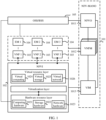
- FIG. 1 is an example of an architecture of an NFV system according to an embodiment of this application.
- the NFV system can be used in various networks, for example, implemented in a data center network, a telecom operator network, or a local area network.
- the NFV system includes an NFV management and orchestration (NFV management and orchestration, NFV MANO) system 101, an NFV infrastructure (NFV infrastructure, NFVI) layer 102, a plurality of virtual network functions (Virtual Network Functions, VNFs) 103, a plurality of element management (element management, EM) systems 104, and an operation-support system/business support system (operation-support system/business support system, OSS/BSS) 105.
- NFV management and orchestration NFV management and orchestration
- NFV MANO NFV management and orchestration
- NFV infrastructure NFV infrastructure
- VNFs Virtual Network Functions
- EM element management
- OSS/BSS operation-support system/business support system
- the NFV MANO 101 is configured to monitor and manage the NFVI 102 and the VNF 103.
- the NFV management and orchestration system 101 includes an NFV orchestrator (NFV orchestrator, NFVO) 1011, one or more VNF managers (VNF managers, VNFMs) 1012, and a virtualized infrastructure manager (virtualized infrastructure manager, VIM) 1013.
- NFV orchestrator NFV orchestrator
- VNF managers VNF managers
- VIM virtualized infrastructure manager
- the NFVO 1011 is mainly responsible for processing life cycle management on a virtualization service, allocating and scheduling virtual resources in a virtual infrastructure and the NFVI, and the like.
- the NFVO 1011 may also execute a resource-related request (for example, a VNFD obtaining request) from the one or more VNFMs 1012, and send configuration information (such as a VNFD, a Modify VNF Information operation, and a VNF instantiation request) to the VNFMs 1012, and collect status information of the VNF 103.
- a resource-related request for example, a VNFD obtaining request
- configuration information such as a VNFD, a Modify VNF Information operation, and a VNF instantiation request
- the VNFD may be stored on the NFVO, or may be stored in a database managed by the NFVO, so that the NFVO may obtain the VNFD and feed back the VNFD to the VNFM, and the VNFM deploys a VNF based on the VNFD.
- the NFVO may store VNFDs of a plurality of VNFs with different functions.
- the NFVO 1011 may communicate with the VIM 1013, to allocate and/or reserve a resource, and exchange configuration and status information of a virtualized hardware resource.
- the VNFM 1012 is mainly responsible for life cycle management on the one or more VNFs 103, for example, instantiating (instantiating), updating (updating), querying, scaling (scaling), and terminating (terminating) the VNFs 103.
- the VNFM 1012 may communicate with the VNFs 103 to complete life cycle management on the VNFs 103 and exchange configuration and status information.
- a plurality of VNFMs 1012 may exist in the NFV system, and are responsible for performing life cycle management on VNFs of different types.
- the VIM 1013 may perform resource management functions, such as a function of managing infrastructure resource allocation (for example, adding a resource to a virtual container) and an operation (for example, collecting NFVI fault information).
- the VNFM 1012 and the VIM 1013 may communicate with each other to allocate the resource and exchange the configuration and status information of the virtualized hardware resource, for example, control and manage interaction between the VNF 103 and computing hardware 1021, storage hardware 1022, network hardware 1023, virtual computing (virtual computing) 1024, virtual storage 1025, and a virtual network 1026.
- the NFVI 102 includes a hardware resource layer, a virtualization layer (virtualization layer), and a virtual resource layer.
- the NFVI 102 includes a hardware resource, a software resource, or a combination of the hardware resource and the software resource, to complete deployment of a virtualized environment.
- the hardware resource and the virtualization layer are used to provide a virtual resource for the VNF 103, for example, the virtual resource is used as a virtual machine or a virtual container in another form.
- the hardware resource layer includes the computing hardware 1021, the storage hardware 1022, and the network hardware 1023.
- the computing hardware 1021 may be existing hardware in the market and/or customized hardware, and is configured to provide processing and computing resources.
- the storage hardware 1022 may be a storage capacity provided in a network or a storage capacity of the storage hardware 1022 (a local memory in a server). In an implementation solution, resources of the computing hardware 1021 and the storage hardware 1022 may be aggregated.
- the network hardware 1023 may be a switch, a router, and/or any other network device that is configured to provide a switching function.
- the network hardware 1023 may cross a plurality of domains, and may include a plurality of networks interconnected by using one or more transport networks.
- the virtualization layer in the NFVI 102 may abstract a hardware resource from a physical layer and decouple from the VNF 103, to provide a virtual resource to the VNF 103.
- the virtual resource layer includes the virtual computing 1024, the virtual storage 1025, and the virtual network 1026.
- the virtual computing 1024 and the virtual storage 1025 may be provided to the VNF 103 in a form of a virtual machine and/or another virtual container.
- the one or more VNFs 103 may be deployed on one virtual machine (virtual machine, VM).
- the virtualization layer abstracts the network hardware 1023 to form the virtual network 1026.
- the virtual network 1026 may include a virtual switch (virtual switch), and the virtual switch is configured to provide a connection between the virtual machine and another virtual machine.
- the transport network in the network hardware 1023 may be virtualized by using a centralized control plane and an independent forwarding plane (for example, a software defined network).
- the computing hardware 1021, the storage hardware 1022, and the network hardware 1023 may include a plurality of subracks, a plurality of racks, or even a plurality of equipment rooms.
- the VNF 103 may be configured as virtualization of at least one virtual network function performed by one physical network device.
- the device management system (EM) 104 is a system configured to configure and manage a device in a conventional network.
- the EM 104 may also be configured to: configure and manage the VNF 103, and initiate a life cycle management operation such as instantiation of a new VNF 103 to the VNFM 1012.
- the operations support system and business support system (Operations Support System and Business Support System, OSS/BSS) 105 supports various end-to-end telecommunication services. Management functions supported by the OSS include network configuration, service provision, fault management, and the like.
- the BSS processes an order, payment, income, or the like, and supports product management, order management, revenue management, and customer management.
- a virtualized network service may be a network service of an IP multimedia subsystem (IP multimedia subsystem, IMS), a network service of a next-generation mobile core network (Evolved Packet Core, EPC), or the like.
- IP multimedia subsystem IP multimedia subsystem
- EPC Evolved Packet Core
- One NS may include several VNFs.
- a virtualization service provider needs to obtain description information of the service, namely, a network service descriptor (Network Service descriptor, NSD), from a virtualization service requestor.
- the NSD mainly describes topology structure information of the service and description information of each included VNF, namely, a VNF descriptor (VNF descriptor, VNFD).
- a virtual link descriptor may be used to describe a connection between the VNFs.
- the VNFD includes information such as a virtual deployment unit (Virtualisation Deployment Unit, VDU), a connection point (connection point, CP), and a virtual link (virtual link, VL).
- VDU can represent a virtual machine on which application software is installed. Descriptions of the VDU contain requirements on all virtual resources of the virtual machine.
- the CP represents connection information on the virtual machine, for example, may be virtual network interface card information. Address information of the CP may be represented by using an IP address or a MAC address.
- the VL is a virtual connection that connects a plurality of VDUs in the VNFs, and may be represented by using information such as a connection type or bandwidth.
- a topology and orchestration specification for cloud applications may be used to describe the VNFD.
- the TOSCA is a description specification developed by the Advancing Open Standards for the Information Society (Advancing Open Standards for the Information Society, OASIS).
- information required for deploying an application may be described in an application deployment package.
- the application deployment package includes at least one application deployment description file whose suffix is ste.
- the application deployment description file with *.ste may describe deployment information of an application by using an XML language.
- a root element of the application deployment description file with *.ste is a service template (Service Template). That is, in the embodiments of this application, the service template may be used to completely describe information about an application that needs to be deployed.
- Sub-elements of the application deployment description file with *.ste include a topology template (TopologyTemplate), a node type (NodeType), a node template (NodeTemplate), a relationship type (RelationshipType), a relationship template (RelationshipTemplate), a boundary definition (BoundaryDefinitions), and the like.
- a topology template in a VNFD defined in a conventional technology is as follows:
- vCPE service deployment template is defined.
- input parameters such as "vcpe_image_name”, “public_net_id”, and “vgw_name_0"
- inputs are dynamic parameters. Values of these input parameters can be determined only during deployment, for example, may be carried in a VNF instantiation request.
- an NFV standard of the ETSI specifies that all service-related dedicated parameters in the input parameters are defined as a modifiable attributes parameter ("modifiable_attributes"). It may be understood that the dedicated parameter is a service-related parameter. For different services, dedicated parameters may be completely different or may be partially different. Therefore, the inputs parameters include a common parameter and a modifiable attribute parameter that are related to all VNFs.
- a topology template in a VNFD defined in a conventional technology is as follows:
- VNF common parameters
- the VNF instantiation request needs to carry only the values of the common parameters and the modifiable attributes parameter.
- the modifiable attributes parameter may be extended based on requirements of different VNFs.
- the modifiable attributes parameter includes service-related dedicated parameters, such as "vcpe_image_name”, “public_net_id”, and "vgw_name_0" in the foregoing example.
- a Modify VNF Information operation may be used to assign a value to or modify a value of the dedicated parameter, and is notified to the virtualization service provider by the virtualization service requestor.
- the virtualization service provider may learn of the value of the modifiable attributes parameter by using the Modify VNF Information operation, a conventional technology does not include a solution for assigning a value to a modifiable attributes parameter in the VNFD by using the value of the modifiable attributes parameter included in the Modify VNF Information operation. Therefore, the virtualization service provider can assign a value to only a common parameter in the VNFD by using the value of the common parameter included in the VNF instantiation request, but cannot assign a value to the modifiable attributes parameter in the VNFD. As a result, VNF deployment fails.
- An embodiment of this application provides a VNF deployment method.
- the method includes: separately setting indication information of a common parameter and dedicated parameter in a VNFD, to indicate a source of a value of the common parameter and a source of a value of the dedicated parameter, where the common parameter and the dedicated parameter are included in input parameters.
- a virtualization service provider obtains the value of the common parameter based on the indication information of the common parameter, and obtains the value of the dedicated parameter based on the indication information of the dedicated parameter. Therefore, the virtualization service provider can assign values to the common parameter and a modifiable attributes parameter in the VNFD, so that values are assigned to all input parameters in the VNFD, and the VNF is successfully deployed.
- a virtualization service requestor may be user equipment.
- the virtualization service requestor may be an NFVO or an OSS/a BSS.
- the virtualization service provider may be an application deployment server.
- the virtualization service provider may be a VNFM.
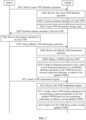
- FIG. 2 is a flowchart of a VNF deployment method according to an embodiment of this application. As shown in FIG. 2 , the method may include the following steps.
- the Create VNF Identifier operation is used to request to create an instance identifier for a VNF that needs to be deployed.
- the VNFM receives the Create VNF Identifier operation sent by the NFVO.
- the VNFM may send a receiving response to the NFVO, to notify the NFVO that the Create VNF Identifier operation has been successfully received.
- the VNFM performs S203 and S204.
- the VNFM creates an instance identifier of a first VNF.
- the VNFM After receiving the Create VNF Identifier operation sent by the NFVO, the VNFM creates the instance identifier of the first VNF.
- the Create VNF Identifier operation includes an identifier of a VNFD of the first VNF.
- the VNFM may further establish a correspondence between the instance identifier of the first VNF and the identifier of the VNFD of the first VNF.
- VNFM creates VNF information storage space.
- the VNF information storage space is used to store information related to VNF deployment.
- the information related to the VNF deployment may include input parameters (for example, a common parameter and a modifiable attributes parameter) of the VNF, a VLD, a VDU, a CP, a VL, and the like.
- VNF information storage space corresponding to the instance identifier of the first VNF may be created, and is used to store information related to deployment of the first VNF.
- the VNFM sends the instance identifier of the first VNF to the NFVO.
- a sequence of the steps in the VNF deployment method provided in this embodiment of this application may be properly adjusted, or a step may be correspondingly added or deleted based on a situation.
- a sequence of S204 and S205 may be changed. That is, S205 may be first performed, and S204 is then performed. Any method that can be easily figured out by a person skilled in the art within the technical scope disclosed in this application shall fall within the protection scope of this application. Therefore, details are not described again.
- the NFVO receives the instance identifier of the first VNF sent by the VNFM.
- the NFVO After receiving the instance identifier of the first VNF sent by the VNFM, the NFVO stores the instance identifier of the first VNF, and may send a receiving response to the VNFM, to notify the VNFM that the instance identifier of the first VNF has been successfully received.
- S207 The NFVO sends a Modify VNF Information operation to the VNFM.
- the Modify VNF Information operation includes a modifiable attributes parameter.
- the modifiable attributes parameter includes N dedicated parameters and a value of each dedicated parameter, the N dedicated parameters and the value of each dedicated parameter are parameters required for instantiating the first VNF, N is an integer, and N ⁇ 1.
- the modifiable attributes parameter includes three dedicated parameters and a value of each dedicated parameter.
- the three dedicated parameters are "vcpe_image_name”, “public_net_id”, and "vgw_name_0".
- the value of "vcpe_image_name” is "image123”.
- the value of "public_net_id” is "123456”.
- the value of "vgw_name_0" is "vgw123”.
- the Modify VNF Information operation further includes the instance identifier of the first VNF, so that the VNFM stores, based on the instance identifier of the first VNF, the N dedicated parameters and the value of each dedicated parameter into the VNF information storage space corresponding to the instance identifier of the first VNF.
- the instance identifier of the first VNF is notified by the VNFM to the NFVO in advance.
- the VNFM receives the Modify VNF Information operation sent by the NFVO.
- the VNFM may store the N dedicated parameters and the value of each dedicated parameter that are included in the modifiable attributes parameter into the VNF information storage space corresponding to the instance identifier of the first VNF.
- the VNFM may send a receiving response to the NFVO, to notify the NFVO that the Modify VNF Information operation has been successfully received.
- the VNFM obtains the VNFD of the first VNF.
- the VNFM may send a VNFD obtaining request to the NFVO.
- the VNFD obtaining request includes the identifier of the VNFD of the first VNF.
- the identifier of the VNFD of the first VNF is notified by the NFVO to the VNFM in advance.
- the NFVO stores VNFDs of VNFs of different functions.
- the NFVO may obtain the VNFD of the first VNF based on the identifier of the VNFD of the first VNF, and send a VNFD response to the VNFM.
- the VNFD response includes the VNFD of the first VNF.
- the VNFM sends a receiving response to the NFVO, to notify the NFVO that the VNFD of the first VNF has been successfully received.
- the VNFD of the first VNF includes M common parameters, the modifiable attributes parameter, M first assignment indications, and one second assignment indication.
- One of the first assignment indications is used to indicate to obtain a value of one common parameter from a virtualization service requestor.
- the M first assignment indications indicate sources of the values of the M common parameters.
- the second assignment indication is used to indicate to obtain a value of the modifiable attributes parameter from a virtualization service provider.
- M is an integer, and M ⁇ 1.
- a topology template in the VNFD of the first VNF is as follows:
- the first assignment indication may be "source: user”.
- “source: user” in the common parameter "flavour” is used to indicate to obtain a value of "flavour” from the virtualization service requestor (for example, the user (user)).
- “source: user” in the common parameter "instantiation_level” is used to indicate to obtain a value of "instantiation_level” from the virtualization service requestor (for example, the user (user)).
- the user may be an OSS or a BSS.
- the virtualization service requestor sends a VNF instantiation request to the virtualization service provider.
- the VNF instantiation request carries the common parameters and the values of the common parameters.
- the VNFM may obtain the value of "flavour” from the VNF instantiation request and assign the value to "flavour”.
- the VNFM may obtain the value of "instantiation_level” from the VNF instantiation request and assign the value to "instantiation_level”.
- the virtualization service requestor may alternatively be an NFVO.
- the first assignment indication may be "source: NFVO”.
- an example of another topology template in the VNFD of the first VNF provided in this application is as follows:
- VNFM may obtain the value of "vimConnectionInfo” from the VNF instantiation request and assign the value to "vimConnectionInfo”.
- the second assignment indication may be "source: VNFM".
- source: VNFM in the modifiable attributes parameter is used to indicate to obtain a value of the modifiable attributes parameter from the virtualization service provider (for example, the VNFM).
- the VNFM may obtain the value of the modifiable attributes parameter from the Modify VNF Information operation, and assign the value to the modifiable attributes parameter.
- first assignment indications and the second assignment indication may be set during VNFD design.
- the NFVO and the VNFM may determine, based on the first assignment indications and the second assignment indication, whether values need to be assigned to corresponding parameters.
- the VNFD of the first VNF may further include other information related to the deployment of the first VNF, such as a VDU, a CP, and a VL.
- VDU a VDU
- CP a CP
- VL a VL
- the VNFM assigns the N dedicated parameters and the value of each dedicated parameter to the modifiable attributes parameter in the VNFD based on the second assignment indication, to obtain a first updated VNFD.
- the VNFM After obtaining the VNFD of the first VNF, the VNFM parses the VNFD of the first VNF, and determines, based on a first assignment indication, that the source of the value of the common parameter in the VNFD of the first VNF is the NFVO or the OSS/BSS. In this case, the VNFM has not obtained the value of the common parameter. Therefore, the value cannot be assigned to the common parameter, and the VNFD of the first VNF does not need to be updated. Further, the VNFM determines, based on the second assignment indication, that the source of the value of the modifiable attributes parameter in the VNFD of the first VNF is the VNFM.
- the VNFM prestores the N dedicated parameters and the value of each dedicated parameter that are included in the modifiable attributes parameter, the VNFM obtains the N dedicated parameters and the value of each dedicated parameter from the VNF information storage space corresponding to the instance identifier of the first VNF, and assigns the N dedicated parameters and the value of each dedicated parameter to the modifiable attributes parameter in the VNFD of the first VNF, to obtain the first updated VNFD.
- the modifiable attributes parameter stored in the VNF information storage space corresponding to the instance identifier of the first VNF includes the following dedicated parameters and values of the dedicated parameters: "vcpe_image_name”, “public_net_id”, “vgw_name_0", the value "image123” of “vcpe_image_name”, the value "123456” of "public_net_id”, and the value "vgw123” of "vgw_name_0".
- the VNFM assigns "vcpe_image_name”, “public_net_id”, “vgw_name_0", the value “image123” of “vcpe_image_name”, the value “123456” of "public_net_id”, and the value "vgw123” of "vgw_name_0” to the modifiable attributes parameter in the VNFD of the first VNF based on the second assignment indication, to obtain the first updated VNFD.
- the modifiable attributes parameter stored in the VNF information storage space corresponding to the instance identifier of the first VNF is as follows:
- the first updated VNFD is as follows:
- the VNFM may determine whether values are assigned to all input parameters in the first updated VNFD. If the values are not assigned to all the input parameters in the first updated VNFD, the VNFM first stores the first updated VNFD.
- the VNFM may alternatively convert a VNFD file, obtained after the value is assigned to the modifiable attributes parameter, into any other file suitable for machine processing, for example, with a format such as JSON or XML, and save the file. This is not limited in this application.
- the NFVO sends the VNF instantiation request to the VNFM.
- the VNF instantiation request includes the instance identifier of the first VNF, the M common parameters, and the value of each common parameter.
- the instance identifier of the first VNF is notified by the VNFM to the NFVO in advance.
- the M common parameters and the value of each common parameter are parameters required for instantiating the first VNF.
- the VNF instantiation request includes two common parameters and a value of each common parameter.
- the two common parameters may be "flavour” and “instantiation_level”.
- the value of "flavour” is “flavour-1”.
- the value of "instantiation_level” is "level-1”.
- the value of the common parameter may be assigned by the OSS/BSS to the common parameter.
- the NFVO may further assign a proper value to a common parameter whose source in the VNFD is the NFVO, and include the proper value in the VNF instantiation request.
- the NFVO needs to assign a value to "vimConnectionInfo".
- the value assigned by the NFVO to "vimConnectionInfo” is "10.2.2.2".
- content carried in the VNF instantiation request includes "flavour”, “instantiation_level”, “vimConnectionInfo”, the value “flavour-1” of “flavour”, the value "level-1” of “instantiation_level”, and the value "10.2.2.2” of "vimConnectionInfo”.
- the VNFM receives the VNF instantiation request sent by the NFVO.
- the VNFM may send a receiving response to the NFVO, to notify the NFVO that the Modify VNF Information operation has been successfully received.
- the VNFM assigns the values of the M common parameters to corresponding common parameters in the first updated VNFD based on the first assignment indications, to obtain a second updated VNFD.
- the VNFM may first perform querying based on the instance identifier of the first VNF to determine the correspondence between the instance identifier of the first VNF and the identifier of the VNFD of the first VNF, determine the identifier of the VNFD of the first VNF associated with the instance identifier of the first VNF, and determine the VNFD of the first VNF based on the identifier of the VNFD of the first VNF. Then, the VNFM determines, based on the first assignment indications, that the sources of the values of the common parameters in the VNFD of the first VNF are the user (OSSBSS) or/and the NFVO. The VNFM assigns the values of the M common parameters to the corresponding common parameters in the VNFD of the first VNF, to obtain the second updated VNFD.
- OSSBSS user
- the content carried in the VNF instantiation request includes “flavour”, “instantiation_level”, the value “flavour-1” of “flavour”, and the value “level-1” of “instantiation_level”.
- a topology template in the second updated VNFD is as follows:
- the content carried in the VNF instantiation request includes “flavour”, “instantiation_level”, “vimConnectionInfo", the value “flavour-1” of “flavour”, the value “level-1” of “instantiation_level”, and the value "10.2.2.2” of "vimConnectionInfo”.
- VNFM assigns the value "flavour-1” of "flavour” to "flavour” in the VNFD of the first VNF, assigns the value "level-1” of "instantiation_level” to "instantiation_level” in the VNFD of the first VNF, and assigns the value "10.2.2.2” of "vimConnectionInfo” to "vimConnectionInfo” in the VNFD of the first VNF.
- a topology template in the second updated VNFD is as follows:
- values are assigned to all input parameters in the VNFD of the first VNF.
- the VNFM may deploy the first VNF by parsing the VNFD file.
- the VNFM performs S214.
- the VNFM deploys the first VNF based on the second updated VNFD.
- the VNFM may determine whether values are assigned to all input parameters in the second updated VNFD. If the values are assigned to all the input parameters in the second updated VNFD, the VNFM deploys the first VNF based on the second updated VNFD.
- get_input function may be used to assign a value of an input parameter ("inputs") to a specific parameter.
- inputs an input parameter
- a value of "networkName” is equal to a value of the input parameter "public_net_id”.
- the VNF instantiation request carries the value of the parameter "public_net_id”.
- a value of "flavour_id” is equal to the value of the input parameter "flavour”.
- the VNF instantiation request carries the value of the parameter "flavour”.
- a value of "modifiable_attributes” is equal to the value of the input parameter "modifiable_attributes”.
- the Modify VNF Information operation carries the value of the parameter "modifiable_attributes”.
- the virtualization service provider can obtain the value of the modifiable attributes parameter from the VNF information storage space, and assign the value to the modifiable attributes parameter in the VNFD, so that values are assigned to all input parameters in the VNFD, and the VNF is successfully deployed.
- the VNFM may alternatively obtain a VNFD after receiving a VNF instantiation request, to avoid storing a VNFD obtained after a value is assigned to only a modifiable attributes parameter. Therefore, storage resource overheads are reduced.
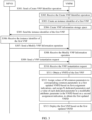
- FIG. 3 is a flowchart of a VNF deployment method according to an embodiment of this application. As shown in FIG. 3 , the method may include the following steps.
- S301 An NFVO sends a Create VNF Identifier operation to a VNFM.
- the VNFM receives the Create VNF Identifier operation sent by the NFVO.
- the VNFM creates an instance identifier of a first VNF.
- VNFM creates VNF information storage space.
- the VNFM sends the instance identifier of the first VNF to the NFVO.
- the NFVO receives the instance identifier of the first VNF sent by the VNFM.
- the VNFM receives the Modify VNF Information operation sent by the NFVO.
- the VNF instantiation request includes the instance identifier of the first VNF, M common parameters, and a value of each common parameter.
- the instance identifier of the first VNF is notified by the VNFM to the NFVO in advance.
- the M common parameters and the value of each common parameter are parameters required for instantiating the first VNF.
- the VNF instantiation request includes two common parameters and a value of each common parameter.
- the two common parameters are "flavour” and “instantiation_level”.
- the value of "flavour” is “flavour-1”.
- the value of "instantiation_level” is "level-1”.
- the value of the common parameter may be assigned by an OSS/a BSS to the common parameter.
- the NFVO may further assign a proper value to a common parameter whose source in a VNFD is the NFVO, and include the proper value in the VNF instantiation request.
- NFVO NFVO
- the NFVO needs to assign a value to "vimConnectionInfo".
- the value assigned by the NFVO to "vimConnectionInfo” is "10.2.2.2".
- content carried in the VNF instantiation request includes "flavour”, “instantiation_level”, “vimConnectionInfo”, the value “flavour-1” of “flavour”, the value "level-1” of “instantiation_level”, and the value "10.2.2.2” of "vimConnectionInfo”.
- the VNFM receives the VNF instantiation request sent by the NFVO.
- the VNFM may send a receiving response to the NFVO, to notify the NFVO that the Modify VNF Information operation has been successfully received.
- the VNFM obtains a VNFD of the first VNF.
- the VNFM may send a VNFD obtaining request to the NFVO.
- the VNFD obtaining request includes an identifier of the VNFD of the first VNF.
- the identifier of the VNFD of the first VNF is notified by the NFVO to the VNFM in advance.
- the NFVO obtains the VNFD of the first VNF based on the identifier of the VNFD of the first VNF, and sends a VNFD response to the VNFM.
- the VNFD response includes the VNFD of the first VNF.
- the VNFM sends a receiving response to the NFVO, to notify the NFVO that the VNFD of the first VNF has been successfully received.
- the VNFD of the first VNF includes the M common parameters, a modifiable attributes parameter, M first assignment indications, and a second assignment indication.
- One of the first assignment indications is used to indicate to obtain a value of one common parameter from a virtualization service requestor.
- the M first assignment indications indicate sources of values of the M common parameters.
- the second assignment indication is used to indicate to obtain a value of the modifiable attributes parameter from a virtualization service provider.
- M is an integer, and M ⁇ 1.
- a topology template in the VNFD of the first VNF is as follows:
- the first assignment indication may be "source: user”.
- “source: user” in the common parameter "flavour” is used to indicate to obtain the value of "flavour” from the virtualization service requestor (for example, the user (user)).
- “source: user” in the common parameter "instantiation_level” is used to indicate to obtain the value of "instantiation_level” from the virtualization service requestor (for example, the user (user)).
- the user may be the OSS or the BSS.
- the virtualization service requestor sends the VNF instantiation request to the virtualization service provider.
- the VNF instantiation request carries the common parameters and the values of the common parameters.
- the VNFM may obtain the value of "flavour” from the VNF instantiation request and assign the value to "flavour”.
- the VNFM may obtain the value of "instantiation_level” from the VNF instantiation request and assign the value to "instantiation_level”.
- the virtualization service requestor may alternatively be the NFVO.
- the first assignment indication may be "source: NFVO”.
- an example of another topology template in the VNFD of the first VNF provided in this application is as follows:
- VNFM may obtain the value of "vimConnectionInfo” from the VNF instantiation request and assign the value to "vimConnectionInfo”.
- the second assignment indication may be "source: VNFM".
- source: VNFM in the modifiable attributes parameter is used to indicate to obtain the value of the modifiable attributes parameter from the virtualization service provider (for example, the VNFM).
- the VNFM may obtain the value of the modifiable attributes parameter from the Modify VNF Information operation, and assign the value to the modifiable attributes parameter.
- first assignment indications and the second assignment indication may be set during VNFD design.
- the NFVO and the VNFM may determine, based on the first assignment indications and the second assignment indication, whether values need to be assigned to corresponding parameters.
- the VNFD of the first VNF may further include other information related to deployment of the first VNF, such as a VDU, a CP, and a VL.
- VDU a VDU
- CP a CP
- VL a VL
- the VNFM assigns the values of the M common parameters to corresponding common parameters in a first updated VNFD based on the first assignment indications, and assigns the N dedicated parameters and the value of each dedicated parameter to the modifiable attributes parameter in the VNFD based on the second assignment indication, to obtain the first updated VNFD.
- the VNFM parses the VNFD of the first VNF, and determines, based on the first assignment indications, that sources of the values of the common parameters in the VNFD of the first VNF are the user (OSSBSS) or/and the NFVO.
- the VNFM assigns the values of the M common parameters to the corresponding common parameters in the VNFD of the first VNF.
- the VNFM determines, based on the second assignment indication, that a source of the value of the modifiable attributes parameter in the VNFD of the first VNF is the VNFM.
- the VNFM prestores the N dedicated parameters and the value of each dedicated parameter that are included in the modifiable attributes parameter, the VNFM obtains the N dedicated parameters and the value of each dedicated parameter from the VNF information storage space corresponding to the instance identifier of the first VNF, and assigns the N dedicated parameters and the value of each dedicated parameter to the modifiable attributes parameter in the VNFD of the first VNF, to obtain the first updated VNFD.
- the content carried in the VNF instantiation request includes “flavour”, “instantiation_level”, the value “flavour-1” of “flavour”, and the value “level-1” of “instantiation_level”.
- the VNFM assigns the value “flavour-1” of "flavour” to “flavour” in the VNFD of the first VNF, and assigns the value "level-1” of "instantiation_level” to "instantiation_level” in the VNFD of the first VNF.
- the modifiable attributes parameter stored in the VNF information storage space corresponding to the instance identifier of the first VNF includes the following dedicated parameters and values of the dedicated parameters: "vcpe_image_name”, “public_net_id”, “vgw_name_0”, a value "image123” of “vcpe_image_name”, a value "123456” of "public_net_id”, and a value "vgw123” of "vgw_name_0".
- the VNFM assigns "vcpe_image_name”, “public_net_id”, “vgw_name_0", the value “image123” of “vcpe_image_name”, the value “123456” of "public_net_id”, and the value "vgw123” of "vgw_name_0” to the modifiable attributes parameter in the VNFD of the first VNF based on the second assignment indication, to obtain the first updated VNFD.
- the modifiable attributes parameter stored in the VNF information storage space corresponding to the instance identifier of the first VNF is as follows:
- the first updated VNFD is as follows:
- the VNFD includes the parameter "vimConnectionInfo".
- the content carried in the VNF instantiation request includes “vimConnectionInfo” and the value “10.2.2.2” of "vimConnectionInfo”.
- the VNFM further needs to assign the value "10.2.2.2” of "vimConnectionInfo” to "vimConnectionInfo" in the VNFD of the first VNF.
- “source” of "vimConnectionInfo” is "NFVO”
- the value "10.2.2.2” of "vimConnectionInfo” is assigned by the NFVO to "vimConnectionInfo".
- the first updated VNFD is as follows:
- values are assigned to all input parameters in the VNFD of the first VNF.
- the VNFM may deploy the first VNF by parsing the VNFD file.
- the VNFM performs S313.
- S312 refer to the explanations of S210 and S213. Details are not described again.
- the VNFM deploys the first VNF based on the first updated VNFD.
- the VNFM may determine whether values are assigned to all input parameters in the first updated VNFD. If the values are assigned to all the input parameters in the first updated VNFD, the VNFM deploys the first VNF based on the first updated VNFD. For a specific explanation, refer to the explanations of S214. Details are not described again.
- the virtualization service provider can obtain the value of the modifiable attributes parameter from the VNF information storage space, and assign the value to the modifiable attributes parameter in the VNFD, so that values are assigned to all input parameters in the VNFD, and the VNF is successfully deployed.
- each network element such as the VNFM and the NFVO, includes a corresponding hardware structure and/or software module for performing the functions.
- each network element such as the VNFM and the NFVO
- this application can be implemented by using hardware or a combination of hardware and computer software. Whether a function is performed by hardware or hardware driven by computer software depends on particular applications and design constraints of the technical solutions. A person skilled in the art may use different methods to implement the described functions for each particular application, but it should not be considered that the implementation goes beyond the scope of this application.
- the VNFM and the NFVO may be divided into function modules based on the foregoing method examples.
- function modules may be obtained through division based on corresponding functions, or two or more functions may be integrated into one processing module.
- the integrated module may be implemented in a form of hardware, or may be implemented in a form of a software function module. It should be noted that, in the embodiments of this application, division into the modules is an example, and is merely a logical function division. During actual implementation, another division manner may be used.
- FIG. 4 is a possible schematic composition diagram of the communication apparatus in the foregoing embodiments.
- the communication apparatus can perform a step performed by the VNFM or the NFVO in any one of the method embodiments of this application.
- the communication apparatus may include a receiving unit 401, a processing unit 402, and a sending unit 403.
- the communication apparatus is a VNFM or a communication apparatus that supports the VNFM in implementing the method provided in the embodiments
- the communication apparatus may be, for example, a chip system.
- the receiving unit 401 is configured to support the communication apparatus in performing the method described in the embodiments of this application.
- the receiving unit 401 is configured to perform or support the communication apparatus in performing S202, S208, and S212 in the method shown in FIG. 2 , and S302, S308, and S310 in the method shown in FIG. 3 .
- the processing unit 402 is configured to perform or support the communication apparatus in performing S203, S204, S210, S213, and S214 in the method shown in FIG. 2 , and S303, S304, S312, and S313 in the method shown in FIG. 3 .
- the sending unit 403 is configured to perform or support the communication apparatus in performing S205 in the method shown in FIG. 2 and S305 in the method shown in FIG. 3 .
- the communication apparatus is an NFVO or a communication apparatus that supports the NFVO in implementing the method provided in the embodiments
- the communication apparatus may be, for example, a chip system.
- the receiving unit 401 is configured to support the communication apparatus in performing the method described in the embodiments of this application.
- the receiving unit 401 is configured to perform or support the communication apparatus in performing S206 in the method shown in FIG. 2 and S306 in the method shown in FIG. 3 .
- the sending unit 403 is configured to perform or support the communication apparatus in performing S201, S207, and S211 in the method shown in FIG. 2 , and S301, S307, and S309 in the method shown in FIG. 3 .
- the communication apparatus provided in this embodiment of this application is configured to perform the method in any one of the foregoing embodiments, and therefore can achieve same effects as the method in the foregoing embodiments.
- FIG. 5 shows a communication apparatus 500 according to an embodiment of this application.
- the communication apparatus 500 is configured to implement a function of the VNFM in the foregoing methods.
- the communication apparatus 500 may be a VNFM, or may be an apparatus in the VNFM.
- the communication apparatus 500 may be a chip system. In this embodiment of this application, the chip system may include a chip, or may include a chip and another discrete component. Alternatively, the communication apparatus 500 is configured to implement a function of the NFVO in the foregoing methods.
- the communication apparatus 500 may be an NFVO, or may be an apparatus in the NFVO.
- the communication apparatus 500 may be a chip system. In this embodiment of this application, the chip system may include a chip, or may include a chip and another discrete component.
- the communication apparatus 500 includes at least one processor 501, configured to implement a function of the VNFM or the NFVO in the method provided in the embodiments of this application.
- the processor 501 may be configured to assign N dedicated parameters and a value of each dedicated parameter to a modifiable attributes parameter in a VNFD based on a second assignment indication.
- the communication apparatus 500 may further include at least one memory 502, configured to store program instructions and/or data.
- the memory 502 is coupled to the processor 501.
- the coupling in this embodiment of this application is indirect coupling or a communication connection between apparatuses, units, or modules for information exchange between the apparatuses, the units, or the modules, and may be in electrical, mechanical, or other forms.
- the processor 501 may operate with the memory 502.
- the processor 501 may execute the program instructions stored in the memory 502. At least one of the at least one memory may be included in the processor.
- the communication apparatus 500 may further include a communication interface 503, configured to communicate with another device by using a transmission medium, so that an apparatus in the communication apparatus 500 can communicate with the another device.
- a communication apparatus is a VNFM
- the another device is an NFVO.
- the communication apparatus is an NFVO
- the another device is a VNFM.
- the processor 501 receives and sends data through the communication interface 503, and is configured to implement the method performed by the VNFM or the NFVO in the embodiments corresponding to FIG. 2 and FIG. 3 .
- a specific connection medium between the communication interface 503, the processor 501, and the memory 502 is not limited in this embodiment of this application.
- the communication interface 503, the processor 501, and the memory 502 are connected through a bus 504.
- the bus is represented by using a bold line in FIG. 5 .
- a connection manner between other components is merely an example for description, and constitutes no limitation.
- the bus may be classified into an address bus, a data bus, a control bus, and the like. For ease of representation, only one bold line is used to represent the bus in FIG. 5 , but this does not mean that there is only one bus or only one type of bus.
- the processor may be a general-purpose processor, a digital signal processor, an application-specific integrated circuit, a field programmable gate array or another programmable logic device, a discrete gate or transistor logic device, or a discrete hardware component, and may implement or perform the methods, steps, and logical block diagrams disclosed in the embodiments of this application.
- the general-purpose processor may be a microprocessor, any conventional processor, or the like. The steps of the methods disclosed with reference to the embodiments of this application may be directly performed and completed by a hardware processor, or may be performed and completed by using a combination of hardware and software modules in the processor.
- the memory may be a non-volatile memory such as a hard disk drive (hard disk drive, HDD) or a solid-state drive (solid-state drive, SSD), or may be a volatile memory (volatile memory) such as a random access memory (random access memory, RAM).
- the memory is any other medium that can carry or store expected program code in a form of an instruction structure or a data structure and that can be accessed by a computer, but is not limited thereto.
- the memory in the embodiments of this application may alternatively be a circuit or any other apparatus that can implement a storage function, and is configured to store program instructions and/or data.
- the units described as separate parts may or may not be physically separate, and parts displayed as units may be one or more physical units, may be located in one place, or may be distributed on different places. A part or all of the units may be selected based on actual requirements to achieve the objectives of the solutions of the embodiments.
- function units in the embodiments of this application may be integrated into one processing unit, or each of the units may exist alone physically, or two or more units are integrated into one unit.
- the integrated unit may be implemented in a form of hardware, or may be implemented in a form of a software function unit.
- All or some of the methods in the embodiments of this application may be implemented by using software, hardware, firmware, or any combination thereof.
- software is used to implement the embodiments, all or some of the embodiments may be implemented in a form of a computer program product.
- the computer program product includes one or more computer instructions.
- the computer may be a general-purpose computer, a special-purpose computer, a computer network, a network device, a terminal, or another programmable apparatus.
- the computer instructions may be stored in a computer-readable storage medium, or may be transmitted from a computer-readable storage medium to another computer-readable storage medium.
- the computer instructions may be transmitted from a website, computer, server, or data center to another website, computer, server, or data center in a wired (for example, a coaxial cable, an optical fiber, or a digital subscriber line (digital subscriber line, DSL)) or wireless (for example, infrared, radio, or microwave) manner.
- the computer-readable storage medium may be any usable medium accessible by a computer, or a data storage device, such as a server or a data center, integrating one or more usable media.
- the usable medium may be a magnetic medium (for example, a floppy disk, a hard disk drive, or a magnetic tape), an optical medium (for example, a digital video disc (digital video disc, DVD)), a semiconductor medium (for example, an SSD), or the like.
- a magnetic medium for example, a floppy disk, a hard disk drive, or a magnetic tape
- an optical medium for example, a digital video disc (digital video disc, DVD)
- a semiconductor medium for example, an SSD
Landscapes
- Engineering & Computer Science (AREA)
- Computer Networks & Wireless Communication (AREA)
- Signal Processing (AREA)
- Software Systems (AREA)
- Theoretical Computer Science (AREA)
- General Engineering & Computer Science (AREA)
- Physics & Mathematics (AREA)
- General Physics & Mathematics (AREA)
- Environmental & Geological Engineering (AREA)
- Data Exchanges In Wide-Area Networks (AREA)
- Stored Programmes (AREA)
Claims (14)
- Procédé de déploiement de fonction réseau virtuelle, VNF, comprenant :la réception (S208), par un gestionnaire de fonctions réseau virtualisée, VNFM, d'une opération de modification d'informations VNF, dans lequel l'opération de modification d'informations VNF comprend un identifiant d'instance d'une première VNF et un paramètre d'attributs modifiables, le paramètre d'attributs modifiables comprenant N paramètres dédiés et une valeur de chaque paramètre dédié, les N paramètres dédiés et la valeur de chaque paramètre dédié sont des paramètres requis pour instancier la première VNF (103), N est un nombre entier et N ≥ 1 ;l'obtention (S209), par le VNFM, d'un descripteur de fonction réseau virtuelle, VNFD, de la première VNF, dans lequel le VNFD de la première VNF comprend M paramètres communs, le paramètre d'attributs modifiables, M premières indications d'affectation et une seconde indication d'affectation, une des premières indications d'affectation est utilisée pour indiquer d'obtenir une valeur d'un des paramètres communs auprès d'un demandeur de service de virtualisation et la seconde indication d'affectation est utilisée pour indiquer d'obtenir une valeur du paramètre d'attributs modifiables auprès d'un fournisseur de service de virtualisation, M est un nombre entier et M ≥ 1 ;l'affectation (S210), par le VNFM, des N paramètres dédiés et la valeur de chaque paramètre dédié au paramètre d'attributs modifiables dans le VNFD sur la base de la seconde indication d'affectation, pour obtenir un premier VNFD mis à jour ;la réception (S212), par le VNFM, d'une demande d'instanciation de VNF, dans lequel la demande d'instanciation de VNF comprend l'identifiant d'instance de la première VNF et les M paramètres communs et la valeur de chaque paramètre commun, et les M paramètres communs et la valeur de chaque paramètre commun sont des paramètres requis pour instancier la première VNF (103) ;l'affectation (S213), par le VNFM, des valeurs des M paramètres communs aux paramètres communs correspondants dans le premier VNFD mis à jour sur la base des premières indications d'affectation, pour obtenir un second VNFD mis à jour ; etle déploiement (S214), par le VNFM, de la première VNF (103) sur la base du second VNFD mis à jour.
- Procédé de déploiement de fonction réseau virtuelle, VNF, comprenant :la réception (S308), par un gestionnaire de fonctions réseau virtualisée, VNFM, d'une opération de modification d'informations VNF, dans lequel l'opération de modification d'informations VNF comprend un identifiant d'instance d'une première VNF et un paramètre d'attributs modifiables, le paramètre d'attributs modifiables comprenant N paramètres dédiés et une valeur de chaque paramètre dédié, les N paramètres dédiés et la valeur de chaque paramètre dédié sont des paramètres requis pour instancier la première VNF (103), N est un nombre entier et N ≥ 1 ;la réception (S310), par le VNFM, d'une demande d'instanciation de VNF, dans lequel la demande d'instanciation de VNF comprend l'identifiant d'instance de la première VNF et les M paramètres communs et une valeur de chaque paramètre commun, les M paramètres communs et la valeur de chaque paramètre commun sont des paramètres requis pour instancier la première VNF, M est un nombre entier et M ≥ 1 ;l'obtention (S311), par le VNFM, d'un descripteur de fonction réseau virtuelle, VNFD, de la première VNF, dans lequel le VNFD de la première VNF comprend M paramètres communs, le paramètre d'attributs modifiables, les M premières indications d'affectation et une seconde indication d'affectation, une des premières indications d'affectation est utilisée pour indiquer d'obtenir une valeur d'un des paramètres communs auprès d'un demandeur de service de virtualisation et la seconde indication d'affectation est utilisée pour indiquer d'obtenir une valeur du paramètre d'attributs modifiables auprès d'un fournisseur de service de virtualisation ;l'affectation (S312), par le VNFM, des valeurs des M paramètres communs aux paramètres communs correspondants dans le VNFD sur la base des premières indications d'affectation, et l'affectation des N paramètres dédiés et la valeur de chaque paramètre dédié au paramètre d'attributs modifiables dans le VNFD sur la base de la seconde indication d'affectation, pour obtenir un premier VNFD mis à jour ; etle déploiement (S313), par le VNFM, de la première VNF (103) sur la base du second VNFD mis à jour.
- Procédé selon la revendication 1 ou 2, dans lequel le demandeur de service de virtualisation est un orchestrateur de virtualisation de fonctions réseau, NFVO, ou un système de support opérationnel/un système de support commercial, OSS/BSS, (105) et le fournisseur de services de virtualisation est un gestionnaire de fonctions réseau virtualisé, VNFM.
- Procédé selon la revendication 3, dans lequel avant la réception (S208, S308) d'une opération de modification des informations VNF, le procédé comprend également :la réception (S202, S302), par le VNFM, d'une opération de création d'identifiant de VNF envoyée par le NFVO, dans lequel l'opération de création d'identifiant de VNF comprend un identifiant du VNFD de la première VNF (103) ;la création (S203, S303), par le VNFM, de l'identifiant d'instance de la première VNF (103), et l'établissement d'une correspondance entre l'identifiant d'instance de la première VNF (103) et l'identifiant du VNFD de la première VNF (103) ; et l'envoi (S205, S305), par le VNFM, de l'identifiant d'instance de la première VNF (103) au NFVO.
- Procédé selon la revendication 4, dans lequel l'obtention (S209, S311) d'un VNFD du premier VNF (103) comprend :l'envoi, par le VNFM, d'une demande d'obtention de VNFD au NFVO, dans lequel la demande d'obtention de VNFD comprend l'identifiant du VNFD du premier VNF (103) ; etla réception, par le VNFM, d'une réponse VNFD envoyée par le NFVO, dans lequel la réponse VNFD comprend le VNFD du premier VNF (103).
- Procédé selon la revendication 4 ou 5, caractérisé en ce qu'avant d'affecter des valeurs aux M paramètres communs et au paramètre d'attributs modifiables dans le VNFD, le procédé comprend également :la détermination, par le VNFM, de l'identifiant du VNFD de la première VNF associé à l'identifiant d'instance de la première VNF (103) ; etla détermination, par le VNFM, du VNFD de la première VNF (103) sur la base de l'identifiant du VNFD la première VNF (103).
- Procédé selon la revendication 4 ou 5, dans lequel après la création (S203, S303) de l'identifiant d'instance de la première VNF (103), le procédé comprend également :
la création (S204, S304), par le VNFM, d'un espace de stockage d'informations VNF, dans lequel l'espace de stockage d'informations VNF est utilisé pour stocker les N paramètres dédiés et la valeur de chaque paramètre dédié. - Procédé de déploiement de fonction réseau virtuelle, VNF, comprenant :l'envoi (S207), par un orchestrateur de fonctions réseau virtualisée, VNFO, d'une opération de modification d'informations VNF, dans lequel l'opération de modification d'informations VNF comprend un identifiant d'instance d'une première VNF et un paramètre d'attributs modifiables, le paramètre d'attributs modifiables comprenant N paramètres dédiés et une valeur de chaque paramètre dédié, les N paramètres dédiés et la valeur de chaque paramètre dédié sont des paramètres requis pour instancier la première VNF (103), N est un nombre entier et N ≥ 1 ;l'envoi, par le VNFO, d'un descripteur de fonction réseau virtuelle, VNFD, de la première VNF, dans lequel le VNFD de la première VNF (103) comprend M paramètres communs, le paramètre d'attributs modifiables, les M premières indications d'affectation et une seconde indication d'affectation, une des premières indications d'affectation est utilisée pour indiquer d'obtenir une valeur d'un des paramètres communs auprès d'un demandeur de service de virtualisation et la seconde indication d'affectation est utilisée pour indiquer d'obtenir une valeur du paramètre d'attributs modifiables auprès d'un fournisseur de service de virtualisation ; etl'envoi (S211), par le VNFO, d'une demande d'instanciation de VNF, dans lequel la demande d'instanciation de VNF comprend l'identifiant d'instance de la première VNF et les M paramètres communs et une valeur de chaque paramètre commun, les M paramètres communs et la valeur de chaque paramètre commun sont des paramètres requis pour instancier la première VNF (103), M est un nombre entier et M ≥ 1 ;
- Procédé de déploiement de fonction réseau virtuelle, VNF, comprenant :l'envoi (S307), par un orchestrateur de fonctions réseau virtualisée, VNFO, d'une opération de modification d'informations VNF, dans lequel l'opération de modification d'informations VNF comprend un identifiant d'instance d'une première VNF et un paramètre d'attributs modifiables, le paramètre d'attributs modifiables comprenant N paramètres dédiés et une valeur de chaque paramètre dédié, les N paramètres dédiés et la valeur de chaque paramètre dédié sont des paramètres requis pour instancier la première VNF (103), N est un nombre entier et N ≥ 1 ;l'envoi (S309), par le VNFO, d'une demande d'instanciation de VNF, dans lequel la demande d'instanciation de VNF comprend l'identifiant d'instance de la première VNF et les M paramètres communs et une valeur de chaque paramètre commun, les M paramètres communs et la valeur de chaque paramètre commun sont des paramètres requis pour instancier la première VNF (103), M est un nombre entier et M ≥ 1 ; etl'envoi, par le VNFO, d'un descripteur de fonction réseau virtuelle, VNFD, de la première VNF, dans lequel le VNFD de la première VNF (103) comprend M paramètres communs, le paramètre d'attributs modifiables, les M premières indications d'affectation et une seconde indication d'affectation, une des premières indications d'affectation est utilisée pour indiquer d'obtenir une valeur d'un des paramètres communs auprès d'un demandeur de service de virtualisation et la seconde indication d'affectation est utilisée pour indiquer d'obtenir une valeur du paramètre d'attributs modifiables auprès d'un fournisseur de service de virtualisation.
- Procédé selon la revendication 8 ou 9, dans lequel le demandeur de service de virtualisation est un orchestrateur de virtualisation de fonctions réseau, NFVO, ou un système de support opérationnel/un système de support commercial, OSS/BSS, (105) et le fournisseur de services de virtualisation est un gestionnaire de fonctions réseau virtualisé, VNFM.
- Procédé selon la revendication 10, dans lequel lorsque l'une des premières indications d'affectation est utilisée pour indiquer d'obtenir une valeur d'un des paramètres communs du NFVO, avant l'envoi, par le NFVO, d'une requête d'instanciation VNF, le procédé comprend également :
la fixation, par le NFVO, de la valeur du paramètre commun. - Appareil de communication (500), configuré pour mettre en oeuvre le procédé de déploiement de fonction réseau virtuelle, VNF, selon l'une quelconque des revendications 1 à 7.
- Appareil de communication, configuré pour mettre en oeuvre le procédé de déploiement de fonction réseau virtuelle selon l'une quelconque des revendications 8 à 11.
- Support de stockage lisible par ordinateur, comprenant des instructions de logiciel informatique, dans lequel lorsque les instructions logicielles informatiques sont exécutées dans un appareil de communication (500) ou une puce intégrée dans l'appareil de communication, l'appareil de communication est amené à exécuter le procédé selon l'une quelconque des revendications 1 et 3 à 7, le procédé selon l'une quelconque des revendications 2 et 3 à 7, le procédé selon la revendication 8, 10 ou 11, ou le procédé selon la revendication 9, 10 ou 11.
Applications Claiming Priority (2)
| Application Number | Priority Date | Filing Date | Title |
|---|---|---|---|
| CN201910517265.1A CN112087311B (zh) | 2019-06-14 | 2019-06-14 | 一种虚拟网络功能vnf部署方法及装置 |
| PCT/CN2020/095804 WO2020249080A1 (fr) | 2019-06-14 | 2020-06-12 | Procédé et appareil de déploiement de fonction réseau virtuelle (vnf) |
Publications (3)
| Publication Number | Publication Date |
|---|---|
| EP3972196A1 EP3972196A1 (fr) | 2022-03-23 |
| EP3972196A4 EP3972196A4 (fr) | 2022-07-13 |
| EP3972196B1 true EP3972196B1 (fr) | 2024-09-25 |
Family
ID=73734091
Family Applications (1)
| Application Number | Title | Priority Date | Filing Date |
|---|---|---|---|
| EP20823574.7A Active EP3972196B1 (fr) | 2019-06-14 | 2020-06-12 | Procédé et appareil de déploiement de fonction réseau virtuelle (vnf) |
Country Status (4)
| Country | Link |
|---|---|
| US (1) | US11683222B2 (fr) |
| EP (1) | EP3972196B1 (fr) |
| CN (1) | CN112087311B (fr) |
| WO (1) | WO2020249080A1 (fr) |
Families Citing this family (4)
| Publication number | Priority date | Publication date | Assignee | Title |
|---|---|---|---|---|
| CN110661641B (zh) * | 2018-06-29 | 2021-07-16 | 华为技术有限公司 | 一种虚拟网络功能vnf部署方法及装置 |
| EP4127925A1 (fr) * | 2020-03-31 | 2023-02-08 | Telefonaktiebolaget LM ERICSSON (PUBL) | Orchestration de technologie de virtualisation et mise en oeuvre d'application |
| CN115695199A (zh) * | 2021-07-26 | 2023-02-03 | 中国移动通信有限公司研究院 | 网络功能虚拟化的实例更新方法、设备及存储介质 |
| CN118057772A (zh) * | 2022-11-18 | 2024-05-21 | 华为技术有限公司 | 部署虚拟化网络功能的方法和装置 |
Family Cites Families (24)
| Publication number | Priority date | Publication date | Assignee | Title |
|---|---|---|---|---|
| US9806975B2 (en) | 2014-06-12 | 2017-10-31 | Futurewei Technologies, Inc. | Methods and systems for managing capacity in a virtualized network |
| WO2016019492A1 (fr) * | 2014-08-04 | 2016-02-11 | 华为技术有限公司 | Procédé de déploiement d'administration et de maintenance d'opération virtuelle, dispositif et système de réseau virtuel |
| CN105790976B (zh) * | 2014-12-23 | 2018-10-09 | 中国电信股份有限公司 | 实现虚拟网络功能描述文件自动更新的方法和系统 |
| EP3249527B1 (fr) * | 2015-02-16 | 2022-11-02 | Huawei Technologies Co., Ltd. | Procédé et dispositif d'exploitation de progiciel de vnf |
| US9769694B2 (en) * | 2015-03-13 | 2017-09-19 | Intel IP Corporation | MME overload or underload mitigation by MME VNF apparatus and method |
| WO2016154917A1 (fr) * | 2015-03-31 | 2016-10-06 | 华为技术有限公司 | Procédé et appareil de gestion de fonction de réseau virtualisé |
| CN106161076B (zh) * | 2015-04-22 | 2019-06-11 | 华为技术有限公司 | 虚拟网络功能扩展方法和装置 |
| CN106576068B (zh) * | 2015-04-30 | 2019-11-19 | 华为技术有限公司 | 一种软件安全验证方法、设备及系统 |
| US10671420B2 (en) * | 2015-05-07 | 2020-06-02 | Futurewei Technologies, Inc. | System and method for dynamic virtualized network function descriptor management |
| US10148731B2 (en) * | 2015-06-30 | 2018-12-04 | Oracle International Corporation | Methods, systems, and computer readable media for on-boarding virtualized network function (VNF) packages in a network functions virtualization (NFV) system |
| CN106998338A (zh) * | 2016-01-22 | 2017-08-01 | 中兴通讯股份有限公司 | 一种实现vnf部署的方法及装置 |
| CN106161603B (zh) * | 2016-06-28 | 2019-09-20 | 华为技术有限公司 | 一种组网的方法、设备及架构 |
| CN107623578A (zh) * | 2016-07-14 | 2018-01-23 | 中兴通讯股份有限公司 | 一种虚拟化网络功能实例化方法及装置 |
| CN107689882B (zh) | 2016-08-05 | 2020-04-21 | 华为技术有限公司 | 一种虚拟化网络中业务部署的方法和装置 |
| WO2018033878A1 (fr) * | 2016-08-18 | 2018-02-22 | Telefonaktiebolaget Lm Ericsson (Publ) | Conception de service de réseau et procédé de déploiement pour systèmes de nfv |
| CN108234158B (zh) * | 2016-12-14 | 2021-04-20 | 中国电信股份有限公司 | Vnf的建立方法、nfvo以及网络系统 |
| CN108400998B (zh) * | 2017-02-07 | 2020-03-20 | 华为技术有限公司 | 一种部署vnf的方法和系统 |
| CN108462592A (zh) | 2017-02-20 | 2018-08-28 | 华为技术有限公司 | 基于sla的资源分配方法和nfvo |
| US10469317B1 (en) * | 2017-03-29 | 2019-11-05 | Juniper Networks, Inc. | Virtualized network function descriptors for virtualized network function configuration |
| US10735275B2 (en) * | 2017-06-16 | 2020-08-04 | Cisco Technology, Inc. | Releasing and retaining resources for use in a NFV environment |
| CN107357836B (zh) * | 2017-06-22 | 2020-01-24 | 浪潮天元通信信息系统有限公司 | 一种vnf包以及其引用的镜像文件删除方法和设备 |
| CN109391483A (zh) * | 2017-08-04 | 2019-02-26 | 中国电信股份有限公司 | 网络实例化方法、网络功能虚拟化编排器和系统 |
| CN109600246B (zh) * | 2017-09-30 | 2021-09-21 | 华为技术有限公司 | 网络切片管理方法及其装置 |
| CN109522090B (zh) * | 2018-11-09 | 2020-12-22 | 中国联合网络通信集团有限公司 | 资源调度方法及装置 |
-
2019
- 2019-06-14 CN CN201910517265.1A patent/CN112087311B/zh active Active
-
2020
- 2020-06-12 WO PCT/CN2020/095804 patent/WO2020249080A1/fr not_active Ceased
- 2020-06-12 EP EP20823574.7A patent/EP3972196B1/fr active Active
-
2021
- 2021-12-13 US US17/548,839 patent/US11683222B2/en active Active
Also Published As
| Publication number | Publication date |
|---|---|
| US11683222B2 (en) | 2023-06-20 |
| EP3972196A4 (fr) | 2022-07-13 |
| CN112087311B (zh) | 2022-04-12 |
| US20220103423A1 (en) | 2022-03-31 |
| WO2020249080A1 (fr) | 2020-12-17 |
| EP3972196A1 (fr) | 2022-03-23 |
| CN112087311A (zh) | 2020-12-15 |
Similar Documents
| Publication | Publication Date | Title |
|---|---|---|
| US11683222B2 (en) | Virtual network function VNF deployment method and apparatus | |
| US12035231B2 (en) | Virtualization management method and apparatus | |
| EP3291499B1 (fr) | Procédé et appareil pour extension de capacité de service de réseau | |
| EP3800926A1 (fr) | Procédé et dispositif d'alarme | |
| EP3471342A1 (fr) | Procédé et dispositif de déploiement de service dans un réseau virtualisé | |
| WO2020186911A1 (fr) | Procédé et dispositif de gestion de ressources pour fonction de réseau virtualisé, vnf, conteneurisée | |
| US12056094B2 (en) | Method and apparatus for deploying virtualised network function | |
| EP4177742A1 (fr) | Procédé et appareil de gestion multi-occupants | |
| US20190056975A1 (en) | Virtualized network function manager determining method and network functions virtualization orchestrator | |
| WO2023066224A1 (fr) | Procédé et appareil de déploiement d'un service de conteneur | |
| CN112306625B (zh) | 一种部署虚拟机的方法及相关装置 | |
| CN113342456B (zh) | 一种连接方法、装置、设备和存储介质 | |
| CN109995552A (zh) | Vnf服务实例化方法及装置 | |
| JP2022546131A (ja) | 複数の管理領域のための通信方法及び装置 | |
| US20220350637A1 (en) | Virtual machine deployment method and related apparatus | |
| CN112889247B (zh) | Vnf服务实例化方法及装置 | |
| US20230409371A1 (en) | Method for creating network service ns and related apparatus | |
| US20230105269A1 (en) | Virtualized network service deployment method and apparatus | |
| JP7618042B2 (ja) | スケーリング方法および装置 | |
| CN113098705B (zh) | 网络业务的生命周期管理的授权方法及装置 |
Legal Events
| Date | Code | Title | Description |
|---|---|---|---|
| STAA | Information on the status of an ep patent application or granted ep patent |
Free format text: STATUS: THE INTERNATIONAL PUBLICATION HAS BEEN MADE |
|
| PUAI | Public reference made under article 153(3) epc to a published international application that has entered the european phase |
Free format text: ORIGINAL CODE: 0009012 |
|
| STAA | Information on the status of an ep patent application or granted ep patent |
Free format text: STATUS: REQUEST FOR EXAMINATION WAS MADE |
|
| 17P | Request for examination filed |
Effective date: 20211214 |
|
| AK | Designated contracting states |
Kind code of ref document: A1 Designated state(s): AL AT BE BG CH CY CZ DE DK EE ES FI FR GB GR HR HU IE IS IT LI LT LU LV MC MK MT NL NO PL PT RO RS SE SI SK SM TR |
|
| A4 | Supplementary search report drawn up and despatched |
Effective date: 20220614 |
|
| RIC1 | Information provided on ipc code assigned before grant |
Ipc: H04L 43/0817 20220101ALI20220609BHEP Ipc: H04L 43/20 20220101ALI20220609BHEP Ipc: H04L 41/50 20220101ALI20220609BHEP Ipc: H04L 41/5041 20220101ALI20220609BHEP Ipc: H04L 41/342 20220101ALI20220609BHEP Ipc: H04L 41/12 20220101ALI20220609BHEP Ipc: H04L 41/084 20220101ALI20220609BHEP Ipc: H04L 41/5054 20220101ALI20220609BHEP Ipc: G06F 9/455 20180101ALI20220609BHEP Ipc: G06F 9/54 20060101ALI20220609BHEP Ipc: H04L 41/40 20220101ALI20220609BHEP Ipc: H04L 41/0895 20220101ALI20220609BHEP Ipc: H04L 41/0806 20220101AFI20220609BHEP |
|
| DAV | Request for validation of the european patent (deleted) | ||
| DAX | Request for extension of the european patent (deleted) | ||
| REG | Reference to a national code |
Ref country code: DE Ref legal event code: R079 Ipc: H04L0041080600 Ref country code: DE Ref legal event code: R079 Ref document number: 602020038430 Country of ref document: DE Free format text: PREVIOUS MAIN CLASS: H04L0012240000 Ipc: H04L0041080600 |
|
| GRAP | Despatch of communication of intention to grant a patent |
Free format text: ORIGINAL CODE: EPIDOSNIGR1 |
|
| STAA | Information on the status of an ep patent application or granted ep patent |
Free format text: STATUS: GRANT OF PATENT IS INTENDED |
|
| RIC1 | Information provided on ipc code assigned before grant |
Ipc: G06F 8/60 20180101ALI20240425BHEP Ipc: G06F 9/445 20180101ALI20240425BHEP Ipc: H04L 43/0817 20220101ALI20240425BHEP Ipc: H04L 43/20 20220101ALI20240425BHEP Ipc: H04L 41/50 20220101ALI20240425BHEP Ipc: H04L 41/5041 20220101ALI20240425BHEP Ipc: H04L 41/342 20220101ALI20240425BHEP Ipc: H04L 41/12 20220101ALI20240425BHEP Ipc: H04L 41/084 20220101ALI20240425BHEP Ipc: H04L 41/5054 20220101ALI20240425BHEP Ipc: G06F 9/455 20180101ALI20240425BHEP Ipc: G06F 9/54 20060101ALI20240425BHEP Ipc: H04L 41/40 20220101ALI20240425BHEP Ipc: H04L 41/0895 20220101ALI20240425BHEP Ipc: H04L 41/0806 20220101AFI20240425BHEP |
|
| INTG | Intention to grant announced |
Effective date: 20240515 |
|
| GRAS | Grant fee paid |
Free format text: ORIGINAL CODE: EPIDOSNIGR3 |
|
| GRAA | (expected) grant |
Free format text: ORIGINAL CODE: 0009210 |
|
| STAA | Information on the status of an ep patent application or granted ep patent |
Free format text: STATUS: THE PATENT HAS BEEN GRANTED |
|
| AK | Designated contracting states |
Kind code of ref document: B1 Designated state(s): AL AT BE BG CH CY CZ DE DK EE ES FI FR GB GR HR HU IE IS IT LI LT LU LV MC MK MT NL NO PL PT RO RS SE SI SK SM TR |
|
| REG | Reference to a national code |
Ref country code: GB Ref legal event code: FG4D |
|
| REG | Reference to a national code |
Ref country code: CH Ref legal event code: EP |
|
| REG | Reference to a national code |
Ref country code: DE Ref legal event code: R096 Ref document number: 602020038430 Country of ref document: DE |
|
| REG | Reference to a national code |
Ref country code: IE Ref legal event code: FG4D |
|
| REG | Reference to a national code |
Ref country code: LT Ref legal event code: MG9D |
|
| PG25 | Lapsed in a contracting state [announced via postgrant information from national office to epo] |
Ref country code: NO Free format text: LAPSE BECAUSE OF FAILURE TO SUBMIT A TRANSLATION OF THE DESCRIPTION OR TO PAY THE FEE WITHIN THE PRESCRIBED TIME-LIMIT Effective date: 20241225 |
|
| PG25 | Lapsed in a contracting state [announced via postgrant information from national office to epo] |
Ref country code: GR Free format text: LAPSE BECAUSE OF FAILURE TO SUBMIT A TRANSLATION OF THE DESCRIPTION OR TO PAY THE FEE WITHIN THE PRESCRIBED TIME-LIMIT Effective date: 20241226 Ref country code: FI Free format text: LAPSE BECAUSE OF FAILURE TO SUBMIT A TRANSLATION OF THE DESCRIPTION OR TO PAY THE FEE WITHIN THE PRESCRIBED TIME-LIMIT Effective date: 20240925 |
|
| PG25 | Lapsed in a contracting state [announced via postgrant information from national office to epo] |
Ref country code: BG Free format text: LAPSE BECAUSE OF FAILURE TO SUBMIT A TRANSLATION OF THE DESCRIPTION OR TO PAY THE FEE WITHIN THE PRESCRIBED TIME-LIMIT Effective date: 20240925 |
|
| PG25 | Lapsed in a contracting state [announced via postgrant information from national office to epo] |
Ref country code: LV Free format text: LAPSE BECAUSE OF FAILURE TO SUBMIT A TRANSLATION OF THE DESCRIPTION OR TO PAY THE FEE WITHIN THE PRESCRIBED TIME-LIMIT Effective date: 20240925 |
|
| PG25 | Lapsed in a contracting state [announced via postgrant information from national office to epo] |
Ref country code: RS Free format text: LAPSE BECAUSE OF FAILURE TO SUBMIT A TRANSLATION OF THE DESCRIPTION OR TO PAY THE FEE WITHIN THE PRESCRIBED TIME-LIMIT Effective date: 20241225 |
|
| REG | Reference to a national code |
Ref country code: NL Ref legal event code: MP Effective date: 20240925 |
|
| PG25 | Lapsed in a contracting state [announced via postgrant information from national office to epo] |
Ref country code: RS Free format text: LAPSE BECAUSE OF FAILURE TO SUBMIT A TRANSLATION OF THE DESCRIPTION OR TO PAY THE FEE WITHIN THE PRESCRIBED TIME-LIMIT Effective date: 20241225 Ref country code: NO Free format text: LAPSE BECAUSE OF FAILURE TO SUBMIT A TRANSLATION OF THE DESCRIPTION OR TO PAY THE FEE WITHIN THE PRESCRIBED TIME-LIMIT Effective date: 20241225 Ref country code: LV Free format text: LAPSE BECAUSE OF FAILURE TO SUBMIT A TRANSLATION OF THE DESCRIPTION OR TO PAY THE FEE WITHIN THE PRESCRIBED TIME-LIMIT Effective date: 20240925 Ref country code: GR Free format text: LAPSE BECAUSE OF FAILURE TO SUBMIT A TRANSLATION OF THE DESCRIPTION OR TO PAY THE FEE WITHIN THE PRESCRIBED TIME-LIMIT Effective date: 20241226 Ref country code: FI Free format text: LAPSE BECAUSE OF FAILURE TO SUBMIT A TRANSLATION OF THE DESCRIPTION OR TO PAY THE FEE WITHIN THE PRESCRIBED TIME-LIMIT Effective date: 20240925 Ref country code: BG Free format text: LAPSE BECAUSE OF FAILURE TO SUBMIT A TRANSLATION OF THE DESCRIPTION OR TO PAY THE FEE WITHIN THE PRESCRIBED TIME-LIMIT Effective date: 20240925 |
|
| REG | Reference to a national code |
Ref country code: AT Ref legal event code: MK05 Ref document number: 1727584 Country of ref document: AT Kind code of ref document: T Effective date: 20240925 |
|
| PG25 | Lapsed in a contracting state [announced via postgrant information from national office to epo] |
Ref country code: NL Free format text: LAPSE BECAUSE OF FAILURE TO SUBMIT A TRANSLATION OF THE DESCRIPTION OR TO PAY THE FEE WITHIN THE PRESCRIBED TIME-LIMIT Effective date: 20240925 |
|
| PG25 | Lapsed in a contracting state [announced via postgrant information from national office to epo] |
Ref country code: PT Free format text: LAPSE BECAUSE OF FAILURE TO SUBMIT A TRANSLATION OF THE DESCRIPTION OR TO PAY THE FEE WITHIN THE PRESCRIBED TIME-LIMIT Effective date: 20250127 Ref country code: IS Free format text: LAPSE BECAUSE OF FAILURE TO SUBMIT A TRANSLATION OF THE DESCRIPTION OR TO PAY THE FEE WITHIN THE PRESCRIBED TIME-LIMIT Effective date: 20250125 |
|
| PG25 | Lapsed in a contracting state [announced via postgrant information from national office to epo] |
Ref country code: RO Free format text: LAPSE BECAUSE OF FAILURE TO SUBMIT A TRANSLATION OF THE DESCRIPTION OR TO PAY THE FEE WITHIN THE PRESCRIBED TIME-LIMIT Effective date: 20240925 Ref country code: SM Free format text: LAPSE BECAUSE OF FAILURE TO SUBMIT A TRANSLATION OF THE DESCRIPTION OR TO PAY THE FEE WITHIN THE PRESCRIBED TIME-LIMIT Effective date: 20240925 |
|
| PG25 | Lapsed in a contracting state [announced via postgrant information from national office to epo] |
Ref country code: ES Free format text: LAPSE BECAUSE OF FAILURE TO SUBMIT A TRANSLATION OF THE DESCRIPTION OR TO PAY THE FEE WITHIN THE PRESCRIBED TIME-LIMIT Effective date: 20240925 |
|
| PG25 | Lapsed in a contracting state [announced via postgrant information from national office to epo] |
Ref country code: AT Free format text: LAPSE BECAUSE OF FAILURE TO SUBMIT A TRANSLATION OF THE DESCRIPTION OR TO PAY THE FEE WITHIN THE PRESCRIBED TIME-LIMIT Effective date: 20240925 Ref country code: EE Free format text: LAPSE BECAUSE OF FAILURE TO SUBMIT A TRANSLATION OF THE DESCRIPTION OR TO PAY THE FEE WITHIN THE PRESCRIBED TIME-LIMIT Effective date: 20240925 |
|
| PG25 | Lapsed in a contracting state [announced via postgrant information from national office to epo] |
Ref country code: CZ Free format text: LAPSE BECAUSE OF FAILURE TO SUBMIT A TRANSLATION OF THE DESCRIPTION OR TO PAY THE FEE WITHIN THE PRESCRIBED TIME-LIMIT Effective date: 20240925 Ref country code: PL Free format text: LAPSE BECAUSE OF FAILURE TO SUBMIT A TRANSLATION OF THE DESCRIPTION OR TO PAY THE FEE WITHIN THE PRESCRIBED TIME-LIMIT Effective date: 20240925 |
|
| PG25 | Lapsed in a contracting state [announced via postgrant information from national office to epo] |
Ref country code: IT Free format text: LAPSE BECAUSE OF FAILURE TO SUBMIT A TRANSLATION OF THE DESCRIPTION OR TO PAY THE FEE WITHIN THE PRESCRIBED TIME-LIMIT Effective date: 20240925 Ref country code: SK Free format text: LAPSE BECAUSE OF FAILURE TO SUBMIT A TRANSLATION OF THE DESCRIPTION OR TO PAY THE FEE WITHIN THE PRESCRIBED TIME-LIMIT Effective date: 20240925 |
|
| REG | Reference to a national code |
Ref country code: DE Ref legal event code: R097 Ref document number: 602020038430 Country of ref document: DE |
|
| PGFP | Annual fee paid to national office [announced via postgrant information from national office to epo] |
Ref country code: DE Payment date: 20250429 Year of fee payment: 6 |
|
| PG25 | Lapsed in a contracting state [announced via postgrant information from national office to epo] |
Ref country code: DK Free format text: LAPSE BECAUSE OF FAILURE TO SUBMIT A TRANSLATION OF THE DESCRIPTION OR TO PAY THE FEE WITHIN THE PRESCRIBED TIME-LIMIT Effective date: 20240925 |
|
| PGFP | Annual fee paid to national office [announced via postgrant information from national office to epo] |
Ref country code: GB Payment date: 20250501 Year of fee payment: 6 |
|
| PLBE | No opposition filed within time limit |
Free format text: ORIGINAL CODE: 0009261 |
|
| STAA | Information on the status of an ep patent application or granted ep patent |
Free format text: STATUS: NO OPPOSITION FILED WITHIN TIME LIMIT |
|
| 26N | No opposition filed |
Effective date: 20250626 |
|
| PG25 | Lapsed in a contracting state [announced via postgrant information from national office to epo] |
Ref country code: SE Free format text: LAPSE BECAUSE OF FAILURE TO SUBMIT A TRANSLATION OF THE DESCRIPTION OR TO PAY THE FEE WITHIN THE PRESCRIBED TIME-LIMIT Effective date: 20240925 |
|
| PG25 | Lapsed in a contracting state [announced via postgrant information from national office to epo] |
Ref country code: HR Free format text: LAPSE BECAUSE OF FAILURE TO SUBMIT A TRANSLATION OF THE DESCRIPTION OR TO PAY THE FEE WITHIN THE PRESCRIBED TIME-LIMIT Effective date: 20240925 |
|
| REG | Reference to a national code |
Ref country code: CH Ref legal event code: H13 Free format text: ST27 STATUS EVENT CODE: U-0-0-H10-H13 (AS PROVIDED BY THE NATIONAL OFFICE) Effective date: 20260127 |
|
| PG25 | Lapsed in a contracting state [announced via postgrant information from national office to epo] |
Ref country code: MC Free format text: LAPSE BECAUSE OF FAILURE TO SUBMIT A TRANSLATION OF THE DESCRIPTION OR TO PAY THE FEE WITHIN THE PRESCRIBED TIME-LIMIT Effective date: 20240925 |
|
| PG25 | Lapsed in a contracting state [announced via postgrant information from national office to epo] |
Ref country code: LU Free format text: LAPSE BECAUSE OF NON-PAYMENT OF DUE FEES Effective date: 20250612 |
|
| REG | Reference to a national code |
Ref country code: BE Ref legal event code: MM Effective date: 20250630 |
|
| PG25 | Lapsed in a contracting state [announced via postgrant information from national office to epo] |
Ref country code: IE Free format text: LAPSE BECAUSE OF NON-PAYMENT OF DUE FEES Effective date: 20250612 |
|
| PG25 | Lapsed in a contracting state [announced via postgrant information from national office to epo] |
Ref country code: BE Free format text: LAPSE BECAUSE OF NON-PAYMENT OF DUE FEES Effective date: 20250630 |
|
| PG25 | Lapsed in a contracting state [announced via postgrant information from national office to epo] |
Ref country code: FR Free format text: LAPSE BECAUSE OF NON-PAYMENT OF DUE FEES Effective date: 20250630 |
|
| PG25 | Lapsed in a contracting state [announced via postgrant information from national office to epo] |
Ref country code: CH Free format text: LAPSE BECAUSE OF NON-PAYMENT OF DUE FEES Effective date: 20250630 |