EP3972324A1 - Procédé et dispositif de création de sous-tranche de réseau de transmission, et système et support de stockage - Google Patents
Procédé et dispositif de création de sous-tranche de réseau de transmission, et système et support de stockage Download PDFInfo
- Publication number
- EP3972324A1 EP3972324A1 EP20810751.6A EP20810751A EP3972324A1 EP 3972324 A1 EP3972324 A1 EP 3972324A1 EP 20810751 A EP20810751 A EP 20810751A EP 3972324 A1 EP3972324 A1 EP 3972324A1
- Authority
- EP
- European Patent Office
- Prior art keywords
- slice
- transmission network
- network sub
- template
- value
- Prior art date
- Legal status (The legal status is an assumption and is not a legal conclusion. Google has not performed a legal analysis and makes no representation as to the accuracy of the status listed.)
- Pending
Links
- 230000005540 biological transmission Effects 0.000 title claims abstract description 908
- 238000000034 method Methods 0.000 title claims abstract description 72
- 230000004913 activation Effects 0.000 claims description 38
- 238000002955 isolation Methods 0.000 claims description 24
- 238000012795 verification Methods 0.000 claims description 10
- 238000012790 confirmation Methods 0.000 claims 2
- 238000007726 management method Methods 0.000 description 87
- 238000005516 engineering process Methods 0.000 description 30
- 238000013507 mapping Methods 0.000 description 19
- 230000006855 networking Effects 0.000 description 11
- 238000004364 calculation method Methods 0.000 description 6
- 238000010586 diagram Methods 0.000 description 6
- 230000006870 function Effects 0.000 description 6
- 238000004891 communication Methods 0.000 description 4
- 230000003213 activating effect Effects 0.000 description 3
- 230000008569 process Effects 0.000 description 3
- 238000013461 design Methods 0.000 description 2
- 230000004069 differentiation Effects 0.000 description 2
- 230000002457 bidirectional effect Effects 0.000 description 1
- 230000008878 coupling Effects 0.000 description 1
- 238000010168 coupling process Methods 0.000 description 1
- 238000005859 coupling reaction Methods 0.000 description 1
- 230000007246 mechanism Effects 0.000 description 1
- 238000010295 mobile communication Methods 0.000 description 1
- 230000003287 optical effect Effects 0.000 description 1
- 238000011160 research Methods 0.000 description 1
- 238000000926 separation method Methods 0.000 description 1
Images

Classifications
-
- H—ELECTRICITY
- H04—ELECTRIC COMMUNICATION TECHNIQUE
- H04W—WIRELESS COMMUNICATION NETWORKS
- H04W48/00—Access restriction; Network selection; Access point selection
- H04W48/18—Selecting a network or a communication service
-
- H—ELECTRICITY
- H04—ELECTRIC COMMUNICATION TECHNIQUE
- H04W—WIRELESS COMMUNICATION NETWORKS
- H04W24/00—Supervisory, monitoring or testing arrangements
- H04W24/02—Arrangements for optimising operational condition
-
- H—ELECTRICITY
- H04—ELECTRIC COMMUNICATION TECHNIQUE
- H04W—WIRELESS COMMUNICATION NETWORKS
- H04W28/00—Network traffic management; Network resource management
- H04W28/02—Traffic management, e.g. flow control or congestion control
- H04W28/0268—Traffic management, e.g. flow control or congestion control using specific QoS parameters for wireless networks, e.g. QoS class identifier [QCI] or guaranteed bit rate [GBR]
-
- H—ELECTRICITY
- H04—ELECTRIC COMMUNICATION TECHNIQUE
- H04W—WIRELESS COMMUNICATION NETWORKS
- H04W28/00—Network traffic management; Network resource management
- H04W28/16—Central resource management; Negotiation of resources or communication parameters, e.g. negotiating bandwidth or QoS [Quality of Service]
- H04W28/18—Negotiating wireless communication parameters
-
- H—ELECTRICITY
- H04—ELECTRIC COMMUNICATION TECHNIQUE
- H04W—WIRELESS COMMUNICATION NETWORKS
- H04W28/00—Network traffic management; Network resource management
- H04W28/16—Central resource management; Negotiation of resources or communication parameters, e.g. negotiating bandwidth or QoS [Quality of Service]
- H04W28/18—Negotiating wireless communication parameters
- H04W28/20—Negotiating bandwidth
-
- H—ELECTRICITY
- H04—ELECTRIC COMMUNICATION TECHNIQUE
- H04W—WIRELESS COMMUNICATION NETWORKS
- H04W28/00—Network traffic management; Network resource management
- H04W28/16—Central resource management; Negotiation of resources or communication parameters, e.g. negotiating bandwidth or QoS [Quality of Service]
- H04W28/24—Negotiating SLA [Service Level Agreement]; Negotiating QoS [Quality of Service]
Definitions
- the present disclosure relates to the fields of computers and transmission communication, in particular, to a method, device and system for creating a transmission network sub-slice, and a storage medium.
- the 5th Generation mobile communication system (5G) will have many network service scenarios in the future.
- 5G services in terms of mobility, bandwidth, time delay, reliability, security, operation accounting and so on, are quite different.
- 4K/8K mobile video services such as Enhanced Mobile Broadband (eMBB)
- eMBB Enhanced Mobile Broadband
- autonomous driving and remote control applications such as Ultra Reliable Low Latency Communication (URLLC)
- URLLC Ultra Reliable Low Latency Communication
- each service type requires uneven network multi-capabilities.
- the 5G network slice can flexibly allocate network resources and flexibly combine network capabilities.
- the 5G network slice is an end-to-end network slice, which usually consists of Core Network (CN) sub-slice, Radio Access Network (RAN) sub-slice and Transmission Network (TN) sub-slice.
- CN Core Network
- RAN Radio Access Network
- TN Transmission Network
- the network slicing scheme mainly focuses on CN sub-slice and RAN sub-slice, while the research on TN sub-slice is less.
- TN sub-slice is responsible for the connectivity from RAN side to CN side in 5G network slice, which is an important part of 5G network slice. If TN sub-slice can't be enabled quickly, the wireless domain and core domain in 5G network slice will not be connected, and multiple domains will become isolated islands of information. Therefore, on-demand customization, simple configuration and quick enabling of TN sub-slices are necessary conditions for on-demand customization and quick enabling of 5G network slices. However, there is still a need for a scheme of on-demand customization, simple configuration and quick enabling of TN sub-slices.
- Several embodiments of the present disclosure provide a method, device and system for creating a transmission network sub-slice, and a storage medium, which can simply realize on-demand customization, simple configuration and quick enabling of the transmission network sub-slice.
- An embodiment of the present disclosure provides a method for creating a transmission network sub-slice, including:
- An embodiment of the present disclosure provides a method for creating a transmission network sub-slice, including:
- An embodiment of the present disclosure provides a method for creating a transmission network sub-slice, including:
- An embodiment of the present disclosure provides a device for creating a transmission network sub-slice, including:
- An embodiment of the present disclosure provides a device for creating a transmission network sub-slice, including:
- An embodiment of the present disclosure provides a device for creating a transmission network sub-slice, including a processor, and a computer-readable storage medium storing instructions which, when executed by the processor, cause the processor to perform any of the above-mentioned methods for creating a transmission network sub-slice.
- An embodiment of the present disclosure provides a computer-readable storage medium storing instructions which, when executed by a processor, cause the processor to perform any of the above-mentioned methods for creating a transmission network sub-slice.
- An embodiment of the present disclosure provides a system for creating a transmission network sub-slice, including:
- L3VPN Layer 3 Virtual Private Network
- SR Segment Routing Tunnel's TN sub-slice
- L3VPN Layer 3 Virtual Private Network
- SR Segment Routing Tunnel's TN sub-slice
- each transmission technology involves dozens of service configuration parameters, If all the service parameters of the transmission network TN sub-slice are revealed to the 5G network slicing system, the complexity of the 5G network slicing system will be increased, which will affect the reliability of the system.
- the 5G network slicing users configure the transmission network TN sub-slice, the configuration is complicated and difficult, which will directly affect the enabling of 5G network slicing.
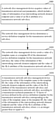
- an embodiment of the present disclosure provides a method for creating a transmission network sub-slice, including the following operations.
- a network slice management device acquires values of transmission universal user parameters; where the values of the transmission universal user parameters include a value of information of an interworking network element (NE) endpoint and a value of a Service Level Agreement (SLA) attribute of a transmission network sub-slice.
- NE interworking network element
- SLA Service Level Agreement
- the values of the transmission universal user parameters are acquired by user input, as shown in the rightmost column of Table 1-1 to Table 1-3, which are the values of the transmission universal user parameters input by the users.
- VLLIST Virtual link List
- TPLIST Network Interworking NE Endpoints List
- the value of information of an interworking network element endpoint can be selected and specified by the user from the border network element information list and endpoint list (such as Table 1-2 and Table 1-3) of the transmission network or the transmission network sub-slice.
- the border network element information list and endpoint list can be acquired in advance from the transmission network sub-slice management device through the northbound interface of query resources.
- the border network element information list and endpoint list can be acquired by sending a first query message, that is, sending a message to query the border network element information list and endpoint list, and receiving the first query result, which includes the border network element information list and endpoint list.
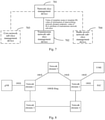
- the roles of endpoints in networking are different, and different roles have different functions in the network.
- the positions of interworking endpoints of different networking are expressed for the subsequent transmission network sub-slice management.
- endpoints have the roles of Network facing Provider Edge (NPE), Service Provider-end PE (SPE) and User facing Provider Edge (UPE).
- NPE Network facing Provider Edge
- SPE Service Provider-end PE
- UPE User facing Provider Edge
- the access side (User) to the core side (Network)
- the UPE and the NPE to measure the time delay, instead of arbitrarily selecting two endpoints.
- the private line service in Layer 2 Virtual Private Network (L2VPN) has an endpoint A and endpoint Z, which represent two endpoints of the private line.
- the information of an interworking network element endpoint includes M endpoint information, where M is an integer greater than or equal to 1, and each endpoint information includes the Identifier (ID) of the network element where the endpoint is located, the name of the network element, the name of the endpoint, the role of the endpoint, the Internet Protocol (IP) address of the endpoint, and the Virtual Local Area Network (VLAN) where the endpoint is located.
- ID Identifier
- IP Internet Protocol
- VLAN Virtual Local Area Network
- the information of an interworking network element endpoint further include extended parameters.
- the extended parameters are used to cope with possible parameter changes in the future.
- the extended parameters can be defined by name-value pair List ⁇ NVString>, as shown in Table 2.
- Table 2 Information element Mandatory Number of instances Data type Description Name M 1 String Parameter name Value M 1 String Parameter value
- an SLA attribute includes at least one selected from the following: bandwidth, time delay, isolation (i.e. extent of isolation), sharing or not, and extended parameter.
- Table 3-1 SLA attribute Information element Data type Description Key word String SLA type: bandwidth, time delay, isolation, etc.
- MAXVALUE String Maximum index value MINVALUE String Minimum index value Table 3-2 Value of SLA attribute Key word (KEY) MINVALUE MAXVALUE Time delay 1ms 10ms Isolation Hard isolation Hard isolation Service type L3VPN/SR L3VPN/SR
- the transmission universal user parameters further include: an activation mode of the transmission network sub-slice, which includes any one of the following: a default activation mode and a manual activation mode.
- the default activation method refers to a default activation when creating the transmission network sub-slice or a default activation at a predetermined time
- the manual activation mode refers to not activating when creating the transmission network sub-slice, followed by manual activation, after which the transmission network sub-slice can carry out service transmission, that is, the transmission network sub-slice is enabled.
- the transmission universal user parameters further include at least one selected from the following: extended parameter, transmission network sub-slice ID, transmission network sub-slice name, template name or template ID.
- the extended parameters are used to cope with possible parameter changes in the future.
- the extended parameters can be defined by name-value pair List ⁇ NVString>, as shown in Table 2.
- the network slice management device can acquire the value of the template name or the template ID in any of the following manners.
- a user directly inputs the value of the template name or the template ID, and the network slice management device acquires the value of the template name or the template ID input by the user.
- the network slice management device acquires a list of service definition templates for the transmission network sub-slice in advance, the user selects a service definition template from the list of service definition templates for the transmission network sub-slice, and the network slice management device acquires the value of the template name or the template ID of the service definition template selected by the user from the list of service definition templates for the transmission network sub-slice.
- the value of the template name or the template ID can be acquired by user's direct input; or the value of the template name or the template ID can be acquired by: acquiring the list of service definition templates for the transmission network sub-slice in advance; displaying the acquired list of service definition templates for the transmission network sub-slice; selecting, by the user, a service definition template from the displayed list of service definition templates for the transmission network sub-slice; and acquiring the template name or the template ID of the service definition template for the transmission network sub-slice selected by the user.
- the list of service definition templates of the transmission network sub-slice can be acquired in advance from the transmission network sub-slice management device through the northbound interface of query resources.
- the list of service definition templates for the transmission network sub-slice can be acquired by sending a second query message, that is, sending a message to query the list of service definition templates for the transmission network sub-slice and receiving the second query result, which includes the list of service definition templates for the transmission network sub-slice.
- the network slice management device determines the service definition template for the transmission network sub-slice.
- the network slice management device may determine the service definition template for the transmission network sub-slice in any of the following manners.
- the values of transmission universal user parameters also include the value of template name or template ID; the network slice management device determines the service definition template for the transmission network sub-slice corresponding to the value of the template name or the template ID. That is, the service definition template for the transmission network sub-slice selected by the user is adopted.
- the values of transmission universal user parameters also include the value of template name or template ID; the network slice management device determines the service definition template for the transmission network sub-slice corresponding to the value of the template name or the template ID, when a value of an SLA attribute of a service definition template for the transmission network sub-slice corresponding to the value of the template name or the template ID matches the value of the SLA attribute of the transmission network sub-slice; when a value of an SLA attribute of a service definition template for the transmission network sub-slice corresponding to the value of the template name or the template ID does not match the value of the SLA attribute of the transmission network sub-slice, the network slice management device re-acquires the value of the SLA attribute of the transmission network sub-slice or re-acquires the value of the template ID or template name of the service definition template for the transmission network sub-slice.
- the network slice management device acquires a list of service definition templates for the transmission network sub-slice in advance; and selects a service definition template for the transmission network sub-slice having a value of an SLA attribute matching the value of the SLA attribute of the transmission network sub-slice, from the list of service definition templates for the transmission network sub-slice.
- the network slice management device selects the service definition template for the transmission network sub-slice having a value of an SLA attribute matching that of the transmission network sub-slice; when there are N service definition templates for the transmission network sub-slice each having a value of an SLA attribute matching that of the transmission network sub-slice, where N is an integer greater than or equal to 2, the network slice management device selects one of the N service definition templates for the transmission network sub-slice each having a value of an SLA attribute matching that of the transmission network sub-slice.
- a respective one of the service definition templates for the transmission network sub-slice can be randomly selected by the system, or a respective one of the service definition templates for the transmission network sub-slice can be selected by the user.
- whether a value of an SLA attribute of a service definition template for the transmission network sub-slice matches the value of the SLA attribute of the transmission network sub-slice can be judged in the following manners.
- the isolation in the value of the SLA attribute of the service definition template for the transmission network sub-slice is the same as that in the value of the SLA attribute of the transmission network sub-slice
- the time delay in the value of the SLA attribute of the service definition template for the transmission network sub-slice is within the range (that is, the range that meets the user's time delay requirement) of the time delay in the value of the SLA attribute of the transmission network sub-slice
- the value of time delay is 5 milliseconds (ms)
- the value of isolation is hard isolation
- the value of service type is L3VPN/SR.
- the user can select or input a service definition template for the transmission network sub-slice, or input a value of an SLA attribute of the transmission network sub-slice, and the system can match the value of the SLA attribute of the transmission network sub-slice.
- the list of service definition templates for the transmission network sub-slice can be acquired by sending a third query message, that is, sending a message to query the list of service definition templates for the transmission network sub-slice and receiving the third query result, which includes the list of service definition templates for the transmission network sub-slice.
- the list of service definition templates for the transmission network sub-slice include template names or template IDs of the service definition templates for the transmission network sub-slice.
- the list of service definition templates for the transmission network sub-slice may further include at least one selected from the following: service type list, network slice type, domain type, vendor, template status, SLA attribute table, without a need of a transmission technical service parameter table.
- the network slice management device sends the value of the template name or the template ID of the determined service definition template for the transmission network sub-slice, the value of the information of the interworking network element endpoint and the value of the SLA attribute of the transmission network sub-slice.
- the network slice management device can send the value of the template name or the template ID, the value of the information of the interworking network element endpoint and the value of the SLA attribute of the transmission network sub-slice, through the northbound interface.
- the network slice management device can send the value of the template name or the template ID, the value of the information of the interworking network element endpoint and the value of the SLA attribute of the transmission network sub-slice, in any proper manner, for example in the form of a message, which are not limited in the embodiments of the present disclosure.
- the transmission network sub-slice management device receives the value of the template name or the template ID, the value of the information of the interworking network element endpoint and the value of the SLA attribute of the transmission network sub-slice; creates a transmission network sub-slice, according to transmission technical parameters of X layers of services defined in the service definition template for the transmission network sub-slice corresponding to the value of the template name or the template ID, the value of the information of the interworking network element endpoint and the value of the SLA attribute of the transmission network sub-slice; where X is an integer greater than or equal to 1.
- the transmission network sub-slice management device analyzes the message after receiving the message from the northbound interface, and acquires the value of the template name or the template ID, the value of the information of the interworking network element endpoint and the value of the SLA attribute of the transmission network sub-slice from the message; the transmission technical parameters of X layers of services defined in the service definition template for the transmission network sub-slice corresponding to the value of the template name or the template ID can be read locally.
- creating the transmission network sub-slices includes: creating the X layers of services in the transmission network sub-slice according to the transmission technical parameters of the X layers of services; establishing a virtual node, a virtual port and a virtual link, according to the value of the information of the interworking network element endpoint, the value of the SLA attribute of the transmission network sub-slice, and the created X layers of services.
- the defined transmission technical parameters in the service definition template for the transmission network sub-slice are transmission technical parameters for a creation of a service of the transmission network sub-slice.
- the existing technology requires the user to input transmission technical parameters of a layer of service to realize the creation of a layer of services, which is relatively complicated and inefficient, while the embodiments of the present disclosure realizes an automatic creation of multi-layer services based on the service definition template for the transmission network sub-slice and the values of the transmission universal user parameters, and does not require the user to input the transmission technical parameters layer by layer.
- the transmission technical parameters of the X layers of services corresponding to the template name or the template ID in the local database is read, calculation is performed from the upper client layer in the transmission service model according to the relationship between the client layer and the service layer of the service in the transmission technical model, the routes of multi-layers of services are sequentially calculated, services are sequentially created from the lower layer in the transmission service model, the existing service creation interface is reused.
- a cross-link table or routing table is distributed to a device, and multi-layers of services are automatically and sequentially created, thus the creation of multi-layers of services can be completed in the sub-slice.
- Which layer of service is to be created is determined according to the services layout and transmission technical parameters defined in the service definition template for the transmission network sub-slice.
- the virtual node, virtual port and virtual link are established according to the value of the information of the interworking network element endpoint, the value of the SLA attribute of the transmission network sub-slice, and the created X layers of services.
- VLINK Virtual LINK
- the transmission network sub-slice can be created quickly, such that the wireless domain and core domain services of the 5G network slice are connected.
- VNET The transmission network sub-slice virtual network (VNET) consists of Virtual NODE (VNODE) (as shown in Table 4-1 and Table 4-2), Virtual PORT (VPORT) (as shown in Table 4-3 to Table 4-6) and Virtual LINK (VLINK) (as shown in Table 4-7), which are represented as virtual objects VNODE, VPORT and VLINK.
- VNODE Virtual NODE
- VPORT Virtual PORT
- VLINK Virtual LINK
- mapping relationship between the VNODE and a physical network element which can be a one-to-one or many-to-one mapping relationship, that is, one physical network element can map one VNODE or multiple VNODEs;
- the VPORT is an endpoint on the VNDOE, and it has a mapping relationship with an endpoint on a physical network element, which can be a one-to-one relationship.
- mapping relationship between the VLINK and the actual service, which can be a one-to-one or one-to-many mapping relationship.
- Table 4-1 VNODE name Virtual network element 1 VNODE ID 1 Mapping resource ID 1
- Table 4-2 VNODE name Virtual network element 2
- VNODE ID 2 Mapping resource ID 2
- Table 4-3 VPORT name Endpoint U1 of Virtual Network Element 1
- VNODE ID 1 VPORT ID 1 VPORT type U side List of Mapping resource ID (L3VPN layer, 1)
- Table 4-4 VPORT name Endpoint N1 of Virtual Network Element 1 VNODE ID 1 VPORT ID 2 VPORT type N side List of Mapping resource ID (SR layer, 11)
- Table 4-5 VPORT name Endpoint U1 of Virtual Network Element 2
- VNODE ID 2 VPORT ID 1 VPORT type U side List of Mapping (L3VPN layer, 1)
- resource ID Table 4-6 VPORT name Endpoint N1 of Virtual Network Element 2
- AVNODE ID 2 VPORT type N side List of Mapping
- Creating a transmission network sub-slice means creating the objects VNODE, VPORT and VLINK which make up the transmission network sub-slice; and an actual link service mapped by the VLINK is created.
- the transmission network sub-slice separates the real resources, which are utilized by the actual link service corresponding to VLINK, from the basic physical resources.
- the real resources are mapped to virtual resources VNODE, VPORT and VLINK which make up the transmission network sub-slice having a logical network that meets the specific transmission requirements of users.
- the logical network has characteristics which are consistent with those of a physical network, in order to meet the transmission differentiation requirements of 5G services.
- a plurality of VNODEs are established based on a plurality of interworking network elements, and the VNODEs correspond to the interworking physical network elements one by one.
- the VPORT can be divided into a user side (U-side) VPORT endpoint and a network side (N-side) VPORT endpoint.
- U-side VPORT is mapped to an interworking physical network element endpoint in the transmission universal user parameters.
- the N-side VPORT has a mapping relationship with the N-side physical network element endpoint of the actual service corresponding to the VLINK. If a VLINK corresponds to multi-layers of actual services, then a VPORT can be mapped to multi-layers of physical network element endpoints, that is, one VPORT is mapped to a list of physical network element endpoints, where each layer is a mapped physical network element endpoint according to the layers defined by the service definition template for the transmission network sub-slice.
- the VPORT belonging to the same physical network element belongs to the same VNODE.
- VLINK is established according to the service definition template for the transmission network sub-slice.
- VLINK is a virtual logical link, and one VLINK is mapped to the multiple L1/L2/L3 layers of actual services in the transmission service model.
- a VLINK is mapped to the actual services of L3VPN and SR tunnel in the transmission service model.
- the transmission technical parameter table corresponding to the template name or the template ID in the local database is read, the values of transmission universal user parameters in the message is read, and L3VPN and SR tunnel services are sequentially calculated and created.
- the calculation starts with L3VPN in the transmission service model.
- the routing strategy in the sub-slice template and the service parameters such as that L3VPN is a FULLMESH network, etc.
- calculation is performed to determine which SR tunnels are needed by L3VPN. For example, to provide L3VPN services between endpoint 1 of network element 1 and endpoint 2 of network element 2, it is necessary to first create an SR tunnel between network element 1 and network element 2, and then create L3VPN services based on the SR tunnels.
- the service creation starts from SR tunnel in the service layer of the transmission service model, and then L3VPN is created.
- the existing interfaces for creating L3VPN and SR tunnel are used to create multi-layers of services in turn, and the parameters of multi-layers of services are distributed to the network element devices in a cross-link table or routing table, so that L3VPN and SR tunnel of the layer of service are enabled.
- VLINK is enabled
- the transmission sub-slice is enabled. Therefore the transmission sub-slice can be quickly created and enabled, and the wireless domain and core domain services of the 5G network slice are connected.
- the method further includes the following operations.
- the transmission network sub-slice management device returns a transmission network sub-slice creation-success message or a transmission network sub-slice creation-failure message; or, the network slice management device sends a message to inquire whether the transmission network sub-slice is created successfully, and the transmission network sub-slice management device returns a transmission network sub-slice creation-success message or a transmission network sub-slice creation-failure message; or, the network slice management device sends a message to inquire a creation progress of the transmission network sub-slice, and the transmission network sub-slice management device returns a creation progress message of the transmission network sub-slice.
- the network slice management device can wait for the message of success of creating transmission network sub-slice, or the message of failure of creating transmission network sub-slice, which is automatically returned by the transmission network sub-slice management device.
- the network slice management device can determine whether the transmission network sub-slice is successfully created by regularly sending inquiry messages (including inquiring whether the transmission network sub-slice is successfully created or not, inquiring the transmission network sub-slice creation progress message, etc.).
- the method before the transmission network sub-slice management device receives the creation message, the method further includes the following operations.
- the transmission network sub-slice management device defines a service definition template for the transmission network sub-slice in advance according to a transmission technical service model and a transmission requirement of a service scenario, and issues the service definition template for the transmission network sub-slice, where the service definition template for the transmission network sub-slice defines transmission technical parameters of X layers of services for the creation of the transmission network sub-slice.
- the method further includes: verifying the transmission technical parameters of the X layers of services, and continuing to execute the step of issuing the service definition template for the transmission network sub-slice if the verification is passed.
- At least one selected from the following parameters is also defined in the transmission network sub-slice definition template: a basic parameter, an SLA attribute.
- the transmission technical parameters of the X layers of services are encapsulated in the service definition template for the transmission network sub-slice.
- the significance of the service definition template for the transmission network sub-slice is explained as follows. Different transmission technical parameter tables represent different transmission technologies. In actual use, there may be dozens or hundreds of transmission technical service parameters to be set in the transmission technical parameter table. If these transmission technical parameters are set by the user, such operation is difficult and complicate, which leads to a high technical threshold.
- the embodiments of the present disclosure provide the template names or IDs and SLA attribute parameters corresponding to the service definition templates of the transmission network sub-slice for the user to choose, which simplifies the user's configuration of the transmission network sub-slice, and make the network slicing system simpler.
- the service definition template for the transmission network sub-slice is related to a transmission technology, independent of a transmission network, and suitable for various transmission networks.
- the basic parameters of the service definition template for the transmission network sub-slice include at least one selected from the following: template name of the transmission network sub-slice, template ID of the transmission network sub-slice, service layer rate list, network slice type, domain type, manufacturer, version, template status, service parameter table name and SLA attribute table name.
- Table 5 Basic parameters Information element Data type Description Name of transmission network sub-slice String Template name Template ID of the transmission network sub-slice String Template ID Service types list String L3VPN, SR tunnel Service layer rate String Rate list of slice-related layers of services, list use, separation Network slice type String Types of eMBB, uRLLC, scene or mass Internet of Things (mMTC), etc. Domain type String Transmission domain Manufacturer String Customization Version String V 1.0, defined by version series Template status String The status is available, unavailable Name of transmission service parameters table String Name of referenced service parameters table Name of SLA attribute table String Name of referenced SLA attribute table
- transmission technical parameters include transmission technology-related parameters.
- Hierarchical transmission technical parameters are defined according to the transmission technical service model.
- the transmission network sub-slice uses L3VPN, a typical transmission technology based on SR tunnel technology, to encapsulate the L3VPN technical parameter, SR tunnel technical parameter and routing policy parameter in the service definition template for the transmission network sub-slice. That is, the transmission technical parameters are not revealed to the network slice, and users do not need to set these parameters, which greatly reduces the complexity of the system, improves the reliability of the system and simply realizes the creation of the transmission network sub-slice.
- Table 6 Structural definitions of transmission service parameters table Information element Data type Description Key word String Name of transmission service parameter Numeral value String Value of transmission service parameter Type of transmission service parameter String Usually according to hierarchy of transmission technical model, such as parameters of L3VPN, SR tunnel, routing policy Table 7 Transmission service parameters Service type Transmission service parameter Parameter value L3VPN Topology type FULLMESH L3VPN Type of VPN (VPNTYPE) Nonstationary L3VPN Activate now Activate L3VPN Traffic statistics Yes SR tunnel Tunnel type SR-TP SR tunnel Type of protection Unprotected SR tunnel Direction Bidirectional SR tunnel Activated state Activate SR tunnel Traffic statistics Yes
- the transmission technical service model includes, in the Open System Interconnect (OSI) reference model, L1.5 layer technology such as Flexible Ethernet (FlexE) , L2 layer technology such as L2VPN, L2.5 layer technology such as Multi-Protocol Label Switching Transmission Profile (MPLSTP), SR, and L3 layer technology such as L3VPN.
- L1.5 layer technology such as Flexible Ethernet (FlexE)
- L2 layer technology such as L2VPN
- L2.5 layer technology such as Multi-Protocol Label Switching Transmission Profile (MPLSTP), SR
- L3 layer technology such as L3VPN.
- the transmission service parameters of L3 layer L3VPN include topology type, VPN type, management status, (whether perform) traffic statistics and other parameters.
- the transmission technical parameters include some or all transmission technical parameters of all layers of services.
- L3VPN key parameters, SR tunnel technical parameters and routing policy parameters are included, which are determined according to SLA attribute and transmission technologies of transmission network sub-slices.
- an SLA attribute includes at least one selected from the following: bandwidth, time delay, isolation, sharing or not.
- the SLA attribute according to the embodiments of the present disclosure is used to express the transmission capability of the service definition templates for the transmission network sub-slice.
- the verification of transmission technical parameters refers to a coordinated verification of transmission technical parameters according to the transmission technical hierarchy to ensure that the transmission technical parameters are within an effective value range, and to ensure that the transmission technical parameters are consistent, effective and non-conflicting. For example, when the management state of L3VPN is active, the management state of the tunnel should also be active.
- issuing the service definition template for the transmission network sub-slice means saving the service definition template for the transmission network sub-slice, for example, in a database.
- the detailed parameters of the transmission technology i.e., transmission service parameters
- the parameters of the transmission network sub-slice can be simply configured through the basic parameters and the transmission universal user parameters of the transmission sub-slice service definition template, thus a quick creation can be performed. Therefore, such technical scheme meets the requirement of customization of a 5G slice on demand, simplify the user configuration, and quickly enables the transmission network sub-slice.
- the slicing system and sub-slicing system each has a simple design and high system reliability.
- an embodiment of the present disclosure provides a method for creating a transmission network sub-slice, including the following operations.
- values of transmission universal user parameters are acquired; where the values of the transmission universal user parameters include a value of information of an interworking network element endpoint and a value of a Service Level Agreement (SLA) attribute of a transmission network sub-slice.
- SLA Service Level Agreement
- the values of the transmission universal user parameters are acquired by user input, as shown in the rightmost column of Table 1-1 to Table 1-3, which are the values of the transmission universal user parameters input by the users.
- the value of information of an interworking network element endpoint can be selected and specified by the user from the border network element information list and endpoint list (such as Table 1-2 and Table 1-3) of the transmission network or the transmission network sub-slice.
- the border network element information list and endpoint list can be acquired in advance from the transmission network sub-slice management device through the northbound interface of query resources.
- the border network element information list and endpoint list can be acquired by sending a first query message, that is, sending a message to query the border network element information list and endpoint list, and receiving the first query result, which includes the border network element information list and endpoint list.
- the roles of endpoints in networking are different, and different roles have different functions in the network.
- the positions of interworking endpoints of different networking are expressed for the subsequent transmission network sub-slice management.
- endpoints have the roles of NPE, SPE and UPE.
- the access side (User) to the core side (Network)
- the UPE and the NPE to measure the time delay, instead of arbitrarily selecting two endpoints.
- the private line service in Layer 2 Virtual Private Network (L2VPN) has an endpoint A and endpoint Z, which represent two endpoints of the private line.
- the information of an interworking network element endpoint includes M endpoint information, where M is an integer greater than or equal to 1, and each endpoint information includes the Identifier (ID) of the network element where the endpoint is located, the name of the network element, the name of the endpoint, the role of the endpoint, the Internet Protocol (IP) address of the endpoint, and the VLAN where the endpoint is located.
- ID Identifier
- IP Internet Protocol
- the information of an interworking network element endpoint further include extended parameters.
- the extended parameters are used to cope with possible parameter changes in the future.
- the extended parameters can be defined by name-value pair List ⁇ NVString>, as shown in Table 2.
- an transmission SLA attribute includes at least one selected from the following: bandwidth, time delay, isolation, sharing or not, and extended parameter.
- the transmission universal user parameters further include: an activation mode of the transmission network sub-slice, which includes any one of the following: a default activation mode and a manual activation mode.
- the default activation method refers to a default activation when creating the transmission network sub-slice or a default activation at a predetermined time
- the manual activation mode refers to not activating when creating the transmission network sub-slice, followed by manual activation, after which the transmission network sub-slice can carry out service transmission, that is, the transmission network sub-slice is enabled.
- the transmission universal user parameters further include at least one selected from the following: extended parameter, transmission network sub-slice ID, transmission network sub-slice name, template name or template ID.
- the extended parameters are used to cope with possible parameter changes in the future.
- the extended parameters can be defined by name-value pair List ⁇ NVString>, as shown in Table 2.
- the value of the template name or the template ID can be acquired in any of the following manners.
- a user directly inputs the value of the template name or the template ID, and the value of the template name or the template ID input by the user is acquired.
- a list of service definition templates for the transmission network sub-slice is acquired in advance, the user selects a service definition template from the list of service definition templates for the transmission network sub-slice, and the value of the template name or the template ID of the service definition template selected by the user from the list of service definition templates for the transmission network sub-slice is acquired.
- the value of the template name or the template ID can be acquired by user's direct input; or the value of the template name or the template ID can be acquired by: acquiring the list of service definition templates for the transmission network sub-slice in advance; displaying the acquired list of service definition templates for the transmission network sub-slice; selecting, by the user, a service definition template from the displayed list of service definition templates for the transmission network sub-slice; and acquiring the template name or the template ID of the service definition template for the transmission network sub-slice selected by the user.
- the list of service definition templates of the transmission network sub-slice can be acquired in advance from the transmission network sub-slice management device through the northbound interface of query resources.
- the list of service definition templates for the transmission network sub-slice can be acquired by sending a second query message, that is, sending a message to query the list of service definition templates for the transmission network sub-slice and receiving the second query result, which includes the list of service definition templates for the transmission network sub-slice.
- a service definition template for the transmission network sub-slice is determined.
- determining the service definition template for the transmission network sub-slice according to the value of the information for determining the service definition template for the transmission network sub-slice can be achieved in any of the following manners:
- the values of transmission universal user parameters also include the value of template name or template ID; the service definition template for the transmission network sub-slice corresponding to the value of the template name or the template ID is determined. That is, the service definition template for the transmission network sub-slice selected by the user is adopted.
- the values of transmission universal user parameters also include the value of template name or template ID; the network slice management device determines the service definition template for the transmission network sub-slice corresponding to the value of the template name or the template ID, when a value of an SLA attribute of a service definition template for the transmission network sub-slice corresponding to the value of the template name or the template ID matches the value of the SLA attribute of the transmission network sub-slice; when a value of an SLA attribute of a service definition template for the transmission network sub-slice corresponding to the value of the template name or the template ID does not match the value of the SLA attribute of the transmission network sub-slice, the network slice management device re-acquires the value of the SLA attribute of the transmission network sub-slice or re-acquires the value of the template ID or template name of the service definition template for the transmission network sub-slice.
- the network slice management device acquires a list of service definition templates for the transmission network sub-slice in advance; and selects a service definition template for the transmission network sub-slice having a value of an SLA attribute matching the value of the SLA attribute of the transmission network sub-slice, from the list of service definition templates for the transmission network sub-slice.
- the network slice management device selects the service definition template for the transmission network sub-slice having a value of an SLA attribute matching that of the transmission network sub-slice; when there are N service definition templates for the transmission network sub-slice each having a value of an SLA attribute matching that of the transmission network sub-slice, where N is an integer greater than or equal to 2, the network slice management device selects one of the N service definition templates for the transmission network sub-slice each having a value of an SLA attribute matching that of the transmission network sub-slice.
- a respective one of the service definition templates for the transmission network sub-slice can be randomly selected by the system, or a respective one of the service definition templates for the transmission network sub-slice can be selected by the user.
- whether a value of an SLA attribute of a service definition template for the transmission network sub-slice matches the value of the SLA attribute of the transmission network sub-slice can be judged in the following manners.
- the isolation in the value of the SLA attribute of the service definition template for the transmission network sub-slice is the same as that in the value of the SLA attribute of the transmission network sub-slice
- the time delay in the value of the SLA attribute of the service definition template for the transmission network sub-slice is within the range (that is, the range that meets the user's time delay requirement) of the time delay in the value of the SLA attribute of the transmission network sub-slice
- the value of time delay is 5 milliseconds (ms)
- the value of isolation is hard isolation
- the value of service type is L3VPN/SR.
- the user can select or input a service definition template for the transmission network sub-slice, or input a value of an SLA attribute of the transmission network sub-slice, and the system can match the value of the SLA attribute of the transmission network sub-slice.
- the list of service definition templates for the transmission network sub-slice can be acquired by sending a third query message, that is, sending a message to query the list of service definition templates for the transmission network sub-slice and receiving the third query result, which includes the list of service definition templates for the transmission network sub-slice.
- the list of service definition templates for the transmission network sub-slice include template names or template IDs of the service definition templates for the transmission network sub-slice.
- the list of service definition templates for the transmission network sub-slice may further include at least one selected from the following: service type list, network slice type, domain type, vendor, template status, SLA attribute table, without a need of a transmission technical service parameter table.
- the value of the template name or the template ID of the determined service definition template for the transmission network sub-slice, the value of the information of the interworking network element endpoint and the value of the SLA attribute of the transmission network sub-slice is sent.
- the network slice management device can send the value of the template name or the template ID, the value of the information of the interworking network element endpoint and the value of the SLA attribute of the transmission network sub-slice, through the northbound interface.
- the network slice management device can send the value of the template name or the template ID, the value of the information of the interworking network element endpoint and the value of the SLA attribute of the transmission network sub-slice, in any proper manner, for example in the form of a message, which are not limited in the embodiments of the present disclosure.
- the method further includes: receiving a transmission network sub-slice creation-success message or a transmission network sub-slice creation-failure message; or, sending a message to inquire whether the transmission network sub-slice is created successfully, and receiving a transmission network sub-slice creation-success message or a transmission network sub-slice creation-failure message; or, sending a message to inquire a creation progress of the transmission network sub-slice, and receiving a creation progress message of the transmission network sub-slice.
- the message of success or failure of creating transmission network sub-slice can be subsequently automatically returned.
- whether the transmission network sub-slice is successfully created can be determined by regularly sending inquiry messages (including inquiring whether the transmission network sub-slice is successfully created or not, inquiring the transmission network sub-slice creation progress message, etc.).
- an embodiment of the present disclosure provides a method for creating a transmission network sub-slice, including the following operations.
- the value of the template name or the template ID, the value of the information of the interworking network element endpoint and the value of the SLA attribute of the transmission network sub-slice are received.
- the values of the transmission universal user parameters are acquired by user input, as shown in the rightmost column of Table 1-1 to Table 1-3, which are the values of the transmission universal user parameters input by the users.
- the roles of endpoints in networking are different, and different roles have different functions in the network.
- the positions of interworking endpoints of different networking are expressed for the subsequent transmission network sub-slice management.
- endpoints have the roles of NPE, SPE and UPE.
- the access side (User) to the core side (Network)
- the UPE and the NPE to measure the time delay, instead of arbitrarily selecting two endpoints.
- the private line service in Layer 2 Virtual Private Network (L2VPN) has an endpoint A and endpoint Z, which represent two endpoints of the private line.
- the information of an interworking network element endpoint includes M endpoint information, where M is an integer greater than or equal to 1, and each endpoint information includes the Identifier (ID) of the network element where the endpoint is located, the name of the network element, the name of the endpoint, the role of the endpoint, the Internet Protocol (IP) address of the endpoint, and the VLAN where the endpoint is located.
- ID Identifier
- IP Internet Protocol
- the information of an interworking network element endpoint further include extended parameters.
- the extended parameters are used to cope with possible parameter changes in the future.
- the extended parameters can be defined by name-value pair List ⁇ NVString>, as shown in Table 2.
- an SLA attribute includes at least one selected from the following: bandwidth, time delay, isolation, sharing or not, and extended parameter.
- the transmission universal user parameters further include: an activation mode of the transmission network sub-slice, which includes any one of the following: a default activation mode and a manual activation mode.
- the default activation method refers to a default activation when creating the transmission network sub-slice or a default activation at a predetermined time
- the manual activation mode refers to not activating when creating the transmission network sub-slice, followed by manual activation, after which the transmission network sub-slice can carry out service transmission, that is, the transmission network sub-slice is enabled.
- the transmission universal user parameters further include at least one selected from the following: extended parameter, transmission network sub-slice ID, transmission network sub-slice name, template name or template ID.
- the extended parameters are used to cope with possible parameter changes in the future.
- the extended parameters can be defined by name-value pair List ⁇ NVString>, as shown in Table 2.
- a transmission network sub-slice is created, according to transmission technical parameters of X layers of services defined in the service definition template for the transmission network sub-slice corresponding to the value of the template name or the template ID, the value of the information of the interworking network element endpoint and the value of the SLA attribute of the transmission network sub-slice; where X is an integer greater than or equal to 1.
- the transmission network sub-slice management device analyzes the message after receiving the message from the northbound interface, and acquires the value of the template name or the template ID, the value of the information of the interworking network element endpoint and the value of the SLA attribute of the transmission network sub-slice from the message; the transmission technical parameters of X layers of services defined in the service definition template for the transmission network sub-slice corresponding to the value of the template name or the template ID can be read locally.
- creating the transmission network sub-slices includes: creating the X layers of services in the transmission network sub-slice according to the transmission technical parameters of the X layers of services; establishing a virtual node, a virtual port and a virtual link, according to the value of the information of the interworking network element endpoint, the value of the SLA attribute of the transmission network sub-slice, and the created X layers of services.
- the defined transmission technical parameters in the service definition template for the transmission network sub-slice are transmission technical parameters for a creation of a service of the transmission network sub-slice.
- the existing technology requires the user to input transmission technical parameters of a layer of service to realize the creation of a layer of services, which is relatively complicated and inefficient, while the embodiments of the present disclosure realizes an automatic creation of multi-layer services based on the service definition template for the transmission network sub-slice and the values of the transmission universal user parameters, and does not require the user to input the transmission technical parameters layer by layer.
- the transmission technical parameters of the X layers of services corresponding to the template name or the template ID in the local database is read, calculation is performed from the upper client layer in the transmission service model according to the relationship between the client layer and the service layer of the service in the transmission technical model, the routes of multi-layers of services are sequentially calculated, services are sequentially created from the lower layer in the transmission service model, the existing service creation interface is reused.
- a cross-link table or routing table is distributed to a device, and multi-layers of services are automatically and sequentially created, thus the creation of multi-layers of services can be completed in the sub-slice.
- Which layer of service is to be created is determined according to the services layout and transmission technical parameters defined in the service definition template for the transmission network sub-slice.
- the virtual node, virtual port and virtual link are established according to the value of the information of the interworking network element endpoint, the value of the SLA attribute of the transmission network sub-slice, and the created X layers of services.
- VLINK Virtual LINK
- the transmission network sub-slice can be created quickly, such that the wireless domain and core domain services of the 5G network slice are connected.
- VNET The transmission network sub-slice virtual network (VNET) consists of Virtual NODE (VNODE) (as shown in Table 4-1 and Table 4-2) ( PORT (VPORT) (as shown in Table 4-3 to Table 4-6) and Virtual LINK (VLINK) (as shown in Table 4-7), as represented as virtual objects VNODE, VPORT and VLINK.
- VNODE Virtual NODE
- PORT VPORT
- VLINK Virtual LINK
- mapping relationship between the VNODE and a physical network element which can be a one-to-one or many-to-one mapping relationship, that is, one physical network element can map one VNODE or multiple VNODEs.
- the VPORT is an endpoint on the VNDOE, and it has a mapping relationship with an endpoint on a physical network element, which can be a one-to-one relationship.
- mapping relationship between the VLINK and the actual service which can be a one-to-one or one-to-many mapping relationship.
- Creating a transmission network sub-slice means creating the objects VNODE, VPORT and VLINK which make up the transmission network sub-slice; and an actual link service mapped by the VLINK is created.
- the transmission network sub-slice separates the real resources, which are utilized by the actual link service corresponding to VLINK, from the basic physical resources.
- the real resources are mapped to virtual resources VNODE, VPORT and VLINK which make up the transmission network sub-slice having a logical network that meets the specific transmission requirements of users.
- the logical network has characteristics which are consistent with those of a physical network, in order to meet the transmission differentiation requirements of 5G services.
- a plurality of VNODEs are established based on a plurality of interworking network elements, and the VNODEs correspond to the interworking physical network elements one by one.
- the VPORT can be divided into a U-side (user side) VPORT endpoint and an N-side (network side) VPORT endpoint.
- the U-side (user side) VPORT is mapped to an interworking physical network element endpoint in the transmission universal user parameters.
- the N-side VPORT has a mapping relationship with the N-side (network side) physical network element endpoint of the actual service corresponding to the VLINK.
- a VPORT can be mapped to multi-layers of physical network element endpoints, that is, one VPORT is mapped to a list of physical network element endpoints, where each layer is a mapped physical network element endpoint according to the layers defined by the service definition template for the transmission network sub-slice.
- the VPORT belonging to the same physical network element belongs to the same VNODE.
- VLINK is established according to the service definition template for the transmission network sub-slice.
- VLINK is a virtual logical link, and one VLINK is mapped to the multiple L1/L2/L3 layers of actual services in the transmission service model.
- a VLINK is mapped to the actual services of L3VPN and SR tunnel in the transmission service model.
- the transmission technical parameter table corresponding to the template name or the template ID in the local database is read, the values of transmission universal user parameters in the message is read, and L3VPN and SR tunnel services are sequentially calculated and created. The calculation starts with L3VPN in the transmission service model.
- L3VPN is a full mesh (FULLMESH) network, etc.
- calculation is performed to determine which SR tunnels are needed by L3VPN. For example, to provide L3VPN services between endpoint 1 of network element 1 and endpoint 2 of network element 2, it is necessary to first create an SR tunnel between network element 1 and network element 2, and then create L3VPN services based on the SR tunnels.
- the service creation starts from SR tunnel in the service layer of the transmission service model, and then L3VPN is created.
- the existing interfaces for creating L3VPN and SR tunnel are used to create multi-layers of services in turn, and the parameters of multi-layers of services are distributed to the network element devices in a cross-link table or routing table, so that L3VPN and SR tunnel of the layer of service are enabled.
- VLINK is enabled
- the transmission sub-slice is enabled. Therefore the transmission sub-slice can be quickly created and enabled, and the wireless domain and core domain services of the 5G network slice are connected.
- the method further includes: returning a transmission network sub-slice creation-success message or a transmission network sub-slice creation-failure message; or, receiving a message to inquire whether the transmission network sub-slice is created successfully, and returning a transmission network sub-slice creation-success message or a transmission network sub-slice creation-failure message; or, receiving a message to inquire a creation progress of the transmission network sub-slice, and returning a creation progress message of the transmission network sub-slice.
- the method before receiving the creation message, further includes: receiving a message of inquiring the list of service definition templates for the transmission network sub-slice, or the border network element information list and endpoint list of the transmission network or the transmission network sub-slice, and sending an inquiry result, where the inquiry result includes the list of service definition templates for the transmission network sub-slice, or the border network element information list and endpoint list of the transmission network or the transmission network sub-slice.
- the method before receiving the creation message, the method further includes the following operations.
- a service definition template for the transmission network sub-slice is defined in advance according to a transmission technical service model and a transmission requirement of a service scenario, and the service definition template for the transmission network sub-slice is issued, where the service definition template for the transmission network sub-slice defines transmission technical parameters of X layers of services for the creation of the transmission network sub-slice.
- the method further includes: verifying the transmission technical parameters of the X layers of services, and continuing to execute the step of issuing the service definition template for the transmission network sub-slice if the verification is passed.
- At least one selected from the following parameters is also defined in the transmission network sub-slice definition template: a basic parameter, an SLA attribute.
- the transmission technical parameters of the X layers of services are encapsulated in the service definition template for the transmission network sub-slice.
- the significance of the service definition template for the transmission network sub-slice is explained as follows. Different transmission technical parameter tables represent different transmission technologies. In actual use, there may be dozens or hundreds of transmission technical service parameters to be set in the transmission technical parameter table. If these transmission technical parameters are set by the user, such operation is difficult and complicate, which leads to a high technical threshold.
- the embodiments of the present disclosure provide the template names or IDs and SLA attribute parameters corresponding to the service definition templates of the transmission network sub-slice for the user to choose, which simplifies the user's configuration of the transmission network sub-slice, and make the network slicing system simpler.
- the service definition template for the transmission network sub-slice is related to the transmission technology, independent of the transmission network, and suitable for various transmission networks.
- the basic parameters of the service definition template for the transmission network sub-slice include at least one selected from the following: template name of the transmission network sub-slice, template ID of the transmission network sub-slice, service layer rate list, network slice type, domain type, manufacturer, version, template status, service parameter table name and SLA attribute table name.
- transmission technical parameters include transmission technology-related parameters.
- Hierarchical transmission technical parameters are defined according to the transmission technical service model.
- the transmission network sub-slice uses L3VPN, a typical transmission technology based on SR tunnel technology, to encapsulate the L3VPN technical parameter, SR tunnel technical parameter and routing policy parameter in the service definition template for the transmission network sub-slice. That is, the transmission technical parameters are not revealed to the network slice, and users do not need to set these parameters, which greatly reduces the complexity of the system, improves the reliability of the system and simply realizes the creation of the transmission network sub-slice.
- the transmission technical service model includes, in the Open System Interconnect (OSI) reference model, L1.5 layer technology such as Flexible Ethernet (FlexE) , L2 layer technology such as L2VPN, L2.5 layer technology such as Multi-Protocol Label Switching Transmission Profile (MPLSTP), SR, and L3 layer technology such as L3VPN.
- L1.5 layer technology such as Flexible Ethernet (FlexE)
- L2 layer technology such as L2VPN
- L2.5 layer technology such as Multi-Protocol Label Switching Transmission Profile (MPLSTP), SR
- L3 layer technology such as L3VPN.
- the transmission service parameters of L3 layer L3VPN include topology type, VPN type, management status, (whether perform) traffic statistics and other parameters.
- the transmission technical parameters include some or all transmission technical parameters of all layers of services.
- L3VPN key parameters, SR tunnel technical parameters and routing policy parameters are included, which are determined according to SLA attribute and transmission technologies of transmission network sub-slices.
- an SLA attribute includes at least one selected from the following: bandwidth, time delay, isolation, sharing or not.
- the SLA attribute according to the embodiments of the present disclosure are used to express the transmission capability of the service definition templates for the transmission network sub-slice.
- the verification of transmission technical parameters refers to a coordinated verification of transmission technical parameters according to the transmission technical hierarchy to ensure that the transmission technical parameters are within an effective value range, and to ensure that the transmission technical parameters are consistent, effective and non-conflicting. For example, when the management state of L3VPN is active, the management state of the tunnel should also be active.
- issuing the service definition template for the transmission network sub-slice means saving the service definition template for the transmission network sub-slice, for example, in a database.
- the detailed parameters of the transmission technology i.e., transmission service parameters
- the parameters of the transmission network sub-slice can be simply configured through the basic parameters and the transmission universal user parameters of the transmission sub-slice service definition template, thus a quick creation can be performed. Therefore, such technical scheme meets the requirement of customization of a 5G slice on demand, simplify the user configuration, and quickly enables the transmission network sub-slice.
- the slicing system and sub-slicing system each has a simple design and high system reliability.
- Another embodiment of the present disclosure provides a device for creating a transmission network sub-slice, including a processor, and a computer-readable storage medium storing instructions which, when executed by the processor, cause the processor to perform any of the above-mentioned methods for creating a transmission network sub-slice.
- Another embodiment of the present disclosure provides a computer-readable storage medium storing instructions which, when executed by a processor, cause the processor to perform any of the above-mentioned methods for creating a transmission network sub-slice.
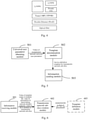
- an embodiment of the present disclosure provides a device for creating a transmission network sub-slice (such as a network slice management device), including the following modules.
- a universal user parameter acquiring module 501 is configured to acquire values of transmission universal user parameters; where the values of the transmission universal user parameters include a value of information of an interworking network element endpoint, a value of information for determining a service definition template for a transmission network sub-slice and a value of a Service Level Agreement (SLA) attribute of the transmission network sub-slice.
- a template determination module 502 is configured to determine the service definition template for the transmission network sub-slice.
- An information sending module 503 is configured to send the value of the template name or the template ID of the determined service definition template for the transmission network sub-slice, the value of the information of the interworking network element endpoint and the value of the SLA attribute of the transmission network sub-slice.
- the information sending module 503 is further configured to: receive a transmission network sub-slice creation-success message or a transmission network sub-slice creation-failure message; or, send a message to inquire whether the transmission network sub-slice is created successfully, and receive a transmission network sub-slice creation-success message or a transmission network sub-slice creation-failure message; or, send a message to inquire a creation progress of the transmission network sub-slice, and receive a creation progress message of the transmission network sub-slice.
- the values of transmission universal user parameters further include a template name or a template ID.
- the template determination module 502 is configured to perform at least one selected from the following:
- the universal user parameter acquiring module 501 is configured to acquire the value of the template name or the template ID in following manners: acquiring the value of the template name or the template ID input by a user; or acquiring the list of service definition templates for the transmission network sub-slice in advance, and acquiring the value of the template name or the template ID selected by the user from the list of service definition templates for the transmission network sub-slice.
- the template determination module 502 is configured to: acquire a list of service definition templates for the transmission network sub-slice in advance; and select a service definition template for the transmission network sub-slice having a value of an SLA attribute matching the value of the SLA attribute of the transmission network sub-slice, from the list of service definition templates for the transmission network sub-slice.
- the template determination module 502 is further configured to: when there are N service definition templates for the transmission network sub-slice each having a value of an SLA attribute matching that of the transmission network sub-slice, where N is an integer greater than or equal to 2, select one of the N service definition templates for the transmission network sub-slice each having a value of an SLA attribute matching that of the transmission network sub-slice.
- the SLA attribute includes at least one selected from the following: bandwidth, time delay, isolation, sharing or not, and extended parameter.
- the information of an interworking network element endpoint includes M endpoint information, where M is an integer greater than or equal to 1.
- Each endpoint information includes: the Identifier (ID) of the network element where the endpoint is located, the name of the network element, the name of the endpoint, the role of the endpoint, the Internet Protocol (IP) address of the endpoint, and the Virtual Local Area Network (VLAN) where the endpoint is located.
- ID the Identifier
- IP Internet Protocol
- VLAN Virtual Local Area Network
- the transmission universal user parameters further include: an activation mode of the transmission network sub-slice, which includes any one of the following: a default activation mode and a manual activation mode.
- an embodiment of the present disclosure provides a device for creating a transmission network sub-slice (such as a transmission network sub-slice management device), including the following modules.
- An information receiving module 601 is configured to receive the value of the template name or the template ID, the value of the information of the interworking network element endpoint and the value of the SLA attribute of the transmission network sub-slice;
- an transmission network sub-slice creation module 602 is configured to create a transmission network sub-slice, according to transmission technical parameters of X layers of services defined in the service definition template for the transmission network sub-slice corresponding to the value of the template name or the template ID, the value of the information of the interworking network element endpoint and the value of the SLA attribute of the transmission network sub-slice; where X is an integer greater than or equal to 1.
- the transmission network sub-slice creation module 602 is further configured to: return a transmission network sub-slice creation-success message or a transmission network sub-slice creation-failure message; or, receive a message to inquire whether the transmission network sub-slice is created successfully, and return a transmission network sub-slice creation-success message or a transmission network sub-slice creation-failure message; or, receive a message to inquire a creation progress of the transmission network sub-slice, and return a creation progress message of the transmission network sub-slice.
- the device further includes the following modules.
- a template definition module 603 is configured to define a service definition template for the transmission network sub-slice in advance according to a transmission technical service model and a transmission requirement of a service scenario, and issue the service definition template for the transmission network sub-slice, where the service definition template for the transmission network sub-slice defines transmission technical parameters of X layers of services for the creation of the transmission network sub-slice.
- a template determination module 604 is configured to verify the transmission technical parameters of the X layers of services, and continue to issue the service definition template for the transmission network sub-slice if the verification is passed.
- At least one selected from the following parameters is also defined in the transmission network sub-slice definition template: a basic parameter, an SLA attribute.
- the transmission technical parameters of the X layers of services are encapsulated in the service definition template for the transmission network sub-slice.
- the transmission network sub-slice creation module 602 is further configured to: create at least one layer of service in the transmission network sub-slice according to the transmission technical parameters of the X layers of services; establish a virtual node, a virtual port and a virtual link, according to the value of the information of the interworking network element endpoint, the value of the SLA attribute of the transmission network sub-slice, and the created X layers of services.
- an embodiment of the present disclosure provides a system for creating a transmission network sub-slice, including the following modules.
- a network slice management device 701 is configured to: acquire values of transmission universal user parameters; where the values of the transmission universal user parameters include a value of information of an interworking network element (NE) endpoint and a value of a Service Level Agreement (SLA) attribute of a transmission network sub-slice; determine a service definition template for the transmission network sub-slice according to a value of information for determining the service definition template for the transmission network sub-slice; send the value of the template name or the template ID of the determined service definition template for the transmission network sub-slice, the value of the information of the interworking network element endpoint and the value of the SLA attribute of the transmission network sub-slice.
- NE interworking network element
- SLA Service Level Agreement
- a transmission network sub-slice management device 702 is configured to: receive the value of the template name or the template ID, the value of the information of the interworking network element endpoint and the value of the SLA attribute of the transmission network sub-slice; create a transmission network sub-slice, according to transmission technical service parameters of X layers of services defined in the service definition template for the transmission network sub-slice corresponding to the value of the template name or the template ID, the value of the information of the interworking network element endpoint and the value of the SLA attribute of the transmission network sub-slice; where X is an integer greater than or equal to 1.
- the network slice management device 701 is further configured to: receive a transmission network sub-slice creation-success message or a transmission network sub-slice creation-failure message; or, send a message to inquire whether the transmission network sub-slice is created successfully, and receive a transmission network sub-slice creation-success message or a transmission network sub-slice creation-failure message; or, send a message to inquire a creation progress of the transmission network sub-slice, and receive a creation progress message of the transmission network sub-slice.
- the transmission network sub-slice management module 702 is further configured to: return a transmission network sub-slice creation-success message or a transmission network sub-slice creation-failure message; or, receive a message to inquire whether the transmission network sub-slice is created successfully, and return a transmission network sub-slice creation-success message or a transmission network sub-slice creation-failure message; or, receive a message to inquire a creation progress of the transmission network sub-slice, and return a creation progress message of the transmission network sub-slice.
- the transmission network sub-slice management module 702 is further configured to: define a service definition template for the transmission network sub-slice in advance according to a transmission technical service model and a transmission requirement of a service scenario, and issue the service definition template for the transmission network sub-slice, where the service definition template for the transmission network sub-slice defines transmission technical parameters of X layers of services for the creation of the transmission network sub-slice.
- the transmission network sub-slice management module 702 is further configured to: verify the transmission technical parameters of the X layers of services, and continue to issue the service definition template for the transmission network sub-slice if the verification is passed.
- At least one selected from the following parameters is also defined in the transmission network sub-slice definition template: a basic parameter, an SLA attribute.
- the transmission technical parameters of the X layers of services are encapsulated in the service definition template for the transmission network sub-slice.
- the values of transmission universal user parameters further include a template name or a template ID.
- the network slice management device 701 is configured to determine the service definition template for the transmission network sub-slice in any of the following manners:
- the network slice management device 701 is configured to acquire the value of the template name or the template ID in the following manner: acquire the value of the template name or the template ID input by a user.
- the network slice management device 701 is further configured to: acquire a list of service definition templates for the transmission network sub-slice in advance.
- the network slice management device 701 is configured to acquire the value of the template name or the template ID, by acquiring the value of the template name or the template ID input by a user.
- the network slice management device 701 is further configured to: acquire a list of service definition templates for the transmission network sub-slice in advance.
- the network slice management device 701 is configured to determine the service definition template for the transmission network sub-slice, by selecting a service definition template for the transmission network sub-slice having a value of an SLA attribute matching the value of the SLA attribute of the transmission network sub-slice, from the list of service definition templates for the transmission network sub-slice.
- the network slice management device 701 is further configured to: when there are N service definition templates for the transmission network sub-slice each having a value of an SLA attribute matching that of the transmission network sub-slice, where N is an integer greater than or equal to 2, select one of the N service definition templates for the transmission network sub-slice each having a value of an SLA attribute matching that of the transmission network sub-slice.
- the SLA attribute includes at least one selected from the following: bandwidth, time delay, isolation, sharing or not, and extended parameter.
- the information of an interworking network element endpoint includes M endpoint information, where M is an integer greater than or equal to 1.
- Each endpoint information includes: the Identifier (ID) of the network element where the endpoint is located, the name of the network element, the name of the endpoint, the role of the endpoint, the Internet Protocol (IP) address of the endpoint, and the Virtual Local Area Network (VLAN) where the endpoint is located.
- ID the Identifier
- IP Internet Protocol
- VLAN Virtual Local Area Network
- the transmission universal user parameters further include: an activation mode of the transmission network sub-slice, which includes any one of the following: a default activation mode and a manual activation mode.
- the above-mentioned system for creating a transmission network sub-slice further includes a core network sub-slice management device 703 and a radio access network sub-slice management device 704.
- the network slice management device 701 is responsible for providing slice management functions for the CN domain, RAN domain and TN domain
- the transmission network sub-slice management device 702 is responsible for managing transmission network sub-slices
- the core network sub-slice management device 703 is responsible for managing core network sub-slices
- the radio access network sub-slice management device 704 is responsible for managing radio access network sub-slices.
- the transmission network sub-slice management device 702 interacts with the network slice management device 701 through the northbound interface.
- the network slice consists of a CN sub-slice, an RAN sub-slice and a TN sub-slice, and the TN sub-slice is responsible for providing the connectivity from the RAN domain to the CN domain in the network slice.
- Fig. 8 is a schematic diagram of networking of network slices according to an embodiment of the present disclosure.
- the Central Unit (CU)/ Distributed Unit (DU) on the radio side is integrated and connected to the CORE side equipment (i.e. 5GC in Fig. 8 ) through the TN domain (i.e. from the network element 1 to network element 2 in Fig. 8 ).
- the transmission network sub-slice is responsible for the connectivity from the RAN domain to the CN domain in the network slice, and L3VPN based on SR technology is used in the TN domain.
- All or some steps in the methods, functional modules/units in the systems and devices disclosed above can be implemented as software, firmware, hardware and their appropriate combinations.
- the division between functional modules/units mentioned in the above description does not necessarily correspond to the division of physical components.
- a physical component can have multiple functions, or a function or step can be performed by multiple physical components in cooperation.
- Some or all of the components can be implemented as software executed by a processor, such as a digital signal processor or microprocessor, or as hardware, or as an integrated circuit, such as an application specific integrated circuit.
- Such software can be distributed on computer-readable media, which can include computer storage media (or non-transitory media) and communication media (or transitory media).
- Computer storage media includes volatile and nonvolatile, removable and non-removable media implemented in any method or technology that is configured to store information such as computer readable instructions, data structures, program modules or other data.
- Computer storage media include, but are not limited to, Random Access Memory (RAM), Read-Only Memory (ROM), Electrically Erasable Programmable Read-Only Memory, (EEPROM), flash memory or other memory technologies, Compact Disc Read-Only Memory (CD-ROM), Digital Versatile Disc (DVD) or other optical disc storage, magnetic box, magnetic tape, magnetic disc storage or other magnetic storage devices, or any other medium that can be set to store desired information and can be accessed by a computer.
- Communication media typically contain computer readable instructions, data structures, program modules or other data in modulated data signals such as carrier waves or other transmission mechanisms, and may include any information delivery media.
Landscapes
- Engineering & Computer Science (AREA)
- Computer Networks & Wireless Communication (AREA)
- Signal Processing (AREA)
- Quality & Reliability (AREA)
- Computer Security & Cryptography (AREA)
- Data Exchanges In Wide-Area Networks (AREA)
Applications Claiming Priority (2)
| Application Number | Priority Date | Filing Date | Title |
|---|---|---|---|
| CN201910411310.5A CN111954233B (zh) | 2019-05-17 | 2019-05-17 | 一种传送网子切片的创建方法、装置和系统 |
| PCT/CN2020/080648 WO2020233217A1 (fr) | 2019-05-17 | 2020-03-23 | Procédé et dispositif de création de sous-tranche de réseau de transmission, et système et support de stockage |
Publications (2)
| Publication Number | Publication Date |
|---|---|
| EP3972324A1 true EP3972324A1 (fr) | 2022-03-23 |
| EP3972324A4 EP3972324A4 (fr) | 2022-07-27 |
Family
ID=73336044
Family Applications (1)
| Application Number | Title | Priority Date | Filing Date |
|---|---|---|---|
| EP20810751.6A Pending EP3972324A4 (fr) | 2019-05-17 | 2020-03-23 | Procédé et dispositif de création de sous-tranche de réseau de transmission, et système et support de stockage |
Country Status (4)
| Country | Link |
|---|---|
| US (1) | US11974221B2 (fr) |
| EP (1) | EP3972324A4 (fr) |
| CN (1) | CN111954233B (fr) |
| WO (1) | WO2020233217A1 (fr) |
Cited By (1)
| Publication number | Priority date | Publication date | Assignee | Title |
|---|---|---|---|---|
| EP4591543A4 (fr) * | 2022-09-22 | 2025-10-29 | Rakuten Mobile Inc | Système et procédé de conception d'une tranche de réseau |
Families Citing this family (3)
| Publication number | Priority date | Publication date | Assignee | Title |
|---|---|---|---|---|
| CN114051279B (zh) * | 2020-07-23 | 2025-01-17 | 华为技术有限公司 | 一种业务处理方法及网络设备 |
| US11844012B2 (en) * | 2021-07-02 | 2023-12-12 | Cisco Technology, Inc. | Mapping and stitching network slices across various domains based on a border gateway protocol attribute |
| CN116805922A (zh) * | 2022-03-16 | 2023-09-26 | 中国移动通信集团湖南有限公司 | Spn小颗粒切片的部署方法、装置及电子设备 |
Family Cites Families (9)
| Publication number | Priority date | Publication date | Assignee | Title |
|---|---|---|---|---|
| EP3565182B1 (fr) * | 2017-01-25 | 2021-03-03 | Huawei Technologies Co., Ltd. | Procédé de gestion de découpage de réseau en tranches, et unité de gestion et système |
| CN112910677A (zh) * | 2017-03-19 | 2021-06-04 | 华为技术有限公司 | 一种网络切片模板的管理方法、单元和系统 |
| CN109275151B (zh) * | 2017-07-17 | 2020-12-08 | 华为技术有限公司 | 一种通信方法、设备和系统 |
| CN109391490B (zh) | 2017-08-08 | 2021-12-03 | 华为技术有限公司 | 网络切片的管理方法和装置 |
| CN109560952B (zh) | 2017-09-27 | 2021-04-09 | 华为技术有限公司 | 一种网络切片管理方法及设备 |
| US10491542B2 (en) * | 2017-11-07 | 2019-11-26 | Infinera Corporation | Dynamic allocation of network bandwidth |
| CN107911850B (zh) * | 2017-11-28 | 2020-03-13 | 中国联合网络通信集团有限公司 | 一种传送网业务建立方法及设备 |
| CN109286954B (zh) * | 2018-11-05 | 2022-08-26 | 中国联合网络通信集团有限公司 | 一种数据传输方法和传送网控制器 |
| US11202240B2 (en) * | 2019-05-13 | 2021-12-14 | Verizon Patent And Licensing Inc. | Systems and methods for managing and monitoring communication sessions |
-
2019
- 2019-05-17 CN CN201910411310.5A patent/CN111954233B/zh active Active
-
2020
- 2020-03-23 EP EP20810751.6A patent/EP3972324A4/fr active Pending
- 2020-03-23 US US17/611,674 patent/US11974221B2/en active Active
- 2020-03-23 WO PCT/CN2020/080648 patent/WO2020233217A1/fr not_active Ceased
Cited By (1)
| Publication number | Priority date | Publication date | Assignee | Title |
|---|---|---|---|---|
| EP4591543A4 (fr) * | 2022-09-22 | 2025-10-29 | Rakuten Mobile Inc | Système et procédé de conception d'une tranche de réseau |
Also Published As
| Publication number | Publication date |
|---|---|
| WO2020233217A1 (fr) | 2020-11-26 |
| EP3972324A4 (fr) | 2022-07-27 |
| US20220217624A1 (en) | 2022-07-07 |
| CN111954233A (zh) | 2020-11-17 |
| US11974221B2 (en) | 2024-04-30 |
| CN111954233B (zh) | 2025-04-29 |
Similar Documents
| Publication | Publication Date | Title |
|---|---|---|
| EP3972324A1 (fr) | Procédé et dispositif de création de sous-tranche de réseau de transmission, et système et support de stockage | |
| EP3800934B1 (fr) | Procédé de routage d'un service de l'internet des objets | |
| CN110719185B (zh) | 网络切片控制方法及装置、计算机可读存储介质 | |
| US9866408B2 (en) | Methods, systems, and computer readable media for configuring a flow interface on a network routing element | |
| CN109218047B (zh) | 网络切片处理方法及装置、通信系统及存储介质 | |
| EP2993840B1 (fr) | Procédé, dispositif et système de transfert de flux | |
| US8880656B2 (en) | Customer edge device auto-configuration | |
| CN103780467B (zh) | 通信连接方法、通信装置及通信系统 | |
| CN108243106A (zh) | 控制网络切片的方法、转发设备、控制设备和通信系统 | |
| CN107547333B (zh) | 用于实现组合虚拟专用网vpn的方法与装置 | |
| CN109474481B (zh) | 设备部署方法和系统、网管服务器、移动终端、存储介质 | |
| CN114501469A (zh) | 一种配置网络切片的方法、装置和系统 | |
| CN103401786A (zh) | 网络拓扑建立、路径控制、报文传输方法及装置、系统 | |
| CN104468408A (zh) | 用于动态调整业务带宽的方法和控制中心服务器 | |
| CN106789725B (zh) | 一种实现流量重定向的方法、装置和系统 | |
| EP3086508B1 (fr) | Dispositif à fibre reliée au point de distribution et procédé de communication associé | |
| CN114189485A (zh) | 一种交换机的网口管理方法、系统及计算机可读存储介质 | |
| CN113068083B (zh) | 一种建立连接的方法、装置、设备及计算机可读存储介质 | |
| CN105812221A (zh) | 虚拟可扩展本地区域网络中数据传输的设备和方法 | |
| CN115695249A (zh) | 车载时间敏感网络流量配置的确定方法及系统 | |
| CN109120657B (zh) | 一种业务配置方法和节点 | |
| CN106571993B (zh) | 一种传输数据的方法、装置和系统 | |
| CN102833231B (zh) | EoC混合级联模式下的动态配置方法 | |
| CN107872336A (zh) | 挂载点标识方法和系统以及标识管理设备 | |
| CN109962937B (zh) | 一种多域多层连接业务建立方法和装置 |
Legal Events
| Date | Code | Title | Description |
|---|---|---|---|
| STAA | Information on the status of an ep patent application or granted ep patent |
Free format text: STATUS: THE INTERNATIONAL PUBLICATION HAS BEEN MADE |
|
| PUAI | Public reference made under article 153(3) epc to a published international application that has entered the european phase |
Free format text: ORIGINAL CODE: 0009012 |
|
| STAA | Information on the status of an ep patent application or granted ep patent |
Free format text: STATUS: REQUEST FOR EXAMINATION WAS MADE |
|
| 17P | Request for examination filed |
Effective date: 20211217 |
|
| AK | Designated contracting states |
Kind code of ref document: A1 Designated state(s): AL AT BE BG CH CY CZ DE DK EE ES FI FR GB GR HR HU IE IS IT LI LT LU LV MC MK MT NL NO PL PT RO RS SE SI SK SM TR |
|
| A4 | Supplementary search report drawn up and despatched |
Effective date: 20220627 |
|
| RIC1 | Information provided on ipc code assigned before grant |
Ipc: H04W 24/02 20090101AFI20220621BHEP |
|
| DAV | Request for validation of the european patent (deleted) | ||
| DAX | Request for extension of the european patent (deleted) | ||
| STAA | Information on the status of an ep patent application or granted ep patent |
Free format text: STATUS: EXAMINATION IS IN PROGRESS |
|
| 17Q | First examination report despatched |
Effective date: 20240507 |