EP3974444A2 - Domaine de signalisation intracellulaire alternatif séparé de récepteur antigène de chimère et récepteur antigène de chimère le comprenant - Google Patents
Domaine de signalisation intracellulaire alternatif séparé de récepteur antigène de chimère et récepteur antigène de chimère le comprenant Download PDFInfo
- Publication number
- EP3974444A2 EP3974444A2 EP20770459.4A EP20770459A EP3974444A2 EP 3974444 A2 EP3974444 A2 EP 3974444A2 EP 20770459 A EP20770459 A EP 20770459A EP 3974444 A2 EP3974444 A2 EP 3974444A2
- Authority
- EP
- European Patent Office
- Prior art keywords
- amino acid
- car
- acid sequence
- chimeric antigen
- antigen receptor
- Prior art date
- Legal status (The legal status is an assumption and is not a legal conclusion. Google has not performed a legal analysis and makes no representation as to the accuracy of the status listed.)
- Pending
Links
Images












Classifications
-
- C—CHEMISTRY; METALLURGY
- C07—ORGANIC CHEMISTRY
- C07K—PEPTIDES
- C07K14/00—Peptides having more than 20 amino acids; Gastrins; Somatostatins; Melanotropins; Derivatives thereof
- C07K14/435—Peptides having more than 20 amino acids; Gastrins; Somatostatins; Melanotropins; Derivatives thereof from animals; from humans
- C07K14/705—Receptors; Cell surface antigens; Cell surface determinants
- C07K14/70503—Immunoglobulin superfamily
- C07K14/7051—T-cell receptor (TcR)-CD3 complex
-
- A—HUMAN NECESSITIES
- A61—MEDICAL OR VETERINARY SCIENCE; HYGIENE
- A61K—PREPARATIONS FOR MEDICAL, DENTAL OR TOILETRY PURPOSES
- A61K35/00—Medicinal preparations containing materials or reaction products thereof with undetermined constitution
- A61K35/12—Materials from mammals; Compositions comprising non-specified tissues or cells; Compositions comprising non-embryonic stem cells; Genetically modified cells
- A61K35/14—Blood; Artificial blood
- A61K35/17—Lymphocytes; B-cells; T-cells; Natural killer cells; Interferon-activated or cytokine-activated lymphocytes
-
- A—HUMAN NECESSITIES
- A61—MEDICAL OR VETERINARY SCIENCE; HYGIENE
- A61K—PREPARATIONS FOR MEDICAL, DENTAL OR TOILETRY PURPOSES
- A61K39/00—Medicinal preparations containing antigens or antibodies
- A61K39/0005—Vertebrate antigens
- A61K39/0011—Cancer antigens
-
- A—HUMAN NECESSITIES
- A61—MEDICAL OR VETERINARY SCIENCE; HYGIENE
- A61K—PREPARATIONS FOR MEDICAL, DENTAL OR TOILETRY PURPOSES
- A61K39/00—Medicinal preparations containing antigens or antibodies
- A61K39/0005—Vertebrate antigens
- A61K39/0011—Cancer antigens
- A61K39/001102—Receptors, cell surface antigens or cell surface determinants
- A61K39/001111—Immunoglobulin superfamily
- A61K39/001112—CD19 or B4
-
- A—HUMAN NECESSITIES
- A61—MEDICAL OR VETERINARY SCIENCE; HYGIENE
- A61K—PREPARATIONS FOR MEDICAL, DENTAL OR TOILETRY PURPOSES
- A61K40/00—Cellular immunotherapy
- A61K40/10—Cellular immunotherapy characterised by the cell type used
- A61K40/11—T-cells, e.g. tumour infiltrating lymphocytes [TIL] or regulatory T [Treg] cells; Lymphokine-activated killer [LAK] cells
-
- A—HUMAN NECESSITIES
- A61—MEDICAL OR VETERINARY SCIENCE; HYGIENE
- A61K—PREPARATIONS FOR MEDICAL, DENTAL OR TOILETRY PURPOSES
- A61K40/00—Cellular immunotherapy
- A61K40/30—Cellular immunotherapy characterised by the recombinant expression of specific molecules in the cells of the immune system
- A61K40/31—Chimeric antigen receptors [CAR]
-
- A—HUMAN NECESSITIES
- A61—MEDICAL OR VETERINARY SCIENCE; HYGIENE
- A61K—PREPARATIONS FOR MEDICAL, DENTAL OR TOILETRY PURPOSES
- A61K40/00—Cellular immunotherapy
- A61K40/40—Cellular immunotherapy characterised by antigens that are targeted or presented by cells of the immune system
- A61K40/41—Vertebrate antigens
- A61K40/42—Cancer antigens
- A61K40/4202—Receptors, cell surface antigens or cell surface determinants
- A61K40/421—Immunoglobulin superfamily
- A61K40/4211—CD19 or B4
-
- A—HUMAN NECESSITIES
- A61—MEDICAL OR VETERINARY SCIENCE; HYGIENE
- A61P—SPECIFIC THERAPEUTIC ACTIVITY OF CHEMICAL COMPOUNDS OR MEDICINAL PREPARATIONS
- A61P35/00—Antineoplastic agents
-
- C—CHEMISTRY; METALLURGY
- C07—ORGANIC CHEMISTRY
- C07K—PEPTIDES
- C07K14/00—Peptides having more than 20 amino acids; Gastrins; Somatostatins; Melanotropins; Derivatives thereof
- C07K14/435—Peptides having more than 20 amino acids; Gastrins; Somatostatins; Melanotropins; Derivatives thereof from animals; from humans
- C07K14/46—Peptides having more than 20 amino acids; Gastrins; Somatostatins; Melanotropins; Derivatives thereof from animals; from humans from vertebrates
- C07K14/47—Peptides having more than 20 amino acids; Gastrins; Somatostatins; Melanotropins; Derivatives thereof from animals; from humans from vertebrates from mammals
- C07K14/4701—Peptides having more than 20 amino acids; Gastrins; Somatostatins; Melanotropins; Derivatives thereof from animals; from humans from vertebrates from mammals not used
- C07K14/4748—Tumour specific antigens; Tumour rejection antigen precursors [TRAP], e.g. MAGE
-
- C—CHEMISTRY; METALLURGY
- C07—ORGANIC CHEMISTRY
- C07K—PEPTIDES
- C07K14/00—Peptides having more than 20 amino acids; Gastrins; Somatostatins; Melanotropins; Derivatives thereof
- C07K14/435—Peptides having more than 20 amino acids; Gastrins; Somatostatins; Melanotropins; Derivatives thereof from animals; from humans
- C07K14/705—Receptors; Cell surface antigens; Cell surface determinants
- C07K14/70503—Immunoglobulin superfamily
- C07K14/70517—CD8
-
- C—CHEMISTRY; METALLURGY
- C07—ORGANIC CHEMISTRY
- C07K—PEPTIDES
- C07K14/00—Peptides having more than 20 amino acids; Gastrins; Somatostatins; Melanotropins; Derivatives thereof
- C07K14/435—Peptides having more than 20 amino acids; Gastrins; Somatostatins; Melanotropins; Derivatives thereof from animals; from humans
- C07K14/705—Receptors; Cell surface antigens; Cell surface determinants
- C07K14/70503—Immunoglobulin superfamily
- C07K14/70521—CD28, CD152
-
- C—CHEMISTRY; METALLURGY
- C07—ORGANIC CHEMISTRY
- C07K—PEPTIDES
- C07K14/00—Peptides having more than 20 amino acids; Gastrins; Somatostatins; Melanotropins; Derivatives thereof
- C07K14/435—Peptides having more than 20 amino acids; Gastrins; Somatostatins; Melanotropins; Derivatives thereof from animals; from humans
- C07K14/705—Receptors; Cell surface antigens; Cell surface determinants
- C07K14/70546—Integrin superfamily
- C07K14/70557—Integrin beta3-subunit-containing molecules, e.g. CD41, CD51, CD61
-
- C—CHEMISTRY; METALLURGY
- C07—ORGANIC CHEMISTRY
- C07K—PEPTIDES
- C07K14/00—Peptides having more than 20 amino acids; Gastrins; Somatostatins; Melanotropins; Derivatives thereof
- C07K14/435—Peptides having more than 20 amino acids; Gastrins; Somatostatins; Melanotropins; Derivatives thereof from animals; from humans
- C07K14/705—Receptors; Cell surface antigens; Cell surface determinants
- C07K14/70578—NGF-receptor/TNF-receptor superfamily, e.g. CD27, CD30, CD40, CD95
-
- C—CHEMISTRY; METALLURGY
- C07—ORGANIC CHEMISTRY
- C07K—PEPTIDES
- C07K16/00—Immunoglobulins [IG], e.g. monoclonal or polyclonal antibodies
- C07K16/18—Immunoglobulins [IG], e.g. monoclonal or polyclonal antibodies against material from animals or humans
- C07K16/28—Immunoglobulins [IG], e.g. monoclonal or polyclonal antibodies against material from animals or humans against receptors, cell surface antigens or cell surface determinants
- C07K16/2803—Immunoglobulins [IG], e.g. monoclonal or polyclonal antibodies against material from animals or humans against receptors, cell surface antigens or cell surface determinants against the immunoglobulin superfamily
-
- C—CHEMISTRY; METALLURGY
- C07—ORGANIC CHEMISTRY
- C07K—PEPTIDES
- C07K16/00—Immunoglobulins [IG], e.g. monoclonal or polyclonal antibodies
- C07K16/18—Immunoglobulins [IG], e.g. monoclonal or polyclonal antibodies against material from animals or humans
- C07K16/28—Immunoglobulins [IG], e.g. monoclonal or polyclonal antibodies against material from animals or humans against receptors, cell surface antigens or cell surface determinants
- C07K16/30—Immunoglobulins [IG], e.g. monoclonal or polyclonal antibodies against material from animals or humans against receptors, cell surface antigens or cell surface determinants from tumour cells
-
- C—CHEMISTRY; METALLURGY
- C12—BIOCHEMISTRY; BEER; SPIRITS; WINE; VINEGAR; MICROBIOLOGY; ENZYMOLOGY; MUTATION OR GENETIC ENGINEERING
- C12N—MICROORGANISMS OR ENZYMES; COMPOSITIONS THEREOF; PROPAGATING, PRESERVING, OR MAINTAINING MICROORGANISMS; MUTATION OR GENETIC ENGINEERING; CULTURE MEDIA
- C12N5/00—Undifferentiated human, animal or plant cells, e.g. cell lines; Tissues; Cultivation or maintenance thereof; Culture media therefor
- C12N5/06—Animal cells or tissues; Human cells or tissues
- C12N5/0602—Vertebrate cells
- C12N5/0634—Cells from the blood or the immune system
- C12N5/0636—T lymphocytes
-
- A—HUMAN NECESSITIES
- A61—MEDICAL OR VETERINARY SCIENCE; HYGIENE
- A61K—PREPARATIONS FOR MEDICAL, DENTAL OR TOILETRY PURPOSES
- A61K39/00—Medicinal preparations containing antigens or antibodies
- A61K2039/51—Medicinal preparations containing antigens or antibodies comprising whole cells, viruses or DNA/RNA
- A61K2039/515—Animal cells
- A61K2039/5154—Antigen presenting cells [APCs], e.g. dendritic cells or macrophages
-
- A—HUMAN NECESSITIES
- A61—MEDICAL OR VETERINARY SCIENCE; HYGIENE
- A61K—PREPARATIONS FOR MEDICAL, DENTAL OR TOILETRY PURPOSES
- A61K39/00—Medicinal preparations containing antigens or antibodies
- A61K2039/51—Medicinal preparations containing antigens or antibodies comprising whole cells, viruses or DNA/RNA
- A61K2039/515—Animal cells
- A61K2039/5156—Animal cells expressing foreign proteins
-
- A—HUMAN NECESSITIES
- A61—MEDICAL OR VETERINARY SCIENCE; HYGIENE
- A61K—PREPARATIONS FOR MEDICAL, DENTAL OR TOILETRY PURPOSES
- A61K39/00—Medicinal preparations containing antigens or antibodies
- A61K2039/51—Medicinal preparations containing antigens or antibodies comprising whole cells, viruses or DNA/RNA
- A61K2039/515—Animal cells
- A61K2039/5158—Antigen-pulsed cells, e.g. T-cells
-
- A—HUMAN NECESSITIES
- A61—MEDICAL OR VETERINARY SCIENCE; HYGIENE
- A61K—PREPARATIONS FOR MEDICAL, DENTAL OR TOILETRY PURPOSES
- A61K2121/00—Preparations for use in therapy
-
- A—HUMAN NECESSITIES
- A61—MEDICAL OR VETERINARY SCIENCE; HYGIENE
- A61K—PREPARATIONS FOR MEDICAL, DENTAL OR TOILETRY PURPOSES
- A61K2300/00—Mixtures or combinations of active ingredients, wherein at least one active ingredient is fully defined in groups A61K31/00 - A61K41/00
-
- A—HUMAN NECESSITIES
- A61—MEDICAL OR VETERINARY SCIENCE; HYGIENE
- A61K—PREPARATIONS FOR MEDICAL, DENTAL OR TOILETRY PURPOSES
- A61K38/00—Medicinal preparations containing peptides
-
- C—CHEMISTRY; METALLURGY
- C07—ORGANIC CHEMISTRY
- C07K—PEPTIDES
- C07K2317/00—Immunoglobulins specific features
- C07K2317/50—Immunoglobulins specific features characterized by immunoglobulin fragments
- C07K2317/55—Fab or Fab'
-
- C—CHEMISTRY; METALLURGY
- C07—ORGANIC CHEMISTRY
- C07K—PEPTIDES
- C07K2317/00—Immunoglobulins specific features
- C07K2317/60—Immunoglobulins specific features characterized by non-natural combinations of immunoglobulin fragments
- C07K2317/62—Immunoglobulins specific features characterized by non-natural combinations of immunoglobulin fragments comprising only variable region components
- C07K2317/622—Single chain antibody (scFv)
-
- C—CHEMISTRY; METALLURGY
- C07—ORGANIC CHEMISTRY
- C07K—PEPTIDES
- C07K2319/00—Fusion polypeptide
- C07K2319/01—Fusion polypeptide containing a localisation/targetting motif
- C07K2319/02—Fusion polypeptide containing a localisation/targetting motif containing a signal sequence
-
- C—CHEMISTRY; METALLURGY
- C07—ORGANIC CHEMISTRY
- C07K—PEPTIDES
- C07K2319/00—Fusion polypeptide
- C07K2319/01—Fusion polypeptide containing a localisation/targetting motif
- C07K2319/03—Fusion polypeptide containing a localisation/targetting motif containing a transmembrane segment
-
- C—CHEMISTRY; METALLURGY
- C12—BIOCHEMISTRY; BEER; SPIRITS; WINE; VINEGAR; MICROBIOLOGY; ENZYMOLOGY; MUTATION OR GENETIC ENGINEERING
- C12N—MICROORGANISMS OR ENZYMES; COMPOSITIONS THEREOF; PROPAGATING, PRESERVING, OR MAINTAINING MICROORGANISMS; MUTATION OR GENETIC ENGINEERING; CULTURE MEDIA
- C12N2510/00—Genetically modified cells
Definitions
- the present invention relates to the field of biotechnology, specifically to an isolated alternative intracellular signaling domain of a chimeric antigen receptor (CAR) and to a chimeric antigen receptor (CAR) comprising said signaling domain.
- the invention also relates to a nucleic acid encoding an alternative intracellular signaling domain of a chimeric antigen receptor, and to a nucleic acid encoding a chimeric antigen receptor with the above-mentioned signaling domain, to an expression vector, to a delivery vector, as well as to a genetically modified cell which comprises the above-mentioned chimeric antigen receptor, and to a method for producing said cell.
- Chimeric antigen receptors are recombinant protein molecules that target cell surface antigens ( Sadelain M, Brentjens R, Riviere I. The promise and potential pitfalls of chimeric antigen receptors. Curr Opin Immunol [Internet]. 2009;21:215-23. Available from: http://linkinghub.elsevier.com/retrieve/pii/S0952791509000211 ) .
- CAR generally consists of several domains that perform specific functions.
- the extracellular domain of the CAR is typically represented by a single-chain variable fragment of an antibody specific for a tumor antigen (single-chain variable fragment, scFv) and provides target recognition independently of the major histocompatibility complex molecules.
- Intracellular domains are responsible for signal transduction when binding to a target antigen and effective activation of CAR-expressing immune cells.
- the intracellular portion of the receptor consists of a CD3 ⁇ -chain (CD3-zeta chain) and additional costimulatory domains typically derived from natural proteins CD28 and 4-1BB.
- CD28-CD3 ⁇ (CD3-zeta chain) CAR receptor can provide earlier activation of CAR-T lymphocytes, as compared to that when using 4-1BB-CD3 ⁇ (CD3-zeta chain) CAR, due to the release of cytokines and a pronounced cytotoxic effect( van der Stegen SJC, Hamieh M, Sadelain M.
- TCRs T-cell receptors
- MHC major histocompatibility complex
- Zap-70 Binding of Zap-70 to CD3 ⁇ (CD3-zeta chain) results in a change in the conformation of the kinase and autophosphorylation thereof at amino acid residues Y315 and Y319. Lck-mediated phosphorylation and trans-autophosphorylation induce the activation of Zap70. Following activation, Zap70 stops interacting with CD3 ⁇ (CD3-zeta chain) and associates with the plasma membrane, where, in turn, it phosphorylates other substrate proteins, including LAT20 [ Yamasaki S, Takamatsu M, Iwashima M, The kinase, SH3, and SH2 domains of Lck play critical roles in T-cell activation after ZAP-70 membrane localization, Mol Cell Biol.
- Zap-70 is a critical member in the CAR signaling pathway; therefore, the regulation of the activity of this kinase may be one of the approaches for regulating the level of activation of CAR-Ts, which directly affects viability, persistence, and functional activity thereof.
- Numerous studies have revealed the main structural and functional elements of the ZAP70-ITAM interaction system [ Katz ZB, Novotná L, Blount A, Lillemeier BF, A cycle of Zap70 kinase activation and release from the TCR amplifies and disperses antigenic stimuli, Nat Immunol.
- integrin beta 3 cytoplasmic tail of integrin beta 3; ITGB3
- Liu XY, Timmons S, Lin YZ, Hawiger J. Identification of a functionally important sequence in the cytoplasmic tail of integrin beta 3 by using cell-permeable peptide analogs, Proc Natl Acad Sci U S A. 1996 Oct 15;93 (21) :11819-24 ; Durrant TN, van den Bosch MT, Hers I, Integrin ⁇ IIb ⁇ 3 outside-in signaling, Blood. 2017 Oct 5;130(14):1607-1619 ].
- the hybrid signaling domains of the cytoplasmic portion of the chimeric antigen receptor which include, instead of one or two immunoreceptor tyrosine-based activation motifs (ITAMs) selected from ITAM1, ITAM2 and ITAM3 within the intracellular signaling domain of the chimeric antigen receptor (CAR) (e.g., CD3 ⁇ (CD3-zeta)), peptide fragments of the amino acid sequence of integrin beta 3 (ITGB3), stimulate CAR-dependent activation of genetically modified immune cells expressing the corresponding genetic construct.
- ITAMs immunoreceptor tyrosine-based activation motifs
- the present invention relates to an isolated alternative intracellular signaling domain of a chimeric antigen receptor (CAR), wherein one or two immunoreceptor tyrosine-based activation motifs (ITAMs) selected from ITAM1, ITAM2, and ITAM3 are substituted with a fragment of the amino acid sequence of integrin beta 3 (ITGB3).
- CAR chimeric antigen receptor
- ITAMs immunoreceptor tyrosine-based activation motifs
- the alternative intracellular signaling domain of the chimeric antigen receptor is characterized in that one immunoreceptor tyrosine-based activation motif (ITAM) selected from ITAM1, ITAM2 and ITAM3 is substituted with a fragment of the amino acid sequence of integrin beta 3 (ITGB3).
- ITAM immunoreceptor tyrosine-based activation motif
- the alternative intracellular signaling domain of the chimeric antigen receptor (CAR) is characterized in that ITAM1 is substituted with ITGB3.
- the alternative intracellular signaling domain of the chimeric antigen receptor (CAR) is characterized in that ITAM2 is substituted with ITGB3.
- the alternative intracellular signaling domain of the chimeric antigen receptor (CAR) is characterized in that ITAM3 is substituted with ITGB3.
- the alternative intracellular signaling domain of the chimeric antigen receptor is characterized in that two immunoreceptor tyrosine-based activation motifs (ITAMs) selected from ITAM1, ITAM2 and ITAM3 are substituted with a fragment of the amino acid sequence of integrin beta 3 (ITGB3).
- ITAMs immunoreceptor tyrosine-based activation motifs
- the alternative intracellular signaling domain of the chimeric antigen receptor (CAR) is characterized in that ITAM2 and ITAM3 are substituted with two ITGB3.
- the alternative intracellular signaling domain of the chimeric antigen receptor (CAR) is characterized in that ITAM1 and ITAM3 are substituted with two ITGB3.
- the alternative intracellular signaling domain of the chimeric antigen receptor (CAR) is characterized in that ITAM1 and ITAM2 are substituted with two ITGB3.
- the alternative intracellular signaling domain of the chimeric antigen receptor is characterized in that ITAM1 has the amino acid sequence APAYKQGQNQLYNELNLGRREEYDVLDKR (SEQ ID NO:1).
- the alternative intracellular signaling domain of the chimeric antigen receptor is characterized in that ITAM2 has the amino acid sequence PRRKNPQEGLYNELQKDKMAEAYSEIGM (SEQ ID NO:2).
- the alternative intracellular signaling domain of the chimeric antigen receptor is characterized in that ITAM3 has the amino acid sequence ERRRGKGHDGLYQGLSTATKDTYDALHMQ (SEQ ID NO:3).
- the alternative intracellular signaling domain of the chimeric antigen receptor (CAR) is characterized in that ITGB3 has the amino acid sequence DTANNPLYKEATSTFTNITYRGT SEQ ID NO:4) or the amino acid sequence DTANNPLYKEATSTFTNITYRGT SEQ ID NO:4) with any 1 or 2 conserved substitutions.
- the alternative intracellular signaling domain of the chimeric antigen receptor is characterized in that ITGB3 has the amino acid sequence DTANNPLYKEATSTFTNITYRGT (SEQ ID NO: 4) with any 1 conserved substitution.
- the alternative intracellular signaling domain of the chimeric antigen receptor is characterized in that ITGB3 has the amino acid sequence DTANNPLYKEATSTFTNITYRGT (SEQ ID NO: 4) with any 2 conserved substitutions.
- the alternative intracellular signaling domain of the chimeric antigen receptor is characterized in that ITGB3 has the amino acid sequence DTANNPLYKEATSTFTNITYRGT (SEQ ID NO: 4).
- the alternative intracellular signaling domain of the chimeric antigen receptor has the amino acid sequence RVKFSRSADAPAYKQGQNQLYNELNLGRREEYDVLDKRRGRDPEMGGKPRRKNPQEGLYNELQK DKMAEAYSEIGMKGDTANNPLYKEATSTFTNITYRGTALPPR (SEQ ID NO: 5) or has an amino acid sequence that is at least 95% identical to the amino acid sequence of SEQ ID NO: 5 and differs from SEQ ID NO: 5 only in non-conserved amino acid residues.
- the alternative intracellular signaling domain of the chimeric antigen receptor has the amino acid sequence RVKFSRSADDTANNPLYKEATSTFTNITYRGTRGRDPEMGGKPRRKNPQEGLYNELQKDKMAEA YSEIGMKGERRRGKGHDGLYQGLSTATKDTYDALHMQALPPR (SEQ ID NO:6) or has an amino acid sequence that is at least 95% identical to the amino acid sequence of SEQ ID NO: 6 and differs from SEQ ID NO: 6 only in non-conserved amino acid residues.
- the alternative intracellular signaling domain of the chimeric antigen receptor has the amino acid sequence RVKFSRSADAPAYKQGQNQLYNELNLGRREEYDVLDKRRGRDPEMGGKDTANNPLYKEATSTFT NITYRGTKGERRRGKGHDGLYQGLSTATKDTYDALHMQALPPR (SEQ ID NO:7) or has an amino acid sequence that is at least 95% identical to the amino acid sequence of SEQ ID NO: 7 and differs from SEQ ID NO: 7 only in non-conserved amino acid residues.
- the alternative intracellular signaling domain of the chimeric antigen receptor has the amino acid sequence RVKFSRSADAPAYKQGQNQLYNELNLGRREEYDVLDKRRGRDPEMGGKDTANNPLYKEATSTFT NITYRGTKGDTANNPLYKEATSTFTNITYRGTALPPR (SEQ ID NO:8) or has an amino acid sequence that is at least 95% identical to the amino acid sequence of SEQ ID NO: 8 and differs from SEQ ID NO: 8 only in non-conserved amino acid residues.
- the alternative intracellular signaling domain of the chimeric antigen receptor has the amino acid sequence RVKFSRSADDTANNPLYKEATSTFTNITYRGTRGRDPEMGGKPRRKNPQEGLYNELQKDKMAEA YSEIGMKGDTANNPLYKEATSTFTNITYRGTALPPR (SEQ ID NO:9) or has an amino acid sequence that is at least 95% identical to the amino acid sequence of SEQ ID NO: 9 and differs from SEQ ID NO: 9 only in non-conserved amino acid residues.
- the alternative intracellular signaling domain of the chimeric antigen receptor has the amino acid sequence RVKFSRSADDTANNPLYKEATSTFTNITYRGTRGRDPEMGGKDTANNPLYKEATSTFTNITYRG TKGERRRGKGHDGLYQGLSTATKDTYDALHMQALPPR (SEQ ID NO:10) or has an amino acid sequence that is at least 95% identical to the amino acid sequence of SEQ ID NO: 10 and differs from SEQ ID NO: 10 only in non-conserved amino acid residues.
- the present invention relates to an isolated alternative intracellular signaling domain of a chimeric antigen receptor (CAR), which includes one or two immunoreceptor tyrosine-based activation motifs (ITAMs) selected from ITAM1, ITAM2 and ITAM3, and one or two fragments of the amino acid sequence of integrin beta 3 (ITGB3), wherein the total number of ITAMs and ITGB3 is three.
- CAR chimeric antigen receptor
- ITAMs immunoreceptor tyrosine-based activation motifs
- ITGB3 immunoreceptor tyrosine-based activation motifs
- the alternative intracellular signaling domain of the chimeric antigen receptor is characterized in that it includes two immunoreceptor tyrosine-based activation motifs (ITAMs) selected from ITAM1, ITAM2 and ITAM3 and one fragment of the amino acid sequence of integrin beta 3 (ITGB3).
- ITAMs immunoreceptor tyrosine-based activation motifs
- the alternative intracellular signaling domain of the chimeric antigen receptor is characterized in that it includes ITAM2, ITAM3 and ITGB3.
- the alternative intracellular signaling domain includes ITAM1, ITAM3 and ITGB3.
- the alternative intracellular signaling domain of the chimeric antigen receptor is characterized in that it includes ITAM1, ITAM2 and ITGB3.
- the alternative intracellular signaling domain of the chimeric antigen receptor is characterized in that it includes one immunoreceptor tyrosine-based activation motif (ITAM) selected from ITAM1, ITAM2 and ITAM3, and two fragments of the amino acid sequence of integrin beta 3 (ITGB3).
- ITAM immunoreceptor tyrosine-based activation motif
- the alternative intracellular signaling domain of the chimeric antigen receptor is characterized in that it includes ITAM1 and two fragments of the amino acid sequence of integrin beta 3 (ITGB3).
- the alternative intracellular signaling domain of the chimeric antigen receptor is characterized in that it includes ITAM2 and two fragments of the amino acid sequence of integrin beta 3 (ITGB3).
- the alternative intracellular signaling domain of the chimeric antigen receptor is characterized in that it includes ITAM3 and two fragments of the amino acid sequence of integrin beta 3 (ITGB3).
- the alternative intracellular signaling domain of the chimeric antigen receptor is characterized in that ITAM1 has the amino acid sequence APAYKQGQNQLYNELNLGRREEYDVLDKR (SEQ ID NO:1).
- the alternative intracellular signaling domain of the chimeric antigen receptor is characterized in that ITAM2 has the amino acid sequence PRRKNPQEGLYNELQKDKMAEAYSEIGM (SEQ ID NO:2).
- the alternative intracellular signaling domain of the chimeric antigen receptor is characterized in that ITAM3 has the amino acid sequence ERRRGKGHDGLYQGLSTATKDTYDALHMQ (SEQ ID NO:3).
- the alternative intracellular signaling domain of the chimeric antigen receptor is characterized in that ITGB3 has the amino acid sequence DTANNPLYKEATSTFTNITYRGT (SEQ ID NO:4) or the amino acid sequence DTANNPLYKEATSTFTNITYRGT (SEQ ID NO:4) with any 1 or 2 conserved substitutions.
- the alternative intracellular signaling domain of the chimeric antigen receptor is characterized in that ITGB3 has the amino acid sequence DTANNPLYKEATSTFTNITYRGT (SEQ ID NO:4) with any 1 conserved substitution.
- the alternative intracellular signaling domain of the chimeric antigen receptor is characterized in that ITGB3 has the amino acid sequence DTANNPLYKEATSTFTNITYRGT (SEQ ID NO:4) with any 2 conserved substitutions.
- the alternative intracellular signaling domain of the chimeric antigen receptor is characterized in that ITGB3 has the amino acid sequence DTANNPLYKEATSTFTNITYRGT (SEQ ID NO:4).
- the alternative intracellular signaling domain of the chimeric antigen receptor has the amino acid sequence RVKFSRSADAPAYKQGQNQLYNELNLGRREEYDVLDKRRGRDPEMGGKPRRKNPQEGLYNELQK DKMAEAYSEIGMKGDTANNPLYKEATSTFTNITYRGTALPPR (SEQ ID NO:5) or has an amino acid sequence that is at least 95% identical to the amino acid sequence of SEQ ID NO: 5 and differs from SEQ ID NO: 5 only in non-conserved amino acid residues.
- the alternative intracellular signaling domain of the chimeric antigen receptor has the amino acid sequence RVKFSRSADDTANNPLYKEATSTFTNITYRGTRGRDPEMGGKPRRKNPQEGLYNELQKDKMAEA YSEIGMKGERRRGKGHDGLYQGLSTATKDTYDALHMQALPPR (SEQ ID NO:6) or has an amino acid sequence that is at least 95% identical to the amino acid sequence of SEQ ID NO: 6 and differs from SEQ ID NO: 6 only in non-conserved amino acid residues.
- the alternative intracellular signaling domain of the chimeric antigen receptor has the amino acid sequence RVKFSRSADAPAYKQGQNQLYNELNLGRREEYDVLDKRRGRDPEMGGKDTANNPLYKEATSTFT NITYRGTKGERRRGKGHDGLYQGLSTATKDTYDALHMQALPPR (SEQ ID NO:7) or has an amino acid sequence that is at least 95% identical to the amino acid sequence of SEQ ID NO: 7 and differs from SEQ ID NO: 7 only in non-conserved amino acid residues.
- the alternative intracellular signaling domain of the chimeric antigen receptor has the amino acid sequence RVKFSRSADAPAYKQGQNQLYNELNLGRREEYDVLDKRRGRDPEMGGKDTANNPLYKEA TSTFTNITYRGTKGDTANNPLYKEATSTFTNITYRGTALPPR (SEQ ID NO:8) or has an amino acid sequence that is at least 95% identical to the amino acid sequence of SEQ ID NO: 8 and differs from SEQ ID NO: 8 only in non-conserved amino acid residues.
- the alternative intracellular signaling domain of the chimeric antigen receptor has the amino acid sequence RVKFSRSADDTANNPLYKEATSTFTNITYRGTRGRDPEMGGKPRRKNPQEGLYNELQKD KMAEAYSEIGMKGDTANNPLYKEATSTFTNITYRGTALPPR (SEQ ID NO:9) or has an amino acid sequence that is at least 95% identical to the amino acid sequence of SEQ ID NO: 9 and differs from SEQ ID NO: 9 only in non-conserved amino acid residues.
- the alternative intracellular signaling domain of the chimeric antigen receptor has the amino acid sequence RVKFSRSADDTANNPLYKEATSTFTNITYRGTRGRDPEMGGKDTANNPLYKEATSTFTNITYRG TKGERRRGKGHDGLYQGLSTATKDTYDALHMQALPPR (SEQ ID NO:10) or has an amino acid sequence that is at least 95% identical to the amino acid sequence of SEQ ID NO: 10 and differs from SEQ ID NO: 10 only in non-conserved amino acid residues.
- the present invention relates to an isolated nucleic acid that encodes the above-mentioned alternative intracellular signaling domain.
- the present invention relates to an isolated chimeric antigen receptor (CAR) comprising the above-mentioned alternative intracellular signaling domain.
- CAR chimeric antigen receptor
- the isolated chimeric antigen receptor is characterized in that it comprises:
- the isolated chimeric antigen receptor is characterized in that the antigen-binding domain that is specific for the tumor antigen is Fab or scFv.
- the isolated chimeric antigen receptor is characterized in that the antigen-binding domain that is specific for the tumor antigen is scFv.
- the isolated chimeric antigen receptor is characterized in that the antigen-binding domain is specific for the tumor antigen selected from the group: CD19, CD20, CD123 or BCMA.
- the isolated chimeric antigen receptor is characterized in that the antigen-binding domain is specific for the CD19 tumor antigen.
- the isolated chimeric antigen receptor is characterized in that the antigen-binding domain that is specific for the CD19 tumor antigen has the amino acid sequence
- the isolated chimeric antigen receptor is characterized in that the transmembrane domain is a transmembrane domain of a protein selected from the group consisting of a T cell receptor-alpha, -beta, or -zeta chains, CD28, CD3 epsilon, CD45, CD4, CD5, CD8, CD9, CD16, CD22, CD33, CD37, CD64, CD80, CD86, CD134, CD137 and CD154.
- the isolated chimeric antigen receptor is characterized in that the transmembrane domain is CD8.
- the isolated chimeric antigen receptor is characterized in that the transmembrane domain of CD8 has the amino acid sequence represented by IYIWAPLAGTCGVLLLSLVITLYC (SEQ ID NO: 12).
- the isolated chimeric antigen receptor is characterized in that the costimulatory domain is a functional signaling domain of a protein selected from the group consisting of OX40, CD2, CD27, CD28, CDS, ICAM-1, LFA-1 (CD11a/CD18), ICOS (CD278) and 4-1BB (CD137).
- the isolated chimeric antigen receptor (CAR) is characterized in that the costimulatory domain is CD28 or 4-1BB.
- the isolated chimeric antigen receptor (CAR) is characterized in that the costimulatory domain is CD28.
- the isolated chimeric antigen receptor (CAR) is characterized in that the CD28 costimulatory domain has the amino acid sequence
- the isolated chimeric antigen receptor (CAR) is characterized in that the costimulatory domain is 4-1BB.
- the isolated chimeric antigen receptor is characterized in that the costimulatory domain of 4-1BB has the amino acid sequence represented by KRGRKKLLYIFKQPFMRPVQTTQEEDGCSCRFPEEEEGGCEL (SEQ ID NO: 14).
- the isolated chimeric antigen receptor is characterized in that it further comprises a leader sequence.
- the isolated chimeric antigen receptor has an amino acid sequence that is represented by an amino acid sequence selected from the group: SEQ ID NO:15, 16, 17, 18, 19, 20, 21, 22, 23, 24, 25 or 26, or has an amino acid sequence that is at least 95% identical to an amino acid sequence selected from the group: SEQ ID NO:15, 16, 17, 18, 19, 20, 21, 22, 23, 24, 25 or 26, and differs from an amino acid sequence selected from the group: SEQ ID NO:15, 16, 17, 18, 19, 20, 21, 22, 23, 24, 25 or 26, only in non-conserved amino acid residues.
- the chimeric antigen receptor 19CAR-T-CD28-altcd3zeta (ITGB3-ITAM2- ITAM3) has the amino acid sequence
- the chimeric antigen receptor 19CAR-T- CD28 - altcd3zeta (ITAM1- ITGB3- ITAM3) has the amino acid sequence
- the chimeric antigen receptor 19CAR-T- CD28 - altcd3zeta (ITAM1- ITAM2- ITGB3) has the amino acid sequence
- the chimeric antigen receptor 19CAR-T- CD28 - altcd3zeta (ITGB3- ITGB3- ITAM3) has the amino acid sequence
- the chimeric antigen receptor 19CAR-T- CD28 - altcd3zeta (ITAM1- ITGB3- ITGB3) has the amino acid sequence
- the chimeric antigen receptor 19CAR-T- CD28 - altcd3zeta (ITGB3- ITAM2- ITGB3) has the amino acid sequence
- the chimeric antigen receptor 19CAR-T- 41bb - altcd3zeta (ITGB3- ITAM2- ITAM3) has the amino acid sequence
- the chimeric antigen receptor 19CAR-T- 41bb - altcd3zeta (ITAM1- ITGB3- ITAM3) has the amino acid sequence
- the chimeric antigen receptor 19CAR-T- 41bb - altcd3zeta (ITAM1- ITAM2- ITGB3) has the amino acid sequence
- the chimeric antigen receptor 19CAR-T- 41bb - altcd3zeta (ITGB3- ITGB3- ITAM3) has the amino acid sequence
- the chimeric antigen receptor 19CAR-T- 41bb - altcd3zeta (ITAM1- ITGB3- ITGB3) has the amino acid sequence
- the chimeric antigen receptor 19CAR-T- 41bb - altcd3zeta (ITGB3- ITAM2- ITGB3) has the amino acid sequence
- the present invention relates to an isolated nucleic acid that encodes the above-mentioned isolated chimeric antigen receptor (CAR).
- CAR isolated chimeric antigen receptor
- the present invention relates to an expression vector comprising the above nucleic acid.
- the present invention relates to a delivery vector comprising the above nucleic acid.
- the vector is selected from the group consisting of DNA, RNA, plasmid, lentiviral vector, adeno-associated viral vector, adenoviral vector, or retroviral vector.
- the vector further comprises a promoter.
- the vector is an in vitro transcribed vector.
- the nucleic acid sequence further comprises a poly(A) sequence.
- the nucleic acid sequence further comprises a 3'UTR.
- the present invention relates to a method for producing a genetically modified cell that comprises the above chimeric antigen receptor (CAR), which includes the transformation of the cell by the above method.
- CAR chimeric antigen receptor
- the present invention relates to a genetically modified cell that comprises the above chimeric antigen receptor (CAR), which is produced by the above method.
- CAR chimeric antigen receptor
- the cell is a T lymphocyte.
- the cell is a CD8+ T cell.
- the cell is an NK cell.
- the cell is used as a medicinal agent.
- the cell is used as a medicinal agent for tumor diseases.
- the cell is used as a medicinal agent for diseases where the tumor is cancer.
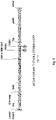
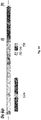
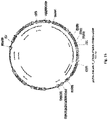
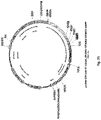
- Fig. 1 Map of the vector pCDH-19CAR-T-ITGB3-ITGB3-eGFP.
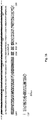
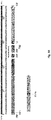
- Fig. 2 Schematic representation of the expression cassette 19CAR-T-ITGB3-ITGB3-eGFP.
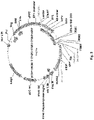
- Fig. 3 Map of the vector pCDH-19CAR-T-ITGB3-ITGB3-ITGB3-eGFP.
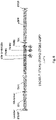
- Fig. 4 Schematic representation of the expression cassette 19CAR-T-ITGB3-ITGB3-ITGB3-eGFP.
- Fig. 5 Map of the vector pCDH-19CAR-T-ITAMl-ITGB3-ITGB3-eGFP.
- Fig. 6 Map of the vector pCDH-19CAR-T-ITAMl-ITGB3-ITGB3-eGFP.
- FIG. 7 Map of the vector pCDH-19CAR-T-ITAMl-ITAM2-ITGB3-eGFP.
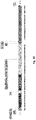
- Fig. 8 Schematic representation of the expression cassette 19CAR-T-ITAM1- ITAM2-ITGB3-eGFP.
- Fig. 9 Map of the vector pCDH-CAR-T-GFP.
- Fig. 10 Schematic representation of the expression cassette pCDH-CAR-T-GFP.
- Fig. 11 Map of the vector pCDH-19CAR-T-ITAM1-ITGB3-ITAM2-eGFP.
- Fig. 12 Map of the vector pCDH-19CAR-T-ITAM1-ITGB3-ITAM2-eGFP.
- Fig. 18 Schematic representation of the expression cassette pCDH-19CAR-T-CD28 _ITGB3-ITGB3-ITGB3-eGFP.
- Fig. 19 Map of the vector pCDH-19CAR-T-CD28_ITAM1-ITGB3-ITGB3-eGFP.
- Fig. 20 Schematic representation of the expression cassette pCDH-19CAR-T-CD28 _ITAMl-ITGB3-ITGB3-eGFP.
- Fig. 21 Schematic representation of the expression cassette pCDH-19CAR-T-CD28 _ITAMl-ITGB3-ITGB3-eGFP.
- Fig. 22 Schematic representation of the expression cassette pCDH-19CAR-T-CD28ITAM1-ITAM2-ITGB3-eGFP.
- Fig. 23 Map of the vector pCDH-19CAR-T-CD28_ITAM1-ITGB3-ITAM2-eGFP.
- Fig. 24 Schematic representation of the expression cassette pCDH-19CAR-T-CD28ITAM1-ITGB3-ITAM2-eGFP.
- Fig. 25 Map of the vector pCDH-19CAR-T-CD28_ITGB3-ITAM2-ITGB3-eGFP.
- Env A viral gene encoding the viral envelope.
- RRE An element responsible for binding RNA to a Rev protein and directing nucleoprotein from the nucleus to cytoplasm.
- cPPT The central polypurine tract and the central terminating sequence of HIV-1.
- EF1 promoter A strong constructive promoter of the human translation elongation factor EF-1 ⁇ ScFv Single-chain variable fragment SVH Heavy chain variable domain SVL Light chain variable domain GS-linker Glycine-serine linker CD8 4-1BB CD3 Chimeric antigen receptor 4-1BB, a costimulatory molecule expressed by CD8+ T cells 4-1BB Costimulatory domain CD28 Costimulatory domain T2A 2A oligopeptide from the Thosea asigna viral capsid protein, which mediates the cleavage of polypeptides during translation in eukaryotic cells.
- eGFP A green fluorescent protein gene codon-optimized for expression in mammalian cells.
- WPRE Post-transcriptional regulatory element of WHV 3' LTR ( ⁇ U3) Self-inactivating 3' long terminal repeat (LTR) from HIV-1 HIV LTR Long terminal repeat from HIV SV40 poly(A) signal SV40 polyadenylation signal SV40 Ori SV40 origin of replication in mammalian cells
- LTR 3' long terminal repeat
- Catabolite operon activator protein binding site of E. coli ori A high-copy number ColE1/pMB1/pBR322/pUC origin of replication in bacterial cells.
- AmpR A beta-lactamase gene that provides resistance to ampicillin, carbenicillin AmpR promoter Bla promoter, a weak constitutive promoter for the expression of the ampicillin resistance gene in bacterial cells.
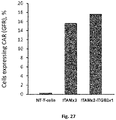
- Fig. 27 Level of GFP expression in viable T-lymphocytes following lentiviral drug transduction, 72 hours, %.
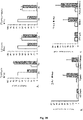
- Fig. 28 Measurement of cytotoxic activity of CAR-T lymphocytes expressing control CAR-ITAMx3 and experimental CAR-ITAMx2-ITGB3x1 when co-cultured with target cells.
- a "mammal” refers to any animal that is classified as a mammal, including primates, humans, rodents, dogs, cats, cattle, small cattle, horses, pigs, etc.
- isolated means altered or removed from the natural state.
- a nucleic acid or a peptide naturally present in an animal is not “isolated”, but the same nucleic acid or peptide partially or completely separated from the coexisting materials of its natural state is “isolated”.
- An isolated nucleic acid or protein can exist in substantially purified form, or can exist in a non-native environment such as, for example, a genetically modified cell.
- identity or “homology” is construed to mean the percentage of amino acid residues in the candidate sequence that are identical with the residue of a corresponding sequence to which it is compared, after aligning the sequences and introducing gaps, if necessary to achieve the maximum percent identity for the entire sequence, and not considering any conserved substitutions as part of the sequence identity. Neither N- or C-terminal extensions nor insertions will be construed as reducing identity or homology. Methods and computer programs for the alignment are well known in the art. Sequence identity may be measured using sequence analysis software (e.g. Sequence Analysis Software Package, Genetics Computer Group, University of Wisconsin Biotechnology Center, 1710 University Ave., Madison, WI 53705 ). This software matches similar sequences by assigning a degree of homology to various substitutions, deletions (eliminations), and other modifications.
- sequence analysis software e.g. Sequence Analysis Software Package, Genetics Computer Group, University of Wisconsin Biotechnology Center, 1710 University Ave., Madison, WI 53705 . This software matches similar sequences
- antigen or "Ag” as used herein is defined as a molecule that provokes an immune response. This immune response may involve either antibody production, or the activation of specific immunologically-competent T cells, or both.
- antigens can be derived from recombinant or genomic DNA. A skilled artisan will appreciate that any DNA, which comprises nucleotide sequences or a partial nucleotide sequence encoding a protein that elicits an immune response therefore encodes an "antigen" as that term is used the present description.
- an antigen need not be encoded solely by a full length nucleotide sequence of a gene. It is readily apparent that the present invention, as non-limiting examples, relates to the use of partial nucleotide sequences of more than one gene and that these nucleotide sequences are arranged in various combinations to elicit the desired immune response. Furthermore, a skilled artisan will appreciate that an antigen needs not to encode a "gene" at all. It is readily apparent that an antigen can be synthesized or can be derived from a biological sample. Such a biological sample may include, as non-limiting examples, a tissue sample, a tumor sample, a cell or a biological fluid.
- Disease is a state of health of an animal where the animal cannot maintain homeostasis, and where if the disease is not ameliorated then the animal's health continues to deteriorate.
- a disorder in an animal is a state of health in which the animal is able to maintain homeostasis, but in which the animal's state of health is less favorable than it would be in the absence of the disorder. If left untreated, a disorder does not necessarily cause a further decrease in the animal's state of health.
- malignant neoplasm is defined as a disease characterized by the rapid and uncontrolled growth of abnormal cells. Malignant cells can spread locally or through the bloodstream and lymphatic system to other parts of an organism. Examples of various malignant neoplasms include, but are not limited to, breast cancer, prostate cancer, ovarian cancer, cervical cancer, skin cancer, pancreatic cancer, colorectal cancer, kidney cancer, liver cancer, malignant brain neoplasms, lymphoma, leukemia, lung cancer, myeloma, multiple myeloma, etc.
- Malignant neoplasms that may be treated include tumors that are not vascularized, or not yet substantially vascularized, as well as vascularized tumors.
- the malignant neoplasms may comprise non-solid tumors (such as hematological tumors, for example, leukemias and lymphomas) or may comprise solid tumors.
- Types of malignant neoplasms to be treated with the CARs of the invention include, but are not limited to, carcinoma, blastoma, and sarcoma, and certain leukemia or lymphoid malignancies, benign and malignant tumors, and malignancies e.g., sarcomas, carcinomas, and melanomas.
- sarcomas e.g., sarcomas, carcinomas, and melanomas.
- Adult tumors/cancers and pediatric tumors/malignant neoplasms are also included.
- Hematologic malignancies are malignant neoplasms of the blood or bone marrow.
- hematological (or hematogenous) malignant neoplasms include leukemias, including acute leukemias (such as acute lymphocytic leukemia, acute myelocytic leukemia, acute myelogenous leukemia and myeloblastic, promyelocytic, myelomonocytic, monocytic and erythroleukemia), chronic leukemias (such as chronic myelocytic (granulocytic) leukemia, chronic myelogenous leukemia, and chronic lymphocytic leukemia), polycythemia vera, lymphoma, Hodgkin's disease, non-Hodgkin's lymphoma (indolent and high grade forms), multiple myeloma, Waldenstrom's macroglobulinemia, heavy chain disease, myelodysplastic syndrome, hairy cell leukemia and my
- Solid tumors are abnormal masses of tissue that usually do not contain cysts or liquid areas. Solid tumors can be benign or malignant. Different types of solid tumors are named for the type of cells that form them (e.g., sarcomas, carcinomas, and lymphomas).
- solid tumors such as sarcomas and carcinomas
- solid tumors include fibrosarcoma, myxosarcoma, liposarcoma, chondrosarcoma, osteosarcoma, and other sarcomas, synovioma, mesothelioma, Ewing's tumor, leiomyosarcoma, rhabdomyosarcoma, colon carcinoma, lymphoid malignancy, pancreatic cancer, breast cancer, lung cancer, ovarian cancer, prostate cancer, hepatocellular carcinoma, squamous cell carcinoma, basal cell carcinoma, adenocarcinoma, sweat gland carcinoma, medullary thyroid carcinoma, papillary thyroid carcinoma, pheochromocytoma, sebaceous gland carcinoma, papillary carcinoma, papillary adenocarcinomas, medullary carcinoma, bronchogenic carcinoma, renal cell carcinoma, hepatoma, bile duct carcinoma, choriocarcinoma, Wilm
- endogenous refers to any material from an organism, cell, tissue or system or naturally produced inside an organism, cell, tissue or system.
- exogenous refers to any material introduced into an organism, cell, tissue or system or produced outside an organism, cell, tissue or system.
- expression is defined as the transcription and/or translation of a particular nucleotide sequence driven by its promoter.
- tumor antigen or over expression of a tumor antigen is intended to indicate an abnormal level of expression of a tumor antigen in a cell from a disease focus like a solid tumor within a specific tissue or organ of a patient relative to the level of expression in a normal cell from that tissue or organ.
- Patients having solid tumors or a hematological malignancy characterized by over expression of the tumor antigen can be determined by standard assays known in the art.
- patient refers to any animal, or cells thereof whether in vitro or in situ, amenable to the methods described herein.
- the patient or individual is a human.
- nucleic acids are polymers of nucleotides.
- nucleic acids and polynucleotides are interchangeable.
- nucleic acids are polynucleotides that can be hydrolyzed to monomeric "nucleotides”. Monomeric nucleotides can be hydrolyzed into nucleosides.
- polynucleotides include, as non-limiting examples, all nucleic acid sequences which are obtained by any means available in the art, including, as non-limiting examples, recombinant means, i.e. the cloning of nucleic acid sequences from a recombinant library or a cell genome, using ordinary cloning technology and PCR and the like, and by synthetic means.
- recombinant means i.e. the cloning of nucleic acid sequences from a recombinant library or a cell genome, using ordinary cloning technology and PCR and the like, and by synthetic means.
- peptide As used in the present description, the terms “peptide”, “polypeptide” and “protein” are used interchangeably, and they refer to a compound consisting of amino acid residues that are covalently linked by peptide bonds.
- a protein or peptide must contain at least two amino acids, and no limitation is placed on the maximum number of amino acids that can comprise a protein's or peptide's sequence.
- Polypeptides include any peptide or protein comprising two or more amino acids joined to each other by peptide bonds.
- Polypeptides include, inter alia, for example, biologically active fragments, substantially homologous polypeptides, oligopeptides, homodimers, heterodimers, variants of polypeptides, modified polypeptides, derivatives, analogs, fusion proteins.
- the polypeptides include natural peptides, recombinant peptides, synthetic peptides, or a combination thereof.
- CAR chimeric antigen receptor
- the intracellular signaling domain of the CAR or, in other words, the cytoplasmic domain of the invention is responsible for activation of at least one of the normal effector functions of an immune cell, in which the CAR has been placed.
- effector function refers to a specialized function of a cell.
- the effector function of a T cell for example, may be cytolytic activity or helper activity, including the secretion of cytokines.
- intracellular signaling domain refers to a protein portion that transduces the effector function signal and causes the cell to perform a specialized function.
- the entire intracellular signaling domain can be employed, in many cases it is not necessary to use the entire chain.
- intracellular signaling domain When a truncated portion of the intracellular signaling domain is used, such truncated portion may be used in place of the intact chain as long as it transduces the effector function signal.
- intracellular signaling domain is thus meant to include any truncated portion of the intracellular signaling domain sufficient to transduce the effector function signal.
- intracellular signaling domains for use in the CARs according to the invention include the cytoplasmic sequences of the T cell receptor (TCR) and co-receptors that act in concert to initiate signal transduction following antigen receptor binding, as well as any derivate or variant of these sequences and any synthetic sequence that has the same functional capability.
- TCR T cell receptor
- T cell activation is mediated by two classes of cytoplasmic signaling sequences: those that initiate antigen-dependent primary activation through the TCR (primary cytoplasmic signaling sequences), and those that act in an antigen-independent manner to provide a secondary or co-stimulatory signal (secondary cytoplasmic signaling sequences).
- Primary cytoplasmic signaling sequences regulate primary activation of the TCR complex either in a stimulatory way, or in an inhibitory way.
- Primary cytoplasmic signaling sequences that act in a stimulatory manner may contain signaling motifs which are known as immunoreceptor tyrosine activation motifs (immunoreceptor tyrosine-based activation motifs) or ITAMs.
- ITAMs containing primary cytoplasmic signaling sequences include those derived from TCR zeta, FcR gamma, FcR beta, CD3 gamma, CD3 delta, CD3 epsilon, CD8, CD22, CD79a, CD79b, and CD66d. It is particularly preferable that the cytoplasmic signaling molecule in the CAR contains a cytoplasmic signaling sequence derived from CD3 zeta.
- the cytoplasmic domain of the CAR may be designed to comprise the CD3-zeta signaling domain by itself or combined with any other desired cytoplasmic domains useful in the context of the CAR.
- the CD3-zeta signaling domain has the amino acid sequence
- the above signaling domain contains 3 ITAMs (immunoreceptor tyrosine-based activation motifs), in particular ITAM1, ITAM2 and ITAM3.
- ITAMs immunodeceptor tyrosine-based activation motifs
- ITAM1 has an amino acid sequence represented by APAYKQGQNQLYNELNLGRREEYDVLDKR (SEQ ID NO:1).
- ITAM2 has an amino acid sequence represented by PRRKNPQEGLYNELQKDKMAEAYSEIGM (SEQ ID NO:2).
- ITAM3 has an amino acid sequence represented by ERRRGKGHDGLYQGLSTATKDTYDALHMQ (SEQ ID NO:3).
- the present invention relates to an isolated alternative intracellular signaling domain of a chimeric antigen receptor (CAR), wherein one or two immunoreceptor tyrosine-based activation motifs (ITAMs) selected from ITAM1, ITAM2, and ITAM3 are substituted with a fragment of the amino acid sequence of integrin beta 3 (ITGB3).
- CAR chimeric antigen receptor
- ITAMs immunoreceptor tyrosine-based activation motifs
- the alternative intracellular signaling domain of the chimeric antigen receptor is characterized in that one immunoreceptor tyrosine-based activation motif (ITAM) selected from ITAM1, ITAM2 and ITAM3 is substituted with a fragment of the amino acid sequence of integrin beta 3 (ITGB3).
- ITAM immunoreceptor tyrosine-based activation motif
- the alternative intracellular signaling domain of the chimeric antigen receptor (CAR) is characterized in that ITAM1 is substituted with ITGB3.
- the alternative intracellular signaling domain of the chimeric antigen receptor (CAR) is characterized in that ITAM2 is substituted with ITGB3.
- the alternative intracellular signaling domain of the chimeric antigen receptor (CAR) is characterized in that ITAM3 is substituted with ITGB3.
- the alternative intracellular signaling domain of the chimeric antigen receptor is characterized in that two immunoreceptor tyrosine-based activation motifs (ITAMs) selected from ITAM1, ITAM2 and ITAM3 are substituted with a fragment of the amino acid sequence of integrin beta 3 (ITGB3).
- ITAMs immunoreceptor tyrosine-based activation motifs
- the alternative intracellular signaling domain of the chimeric antigen receptor (CAR) is characterized in that ITAM2 and ITAM3 are substituted with two ITGB3.
- the alternative intracellular signaling domain of the chimeric antigen receptor (CAR) is characterized in that ITAM1 and ITAM3 are substituted with two ITGB3.
- the alternative intracellular signaling domain of the chimeric antigen receptor (CAR) is characterized in that ITAM1 and ITAM2 are substituted with two ITGB3.
- the present invention relates to an isolated alternative intracellular signaling domain of a chimeric antigen receptor (CAR), which includes one or two immunoreceptor tyrosine-based activation motifs (ITAMs) selected from ITAM1, ITAM2 and ITAM3, and one or two fragments of the amino acid sequence of integrin beta 3 (ITGB3), wherein the total number of ITAMs and ITGB3 is three.
- CAR chimeric antigen receptor
- ITAMs immunoreceptor tyrosine-based activation motifs
- ITGB3 immunoreceptor tyrosine-based activation motifs
- the alternative intracellular signaling domain of the chimeric antigen receptor is characterized in that it includes two immunoreceptor tyrosine-based activation motifs (ITAMs) selected from ITAM1, ITAM2 and ITAM3 and one fragment of the amino acid sequence of integrin beta 3 (ITGB3).
- ITAMs immunoreceptor tyrosine-based activation motifs
- the alternative intracellular signaling domain of the chimeric antigen receptor is characterized in that it includes ITAM2, ITAM3 and ITGB3.
- the alternative intracellular signaling domain includes ITAM1, ITAM3 and ITGB3.
- the alternative intracellular signaling domain of the chimeric antigen receptor is characterized in that it includes ITAM1, ITAM2 and ITGB3.
- the alternative intracellular signaling domain of the chimeric antigen receptor is characterized in that it includes one immunoreceptor tyrosine-based activation motif (ITAM) selected from ITAM1, ITAM2 and ITAM3, and two fragments of the amino acid sequence of integrin beta 3 (ITGB3).
- ITAM immunoreceptor tyrosine-based activation motif
- the alternative intracellular signaling domain of the chimeric antigen receptor is characterized in that it includes ITAM1 and two fragments of the amino acid sequence of integrin beta 3 (ITGB3).
- the alternative intracellular signaling domain of the chimeric antigen receptor is characterized in that it includes ITAM2 and two fragments of the amino acid sequence of integrin beta 3 (ITGB3).
- the alternative intracellular signaling domain of the chimeric antigen receptor is characterized in that it includes ITAM3 and two fragments of the amino acid sequence of integrin beta 3 (ITGB3).
- the alternative intracellular signaling domain of the chimeric antigen receptor (CAR) is characterized in that ITGB3 has the amino acid sequence represented by DTANNPLYKEATSTFTNITYRGT SEQ ID NO:4) or the amino acid sequence represented by DTANNPLYKEATSTFTNITYRGT SEQ ID NO:4) with any 1 or 2 conserved substitutions.
- the alternative intracellular signaling domain of the chimeric antigen receptor is characterized in that ITGB3 has the amino acid sequence represented by DTANNPLYKEATSTFTNITYRGT (SEQ ID NO: 4) with any 1 conserved substitution.
- the alternative intracellular signaling domain of the chimeric antigen receptor is characterized in that ITGB3 has the amino acid sequence represented by DTANNPLYKEATSTFTNITYRGT (SEQ ID NO: 4) with any 2 conserved substitutions.
- the alternative intracellular signaling domain of the chimeric antigen receptor is characterized in that ITGB3 has the amino acid sequence represented by DTANNPLYKEATSTFTNITYRGT (SEQ ID NO: 4).
- the alternative intracellular signaling domain of the chimeric antigen receptor has the amino acid sequence RVKFSRSADAPAYKQGQNQLYNELNLGRREEYDVLDKRRGRDPEMGGKPRRKNPQEGLYNELQK DKMAEAYSEIGMKGDTANNPLYKEATSTFTNITYRGTALPPR (SEQ ID NO: 5) or has an amino acid sequence that is at least 95% identical to the amino acid sequence of SEQ ID NO: 5 and differs from SEQ ID NO: 5 only in non-conserved amino acid residues.
- the alternative intracellular signaling domain of the chimeric antigen receptor has the amino acid sequence RVKFSRSADDTANNPLYKEATSTFTNITYRGTRGRDPEMGGKPRRKNPQEGLYNELQKDKMAEA YSEIGMKGERRRGKGHDGLYQGLSTATKDTYDALHMQALPPR (SEQ ID NO:6) or has an amino acid sequence that is at least 95% identical to the amino acid sequence of SEQ ID NO: 6 and differs from SEQ ID NO: 6 only in non-conserved amino acid residues.
- the alternative intracellular signaling domain of the chimeric antigen receptor has the amino acid sequence RVKFSRSADAPAYKQGQNQLYNELNLGRREEYDVLDKRRGRDPEMGGKDTANNPLYKEATSTFT NITYRGTKGERRRGKGHDGLYQGLSTATKDTYDALHMQALPPR (SEQ ID NO:7) or has an amino acid sequence that is at least 95% identical to the amino acid sequence of SEQ ID NO: 7 and differs from SEQ ID NO: 7 only in non-conserved amino acid residues.
- the alternative intracellular signaling domain of the chimeric antigen receptor has the amino acid sequence RVKFSRSADAPAYKQGQNQLYNELNLGRREEYDVLDKRRGRDPEMGGKDTANNPLYKEATSTFT NITYRGTKGDTANNPLYKEATSTFTNITYRGTALPPR (SEQ ID NO:8) or has an amino acid sequence that is at least 95% identical to the amino acid sequence of SEQ ID NO: 8 and differs from SEQ ID NO: 8 only in non-conserved amino acid residues.
- the alternative intracellular signaling domain of the chimeric antigen receptor has the amino acid sequence RVKFSRSADDTANNPLYKEATSTFTNITYRGTRGRDPEMGGKPRRKNPQEGLYNELQKDKMAEA YSEIGMKGDTANNPLYKEATSTFTNITYRGTALPPR (SEQ ID NO:9) or has an amino acid sequence that is at least 95% identical to the amino acid sequence of SEQ ID NO: 9 and differs from SEQ ID NO: 9 only in non-conserved amino acid residues.
- the alternative intracellular signaling domain of the chimeric antigen receptor has the amino acid sequence RVKFSRSADDTANNPLYKEATSTFTNITYRGTRGRDPEMGGKDTANNPLYKEATSTFTNITYRG TKGERRRGKGHDGLYQGLSTATKDTYDALHMQALPPR (SEQ ID NO:10) or has an amino acid sequence that is at least 95% identical to the amino acid sequence of SEQ ID NO: 10 and differs from SEQ ID NO: 10 only in non-conserved amino acid residues.
- the present invention relates to an isolated chimeric antigen receptor (CAR) comprising the above-mentioned alternative intracellular signaling domain.
- CAR chimeric antigen receptor
- the isolated chimeric antigen receptor is characterized in that it comprises:
- the present invention relates to a chimeric antigen receptor (CAR) comprising an extracellular and intracellular domain.
- the extracellular domain comprises a target-specific binding element otherwise referred to as an antigen-binding domain.
- the intracellular domain or otherwise the cytoplasmic domain comprises a costimulatory signaling region and a zeta chain portion.
- the costimulatory signaling region refers to a portion of the CAR comprising the intracellular domain of a costimulatory molecule.
- Costimulatory molecules are cell surface molecules other than antigen receptors or their ligands that are required for an efficient response of lymphocytes to antigen.
- spacer domain typically means any oligo- or polypeptide that functions to link the transmembrane domain to, either the extracellular domain or the cytoplasmic domain in the polypeptide chain.
- a spacer domain may comprise up to 300 amino acids, preferably 10 to 100 amino acids and most preferably 25 to 50 amino acids.
- the CAR of the invention comprises an extracellular domain comprising an antigen-binding domain, a transmembrane domain, and a cytoplasmic domain.
- the transmembrane domain that naturally is associated with one of the domains in the CAR is used.
- the transmembrane domain can be selected or modified by amino acid substitution to avoid binding of such domains to the transmembrane domains of the same or different membrane surface proteins to minimize interactions with other members of the receptor complex.
- antigen-binding domain of an antibody or "antigen-binding portion” of an antibody or “antigen-binding fragment” (or simply “antibody portion” or “antibody fragment”), as used in this description, refers to one or more fragments of an antibody that retain the capability of specific binding to an antigen. It has been shown that the antigen-binding function of an antibody can be performed by the fragments of a full-size antibody. Examples of binding fragments encompassed by the term "antigen-binding portion" of antibody include:
- two regions of the Fv fragment, VL and VH are encoded by different genes, they can be joined using recombinant methods using a synthetic linker that enables to receive them as a single protein chain in which the VL and VH regions pair to form monovalent molecules (known as a single-chain Fv (scFv); see e.g. Bird et al. (1988) Science 242:423-426 ; and Huston et al. (1988) Proc. Natl. Acad. Sci. USA 85:5879-5883 ). It is assumed that such single-stranded molecules are also included within the term "antigen-binding portion" of an antibody. These antibody fragments are obtained using conventional techniques known to those skilled in the art, and the fragments are screened in the same manner as are intact antibodies.
- variable refers to the fact that certain portions of the variable domains greatly differ in sequence among antibodies.
- the V domain mediates antigen binding and determines specificity of a particular antibody for its particular antigen.
- the variability is not evenly distributed across the 110-amino acid span of the variable domains.
- the V regions consist of invariant fragments called framework regions (FRs) of 15-30 amino acids separated by shorter regions of extreme variability called “hypervariable regions” or CDR.
- FRs framework regions
- hypervariable regions which form loops connecting, and in some cases forming part of, the beta-sheet structure.
- the hypervariable regions in each chain are held together in close proximity by the FRs and, with the hypervariable regions from the other chain, contribute to the formation of the antigen-binding site of antibodies.
- hypervariable region refers to the amino acid residues of an antibody which are responsible for antigen binding.
- the hypervariable region generally comprises amino acid residues from a “complementarity determining region” or "CDR" and/or those residues from a “hypervariable loop”.
- affinity maturation it may also be desirable to alter one or more CDR amino acid residues so as to improve binding affinity to the target epitope.
- This is known as "affinity maturation” and may optionally be performed in connection with humanization, for example in situations where humanization of an antibody leads to reduced binding specificity or affinity and it is not possible to sufficiently improve the binding specificity or affinity by back mutations alone.
- affinity maturation methods are known in the art, for example the in vitro scanning saturation mutagenesis method described by Burks et al., Proc Natl Acad Sci USA, 94:412-417 (1997 ) and the stepwise in vitro affinity maturation method by Wu et al., Proc Natl Acad Sci USA 95:6037 6042 (1998 ).
- the antigen-binding domain of antibody according to the present invention "which binds" a target antigen refers to an antigen-binding domain of antibody which binds the antigen with sufficient affinity such that the antigen-binding domain of antibody can be used as a diagnostic and/or therapeutic agent in targeting a protein or cell or tissue expressing the antigen, and slightly cross-reacts with other proteins.
- FACS fluorescence activated cell sorting
- RIA radioimmunoprecipitation assay
- ELISA the extent of binding of the antigen-binding domain of antibody to a "non-target" protein is less than about 10% of the binding of the antigen-binding domain of antibody to a particular target protein.
- the term “specific binding” or the phrases “specifically binds to” or is “specific for” a particular polypeptide or an epitope on a particular polypeptide target means binding that is distinctly (measurably) different from a nonspecific interaction.
- the CAR of the invention comprises a target-specific binding element otherwise referred to as an antigen-binding domain.
- the choice of domain depends upon the type and number of ligands that define the surface of a target cell.
- the antigen-binding domain may be chosen to recognize a ligand that acts as a cell surface marker on target cells associated with a particular disease state.
- examples of cell surface markers that may act as ligands for the domain of the antigen-binding domain in the CAR of the invention include those associated with malignant cells.
- the CAR of the invention can be engineered to target a tumor antigen of interest by way of engineering a desired antigen-binding domain that specifically binds to an antigen on a tumor cell.
- tumor antigen or “hyperproliferative disorder antigen” or “antigen associated with a hyperproliferative disorder” refers to antigens that are common to specific hyperproliferative disorders such as a malignant neoplasm.
- antigens discussed in the present description are merely included by way of example. The list is not intended to be exclusive and further examples will be readily apparent to those of skill in the art.
- Tumor antigens are proteins that are produced by tumor cells that elicit an immune response, particularly T-cell mediated immune responses.
- the selection of the antigen-binding domain of the invention will depend on the particular type of malignant neoplasm to be treated.
- Tumor antigens are well known in the art and include, for example, a glioma-associated antigen, carcinoembryonic antigen (CEA), ⁇ -human chorionic gonadotropin, alphafetoprotein (AFP), lectin-reactive AFP, thyroglobulin, RAGE-1, MN-CA IX, human telomerase reverse transcriptase, RU1, RU2 (AS), intestinal carboxyl esterase, mut hsp70-2, M-CSF, prostase, prostate-specific antigen (PSA), PAP, NY-ESO-1, LAGE-1a, p53, prostein, PSMA, Her2/neu, survivin and telomerase, prostate-carcinoma
- the tumor antigen comprises one or more antigenic tumor epitopes associated with a malignant tumor.
- Malignant tumors express a number of proteins that can serve as target antigens for an immune response. These molecules include but are not limited to tissue-specific antigens such as MART-1, tyrosinase and GP 100 in melanoma and prostatic acid phosphatase (PAP) and prostate-specific antigen (PSA) in prostate cancer.
- Other target molecules belong to the group of transformation-related molecules such as the oncogene HER-2/Neu/ErbB-2.
- Yet another group of target antigens are onco-fetal antigens such as carcinoembryonic antigen (CEA).
- B-cell lymphoma the tumor-specific idiotype immunoglobulin constitutes a truly tumor-specific immunoglobulin antigen that is unique to an individual tumor.
- B-cell differentiation antigens such as CD19, CD20 and CD37 are other candidates for target antigens in B-cell lyjnphoma. Some of these antigens (CEA, HER-2, CD19, CD20, idiotype) have been used as targets for passive immunotherapy with monoclonal antibodies with limited success.
- the type of tumor antigen described in the invention may also be a tumor-specific antigen (TSA) or a tumor-associated antigen (TAA).
- TSA tumor-specific antigen
- TAA antigen is not unique to tumor cells and is also expressed on a normal cell under conditions that prevent the induction of a state of immunologic tolerance to the antigen.
- the expression of the antigen in a tumor may occur under conditions that enable the immune system to respond to the antigen.
- TAAs may be antigens that are expressed on normal cells during fetal development when the immune system is immature and unable to respond or they may be antigens that are normally present at extremely low levels on normal cells but which are expressed at much higher levels on tumor cells.
- TSA or TAA antigens include the following: differentiation antigens such as MART-1/MelanA (MART-1), gp100 (Pmel 17), tyrosinase, TRP-1, TRP-2 and tumor-specific multilineage antigens such as MAGE-1, MAGE-3, BAGE, GAGE-1, GAGE-2, p15; overexpressed embryonic antigens such as CEA; overexpressed oncogenes and mutated tumor-suppressor genes such as p53, Ras, HER-2/neu; unique tumor antigens resulting from chromosomal translocations; such as BCR-ABL, E2A-PRL, H4-RET, IGH-IGK, MYL-RAR; and viral antigens, such as the Epstein Barr virus antigens EBVA and the human papillomavirus (HPV) antigens E6 and E7.
- differentiation antigens such as MART-1/MelanA (MART-1), gp100
- the isolated chimeric antigen receptor is characterized in that the antigen-binding domain is specific for the tumor antigen selected from the group: CD19, CD20, CD123 or BCMA.
- the isolated chimeric antigen receptor is characterized in that the antigen-binding domain is specific for the CD19 tumor antigen.
- the isolated chimeric antigen receptor is characterized in that the antigen-binding domain that is specific for the tumor antigen is Fab or scFv.
- the isolated chimeric antigen receptor is characterized in that the antigen-binding domain that is specific for the tumor antigen is scFv.
- the isolated chimeric antigen receptor is characterized in that the antigen-binding domain that is specific for the CD19 tumor antigen has the amino acid sequence represented by DIQMTQTTSSLSASLGDRVTISCRASQDISKYLNWYQQKPDGTVKLLIYHTSRLHSGVPSRFSG SGSGTDYSLTISNLEQEDIATYFCQQGNTLPYTFGGGTKLEITGSTSGSGKPGSGEGSTKGEVK LQESGPGLVAPSQSLSVTCTVSGVSLPDYGVSWIRQPPRKGLEWLGVIWGSETTYYNSALKSRL TIIKDNSKSQVFLKMNSLQTDDTAIYYCAKHYYYGGSYAMDYWGQGTSVTVSS (SEQ ID NO: 11) or has an amino acid sequence that is at least 95% identical to the amino acid sequence of SEQ ID NO: 11 and differs from SEQ ID NO: 11 only in non-conserved amino acid residues.
- the antigen-binding domain with the amino acid sequence of SEQ ID NO: 11 consists of:
- a costimulatory domain or costimulatory signaling region refers to a portion of a CAR comprising the intracellular domain of a costimulatory molecule.
- Costimulatory molecule is a cell surface molecule other than an antigen receptor or ligand thereof that are required for an efficient response of lymphocytes to antigen. Examples of such molecules include CD27, CD28, 4-1BB (CD137), OX40, CD30, ICAM-1, CDS, CD40, PD-1, ICOS (CD278), lymphocyte function-associated antigen 1 (LFA-1, CD11a/CD18), CD2, CD7, LIGHT, NKG2C, B7-H3 and a ligand specifically binding to CD83, and the like.
- the isolated chimeric antigen receptor is characterized in that the costimulatory domain is a functional signaling domain of a protein selected from the group consisting of OX40, CD2, CD27, CD28, CDS, ICAM-1, LFA-1 (CD11a/CD18), ICOS (CD278) and 4-1BB (CD137).
- the cytoplasmic signaling sequences within the cytoplasmic signaling portion of the CAR may be linked to each other in a random or specified order.
- a short oligo- or polypeptide linker preferably 2 to 10 amino acids in length may form the linkage.
- glycine-serine doublet is a suitable linker.
- the cytoplasmic domain of the CAR is engineered to comprise the above-mentioned alternative intracellular signaling domain and the costimulatory signaling domain of CD28.
- the cytoplasmic domain of the CAR is engineered to comprise the above-mentioned alternative intracellular signaling domain and the costimulatory signaling domain of 4-1BB.
- the cytoplasmic domain is engineered to comprise the above-mentioned alternative intracellular signaling domain and the costimulatory domain of CD28 and 4-1BB.
- the isolated chimeric antigen receptor is characterized in that the costimulatory domain of CD28 has the amino acid sequence represented by
- the isolated chimeric antigen receptor is characterized in that the costimulatory domain of 4-1BB has the amino acid sequence represented by KRGRKKLLYIFKQPFMRPVQTTQEEDGCSCRFPEEEEGGCEL (SEQ ID NO: 14).
- the CAR may be engineered to comprise a transmembrane domain fused to the extracellular domain of the CAR.
- the transmembrane domain that naturally is associated with one of the domains in the CAR is used.
- the transmembrane domain may be selected or modified by amino acid substitution to avoid binding of such domains to the transmembrane domains of the same or different membrane surface proteins to minimize interactions with other members of the receptor complex.
- the transmembrane domain may be derived either from a natural source or from a synthetic source. Where the source is natural, the domain may be derived from any membrane-bound or transmembrane protein. Transmembrane regions for particular use in the invention may be derived from (i.e. produce to comprise at least the transmembrane regions of) the alpha, beta or zeta chain of the T-cell receptor, CD28, CD3 epsilon, CD45, CD4, CD5, CD8, CD9, CD16, CD22, CD33, CD37, CD64, CD80, CD86, CD134, CD137, CD154. Alternatively, the transmembrane domain may be synthetic, in which case it will comprise predominantly hydrophobic residues such as leucine and valine. Preferably a triplet of phenylalanine, tryptophan and valine will be found at each end of a synthetic transmembrane domain.
- the isolated chimeric antigen receptor is characterized in that the transmembrane domain is a transmembrane domain of a protein selected from the group consisting of a T cell receptor-alpha, -beta, or -zeta chains, CD28, CD3 epsilon, CD45, CD4, CD5, CD8, CD9, CD16, CD22, CD33, CD37, CD64, CD80, CD86, CD134, CD137 and CD154.
- the isolated chimeric antigen receptor is characterized in that the transmembrane domain is CD8.
- the isolated chimeric antigen receptor is characterized in that the transmembrane domain of CD8 has the amino acid sequence IYIWAPLAGTCGVLLLSLVITLYC (SEQ ID NO: 12).
- a short oligo- or polypeptide linker preferably between 2 and 10 amino acids in length may form the linkage between the transmembrane domain and the cytoplasmic signaling domain of the CAR.
- glycine-serine doublet provides a suitable linker.
- the transmembrane domain of the CAR according to the invention comprises the hinge domain of CD8.
- the hinge domain of CD8 has the amino acid sequence TTTPAPRPPTPAPTIASQPLSLRPEACRPAAGGAVHTRGLDFACD (SEQ ID NO: 35).
- the isolated chimeric antigen receptor is characterized in that it further comprises a leader sequence.
- the isolated chimeric antigen receptor has an amino acid sequence that is represented by an amino acid sequence selected from the group: SEQ ID NO:15, 16, 17, 18, 19, 20, 21, 22, 23, 24, 25 or 26, or has an amino acid sequence that is at least 95% identical to an amino acid sequence selected from the group: SEQ ID NO:15, 16, 17, 18, 19, 20, 21, 22, 23, 24, 25 or 26, and differs from an amino acid sequence selected from the group: SEQ ID NO:15, 16, 17, 18, 19, 20, 21, 22, 23, 24, 25 or 26, only in non-conserved amino acid residues.
- the chimeric antigen receptor 19CAR-T-CD28-altcd3zeta (ITGB3-ITAM2- ITAM3) has the amino acid sequence
- the chimeric antigen receptor 19CAR-T- CD28 - altcd3zeta (ITAM1- ITGB3- ITAM3 has the amino acid sequence
- the chimeric antigen receptor 19CAR-T- CD28 - altcd3zeta (ITAM1- ITAM2- ITGB3) has the amino acid sequence
- the chimeric antigen receptor 19CAR-T- CD28 - altcd3zeta (ITGB3- ITGB3- ITAM3) has the amino acid sequence
- the chimeric antigen receptor 19CAR-T- CD28 - altcd3zeta (ITAM1- ITGB3- ITGB3) has the amino acid sequence
- the chimeric antigen receptor 19CAR-T- CD28 - altcd3zeta (ITGB3- ITAM2- ITGB3) has the amino acid sequence
- the chimeric antigen receptor 19CAR-T- 41bb - altcd3zeta (ITGB3- ITAM2- ITAM3) has the amino acid sequence
- the chimeric antigen receptor 19CAR-T- 41bb - altcd3zeta (ITAM1- ITGB3- ITAM3) has the amino acid sequence
- the chimeric antigen receptor 19CAR-T- 41bb - altcd3zeta (ITAM1- ITAM2- ITGB3) has the amino acid sequence
- the chimeric antigen receptor 19CAR-T- 41bb - altcd3zeta (ITGB3- ITGB3- ITAM3) has the amino acid sequence
- the chimeric antigen receptor 19CAR-T- 41bb - altcd3zeta (ITAM1- ITGB3- ITGB3) has the amino acid sequence
- the chimeric antigen receptor 19CAR-T- 41bb - altcd3zeta (ITGB3- ITAM2- ITGB3) has the amino acid sequence
- nucleic acid means a precise sequence of nucleotides, modified or not, determining a fragment or a region of a nucleic acid, containing unnatural nucleotides or not, and being either a double-strand DNA or RNA, a single-stranded DNA or RNA, or transcription products of said DNAs.
- the present invention does not relate to nucleotide sequences in their natural chromosomal environment, i.e. in a natural state.
- the sequences of the present invention have been isolated and/or purified, i.e. they were sampled directly or indirectly, for example by a copy, their environment having been at least partially modified.
- isolated nucleic acids obtained by recombinant genetics, by means, for example, of host cells, or obtained by chemical synthesis should also be mentioned here.
- An "isolated" nucleic acid molecule is one which is identified and separated from at least one nucleic acid molecule-impurity, which the former is typically bound to in the natural source of the nucleic acid of protein (polypeptide).
- An isolated nucleic acid molecule is different from the form or set in which it is found under natural conditions.
- an isolated nucleic acid molecule is different from a nucleic acid molecule that exists in cells under natural conditions.
- An isolated nucleic acid molecule however includes a nucleic acid molecule located in cells in which the protein (polypeptide) is normally expressed, for example, if the nucleic acid molecule has a chromosomal localization that is different from its localization in cells under natural conditions.
- nucleotide sequence encompasses its complement.
- a nucleic acid having a particular sequence should be understood as one which encompasses the complementary strand thereof with the complementary sequence thereof.
- nucleic acid bases are used.
- A is for adenine
- C is for cytosine
- G is for guanine
- T is for thymine (5-methyluracil)
- RNA it is present in DNA instead of uracil
- U is for uracil (it is present in RNA instead of thymine).
- nucleotide sequence encoding an amino acid sequence includes all nucleotide sequences that are degenerate versions of each other and that encode the same amino acid sequence.
- the phrase nucleotide sequence that encodes a protein or an RNA may also include introns to the extent that the nucleotide sequence encoding the protein may in some version contain introns.
- Encoding refers to the inherent property of specific sequences of nucleotides in a polynucleotide, such as a gene, a cDNA, or an mRNA, to serve as templates for synthesis of other polymers and macromolecules in biological processes having either a defined sequence of nucleotides (i.e., rRNA, tRNA and mRNA) or a defined sequence of amino acids and the biological properties resulting therefrom.
- a gene encodes a protein if transcription and translation of mRNA corresponding to that gene results in the production of the protein in a cell or other biological system.
- Both the coding strand, the nucleotide sequence of which is identical to the mRNA sequence and is typically provided in sequence listings, and the non-coding strand, used as the template for transcription of a gene or cDNA, may be referred to as encoding the protein or other product of that gene or cDNA.
- nucleic acid sequences encoding the desired molecules can be obtained using recombinant methods known in the art, such as, for example by screening libraries from cells expressing the gene, by deriving the gene from a vector known to include same, or by isolating directly from cells and tissues containing same, using standard techniques.
- the gene of interest may be more typically produced synthetically, rather than cloned.
- the present invention relates to an isolated nucleic acid that encodes the above-mentioned alternative intracellular signaling domain.
- the present invention relates to an isolated nucleic acid that encodes the above-mentioned isolated chimeric antigen receptor (CAR) comprising the above-mentioned alternative intracellular signaling domain.
- CAR chimeric antigen receptor
- vector means a nucleic acid molecule capable of transporting another nucleic acid to which it has been linked.
- the vector is a plasmid, i.e., a circular double stranded molecule of DNA into which additional DNA segments may be incorporated by means of enzymatic ligation reaction.
- the vector is a viral vector, wherein additional DNA segments may be incorporated into the viral genome by means of the enzymatic ligation reaction.
- vectors are capable of autonomous replication in a genetically modified cell into which they are introduced (e.g. bacterial vectors having a bacterial origin site of replication and episomal mammalian vectors).
- vectors e.g. non-episomal mammalian vectors
- vectors can be integrated into the genome of a host cell upon introduction into a host cell, and thereby are replicated along with the host gene.
- certain vectors are capable of directing the expression of genes to which they are operably linked. Such vectors are referred to herein as "recombinant expression vectors" (or simply, “expression vectors”).
- control sequence refers to polynucleotide sequences that are necessary to effect the expression and processing of coding sequences into which they are incorporated by means of the enzymatic ligation reaction.
- Expression control sequences include appropriate transcription initiation, termination, promoter and enhancer sequences; efficient RNA processing signals such as splicing and polyadenylation signals; sequences that stabilize cytoplasmic mRNA; sequences that enhance translation efficiency (i.e., Kozak consensus sequence); sequences that enhance protein stability; and when desired, sequences that enhance protein secretion.
- the nature of such control sequences differs depending upon the host organism. Eukaryotic cells include promoters, polyadenylation signals, and enhancers.
- control sequences is intended to include at least all components, the presence of which is essential for expression and processing, and can also include additional components, the presence of which is advantageous, for example, leader sequences and fusion partner sequences.
- Nucleic acid is "operably linked" when it is placed into a functional relationship with another nucleic acid sequence.
- DNA for a presequence or secretory leader sequence is operably linked to DNA for a polypeptide if it is expressed as a preprotein that participates in the secretion of the polypeptide;
- a promoter or enhancer is operably linked to a coding sequence if it affects the transcription of the sequence;
- a ribosome binding site is operably linked to a coding sequence if it is positioned so as to facilitate translation.
- "operably linked” means that the DNA sequences being linked are contiguous, and, in the case of a secretory leader, contiguous and in reading frame. However, enhancers do not have to be contiguous.
- delivery vector or “delivery vectors” is intended any delivery vector which can be used in the present invention to put into cell contact (i.e. “contacting") or deliver inside cells or subcellular compartments (i.e. “introducing") agents/chemicals and molecules (proteins or nucleic acids) needed in the present invention. It includes, but is not limited to liposomal delivery vectors, viral delivery vectors, drug delivery vectors, chemical carriers, polymeric carriers, lipoplexes, polyplexes, dendrimers, microbubbles (ultrasound contrast agents), nanoparticles, emulsions or other appropriate transfer vectors. These delivery vectors allow delivery of molecules, chemicals, macromolecules (genes, proteins), or other vectors such as plasmids, peptides. In these cases, delivery vectors are molecule carriers. By “delivery vector” or “delivery vectors” is also intended delivery methods to perform transfection.
- “Expression vector” refers to a vector comprising a recombinant polynucleotide comprising expression control sequences operably linked to a nucleotide sequence to be expressed.
- An expression vector comprises appropriate cis-acting elements for expression; other elements for expression can be supplied by the elements of a genetically modified cell or in an in vitro expression system.
- Expression vectors include all those known in the art, such as cosmids, plasmids (e.g., naked or contained in liposomes) and viruses (e.g., lentiviruses, retroviruses, adenoviruses, and adeno-associated viruses) that incorporate the recombinant polynucleotide.
- expression of a natural or synthetic nucleic acids encoding a CAR is typically achieved by operably linking a nucleic acid encoding the CAR polypeptide or a portion thereof to a promoter and incorporating the construct into an expression vector.
- the vectors may be suitable for replication and integration into eukaryotic cells.
- Typical cloning vectors contain transcriptional and translational terminators, initiation sequences, and promoters useful for regulating expression of the desired nucleic acid sequence.
- promoter is defined as a DNA sequence recognized by the synthetic machinery of the cell, or introduced synthetic machinery, required to initiate the specific transcription of a polynucleotide sequence.
- promoter/regulatory sequence means a nucleic acid sequence which is required for expression of a gene product operably linked to the promoter/regulatory sequence.
- this sequence may be the core promoter sequence and in other instances, this sequence may also include an enhancer sequence and other regulatory elements which are required for expression of the gene product.
- the promoter/regulatory sequence may, for example, be one which expresses the gene product in a tissue specific manner.
- a “constitutive" promoter is a nucleotide sequence which, when operably linked with a polynucleotide which encodes or specifies a gene product, causes the gene product to be produced in a cell under most or all physiological conditions of the cell.
- an “inducible" promoter is a nucleotide sequence which, when operably linked with a polynucleotide which encodes or specifies a gene product, causes the gene product to be produced in a cell substantially only when an inducer which corresponds to the promoter is present in the cell.
- tissue-specific promoter is a nucleotide sequence which, when operably linked with a polynucleotide which encodes or specifies a gene product, causes the gene product to be produced in a cell substantially only when the cell is a cell of a tissue type corresponding to the promoter.
- a suitable promoter is the immediate early cytomegalovirus (CMV) promoter sequence. This promoter sequence is a strong constitutive promoter sequence capable of driving high levels of expression of any polynucleotide sequence operably linked thereto.
- CMV immediate early cytomegalovirus
- EF-1a elongation factor 1 alpha
- constitutive promoter sequences may also be used, including, but not limited to, the simian virus 40 (SV40) early promoter, mouse mammary tumor virus (MMTV), human immunodeficiency virus (HIV) long terminal repeat (LTR) promoter, MoMuLV promoter, an avian leukemia virus promoter, an Epstein-Barr virus immediate early promoter, a Rous sarcoma virus promoter, as well as human gene promoters such as, but not limited to, an actin gene promoter, a myosin gene promoter, a hemoglobin gene promoter, and a creatine kinase gene promoter. Further, the invention should not be limited to the use of constitutive promoters.
- inducible promoters are also contemplated as part of the invention.
- the use of an inducible promoter provides a molecular switch capable of turning on expression of the polynucleotide sequence which it is operatively linked to when such expression is desired, or turning off expression when expression is not desired.
- inducible promoters include, but are not limited to, a metallothionine promoter, a glucocorticoid gene promoter, a progesterone gene promoter, and a tetracycline gene promoter.
- promoter elements for example, enhancers, regulate the frequency of transcription initiation.
- these are located in the region 30-110 bp upstream of the start site, although a number of promoters have recently been shown to contain functional elements downstream of the start site.
- the spacing between promoter elements frequently is flexible, so that promoter functioning is prevented when elements are inverted or moved relative to one another.
- tk thymidine kinase
- the spacing between promoter elements can be increased to 50 bp before activity begins to decline.
- individual elements can function either cooperatively or independently to activate transcription.
- the present invention relates to a DNA construct comprising CAR sequences, wherein the sequence comprises the sequence of the nucleic acid of an antigen-binding domain operably linked to the sequence of the nucleic acid of an intracellular domain.
- An example of an intracellular domain that may be used in the CAR according to the invention comprises but not limited to the above-mentioned alternative intracellular signaling domain, costimulatory domain of CD28 and/or 4-1BB, etc.; in some cases, the CAR may comprise any combination of the above-mentioned alternative intracellular signaling domain, costimulatory domain of CD28, costimulatory domain of 4-1BB, etc.
- the CAR according to the invention comprises an anti-CD19 scFv, a hinge and transmembrane domains of human CD8, and a costimulatory domain of 4-1BB, and the above-mentioned alternative intracellular signaling domain.
- the CAR according to the invention comprises an anti-CD19 scFv, a hinge and transmembrane domains of human CD8, and a costimulatory domain of CD28, and the above-mentioned alternative intracellular signaling domain.
- the expression constructs of the present invention may also be used for nucleic acid immunization and gene therapy, using standard gene delivery techniques. Methods for gene delivery are known in the art. See, e.g., U.S. patents Nos. 5,399,346 , 5,580,859 , 5,589,466 , incorporated by reference herein in their entireties.
- the invention relates to a gene therapy vector.
- the nucleic acid can be cloned into a number of types of vectors.
- the nucleic acid can be cloned into a vector including, but not limited to a plasmid, a phagemid, a phage derivative, an animal virus, and a cosmid.
- Vectors of particular interest include expression vectors, replication vectors, probe generation vectors, and sequencing vectors.
- the expression vector may be delivered to a cell in the form of a viral vector.
- Viral vector technology is well known in the art and is described, for example, in Sambrook et al.
- Viruses which are useful as vectors include, but are not limited to, retroviruses, adenoviruses, adeno-associated viruses, herpes viruses, and lentiviruses.
- a suitable vector contains an origin of replication functional in at least one organism, a promoter sequence, convenient restriction endonuclease sites, and one or more selectable markers (e.g., WO 01/96584 ; WO 01/29058 ; and U.S. patent No. 6,326,193 ).
- retroviruses provide a suitable platform for gene delivery systems.
- a selected gene can be inserted into a vector and packaged in retroviral particles using techniques known in the art.
- the recombinant virus can then be isolated and delivered to cells of the subject either in vivo or ex vivo.
- retroviral systems are known in the art.
- adenovirus vectors are used.
- a number of adenovirus vectors are known in the art.
- lentivirus vectors are used.
- the present invention also provides vectors in which a DNA of the present invention is inserted.
- Vectors derived from retroviruses such as the lentivirus are suitable tools to achieve long-term gene transfer since they allow long-term, stable integration of a transgene and its propagation in daughter cells.
- Lentiviral vectors have the added advantage over vectors derived from onco-retroviruses such as murine leukemia viruses in that they can transduce non-proliferating cells, such as hepatocytes. They also have the added advantage of low immunogenicity.
- a "lentivirus” as used herein refers to a genus of the Retroviridae family. Lentiviruses are unique among the retroviruses in being able to infect non-dividing cells; they can deliver a significant amount of genetic information as DNA in the host cell, so they are one of the most efficient methods for implementing a gene delivery vector. HIV, SIV, and FIV are examples of lentiviruses. Vectors derived from lentiviruses offer the means to achieve significant levels of gene transfer in vivo.
- the expression vector to be introduced into a cell can also contain either a selectable marker gene or a reporter gene or both to facilitate identification and selection of expressing cells from the population of cells to be transfected or infected using viral vectors.
- the selectable marker may carry a separate fragment of DNA and be used in a co-transfection technique. Both selectable markers and reporter genes may be flanked with appropriate regulatory sequences to enable expression in the host cells.
- Useful selectable markers include, for example, antibiotic-resistance genes, such as neo and the like.
- Reporter genes are used for identifying potentially transfected cells and for evaluating the functionality of regulatory sequences.
- a reporter gene is a gene that is not present in or expressed by the organism or tissue and that encodes a polypeptide whose expression is manifested by some easily detectable property, e.g., enzymatic activity. Expression of the reporter gene is assayed at a suitable time after the DNA has been introduced into the recipient cells.
- Suitable reporter genes may include genes encoding luciferase, beta-galactosidase, chloramphenicol acetyl transferase, secreted alkaline phosphatase, or the green fluorescent protein gene (e.g., Ui-Tei et al., 2000 FEBS Letters 479: 79-82 ).
- Suitable expression systems are well known and may be prepared using known techniques or obtained commercially.
- the construct with the minimal 5' flanking region showing the highest level of expression of reporter gene is identified as the promoter.
- Such promoter regions may be linked to a reporter gene and used to evaluate agents for the ability to modulate promoter-driven transcription.
- the present invention relates to vectors comprising nucleic acid molecules that encode the above-mentioned chimeric antigen receptor (CAR) according to the invention.
- CAR chimeric antigen receptor
- the present invention relates to an expression vector comprising the above-mentioned nucleic acid that encodes the above-mentioned chimeric antigen receptor (CAR) according to the invention.
- CAR chimeric antigen receptor
- the present invention relates to a delivery vector comprising the above-mentioned nucleic acid that encodes the above-mentioned chimeric antigen receptor (CAR) according to the invention.
- CAR chimeric antigen receptor
- the vector is selected from the group consisting of DNA, RNA, plasmid, lentiviral vector, adeno-associated viral vector, adenoviral vector, or retroviral vector.
- the vector further comprises a promoter.
- the vector is an in vitro transcribed vector.
- the nucleic acid sequence further comprises a poly(A) sequence.
- the nucleic acid sequence further comprises a 3'UTR.
- genetically modified cell refers to a cell into which a recombinant expression vector has been introduced.
- the present invention relates to "genetically modified cells", which may include, for example, the above vector according to the invention. It should be understood that “genetically modified cell” and “recombinant host cell” refer not only to a particular claimed cell but to the progeny of such a cell as well. Since modifications may occur in succeeding generations due to either mutation or environmental influences, such progeny may not, in fact, be identical to a parental cell; however, such cells are still included within the scope of the term “genetically modified cell” as used herein.
- the present invention relates to a method for producing a "genetically modified cell” that comprises the above chimeric antigen receptor (CAR), comprising the transformation of the cell by the above-mentioned method.
- CAR chimeric antigen receptor
- the vector may be readily inserted into a host cell, e.g., mammalian, bacterial, yeast or insect cell, by any method known in the art.
- a host cell e.g., mammalian, bacterial, yeast or insect cell
- the expression vector can be transfected into a host cell by physical, chemical or biological methods.
- Physical methods for introducing a polynucleotide into a host cell include calcium phosphate precipitation, lipofection, particle bombardment, microinjection, electroporation, and the like. Methods for producing cells comprising vectors and/or exogenous nucleic acids are well-known in the art. See, for example, Sambrook et al. (2001, Molecular Cloning: A Laboratory Manual, Cold Spring Harbor Laboratory, New York ). The preferred method for introducing a polynucleotide into a host cell is transfection using calcium phosphate.
- Biological methods for introducing a polynucleotide of interest into a host cell include the use of DNA and RNA vectors.
- Viral vectors, and especially retroviral vectors have become the most widely used method for inserting genes into mammalian cells, e.g., human cells.
- Other viral vectors can be derived from lentivirus, poxviruses, herpes simplex virus 1, adenoviruses and adeno-associated viruses, and the like. See, for example, U.S. patents Nos. 5,350,674 and 5,585,362 .
- Chemical means for introducing a polynucleotide into a host cell include colloidal dispersion systems, such as macromolecule complexes, nanocapsules, microspheres, beads, and lipid-based systems including oil-in-water emulsions, micelles, mixed micelles, and liposomes.
- colloidal dispersion systems such as macromolecule complexes, nanocapsules, microspheres, beads, and lipid-based systems including oil-in-water emulsions, micelles, mixed micelles, and liposomes.
- An exemplary colloidal system for use as a delivery vehicle in vitro and in vivo is a liposome (e.g., an artificial membrane vesicle).
- an exemplary delivery vehicle is a liposome.
- lipid formulations is contemplated for the introduction of the nucleic acids into a host cell (in vitro, ex vivo or in vivo).
- the nucleic acid may be connected to a lipid.
- the nucleic acid connected to a lipid may be encapsulated in the aqueous interior of a liposome, interspersed within the lipid bilayer of a liposome, attached to a liposome via a linking molecule that is connected to both the liposome and the oligonucleotide, entrapped in a liposome, complexed with a liposome, dispersed in a solution containing a lipid, mixed with a lipid, combined with a lipid; it may be contained as a suspension in a lipid, contained or complexed with a micelle, or otherwise connected to a lipid.
- Lipid, lipid/DNA or lipid/expression vector associated compositions are not limited to any particular structure in solution.
- Lipids are fatty substances which may be naturally occurring or synthetic lipids.
- lipids include the fatty droplets that naturally occur in the cytoplasm as well as the class of compounds which contain long-chain aliphatic hydrocarbons and their derivatives, such as fatty acids, alcohols, amines, amino alcohols, and aldehydes.
- Lipids suitable for use can be obtained from commercial sources.
- DMPC dimyristyl phosphatidylcholine
- DCP dicetyl phosphate
- Choi cholesterol
- DMPG dimyristyl phosphatidylglycerol
- Stock solutions of lipids in chloroform or chloroform/methanol can be stored at about -20° C.
- Liposome is a generic term encompassing a variety of single and multilamellar lipid vehicles formed by the generation of enclosed lipid bilayers or aggregates. Liposomes can be characterized as having vesicular structures with a phospholipid bilayer membrane and an inner aqueous medium. Multilamellar liposomes have multiple lipid layers separated by aqueous medium. They form spontaneously when phospholipids are suspended in an excess of aqueous solution.
- compositions that have different structures in solution than the normal vesicular structure are also encompassed.
- the lipids may assume a micellar structure or merely exist as nonuniform aggregates of lipid molecules.
- lipofectamine-nucleic acid complexes are also encompassed.
- assays include, for example, "molecular biological” assays well known to those of skill in the art, such as Southern and Northern blotting, RT-PCR and PCR; "biochemical” assays, such as detecting the presence or absence of a particular peptide, e.g., by immunological means (ELISA and Western blotting) or by assays described in the present description to identify agents falling within the scope of the invention.
- molecular biological assays well known to those of skill in the art, such as Southern and Northern blotting, RT-PCR and PCR
- biochemical assays, such as detecting the presence or absence of a particular peptide, e.g., by immunological means (ELISA and Western blotting) or by assays described in the present description to identify agents falling within the scope of the invention.
- the present invention relates to a genetically modified cell that comprises the above chimeric antigen receptor (CAR), which is produced by the above method.
- CAR chimeric antigen receptor
- An embodiment according to the invention further provides a genetically modified cell comprising any of the recombinant expression vectors described herein.
- the term "genetically modified cell” refers to any type of cells that can contain the recombinant expression vector according to the invention.
- the genetically modified cell may be a eukaryotic cell, e.g., a plant, animal, fungi, or algae cell, or may be a prokaryotic cell, e.g., a bacteria or protozoa cell.
- the genetically modified cell may be a cultured cell or a primary cell, i.e., isolated directly from an organism, e.g., a human.
- the genetically modified cell may be an adherent cell or a suspended cell, i.e., a cell that grows in suspension.
- Suitable host cells are known in the art and include, for example, DH5 ⁇ E. coli cells, Chinese hamster ovarian cells, monkey VERO cells, COS cells, HEK293 cells, and the like.
- the host cell is preferably a prokaryotic cell, for example, a DH5 ⁇ cell.
- the genetically modified cell may be a mammalian cell.
- the genetically modified cell may be a human cell.
- the genetically modified cell may be of any cell type, may originate from any type of tissue, and may be of any developmental stage, the genetically modified cell may be a peripheral blood lymphocyte (PBL) or a peripheral blood mononuclear cell (PBMC).
- PBL peripheral blood lymphocyte
- PBMC peripheral blood mononuclear cell
- the genetically modified cell may be a T cell.
- the genetically modified cell may be an NK cell.
- the T cell can be any T cell, such as a cultured T cell, e.g., a primary T cell, or a T cell from a cultured T cell line, e.g., Jurkat, SupT1, etc., or a T cell obtained from a mammal. If obtained from a mammal, the T cell may be obtained from numerous sources, including but not limited to blood, bone marrow, lymph nodes, the thymus, or other tissues or fluids. The T cells may also be enriched for or purified.
- the T cell may be a human T cell.
- the T-cell may be a T-cell isolated from the human organism.
- the T cell may be any type of T cell and may be of any developmental stage, including but not limited to, CD4 + /CD8 + double positive T cells, CD4 + helper T cells, e.g., Th 1 and Th 2 cells, CD8 + T cells (e.g., cytotoxic T cells), tumor infiltrating cells, memory T cells, naive T cells, and the like.
- the T cell may be a CD8 + T cell or a CD4 + T cell.
- T cells can be obtained from a number of sources, including peripheral blood mononuclear cells, bone marrow, lymph node tissue, cord blood, thymus tissue, tissue from a site of infection, ascites, pleural effusion, spleen tissue, and tumors. In certain embodiments of the present invention, any number of T cell lines available in the art may be used. In certain embodiments of the present invention, T cells can be obtained from a unit of blood collected from a subject using any number of techniques known to the skilled artisan, such as Ficoll separation. In one preferred embodiment, cells from the circulating blood of an individual are obtained by apheresis.
- the apheresis product typically contains lymphocytes, including T cells, monocytes, granulocytes, B cells, other nucleated white blood cells, red blood cells, and platelets.
- the cells collected by apheresis may be washed to remove the plasma fraction and to place the cells in an appropriate buffer or media for subsequent processing steps.
- the cells are washed with phosphate buffered saline (PBS).
- PBS phosphate buffered saline
- the wash solution lacks calcium and may lack magnesium or may lack many if not all divalent cations.
- initial activation steps in the absence of calcium lead to magnified activation.
- the washing step may be accomplished by methods known in the art, such as by using a semi-automated "flow-through” centrifuge (for example, the cell processor Cobe 2991, Baxter CytoMate, or Haemonetics Cell Saver 5) according to the manufacturer's instructions.
- a semi-automated "flow-through” centrifuge for example, the cell processor Cobe 2991, Baxter CytoMate, or Haemonetics Cell Saver 5
- the cells may be resuspended in a variety of biocompatible buffers, such as, for example, Ca2+-free, Mg2+-free PBS, Plasmalyte A, or other saline solution with or without buffer.
- the undesirable components of the apheresis sample may be removed and the cells may be directly resuspended in culture media.
- the genetically modified cell is a T lymphocyte.
- the genetically modified cell is a CD8+ T cell.
- the genetically modified cell is an NK cell.
- the genetically modified cell is used as a medicinal agent.
- the genetically modified cell is used as a medicinal agent for tumor diseases.
- the genetically modified cell is used as a medicinal agent for diseases where the tumor is cancer.
- Desired gene segments were prepared from oligonucleotides made by chemical synthesis.
- the gene segments of 300-4000 kb long, which were flanked by singular restriction sites, were assembled by annealing and ligation of oligonucleotides including PCR amplification and subsequently cloned via the indicated restriction sites.
- the DNA sequences of the subcloned gene fragments were confirmed by DNA sequencing.
- the fusion genes comprising the described antibody chains as described below were generated by PCR and/or gene synthesis and assembled with known recombinant methods and techniques by connection of the according nucleic acid segments, e.g. using unique restriction sites in the corresponding vectors. The subcloned nucleic acid sequences were verified by DNA sequencing. For transient transfections, larger quantities of the plasmids were prepared by plasmid preparation from transformed E. coli cultures.
- DNA sequences were determined by Sanger sequencing.
- Infomax's Vector NTI Advance suite version 8.0 and SnapGene Viewer were used for sequence creation, mapping, analysis, annotation and illustration.
- a fragment of three ITGB3 repeats was assembled from synthetic oligonucleotides (10 pieces of 59 bp each); an amplicon of 308 bp was prepared after two rounds of amplification.
- scFv Long-SVL-GS-linker-SVH-4-1BB CD3
- SOE Splicing by overlap extension
- a fragment of three ITGB3 repeats was assembled from synthetic oligonucleotides (10 pieces of 59 bp each); an amplicon of 308 bp was prepared after two rounds of amplification.
- scFv Long-SVL-GS-linker-SVH-CD28-CD3
- SOE Splicing by overlap extension
- a constant region of the gene was generated by PCR amplification by way of using the vector pCDH-CAR-T-EGFP as a template, with the participation of specific oligonucleotide primers limiting the constant portion with 19CAR-T.
- the gene regions were fused with blocks of two ITGB3 and ITAM2 by splicing PCR.
- cassettes with the costimulatory domain of CD28 were prepared, in particular:
- the resulting cassettes were integrated into the plasmid vector pCDH-eGFP via specific restriction sites; T2A elements and the open reading frame of the green fluorescent protein (eGFP) as a marker for expression were placed therein in the same reading frame.
- eGFP green fluorescent protein
- vectors were produced where the CAR includes the costimulatory domain of CD28 and the alternative intracellular signaling domain of a chimeric antigen receptor with a different combination of ITGB3 and ITAM, in particular:
- T lymphocytes were concentrated in 1 ml of culture medium (RPMI-1640 supplemented with L-glutamine (Biolot, 1.3.4.1) + 10% of fetal bovine serum (Gibco, 26140079) + 100U IL2 (Ronkoleikin, LLC "NPK BIOTECH”). T lymphocyte concentration was determined using a Countess ® II FL cell counter and viability analyzer (Thermofisher, AMQAF1000). 12 ⁇ 10 6 T lymphocytes were transferred to a T75 culture flask for suspension cell cultures (Eppendorf, 0030711025) supplemented with 15 ml of culture medium.
- lentiviral drugs were used: the first drug comprising the genes of anti-CD19-CAR-ITAMx3 and GFP (control) and the second drug (experimental drug), which is selected from the group of vectors produced in Example 3 ( Fig. 1 , Fig. 3 , Fig. 5 , Fig. 7 , Fig. 11 , Fig. 13 , Fig. 15 , Fig. 19 , Fig. 21 , Fig. 23 , Fig. 25 ).
- the concentration of lentiviral particles (LVP/ml) in the both drugs was determined by ELISA.
- the transduction was performed in the format of a 15 ml bioreactor (TPP, 87017).
- Protamine sulfate (LLC Ellara) at a concentration of 50 ⁇ g/ml was used as a transduction activator.
- 5 ⁇ 10 5 activated T lymphocytes, lentiviral drug (2 ⁇ 10 5 LVP/cell), protamine sulfate and 10 ml of culture medium were introduced into the bioreactor, the bioreactor was left for 5 hours in a Multitron shaker (110 RPM; 37°C; 5% CO 2 ). After 5 hours, the bioreactor was taken out and centrifuged for 5 minutes at 1500 rpm, 24°C.
- the supernatant was removed, the precipitate was resuspended in 2 ml of culture medium, transferred to a culture 6-well plate for suspension cultures (Eppendorf, 0030720016) and placed in a CO 2 incubator (37°C, 5% CO 2 ).
- the transduction assay was performed after 72 hours.
- the efficiency of T lymphocyte transduction was determined based on the signal level of the GFP reporter protein, the efficiency was evaluated by flow cytometry. Propidium iodide dye was used to analyze cell viability.
- the cytotoxic activity of the produced CAR T lymphocytes was determined in the presence of target cells expressing the CD19 receptor under direct co-cultivation.
- 10,000 CAR T lymphocytes and 5,000 target cells were transferred to each well of a 48-well plate for suspension cultures (Eppendorf, 0030723015) in 1 ml of culture medium (RPMI-1640 supplemented with L-glutamine (Biolot, 1.3.4.1) + 10% of fetal bovine serum (Gibco, 26140079)).
- the incubation time was 72 hours in a CO 2 incubator (37°C, 5% CO 2 ) .
- the analysis was performed on a flow cytometer, the ratio of CD3 positive cells to CD3 negative cells was measured.
- the BD Cytometric Bead Array (CBA) Human Th1/Th2 Cytokine Kit II (BD, 551809) was used to analyze the level of cytokines in the culture medium. The analysis was carried out according to the manufacturer's instructions.
- the presence of CAR on the cell surface during interaction with the antigen causes the activation of the NFAT signaling cascade.
- Use of the Jurkat ⁇ TCRab NFAT-GFP reporter cell line permitted to carry out screening of the genetic constructs of anti-CD19-CAR-ITAMx3 (control) and the drug of the experimental genetic construct, which is selected from the group of the vectors shown in Fig. 1 , Fig. 3 , Fig. 5 , Fig. 7 , Fig. 11 , Fig. 13 , Fig. 15 , Fig. 17 , Fig. 19 , Fig. 21 , Fig. 23 , Fig. 25 ).
- the reporter cell line was transfected by electroporation (electroporation device: Neon, Thermo Scientific, USA). Raji cells were used as target cells expressing the CD19 receptor, incubation time was 6 hours in a CO 2 incubator (37 0 S, 5% CO 2 ). The analysis was performed on a flow cytometer, the intensity of the glow of the GFP reporter protein was measured ( Fig. 27 ).
- CAR-ITAMx2-ITGB3x1 (“CAR-(costimulatory domain 4-1BB) - (signaling domain with ITAMx1-ITGB3x2)"; “CAR-(costimulatory domain CD28) - (signaling domain with ITAMx2-ITGB3x1)"
- CAR-ITAMx2-ITGB3x1 a cytotoxic activity was observed comparable with respect to control CAR-ITAMx3.
- the cultivation of both variations of the CAR cells was accompanied by the secretion of proinflammatory cytokines IL-2 and IFN- ⁇ that are characteristic of CAR-T lymphocytes ( Fig. 28 (A, B, C)).
Landscapes
- Health & Medical Sciences (AREA)
- Life Sciences & Earth Sciences (AREA)
- Chemical & Material Sciences (AREA)
- Immunology (AREA)
- Organic Chemistry (AREA)
- General Health & Medical Sciences (AREA)
- Medicinal Chemistry (AREA)
- Cell Biology (AREA)
- Genetics & Genomics (AREA)
- Zoology (AREA)
- Biochemistry (AREA)
- Molecular Biology (AREA)
- Proteomics, Peptides & Aminoacids (AREA)
- Biophysics (AREA)
- Engineering & Computer Science (AREA)
- Veterinary Medicine (AREA)
- Public Health (AREA)
- Animal Behavior & Ethology (AREA)
- Biomedical Technology (AREA)
- Pharmacology & Pharmacy (AREA)
- Epidemiology (AREA)
- Gastroenterology & Hepatology (AREA)
- Toxicology (AREA)
- Biotechnology (AREA)
- Microbiology (AREA)
- Hematology (AREA)
- Wood Science & Technology (AREA)
- Bioinformatics & Cheminformatics (AREA)
- Oncology (AREA)
- Mycology (AREA)
- Virology (AREA)
- Developmental Biology & Embryology (AREA)
- General Engineering & Computer Science (AREA)
- Chemical Kinetics & Catalysis (AREA)
- General Chemical & Material Sciences (AREA)
- Nuclear Medicine, Radiotherapy & Molecular Imaging (AREA)
- Peptides Or Proteins (AREA)
- Micro-Organisms Or Cultivation Processes Thereof (AREA)
- Medicines Containing Material From Animals Or Micro-Organisms (AREA)
Applications Claiming Priority (2)
| Application Number | Priority Date | Filing Date | Title |
|---|---|---|---|
| RU2019107136A RU2742000C2 (ru) | 2019-03-13 | 2019-03-13 | Выделенный альтернативный внутриклеточный сигнальный домен химерного антигенного рецептора и включающий его химерный антигенный рецептор |
| PCT/RU2020/000136 WO2020185121A2 (fr) | 2019-03-13 | 2020-03-13 | Domaine de signalisation intracellulaire alternatif séparé de récepteur antigène de chimère et récepteur antigène de chimère le comprenant |
Publications (2)
| Publication Number | Publication Date |
|---|---|
| EP3974444A2 true EP3974444A2 (fr) | 2022-03-30 |
| EP3974444A4 EP3974444A4 (fr) | 2023-04-19 |
Family
ID=72425914
Family Applications (1)
| Application Number | Title | Priority Date | Filing Date |
|---|---|---|---|
| EP20770459.4A Pending EP3974444A4 (fr) | 2019-03-13 | 2020-03-13 | Domaine de signalisation intracellulaire alternatif séparé de récepteur antigène de chimère et récepteur antigène de chimère le comprenant |
Country Status (7)
| Country | Link |
|---|---|
| US (1) | US12540169B2 (fr) |
| EP (1) | EP3974444A4 (fr) |
| JP (1) | JP7735186B2 (fr) |
| KR (1) | KR20220157861A (fr) |
| CN (1) | CN114206918A (fr) |
| RU (1) | RU2742000C2 (fr) |
| WO (1) | WO2020185121A2 (fr) |
Families Citing this family (3)
| Publication number | Priority date | Publication date | Assignee | Title |
|---|---|---|---|---|
| GB201713078D0 (en) * | 2017-08-15 | 2017-09-27 | Adaptimmune Ltd | T Cell Modification |
| EP3773918A4 (fr) | 2019-03-05 | 2022-01-05 | Nkarta, Inc. | Récepteurs d'antigènes chimériques anti-cd19 et leurs utilisations en immunothérapie |
| CN116601174A (zh) * | 2020-10-12 | 2023-08-15 | 索伦托药业有限公司 | Cd19定向的嵌合抗原受体构建体 |
Family Cites Families (14)
| Publication number | Priority date | Publication date | Assignee | Title |
|---|---|---|---|---|
| US5703055A (en) | 1989-03-21 | 1997-12-30 | Wisconsin Alumni Research Foundation | Generation of antibodies through lipid mediated DNA delivery |
| US5399346A (en) | 1989-06-14 | 1995-03-21 | The United States Of America As Represented By The Department Of Health And Human Services | Gene therapy |
| US5585362A (en) | 1989-08-22 | 1996-12-17 | The Regents Of The University Of Michigan | Adenovirus vectors for gene therapy |
| US5350674A (en) | 1992-09-04 | 1994-09-27 | Becton, Dickinson And Company | Intrinsic factor - horse peroxidase conjugates and a method for increasing the stability thereof |
| HK1047109A1 (zh) | 1999-10-15 | 2003-02-07 | University Of Massachusetts | 作为指定基因干预工具的rna干预轨迹基因 |
| US6326193B1 (en) | 1999-11-05 | 2001-12-04 | Cambria Biosciences, Llc | Insect control agent |
| AU2001275474A1 (en) | 2000-06-12 | 2001-12-24 | Akkadix Corporation | Materials and methods for the control of nematodes |
| US20130266551A1 (en) * | 2003-11-05 | 2013-10-10 | St. Jude Children's Research Hospital, Inc. | Chimeric receptors with 4-1bb stimulatory signaling domain |
| EP2970985A1 (fr) * | 2013-03-14 | 2016-01-20 | Fred Hutchinson Cancer Research Center | Compositions et méthodes de modification de cellules à des fins thérapeutiques |
| FI2997141T3 (fi) * | 2013-05-13 | 2022-12-15 | CD19-spesifinen kimeerinen antigeenireseptori ja sen käyttöjä | |
| WO2015069922A2 (fr) * | 2013-11-06 | 2015-05-14 | The United States Of America, As Represented By The Secretary, Department Of Health And Human Services | Anticorps anti-alk, conjugues, et recepteurs antigeniques chimeriques, et leur utilisation |
| ES2836743T3 (es) * | 2014-06-02 | 2021-06-28 | Us Health | Receptores de antígeno quiméricos que seleccionan como diana CD-19 |
| EP4643874A3 (fr) | 2015-12-22 | 2026-02-11 | Novartis AG | Récepteur antigénique chimérique (car) de mésothéline et anticorps contre un inhibiteur de pd-l1 pour une utilisation combinée dans une thérapie anticancéreuse |
| US11578115B2 (en) * | 2017-01-10 | 2023-02-14 | The General Hospital Corporation | Chimeric antigen receptors based on alternative signal 1 domains |
-
2019
- 2019-03-13 RU RU2019107136A patent/RU2742000C2/ru active
-
2020
- 2020-03-13 JP JP2021555415A patent/JP7735186B2/ja active Active
- 2020-03-13 US US17/438,398 patent/US12540169B2/en active Active
- 2020-03-13 EP EP20770459.4A patent/EP3974444A4/fr active Pending
- 2020-03-13 KR KR1020217032967A patent/KR20220157861A/ko not_active Ceased
- 2020-03-13 WO PCT/RU2020/000136 patent/WO2020185121A2/fr not_active Ceased
- 2020-03-13 CN CN202080035754.4A patent/CN114206918A/zh active Pending
Also Published As
| Publication number | Publication date |
|---|---|
| US20220127329A1 (en) | 2022-04-28 |
| EP3974444A4 (fr) | 2023-04-19 |
| RU2019107136A (ru) | 2020-09-14 |
| WO2020185121A2 (fr) | 2020-09-17 |
| KR20220157861A (ko) | 2022-11-29 |
| WO2020185121A3 (fr) | 2020-11-05 |
| RU2019107136A3 (fr) | 2020-09-14 |
| RU2742000C2 (ru) | 2021-02-01 |
| JP2022526720A (ja) | 2022-05-26 |
| CN114206918A (zh) | 2022-03-18 |
| JP7735186B2 (ja) | 2025-09-08 |
| US12540169B2 (en) | 2026-02-03 |
Similar Documents
| Publication | Publication Date | Title |
|---|---|---|
| US12234274B2 (en) | Use of the CD2 signaling domain in second-generation chimeric antigen receptors | |
| AU2017276329B2 (en) | Methods of assessing the suitability of transduced t cells for administration | |
| EP2817330B1 (fr) | Utilisation de récepteurs d'antigène chimériques (car) comportant un costimulateur inductible (icos) afin d'améliorer l'activité antitumorale et la persistance des car | |
| US12540169B2 (en) | Alternative intracellular signalling domain of a chimeric antigen receptor | |
| HK40071668A (en) | Alternative intracellular signalling domain of a chimeric antigen receptor | |
| HK40102427A (en) | Use of the cd2 signaling domain in second-generation chimeric antigen receptors | |
| HK40098546A (en) | Use of icos-based cars to enhance antitumor activity and car persistence | |
| HK40018738A (en) | Methods of assessing the suitability of transduced t cells for administration |
Legal Events
| Date | Code | Title | Description |
|---|---|---|---|
| STAA | Information on the status of an ep patent application or granted ep patent |
Free format text: STATUS: THE INTERNATIONAL PUBLICATION HAS BEEN MADE |
|
| PUAI | Public reference made under article 153(3) epc to a published international application that has entered the european phase |
Free format text: ORIGINAL CODE: 0009012 |
|
| STAA | Information on the status of an ep patent application or granted ep patent |
Free format text: STATUS: REQUEST FOR EXAMINATION WAS MADE |
|
| 17P | Request for examination filed |
Effective date: 20210913 |
|
| AK | Designated contracting states |
Kind code of ref document: A2 Designated state(s): AL AT BE BG CH CY CZ DE DK EE ES FI FR GB GR HR HU IE IS IT LI LT LU LV MC MK MT NL NO PL PT RO RS SE SI SK SM TR |
|
| DAV | Request for validation of the european patent (deleted) | ||
| DAX | Request for extension of the european patent (deleted) | ||
| REG | Reference to a national code |
Ref country code: DE Ref legal event code: R079 Free format text: PREVIOUS MAIN CLASS: C07K0014705000 Ipc: C07K0014725000 |
|
| A4 | Supplementary search report drawn up and despatched |
Effective date: 20230321 |
|
| RIC1 | Information provided on ipc code assigned before grant |
Ipc: A61K 39/00 20060101ALI20230315BHEP Ipc: A61P 35/00 20060101ALI20230315BHEP Ipc: A61K 35/17 20150101ALI20230315BHEP Ipc: C12N 5/10 20060101ALI20230315BHEP Ipc: C12N 5/0783 20100101ALI20230315BHEP Ipc: C12N 15/62 20060101ALI20230315BHEP Ipc: C07K 14/705 20060101ALI20230315BHEP Ipc: C07K 14/725 20060101AFI20230315BHEP |
|
| RAP1 | Party data changed (applicant data changed or rights of an application transferred) |
Owner name: JOINT STOCK COMPANY "BIOCAD" |