EP3975366A1 - Système de gestion d'origine d'énergie stockée, procédé et programme - Google Patents
Système de gestion d'origine d'énergie stockée, procédé et programme Download PDFInfo
- Publication number
- EP3975366A1 EP3975366A1 EP19929203.8A EP19929203A EP3975366A1 EP 3975366 A1 EP3975366 A1 EP 3975366A1 EP 19929203 A EP19929203 A EP 19929203A EP 3975366 A1 EP3975366 A1 EP 3975366A1
- Authority
- EP
- European Patent Office
- Prior art keywords
- power
- power supply
- supply source
- stored
- information
- Prior art date
- Legal status (The legal status is an assumption and is not a legal conclusion. Google has not performed a legal analysis and makes no representation as to the accuracy of the status listed.)
- Pending
Links
Images



Classifications
-
- H—ELECTRICITY
- H04—ELECTRIC COMMUNICATION TECHNIQUE
- H04L—TRANSMISSION OF DIGITAL INFORMATION, e.g. TELEGRAPHIC COMMUNICATION
- H04L41/00—Arrangements for maintenance, administration or management of data switching networks, e.g. of packet switching networks
- H04L41/04—Network management architectures or arrangements
- H04L41/046—Network management architectures or arrangements comprising network management agents or mobile agents therefor
-
- H—ELECTRICITY
- H02—GENERATION; CONVERSION OR DISTRIBUTION OF ELECTRIC POWER
- H02J—ELECTRIC POWER NETWORKS; CIRCUIT ARRANGEMENTS OR SYSTEMS FOR SUPPLYING OR DISTRIBUTING ELECTRIC POWER; SYSTEMS FOR STORING ELECTRIC ENERGY
- H02J3/00—Circuit arrangements for AC mains or AC distribution networks
- H02J3/28—Arrangements for balancing of the load in networks by storage of energy
- H02J3/32—Arrangements for balancing of the load in networks by storage of energy using batteries or super capacitors with converting means
-
- G—PHYSICS
- G06—COMPUTING OR CALCULATING; COUNTING
- G06F—ELECTRIC DIGITAL DATA PROCESSING
- G06F1/00—Details not covered by groups G06F3/00 - G06F13/00 and G06F21/00
- G06F1/26—Power supply means, e.g. regulation thereof
- G06F1/263—Arrangements for using multiple switchable power supplies, e.g. battery and AC
-
- H—ELECTRICITY
- H02—GENERATION; CONVERSION OR DISTRIBUTION OF ELECTRIC POWER
- H02J—ELECTRIC POWER NETWORKS; CIRCUIT ARRANGEMENTS OR SYSTEMS FOR SUPPLYING OR DISTRIBUTING ELECTRIC POWER; SYSTEMS FOR STORING ELECTRIC ENERGY
- H02J3/00—Circuit arrangements for AC mains or AC distribution networks
- H02J3/28—Arrangements for balancing of the load in networks by storage of energy
-
- H—ELECTRICITY
- H02—GENERATION; CONVERSION OR DISTRIBUTION OF ELECTRIC POWER
- H02J—ELECTRIC POWER NETWORKS; CIRCUIT ARRANGEMENTS OR SYSTEMS FOR SUPPLYING OR DISTRIBUTING ELECTRIC POWER; SYSTEMS FOR STORING ELECTRIC ENERGY
- H02J3/00—Circuit arrangements for AC mains or AC distribution networks
- H02J3/38—Arrangements for feeding a single network from two or more generators or sources in parallel; Arrangements for feeding already energised networks from additional generators or sources in parallel
- H02J3/381—Dispersed generators
-
- H—ELECTRICITY
- H02—GENERATION; CONVERSION OR DISTRIBUTION OF ELECTRIC POWER
- H02J—ELECTRIC POWER NETWORKS; CIRCUIT ARRANGEMENTS OR SYSTEMS FOR SUPPLYING OR DISTRIBUTING ELECTRIC POWER; SYSTEMS FOR STORING ELECTRIC ENERGY
- H02J7/00—Circuit arrangements for charging or discharging batteries or for supplying loads from batteries
- H02J7/40—Circuit arrangements for charging or discharging batteries or for supplying loads from batteries characterised by the exchange of charge or discharge related data
-
- H—ELECTRICITY
- H02—GENERATION; CONVERSION OR DISTRIBUTION OF ELECTRIC POWER
- H02J—ELECTRIC POWER NETWORKS; CIRCUIT ARRANGEMENTS OR SYSTEMS FOR SUPPLYING OR DISTRIBUTING ELECTRIC POWER; SYSTEMS FOR STORING ELECTRIC ENERGY
- H02J7/00—Circuit arrangements for charging or discharging batteries or for supplying loads from batteries
- H02J7/80—Circuit arrangements for charging or discharging batteries or for supplying loads from batteries including monitoring or indicating arrangements
Definitions
- Embodiments of the present invention relate to a stored power origin management device, method, and program.
- Patent Literature 1 Japanese Patent No. 5393602
- a problem to be solved by the present invention is to provide a stored power origin management device, method, and program capable of enhancing convenience.
- a stored power origin management device of an embodiment includes an acquisition unit, a power storage management unit, and a discharging management unit.
- the acquisition unit acquires first information indicating a power supply source when a power storage is charged.
- the power storage management unit stores information indicating a power supply source for power stored in the power storage in a data storage in association with an amount of stored power on the basis of the first information.
- the discharging management unit specifies a power supply source for power to be discharged on the basis of information indicating the power supply source stored in the data storage when the power storage is discharged, and subtracts the amount of power to be discharged from the amount of power corresponding to the specified power supply source in the data storage.
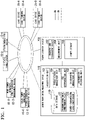
- FIG. 1 is a diagram illustrating an example of a configuration and usage environment of a stored power origin management device 100.
- the stored power origin management device 100 is a device that manages a power storage device 200.
- Various apparatus and devices illustrated in the figure perform transfer of power via a power network EN and perform transmission and reception of information via an information communication network CN.
- the information communication network CN includes, for example, a wide area network (WAN), a local area network (LAN), or the Internet.
- a electric power system 10-A, a wind power generator 10-B, and a solar power generator 10-C which are power supply sources, are connected to the power network EN.
- the electric power system 10-A includes, for example, a thermal power generator, a nuclear power generator, a hydroelectric generator, and a power transmission and distribution network.
- a power conditioning system (PCS) for connection to the power network EN is connected to the wind power generator 10-B or the solar power generator 10-C.
- load devices 20-A and 20-B which are consumers, are connected to the power network EN, and a power storage device 200 is connected to the power network EN.
- a power storage device different from the power storage device 200 may be connected to the power network EN.
- a system management device 12-A, power generator management devices 12-B and 12-C, load terminal devices 22-A and 22-B, and the stored power origin management device 100, for example, are connected to the information communication network CN.
- the system management device 12-A is a device operated by an operator (for example, a power company) of the electric power system 10-A.
- a plurality of generators are connected to the electric power system 10-A.
- the system management device 12-A transmits, for example, power generated by each generator in real time (or at intervals of 10 minutes or 1 hour).
- a transmission destination includes the stored power origin management device 100.
- the power generator management device 12-B transmits power generator status information including an amount of power generated by the wind power generator 10-B and a power receiving request in real time (or at intervals of 10 minutes or 1 hour) on the basis of a result of measuring the amount of power generated by the wind power generator 10-B.
- the power generator management device 12-C transmits the power generator status information including power generated by the solar power generator 10-C and the power receiving request in real time (or at intervals of 10 minutes or 1 hour) on the basis of a result of measuring an amount of power generated by the solar power generator 10-C.
- transmission destinations include the stored power origin management device 100.
- the load devices 20-A and 20-B are any devices that consume power.
- the load terminal device 22-A is a terminal device that is used by an operator of the load device 20-A.
- the load terminal device 22-A transmits demand information including a discharging request for requesting discharging, information on an amount of required power, and the like for the power used by the load device 20-A to the stored power origin management device 100.
- the load terminal device 22-B is a terminal device that is used by an operator of the load device 20-B.
- the load terminal device 22-B transmits demand information including a discharging request for requesting discharging, information on a required amount of power, and the like for power used by the load device 20-B to the stored power origin management device 100.
- a significance of a priority will be described below.
- the stored power origin management device 100 performs various processes regarding an operation of the power storage device 200. First, the power storage device 200 will be described.
- the power storage device 200 includes, for example, a charging and discharging device 202, a measurement unit 204, and a power storage 206.
- the power storage 206 is, for example, a secondary battery, but the power storage 206 is not limited thereto and may be a power storage that converts power into other energy and stores the energy.
- the power storage 206 may be a power storage that converts power into hydrogen and stores the hydrogen, or may be a power storage that converts power into kinetic energy and stores the kinetic energy like a flywheel.
- the measurement unit 204 measures a charging and discharging current of the power storage 206, a voltage between a positive electrode and a negative electrode of the power storage 206, a temperature of the power storage 206, and the like, and outputs results thereof to the stored power origin management device 100.
- the charging and discharging device 202 is, for example, a PCS, and performs mutual conversion between an alternating current and a direct current.
- the stored power origin management device 100 includes, for example, an acquisition unit 102, a power storage management unit 104, a fee determination unit 106, a discharging management unit 108, and an information providing unit 110.
- These components are realized by, for example, a hardware processor such as a central processing unit (CPU) executing a program (software).
- CPU central processing unit
- Some or all of these components may be realized by hardware (a circuit unit; including a circuit) such as a large scale integration (LSI), an application specific integrated circuit (ASIC), a field-programmable gate array (FPGA), or a graphics processing unit (GPU) or may be realized by cooperation of software and hardware.
- LSI large scale integration
- ASIC application specific integrated circuit
- FPGA field-programmable gate array
- GPU graphics processing unit
- the program may be stored in a storage device (a storage device including a non-transient storage medium) such as a hard disk drive (HDD) or a flash memory in advance, or may be stored in a removable storage medium (a non-transient storage medium) such as a DVD or a CD-ROM and installed by the storage medium being mounted in a drive device.
- a storage device a storage device including a non-transient storage medium
- HDD hard disk drive
- flash memory in advance
- a removable storage medium a non-transient storage medium
- a DVD or a CD-ROM installed by the storage medium being mounted in a drive device.
- the stored power origin management device 100 includes a data storage 120.
- the data storage 120 is, for example, an HDD, a flash memory, or a RAM.
- the data storage 120 may be a device attached to the stored power origin management device 100, or may be a network attached storage (NAS) that the stored power origin management device 100 can access via the information communication network CN.
- Information such as the breakdown information of power production source 122 and a power transmission loss coefficient 124 is stored in the data storage 120.
- FIG. 2 is a diagram illustrating an example of information acquired by the acquisition unit 102.
- the acquisition unit 102 acquires system status information from the system management device 12-A, which is a device of a power supply source, and power generator status information from the power generator management devices 12-B and 12-C. At least one of the system status information and the power generator status information is an example of first information.
- the system status information includes, for example, an amount of power generated by each generator.
- the power generator status information includes, for example, a power receiving request and an amount of generated power.
- the power receiving request is represented by, for example, a binary value of 0 or 1, in which 0 indicates that power receiving is not requested and 1 indicates that the power receiving is requested.
- the acquisition unit 102 acquires demand information from the load terminal devices 22-A and 22-B, which are devices of consumers.
- the demand information is an example of second information.
- the demand information includes, for example, a discharging request, a power receiving amount which is information on required power, power supply source designation information, and a power receiving time period.
- the discharging request is expressed by, for example, a binary value of 0 or 1, in which 0 indicates that discharging is not requested and 1 indicates that discharging is requested.
- the power supply source designation information is expressed by, for example, a binary value of whether energy is renewable energy (hereinafter renewable energy) or not. In the example of FIG. 1 , the renewable energy is power generated by the wind power generator 10-B or the solar power generator 10-C.
- the power storage management unit 104 stores information indicating the power supply source for the power stored in the power storage 206 in the data storage 120 as the breakdown information of power production source 122 in association with an amount of stored power on the basis of the system status information and the power generator status information.
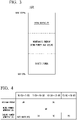
- FIG. 3 is a diagram schematically illustrating an example of content of the breakdown information of power production source 122.
- the breakdown information of power production source 122 is information in which an amount of stored power acquired from each of renewable energy and system power (power acquired from a electric power system) is described with a state of charge (SOC) or an amount of power (kW) of the power storage 206 as an axis.
- the power storage management unit 104 performs addition to the respective amounts of stored power from the renewable energy and the system power in the breakdown information of power production source 122 on the basis of the amount of generated power included in the system status information and the power generator status information at predetermined time intervals. For example, the power storage management unit 104 determines that cheap power is preferentially supplied to the power storage 206 on the basis of a power fee for each of time periods.
- FIG. 4 is a diagram illustrating an example of changes in power fee for each of time periods. The power fee is changed from moment to moment, and is presented to the stored power origin management device 100 from the system management device 12-A or the power generator management devices 12-B and 12-C. As illustrated, it is assumed that power by solar power generation is cheapest in the daytime and cannot be supplied at night.
- the power storage management unit 104 may perform management so that a certain proportion of power from renewable energy is stored in preparation for a need to use power from renewable energy even when the power is expensive for reduction of an environmental load.
- the power storage management unit 104 may preferentially perform charging for a type of power that is considered to be insufficient from a current management status. Therefore, the power storage management unit 104 may transmit a discharging request to the system management device 12-A and the power generator management devices 12-B and 12-C so that desired type of power is discharged.
- the power storage management unit 104 (1) returns information indicating that power has been received and information on an amount of received power to the power generator management device 12-B, (2) controls the charging and discharging device 202 so that the returned amount of power (in addition, a total amount of power when system power is acquired in parallel) is stored, and (3) performs a payment process so that a power fee corresponding to the wind power generator 10-B presented in advance is paid to an operator of the wind power generator 10-B, assuming that power from the wind power generator 10-B has been stored in the power storage 206 and performs management, for example, in response to a power receiving request from the power generator management device 12-B.
- a power generation source may generate power generation status information and transmit the power generation status information to the stored power origin management device 100, and may ensure
- the power storage management unit 104 further adds the amount of power discounted in consideration of a transmission loss to a corresponding item of the breakdown information of power production source 122 with respect to the amount of power that is a power fee payment target.
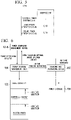
- FIG. 5 is a diagram illustrating an example of content of the power transmission loss coefficient 124.
- the power transmission loss coefficient 124 is information indicating a ratio of the power stored in the power storage 206 to the transmitted power for each power supply source.
- the power transmission loss coefficient 124 is calculated in advance on the basis of, for example, a position of each generator and is stored in the data storage 120.
- the power storage management unit 104 controls the charging and discharging device 202 such that the progress of deterioration of the secondary battery of the power storage 206 is inhibited.
- FIG. 6 is a diagram schematically illustrating an example of content of the processing of the power storage management unit 104 described above.
- the power storage management unit 104 sends a power receiving approval in response to the power receiving request from the power generator management device 12-B in a certain control cycle, and notifies that an amount of power of 300 [kW] has been received.
- the power storage management unit 104 determines that 200 [kW] of power has also been purchased from the electric power system 10-A at the same time on the basis of a desired logic
- an amount of power to be stored in the power storage 206 may be first determined, and the amount of power multiplied by a reciprocal of the transmission loss coefficient may be transmitted to the power generator management devices 12-B and 12-C.
- the power storage management unit 104 may further reflect an amount of power decreasing due to natural discharging in an amount of power stored in the power storage 206 in the breakdown information of power production source 122.
- the power storage management unit 104 may periodically calculate the amount of stored power that decreases due to natural discharging on the basis of a status or usage environment (a temperature, a SOC, a charging and discharging frequency, or the like) of the power storage 206 and reflect the amount of stored power in the breakdown information of power production source 122.
- the amount of stored power that decreases due to natural discharging may be calculated on the basis of a time when and a place from which the power is supplied, using information on a time period in which the power storage has been performed.
- the fee determination unit 106 may multiply a fee by a reciprocal of an amount decreasing due to natural discharging.
- the fee determination unit 106 presents, to the load terminal devices 22-A and 22-B, a fee obtained by adding an operation cost to a power fee (an acquisition cost) presented from the system management device 12-A or the power generator management devices 12-B and 12-C.
- a power fee an acquisition cost
- the fee determination unit 106 may determine an acquisition cost by, for example, obtaining a moving average of the power fee. Further, according to changes in a discharging request from the load terminal devices 22-A and 22-B, the fee determination unit 106 may increase a fee for the load terminal device with a more request.
- the fee determination unit 106 may increase the fee when the SOC decreases and approaches a first prescribed value (for example, 20%), and decrease the fee when the SOC increases and approaches a second prescribed value (for example, 80%). Accordingly, it is possible to curb progress of deterioration of the power storage 206.
- the discharging management unit 108 When the discharging management unit 108 causes the power storage 206 to be discharged and supplies power to consumers (the load devices 20-A and 20-B), the discharging management unit 108 performs a process of virtually specifying a power supply source for power to be supplied and subtracting an amount of power to be supplied to the consumer from an amount of power corresponding to the specified power supply source in the breakdown information of power production source 122. More specifically, the discharging management unit 108 virtually specifies the power supply source for the power to be supplied to the load device 20-A or 20-B on the basis of the demand information from the load terminal device 22-A or 22-B. For example, when the demand information for designating renewable energy is acquired from the load terminal device 22-A as illustrated in FIG.
- the discharging management unit 108 (1) returns information indicating discharging to the load terminal device 22-A, (2) controls the charging and discharging device 202 so that the power of the received amount of power included in the demand information is discharged, (3) performs a process of charging a fee for each power supply source designated by the demand information to the operator of the load device 20-A, and (4) subtracts an amount corresponding to the amount of power to be discharged from a corresponding item (renewable energy) of the breakdown information of power production source 122. Accordingly, the stored power origin management device 100 can perform information management as if the power has been supplied to the consumer from the power supply source designated by the consumer.
- the discharging management unit 108 may specify the power supply source for the power to be supplied to the consumer on the basis of preset setting information.
- the setting information may be determined on the basis of a designation of the consumer or may be uniformly determined by the stored power origin management device 100. Further, the stored power origin management device 100 may automatically determine setting information in consideration of a demand and supply balance at each time point.
- FIG. 7 is a diagram schematically illustrating an example of content of the processing of the discharging management unit 108 described above.
- the discharging management unit 108 sends a discharging approval in response to a discharging request of 250 [kW] from the load terminal device 22-A in a certain control cycle, and notifies that the amount of power of 250 [kW] is discharged.
- the discharging management unit 108 instructs the charging and discharging device 202 to discharge 250 [kW].
- the discharging management unit 108 may instruct the charging and discharging device 202 to discharge more than 250 [kW] in consideration of a transmission loss to the load device 20-A.
- the discharging management unit 108 subtracts 250 [kW] from the item of renewable energy in the breakdown information of power production source 122. This virtually specifies a power supply source for the discharged power.
- the information providing unit 110 provides various devices with information indicating a history of processing of the power storage management unit 104 and the discharging management unit 108.
- Information indicating the history of the processing of the power storage management unit 104 and the discharging management unit 108 is, for example, a history of power storage and discharging for each control cycle and each power supply source.
- the information providing unit 110 has, for example, a function of a web server or an application server, and can provide an image in the form of a web page.
- FIG. 8 is a diagram illustrating an example of an image provided by the information providing unit 110. By referring to such information, for example, the consumer can ascertain a supply and demand relationship of power in detail.
- the power storage management unit 104 selects one generator on the basis of a predetermined rule, for example, and performs the process described with reference to FIG. 6 on the selected generator.
- the predetermined rule is a rule such as selecting a generator with a lower power fee, selecting a generator with a lower transmission loss, and selecting a generator with less burden on a transmission facility.
- the power storage management unit 104 may assume that the power is supplied from each of the plurality of generators in parallel and perform the process described with reference to FIG. 6 .
- the discharging management unit 108 selects one load device on the basis of a predetermined rule, for example and performs the process described with reference to FIG. 7 on the selected load device.
- the discharging management unit 108 may receive power to each of the plurality of load devices in parallel and perform the process described with reference to FIG. 7 . In this case, only a part of an amount of power included in demand information may be supplied.
- FIG. 9 is a diagram schematically illustrating an example of content of the breakdown information of power production source 122A according to another embodiment.
- power generated by the hydroelectric generator in the system power may be treated as renewable energy.
- the discharging management unit 108 may select the next best power supply source on the basis of the priority, for example, when the amount of power from the renewable energy included in the demand information exceeds the amount of power from the renewable energy described in the breakdown information of power production source 122A, and perform discharging management.
- the renewable energy is designated as power supply source designation information, and content that thermal power is in preference to nuclear power is specified as a priority.
- the discharging management unit 108 performs control so that the power generated by the thermal power generator is provided to the load device.
- the power storage management unit 104 may acquire a desired amount of power from the electric power system 10-A at a desired timing and store the power in the power storage 206 of the power storage device 200, regardless of the system status information.
- the system status information may further include information on a power generation place (a position of a generator), and the stored power origin management device 100 may manages an amount of stored power in each power generation place, and receive a discharging request having a designated power generation place from the load terminal devices 22-A and 22-B.
- a power generation place a position of a generator
- the stored power origin management device 100 may manages an amount of stored power in each power generation place, and receive a discharging request having a designated power generation place from the load terminal devices 22-A and 22-B.
- Information on the power generation place is included, for example, in the system status information with power generator status information tagged at a power generation source.
- Information such as blockchain may be adopted to ensure that this information is authentic and is not tampered with.
- Information on a price range may be added to the information on the power generation place.
- the power supply source is exclusively a generator
- another power storage device may be treated as the power supply source.
- the other power storage device may function as a buffer for temporarily storing power when the SOC of the power storage 206 is close to 100%, or the stored power origin management device 100 may receive a discharging request from the other power storage device and perform discharging.
- a virtual power plant may be treated as a power supply source.
- the VPP refers to an entity that behaves as a power generator in which, for example, a device using a certain amount of power throughout the day temporarily curbs power consumption so that relatively surplus power is generated.
- a lighting device in a station or a department store, a factory, or a water treatment device can be a VPP.
- the power storage 206 common to the plurality of power supply sources is included, a physically separate power storage 206 may be used for each of the plurality of power supply sources.
- the acquisition unit 102 that acquires the first information indicating a power supply source when the power storage 206 is charged
- the power storage management unit 104 that stores information indicating a power supply source for power stored in the power storage 206 in the data storage 120 in association with the amount of stored power on the basis of the first information
- the discharging management unit 108 that virtually specifies the power supply source for the power to be supplied when the power storage 206 is discharged and the power is supplied to the consumer, and subtracts the amount of power to be supplied to the consumer from the amount of power corresponding to the specified power supply source in the data storage 120 are included so that convenience regarding use of power can be improved and smoother power interchange can be realized.
Landscapes
- Engineering & Computer Science (AREA)
- Power Engineering (AREA)
- Theoretical Computer Science (AREA)
- Computer Networks & Wireless Communication (AREA)
- Signal Processing (AREA)
- Physics & Mathematics (AREA)
- General Engineering & Computer Science (AREA)
- General Physics & Mathematics (AREA)
- Supply And Distribution Of Alternating Current (AREA)
- Human Computer Interaction (AREA)
- Management, Administration, Business Operations System, And Electronic Commerce (AREA)
- Charge And Discharge Circuits For Batteries Or The Like (AREA)
Applications Claiming Priority (1)
| Application Number | Priority Date | Filing Date | Title |
|---|---|---|---|
| PCT/JP2019/019856 WO2020234953A1 (fr) | 2019-05-20 | 2019-05-20 | Système de gestion d'origine d'énergie stockée, procédé et programme |
Publications (2)
| Publication Number | Publication Date |
|---|---|
| EP3975366A1 true EP3975366A1 (fr) | 2022-03-30 |
| EP3975366A4 EP3975366A4 (fr) | 2023-08-02 |
Family
ID=73459249
Family Applications (1)
| Application Number | Title | Priority Date | Filing Date |
|---|---|---|---|
| EP19929203.8A Pending EP3975366A4 (fr) | 2019-05-20 | 2019-05-20 | Système de gestion d'origine d'énergie stockée, procédé et programme |
Country Status (5)
| Country | Link |
|---|---|
| US (1) | US12107716B2 (fr) |
| EP (1) | EP3975366A4 (fr) |
| JP (1) | JP7216816B2 (fr) |
| CN (1) | CN113841314B (fr) |
| WO (1) | WO2020234953A1 (fr) |
Families Citing this family (1)
| Publication number | Priority date | Publication date | Assignee | Title |
|---|---|---|---|---|
| JP2024053455A (ja) * | 2022-10-03 | 2024-04-15 | オルガノ株式会社 | バーチャル資源プラントとその運転方法 |
Family Cites Families (14)
| Publication number | Priority date | Publication date | Assignee | Title |
|---|---|---|---|---|
| JP5618511B2 (ja) * | 2009-09-08 | 2014-11-05 | 株式会社東芝 | スマートグリッド及びマイクログリッド向け総合監視制御システム |
| JP5393602B2 (ja) | 2010-07-01 | 2014-01-22 | 株式会社日立製作所 | 電力制御方法、プログラムおよび電力制御装置 |
| JP5563949B2 (ja) * | 2010-10-25 | 2014-07-30 | パナソニック株式会社 | 電力管理システム |
| JP5872295B2 (ja) * | 2012-01-11 | 2016-03-01 | シャープ株式会社 | 蓄電装置及び携帯通信端末 |
| JP6139564B2 (ja) * | 2012-12-28 | 2017-05-31 | 三菱電機株式会社 | 充放電制御装置、充放電制御システム、充放電制御方法、及びプログラム |
| JPWO2015015770A1 (ja) * | 2013-08-01 | 2017-03-02 | 日本電気株式会社 | 制御装置、電力管理システム及び蓄電装置管理方法 |
| EP3118962A4 (fr) * | 2014-03-12 | 2017-11-01 | Nec Corporation | Système de partage de batterie d'accumulateurs, dispositif de traitement d'informations, procédé de partage de batterie d'accumulateurs, et programme de partage de batterie d'accumulateurs d'enregistrement de support d'enregistrement |
| WO2016044783A1 (fr) * | 2014-09-18 | 2016-03-24 | The Regents Of The University Of California | Système et procédé de surveillance de stabilité, d'analyse et de commande de systèmes électriques |
| JP6678393B2 (ja) * | 2015-04-14 | 2020-04-08 | 古河電気工業株式会社 | 蓄電システム及びその制御方法 |
| JP6412822B2 (ja) * | 2015-04-22 | 2018-10-24 | 株式会社日立製作所 | 電力系統電圧無効電力監視制御装置及び方法 |
| RS59875B1 (sr) * | 2016-02-18 | 2020-03-31 | Deutsche Telekom Ag | Poboljšano upravljanje potrošnjom snage korisničke opreme |
| US10875406B2 (en) * | 2017-01-19 | 2020-12-29 | Solaredge Technologies Ltd. | Electric-vehicle charging apparatus |
| TWI666847B (zh) * | 2017-05-01 | 2019-07-21 | Aver Information Inc. | 充電方法及充電系統 |
| JP6781103B2 (ja) * | 2017-05-18 | 2020-11-04 | 株式会社東光高岳 | 電力由来管理システム及び電力由来管理方法 |
-
2019
- 2019-05-20 WO PCT/JP2019/019856 patent/WO2020234953A1/fr not_active Ceased
- 2019-05-20 EP EP19929203.8A patent/EP3975366A4/fr active Pending
- 2019-05-20 CN CN201980096539.2A patent/CN113841314B/zh active Active
- 2019-05-20 JP JP2021520517A patent/JP7216816B2/ja active Active
-
2021
- 2021-11-18 US US17/530,379 patent/US12107716B2/en active Active
Also Published As
| Publication number | Publication date |
|---|---|
| JPWO2020234953A1 (fr) | 2020-11-26 |
| CN113841314B (zh) | 2024-09-13 |
| US20220078069A1 (en) | 2022-03-10 |
| JP7216816B2 (ja) | 2023-02-01 |
| US12107716B2 (en) | 2024-10-01 |
| CN113841314A (zh) | 2021-12-24 |
| EP3975366A4 (fr) | 2023-08-02 |
| WO2020234953A1 (fr) | 2020-11-26 |
Similar Documents
| Publication | Publication Date | Title |
|---|---|---|
| US20240308383A1 (en) | Method and apparatus for charging a battery using local power grid topology information | |
| US11677241B2 (en) | Power trading system and management apparatus | |
| US10600132B2 (en) | Supply-demand control device, charge-discharge control device, power storage device, supply-demand control system, and supply-demand control method | |
| US9098817B2 (en) | Method for real-time control of energy storage units to reduce electricity cost | |
| US11916383B2 (en) | Implementing power delivery transaction for potential electrical output of integrated renewable energy source and energy storage system facility | |
| JP7113145B2 (ja) | 望ましい容量係数を提供するacオーバービルト再生可能電気生成リソース及び電荷ストレージ装置を利用するシステム及び方法 | |
| US12083919B2 (en) | Systems and methods for charging electric vehicles | |
| EP4160332A1 (fr) | Dispositif et procédé de traitement d'informations et programme associé | |
| EP3843228A1 (fr) | Système de gestion d'énergie électrique et procédé de gestion d'énergie électrique | |
| JP6789020B2 (ja) | 蓄電池運用方法および蓄電池運用装置 | |
| JP2022007988A (ja) | 電力管理装置、電力管理システム、電力管理方法 | |
| US12107716B2 (en) | Stored power production source management device, method, and storage medium | |
| JP2023067873A (ja) | 統合型の再生可能エネルギーソース及びエネルギーストレージシステム設備の潜在的電気出力用のパワー供給トランザクションを実装する方法 | |
| JP2022188602A (ja) | 売電制御装置、売電制御システム、売電制御方法 | |
| JP2019050667A (ja) | 処理装置、処理方法及びプログラム | |
| US20240097485A1 (en) | Power control device, power control method, and non-transitory computer-readable recording medium | |
| JP7830251B2 (ja) | 混雑予測装置及び混雑予測方法 | |
| KR102556773B1 (ko) | 에너지 저장장치의 스케줄링 장치 및 그 방법 | |
| JPWO2017163655A1 (ja) | 制御装置、制御方法及びプログラム | |
| Shaaban et al. | Optimal coordination for electric vehicles in smart grids with high penetration of PV generation | |
| US20240388102A1 (en) | Distribution apparatus, power control system, distribution method, and non-transitory computer readable medium | |
| WO2025037611A1 (fr) | Système de centrale électrique virtuelle, procédé d'utilisation d'énergie électrique excédentaire et système d'alimentation en énergie |
Legal Events
| Date | Code | Title | Description |
|---|---|---|---|
| STAA | Information on the status of an ep patent application or granted ep patent |
Free format text: STATUS: THE INTERNATIONAL PUBLICATION HAS BEEN MADE |
|
| PUAI | Public reference made under article 153(3) epc to a published international application that has entered the european phase |
Free format text: ORIGINAL CODE: 0009012 |
|
| STAA | Information on the status of an ep patent application or granted ep patent |
Free format text: STATUS: REQUEST FOR EXAMINATION WAS MADE |
|
| 17P | Request for examination filed |
Effective date: 20211123 |
|
| AK | Designated contracting states |
Kind code of ref document: A1 Designated state(s): AL AT BE BG CH CY CZ DE DK EE ES FI FR GB GR HR HU IE IS IT LI LT LU LV MC MK MT NL NO PL PT RO RS SE SI SK SM TR |
|
| DAV | Request for validation of the european patent (deleted) | ||
| DAX | Request for extension of the european patent (deleted) | ||
| REG | Reference to a national code |
Ref country code: DE Ref legal event code: R079 Free format text: PREVIOUS MAIN CLASS: H02J0003000000 Ipc: G06F0001260000 |
|
| A4 | Supplementary search report drawn up and despatched |
Effective date: 20230704 |
|
| RIC1 | Information provided on ipc code assigned before grant |
Ipc: H02J 7/00 20060101ALI20230628BHEP Ipc: H02J 3/38 20060101ALI20230628BHEP Ipc: H02J 3/32 20060101ALI20230628BHEP Ipc: G06F 1/26 20060101AFI20230628BHEP |