EP3975595A1 - Combinaison de véhicules et procédé de formation d'une combinaison de véhicules - Google Patents
Combinaison de véhicules et procédé de formation d'une combinaison de véhicules Download PDFInfo
- Publication number
- EP3975595A1 EP3975595A1 EP20198913.4A EP20198913A EP3975595A1 EP 3975595 A1 EP3975595 A1 EP 3975595A1 EP 20198913 A EP20198913 A EP 20198913A EP 3975595 A1 EP3975595 A1 EP 3975595A1
- Authority
- EP
- European Patent Office
- Prior art keywords
- vehicle
- vehicle unit
- sidelink
- unit
- transceiver
- Prior art date
- Legal status (The legal status is an assumption and is not a legal conclusion. Google has not performed a legal analysis and makes no representation as to the accuracy of the status listed.)
- Granted
Links
Images

Classifications
-
- B—PERFORMING OPERATIONS; TRANSPORTING
- B62—LAND VEHICLES FOR TRAVELLING OTHERWISE THAN ON RAILS
- B62D—MOTOR VEHICLES; TRAILERS
- B62D53/00—Tractor-trailer combinations; Road trains
-
- H—ELECTRICITY
- H04—ELECTRIC COMMUNICATION TECHNIQUE
- H04W—WIRELESS COMMUNICATION NETWORKS
- H04W76/00—Connection management
- H04W76/10—Connection setup
- H04W76/14—Direct-mode setup
-
- H—ELECTRICITY
- H04—ELECTRIC COMMUNICATION TECHNIQUE
- H04W—WIRELESS COMMUNICATION NETWORKS
- H04W4/00—Services specially adapted for wireless communication networks; Facilities therefor
- H04W4/30—Services specially adapted for particular environments, situations or purposes
- H04W4/40—Services specially adapted for particular environments, situations or purposes for vehicles, e.g. vehicle-to-pedestrians [V2P]
- H04W4/46—Services specially adapted for particular environments, situations or purposes for vehicles, e.g. vehicle-to-pedestrians [V2P] for vehicle-to-vehicle communication [V2V]
-
- H—ELECTRICITY
- H04—ELECTRIC COMMUNICATION TECHNIQUE
- H04B—TRANSMISSION
- H04B1/00—Details of transmission systems, not covered by a single one of groups H04B3/00 - H04B13/00; Details of transmission systems not characterised by the medium used for transmission
- H04B1/38—Transceivers, i.e. devices in which transmitter and receiver form a structural unit and in which at least one part is used for functions of transmitting and receiving
- H04B1/3822—Transceivers, i.e. devices in which transmitter and receiver form a structural unit and in which at least one part is used for functions of transmitting and receiving specially adapted for use in vehicles
-
- H—ELECTRICITY
- H04—ELECTRIC COMMUNICATION TECHNIQUE
- H04L—TRANSMISSION OF DIGITAL INFORMATION, e.g. TELEGRAPHIC COMMUNICATION
- H04L12/00—Data switching networks
- H04L12/28—Data switching networks characterised by path configuration, e.g. LAN [Local Area Networks] or WAN [Wide Area Networks]
- H04L12/40—Bus networks
- H04L2012/40267—Bus for use in transportation systems
-
- H—ELECTRICITY
- H04—ELECTRIC COMMUNICATION TECHNIQUE
- H04L—TRANSMISSION OF DIGITAL INFORMATION, e.g. TELEGRAPHIC COMMUNICATION
- H04L67/00—Network arrangements or protocols for supporting network services or applications
- H04L67/01—Protocols
- H04L67/12—Protocols specially adapted for proprietary or special-purpose networking environments, e.g. medical networks, sensor networks, networks in vehicles or remote metering networks
Definitions
- the present disclosure relates to the field of vehicular communication and in particular to methods and devices for communication among vehicle units forming a vehicle combination.
- Such combination-wide networks may use a wired infrastructure consisting of segments of Ethernet or Controller Area Network (CAN) bus, one in each vehicle unit, which are joined into a connected network once the vehicle units have been coupled.
- CAN Controller Area Network
- the data lines are integrated in a solid coupling (e.g., drawbar, fifth wheel) together with electrical, pneumatic or hydraulic power lines.
- the data lines of the segments terminate at respective connectors (e.g., plugs, sockets) which, when the vehicle units are coupled, enter into mutual proximity where an operator may complete the connection.
- Wired infrastructure is generally perceived as very reliable. Relatively simple equipment may offer excellent control signalling bandwidth. In the case of vehicle combinations, however, the network does not come into existence before the completion of the coupling of the vehicle units.
- a further potential limitation on the usefulness of wired infrastructure is that the physical connectors that join the bus segments of the respective vehicle units are exposed to aging, wear, tampering, collisions and the like.
- redundancy is sometimes required for safety reasons. Implementing redundancy often drives both cost and complexity of the wired infrastructure.
- One objective is to propose a vehicle unit that is couplable to at least one further vehicle unit to form a vehicle combination with a combination-wide network.
- a further objective is to propose a vehicle combination comprising vehicle units with these characteristics.
- a still further objective is to make available such a vehicle combination in which the combination-wide network is operative already during the coupling procedure. It is moreover an objective to propose a network-assisted coupling method for forming a vehicle combination of two or more vehicle units.
- the invention provides a first vehicle unit which is couplable to a second vehicle unit, so that a vehicle combination is formed, wherein the first vehicle unit comprises a transceiver configured to establish a sidelink to a transceiver of the second vehicle unit.
- the combination-wide network becomes usable as soon as the transceivers of the vehicle units enter into each other's radio coverage.
- Sidelink when configured with ordinary values of transmit power and other physical-layer settings, may have a radio range of 10 m or more, which is a considerable improvement over the much closer proximity needed for a plug and socket - or other physical connectors - to become joinable.
- Typical payload data exchanged over a vehicular sidelink includes operational data representing real-time state variables and control variables pertaining to powertrain, driveline, drivetrain, steering, engine or other technical systems; such data is amenable to supporting the operation of the vehicle combination.
- the sidelink may furthermore be utilized for exchange of non-real-time quantities (maintenance records, tachograph, other documentation), or media and entertainment content.
- the invention provides a vehicle combination comprising vehicle units with the above characteristics.
- a sidelink between respective vehicle unit computers is established in addition to a wired connection between the VUCs.
- the VUCs are configured to exchange payload data over the wired connection during normal connection and to switch to the sidelink if the wired connection fails.
- the sidelink provides fallback connectivity and makes the system more robust as a result of the redundancy. It is preferable to have the sidelink set up before a failure of the wired connection is detected, for instance, concurrently with the establishment of the wired inter-VUC connection or even earlier.
- the transceivers of the vehicle units remain independently addressable even after the vehicle combination has been formed.
- an external communication party may choose to address the first vehicle unit of the vehicle combination separately from the second vehicle unit, and vice versa.
- the transceivers of the vehicle units may be configured in such manner that an external communication party may furthermore choose to call or address the vehicle combination rather than the vehicle units that it contains.
- the invention provides a method of forming a vehicle combination in which an automatic coupling procedure is controlled, at least partially, on the basis of data exchanged over a sidelink established between vehicle units of the combination to be formed.
- the invention provides a computer program containing instructions for causing a computer, or a vehicle unit computer (VUC) in particular, to carry out the above method.
- the computer program may be stored or distributed on a data carrier.
- a “data carrier” may be a transitory data carrier, such as modulated electromagnetic or optical waves, or a non-transitory data carrier.
- Non-transitory data carriers include volatile and non-volatile memories, such as permanent and non-permanent storages of magnetic, optical or solid-state type. Still within the scope of "data carrier”, such memories may be fixedly mounted or portable.
- vehicle combination encompasses any of a combination vehicle, a truck-trailer and a road train.
- vehicle combination is given the stricter meaning of a combination of one powered (driven) vehicle unit and one or more non-powered vehicle units, wherein the powered vehicle may be a conventional or autonomous vehicle.
- the units making up a "vehicle combination” in this stricter sense are unable of operating as a combination while they are in the decoupled state, as opposed to powered vehicle units with a platooning capability.
- an "automatic" procedure may be an automated or machine-assisted procedure.
- sidelink shall have a meaning consistent with applicable sections of 3GPP Technical Specifications and Technical Reports.
- sidelink may refer to a connection between two user equipments (UEs) which are assisted by a 3GPP LTE or NR radio access network to establish the sidelink.
- UEs user equipments
- sidelink covers, furthermore, a device-to-device (D2D) connection, a Proximity Services (ProSe) connection, a PC5 interface and future technologies with equivalent characteristics and abilities.
- D2D device-to-device
- ProSe Proximity Services
- FIG. 1 shows a truck (first vehicle unit) 10 and a trailer (second vehicle unit) 20.
- the truck 10 includes at least propulsion means (e.g., a central engine, electric wheel drives, transmission, further powertrain components), a braking system and steering arrangements; it is an example of a powered vehicle.
- propulsion means e.g., a central engine, electric wheel drives, transmission, further powertrain components
- braking system and steering arrangements e.g., a central engine, electric wheel drives, transmission, further powertrain components
- a braking system and steering arrangements e.g., a central engine, electric wheel drives, transmission, further powertrain components
- a braking system and steering arrangements e.g., a braking system and steering arrangements
- VUC vehicle unit computer
- the trailer 20 may include a braking system and subsidiary propulsion system for reinforcing braking and/or forward acceleration, arrangements for adjusting wheels angles during motion to be more compatible with movements of the truck 10, a cooler or heater with an independent energy source, and similar installations.
- the braking system may be of a passive type (e.g., overrun brake) or include an active braking functionality controlled from the truck 10.
- the subsidiary propulsion system may be controlled from the truck 10, or may be configured to mimic movements of the truck 10 by processing sensor signals, or both.
- a trailer 20 with these characteristics is considered a non-powered vehicle.
- the trailer's 20 movement ability may be conditional on it being coupled to the truck 10.
- the trailer is equipped with a VUC 22, which is possibly configured for a partially different set of duties compared to the VUC 12 of the powered truck 10.
- the truck 10 and trailer 20 comprise respective coupling means 13, 24 (e.g., drawbar, fifth wheel), which can be engaged to form a solid coupling and disengaged to decouple the vehicle units 10, 20.
- the truck 10 is equipped with a transceiver 11 configured to establish a sidelink to a further transceiver 21 with equivalent capabilities.
- the trailer 20 is equipped with a sidelink-enabled transceiver 21 as well.
- Each transceiver 11, 21 may comprise a transmitter side and a receiver side or may constitute a combined device.
- Each transceiver 11, 21 may comprise or be connected to at least one antenna, which may be mounted on top of the vehicle unit 10, 20 or underneath, or in a different suitable position.
- the antenna may comprise multiple antenna elements, especially on the receiver side.
- the antenna may comprise an active antenna array with beamforming capabilities, which may be utilized to increase the reliability and/or energy efficiency of the sidelink.
- the beamforming can be controlled in a closed-loop fashion on the basis of radio measurements. Alternatively or additionally, the beamforming uses feedforward control on the basis of a measured or observed (e.g., filtered) articulation angle of the vehicle combination 90.
- a sidelink may refer to a connection between two user equipments (UEs), here corresponding to the transceivers 11, 12, which are assisted by a 3GPP LTE or NR radio access network to establish the sidelink.
- 3GPP TS 36.300 V12.10.0 and citations therein describe specifics such as reference signals, message formats, synchronization, discovery and setup procedures for establishing a sidelink connection autonomously (clause 23.10.1) and with network support (clause 23.11). While in some implementations the UEs may stay in communication with a ProSe Function of the network, the sidelink connections normally remain operable even outside network coverage.
- the data exchanged on the sidelink normally does not pass via nodes of the radio access network node (e.g., base station), nor via a core or backhaul network.
- the data transmissions are generally of unicast type rather than broadcast.
- the sidelink communication may be performed in licensed radio spectrum and may additionally utilize unlicensed spectrum; the carrier frequency may be of the order of GHz or hundreds of MHz, and the bandwidth may be of the order of tens or hundreds of MHz.
- the sidelink may be used for an exchange of operational data between the respective VUCs 12, 22 when the vehicle units 10, 20 are stationary or moving.
- the operational data may constitute real-time state variables (observables) and control variables (e.g., commands) pertaining to powertrain, driveline, drivetrain, steering, engine or other technical systems.
- the operational data may include emergency communication, such as an alarm for indicating an abnormal condition in the sending vehicle unit or an override command for modifying an operational parameter in the receiving vehicle during an ongoing emergency condition.
- the transceivers 11, 21 remain possible to address independently even after the vehicle combination has been formed.
- an external communication party e.g., cargo terminal control room, roadside unit
- the addressability may be keyed by temporary network identifiers assigned to the transceivers 11, 21 by the radio access network or at the setting up of the sidelink, such as SL-RNTI, SL-N-RNTI, SL-V-RNTI and further RNTIs.
- the addressing may refer to a semi-permanent or permanent subscriber identity or to a hardware identifier.
- the transceivers of the vehicle units 10, 20 may be configured in such manner that the external communication party can furthermore choose to call or address the vehicle combination rather than the vehicle units by which it is formed. This may include assigning a temporary identifier to the vehicle combination.
- FIG. 2 shows a vehicle combination 90 of one powered vehicle unit 10 and two non-powered vehicle units 20, 30, each unit comprising a VUC 12, 22, 32.
- the vehicle units are coupled by joining, on the one hand, coupling means 13, 24 of the powered 10 and first non-powered 20 vehicle unit and, on the other hand, coupling means 23, 34 of the two non-powered vehicle units 20, 30.
- the VUCs 12, 22, 32 are sequentially connected by wired connections W12 and W23.
- each vehicle unit 10, 20, 30 further comprises sidelink-enabled transceivers 11, 21, 31 which are configured to establish and maintain sidelink connections S12, S23.
- wired and sidelink connections W12, W23, S12, S23 interconnect the VUCs 12, 22, 32 sequentially, so as to allow data exchange at least between adjacent VUCs. If a relaying functionality is configured, there may be a further option of transmitting a unicast data message to a non-adjacent VUC and/or to transmit a broadcast data message addressing all VUCs of the vehicle combination 90. Also a transceiver which establishes sidelinks to non-adjacent VUCs will have non-adjacent unicast and broadcasting at its disposal.
- the wired connections W12, W23 may be the primary infrastructure, which is used in normal operation, and the (already established) sidelink connections S12, S23 are secondary in the sense that one or both are put to use if one or both wired connections W12, W23 encounter a failure or malfunction. If, according to the first option, only that wireless connection where the failure is detected (or hypothesized to have happened) is replaced by the corresponding sidelink connection, so that the combination-wide network will be using a mixed wired and wireless infrastructure.
- a protocol stack may be configured such that the switch between the wired and wireless physical connections is unnoticeable (non-transparent) to higher protocol layers, including the application layer at least. Such abstraction is advantageous because the application software to be executed in the VUCs may be developed without consideration of a possible switch between wired and wireless connectivity; in particular, it is possible to use legacy software developed before wireless inter-unit connectivity was available.
- swift substitution of a failing wired connection is expedited by setting up the sidelink connections S12, S23 already during normal operation, i.e., without awaiting a failure.
- a baseline (or default, or minimum) resource allocation is requested when the sidelink is not used as main control communication channel between vehicle units.
- This baseline resource allocation is configured to support a rudimentary set of functions, such as emergency braking and other safety-related manoeuvres. Since the baseline resource allocation is always in place and ready to be used with short notice, the delay in transitioning to sidelink-based vehicle control is reduced compared to the case where the sidelink communication resources are requested after the wired connection fails.
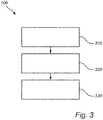
- a method 300 in a first vehicle unit for forming a vehicle combination with a second vehicle unit, or for extending a pre-existing vehicle combination by adding the second vehicle unit It is assumed that each vehicle unit is equipped with a sidelink-enabled transceiver.
- the first vehicle unit may be a powered vehicle unit and the second vehicle a non-powered vehicle unit, or vice versa.
- the powered vehicle unit may be an autonomous or conventional vehicle. It is also possible to implement the method 300 in one non-powered vehicle unit that cooperates with a further non-powered vehicle unit to form a vehicle combination or extend a pre-existing vehicle combination.
- the method 300 may be performed while at least one of the vehicle units is stationary; or while the vehicle units are moving at significantly less than road traffic speed; or while the vehicle units are moving for the purpose of the coupling procedure rather than utility transport.
- a sidelink is established between the transceivers of the vehicle units.
- the sidelink enables communication between the vehicle units in both directions.
- the first vehicle unit initiates an automatic coupling procedure for coupling the first vehicle unit to the second vehicle unit.
- the automatic coupling procedure typically includes a sequence of predefined steps, including one or more checkpoints requiring a verification that the observables of the system (e.g., wheel angles, inter-unit distances, positions of coupling means, brake pressure) are within specified ranges.
- the automatic coupling procedure may further include closed-loop control of actuators, as exemplified below.
- a third step 330 of the method 300 refers to the execution of those parts of the automatic coupling procedure which include interactive control. This may include exchanging measurement data with the second vehicle unit over the sidelink (in either direction) and/or exchanging control data with the second vehicle unit over the sidelink (in either direction).
- the interactive control may require more than the bandwidth of the baseline resource allocation; therefore, the transceiver of the first vehicle unit may be configured to request a resource allocation greater than the baseline resource allocation for the direction of the automatic coupling procedure.
- An example automatic coupling procedure may include the following stages when executed by a powered first vehicle unit:
- the interactive control offered by the sidelink during the coupling procedure is advantageous for several reasons. Human monitoring and manipulation in the dangerous zone between the vehicle units can be avoided. The risk of damaging collision between heavy vehicle units is reduced; the vehicle units can be manoeuvred in closed loop in a smoother/softer fashion without back-and-forth movement, so that mechanical wear is limited. Due to the significantly reduced failure rate of the coupling procedure, and hence the reduced need to restart it, the sidelink support saves time even if conventional speeds of motion are preserved.
Landscapes
- Engineering & Computer Science (AREA)
- Computer Networks & Wireless Communication (AREA)
- Signal Processing (AREA)
- Chemical & Material Sciences (AREA)
- Combustion & Propulsion (AREA)
- Transportation (AREA)
- Mechanical Engineering (AREA)
- Mobile Radio Communication Systems (AREA)
- Traffic Control Systems (AREA)
Priority Applications (3)
| Application Number | Priority Date | Filing Date | Title |
|---|---|---|---|
| EP20198913.4A EP3975595B1 (fr) | 2020-09-29 | 2020-09-29 | Combinaison de véhicules et procédé de formation d'une combinaison de véhicules |
| US17/480,414 US12172712B2 (en) | 2020-09-29 | 2021-09-21 | Vehicle combination and method for forming a vehicle combination |
| CN202111115686.5A CN114339682A (zh) | 2020-09-29 | 2021-09-23 | 车辆组合体和用于形成车辆组合体的方法 |
Applications Claiming Priority (1)
| Application Number | Priority Date | Filing Date | Title |
|---|---|---|---|
| EP20198913.4A EP3975595B1 (fr) | 2020-09-29 | 2020-09-29 | Combinaison de véhicules et procédé de formation d'une combinaison de véhicules |
Publications (3)
| Publication Number | Publication Date |
|---|---|
| EP3975595A1 true EP3975595A1 (fr) | 2022-03-30 |
| EP3975595C0 EP3975595C0 (fr) | 2024-11-06 |
| EP3975595B1 EP3975595B1 (fr) | 2024-11-06 |
Family
ID=72670541
Family Applications (1)
| Application Number | Title | Priority Date | Filing Date |
|---|---|---|---|
| EP20198913.4A Active EP3975595B1 (fr) | 2020-09-29 | 2020-09-29 | Combinaison de véhicules et procédé de formation d'une combinaison de véhicules |
Country Status (3)
| Country | Link |
|---|---|
| US (1) | US12172712B2 (fr) |
| EP (1) | EP3975595B1 (fr) |
| CN (1) | CN114339682A (fr) |
Families Citing this family (1)
| Publication number | Priority date | Publication date | Assignee | Title |
|---|---|---|---|---|
| US12317354B2 (en) * | 2021-02-11 | 2025-05-27 | Qualcomm Incorporated | Link recovery between sidelink user equipments based at least in part on keep-alive messages |
Citations (3)
| Publication number | Priority date | Publication date | Assignee | Title |
|---|---|---|---|---|
| WO2013086165A2 (fr) * | 2011-12-07 | 2013-06-13 | General Electric Company | Système et procédé de communication de données dans un système de véhicule |
| US20190139419A1 (en) * | 2017-11-06 | 2019-05-09 | Robert Bosch Gmbh | Method for forming and for coordinating at least one group of vehicles |
| WO2020159134A1 (fr) * | 2019-01-30 | 2020-08-06 | Lg Electronics Inc. | Reconstruction d'unité de données |
Family Cites Families (13)
| Publication number | Priority date | Publication date | Assignee | Title |
|---|---|---|---|---|
| US9419816B2 (en) * | 2008-08-04 | 2016-08-16 | General Electric Company | System, method, and computer software code for providing an auxiliary communication path when a primary communication path is unavailable |
| WO2009113919A1 (fr) * | 2008-03-14 | 2009-09-17 | Volvo Techology Corporation | Système et procédé pour offrir une communication stable et inviolable entre un véhicule, une unité reliée au véhicule, et un système distant |
| US10299129B2 (en) * | 2014-03-22 | 2019-05-21 | Wabco Gmbh | Method for authorization in a wireless vehicle network |
| US10007271B2 (en) * | 2015-12-11 | 2018-06-26 | Avishtech, Llc | Autonomous vehicle towing system and method |
| EP3593336B1 (fr) | 2017-03-06 | 2023-06-07 | Volvo Truck Corporation | Procédé de transformation entre une combinaison de véhicules longs et un peloton en route |
| CA3056318C (fr) | 2017-05-10 | 2024-05-14 | Blackberry Limited | Configurations de ressources et programmation d'emissions directes dans des environnements multi-reseaux |
| CN110692276B (zh) | 2017-05-28 | 2023-05-12 | Lg电子株式会社 | 在无线通信系统中通过共享上行链路资源和侧链路资源执行装置到装置通信的方法及装置 |
| US10126755B1 (en) * | 2017-07-20 | 2018-11-13 | GM Global Technology Operations LLC | Method, apparatus and system for wireless automotive trailer assist in various maneuvers |
| US11057949B2 (en) * | 2017-10-03 | 2021-07-06 | Volvo Truck Corporation | Method, apparatuses and arrangement for establishing a wireless connection between a vehicle and a vehicle accessory |
| DE102017222216B3 (de) | 2017-12-07 | 2019-05-29 | Volkswagen Aktiengesellschaft | Verfahren zur Durchführung von Abstandsmessungen zwischen den Fahrzeugen einer Fahrzeugkolonne sowie Fahrzeugmodul zur Verwendung bei dem Verfahren sowie Fahrzeug |
| US12101652B2 (en) * | 2018-01-18 | 2024-09-24 | Cable Television Laboratories, Inc. | Ad-hoc wireless mesh network system and methodology for failure reporting and emergency communications |
| US10924905B2 (en) * | 2018-05-25 | 2021-02-16 | Paccar Inc | Near field connection for secure tractor trailer communication, and associated systems and methods |
| US20200184412A1 (en) * | 2018-12-10 | 2020-06-11 | Omnitracs, Llc | Techniques for identifying trailers associated with a tractor using wireless signals |
-
2020
- 2020-09-29 EP EP20198913.4A patent/EP3975595B1/fr active Active
-
2021
- 2021-09-21 US US17/480,414 patent/US12172712B2/en active Active
- 2021-09-23 CN CN202111115686.5A patent/CN114339682A/zh active Pending
Patent Citations (3)
| Publication number | Priority date | Publication date | Assignee | Title |
|---|---|---|---|---|
| WO2013086165A2 (fr) * | 2011-12-07 | 2013-06-13 | General Electric Company | Système et procédé de communication de données dans un système de véhicule |
| US20190139419A1 (en) * | 2017-11-06 | 2019-05-09 | Robert Bosch Gmbh | Method for forming and for coordinating at least one group of vehicles |
| WO2020159134A1 (fr) * | 2019-01-30 | 2020-08-06 | Lg Electronics Inc. | Reconstruction d'unité de données |
Non-Patent Citations (1)
| Title |
|---|
| "3rd Generation Partnership Project; Technical Specification Group Radio Access Network; Study on evaluation methodology of new Vehicle-to- Everything (V2X) use cases for LTE and NR; (Release 15)", 11 January 2019 (2019-01-11), XP051686976, Retrieved from the Internet <URL:http://www.3gpp.org/ftp/3guInternal/3GPP%5Fultimate%5Fversions%5Fto%5Fbe%5Ftransposed/sentToDpc/37885%2Df20%2Ezip> [retrieved on 20190111] * |
Also Published As
| Publication number | Publication date |
|---|---|
| US20220097780A1 (en) | 2022-03-31 |
| US12172712B2 (en) | 2024-12-24 |
| EP3975595C0 (fr) | 2024-11-06 |
| CN114339682A (zh) | 2022-04-12 |
| EP3975595B1 (fr) | 2024-11-06 |
Similar Documents
| Publication | Publication Date | Title |
|---|---|---|
| EP4171081B1 (fr) | Système et procédé d'interfonctionnement dans des applications v2x | |
| US10440668B1 (en) | Vehicle platooning management and power control with LTE/5G V2X communications | |
| KR102338786B1 (ko) | 상호작용 차량 통신 | |
| CN111564052B (zh) | 系统、车辆、网络组件、装置、方法、以及用于车辆和网络组件的计算机程序 | |
| US20190012916A1 (en) | Motor vehicle and parking lot for motor vehicles as well as communications system | |
| US20200139995A1 (en) | Secure locomotive communication system | |
| US12172712B2 (en) | Vehicle combination and method for forming a vehicle combination | |
| US10940877B2 (en) | Vehicle communication system | |
| US20180342114A1 (en) | Wireless intra-vehicle communication and information provision by vehicles | |
| US20200337018A1 (en) | Methods and apparatus for wireless device communication | |
| KR20250044873A (ko) | 무선통신시스템에서 ue-to-ue relay 에서 id 설정 등에 관련된 릴레이 ue의 동작 방법 | |
| KR20250025692A (ko) | 무선통신시스템에서 ue-to-ue relay의 링크 해제에 관련된 ue의 동작 방법 | |
| JP7695399B2 (ja) | 車両間通信におけるue間調整要求信号 | |
| US12008897B2 (en) | Methods, computer programs, apparatuses, vehicle and control center for resolving a deadlock traffic situation of a vehicle | |
| US12568363B2 (en) | Secure vehicle communication system | |
| JP5030878B2 (ja) | 衛星管制システム及び衛星管制装置 | |
| CN110267359A (zh) | 一种资源分配方法、路测单元及存储介质 | |
| KR20200090549A (ko) | 무선통신 시스템에서 rrc를 지원하는 방법 및 장치 | |
| US11172345B2 (en) | Feedback channel for secure data transmission | |
| CN112911542A (zh) | 基于c-v2x的港口作业交互系统和方法 | |
| EP4358643A1 (fr) | Procédé de communication entre deux micro-réseaux | |
| US20250261082A1 (en) | Method of enabling communication in a second communication channel through location information | |
| US20250386386A1 (en) | Method of enabling communication in a second communication channel through intermediation in a first communication channel | |
| KR20250074354A (ko) | 무선 통신 시스템에서 모빌리티 장치에게 메시지를 전송하는 방법 및 이를 위한 장치 | |
| EP4002044A1 (fr) | Véhicule, procédés, programmes informatiques et appareils de conduite télécommandée |
Legal Events
| Date | Code | Title | Description |
|---|---|---|---|
| PUAI | Public reference made under article 153(3) epc to a published international application that has entered the european phase |
Free format text: ORIGINAL CODE: 0009012 |
|
| STAA | Information on the status of an ep patent application or granted ep patent |
Free format text: STATUS: REQUEST FOR EXAMINATION WAS MADE |
|
| 17P | Request for examination filed |
Effective date: 20211216 |
|
| AK | Designated contracting states |
Kind code of ref document: A1 Designated state(s): AL AT BE BG CH CY CZ DE DK EE ES FI FR GB GR HR HU IE IS IT LI LT LU LV MC MK MT NL NO PL PT RO RS SE SI SK SM TR |
|
| STAA | Information on the status of an ep patent application or granted ep patent |
Free format text: STATUS: EXAMINATION IS IN PROGRESS |
|
| 17Q | First examination report despatched |
Effective date: 20230925 |
|
| GRAP | Despatch of communication of intention to grant a patent |
Free format text: ORIGINAL CODE: EPIDOSNIGR1 |
|
| STAA | Information on the status of an ep patent application or granted ep patent |
Free format text: STATUS: GRANT OF PATENT IS INTENDED |
|
| INTG | Intention to grant announced |
Effective date: 20240507 |
|
| GRAS | Grant fee paid |
Free format text: ORIGINAL CODE: EPIDOSNIGR3 |
|
| GRAA | (expected) grant |
Free format text: ORIGINAL CODE: 0009210 |
|
| STAA | Information on the status of an ep patent application or granted ep patent |
Free format text: STATUS: THE PATENT HAS BEEN GRANTED |
|
| AK | Designated contracting states |
Kind code of ref document: B1 Designated state(s): AL AT BE BG CH CY CZ DE DK EE ES FI FR GB GR HR HU IE IS IT LI LT LU LV MC MK MT NL NO PL PT RO RS SE SI SK SM TR |
|
| REG | Reference to a national code |
Ref country code: GB Ref legal event code: FG4D |
|
| REG | Reference to a national code |
Ref country code: CH Ref legal event code: EP |
|
| REG | Reference to a national code |
Ref country code: DE Ref legal event code: R096 Ref document number: 602020040729 Country of ref document: DE |
|
| REG | Reference to a national code |
Ref country code: IE Ref legal event code: FG4D |
|
| U01 | Request for unitary effect filed |
Effective date: 20241108 |
|
| U07 | Unitary effect registered |
Designated state(s): AT BE BG DE DK EE FI FR IT LT LU LV MT NL PT RO SE SI Effective date: 20241118 |
|
| PG25 | Lapsed in a contracting state [announced via postgrant information from national office to epo] |
Ref country code: HR Free format text: LAPSE BECAUSE OF FAILURE TO SUBMIT A TRANSLATION OF THE DESCRIPTION OR TO PAY THE FEE WITHIN THE PRESCRIBED TIME-LIMIT Effective date: 20241106 Ref country code: IS Free format text: LAPSE BECAUSE OF FAILURE TO SUBMIT A TRANSLATION OF THE DESCRIPTION OR TO PAY THE FEE WITHIN THE PRESCRIBED TIME-LIMIT Effective date: 20250306 |
|
| PG25 | Lapsed in a contracting state [announced via postgrant information from national office to epo] |
Ref country code: ES Free format text: LAPSE BECAUSE OF FAILURE TO SUBMIT A TRANSLATION OF THE DESCRIPTION OR TO PAY THE FEE WITHIN THE PRESCRIBED TIME-LIMIT Effective date: 20241106 |
|
| PG25 | Lapsed in a contracting state [announced via postgrant information from national office to epo] |
Ref country code: NO Free format text: LAPSE BECAUSE OF FAILURE TO SUBMIT A TRANSLATION OF THE DESCRIPTION OR TO PAY THE FEE WITHIN THE PRESCRIBED TIME-LIMIT Effective date: 20250206 |
|
| PG25 | Lapsed in a contracting state [announced via postgrant information from national office to epo] |
Ref country code: GR Free format text: LAPSE BECAUSE OF FAILURE TO SUBMIT A TRANSLATION OF THE DESCRIPTION OR TO PAY THE FEE WITHIN THE PRESCRIBED TIME-LIMIT Effective date: 20250207 |
|
| PG25 | Lapsed in a contracting state [announced via postgrant information from national office to epo] |
Ref country code: PL Free format text: LAPSE BECAUSE OF FAILURE TO SUBMIT A TRANSLATION OF THE DESCRIPTION OR TO PAY THE FEE WITHIN THE PRESCRIBED TIME-LIMIT Effective date: 20241106 |
|
| PG25 | Lapsed in a contracting state [announced via postgrant information from national office to epo] |
Ref country code: RS Free format text: LAPSE BECAUSE OF FAILURE TO SUBMIT A TRANSLATION OF THE DESCRIPTION OR TO PAY THE FEE WITHIN THE PRESCRIBED TIME-LIMIT Effective date: 20250206 |
|
| PG25 | Lapsed in a contracting state [announced via postgrant information from national office to epo] |
Ref country code: SM Free format text: LAPSE BECAUSE OF FAILURE TO SUBMIT A TRANSLATION OF THE DESCRIPTION OR TO PAY THE FEE WITHIN THE PRESCRIBED TIME-LIMIT Effective date: 20241106 |
|
| PG25 | Lapsed in a contracting state [announced via postgrant information from national office to epo] |
Ref country code: SK Free format text: LAPSE BECAUSE OF FAILURE TO SUBMIT A TRANSLATION OF THE DESCRIPTION OR TO PAY THE FEE WITHIN THE PRESCRIBED TIME-LIMIT Effective date: 20241106 |
|
| PG25 | Lapsed in a contracting state [announced via postgrant information from national office to epo] |
Ref country code: CZ Free format text: LAPSE BECAUSE OF FAILURE TO SUBMIT A TRANSLATION OF THE DESCRIPTION OR TO PAY THE FEE WITHIN THE PRESCRIBED TIME-LIMIT Effective date: 20241106 |
|
| PLBE | No opposition filed within time limit |
Free format text: ORIGINAL CODE: 0009261 |
|
| STAA | Information on the status of an ep patent application or granted ep patent |
Free format text: STATUS: NO OPPOSITION FILED WITHIN TIME LIMIT |
|
| 26N | No opposition filed |
Effective date: 20250807 |
|
| U20 | Renewal fee for the european patent with unitary effect paid |
Year of fee payment: 6 Effective date: 20250925 |