EP3976696B1 - Verfahren zur behandlung eines polymeren werkstücks zur veränderung seiner rauigkeit und zu seiner funktionalisierung - Google Patents
Verfahren zur behandlung eines polymeren werkstücks zur veränderung seiner rauigkeit und zu seiner funktionalisierung Download PDFInfo
- Publication number
- EP3976696B1 EP3976696B1 EP20727633.8A EP20727633A EP3976696B1 EP 3976696 B1 EP3976696 B1 EP 3976696B1 EP 20727633 A EP20727633 A EP 20727633A EP 3976696 B1 EP3976696 B1 EP 3976696B1
- Authority
- EP
- European Patent Office
- Prior art keywords
- solvent
- treatment method
- polymer
- treatment
- roughness
- Prior art date
- Legal status (The legal status is an assumption and is not a legal conclusion. Google has not performed a legal analysis and makes no representation as to the accuracy of the status listed.)
- Active
Links
Images



Classifications
-
- C—CHEMISTRY; METALLURGY
- C08—ORGANIC MACROMOLECULAR COMPOUNDS; THEIR PREPARATION OR CHEMICAL WORKING-UP; COMPOSITIONS BASED THEREON
- C08J—WORKING-UP; GENERAL PROCESSES OF COMPOUNDING; AFTER-TREATMENT NOT COVERED BY SUBCLASSES C08B, C08C, C08F, C08G or C08H
- C08J7/00—Chemical treatment or coating of shaped articles made of macromolecular substances
- C08J7/02—Chemical treatment or coating of shaped articles made of macromolecular substances with solvents, e.g. swelling agents
-
- B—PERFORMING OPERATIONS; TRANSPORTING
- B29—WORKING OF PLASTICS; WORKING OF SUBSTANCES IN A PLASTIC STATE IN GENERAL
- B29C—SHAPING OR JOINING OF PLASTICS; SHAPING OF MATERIAL IN A PLASTIC STATE, NOT OTHERWISE PROVIDED FOR; AFTER-TREATMENT OF THE SHAPED PRODUCTS, e.g. REPAIRING
- B29C71/00—After-treatment of articles without altering their shape; Apparatus therefor
- B29C71/0009—After-treatment of articles without altering their shape; Apparatus therefor using liquids, e.g. solvents, swelling agents
-
- C—CHEMISTRY; METALLURGY
- C08—ORGANIC MACROMOLECULAR COMPOUNDS; THEIR PREPARATION OR CHEMICAL WORKING-UP; COMPOSITIONS BASED THEREON
- C08J—WORKING-UP; GENERAL PROCESSES OF COMPOUNDING; AFTER-TREATMENT NOT COVERED BY SUBCLASSES C08B, C08C, C08F, C08G or C08H
- C08J7/00—Chemical treatment or coating of shaped articles made of macromolecular substances
- C08J7/04—Coating
- C08J7/0427—Coating with only one layer of a composition containing a polymer binder
-
- C—CHEMISTRY; METALLURGY
- C08—ORGANIC MACROMOLECULAR COMPOUNDS; THEIR PREPARATION OR CHEMICAL WORKING-UP; COMPOSITIONS BASED THEREON
- C08J—WORKING-UP; GENERAL PROCESSES OF COMPOUNDING; AFTER-TREATMENT NOT COVERED BY SUBCLASSES C08B, C08C, C08F, C08G or C08H
- C08J7/00—Chemical treatment or coating of shaped articles made of macromolecular substances
- C08J7/04—Coating
- C08J7/044—Forming conductive coatings; Forming coatings having anti-static properties
-
- C—CHEMISTRY; METALLURGY
- C08—ORGANIC MACROMOLECULAR COMPOUNDS; THEIR PREPARATION OR CHEMICAL WORKING-UP; COMPOSITIONS BASED THEREON
- C08J—WORKING-UP; GENERAL PROCESSES OF COMPOUNDING; AFTER-TREATMENT NOT COVERED BY SUBCLASSES C08B, C08C, C08F, C08G or C08H
- C08J7/00—Chemical treatment or coating of shaped articles made of macromolecular substances
- C08J7/04—Coating
- C08J7/05—Forming flame retardant coatings or fire resistant coatings
-
- C—CHEMISTRY; METALLURGY
- C08—ORGANIC MACROMOLECULAR COMPOUNDS; THEIR PREPARATION OR CHEMICAL WORKING-UP; COMPOSITIONS BASED THEREON
- C08J—WORKING-UP; GENERAL PROCESSES OF COMPOUNDING; AFTER-TREATMENT NOT COVERED BY SUBCLASSES C08B, C08C, C08F, C08G or C08H
- C08J7/00—Chemical treatment or coating of shaped articles made of macromolecular substances
- C08J7/04—Coating
- C08J7/06—Coating with compositions not containing macromolecular substances
- C08J7/065—Low-molecular-weight organic substances, e.g. absorption of additives in the surface of the article
-
- C—CHEMISTRY; METALLURGY
- C08—ORGANIC MACROMOLECULAR COMPOUNDS; THEIR PREPARATION OR CHEMICAL WORKING-UP; COMPOSITIONS BASED THEREON
- C08J—WORKING-UP; GENERAL PROCESSES OF COMPOUNDING; AFTER-TREATMENT NOT COVERED BY SUBCLASSES C08B, C08C, C08F, C08G or C08H
- C08J2377/00—Characterised by the use of polyamides obtained by reactions forming a carboxylic amide link in the main chain; Derivatives of such polymers
-
- C—CHEMISTRY; METALLURGY
- C08—ORGANIC MACROMOLECULAR COMPOUNDS; THEIR PREPARATION OR CHEMICAL WORKING-UP; COMPOSITIONS BASED THEREON
- C08J—WORKING-UP; GENERAL PROCESSES OF COMPOUNDING; AFTER-TREATMENT NOT COVERED BY SUBCLASSES C08B, C08C, C08F, C08G or C08H
- C08J2377/00—Characterised by the use of polyamides obtained by reactions forming a carboxylic amide link in the main chain; Derivatives of such polymers
- C08J2377/02—Polyamides derived from omega-amino carboxylic acids or from lactams thereof
-
- C—CHEMISTRY; METALLURGY
- C08—ORGANIC MACROMOLECULAR COMPOUNDS; THEIR PREPARATION OR CHEMICAL WORKING-UP; COMPOSITIONS BASED THEREON
- C08J—WORKING-UP; GENERAL PROCESSES OF COMPOUNDING; AFTER-TREATMENT NOT COVERED BY SUBCLASSES C08B, C08C, C08F, C08G or C08H
- C08J2400/00—Characterised by the use of unspecified polymers
- C08J2400/12—Polymers characterised by physical features, e.g. anisotropy, viscosity or electrical conductivity
-
- C—CHEMISTRY; METALLURGY
- C08—ORGANIC MACROMOLECULAR COMPOUNDS; THEIR PREPARATION OR CHEMICAL WORKING-UP; COMPOSITIONS BASED THEREON
- C08J—WORKING-UP; GENERAL PROCESSES OF COMPOUNDING; AFTER-TREATMENT NOT COVERED BY SUBCLASSES C08B, C08C, C08F, C08G or C08H
- C08J2443/00—Characterised by the use of homopolymers or copolymers of compounds having one or more unsaturated aliphatic radicals, each having only one carbon-to-carbon double bond, and containing boron, silicon, phosphorus, selenium, tellurium or a metal; Derivatives of such polymers
- C08J2443/02—Homopolymers or copolymers of monomers containing phosphorus
-
- C—CHEMISTRY; METALLURGY
- C08—ORGANIC MACROMOLECULAR COMPOUNDS; THEIR PREPARATION OR CHEMICAL WORKING-UP; COMPOSITIONS BASED THEREON
- C08J—WORKING-UP; GENERAL PROCESSES OF COMPOUNDING; AFTER-TREATMENT NOT COVERED BY SUBCLASSES C08B, C08C, C08F, C08G or C08H
- C08J2465/00—Characterised by the use of macromolecular compounds obtained by reactions forming a carbon-to-carbon link in the main chain; Derivatives of such polymers
Definitions
- the present invention relates to a method for treating a polymer part implementing a specific exposure of this part to vapors of solvent(s), this method possibly having the purpose of modifying the surface roughness of said part and the functionalization of said part by at least one material of interest by adhesion of the material to the surface of the part or by integration of the material within said part by encapsulation thereof.
- the invention can find applications in the production of polymer parts having new properties compared to their original properties, these new properties being conferred by the modification of the surface roughness and the functionalization, these new properties possibly being anti-reflective, anti-dirt, adhesive or non-adhesive, hydrophilic, hydrophobic, oleophilic, oleophobic, antibacterial, anti-counterfeiting, anti-frost, anti-scratch, flame retardant, dissipative of electrical charges, cleanability, anti-ageing, coloring, friction , slip, electrical conductivity, doping or cross-linking of polymers.
- the surface layer of the part sees its physicochemical properties modified, with in particular a viscosity which is reduced. After exposure to solvent vapors ceases, the part plasticizes.
- This exposure to solvent vapors is used in particular to reduce the surface roughness of a polymer part.
- the physical principle implemented consists in condensing the vapors of a solvent having satisfactory solubility parameters on the surface of the part. In practice, this consists of bringing the polymer part into contact in the same enclosure at a so-called "cold” temperature (i.e. less than or equal to ambient temperature) and solvent vapors at a so-called “hot” temperature. (several tens of degrees Celsius) from a boiling liquid bath.
- This vapor treatment phase can optionally be combined with additional surface treatment steps of the abrasive type.
- the solvent vapors are produced by heating in an enclosure comprising the substrate to be treated.
- the invention relates, in general, to a process for treating a polymer part comprising a step of bringing said part into contact with vapors of solvent(s) capable of solubilizing said part at least in part, this contacting step being carried out under vacuum.
- the invention relates to a process for treating a polymer part, which is a process for modifying the roughness of the surface of said polymer part and for functionalizing said polymer part, comprising a step of bringing of said part with vapors of solvent(s) capable of dissolving said part at least in part, this step of bringing into contact being carried out under vacuum and comprising, before the step of bringing into contact or after the step of bringing contact, a step of depositing on all or part of the part at least one material of functionalization, the said functionalization material(s) being electrically conductive polymers and/or organophosphorus polymers.
- polymer part it is specified that it is a part made of a material comprising one or more polymers, which does not exclude that this material may contain other ingredients, which are not polymers, such as than inorganic carbonaceous materials (e.g., carbon black).
- this material may contain other ingredients, which are not polymers, such as than inorganic carbonaceous materials (e.g., carbon black).
- the general principle of the present invention is thus based on the surface solubilization of a polymer part through the action of vapors of solvent(s) under vacuum.
- the macromolecular chains of the constituent polymer(s) of the part located on the surface thereof separate and surround themselves with molecules of solvent(s) thus causing the surface of the part to swell, the surface thus swollen being comparable to a gel.
- This step of bringing the part into contact with the vapors of solvent(s) is carried out under vacuum and, more specifically, so that the residual pressure during this step is from 100 mbar to 200 mbar, in particular when the temperature of the contacting step corresponds to the ambient temperature. If the contacting step is carried out by heating to a temperature above ambient temperature, the residual pressure can reach 500 mbar.
- This contacting step can be maintained for a time necessary to obtain the desired surface modification of the part, knowing that the longer the contacting step is maintained, the greater the surface modification.
- This contacting step can be carried out at room temperature (that is to say without heating) but can also be carried out by working at temperatures above that of room temperature. Indeed, by practicing a temperature higher than the ambient temperature while practicing a vacuum, this can make it possible to reach the saturation vapor pressure of the solvent(s) more quickly, to improve the homogeneity of the vapor phase and also to increase the solubilization kinetics of the constituent polymer(s) of the part.
- the method advantageously comprises a step of stopping the exposure of the part to the vapors of solvent(s).
- the method may comprise, preferably after this stopping step, a step of eliminating the solvent(s) present in the part obtained at the end of the contacting step.
- this step of stopping the exposure can consist in extracting the vapors of solvent(s) from the medium in which the contacting step takes place, for example a vacuum chamber.
- the extraction can be carried out by putting the enclosure under air.
- elimination can be achieved by coupling heating of the part and subjecting the part to a vacuum atmosphere.
- the elimination can be completed by washing the part so as to eliminate the residual traces of solvent(s).
- the elimination of the solvent(s) from the treated part also contributes to preserving a homogeneous color of the treated part. Indeed, the remaining presence of solvent(s) can promote the precipitation of the polymer on the surface of the part and lighten its color (either homogeneously or heterogeneously with white areas).
- the polymer part intended to be treated in accordance with the method of the invention may comprise one or more polymers chosen from polyamides (such as polyamide-12), polyurethanes, polycarbonates, poly(meth)acrylates (such as polymethacrylates polysulfones), polysulfones (such as polyphenylsulfones), polyolefins (such as polyethylenes, polypropylenes, COCs (abbreviation corresponding to the terminology Cyclic Olefin Copolymer)), styrenic polymers (such as polystyrenes, ABS) , polyethers (such as polyphenylene ethers), poly(meth)acrylics, polyoxazolines (such as poly(2-ethyl-2-oxazoline), polyacetates (such as polyvinyl acetates) and mixtures thereof.
- polyamides such as polyamide-12
- polyurethanes such as polymethacrylates polysulfones
- the polymer part can be based on a polyamide, such as a polyamide-12.
- the polymer part intended to be treated can be amorphous, semi-crystalline or even with a highly crystalline character.
- the polymer part intended to be treated can be a part resulting from 3D printing.
- the solvent or solvents used for the treatment process of the invention are chosen from volatile solvents with a vapor density greater than that of air, and preferably chosen from halogenated solvents (such as chloropropane, chloroform, dichloromethane, 1-bromopropane, perchlorethylene, trichlorethylene, methylene bromide, 1-chloropropane), aromatic solvents (such as xylene, toluene, benzene), ketone solvents (such as acetone , methyl ethyl ketone), possibly halogenated alcoholic solvents (such as ethanol, methanol, hexafluoroisopropanol), acids (such as nitric acid, formic acid, phosphoric acid) (which acids may exist as aqueous solutions) and mixtures thereof.
- halogenated solvents such as chloropropane, chloroform, dichloromethane, 1-bromopropane, perchlorethylene, trichlorethylene,
- the choice of the solvent(s) will be dictated by the nature of the polymer part, the solvent(s) chosen having to be able to dissolve the latter at least on the surface so as to form a gel on the surface of said part.
- This appropriate choice can easily be made by a person skilled in the art, in particular after having carried out preliminary tests, for a given polymer part, with different solvents in order to determine the most effective solvent or solvents for said polymer part.
- the treatment method of the invention is, more specifically, a method for modifying the roughness of the surface of the polymer part (and more precisely, a reduction in the roughness of the surface of the polymer part) and also a process for functionalizing the polymer part with at least one functionalizing material.
- the polymer part before the contacting step, can already be provided on all or part of its surface with at least one functionalization material (for example, in the form of a film comprising at least one functionalization material, such as a film of particles of at least one functionalization material), the method of the invention thus comprising, before the step of depositing, a step of depositing on all or part of the surface of the polymer part of at least one functionalization material (for example, in the form of a film, such as a film of particles), this deposition step possibly being carried out by standard deposition techniques (such as spraying, serigraphy).
- at least one functionalization material for example, in the form of a film comprising at least one functionalization material, such as a film of particles of at least one functionalization material
- this deposition step possibly being carried out by standard deposition techniques (such as spraying, serigraphy).
- the method of the invention may comprise a step of depositing on all or part of the surface of the polymer part at least one functionalization material (for example, in the form of a film), whereby the functionalization material(s) become integrated into the gel formed on the surface of the part following the action of the vapors of the solvent(s) and, subsequently, after drying of the gel, integrated into the polymer part.
- at least one functionalization material for example, in the form of a film
- the vapors of the solvent(s) used during the contacting step also comprise at least one functionalization material, which means, in other words, that the contacting step of the polymer part is made with vapors of solvent(s), which also comprise at least one functionalization material, this or these functionalization materials thus being directly integrated into the gel formed following the contact of these vapors with the part polymer.
- the method of the invention may comprise a step of depositing on all or part of the surface of the polymer part of at least one functionalization material, the functionalization material(s) being integrated into the gel formed on the surface of the part following the action of the vapors of solvent(s) and, subsequently , after the gel has dried, integrated into the polymer part
- the solvent(s) used may be, in addition to their ability to solubilize the part at least in part, able to solubilize the functionalization material(s), which may make it possible, in particular in the case of the first variant, to modify the initial morphology of the or previously deposited functionalization materials.
- the method of the invention can be implemented in a device comprising an enclosure intended to receive the part to be treated and the vapors of solvent(s), means for regulating the pressure of the said enclosure for placing it under vacuum.
- -ci for example, via a vacuum pump communicating with the enclosure.
- the pressure regulation means in addition to the initial vacuum to obtain the vapors of solvent(s), can be used to recondense the vapors of solvent(s) once the treatment is complete and thus extract the solvent(s) in the liquid phase of the reactor and/or to extract the solvent or solvents from the part once the latter has been treated (for example, by replacing the enclosure under vacuum).
- This example illustrates the implementation of the step of bringing the polymeric part into contact under vacuum with vapors of solvent(s) capable of solubilizing the part at least in part to demonstrate the effectiveness of the latter in reducing the roughness of a part comprising polyamide-12 produced by 3D printing.
- the part to be treated is a disk with a thickness of 5 mm and a diameter of 5 cm manufactured by 3D printing, this part being made of a material comprising polyamide 12 and carbon black having on its first face an initial roughness (before treatment) of 8.2 ⁇ m and on its second side (opposite to the first side) an initial roughness (before treatment) of 15.4 ⁇ m.
- the treatment process is carried out in a device of the reactor type and, more specifically, a glass reactor having an internal volume of 900 mL airtight consisting of two parts: a container and a lid held by silicone grease.
- a glass crystallizer with a diameter of 5 cm provided with a magnetic bar is placed in the lower part of the reactor and is intended to receive the liquid solvent before vaporization.
- the reactor is placed on a magnetic stirrer and the reactor lid is connected to a membrane vacuum pump.
- the parts obtained have, at the end of the treatment, a roughness for the first face of 1.6 ⁇ m and a roughness for the second face of 2.4 ⁇ m.
- FIG. 1 An example of a part before treatment and a part after treatment are represented in the form of photographs for the part before treatment (left part) and for the part after treatment (right part) on the figure 1 appended.
- the part right shows a smooth surfaced part versus left showing a rough surfaced part.
- the step of bringing into contact under vacuum with vapors of solvent(s) therefore proves to be extremely effective in contributing to reducing the roughness of a polymer part.
- This example illustrates the implementation of the treatment method of the invention to demonstrate the effectiveness of the latter for encapsulating a conductive layer of PEDOT:PSS in a polymer part based on polyamide-12.
- the parts to be treated in this example consist of two polyamide-12 substrates having a rectangular shape and the following dimensions: 30 mm*50 mm*5 mm (named S1 and S2 respectively).
- Each of the substrates S1 and S2 is coated on the lower part of one face by spraying with a layer of PEDOT:PSS (the upper part being left blank for reference), the amount of polymer deposited being less on the substrate S1 than on substrate S2.
- Ra measurements are between 8 and 11 ⁇ m. Areas without PEDOT:PSS have high resistivity (close to 10 11 ⁇ / ⁇ ). The resistivities obtained with the substrates S1 and S2 (lower parts) are respectively between 10 3 ⁇ / ⁇ and 10 2 ⁇ / ⁇ reflecting an electronic conductive layer.
- the efficiency of the roughness is related to the thickness of the PEDOT layer (lower efficiency for the S2 substrate compared to the S1 substrate) (due to the weaker hexafluoroisopropanol vapor permeation kinetics through the layer of PEDOT).
- the chemical treatment of the present invention therefore makes it possible to encapsulate the functional materials (electronic conductors in this case) while reducing the surface roughness.
- This example illustrates the implementation of the treatment method of the invention to demonstrate its effectiveness for functionalizing polymer parts based on polyamide-12 with a view to improving its flame-retardant properties while reducing the roughness of the parts. thus treated.
- the parts to be treated in this example are parallelepipedal parts in polyamide-12 and having the following dimensions: 127 mm*12.7 mm * 5 mm.
- a heat treatment is carried out at 100°C for a period of 12 hours, which allows the solution to polymerize on the surface of the parts and thus form a dense and stable layer on the surface of the parts.
- the parts then undergo a treatment corresponding to contacting under vacuum with solvent vapors similar to that set out in example 1 above, except that the duration of exposure to the vapors is here limited to 10 minutes.
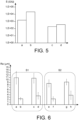
- the roughness Ra is measured with a mechanical profilometer, the results being reported on the figure 7 , which illustrates the roughness Ra (in ⁇ m) for control raw parts (that is to say devoid of a fire-retardant layer and not treated according to the method of the invention) and parts treated according to the method of the invention ( respectively parts a) and b)).
- the evaluation of the flame retardant behavior of the treated parts is also carried out according to the UL94V0 standard. For this, a flame is applied to the pieces placed vertically for 10 seconds. The duration of residual combustion and incandescence and the flow of flaming drops coming from the sample are then evaluated. Two inflammations are applied for this test. Five parts per condition (raw control parts and parts treated according to this example) were tested.
- the step of bringing into contact under vacuum with vapors of solvent(s) carried out on PA-12 parts makes it possible to considerably reduce the surface roughness of the parts while maintaining very good fire resistance.
- the treatment in accordance with the invention therefore makes it possible to improve the adhesion of the functional materials (anti-fire in this case) while reducing the surface roughness.
Landscapes
- Chemical & Material Sciences (AREA)
- Health & Medical Sciences (AREA)
- Chemical Kinetics & Catalysis (AREA)
- Medicinal Chemistry (AREA)
- Polymers & Plastics (AREA)
- Organic Chemistry (AREA)
- Treatments Of Macromolecular Shaped Articles (AREA)
Claims (11)
- Verfahren zur Behandlung eines polymeren Werkstücks, das ein Verfahren zur Veränderung der Rauigkeit der Oberfläche des polymeren Werkstücks und der Funktionalisierung des polymeren Werkstücks ist, umfassend einen Schritt eines Inkontaktbringens des Werkstücks mit Dämpfen eines oder mehrerer Lösungsmittel, die dazu geeignet sind, mindestens einen Teil des Werkstücks zu solubilisieren, wobei dieser Schritt des Inkontaktbringens unter Vakuum ausgeführt wird, und vor dem Schritt des Inkontaktbringens oder nach dem Schritt des Inkontaktbringens umfassend einen Schritt eines Abscheidens mindestens eines Funktionalisierungsmaterials auf dem gesamten oder einem Teil des Werkstücks, wobei das oder die Funktionalisierungsmaterialien elektrisch leitfähige Polymere und/oder phosphororganische Polymere sind.
- Behandlungsverfahren nach Anspruch 1, wobei der Schritt des Inkontaktbringens unter Vakuum ausgeführt wird, so dass der Restdruck während dieses Schritts 100 mbar bis 200 mbar beträgt.
- Behandlungsverfahren nach Anspruch 1 oder 2, wobei der Schritt des Inkontaktbringens bei Umgebungstemperatur durchgeführt wird.
- Behandlungsverfahren nach einem der vorhergehenden Ansprüche, weiterhin umfassend nach dem Schritt des Inkontaktbringens einen Schritt eines Stoppens der Aussetzung des Werkstücks gegenüber den Dämpfen eines oder mehrerer Lösungsmittel.
- Behandlungsverfahren nach einem der vorhergehenden Ansprüche, umfassend einen Schritt eines Eliminierens des oder der Lösungsmittel, die in dem Werkstück vorhanden sind, das am Ende des Schritts des Inkontaktbringens erhalten wird.
- Behandlungsverfahren nach Anspruch 5, wobei der Schritt des Eliminierens durchgeführt wird durch:- Erhitzen des Werkstücks bei einer Temperatur, die höher als die Siedetemperatur des oder der Lösungsmittel ist;- Unterziehen des Werkstücks einer Vakuumatmosphäre und/oder- Anwenden einer Kehrschleife, um das/die in dem Werkstück eingeschlossene(n) Lösungsmittel erneut zu kondensieren.
- Behandlungsverfahren nach einem der vorhergehenden Ansprüche, wobei das polymere Werkstück ein oder mehrere Polymere umfasst, die aus Polyamiden, Polyurethanen, Polycarbonaten, Poly(meth)acrylaten, Polysulfonen, Polyolefinen, Styrolpolymeren, Polyethern, Poly(meth)acrylen, Polyoxazolinen, Polyacetaten und Gemischen dieser ausgewählt sind.
- Behandlungsverfahren nach einem der vorhergehenden Ansprüche, wobei das polymere Werkstück auf der Basis eines Polyamids, wie eines Polyamids-12, ist.
- Behandlungsverfahren nach einem der vorhergehenden Ansprüche, wobei das oder die Lösungsmittel aus halogenierten Lösungsmitteln, aromatischen Lösungsmitteln, ketonischen Lösungsmitteln, alkoholischen, gegebenenfalls halogenierten Lösungsmitteln, Säuren und Gemischen dieser ausgewählt sind.
- Behandlungsverfahren nach einem der vorhergehenden Ansprüche, wobei, wenn das polymere Werkstück auf der Basis eines Polyamids-12 ist, das Lösungsmittel Hexafluorisopropanol ist.
- Behandlungsverfahren nach einem der vorhergehenden Ansprüche, wobei das oder die Lösungsmittel dazu geeignet sind, das oder die Funktionalisierungsmaterialien zu solubilisieren.
Applications Claiming Priority (2)
| Application Number | Priority Date | Filing Date | Title |
|---|---|---|---|
| FR1905530A FR3096370B1 (fr) | 2019-05-24 | 2019-05-24 | Procédé de traitement d’une pièce polymère en vue de modifier sa rugosité et/ou de la fonctionnaliser |
| PCT/EP2020/064304 WO2020239630A1 (fr) | 2019-05-24 | 2020-05-22 | Procédé de traitement d'une pièce polymère en vue de modifier sa rugosité et/ou de la fonctionnaliser |
Publications (2)
| Publication Number | Publication Date |
|---|---|
| EP3976696A1 EP3976696A1 (de) | 2022-04-06 |
| EP3976696B1 true EP3976696B1 (de) | 2023-07-05 |
Family
ID=68210920
Family Applications (1)
| Application Number | Title | Priority Date | Filing Date |
|---|---|---|---|
| EP20727633.8A Active EP3976696B1 (de) | 2019-05-24 | 2020-05-22 | Verfahren zur behandlung eines polymeren werkstücks zur veränderung seiner rauigkeit und zu seiner funktionalisierung |
Country Status (6)
| Country | Link |
|---|---|
| US (1) | US12202949B2 (de) |
| EP (1) | EP3976696B1 (de) |
| CN (1) | CN114026159B (de) |
| ES (1) | ES2955803T3 (de) |
| FR (1) | FR3096370B1 (de) |
| WO (1) | WO2020239630A1 (de) |
Families Citing this family (2)
| Publication number | Priority date | Publication date | Assignee | Title |
|---|---|---|---|---|
| EP4440821A4 (de) * | 2021-12-03 | 2025-11-26 | Peridot Print Llc | Reduzierung der oberflächenrauhigkeit von gehärteten dreidimensionalen druckobjekten unter verwendung einer lokalisierten wärmequelle |
| CN116945600B (zh) * | 2023-08-04 | 2024-02-23 | 北京易加三维科技有限公司 | 粉末床熔融热塑性弹性体的表面处理方法 |
Family Cites Families (6)
| Publication number | Priority date | Publication date | Assignee | Title |
|---|---|---|---|---|
| US6649327B2 (en) * | 2001-10-25 | 2003-11-18 | The United States Of America As Represented By The Secretary Of The Navy | Method of patterning electrically conductive polymers |
| US8173046B2 (en) * | 2007-06-18 | 2012-05-08 | Hideo Yoshido | Method of producing a conductive polymer film |
| WO2010083647A1 (en) * | 2009-01-22 | 2010-07-29 | Basf Se | Method of changing the wettablility of plastic surfaces by solvent-induced precipitation or solvent-induced crystallization |
| FR3056122B1 (fr) | 2016-09-16 | 2018-09-28 | Commissariat A L'energie Atomique Et Aux Energies Alternatives | Procede de fixation d'un film de particules sur une piece en materiau polymere, par exposition a des vapeurs de solvant |
| FR3056146B1 (fr) | 2016-09-16 | 2018-09-28 | Commissariat A L'energie Atomique Et Aux Energies Alternatives | Dispositif et procede de traitement par vapeurs de solvant d'une piece en materiau polymere |
| EP3587092A1 (de) * | 2018-06-30 | 2020-01-01 | Technische Universität München | Verfahren zur behandlung von elementen, die durch ein verfahren zur generativen fertigung hergestellt wurden |
-
2019
- 2019-05-24 FR FR1905530A patent/FR3096370B1/fr not_active Expired - Fee Related
-
2020
- 2020-05-22 US US17/595,694 patent/US12202949B2/en active Active
- 2020-05-22 CN CN202080047460.3A patent/CN114026159B/zh active Active
- 2020-05-22 ES ES20727633T patent/ES2955803T3/es active Active
- 2020-05-22 EP EP20727633.8A patent/EP3976696B1/de active Active
- 2020-05-22 WO PCT/EP2020/064304 patent/WO2020239630A1/fr not_active Ceased
Also Published As
| Publication number | Publication date |
|---|---|
| ES2955803T3 (es) | 2023-12-07 |
| EP3976696A1 (de) | 2022-04-06 |
| FR3096370A1 (fr) | 2020-11-27 |
| CN114026159A (zh) | 2022-02-08 |
| US20220220269A1 (en) | 2022-07-14 |
| FR3096370B1 (fr) | 2022-06-03 |
| US12202949B2 (en) | 2025-01-21 |
| WO2020239630A1 (fr) | 2020-12-03 |
| CN114026159B (zh) | 2024-03-08 |
Similar Documents
| Publication | Publication Date | Title |
|---|---|---|
| EP3976696B1 (de) | Verfahren zur behandlung eines polymeren werkstücks zur veränderung seiner rauigkeit und zu seiner funktionalisierung | |
| Mercado et al. | Pulsed laser deposition vs. matrix assisted pulsed laser evaporation for growth of biodegradable polymer thin films | |
| Song et al. | Fast self‐healing of polyelectrolyte multilayer nanocoating and restoration of super oxygen barrier | |
| FR2926162A1 (fr) | Procede de modification localisee de l'energie de surface d'un substrat | |
| FR2695121A1 (fr) | Procédé de fabrication un élément de matrice creux, élément de graphite pour la mise en Óoeuvre du procédé et élément de matrice obtenu. | |
| Qiang et al. | Polymer blend-filled nanoparticle films via monomer-driven infiltration of polymer and photopolymerization | |
| FR3022250A1 (fr) | Solution de traitement d'objet en polyester thermoplastique obtenu par impression 3d et procede associe | |
| FR2829045A1 (fr) | Procede de production de poudres sous la forme d'une coquille en ceramique pour pulverisation thermique | |
| Grytsenko et al. | Optical and mechanical properties of thin PTFE films, deposited from a gas phase | |
| Blais et al. | Effects of corona treatment on composite formation. Adhesion between incompatible polymers | |
| FR2686336A1 (fr) | Piece en materiau composite carbone-carbone a matrice dopee sic, resistant a l'oxydation et son procede de fabrication. | |
| FR2996359A1 (fr) | Electrode transparente conductrice et procede de fabrication associe | |
| Roberts et al. | Increase of gold–Teflon FEP joint strength by removal of deposited aluminum prior to gold deposition for electret applications | |
| Dehm et al. | Sustainable repellent coatings based on renewable drying and nondrying oils | |
| FR3056146A1 (fr) | Dispositif et procede de traitement par vapeurs de solvant d'une piece en materiau polymere | |
| EP3625193A1 (de) | Thermisches material mit hoher kapazität und hoher leitfähigkeit, verfahren zu dessen herstellung und von komponenten damit | |
| Washo | Surface Property Characterization of Plasma-Polymerized Tetraf luoroethylene Deposits | |
| FR3066768A1 (fr) | Procede de preparation d’une membrane conductrice, transparente et flexible. | |
| Lin et al. | Reproducible and bendable SERS substrates with tailored wettability using block copolymers and anodic aluminum oxide templates | |
| FR2738831A1 (fr) | Procede de fabrication de film de materiau a base de polymere | |
| SI26354A (sl) | Postopek priprave disperzije grafena v pdms s pomočjo sočasne uporabe ultrazvoka in podtlaka | |
| EP3465740A1 (de) | Verfahren zur herstellung eines funktionalisierten führungsmusters für ein graphoepitaxieverfahren | |
| EP4192907A1 (de) | Verfahren zur chemischen modifizierung eines bestimmten polymerteils um flammwidrige eigenschaften zu verleihen oder diese eigenschaften zu verbessern | |
| FR3130805A1 (fr) | Procede de fabrication d’une couche de pedot-pss sur un substrat en silicone | |
| Pedram et al. | Investigating on plasma polymerization of polyethersulfone membranes by ethylene for membrane distillation |
Legal Events
| Date | Code | Title | Description |
|---|---|---|---|
| STAA | Information on the status of an ep patent application or granted ep patent |
Free format text: STATUS: UNKNOWN |
|
| STAA | Information on the status of an ep patent application or granted ep patent |
Free format text: STATUS: THE INTERNATIONAL PUBLICATION HAS BEEN MADE |
|
| PUAI | Public reference made under article 153(3) epc to a published international application that has entered the european phase |
Free format text: ORIGINAL CODE: 0009012 |
|
| STAA | Information on the status of an ep patent application or granted ep patent |
Free format text: STATUS: REQUEST FOR EXAMINATION WAS MADE |
|
| 17P | Request for examination filed |
Effective date: 20211129 |
|
| AK | Designated contracting states |
Kind code of ref document: A1 Designated state(s): AL AT BE BG CH CY CZ DE DK EE ES FI FR GB GR HR HU IE IS IT LI LT LU LV MC MK MT NL NO PL PT RO RS SE SI SK SM TR |
|
| DAV | Request for validation of the european patent (deleted) | ||
| DAX | Request for extension of the european patent (deleted) | ||
| GRAP | Despatch of communication of intention to grant a patent |
Free format text: ORIGINAL CODE: EPIDOSNIGR1 |
|
| STAA | Information on the status of an ep patent application or granted ep patent |
Free format text: STATUS: GRANT OF PATENT IS INTENDED |
|
| RIC1 | Information provided on ipc code assigned before grant |
Ipc: C08J 7/044 20200101ALI20230109BHEP Ipc: C08J 7/06 19740701ALI20230109BHEP Ipc: C08J 7/05 20200101ALI20230109BHEP Ipc: C08J 7/04 19740701ALI20230109BHEP Ipc: B29C 71/00 19850101ALI20230109BHEP Ipc: C08J 7/02 19740701AFI20230109BHEP |
|
| INTG | Intention to grant announced |
Effective date: 20230124 |
|
| GRAS | Grant fee paid |
Free format text: ORIGINAL CODE: EPIDOSNIGR3 |
|
| GRAA | (expected) grant |
Free format text: ORIGINAL CODE: 0009210 |
|
| STAA | Information on the status of an ep patent application or granted ep patent |
Free format text: STATUS: THE PATENT HAS BEEN GRANTED |
|
| AK | Designated contracting states |
Kind code of ref document: B1 Designated state(s): AL AT BE BG CH CY CZ DE DK EE ES FI FR GB GR HR HU IE IS IT LI LT LU LV MC MK MT NL NO PL PT RO RS SE SI SK SM TR |
|
| REG | Reference to a national code |
Ref country code: CH Ref legal event code: EP |
|
| REG | Reference to a national code |
Ref country code: AT Ref legal event code: REF Ref document number: 1584808 Country of ref document: AT Kind code of ref document: T Effective date: 20230715 |
|
| REG | Reference to a national code |
Ref country code: DE Ref legal event code: R096 Ref document number: 602020013352 Country of ref document: DE |
|
| REG | Reference to a national code |
Ref country code: IE Ref legal event code: FG4D Free format text: LANGUAGE OF EP DOCUMENT: FRENCH |
|
| REG | Reference to a national code |
Ref country code: LT Ref legal event code: MG9D |
|
| REG | Reference to a national code |
Ref country code: NL Ref legal event code: MP Effective date: 20230705 |
|
| REG | Reference to a national code |
Ref country code: ES Ref legal event code: FG2A Ref document number: 2955803 Country of ref document: ES Kind code of ref document: T3 Effective date: 20231207 |
|
| REG | Reference to a national code |
Ref country code: AT Ref legal event code: MK05 Ref document number: 1584808 Country of ref document: AT Kind code of ref document: T Effective date: 20230705 |
|
| PG25 | Lapsed in a contracting state [announced via postgrant information from national office to epo] |
Ref country code: NL Free format text: LAPSE BECAUSE OF FAILURE TO SUBMIT A TRANSLATION OF THE DESCRIPTION OR TO PAY THE FEE WITHIN THE PRESCRIBED TIME-LIMIT Effective date: 20230705 |
|
| PG25 | Lapsed in a contracting state [announced via postgrant information from national office to epo] |
Ref country code: GR Free format text: LAPSE BECAUSE OF FAILURE TO SUBMIT A TRANSLATION OF THE DESCRIPTION OR TO PAY THE FEE WITHIN THE PRESCRIBED TIME-LIMIT Effective date: 20231006 |
|
| PG25 | Lapsed in a contracting state [announced via postgrant information from national office to epo] |
Ref country code: IS Free format text: LAPSE BECAUSE OF FAILURE TO SUBMIT A TRANSLATION OF THE DESCRIPTION OR TO PAY THE FEE WITHIN THE PRESCRIBED TIME-LIMIT Effective date: 20231105 |
|
| PG25 | Lapsed in a contracting state [announced via postgrant information from national office to epo] |
Ref country code: SE Free format text: LAPSE BECAUSE OF FAILURE TO SUBMIT A TRANSLATION OF THE DESCRIPTION OR TO PAY THE FEE WITHIN THE PRESCRIBED TIME-LIMIT Effective date: 20230705 Ref country code: RS Free format text: LAPSE BECAUSE OF FAILURE TO SUBMIT A TRANSLATION OF THE DESCRIPTION OR TO PAY THE FEE WITHIN THE PRESCRIBED TIME-LIMIT Effective date: 20230705 Ref country code: PT Free format text: LAPSE BECAUSE OF FAILURE TO SUBMIT A TRANSLATION OF THE DESCRIPTION OR TO PAY THE FEE WITHIN THE PRESCRIBED TIME-LIMIT Effective date: 20231106 Ref country code: NO Free format text: LAPSE BECAUSE OF FAILURE TO SUBMIT A TRANSLATION OF THE DESCRIPTION OR TO PAY THE FEE WITHIN THE PRESCRIBED TIME-LIMIT Effective date: 20231005 Ref country code: LV Free format text: LAPSE BECAUSE OF FAILURE TO SUBMIT A TRANSLATION OF THE DESCRIPTION OR TO PAY THE FEE WITHIN THE PRESCRIBED TIME-LIMIT Effective date: 20230705 Ref country code: LT Free format text: LAPSE BECAUSE OF FAILURE TO SUBMIT A TRANSLATION OF THE DESCRIPTION OR TO PAY THE FEE WITHIN THE PRESCRIBED TIME-LIMIT Effective date: 20230705 Ref country code: IS Free format text: LAPSE BECAUSE OF FAILURE TO SUBMIT A TRANSLATION OF THE DESCRIPTION OR TO PAY THE FEE WITHIN THE PRESCRIBED TIME-LIMIT Effective date: 20231105 Ref country code: HR Free format text: LAPSE BECAUSE OF FAILURE TO SUBMIT A TRANSLATION OF THE DESCRIPTION OR TO PAY THE FEE WITHIN THE PRESCRIBED TIME-LIMIT Effective date: 20230705 Ref country code: GR Free format text: LAPSE BECAUSE OF FAILURE TO SUBMIT A TRANSLATION OF THE DESCRIPTION OR TO PAY THE FEE WITHIN THE PRESCRIBED TIME-LIMIT Effective date: 20231006 Ref country code: FI Free format text: LAPSE BECAUSE OF FAILURE TO SUBMIT A TRANSLATION OF THE DESCRIPTION OR TO PAY THE FEE WITHIN THE PRESCRIBED TIME-LIMIT Effective date: 20230705 Ref country code: AT Free format text: LAPSE BECAUSE OF FAILURE TO SUBMIT A TRANSLATION OF THE DESCRIPTION OR TO PAY THE FEE WITHIN THE PRESCRIBED TIME-LIMIT Effective date: 20230705 |
|
| PG25 | Lapsed in a contracting state [announced via postgrant information from national office to epo] |
Ref country code: PL Free format text: LAPSE BECAUSE OF FAILURE TO SUBMIT A TRANSLATION OF THE DESCRIPTION OR TO PAY THE FEE WITHIN THE PRESCRIBED TIME-LIMIT Effective date: 20230705 |
|
| REG | Reference to a national code |
Ref country code: DE Ref legal event code: R097 Ref document number: 602020013352 Country of ref document: DE |
|
| PG25 | Lapsed in a contracting state [announced via postgrant information from national office to epo] |
Ref country code: SM Free format text: LAPSE BECAUSE OF FAILURE TO SUBMIT A TRANSLATION OF THE DESCRIPTION OR TO PAY THE FEE WITHIN THE PRESCRIBED TIME-LIMIT Effective date: 20230705 Ref country code: RO Free format text: LAPSE BECAUSE OF FAILURE TO SUBMIT A TRANSLATION OF THE DESCRIPTION OR TO PAY THE FEE WITHIN THE PRESCRIBED TIME-LIMIT Effective date: 20230705 Ref country code: EE Free format text: LAPSE BECAUSE OF FAILURE TO SUBMIT A TRANSLATION OF THE DESCRIPTION OR TO PAY THE FEE WITHIN THE PRESCRIBED TIME-LIMIT Effective date: 20230705 Ref country code: DK Free format text: LAPSE BECAUSE OF FAILURE TO SUBMIT A TRANSLATION OF THE DESCRIPTION OR TO PAY THE FEE WITHIN THE PRESCRIBED TIME-LIMIT Effective date: 20230705 Ref country code: CZ Free format text: LAPSE BECAUSE OF FAILURE TO SUBMIT A TRANSLATION OF THE DESCRIPTION OR TO PAY THE FEE WITHIN THE PRESCRIBED TIME-LIMIT Effective date: 20230705 Ref country code: SK Free format text: LAPSE BECAUSE OF FAILURE TO SUBMIT A TRANSLATION OF THE DESCRIPTION OR TO PAY THE FEE WITHIN THE PRESCRIBED TIME-LIMIT Effective date: 20230705 |
|
| PLBE | No opposition filed within time limit |
Free format text: ORIGINAL CODE: 0009261 |
|
| STAA | Information on the status of an ep patent application or granted ep patent |
Free format text: STATUS: NO OPPOSITION FILED WITHIN TIME LIMIT |
|
| PG25 | Lapsed in a contracting state [announced via postgrant information from national office to epo] |
Ref country code: IT Free format text: LAPSE BECAUSE OF FAILURE TO SUBMIT A TRANSLATION OF THE DESCRIPTION OR TO PAY THE FEE WITHIN THE PRESCRIBED TIME-LIMIT Effective date: 20230705 |
|
| 26N | No opposition filed |
Effective date: 20240408 |
|
| PGFP | Annual fee paid to national office [announced via postgrant information from national office to epo] |
Ref country code: GB Payment date: 20240521 Year of fee payment: 5 |
|
| PG25 | Lapsed in a contracting state [announced via postgrant information from national office to epo] |
Ref country code: SI Free format text: LAPSE BECAUSE OF FAILURE TO SUBMIT A TRANSLATION OF THE DESCRIPTION OR TO PAY THE FEE WITHIN THE PRESCRIBED TIME-LIMIT Effective date: 20230705 |
|
| PG25 | Lapsed in a contracting state [announced via postgrant information from national office to epo] |
Ref country code: BG Free format text: LAPSE BECAUSE OF FAILURE TO SUBMIT A TRANSLATION OF THE DESCRIPTION OR TO PAY THE FEE WITHIN THE PRESCRIBED TIME-LIMIT Effective date: 20230705 |
|
| PG25 | Lapsed in a contracting state [announced via postgrant information from national office to epo] |
Ref country code: BG Free format text: LAPSE BECAUSE OF FAILURE TO SUBMIT A TRANSLATION OF THE DESCRIPTION OR TO PAY THE FEE WITHIN THE PRESCRIBED TIME-LIMIT Effective date: 20230705 |
|
| REG | Reference to a national code |
Ref country code: CH Ref legal event code: PL |
|
| PG25 | Lapsed in a contracting state [announced via postgrant information from national office to epo] |
Ref country code: MC Free format text: LAPSE BECAUSE OF FAILURE TO SUBMIT A TRANSLATION OF THE DESCRIPTION OR TO PAY THE FEE WITHIN THE PRESCRIBED TIME-LIMIT Effective date: 20230705 |
|
| PG25 | Lapsed in a contracting state [announced via postgrant information from national office to epo] |
Ref country code: LU Free format text: LAPSE BECAUSE OF NON-PAYMENT OF DUE FEES Effective date: 20240522 |
|
| PG25 | Lapsed in a contracting state [announced via postgrant information from national office to epo] |
Ref country code: MC Free format text: LAPSE BECAUSE OF FAILURE TO SUBMIT A TRANSLATION OF THE DESCRIPTION OR TO PAY THE FEE WITHIN THE PRESCRIBED TIME-LIMIT Effective date: 20230705 Ref country code: LU Free format text: LAPSE BECAUSE OF NON-PAYMENT OF DUE FEES Effective date: 20240522 Ref country code: CH Free format text: LAPSE BECAUSE OF NON-PAYMENT OF DUE FEES Effective date: 20240531 |
|
| REG | Reference to a national code |
Ref country code: BE Ref legal event code: MM Effective date: 20240531 |
|
| PG25 | Lapsed in a contracting state [announced via postgrant information from national office to epo] |
Ref country code: IE Free format text: LAPSE BECAUSE OF NON-PAYMENT OF DUE FEES Effective date: 20240522 |
|
| PG25 | Lapsed in a contracting state [announced via postgrant information from national office to epo] |
Ref country code: BE Free format text: LAPSE BECAUSE OF NON-PAYMENT OF DUE FEES Effective date: 20240531 |
|
| PGFP | Annual fee paid to national office [announced via postgrant information from national office to epo] |
Ref country code: DE Payment date: 20250519 Year of fee payment: 6 |
|
| PGFP | Annual fee paid to national office [announced via postgrant information from national office to epo] |
Ref country code: ES Payment date: 20250616 Year of fee payment: 6 |
|
| PGFP | Annual fee paid to national office [announced via postgrant information from national office to epo] |
Ref country code: FR Payment date: 20250526 Year of fee payment: 6 |
|
| PG25 | Lapsed in a contracting state [announced via postgrant information from national office to epo] |
Ref country code: CY Free format text: LAPSE BECAUSE OF FAILURE TO SUBMIT A TRANSLATION OF THE DESCRIPTION OR TO PAY THE FEE WITHIN THE PRESCRIBED TIME-LIMIT; INVALID AB INITIO Effective date: 20200522 |
|
| PG25 | Lapsed in a contracting state [announced via postgrant information from national office to epo] |
Ref country code: HU Free format text: LAPSE BECAUSE OF FAILURE TO SUBMIT A TRANSLATION OF THE DESCRIPTION OR TO PAY THE FEE WITHIN THE PRESCRIBED TIME-LIMIT; INVALID AB INITIO Effective date: 20200522 |
|
| GBPC | Gb: european patent ceased through non-payment of renewal fee |
Effective date: 20250522 |
|
| PG25 | Lapsed in a contracting state [announced via postgrant information from national office to epo] |
Ref country code: GB Free format text: LAPSE BECAUSE OF NON-PAYMENT OF DUE FEES Effective date: 20250522 |