EP3978083B1 - Procédé de dégradation de cannabinoïde - Google Patents
Procédé de dégradation de cannabinoïde Download PDFInfo
- Publication number
- EP3978083B1 EP3978083B1 EP20813947.7A EP20813947A EP3978083B1 EP 3978083 B1 EP3978083 B1 EP 3978083B1 EP 20813947 A EP20813947 A EP 20813947A EP 3978083 B1 EP3978083 B1 EP 3978083B1
- Authority
- EP
- European Patent Office
- Prior art keywords
- cannabinoid
- photocatalyst
- degrading
- filter cake
- waste liquid
- Prior art date
- Legal status (The legal status is an assumption and is not a legal conclusion. Google has not performed a legal analysis and makes no representation as to the accuracy of the status listed.)
- Active
Links
Images
Classifications
-
- A—HUMAN NECESSITIES
- A62—LIFE-SAVING; FIRE-FIGHTING
- A62D—CHEMICAL MEANS FOR EXTINGUISHING FIRES OR FOR COMBATING OR PROTECTING AGAINST HARMFUL CHEMICAL AGENTS; CHEMICAL MATERIALS FOR USE IN BREATHING APPARATUS
- A62D3/00—Processes for making harmful chemical substances harmless or less harmful, by effecting a chemical change in the substances
- A62D3/30—Processes for making harmful chemical substances harmless or less harmful, by effecting a chemical change in the substances by reacting with chemical agents
- A62D3/38—Processes for making harmful chemical substances harmless or less harmful, by effecting a chemical change in the substances by reacting with chemical agents by oxidation; by combustion
-
- A—HUMAN NECESSITIES
- A62—LIFE-SAVING; FIRE-FIGHTING
- A62D—CHEMICAL MEANS FOR EXTINGUISHING FIRES OR FOR COMBATING OR PROTECTING AGAINST HARMFUL CHEMICAL AGENTS; CHEMICAL MATERIALS FOR USE IN BREATHING APPARATUS
- A62D3/00—Processes for making harmful chemical substances harmless or less harmful, by effecting a chemical change in the substances
- A62D3/10—Processes for making harmful chemical substances harmless or less harmful, by effecting a chemical change in the substances by subjecting to electric or wave energy or particle or ionizing radiation
- A62D3/17—Processes for making harmful chemical substances harmless or less harmful, by effecting a chemical change in the substances by subjecting to electric or wave energy or particle or ionizing radiation to electromagnetic radiation, e.g. emitted by a laser
-
- A—HUMAN NECESSITIES
- A62—LIFE-SAVING; FIRE-FIGHTING
- A62D—CHEMICAL MEANS FOR EXTINGUISHING FIRES OR FOR COMBATING OR PROTECTING AGAINST HARMFUL CHEMICAL AGENTS; CHEMICAL MATERIALS FOR USE IN BREATHING APPARATUS
- A62D2101/00—Harmful chemical substances made harmless, or less harmful, by effecting chemical change
- A62D2101/20—Organic substances
- A62D2101/28—Organic substances containing oxygen, sulfur, selenium or tellurium, i.e. chalcogen
-
- A—HUMAN NECESSITIES
- A62—LIFE-SAVING; FIRE-FIGHTING
- A62D—CHEMICAL MEANS FOR EXTINGUISHING FIRES OR FOR COMBATING OR PROTECTING AGAINST HARMFUL CHEMICAL AGENTS; CHEMICAL MATERIALS FOR USE IN BREATHING APPARATUS
- A62D2203/00—Aspects of processes for making harmful chemical substances harmless, or less harmful, by effecting chemical change in the substances
- A62D2203/04—Combined processes involving two or more non-distinct steps covered by groups A62D3/10 - A62D3/40
-
- Y—GENERAL TAGGING OF NEW TECHNOLOGICAL DEVELOPMENTS; GENERAL TAGGING OF CROSS-SECTIONAL TECHNOLOGIES SPANNING OVER SEVERAL SECTIONS OF THE IPC; TECHNICAL SUBJECTS COVERED BY FORMER USPC CROSS-REFERENCE ART COLLECTIONS [XRACs] AND DIGESTS
- Y02—TECHNOLOGIES OR APPLICATIONS FOR MITIGATION OR ADAPTATION AGAINST CLIMATE CHANGE
- Y02W—CLIMATE CHANGE MITIGATION TECHNOLOGIES RELATED TO WASTEWATER TREATMENT OR WASTE MANAGEMENT
- Y02W10/00—Technologies for wastewater treatment
- Y02W10/30—Wastewater or sewage treatment systems using renewable energies
- Y02W10/37—Wastewater or sewage treatment systems using renewable energies using solar energy
Definitions
- the invention relates to the technical field of photocatalytic chemistry, in particular to a method for degrading cannabinoid.
- Photocatalytic reaction means that a photocatalyst converts light energy existing in nature into energy needed for chemical reaction to produce catalysis to excite the surrounding oxygen and water molecules into oxidizing free negative ions and promote the chemical reaction.
- the photocatalytic reaction can decompose almost all organic substances and some inorganic substances which are harmful to a human body and the environment, which can not only accelerate the reaction, but also take advantage of the laws of nature, without causing waste of resources and formation of additional pollution.
- Photocatalysis technology is a green and low-carbon technology with important application prospects in the field of energy and the environment, especially in sewage treatment and environmental protection.
- the reaction conditions of photocatalytic degradation are mild, the photocatalysts used are non-toxic, insoluble in water and organic solvents, and can be recycled, which avoids the secondary pollution and destruction of ecological balance caused by the degradation of organic compounds by strong acids and bases, and greatly reduces the cost of waste liquid treatment in enterprises.
- Cannabinoids are secondary metabolites containing alkyl and monoterpene groups in cannabis plants. At present, more than 70 cannabinoids have been isolated from cannabis plants, including tetrahydrocannabinol (THC), cannabidiol (CBD), cannabigerol (CBG), cannabichromene (CBC), cannabinol (CBN), and propyl homologues ⁇ 9-tetrahydrocannabivarin (THCV), cannabidivarin (CBDV) and so on. Some of these ingredients are psychoactive, e.g., tetrahydrocannabinol is a hallucinogenic and addictive substance.
- Hemp has important economic value and can be used in textile, food, medicine, papermaking, and other fields.
- GB 2392093A discloses a method for degrading cannabinoid by a photocatalytic reaction on a solution containing cannabinoid
- CN 102275 989A and CN 107570179A disclose some types of catalysts.
- cannabinoids decreases significantly under light conditions ( SUN WL, ZHAO YB, ZHENG XY, et al. "Effects of storage conditions on the chemical potency of Cannabis” [J].
- Guihaia, 2017, 37(9): 1204-1212 ) that is, it is proved that cannabinoids can be degraded under light.
- degradation of cannabinoids is slow and insufficient.
- the invention applies the photocatalytic technology to the treatment of the waste liquid containing cannabinoids produced in a process of hemp extraction and processing for the first time, greatly degrades the cannabinoids in the waste liquid, improves the degradation efficiency, and achieves a purpose of economic and environmental protection.
- the invention provides a method for degrading cannabinoid by a photocatalytic reaction on a solution containing cannabinoid using a photocatalyst as defined in claims 1 to 10.
- an inorganic photocatalyst is used for a photocatalytic reaction on a solution containing cannabinoid in illumination equipment with a certain illumination intensity, the photocatalyst can be recycled and reused after reaction, and the content of cannabinoid in the solution after the reaction is reduced to ppm-level.
- the invention provides a method for degrading cannabinoid, according to the method, a solution containing cannabinoid is subjected to a photocatalytic reaction.
- the method for degrading cannabinoid provided by the invention includes the following steps:
- the cannabinoid includes one or a combination of two or more of tetrahydrocannabinol THC, cannabidiol CBD, cannabigerol CBG, cannabichromene CBC, cannabinol CBN, and tetrahydrocannabivarin THCV and cannabidivarin CBDV
- the container in step (1) is a sealed container.
- the illuminance of the illumination equipment described in step (1) is 2000 ⁇ 20000Lx, preferably, the illuminance is 4500 ⁇ 12000 Lx, and more preferably, the illuminance is 7000 ⁇ 12000 Lx.
- the amount of the photocatalyst in step (1) is 5%-50% (mg/mL); preferably, the amount of the photocatalyst is 10%-30% (mg/mL) and, more preferably, the amount of the photocatalyst is 10%-20% (mg/mL).
- the unit mg/mL in the invention refers to a mass of the photocatalyst added to the 1 mL solution containing cannabinoid.
- the photocatalyst described in step (1) is selected from one or a combination of two or more of bismuth vanadate, bismuth oxychloride, bismuth vanadate/titanium dioxide composite, bismuth vanadate/bismuth oxychloride composite, bismuth oxychloride/titanium dioxide composite in any proportion; and more preferably, the photocatalyst is bismuth vanadate or bismuth vanadate/bismuth oxychloride composite.
- the stirring time in step (1) is 5 ⁇ 60 minutes, and more preferably, the stirring time is 5 ⁇ 30 minutes.
- the standing time in step (2) is 12-78 hours, more preferably, the standing time is 12-50 hours, and more preferably, the standing time is 12-24 hours.
- the method further includes a step of washing and drying the filter cake obtained in step (2), and the photocatalyst can be recovered from the washed and dried filter cake.
- the filter cake is washed with a solvent selected from one or a combination of two or more of water, ethanol, acetone, ethyl acetate, n-heptane, n-pentane, n-propanol, isopropanol, n-butanol, ethyl formate, and dimethyl sulfoxide, preferably, the solvent is water and/or ethanol, and more preferably, the concentration of ethanol is 95%.
- the washing step is alternately washing with water and ethanol; the number of alternating washing is 1-6 times, and more preferably 2-3 times.
- the drying step is vacuum drying, and the temperature of the vacuum drying is 50-80°Cand the time is 12-24 hours.
- step (2) also includes a step of detecting the filtrate obtained from step (2), and the detection method is selected from liquid chromatography analysis detection, mass spectrometry analysis detection, fluorescence detection, or ultraviolet detection.
- the method may also include: (a) concentrating the solution containing cannabinoid to obtain a thick paste; and (b) adding a solvent to the thick paste, stirring for dissolving to obtain an enriched liquid of the solution containing cannabinoid.
- the solution containing a cannabinoid in step (a) or (1) is a waste liquid produced in a process of extraction and purification of hemp.
- the method of concentration in step (a) is vacuum concentration.
- the operating temperature of the vacuum concentration is 40-70°C, and more preferably, the temperature is 60°C.
- the solvent described in step (b) is an organic solvent, more preferably, the organic solvent is selected from one or combination of two or more of ethanol, methanol, ethyl acetate, acetone, chloroform, petroleum ether, n-hexane, and n-heptane in any proportion; and more preferably, the organic solvent is selected from one or a combination of two or more of ethanol, methanol, ethyl acetate, and acetone in any proportion.
- the dissolution temperature of step (b) is room temperature.
- the method for degrading a cannabinoid comprises the following steps:
- the method for degrading cannabinoid in the invention can reduce content of cannabinoids in the waste liquid to less than 20 ppm.
- the raw materials and reagents used in the method are cheap and easy to obtain, the operation and testing methods are simple, and the photocatalyst can be recycled, avoiding waste of resources, and facilitating industrialization.
- Standard solutions of CBDV, CBG, CBD, THC, and THCV with a concentration of 1.0 mg/ml were precisely measured, and respectively diluted in methanol into a standard solution with concentrations of CBDV, CBG, THC, and THCV being 10 ⁇ g/mL, and concentration of CBD being 150 ⁇ g/mL.
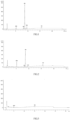
- the chromatogram of standard solution in this example is shown in FIG. 1
- the chromatogram of the waste liquid sample before degradation is shown in FIG.2
- the waste liquid sample before degradation contains CBDV, CBG, CBD, THC and THCV, especially contents of CBD, CBDV and THC are higher.
- the chromatogram of the filtrate sample after degradation in this example is shown in FIG. 3 .
- the chromatographic peaks of CBG, CBD, and THCV substantially disappear, indicating that the remaining contents of CBG, CBD, and THCV were very small; and the chromatographic peaks of CBDV and THC are very narrow and low, indicating that the contents of CBDV and THC were low.
- the total content of cannabinoids in the filtrate sample after degradation was 10 ppm.
- the experimental results show that the method for degrading cannabinoid in the invention can greatly degrade cannabinoids in waste liquid samples, and the total content of cannabinoids after degradation may reach ppm-level.
- Standard solutions of CBDV, CBG, CBD, THC, and THCV with a concentration of 1.0 mg/ml were precisely measured, and respectively diluted in methanol into a standard solution with concentrations of CBDV, CBG, THC, and THCV being 10 ⁇ g/mL, and concentration of CBD being 150 ⁇ g/mL.
- the total content of cannabinoids in the filtrate sample after degradation was 8 ppm.
- the experimental results show that cannabinoid in a waste liquid sample can be greatly degraded by reasonably changing the amount of photocatalyst and the catalysis time according to the method for degrading cannabinoid of the invention, and the total content of cannabinoids after degradation may reach ppm-level.
- the total content of cannabinoids in the filtrate sample after degradation was 10 ppm.
- the experimental results show that the recovered photocatalyst used in the method for degrading cannabinoid of the invention can still greatly degrade cannabinoids in waste liquid samples, and the total content of cannabinoids can still reach ppm-level after degradation.
- the total content of cannabinoids in the filtrate sample after degradation was 15 ppm.
- the experimental results show that the method for degrading cannabinoid of the invention can greatly degrade cannabinoids in waste liquid samples, and the total content of cannabinoids after degradation may reach ppm-level.
- the total content of cannabinoids in the filtrate sample after degradation was 12 ppm.
- the experimental results show that the method for degrading cannabinoid of the invention can greatly degrade cannabinoids in waste liquid samples, and the total content of cannabinoids after degradation may reach ppm-level.
- the total content of cannabinoids in the filtrate sample after degradation was 13 ppm.
- the experimental results show that the method for degrading cannabinoid of the invention can greatly degrade cannabinoids in waste liquid samples, and the total content of cannabinoids after degradation may reach ppm-level.
- the amount of photocatalyst used in this example was 10% (mg/mL), and other experimental and detection conditions were the same as those in Example 6.
- the amount of photocatalyst used in this example was 20% (mg/mL), and other experimental and detection conditions were the same as those in Example 6.
- the amount of photocatalyst used in this example was 30% (mg/mL), and other experimental and detection conditions were the same as those in Example 6. Table 1 Comparison of the amount of photocatalyst in Example 6-9 Example 6 Example 7 Example 8 Example 9 Amount of photocatalyst (mg/mL) 5% 10% 20% 30% Total cannabinoid content in filtrate sample after degradation (ppm) 13 8 10 14
- Example 6-9 the amount of photocatalyst used in Example 6-9 was 5%, 10%, 10% and 30% (mg/mL), respectively, under the same other experimental conditions, the total content of cannabinoids in the filtrate samples after degradation were 13, 8, 10, and 14 ppm, respectively, indicating that the degradation of cannabinoids is better when the amount of photocatalyst is 10% (mg/mL).
- the photocatalyst of this example was bismuth vanadate/bismuth oxychloride composite, and other experimental and detection conditions were the same as those of Example 7.
- the photocatalyst of this example was bismuth oxychloride, and other experimental and detection conditions were the same as those of Example 7.
- the photocatalyst of this example was bismuth vanadate/titanium dioxide composite, and other experimental and detection conditions were the same as those of Example 7.
- the photocatalyst of this example was bismuth vanadate/titanium dioxide composite, and other experimental and detection conditions were the same as those of Example 7. Table 2 Comparison of the types of photocatalysts in Example 7, 10-13 Example7 Example 10 Example 11 Example 12 Example 13 Total cannabinoid content in filtrate sample after degradation (ppm) 8 8.1 16 14 20
- the photocatalysts of Examples 7, 10-13 were bismuth vanadate, bismuth vanadate/bismuth oxychloride composite, bismuth vanadate/titanium dioxide composite, and bismuth vanadate/titanium dioxide composite, respectively, under the same other experimental conditions, the total content of cannabinoids in the filtrate samples after degradation were 8, 8.1, 16, 14, and 20 ppm, respectively, indicating that the degradation of cannabinoids is better when the photocatalysts is bismuth vanadate or bismuth vanadate/bismuth oxychloride respectively.
Landscapes
- Chemical & Material Sciences (AREA)
- Health & Medical Sciences (AREA)
- General Health & Medical Sciences (AREA)
- Toxicology (AREA)
- Chemical Kinetics & Catalysis (AREA)
- General Chemical & Material Sciences (AREA)
- Business, Economics & Management (AREA)
- Emergency Management (AREA)
- Electromagnetism (AREA)
- Optics & Photonics (AREA)
- Physics & Mathematics (AREA)
- Catalysts (AREA)
- Treatment Of Water By Oxidation Or Reduction (AREA)
Claims (10)
- Un procédé consistant à dégrader un cannabinoïde par une réaction photocatalytique sur une solution contenant un cannabinoïde en utilisant un photocatalyseur, le cannabinoïde comprenant un cannabinoïde ou une combinaison de deux cannabinoïdes ou plus d'entre le tétrahydrocannabinol THC, le cannabinol CBD, le cannabigérol CBG, le cannabichromène CBC, le cannabinol CBN, et les homologues propyle Δ9-tétrahydrocannabivarine THCV et cannabidivarine CBDV ;le procédé comprenant les étapes suivantes consistant :(1) à placer le liquide contenant le cannabinoïde dans un récipient équipé d'un équipement d'éclairement lumineux, à ajouter un photocatalyseur et à agiter à température ambiante ; et(2) à laisser reposer le liquide de l'étape (1), et à filtrer afin d'obtenir un filtrat et un gâteau de filtration ;dans lequel l'équipement à éclairement lumineux de l'étape (1) a un éclairement lumineux de 2 000 - 20 000 Lx ;dans lequel un rapport masse-volume d'une quantité du photocatalyseur à la solution contenant le cannabinoïde de l'étape (1) est de 5 % à 50 % en mg/mL ;dans lequel la solution contenant le cannabinoïde est un liquide résiduaire produit dans un processus d'extraction et de purification du chanvre,dans lequel le photocatalyseur de l'étape (1) est sélectionné parmi un photocatalyseur ou une combinaison de deux photocatalyseurs ou plus d'entre le vanadate de bismuth, l'oxychlorure de bismuth, un composite vanadate de bismuth/dioxyde de titane, un composite vanadate de bismuth/oxychlorure de bismuth, un composite oxychlorure de bismuth/dioxyde de titane dans n'importe quelle proportion.
- Le procédé pour dégrader un cannabinoïde selon la revendication 1, dans lequel l'éclairement lumineux est de 4 500 - 12 000 Lx.
- Le procédé pour dégrader un cannabinoïde selon la revendication 2, dans lequel l'éclairement lumineux est de 7 000 - 12 000 Lx.
- Le procédé pour dégrader un cannabinoïde selon la revendication 1, dans lequel le rapport masse-volume d'une quantité du photocatalyseur à la solution contenant le cannabinoïde est de 10 % à 30 % en mg/mL.
- Le procédé pour dégrader un cannabinoïde selon la revendication 4, dans lequel le rapport masse-volume de la quantité du photocatalyseur à la solution contenant le cannabinoïde est de 10 % à 20 % en mg/mL.
- Le procédé pour dégrader un cannabinoïde selon la revendication 1, dans lequel le photocatalyseur de l'étape (1) est le vanadate de bismuth ou un composite vanadate de bismuth/oxychlorure de bismuth.
- Le procédé pour dégrader un cannabinoïde selon la revendication 1, avant l'étape (1), le procédé comprenant aussi le fait : (a) de concentrer le liquide contenant le cannabinoïde afin d'obtenir une pâte épaisse ; et (b) d'ajouter un solvant à la pâte épaisse, d'agiter et de dissoudre afin d'obtenir un liquide enrichi du liquide contenant le cannabinoïde ; et le gâteau de filtration obtenu à l'étape (2) est réutilisé comme photocatalyseur.
- Le procédé pour dégrader un cannabinoïde selon la revendication 7, dans lequel le solvant de l'étape (b) est un solvant organique.
- Le procédé pour dégrader un cannabinoïde selon la revendication 8, dans lequel le solvant de l'étape (b) est sélectionné parmi un solvant ou une combinaison de deux solvants ou plus d'entre l'éthanol, le méthanol, l'acétate d'éthyle, l'acétone, le chloroforme, l'éther de pétrole, le n-hexane, et le n-heptane dans n'importe quelle proportion.
- Le procédé pour dégrader un cannabinoïde selon la revendication 8, dans lequel le solvant organique est sélectionné parmi un solvant ou une combinaison de deux solvants ou plus d'entre l'éthanol, le méthanol, l'acétate d'éthyle, et l'acétone dans n'importe quelle proportion.
Applications Claiming Priority (2)
| Application Number | Priority Date | Filing Date | Title |
|---|---|---|---|
| CN201910464062.0A CN110038251B (zh) | 2019-05-30 | 2019-05-30 | 一种降解大麻素的方法 |
| PCT/CN2020/090346 WO2020238641A1 (fr) | 2019-05-30 | 2020-05-14 | Procédé de dégradation de cannabinoïde |
Publications (3)
| Publication Number | Publication Date |
|---|---|
| EP3978083A1 EP3978083A1 (fr) | 2022-04-06 |
| EP3978083A4 EP3978083A4 (fr) | 2022-08-10 |
| EP3978083B1 true EP3978083B1 (fr) | 2023-11-22 |
Family
ID=67284140
Family Applications (1)
| Application Number | Title | Priority Date | Filing Date |
|---|---|---|---|
| EP20813947.7A Active EP3978083B1 (fr) | 2019-05-30 | 2020-05-14 | Procédé de dégradation de cannabinoïde |
Country Status (7)
| Country | Link |
|---|---|
| US (1) | US20220203150A1 (fr) |
| EP (1) | EP3978083B1 (fr) |
| JP (1) | JP7274091B2 (fr) |
| CN (1) | CN110038251B (fr) |
| AU (1) | AU2020281543A1 (fr) |
| CA (1) | CA3138977A1 (fr) |
| WO (1) | WO2020238641A1 (fr) |
Families Citing this family (1)
| Publication number | Priority date | Publication date | Assignee | Title |
|---|---|---|---|---|
| CN111514513B (zh) * | 2020-05-06 | 2021-06-25 | 中国农业科学院农业资源与农业区划研究所 | 一种毒品无害化处理方法 |
Family Cites Families (6)
| Publication number | Priority date | Publication date | Assignee | Title |
|---|---|---|---|---|
| GB2392093B (en) * | 2002-08-14 | 2006-03-08 | Gw Pharma Ltd | Pharmaceutical formulations |
| CN104151687B (zh) * | 2014-09-01 | 2016-09-14 | 苏州卓越工程塑料有限公司 | 一种可降解的注塑材料 |
| SG11201809976PA (en) * | 2016-05-11 | 2018-12-28 | Medlab Ip Pty Ltd | Protection of plant extracts and compounds from degradation |
| CN106563685B (zh) | 2016-10-14 | 2020-03-24 | 汉义生物科技(北京)有限公司 | 一种销毁四氢大麻酚的方法 |
| CN207478540U (zh) | 2017-10-27 | 2018-06-12 | 云南汉素生物科技有限公司 | 一种四氢大麻酚销毁装置 |
| CN109646992B (zh) * | 2019-01-28 | 2021-03-23 | 周继铭 | 一种从工业大麻中提取大麻二酚富集物的方法 |
-
2019
- 2019-05-30 CN CN201910464062.0A patent/CN110038251B/zh active Active
-
2020
- 2020-05-14 JP JP2022512475A patent/JP7274091B2/ja active Active
- 2020-05-14 EP EP20813947.7A patent/EP3978083B1/fr active Active
- 2020-05-14 CA CA3138977A patent/CA3138977A1/fr active Pending
- 2020-05-14 US US17/594,607 patent/US20220203150A1/en not_active Abandoned
- 2020-05-14 WO PCT/CN2020/090346 patent/WO2020238641A1/fr not_active Ceased
- 2020-05-14 AU AU2020281543A patent/AU2020281543A1/en not_active Abandoned
Also Published As
| Publication number | Publication date |
|---|---|
| EP3978083A4 (fr) | 2022-08-10 |
| WO2020238641A1 (fr) | 2020-12-03 |
| EP3978083A1 (fr) | 2022-04-06 |
| CN110038251B (zh) | 2021-07-30 |
| CA3138977A1 (fr) | 2020-12-03 |
| AU2020281543A1 (en) | 2021-12-16 |
| JP7274091B2 (ja) | 2023-05-16 |
| JP2022532685A (ja) | 2022-07-15 |
| US20220203150A1 (en) | 2022-06-30 |
| CN110038251A (zh) | 2019-07-23 |
Similar Documents
| Publication | Publication Date | Title |
|---|---|---|
| EP3896050B1 (fr) | Procédé de préparation de cannabidiol au moyen d'une séparation et d'une purification par chromatographie à contre-courant à grande vitesse | |
| Luo et al. | Structure elucidation and toxicity analyses of the degradation products of aflatoxin B1 by aqueous ozone | |
| Hemingway et al. | Linkage isomerism in trimeric and polymeric 2, 3-cis-procyanidins | |
| CN101906127B (zh) | 一种从北冬虫夏草培养基残基中提取虫草素和虫草多糖的方法 | |
| CN113045471B (zh) | 一种改进的酮咯酸中间体的制备方法 | |
| CN114010670B (zh) | 一种低共熔溶剂提取刺五加总黄酮与回收方法 | |
| EP3978083B1 (fr) | Procédé de dégradation de cannabinoïde | |
| CN104483428A (zh) | 纺织品二苯甲酮类防紫外线整理剂的液质联用检测法 | |
| CN1295230C (zh) | 高纯度光甘草定的生产方法 | |
| CN101219942B (zh) | 一种萃取分离大黄总蒽醌类化合物的方法 | |
| CN113398622A (zh) | 一种超临界co2萃取和分子蒸馏工艺制备艾草原浆的方法 | |
| CN110590511B (zh) | 一种同时分离次大麻二酚和大麻萜酚的方法 | |
| CN101445562A (zh) | 一种径向流色谱脱除粗多糖中蛋白质的方法 | |
| CN100581535C (zh) | 苹果黄酮粉剂的提取纯化方法及其应用 | |
| CN1273471C (zh) | 光甘草定产品的生产方法 | |
| CN104356105A (zh) | 一种高含量egcg的制备方法 | |
| CN113173902A (zh) | 一种聚合度均一的低聚原花青素的连续化生产方法 | |
| Carando et al. | HPLC coupled with fluorescence detection for the determination of procyanidins in white wines | |
| CN116621999B (zh) | 一种香蕉花多糖的提取及其对晚期糖基化终末产物的抑制作用 | |
| CN1246316C (zh) | 大豆异黄酮主要单体组分的分离方法 | |
| CN102224923A (zh) | 一种改性苹果多酚的制备方法 | |
| Cai et al. | A novel chemiluminescence system for the determination of daidzein and its hydroxyl radical‐scavenging capacity | |
| CN109096237B (zh) | 一种降解高聚体原花青素的方法 | |
| Zeng | HPLC determination of berberine in plasma of patients with ischemic heart failure | |
| CN114031489A (zh) | 一种离子液体[bmim]pf6协同酶提取姜黄素的方法 |
Legal Events
| Date | Code | Title | Description |
|---|---|---|---|
| STAA | Information on the status of an ep patent application or granted ep patent |
Free format text: STATUS: THE INTERNATIONAL PUBLICATION HAS BEEN MADE |
|
| PUAI | Public reference made under article 153(3) epc to a published international application that has entered the european phase |
Free format text: ORIGINAL CODE: 0009012 |
|
| STAA | Information on the status of an ep patent application or granted ep patent |
Free format text: STATUS: REQUEST FOR EXAMINATION WAS MADE |
|
| 17P | Request for examination filed |
Effective date: 20211126 |
|
| AK | Designated contracting states |
Kind code of ref document: A1 Designated state(s): AL AT BE BG CH CY CZ DE DK EE ES FI FR GB GR HR HU IE IS IT LI LT LU LV MC MK MT NL NO PL PT RO RS SE SI SK SM TR |
|
| A4 | Supplementary search report drawn up and despatched |
Effective date: 20220707 |
|
| RIC1 | Information provided on ipc code assigned before grant |
Ipc: A62D 3/38 20070101ALI20220701BHEP Ipc: A62D 101/28 20070101ALI20220701BHEP Ipc: A62D 3/17 20070101AFI20220701BHEP |
|
| DAV | Request for validation of the european patent (deleted) | ||
| DAX | Request for extension of the european patent (deleted) | ||
| STAA | Information on the status of an ep patent application or granted ep patent |
Free format text: STATUS: EXAMINATION IS IN PROGRESS |
|
| 17Q | First examination report despatched |
Effective date: 20230324 |
|
| GRAP | Despatch of communication of intention to grant a patent |
Free format text: ORIGINAL CODE: EPIDOSNIGR1 |
|
| STAA | Information on the status of an ep patent application or granted ep patent |
Free format text: STATUS: GRANT OF PATENT IS INTENDED |
|
| INTG | Intention to grant announced |
Effective date: 20230831 |
|
| GRAS | Grant fee paid |
Free format text: ORIGINAL CODE: EPIDOSNIGR3 |
|
| GRAA | (expected) grant |
Free format text: ORIGINAL CODE: 0009210 |
|
| STAA | Information on the status of an ep patent application or granted ep patent |
Free format text: STATUS: THE PATENT HAS BEEN GRANTED |
|
| AK | Designated contracting states |
Kind code of ref document: B1 Designated state(s): AL AT BE BG CH CY CZ DE DK EE ES FI FR GB GR HR HU IE IS IT LI LT LU LV MC MK MT NL NO PL PT RO RS SE SI SK SM TR |
|
| REG | Reference to a national code |
Ref country code: GB Ref legal event code: FG4D |
|
| REG | Reference to a national code |
Ref country code: CH Ref legal event code: EP |
|
| REG | Reference to a national code |
Ref country code: DE Ref legal event code: R096 Ref document number: 602020021618 Country of ref document: DE |
|
| REG | Reference to a national code |
Ref country code: IE Ref legal event code: FG4D |
|
| REG | Reference to a national code |
Ref country code: LT Ref legal event code: MG9D |
|
| REG | Reference to a national code |
Ref country code: NL Ref legal event code: MP Effective date: 20231122 |
|
| PG25 | Lapsed in a contracting state [announced via postgrant information from national office to epo] |
Ref country code: GR Free format text: LAPSE BECAUSE OF FAILURE TO SUBMIT A TRANSLATION OF THE DESCRIPTION OR TO PAY THE FEE WITHIN THE PRESCRIBED TIME-LIMIT Effective date: 20240223 |
|
| PG25 | Lapsed in a contracting state [announced via postgrant information from national office to epo] |
Ref country code: IS Free format text: LAPSE BECAUSE OF FAILURE TO SUBMIT A TRANSLATION OF THE DESCRIPTION OR TO PAY THE FEE WITHIN THE PRESCRIBED TIME-LIMIT Effective date: 20240322 |
|
| PG25 | Lapsed in a contracting state [announced via postgrant information from national office to epo] |
Ref country code: LT Free format text: LAPSE BECAUSE OF FAILURE TO SUBMIT A TRANSLATION OF THE DESCRIPTION OR TO PAY THE FEE WITHIN THE PRESCRIBED TIME-LIMIT Effective date: 20231122 |
|
| REG | Reference to a national code |
Ref country code: AT Ref legal event code: MK05 Ref document number: 1633319 Country of ref document: AT Kind code of ref document: T Effective date: 20231122 |
|
| PG25 | Lapsed in a contracting state [announced via postgrant information from national office to epo] |
Ref country code: NL Free format text: LAPSE BECAUSE OF FAILURE TO SUBMIT A TRANSLATION OF THE DESCRIPTION OR TO PAY THE FEE WITHIN THE PRESCRIBED TIME-LIMIT Effective date: 20231122 |
|
| PG25 | Lapsed in a contracting state [announced via postgrant information from national office to epo] |
Ref country code: AT Free format text: LAPSE BECAUSE OF FAILURE TO SUBMIT A TRANSLATION OF THE DESCRIPTION OR TO PAY THE FEE WITHIN THE PRESCRIBED TIME-LIMIT Effective date: 20231122 |
|
| PG25 | Lapsed in a contracting state [announced via postgrant information from national office to epo] |
Ref country code: ES Free format text: LAPSE BECAUSE OF FAILURE TO SUBMIT A TRANSLATION OF THE DESCRIPTION OR TO PAY THE FEE WITHIN THE PRESCRIBED TIME-LIMIT Effective date: 20231122 |
|
| PG25 | Lapsed in a contracting state [announced via postgrant information from national office to epo] |
Ref country code: NL Free format text: LAPSE BECAUSE OF FAILURE TO SUBMIT A TRANSLATION OF THE DESCRIPTION OR TO PAY THE FEE WITHIN THE PRESCRIBED TIME-LIMIT Effective date: 20231122 Ref country code: LT Free format text: LAPSE BECAUSE OF FAILURE TO SUBMIT A TRANSLATION OF THE DESCRIPTION OR TO PAY THE FEE WITHIN THE PRESCRIBED TIME-LIMIT Effective date: 20231122 Ref country code: IS Free format text: LAPSE BECAUSE OF FAILURE TO SUBMIT A TRANSLATION OF THE DESCRIPTION OR TO PAY THE FEE WITHIN THE PRESCRIBED TIME-LIMIT Effective date: 20240322 Ref country code: GR Free format text: LAPSE BECAUSE OF FAILURE TO SUBMIT A TRANSLATION OF THE DESCRIPTION OR TO PAY THE FEE WITHIN THE PRESCRIBED TIME-LIMIT Effective date: 20240223 Ref country code: ES Free format text: LAPSE BECAUSE OF FAILURE TO SUBMIT A TRANSLATION OF THE DESCRIPTION OR TO PAY THE FEE WITHIN THE PRESCRIBED TIME-LIMIT Effective date: 20231122 Ref country code: BG Free format text: LAPSE BECAUSE OF FAILURE TO SUBMIT A TRANSLATION OF THE DESCRIPTION OR TO PAY THE FEE WITHIN THE PRESCRIBED TIME-LIMIT Effective date: 20240222 Ref country code: AT Free format text: LAPSE BECAUSE OF FAILURE TO SUBMIT A TRANSLATION OF THE DESCRIPTION OR TO PAY THE FEE WITHIN THE PRESCRIBED TIME-LIMIT Effective date: 20231122 Ref country code: PT Free format text: LAPSE BECAUSE OF FAILURE TO SUBMIT A TRANSLATION OF THE DESCRIPTION OR TO PAY THE FEE WITHIN THE PRESCRIBED TIME-LIMIT Effective date: 20240322 |
|
| PG25 | Lapsed in a contracting state [announced via postgrant information from national office to epo] |
Ref country code: SE Free format text: LAPSE BECAUSE OF FAILURE TO SUBMIT A TRANSLATION OF THE DESCRIPTION OR TO PAY THE FEE WITHIN THE PRESCRIBED TIME-LIMIT Effective date: 20231122 Ref country code: RS Free format text: LAPSE BECAUSE OF FAILURE TO SUBMIT A TRANSLATION OF THE DESCRIPTION OR TO PAY THE FEE WITHIN THE PRESCRIBED TIME-LIMIT Effective date: 20231122 Ref country code: PL Free format text: LAPSE BECAUSE OF FAILURE TO SUBMIT A TRANSLATION OF THE DESCRIPTION OR TO PAY THE FEE WITHIN THE PRESCRIBED TIME-LIMIT Effective date: 20231122 Ref country code: NO Free format text: LAPSE BECAUSE OF FAILURE TO SUBMIT A TRANSLATION OF THE DESCRIPTION OR TO PAY THE FEE WITHIN THE PRESCRIBED TIME-LIMIT Effective date: 20240222 Ref country code: LV Free format text: LAPSE BECAUSE OF FAILURE TO SUBMIT A TRANSLATION OF THE DESCRIPTION OR TO PAY THE FEE WITHIN THE PRESCRIBED TIME-LIMIT Effective date: 20231122 Ref country code: HR Free format text: LAPSE BECAUSE OF FAILURE TO SUBMIT A TRANSLATION OF THE DESCRIPTION OR TO PAY THE FEE WITHIN THE PRESCRIBED TIME-LIMIT Effective date: 20231122 |
|
| PG25 | Lapsed in a contracting state [announced via postgrant information from national office to epo] |
Ref country code: DK Free format text: LAPSE BECAUSE OF FAILURE TO SUBMIT A TRANSLATION OF THE DESCRIPTION OR TO PAY THE FEE WITHIN THE PRESCRIBED TIME-LIMIT Effective date: 20231122 |
|
| PG25 | Lapsed in a contracting state [announced via postgrant information from national office to epo] |
Ref country code: CZ Free format text: LAPSE BECAUSE OF FAILURE TO SUBMIT A TRANSLATION OF THE DESCRIPTION OR TO PAY THE FEE WITHIN THE PRESCRIBED TIME-LIMIT Effective date: 20231122 |
|
| PG25 | Lapsed in a contracting state [announced via postgrant information from national office to epo] |
Ref country code: SK Free format text: LAPSE BECAUSE OF FAILURE TO SUBMIT A TRANSLATION OF THE DESCRIPTION OR TO PAY THE FEE WITHIN THE PRESCRIBED TIME-LIMIT Effective date: 20231122 |
|
| PG25 | Lapsed in a contracting state [announced via postgrant information from national office to epo] |
Ref country code: SM Free format text: LAPSE BECAUSE OF FAILURE TO SUBMIT A TRANSLATION OF THE DESCRIPTION OR TO PAY THE FEE WITHIN THE PRESCRIBED TIME-LIMIT Effective date: 20231122 Ref country code: SK Free format text: LAPSE BECAUSE OF FAILURE TO SUBMIT A TRANSLATION OF THE DESCRIPTION OR TO PAY THE FEE WITHIN THE PRESCRIBED TIME-LIMIT Effective date: 20231122 Ref country code: RO Free format text: LAPSE BECAUSE OF FAILURE TO SUBMIT A TRANSLATION OF THE DESCRIPTION OR TO PAY THE FEE WITHIN THE PRESCRIBED TIME-LIMIT Effective date: 20231122 Ref country code: IT Free format text: LAPSE BECAUSE OF FAILURE TO SUBMIT A TRANSLATION OF THE DESCRIPTION OR TO PAY THE FEE WITHIN THE PRESCRIBED TIME-LIMIT Effective date: 20231122 Ref country code: EE Free format text: LAPSE BECAUSE OF FAILURE TO SUBMIT A TRANSLATION OF THE DESCRIPTION OR TO PAY THE FEE WITHIN THE PRESCRIBED TIME-LIMIT Effective date: 20231122 Ref country code: DK Free format text: LAPSE BECAUSE OF FAILURE TO SUBMIT A TRANSLATION OF THE DESCRIPTION OR TO PAY THE FEE WITHIN THE PRESCRIBED TIME-LIMIT Effective date: 20231122 Ref country code: CZ Free format text: LAPSE BECAUSE OF FAILURE TO SUBMIT A TRANSLATION OF THE DESCRIPTION OR TO PAY THE FEE WITHIN THE PRESCRIBED TIME-LIMIT Effective date: 20231122 |
|
| REG | Reference to a national code |
Ref country code: DE Ref legal event code: R097 Ref document number: 602020021618 Country of ref document: DE |
|
| PLBE | No opposition filed within time limit |
Free format text: ORIGINAL CODE: 0009261 |
|
| STAA | Information on the status of an ep patent application or granted ep patent |
Free format text: STATUS: NO OPPOSITION FILED WITHIN TIME LIMIT |
|
| PG25 | Lapsed in a contracting state [announced via postgrant information from national office to epo] |
Ref country code: SI Free format text: LAPSE BECAUSE OF FAILURE TO SUBMIT A TRANSLATION OF THE DESCRIPTION OR TO PAY THE FEE WITHIN THE PRESCRIBED TIME-LIMIT Effective date: 20231122 |
|
| 26N | No opposition filed |
Effective date: 20240823 |
|
| PG25 | Lapsed in a contracting state [announced via postgrant information from national office to epo] |
Ref country code: SI Free format text: LAPSE BECAUSE OF FAILURE TO SUBMIT A TRANSLATION OF THE DESCRIPTION OR TO PAY THE FEE WITHIN THE PRESCRIBED TIME-LIMIT Effective date: 20231122 |
|
| REG | Reference to a national code |
Ref country code: DE Ref legal event code: R119 Ref document number: 602020021618 Country of ref document: DE |
|
| REG | Reference to a national code |
Ref country code: CH Ref legal event code: PL |
|
| PG25 | Lapsed in a contracting state [announced via postgrant information from national office to epo] |
Ref country code: MC Free format text: LAPSE BECAUSE OF FAILURE TO SUBMIT A TRANSLATION OF THE DESCRIPTION OR TO PAY THE FEE WITHIN THE PRESCRIBED TIME-LIMIT Effective date: 20231122 |
|
| PG25 | Lapsed in a contracting state [announced via postgrant information from national office to epo] |
Ref country code: LU Free format text: LAPSE BECAUSE OF NON-PAYMENT OF DUE FEES Effective date: 20240514 |
|
| GBPC | Gb: european patent ceased through non-payment of renewal fee |
Effective date: 20240514 |
|
| PG25 | Lapsed in a contracting state [announced via postgrant information from national office to epo] |
Ref country code: MC Free format text: LAPSE BECAUSE OF FAILURE TO SUBMIT A TRANSLATION OF THE DESCRIPTION OR TO PAY THE FEE WITHIN THE PRESCRIBED TIME-LIMIT Effective date: 20231122 Ref country code: LU Free format text: LAPSE BECAUSE OF NON-PAYMENT OF DUE FEES Effective date: 20240514 Ref country code: CH Free format text: LAPSE BECAUSE OF NON-PAYMENT OF DUE FEES Effective date: 20240531 |
|
| REG | Reference to a national code |
Ref country code: BE Ref legal event code: MM Effective date: 20240531 |
|
| PG25 | Lapsed in a contracting state [announced via postgrant information from national office to epo] |
Ref country code: DE Free format text: LAPSE BECAUSE OF NON-PAYMENT OF DUE FEES Effective date: 20241203 |
|
| PG25 | Lapsed in a contracting state [announced via postgrant information from national office to epo] |
Ref country code: IE Free format text: LAPSE BECAUSE OF NON-PAYMENT OF DUE FEES Effective date: 20240514 |
|
| PG25 | Lapsed in a contracting state [announced via postgrant information from national office to epo] |
Ref country code: BE Free format text: LAPSE BECAUSE OF NON-PAYMENT OF DUE FEES Effective date: 20240531 |
|
| PG25 | Lapsed in a contracting state [announced via postgrant information from national office to epo] |
Ref country code: FR Free format text: LAPSE BECAUSE OF NON-PAYMENT OF DUE FEES Effective date: 20240531 |
|
| PG25 | Lapsed in a contracting state [announced via postgrant information from national office to epo] |
Ref country code: GB Free format text: LAPSE BECAUSE OF NON-PAYMENT OF DUE FEES Effective date: 20240514 |
|
| PG25 | Lapsed in a contracting state [announced via postgrant information from national office to epo] |
Ref country code: CY Free format text: LAPSE BECAUSE OF FAILURE TO SUBMIT A TRANSLATION OF THE DESCRIPTION OR TO PAY THE FEE WITHIN THE PRESCRIBED TIME-LIMIT; INVALID AB INITIO Effective date: 20200514 |
|
| PG25 | Lapsed in a contracting state [announced via postgrant information from national office to epo] |
Ref country code: HU Free format text: LAPSE BECAUSE OF FAILURE TO SUBMIT A TRANSLATION OF THE DESCRIPTION OR TO PAY THE FEE WITHIN THE PRESCRIBED TIME-LIMIT; INVALID AB INITIO Effective date: 20200514 |
|
| PG25 | Lapsed in a contracting state [announced via postgrant information from national office to epo] |
Ref country code: FI Free format text: LAPSE BECAUSE OF FAILURE TO SUBMIT A TRANSLATION OF THE DESCRIPTION OR TO PAY THE FEE WITHIN THE PRESCRIBED TIME-LIMIT Effective date: 20231122 |