EP3978569B1 - Composition polymère, corps moulé et tube d'induction de la régénération nerveuse - Google Patents
Composition polymère, corps moulé et tube d'induction de la régénération nerveuse Download PDFInfo
- Publication number
- EP3978569B1 EP3978569B1 EP20814968.2A EP20814968A EP3978569B1 EP 3978569 B1 EP3978569 B1 EP 3978569B1 EP 20814968 A EP20814968 A EP 20814968A EP 3978569 B1 EP3978569 B1 EP 3978569B1
- Authority
- EP
- European Patent Office
- Prior art keywords
- dilactide
- caprolactone
- polymer composition
- residue
- copolymer
- Prior art date
- Legal status (The legal status is an assumption and is not a legal conclusion. Google has not performed a legal analysis and makes no representation as to the accuracy of the status listed.)
- Active
Links
Images



Classifications
-
- A—HUMAN NECESSITIES
- A61—MEDICAL OR VETERINARY SCIENCE; HYGIENE
- A61L—METHODS OR APPARATUS FOR STERILISING MATERIALS OR OBJECTS IN GENERAL; DISINFECTION, STERILISATION OR DEODORISATION OF AIR; CHEMICAL ASPECTS OF BANDAGES, DRESSINGS, ABSORBENT PADS OR SURGICAL ARTICLES; MATERIALS FOR BANDAGES, DRESSINGS, ABSORBENT PADS OR SURGICAL ARTICLES
- A61L27/00—Materials for grafts or prostheses or for coating grafts or prostheses
- A61L27/14—Macromolecular materials
- A61L27/26—Mixtures of macromolecular compounds
-
- A—HUMAN NECESSITIES
- A61—MEDICAL OR VETERINARY SCIENCE; HYGIENE
- A61L—METHODS OR APPARATUS FOR STERILISING MATERIALS OR OBJECTS IN GENERAL; DISINFECTION, STERILISATION OR DEODORISATION OF AIR; CHEMICAL ASPECTS OF BANDAGES, DRESSINGS, ABSORBENT PADS OR SURGICAL ARTICLES; MATERIALS FOR BANDAGES, DRESSINGS, ABSORBENT PADS OR SURGICAL ARTICLES
- A61L27/00—Materials for grafts or prostheses or for coating grafts or prostheses
- A61L27/50—Materials characterised by their function or physical properties, e.g. injectable or lubricating compositions, shape-memory materials, surface modified materials
-
- A—HUMAN NECESSITIES
- A61—MEDICAL OR VETERINARY SCIENCE; HYGIENE
- A61L—METHODS OR APPARATUS FOR STERILISING MATERIALS OR OBJECTS IN GENERAL; DISINFECTION, STERILISATION OR DEODORISATION OF AIR; CHEMICAL ASPECTS OF BANDAGES, DRESSINGS, ABSORBENT PADS OR SURGICAL ARTICLES; MATERIALS FOR BANDAGES, DRESSINGS, ABSORBENT PADS OR SURGICAL ARTICLES
- A61L27/00—Materials for grafts or prostheses or for coating grafts or prostheses
- A61L27/50—Materials characterised by their function or physical properties, e.g. injectable or lubricating compositions, shape-memory materials, surface modified materials
- A61L27/58—Materials at least partially resorbable by the body
-
- C—CHEMISTRY; METALLURGY
- C08—ORGANIC MACROMOLECULAR COMPOUNDS; THEIR PREPARATION OR CHEMICAL WORKING-UP; COMPOSITIONS BASED THEREON
- C08G—MACROMOLECULAR COMPOUNDS OBTAINED OTHERWISE THAN BY REACTIONS ONLY INVOLVING UNSATURATED CARBON-TO-CARBON BONDS
- C08G63/00—Macromolecular compounds obtained by reactions forming a carboxylic ester link in the main chain of the macromolecule
- C08G63/02—Polyesters derived from hydroxycarboxylic acids or from polycarboxylic acids and polyhydroxy compounds
- C08G63/06—Polyesters derived from hydroxycarboxylic acids or from polycarboxylic acids and polyhydroxy compounds derived from hydroxycarboxylic acids
- C08G63/08—Lactones or lactides
-
- C—CHEMISTRY; METALLURGY
- C08—ORGANIC MACROMOLECULAR COMPOUNDS; THEIR PREPARATION OR CHEMICAL WORKING-UP; COMPOSITIONS BASED THEREON
- C08G—MACROMOLECULAR COMPOUNDS OBTAINED OTHERWISE THAN BY REACTIONS ONLY INVOLVING UNSATURATED CARBON-TO-CARBON BONDS
- C08G63/00—Macromolecular compounds obtained by reactions forming a carboxylic ester link in the main chain of the macromolecule
- C08G63/78—Preparation processes
-
- C—CHEMISTRY; METALLURGY
- C08—ORGANIC MACROMOLECULAR COMPOUNDS; THEIR PREPARATION OR CHEMICAL WORKING-UP; COMPOSITIONS BASED THEREON
- C08L—COMPOSITIONS OF MACROMOLECULAR COMPOUNDS
- C08L67/00—Compositions of polyesters obtained by reactions forming a carboxylic ester link in the main chain; Compositions of derivatives of such polymers
- C08L67/04—Polyesters derived from hydroxycarboxylic acids, e.g. lactones
-
- A—HUMAN NECESSITIES
- A61—MEDICAL OR VETERINARY SCIENCE; HYGIENE
- A61L—METHODS OR APPARATUS FOR STERILISING MATERIALS OR OBJECTS IN GENERAL; DISINFECTION, STERILISATION OR DEODORISATION OF AIR; CHEMICAL ASPECTS OF BANDAGES, DRESSINGS, ABSORBENT PADS OR SURGICAL ARTICLES; MATERIALS FOR BANDAGES, DRESSINGS, ABSORBENT PADS OR SURGICAL ARTICLES
- A61L2300/00—Biologically active materials used in bandages, wound dressings, absorbent pads or medical devices
- A61L2300/60—Biologically active materials used in bandages, wound dressings, absorbent pads or medical devices characterised by a special physical form
- A61L2300/602—Type of release, e.g. controlled, sustained, slow
- A61L2300/604—Biodegradation
-
- A—HUMAN NECESSITIES
- A61—MEDICAL OR VETERINARY SCIENCE; HYGIENE
- A61L—METHODS OR APPARATUS FOR STERILISING MATERIALS OR OBJECTS IN GENERAL; DISINFECTION, STERILISATION OR DEODORISATION OF AIR; CHEMICAL ASPECTS OF BANDAGES, DRESSINGS, ABSORBENT PADS OR SURGICAL ARTICLES; MATERIALS FOR BANDAGES, DRESSINGS, ABSORBENT PADS OR SURGICAL ARTICLES
- A61L2430/00—Materials or treatment for tissue regeneration
- A61L2430/32—Materials or treatment for tissue regeneration for nerve reconstruction
-
- C—CHEMISTRY; METALLURGY
- C08—ORGANIC MACROMOLECULAR COMPOUNDS; THEIR PREPARATION OR CHEMICAL WORKING-UP; COMPOSITIONS BASED THEREON
- C08L—COMPOSITIONS OF MACROMOLECULAR COMPOUNDS
- C08L2203/00—Applications
- C08L2203/02—Applications for biomedical use
-
- C—CHEMISTRY; METALLURGY
- C08—ORGANIC MACROMOLECULAR COMPOUNDS; THEIR PREPARATION OR CHEMICAL WORKING-UP; COMPOSITIONS BASED THEREON
- C08L—COMPOSITIONS OF MACROMOLECULAR COMPOUNDS
- C08L2203/00—Applications
- C08L2203/18—Applications used for pipes
-
- C—CHEMISTRY; METALLURGY
- C08—ORGANIC MACROMOLECULAR COMPOUNDS; THEIR PREPARATION OR CHEMICAL WORKING-UP; COMPOSITIONS BASED THEREON
- C08L—COMPOSITIONS OF MACROMOLECULAR COMPOUNDS
- C08L2205/00—Polymer mixtures characterised by other features
- C08L2205/02—Polymer mixtures characterised by other features containing two or more polymers of the same C08L -group
Definitions
- the present invention relates to a polymer composition containing polylactic acid and a dilactide/ ⁇ -caprolactone copolymer and a molded body thereof.
- Polyesters produced from ester bond-forming monomers are attracting attention as biodegradable or bioabsorbable polymers and are used in various fields including medical materials such as sutures, and sustained-release materials such as pharmaceuticals, agricultural chemicals, and fertilizers. Furthermore, they are also expected to serve as a packaging material such as a container and a film as a biodegradable general-purpose plastic.
- a biodegradable polymer blend (see, for example, Patent Document 2) containing at least one hard synthetic biodegradable polymer and at least one soft synthetic biodegradable polymer, having a higher strength and/or elongation than those of the hard or soft biodegradable polymer by themselves, and suitable for formation into at least one of a sheet or a film, a resin composition (see, for example, Patent Document 3) containing polylactic acid, an L-lactide/ ⁇ -caprolactone copolymer, and a filler, and the like have been proposed.
- Patent document 4 discloses a resin composition containing (A) polylactic acid, (B) a resin selected from thermoplastic resins and (C) a block copolymer.
- polylactic acid and polyglycolic acid have high crystallinity and have high Young's moduli and are hard.
- molded bodies of these polymers have poor softness and are inferior in bio-followability required for medical materials.
- its hardness causes damage to surrounding tissues or protrusion accidents when embedded in the body.
- a multi-gradient polymer disclosed in Patent Document 1 has a low Young's modulus and a high tensile strength and is thus easy to mold and difficult to break, and the polymer is suitable for a filler and a covering material.
- ease of elastic deformation that is, excellent flexibility, is required.
- the resin composition described in Patent Documents 2 and 3 has a high Young's modulus, and a material having a low Young's modulus is required from the viewpoint of formability.
- an object of the present invention is to provide a polymer composition having a low Young's modulus, a high tensile strength, and excellent flexibility.
- the present invention is a polymer composition containing polylactic acid, and a dilactide/ ⁇ -caprolactone copolymer, in which a content of the polylactic acid relative to a total of 100 mass% of the polylactic acid and the dilactide/ ⁇ -caprolactone copolymer is 20 to 40 mass%, and in which the dilactide/ ⁇ -caprolactone copolymer satisfies (1) and (2) below:
- the present invention also provides a molded body made of the polymer composition of the present invention.
- the present invention is a nerve regeneration inducing tube at least partially including the polymer composition of the present invention.
- a polymer composition having a low Young's modulus, a high tensile strength, and excellent flexibility can be obtained.
- Polylactic acid in the polymer composition of the present invention is a polymer obtained by polymerizing lactic acid by ester bonds .
- the polylactic acid may be a copolymer containing a component other than lactic acid, but the molar fraction of lactic acid in the polylactic acid is preferably 80% or more, more preferably 90% or more, still more preferably 100%, so as to increase the crystallinity of lactic acid.
- the weight average molecular weight of the polylactic acid is preferably 60,000 or more from the viewpoint of making the molecular chain difficult to unravel and further improving flexibility. Furthermore, 110,000 or more is more preferable from the viewpoint of further improving the tensile strength. On the other hand, the weight average molecular weight of the polylactic acid is preferably 200,000 or less so that the Young's modulus of the polymer composition will not increase due to excessive crystallization.
- the weight average molecular weight of the polylactic acid refers to a value in terms of polystyrene and can be measured by gel permeation chromatography (GP).
- the polylactic acid can be obtained by polymerizing or copolymerizing lactic acids such as L -lactic acid and D -lactic acid.
- the polylactic acid can be synthesized, for example, by ring-opening polymerization of dilactide. The following describes an example of a method for synthesizing polylactic acid using L -dilactide.
- L -dilactide and a co-initiator are collected in a separable flask.
- the co-initiator include lauryl alcohol.
- a catalyst is added under a nitrogen atmosphere, and the mixture is stirred while being heated so that the raw material is uniformly dissolved or melted.
- the catalyst include tin (II) octylate.
- the heating temperature is preferably from the viewpoint of uniformly dissolving the raw materials and, on the other hand, preferably 140°C or lower from the viewpoint of suppressing volatilization of the raw materials.
- the stirring speed is preferably 80 rpm or more and 200 rpm or less.
- the heating time is preferably 10 minutes or more and 60 minutes or less.
- the mixture is further heated and allowed to stand for 1 hour, the temperature is then lowered, and the mixture is further allowed to stand.
- the heating temperature at this time is preferably 150°C or more and 180°C or less.
- the standing time is preferably 2 hours or less from the viewpoint of suppressing excessive polymerization.
- the temperature when the temperature is lowered is preferably 120°C or higher from the viewpoint of allowing the reaction to proceed and, on the other hand, is preferably 140°C or lower from the viewpoint of suppressing volatilization of L -dilactide.
- the standing time is preferably 24 hours or less.
- the inside of the flask is brought into a reduced pressure state while the temperature is maintained, and unreacted L -dilactide is removed.
- the reaction mixture is dissolved in chloroform or the like and added dropwise to methanol being stirred to precipitate polylactic acid.
- the stirring speed of methanol is preferably 200 rpm or more and 300 rpm or less. It is preferable to perform drying in order to remove the solvent in the obtained polylactic acid.
- the drying time is preferably 12 hours or more.
- a dilactide/ ⁇ -caprolactone copolymer in the polymer composition of the present invention satisfies (1) and (2) below.
- the R value can be determined by quantifying the ratio of combinations of two adjacent monomers (A-A, B-B, A-B, and B-A) by nuclear magnetic resonance (NMR) measurement. Specifically, the dilactide/ ⁇ -caprolactone copolymer is dissolved in deuterated chloroform, and the ratio of the dilactide residues to the ⁇ -caprolactone residues in the dilactide/ ⁇ -caprolactone copolymer is calculated by 1 H-NMR analysis.
- [AB] is the molar fraction (%) of a structure in which the dilactide residue and the ⁇ -caprolactone residue are adjacent to each other and specifically is the ratio of the number of A-B and B-A to the total number of A-A, A-B, B-A, and B-B.
- the R value is used as an index indicating the randomness of the sequence of monomer residues in the dilactide/ ⁇ -caprolactone copolymer.
- the R value is 1.
- crystallinity is low, and softness is excellent.
- the R value is preferably 0.50 or more.
- the R value is 0.99 or less, adhesiveness can be suppressed.
- the R value is preferably 0.80 or less.
- At least one of the dilactide residue and the ⁇ -caprolactone residue has a degree of crystallization of less than 14%.
- the degree of crystallization is less than 14%, a polyester copolymer suitable for medical materials and elastomer applications can be obtained by reducing the Young's modulus to provide softness.
- the degree of crystallization of the dilactide residues is preferably less than 14%, more preferably 10% or less.
- the degree of crystallization of monomer residues as used herein is the ratio of the heat of fusion per unit mass of a certain type of monomer residues in the dilactide/ ⁇ -caprolactone copolymer to the product of the heat of fusion per unit mass of a homopolymer composed of only the monomer residues and the mass fraction of the monomer residues in the dilactide/ ⁇ -caprolactone copolymer.
- the degree of crystallization of the dilactide residues is the ratio of the heat of fusion per unit mass of the dilactide residue residues in the dilactide/ ⁇ -caprolactone copolymer to the product of the heat of fusion per unit mass of a homopolymer composed only of dilactide and the mass fraction of the dilactide residue residues in the dilactide/ ⁇ -caprolactone copolymer.
- the degrees of crystallization of the dilactide residues and the ⁇ -caprolactone residues each indicate a ratio of the dilactide residues or the ⁇ -caprolactone residues having a crystal structure in the dilactide/ ⁇ -caprolactone copolymer.
- the degree of crystallization can be measured by DSC using a differential scanning calorimeter.
- the dilactide/ ⁇ -caprolactone copolymer may be linear or branched.
- the weight average molecular weight of the dilactide/ ⁇ -caprolactone copolymer is preferably 60,000 or more, more preferably 100,000 or more, from the viewpoint of further reducing the Young's modulus of the polymer composition and further improving the tensile strength.
- the weight average molecular weight of the dilactide/ ⁇ -caprolactone copolymer is preferably 400,000 or less from the viewpoint of the viscosity and solubility of the polymer composition described later.
- the weight average molecular weight of the dilactide/ ⁇ -caprolactone copolymer refers to a value in terms of polystyrene and can be measured by gel permeation chromatography (GPC).
- the dilactide/ ⁇ -caprolactone copolymer preferably has a gradient structure in which dilactide residues and ⁇ -caprolactone residues form a composition gradient in the skeleton.
- the gradient structure having a composition gradient in the skeleton refers to a structure in which the composition of monomer residues continuously changes from the polymerization initiation end to the polymerization termination end along the molecular chain.
- the residue A and the residue B are arranged like AAAAABAAABAABBABABBBBABBBB.
- the dilactide/ ⁇ -caprolactone copolymer has a gradient structure in which the dilactide residues and the ⁇ -caprolactone residues form a composition gradient in the skeleton, the crystallinity can be reduced, and softness can be provided, as compared with the case of a block copolymer structure.
- the randomness of the distribution of the monomer residues constituting the dilactide/ ⁇ -caprolactone copolymer varies depending on the reactivity of the monomers during polymerization. That is, when one of the monomers of dilactide and caprolactone is bonded to the same type of monomer and the other type of monomer with the same probability during polymerization, a random copolymer in which monomer residues are completely randomly distributed is obtained. However, when one monomer tends to be easily bonded to a certain monomer, a gradient copolymer having a biased distribution of monomer residues is obtained.
- the dilactide/ ⁇ -caprolactone copolymer easily forms a gradient structure over the entire skeleton of the polymer.
- the dilactide/ ⁇ -caprolactone copolymer has a gradient structure in units of macromers and preferably has a structure in which two or more macromer units are linked.
- the "macromer” means a high molecular weight compound having a polymerizable functional group, and in a polymer, the macromer unit constitutes a part of the skeleton of the polymer.
- an arrangement such as (AAABAABBABBB) ⁇ (AAABAABBABBB) is formed.
- a macromer having a gradient structure is also referred to as a "gradient macromer”
- a unit of the gradient macromer in the polymer is also referred to as a “gradient macromer unit”.
- the number of macromer units in the structure in which macromer units are linked is preferably 3 or more, more preferably 6 or more, from the viewpoint of further enhancing the tensile strength.
- the number of linked macromer units is preferably 20 or less.
- a structure in which two or more gradient macromer units are linked is hereinafter also referred to as a "multi-gradient structure", and a copolymer having a multi-gradient structure is also referred to as a “multi-gradient copolymer”.
- the maximum point stress when the dilactide/ ⁇ -caprolactone copolymer is formed into a film is preferably 5 MPa or more and 30 MPa or less, which is about equal to the maximum point stress of a biological tissue.
- the Young's modulus of the dilactide/ ⁇ -caprolactone copolymer is preferably 1.0 MPa or more and 6.3 MPa or less, which is about equal to the Young's modulus of a biological tissue.
- the maximum point stress and Young's modulus when the dilactide/ ⁇ -caprolactone copolymer is formed into a film can be measured in accordance with a method defined in JIS K 6251 (2017). Specifically, a solution obtained by drying a copolymer of dilactide/ ⁇ -caprolactone under reduced pressure and dissolving the product in chloroform so as to achieve a concentration of 5 mass% is transferred onto a petri dish made of "Teflon" (registered trademark) and dried at normal pressure and room temperature for one day and night.
- Teflon registered trademark
- a polymer film having a thickness of 0.1 mm obtained by drying the product under reduced pressure is cut into a strip shape (30 mm ⁇ 5 mm), and the maximum point stress and the Young's modulus are measured by performing a tensile test under the following conditions using a small desktop tester EZ-LX (manufactured by Shimadzu Corporation):
- a production method of the dilactide/ ⁇ -caprolactone copolymer includes:
- dilactide and ⁇ -caprolactone are blended such that the sum of the dilactide residues and the ⁇ -caprolactone residues is 50 mol% or more of the whole residues and such that the dilactide residues and the ⁇ -caprolactone residues are each 20 mol% or more of the whole residues at the completion of polymerization in theory, and polymerization is performed.
- a dilactide/ ⁇ -caprolactone copolymer containing dilactide residues and ⁇ -caprolactone residues as main structural units is obtained, but in the present production method, since the multimerization step described later is further performed, the dilactide/ ⁇ -caprolactone copolymer obtained in this step is referred to as a "macromer" in the present specification.
- a macromer having a gradient structure in which the dilactide residues and the ⁇ -caprolactone residues form a composition gradient in the skeleton is obtained because of the difference in initial polymerization rates between dilactide and ⁇ -caprolactone.
- the macromer synthesis step in order to realize such a gradient structure, it is desirable to synthesize the macromer by a polymerization reaction occurring in one direction from the initiation end.
- a polymerization reaction including ring-opening polymerization and living polymerization.
- stirrer a stirrer equipped with a propeller-type stirring blade is preferable, and the rotation speed of the stirring blade is preferably 50 rpm or more and 200 rpm or less.
- the heating temperature in the polymerization reaction is preferably 100°C or higher and 250°C or lower.
- the reaction time of the polymerization reaction is preferably 3 hours or more, more preferably 5 hours or more, still more preferably 7 hours or more, from the viewpoint of increasing the degree of polymerization.
- the reaction time of the polymerization reaction is preferably 24 hours or less from the viewpoint of further improving productivity.
- dilactide and ⁇ -caprolactone are used after being purified in advance in order to remove impurities.
- Examples of the catalyst include tin octylate, antimony trifluoride, zinc powder, dibutyltin oxide, and tin oxalate.
- Examples of the method for adding the catalyst to the reaction system include a method in which the catalyst is added such that the catalyst is dispersed in the raw materials at the time of charging the raw materials and a method in which the catalyst is added in a dispersed state in a medium at the time of starting the pressure reduction or immediately before starting the heating in the above-described method.
- the amount of the catalyst used is preferably 0.01 parts by mass or more, more preferably 0.04 parts by mass or more, in terms of metal atoms with respect to a total of 100 parts by mass of dilactide and ⁇ -caprolactone from the viewpoint of shortening the reaction time and further improving the productivity.
- the amount of the catalyst used is preferably 0.5 parts by mass or less in terms of metal atoms with respect to the total amount of dilactide and ⁇ -caprolactone from the viewpoint of further reducing the amount of metal remaining in the dilactide/ ⁇ -caprolactone copolymer.
- the macromer obtained in this step has the degree of crystallization of the monomer residues described in the above (2), that is, the degree of crystallization of at least one of the dilactide residues and the ⁇ -caprolactone residues is preferably less than 14%, more preferably 10% or less, still more preferably 5% or less, and most preferably 1% or less, in order to facilitate the production of the dilactide/ ⁇ -caprolactone copolymer finally having the degree of crystallization of the dilactide residues or the ⁇ -caprolactone residues shown in the above (2).
- the weight average molecular weight of the macromer synthesized in the macromer synthesis step is preferably 10, 000 or more, more preferably 20, 000 or more. In addition, in order to further reduce the crystallinity and further improve the softness, it is preferably 150,000 or less, more preferably 100,000 or less.
- the macromers obtained in the macromer synthesis step are linked to each other, or dilactide and caprolactone are additionally added to the macromer solution obtained in the macromer synthesis step to perform multimerization.
- the macromers obtained in one macromer synthesis step may be linked to each other, or a plurality of macromers obtained in two or more macromer synthesis steps may be linked to each other.
- the term "multimerization" means that the dilactide residues and the caprolactone residues form a structure in which a plurality of molecular chains having a gradient structure having a composition gradient in the skeleton are repeated by any one of these methods.
- the number of linked macromer units can be adjusted with the catalyst used in the multimerization step and the reaction time.
- the number of macromer units can be determined by dividing the weight average molecular weight of the finally obtained dilactide/ ⁇ -caprolactone copolymer by the weight average molecular weight of the macromer.
- the reaction temperature in the condensation reaction in the multimerization step is preferably 20°C or higher from the viewpoint of efficiently promoting the condensation reaction.
- the reaction temperature of the condensation reaction is preferably 50°C or lower from the viewpoint of suppressing volatilization of the solvent.
- the reaction time in the condensation reaction is preferably 15 hours or more from the viewpoint of setting the number of macromer units to be multimerized to the above-mentioned preferable range.
- the reaction time of the condensation reaction is preferably 24 hours or less from the viewpoint of narrowing the molecular weight distribution.
- a linear dilactide/ ⁇ -caprolactone copolymer for example, it can be synthesized by bonding similar gradient macromers to both ends of the gradient macromer one molecule at a time via the ends.
- the ends are condensed with a condensing agent to provide a multimerized dilactide/ ⁇ -caprolactone copolymer.
- a condensing agent examples include 4,4-dimethylaminopyridinium p-toluenesulfonate, N,N'-dicyclohexylcarbodiimide, N,N'-diisopropylcarbodiimide, and N,N'-carbonyldiimidazole. Two or more of these compounds may be used.
- multimerization can be performed by repeating an operation of additionally adding dilactide and ⁇ -caprolactone to the gradient macromer solution after the completion of the polymerization reaction.
- the gradient macromers may be multimerized via a linker as long as the dynamic characteristics of the polymer are not affected.
- a linker containing a plurality of carboxy groups and/or a plurality of hydroxy groups, such as 2,2-bis (hydroxymethyl)propionic acid is used, a branched polyester copolymer in which the linker serves as a branch point can be synthesized.
- the dilactide/ ⁇ -caprolactone copolymer obtained by the production method as described above is a copolymer having a structure in which two or more macromer units each including didilactide residues and caprolactone residues having a composition gradient in the skeleton of are linked, and this is a preferred aspect of the dilactide/ ⁇ -caprolactone copolymer of the present invention.
- the polymer composition of the present invention contains the above-described polylactic acid and the dilactide/ ⁇ -caprolactone copolymer.
- the dilactide/ ⁇ -caprolactone satisfying the above (1) and (2) has a low degree of crystallization, a reduced Young's modulus, and an improved tensile strength but is in a state in which the molecular chains are merely entangled with each other. Therefore, the dilactide/ ⁇ -caprolactone is first deformed so that the entanglement between the molecular chains is alleviated when the dilactide/ ⁇ -caprolactone is subjected to stress, an elastic force is hardly generated, and the dilactide/ ⁇ -caprolactone has low flexibility at the initial stage of elongation.
- polylactic acid has high crystallinity and forms a crystal structure with the dilactide residue in the dilactide/ ⁇ -caprolactone copolymer. It is considered that, due to such a crystal structure, a crosslinking point is formed between molecular chains of the dilactide/ ⁇ -caprolactone copolymer, an elastic force like rubber is exerted when stress is applied, and flexibility can be improved.
- the polymer composition of the present invention is required to contain 20 to 40 mass% of polylactic acid with respect to a total of 100 mass% of the polylactic acid and the dilactide/ ⁇ -caprolactone copolymer.
- the content of the polylactic acid is 20 mass% or more, more preferably 30 mass% or more, crystal formation of the polylactic acid and the dilactide residues is made sufficient, and flexibility can be improved.
- the content of the polylactic acid to 40 mass% or less, more preferably 35 mass% or less, excessive crystallization of the polylactic acid and dilactide can be suppressed, and an increase in Young's modulus and a decrease in tensile strength can be prevented.
- the maximum point stress when the polymer composition of the present invention is formed into a film is preferably 5 MPa or more and 30 MPa or less, which is about equal to the maximum point stress of a biological tissue.
- the Young's modulus is preferably 1.0 MPa or more and 6.3 MPa or less, which is about equal to the Young's modulus of a biological tissue.
- the maximum point stress and Young's modulus when the polymer composition is formed into a film can be measured in accordance with a method defined in JIS K 6251 (2017), and the details are similar to those in the case of the dilactide/ ⁇ -caprolactone copolymer.
- the polymer composition of the present invention can be obtained, for example, by stirring the above-described polylactic acid and dilactide/ ⁇ -caprolactone copolymer in a molten state or a solution state. From the viewpoint of suppressing thermal decomposition, stirring is preferably performed in a solution state. It is more preferable to put the polymers constituting the polymer composition together in the same solvent, dissolve the polymers with stirring, and then volatilize and remove the solvent.
- the polymer composition of the present invention is excellent in flexibility and can therefore be used for a molded body for use involving frequent deformation.
- the molded body has softness to follow the deformation of the body, exhibits resistance to deformation of a certain level or more, and can also serve as a support.
- application to a nerve regeneration inducing tube that requires such a function is preferable.
- a dilactide/ ⁇ -caprolactone copolymer or polylactic acid to be measured was dissolved in chloroform and allowed to pass through a 0.45 ⁇ m syringe filter (DISMIC-13HP; manufactured by ADVANTEC) to remove impurities and the like. Then, the weight average molecular weights of the dilactide/ ⁇ -caprolactone copolymer and the polylactic acid in terms of polystyrene were calculated on the basis of GPC measurement under the following conditions.
- the dilactide/ ⁇ -caprolactone copolymer to be measured was collected in an aluminum pan, and the heat of fusion was calculated on the basis of DSC using a differential scanning calorimeter (EXTAR 6000; manufactured by Seiko Instruments Inc.) under the following conditions. From the obtained value of the heat of fusion, the degree of crystallization was calculated by the following formula.
- Degree of crystallization (heat of fusion of dilactide/ ⁇ -caprolactone copolymer per unit mass of dilactide residues)/ ⁇ (heat of fusion per unit mass of homopolymer composed only of dilactide residues) ⁇ (mass fraction of dilactide residues in dilactide/ ⁇ -caprolactone copolymer) ⁇ ⁇ 100
- the dilactide/s-caprolactone copolymer to be measured was dissolved in deuterated chloroform, and the ratio of the dilactide residues to the caprolactone residues in the dilactide/ ⁇ -caprolactone copolymer was calculated by 1 H-NMR under the following conditions.
- the methine group of lactide (around 5.10 ppm), the ⁇ -methylene group of caprolactone (around 2.35 ppm), and the ⁇ -methylene group (around 4.10 ppm) were separated on the basis of a signal derived from an adjacent monomer residue, lactide or caprolactone, by 1 H homo-spin decoupling, and each peak area was quantified.
- [AB] of Formula 1 was calculated to calculate the R value.
- [AB] is the molar fraction (%) of a structure in which the dilactide residue and the caprolactone residue are adjacent to each other and specifically is the ratio of the number of A-B and B-A to the total number of A-A, A-B, BA, and B-B.
- a solution obtained by drying a dilactide/ ⁇ -caprolactone copolymer or a polymer composition solution obtained in each of examples and comparative examples under reduced pressure and dissolving the product in chloroform so as to achieve a concentration of 5 wt% was transferred onto a petri dish made of "Teflon" (registered trademark) and dried at normal pressure and room temperature for one day and night. The product was dried under reduced pressure to provide a polymer composition film.
- the obtained film (thickness: about 0.1 mm) was cut into a strip shape (50 mm ⁇ 5 mm), and a tensile test was conducted under the following conditions in accordance with JIS K 6251 (2017) using EZ-LX (manufactured by Shimadzu Corporation) to calculate the Young's modulus and the maximum point stress .
- the measurement conditions in JIS K 6251 applied mutatis mutandis in the present invention are common to the 2017 edition and the 2010 edition.
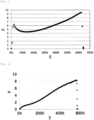
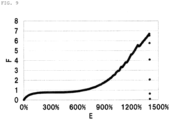
- extension-stress curve ( Figs. 1 to 9 ) obtained by performing a tensile test by the method described in the above (4) using the polymer composition solution or the polymer solution obtained in each of the examples and comparative examples
- the obtained dilactide/ ⁇ -caprolactone copolymer had a weight average molecular weight of 240,000, a degree of polymerization of a macromonomer unit of 7.1, a degree of crystallization of dilactide residues of 0.0%, a degree of crystallization of ⁇ -caprolactone residues of 0.0%, a molar fraction of dilactide residues of 52%, a molar fraction of ⁇ -caprolactone residues of 48%, a molar fraction of a structure in which a dilactide residue and an ⁇ -caprolactone residue were adjacent to each other of 30%, an R value of 0.60, a Young's modulus of 3.9 MPa, and a maximum point stress of 22.2 MPa.
- the mixture was placed in an argon atmosphere, 0.27 g of tin(II) octylate (manufactured by FUJIFILM Wako Pure Chemical Corporation) that was a catalyst dissolved in 5.8 mL of toluene (super dehydrated) (manufactured by FUJIFILM Wako Pure Chemical Corporation) was added thereto, and the mixture was allowed to react at 140°C and a stirring speed of 100 rpm for 24 hours to provide a crude polymer.
- tin(II) octylate manufactured by FUJIFILM Wako Pure Chemical Corporation
- the obtained crude polymer was dissolved in 200 mL of chloroform and added dropwise to 3,000 mL of hexane being stirred to provide a precipitate.
- the precipitate was dried under reduced pressure at 50°C for 18 hours to provide a dilactide/ ⁇ -caprolactone copolymer having a gradient structure.
- the obtained dilactide/ ⁇ -caprolactone copolymer had a weight average molecular weight of 200,000, a degree of crystallization of dilactide residues of 0.0%, a degree of crystallization of ⁇ -caprolactone residues of 0.0%, a molar fraction of dilactide residues of 50%, a molar fraction of ⁇ -caprolactone residues of 50%, a molar fraction of a structure in which a dilactide residue and an ⁇ -caprolactone residue were adjacent to each other of 43.5%, an R value of 0.87, a Young's modulus of 0.76 MPa, and a maximum point stress of 16.6 MPa.
- the results evaluated by the above-described method are shown in Table 1, and the extension-stress curve is shown in Fig. 3 .
- the results evaluated by the above-described method are shown in Table 1, and the extension-stress curve is shown in Fig. 4 .
- a polymer composition solution was prepared in a similar manner to that in Example 1 except that the dilactide/ ⁇ -caprolactone copolymer was changed to that obtained in Synthesis Example 2.
- the results evaluated by the above-described method are shown in Table 1, and the extension-stress curve is shown in Fig. 6 .
- the results evaluated by the above-described method are shown in Table 1, and the extension-stress curve is shown in Fig. 7 .
- the results evaluated by the above-described method are shown in Table 1, and the extension-stress curve is shown in Fig. 8 .
Landscapes
- Health & Medical Sciences (AREA)
- Chemical & Material Sciences (AREA)
- Medicinal Chemistry (AREA)
- Chemical Kinetics & Catalysis (AREA)
- Polymers & Plastics (AREA)
- Organic Chemistry (AREA)
- Transplantation (AREA)
- Oral & Maxillofacial Surgery (AREA)
- Dermatology (AREA)
- Epidemiology (AREA)
- Life Sciences & Earth Sciences (AREA)
- Animal Behavior & Ethology (AREA)
- General Health & Medical Sciences (AREA)
- Public Health (AREA)
- Veterinary Medicine (AREA)
- Polyesters Or Polycarbonates (AREA)
- Materials For Medical Uses (AREA)
Claims (9)
- Composition de polymère comprenant :de l'acide polylactique ; etun copolymère dilactide/ε-caprolactone,une teneur en acide polylactique par rapport à un total de 100 % en masse d'acide polylactique et de copolymère dilactide/ε-caprolactone étant de 20 à 40 % en masse, etle copolymère dilactide/ε-caprolactone satisfaisant aux points (1) et (2) ci-dessous :(1) une valeur R représentée par une formule suivante est de 0,45 ou plus et de 0,99 ou moins :
 [A] est une fraction molaire (%) d'un résidu de dilactide dans le copolymère dilactide/s-caprolactone,[B] est une fraction molaire (%) d'un résidu d'ε-caprolactone dans le copolymère dilactide/ε-caprolactone, et[AB] est une fraction molaire (%) d'une structure dans laquelle un résidu de dilactide et un résidu d'ε-caprolactone sont adjacents l'un à l'autre (A-B et B-A) dans le copolymère de dilactide/ε-caprolactone, et(2) au moins l'un des résidus de dilactide et d'ε-caprolactone a un degré de cristallisation inférieur à 14 %, mesuré conformément à la description.
 - Composition de polymère selon la revendication 1, dans laquelle la masse moléculaire moyenne en poids de l'acide polylactique est de 60 000 ou plus, mesurée conformément à la description.
- Composition de polymère selon la revendication 1 ou 2, dans laquelle le copolymère dilactide/ε-caprolactone a une structure dans laquelle sont liées deux unités macromères ou plus ayant une structure en gradient dans laquelle un résidu dilactide et un résidu ε-caprolactone forment un gradient de composition dans un squelette.
- Composition de polymère selon l'une quelconque des revendications 1 à 3, dans laquelle la masse moléculaire moyenne en poids du copolymère dilactide/ε-caprolactone est de 60 000 ou plus, mesurée conformément à la description.
- Composition de polymère selon l'une quelconque des revendications 1 à 4, dans laquelle un film formé du copolymère dilactide/ε-caprolactone a un module de Young de 6,3 MPa ou moins et une contrainte ponctuelle maximale de 5 MPa ou plus, mesurée conformément à la description.
- Composition de polymère selon l'une quelconque des revendications 1 à 5, dans laquelle un film formé de la composition de polymère a un module de Young de 6,3 MPa ou moins, mesuré conformément à la description, une contrainte ponctuelle maximale de 5 MPa ou plus, mesurée conformément à la description, et un coefficient de détermination de l'approximation linéaire d'une courbe extension-contrainte calculée par un essai de traction de 0,85 ou plus.
- Corps moulé comprenant la composition de polymère selon l'une quelconque des revendications 1 à 6.
- Corps moulé selon la revendication 7 pour utilisation médicale.
- Tube inducteur de régénération nerveuse comprenant au moins partiellement la composition de polymère selon l'une quelconque des revendications 1 à 6.
Applications Claiming Priority (2)
| Application Number | Priority Date | Filing Date | Title |
|---|---|---|---|
| JP2019100951 | 2019-05-30 | ||
| PCT/JP2020/020695 WO2020241624A1 (fr) | 2019-05-30 | 2020-05-26 | Composition polymère, corps moulé et tube d'induction de la régénération nerveuse |
Publications (3)
| Publication Number | Publication Date |
|---|---|
| EP3978569A1 EP3978569A1 (fr) | 2022-04-06 |
| EP3978569A4 EP3978569A4 (fr) | 2023-01-11 |
| EP3978569B1 true EP3978569B1 (fr) | 2024-10-02 |
Family
ID=73552228
Family Applications (1)
| Application Number | Title | Priority Date | Filing Date |
|---|---|---|---|
| EP20814968.2A Active EP3978569B1 (fr) | 2019-05-30 | 2020-05-26 | Composition polymère, corps moulé et tube d'induction de la régénération nerveuse |
Country Status (5)
| Country | Link |
|---|---|
| US (1) | US12202969B2 (fr) |
| EP (1) | EP3978569B1 (fr) |
| JP (1) | JP7619042B2 (fr) |
| CN (1) | CN113874442B (fr) |
| WO (1) | WO2020241624A1 (fr) |
Families Citing this family (6)
| Publication number | Priority date | Publication date | Assignee | Title |
|---|---|---|---|---|
| WO2021039571A1 (fr) * | 2019-08-26 | 2021-03-04 | 東レ株式会社 | Structure fibreuse et procédé de production d'une telle structure fibreuse |
| US12606701B2 (en) | 2020-10-30 | 2026-04-21 | Toray Industries, Inc. | Polymer composition and molded article |
| JPWO2023058572A1 (fr) | 2021-10-06 | 2023-04-13 | ||
| WO2025028458A1 (fr) * | 2023-08-01 | 2025-02-06 | マクセル株式会社 | Polymère de base pour agent adhésif, agent adhésif contenant le polymère de base pour agent adhésif, et ruban adhésif et film adhésif utilisant l'agent adhésif |
| WO2025095108A1 (fr) * | 2023-11-01 | 2025-05-08 | 株式会社カネカ | Composition de résine |
| CN121248910B (zh) * | 2025-12-03 | 2026-03-03 | 湖南聚仁新材料股份公司 | 一种聚己内酯-丙交酯共聚物及其可控式合成方法 |
Family Cites Families (13)
| Publication number | Priority date | Publication date | Assignee | Title |
|---|---|---|---|---|
| US6573340B1 (en) | 2000-08-23 | 2003-06-03 | Biotec Biologische Naturverpackungen Gmbh & Co. Kg | Biodegradable polymer films and sheets suitable for use as laminate coatings as well as wraps and other packaging materials |
| EP1334990A1 (fr) * | 2002-02-06 | 2003-08-13 | Polyganics B.V. | Copolymeres de dl-lactide-epsilon-caprolactone |
| AU2003241515A1 (en) | 2002-05-20 | 2003-12-12 | Orbus Medical Technologies Inc. | Drug eluting implantable medical device |
| JP2007138131A (ja) * | 2005-10-20 | 2007-06-07 | Toray Ind Inc | 樹脂組成物およびそれを成形してなるその成形品 |
| JP2008037996A (ja) * | 2006-08-04 | 2008-02-21 | Toray Ind Inc | ブロック共重合体、その製造方法および樹脂組成物 |
| AU2008330777A1 (en) * | 2007-11-29 | 2009-06-04 | Gunze Limited | Lactide/E-caprolactone copolymer for medical implant, method for producing lactide/epsilon-caprolactone copolymer for medical implant, medical implant and artificial dura mater |
| US20130236499A1 (en) * | 2012-03-12 | 2013-09-12 | Sasa Andjelic | Segmented, Semicrystalline Poly(Lactide-co-epsilon-Caprolactone) Absorbable Copolymers |
| CN104231578B (zh) * | 2014-08-29 | 2016-05-11 | 四川大学 | 一种可完全生物降解聚酯材料及其制备与应用 |
| JP6522391B2 (ja) * | 2015-03-31 | 2019-05-29 | 学校法人 関西大学 | 温度応答性を有する生分解性ポリマー組成物及びその製造方法 |
| JP6616724B2 (ja) | 2016-03-31 | 2019-12-04 | 株式会社カネカ | 樹脂組成物および医療用管状体 |
| WO2019035857A1 (fr) | 2017-08-17 | 2019-02-21 | Martinez Jared | Porte-outil de lavage de fenêtre et godet |
| EP3670567A4 (fr) | 2017-08-17 | 2021-06-02 | Toray Industries, Inc. | Copolymère de polyester et procédé de production associé |
| EP3461857A1 (fr) * | 2017-09-28 | 2019-04-03 | Helmholtz-Zentrum Geesthacht Zentrum für Material- und Küstenforschung GmbH | Objet polymère à surface fonctionnalisée et son procédé de production |
-
2020
- 2020-05-26 CN CN202080038178.9A patent/CN113874442B/zh active Active
- 2020-05-26 WO PCT/JP2020/020695 patent/WO2020241624A1/fr not_active Ceased
- 2020-05-26 US US17/612,068 patent/US12202969B2/en active Active
- 2020-05-26 JP JP2020532837A patent/JP7619042B2/ja active Active
- 2020-05-26 EP EP20814968.2A patent/EP3978569B1/fr active Active
Also Published As
| Publication number | Publication date |
|---|---|
| JP7619042B2 (ja) | 2025-01-22 |
| CN113874442B (zh) | 2023-06-16 |
| CN113874442A (zh) | 2021-12-31 |
| EP3978569A4 (fr) | 2023-01-11 |
| US20220251372A1 (en) | 2022-08-11 |
| US12202969B2 (en) | 2025-01-21 |
| WO2020241624A1 (fr) | 2020-12-03 |
| EP3978569A1 (fr) | 2022-04-06 |
| JPWO2020241624A1 (fr) | 2020-12-03 |
Similar Documents
| Publication | Publication Date | Title |
|---|---|---|
| EP3978569B1 (fr) | Composition polymère, corps moulé et tube d'induction de la régénération nerveuse | |
| Min et al. | Biodegradable shape‐memory polymer—polylactide‐co‐poly (glycolide‐co‐caprolactone) multiblock copolymer | |
| US5320624A (en) | Blends of glycolide and/or lactide polymers and caprolactone and/or trimethylene carbonate polymers and absorbable surgical devices made therefrom | |
| EP0636639B1 (fr) | Copolymères d'anhydrides aromatiques et d'esters aliphatiques | |
| US20030139567A1 (en) | Sequentially ordered biodegradable lactide (glycolide or lactide/glycolide)epsilon -caprolactone multi-block copolymer and process for the preparation thereof | |
| JP7298153B2 (ja) | ポリエステルコポリマーおよびその製造方法 | |
| Huang et al. | Poly (butylene succinate)-poly (ethylene glycol) multiblock copolymer: Synthesis, structure, properties and shape memory performance | |
| Xiaomeng et al. | Totally biodegradable poly (trimethylene carbonate/glycolide-block-L-lactide/glycolide) copolymers: Synthesis, characterization and enzyme-catalyzed degradation behavior | |
| US20240084071A1 (en) | Polymer blends | |
| US12606701B2 (en) | Polymer composition and molded article | |
| JP7697206B2 (ja) | 繊維構造体およびその製造方法 | |
| JP2008222768A (ja) | 分岐型生分解性ポリエステル及びその製造方法 | |
| JP2020092874A (ja) | 医療用成形体 | |
| KR20150132318A (ko) | 2개 이상의 카르복실산 기를 갖는 모놀 및 다이올 중합 개시제로부터 제조된 폴리락톤 중합체 | |
| JP7302296B2 (ja) | ポリエステルコポリマーおよびその製造方法 | |
| US7652127B2 (en) | Absorbable copolyesters of poly(ethoxyethylene diglycolate) and glycolide | |
| JP2022077948A (ja) | ポリマー組成物 | |
| JP7484167B2 (ja) | 医療用成形体、医療機器、神経再生誘導チューブ | |
| US8013061B2 (en) | Polyester based degradable materials and implantable biomedical articles formed therefrom | |
| US20250163214A1 (en) | Absorbable copolymer, and preparation method and use thereof | |
| WO2004000376A1 (fr) | Materiaux biodegradables et bioabsorbables a usage medical et procede de production | |
| Díaz et al. | Anhydric maleic functionalization and polyethylene glycol grafting of lactide-co-trimethylene carbonate copolymers |
Legal Events
| Date | Code | Title | Description |
|---|---|---|---|
| STAA | Information on the status of an ep patent application or granted ep patent |
Free format text: STATUS: THE INTERNATIONAL PUBLICATION HAS BEEN MADE |
|
| PUAI | Public reference made under article 153(3) epc to a published international application that has entered the european phase |
Free format text: ORIGINAL CODE: 0009012 |
|
| STAA | Information on the status of an ep patent application or granted ep patent |
Free format text: STATUS: REQUEST FOR EXAMINATION WAS MADE |
|
| 17P | Request for examination filed |
Effective date: 20211208 |
|
| AK | Designated contracting states |
Kind code of ref document: A1 Designated state(s): AL AT BE BG CH CY CZ DE DK EE ES FI FR GB GR HR HU IE IS IT LI LT LU LV MC MK MT NL NO PL PT RO RS SE SI SK SM TR |
|
| DAV | Request for validation of the european patent (deleted) | ||
| DAX | Request for extension of the european patent (deleted) | ||
| A4 | Supplementary search report drawn up and despatched |
Effective date: 20221213 |
|
| RIC1 | Information provided on ipc code assigned before grant |
Ipc: C08L 101/16 20060101ALI20221207BHEP Ipc: C08G 63/60 20060101ALI20221207BHEP Ipc: C08L 67/04 20060101AFI20221207BHEP |
|
| GRAP | Despatch of communication of intention to grant a patent |
Free format text: ORIGINAL CODE: EPIDOSNIGR1 |
|
| STAA | Information on the status of an ep patent application or granted ep patent |
Free format text: STATUS: GRANT OF PATENT IS INTENDED |
|
| INTG | Intention to grant announced |
Effective date: 20240527 |
|
| GRAS | Grant fee paid |
Free format text: ORIGINAL CODE: EPIDOSNIGR3 |
|
| GRAA | (expected) grant |
Free format text: ORIGINAL CODE: 0009210 |
|
| STAA | Information on the status of an ep patent application or granted ep patent |
Free format text: STATUS: THE PATENT HAS BEEN GRANTED |
|
| P01 | Opt-out of the competence of the unified patent court (upc) registered |
Free format text: CASE NUMBER: APP_45996/2024 Effective date: 20240808 |
|
| AK | Designated contracting states |
Kind code of ref document: B1 Designated state(s): AL AT BE BG CH CY CZ DE DK EE ES FI FR GB GR HR HU IE IS IT LI LT LU LV MC MK MT NL NO PL PT RO RS SE SI SK SM TR |
|
| REG | Reference to a national code |
Ref country code: GB Ref legal event code: FG4D |
|
| REG | Reference to a national code |
Ref country code: CH Ref legal event code: EP |
|
| REG | Reference to a national code |
Ref country code: IE Ref legal event code: FG4D |
|
| REG | Reference to a national code |
Ref country code: DE Ref legal event code: R096 Ref document number: 602020038778 Country of ref document: DE |
|
| REG | Reference to a national code |
Ref country code: NL Ref legal event code: FP |
|
| REG | Reference to a national code |
Ref country code: LT Ref legal event code: MG9D |
|
| REG | Reference to a national code |
Ref country code: AT Ref legal event code: MK05 Ref document number: 1728477 Country of ref document: AT Kind code of ref document: T Effective date: 20241002 |
|
| PG25 | Lapsed in a contracting state [announced via postgrant information from national office to epo] |
Ref country code: IS Free format text: LAPSE BECAUSE OF FAILURE TO SUBMIT A TRANSLATION OF THE DESCRIPTION OR TO PAY THE FEE WITHIN THE PRESCRIBED TIME-LIMIT Effective date: 20250202 Ref country code: HR Free format text: LAPSE BECAUSE OF FAILURE TO SUBMIT A TRANSLATION OF THE DESCRIPTION OR TO PAY THE FEE WITHIN THE PRESCRIBED TIME-LIMIT Effective date: 20241002 Ref country code: PT Free format text: LAPSE BECAUSE OF FAILURE TO SUBMIT A TRANSLATION OF THE DESCRIPTION OR TO PAY THE FEE WITHIN THE PRESCRIBED TIME-LIMIT Effective date: 20250203 |
|
| PG25 | Lapsed in a contracting state [announced via postgrant information from national office to epo] |
Ref country code: FI Free format text: LAPSE BECAUSE OF FAILURE TO SUBMIT A TRANSLATION OF THE DESCRIPTION OR TO PAY THE FEE WITHIN THE PRESCRIBED TIME-LIMIT Effective date: 20241002 |
|
| PG25 | Lapsed in a contracting state [announced via postgrant information from national office to epo] |
Ref country code: BG Free format text: LAPSE BECAUSE OF FAILURE TO SUBMIT A TRANSLATION OF THE DESCRIPTION OR TO PAY THE FEE WITHIN THE PRESCRIBED TIME-LIMIT Effective date: 20241002 |
|
| PG25 | Lapsed in a contracting state [announced via postgrant information from national office to epo] |
Ref country code: ES Free format text: LAPSE BECAUSE OF FAILURE TO SUBMIT A TRANSLATION OF THE DESCRIPTION OR TO PAY THE FEE WITHIN THE PRESCRIBED TIME-LIMIT Effective date: 20241002 |
|
| PG25 | Lapsed in a contracting state [announced via postgrant information from national office to epo] |
Ref country code: NO Free format text: LAPSE BECAUSE OF FAILURE TO SUBMIT A TRANSLATION OF THE DESCRIPTION OR TO PAY THE FEE WITHIN THE PRESCRIBED TIME-LIMIT Effective date: 20250102 |
|
| PG25 | Lapsed in a contracting state [announced via postgrant information from national office to epo] |
Ref country code: LV Free format text: LAPSE BECAUSE OF FAILURE TO SUBMIT A TRANSLATION OF THE DESCRIPTION OR TO PAY THE FEE WITHIN THE PRESCRIBED TIME-LIMIT Effective date: 20241002 Ref country code: GR Free format text: LAPSE BECAUSE OF FAILURE TO SUBMIT A TRANSLATION OF THE DESCRIPTION OR TO PAY THE FEE WITHIN THE PRESCRIBED TIME-LIMIT Effective date: 20250103 Ref country code: AT Free format text: LAPSE BECAUSE OF FAILURE TO SUBMIT A TRANSLATION OF THE DESCRIPTION OR TO PAY THE FEE WITHIN THE PRESCRIBED TIME-LIMIT Effective date: 20241002 |
|
| PG25 | Lapsed in a contracting state [announced via postgrant information from national office to epo] |
Ref country code: CZ Free format text: LAPSE BECAUSE OF FAILURE TO SUBMIT A TRANSLATION OF THE DESCRIPTION OR TO PAY THE FEE WITHIN THE PRESCRIBED TIME-LIMIT Effective date: 20241002 Ref country code: PL Free format text: LAPSE BECAUSE OF FAILURE TO SUBMIT A TRANSLATION OF THE DESCRIPTION OR TO PAY THE FEE WITHIN THE PRESCRIBED TIME-LIMIT Effective date: 20241002 |
|
| PG25 | Lapsed in a contracting state [announced via postgrant information from national office to epo] |
Ref country code: RS Free format text: LAPSE BECAUSE OF FAILURE TO SUBMIT A TRANSLATION OF THE DESCRIPTION OR TO PAY THE FEE WITHIN THE PRESCRIBED TIME-LIMIT Effective date: 20250102 |
|
| PGFP | Annual fee paid to national office [announced via postgrant information from national office to epo] |
Ref country code: NL Payment date: 20250409 Year of fee payment: 6 |
|
| PG25 | Lapsed in a contracting state [announced via postgrant information from national office to epo] |
Ref country code: SM Free format text: LAPSE BECAUSE OF FAILURE TO SUBMIT A TRANSLATION OF THE DESCRIPTION OR TO PAY THE FEE WITHIN THE PRESCRIBED TIME-LIMIT Effective date: 20241002 |
|
| REG | Reference to a national code |
Ref country code: DE Ref legal event code: R097 Ref document number: 602020038778 Country of ref document: DE |
|
| PGFP | Annual fee paid to national office [announced via postgrant information from national office to epo] |
Ref country code: DE Payment date: 20250402 Year of fee payment: 6 |
|
| PG25 | Lapsed in a contracting state [announced via postgrant information from national office to epo] |
Ref country code: DK Free format text: LAPSE BECAUSE OF FAILURE TO SUBMIT A TRANSLATION OF THE DESCRIPTION OR TO PAY THE FEE WITHIN THE PRESCRIBED TIME-LIMIT Effective date: 20241002 |
|
| PGFP | Annual fee paid to national office [announced via postgrant information from national office to epo] |
Ref country code: IT Payment date: 20250422 Year of fee payment: 6 |
|
| PG25 | Lapsed in a contracting state [announced via postgrant information from national office to epo] |
Ref country code: EE Free format text: LAPSE BECAUSE OF FAILURE TO SUBMIT A TRANSLATION OF THE DESCRIPTION OR TO PAY THE FEE WITHIN THE PRESCRIBED TIME-LIMIT Effective date: 20241002 |
|
| PGFP | Annual fee paid to national office [announced via postgrant information from national office to epo] |
Ref country code: FR Payment date: 20250401 Year of fee payment: 6 |
|
| PG25 | Lapsed in a contracting state [announced via postgrant information from national office to epo] |
Ref country code: RO Free format text: LAPSE BECAUSE OF FAILURE TO SUBMIT A TRANSLATION OF THE DESCRIPTION OR TO PAY THE FEE WITHIN THE PRESCRIBED TIME-LIMIT Effective date: 20241002 |
|
| PG25 | Lapsed in a contracting state [announced via postgrant information from national office to epo] |
Ref country code: SK Free format text: LAPSE BECAUSE OF FAILURE TO SUBMIT A TRANSLATION OF THE DESCRIPTION OR TO PAY THE FEE WITHIN THE PRESCRIBED TIME-LIMIT Effective date: 20241002 |
|
| PLBE | No opposition filed within time limit |
Free format text: ORIGINAL CODE: 0009261 |
|
| STAA | Information on the status of an ep patent application or granted ep patent |
Free format text: STATUS: NO OPPOSITION FILED WITHIN TIME LIMIT |
|
| PG25 | Lapsed in a contracting state [announced via postgrant information from national office to epo] |
Ref country code: SE Free format text: LAPSE BECAUSE OF FAILURE TO SUBMIT A TRANSLATION OF THE DESCRIPTION OR TO PAY THE FEE WITHIN THE PRESCRIBED TIME-LIMIT Effective date: 20241002 |
|
| 26N | No opposition filed |
Effective date: 20250703 |
|
| REG | Reference to a national code |
Ref country code: CH Ref legal event code: H13 Free format text: ST27 STATUS EVENT CODE: U-0-0-H10-H13 (AS PROVIDED BY THE NATIONAL OFFICE) Effective date: 20251223 |
|
| PG25 | Lapsed in a contracting state [announced via postgrant information from national office to epo] |
Ref country code: LU Free format text: LAPSE BECAUSE OF NON-PAYMENT OF DUE FEES Effective date: 20250526 |
|
| PG25 | Lapsed in a contracting state [announced via postgrant information from national office to epo] |
Ref country code: CH Free format text: LAPSE BECAUSE OF NON-PAYMENT OF DUE FEES Effective date: 20250531 |
|
| REG | Reference to a national code |
Ref country code: BE Ref legal event code: MM Effective date: 20250531 |
|
| PG25 | Lapsed in a contracting state [announced via postgrant information from national office to epo] |
Ref country code: MC Free format text: LAPSE BECAUSE OF FAILURE TO SUBMIT A TRANSLATION OF THE DESCRIPTION OR TO PAY THE FEE WITHIN THE PRESCRIBED TIME-LIMIT Effective date: 20241002 |
|
| PGFP | Annual fee paid to national office [announced via postgrant information from national office to epo] |
Ref country code: GB Payment date: 20260323 Year of fee payment: 7 |
|
| PG25 | Lapsed in a contracting state [announced via postgrant information from national office to epo] |
Ref country code: IE Free format text: LAPSE BECAUSE OF NON-PAYMENT OF DUE FEES Effective date: 20250526 |
|
| PG25 | Lapsed in a contracting state [announced via postgrant information from national office to epo] |
Ref country code: BE Free format text: LAPSE BECAUSE OF NON-PAYMENT OF DUE FEES Effective date: 20250531 |