EP3979059A1 - Verfahren, einrichtung, vorrichtung und speichermedium zur ausführung eines standalone-programms - Google Patents
Verfahren, einrichtung, vorrichtung und speichermedium zur ausführung eines standalone-programms Download PDFInfo
- Publication number
- EP3979059A1 EP3979059A1 EP20815547.3A EP20815547A EP3979059A1 EP 3979059 A1 EP3979059 A1 EP 3979059A1 EP 20815547 A EP20815547 A EP 20815547A EP 3979059 A1 EP3979059 A1 EP 3979059A1
- Authority
- EP
- European Patent Office
- Prior art keywords
- terminal
- stand
- main program
- program
- operation command
- Prior art date
- Legal status (The legal status is an assumption and is not a legal conclusion. Google has not performed a legal analysis and makes no representation as to the accuracy of the status listed.)
- Pending
Links
Images



Classifications
-
- A—HUMAN NECESSITIES
- A63—SPORTS; GAMES; AMUSEMENTS
- A63F—CARD, BOARD, OR ROULETTE GAMES; INDOOR GAMES USING SMALL MOVING PLAYING BODIES; VIDEO GAMES; GAMES NOT OTHERWISE PROVIDED FOR
- A63F13/00—Video games, i.e. games using an electronically generated display having two or more dimensions
- A63F13/30—Interconnection arrangements between game servers and game devices; Interconnection arrangements between game devices; Interconnection arrangements between game servers
- A63F13/34—Interconnection arrangements between game servers and game devices; Interconnection arrangements between game devices; Interconnection arrangements between game servers using peer-to-peer connections
-
- A—HUMAN NECESSITIES
- A63—SPORTS; GAMES; AMUSEMENTS
- A63F—CARD, BOARD, OR ROULETTE GAMES; INDOOR GAMES USING SMALL MOVING PLAYING BODIES; VIDEO GAMES; GAMES NOT OTHERWISE PROVIDED FOR
- A63F13/00—Video games, i.e. games using an electronically generated display having two or more dimensions
- A63F13/30—Interconnection arrangements between game servers and game devices; Interconnection arrangements between game devices; Interconnection arrangements between game servers
- A63F13/35—Details of game servers
- A63F13/355—Performing operations on behalf of clients with restricted processing capabilities, e.g. servers transform changing game scene into an encoded video stream for transmitting to a mobile phone or a thin client
-
- A—HUMAN NECESSITIES
- A63—SPORTS; GAMES; AMUSEMENTS
- A63F—CARD, BOARD, OR ROULETTE GAMES; INDOOR GAMES USING SMALL MOVING PLAYING BODIES; VIDEO GAMES; GAMES NOT OTHERWISE PROVIDED FOR
- A63F13/00—Video games, i.e. games using an electronically generated display having two or more dimensions
- A63F13/40—Processing input control signals of video game devices, e.g. signals generated by the player or derived from the environment
- A63F13/42—Processing input control signals of video game devices, e.g. signals generated by the player or derived from the environment by mapping the input signals into game commands, e.g. mapping the displacement of a stylus on a touch screen to the steering angle of a virtual vehicle
-
- A—HUMAN NECESSITIES
- A63—SPORTS; GAMES; AMUSEMENTS
- A63F—CARD, BOARD, OR ROULETTE GAMES; INDOOR GAMES USING SMALL MOVING PLAYING BODIES; VIDEO GAMES; GAMES NOT OTHERWISE PROVIDED FOR
- A63F13/00—Video games, i.e. games using an electronically generated display having two or more dimensions
- A63F13/50—Controlling the output signals based on the game progress
- A63F13/53—Controlling the output signals based on the game progress involving additional visual information provided to the game scene, e.g. by overlay to simulate a head-up display [HUD] or displaying a laser sight in a shooting game
- A63F13/533—Controlling the output signals based on the game progress involving additional visual information provided to the game scene, e.g. by overlay to simulate a head-up display [HUD] or displaying a laser sight in a shooting game for prompting the player, e.g. by displaying a game menu
-
- A—HUMAN NECESSITIES
- A63—SPORTS; GAMES; AMUSEMENTS
- A63F—CARD, BOARD, OR ROULETTE GAMES; INDOOR GAMES USING SMALL MOVING PLAYING BODIES; VIDEO GAMES; GAMES NOT OTHERWISE PROVIDED FOR
- A63F13/00—Video games, i.e. games using an electronically generated display having two or more dimensions
- A63F13/70—Game security or game management aspects
- A63F13/77—Game security or game management aspects involving data related to game devices or game servers, e.g. configuration data, software version or amount of memory
-
- A—HUMAN NECESSITIES
- A63—SPORTS; GAMES; AMUSEMENTS
- A63F—CARD, BOARD, OR ROULETTE GAMES; INDOOR GAMES USING SMALL MOVING PLAYING BODIES; VIDEO GAMES; GAMES NOT OTHERWISE PROVIDED FOR
- A63F13/00—Video games, i.e. games using an electronically generated display having two or more dimensions
- A63F13/80—Special adaptations for executing a specific game genre or game mode
- A63F13/843—Special adaptations for executing a specific game genre or game mode involving concurrently two or more players on the same game device, e.g. requiring the use of a plurality of controllers or of a specific view of game data for each player
-
- G—PHYSICS
- G06—COMPUTING OR CALCULATING; COUNTING
- G06F—ELECTRIC DIGITAL DATA PROCESSING
- G06F3/00—Input arrangements for transferring data to be processed into a form capable of being handled by the computer; Output arrangements for transferring data from processing unit to output unit, e.g. interface arrangements
- G06F3/01—Input arrangements or combined input and output arrangements for interaction between user and computer
- G06F3/048—Interaction techniques based on graphical user interfaces [GUI]
- G06F3/0484—Interaction techniques based on graphical user interfaces [GUI] for the control of specific functions or operations, e.g. selecting or manipulating an object, an image or a displayed text element, setting a parameter value or selecting a range
- G06F3/04842—Selection of displayed objects or displayed text elements
-
- G—PHYSICS
- G06—COMPUTING OR CALCULATING; COUNTING
- G06F—ELECTRIC DIGITAL DATA PROCESSING
- G06F3/00—Input arrangements for transferring data to be processed into a form capable of being handled by the computer; Output arrangements for transferring data from processing unit to output unit, e.g. interface arrangements
- G06F3/01—Input arrangements or combined input and output arrangements for interaction between user and computer
- G06F3/048—Interaction techniques based on graphical user interfaces [GUI]
- G06F3/0487—Interaction techniques based on graphical user interfaces [GUI] using specific features provided by the input device, e.g. functions controlled by the rotation of a mouse with dual sensing arrangements, or of the nature of the input device, e.g. tap gestures based on pressure sensed by a digitiser
-
- G—PHYSICS
- G06—COMPUTING OR CALCULATING; COUNTING
- G06F—ELECTRIC DIGITAL DATA PROCESSING
- G06F3/00—Input arrangements for transferring data to be processed into a form capable of being handled by the computer; Output arrangements for transferring data from processing unit to output unit, e.g. interface arrangements
- G06F3/14—Digital output to display device ; Cooperation and interconnection of the display device with other functional units
- G06F3/1454—Digital output to display device ; Cooperation and interconnection of the display device with other functional units involving copying of the display data of a local workstation or window to a remote workstation or window so that an actual copy of the data is displayed simultaneously on two or more displays, e.g. teledisplay
-
- H—ELECTRICITY
- H04—ELECTRIC COMMUNICATION TECHNIQUE
- H04L—TRANSMISSION OF DIGITAL INFORMATION, e.g. TELEGRAPHIC COMMUNICATION
- H04L67/00—Network arrangements or protocols for supporting network services or applications
- H04L67/01—Protocols
- H04L67/10—Protocols in which an application is distributed across nodes in the network
- H04L67/104—Peer-to-peer [P2P] networks
-
- H—ELECTRICITY
- H04—ELECTRIC COMMUNICATION TECHNIQUE
- H04L—TRANSMISSION OF DIGITAL INFORMATION, e.g. TELEGRAPHIC COMMUNICATION
- H04L67/00—Network arrangements or protocols for supporting network services or applications
- H04L67/01—Protocols
- H04L67/131—Protocols for games, networked simulations or virtual reality
-
- H—ELECTRICITY
- H04—ELECTRIC COMMUNICATION TECHNIQUE
- H04L—TRANSMISSION OF DIGITAL INFORMATION, e.g. TELEGRAPHIC COMMUNICATION
- H04L67/00—Network arrangements or protocols for supporting network services or applications
- H04L67/2866—Architectures; Arrangements
- H04L67/30—Profiles
- H04L67/306—User profiles
-
- H—ELECTRICITY
- H04—ELECTRIC COMMUNICATION TECHNIQUE
- H04L—TRANSMISSION OF DIGITAL INFORMATION, e.g. TELEGRAPHIC COMMUNICATION
- H04L69/00—Network arrangements, protocols or services independent of the application payload and not provided for in the other groups of this subclass
- H04L69/22—Parsing or analysis of headers
-
- A—HUMAN NECESSITIES
- A63—SPORTS; GAMES; AMUSEMENTS
- A63F—CARD, BOARD, OR ROULETTE GAMES; INDOOR GAMES USING SMALL MOVING PLAYING BODIES; VIDEO GAMES; GAMES NOT OTHERWISE PROVIDED FOR
- A63F2300/00—Features of games using an electronically generated display having two or more dimensions, e.g. on a television screen, showing representations related to the game
- A63F2300/30—Features of games using an electronically generated display having two or more dimensions, e.g. on a television screen, showing representations related to the game characterized by output arrangements for receiving control signals generated by the game device
- A63F2300/308—Details of the user interface
-
- A—HUMAN NECESSITIES
- A63—SPORTS; GAMES; AMUSEMENTS
- A63F—CARD, BOARD, OR ROULETTE GAMES; INDOOR GAMES USING SMALL MOVING PLAYING BODIES; VIDEO GAMES; GAMES NOT OTHERWISE PROVIDED FOR
- A63F2300/00—Features of games using an electronically generated display having two or more dimensions, e.g. on a television screen, showing representations related to the game
- A63F2300/40—Features of games using an electronically generated display having two or more dimensions, e.g. on a television screen, showing representations related to the game characterised by details of platform network
- A63F2300/408—Peer to peer connection
-
- A—HUMAN NECESSITIES
- A63—SPORTS; GAMES; AMUSEMENTS
- A63F—CARD, BOARD, OR ROULETTE GAMES; INDOOR GAMES USING SMALL MOVING PLAYING BODIES; VIDEO GAMES; GAMES NOT OTHERWISE PROVIDED FOR
- A63F2300/00—Features of games using an electronically generated display having two or more dimensions, e.g. on a television screen, showing representations related to the game
- A63F2300/60—Methods for processing data by generating or executing the game program
- A63F2300/6045—Methods for processing data by generating or executing the game program for mapping control signals received from the input arrangement into game commands
Definitions
- a method for running a stand-alone program, applicable to a first terminal running a first main program includes:
- a method for running a stand-alone program, applicable to a second terminal running a second main program includes:
- An apparatus for running a stand-alone program, configured in a terminal, includes a second main program module; the second main program module including:
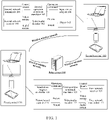
- An application program (a first main program) is installed in the first terminal 120, and the first main program is capable of running a stand-alone program.
- the stand-alone program is a program capable of controlling a first operation object and a second operation object separately.
- the first main program is further capable of running a multi-player program.
- the first main program is further capable of running a network game.
- the second main program may be a multi-player program or a browser.
- the multi-player program is capable of running the stand-alone program.
- the browser may be capable of running the stand-alone program, or may be incapable of running the stand-alone program.
- the second terminal 140 receives the second operation command inputted through the input device of the second terminal 140, obtains the second operation command through the input device adapter 144, inputs the second operation command to the second operation command translator 145 for serialization to obtain a control stream, and transmits the control stream to the first terminal 120 through the second network transmitter 146.
- the video stream and the audio stream transmitted by the first terminal 120 are received through a network protocol and are played through corresponding controls.
- a video is played through hyper text markup language 5 video (HTML5 video) and an audio is played through hyper text markup language 5 audio (HTML5 audio), or the video and the audio are played through flash.
- HTML5 video hyper text markup language 5 video
- HTML5 audio hyper text markup language 5 audio
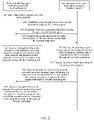
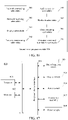
- Operation 201 Run the stand-alone program in the first main program.
- Operation 202 The first terminal establishes a network connection to the second terminal through the first main program.
- Operation 203 The second terminal establishes a network connection to the first terminal through the second main program.
- the first terminal encodes the image information through the video encoder to obtain encoded image information.
- the first operation command is used to control the first operation object in the stand-alone program.
- the stand-alone program is configured to control the first operation object according to the first operation command.
- the first operation object is an object in the stand-alone program that is controlled by the first terminal.
- a virtual object is configured in the stand-alone program. The virtual object is controlled by the first terminal, and the virtual object is the first operation object.
- Operation 206 The second terminal receives, through the second main program, the image information of the stand-alone program that is transmitted by the first terminal through the network connection.
- Operation 207 The second terminal displays the image information through the second main program.
- the second main program includes a video decoder.
- the second terminal displays the image information through the second main program by using the following operations:
- the second terminal decodes the image information through the video decoder to obtain decoded image information.
- the second main program includes a second operation command translator and a second network transmitter.
- the second terminal transmits the second operation command to the first terminal through the second main program by using the following operations:
- the specified information description format may include JavaScript object notation (JSON), extensible markup language (XML), protocol buffer, or formats corresponding to other public/private protocols.
- JSON JavaScript object notation
- XML extensible markup language
- protocol buffer or formats corresponding to other public/private protocols.
- the second terminal further adds header information to a data packet of the serialized second operation command.
- the header information is used to mark a type of the data packet as the second operation command.
- the second terminal transmits the serialized second operation command to the first terminal through the second network transmitter.
- Operation 209 The first terminal receives, through the first main program, the second operation command transmitted by the second terminal through the network connection, and transmits the second operation command to the stand-alone program through the first main program.
- the first terminal when the format of the deserialized second operation command is a first format, the first terminal converts the first format of the second operation command to a second format. The first terminal cannot execute the second operation command in the first format, but may execute the second operation command in the second format.
- the deserialized second operation command is transmitted to the stand-alone program through the stand-alone program controller.
- Operation 201, operation 202, operation 204, operation 205, and operation 209 may be implemented as an independent embodiment to implement the method for running a stand-alone program in the first terminal.
- Operation 203, operation 206, operation 207, and operation 208 may be implemented as an independent embodiment to implement the method for running a stand-alone program in the second terminal.
- operation 205 may be performed at any time point between operation 206 and operation 206, which is not limited in this embodiment.
- the first terminal obtains the current sound information.
- the first terminal captures a sound by using an audio capture API provided by the operating system, for example, by using, in a Windows environment, an audio capture API provided by the Windows operating system.
- the audio capture API includes core audio APIs.
- Operation 207 The second terminal displays the image information through the second main program.
- Operation 209 The first terminal receives, through the first main program, the second operation command transmitted by the second terminal through the network connection, and transmits the second operation command to the stand-alone program through the first main program.
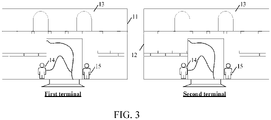
- the first terminal and the second terminal achieve separate control of the first operation object and the second operation object in the stand-alone program through the network connection to the second terminal that is established through the first main program, allowing users in different regions to control operation of the stand-alone program in a multi-player operation mode by using different terminals.
- the first terminal receives a trigger operation on a selection control.
- a selection operation is triggered on a selection item in a friend list 33, and therefore a request control 34 is displayed on a right side of the selection item.
- Operation 305 The first terminal establishes the network connection to the second terminal according to the acknowledgement information.
- the second terminal displays the multi-player interface 31.
- the multi-player interface 31 includes an avatar and a name corresponding to account information of a first user that is displayed in a form of a card 44 and an avatar and a name corresponding to account information of a second user that is displayed in a form of a card 45.
- the multi-player interface 31 includes a start control 46.
- the start control 46 is configured to trigger start of a game. When a trigger operation is received on the start control 46, the game is started.
- Operation 2074 The second terminal plays the image information and the sound information through the browser.
- the first terminal and the second terminal may implement real-time communication between the first terminal and the second terminal through a Web real-time communication (WebRTC) API.
- WebRTC Web real-time communication
- the WebRTC API is an API that supports a browser for real-time voice or video conversations.
- the first terminal and the second terminal achieve separate control of the first operation object and the second operation object in the stand-alone program through the network connection to the first terminal running the first main program that is established by the second terminal through the browser, allowing users in different regions to control operation of the stand-alone program in a multi-player operation mode by using different terminals.
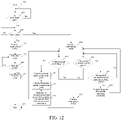
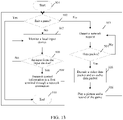
- Operation 405 Play the game.
- Operation 408 Enable a multi-player mode.
- Operation 411 Encode the picture and the sound of the game.
- Operation 412 Transmit the encoded game picture and sound to the second terminal through the network connection.
- Operation 415 Control the game through the operation command.
- Operation 508 Determine whether there is input from the input device.
- Operation 510 End.
- the first terminal and the second terminal implement the multi-player game of the stand-alone game by repeating the timing operations.
- a network connection is established between the first terminal and the second terminal through the first main program that is run in the first terminal and the second main program that is run in the second terminal, and the first terminal continuously transmits the video and the audio of the first terminal to the second terminal through the first main program, and the second terminal continuously transmits the operation command of the second terminal to the first terminal through the second main program.
- the stand-alone game is a program capable of controlling a first operation object and a second operation object separately. In this way, the first terminal and the second terminal separately control the first operation object and the second operation object in the stand-alone game, allowing users in different regions to play the stand-alone game in the multi-player mode by using different terminals.
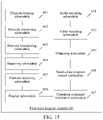
- FIG. 15 shows an apparatus for running a stand-alone program according to an example embodiment of the disclosure.
- the apparatus is configured in a terminal.
- the apparatus may be implemented as a part or all of a first terminal through software, hardware or a combination thereof.
- the apparatus includes a first main program module 600.
- the first main program module 600 includes an operation command translator submodule 607 and a stand-alone program controller submodule 608.
- the first main program module 600 includes an obtaining submodule 609, a video encoding submodule 610, and a network transmitting submodule 603.
- the second main program module 700 includes:
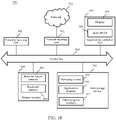
- the processor 801 may include one or more processing cores, for example, a 4-core processor or a 5-core processor.
- the processor 801 may be implemented in at least one hardware form of a digital signal processor (DSP), a field-programmable gate array (FPGA), and a programmable logic array (PLA).
- the processor 801 may also include a main processor and a coprocessor.
- the main processor is a processor configured to process data in an awake state, and is also referred to as a central processing unit (CPU).
- the coprocessor is a low power consumption processor configured to process the data in a standby state.
- the processor 801 may be integrated with a graphics processing unit (GPU).
- the GPU is configured to render and draw content that needs to be displayed on a display screen.
- the processor 801 may further include an artificial intelligence (AI) processor.
- the AI processor is configured to process computing operations related to machine learning.
- the display screen 805 may be a flexible display screen disposed on a curved surface or a folded surface of the terminal 800. Even, the display screen 805 may be further set in a non-rectangular irregular pattern, namely, a special-shaped screen.
- the display screen 805 may be prepared by using materials such as a liquid crystal display (LCD), an organic light-emitting diode (OLED), or the like.
- the audio circuit 806 may include a microphone and a speaker.
- the microphone is configured to collect sound waves of a user and an environment, and convert the sound waves into an electrical signal to input to the processor 801 for processing, or input to the radio frequency circuit 804 for implementing voice communication.
- the processor 801 for processing, or input to the radio frequency circuit 804 for implementing voice communication.
- the server 900 may be further connected to a remote computer on a network to run through a network such as the Internet.
- the server 900 may be connected to a network 912 through a network interface unit 911 connected to the system bus 905, or may be connected to other types of networks or remote computer systems (not shown) through the network interface unit 911.
Landscapes
- Engineering & Computer Science (AREA)
- Multimedia (AREA)
- Computer Networks & Wireless Communication (AREA)
- Signal Processing (AREA)
- Theoretical Computer Science (AREA)
- Human Computer Interaction (AREA)
- General Engineering & Computer Science (AREA)
- Physics & Mathematics (AREA)
- General Physics & Mathematics (AREA)
- Child & Adolescent Psychology (AREA)
- Health & Medical Sciences (AREA)
- Computer Security & Cryptography (AREA)
- Optics & Photonics (AREA)
- General Business, Economics & Management (AREA)
- Business, Economics & Management (AREA)
- Information Transfer Between Computers (AREA)
- User Interface Of Digital Computer (AREA)
Applications Claiming Priority (2)
| Application Number | Priority Date | Filing Date | Title |
|---|---|---|---|
| CN201910464785.0A CN110162255B (zh) | 2019-05-30 | 2019-05-30 | 单机程序的运行方法、装置、设备及存储介质 |
| PCT/CN2020/092045 WO2020238840A1 (zh) | 2019-05-30 | 2020-05-25 | 单机程序的运行方法、装置、设备及存储介质 |
Publications (2)
| Publication Number | Publication Date |
|---|---|
| EP3979059A1 true EP3979059A1 (de) | 2022-04-06 |
| EP3979059A4 EP3979059A4 (de) | 2022-08-10 |
Family
ID=67630626
Family Applications (1)
| Application Number | Title | Priority Date | Filing Date |
|---|---|---|---|
| EP20815547.3A Pending EP3979059A4 (de) | 2019-05-30 | 2020-05-25 | Verfahren, einrichtung, vorrichtung und speichermedium zur ausführung eines standalone-programms |
Country Status (5)
| Country | Link |
|---|---|
| US (1) | US11606423B2 (de) |
| EP (1) | EP3979059A4 (de) |
| JP (1) | JP7500574B2 (de) |
| CN (1) | CN110162255B (de) |
| WO (1) | WO2020238840A1 (de) |
Families Citing this family (6)
| Publication number | Priority date | Publication date | Assignee | Title |
|---|---|---|---|---|
| CN110162255B (zh) * | 2019-05-30 | 2021-06-01 | 腾讯科技(深圳)有限公司 | 单机程序的运行方法、装置、设备及存储介质 |
| CN111757139A (zh) * | 2020-07-03 | 2020-10-09 | 深圳市乐宜科技有限公司 | 一种单机多人游戏设备网络化方法和系统 |
| CN114077502B (zh) * | 2020-08-14 | 2026-04-03 | 华为技术有限公司 | 建立数据传输通道的方法、终端系统以及存储介质 |
| CN114615362B (zh) | 2020-12-09 | 2023-07-11 | 华为技术有限公司 | 相机控制方法、装置和存储介质 |
| US12544661B2 (en) * | 2022-04-26 | 2026-02-10 | Build A Rocket Boy Games Ltd. | Dynamic transitioning of a simulating host of a portion or all of a network interactive environment |
| JP7654268B2 (ja) * | 2022-12-14 | 2025-04-01 | 株式会社Avad | プログラム実行制御システムおよびプログラム実行制御装置 |
Family Cites Families (26)
| Publication number | Priority date | Publication date | Assignee | Title |
|---|---|---|---|---|
| US5685775A (en) * | 1994-10-28 | 1997-11-11 | International Business Machines Corporation | Networking video games over telephone network |
| US8495678B2 (en) * | 2002-12-10 | 2013-07-23 | Ol2, Inc. | System for reporting recorded video preceding system failures |
| JP4327002B2 (ja) * | 2004-04-13 | 2009-09-09 | 任天堂株式会社 | ロビーシステムプログラムおよびゲームシステム |
| KR20050116545A (ko) * | 2004-06-08 | 2005-12-13 | 조인호 | 무선 리세트 기능을 가지는 게임 인터페이스장치 |
| JP4204606B2 (ja) * | 2006-07-05 | 2009-01-07 | 株式会社バンダイナムコゲームス | プログラム、情報記憶媒体及び携帯型電子機器 |
| JP4956071B2 (ja) * | 2006-07-05 | 2012-06-20 | 株式会社バンダイナムコゲームス | プログラム、情報記憶媒体及び携帯型電子機器 |
| US9292307B2 (en) * | 2008-07-30 | 2016-03-22 | Kyocera Corporation | User interface generation apparatus |
| CN102055732B (zh) * | 2009-11-05 | 2018-05-08 | 阿里巴巴集团控股有限公司 | 一种实现单机软件通信的方法及装置 |
| JP5705523B2 (ja) * | 2010-12-10 | 2015-04-22 | 株式会社ソニー・コンピュータエンタテインメント | 情報処理システム、情報処理方法、情報処理プログラム、情報処理プログラムを記憶したコンピュータ読み取り可能な記録媒体 |
| US10406443B2 (en) * | 2012-01-24 | 2019-09-10 | Sony Interactive Entertainment Inc. | Information processing apparatus and information processing system |
| CN104092711A (zh) * | 2013-04-01 | 2014-10-08 | 云联(北京)信息技术有限公司 | 一种云游戏实现方法及系统 |
| US11130055B2 (en) * | 2013-09-04 | 2021-09-28 | Nvidia Corporation | System and method for granting remote access to a video game executed on a video game console or network client |
| JP6612019B2 (ja) * | 2014-08-19 | 2019-11-27 | 株式会社ソニー・インタラクティブエンタテインメント | 情報処理装置、制御データ送信方法および情報処理システム |
| US10673971B1 (en) * | 2015-06-17 | 2020-06-02 | Amazon Technologies, Inc. | Cross-partition messaging using distributed queues |
| CN111314538A (zh) * | 2015-07-14 | 2020-06-19 | 苹果公司 | 手机及仪表控制方法以及使用该方法的系统 |
| US20210069590A1 (en) * | 2015-07-24 | 2021-03-11 | Gorillabox Gmbh | Method for playing back applications from a cloud, telecommunication network for streaming and for replaying applications (apps) via a specific telecommunication system, and use of a telecommunication network for streaming and replaying applications (apps) |
| JP6646991B2 (ja) * | 2015-10-01 | 2020-02-14 | 任天堂株式会社 | 情報処理システム、情報処理方法、情報処理装置、および、情報処理プログラム |
| CN106385621A (zh) * | 2016-09-12 | 2017-02-08 | 猫范(北京)科技有限公司 | 智能设备控制方法和装置 |
| CN106512398B (zh) * | 2016-12-06 | 2021-06-18 | 腾讯科技(深圳)有限公司 | 虚拟场景中的提醒方法及相关装置 |
| US10587713B2 (en) * | 2017-02-14 | 2020-03-10 | Wyse Technology L.L.C. | Proxy for sharing remote desktop sessions |
| US10441885B2 (en) * | 2017-06-12 | 2019-10-15 | Microsoft Technology Licensing, Llc | Audio balancing for multi-source audiovisual streaming |
| CN109104610B (zh) * | 2017-06-20 | 2023-04-11 | 微软技术许可有限责任公司 | 实时屏幕共享 |
| CN107423015B (zh) * | 2017-07-24 | 2018-07-20 | 腾讯科技(深圳)有限公司 | 游戏内容的同步显示方法和装置 |
| TWI644710B (zh) * | 2017-07-28 | 2018-12-21 | 瑞昱半導體股份有限公司 | 允許多部遊戲機透過網路連線共同模擬同一單機多人遊戲的從端遊戲機中的控制電路 |
| CN108011951B (zh) * | 2017-11-30 | 2021-08-27 | 北京奇艺世纪科技有限公司 | 远程协助方法、装置、系统及电子设备 |
| CN110162255B (zh) * | 2019-05-30 | 2021-06-01 | 腾讯科技(深圳)有限公司 | 单机程序的运行方法、装置、设备及存储介质 |
-
2019
- 2019-05-30 CN CN201910464785.0A patent/CN110162255B/zh active Active
-
2020
- 2020-05-25 WO PCT/CN2020/092045 patent/WO2020238840A1/zh not_active Ceased
- 2020-05-25 JP JP2021538795A patent/JP7500574B2/ja active Active
- 2020-05-25 EP EP20815547.3A patent/EP3979059A4/de active Pending
-
2021
- 2021-06-03 US US17/338,108 patent/US11606423B2/en active Active
Also Published As
| Publication number | Publication date |
|---|---|
| WO2020238840A1 (zh) | 2020-12-03 |
| US20210297478A1 (en) | 2021-09-23 |
| CN110162255B (zh) | 2021-06-01 |
| CN110162255A (zh) | 2019-08-23 |
| EP3979059A4 (de) | 2022-08-10 |
| US11606423B2 (en) | 2023-03-14 |
| JP2022517562A (ja) | 2022-03-09 |
| JP7500574B2 (ja) | 2024-06-17 |
Similar Documents
| Publication | Publication Date | Title |
|---|---|---|
| US11606423B2 (en) | Method, apparatus, device, and storage medium for running stand-alone program | |
| US12260226B2 (en) | Method and apparatus for downloading application while displaying application interface thereof, computer device, and storage medium | |
| US12194378B2 (en) | Information processing method, system, apparatus, device, and storage medium | |
| US8832284B1 (en) | Virtual socializing | |
| CN113490010B (zh) | 基于直播视频的互动方法、装置、设备及存储介质 | |
| CN113965807B (zh) | 消息推送方法、装置、终端、服务器及存储介质 | |
| CN104598443B (zh) | 语言服务提供方法、装置及系统 | |
| EP3547697A1 (de) | Pushing-steuerungsverfahren für live-broadcasting-raumvideostream und zugehöriger server und mobiles endgerät | |
| CN111246227A (zh) | 弹幕发布方法及设备 | |
| WO2017008627A1 (zh) | 多媒体直播方法、装置和系统 | |
| CN106406924B (zh) | 应用程序启动和退出画面的控制方法、装置及移动终端 | |
| CN112312144B (zh) | 一种直播方法、装置、设备和存储介质 | |
| CN109194972B (zh) | 直播流获取方法、装置、计算机设备及存储介质 | |
| CN115373577A (zh) | 一种图像处理方法、装置及计算机可读存储介质 | |
| CN112910752B (zh) | 语音表情显示或生成方法、装置、设备及存储介质 | |
| CN112295217B (zh) | 设备加入方法、装置、电子设备及计算机可读介质 | |
| CN108880975A (zh) | 信息显示方法、装置及系统 | |
| CN113220405B (zh) | 一种消息互动方法和相关装置 | |
| US20250373755A1 (en) | Video call method and apparatus, electronic device, and storage medium | |
| US12015658B1 (en) | Apparatus and method for transmitting spatial audio using multicast | |
| CN115379250B (zh) | 视频处理方法、装置、计算机设备及存储介质 | |
| CN106302131B (zh) | 一种聊天信息区别同步的方法及装置 | |
| CN114827742B (zh) | 直播互动方法、装置、计算机设备及计算机可读介质 | |
| CN111770373B (zh) | 基于直播的内容同步方法、装置、设备及存储介质 | |
| CN113038216A (zh) | 指令获得方法、电视机、服务器以及存储介质 |
Legal Events
| Date | Code | Title | Description |
|---|---|---|---|
| STAA | Information on the status of an ep patent application or granted ep patent |
Free format text: STATUS: THE INTERNATIONAL PUBLICATION HAS BEEN MADE |
|
| PUAI | Public reference made under article 153(3) epc to a published international application that has entered the european phase |
Free format text: ORIGINAL CODE: 0009012 |
|
| STAA | Information on the status of an ep patent application or granted ep patent |
Free format text: STATUS: REQUEST FOR EXAMINATION WAS MADE |
|
| 17P | Request for examination filed |
Effective date: 20210525 |
|
| AK | Designated contracting states |
Kind code of ref document: A1 Designated state(s): AL AT BE BG CH CY CZ DE DK EE ES FI FR GB GR HR HU IE IS IT LI LT LU LV MC MK MT NL NO PL PT RO RS SE SI SK SM TR |
|
| RAP3 | Party data changed (applicant data changed or rights of an application transferred) |
Owner name: TENCENT TECHNOLOGY (SHENZHEN) COMPANY LIMITED |
|
| A4 | Supplementary search report drawn up and despatched |
Effective date: 20220707 |
|
| RIC1 | Information provided on ipc code assigned before grant |
Ipc: A63F 13/843 20140101ALI20220701BHEP Ipc: A63F 13/42 20140101ALI20220701BHEP Ipc: G06F 3/14 20060101ALI20220701BHEP Ipc: G06F 3/0487 20130101AFI20220701BHEP |
|
| DAV | Request for validation of the european patent (deleted) | ||
| DAX | Request for extension of the european patent (deleted) | ||
| STAA | Information on the status of an ep patent application or granted ep patent |
Free format text: STATUS: EXAMINATION IS IN PROGRESS |
|
| 17Q | First examination report despatched |
Effective date: 20241206 |