EP3979416A1 - Verfahren und vorrichtung zur detektion von anomalien - Google Patents
Verfahren und vorrichtung zur detektion von anomalien Download PDFInfo
- Publication number
- EP3979416A1 EP3979416A1 EP20837813.3A EP20837813A EP3979416A1 EP 3979416 A1 EP3979416 A1 EP 3979416A1 EP 20837813 A EP20837813 A EP 20837813A EP 3979416 A1 EP3979416 A1 EP 3979416A1
- Authority
- EP
- European Patent Office
- Prior art keywords
- data
- results
- anomaly detection
- detection
- abnormal
- Prior art date
- Legal status (The legal status is an assumption and is not a legal conclusion. Google has not performed a legal analysis and makes no representation as to the accuracy of the status listed.)
- Granted
Links
Images
Classifications
-
- H—ELECTRICITY
- H04—ELECTRIC COMMUNICATION TECHNIQUE
- H04W—WIRELESS COMMUNICATION NETWORKS
- H04W24/00—Supervisory, monitoring or testing arrangements
- H04W24/04—Arrangements for maintaining operational condition
-
- H—ELECTRICITY
- H04—ELECTRIC COMMUNICATION TECHNIQUE
- H04L—TRANSMISSION OF DIGITAL INFORMATION, e.g. TELEGRAPHIC COMMUNICATION
- H04L43/00—Arrangements for monitoring or testing data switching networks
- H04L43/08—Monitoring or testing based on specific metrics, e.g. QoS, energy consumption or environmental parameters
- H04L43/0805—Monitoring or testing based on specific metrics, e.g. QoS, energy consumption or environmental parameters by checking availability
- H04L43/0817—Monitoring or testing based on specific metrics, e.g. QoS, energy consumption or environmental parameters by checking availability by checking functioning
-
- G—PHYSICS
- G06—COMPUTING OR CALCULATING; COUNTING
- G06F—ELECTRIC DIGITAL DATA PROCESSING
- G06F18/00—Pattern recognition
- G06F18/20—Analysing
- G06F18/21—Design or setup of recognition systems or techniques; Extraction of features in feature space; Blind source separation
- G06F18/214—Generating training patterns; Bootstrap methods, e.g. bagging or boosting
-
- G—PHYSICS
- G06—COMPUTING OR CALCULATING; COUNTING
- G06F—ELECTRIC DIGITAL DATA PROCESSING
- G06F18/00—Pattern recognition
- G06F18/20—Analysing
- G06F18/21—Design or setup of recognition systems or techniques; Extraction of features in feature space; Blind source separation
- G06F18/217—Validation; Performance evaluation; Active pattern learning techniques
- G06F18/2178—Validation; Performance evaluation; Active pattern learning techniques based on feedback of a supervisor
-
- H—ELECTRICITY
- H04—ELECTRIC COMMUNICATION TECHNIQUE
- H04L—TRANSMISSION OF DIGITAL INFORMATION, e.g. TELEGRAPHIC COMMUNICATION
- H04L41/00—Arrangements for maintenance, administration or management of data switching networks, e.g. of packet switching networks
- H04L41/14—Network analysis or design
- H04L41/142—Network analysis or design using statistical or mathematical methods
-
- H—ELECTRICITY
- H04—ELECTRIC COMMUNICATION TECHNIQUE
- H04L—TRANSMISSION OF DIGITAL INFORMATION, e.g. TELEGRAPHIC COMMUNICATION
- H04L41/00—Arrangements for maintenance, administration or management of data switching networks, e.g. of packet switching networks
- H04L41/16—Arrangements for maintenance, administration or management of data switching networks, e.g. of packet switching networks using machine learning or artificial intelligence
-
- H—ELECTRICITY
- H04—ELECTRIC COMMUNICATION TECHNIQUE
- H04L—TRANSMISSION OF DIGITAL INFORMATION, e.g. TELEGRAPHIC COMMUNICATION
- H04L63/00—Network architectures or network communication protocols for network security
- H04L63/14—Network architectures or network communication protocols for network security for detecting or protecting against malicious traffic
- H04L63/1408—Network architectures or network communication protocols for network security for detecting or protecting against malicious traffic by monitoring network traffic
- H04L63/1425—Traffic logging, e.g. anomaly detection
-
- H—ELECTRICITY
- H04—ELECTRIC COMMUNICATION TECHNIQUE
- H04W—WIRELESS COMMUNICATION NETWORKS
- H04W24/00—Supervisory, monitoring or testing arrangements
- H04W24/08—Testing, supervising or monitoring using real traffic
-
- H—ELECTRICITY
- H04—ELECTRIC COMMUNICATION TECHNIQUE
- H04W—WIRELESS COMMUNICATION NETWORKS
- H04W76/00—Connection management
- H04W76/20—Manipulation of established connections
- H04W76/27—Transitions between radio resource control [RRC] states
-
- H—ELECTRICITY
- H04—ELECTRIC COMMUNICATION TECHNIQUE
- H04W—WIRELESS COMMUNICATION NETWORKS
- H04W16/00—Network planning, e.g. coverage or traffic planning tools; Network deployment, e.g. resource partitioning or cells structures
- H04W16/22—Traffic simulation tools or models
Definitions
- the embodiments of the present disclosure relate to, but are not limited to, the field of communication operation and maintenance, in particular to an anomaly detection method and apparatus.
- KPIs key performance indexes
- some key performance indexes (KPIs) of telecom operation services are detected, such as a radio switch-on rate, a packet loss rate, a current number of users, an uplink and downlink traffic and the like.
- KPIs key performance indexes
- it is likely to be caused by a change in the communication environment or a failure of hardware or software, etc.
- Timely finding out and solving of problems by operation and maintenance personnel can effectively improve user satisfaction and maintain the company's reputation.
- the number of KPIs in the communication network is huge, and there are thousands of types.
- the upcoming 5G communication technology will multiply the number of KPIs, making it more and more difficult to rely on operation and maintenance personnel to manually monitor and maintain the KPI data of the entire network in real time. Therefore, the intellectualization of anomaly detection and maintenance on the KPIs of the communication network is becoming more and more urgent.
- Some embodiments of the present disclosure provide an anomaly detection method, which includes: detecting first feature data of collected first data by using each anomaly detection algorithm of N anomaly detection algorithms, respectively, to obtain first detection results; where N is an integer greater than or equal to 1; in response to first detection results corresponding to one or more anomaly detection algorithms being abnormal, performing a reliability verification on the first feature data of the collected first data to obtain first verification results; and determining second detection results according to the first verification results and to whether a reliability of the one or more anomaly detection algorithms to which the first detection results being abnormal corresponds is greater than or equal to a first preset threshold.
- Some embodiments of the present disclosure provide an anomaly detection apparatus, which includes a processor and a computer-readable storage medium in which instructions are stored.
- the instructions in response to being executed by the processor, implement any one of the above-described anomaly detection methods.
- Some embodiments of the present disclosure provide a computer-readable storage medium, on which a computer program is stored.
- the computer program in response to being executed by a processor, performs the operations of any one of the above-described anomaly detection methods.
- an anomaly detection apparatus which includes a detection module, configured to detect first feature data of collected first data by using each anomaly detection algorithm of N anomaly detection algorithms, respectively, to obtain first detection results; where N is an integer greater than or equal to 1; and in response to first detection results corresponding to one or more anomaly detection algorithms being abnormal, perform a reliability verification on the first feature data of the collected first data to obtain first verification results; and a determining module, configured to determine second detection results according to the first verification results and to whether a reliability of the one or more anomaly detection algorithms to which the first detection results being abnormal corresponds is greater than or equal to a first preset threshold.
- an embodiment of the present disclosure provides an anomaly detection method, which includes the following operations.
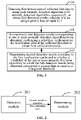
- operation 100 first feature data of collected first data is detected by using each anomaly detection algorithm of N anomaly detection algorithms, respectively, to obtain first detection results; where N is an integer greater than or equal to 1.
- the first data may be any data requiring an anomaly detection, such as KPI data.
- the first data includes a time series number data1 and related data data2.
- the data2 is denoted as [ x eff ' x ref , pre_res, obj_id, KPI_id], where x eff is the number of RRC connection establishment requests corresponding to t w , x ref is the number of RRC connection establishment failures, pre_res represents whether there is anomaly at t w-1 , obj id is an id of the cell, and KPI id is an id of a KPI to be detected.
- all the first feature data required by the N anomaly detection algorithms may be extracted from the first data at one time.
- first feature data required by the current anomaly detection algorithm is selected from the extracted feature data.
- the first feature data required by the current anomaly detection algorithm is extracted from the collected first data.
- the first data requiring no feature extraction may be directly used as the first feature data.
- the first data is cleaned first, and then the feature data is extracted from the cleaned first data. It is certain that not all the first data require to be cleaned, but some of the first data may be cleaned, which is not limited in the embodiment of the present disclosure.
- the data1 is cleaned, but the data2 is not cleaned.
- methods such as a linear interpolation and a mean value are used to supplement in the missing data.
- the first feature data is extracted from cleaned data1. For example, feature statistics (such as a maximum value x max , a minimum value x min , an average value x mean , a median value x median , a standard deviation x std , etc.), a periodic judgment, a classification feature construction (such as an one-hot coding of t w , including hour, day of the week, etc.), calculation of a year-on-year ratio and month-on-month ratio of x w , of a first-order difference, of a second-order difference and the like are carried out on the cleaned data1.
- feature statistics such as a maximum value x max , a minimum value x min , an average value x mean , a median value x median , a standard deviation x std , etc.
- a classification feature construction such as an one-hot coding of t w , including hour, day of the week, etc.
- the anomaly detection algorithms may be a statistical-based learning algorithm (such as a 3-sigma, an exponentially weighted moving-average (EWMA), an autoregressive integrated moving average model (ARIMA), etc.), an unsupervised classification algorithm (such as an isolation forest, an one-class support vector machine (SVM), a variational auto-encode, etc.), and a supervised learning algorithm (such as a logical regression, an extreme gradient boosting (XGBoost), a deep neural network (DNN), etc.).
- EWMA exponentially weighted moving-average
- ARIMA autoregressive integrated moving average model
- ARIMA autoregressive integrated moving average model
- an unsupervised classification algorithm such as an isolation forest, an one-class support vector machine (SVM), a variational auto-encode, etc.
- a supervised learning algorithm such as a logical regression, an extreme gradient boosting (XGBoost), a deep neural network (DNN), etc.
- XGBoost extreme gradient boosting
- DNN deep neural network
- a reliability verification is performed on the first feature data of the first data to obtain first verification results.
- the user may set a verification condition of the reliability verification, select a reliability evaluation method and set related parameters through an interface, and may also import the verification condition, the reliability evaluation method and the related parameters by writing a configuration file.
- the specific implementation is not limited in the embodiments of the present disclosure.
- performing the reliability verification on the first feature data of the first data includes: performing at least one of the following on the first feature data of the first data: a data validity check, a safety interval check, a network-wide contribution check, an anomaly persistence check.
- the specific rules for performing the reliability verification are given by experts according to service experience and domain knowledge, which may be set by users on a page or imported by a configurable file.
- performing the data validity check on the first feature data is to detect whether the number of RRC connection establishment requests x eff is greater than a second preset threshold x eff _threshold.
- the first data is considered to be valid, and the safety interval check is continued on the first feature data.
- the first data is considered to be invalid, then the first data is normal (that is, the first verification results are normal), and the check ends.
- x eff _threshold is given by experts according to service experience and domain knowledge, which may be specifically set by users on the page or imported by the configurable file.
- Performing the safety interval check on the first feature data is to detect whether the RRC connection establishment success rate x w is within a safety interval [ x min , x max ] .
- the first data is considered to be normal (that is, the first verification results are normal), and the check ends.
- the network-wide contribution check is continued on the first feature data.
- the safety interval [ x min , x max x] is given by experts according to service experience and domain knowledge, which may be specifically set by users on the page or imported by the configurable file.
- Performing the network-wide contribution check on the first feature data is to detect whether the number of RRC connection establishment failures x ref is greater than a third preset threshold x ref _threshold.
- the first verification results are determined to be abnormal.
- the persistence check is continued on the first feature data.
- x ref _threshold is given by experts according to service experience and domain knowledge, which may be specifically set by users on the page or imported by the configurable file.
- Performing the persistence check on the first feature data is to detect whether check results pre_res in a period before t w are abnormal, and whether there is a trend of continuous deterioration by determining according to a value of the second-order difference.
- the first verification results are determined to be abnormal.
- the first verification results are determined to be normal, and the check ends.
- second detection results are determined according to the first verification results and to whether a reliability of the one or more anomaly detection algorithms to which the first detection results being abnormal correspond is greater than or equal to a first preset threshold.
- determining the second detection results according to the first verification results and to whether the reliability of the one or more anomaly detection algorithms to which the first detection results being abnormal correspond is greater than or equal to the first preset threshold includes one or more of the following: in response to the reliability of at least one of the one or more anomaly detection algorithms to which the first detection results being abnormal correspond being greater than or equal to the first preset threshold, determining that the second detection results are abnormal; and in response to the reliability of each of the one or more anomaly detection algorithms to which the first detection results being abnormal correspond being less than the first preset threshold, taking the first verification results as the second detection results.
- the second detection results are determined to be abnormal.
- the first verification results are taken as the second detection results.
- the reliabilities of the anomaly detection algorithms includes: a similarity comparison of the anomaly detection algorithms, a statistical check, etc. For example, a coincidence rate of the anomaly detection algorithms.
- the method before determining the second detection results according to the first verification results and to whether the reliability of the one or more anomaly detection algorithms to which the first detection results being abnormal correspond is greater than or equal to the first preset threshold, the method further includes: calculating the coincidence rate of each of the anomaly detection algorithms.
- calculating the coincidence rate of each of the anomaly detection algorithms includes: determining a ratio of a first quantity to a second quantity as the coincidence rate; where, the first quantity is a number of pieces of second data, among all second data collected within a preset time, to which third detection results being identical to second verification results corresponds, herein the third detection results are obtained by detecting second feature data of the all second data by using each of the anomaly detection algorithms, and the second verification results are obtained by performing a reliability verification on the second feature data of the all second data; and the second quantity is a number of pieces of second data, among the all second data collected within the preset time, to which third detection results being abnormal corresponds, herein the third detection results being abnormal are obtained by detecting the second feature data of the all second data by using each of the anomaly detection algorithms.
- the method further includes one or more of the following: in response to the second detection results being abnormal and anomaly cancellation information from a user being received, annotating the first data as a normal sample and adding the first data into an annotated sample library; and in response to the second detection results being abnormal and anomaly confirmation information from the user being received, annotating the collected first data as an abnormal sample and adding the first data to the annotated sample library; where, the samples annotated as normal or abnormal in the annotated sample library are configured to train supervised learning models of the anomaly detection algorithms, and the anomaly detection algorithms are configured to detect the first feature data of the first data based on the supervised learning models to obtain the first detection result.
- the first data is added into the annotated sample library as annotated samples.
- the number of annotated samples accumulated in the annotated sample library is increasing, so that the anomaly detection algorithms based on supervised learning or semi-supervised learning apply the newly added annotated samples for incremental learning or for periodical re-training of the supervised learning models.
- the reliabilities of the supervised learning models are improved, thereby the detection accuracy of the anomaly detection algorithms is improved
- the abnormal information includes an object name "Cell 1", an occurrence time t w , a KPI name "RRC connection establishment success rate", the KPI value x w , etc. corresponding to the abnormal data (i.e. the first data).
- the user may choose to input the anomaly confirmation information to confirm the anomaly, or input the anomaly cancellation information to cancel the anomaly; or do nothing.
- the first data is added into the annotated sample library as the samples annotated as abnormal.
- the anomaly cancellation information the first data is added into the sample library as the samples annotated as normal.
- the embodiment of the present disclosure determines the final detection result based on the detection results of various anomaly detection algorithms and the verification results of the reliability. Since the verification of reliability is performed based on service experience and domain knowledge of experts, the reliability of the detection result is improved.
- Another embodiment of the present disclosure provides an anomaly detection apparatus, which includes a processor and a computer-readable storage medium in which instructions are stored.
- the instructions in response to being executed by the processor, implement any one of the above-described anomaly detection methods.
- Another embodiment of the present disclosure provides a computer-readable storage medium, on which a computer program is stored.
- the computer program in response to being executed by a processor, performs the operations of any one of the above-described anomaly detection methods.
- an anomaly detection apparatus which includes a detection module 201, configured to detect first feature data of collected first data by using each anomaly detection algorithm of N anomaly detection algorithms, respectively, to obtain first detection results; where N is an integer greater than or equal to 1; and in response to first detection results corresponding to one or more anomaly detection algorithms being abnormal, perform a reliability verification on the first feature data of the first data to obtain first verification results; and a determining module 202, configured to determine second detection results according to the first verification results and to whether a reliability of the one or more anomaly detection algorithms to which the first detection results being abnormal correspond is greater than or equal to a first preset threshold.
- the first data may be any data requiring an anomaly detection, such as KPI data.
- the first data includes a time series number data1 and related data data2.
- the data2 is denoted as [ x eff ' x ref , pre_res, obj_id, KPI_id], where x eff is the number of RRC connection establishment requests corresponding to t w , x ref is the number of RRC connection establishment failures, pre_res represents whether there is anomaly at t w-1 , obj_id is an id of the cell, and KPI id is an id of a KPI to be detected.
- the detection module 201 may extract all the first feature data required by the N anomaly detection algorithms from the first data at one time. Before detecting the first feature data of the collected first data by using each of the anomaly detection algorithms to obtain the first detection result, first feature data required by the current anomaly detection algorithm is selected from the extracted feature data.
- the detection module 201 extracts the first feature data required by the current anomaly detection algorithm from the collected first data.
- the first data requiring no feature extraction may be directly used as the first feature data.
- the detection module 201 before extracting the feature data of the first data, the detection module 201 cleans the first data first, and then extracts the feature data from the cleaned first data. It is certain that not all the first data require to be cleaned, but some of the first data may be cleaned, which is not limited in the embodiment of the present disclosure.
- the data1 is cleaned, but the data2 is not cleaned.
- methods such as a linear interpolation and a mean value are used to supplement in the missing data.
- the first feature data is extracted from cleaned data1. For example, feature statistics (such as a maximum value x max , a minimum value x min , an average value x mean , a median value x median , a standard deviation x std , etc.), a periodic judgment, a classification feature construction (such as an one-hot coding of t w , including hour, day of the week, etc.), calculation of a year-on-year ratio and month-on-month ratio of x w , of a first-order difference, of a second-order difference and the like are carried out on the cleaned data1.
- feature statistics such as a maximum value x max , a minimum value x min , an average value x mean , a median value x median , a standard deviation x std , etc.
- a classification feature construction such as an one-hot coding of t w , including hour, day of the week, etc.
- the anomaly detection algorithms may be a statistical-based learning algorithm (such as a 3-sigma, an exponentially weighted moving-average (EWMA), an autoregressive integrated moving average model (ARIMA), etc.), an unsupervised classification algorithm (such as an isolation forest, an one-class support vector machine (SVM), a variational auto-encode, etc.), and a supervised learning algorithm (such as a logical regression, an extreme gradient boosting (XGBoost), a deep neural network (DNN), etc.).
- EWMA exponentially weighted moving-average
- ARIMA autoregressive integrated moving average model
- ARIMA autoregressive integrated moving average model
- an unsupervised classification algorithm such as an isolation forest, an one-class support vector machine (SVM), a variational auto-encode, etc.
- a supervised learning algorithm such as a logical regression, an extreme gradient boosting (XGBoost), a deep neural network (DNN), etc.
- XGBoost extreme gradient boosting
- DNN deep neural network
- the user may set a verification condition of the reliability verification, select a reliability evaluation method and set related parameters through an interface, and may also import the verification condition, the reliability evaluation method and the related parameters by writing a configuration file.
- the specific implementation is not limited in the embodiments of the present disclosure.
- the detection module 201 is specifically configured to perform the reliability verification on the first feature data of the first data in the following ways: performing at least one of the following on the first feature data of the first data: a data validity check, a safety interval check, a network-wide contribution check, an anomaly persistence check.
- the specific rules for performing the reliability verification are given by experts according to service experience and domain knowledge, which may be set by users on a page or imported by a configurable file.
- performing the data validity check on the first feature data is to detect whether the number of RRC connection establishment requests x eff is greater than a second preset threshold x eff _ threshold.
- the first data is considered to be valid, and the safety interval check is continued on the first feature data.
- the first data is considered to be invalid, then the first data is normal (that is, the first verification results are normal), and the check ends.
- x eff _ threshold is given by experts according to service experience and domain knowledge, which may be specifically set by users on the page or imported by the configurable file.
- Performing the safety interval check on the first feature data is to detect whether the RRC connection establishment success rate x w is within a safety interval [ x min , x max ].
- the first data is considered to be normal (that is, the first verification results are normal), and the check ends.
- the network-wide contribution check is continued on the first feature data.
- the safety interval [ x min , x max x] is given by experts according to service experience and domain knowledge, which may be specifically set by users on the page or imported by the configurable file.
- Performing the network-wide contribution check on the first feature data is to detect whether the number of RRC connection establishment failures x ref is greater than a third preset threshold x ref _threshold.
- the first verification results are determined to be abnormal.
- the persistence check is continued on the first feature data.
- x ref _threshold is given by experts according to service experience and domain knowledge, which may be specifically set by users on the page or imported by the configurable file.
- Performing the persistence check on the first feature data is to detect whether check results pre_res in a period before t w are abnormal, and whether there is a trend of continuous deterioration by determining according to a value of the second-order difference.
- the first verification results are determined to be abnormal.
- the first verification results are determined to be normal, and the check ends.
- the determining module 202 is specifically configured to perform any one or more of the following: in response to the reliability of at least one of the one or more anomaly detection algorithms to which the first detection results being abnormal correspond being greater than or equal to the first preset threshold, determining that the second detection results are abnormal; and in response to the reliability of each of the one or more anomaly detection algorithms to which the first detection results being abnormal correspond being less than the first preset threshold, taking the first verification results as the second detection results.
- the second detection results are determined to be abnormal.
- the first verification results are taken as the second detection results.
- the reliabilities of the anomaly detection algorithms include: a similarity comparison of the anomaly detection algorithms, a statistical check, etc. For example, a coincidence rate of the anomaly detection algorithms.
- the determining module 202 is further configured to calculate the coincidence rate of each of the anomaly detection algorithms.
- the determining module 202 is specifically configured to calculate the coincidence rate of each of the anomaly detection algorithms in the following ways: determining a ratio of a first quantity to a second quantity as the coincidence rate; where, the first quantity is a number of pieces of second data, among all second data collected within a preset time, to which third detection results being identical to second verification results corresponds, herein the third detection results are obtained by detecting second feature data of the all second data by using each of the anomaly detection algorithms, and the second verification results are obtained by performing a reliability verification on the second feature data of the all second data; and the second quantity is a number of pieces of second data, among the all second data collected within the preset time, to which third detection results being abnormal corresponds, herein the third detection results being abnormal are obtained by detecting the second feature data of the all second data by using each of the anomaly detection algorithms.
- the determining module 202 is further configured to perform one or more of the following: in response to the second detection results being abnormal and anomaly cancellation information from a user being received, annotating the first data as a normal sample and adding the first data into an annotated sample library; and in response to the second detection results being abnormal and anomaly confirmation information from the user being received, annotating the collected first data as an abnormal sample and adding the first data to the annotated sample library; where, the samples annotated as normal or abnormal in the annotated sample library are configured to train supervised learning models of the anomaly detection algorithms, and the anomaly detection algorithms are configured to detect the first feature data of the first data based on the supervised learning models to obtain the first detection result.
- the first data is added into the annotated sample library as annotated samples.
- the number of annotated samples accumulated in the annotated sample library is increasing, so that the anomaly detection algorithms based on supervised learning or semi-supervised learning apply the newly added annotated samples for incremental learning or for periodical re-training of the supervised learning models.
- the reliabilities of the supervised learning models are improved, thereby the detection accuracy of the anomaly detection algorithms is improved.
- the abnormal information includes an object name "Cell 1", an occurrence time t w , a KPI name "RRC connection establishment success rate", the KPI value x w , etc. corresponding to the abnormal data (i.e. the first data).
- the user may choose to input the anomaly confirmation information to confirm the anomaly, or input the anomaly cancellation information to cancel the anomaly; or do nothing.
- the first data is added into the annotated sample library as the samples annotated as abnormal.
- the anomaly cancellation information the first data is added into the sample library as the sample annotated as normal.
- the embodiment of the present disclosure determines the final detection result based on the detection results of various anomaly detection algorithms and the verification results of the reliability. Since the verification of reliability is performed based on service experience and domain knowledge of experts, the reliability of the detection result is improved.
- Such software can be distributed on a computer-readable medium, which can include a computer storage medium (or non-transitory medium) and a communication medium (or transitory medium).
- a computer storage medium or non-transitory medium
- a communication medium or transitory medium
- the term computer storage medium includes a transitory or non-transitory, removable or irremovable medium implemented in any method or technology applied to storage information (such as a computer-readable instruction, a data structure, a computer program module or other data).
- the computer storage medium includes, but is not limited to, a random access memory (RAM), a read-only memory (ROM), an electrically erasable programmable read only memory (EEPROM), a flash memory or other memory technology, a compact disc read-only memory (CD-ROM), a digital versatile disc (DVD) or another optical disc memory, a magnetic box, a magnetic tape, a magnetic disc or another magnetic storage apparatus, or any other medium applicable to storing desired information and accessible by a computer.
- the communication medium usually includes computer-readable instructions, data structures, program modules, or other data in a modulated data signal such as a carrier wave or other transmission mechanisms, and may include any information delivery medium.
Landscapes
- Engineering & Computer Science (AREA)
- Computer Networks & Wireless Communication (AREA)
- Signal Processing (AREA)
- Data Mining & Analysis (AREA)
- Theoretical Computer Science (AREA)
- General Engineering & Computer Science (AREA)
- Artificial Intelligence (AREA)
- General Physics & Mathematics (AREA)
- Physics & Mathematics (AREA)
- Computer Vision & Pattern Recognition (AREA)
- Evolutionary Computation (AREA)
- Computer Security & Cryptography (AREA)
- Life Sciences & Earth Sciences (AREA)
- Evolutionary Biology (AREA)
- Bioinformatics & Computational Biology (AREA)
- Bioinformatics & Cheminformatics (AREA)
- Environmental & Geological Engineering (AREA)
- Computer Hardware Design (AREA)
- Computing Systems (AREA)
- Mathematical Analysis (AREA)
- Software Systems (AREA)
- Medical Informatics (AREA)
- Databases & Information Systems (AREA)
- Pure & Applied Mathematics (AREA)
- Probability & Statistics with Applications (AREA)
- Mathematical Physics (AREA)
- Mathematical Optimization (AREA)
- Algebra (AREA)
- Debugging And Monitoring (AREA)
Applications Claiming Priority (2)
| Application Number | Priority Date | Filing Date | Title |
|---|---|---|---|
| CN201910605053.9A CN112188534B (zh) | 2019-07-05 | 2019-07-05 | 一种异常检测方法和装置 |
| PCT/CN2020/090936 WO2021004161A1 (zh) | 2019-07-05 | 2020-05-19 | 一种异常检测方法和装置 |
Publications (3)
| Publication Number | Publication Date |
|---|---|
| EP3979416A1 true EP3979416A1 (de) | 2022-04-06 |
| EP3979416A4 EP3979416A4 (de) | 2022-08-03 |
| EP3979416B1 EP3979416B1 (de) | 2026-02-11 |
Family
ID=73915346
Family Applications (1)
| Application Number | Title | Priority Date | Filing Date |
|---|---|---|---|
| EP20837813.3A Active EP3979416B1 (de) | 2019-07-05 | 2020-05-19 | Verfahren und vorrichtung zur detektion von anomalien |
Country Status (5)
| Country | Link |
|---|---|
| US (1) | US11777824B2 (de) |
| EP (1) | EP3979416B1 (de) |
| JP (1) | JP2022539578A (de) |
| CN (1) | CN112188534B (de) |
| WO (1) | WO2021004161A1 (de) |
Families Citing this family (7)
| Publication number | Priority date | Publication date | Assignee | Title |
|---|---|---|---|---|
| US12386721B2 (en) * | 2021-08-04 | 2025-08-12 | Verizon Patent And Licensing Inc. | Anomaly detection using user behavioral biometrics profiling method and apparatus |
| CN113761025B (zh) * | 2021-08-30 | 2022-08-05 | 上海电气国轩新能源科技有限公司 | 储能电站电池数据异常的检测方法、系统、设备及介质 |
| US11832119B2 (en) | 2021-08-31 | 2023-11-28 | Verizon Patent And Licensing Inc. | Identification of anomalous telecommunication service |
| CN115374851A (zh) * | 2022-08-19 | 2022-11-22 | 北京市燃气集团有限责任公司 | 一种燃气数据异常检测方法及装置 |
| KR102593981B1 (ko) * | 2022-11-10 | 2023-10-25 | 주식회사 이노와이어리스 | 네트워크 로그 데이터의 결측치 처리 및 이를 통한 통신 결함 근원 분류 방법 |
| CN117851907B (zh) * | 2024-01-10 | 2024-06-11 | 山东省水利勘测设计院有限公司 | 一种基于物联网技术的水闸渗流监测方法 |
| CN118035650B (zh) * | 2024-01-24 | 2025-02-28 | 连云港飞扬网络科技有限公司 | 一种基于多维数据的数据处理方法 |
Family Cites Families (16)
| Publication number | Priority date | Publication date | Assignee | Title |
|---|---|---|---|---|
| EP1352327A4 (de) * | 2001-01-08 | 2007-04-18 | Vextec Corp | Verfahren und vorrichtung zur vorhersage von ausfällen in einem system |
| US20060063521A1 (en) * | 2004-09-21 | 2006-03-23 | Benjamin Cheung | Method of monitoring wireless network performance |
| CN100486179C (zh) * | 2006-12-15 | 2009-05-06 | 华为技术有限公司 | 一种网络流量异常的检测方法及检测装置 |
| JP5431235B2 (ja) * | 2009-08-28 | 2014-03-05 | 株式会社日立製作所 | 設備状態監視方法およびその装置 |
| US10592093B2 (en) * | 2014-10-09 | 2020-03-17 | Splunk Inc. | Anomaly detection |
| US9872188B2 (en) | 2015-07-28 | 2018-01-16 | Futurewei Technologies, Inc. | Adaptive filtering based network anomaly detection |
| CN105471854B (zh) | 2015-11-18 | 2019-06-28 | 国网智能电网研究院 | 一种基于多级策略的自适应边界异常检测方法 |
| CN105630885B (zh) | 2015-12-18 | 2019-05-28 | 国网福建省电力有限公司泉州供电公司 | 一种用电异常检测方法及系统 |
| US10164991B2 (en) * | 2016-03-25 | 2018-12-25 | Cisco Technology, Inc. | Hierarchical models using self organizing learning topologies |
| JP6805554B2 (ja) * | 2016-06-02 | 2020-12-23 | 富士電機株式会社 | 監視装置及び監視方法 |
| CN106357622B (zh) * | 2016-08-29 | 2019-06-14 | 北京工业大学 | 基于软件定义网络的网络异常流量检测防御系统 |
| JP6795444B2 (ja) | 2017-04-06 | 2020-12-02 | ルネサスエレクトロニクス株式会社 | 異常検知システム、半導体装置の製造システムおよび製造方法 |
| CN107276851B (zh) | 2017-06-26 | 2019-12-13 | 中国信息安全测评中心 | 一种节点的异常检测方法、装置、网络节点及控制台 |
| US10904276B2 (en) | 2017-09-14 | 2021-01-26 | Nokia Technologies Oy | Systems and methods for anomaly detection |
| CN108322347B (zh) * | 2018-02-09 | 2020-08-21 | 腾讯科技(深圳)有限公司 | 数据检测方法、装置、检测服务器及存储介质 |
| CN108762993A (zh) | 2018-06-06 | 2018-11-06 | 山东超越数控电子股份有限公司 | 一种基于人工智能的虚拟机故障迁移方法与装置 |
-
2019
- 2019-07-05 CN CN201910605053.9A patent/CN112188534B/zh active Active
-
2020
- 2020-05-19 JP JP2021578200A patent/JP2022539578A/ja active Pending
- 2020-05-19 US US17/625,078 patent/US11777824B2/en active Active
- 2020-05-19 EP EP20837813.3A patent/EP3979416B1/de active Active
- 2020-05-19 WO PCT/CN2020/090936 patent/WO2021004161A1/zh not_active Ceased
Also Published As
| Publication number | Publication date |
|---|---|
| EP3979416A4 (de) | 2022-08-03 |
| CN112188534B (zh) | 2023-11-03 |
| EP3979416B1 (de) | 2026-02-11 |
| US20220278914A1 (en) | 2022-09-01 |
| JP2022539578A (ja) | 2022-09-12 |
| WO2021004161A1 (zh) | 2021-01-14 |
| CN112188534A (zh) | 2021-01-05 |
| US11777824B2 (en) | 2023-10-03 |
Similar Documents
| Publication | Publication Date | Title |
|---|---|---|
| US11777824B2 (en) | Anomaly detection method and apparatus | |
| CN110475124B (zh) | 视频卡顿检测方法及装置 | |
| CN110134566A (zh) | 一种基于标签技术的云环境下信息系统性能监测方法 | |
| AU2019275633B2 (en) | System and method of automated fault correction in a network environment | |
| WO2014183782A1 (en) | Method and network device for cell anomaly detection | |
| CN103605787B (zh) | 继电保护评价分析方法及系统 | |
| WO2018125628A1 (en) | A network monitor and method for event based prediction of radio network outages and their root cause | |
| CN118709184B (zh) | 恶意代码逃逸检测方法及装置 | |
| JP2017097819A (ja) | アプリケーション層ログ分析を基礎とする情報セキュリティー管理システム及びその方法 | |
| US11197175B2 (en) | Forcasting time series data | |
| CN111563560A (zh) | 基于时序特征学习的数据流分类方法及装置 | |
| CN116794510A (zh) | 故障预测方法、装置、计算机设备和存储介质 | |
| KR102009718B1 (ko) | 이동 통신망 장애 감시 시스템 및 방법 | |
| US20250021646A1 (en) | Security countermeasure planning system, security countermeasure planning method, and program | |
| CN118555187A (zh) | 一种告警关联分析方法、装置、电子设备及存储介质 | |
| KR101027242B1 (ko) | 공정 제어 네트워크에서의 장애 예측 방법 및 장치 | |
| CN115858315A (zh) | 一种适用于电力核心网的安全防护性能测评方法 | |
| CN116643937A (zh) | 数据日志的图像分析 | |
| WO2019111866A1 (ja) | 分析装置、通信システム、データ処理方法、及び非一時的なコンピュータ可読媒体 | |
| CN115730737A (zh) | 业务信息的预测方法、装置、存储介质及电子设备 | |
| US12113687B2 (en) | System and method for outage prediction | |
| CN111935279A (zh) | 基于区块链和大数据的物联网络维护方法及计算节点 | |
| CN118509527B (zh) | 一种5g核心网多维kpi时间序列的异常检测方法及系统 | |
| CN120979843B (zh) | 电力工控流量应用层报文异常检测方法、装置及电子设备 | |
| CN117725410A (zh) | 模型训练方法、装置、非易失性存储介质及电子设备 |
Legal Events
| Date | Code | Title | Description |
|---|---|---|---|
| STAA | Information on the status of an ep patent application or granted ep patent |
Free format text: STATUS: THE INTERNATIONAL PUBLICATION HAS BEEN MADE |
|
| PUAI | Public reference made under article 153(3) epc to a published international application that has entered the european phase |
Free format text: ORIGINAL CODE: 0009012 |
|
| STAA | Information on the status of an ep patent application or granted ep patent |
Free format text: STATUS: REQUEST FOR EXAMINATION WAS MADE |
|
| 17P | Request for examination filed |
Effective date: 20211226 |
|
| AK | Designated contracting states |
Kind code of ref document: A1 Designated state(s): AL AT BE BG CH CY CZ DE DK EE ES FI FR GB GR HR HU IE IS IT LI LT LU LV MC MK MT NL NO PL PT RO RS SE SI SK SM TR |
|
| RIN1 | Information on inventor provided before grant (corrected) |
Inventor name: PAN, CHUNJIN Inventor name: LUO, YINGYAN Inventor name: DU, YONGSHENG |
|
| A4 | Supplementary search report drawn up and despatched |
Effective date: 20220701 |
|
| RIC1 | Information provided on ipc code assigned before grant |
Ipc: H04W 24/04 20090101ALI20220627BHEP Ipc: H04L 41/16 20220101ALI20220627BHEP Ipc: H04L 41/142 20220101ALI20220627BHEP Ipc: H01Q 1/38 20060101AFI20220627BHEP |
|
| DAV | Request for validation of the european patent (deleted) | ||
| DAX | Request for extension of the european patent (deleted) | ||
| STAA | Information on the status of an ep patent application or granted ep patent |
Free format text: STATUS: EXAMINATION IS IN PROGRESS |
|
| 17Q | First examination report despatched |
Effective date: 20241129 |
|
| REG | Reference to a national code |
Ref country code: DE Ref legal event code: R079 Free format text: PREVIOUS MAIN CLASS: H01Q0001380000 Ipc: H04W0024040000 Ref country code: DE Ref legal event code: R079 Ref document number: 602020066795 Country of ref document: DE Free format text: PREVIOUS MAIN CLASS: H01Q0001380000 Ipc: H04W0024040000 |
|
| RIC1 | Information provided on ipc code assigned before grant |
Ipc: H04W 24/04 20090101AFI20250731BHEP Ipc: H04Q 1/38 20060101ALI20250731BHEP Ipc: H04L 41/142 20220101ALI20250731BHEP Ipc: H04L 41/16 20220101ALI20250731BHEP |
|
| GRAP | Despatch of communication of intention to grant a patent |
Free format text: ORIGINAL CODE: EPIDOSNIGR1 |
|
| STAA | Information on the status of an ep patent application or granted ep patent |
Free format text: STATUS: GRANT OF PATENT IS INTENDED |
|
| INTG | Intention to grant announced |
Effective date: 20250910 |
|
| GRAS | Grant fee paid |
Free format text: ORIGINAL CODE: EPIDOSNIGR3 |
|
| GRAA | (expected) grant |
Free format text: ORIGINAL CODE: 0009210 |
|
| STAA | Information on the status of an ep patent application or granted ep patent |
Free format text: STATUS: THE PATENT HAS BEEN GRANTED |
|
| AK | Designated contracting states |
Kind code of ref document: B1 Designated state(s): AL AT BE BG CH CY CZ DE DK EE ES FI FR GB GR HR HU IE IS IT LI LT LU LV MC MK MT NL NO PL PT RO RS SE SI SK SM TR |
|
| REG | Reference to a national code |
Ref country code: CH Ref legal event code: F10 Free format text: ST27 STATUS EVENT CODE: U-0-0-F10-F00 (AS PROVIDED BY THE NATIONAL OFFICE) Effective date: 20260211 Ref country code: GB Ref legal event code: FG4D |
|
| REG | Reference to a national code |
Ref country code: DE Ref legal event code: R096 Ref document number: 602020066795 Country of ref document: DE |
|
| REG | Reference to a national code |
Ref country code: IE Ref legal event code: FG4D |