EP3979576A1 - Procédé de transfert de paquet, dispositif, et support de stockage lisible par ordinateur - Google Patents
Procédé de transfert de paquet, dispositif, et support de stockage lisible par ordinateur Download PDFInfo
- Publication number
- EP3979576A1 EP3979576A1 EP20836741.7A EP20836741A EP3979576A1 EP 3979576 A1 EP3979576 A1 EP 3979576A1 EP 20836741 A EP20836741 A EP 20836741A EP 3979576 A1 EP3979576 A1 EP 3979576A1
- Authority
- EP
- European Patent Office
- Prior art keywords
- node device
- forwarding
- forwarding table
- packet
- network topology
- Prior art date
- Legal status (The legal status is an assumption and is not a legal conclusion. Google has not performed a legal analysis and makes no representation as to the accuracy of the status listed.)
- Pending
Links
Images



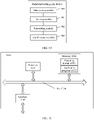
Classifications
-
- H—ELECTRICITY
- H04—ELECTRIC COMMUNICATION TECHNIQUE
- H04L—TRANSMISSION OF DIGITAL INFORMATION, e.g. TELEGRAPHIC COMMUNICATION
- H04L12/00—Data switching networks
- H04L12/28—Data switching networks characterised by path configuration, e.g. LAN [Local Area Networks] or WAN [Wide Area Networks]
- H04L12/46—Interconnection of networks
- H04L12/4633—Interconnection of networks using encapsulation techniques, e.g. tunneling
-
- H—ELECTRICITY
- H04—ELECTRIC COMMUNICATION TECHNIQUE
- H04L—TRANSMISSION OF DIGITAL INFORMATION, e.g. TELEGRAPHIC COMMUNICATION
- H04L12/00—Data switching networks
- H04L12/28—Data switching networks characterised by path configuration, e.g. LAN [Local Area Networks] or WAN [Wide Area Networks]
- H04L12/2803—Home automation networks
- H04L12/2823—Reporting information sensed by appliance or service execution status of appliance services in a home automation network
-
- H—ELECTRICITY
- H04—ELECTRIC COMMUNICATION TECHNIQUE
- H04L—TRANSMISSION OF DIGITAL INFORMATION, e.g. TELEGRAPHIC COMMUNICATION
- H04L45/00—Routing or path finding of packets in data switching networks
- H04L45/02—Topology update or discovery
-
- H—ELECTRICITY
- H04—ELECTRIC COMMUNICATION TECHNIQUE
- H04L—TRANSMISSION OF DIGITAL INFORMATION, e.g. TELEGRAPHIC COMMUNICATION
- H04L45/00—Routing or path finding of packets in data switching networks
- H04L45/02—Topology update or discovery
- H04L45/021—Ensuring consistency of routing table updates, e.g. by using epoch numbers
-
- H—ELECTRICITY
- H04—ELECTRIC COMMUNICATION TECHNIQUE
- H04L—TRANSMISSION OF DIGITAL INFORMATION, e.g. TELEGRAPHIC COMMUNICATION
- H04L45/00—Routing or path finding of packets in data switching networks
- H04L45/12—Shortest path evaluation
-
- H—ELECTRICITY
- H04—ELECTRIC COMMUNICATION TECHNIQUE
- H04L—TRANSMISSION OF DIGITAL INFORMATION, e.g. TELEGRAPHIC COMMUNICATION
- H04L45/00—Routing or path finding of packets in data switching networks
- H04L45/18—Loop-free operations
-
- H—ELECTRICITY
- H04—ELECTRIC COMMUNICATION TECHNIQUE
- H04L—TRANSMISSION OF DIGITAL INFORMATION, e.g. TELEGRAPHIC COMMUNICATION
- H04L45/00—Routing or path finding of packets in data switching networks
- H04L45/48—Routing tree calculation
-
- H—ELECTRICITY
- H04—ELECTRIC COMMUNICATION TECHNIQUE
- H04L—TRANSMISSION OF DIGITAL INFORMATION, e.g. TELEGRAPHIC COMMUNICATION
- H04L45/00—Routing or path finding of packets in data switching networks
- H04L45/74—Address processing for routing
-
- H—ELECTRICITY
- H04—ELECTRIC COMMUNICATION TECHNIQUE
- H04L—TRANSMISSION OF DIGITAL INFORMATION, e.g. TELEGRAPHIC COMMUNICATION
- H04L47/00—Traffic control in data switching networks
- H04L47/10—Flow control; Congestion control
- H04L47/28—Flow control; Congestion control in relation to timing considerations
-
- H—ELECTRICITY
- H04—ELECTRIC COMMUNICATION TECHNIQUE
- H04L—TRANSMISSION OF DIGITAL INFORMATION, e.g. TELEGRAPHIC COMMUNICATION
- H04L45/00—Routing or path finding of packets in data switching networks
- H04L45/16—Multipoint routing
-
- H—ELECTRICITY
- H04—ELECTRIC COMMUNICATION TECHNIQUE
- H04L—TRANSMISSION OF DIGITAL INFORMATION, e.g. TELEGRAPHIC COMMUNICATION
- H04L45/00—Routing or path finding of packets in data switching networks
- H04L45/24—Multipath
-
- H—ELECTRICITY
- H04—ELECTRIC COMMUNICATION TECHNIQUE
- H04L—TRANSMISSION OF DIGITAL INFORMATION, e.g. TELEGRAPHIC COMMUNICATION
- H04L45/00—Routing or path finding of packets in data switching networks
- H04L45/28—Routing or path finding of packets in data switching networks using route fault recovery
-
- H—ELECTRICITY
- H04—ELECTRIC COMMUNICATION TECHNIQUE
- H04L—TRANSMISSION OF DIGITAL INFORMATION, e.g. TELEGRAPHIC COMMUNICATION
- H04L45/00—Routing or path finding of packets in data switching networks
- H04L45/54—Organization of routing tables
-
- H—ELECTRICITY
- H04—ELECTRIC COMMUNICATION TECHNIQUE
- H04L—TRANSMISSION OF DIGITAL INFORMATION, e.g. TELEGRAPHIC COMMUNICATION
- H04L47/00—Traffic control in data switching networks
- H04L47/10—Flow control; Congestion control
- H04L47/12—Avoiding congestion; Recovering from congestion
- H04L47/125—Avoiding congestion; Recovering from congestion by balancing the load, e.g. traffic engineering
Definitions
- This application relates to the field of communications technologies, and in particular, to a packet forwarding method and device, and a computer-readable storage medium.
- a bit index explicit replication (bit indexed explicit replication, BIER) technology is a multicast technology.
- BIER BIER forwarding router identifier
- BFR-id BIER Forwarding Router identifier
- Configuration information of the edge node device is flooded on the network through interior gateway protocol (Interior Gateway Protocol, IGP) flooding, so that each node on the network can determine a device that is identified by each BFR-id.
- IGP Interior Gateway Protocol
- each node on the network establishes a forwarding table based on information flooded by a control plane over IGP, and each node may forward a BIER packet on a forwarding plane by using the forwarding table.
- Embodiments of this application provide a packet forwarding method and device, and a computer-readable storage medium, to resolve a problem in a related technology.
- Technical solutions are as follows.
- a packet forwarding method is provided.
- the method is used to forward a BIER packet, and the method includes: A destination node device starts a timer when the destination node device determines that a network topology changes; before the timer expires, the destination node device forwards the BIER packet by using an old forwarding table and establishes a new forwarding table, where the old forwarding table is a forwarding table used by the destination node device before the network topology changes, the new forwarding table is a forwarding table established by the destination node device based on the changed network topology, and the timer indicates that establishment of the new forwarding table is completed before the timer expires; and after the timer expires, the destination node device switches the old forwarding table to the new forwarding table, and forwards the BIER packet according to the new forwarding table.
- the destination node device forwards the BIER packet by using the old forwarding table and establishes the new forwarding table before the timer expires, switches the old forwarding table to the new forwarding table after the timer expires, and forwards the BIER packet by using the new forwarding table. This avoids or reduces a packet loss and excess packets.
- the method further includes: The destination node device determines, according to the old forwarding table, whether a loop exists on a packet forwarding path after the network topology changes; and before starting the timer, the destination node device determines, according to the old forwarding table, that no loop exists on the packet forwarding path after the network topology changes.
- the timer is started only when it is determined, according to the old forwarding table, that no loop exists on the packet forwarding path after the network topology changes. This avoids link congestion caused by timing of the timer when the loop exists.
- the method when the destination node device determines that the network topology changes, the method further includes: The destination node device determines, according to the old forwarding table, whether a loop exists on a packet forwarding path after the network topology changes; and when determining, according to the old forwarding table, that the loop exists on the packet forwarding path after the network topology changes, the destination node device does not start the timer, and establishes the new forwarding table; and after establishment of the new forwarding table is completed, the destination node device switches the old forwarding table to the new forwarding table, and forwards the BIER packet according to the new forwarding table.
- the timer is not started and the new forwarding table is directly established. After establishment of the new forwarding table is completed, the old forwarding table is switched to the new forwarding table.
- the BIER packet is forwarded according to the new forwarding table to avoid link congestion.
- the method when the destination node device determines that the network topology changes, the method further includes: The destination node device determines, according to the old forwarding table, whether a loop exists on a packet forwarding path after the network topology changes; and when determining, according to the old forwarding table, that the loop exists on the packet forwarding path after the network topology changes, the destination node device does not start the timer, updates the old forwarding table based on the changed network topology, and forwards the BIER packet according to the updated forwarding table.
- the timer is not started and the old forwarding table is directly updated.
- the BIER packet is forwarded according to the updated forwarding table to avoid link congestion.
- the packet forwarding path includes a first path and a second path that is calculated based on the changed network topology.
- the first path is a path from the destination node device to each neighbor of the destination node device in the old forwarding table.
- the second path uses each neighbor of the destination node device in the old forwarding table as a start point, and uses an edge node device indicated by a forwarding bit mask of each neighbor of the destination node device as an end point.
- Existence of the loop means that the second path travels through the destination node device.
- that the destination node device determines, according to the old forwarding table, whether a loop exists on a packet forwarding path after the network topology changes includes: For any neighbor of the destination node device in the old forwarding table, the destination node device determines whether a path, indicated by a forwarding bit mask of the any neighbor, of each edge node device in the changed network topology travels through the destination node device; and when a path of any edge node device in the changed network topology travels through the destination node device, determines that the loop exists on the packet forwarding path after the network topology changes; or when the path of each edge node device in the changed network topology does not travel through the destination node device, determines that no loop exists on the packet forwarding path after the network topology changes.
- that the destination node device determines, according to the old forwarding table, whether a loop exists on a packet forwarding path after the network topology changes includes: The destination node device establishes a shortest path tree in the changed network topology by using each neighbor of the destination node device in the old forwarding table as a root; traverses identifiers of edge node devices that arrive on the shortest path tree through the destination node device, to obtain a bit string; performs an AND operation on the bit string and the forwarding bit mask of the neighbor of the destination node device; and when a result is 0, determines that no loop exists on the packet forwarding path after the network topology changes; or when a result is not 0, determines that the loop exists on the packet forwarding path after the network topology changes.
- that the destination node device forwards the BIER packet by using an old forwarding table and establishes a new forwarding table includes: Before the timer expires, the destination node device forwards the BIER packet by using old multiple load balancing entries, and establishes new multiple load balancing entries based on a quantity of load balancing paths; and after the timer expires, that the destination node device switches the old forwarding table to the new forwarding table, and forwards the BIER packet according to the new forwarding table includes: After the timer expires, the destination node device switches a forwarding table of the multiple load balancing entries to the new multiple load balancing entries, and forwards the BIER packet according to the new multiple load balancing entries.
- An embodiment of this application further provides a packet forwarding node device.
- the packet forwarding node device is configured to forward a BIER packet
- the packet forwarding node device includes: a starting module, configured to start a timer when it is determined that a network topology changes; a forwarding module, configured to: before the timer expires, forward the BIER packet by using an old forwarding table, where the old forwarding table is a forwarding table used by the packet forwarding node device before the network topology changes; and an establishment module, configured to: before the timer expires, establish a new forwarding table, where the new forwarding table is a forwarding table established by the packet forwarding node device based on the changed network topology, and the timer indicates that establishment of the new forwarding table is completed before the timer expires; the forwarding module is further configured to: after the timer expires, switch the old forwarding table to the new forwarding table, and forward the BIER packet according to the new forwarding table.
- the packet forwarding node device further includes: a determining module, configured to determine, according to the old forwarding table, whether a loop exists on a packet forwarding path after the network topology changes; and before the starting module starts the timer, the determining module determines, according to the old forwarding table, that no loop exists on the packet forwarding path after the network topology changes.
- the packet forwarding node device further includes: a determining module, configured to determine, according to the old forwarding table, whether a loop exists on a packet forwarding path after the network topology changes; and when it is determined, according to the old forwarding table, that the loop exists on the packet forwarding path after the network topology changes, the starting module does not start the timer, and the establishment module establishes the new forwarding table; and after establishment of the new forwarding table is completed, the forwarding module switches the old forwarding table to the new forwarding table, and forwards the BIER packet according to the new forwarding table.
- a determining module configured to determine, according to the old forwarding table, whether a loop exists on a packet forwarding path after the network topology changes.
- the packet forwarding node device further includes: a determining module, configured to determine, according to the old forwarding table, whether a loop exists on a packet forwarding path after the network topology changes; and when it is determined, according to the old forwarding table, that the loop exists on the packet forwarding path after the network topology changes, the starting module does not start the timer, and the forwarding module is configured to update the old forwarding table based on the changed network topology, and forward the BIER packet according to the updated forwarding table.
- a determining module configured to determine, according to the old forwarding table, whether a loop exists on a packet forwarding path after the network topology changes; and when it is determined, according to the old forwarding table, that the loop exists on the packet forwarding path after the network topology changes, the starting module does not start the timer, and the forwarding module is configured to update the old forwarding table based on the changed network topology, and forward the BIER packet according to the updated forwarding table.
- the packet forwarding path includes a first path and a second path that is calculated based on the changed network topology.
- the first path is a path from the destination node device to each neighbor of the destination node device in the old forwarding table.
- the second path uses each neighbor of the destination node device in the old forwarding table as a start point, and uses an edge node device indicated by a forwarding bit mask of each neighbor of the destination node device as an end point.
- Existence of the loop means that the second path travels through the destination node device.
- the determining module is configured to: for any neighbor of the destination node device in the old forwarding table, determine whether a path, indicated by a forwarding bit mask of the any neighbor, of each edge node device in the changed network topology travels through the destination node device; and when a path of any edge node device in the changed network topology travels through the destination node device, determine that the loop exists on the packet forwarding path after the network topology changes; or when the path of each edge node device in the changed network topology does not travel through the destination node device, determine that no loop exists on the packet forwarding path after the network topology changes.
- the determining module is configured to: establish a shortest path tree in the changed network topology by using each neighbor of the destination node device in the old forwarding table as a root; traverse identifiers of edge node devices that arrive on the shortest path tree through the destination node device, to obtain a bit string; perform an AND operation on the bit string and the forwarding bit mask of the neighbor of the destination node device; and when the result is 0, determine that no loop exists on the packet forwarding path after the network topology changes; or when the result is not 0, determine that the loop exists on the packet forwarding path after the network topology changes.
- the forwarding module is configured to: before the timer expires, forward the BIER packet by using old multiple load balancing entries; the establishment module is configured to establish new multiple load balancing entries based on a quantity of load balancing paths; and the forwarding module is configured to: after the timer expires, switch a forwarding table of the multiple load balancing entries to the new multiple load balancing entries, and forward the BIER packet according to the new multiple load balancing entries.
- a packet forwarding node device is further provided.
- the packet forwarding node device includes a memory and a processor.
- the memory stores at least one instruction
- the processor loads and executes the at least one instruction to implement any one of the foregoing packet forwarding methods.
- a computer-readable storage medium is further provided.
- the storage medium stores at least one instruction, and a processor loads and executes the instruction to implement any one of the foregoing packet forwarding methods.
- the apparatus includes a transceiver, a memory, and a processor.
- the transceiver, the memory, and the processor communicate with each other through an internal connection channel.
- the memory is configured to store instructions.
- the processor is configured to execute the instructions stored in the memory, to control the transceiver to receive a signal, and control the transceiver to send a signal.
- the processor executes the instructions stored in the memory, the processor is enabled to perform the method in the first aspect or any one of possible implementations of the first aspect.
- processors there are one or more processors, and there are one or more memories.
- the memory may be integrated with the processor, or the memory and the processor are disposed separately.
- the memory may be a non-transitory (non-transitory) memory, such as a read-only memory (read only memory, ROM).
- ROM read only memory
- the memory and the processor may be integrated into one chip, or may be disposed in different chips.
- a type of the memory and a manner in which the memory and the processor are disposed are not limited in this embodiment of this application.
- a computer program (product) is provided.
- the computer program (product) includes computer program code.
- the computer program code is run on a computer, the computer is enabled to perform the methods in the foregoing aspects.
- a chip is provided.
- the chip includes a processor, configured to invoke and run instructions stored in a memory, so that a communications device on which the chip is installed performs the methods in the foregoing aspects.
- Another chip including an input interface, an output interface, a processor, and a memory.
- the input interface, the output interface, the processor, and the memory are connected to each other through an internal connection channel.
- the processor is configured to execute code in the memory. When the code is executed, the processor is configured to perform the methods in the foregoing aspects.
- a BIER technology is a multicast technology.
- a BFR-id is configured for each edge node device on a network, for example, the BFR-id is a value ranging from 1 to 256.
- Configuration information of each edge node on the network is flooded on the network through IGP flooding.
- the information flooded along with IGP is referred to as BIER information.
- each node on the network can determine a device that is identified by each BFR-id.
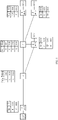
- FIG. 1 is a schematic diagram of a network in which BIER information is flooded through the IGP.
- Edge node devices on the network include A, D, E, and F.
- BFR-id values configured for the edge node devices A, D, E, and F are 4, 1, 2, and 3 respectively.
- the BFR-id value of each edge node is flooded through the IGP.
- each edge node device sends a control plane packet to another node device on the network.
- the control plane packet includes flooding information
- the flooding information includes a BFR-id of the edge node device, and further includes an internet protocol (internet protocol, IP) address, and encapsulation information.
- IP internet protocol
- encapsulation information includes an encapsulation type.
- flooding information of the edge node device A carries a BFR-id, an IP address, and an encapsulation type that are of the edge node device A, and an MPLS label allocated to the corresponding edge node device A, where the encapsulation type is multiprotocol label switching (multi-protocol label switching, MPLS).
- Nodes B and C are intermediate nodes, and no BFR-id needs to be configured for them. Therefore, a BFR-id in flooding information of control plane packets sent by the nodes B and C is accordingly set to 0.
- the flooding information in the control plane packets of the nodes B and C further includes other information such as an IP address and encapsulation information of the nodes.
- each node on the network establishes a forwarding table based on information flooded by a control plane over IGP, and each node may forward a BIER packet on a forwarding plane by using the forwarding table.
- the BIER packet includes a BIER encapsulated multicast data packet.
- For a BIER encapsulation format refer to descriptions of a BIER header format in a request for comment (request for comment, RFC) 8296.
- the BIER header format is a key to implementing BIER on the forwarding plane (chip). As shown in FIG.
- a BIER header includes a 32-bit (4 bytes) BIER-Label (label) or BIER forwarding table identifier (bit indexed forwarding table identifier, BIFT-ID) value.
- the first 20 bits are the label value or the BIFT-ID value, and the last 12 bits are other information of the label, including a communication traffic class (traffic class, TC), an S bit, and time to live (time to live, TTL).
- the BIER header further includes other 64-bit (8 bytes) fields, including a discriminator (Nibble), a version (Ver), a bit string length (bits length, BSL), an entropy (Entropy), detection (OAM), reservation (Rsv), a differentiated services field code point (differentiated services field codepoints, DSCP), a protocol (Proto), and a BIER forwarding ingress router identifier (BIER forwarding ingress router, BFIR-id), and further includes a bit string (BitString).
- a length of the BitString may be 64 bits, 128 bits, 256 bits, and the like.
- the BIER-Label or BFR-ID value may be used to determine the length of the BitString.
- Each bit in the BitString field is used to identify a BIER forwarding egress router (BIER forwarding edge router, BFER). For example, a least significant (rightmost) bit of the BitString is used to identify that a next-hop node is a node whose BFR-id is 1. The second bit to the right of the BitString is used to identify a node whose BFR-id is 2. Forwarding by the forwarding plane is based on a forwarding entry. The forwarding entry determines, based on a BitString in a BIER packet, to which next hop or which next hops the BIER packet is to be sent. If a plurality of bits correspond to a same next hop, only one BIER packet is sent to the next hop.
- BIER forwarding edge router BFER
- nodes in FIG. 1 establish a BIER forwarding table.
- a neighbor in the forwarding table may be a directly connected neighbor in a network topology, or may be an indirectly connected neighbor, for example, an indirectly connected neighbor calculated according to section 6.9 of RFC 8279.
- Neighbors of the edge node device A include the node B.
- a neighbor entry of the edge node device A is established.
- Each bit in the FBM indicates one edge node device. If there are a large number of edge node devices, the edge node devices may be divided into different sets (sets). For a plurality of sets, the FBM includes bit strings of the plurality of sets. For example, there are 512 edge node devices in the network topology. The 512 edge node devices are divided into two sets: a set 0 and a set 1. One set uses a 256-bit bit string. In this case, an FBM of a neighbor may include two 256-bit bit strings: a bit string corresponding to the set 0 and a bit string corresponding to the set 1.
- the edge node device A For the neighbor entry of the edge node device A, when the first bit, the second bit, and third bit to the right of the BitString in the BIER packet are 1, the edge node device A sends the BIER packet to the neighboring node B.
- the fourth bit to the right of the BitString in the BIER packet is 1 (for example, a BIER packet sent from the node B to the node A)
- the entry indicates to send the BIER packet to the node A.
- an ⁇ A ⁇ identifier indicates to send the BIER packet to the node A.
- neighbors of the node B include the edge node device A, the node C, and the edge node device E.
- Next hops of BFER nodes whose BFR-id is 1/2 are both the node C, a BFER node whose BFR-id is 3 is the edge node device E, and a BFER node whose BFR-id is 4 is the edge node device A.
- a neighbor entry of the node B is established as follows:
- neighboring nodes of the node C include the node B, the edge node device E, the edge node device F, and the edge node device D.
- a BFER node whose BFR-id is 1 is the edge node device D
- a BFER node whose BFR-id is 2 is the edge node device F
- a BFER node whose BFR-id is 3 is the edge node device E
- a next hop of a BFER node whose BFR-id is 4 is the node B.
- a neighbor entry of the node C is established as follows:
- neighboring nodes of the edge node device D include the node C.
- a next hop of a BFER node whose BFR-id is 2/3/4 is the node C.
- neighboring nodes of the edge node device E include the node B and the node C.
- a next hop of a BFER node whose BFR-id is 1/2 is the node C, and a next hop of a BFER node whose BFR-id is 4 is the node B.
- a neighbor entry of the edge node device E is established as follows:
- neighboring nodes of the edge node device F include the node C.
- a next hop of a BFER node whose BFR-id is 1/3/4 is the node C.
- a node that receives the BIER packet removes the BIER header and forwards the packet as the original multicast packet.
- a packet forwarding process is as follows:
- IP internet protocol
- the node E After receiving the BIER packet, the node E determines, according to BitString being 0100 in the BIER packet, that the BIER packet needs to be sent to the node E (itself). Therefore, the node E decapsulates the BIER header, and then forwards the BIER packet according to an inner IP packet. For example, the inner IP packet may be sent to a multicast receiver (multicast receiver, RCV) of the node E in FIG. 1 .
- the node C After receiving the BIER packet sent by the node B, the node C determines, according to the BitString being 0011, that the BIER packet needs to be sent to the node D and the node F. The node C changes the BitString in the BIER packet to 0001 and sends the BIER packet to the node D.
- the node D decapsulates the BIER header and forwards the packet according to the inner IP packet. For example, the node D sends the BIER packet to an RCV of the node D in FIG. 1 .
- the node C changes the BitString in the BIER packet to 0010 and sends the BIER packet to the node F.
- the node F decapsulates the BIER header and forwards the packet according to the inner IP packet. For example, the BIER packet is sent to an RSV of the node F.
- a link between a node 1 and a node 3 is added in the network topology shown in FIG. 4 .
- a BIER forwarding table of the node 1 is as follows:
- the BIER forwarding table of the node 1 is as follows:
- Nbr Node 2
- Nbr Node 3
- an embodiment of this application provides a packet forwarding method.
- the BIER packet is first forwarded according to the old forwarding path.
- an old forwarding table is changed to the new forwarding table, and then the old forwarding table is deleted.
- a make before break make before break, MBB
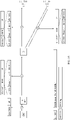
- the method provided in this embodiment of this application includes the following steps.
- Step 501 When a destination node device determines that a network topology changes, the destination node device starts a timer.
- a network topology change includes a case in which a new link is added.
- the case in which a new link is added is not limited in this embodiment of this application.
- the added link may be a link that is previously disconnected due to a fault and then recovered.
- the network topology shown in FIG. 4 There is a link between the node 1 and the node 3, but the link between the node 1 and the node 3 is disconnected due to a fault. After the link fault between the node 1 and the node 3 is rectified, the network topology changes. The link between the node 1 and the node 3 is added because the link fault between the node 1 and the node 3 is rectified.
- BIER MBB may be enabled for a node on a network.
- the destination node device in this method may be any node that is in the changed network topology after the link is added and for which BIER MBB is configured.
- the destination node device uses a BIER protocol, and has a BIER forwarding capability and a forwarding capability of specific BIER encapsulation types, for example, MPLS encapsulation, ethernet (Ethernet) encapsulation, or internet protocol version 6 (internet protocol version 6, IPv6) encapsulation.
- a specific encapsulation type for BIER forwarding is not limited in this embodiment of this application.
- the destination node device in this embodiment of this application may be a router or a switch.
- a network administrator enables BIER MBB for the destination node device, so that the destination node device has a BIER MBB function.
- the timer indicates that establishment of a new forwarding table is completed before the timer expires.
- the network administrator may further configure timing duration of the timer.
- the timing duration of the timer may be configured based on a capability of the destination node device, for example, based on a central processing unit (central processing unit, CPU) load of the destination node device, or may be configured based on experience.
- a same timing duration or different timing durations of timers may be configured for different destination node devices. This is not limited in this embodiment of this application, provided that it can be ensured that establishment of the new forwarding table is completed.
- Step 502 Before the timer expires, the destination node device forwards a BIER packet by using an old forwarding table and establishes the new forwarding table.
- the old forwarding table is a forwarding table used by the destination node device before the network topology changes.
- the new forwarding table is a forwarding table established by the destination node device based on the changed network topology. After the network topology changes, if the destination node device receives the BIER packet before the timer expires, the destination node device forwards the BIER packet by using the old forwarding table, and establishes the new forwarding table.
- the new forwarding table may be established before or after the timer is started, or the new forwarding table may be established when the timer is started. Because the timer indicates that establishment of the new forwarding table is completed before the timer expires, if the new forwarding table is established before the timer is started, the timing duration of the timer is less than establishment duration of the new forwarding table. If the new forwarding table is established after the timer is started, the timing duration of the timer is greater than the establishment duration of the new forwarding table. If the new forwarding table is established when the timer is started, the timing duration of the timer may be equal to the establishment duration of the new forwarding table. The establishment duration of the new forwarding table is a length of time between a moment at which the new forwarding table starts to be established and a moment at which establishment of the new forwarding table is completed.
- the method further includes: determining, based on the old forwarding table, whether a loop exists on the packet forwarding path after the network topology changes.
- the destination node device determines, according to the old forwarding table, that no loop exists on the packet forwarding path after the network topology changes. Then, before the timer expires, the destination node device forwards the BIER packet by using the old forwarding table and establishes the new forwarding table. When it is determined that no loop exists on the packet forwarding path after the network topology changes, before the timer expires, the old forwarding table is used to forward the BIER packet and the new forwarding table is established. This avoids link congestion caused by the loop that exists when the old forwarding table is used to forward the BIER packet.
- a manner of determining, based on the old forwarding table, whether the loop exists on the packet forwarding path after the network topology changes includes but is not limited to the following two manners:
- the destination node device determines whether a path, indicated by a forwarding bit mask of the any neighbor, of each edge node device in the changed network topology travels through the destination node device. When a path of any edge node device in the changed network topology travels through the destination node device, the destination node device determines that the loop exists on the packet forwarding path after the network topology changes. When the path of each edge node device in the changed network topology does not travel through the destination node device, the destination node device determines that no loop exists on the packet forwarding path after the network topology changes.
- the packet forwarding path includes a first path and a second path that is calculated based on the changed network topology.
- the first path is a path from the destination node device to each neighbor of the destination node device in the old forwarding table.
- the second path uses each neighbor of the destination node device in the old forwarding table as a start point, and uses an edge node device indicated by a forwarding bit mask of each neighbor of the destination node device as an end point.
- Existence of the loop means that the second path travels through the destination node device.
- the node 1 in the network topology shown in FIG. 4 being the destination node device is used as an example. Because the link between the node 1 and the node 3 is added, and the node 1 detects a change in the network topology, the node 1 determines whether a loop exists on a packet forwarding path corresponding to a current BIER forwarding table due to the topology change. To be specific, the node 1 determines whether a path of each edge node device, indicated by an FBM field of each neighbor of the node 1 in the forwarding table, in the changed network topology travels through the node 1. In the old forwarding table, neighbors of the node 1 include the node 2, and a path from the node 1 to the node 2 is the first path.
- the second path uses the node 2 as a start point, and uses an edge node device indicated by a forwarding bit mask of the node 2 as an end point. If it is determined that the path of each edge node device, indicated by the FBM field of each neighbor of the node 1 in the forwarding table, in the changed network topology does not travel through the node 1, an MBB process is performed. To be specific, the current BIER forwarding table (bit indexed forwarding table, BIFT) 1 remains unchanged, and a BIER forwarding table BIFT 2 is added. The new forwarding table is set to be used for the packet forwarding path, the old forwarding table is changed to the new forwarding table, and the old forwarding table is deleted.
- BIFT bit indexed forwarding table
- the new forwarding table may be set to be used for the forwarding path after a specific period of time. Because in a system, for example, the router, it takes time to complete a process of delivering the forwarding table, and the delivery process may be an asynchronous process. In other words, a delivery program does not check whether delivery is completed. For example, timing duration of the timer is 500 ms. When the timer expires, the new forwarding table is set for the forwarding path. After the timing duration of the timer is configured, timing of the timer may be started when the network topology change is detected.
- the current forwarding table BIFT 1 of the node1 is as follows:
- the node 1 determines whether the packet forwarding path in the changed network topology travels through the node 1, in other words, from the neighbor to the node 1.
- determining may be performed according to a formula Distance(2_X) ⁇ Distance(2_1) + Distance(1_X) or D(2_X) ⁇ D(2_1) + D(1_X), where D(X_Y) indicates a path cost from a node X to a node Y.
- FBM ⁇ 0110> of Nbr ⁇ Node2> indicates the node 2 and the node 3, respectively. Determining is performed according to the foregoing formula as follows:
- the node 1 may perform an MBB operation.
- Manner 2 The destination node device establishes a shortest path tree in the changed network topology by using each neighbor of the destination node device in the old forwarding table as a root; traverses identifiers of edge node devices from the destination node device to edge node devices of the shortest path tree, to obtain a bit string; performs an AND operation on the bit string and the forwarding bit mask of the neighbor; and when a result is 0, determines that no loop exists on the packet forwarding path after the network topology changes; or when a result is not 0, determines that the loop exists on the packet forwarding path after the network topology changes.
- the SPT tree is established in the changed network topology by using each neighbor (for example, 2) of the node 1 in the old forwarding table of the node 1 as a root.
- BFR-ids of nodes from the node 1 to nodes of the SPT tree are traversed, to form a BitString (BitStringx).
- BitStringx BitStringx
- the AND operation is performed on the BitString and the FBM (FBMx) of the neighbor, that is, (BSx AND FBMx). If the result is not 0, the loop exists.
- the forwarding table of the node 1 includes only one neighbor 2 whose FBMx is 110.
- Step 503 After the timer expires, the destination node device switches the old forwarding table to the new forwarding table, and forwards the BIER packet according to the new forwarding table.
- the old forwarding table is switched to the new forwarding table, and the BIER packet is forwarded according to the new forwarding table.
- An atomic operation or a single-entry operation may be used in this process.
- the network topology shown in FIG. 4 is still used as an example.
- the node 1 forwards the BIER packet to the node 2 and the node 3.
- the timer is started and the old forwarding table is used for a period of time. In other words, after the timer expires, the old forwarding table is switched to the new forwarding table, and then the old forwarding table is deleted.
- BIER MBB may be enabled for the node 1, the node 2, and the node 3 on the network.
- each node device performs determining and processing according to the foregoing operations performed by the node 1.
- the node 3 also performs determining and processing according to the foregoing process.
- the node 1 forwards the packet according to the old forwarding table and according to the new forwarding table as follows:
- the timer is started when the network topology changes.
- the BIER packet is forwarded by using the old forwarding table and the new forwarding table is established.
- the old forwarding table is switched to the new forwarding table.
- the new forwarding table is used to forward the BIER packet. This avoids or reduces a packet loss and excess packets.
- the timer is started only when it is determined, according to the old forwarding table, that no loop exists on the packet forwarding path after the network topology changes. This avoids link congestion caused when the loop exists, improves reliability of packet forwarding, and further reduces a probability of a packet loss or excess packets.
- the foregoing description is provided only for a case in which the destination node device determines, according to the old forwarding table, that no loop exists on the packet forwarding path after the network topology changes. If the loop exists, the method provided in this embodiment of this application includes but is not limited to the following two processing manners:
- the method further includes: when determining, according to the old forwarding table, that the loop exists on the packet forwarding path after the network topology changes, the destination node device does not start the timer, and establishes the new forwarding table. After establishment of the new forwarding table is completed, the destination node device switches the old forwarding table to the new forwarding table, and forwards the BIER packet according to the new forwarding table.
- the foregoing manner of determining, according to the old forwarding table, whether the loop exists on the packet forwarding path after the network topology changes is used.
- the timer is not started, and the new forwarding table is directly established.
- the old forwarding table is switched to the new forwarding table, and the BIER packet is forwarded according to the new forwarding table.
- the method further includes: when determining, according to the old forwarding table, that the loop exists on the packet forwarding path after the network topology changes, the destination node device does not start the timer.
- the destination node device updates the old forwarding table based on the changed network topology, and forwards the BIER packet according to the updated forwarding table.
- the foregoing manner of determining, according to the old forwarding table, whether the loop exists on the packet forwarding path after the network topology changes is used.
- the timer is not started, and the new forwarding table is not established. Instead, the old forwarding table is updated based on the changed network topology, and the packet is forwarded according to the updated forwarding table.
- the packet forwarding path includes the first path and the second path that is calculated based on the changed network topology.
- the first path is a path from the destination node device to each neighbor of the destination node device in the old forwarding table.
- the second path uses each neighbor of the destination node device in the old forwarding table as a start point, and uses an edge node device indicated by a forwarding bit mask of each neighbor of the destination node device as an end point.
- Existence of the loop means that the second path travels through the destination node device.
- the timer is not started, to avoid or reduce link congestion.
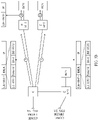
- FIG. 6 (1) shows a topology structure after links are added and costs of the links.
- FIG. 6 (1) shows a topology structure after links are added and costs of the links.
- a packet forwarding process for each link adding case is as follows:
- a link is added between the node 1 and the node 2.
- the node 1 determines, according to the old forwarding table in the following determining manners, that no loop exists on the packet forwarding path after the network topology changes, and delays convergence. To be specific, before the timer expires, the node 1 continues to forward the BIER packet ⁇ 1110> from the node 1 to the node 3. After the timer expires, the old forwarding table is switched to the new forwarding table, and the BIER packet is forwarded according to the new forwarding table.
- Determining manner 1 All nodes whose FBM is ⁇ 1110> from the neighboring node 3 to the neighboring node 3 do not include the node 1.
- Determining manner 2 A new SPT tree is calculated for the neighboring node 3, where nodes corresponding to the FBM satisfy a formula D(3_X) ⁇ D(3_1) + D(1_X).
- BFER 1.
- the node 2 determines, according to the old forwarding table in the following determining manners, that no loop exists on the packet forwarding path after the network topology changes, and delays convergence. To be specific, before the timer expires, the node 2 continues to forward the BIER packet ⁇ 1101> from the node 2 to the node 1. After the timer expires, the old forwarding table is switched to the new forwarding table, and the BIER packet is forwarded according to the new forwarding table.
- Determining manner 1 All nodes whose FBM is ⁇ 1101> from the neighboring node 1 to the neighboring node 1 do not include the node 2.
- Determining manner 2 A new SPT tree is calculated for the neighboring node 1, where nodes corresponding to the FBM ⁇ 1101> satisfy a formula D(1_X) ⁇ D(1_2) + D(2_X).
- traffic is received from the node 2 and sent to the node 1, 3, or 4.
- traffic is received from the node 4 and sent to the node 1, 2, or 3. Because a packet ⁇ 0010> that is sent to the node 3 is sent back, the node 4 determines, according to the old forwarding table and in the following determining manners, that the loop exists on the packet forwarding path after the network topology changes, and therefore does not delay convergence.
- Determining manner 1 In all nodes of the BIER packet whose FBM is ⁇ 0111> from the neighboring node 3 to the neighboring node 3, a packet whose BFR-id is 2 is sent to the node 4. Therefore, a condition that none of the nodes whose FBM is ⁇ 0111> from the neighboring node 3 to the neighboring node 3 includes the node 4 is not satisfied.
- the node 3 determines, according to the old forwarding table in the following determining manners, that the loop exists on the packet forwarding path after the network topology changes. Because the BIER packet ⁇ 1000> that is sent to the node 1 is sent back, convergence is not delayed.
- Determining manner 1 In all nodes of the BIER packet whose FBM is ⁇ 1011> from the neighboring node 1 to the neighboring node 1, a packet whose BFR-id is 4 is sent to the node 3. Therefore, a condition that none of the nodes whose FBM is ⁇ 1011> from the neighboring node 1 to the neighboring node 1 includes the node 3 is not satisfied.
- traffic is received from the node 3.
- the node 3 determines, according to the old forwarding table, that the loop exists on the packet forwarding path after the network topology changes, and therefore does not start the timer. After establishment of the new forwarding table is completed, the node 3 immediately switches back to the new forwarding table or updates the old forwarding table. In this case, the MBB configured in this embodiment of this application is invalid.
- FIG. 7 (1) shows a topology structure after links are added and costs of the links.
- FIG. 7 (1) shows a topology structure after links are added and costs of the links.
- a packet forwarding process for each link adding case is as follows:
- a link is added between the node 1 and the node 2.
- the node 2 determines, according to the old forwarding table in the following determining manners, that no loop exists on the packet forwarding path after the network topology changes, and delays convergence. To be specific, before the timer expires, the node 2 continues to forward the BIER packet ⁇ 111101> from the node 2 to the node 4. After the timer expires, the old forwarding table is switched to the new forwarding table, and the BIER packet is forwarded according to the new forwarding table.
- Determining manner 1 All nodes whose FBM is ⁇ 111101> from the neighboring node 4 to the neighboring node 4 do not include the node 2.
- Determining manner 2 A new SPT tree is calculated for the neighboring node 1, where nodes corresponding to the FBM ⁇ 111101> satisfy a formula D(4_X) ⁇ D(4_2) + D(2_X).
- the node 2 determines, according to the old forwarding table in the following determining manners, that no loop exists on the packet forwarding path after the network topology changes, and delays convergence. To be specific, before the timer expires, the node 2 continues to forward the BIER packet ⁇ 111101> from the node 2 to the node 1. After the timer expires, the old forwarding table is switched to the new forwarding table, and the BIER packet is forwarded according to the new forwarding table.
- Determining manner 1 All nodes whose FBM is ⁇ 111101> from the neighboring node 1 to the neighboring node 1 do not include the node 2.
- Determining manner 2 A new SPT tree is calculated for the neighboring node 1, where nodes corresponding to the FBM ⁇ 111101> satisfy a formula D(1_X) ⁇ D(1_2) + D(2_X).
- forwarding paths include 2 -> 1 -> 3 and 2 -> 4 -> 6 -> 5.
- the link between the node 3 and the node 4 is added:
- the original neighboring node 1 takes over 1 or 3, and the neighboring node 4 takes over 2, 4, 6, or 5. All nodes whose FBM is ⁇ 000101> from the neighboring node 1 to the neighboring node 1 do not include the node 2. All nodes whose FBM is ⁇ 111000> from the neighboring node 4 to the neighboring node 4 do not include the node 2. Therefore, no loop exists on the packet forwarding path after the network topology changes, and convergence can be delayed.
- forwarding paths include 2 -> 1 and 2 -> 4 -> 3 -> 5 -> 6.
- the link between the node 4 and the node 6 is added:
- the original neighboring node 1 takes over 1 and the neighboring node 4 takes over 3, 4, 5, or 6. All nodes whose FBM is ⁇ 000001> from the neighboring node 1 to the neighboring node 1 do not include the node 2. All nodes whose FBM is ⁇ 111101> from the neighboring node 4 to the neighboring node 4 do not include the node 2. Therefore, no loop exists on the packet forwarding path (the FBMs of the two neighboring nodes remain unchanged), and convergence can be delayed.
- two neighboring nodes are changed to three neighboring nodes. No loop exists on the packet forwarding path, and convergence can be delayed.
- forwarding paths include 1 -> 2, 1 -> 3 -> 4 or 5, and 5 -> 6.
- link between the node 4 and the node 6 is added:
- the original neighboring node 2 takes over 2 and the neighboring node 3 takes over 3, 4, 5, or 6.
- the FBMs of the two neighboring nodes remain unchanged, no loop exists on the packet forwarding path, and convergence can be delayed.
- forwarding paths include 2 -> 1, 2 -> 4 -> 3 or 6, and 3 -> 5.
- the link between the node 5 and the node 6 is added:
- the original neighboring node 1 takes over 1 and the neighboring node 4 takes over 3, 4, 5, or 6. All nodes whose FBM is ⁇ 000001> from the neighboring node 1 to the neighboring node 1 do not include the node 2. All nodes whose FBM is ⁇ 111101> from the neighboring node 4 to the neighboring node 4 do not include the node 2. Therefore, the FBMs of the two neighboring nodes remain unchanged, no loop exists on the packet forwarding path, and convergence can be delayed.
- the method provided in this embodiment is also applicable to a load balancing scenario.
- that the destination node device forwards a BIER packet by using an old forwarding table and establishes the new forwarding table includes: Before the timer expires, the destination node device forwards the BIER packet by using old multiple load balancing entries, and establishes new multiple load balancing entries based on a quantity of load balancing paths.
- that the destination node device switches the old forwarding table to the new forwarding table, and forwards the BIER packet according to the new forwarding table includes: After the timer expires, the destination node device switches a forwarding table of the multiple load balancing entries to the new multiple load balancing entries, and forwards the packet according to the new multiple load balancing entries.
- FIG. 8 shows a topology structure after links are added.
- the links have same costs.
- Nodes 1, 2, 5, 6, 7, and 8 are BFER nodes, and respectively correspond to BFR-ids 1, 2, 5, 6, 7, and 8. If there is no fault, there are four paths from the node 1 to all other BFER nodes: a path passing through a neighbor B, a path passing through a neighbor R, a path passing through a neighbor G, and a path passing through a neighbor P.
- a link between the node 1 and the node B recovers after a fault, and a quantity of paths from the node 1 to each BFER node changes from three to four.
- load balancing (RFC 8279) that is performed on a plurality of entries using the BIER is configured for the node 1.
- Four load balancing entries are configured.
- a quantity of paths for load balancing is 4.
- a load balancing table is as follows, where an entry of a neighbor being a node itself is omitted.
- adding a link may cause a packet loss or excess packets.
- a forwarding entry is changed to the entry in the BIFT 1', so that no packet is lost.
- BIER MBB is enabled for each node, and timing duration of the timer is configured. As shown in FIG. 8 , a link (from the node 1 to the node B) is added. In an example in which traffic is received from the node 1, the node 1 determines whether a loop exists in the following manner:
- none of the nodes whose FBM is ⁇ 11110010> from the neighboring node R to the neighboring node R includes the node 1.
- none of the nodes whose FBM is ⁇ 11110010> from the neighboring node G to the neighboring node G include the node 1.
- none of the nodes whose FBM is ⁇ 11110010> from the neighboring node P to the neighboring node P include the node 1.
- none of the nodes whose FBM is ⁇ 11110010> from the neighboring node R to the neighboring node R include the node 1.
- the timer can be started.
- new multiple load balancing entries are generated.
- a multiple table load balancing index is used, namely, a multiple BIER forwarding table index (multiple BIFT index, MBI), for example, an MBI 1.
- MBI multiple BIFT index
- MBI1 ⁇ BIFT 1, BIFT 2, BIFT 3, BIFT4 ⁇
- a BIER forwarding table is as follows:
- a multiple table load balancing index table and a corresponding forwarding table are added during timing of the timer.
- the BIER packet when the link is added, the BIER packet is forwarded by using the old multiple load balancing entries before the timer expires, and the new multiple load balancing entries are established based on the quantity of load balancing paths. After the timer expires, the old multiple load balancing entries are switched to the new multiple load balancing entries, and the BIER packet is forwarded by using the new multiple load balancing entries. This avoids or reduces a packet loss and excess packets.
- An embodiment of this application provides a packet forwarding node device.
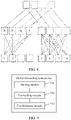
- the packet forwarding node device is configured to forward a BIER packet. Refer to FIG. 9 .
- the packet forwarding node device includes:
- the forwarding module 902 is further configured to: after the timer expires, switch the old forwarding table to the new forwarding table, and forward the BIER packet according to the new forwarding table.
- the packet forwarding node device further includes: a determining module 904, configured to determine, according to the old forwarding table, whether a loop exists on a packet forwarding path after the network topology changes.
- the determining module 904 determines, according to the old forwarding table, that no loop exists on the packet forwarding path after the network topology changes.
- the packet forwarding node device further includes: a determining module 904, configured to determine, according to the old forwarding table, whether a loop exists on a packet forwarding path after the network topology changes.
- the starting module 901 When it is determined, according to the old forwarding table, that the loop exists on the packet forwarding path after the network topology changes, the starting module 901 does not start a timer, and the establishment module 903 establishes the new forwarding table. After after establishment of the new forwarding table is completed, the forwarding module 902 switches the old forwarding table to the new forwarding table, and forwards the BIER packet according to the new forwarding table.
- the packet forwarding node device further includes: a determining module 904, configured to determine, according to the old forwarding table, whether a loop exists on a packet forwarding path after the network topology changes.
- the starting module 901 does not start the timer, and the forwarding module 902 is configured to update the old forwarding table based on the changed network topology, and forward the BIER packet according to the updated forwarding table.
- the packet forwarding path includes a first path and a second path that is calculated based on the changed network topology.
- the first path is a path from the destination node device to each neighbor of the destination node device in the old forwarding table.
- the second path uses each neighbor of the destination node device in the old forwarding table as a start point, and uses an edge node device indicated by a forwarding bit mask of each neighbor of the destination node device as an end point.
- Existence of the loop means that the second path travels through the destination node device.
- the determining module 904 is configured to: for any neighbor of the destination node device in the old forwarding table, determine whether a path, indicated by a forwarding bit mask of the any neighbor, of each edge node device in the changed network topology travels through the destination node device; and when a path of any edge node device in the changed network topology travels through the destination node device, determine that the loop exists on the packet forwarding path after the network topology changes; or when the path of each edge node device in the changed network topology does not travel through the destination node device, determine that no loop exists on the packet forwarding path after the network topology changes.
- the determining module 904 is configured to: establish a shortest path tree in the changed network topology by using each neighbor of the destination node device in the old forwarding table as a root; traverse identifiers of edge node devices that arrive on the shortest path tree through the destination node device, to obtain a bit string; perform an AND operation on the bit string and the forwarding bit mask of the neighbor of the destination node device; and when the result is 0, determine that no loop exists on the packet forwarding path after the network topology changes; or when the result is not 0, determine that the loop exists on the packet forwarding path after the network topology changes.
- the forwarding module 902 is configured to: before the timer expires, forward the BIER packet by using old multiple load balancing entries.
- the establishment module 903 is configured to establish new multiple load balancing entries based on a quantity of load balancing paths.
- the forwarding module 902 is configured to: after the timer expires, switch a forwarding table of the multiple load balancing entries to the new multiple load balancing entries, and forward the BIER packet according to the new multiple load balancing entries.
- FIG. 11 is a schematic diagram of a hardware structure of a packet forwarding node device 1100 according to an embodiment of this application.
- the packet forwarding node device 1100 shown in FIG. 11 may perform corresponding steps that are performed by the packet forwarding node device in the method in the foregoing embodiment.
- the packet forwarding node device 1100 includes a processor 1101, a memory 1102, an interface 1103, and a bus 1104.
- the interface 1103 may be implemented in a wireless or wired manner. Specifically, the interface 1103 may be a network interface card.
- the processor 1101, the memory 1102, and the interface 1103 are connected by using the bus 1104.
- the interface 1103 may specifically include a transmitter and a receiver, configured to send and receive information between the packet forwarding node device and another node device in the foregoing embodiment.
- the interface 1103 is configured to support to receive a BIER packet sent by a neighboring node device.
- the processor 1101 is configured to perform processing that is performed by the packet forwarding node device in the foregoing embodiment.
- the processor 1101 is configured to start a timer when it is determined that a network topology changes; before the timer expires, forward the BIER packet by using an old forwarding table and establishing a new forwarding table, where the old forwarding table is a forwarding table used by the destination node device before the network topology changes, the new forwarding table is a forwarding table established by the destination node device based on the changed network topology, and the timer indicates that establishment of the new forwarding table is completed before the timer expires; and after the timer expires, switch the old forwarding table to the new forwarding table, and forward the BIER packet according to the new forwarding table.
- the processor 1101 and/or are/is used in another process of the technology described in this specification.
- the processor 1101 is configured to support steps 501 to 503 in FIG. 5 .
- the memory 1102 includes an operating system 11021 and an application program 11022, and is configured to store a program, code, or instructions. When executing the program, the code, or the instructions, the processor or a hardware device may complete a processing process related to the packet forwarding node device in the method embodiment.
- the memory 1102 may include a read-only memory (English: Read-only Memory, ROM for short) and a random access memory (English: Random Access Memory, RAM for short).
- the ROM includes a basic input/output system (English: Basic Input/Output System, BIOS for short) or an embedded system.
- the RAM includes an application program and an operating system.
- the BIOS built into the ROM or a bootloader in the embedded system is used to boot a system to start, and boot the packet forwarding node device to enter a normal running state. After entering the normal running state, the packet forwarding node device runs the application program and the operating system in the RAM, to complete the processing process related to the packet forwarding node device in the method embodiment.
- FIG. 11 shows only a simplified design of the packet forwarding node device 1100.
- the packet forwarding node device may include any quantity of interfaces, processors, or memories.
- the processor may be a central processing unit (Central Processing Unit, CPU); or may be another general-purpose processor, a digital signal processor (digital signal processing, DSP), an application-specific integrated circuit (application specific integrated circuit, ASIC), a field programmable gate array (field-programmable gate array, FPGA) or another programmable logic device, a discrete gate or transistor logic device, or a discrete hardware component, or the like.
- the general-purpose processor may be a microprocessor, any conventional processor, or the like.
- the processor may be a processor that supports an advanced reduced instruction set computing machine (advanced RISC machines, ARM) architecture.
- the foregoing memory may include a read-only memory and a random access memory, and provide instructions and data to the processor.
- the memory may further include a non-volatile random access memory.
- the memory may further store information about a device type.
- the memory may be a volatile memory or a non-volatile memory, or may include both a volatile memory and a non-volatile memory.
- the nonvolatile memory may be a read-only memory (read-only memory, ROM), a programmable read-only memory (programmable ROM, PROM), an erasable programmable read-only memory (erasable PROM, EPROM), an electrically erasable programmable read-only memory (electrically EPROM, EEPROM), or a flash memory.
- the volatile memory may be a random access memory (random access memory, RAM), used as an external cache. For example but not limitation, many forms of RAMs are available.
- a static random access memory static random access memory
- DRAM dynamic random access memory
- DRAM dynamic random access memory
- SDRAM synchronous dynamic random access memory
- double data rate synchronous dynamic random access memory double data date SDRAM, DDR SDRAM
- ESDRAM enhanced synchronous dynamic random access memory
- synchlink dynamic random access memory synchlink DRAM, SLDRAM
- direct rambus RAM direct rambus RAM, DR RAM
- a computer-readable storage medium is further provided.
- the storage medium stores at least one instruction, and a processor loads and executes the at least one instruction to implement any one of the foregoing packet forwarding methods.
- This application provides a computer program.
- the processor or the computer may perform corresponding steps and/or procedures in the foregoing method embodiments.
- All or some of the foregoing embodiments may be implemented by using software, hardware, firmware, or any combination thereof.
- all or some of the embodiments may be implemented in a form of a computer program product.
- the computer program product includes one or more computer instructions.
- the computer may be a general-purpose computer, a special-purpose computer, a computer network, or another programmable apparatus.
- the computer instructions may be stored in the computer-readable storage medium or may be transmitted from a computer-readable storage medium to another computer-readable storage medium.
- the computer instructions may be transmitted from a website, computer, server, or data center to another website, computer, server, or data center in a wired (for example, a coaxial cable, an optical fiber, or a digital subscriber line) or wireless (for example, infrared, radio, or microwave) manner.
- the computer-readable storage medium may be any usable medium accessible by the computer, or a data storage device, such as a server or a data center, integrating one or more usable media.
- the usable medium may be a magnetic medium (for example, a floppy disk, a hard disk, or a magnetic tape), an optical medium (for example, a DVD), a semiconductor medium (for example, a solid-state drive Solid State Disk), or the like.
Landscapes
- Engineering & Computer Science (AREA)
- Computer Networks & Wireless Communication (AREA)
- Signal Processing (AREA)
- Automation & Control Theory (AREA)
- Data Exchanges In Wide-Area Networks (AREA)
Applications Claiming Priority (2)
| Application Number | Priority Date | Filing Date | Title |
|---|---|---|---|
| CN201910606586.9A CN112187647B (zh) | 2019-07-05 | 2019-07-05 | 报文转发方法、设备及计算机可读存储介质 |
| PCT/CN2020/090726 WO2021004156A1 (fr) | 2019-07-05 | 2020-05-17 | Procédé de transfert de paquet, dispositif, et support de stockage lisible par ordinateur |
Publications (2)
| Publication Number | Publication Date |
|---|---|
| EP3979576A1 true EP3979576A1 (fr) | 2022-04-06 |
| EP3979576A4 EP3979576A4 (fr) | 2022-08-10 |
Family
ID=73919681
Family Applications (1)
| Application Number | Title | Priority Date | Filing Date |
|---|---|---|---|
| EP20836741.7A Pending EP3979576A4 (fr) | 2019-07-05 | 2020-05-17 | Procédé de transfert de paquet, dispositif, et support de stockage lisible par ordinateur |
Country Status (6)
| Country | Link |
|---|---|
| US (1) | US20220131808A1 (fr) |
| EP (1) | EP3979576A4 (fr) |
| JP (1) | JP7322193B2 (fr) |
| KR (1) | KR20220018065A (fr) |
| CN (1) | CN112187647B (fr) |
| WO (1) | WO2021004156A1 (fr) |
Families Citing this family (8)
| Publication number | Priority date | Publication date | Assignee | Title |
|---|---|---|---|---|
| TWI733560B (zh) * | 2020-08-13 | 2021-07-11 | 瑞昱半導體股份有限公司 | 網路交換器及其網路交換器系統 |
| CN114915589B (zh) * | 2021-02-10 | 2024-06-04 | 华为技术有限公司 | 报文传输方法及装置 |
| CN113347099A (zh) * | 2021-05-31 | 2021-09-03 | 中国工商银行股份有限公司 | 一种分布式网络流量转发方法、装置、设备及存储介质 |
| US11881935B2 (en) * | 2022-03-02 | 2024-01-23 | Arista Networks, Inc. | Reducing a network device upgrade outage using a reduced hardware resource scaling |
| US11736385B1 (en) * | 2022-08-17 | 2023-08-22 | Juniper Networks, Inc. | Distributed flooding technique |
| CN117938813A (zh) * | 2022-10-17 | 2024-04-26 | 中兴通讯股份有限公司 | 一种转发表索引的通告方法、节点及存储介质 |
| US12580999B2 (en) * | 2022-11-08 | 2026-03-17 | Nokia Solutions And Networks Oy | Universal loop detection in communication networks |
| CN117255055B (zh) * | 2023-11-15 | 2024-02-23 | 新华三技术有限公司 | 报文转发方法、装置及电子设备 |
Family Cites Families (27)
| Publication number | Priority date | Publication date | Assignee | Title |
|---|---|---|---|---|
| US6678274B1 (en) * | 1999-07-30 | 2004-01-13 | Riverstone Networks, Inc. | Method and system for managing forwarding tables |
| CN100456752C (zh) * | 2005-04-04 | 2009-01-28 | 华为技术有限公司 | 一种在快速生成树环网下实现组播的方法 |
| US7835312B2 (en) * | 2005-07-20 | 2010-11-16 | Cisco Technology, Inc. | Method and apparatus for updating label-switched paths |
| CN101064687B (zh) * | 2007-02-07 | 2011-09-21 | 中兴通讯股份有限公司 | 路由收敛的方法 |
| CN100583827C (zh) * | 2007-05-17 | 2010-01-20 | 华为技术有限公司 | 一种多协议标签交换网络流量切换的方法及设备 |
| US10461946B2 (en) * | 2013-09-17 | 2019-10-29 | Cisco Technology, Inc. | Overlay signaling for bit indexed explicit replication |
| US9544230B2 (en) * | 2013-09-17 | 2017-01-10 | Cisco Technology, Inc. | Migration support for bit indexed explicit replication |
| US9853822B2 (en) * | 2013-09-17 | 2017-12-26 | Cisco Technology, Inc. | Bit indexed explicit replication |
| CN104811387B (zh) * | 2014-01-24 | 2018-06-01 | 思科技术公司 | 具有位索引显式复制的等价多路径 |
| US9401858B2 (en) * | 2014-06-30 | 2016-07-26 | Cisco Technology, Inc. | Loop avoidance during network convergence in switched networks |
| US9838246B1 (en) * | 2014-09-30 | 2017-12-05 | Juniper Networks, Inc. | Micro-loop prevention using source packet routing |
| US9832031B2 (en) * | 2014-10-24 | 2017-11-28 | Futurewei Technologies, Inc. | Bit index explicit replication forwarding using replication cache |
| US9742575B2 (en) * | 2014-11-04 | 2017-08-22 | Telefonaktiebolaget L M Ericsson (Publ) | Explicit list encoding of sparse multicast group membership information with Bit Index Explicit Replication (BIER) |
| US9432205B2 (en) * | 2014-11-04 | 2016-08-30 | Telefonaktiebolaget L M Ericsson (Publ) | Explicit block encoding of multicast group membership information with bit index explicit replication (BIER) |
| US9749410B2 (en) * | 2014-11-18 | 2017-08-29 | Cisco Technology, Inc. | Using bit index explicit replication (BIER) in low-power and lossy networks |
| US10341221B2 (en) * | 2015-02-26 | 2019-07-02 | Cisco Technology, Inc. | Traffic engineering for bit indexed explicit replication |
| CN106572017B (zh) * | 2015-10-09 | 2021-06-15 | 中兴通讯股份有限公司 | Bier信息的发送方法、接收方法及装置 |
| CN107294859B (zh) * | 2016-04-13 | 2021-04-06 | 中兴通讯股份有限公司 | 一种信息传递方法、装置及系统 |
| US11032197B2 (en) * | 2016-09-15 | 2021-06-08 | Cisco Technology, Inc. | Reroute detection in segment routing data plane |
| CN107968750B (zh) * | 2016-10-20 | 2021-06-15 | 中兴通讯股份有限公司 | 报文传输方法、装置及节点 |
| US10469379B2 (en) * | 2017-02-17 | 2019-11-05 | Cisco Technology, Inc. | System and method to facilitate content delivery to multiple recipients in a network environment |
| CN108632678B (zh) * | 2017-03-22 | 2023-03-24 | 中兴通讯股份有限公司 | 一种数据传输方法、装置及系统 |
| US10447496B2 (en) * | 2017-03-30 | 2019-10-15 | Cisco Technology, Inc. | Multicast traffic steering using tree identity in bit indexed explicit replication (BIER) |
| CN108696438A (zh) * | 2017-04-05 | 2018-10-23 | 中兴通讯股份有限公司 | Bier报文的转发方法及装置 |
| CN109660460B (zh) * | 2017-10-10 | 2021-10-19 | 中兴通讯股份有限公司 | Bier-te信息的处理方法、服务器及存储介质 |
| US10764082B2 (en) * | 2018-06-29 | 2020-09-01 | Nokia Solutions And Networks Oy | Supporting multicast over a network domain |
| CN109246017B (zh) * | 2018-11-28 | 2021-03-23 | 新华三技术有限公司 | 一种查询组播转发路径的方法及装置 |
-
2019
- 2019-07-05 CN CN201910606586.9A patent/CN112187647B/zh active Active
-
2020
- 2020-05-17 WO PCT/CN2020/090726 patent/WO2021004156A1/fr not_active Ceased
- 2020-05-17 EP EP20836741.7A patent/EP3979576A4/fr active Pending
- 2020-05-17 KR KR1020227001349A patent/KR20220018065A/ko not_active Abandoned
- 2020-05-17 JP JP2021574996A patent/JP7322193B2/ja active Active
-
2022
- 2022-01-04 US US17/646,963 patent/US20220131808A1/en not_active Abandoned
Also Published As
| Publication number | Publication date |
|---|---|
| JP2022538809A (ja) | 2022-09-06 |
| US20220131808A1 (en) | 2022-04-28 |
| KR20220018065A (ko) | 2022-02-14 |
| CN112187647B (zh) | 2021-12-14 |
| WO2021004156A1 (fr) | 2021-01-14 |
| JP7322193B2 (ja) | 2023-08-07 |
| CN112187647A (zh) | 2021-01-05 |
| EP3979576A4 (fr) | 2022-08-10 |
Similar Documents
| Publication | Publication Date | Title |
|---|---|---|
| US20220131808A1 (en) | Packet Forwarding Method and Device, And Computer-Readable Storage Medium | |
| US11677587B2 (en) | EVPN packet processing method, device, and system for mac learning via MAC/IP advertisement route | |
| US11799773B2 (en) | EVPN packet processing method, device, and system | |
| US11533249B2 (en) | Route processing method and apparatus, and data transmission method and apparatus | |
| US11606292B2 (en) | Route processing method, device, and system | |
| US12542690B2 (en) | Message header processing method and apparatus, storage medium and electronic device | |
| US20220239590A1 (en) | Packet Processing Method, Apparatus, System, and Device, and Storage Medium | |
| CN116761208A (zh) | 报文处理方法、装置、设备及存储介质 | |
| US12580853B2 (en) | Method and device for processing data packet, storage medium, and electronic device | |
| JP7124206B2 (ja) | パケット処理方法およびゲートウェイ・デバイス | |
| US12483496B2 (en) | Loop detection method and apparatus | |
| EP3767898A1 (fr) | Procédé et appareil d'acheminement de paquets | |
| WO2021258823A1 (fr) | Procédé, appareil et système de création de chemin | |
| WO2012159461A1 (fr) | Procédé et nœud de découverte d'unité de transmission maximale de chemin de couche 2 | |
| WO2021109997A1 (fr) | Procédé et dispositif anti-rupture de fibre pour tunnel de routage de segment, nœud d'entrée et support de données | |
| CN113132222B (zh) | 报文转发方法、设备及计算机可读存储介质 |
Legal Events
| Date | Code | Title | Description |
|---|---|---|---|
| STAA | Information on the status of an ep patent application or granted ep patent |
Free format text: STATUS: THE INTERNATIONAL PUBLICATION HAS BEEN MADE |
|
| PUAI | Public reference made under article 153(3) epc to a published international application that has entered the european phase |
Free format text: ORIGINAL CODE: 0009012 |
|
| STAA | Information on the status of an ep patent application or granted ep patent |
Free format text: STATUS: REQUEST FOR EXAMINATION WAS MADE |
|
| 17P | Request for examination filed |
Effective date: 20220103 |
|
| AK | Designated contracting states |
Kind code of ref document: A1 Designated state(s): AL AT BE BG CH CY CZ DE DK EE ES FI FR GB GR HR HU IE IS IT LI LT LU LV MC MK MT NL NO PL PT RO RS SE SI SK SM TR |
|
| REG | Reference to a national code |
Ref country code: DE Ref legal event code: R079 Free format text: PREVIOUS MAIN CLASS: H04L0012761000 Ipc: H04L0045021000 |
|
| A4 | Supplementary search report drawn up and despatched |
Effective date: 20220711 |
|
| RIC1 | Information provided on ipc code assigned before grant |
Ipc: H04L 12/28 20060101ALI20220705BHEP Ipc: H04L 12/46 20060101ALI20220705BHEP Ipc: H04L 45/48 20220101ALI20220705BHEP Ipc: H04L 45/18 20220101ALI20220705BHEP Ipc: H04L 45/021 20220101AFI20220705BHEP |
|
| DAV | Request for validation of the european patent (deleted) | ||
| DAX | Request for extension of the european patent (deleted) | ||
| STAA | Information on the status of an ep patent application or granted ep patent |
Free format text: STATUS: EXAMINATION IS IN PROGRESS |
|
| 17Q | First examination report despatched |
Effective date: 20241030 |