EP3982347A1 - Système et procédé de raisonneur de mission - Google Patents
Système et procédé de raisonneur de mission Download PDFInfo
- Publication number
- EP3982347A1 EP3982347A1 EP21198662.5A EP21198662A EP3982347A1 EP 3982347 A1 EP3982347 A1 EP 3982347A1 EP 21198662 A EP21198662 A EP 21198662A EP 3982347 A1 EP3982347 A1 EP 3982347A1
- Authority
- EP
- European Patent Office
- Prior art keywords
- mission
- aircraft
- vehicle
- status
- subsystem
- Prior art date
- Legal status (The legal status is an assumption and is not a legal conclusion. Google has not performed a legal analysis and makes no representation as to the accuracy of the status listed.)
- Pending
Links
Images


Classifications
-
- G—PHYSICS
- G08—SIGNALLING
- G08G—TRAFFIC CONTROL SYSTEMS
- G08G5/00—Traffic control systems for aircraft
- G08G5/20—Arrangements for acquiring, generating, sharing or displaying traffic information
- G08G5/21—Arrangements for acquiring, generating, sharing or displaying traffic information located onboard the aircraft
-
- G—PHYSICS
- G06—COMPUTING OR CALCULATING; COUNTING
- G06N—COMPUTING ARRANGEMENTS BASED ON SPECIFIC COMPUTATIONAL MODELS
- G06N7/00—Computing arrangements based on specific mathematical models
- G06N7/01—Probabilistic graphical models, e.g. probabilistic networks
-
- G—PHYSICS
- G07—CHECKING-DEVICES
- G07C—TIME OR ATTENDANCE REGISTERS; REGISTERING OR INDICATING THE WORKING OF MACHINES; GENERATING RANDOM NUMBERS; VOTING OR LOTTERY APPARATUS; ARRANGEMENTS, SYSTEMS OR APPARATUS FOR CHECKING NOT PROVIDED FOR ELSEWHERE
- G07C5/00—Registering or indicating the working of vehicles
- G07C5/008—Registering or indicating the working of vehicles communicating information to a remotely located station
-
- G—PHYSICS
- G07—CHECKING-DEVICES
- G07C—TIME OR ATTENDANCE REGISTERS; REGISTERING OR INDICATING THE WORKING OF MACHINES; GENERATING RANDOM NUMBERS; VOTING OR LOTTERY APPARATUS; ARRANGEMENTS, SYSTEMS OR APPARATUS FOR CHECKING NOT PROVIDED FOR ELSEWHERE
- G07C5/00—Registering or indicating the working of vehicles
- G07C5/08—Registering or indicating performance data other than driving, working, idle, or waiting time, with or without registering driving, working, idle or waiting time
- G07C5/0808—Diagnosing performance data
-
- G—PHYSICS
- G08—SIGNALLING
- G08G—TRAFFIC CONTROL SYSTEMS
- G08G5/00—Traffic control systems for aircraft
- G08G5/20—Arrangements for acquiring, generating, sharing or displaying traffic information
- G08G5/26—Transmission of traffic-related information between aircraft and ground stations
-
- G—PHYSICS
- G08—SIGNALLING
- G08G—TRAFFIC CONTROL SYSTEMS
- G08G5/00—Traffic control systems for aircraft
- G08G5/30—Flight plan management
-
- G—PHYSICS
- G08—SIGNALLING
- G08G—TRAFFIC CONTROL SYSTEMS
- G08G5/00—Traffic control systems for aircraft
- G08G5/30—Flight plan management
- G08G5/34—Flight plan management for flight plan modification
-
- G—PHYSICS
- G08—SIGNALLING
- G08G—TRAFFIC CONTROL SYSTEMS
- G08G5/00—Traffic control systems for aircraft
- G08G5/50—Navigation or guidance aids
- G08G5/53—Navigation or guidance aids for cruising
-
- G—PHYSICS
- G08—SIGNALLING
- G08G—TRAFFIC CONTROL SYSTEMS
- G08G5/00—Traffic control systems for aircraft
- G08G5/50—Navigation or guidance aids
- G08G5/55—Navigation or guidance aids for a single aircraft
-
- G—PHYSICS
- G08—SIGNALLING
- G08G—TRAFFIC CONTROL SYSTEMS
- G08G5/00—Traffic control systems for aircraft
- G08G5/70—Arrangements for monitoring traffic-related situations or conditions
- G08G5/72—Arrangements for monitoring traffic-related situations or conditions for monitoring traffic
- G08G5/723—Arrangements for monitoring traffic-related situations or conditions for monitoring traffic from the aircraft
-
- G—PHYSICS
- G08—SIGNALLING
- G08G—TRAFFIC CONTROL SYSTEMS
- G08G5/00—Traffic control systems for aircraft
- G08G5/50—Navigation or guidance aids
- G08G5/58—Navigation or guidance aids for emergency situations, e.g. hijacking or bird strikes
Definitions
- Task saturation may be a continuing issue during combat operations. Specifically, combat pilots are required to maintain situational awareness of not only all aspects of flight of their own aircraft but also external events surrounding a surface picture (current nearby events) and an air picture.
- Mission commanders of multi-ship formations must maintain an increased situational awareness due to the fact that many aircraft (manned and unmanned) may be under their direct control or supervisory control and require continuous monitoring and occasional direction.
- Any distraction internal or external to the fighter cockpit may decrease this situational awareness and directly impact a mission success. Even a few seconds of inattention to a particular task may cause disastrous results. A small abnormal issue internal to a fighter cockpit may cause minutes of inattention outside the fighter cockpit.
- a system for automation of flight functions across an aircraft cockpit may comprise a plurality of modules onboard an aircraft, the plurality of modules configured: 1) for a real time function during a mission and 2) to communicate with a plurality of architecture types.
- the plurality of modules may include a mission planning module configured for planning the mission; a mission execution module including an execution command of the mission and a phase of mission analysis; a human machine interface (HMI) onboard the aircraft; a mission assessment module including a mission health assessment; a mission experience module; and a vehicle health system configured for monitoring at least one subsystem onboard the aircraft , the vehicle health system including a multi-vehicle health interface configured for monitoring a vehicle status of a plurality of vehicles offboard the aircraft.
- a mission planning module configured for planning the mission
- a mission execution module including an execution command of the mission and a phase of mission analysis
- a mission assessment module including a mission health assessment
- a mission experience module a mission experience module
- a vehicle health system configured for monitoring at least one subsystem onboard the aircraft , the vehicle health system including a multi-vehicle health interface configured for monitoring a vehicle status of a plurality of vehicles offboard the aircraft.
- the system may include a controller operatively coupled with each of the plurality of modules and a tangible, non-transitory memory configured to communicate with the controller, the tangible, non-transitory memory having instructions stored therein that, in response to execution by the controller, cause the controller to carry out each task of the system for automation of flight functions across an aircraft cockpit.
- the controller may receive the execution command of the mission and a mission execution status from the mission execution module, receive a phase of mission from the mission assessment module, and receive, from the vehicle health system, 1) a subsystem status of the at least one subsystem onboard the aircraft and 2) the vehicle status of at least one vehicle of the plurality of vehicles offboard the aircraft.
- the controller may also determine 1) a subsystem degraded status of the at least one subsystem onboard the aircraft based on the received subsystem status and 2) a vehicle degraded status of at least one vehicle of the plurality of vehicles offboard the aircraft based on the received vehicle status, correlate each of the subsystem degraded status and the vehicle degraded status with the phase of mission, and determine a probability of mission success based on the correlation.
- the controller may further determine at least one predictive decision aid based on 1) the subsystem degraded status, 2) the vehicle degraded status, and 3) the phase of mission, and 4) the probability of mission success, the at least one predictive decision aid configured to mitigate the subsystem degraded status and the vehicle degraded status on the probability of mission success, the at least one predictive decision aid one of: a subsystem procedure onboard the aircraft, a mission go of the mission, at least one mission retask of the mission, and a mission no go of the mission, execute the at least one predictive decision aid one of: onboard the aircraft and offboard the aircraft, communicate the at least one predictive decision aid to each of the plurality of modules during the real time function, and present the at least one predictive decision aid via the HMI to an operator of the aircraft.
- An additional embodiment of the inventive concepts disclosed herein may include a method for automation of flight functions across an aircraft cockpit.
- the method may comprise receiving an execution command of a mission and a mission execution status from a mission execution module and receiving a phase of mission from a mission assessment module.
- the method may further include receiving, from a vehicle health system, 1) a subsystem status of at least one subsystem onboard an aircraft and 2) a vehicle status of at least one vehicle of a plurality of vehicles offboard the aircraft.
- the method may include determining 1) a subsystem degraded status of the at least one subsystem onboard the aircraft based on the received subsystem status and 2) a vehicle degraded status of at least one vehicle of the plurality of vehicles offboard the aircraft based on the received vehicle status and correlating each of the subsystem degraded status and the vehicle degraded status with the phase of mission.
- the method may also include determining a probability of mission success based on the correlation and determining at least one predictive decision aid based on 1) the subsystem degraded status, 2) the vehicle degraded status, 3) the phase of mission, and 4) the probability of mission success, the at least one predictive decision aid configured to mitigate the subsystem degraded status and the vehicle degraded status associated with the probability of mission success, the at least one predictive decision aid one of: a subsystem procedure onboard the aircraft, a mission go of the mission, at least one mission retask of the mission, and a mission no go of the mission.
- the method may further include executing the at least one predictive decision aid one of: onboard the aircraft and offboard the aircraft, communicating the at least one predictive decision aid to each of: a mission planning module, the mission execution module, a human machine interface (HMI) onboard the aircraft, the mission assessment module, and a mission experience module, and the vehicle health system, and presenting the at least one predictive decision aid via the HMI to one of: an operator and a supervisor of the aircraft.
- a mission planning module the mission execution module
- a human machine interface (HMI) onboard the aircraft
- the mission assessment module the mission assessment module
- a mission experience module a mission experience module
- inventive concepts are not limited in their application to the details of construction and the arrangement of the components or steps or methodologies set forth in the following description or illustrated in the drawings.
- inventive concepts disclosed herein may be practiced without these specific details.
- well-known features may not be described in detail to avoid unnecessarily complicating the instant disclosure.
- inventive concepts disclosed herein are capable of other embodiments or of being practiced or carried out in various ways. Also, it is to be understood that the phraseology and terminology employed herein is for the purpose of description and should not be regarded as limiting.
- a letter following a reference numeral is intended to reference an embodiment of the feature or element that may be similar, but not necessarily identical, to a previously described element or feature bearing the same reference numeral (e.g., 1, 1a, 1b).
- reference numeral e.g. 1, 1a, 1b
- Such shorthand notations are used for purposes of convenience only, and should not be construed to limit the inventive concepts disclosed herein in any way unless expressly stated to the contrary.
- any reference to "one embodiment,” or “some embodiments” means that a particular element, feature, structure, or characteristic described in connection with the embodiment is included in at least one embodiment of the inventive concepts disclosed herein.
- the appearances of the phrase “in some embodiments” in various places in the specification are not necessarily all referring to the same embodiment, and embodiments of the inventive concepts disclosed may include one or more of the features expressly described or inherently present herein, or any combination of sub-combination of two or more such features, along with any other features which may not necessarily be expressly described or inherently present in the instant disclosure.
- inventions of the inventive concepts disclosed herein are directed to a system and method for automation of flight functions across an aircraft cockpit.
- the systems herein provide an open systems architecture to meet next generation mission capabilities for increased aircrew effectiveness.
- a mission reasoner receives inputs from a vehicle health system, mission phase analysis, and external assets (multi-ship formations, wingmen) to build a decision network based on a knowledge database providing a decision aid to automate flight functions across the cockpit.
- the MR reduces crew workload by providing an automated decision aid and increased situational awareness of own ship aircraft and cooperating nearby vehicle health status relating to a phase of mission success.
- the MR provides predictive decisions and alternative actions to complete one or more desired mission objectives and determines predictive maintenance and future failures to optimize condition-based maintenance and reduce cost.
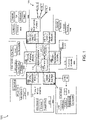
- System Overview 110 Mission Reasoner (MR) 120 Controller 122 Memory 130 Mission Planning Module 140 Mission Execution Module 142 Phase of Mission Analysis 150 Human Machine Interface (HMI 160 Mission Assessment Module 162 Mission Health 170 Mission Experience Module 180 Vehicle Health System (VHS) 182 Multi-Vehicle Interface 184 Plurality of Vehicles 200 Partial Expanded View 300 Vehicle Health Expanded 400 Exemplary MR Application 422 Knowledqe Base 450 Output to HMI 480 VHS Output 500 MR Example Ontology 600 Mission Reasoner Workflow 700 Mission Ecosystem 800 HMI Diagram 850 Forward Panel 852 Aircraft Graphic 854 Mission Status 856 Warning Display 858 Advisory Display
- FIG 1 A first figure.
- a diagram of a system (100) for automation of flight functions across an aircraft cockpit in accordance with an embodiment of the inventive concepts disclosed herein is shown.
- a system (100) for automation of flight functions across an aircraft cockpit 100 may provide a pilot with mission effectiveness for a given aircraft status as well as additional external parameters.
- the system for automation of flight functions across an aircraft cockpit 100 may include a plurality of modules sited onboard an aircraft embedded within a mission reasoner (MR) 110.
- the MR 110 may be tasked with automation of a plurality of decisions the pilot of an aircraft may be required to make during a mission.
- the system for automation of flight functions across an aircraft cockpit 100 may provide an open systems architecture to meet next generation mission capabilities for increased aircrew effectiveness within a multi-domain operation (MDO).
- One exemplary open system architecture within which the MR 110 may function may include a Future Airborne Capability Environment (FACE TM ) configured for cross domain communication between at least two diverse architecture types.
- FACE TM Future Airborne Capability Environment
- the MR 110 may receive inputs from a vehicle health system, mission phase analysis, as well as external assets to build an explainable decision network based on a knowledge database providing a decision aid to automate flight functions across the cockpit.
- the MR 110 may reduce crew workload providing an automated decision aid and increased situational awareness of vehicle health status.
- the MR 110 may provide mitigation and alternative actions to complete one of more mission objectives; and determine predictive maintenance to optimize condition-based maintenance and reduce cost.
- the plurality of modules may be configured for real time function during a mission and also configured to communicate via an open architecture connectivity with a plurality of architecture types.
- Architecture types may include differing aircraft types supporting differing flight control or mission computers, different data bus types, and multiple languages.
- the MR 110 using the open architecture may be specifically configured for operation and communication with transport category aircraft (e.g., C-17) from diverse manufacturers and countries, a plurality of unmanned aircraft systems (UAS) types, as well as diverse fighter aircraft.
- UAS unmanned aircraft systems
- Each type of aircraft may effectively communicate with the MR 110 while maintaining a different architecture type including a data communication system as well as a mission computer and flight management controller.
- the MR 110 including the plurality of modules may reside within the aircraft enabling local processing of each of the MR 110 decision aids. Since local decisions within the cockpit may directly affect own ship actions as well as wingman actions, the local decisions may enable the pilot more time to focus on additional decisions vital to mission success.
- a mission hierarchy or command structure may include supervisory control (human on the loop versus human in the loop) with direct intervention available enabling human taking full control (versus providing high-level tasking) when necessary.
- supervisory control human on the loop versus human in the loop
- the system for automation of flight functions across an aircraft cockpit 100 may provide such structure.
- the plurality of modules may include a mission planning module 130 configured for one or more aspects of planning the mission.
- the mission planning module may access data such as crew capabilities (capes), intelligence, preplanning assets, vehicle and aircraft capes, current operations, and replanning resources.
- the mission planning module 130 may maintain the real time function operating during a mission in planning a next mission.
- the mission planning module 130 may include a mission pre-planning ability, an enroute dynamic mission re-planning strategy, a capability of the aircraft, a capability of the plurality of vehicles, and a capability of the operator of the aircraft.
- the MR 110 may employ each of the plurality of modules before, during, as well as after the mission.
- the MR 110 may include a mission execution module 140 including an execution command of the mission.
- the mission execution module 140 may include a scheduling of the mission, a single pilot and a reduced crew operation status, an equipage capability of each of the plurality of vehicles and the aircraft, a weapons capability associated with each of the aircraft and the plurality of vehicles, and a chain of communication for a weapon employment.
- the mission execution module 140 may include scheduling, equipment required for a mission, autonomous operations, and crew requirements to adequately staff the desired mission.
- the mission execution module 140 may also include a phase of mission analysis 142 discussed below to aid the MR 110 in determining a specific decision aid to execute at the appropriate time and phase of the mission.
- Mission assessment 142 may function to determine a phase of the mission including a pre-mission, enroute portion, operations in a target area, and a return to base (RTB) phase of each mission.
- the MR 110 may include a human machine interface (HMI) 150 onboard the aircraft.
- the HMI 150 may include a display screen, a voice recognition and communication system, a helmet mounted display, and an aural warning system.
- the HMI 150 may be one aspect of exchange between aircrew and the MR 110 as well as additional autonomous systems.
- a crew alerting system may use sensory aspects of the pilot to gain the pilots attention to a specific issue.
- the HMI 150 also may include a warning, caution, and awareness presentations along with checklist presentation and pilot input output (I/O) functions.
- the HMI may include an interface between a UAS and a remote operator of the UAS.
- a datalink and / or direct supervisory communication between the UAS with the onboard HMI and the remote operator/supervisor may enable direct supervisory control of the UAS as well as decision monitoring via the MR 110.
- the MR 110 may include a mission assessment module 160 including a mission health assessment 162.
- the mission assessment module 160 may a completion analysis of the mission, an analysis of subtasks associated with the mission, and a battle damage assessment of each of the aircraft and the at least one vehicle. It may assess mission success measuring mission performance against specific benchmarks of successful performance as well as a battle damage assessment (BDA) of each aircraft and vehicle participating within the mission.
- BDA battle damage assessment
- the MR 110 may include a mission experience module 170.
- the mission experience module 170 may provide debrief availability to pilots, create reports of mission activities, determine lessons learned during successful and unsuccessful missions, and assist training to further provide training assets to crewmembers.
- the Mission Experience module 170 may include a debrief of a mission subtask, an event log of a mission timeline, at least one lesson learned, a dynamic situational awareness knowledge graph, and a communication link to a at least one supplier of a material related to the mission.
- the mission experience module 170 may also include elements pertaining to "what happened during the mission" and "what were the lessons learned from the mission” with representative elements such as a dynamic situational awareness knowledge graph (DSAKG).
- the DSAKG may provide predictive maintenance to allow logistics and supply chain data warehouses to expedite ordering of components degraded in the mission.
- the MR 110 may include a vehicle health system (VHS) 180 configured for monitoring at least one subsystem onboard the aircraft.
- VHS vehicle health system
- the vehicle health system 180 may include a multi-vehicle health interface 182 configured for monitoring a vehicle status of a plurality of vehicles offboard the aircraft.
- the vehicle health system 180 may monitor onboard subsystems including an engine health, a hydraulic subsystem, an electrical subsystem, a flight control subsystem, etc.
- the vehicle health system 180 may further monitor additional subsystems such as a sensor subsystem and a weapons subsystem.
- Subsystems onboard the aircraft may further include a pneumatic system and a navigation system.
- the multi-vehicle interface 182 may enable the MR 110 to monitor each offboard vehicle 184 in a similar manner as it may monitor the onboard subsystems.
- Each offboard vehicle 184 may periodically report to the MR 110 via the multi-vehicle interface 182 a status and health of each subsystem onboard the vehicle.
- the MR 110 may include a controller 120 operatively coupled with each of the plurality of modules.
- the controller 120 may be embedded within a mission processor or a mission computer onboard the aircraft as well as a stand-alone processor configured for providing function to the MR 110.
- the MR 110 may also include a tangible, non-transitory memory 122 configured to communicate with the controller 120, the tangible, non-transitory memory 122 having instructions stored therein that, in response to execution by the controller 120, cause the controller 120 to perform each assigned task of the MR 110.
- the MR 110 may present the pilot with plurality of decision aids to enhance the success of the mission.
- Decision aids may include a go decision, a no-go decision, and a plurality of retasking and replanning decision aids dynamically updated throughout the mission.
- the MR 110 may offer the pilot or mission commander a result of an executed decision (the what) as well as a choice of decisions as well as the reasoning behind each decision (the why).
- the MR 110 may enhance decision making autonomy by enabling mission continuance in degraded system health situations.
- the MR 110 may add a probabilistic layer of mission completion analysis alongside the VHS 180.
- the probabilistic layer may be encoded as a causal Bayesian Network (causal BN) relating a remaining useful life (RUL) of components relevant to mission completion using conditional probabilities. These conditional probabilities may be stored with the memory 122 (expert knowledge) as well as learned from past data (learned knowledge).
- the outputs of the causal BN may include probabilities corresponding to mission-go, no-go and/or mission-replan conditional probabilities (posterior probabilities).
- the MR 110 may receive the execution command of the mission and a mission execution status from the mission execution module 140.
- the execution command may signal the start of the mission.
- the MR 110 may also receive a phase of mission from the mission assessment module 160 indicating where in the mission timeline the aircraft and associated vehicles 104 may be positioned.
- one exemplary phase of mission may include the enroute portion of the mission where the assets (aircraft and vehicles operating as a team or flight) may be flying from a base of operations to a target area.
- the enroute phase of mission may include an aerial refueling operation as well as operational checks of mission essential subsystems onboard each of the aircraft and the plurality of vehicles 184.
- the MR 110 may receive, from the VHS 180, 1) a subsystem status of the subsystems onboard the aircraft and 2) the vehicle status of one or more of the plurality of vehicles 184 offboard the aircraft.
- subsystem status may include a hydraulic subsystem status onboard the aircraft.
- Sufficient quantity, pump status, and sufficient pressure to continue the mission may be exemplary items reported from the VHS 180 to the MR 110.
- similar subsystem status may be periodically reported to the MR 110.
- a vehicle 184 may report a weapons status as well as a vehicle status to ensure the vehicle 184 is fit to continue with the planned mission.
- the MR 110 may determine 1) a subsystem degraded status of the subsystem onboard the aircraft based on the received subsystem status and 2) a vehicle degraded status of a vehicle offboard the aircraft based on the received vehicle status.
- the MR 110 may continue the mission as planned without making any changes. However, should any subsystems be degraded, the MR 110 may take action to change the status quo.
- the MR 110 may correlate each of the subsystem degraded status and the vehicle degraded status with the phase of mission to determine if the degraded status may affect the mission success.
- the MR 110 may determine that the phase of mission may lead to no changes to the current operation. For example, during an RTB phase of mission, with a minor subsystem issue such as a failed hydraulic subsystem where a backup hydraulic subsystem may provide all function, the MR 110 may determine no change to the status quo of returning all assets to the base of operations. However, during a more active phase of mission (e.g., in a target area), the MR 110 may determine a retask or replan may be required.
- the MR 110 may determine a probability of mission success based on the correlation.
- the MR 110 may determine the probability of mission success to be relatively high in which caused the MR 110 may make no changes to the current plan.
- the MR 110 may determine a change may be required. For example, should the aircraft lose one of two onboard engines during the enroute phase of mission, the MR 110 may determine a low probability of mission success and determine a change may be necessary to maintain safety of assets.
- the MR 110 may determine a predictive decision aid based on 1) the subsystem degraded status, 2) the vehicle degraded status, and 3) the phase of mission, and 4) the probability of subsystem or component failure within the remaining mission duration.
- the predictive decision aid may be useful and configured to mitigate the subsystem degraded status and the vehicle degraded status on the probability of mission success.
- the MR 110 may determine one predictive decision aid may be for the aircraft to RTB to avoid further loss of the pilot or asset.
- the predictive decision aid may include a subsystem procedure onboard the aircraft, a mission go of the mission, at least one mission retask of the mission, and a mission no go of the mission.
- the MR 110 may automate an emergency procedure onboard the aircraft. For example, for the single engine failure, the MR 110 may execute the procedures required to comply with an emergency checklist. For example, 1) thrust lever to off, 2) engine control switch to manual, 3) ensure fuel pumps on, 4) affected engine thrust lever to idle to attempt a restart. In this manner, the MR 110 may execute the predictive decision aid onboard the own ship aircraft and offboard the aircraft relating to one of the plurality of vehicles 184. This automation of emergency procedures may improve safety and reduce workload on pilots and crew enabling more rapid decisions regarding continued mission execution.
- the MR 110 may automate decisions relating to the overall mission in multi-ship decision making.
- a mission go predictive decision aid may include all assets continuing on the planned mission as well as one or more assets RTB while the remaining assets continue.
- the MR 110 may execute a predictive decision aid to command the degraded vehicle to RTB while the remaining assets continue.
- a mission no go predictive decision aid may include a single asset commanded to RTB while remaining assets continue with the planned mission or a failure of substantial impact that all assets may be commanded to RTB.
- a mission retask may include a plurality of tasking where the MR 110 may command an asset (aircraft and vehicle) to perform an alternate task than was initially planned. The MR 110 may employ the mission planning module 130 to determine which asset may be directed to perform an alternate task.
- the MR 110 may retask the degraded autonomous vehicle 184 to perform a tanker mission and give unused fuel to another of the assets. In this manner, the MR 110 may direct each asset to perform a useful retask of a secondary mission when the degraded asset may be unable to perform a primary mission.
- the MR 110 may communicate the predictive decision aid to each of the plurality of modules during the real time function and present the predictive decision aid via the HMI to an operator of the aircraft.
- the MR 110 may keep the pilot appraised of automated actions as well as each predictive decision aid made to further the success of the mission.
- the MR 110 may enhance subsequent mission success by decreasing a turnaround time of degraded assets needing a repair.
- the memory 122 may include predefined models of a particular situation in which the MR 110 may command a specific predictive decision aid related to an associated plurality of degradation models. In this manner, the MR 110 may react to causation of a specific degradation and explain to the pilot why it referred a particular action.
- the MR 110 may allow pilot queries of predictive decision aid in real time about why and what the MR 110 is doing.
- the query may include explain ability metrics as well as causality function given to this decision framework of the MR 110.
- the HMI 150 may be specifically configured for the pilot query in natural language to enable continuous attention to additional priorities.
- the MR 110 may be employed within a manned platform.
- the MR 110 may be directly applicable to employment on an unmanned platform (UAS) as well.
- UAS unmanned platform
- a team including only unmanned assets may directly benefit from the function of the MR 110.
- the MR 110 may enable purely autonomous decision making for tasking and retasking in this context, and it may remove the HMI component from the mission employment asset and replace the HMI to within a supervisory element.
- a partial expanded view 200 may include one topology of how the HMI 150 may receive output from the MR 110 via the VHS 180 and the mission planning module 130.
- the HMI 150 may include exemplary notifications including an alert notification banner, a synoptic display, a list of warning caution advisory (WCA) and CAS, mission health, mission timeline, and checklists.
- WCA warning caution advisory
- the MR 110 may include an exemplary decision engine configured for generating the predictive decision aid based on the inputs from each of the plurality of modules.
- the decision engine may rely on a knowledge graph model registry, a knowledge graph mission situational awareness, as well as a knowledge graph mission experience for additional input for determining the predictive decision aid.
- the mission planning module 130 may include a plurality of actors to aid in mission planning as well as replanning.
- a mission plan system may include a mission plan manager to determine mission pre-planning functions using onboard maintenance, system manager, platform resources, and engine indication and crew alerting system (EICAS) history.
- EICAS engine indication and crew alerting system
- a mission replan function to aid the MR 110 in re-planning should the MR 110 determine a retask or replan predictive decision aid.
- the VHS 180 may include a health state prediction function and a health state function as well as a health usage monitoring system (HUMS) based on vehicle resources and original equipment manufacturer (OEM) component data.
- HUMS health usage monitoring system
- OEM original equipment manufacturer
- FIG. 3 a exploded diagram of the vehicle health system exemplary of an embodiment of the inventive concepts disclosed herein is shown.
- An exploded view 300 of the VHS 180 may indicate addition detail of inputs to the VHS 180.
- Exemplary inputs may include aircraft system data and sensors, environmental functions, crew stations data including biometric information, and fleet health.
- the MR 110 may integrate the sensor values, the RUL of relevant components, the mission profile and the evaluation of mission success from the causal BN into a dynamic Knowledge Graph (KG) to have a complete operating picture of own-assets during the mission.
- KG dynamic Knowledge Graph
- This KG may aid in reducing mental workload of pilots and aircrew by providing a reasoning behind the predictive decision aid, a trend for overall system health and individual components in real-time, and an end of mission automated reporting to ensure safe operation of used assets.
- An Exemplary MR application 400 may detail how the MR 110 may function within the purity of architecture types.
- the MR 110 may operate with different types of onboard VHS 180 (e.g., fighter, transport, UAS) to provide learned probabilities used to build the decision aiding model required for automation.
- VHS 180 e.g., fighter, transport, UAS
- one exemplary conceptual architecture may be employed to achieve this type of adaptability within an open architecture.
- the MR 110 may receive analysis for a knowledge base 422 stored within the memory 122 accessed via a representative model for each regime (phase of mission) from the phase of mission analysis 142.
- a VHS output 480 combined with the phase of mission may enable the MR 110 to determine the predictive decision aid including a posterior probability analyzed in light of a decision database.
- one exemplary output may include a mission go score of 0.8, a mission no go score of 0.1, and each of the retasking and replanning values at 0.05 indicating a high probability of mission success.
- An HMI output 450 routed via a transport segment may include one or more of the predictive decision aid concerning the mission status.
- the MR 110 may employ the causal BN in a causal framework to assign causes to why the MR 110 made a particular predictive decision aid (e.g., declared the mission is a no go).
- This causal Bayesian analysis may detail what the pilot may see while the MR 110 functions in the background.
- the MR may include an explain ability network so the pilot may determine exactly what decision the MR 110 commanded as well as why the decision was commanded.
- the explain ability of the MR 110 may translate to operator trust as well as manager trust in performing a specific way or commanding a specific decision.
- a MR Example Ontology 500 may include a plurality of causal paths the MR 110 may take to determine a predictive decision aid.
- the open architecture concept may include the causal BN, built from learned health scores provided by the Vehicle Health System 180 and a knowledge database stored within the memory 122.
- the arcs (arrows) of the causal BN may be defined as decision requirements.
- mission relevant subjective probability estimates are available to the MR 110 in the event there is no historical data from prior missions to enable learning the structure of the causal BN.
- the MR 110 may determine the RUL of a subsystem component in a particular mission phase from past simulations of models of degradation.
- the MR 110 may transform this RUL into a categorical scale corresponding to three states of failed, degraded, and working. If prior mission data is available, the MR 110 may employ this data to learn the structure of the relevant causal BN.
- the causal BN model may be integrated with an additional verification module which develops runtime monitoring checks to build trust and safety in the overall performance of the MR 110.
- the MR 110 may base the RUL on on the probability of mission success, and a conditional probability of a failure of the component wherein the conditional probability of failure is based in part on a mission relevant subjective probability estimate.
- the MR 110 my determine and use a categorical scale of the RUL of the relevant component, the categorical being either a failed state, a degraded state, and a working sate.
- one causal factor may lead the logic to flow from one level to a next.
- shaded arrows may indicate causal actions moving the predictive decision aid logic from one to the next.
- a first mission may include heavy lift where a mission execution command may cause the heavy lift to become an actual task A.
- a degraded status within the mission may cause a mission actual task B where a mission status is now a replan causing an investigation into a component 0 of a subsystem 0.
- the causal BN may enable the MR 110 to determine not only a need for retasking but also why the retasking was necessary.
- a mission reasoner process workflow 600 may indicate a flow of logic around a probabilistic model checker (e.g., PRISM) where the MR 110 operates to generate properties in an appropriate language such as probabilistic computation tree logic (PCTL) as well as translations then monitored by the PRISM model.
- a probabilistic model checker e.g., PRISM
- PCTL probabilistic computation tree logic
- the system for automation of flight functions across an aircraft cockpit 100 may employ a verification and validation (V&V) approach to prove the correctness of the design, as modeled using the causal BN.
- V&V verification and validation
- a secondary desire may include generation of specifications for runtime monitoring.
- a formal method-based V&V approach may exhaustively verify a satisfaction of the property by generating and evaluating all possible traces.
- the knowledge graph may be translated into the formalisms of the verification framework which is guided by the representations in the probabilistic model checker (PMC).
- the formal properties which resemble the requirements for the MR 110 may also be formalized.
- the properties may be represented in PCTL, the specification language supported by the PMC. This may allow proving probabilistic path-based or state-based properties are satisfied by the MR 110.
- the property may enable the generation of the specifications for the runtime monitor. If the property is not satisfied, the knowledge graph requirement or the formal model may be modified. Each predictive decision aid may be actively monitored with satisfied or unsatisfied properties. Where unsatisfied, the causal BN may modify the output to alter the predictive decision aid for the next decision.
- a Mission Ecosystem 700 may include an expanded view of function of the MR 110.
- the HMI 150 may include a natural language processing (NLP) interface enabling the MR 110 to communicate with a plurality of language speakers.
- NLP natural language processing
- An additional embodiment may include a visual mission experience available to a helmet mounted cuing system (HMCS) for effective communication to the pilot.
- HMCS helmet mounted cuing system
- the VHS 180 may generate automatic reports to capture each event surrounding the mission execution.
- One exemplary HMI diagram 800 may include a forward panel 850 including an aircraft graphic 852, a mission status 854, a warning display 856, and an advisory display 858.
- the MR 110 may, via the HMI 150, communicate with the pilot enabling accurate predictive decision aid communication and status updates.
- One exemplary method flow 900 for automation of flight functions across an aircraft cockpit may include, at a step 902, receiving an execution command of a mission and a mission execution status from a mission execution module and, at a step 904, receiving a phase of mission from a mission assessment module.
- the method may include, at a step 906, receiving, from a vehicle health system, 1) a subsystem status of at least one subsystem onboard an aircraft and 2) a vehicle status of at least one vehicle of a plurality of vehicles offboard the aircraft, and, at a step 908, determining 1) a subsystem degraded status of the at least one subsystem onboard the aircraft based on the received subsystem status and 2) a vehicle degraded status of at least one vehicle of the plurality of vehicles offboard the aircraft based on the received vehicle status.
- the method may include, at a step 910, correlating each of the subsystem degraded status and the vehicle degraded status with the phase of mission, and at a step 912, determining a probability of mission success based on the correlation.
- the method may include determining at least one predictive decision aid based on 1) the subsystem degraded status, 2) the vehicle degraded status, 3) the phase of mission, and 4) the probability of mission success, the at least one predictive decision aid configured to mitigate the subsystem degraded status and the vehicle degraded status associated with the probability of mission success, the at least one predictive decision aid one of: a subsystem procedure onboard the aircraft, a mission go of the mission, at least one mission retask of the mission, and a mission no go of the mission, and at a step 916, executing the at least one predictive decision aid one of: onboard the aircraft and offboard the aircraft.
- the method may include at a step 918, communicating the at least one predictive decision aid to each of: a mission planning module, the mission execution module, a human machine interface (HMI) within a cockpit of the aircraft, the mission assessment module, and a mission experience module, and the vehicle health system, and at a step 920, presenting the at least one predictive decision aid via the HMI to one of an operator and a supervisor, of the aircraft.
- a mission planning module communicating the at least one predictive decision aid to each of: a mission planning module, the mission execution module, a human machine interface (HMI) within a cockpit of the aircraft, the mission assessment module, and a mission experience module, and the vehicle health system
- HMI human machine interface
- embodiments of the inventive concepts disclosed herein may provide a novel solution to automation of flight functions and decision making across an aircraft cockpit to reduce pilot workload and enhance mission success.
- embodiments of the methods according to the inventive concepts disclosed herein may include one or more of the steps described herein. Further, such steps may be carried out in any desired order and two or more of the steps may be carried out simultaneously with one another. Two or more of the steps disclosed herein may be combined in a single step, and in some embodiments, one or more of the steps may be carried out as two or more sub-steps. Further, other steps or sub-steps may be carried in addition to, or as substitutes to one or more of the steps disclosed herein.
Landscapes
- Physics & Mathematics (AREA)
- General Physics & Mathematics (AREA)
- Engineering & Computer Science (AREA)
- Aviation & Aerospace Engineering (AREA)
- Theoretical Computer Science (AREA)
- Data Mining & Analysis (AREA)
- Pure & Applied Mathematics (AREA)
- Computational Mathematics (AREA)
- Algebra (AREA)
- Evolutionary Computation (AREA)
- Mathematical Analysis (AREA)
- Mathematical Optimization (AREA)
- Artificial Intelligence (AREA)
- Computing Systems (AREA)
- General Engineering & Computer Science (AREA)
- Mathematical Physics (AREA)
- Software Systems (AREA)
- Probability & Statistics with Applications (AREA)
- Traffic Control Systems (AREA)
Applications Claiming Priority (1)
| Application Number | Priority Date | Filing Date | Title |
|---|---|---|---|
| US17/035,416 US11948466B2 (en) | 2020-09-28 | 2020-09-28 | Mission reasoner system and method |
Publications (1)
| Publication Number | Publication Date |
|---|---|
| EP3982347A1 true EP3982347A1 (fr) | 2022-04-13 |
Family
ID=78085788
Family Applications (1)
| Application Number | Title | Priority Date | Filing Date |
|---|---|---|---|
| EP21198662.5A Pending EP3982347A1 (fr) | 2020-09-28 | 2021-09-23 | Système et procédé de raisonneur de mission |
Country Status (2)
| Country | Link |
|---|---|
| US (1) | US11948466B2 (fr) |
| EP (1) | EP3982347A1 (fr) |
Families Citing this family (6)
| Publication number | Priority date | Publication date | Assignee | Title |
|---|---|---|---|---|
| FR3089501B1 (fr) * | 2018-12-07 | 2021-09-17 | Safran Aircraft Engines | Système d’environnement informatique pour la surveillance de moteurs d’aéronefs |
| US12067813B2 (en) | 2021-02-01 | 2024-08-20 | Rockwell Collins, Inc. | Sensor quality detection |
| US12296978B1 (en) * | 2021-03-31 | 2025-05-13 | Northrop Grumman Systems Corporation | Systems and methods for aerial vehicle mission and maintenance planning |
| US20240029570A1 (en) * | 2022-07-25 | 2024-01-25 | Rockwell Collins, Inc. | Outcome assessment model for artificial intelligence decision makers |
| US12547451B2 (en) | 2023-04-04 | 2026-02-10 | Rock ell Collins, Inc. | Rules-based task allocation for edge networks |
| US20250259123A1 (en) * | 2024-02-13 | 2025-08-14 | Rockwell Collins, Inc. | Operational reasoning system and method |
Citations (3)
| Publication number | Priority date | Publication date | Assignee | Title |
|---|---|---|---|---|
| US20030060942A1 (en) * | 2001-09-24 | 2003-03-27 | Rafael-Armament Development Authority Ltd. | Method of vehicle operation in an environment of high psychological pressure |
| US20190027047A1 (en) * | 2017-07-21 | 2019-01-24 | General Electric Company | Decision support system for air missioncommander dynamic mission re-planning |
| WO2020163781A1 (fr) * | 2019-02-07 | 2020-08-13 | 2 Circle, Inc. | Reconstruction et évaluation de compétence dans un compte-rendu intégré par un serveur dans un réseau |
Family Cites Families (22)
| Publication number | Priority date | Publication date | Assignee | Title |
|---|---|---|---|---|
| US7260501B2 (en) | 2004-04-21 | 2007-08-21 | University Of Connecticut | Intelligent model-based diagnostics for system monitoring, diagnosis and maintenance |
| WO2006110853A2 (fr) | 2005-04-12 | 2006-10-19 | Maren Alianna J | Systeme et procede d'accumulation d'elements de preuve et de creation d'hypotheses |
| US8117955B2 (en) * | 2006-10-26 | 2012-02-21 | Lone Star Ip Holdings, Lp | Weapon interface system and delivery platform employing the same |
| US8667332B2 (en) | 2007-04-24 | 2014-03-04 | Honeywell International Inc. | Methods for optimizing diagnostics reasoner models |
| US8423224B1 (en) | 2007-05-01 | 2013-04-16 | Raytheon Company | Methods and apparatus for controlling deployment of systems |
| GB2450241B (en) | 2007-06-12 | 2011-12-28 | Boeing Co | Systems and methods for health monitoring of complex systems |
| US8285438B2 (en) | 2009-11-16 | 2012-10-09 | Honeywell International Inc. | Methods systems and apparatus for analyzing complex systems via prognostic reasoning |
| GB2504080A (en) * | 2012-07-16 | 2014-01-22 | Bae Systems Plc | Health impact assessment modelling to predict system health and consequential future capability changes in completion of objectives or mission |
| GB2504081B (en) | 2012-07-16 | 2019-09-18 | Bae Systems Plc | Assessing performance of a vehicle system |
| US20140279809A1 (en) | 2013-03-15 | 2014-09-18 | Raytheon Company | Data Broker Reasoner |
| US20150025927A1 (en) | 2013-07-16 | 2015-01-22 | Raytheon Company | Mission component evaluation and response architecture |
| US10063435B2 (en) * | 2016-04-11 | 2018-08-28 | The Boeing Company | System and method for context aware network filtering |
| JP6843248B2 (ja) * | 2016-09-21 | 2021-03-17 | ジップライン インターナショナル インコーポレイテッド | 無人航空機のための自動回収システム |
| RU2019129830A (ru) * | 2017-06-15 | 2021-07-15 | Аурора Флайт Сайенсиз Корпорейшн | Автономные системы и способы обеспечения работоспособности летательного аппарата |
| US10401857B2 (en) | 2017-06-27 | 2019-09-03 | The Boeing Company | System and method for transforming mission models from plan goal graph to Bayesian network for autonomous system control |
| EP3658456A4 (fr) * | 2017-07-27 | 2021-04-21 | Skyryse, Inc. | Système et procédé d'appréciation de la situation, de commande de véhicule et/ou de planification d'imprévus |
| US11061414B2 (en) * | 2017-12-20 | 2021-07-13 | General Electric Company | Fleet mission advisor |
| US11483349B2 (en) | 2018-01-05 | 2022-10-25 | Goodrich Corporation | Multi-domain operational environment utilizing a common information layer |
| US10676048B2 (en) | 2018-10-18 | 2020-06-09 | Northrop Grumman Systems Corporation | Parametric data modeling for model based reasoners |
| US10964130B1 (en) * | 2018-10-18 | 2021-03-30 | Northrop Grumman Systems Corporation | Fleet level prognostics for improved maintenance of vehicles |
| US11983072B2 (en) * | 2019-01-16 | 2024-05-14 | Nec Corporation | Estimation apparatus, estimation method, and computer-readable storage medium |
| US11393343B2 (en) * | 2019-02-27 | 2022-07-19 | Honeywell International Inc. | System and method for enabling automatic diversion management |
-
2020
- 2020-09-28 US US17/035,416 patent/US11948466B2/en active Active
-
2021
- 2021-09-23 EP EP21198662.5A patent/EP3982347A1/fr active Pending
Patent Citations (3)
| Publication number | Priority date | Publication date | Assignee | Title |
|---|---|---|---|---|
| US20030060942A1 (en) * | 2001-09-24 | 2003-03-27 | Rafael-Armament Development Authority Ltd. | Method of vehicle operation in an environment of high psychological pressure |
| US20190027047A1 (en) * | 2017-07-21 | 2019-01-24 | General Electric Company | Decision support system for air missioncommander dynamic mission re-planning |
| WO2020163781A1 (fr) * | 2019-02-07 | 2020-08-13 | 2 Circle, Inc. | Reconstruction et évaluation de compétence dans un compte-rendu intégré par un serveur dans un réseau |
Also Published As
| Publication number | Publication date |
|---|---|
| US11948466B2 (en) | 2024-04-02 |
| US20220101733A1 (en) | 2022-03-31 |
Similar Documents
| Publication | Publication Date | Title |
|---|---|---|
| US11948466B2 (en) | Mission reasoner system and method | |
| US11170586B1 (en) | Fleet level prognostics for improved maintenance of vehicles | |
| US20240210963A1 (en) | Failure prediction and risk mitigation in small uncrewed aerial systems | |
| US10814883B1 (en) | Prognostics for improved maintenance of vehicles | |
| US6574537B2 (en) | Diagnostic system and method | |
| US8452475B1 (en) | Systems and methods for dynamic aircraft maintenance scheduling | |
| US20040176887A1 (en) | Aircraft condition analysis and management system | |
| US6751536B1 (en) | Diagnostic system and method for enabling multistage decision optimization for aircraft preflight dispatch | |
| US9399526B2 (en) | Method, devices and program for computer-aided preventive diagnostics of an aircraft system, using critical event charts | |
| Brown et al. | Prognostics and health management a data-driven approach to supporting the F-35 lightning II | |
| JP2023536677A (ja) | 車両の改善されたメンテナンスのための車両レベル故障予測 | |
| US20240132230A1 (en) | Systems, Methods, and Apparatus For Fault Diagnosis Of Systems | |
| Saxena et al. | Towards requirements in systems engineering for aerospace IVHM design | |
| GB2548230A (en) | Real-time non-onboard diagnostics of aircraft failures | |
| US11774967B2 (en) | System and method for autonomously monitoring highly automated vehicle operations | |
| Torens et al. | Towards intelligent system health management using runtime monitoring | |
| Schweiger et al. | Classification for avionics capabilities enabled by artificial intelligence | |
| De Medeiros et al. | Integrated task assignment and maintenance recommendation based on system architecture and PHM information for UAVs | |
| Summers | Systems theoretic process analysis applied to Air Force acquisition technical requirements development | |
| Bingol | Simulation of aircraft sortie generation under an autonomic logistics system | |
| Revolinsky et al. | In-time Safety Management Capabilities for Wildland Fire Management Aircraft Operations-A Gap Assessment | |
| Tiassou | Aircraft operational reliability-A Model-based approach and case studies | |
| Nicchiotti | Health monitoring requirements elicitation via House of Quality | |
| Ancel et al. | Modeling increased complexity and the reliance on automation: FLightdeck Automation Problems (FLAP) model | |
| Khan et al. | Management, Repair, and Overhaul: Vol. 1 |
Legal Events
| Date | Code | Title | Description |
|---|---|---|---|
| PUAI | Public reference made under article 153(3) epc to a published international application that has entered the european phase |
Free format text: ORIGINAL CODE: 0009012 |
|
| STAA | Information on the status of an ep patent application or granted ep patent |
Free format text: STATUS: THE APPLICATION HAS BEEN PUBLISHED |
|
| AK | Designated contracting states |
Kind code of ref document: A1 Designated state(s): AL AT BE BG CH CY CZ DE DK EE ES FI FR GB GR HR HU IE IS IT LI LT LU LV MC MK MT NL NO PL PT RO RS SE SI SK SM TR |
|
| STAA | Information on the status of an ep patent application or granted ep patent |
Free format text: STATUS: REQUEST FOR EXAMINATION WAS MADE |
|
| 17P | Request for examination filed |
Effective date: 20221011 |
|
| RBV | Designated contracting states (corrected) |
Designated state(s): AL AT BE BG CH CY CZ DE DK EE ES FI FR GB GR HR HU IE IS IT LI LT LU LV MC MK MT NL NO PL PT RO RS SE SI SK SM TR |
|
| STAA | Information on the status of an ep patent application or granted ep patent |
Free format text: STATUS: EXAMINATION IS IN PROGRESS |
|
| 17Q | First examination report despatched |
Effective date: 20250605 |