EP3983200B1 - Generative fertigung eines freien formkörpers aus mehrkomponentenstoffen - Google Patents
Generative fertigung eines freien formkörpers aus mehrkomponentenstoffen Download PDFInfo
- Publication number
- EP3983200B1 EP3983200B1 EP20727728.6A EP20727728A EP3983200B1 EP 3983200 B1 EP3983200 B1 EP 3983200B1 EP 20727728 A EP20727728 A EP 20727728A EP 3983200 B1 EP3983200 B1 EP 3983200B1
- Authority
- EP
- European Patent Office
- Prior art keywords
- reactive
- compound
- jetting
- reactive composition
- laser
- Prior art date
- Legal status (The legal status is an assumption and is not a legal conclusion. Google has not performed a legal analysis and makes no representation as to the accuracy of the status listed.)
- Active
Links
Images
Classifications
-
- B—PERFORMING OPERATIONS; TRANSPORTING
- B29—WORKING OF PLASTICS; WORKING OF SUBSTANCES IN A PLASTIC STATE IN GENERAL
- B29C—SHAPING OR JOINING OF PLASTICS; SHAPING OF MATERIAL IN A PLASTIC STATE, NOT OTHERWISE PROVIDED FOR; AFTER-TREATMENT OF THE SHAPED PRODUCTS, e.g. REPAIRING
- B29C64/00—Additive manufacturing, i.e. manufacturing of three-dimensional [3D] objects by additive deposition, additive agglomeration or additive layering, e.g. by 3D printing, stereolithography or selective laser sintering
- B29C64/10—Processes of additive manufacturing
- B29C64/106—Processes of additive manufacturing using only liquids or viscous materials, e.g. depositing a continuous bead of viscous material
- B29C64/112—Processes of additive manufacturing using only liquids or viscous materials, e.g. depositing a continuous bead of viscous material using individual droplets, e.g. from jetting heads
-
- B—PERFORMING OPERATIONS; TRANSPORTING
- B29—WORKING OF PLASTICS; WORKING OF SUBSTANCES IN A PLASTIC STATE IN GENERAL
- B29C—SHAPING OR JOINING OF PLASTICS; SHAPING OF MATERIAL IN A PLASTIC STATE, NOT OTHERWISE PROVIDED FOR; AFTER-TREATMENT OF THE SHAPED PRODUCTS, e.g. REPAIRING
- B29C64/00—Additive manufacturing, i.e. manufacturing of three-dimensional [3D] objects by additive deposition, additive agglomeration or additive layering, e.g. by 3D printing, stereolithography or selective laser sintering
- B29C64/30—Auxiliary operations or equipment
- B29C64/386—Data acquisition or data processing for additive manufacturing
- B29C64/393—Data acquisition or data processing for additive manufacturing for controlling or regulating additive manufacturing processes
-
- B—PERFORMING OPERATIONS; TRANSPORTING
- B29—WORKING OF PLASTICS; WORKING OF SUBSTANCES IN A PLASTIC STATE IN GENERAL
- B29C—SHAPING OR JOINING OF PLASTICS; SHAPING OF MATERIAL IN A PLASTIC STATE, NOT OTHERWISE PROVIDED FOR; AFTER-TREATMENT OF THE SHAPED PRODUCTS, e.g. REPAIRING
- B29C64/00—Additive manufacturing, i.e. manufacturing of three-dimensional [3D] objects by additive deposition, additive agglomeration or additive layering, e.g. by 3D printing, stereolithography or selective laser sintering
- B29C64/40—Structures for supporting 3D objects during manufacture and intended to be sacrificed after completion thereof
-
- B—PERFORMING OPERATIONS; TRANSPORTING
- B33—ADDITIVE MANUFACTURING TECHNOLOGY
- B33Y—ADDITIVE MANUFACTURING, i.e. MANUFACTURING OF THREE-DIMENSIONAL [3D] OBJECTS BY ADDITIVE DEPOSITION, ADDITIVE AGGLOMERATION OR ADDITIVE LAYERING, e.g. BY 3D PRINTING, STEREOLITHOGRAPHY OR SELECTIVE LASER SINTERING
- B33Y10/00—Processes of additive manufacturing
-
- B—PERFORMING OPERATIONS; TRANSPORTING
- B33—ADDITIVE MANUFACTURING TECHNOLOGY
- B33Y—ADDITIVE MANUFACTURING, i.e. MANUFACTURING OF THREE-DIMENSIONAL [3D] OBJECTS BY ADDITIVE DEPOSITION, ADDITIVE AGGLOMERATION OR ADDITIVE LAYERING, e.g. BY 3D PRINTING, STEREOLITHOGRAPHY OR SELECTIVE LASER SINTERING
- B33Y50/00—Data acquisition or data processing for additive manufacturing
-
- B—PERFORMING OPERATIONS; TRANSPORTING
- B33—ADDITIVE MANUFACTURING TECHNOLOGY
- B33Y—ADDITIVE MANUFACTURING, i.e. MANUFACTURING OF THREE-DIMENSIONAL [3D] OBJECTS BY ADDITIVE DEPOSITION, ADDITIVE AGGLOMERATION OR ADDITIVE LAYERING, e.g. BY 3D PRINTING, STEREOLITHOGRAPHY OR SELECTIVE LASER SINTERING
- B33Y70/00—Materials specially adapted for additive manufacturing
-
- B—PERFORMING OPERATIONS; TRANSPORTING
- B33—ADDITIVE MANUFACTURING TECHNOLOGY
- B33Y—ADDITIVE MANUFACTURING, i.e. MANUFACTURING OF THREE-DIMENSIONAL [3D] OBJECTS BY ADDITIVE DEPOSITION, ADDITIVE AGGLOMERATION OR ADDITIVE LAYERING, e.g. BY 3D PRINTING, STEREOLITHOGRAPHY OR SELECTIVE LASER SINTERING
- B33Y80/00—Products made by additive manufacturing
-
- C—CHEMISTRY; METALLURGY
- C08—ORGANIC MACROMOLECULAR COMPOUNDS; THEIR PREPARATION OR CHEMICAL WORKING-UP; COMPOSITIONS BASED THEREON
- C08L—COMPOSITIONS OF MACROMOLECULAR COMPOUNDS
- C08L63/00—Compositions of epoxy resins; Compositions of derivatives of epoxy resins
-
- C—CHEMISTRY; METALLURGY
- C08—ORGANIC MACROMOLECULAR COMPOUNDS; THEIR PREPARATION OR CHEMICAL WORKING-UP; COMPOSITIONS BASED THEREON
- C08L—COMPOSITIONS OF MACROMOLECULAR COMPOUNDS
- C08L75/00—Compositions of polyureas or polyurethanes; Compositions of derivatives of such polymers
- C08L75/04—Polyurethanes
-
- C—CHEMISTRY; METALLURGY
- C08—ORGANIC MACROMOLECULAR COMPOUNDS; THEIR PREPARATION OR CHEMICAL WORKING-UP; COMPOSITIONS BASED THEREON
- C08L—COMPOSITIONS OF MACROMOLECULAR COMPOUNDS
- C08L83/00—Compositions of macromolecular compounds obtained by reactions forming in the main chain of the macromolecule a linkage containing silicon with or without sulfur, nitrogen, oxygen or carbon only; Compositions of derivatives of such polymers
- C08L83/04—Polysiloxanes
-
- B—PERFORMING OPERATIONS; TRANSPORTING
- B29—WORKING OF PLASTICS; WORKING OF SUBSTANCES IN A PLASTIC STATE IN GENERAL
- B29K—INDEXING SCHEME ASSOCIATED WITH SUBCLASSES B29B, B29C OR B29D, RELATING TO MOULDING MATERIALS OR TO MATERIALS FOR MOULDS, REINFORCEMENTS, FILLERS OR PREFORMED PARTS, e.g. INSERTS
- B29K2063/00—Use of EP, i.e. epoxy resins or derivatives thereof, as moulding material
-
- B—PERFORMING OPERATIONS; TRANSPORTING
- B29—WORKING OF PLASTICS; WORKING OF SUBSTANCES IN A PLASTIC STATE IN GENERAL
- B29K—INDEXING SCHEME ASSOCIATED WITH SUBCLASSES B29B, B29C OR B29D, RELATING TO MOULDING MATERIALS OR TO MATERIALS FOR MOULDS, REINFORCEMENTS, FILLERS OR PREFORMED PARTS, e.g. INSERTS
- B29K2075/00—Use of PU, i.e. polyureas or polyurethanes or derivatives thereof, as moulding material
-
- B—PERFORMING OPERATIONS; TRANSPORTING
- B29—WORKING OF PLASTICS; WORKING OF SUBSTANCES IN A PLASTIC STATE IN GENERAL
- B29K—INDEXING SCHEME ASSOCIATED WITH SUBCLASSES B29B, B29C OR B29D, RELATING TO MOULDING MATERIALS OR TO MATERIALS FOR MOULDS, REINFORCEMENTS, FILLERS OR PREFORMED PARTS, e.g. INSERTS
- B29K2083/00—Use of polymers having silicon, with or without sulfur, nitrogen, oxygen, or carbon only, in the main chain, as moulding material
-
- B—PERFORMING OPERATIONS; TRANSPORTING
- B29—WORKING OF PLASTICS; WORKING OF SUBSTANCES IN A PLASTIC STATE IN GENERAL
- B29K—INDEXING SCHEME ASSOCIATED WITH SUBCLASSES B29B, B29C OR B29D, RELATING TO MOULDING MATERIALS OR TO MATERIALS FOR MOULDS, REINFORCEMENTS, FILLERS OR PREFORMED PARTS, e.g. INSERTS
- B29K2105/00—Condition, form or state of moulded material or of the material to be shaped
- B29K2105/0005—Condition, form or state of moulded material or of the material to be shaped containing compounding ingredients
- B29K2105/0014—Catalysts
-
- B—PERFORMING OPERATIONS; TRANSPORTING
- B29—WORKING OF PLASTICS; WORKING OF SUBSTANCES IN A PLASTIC STATE IN GENERAL
- B29K—INDEXING SCHEME ASSOCIATED WITH SUBCLASSES B29B, B29C OR B29D, RELATING TO MOULDING MATERIALS OR TO MATERIALS FOR MOULDS, REINFORCEMENTS, FILLERS OR PREFORMED PARTS, e.g. INSERTS
- B29K2105/00—Condition, form or state of moulded material or of the material to be shaped
- B29K2105/06—Condition, form or state of moulded material or of the material to be shaped containing reinforcements, fillers or inserts
- B29K2105/16—Fillers
-
- B—PERFORMING OPERATIONS; TRANSPORTING
- B29—WORKING OF PLASTICS; WORKING OF SUBSTANCES IN A PLASTIC STATE IN GENERAL
- B29K—INDEXING SCHEME ASSOCIATED WITH SUBCLASSES B29B, B29C OR B29D, RELATING TO MOULDING MATERIALS OR TO MATERIALS FOR MOULDS, REINFORCEMENTS, FILLERS OR PREFORMED PARTS, e.g. INSERTS
- B29K2863/00—Use of EP, i.e. epoxy resins or derivatives thereof as mould material
-
- B—PERFORMING OPERATIONS; TRANSPORTING
- B29—WORKING OF PLASTICS; WORKING OF SUBSTANCES IN A PLASTIC STATE IN GENERAL
- B29K—INDEXING SCHEME ASSOCIATED WITH SUBCLASSES B29B, B29C OR B29D, RELATING TO MOULDING MATERIALS OR TO MATERIALS FOR MOULDS, REINFORCEMENTS, FILLERS OR PREFORMED PARTS, e.g. INSERTS
- B29K2875/00—Use of PU, i.e. polyureas or polyurethanes or derivatives thereof, as mould material
Definitions
- the present invention relates to a method of forming an article and, more specifically, to a method of forming a three-dimensional (3D) article utilizing two or more reactive materials.
- Ink-jet printing technology can be used to fabricate 3D objects as described in Sachs et al., US Patent 5,204,055 .
- printer heads are used to discharge a binder material onto a layer of powder particulate in a powder bed.
- the powdered layer corresponds to a digitally superposed section of the object that will be produced.
- the binder causes the powder particles to fuse together in selected areas. This results in a fused cross-sectional segment of the object being formed on the platform.
- the steps are repeated for each new layer until the desired object is achieved.
- a laser beam scans the object causing the powdered layers to sinter and fuse together.
- a low-melting thermoplastic material is dispensed through one ink-jet printing head to form a three-dimensional object.
- a second ink-jet printer head dispenses wax material to form supports for the three-dimensional object. After the object has been produced, the wax supports are removed, and the object is finished as needed.
- 3D printing processes include those using fused filament fabrication printers, selective laser sintering printers, selective laser melting printers, stereolithography printers, powder bed (binder jet) printers, material jet printers, direct metal laser sintering printers, electron beam melting printers, laminated object manufacturing deposition printers, directed energy deposition printers, laser powder forming printers, polyjet printers, ink-jetting printers, material jetting printers, and syringe extrusion printers.
- Only a few of these processes can print more than one material in each layer, and only a few are considered high accuracy methodologies. Common to all is that they can print materials only in a limited range of viscosities and in the methods that print one material on top of the other, the second material is applied with low momentum and, therefore, the mixing between the two materials is generally limited.
- a photosensitive material set can include a build material with polymeric particles having an average size from 10 ⁇ m to 100 ⁇ m and an average aspect ratio of less than 2:1, an inkjettable fluid suitable for application to the polymeric particles for 3D printing, and a photosensitive dopant.
- the photosensitive dopant can be blended with the polymeric particles, included in the inkjettable fluid, or both.
- the photosensitive dopant can have a first electrical property in a first chemical configuration and a second electrical property when modified to a second chemical configuration by exposure to photo electromagnetic radiation that is suitable to convert the photosensitive dopant from the first chemical configuration to the second chemical configuration.
- US 2016/233089 A1 describes a method for material deposition that includes providing a transparent donor substrate having opposing first and second surfaces and multiple donor films including different, respective materials on the second surface.
- the donor substrate is positioned in proximity to an acceptor substrate, with the second surface facing toward the acceptor substrate.
- Pulses of laser radiation are directed to pass through the first surface of the donor substrate and impinge on the donor films so as to induce ejection of molten droplets containing a bulk mixture of the different materials from the donor films onto the acceptor substrate.
- the present invention provides a method, as disclosed in claim 1, for fabricating a three-dimensional (3D) object, which includes printing a first reactive composition on a substrate with a Laser-enhanced jetting-based 3D printer to form a first layer of the 3D object; printing a second reactive composition on the first layer with said 3D printer to form a subsequent layer of the 3D object; allowing the first and subsequent layers to crosslink to obtain an article; and repeating these steps until the 3D object is formed.
- additional reactive compositions may be printed on the first layer prior to allowing the first and subsequent layers to crosslink.
- the first and subsequent layers may be crosslinked by heating, with or without a catalyst such as platinum group metal or compound. Post printing curing may be employed after the 3D object is formed.
- the first and second reactive compositions are epoxy resins, silicone elastomers (e.g., an organopolysiloxane compound having, per molecule, at least two C2 -C6 alkenyl radicals bonded to silicon atoms and an organohydrogenopolysiloxane compound having, per molecule, at least two hydrogen atoms bonded to an identical or different silicon atoms), or polyurethanes.
- silicone elastomers e.g., an organopolysiloxane compound having, per molecule, at least two C2 -C6 alkenyl radicals bonded to silicon atoms and an organohydrogenopolysiloxane compound having, per molecule, at least two hydrogen atoms bonded to an identical or different silicon atoms
- polyurethanes either or both of the first and second reactive compositions may include a catalyst compound and/or a filler compound.
- some or all of the layers are printed using a support material such as a mold.
- a support material such as a mold.
- a support material may be a UV-curable material, an epoxy acrylate, a urethane acrylate or other acrylated monomer, and/or may include a photoinitiator in an amount of 0.1 to 10% by weight.
- the support material may include a photoinitiator for cationic polymerization in an amount of 0.05 to 3% by weight.
- a further embodiment of the invention provides a method for fabricating a three-dimensional (3D) object, in which subsequent layers of reactive compositions are repeatedly printed on one another with a Laser-enhanced jetting-based 3D printer, wherein the layers are allowed to crosslink with one another between the successive printings of the subsequent layers (e.g., by heating), until the 3D object is formed.
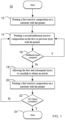
- the accompanying Figure 1 illustrates a process for fabricating a 3D structure with two (or more) reactive materials in accordance with one embodiment of the invention.
- Embodiments of the present invention provide methods of forming very accurate 3D articles in materials having a wide range of viscosities, printing more than one material in each layer.
- the invention advantageously provides jetting of a second material on top of a first one with a large momentum - enough to create a good mixture between the two materials.
- LDW laser direct-write
- laser photons provide the driving force to catapult a small volume of material from a donor film toward an acceptor substrate.
- the laser beam interacts with the inner side of the donor film, which is coated onto a non-absorbing carrier substrate.
- the incident laser beam in other words, propagates through the transparent carrier before the photons are absorbed by the inner surface of the film.
- material is ejected from the donor film toward the surface of the substrate. Examples of Laser-enhanced jetting-based printing systems have been described in US Patent Application Publications 2005/0212888 and 2009/0074987 , and in WO 2016/020817 .
- this approach includes:
- This process repeats (20, 22) until the object is formed (24).
- some or all of the layers can be printed using a UV-curable or other support material such as a mold to increase accuracy.
- post printing curing can be employed to achieve final desired material properties.
- Silicone compositions are crosslinkable through addition reactions and comprise the following parts, as explained in detail in WO 2017/044735 :
- the crosslinking being by heating rapidly enough to create a semi-crosslinked object that can achieve its final properties by post printing heating.
- silicone elastomers for 3D printing are: WO 2017/081028 , WO 2017/121733 , WO 2018/206689 , US 4,477,626 , and US 6,121,368 .
- Epoxy resins can be cured with a variety of compounds called curing agents which are also known as curatives, hardeners, or converters.
- curing agents are also known as curatives, hardeners, or converters.
- amines are most widely utilized as curing agents in epoxy matrices for high performance composites. This produces a heteropolymer consisting of epoxy molecules linked together through the reactive sites of the curing agent.
- the curing agent(s) are primary amines which may be aromatic, cycloaliphatic (cyclic), or aliphatic primary amines.
- a primary amine has two active hydrogens that are each capable of reacting with an epoxy group.
- the amine curing agent selection depends on the desired mechanical and physical properties, environmental resistance and mostly viscosity, and pot-life which are not an issue using Laser-enhanced jetting-based technology.
- the support material properties should be:
- Epoxy acrylates are compounds prepared by reacting epoxides, either glycidyl ethers or cyclohexene oxides, with acrylic acid, that is producing hydroxyacrylates.
- epoxides either glycidyl ethers or cyclohexene oxides
- acrylic acid that is producing hydroxyacrylates.
- the aromatic, industrially widespread BPA-DGE or epoxyphenol novolaks are reacted to the corresponding hydroxyacrylates.
- These are available commercially (e.g., from Rahn, BASF, Sartomer, etc.). Common to these products are viscosities of about 500-50,000 Pa s in the undiluted state.
- a low-viscosity acrylic monomer such as 1,6-hexanediol diacrylate (HDDA), trimethylolpropane triacrylate (TMPTA), tripropylene Glycol Diacrylate (TPGDA), and other monomers known to the person skilled in the art. Radiation-induced free-radical curing of such products produces films having good mechanical properties.
- HDDA 1,6-hexanediol diacrylate
- TMPTA trimethylolpropane triacrylate
- TPGDA tripropylene Glycol Diacrylate
- the radiation-curable compositions normally include a photoinitiator.
- the photoinitiator content is preferably from 0.1 to 10% by weight, based in each case on the total amount of the epoxy acrylates.
- Suitable photoinitiators are known to the person skilled in the art and are also available commercially. Use may be made, for example, of the products available commercially under the name SpeedCure TM by Lambson.
- initiators for photocationic polymerization which are likewise known to the person skilled in the art.
- Photoinitiators for cationic polymerization generate strong Bronsted acids when exposed to UV radiation and thereby initiate the polymerization of the epoxide groups.
- the compositions contain cationic photoinitiators (also available under the same brand name from Lambson) generally in amounts from 0.05 to 3% by weight, based on the epoxy resin component.
- compositions are advantageously cured with UV radiation.
- a good fit between the system and the support can generate a soluble support that is only a structural building block during the 3D printing and can be washed away later. It plays the role of a mold during a crosslinking process that could take a relatively long time for thermally reactive systems such as those mentioned above.
- polyurethanes form a family of polymers which are essentially different from most other plastics in that there is no urethane monomer and the polymer is almost invariably created during the manufacture of a particular object.
- Polyurethanes are made by the exothermic reactions between alcohols with two or more reactive hydroxyl (-OH) groups per molecule (diols, triols, polyols) and isocyanates that have more than one reactive isocyanate group (-NCO) per molecule (diisocyanates, polyisocyanates).
- a diisocyanate reacts with a diol at relatively low temperatures and the reaction with catalyst can be fast enough to be used in a Laser-enhanced jetting-based system.
- the group formed by the reaction between the two molecules is known as the urethane linkage. It is the essential part of the polyurethane molecule.
- a material A that can react with material B and will change its properties to at least a semi-cured/semi-solid product C can be used to create a 3D object in accordance with the present invention.
- some catalyst D or filler E can be added to one of the materials or to both. It is important that the viscosity of material A and material B will be low enough to enable a good mixing between the materials - to this point materials up to 10000 cp were used as models and a very good mixing was achieved.
- the present methods provide printing of such articles using two or more reactive materials sequentially, mixing them during the printing phase and not before. Accordingly, nozzle clogging and other reaction-related phenomena are overcome. Numerous different reactive materials can be used according to these methods and many 3D objects can be produced over a wide range of material viscosities using different types of post processing.
Landscapes
- Chemical & Material Sciences (AREA)
- Engineering & Computer Science (AREA)
- Materials Engineering (AREA)
- Manufacturing & Machinery (AREA)
- Physics & Mathematics (AREA)
- Mechanical Engineering (AREA)
- Optics & Photonics (AREA)
- Health & Medical Sciences (AREA)
- Chemical Kinetics & Catalysis (AREA)
- Medicinal Chemistry (AREA)
- Polymers & Plastics (AREA)
- Organic Chemistry (AREA)
Claims (12)
- Verfahren zur Herstellung eines dreidimensionalen (3D-) Objekts, umfassend:(a) Strahlen (12, 20), durch einen laserunterstützten strahlungsbasierten 3D-Drucker, einer ersten reaktiven Zusammensetzung auf ein Substrat, um eine erste Schicht des 3D-Objekts zu bilden;(b) nach dem Bilden der ersten Schicht des 3D-Objekts, Mischen einer zweiten reaktiven Zusammensetzung mit der ersten reaktiven Zusammensetzung der ersten Schicht durch Strahlen der zweiten reaktiven Zusammensetzung in Richtung der ersten reaktiven Zusammensetzung mit dem laserunterstützten strahlungsbasierten 3D-Drucker;(c) Erlauben (18), dass sich die erste und die zweite reaktive Zusammensetzung quervernetzen, um eine Verbindung zu bilden; und(d) Wiederholen (22) der Schritte (a) - (c), bis das 3D-Objekt gebildet ist.
- Verfahren nach Anspruch 1, wobei die erste und die zweite reaktive Zusammensetzung durch Erwärmen quervernetzt werden.
- Verfahren nach einem der vorhergehenden Ansprüche, wobei einige oder alle der Schichten unter Verwendung eines Trägermaterials als Form gedruckt werden.
- Verfahren nach Anspruch 3, wobei das Trägermaterial eines aus einem UV-härtenden Material, einem Epoxidacrylat oder einem Urethanacrylat oder einem anderen Acrylatmonomer ist.
- Verfahren nach Anspruch 3, wobei das Trägermaterial einen Photoinitiator in einer Menge von 0,1 bis 10 Gew.-% enthält.
- Verfahren nach Anspruch 3, wobei das Trägermaterial einen Photoinitiator zur kationischen Polymerisation in einer Menge von 0,05 bis 3 Gew.-% enthält.
- Verfahren nach einem der vorhergehenden Ansprüche, das ferner ein Anwenden von Aushärten nach dem Drucken, nachdem das 3D-Objekt gebildet wird, umfasst.
- Verfahren nach einem der vorhergehenden Ansprüche, wobei die erste und die zweite reaktive Zusammensetzung Silikonelastomere sind.
- Verfahren nach Anspruch 8, wobei die erste reaktive Zusammensetzung eine Organopolysiloxan-Verbindung umfasst, die pro Molekül mindestens zwei C2-C6-Alkenylradikale aufweist, die an Siliziumatome gebunden sind, und die zweite reaktive Zusammensetzung eine Organohydrogenopolysiloxan-Verbindung umfasst, die pro Molekül mindestens zwei Wasserstoffatome aufweist, die an ein identisches oder unterschiedliches Silizium-Atom gebunden sind.
- Verfahren nach Anspruch 9, wobei die Quervernetzung durch Erwärmen mit einem Katalysator bewirkt wird, der mindestens ein Metall oder eine Verbindung aus der Platingruppe enthält, um ein semi-quervernetztes Objekt zu erzeugen.
- Verfahren nach einem der Ansprüche 1 bis 7, wobei die erste und die zweite reaktive Zusammensetzung Epoxidharze oder Polyurethane sind.
- Verfahren nach einem der Ansprüche 1 bis 7, wobei eine oder beide der ersten und zweiten reaktiven Zusammensetzungen eine Katalysatorverbindung und/oder eine Füllmassenverbindung enthalten.
Applications Claiming Priority (2)
| Application Number | Priority Date | Filing Date | Title |
|---|---|---|---|
| US201962861548P | 2019-06-14 | 2019-06-14 | |
| PCT/IB2020/054703 WO2020250058A1 (en) | 2019-06-14 | 2020-05-18 | Additive manufacturing of a free form object made of multicomponent materials |
Publications (3)
| Publication Number | Publication Date |
|---|---|
| EP3983200A1 EP3983200A1 (de) | 2022-04-20 |
| EP3983200C0 EP3983200C0 (de) | 2023-07-12 |
| EP3983200B1 true EP3983200B1 (de) | 2023-07-12 |
Family
ID=70802902
Family Applications (1)
| Application Number | Title | Priority Date | Filing Date |
|---|---|---|---|
| EP20727728.6A Active EP3983200B1 (de) | 2019-06-14 | 2020-05-18 | Generative fertigung eines freien formkörpers aus mehrkomponentenstoffen |
Country Status (3)
| Country | Link |
|---|---|
| US (1) | US11440241B2 (de) |
| EP (1) | EP3983200B1 (de) |
| WO (1) | WO2020250058A1 (de) |
Citations (7)
| Publication number | Priority date | Publication date | Assignee | Title |
|---|---|---|---|---|
| WO2011107599A1 (en) * | 2010-03-04 | 2011-09-09 | INSERM (Institut National de la Santé et de la Recherche Médicale) | Bioprinting station, assembly comprising such bioprinting station and bioprinting method |
| US20110291326A1 (en) * | 2010-05-26 | 2011-12-01 | Seiko Epson Corporation | Shaping slurry and shaping method |
| US20160233089A1 (en) * | 2013-10-14 | 2016-08-11 | Orbotech Ltd. | Lift printing of multi-composition material structures |
| US20170189995A1 (en) * | 2014-05-27 | 2017-07-06 | Orbotech Ltd. | Printing of 3d structures by laser-induced forward transfer |
| US20170365484A1 (en) * | 2015-01-19 | 2017-12-21 | Orbotech Ltd. | Printing of three-dimensional metal structures with a sacrificial support |
| US20180355199A1 (en) * | 2016-04-05 | 2018-12-13 | Hewlett-Packard Development Company, L.P. | Photosensitive Material Sets |
| US20220401993A1 (en) * | 2016-07-17 | 2022-12-22 | Io Tech Group Ltd. | Kit and system for laser-induced material dispensing |
Family Cites Families (22)
| Publication number | Priority date | Publication date | Assignee | Title |
|---|---|---|---|---|
| JPS59176347A (ja) | 1983-03-25 | 1984-10-05 | Toray Silicone Co Ltd | オルガノポリシロキサン組成物 |
| US5204055A (en) | 1989-12-08 | 1993-04-20 | Massachusetts Institute Of Technology | Three-dimensional printing techniques |
| US5740051A (en) | 1991-01-25 | 1998-04-14 | Sanders Prototypes, Inc. | 3-D model making |
| US5506607A (en) | 1991-01-25 | 1996-04-09 | Sanders Prototypes Inc. | 3-D model maker |
| US6121368A (en) | 1999-09-07 | 2000-09-19 | Dow Corning Corporation | Silicone composition and silicone pressure sensitive adhesive formed therefrom |
| DE10210146A1 (de) | 2002-03-07 | 2003-09-25 | Aurentum Innovationstechnologi | Qualitätsdruckverfahren und Druckmaschine sowie Drucksbustanz hierfür |
| US8728589B2 (en) | 2007-09-14 | 2014-05-20 | Photon Dynamics, Inc. | Laser decal transfer of electronic materials |
| US20100021638A1 (en) * | 2008-07-28 | 2010-01-28 | Solidscape, Inc. | Method for fabricating three dimensional models |
| US20140131908A1 (en) | 2012-11-14 | 2014-05-15 | Dentsply International Inc. | Three-dimensional fabricating material systems for producing dental products |
| US9527241B2 (en) | 2013-12-20 | 2016-12-27 | Xerox Corporation | Three dimensional (3D) printing of epoxy, hardener, and parts of an object to be assembled later |
| US9925797B2 (en) | 2014-08-07 | 2018-03-27 | Orbotech Ltd. | Lift printing system |
| FR3030361B1 (fr) * | 2014-12-17 | 2017-01-20 | Univ Bordeaux | Procede d'impression d'elements biologiques par laser et dispositif pour sa mise en oeuvre |
| US11286389B2 (en) * | 2015-09-10 | 2022-03-29 | Dow Silicones Corporation | 3D printing method utilizing thermoplastic silicone composition |
| KR101969257B1 (ko) | 2015-11-09 | 2019-04-15 | 와커 헤미 아게 | 탄도학적 방법에 의해 엘라스토머 성형품을 제조하기 위한 실리콘 조성물 |
| US10669421B2 (en) | 2016-01-11 | 2020-06-02 | Wacker Chemie Ag | Cross-linkable silicone compositions for producing highly transparent molded parts by means of ballistic methods |
| JP7048502B2 (ja) * | 2016-02-05 | 2022-04-05 | ストラタシス リミテッド | ポリアミド形成材料を使用する三次元インクジェット印刷 |
| WO2018055522A1 (en) * | 2016-09-22 | 2018-03-29 | Stratasys Ltd. | Formulation, method and system for solid freeform fabrication |
| CN212708031U (zh) * | 2017-03-15 | 2021-03-16 | 卡本有限公司 | 集成增材制造系统 |
| FR3063931B1 (fr) * | 2017-03-15 | 2019-03-22 | Poietis | Equipement et procede d'impression additive |
| WO2018206995A1 (en) | 2017-05-10 | 2018-11-15 | Elkem Silicones France Sas | Method for manufacturing a silicone elastomer article using a 3d printer |
| US20210197268A1 (en) * | 2018-06-08 | 2021-07-01 | Hewlett-Packard Development Company, L.P. | Coprinted supports with printed parts |
| WO2020017615A1 (ja) * | 2018-07-18 | 2020-01-23 | Kjケミカルズ株式会社 | 三次元造形サポート材用活性エネルギー線硬化性樹脂組成物とインク |
-
2020
- 2020-05-18 EP EP20727728.6A patent/EP3983200B1/de active Active
- 2020-05-18 US US15/929,706 patent/US11440241B2/en active Active
- 2020-05-18 WO PCT/IB2020/054703 patent/WO2020250058A1/en not_active Ceased
Patent Citations (8)
| Publication number | Priority date | Publication date | Assignee | Title |
|---|---|---|---|---|
| WO2011107599A1 (en) * | 2010-03-04 | 2011-09-09 | INSERM (Institut National de la Santé et de la Recherche Médicale) | Bioprinting station, assembly comprising such bioprinting station and bioprinting method |
| US20110291326A1 (en) * | 2010-05-26 | 2011-12-01 | Seiko Epson Corporation | Shaping slurry and shaping method |
| US20160233089A1 (en) * | 2013-10-14 | 2016-08-11 | Orbotech Ltd. | Lift printing of multi-composition material structures |
| US10629442B2 (en) * | 2013-10-14 | 2020-04-21 | Orbotech Ltd. | Lift printing of multi-composition material structures |
| US20170189995A1 (en) * | 2014-05-27 | 2017-07-06 | Orbotech Ltd. | Printing of 3d structures by laser-induced forward transfer |
| US20170365484A1 (en) * | 2015-01-19 | 2017-12-21 | Orbotech Ltd. | Printing of three-dimensional metal structures with a sacrificial support |
| US20180355199A1 (en) * | 2016-04-05 | 2018-12-13 | Hewlett-Packard Development Company, L.P. | Photosensitive Material Sets |
| US20220401993A1 (en) * | 2016-07-17 | 2022-12-22 | Io Tech Group Ltd. | Kit and system for laser-induced material dispensing |
Also Published As
| Publication number | Publication date |
|---|---|
| WO2020250058A1 (en) | 2020-12-17 |
| US11440241B2 (en) | 2022-09-13 |
| EP3983200C0 (de) | 2023-07-12 |
| EP3983200A1 (de) | 2022-04-20 |
| US20200391433A1 (en) | 2020-12-17 |
Similar Documents
| Publication | Publication Date | Title |
|---|---|---|
| US10487238B2 (en) | Non-isocyanate polyurethane inks for 3D printing | |
| EP1512519B1 (de) | Verfahren und System zum 'Solid Freeform Fabrication' mit nicht-reaktivem Pulver | |
| US10793745B2 (en) | Dual-cure resins and related methods | |
| EP3862167B1 (de) | Verfahren zum dreidimensionalen formen von gegenständen | |
| US7578958B2 (en) | Three-dimensional structured printing | |
| EP1360063B1 (de) | Strukturiertes dreidimensionales druckverfahren | |
| US7767130B2 (en) | Method and device for production of a three-dimensional article | |
| AU2019360133A1 (en) | Thiol-ene printable resins for inkjet 3D printing | |
| US20260071067A1 (en) | Build materials for 3d printing | |
| US20060159869A1 (en) | Reactive materials systems and methods for solid freeform fabrication of three-dimensional objects | |
| US20030190472A1 (en) | Thermoplastic polymer filled pastes | |
| EP3983200B1 (de) | Generative fertigung eines freien formkörpers aus mehrkomponentenstoffen | |
| US11633908B2 (en) | Latent cure resins and related methods |
Legal Events
| Date | Code | Title | Description |
|---|---|---|---|
| STAA | Information on the status of an ep patent application or granted ep patent |
Free format text: STATUS: UNKNOWN |
|
| STAA | Information on the status of an ep patent application or granted ep patent |
Free format text: STATUS: THE INTERNATIONAL PUBLICATION HAS BEEN MADE |
|
| PUAI | Public reference made under article 153(3) epc to a published international application that has entered the european phase |
Free format text: ORIGINAL CODE: 0009012 |
|
| STAA | Information on the status of an ep patent application or granted ep patent |
Free format text: STATUS: REQUEST FOR EXAMINATION WAS MADE |
|
| 17P | Request for examination filed |
Effective date: 20220104 |
|
| AK | Designated contracting states |
Kind code of ref document: A1 Designated state(s): AL AT BE BG CH CY CZ DE DK EE ES FI FR GB GR HR HU IE IS IT LI LT LU LV MC MK MT NL NO PL PT RO RS SE SI SK SM TR |
|
| DAV | Request for validation of the european patent (deleted) | ||
| DAX | Request for extension of the european patent (deleted) | ||
| GRAP | Despatch of communication of intention to grant a patent |
Free format text: ORIGINAL CODE: EPIDOSNIGR1 |
|
| STAA | Information on the status of an ep patent application or granted ep patent |
Free format text: STATUS: GRANT OF PATENT IS INTENDED |
|
| INTG | Intention to grant announced |
Effective date: 20230207 |
|
| RAP3 | Party data changed (applicant data changed or rights of an application transferred) |
Owner name: IO TECH GROUP LTD. |
|
| GRAS | Grant fee paid |
Free format text: ORIGINAL CODE: EPIDOSNIGR3 |
|
| GRAA | (expected) grant |
Free format text: ORIGINAL CODE: 0009210 |
|
| STAA | Information on the status of an ep patent application or granted ep patent |
Free format text: STATUS: THE PATENT HAS BEEN GRANTED |
|
| AK | Designated contracting states |
Kind code of ref document: B1 Designated state(s): AL AT BE BG CH CY CZ DE DK EE ES FI FR GB GR HR HU IE IS IT LI LT LU LV MC MK MT NL NO PL PT RO RS SE SI SK SM TR |
|
| REG | Reference to a national code |
Ref country code: CH Ref legal event code: EP |
|
| REG | Reference to a national code |
Ref country code: DE Ref legal event code: R096 Ref document number: 602020013710 Country of ref document: DE |
|
| REG | Reference to a national code |
Ref country code: IE Ref legal event code: FG4D |
|
| U01 | Request for unitary effect filed |
Effective date: 20230731 |
|
| U07 | Unitary effect registered |
Designated state(s): AT BE BG DE DK EE FI FR IT LT LU LV MT NL PT SE SI Effective date: 20230807 |
|
| REG | Reference to a national code |
Ref country code: LT Ref legal event code: MG9D |
|
| PG25 | Lapsed in a contracting state [announced via postgrant information from national office to epo] |
Ref country code: GR Free format text: LAPSE BECAUSE OF FAILURE TO SUBMIT A TRANSLATION OF THE DESCRIPTION OR TO PAY THE FEE WITHIN THE PRESCRIBED TIME-LIMIT Effective date: 20231013 |
|
| PG25 | Lapsed in a contracting state [announced via postgrant information from national office to epo] |
Ref country code: ES Free format text: LAPSE BECAUSE OF FAILURE TO SUBMIT A TRANSLATION OF THE DESCRIPTION OR TO PAY THE FEE WITHIN THE PRESCRIBED TIME-LIMIT Effective date: 20230712 |
|
| PG25 | Lapsed in a contracting state [announced via postgrant information from national office to epo] |
Ref country code: IS Free format text: LAPSE BECAUSE OF FAILURE TO SUBMIT A TRANSLATION OF THE DESCRIPTION OR TO PAY THE FEE WITHIN THE PRESCRIBED TIME-LIMIT Effective date: 20231112 |
|
| PG25 | Lapsed in a contracting state [announced via postgrant information from national office to epo] |
Ref country code: RS Free format text: LAPSE BECAUSE OF FAILURE TO SUBMIT A TRANSLATION OF THE DESCRIPTION OR TO PAY THE FEE WITHIN THE PRESCRIBED TIME-LIMIT Effective date: 20230712 Ref country code: NO Free format text: LAPSE BECAUSE OF FAILURE TO SUBMIT A TRANSLATION OF THE DESCRIPTION OR TO PAY THE FEE WITHIN THE PRESCRIBED TIME-LIMIT Effective date: 20231012 Ref country code: IS Free format text: LAPSE BECAUSE OF FAILURE TO SUBMIT A TRANSLATION OF THE DESCRIPTION OR TO PAY THE FEE WITHIN THE PRESCRIBED TIME-LIMIT Effective date: 20231112 Ref country code: HR Free format text: LAPSE BECAUSE OF FAILURE TO SUBMIT A TRANSLATION OF THE DESCRIPTION OR TO PAY THE FEE WITHIN THE PRESCRIBED TIME-LIMIT Effective date: 20230712 Ref country code: GR Free format text: LAPSE BECAUSE OF FAILURE TO SUBMIT A TRANSLATION OF THE DESCRIPTION OR TO PAY THE FEE WITHIN THE PRESCRIBED TIME-LIMIT Effective date: 20231013 Ref country code: ES Free format text: LAPSE BECAUSE OF FAILURE TO SUBMIT A TRANSLATION OF THE DESCRIPTION OR TO PAY THE FEE WITHIN THE PRESCRIBED TIME-LIMIT Effective date: 20230712 |
|
| PG25 | Lapsed in a contracting state [announced via postgrant information from national office to epo] |
Ref country code: PL Free format text: LAPSE BECAUSE OF FAILURE TO SUBMIT A TRANSLATION OF THE DESCRIPTION OR TO PAY THE FEE WITHIN THE PRESCRIBED TIME-LIMIT Effective date: 20230712 |
|
| REG | Reference to a national code |
Ref country code: DE Ref legal event code: R097 Ref document number: 602020013710 Country of ref document: DE |
|
| PG25 | Lapsed in a contracting state [announced via postgrant information from national office to epo] |
Ref country code: SM Free format text: LAPSE BECAUSE OF FAILURE TO SUBMIT A TRANSLATION OF THE DESCRIPTION OR TO PAY THE FEE WITHIN THE PRESCRIBED TIME-LIMIT Effective date: 20230712 Ref country code: RO Free format text: LAPSE BECAUSE OF FAILURE TO SUBMIT A TRANSLATION OF THE DESCRIPTION OR TO PAY THE FEE WITHIN THE PRESCRIBED TIME-LIMIT Effective date: 20230712 Ref country code: CZ Free format text: LAPSE BECAUSE OF FAILURE TO SUBMIT A TRANSLATION OF THE DESCRIPTION OR TO PAY THE FEE WITHIN THE PRESCRIBED TIME-LIMIT Effective date: 20230712 Ref country code: SK Free format text: LAPSE BECAUSE OF FAILURE TO SUBMIT A TRANSLATION OF THE DESCRIPTION OR TO PAY THE FEE WITHIN THE PRESCRIBED TIME-LIMIT Effective date: 20230712 |
|
| PLBE | No opposition filed within time limit |
Free format text: ORIGINAL CODE: 0009261 |
|
| STAA | Information on the status of an ep patent application or granted ep patent |
Free format text: STATUS: NO OPPOSITION FILED WITHIN TIME LIMIT |
|
| 26N | No opposition filed |
Effective date: 20240415 |
|
| U20 | Renewal fee for the european patent with unitary effect paid |
Year of fee payment: 5 Effective date: 20240528 |
|
| REG | Reference to a national code |
Ref country code: CH Ref legal event code: PL |
|
| PG25 | Lapsed in a contracting state [announced via postgrant information from national office to epo] |
Ref country code: MC Free format text: LAPSE BECAUSE OF FAILURE TO SUBMIT A TRANSLATION OF THE DESCRIPTION OR TO PAY THE FEE WITHIN THE PRESCRIBED TIME-LIMIT Effective date: 20230712 |
|
| GBPC | Gb: european patent ceased through non-payment of renewal fee |
Effective date: 20240518 |
|
| PG25 | Lapsed in a contracting state [announced via postgrant information from national office to epo] |
Ref country code: MC Free format text: LAPSE BECAUSE OF FAILURE TO SUBMIT A TRANSLATION OF THE DESCRIPTION OR TO PAY THE FEE WITHIN THE PRESCRIBED TIME-LIMIT Effective date: 20230712 Ref country code: CH Free format text: LAPSE BECAUSE OF NON-PAYMENT OF DUE FEES Effective date: 20240531 |
|
| PG25 | Lapsed in a contracting state [announced via postgrant information from national office to epo] |
Ref country code: IE Free format text: LAPSE BECAUSE OF NON-PAYMENT OF DUE FEES Effective date: 20240518 |
|
| PG25 | Lapsed in a contracting state [announced via postgrant information from national office to epo] |
Ref country code: GB Free format text: LAPSE BECAUSE OF NON-PAYMENT OF DUE FEES Effective date: 20240518 |
|
| U20 | Renewal fee for the european patent with unitary effect paid |
Year of fee payment: 6 Effective date: 20250527 |
|
| PG25 | Lapsed in a contracting state [announced via postgrant information from national office to epo] |
Ref country code: CY Free format text: LAPSE BECAUSE OF FAILURE TO SUBMIT A TRANSLATION OF THE DESCRIPTION OR TO PAY THE FEE WITHIN THE PRESCRIBED TIME-LIMIT; INVALID AB INITIO Effective date: 20200518 |
|
| PG25 | Lapsed in a contracting state [announced via postgrant information from national office to epo] |
Ref country code: HU Free format text: LAPSE BECAUSE OF FAILURE TO SUBMIT A TRANSLATION OF THE DESCRIPTION OR TO PAY THE FEE WITHIN THE PRESCRIBED TIME-LIMIT; INVALID AB INITIO Effective date: 20200518 |