EP3983343B1 - Procédé d'élimination de composés organiques dissous des eaux usées - Google Patents
Procédé d'élimination de composés organiques dissous des eaux usées Download PDFInfo
- Publication number
- EP3983343B1 EP3983343B1 EP20740670.3A EP20740670A EP3983343B1 EP 3983343 B1 EP3983343 B1 EP 3983343B1 EP 20740670 A EP20740670 A EP 20740670A EP 3983343 B1 EP3983343 B1 EP 3983343B1
- Authority
- EP
- European Patent Office
- Prior art keywords
- wood
- wastewater
- cationic polymer
- coagulant
- chloride
- Prior art date
- Legal status (The legal status is an assumption and is not a legal conclusion. Google has not performed a legal analysis and makes no representation as to the accuracy of the status listed.)
- Active
Links
Images


Classifications
-
- C—CHEMISTRY; METALLURGY
- C02—TREATMENT OF WATER, WASTE WATER, SEWAGE, OR SLUDGE
- C02F—TREATMENT OF WATER, WASTE WATER, SEWAGE, OR SLUDGE
- C02F1/00—Treatment of water, waste water, or sewage
- C02F1/52—Treatment of water, waste water, or sewage by flocculation or precipitation of suspended impurities
- C02F1/5236—Treatment of water, waste water, or sewage by flocculation or precipitation of suspended impurities using inorganic agents
- C02F1/5245—Treatment of water, waste water, or sewage by flocculation or precipitation of suspended impurities using inorganic agents using basic salts, e.g. of aluminium and iron
-
- C—CHEMISTRY; METALLURGY
- C02—TREATMENT OF WATER, WASTE WATER, SEWAGE, OR SLUDGE
- C02F—TREATMENT OF WATER, WASTE WATER, SEWAGE, OR SLUDGE
- C02F1/00—Treatment of water, waste water, or sewage
- C02F1/52—Treatment of water, waste water, or sewage by flocculation or precipitation of suspended impurities
- C02F1/5263—Treatment of water, waste water, or sewage by flocculation or precipitation of suspended impurities using natural chemical compounds
-
- C—CHEMISTRY; METALLURGY
- C02—TREATMENT OF WATER, WASTE WATER, SEWAGE, OR SLUDGE
- C02F—TREATMENT OF WATER, WASTE WATER, SEWAGE, OR SLUDGE
- C02F1/00—Treatment of water, waste water, or sewage
- C02F1/52—Treatment of water, waste water, or sewage by flocculation or precipitation of suspended impurities
- C02F1/5236—Treatment of water, waste water, or sewage by flocculation or precipitation of suspended impurities using inorganic agents
-
- B—PERFORMING OPERATIONS; TRANSPORTING
- B01—PHYSICAL OR CHEMICAL PROCESSES OR APPARATUS IN GENERAL
- B01J—CHEMICAL OR PHYSICAL PROCESSES, e.g. CATALYSIS OR COLLOID CHEMISTRY; THEIR RELEVANT APPARATUS
- B01J20/00—Solid sorbent compositions or filter aid compositions; Sorbents for chromatography; Processes for preparing, regenerating or reactivating thereof
- B01J20/02—Solid sorbent compositions or filter aid compositions; Sorbents for chromatography; Processes for preparing, regenerating or reactivating thereof comprising inorganic material
- B01J20/0203—Solid sorbent compositions or filter aid compositions; Sorbents for chromatography; Processes for preparing, regenerating or reactivating thereof comprising inorganic material comprising compounds of metals not provided for in B01J20/04
- B01J20/0225—Compounds of Fe, Ru, Os, Co, Rh, Ir, Ni, Pd, Pt
- B01J20/0229—Compounds of Fe
-
- B—PERFORMING OPERATIONS; TRANSPORTING
- B01—PHYSICAL OR CHEMICAL PROCESSES OR APPARATUS IN GENERAL
- B01J—CHEMICAL OR PHYSICAL PROCESSES, e.g. CATALYSIS OR COLLOID CHEMISTRY; THEIR RELEVANT APPARATUS
- B01J20/00—Solid sorbent compositions or filter aid compositions; Sorbents for chromatography; Processes for preparing, regenerating or reactivating thereof
- B01J20/02—Solid sorbent compositions or filter aid compositions; Sorbents for chromatography; Processes for preparing, regenerating or reactivating thereof comprising inorganic material
- B01J20/0203—Solid sorbent compositions or filter aid compositions; Sorbents for chromatography; Processes for preparing, regenerating or reactivating thereof comprising inorganic material comprising compounds of metals not provided for in B01J20/04
- B01J20/0248—Compounds of B, Al, Ga, In, Tl
-
- B—PERFORMING OPERATIONS; TRANSPORTING
- B01—PHYSICAL OR CHEMICAL PROCESSES OR APPARATUS IN GENERAL
- B01J—CHEMICAL OR PHYSICAL PROCESSES, e.g. CATALYSIS OR COLLOID CHEMISTRY; THEIR RELEVANT APPARATUS
- B01J20/00—Solid sorbent compositions or filter aid compositions; Sorbents for chromatography; Processes for preparing, regenerating or reactivating thereof
- B01J20/22—Solid sorbent compositions or filter aid compositions; Sorbents for chromatography; Processes for preparing, regenerating or reactivating thereof comprising organic material
- B01J20/24—Naturally occurring macromolecular compounds, e.g. humic acids or their derivatives
-
- B—PERFORMING OPERATIONS; TRANSPORTING
- B01—PHYSICAL OR CHEMICAL PROCESSES OR APPARATUS IN GENERAL
- B01J—CHEMICAL OR PHYSICAL PROCESSES, e.g. CATALYSIS OR COLLOID CHEMISTRY; THEIR RELEVANT APPARATUS
- B01J20/00—Solid sorbent compositions or filter aid compositions; Sorbents for chromatography; Processes for preparing, regenerating or reactivating thereof
- B01J20/22—Solid sorbent compositions or filter aid compositions; Sorbents for chromatography; Processes for preparing, regenerating or reactivating thereof comprising organic material
- B01J20/26—Synthetic macromolecular compounds
- B01J20/261—Synthetic macromolecular compounds obtained by reactions only involving carbon to carbon unsaturated bonds
-
- B—PERFORMING OPERATIONS; TRANSPORTING
- B03—SEPARATION OF SOLID MATERIALS USING LIQUIDS OR USING PNEUMATIC TABLES OR JIGS; MAGNETIC OR ELECTROSTATIC SEPARATION OF SOLID MATERIALS FROM SOLID MATERIALS OR FLUIDS; SEPARATION BY HIGH-VOLTAGE ELECTRIC FIELDS
- B03D—FLOTATION; DIFFERENTIAL SEDIMENTATION
- B03D1/00—Flotation
- B03D1/001—Flotation agents
-
- B—PERFORMING OPERATIONS; TRANSPORTING
- B03—SEPARATION OF SOLID MATERIALS USING LIQUIDS OR USING PNEUMATIC TABLES OR JIGS; MAGNETIC OR ELECTROSTATIC SEPARATION OF SOLID MATERIALS FROM SOLID MATERIALS OR FLUIDS; SEPARATION BY HIGH-VOLTAGE ELECTRIC FIELDS
- B03D—FLOTATION; DIFFERENTIAL SEDIMENTATION
- B03D1/00—Flotation
- B03D1/02—Froth-flotation processes
- B03D1/028—Control and monitoring of flotation processes; computer models therefor
-
- B—PERFORMING OPERATIONS; TRANSPORTING
- B03—SEPARATION OF SOLID MATERIALS USING LIQUIDS OR USING PNEUMATIC TABLES OR JIGS; MAGNETIC OR ELECTROSTATIC SEPARATION OF SOLID MATERIALS FROM SOLID MATERIALS OR FLUIDS; SEPARATION BY HIGH-VOLTAGE ELECTRIC FIELDS
- B03D—FLOTATION; DIFFERENTIAL SEDIMENTATION
- B03D1/00—Flotation
- B03D1/14—Flotation machines
- B03D1/1431—Dissolved air flotation machines
-
- C—CHEMISTRY; METALLURGY
- C02—TREATMENT OF WATER, WASTE WATER, SEWAGE, OR SLUDGE
- C02F—TREATMENT OF WATER, WASTE WATER, SEWAGE, OR SLUDGE
- C02F1/00—Treatment of water, waste water, or sewage
- C02F1/52—Treatment of water, waste water, or sewage by flocculation or precipitation of suspended impurities
- C02F1/54—Treatment of water, waste water, or sewage by flocculation or precipitation of suspended impurities using organic material
- C02F1/56—Macromolecular compounds
-
- B—PERFORMING OPERATIONS; TRANSPORTING
- B03—SEPARATION OF SOLID MATERIALS USING LIQUIDS OR USING PNEUMATIC TABLES OR JIGS; MAGNETIC OR ELECTROSTATIC SEPARATION OF SOLID MATERIALS FROM SOLID MATERIALS OR FLUIDS; SEPARATION BY HIGH-VOLTAGE ELECTRIC FIELDS
- B03D—FLOTATION; DIFFERENTIAL SEDIMENTATION
- B03D2201/00—Specified effects produced by the flotation agents
- B03D2201/002—Coagulants and Flocculants
-
- C—CHEMISTRY; METALLURGY
- C02—TREATMENT OF WATER, WASTE WATER, SEWAGE, OR SLUDGE
- C02F—TREATMENT OF WATER, WASTE WATER, SEWAGE, OR SLUDGE
- C02F1/00—Treatment of water, waste water, or sewage
- C02F1/66—Treatment of water, waste water, or sewage by neutralisation; pH adjustment
-
- C—CHEMISTRY; METALLURGY
- C02—TREATMENT OF WATER, WASTE WATER, SEWAGE, OR SLUDGE
- C02F—TREATMENT OF WATER, WASTE WATER, SEWAGE, OR SLUDGE
- C02F2103/00—Nature of the water, waste water, sewage or sludge to be treated
- C02F2103/26—Nature of the water, waste water, sewage or sludge to be treated from the processing of plants or parts thereof
- C02F2103/28—Nature of the water, waste water, sewage or sludge to be treated from the processing of plants or parts thereof from the paper or cellulose industry
-
- C—CHEMISTRY; METALLURGY
- C02—TREATMENT OF WATER, WASTE WATER, SEWAGE, OR SLUDGE
- C02F—TREATMENT OF WATER, WASTE WATER, SEWAGE, OR SLUDGE
- C02F2209/00—Controlling or monitoring parameters in water treatment
- C02F2209/08—Chemical Oxygen Demand [COD]; Biological Oxygen Demand [BOD]
-
- Y—GENERAL TAGGING OF NEW TECHNOLOGICAL DEVELOPMENTS; GENERAL TAGGING OF CROSS-SECTIONAL TECHNOLOGIES SPANNING OVER SEVERAL SECTIONS OF THE IPC; TECHNICAL SUBJECTS COVERED BY FORMER USPC CROSS-REFERENCE ART COLLECTIONS [XRACs] AND DIGESTS
- Y02—TECHNOLOGIES OR APPLICATIONS FOR MITIGATION OR ADAPTATION AGAINST CLIMATE CHANGE
- Y02W—CLIMATE CHANGE MITIGATION TECHNOLOGIES RELATED TO WASTEWATER TREATMENT OR WASTE MANAGEMENT
- Y02W10/00—Technologies for wastewater treatment
- Y02W10/10—Biological treatment of water, waste water, or sewage
Definitions
- the present invention relates to a method for removing dissolved organic compounds from wastewater originating from pulp and/or paper mill.
- Pulp and paper production are one of the most water-intensive industrial processes generating huge amounts of highly contaminated wastewater per tonne of paper or board produced.
- Chemical oxygen demand (COD) in pulp and paper wastewaters can reach even up 40,000 mg/l.
- water treatment facilities of such effluents include primary clarifies, which remove total suspended solids and other particulate matter; biological treatment, which removes the majority of dissolved organic matter; secondary clarifiers for activated sludge separation; and tertiary treatment either in the form of coagulation-flocculation process with solid-liquid separation unit, or zonation, adsorption and others for biologically recalcitrant soluble organic compound, such as lignin, removal.
- a reduction of the ash production in sludge incineration is one of the objects.
- Typical treatment system for the treatment of wastewater originating from pulp and/or paper mill comprises
- the method according to the invention for removing dissolved organic compounds from wastewater originating from pulp and/or paper mill comprises
- Al and/or Fe based inorganic metal coagulant dose can be reduced around 50 % while maintaining the efficacy of COD removal.
- the effectiveness of coagulation with an active inorganic metal coagulant is enhanced and so a similar degree of COD removal may be achieved at a much lower total dose of inorganic metal coagulants or the COD removal may be improved at least 20 % in compared to the addition of the inorganic metal coagulant alone.
- the treatment system is designed to be used with solid-liquid separation system for removing biologically recalcitrant soluble organic compounds, such as lignin, from wastewater, i.e. so-called "hard COD"
- the treatment system is especially suitable for use in tertiary wastewater treatment in pulp and/or paper mill, but the treatment system may also be dosed prior to primary and/or secondary clarifiers.
- the tertiary treatment may be a conventional coagulation-flocculation process with solid-liquid separation unit. Conventionally, coagulation with Al and/or Fe based inorganic metal salts or compounds is used in tertiary wastewater treatment for residual COD removal.
- the use of cationic polymer and wood-based material in combination with the Al and/or Fe based inorganic metal coagulants for precipitation organic substances, such as lignin reduces remarkably the addition amount of the Al and/or Fe based inorganic metal coagulants for achieving desired COD removal. Due to high volumes of produced wastewaters in pulp and paper industry, the reduced amount of the Al and/or Fe based inorganic metal coagulants also reduces the amounts of inorganic salts or compounds in the resulting sludge. Hence, the present invention enables biologically recalcitrant soluble organic compounds removal with minimized inorganic sludge production in wastewater treatment of pulp and/or paper mill wastewater.
- the combination of cationic polymer and wood-based material has synergistic effects as the wood-based material functions as a coagulant and cationic polymer assist coagulation through attraction of suspended solids and formation of bigger flocs for faster precipitation. Bigger flocs can be easier and efficiently removed from the wastewater.
- the wood-based organic material(s) used in the present invention are highly available at pulp and paper mills, which makes them cost-effective product to use in the treatment of wastewaters at pulp and paper mill.
- the wood-based organic material may comprise wood flour, sawdust, wood dust, wood chips or flakes, wood bark, other wood-particles or the like. It is economically and logistically beneficial to use said wood-based organic materials in wastewater treatment process on site as at least partial replacement of Al and/or Fe based inorganic metal coagulants. Typically, they do not need any separate treating or handling before use, but they can be used as at the form they are available at pulp and paper mill. Also, the commercial wood-based material products comprising particles with average particle size ⁇ 10 mm may also be used as the wood-based organic coagulant in the method according to the present invention.
- the treatment system does not remarkably affect the pH of the wastewater as the use of inorganic metal coagulants alone.
- treatment system or a treatment composition used in the current process comprises at least wood-based organic material having an average particle size ⁇ 10 mm and a water-soluble cationic polymer.
- the treatment system used in the current process comprises Al and/or Fe based inorganic metal coagulants in combination with wood-based organic material and cationic polymer, wherein wood-based organic material having an average particle size ⁇ 10 mm and a water-soluble cationic polymer is used to replace partially conventional Al and/or Fe based inorganic metal coagulants in wastewater treatment.
- the wood-based material acts as an adsorption surface and the cationic polymer in combination with Al and/or Fe based inorganic metal coagulant provides required charge to the treatment system for flocculation.
- the treatment system provides efficient precipitation of dissolved organic compounds.
- the wood-based organic material may be any wood-based material having an average particle size ⁇ 10 mm.
- the average particle size refers to the average value of particle size distribution of the wood-based material.
- the wood-based organic material may be in a form of powder, flakes, chips, sticks and/or other particles.
- the particles of the wood-based organic material may be e.g. grounded or refined.
- the wood-based material comprises saw dust, wood bark, mechanically grinded wood particles, wood flour, wood powder or any combination of them.
- the wood-based material may comprise coarse and/or fine particles.
- the average particle size of the wood-based material is ⁇ 10 mm, preferably ⁇ 5 mm for enabling coagulation and flocculation efficiency for precipitating organic dissolved compounds from wastewater.
- the average particle size of the wood-based organic material is in the range of 0.010 - 10 mm, and preferably in the range of 0.050 - 5 mm. Smaller particle size of the wood-based material increases specific surface of the wood-based material, and so the improved performance can be seen even lower dosage amounts.
- the wood-based material may comprise sawdust or wood dust.
- Sawdust or wood dust is a common side stream waste material of wood products.
- Sawdust or wood dust is a typical by-product or waste product of woodworking operations such as sawing. It is mainly composed of fine particles of wood.
- Wood dust is a form of particulate matter or particles.
- Wood-based material may also be any other non-refined wood material in the form of particulates.
- the wood-based material may comprise wood bark.
- Wood bark is also a common side stream material from pulp and paper mills. Wood bark comprising bark flakes or chips, and/or bark mulch can be used in the treatment system according to the present invention.
- the particle size of bark-based material may vary. It can be used in the present invention without any further processing and/or it may be treated, e.g. grinded, to the smaller particulate matter prior to use in the treatment of wastewater.
- the wood-based material in a form of fine particles may be wood powder, wood flour or the like.
- Wood flour may be ligno-cellolosic adsorbent, which_comprises softwood and/or hardwood micronized powder, also called as wood flour.
- wood flour/wood powder may comprise wood particles with 95 % grain size ⁇ 150 ⁇ m and 80 % grain size > 10 ⁇ m.
- the wood-based material may be a blend of the finely divided wood powder/wood flour and the coarse particles, like wood and/or bark chips or other particulate matter and/or saw dust.
- the wood-based material may be originated from any wood species. It may be softwood and/or hardwood based material.
- the treatment system comprises wood-based organic material and the cationic polymer in a weight ratio of 0.5:1 - 5:1, preferably 1:1 - 3:1, and more preferably 1:1 - 2:1, calculated by using active amount of the cationic polymer.
- the benefits in flocculation for COD removal can be reach even small amounts of the wood-based material, but the effect is improved by increasing the amount of the wood-based material in relation to cationic polymer.
- the suitable ratio is dependent on the wood-based material and its absorbent surface area and charge density of the cationic polymer.
- the treatment system comprises at least one water-soluble cationic polymer for increasing flock size to be formed and for improving the separation of the precipitated organic substances from wastewater.
- the cationic polymer has cationic net charge.
- the cationic polymer comprises synthetic cationic polymer and/or bio-based cationic polymer. Water-solubility of the cationic polymer means that the cationic polymer is substantially water-soluble in an aqueous medium.
- the aqueous medium may e.g. comprise acid for achieving dissolution.
- the cationic polymer comprises polyamine, polyvinylamine, polyethyleneimine, polydicyandiamide (polyDCD), polydiallyldimethylammonium chloride (polyDADMAC), poly(acryloyloxyethyl trimethylammonium chloride) (polyADAM-CI), poly (methacryloyloxyethyl trimethylammonium chloride) (polyMADAM-CI), poly (acrylamido-N-propyltrimethylammonium chloride) (polyAPTAC), poly (methacrylamidopropyltrimethylammonium chloride) (polyMAPTAC) and/or a copolymer of (meth)acrylamide and cationic monomers selected from diallyl dimethylammonium chloride (DADMAC), acryloyloxyethyl trimethylammonium chloride (ADAM-Cl), methacryloyloxyethyl trimethylammonium chloride (MADAM-CI), poly(acrylo
- a cationic polymer comprises polyamine and/or polyDADMAC, preferably polyamine.
- Polyamines have typically higher cationicity as polyDADMAC and therefore polyamines provide same efficiency by smaller dosage as polyDADMAC.
- Polyamines are organic compounds having two or more primary amino groups.
- PolyDADMAC is a homopolymer of diallyldimethylammonium chloride (DADMAC).
- a cationic polymer may comprise bio-based cationic polymer comprising cationic polysaccharide, such as starch, cellulose, guar gum, dextran or the like, and/or chitosan.
- the cationic polymer comprises cationic starch having degree of substitution (DS) value at least 0.3, preferably at least 0.4 for providing required cationicity for flocculation.
- degree of substitution means starch which has been modified by cationisation.
- Cationic starches which have a degree of substitution, DS, > 0.3 are considered high cationic starches in this application.
- the high cationic starch is preferably only slightly degraded or non-degraded and modified solely by cationisation. Most preferably the used starch is non-degraded and non-cross-linked.
- derivatising agents which may be used to give a positive charge density to starch.
- a cationic starch may have quaternary ammonium, quaternary phosphonium, tertiary sulfonium, or other corresponding substituent(s).
- a cationic charge which is derivatised to contain a quaternary ammonium ion, for example by etherification of hydroxyl groups with a suitable etherifying agent having a cationic character such as the methyl chloride quaternary salt of N-(2,3-epoxypropyl)dimethylamine or N-(2,3-epoxypropyl)dibutylamine or N-(2,3-epoxypropyl)methylaniline.
- suitable high cationic starches are of natural origin, for example, potato, rice, corn, waxy corn, wheat, barley, sweet potato or tapioca starch, potato starch being preferred.
- Cationicity of cationic starch may be defined by using degree of substitution (DS).
- Degree of substitution defines how many substituted groups are contained in cationic starch, calculated per one anhydroglucose unit of starch.
- Degree of substitution of cationic starch, which is cationised with 2,3-epoxypropyltrimethyl- ammonium chloride is typically calculated by using the nitrogen content of pure dry cationic starch, which does not contain any other nitrogen sources than the quaternary ammonium groups. Nitrogen content is typically determined by using commonly known Kjeldahl-method.
- wood-based organic material and cationic polymer is used in combination with Al and/or Fe based inorganic metal coagulant(s).
- the present invention enables decreasing the amount of the Al and/or Fe based inorganic metal coagulants used per kg of organic compounds in wastewater.
- the treatment system comprises Al and/or Fe based inorganic metal coagulant and a combination of wood-based organic material and the cationic polymer in a weight ratio of 4:1 - 1:10, preferably 4:1 -1:4 and more preferably 1:1 - 1:4, calculated by using active metal content and active amount of the cationic polymer.
- An improved COD removal efficacy e.g. COD removal of even more than 80 % is achieve which the decreased inorganic coagulant dosage in comparison to use of inorganic metal coagulants alone.
- the Al and/or Fe based inorganic metal coagulant comprises aluminium sulphate, polyaluminium chloride, iron sulphate, ferric chloride or any combination of them.
- the treatment system may also comprise other multivalent compounds in addition to the Al and/or Fe based inorganic metal coagulant for improving the effect of the coagulants.
- the multivalent compound may be zirconium, calcium and/or magnesium based compound.
- an addition of Al and/or Fe based inorganic metal coagulant may be carried out simultaneously with the addition of the wood-based organic material and cationic polymer, or they may be added sequentially to wastewater.
- the treatment system is preferably used to remove biologically recalcitrant soluble organic substances, such as lignin from wastewaters, which removal can be observed as reduced COD.
- the treatment system is used in the treatment of wastewater originating from pulp and/or paper mill.
- the method according to the invention may be used for removing of the dissolved lignin e.g. from effluents from a bleaching of chemical pulp. Therefore, according to one preferred embodiment of the present invention the dissolved organic compounds to be precipitated from wastewater is understood as organic substances, such as lignin originating from pulp and/or paper making processes, e.g. from chemical pulping process of cellulosic fibre material.
- the organic compounds refer to e.g.
- lignin lignin, lignin-like substances or compounds and their disintegration products as well as other organic compounds existing in wastewaters of pulp and paper processes.
- the term "recalcitrant soluble organic substances” is understood as organic substances or compounds that resist microbial degradation, are difficult to oxidize biochemically and/or are not readily biodegradable. Examples of such compounds are humic substances, such as wood-based lignin and its degradation products, large aromatic compounds and phenolic compounds, such as polyphenols.
- the method according to the present invention for removing dissolved organic compound from wastewater, especially from wastewater originating from pulp and/or paper mill, comprises
- the treatment system may be added to wastewater in any suitable point for removing dissolved organic compounds.
- the separation of the precipitated organic dissolved organic compounds can be carried out using any suitable solid-liquid separation system.
- Precipitated compounds can be separated from wastewater in primary clarifies, secondary clarifiers and/or in tertiary treatment after biological treatment.
- the treatment system is added to wastewater after biological treatment of wastewater, wherein especially recalcitrant organic soluble substances can be precipitated from wastewater.
- the treatment system is added to wastewater after biological treatment of wastewater and prior to tertiary treatment, wherein the precipitated organic substances can be removed from wastewater in solid-liquid separation unit of the tertiary treatment.
- This application is especially valuable in the treatment of wastewater originating form pulp and/or paper mill.
- at least part of the treatment system may also be added to the tertiary treatment.
- the tertiary treatment comprises dissolved air flotation (DAF) step, wherein the treatment system of the present invention is preferably added to wastewater prior to conveying wastewater into DAF flotation tank.
- DAF dissolved air flotation
- the treatment system can be dosed to the feed water of the DAF float tank to coagulate the colloidal particles and/or to conglomerate the particles into bigger clusters.
- the precipitated solids may also be removed from the wastewater by using disk filter, settling tank or membrane filtration, wherein the treatment system is added prior separation step.
- the reject i.e. an organic sludge, comprising the precipitated organic substances can be conveyed to incinerator.
- the sludge produced by the method according to the invention is highly organic and therefore the end disposal can be done with existing incinerators
- pH of the wastewater is adjusted to be ⁇ 7, preferably in the range of 3 - 6, and more preferably in the range of about 4 - 5 depending on the use inorganic metal coagulant.
- pH is adjusted prior to addition of the treatment system according to the present invention.
- the pH adjustment can be carried out by using conventional pH adjustment chemicals, such as H 2 SO 4 . It has been observed that COD removal with treatment system according to the present invention can be further improved with pH adjustment.
- the pH adjustment is especially used when the treatment system is dosed to the wastewater after biological treatment, wherein it does not affect detrimental to the operation of biological treatment.
- the adequate amount of the components of the treatment system to be added is dependent on the wastewater to be treated.
- the flocculation and coagulation experiments in the following Reference Example and Application Examples 1-5 are conducted using miniflocculator "Flocculator 2000". About 30 L amount of water is collected in order to be able to carry out all tests using same water sample. Water is stored in cold room before starting tests. The whole sample lot is homogenized, and 1 L samples are taken for the coagulation tests.
- the sample is mixed (fast mixing 400 rpm 30 sec) and 0.1 M H 2 SO 4 as pH-adjustment chemical and treatment chemical(s) specified in the following Examples are added to the sample. After treatment chemical additions mixing (slow mixing 40 rpm 10-20 min) is continued for floc formation and build-up. pH is measured at this stage. After mixing, the sample is stayed about 10 - 30 min for settling.
- COD chemical oxygen demand
- UV absorbance measurements at 254 nm are conducted using Unicam SN024 spectrophotometer.
- the filtrated samples are taken by filtering the decanted supernatant. Filtration of samples prior to COD analysis is carried out with 0.45 ⁇ m prewashed cellulose acetate (CA) membrane filter.
- CA cellulose acetate
- Wastewater used in the following reference example and the application examples 1 - 5 originates bleached softwood kraft pulp manufacturing and the sample has been taken after biological treatment of wastewater. Organic dissolved compounds are precipitated as more detailed described in the following Examples.
- Ligno-cellulosic grounded adsorbent comprises wood-based micronized powder (wood flour) with 95 % grain size ⁇ 150 ⁇ m and 80 % grain size > 10 ⁇ m (product code Vemissa E150, manufacturer SPPS, France). The dosage amounts presented in Figures are given as dosage of said product.
- FennoFloc C50 (Kemira Oyj) is a polyamine with typical active polymer content 50 % and typical Brookfield viscosity 500-1000 mPas at 25 °C.
- Cationic polyamine flocculant Fennofloc C50 ( Figures referred as "C 50") can be used to assist coagulation through attraction of suspended solids and formation of bigger flocs for faster precipitation.
- C 50 Cationic polyamine flocculant Fennofloc C50
- a blend of ligno-cellulosic adsorbent "Vemissa” and polyamine flocculant FennoFloc C50 can remove up to 30 % of COD from wastewater, when used alone, and thus allowing to avoid inorganic sludge formation. When combined with iron sulphate coagulant Ferix-3, the maximum COD removal efficiency can reach more than 80 %.
- This example shows that ligno-cellulosic adsorbent mixed with polyamine flocculant requires much smaller amounts of iron and aluminium salts for sufficient COD removal in coagulation process. In most cases, metal coagulant reduction of almost 50 % was observed when conducting treatment process with a blend of ligno-cellulosic adsorbent and polyamine flocculant and while keeping removal efficiency at the same level.
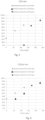
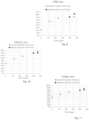
- Fig. 4 shows COD removal efficiency when assisting coagulation with ligno-cellulosic adsorbent mixed with cationic polyamine flocculant FennoFloc C50. Above 60 % of total COD removal can be obtained at Ferix-3 coagulant dose of 224 ppm and pH 4. When using 230 ppm of Ferix-3 coagulant dose together with 45 ppm of organic ligno-cellulosic adsorbent mixed with 45 ppm of polyamine flocculant Fennofloc C50, more than 80 % total COD reduction was obtained.
- 70 % soluble COD reduction requires metal coagulant dose of 120 ppm assisted with 91 ppm ligno-cellulosic_adsorbent, which is in turn mixed with 91 ppm polyamine flocculant FennoFloc C50. It is worth to notice that 91 ppm of ligno-cellulosic adsorbent in combination with 91 ppm of polyamine flocculant FennoFloc C50 used alone without metal coagulant at pH 4 allow removing about 20 % of total COD and 30% of soluble COD from wastewater.
- Precipitation of organic dissolved compounds was conducted by using a blend of pine bark material (average particle size ⁇ 10 mm) and cationic polyamine flocculant FennoFloc C50 either alone or in combination with iron sulphate coagulant Ferix-3 (Kemira Oyj).
- the dosage amounts presented in Figures are given as dosage of said product.
- FennoFloc C50 (Kemira Oyj) is a polyamine with typical active polymer content 50 % and typical Brookfield viscosity 500-1000 mPas at 25 °C.
- iron sulphate coagulant Ferix-3 dose 230 ppm and adding 91 ppm of pine bark adsorbent mixed with 91 ppm of polyamine flocculant, COD removal was improved more than by 20 % and was equal to 85 %.
- the smaller doses of Ferix-3 coagulant below 200 ppm combined with the blends of pine bark and polyamine flocculant allowed organic matter removal from wastewater, which was not observed when iron sulphate coagulant Ferix-3 has been used alone (see reference example).
- FennoFloc C50 (Kemira Oyj) is a polyamine with typical active polymer content 50 % and typical Brookfield viscosity 500-1000 mPas at 25 °C.
- iron sulphate coagulant Ferix-3 dose of 230 ppm and adding 45 ppm of sawdust adsorbent mixed with 45 ppm of polyamine flocculant COD removal was improved by 20% and was equal to 80%, but there was no improvement in soluble COD and UVabs removal.
- the smaller doses of Ferix-3 coagulant below 200 ppm combined with the blends of sawdust and polyamine flocculant allowed organic compound removal from wastewater, which was not observed when Ferix-3 coagulant has been used alone.
- 120 ppm of iron sulphate coagulant Ferix-3 was dosed to wastewater together with sawdust-polyamine blend (91 ppm, ratio 1:1) 60 - 70 % of COD and UVabs removal were achieved.
- Precipitation of organic dissolved compounds was conducted by using a ligno-cellulosic adsorbent and cationic polyDADMAC flocculant FennoFloc C40 either alone or in combination with iron sulphate coagulant Ferix-3 (Kemira Oyj).
- Ligno-cellulosic grounded adsorbent comprises wood-based micronized powder (wood flour) with 95 % grain size ⁇ 150 ⁇ m and 80 % grain size > 10 ⁇ m (product code Vemissa E150, manufacturer SPPS, France). The dosage amounts presented in Figures are given as dosage of said product.
- FennoFloc C40 (Kemira Oyj) is a poly(diallyldimethylammonium chloride) (polyDADMAC) with typical active polymer content 40 % and typical Brookfield viscosity 1000-4000 mPas at 25 °C.
- Table 1 Ferix-3 ppm C40 ppm Vemissa ppm Turbidity NTU Uvabs (254 nm) 1/cm COD mg/l COD filt (0.45 ⁇ m) mg/l 2.5 4.6 387 379 171 91 91 1.1 1.0 77 70.5 85 91 91 9.2 2.0 220 165 0 91 91 15 2.9 359 290
- Ferix-3 dosages used in this experiment are ineffective for COD removal alone.
- a blend of the lignocellulosic adsorbent and the cationic flocculant provides efficient COD removal even small dosages of iron sulphate Ferix-3.
- Lignocellulosic adsorbent in combination with the cationic flocculant used alone without Ferix-3 addition reduces also COD from wastewater.
- Precipitation of organic dissolved compounds was conducted by using a blend of sawdust (average particle size ⁇ 5 mm) and cationic starch flocculant in combination with iron sulphate coagulant Ferix-3 (Kemira Oyj).
- sawdust average particle size ⁇ 5 mm
- cationic starch flocculant in combination with iron sulphate coagulant Ferix-3 (Kemira Oyj).
- One test point was as in Application Example 3 using sawdust and cationic polyamine flocculant FennoFloc C50 in combination with Ferix-3.
- Cationic starch used was dry powder of highly cationic starch with charge density 4.0 meq/g at pH 7.5 and Brookfield viscosity 471 mPas as 3 % water solution at 25 °C.
- wood-based organic material can decrease the amount of inorganic metal salt used in wastewater treatment.
- the maximum COD removal efficiency can reach more than 80 %.
Landscapes
- Chemical & Material Sciences (AREA)
- Organic Chemistry (AREA)
- Engineering & Computer Science (AREA)
- Life Sciences & Earth Sciences (AREA)
- Hydrology & Water Resources (AREA)
- Environmental & Geological Engineering (AREA)
- Water Supply & Treatment (AREA)
- Chemical Kinetics & Catalysis (AREA)
- Inorganic Chemistry (AREA)
- Analytical Chemistry (AREA)
- General Engineering & Computer Science (AREA)
- General Chemical & Material Sciences (AREA)
- Biotechnology (AREA)
- Separation Of Suspended Particles By Flocculating Agents (AREA)
- Water Treatment By Sorption (AREA)
- Removal Of Specific Substances (AREA)
Claims (11)
- Procédé d'élimination de composés organiques dissous des eaux usées provenant d'une usine de pâte à papier et/ou d'une papeterie, caractérisé par- l'obtention des eaux usées provenant d'une usine de pâte à papier et/ou d'une papeterie comprenant des composés organiques dissous,- l'ajout d'un coagulant aux eaux usées pour précipiter les composés organiques dissous après l'étape de traitement biologique des eaux usées et avant le traitement tertiaire,- l'élimination des substances organiques précipitées des eaux usées et la formation de boues organiques,le coagulant comprenant le système de traitement qui comprend- un polymère cationique soluble dans l'eau, qui comprend un polymère cationique synthétique et/ou un polymère cationique biosourcé,- de la matière organique à base de bois sous forme de poudre, de flocons, de copeaux, de bâtonnets et/ou d'autres particules présentant une granulométrie moyenne < 10 mm, et- un coagulant métallique inorganique à base d'AI et/ou de Fe,le système de traitement comprenant le coagulant métallique inorganique à base d'AI et/ou de Fe et une combinaison de matière organique à base de bois et de polymère cationique selon un rapport pondéral de 4:1 à 1:10.
- Procédé selon la revendication 1, caractérisé en ce que la matière organique à base de bois comprend de la sciure de bois, de l'écorce de bois, des particules de bois broyées mécaniquement, de la farine de bois, de la poudre de bois ou toute combinaison correspondante.
- Procédé selon la revendication 1 ou 2, caractérisé en ce que la granulométrie moyenne de la matière organique à base de bois est < 5 mm.
- Procédé selon l'une quelconque des revendications précédentes, caractérisé en ce que la granulométrie moyenne du matériau organique à base de bois se situe dans la plage de 0,010 à 10 mm, et de préférence dans la plage de 0,050 à 5 mm.
- Procédé selon l'une quelconque des revendications précédentes, caractérisé en ce que le système de traitement comprend la matière organique à base de bois et le polymère cationique selon un rapport pondéral de 0,5:1-5:1, de préférence de 1:1-3:1, et plus préférablement de 1:1-2:1, calculé à l'aide de la quantité active du polymère cationique.
- Procédé selon l'une quelconque des revendications précédentes, caractérisé en ce que le système de traitement comprend un coagulant métallique inorganique à base d'AI et/ou de Fe et une combinaison de matériau organique à base de bois et de polymère cationique selon un rapport pondéral de 4:1-1:4. et plus préférablement de 1:1-1:4, calculé à l'aide de la teneur en métal actif et la quantité active de polymère cationique.
- Procédé selon l'une quelconque des revendications précédentes, caractérisé en ce que le polymère cationique comprend de la polyamine, de la polyvinylamine, de la polyéthylèneimine, du polydicyandiamide (polyDCD), du chlorure de polydiallyldiméthylammonium (polyDADMAC), du poly(chlorure d'acryloyloxyéthyl triméthylammonium) (polyADAM-CI), du poly(chlorure de méthacryloyloxyéthyl triméthylammonium) (polyMADAM-CI), du poly(chlorure d'acrylamido-N-propyltriméthylammonium) (polyAPTAC), du poly(chlorure de méthacrylamidopropyltriméthylammonium) (polyMAPTAC) et/ou un copolymère de (méth)acrylamide et de monomères cationiques choisis parmi le chlorure de diallyl diméthylammonium (DADMAC), le chlorure d'acryloyloxyéthyl triméthylammonium (ADAM-CI), le chlorure de méthacryloyloxyéthyltriméthylammonium (MADAM-CI), le chlorure d'acrylamide-N-propyltriméthylammonium (APTAC) et/ou le chlorure de méthacrylamidopropyltriméthylammonium (MAPTAC).
- Procédé selon l'une quelconque des revendications précédentes, caractérisé en ce que le polymère cationique comprend de la polyamine et/ou du chlorure de polydiallyldiméthylammonium (polyDADMAC).
- Procédé selon l'une quelconque des revendications précédentes, caractérisé en ce que le polymère cationique comprend de l'amidon cationique présentant une valeur de degré de substitution (DS) d'au moins 0,3, de préférence d'au moins 0,4.
- Procédé selon l'une quelconque des revendications précédentes, caractérisé en ce que le coagulant métallique inorganique à base d'AI et/ou de Fe comprend du sulfate d'aluminium, du polychlorure d'aluminium, du sulfate de fer, du chlorure ferrique ou toute combinaison correspondante.
- Procédé selon l'une quelconque des revendications précédentes, caractérisé en ce que le pH des eaux usées est ajusté < 7, de préférence dans la plage de 3 à 6 avant l'ajout du coagulant.
Applications Claiming Priority (2)
| Application Number | Priority Date | Filing Date | Title |
|---|---|---|---|
| FI20195516A FI129034B (fi) | 2019-06-14 | 2019-06-14 | Puupohjaista orgaanista materiaalia käsittävän käsittelyjärjestelmän käyttö liuenneiden orgaanisten yhdisteiden poistamiseksi jätevedestä |
| PCT/FI2020/050419 WO2020249871A1 (fr) | 2019-06-14 | 2020-06-12 | Système de traitement comprenant un matériau organique à base de bois et son utilisation dans le traitement des eaux usées, et procédé d'élimination de composés organiques dissous des eaux usées |
Publications (3)
| Publication Number | Publication Date |
|---|---|
| EP3983343A1 EP3983343A1 (fr) | 2022-04-20 |
| EP3983343C0 EP3983343C0 (fr) | 2023-09-13 |
| EP3983343B1 true EP3983343B1 (fr) | 2023-09-13 |
Family
ID=71620471
Family Applications (1)
| Application Number | Title | Priority Date | Filing Date |
|---|---|---|---|
| EP20740670.3A Active EP3983343B1 (fr) | 2019-06-14 | 2020-06-12 | Procédé d'élimination de composés organiques dissous des eaux usées |
Country Status (10)
| Country | Link |
|---|---|
| US (1) | US12116294B2 (fr) |
| EP (1) | EP3983343B1 (fr) |
| KR (1) | KR20220024194A (fr) |
| CN (1) | CN114007989B (fr) |
| BR (1) | BR112021023163A2 (fr) |
| CA (1) | CA3138635A1 (fr) |
| ES (1) | ES2956415T3 (fr) |
| FI (1) | FI129034B (fr) |
| PL (1) | PL3983343T3 (fr) |
| WO (1) | WO2020249871A1 (fr) |
Cited By (1)
| Publication number | Priority date | Publication date | Assignee | Title |
|---|---|---|---|---|
| WO2026078310A1 (fr) * | 2024-10-11 | 2026-04-16 | Kemira Oyj | Procédé d'élimination de particules solides en suspension |
Families Citing this family (1)
| Publication number | Priority date | Publication date | Assignee | Title |
|---|---|---|---|---|
| CN120717582A (zh) * | 2024-03-27 | 2025-09-30 | 凯米拉公司 | 化学机械纸浆的废水处理方法 |
Family Cites Families (14)
| Publication number | Priority date | Publication date | Assignee | Title |
|---|---|---|---|---|
| US3462275A (en) | 1968-01-31 | 1969-08-19 | Gen Electric | Waste conversion process and product |
| CH589009A5 (fr) | 1973-11-08 | 1977-06-30 | Ciba Geigy Ag | |
| ATE251598T1 (de) * | 1999-12-16 | 2003-10-15 | Sachtleben Chemie Gmbh | Polyaluminiumnitratsulfate, verfahren zu deren herstellung und deren verwendung |
| GB2371296A (en) * | 2001-01-22 | 2002-07-24 | Feralco Sa | Aluminium chloride and zirconium-containing coagulant compositions |
| WO2005082789A1 (fr) * | 2004-03-02 | 2005-09-09 | Tokuyama Corporation | Procédé de traitement des eaux usées de fabrication de papier et procédé d’utilisation du sol de silice dans la fabrication de papier |
| JPWO2010001710A1 (ja) | 2008-07-01 | 2011-12-15 | 富士メンテニール株式会社 | 含水廃液の処理方法 |
| US8894863B2 (en) | 2010-03-17 | 2014-11-25 | Soane Mining, Llc | Method for removal of dissolved metal cations from aqueous fluids using modified capture polymers and tether polymer bearing anchor particles |
| JP5855845B2 (ja) | 2011-05-12 | 2016-02-09 | 水ing株式会社 | 汚泥処理剤、それを用いた汚泥処理方法、及び汚泥処理装置 |
| CA2825385A1 (fr) | 2012-09-05 | 2014-03-05 | Innovative Turf Solutions, LLC | Dispositif de controle des sediments |
| CA2941943C (fr) * | 2014-03-12 | 2023-04-04 | Ecolab Usa Inc. | Decontamination d'eaux usees |
| CN105384231B (zh) * | 2015-12-22 | 2018-06-29 | 山东大学 | 一种聚合氯化铝铁—造纸污泥基聚合物复合絮凝剂及其制备方法 |
| FI128012B (en) * | 2016-03-22 | 2019-07-31 | Kemira Oyj | A system and method for manufacture of paper, board or the like |
| CN109071267A (zh) * | 2016-04-11 | 2018-12-21 | 凯米拉公司 | 改进废水处理的污泥脱水能力和能量平衡 |
| CN109694113A (zh) | 2019-01-31 | 2019-04-30 | 环境保护部华南环境科学研究所 | 用于耦合处理电镀废水多种重金属离子的处理剂 |
-
2019
- 2019-06-14 FI FI20195516A patent/FI129034B/fi active IP Right Grant
-
2020
- 2020-06-12 WO PCT/FI2020/050419 patent/WO2020249871A1/fr not_active Ceased
- 2020-06-12 BR BR112021023163A patent/BR112021023163A2/pt unknown
- 2020-06-12 PL PL20740670.3T patent/PL3983343T3/pl unknown
- 2020-06-12 ES ES20740670T patent/ES2956415T3/es active Active
- 2020-06-12 US US17/618,815 patent/US12116294B2/en active Active
- 2020-06-12 CN CN202080043405.7A patent/CN114007989B/zh active Active
- 2020-06-12 EP EP20740670.3A patent/EP3983343B1/fr active Active
- 2020-06-12 KR KR1020217042862A patent/KR20220024194A/ko active Pending
- 2020-06-12 CA CA3138635A patent/CA3138635A1/fr active Pending
Cited By (1)
| Publication number | Priority date | Publication date | Assignee | Title |
|---|---|---|---|---|
| WO2026078310A1 (fr) * | 2024-10-11 | 2026-04-16 | Kemira Oyj | Procédé d'élimination de particules solides en suspension |
Also Published As
| Publication number | Publication date |
|---|---|
| FI129034B (fi) | 2021-05-31 |
| FI20195516A1 (en) | 2020-12-15 |
| EP3983343C0 (fr) | 2023-09-13 |
| ES2956415T3 (es) | 2023-12-20 |
| BR112021023163A2 (pt) | 2022-01-04 |
| KR20220024194A (ko) | 2022-03-03 |
| US12116294B2 (en) | 2024-10-15 |
| EP3983343A1 (fr) | 2022-04-20 |
| CN114007989A (zh) | 2022-02-01 |
| WO2020249871A1 (fr) | 2020-12-17 |
| CA3138635A1 (fr) | 2020-12-17 |
| PL3983343T3 (pl) | 2024-03-04 |
| US20220298035A1 (en) | 2022-09-22 |
| CN114007989B (zh) | 2023-04-14 |
Similar Documents
| Publication | Publication Date | Title |
|---|---|---|
| US8021556B2 (en) | Method of clarifying industrial wastewater for the reduction of organic waste content using cationic dispersion polymers combined with powdered activated carbon and anionic flocculent polymers | |
| EP3983343B1 (fr) | Procédé d'élimination de composés organiques dissous des eaux usées | |
| ARIFFIN | Pre-treatment of palm oil mill effluent (POME): a comparison study using chitosan and alum | |
| EP3555007B1 (fr) | Procédé de déshydratation de boues provenant d'un processus de fabrication de pâte à papier, de papier ou de carton | |
| US12172913B2 (en) | Method for removing dissolved organic compounds from wastewater | |
| EP0590896B1 (fr) | Procédé pour le traitement de déchets de désencrage utilisant des polymères du type mélamine-aldéhyde | |
| Zaman et al. | Natural flocculant vs chemical flocculant where is better to used in wastewater treatment | |
| EP3344583B1 (fr) | Procédé pour l'élimination des substances humiques d'une solution alcaline aqueuse | |
| JPH1076277A (ja) | 水処理用薬剤組成物およびそれを用いた水処理方法 | |
| CA2023735C (fr) | Composes et methode pour retirer les acides resiniques toxiques et leurs derives d'effluent | |
| CA3156696A1 (fr) | Procede de traitement des eaux usees | |
| JPH11239795A (ja) | 排水の脱色方法 | |
| JP2883203B2 (ja) | 木材樹脂を含む処理水または廃水を精製するための方法 | |
| FI128252B (en) | Process for optimizing material recycling in chemical pulping | |
| EP3798359B1 (fr) | Methode pour la production de papier | |
| Mehta | DEVELOPMENT OF IMPROVED) PROCESSES| ROR PAPER MILL, EFFLUENT TREATMENT | |
| DE102004023104A1 (de) | Verfahren zum Aufbereiten von Abwasser oder Prozesswasser |
Legal Events
| Date | Code | Title | Description |
|---|---|---|---|
| STAA | Information on the status of an ep patent application or granted ep patent |
Free format text: STATUS: UNKNOWN |
|
| STAA | Information on the status of an ep patent application or granted ep patent |
Free format text: STATUS: THE INTERNATIONAL PUBLICATION HAS BEEN MADE |
|
| PUAI | Public reference made under article 153(3) epc to a published international application that has entered the european phase |
Free format text: ORIGINAL CODE: 0009012 |
|
| STAA | Information on the status of an ep patent application or granted ep patent |
Free format text: STATUS: REQUEST FOR EXAMINATION WAS MADE |
|
| 17P | Request for examination filed |
Effective date: 20220111 |
|
| AK | Designated contracting states |
Kind code of ref document: A1 Designated state(s): AL AT BE BG CH CY CZ DE DK EE ES FI FR GB GR HR HU IE IS IT LI LT LU LV MC MK MT NL NO PL PT RO RS SE SI SK SM TR |
|
| DAV | Request for validation of the european patent (deleted) | ||
| DAX | Request for extension of the european patent (deleted) | ||
| GRAP | Despatch of communication of intention to grant a patent |
Free format text: ORIGINAL CODE: EPIDOSNIGR1 |
|
| STAA | Information on the status of an ep patent application or granted ep patent |
Free format text: STATUS: GRANT OF PATENT IS INTENDED |
|
| INTG | Intention to grant announced |
Effective date: 20230116 |
|
| GRAJ | Information related to disapproval of communication of intention to grant by the applicant or resumption of examination proceedings by the epo deleted |
Free format text: ORIGINAL CODE: EPIDOSDIGR1 |
|
| STAA | Information on the status of an ep patent application or granted ep patent |
Free format text: STATUS: REQUEST FOR EXAMINATION WAS MADE |
|
| GRAP | Despatch of communication of intention to grant a patent |
Free format text: ORIGINAL CODE: EPIDOSNIGR1 |
|
| STAA | Information on the status of an ep patent application or granted ep patent |
Free format text: STATUS: GRANT OF PATENT IS INTENDED |
|
| INTC | Intention to grant announced (deleted) | ||
| INTG | Intention to grant announced |
Effective date: 20230413 |
|
| GRAS | Grant fee paid |
Free format text: ORIGINAL CODE: EPIDOSNIGR3 |
|
| GRAA | (expected) grant |
Free format text: ORIGINAL CODE: 0009210 |
|
| STAA | Information on the status of an ep patent application or granted ep patent |
Free format text: STATUS: THE PATENT HAS BEEN GRANTED |
|
| AK | Designated contracting states |
Kind code of ref document: B1 Designated state(s): AL AT BE BG CH CY CZ DE DK EE ES FI FR GB GR HR HU IE IS IT LI LT LU LV MC MK MT NL NO PL PT RO RS SE SI SK SM TR |
|
| REG | Reference to a national code |
Ref country code: CH Ref legal event code: EP |
|
| REG | Reference to a national code |
Ref country code: DE Ref legal event code: R096 Ref document number: 602020017668 Country of ref document: DE |
|
| REG | Reference to a national code |
Ref country code: IE Ref legal event code: FG4D |
|
| U01 | Request for unitary effect filed |
Effective date: 20230928 |
|
| U07 | Unitary effect registered |
Designated state(s): AT BE BG DE DK EE FI FR IT LT LU LV MT NL PT SE SI Effective date: 20231009 |
|
| REG | Reference to a national code |
Ref country code: ES Ref legal event code: FG2A Ref document number: 2956415 Country of ref document: ES Kind code of ref document: T3 Effective date: 20231220 |
|
| PG25 | Lapsed in a contracting state [announced via postgrant information from national office to epo] |
Ref country code: GR Free format text: LAPSE BECAUSE OF FAILURE TO SUBMIT A TRANSLATION OF THE DESCRIPTION OR TO PAY THE FEE WITHIN THE PRESCRIBED TIME-LIMIT Effective date: 20231214 |
|
| PG25 | Lapsed in a contracting state [announced via postgrant information from national office to epo] |
Ref country code: RS Free format text: LAPSE BECAUSE OF FAILURE TO SUBMIT A TRANSLATION OF THE DESCRIPTION OR TO PAY THE FEE WITHIN THE PRESCRIBED TIME-LIMIT Effective date: 20230913 Ref country code: NO Free format text: LAPSE BECAUSE OF FAILURE TO SUBMIT A TRANSLATION OF THE DESCRIPTION OR TO PAY THE FEE WITHIN THE PRESCRIBED TIME-LIMIT Effective date: 20231213 Ref country code: HR Free format text: LAPSE BECAUSE OF FAILURE TO SUBMIT A TRANSLATION OF THE DESCRIPTION OR TO PAY THE FEE WITHIN THE PRESCRIBED TIME-LIMIT Effective date: 20230913 Ref country code: GR Free format text: LAPSE BECAUSE OF FAILURE TO SUBMIT A TRANSLATION OF THE DESCRIPTION OR TO PAY THE FEE WITHIN THE PRESCRIBED TIME-LIMIT Effective date: 20231214 |
|
| PG25 | Lapsed in a contracting state [announced via postgrant information from national office to epo] |
Ref country code: IS Free format text: LAPSE BECAUSE OF FAILURE TO SUBMIT A TRANSLATION OF THE DESCRIPTION OR TO PAY THE FEE WITHIN THE PRESCRIBED TIME-LIMIT Effective date: 20240113 |
|
| PG25 | Lapsed in a contracting state [announced via postgrant information from national office to epo] |
Ref country code: SM Free format text: LAPSE BECAUSE OF FAILURE TO SUBMIT A TRANSLATION OF THE DESCRIPTION OR TO PAY THE FEE WITHIN THE PRESCRIBED TIME-LIMIT Effective date: 20230913 Ref country code: RO Free format text: LAPSE BECAUSE OF FAILURE TO SUBMIT A TRANSLATION OF THE DESCRIPTION OR TO PAY THE FEE WITHIN THE PRESCRIBED TIME-LIMIT Effective date: 20230913 Ref country code: IS Free format text: LAPSE BECAUSE OF FAILURE TO SUBMIT A TRANSLATION OF THE DESCRIPTION OR TO PAY THE FEE WITHIN THE PRESCRIBED TIME-LIMIT Effective date: 20240113 Ref country code: CZ Free format text: LAPSE BECAUSE OF FAILURE TO SUBMIT A TRANSLATION OF THE DESCRIPTION OR TO PAY THE FEE WITHIN THE PRESCRIBED TIME-LIMIT Effective date: 20230913 Ref country code: SK Free format text: LAPSE BECAUSE OF FAILURE TO SUBMIT A TRANSLATION OF THE DESCRIPTION OR TO PAY THE FEE WITHIN THE PRESCRIBED TIME-LIMIT Effective date: 20230913 |
|
| REG | Reference to a national code |
Ref country code: DE Ref legal event code: R097 Ref document number: 602020017668 Country of ref document: DE |
|
| PLBE | No opposition filed within time limit |
Free format text: ORIGINAL CODE: 0009261 |
|
| STAA | Information on the status of an ep patent application or granted ep patent |
Free format text: STATUS: NO OPPOSITION FILED WITHIN TIME LIMIT |
|
| U20 | Renewal fee for the european patent with unitary effect paid |
Year of fee payment: 5 Effective date: 20240625 |
|
| 26N | No opposition filed |
Effective date: 20240614 |
|
| PG25 | Lapsed in a contracting state [announced via postgrant information from national office to epo] |
Ref country code: MC Free format text: LAPSE BECAUSE OF FAILURE TO SUBMIT A TRANSLATION OF THE DESCRIPTION OR TO PAY THE FEE WITHIN THE PRESCRIBED TIME-LIMIT Effective date: 20230913 |
|
| REG | Reference to a national code |
Ref country code: CH Ref legal event code: PL |
|
| PG25 | Lapsed in a contracting state [announced via postgrant information from national office to epo] |
Ref country code: IE Free format text: LAPSE BECAUSE OF NON-PAYMENT OF DUE FEES Effective date: 20240612 |
|
| PG25 | Lapsed in a contracting state [announced via postgrant information from national office to epo] |
Ref country code: CH Free format text: LAPSE BECAUSE OF NON-PAYMENT OF DUE FEES Effective date: 20240630 |
|
| PGFP | Annual fee paid to national office [announced via postgrant information from national office to epo] |
Ref country code: PL Payment date: 20250602 Year of fee payment: 6 |
|
| PGFP | Annual fee paid to national office [announced via postgrant information from national office to epo] |
Ref country code: GB Payment date: 20250618 Year of fee payment: 6 |
|
| PGFP | Annual fee paid to national office [announced via postgrant information from national office to epo] |
Ref country code: TR Payment date: 20250603 Year of fee payment: 6 |
|
| U20 | Renewal fee for the european patent with unitary effect paid |
Year of fee payment: 6 Effective date: 20250627 |
|
| PGFP | Annual fee paid to national office [announced via postgrant information from national office to epo] |
Ref country code: ES Payment date: 20250731 Year of fee payment: 6 |
|
| PG25 | Lapsed in a contracting state [announced via postgrant information from national office to epo] |
Ref country code: CY Free format text: LAPSE BECAUSE OF FAILURE TO SUBMIT A TRANSLATION OF THE DESCRIPTION OR TO PAY THE FEE WITHIN THE PRESCRIBED TIME-LIMIT; INVALID AB INITIO Effective date: 20200612 |
|
| PG25 | Lapsed in a contracting state [announced via postgrant information from national office to epo] |
Ref country code: HU Free format text: LAPSE BECAUSE OF FAILURE TO SUBMIT A TRANSLATION OF THE DESCRIPTION OR TO PAY THE FEE WITHIN THE PRESCRIBED TIME-LIMIT; INVALID AB INITIO Effective date: 20200612 |