EP3984302B1 - Système et procédé de planification de liaison latérale basée sur un modèle - Google Patents
Système et procédé de planification de liaison latérale basée sur un modèle Download PDFInfo
- Publication number
- EP3984302B1 EP3984302B1 EP20728883.8A EP20728883A EP3984302B1 EP 3984302 B1 EP3984302 B1 EP 3984302B1 EP 20728883 A EP20728883 A EP 20728883A EP 3984302 B1 EP3984302 B1 EP 3984302B1
- Authority
- EP
- European Patent Office
- Prior art keywords
- sidelink
- sidelink communication
- base station
- ues
- channel
- Prior art date
- Legal status (The legal status is an assumption and is not a legal conclusion. Google has not performed a legal analysis and makes no representation as to the accuracy of the status listed.)
- Active
Links
Images



Classifications
-
- H—ELECTRICITY
- H04—ELECTRIC COMMUNICATION TECHNIQUE
- H04W—WIRELESS COMMUNICATION NETWORKS
- H04W72/00—Local resource management
- H04W72/02—Selection of wireless resources by user or terminal
-
- H—ELECTRICITY
- H04—ELECTRIC COMMUNICATION TECHNIQUE
- H04W—WIRELESS COMMUNICATION NETWORKS
- H04W72/00—Local resource management
- H04W72/04—Wireless resource allocation
- H04W72/044—Wireless resource allocation based on the type of the allocated resource
- H04W72/0446—Resources in time domain, e.g. slots or frames
-
- H—ELECTRICITY
- H04—ELECTRIC COMMUNICATION TECHNIQUE
- H04W—WIRELESS COMMUNICATION NETWORKS
- H04W72/00—Local resource management
- H04W72/20—Control channels or signalling for resource management
- H04W72/23—Control channels or signalling for resource management in the downlink direction of a wireless link, i.e. towards a terminal
-
- H—ELECTRICITY
- H04—ELECTRIC COMMUNICATION TECHNIQUE
- H04W—WIRELESS COMMUNICATION NETWORKS
- H04W72/00—Local resource management
- H04W72/50—Allocation or scheduling criteria for wireless resources
- H04W72/535—Allocation or scheduling criteria for wireless resources based on resource usage policies
-
- H—ELECTRICITY
- H04—ELECTRIC COMMUNICATION TECHNIQUE
- H04W—WIRELESS COMMUNICATION NETWORKS
- H04W72/00—Local resource management
- H04W72/50—Allocation or scheduling criteria for wireless resources
- H04W72/54—Allocation or scheduling criteria for wireless resources based on quality criteria
- H04W72/543—Allocation or scheduling criteria for wireless resources based on quality criteria based on requested quality, e.g. QoS
-
- H—ELECTRICITY
- H04—ELECTRIC COMMUNICATION TECHNIQUE
- H04W—WIRELESS COMMUNICATION NETWORKS
- H04W72/00—Local resource management
- H04W72/50—Allocation or scheduling criteria for wireless resources
- H04W72/56—Allocation or scheduling criteria for wireless resources based on priority criteria
-
- H—ELECTRICITY
- H04—ELECTRIC COMMUNICATION TECHNIQUE
- H04W—WIRELESS COMMUNICATION NETWORKS
- H04W76/00—Connection management
- H04W76/10—Connection setup
- H04W76/14—Direct-mode setup
-
- H—ELECTRICITY
- H04—ELECTRIC COMMUNICATION TECHNIQUE
- H04W—WIRELESS COMMUNICATION NETWORKS
- H04W92/00—Interfaces specially adapted for wireless communication networks
- H04W92/16—Interfaces between hierarchically similar devices
- H04W92/18—Interfaces between hierarchically similar devices between terminal devices
Definitions
- US 2018/0295646 A1 discloses a method for allocating resources for device-to-device transmission between two or more user equipment (UEs) including transmitting, from a first UE to a second UE, a resource allocation configuration for device-to-device communications.
- a resource request for a device-to-device transmission is received from the second UE.
- a resource for the device-to-device transmission is selected at the first UE.
- a resource grant is transmitted to the second UE.
- the resource grant identifies the selected resource.
- a device-to-device transmission is received from the second UE over the selected resource.
- two or more user equipment may directly communicate with one another.
- Direct communication between the two or more UEs may be known as sidelink communication, and may occur on one or more sidelink channels.
- Software shall be construed broadly to mean instructions, instruction sets, code, code segments, program code, programs, subprograms, software components, applications, software applications, software packages, routines, subroutines, objects, executables, threads of execution, procedures, functions, etc., whether referred to as software, firmware, middleware, microcode, hardware description language, or otherwise.
- the functions described may be implemented in hardware, software, or any combination thereof. If implemented in software, the functions may be stored on or encoded as one or more instructions or code on a computer-readable medium.
- Computer-readable media includes computer storage media. Storage media may be any available media that can be accessed by a computer.
- such computer-readable media can comprise a random-access memory (RAM), a read-only memory (ROM), an electrically erasable programmable ROM (EEPROM), optical disk storage, magnetic disk storage, other magnetic storage devices, combinations of the aforementioned types of computer-readable media, or any other medium that can be used to store computer executable code in the form of instructions or data structures that can be accessed by a computer.
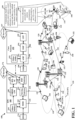
- FIG. 1 is a diagram illustrating an example of a wireless communications system and an access network 100.
- the wireless communications system (also referred to as a wireless wide area network (WWAN)) includes base stations 102, UEs 104, an Evolved Packet Core (EPC) 160, and another core network 190 (e.g., a 5G Core (5GC)).
- the base stations 102 may include macrocells (high power cellular base station) and/or small cells (low power cellular base station).
- the macrocells include base stations.
- the small cells include femtocells, picocells, and microcells.
- the base stations 102 configured for 4G LTE may interface with the EPC 160 through backhaul links 132 (e.g., S1 interface).
- the base stations 102 configured for 5G NR may interface with core network 190 through backhaul links 184.
- UMTS Universal Mobile Telecommunications System
- 5G NR Next Generation RAN
- the base stations 102 may wirelessly communicate with the UEs 104. Each of the base stations 102 may provide communication coverage for a respective geographic coverage area 110. There may be overlapping geographic coverage areas 110. For example, the small cell 102' may have a coverage area 110' that overlaps the coverage area 110 of one or more macro base stations 102.
- a network that includes both small cell and macrocells may be known as a heterogeneous network.
- a heterogeneous network may also include Home Evolved Node Bs (eNBs) (HeNBs), which may provide service to a restricted group known as a closed subscriber group (CSG).
- eNBs Home Evolved Node Bs
- CSG closed subscriber group
- the communication links 120 between the base stations 102 and the UEs 104 may include uplink (UL) (also referred to as reverse link) transmissions from a UE 104 to a base station 102 and/or downlink (DL) (also referred to as forward link) transmissions from a base station 102 to a UE 104.
- the communication links 120 may use multiple-input and multiple-output (MIMO) antenna technology, including spatial multiplexing, beamforming, and/or transmit diversity.
- the communication links may be through one or more carriers.
- the base stations 102 / UEs 104 may use spectrum up to Y MHz (e.g., 5, 10, 15, 20, 100, 400, etc.
- the component carriers may include a primary component carrier and one or more secondary component carriers.
- a primary component carrier may be referred to as a primary cell (PCell) and a secondary component carrier may be referred to as a secondary cell (SCell).
- D2D communication link 158 may use the DL/UL WWAN spectrum.
- the D2D communication link 158 may use one or more sidelink channels, such as a physical sidelink broadcast channel (PSBCH), a physical sidelink discovery channel (PSDCH), a physical sidelink shared channel (PSSCH), and a physical sidelink control channel (PSCCH).
- sidelink channels such as a physical sidelink broadcast channel (PSBCH), a physical sidelink discovery channel (PSDCH), a physical sidelink shared channel (PSSCH), and a physical sidelink control channel (PSCCH).
- sidelink channels such as a physical sidelink broadcast channel (PSBCH), a physical sidelink discovery channel (PSDCH), a physical sidelink shared channel (PSSCH), and a physical sidelink control channel (PSCCH).
- sidelink channels such as a physical sidelink broadcast channel (PSBCH), a physical sidelink discovery channel (PSDCH), a physical sidelink shared channel (PSSCH), and a physical sidelink control channel (PSCCH).
- the small cell 102' may operate in a licensed and/or an unlicensed frequency spectrum. When operating in an unlicensed frequency spectrum, the small cell 102' may employ NR and use the same 5 GHz unlicensed frequency spectrum as used by the Wi-Fi AP 150. The small cell 102', employing NR in an unlicensed frequency spectrum, may boost coverage to and/or increase capacity of the access network.
- Radio waves in the band may be referred to as a millimeter wave.
- Near mmW may extend down to a frequency of 3 GHz with a wavelength of 100 millimeters.
- the super high frequency (SHF) band extends between 3 GHz and 30 GHz, also referred to as centimeter wave.
- Communications using the mmW / near mmW radio frequency band (e.g., 3 GHz - 300 GHz) has extremely high path loss and a short range.
- the mmW base station 180 may utilize beamforming 182 with the UE 104 to compensate for the extremely high path loss and short range.
- At least two UEs 104, 104' may directly communicate on one or more sidelink channels.
- the transmitting UE 104 may send the data directly to the receiving UE 104' on the sidelink data channel such that the data does not traverse a base station 102/180, EPC 160, and/or other core network 190.
- the direct communication may include D2D communication, vehicle-to-everything (V2X) communication, infrastructure-to-everything (I2X) communication, and the like.
- the base station 102/180 may broadcast information indicating a set of resources allocated for sidelink communication without scheduling any UEs on the allocated set of resources (198). That is, the base station 102/180 may allocate the set of resources within a coverage area 110/110' of the base station 102/180 for any sidelink communication between any UEs within the coverage area 110/110', but may not schedule the sidelink communication on that allocated set of resources.
- the base station 102/180 may refrain from configuring one or more of a modulation and coding scheme (MCS) for sidelink communication, information associated with a hybrid automatic repeat request (HARQ) process for sidelink communication, transmission/reception by UEs on the allocated set of resources, an index associated with a beam for sidelink communication, and/or other scheduling information associated with sidelink communication.
- MCS modulation and coding scheme
- HARQ hybrid automatic repeat request
- the UEs 104, 104' may negotiate the sidelink communication pattern in order to determine which of the UEs 104, 104' is to act as the transmitter and which of the UEs 104, 104' is to act as the receiver.
- over-the-air signaling by the base station 102/180 and computational load on the base station 102/180 may be reduced, while latency experienced between the UEs 104, 104' in sidelink communication may also be reduced.
- each of the UEs 104, 104' may communicate, based on the sidelink communication pattern, control information on a sidelink control channel and data on a sidelink data channel (199).
- the sidelink communication pattern may configure the first UE 104 as the transmitter in a first slot of the set of resources allocated by the base station 102/180 for sidelink communication.
- the first UE 104 may schedule data on the sidelink data channel for the second UE 104', which may be configured as the receiver in the first slot according to the sidelink communication pattern.
- the first UE 104 may send the data on the sidelink data channel based on the control information, which may indicate the schedule for the sidelink data channel determined by the first UE 104.
- the second UE 104' may receive and decode the data on the sidelink data channel from the first UE 104.
- the transmitting UE 104 may schedule data on a sidelink data channel. In scheduling data on the sidelink data channel, the transmitting UE 104 may determine a set of parameters associated with the sidelink communication.
- the set of parameters may include information that enables the receiving UE 104' to successfully detect and decode the data sent on the sidelink data channel. Examples of one or more of the set of parameters include a modulation and coding scheme (MCS) for communication on a sidelink data channel, information associated with a hybrid automatic repeat request (HARQ) process for the sidelink data channel, a set of resources allocated on the sidelink data channel, an index associated with a beam for the communication on the sidelink data channel, and/or other scheduling information.
- MCS modulation and coding scheme
- HARQ hybrid automatic repeat request
- the transmitting UE 104 may send the set of parameters to the receiving UE 104. That is, the transmitting UE 104 may send the set of parameters to the receiving UE 104' on one or more time/frequency resources indicated by the base station 102/180 in the information on the downlink control channel.
- the receiving UE 104' may successfully detect and decode the set of parameters sent by the transmitting UE 104 on the sidelink control channel.
- the receiving UE 104' may use the received set of parameters to detect and decode data on the sidelink data channel.
- the transmitting UE 104 may subsequently send data to the receiving UE 104' on the sidelink data channel based on the set of parameters.
- the receiving UE 104' may successfully detect and decode the data on the sidelink data channel based on the received set of parameters. Accordingly, the transmitting and receiving UEs 104/104' may communicate sidelink control information on the sidelink control channel and communicate sidelink data on the sidelink data channel based on the sidelink control information (199).
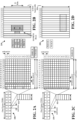
- FIG. 2A is a diagram 200 illustrating an example of a first subframe within a 5G/NR frame structure.
- FIG. 2B is a diagram 230 illustrating an example of DL channels within a 5G/NR subframe.
- FIG. 2C is a diagram 250 illustrating an example of a second subframe within a 5G/NR frame structure.
- FIG. 2D is a diagram 280 illustrating an example of UL channels within a 5G/NR subframe.
- the 5G/NR frame structure may be FDD in which for a particular set of subcarriers (carrier system bandwidth), subframes within the set of subcarriers are dedicated for either DL or UL, or may be TDD in which for a particular set of subcarriers (carrier system bandwidth), subframes within the set of subcarriers are dedicated for both DL and UL.
- the 5G/NR frame structure is assumed to be TDD, with subframe 4 being configured with slot format 28 (with mostly DL), where D is DL, U is UL, and X is flexible for use between DL/UL, and subframe 3 being configured with slot format 34 (with mostly UL).
- a frame (10 ms) may be divided into 10 equally sized subframes (1 ms). Each subframe may include one or more time slots. Subframes may also include mini-slots, which may include 7, 4, or 2 symbols. Each slot may include 7 or 14 symbols, depending on the slot configuration. For slot configuration 0, each slot may include 14 symbols, and for slot configuration 1, each slot may include 7 symbols.
- the symbols on DL may be cyclic prefix (CP) OFDM (CP-OFDM) symbols.
- the symbols on UL may be CP-OFDM symbols (for high throughput scenarios) or discrete Fourier transform (DFT) spread OFDM (DFT-s-OFDM) symbols (also referred to as single carrier frequency-division multiple access (SC-FDMA) symbols) (for power limited scenarios; limited to a single stream transmission).
- the number of slots within a subframe is based on the slot configuration and the numerology. For slot configuration 0, different numerologies ⁇ 0 to 5 allow for 1, 2, 4, 8, 16, and 32 slots, respectively, per subframe. For slot configuration 1, different numerologies 0 to 2 allow for 2, 4, and 8 slots, respectively, per subframe. Accordingly, for slot configuration 0 and numerology ⁇ , there are 14 symbols/slot and 2 ⁇ slots/subframe.
- a resource grid may be used to represent the frame structure.
- Each time slot includes a resource block (RB) (also referred to as physical RBs (PRBs)) that extends 12 consecutive subcarriers.
- RB resource block
- PRBs physical RBs
- the resource grid is divided into multiple resource elements (REs). The number of bits carried by each RE depends on the modulation scheme.
- each sidelink communication pattern 426a, 426b may indicate configure each UE pair so that one of the UEs 404a, 404b, 404c of the UE pair is to transmit and another of the UEs 404a, 404b, 404c of the UE pair is to receive during a set of slots.
- each UE of the UE pair may identify a beam via which to transmit or receive. Thus, each UE of the UE pair may determine a beam associated with communicating with the other UE of the UE pair based on the sidelink communication pattern.
- the first UE 404a may then send the first pattern response 526a to the second UE 404b in order to indicate the determined one of the confirmation or the newly proposed sidelink communication pattern.
- the first UE 404 may sent the first pattern response 526a in a different set of slots than that in which the first pattern request 524a is received.
- the second UE 404b may select an RX beam of the beams 406b (e.g., based on the discovery phase with the first UE 404a) and use the selected RX beam of the beams 406b for reception on the sidelink control channel 410a from the first UE 404a.
- Other UE pairs may perform a similar iterative exchange of requests and responses in order to determine a respective sidelink communication pattern.
- the first UE 404a may send a second pattern request 524a to the third UE 404c proposing a sidelink communication pattern.
- the third UE 404c may either confirm the proposed sidelink communication pattern or propose a new sidelink communication pattern, and indicate the confirmation or new proposal in the second pattern response 526b.
- the first and third UEs 404a, 404c may determine the second sidelink communication pattern 528b for the pair of the first and third UEs 404a, 404c.
- One or more of the sidelink communication patterns 528a, 528b may be associated with a slow time scale.
- This slow time scale may be a duration for which at least one of the sidelink communication patterns 528a, 528b is valid.
- the slow time scale may be at least approximately 100 ms.
- the pair of the UEs 404a, 404b, 404c to which the one of the sidelink communication pattern 426a, 426b is applicable may be re-determined, such as by again negotiating a sidelink communication pattern (e.g., similar to the iterative exchange of the requests 524a, 524b and responses 526a, 526b) between the pair of the UEs 404a, 404b, 404c that is engaged in sidelink communication.
- Each sidelink communication pattern 528a, 528b may indicate configure a UE pair so that one of the UEs 404a, 404b, 404c is to transmit and another of the UEs 404a, 404b, 404c is to receive during a set of slots.
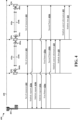
- the first sidelink communication pattern 528a may be negotiated between the first and second UEs 404a, 404b so that the second UE 404b is to transmit and the first UE 404a is to receive on the sidelink control channel 410a in slots 1, 4, and 7.
- the second sidelink communication pattern 528b may be negotiated between the first and third UEs 404a, 404c so that the first UE 404a is to transmit and the third UE 404c is to receive on the sidelink control channel 410a in slots 3, 6, and 9.
- the first UE 404a is configured according to the sidelink communication patterns 528a, 528b for transmitting to the third UE 404c in a set of slots that does not overlap with the set of slots in which the first UE 404a is scheduled to receive from the second UE 404b.
- the UEs 404a, 404b, 404c may be configured to determine a beam of the beams 406a, 406b, 406c based on the corresponding one of the sidelink communication patterns 528a, 528b. For example, the second UE 404b may select a TX beam of the beams 406b for transmitting to the first UE 404a on the sidelink control channel 410a in a first set of slots based on the first sidelink communication pattern 528a.
- the determination of a beam may be further based on beam training during the discovery phase.
- the first UE 404a may determine an RX beam of the beams 406a that corresponds to the selected TX beam of the beams 406b via which the second UE 404b may transmit on the sidelink data channel 410b in the first set of slots based on the first sidelink communication pattern 528a.
- the second UE 404b may have first data 532a to send to the first UE 404a, and the first UE 404a may have second data 532b to send to the third UE 404c.
- the first UE 404a and the second UE 404b may determine respective control information 530a, 530b associated with the sidelink data channel 410b.
- the control information 530a, 530b may enable the first UE 404a and the third UE 404c, respectively, to successfully detect and decode the data on the sidelink data channel 410b from the second UE 404b and the first UE 404a.
- the control information 530a, 530b may indicate at least one of a schedule for receiving data on the sidelink data channel 410b, an MCS for communication on the sidelink data channel 410b, information associated with a HARQ process for the sidelink data channel 410b, a set of resources allocated on the sidelink data channel 410b to carry the data, and/or a TCI state associated with the sidelink data channel 410b.
- a TCI state may indicate an index associated with a beam of the beams 406a, 406b via which a respective one of the first UE 404a or the second UE 404b may transmit, such as an active beam of the beams 406a of the first UE 404a identified during beam training with the third UE 404c or an active beam of the beams 406b of the second UE 404b identified during beam training with the first UE 404a.
- the second UE 404b may send the first control information 530a to the first UE 404a on the sidelink control channel 410a.
- the first UE 404a may be monitoring a set of resources allocated for the sidelink control channel 410a based on the first sidelink communication pattern 528a. In so doing, the first UE 404a may use an RX beam of the beams 406a for reception from the second UE 404b.
- the first UE 404a may successfully detect and decode the first control information 530a.
- the first UE 404a may obtain various parameters from the first control information 530a for sidelink communication on the sidelink data channel 410b, such as a schedule for receiving the first data 532a on the sidelink data channel 410b.
- the third UE 404c may successfully receive and decode the second data 532b on the sidelink data channel 410b. For example, the third UE 404c may select an RX beam of the beams 406c, and use the selected RX beam for reception on the sidelink data channel 410b on resources of the sidelink data channel 410b indicated in the second control information 530b.
- the first UE sends data to the second UE on the second sidelink channel based on the schedule associated with the second sidelink channel. For example, referring to FIG. 4 , at least one of the UEs 404a, 404b, 404c, may send, to another one of the UEs 404a, 404b, 404c, first or second data 430, 434 on the sidelink data channel 410b based on one of the first or second control information 428, 432. Referring to FIG.
- At least one of the UEs 404a, 404b, 404c may receive, from another one of the UEs 404a, 404b, 404c in a slot configured by one of the sidelink communication patterns 528a, 528b on the sidelink control channel 410a, one of the first or second control information 530a, 530b.
- At least one of the UEs 404a, 404b, 404c may receive, from another one of the UEs 404a, 404b, 404c, first or second data 532a, 532b on the sidelink data channel 410b based on one of the first or second control information 530a, 530b
- the base station broadcasts information indicating the resource allocation associated with sidelink communication.
- the base station 402 may broadcast the information indicating the set of resources 422 allocated for sidelink communication.
- the base station 402 may broadcast information indicating the set of resources 522 allocated for sidelink communication.
- the base station refrains from scheduling any UEs on the resource allocation associated with sidelink communication. For example, referring to FIG. 4 , the base station 402 may refrain from scheduling any UEs 404a, 404b, 404c on the resource allocation associated with sidelink communication. Referring to FIG. 5 , the base station 402 may refrain from scheduling any UEs 404a, 404b, 404c on the set of resources 522 allocated in association with sidelink communication.
- the base station may receive, from each of a plurality of UEs, a respective request associated with sidelink communication.
- at least one of the respective requests indicates at least one of QoS associated with the sidelink communication or a relative priority associated with the sidelink communication
- a sidelink communication pattern may be determined (910) based on at least one of the QoS or the relative priority.
- the base station 402 may receive, from each of the UEs 404a, 404b, 404c, the sidelink requests 424a, 424b, 424c.
- the base station may determine the sidelink communication pattern based on each request associated with the sidelink communication.
- the sidelink communication pattern may be determined based on at least one of one or more schedules of the plurality of UEs, one or more QoSs indicating in the plurality of requests, and/or one or more relative priorities indicating the plurality of requests.
- the sidelink communication pattern may be associated with a slow timescale, such as at least 100 ms.
- the base station 402 may determine each of the sidelink communication patterns 426a, 426b based on the sidelink requests 424a, 424b, 424c.
- the base station may send, to each of the plurality of UEs, information indicating the sidelink communication pattern. For example, referring to FIG. 4 , the base station 402 may send, to the UEs 404a, 404b, 404c, one of the sidelink communication patterns 426a, 426b based on the sidelink requests 424a, 424b, 424c.
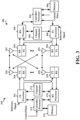
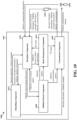
- FIG. 10 is a conceptual data flow diagram illustrating an example data flow 1000 between different means/components in an example apparatus 1002.
- the apparatus 1002 may be a UE.
- the apparatus 1002 may further include a sidelink pattern component 1008 that determines a sidelink communication pattern associated with a second UE 1060 based on the received information associated with sidelink communication, e.g., as described in connection with 604 of FIG. 6 .
- the sidelink communication pattern may be associated with a timescale of at least 100 ms.
- the apparatus 1002 may further include a transmission component 1006 that may communicate (e.g., transmit data and/or control information) to the second UE 1060 on a first sidelink channel based on the sidelink communication pattern associated with the second UE 1060, e.g., as described in connection with 608 of FIG. 6 .
- the reception component 1004 may additionally or alternatively communicate (e.g., receive data and/or control information) from the second UE 1060 on the first sidelink channel based on the sidelink communication pattern associated with the second UE 1060, e.g., as described in connection with 608 of FIG. 6 .
- the apparatus 1002 may further include a beam management component 1010 that determines a beam associated with the communication with the second UE 1060 based on the sidelink communication pattern, e.g., as described in connection with 606 of FIG. 6 .
- the beam management component 1010 may determine an RX beam when communication with the second UE 1060 includes reception of data and/or control information from the second UE 1060.
- the RX beam may be paired with a TX beam of the second UE 1060, e.g., for communication in Frequency Regime (FR) 2.
- the beam management component 1010 may determine a TX beam when communication with the second UE 1060 includes transmission of data and/or control information to the second UE 1060.
- the TX beam may be paired with an RX beam of the second UE 1060, e.g., for communication in FR 2.
- the transmission component 1006 may send, to the base station 1050, a request associated with communication with the second UE 1060 on the first sidelink channel, e.g., as described in connection with 610 of FIG. 6 .
- the request associated with communication with the second UE 1060 on the first sidelink channel may indicate at least one of QoS associated with the communication with the second UE 1060 on the first sidelink channel or a relative priority associated with the communication with the second UE 1060 on the first sidelink channel.
- the reception component 1004 may receive, from the base station 1050 based on the request, information indicating the sidelink communication pattern associated with the second UE 1060, e.g., as described in connection with 612 of FIG. 6 .
- the sidelink pattern component 1008 may then determine the sidelink communication pattern based on the information indicating the sidelink communication pattern associated with the second UE 1060.
- the apparatus 1002 may further include a scheduling component 1012 that determines a resource allocation(s) and/or schedule(s) associated with communication with the second UE 1060 on the first sidelink channel and/or on a second sidelink channel.
- the scheduling component 1012 may determine the resource allocation associated with sidelink communication based on information received from the base station 1050.
- the resource allocation may be semi-statically allocated by the base station 1050.
- the resource allocation may be associated with a timescale of at least 100 ms.
- the transmission component 1006 may send, to the second UE 1060 based on the resource allocation, a first request associated with the sidelink communication pattern based on a first schedule associated with the apparatus 1002, e.g., as described in connection with 702 of FIG. 7 .
- the reception component 1004 may receive, from the second UE 1060, one of a confirmation of the first request associated with the sidelink communication pattern or a second request associated with the sidelink communication pattern, e.g., as described in connection with 704 of FIG. 7 .
- the sidelink pattern component 1008 may determine the sidelink communication pattern based on the first request or the second request.
- the reception component 1004 may receive, from the second UE 1060 based on the resource allocation, a first request associated with the sidelink communication pattern, e.g., as described in connection with 706 of FIG. 7 .
- the scheduling component 1012 may determine, based on a first schedule associated with the apparatus 1002, whether to confirm the first request associated with the sidelink communication, e.g., as described in connection with 708 of FIG. 7 .
- the transmission component 1006 may send, to the second UE 1060, a confirmation of the first request associated with the sidelink communication pattern when the first request is determined to be confirmed or a second request associated with the sidelink communication pattern, e.g., as described in connection with 710 of FIG. 7 .
- the sidelink pattern component 1008 may determine the sidelink communication pattern based on the first request or the second request.
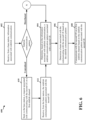
- the sidelink communication pattern may indicate a second slot in which the apparatus 1002 is to receive from the second UE 1060.
- the reception component 1004 may receive, from the second UE 1060 in the second slot on the first sidelink channel, information indicating a schedule associated with the second sidelink channel, e.g., as described in connection with 804 of FIG. 8 .
- the reception component 1004 may receive data from the second UE 1060 on the second sidelink channel based on the schedule associated with the second sidelink channel, e.g., as described in connection with 808 of FIG. 8 .
- the sidelink communication pattern indicates a slot in which the apparatus 1002/1002' is to transmit to the second UE
- the means for communicating with the second UE on the first sidelink channel based on the sidelink communication pattern associated with the second UE is configured to: send, to the second UE in the slot on the first sidelink channel, information indicating a schedule associated with a second sidelink channel; and send data to the second UE on the second sidelink channel based on the schedule associated with the second sidelink channel.
- the sidelink communication pattern indicates a slot in which the apparatus 1002/1002' is to receive from the second UE
- the means for communicating with the second UE on the first sidelink channel based on the sidelink communication pattern associated with the second UE is configured to: receive, from the second UE in the slot on the first sidelink channel, information indicating a schedule associated with a second sidelink channel; and receive data from the second UE on the second sidelink channel based on the schedule associated with the second sidelink channel.
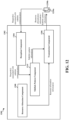
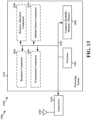
- the apparatus 1202/1202' for wireless communication includes means for determining a resource allocation associated with sidelink communication; means for broadcasting information indicating the resource allocation associated with sidelink communication; and means for refraining from scheduling any UE on the resource allocation associated with sidelink communication.
- the apparatus 1202/1202' may further include means for receiving, from each of a plurality of UEs, a respective request associated with the sidelink communication; means for determining a sidelink communication pattern based on each request associated with the sidelink communication; and means for sending, to each of the plurality of UEs, information indicating the sidelink communication pattern.
- At least one of the respective requests indicates at least one of a QoS associated with the sidelink communication or a relative priority associated with the sidelink communication, and the sidelink communication pattern is determined based on at least one of the QoS or the relative priority.
- the sidelink communication pattern is associated with a timescale of at least 100 milliseconds.
- the resource allocation is associated with a timescale of at least 100 milliseconds.
- the resource allocation is semi-statically determined.
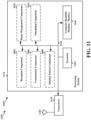
- the aforementioned means may be one or more of the aforementioned components of the apparatus 1202 and/or the processing system 1314 of the apparatus 1202' configured to perform the functions recited by the aforementioned means.
- the processing system 1314 may include the TX Processor 316, the RX Processor 370, and the controller/processor 375.
- the aforementioned means may be the TX Processor 316, the RX Processor 370, and the controller/processor 375 configured to perform the functions recited by the aforementioned means.
- example 1 may be a first UE configured to receive, from a base station, information associated with sidelink communication; determine, based on the information associated with sidelink communication, a sidelink communication pattern associated with a second UE; and communicate with the second UE on a first sidelink channel based on the sidelink communication pattern associated with the second UE.
Landscapes
- Engineering & Computer Science (AREA)
- Computer Networks & Wireless Communication (AREA)
- Signal Processing (AREA)
- Quality & Reliability (AREA)
- Mobile Radio Communication Systems (AREA)
Claims (13)
- Un procédé (600) de communication sans fil par un premier équipement utilisateur, UE (404a), le procédé comprenant :la réception (602), à partir d'une station de base (402), d'informations associées à une communication sidelink ;la détermination (604), sur la base des informations associées à une communication sidelink, d'un profil de communication sidelink (426a) associé à un second UE (404b) ; etla communication (608) avec le second UE sur un premier canal sidelink sur la base du profil de communication sidelink associé au second UE,dans lequel le profil de communication sidelink indique un slot dans lequel le premier UE doit transmettre vers le second UE, et dans lequel la communication avec le second UE sur le premier canal sidelink sur la base du profil de communication sidelink associé au second UE comprend :l'envoi, au second UE dans le slot sur le premier canal sidelink, d'informations indiquant une planification associée à un second canal sidelink ; etl'envoi de données au second UE sur le second canal sidelink sur la base de la planification associée au second canal sidelink.
- Le procédé selon la revendication 1, dans lequel les informations associées à la communication sidelink indiquent une attribution de ressources associée à la communication sidelink, comprenant en outre de préférence :l'envoi, au second UE sur la base de l'attribution de ressources, d'une première requête associée au profil de communication sidelink sur la base d'une première planification associée au premier UE ; etla réception, à partir du second UE, d'une parmi une confirmation de la première requête associée au profil de communication sidelink, ou une seconde requête associée au profil de communication sidelink,dans lequel le profil de communication sidelink est déterminé sur la base de la première requête ou de la seconde requête.
- Le procédé selon la revendication 1, dans lequel le profil de communication sidelink indique un slot dans lequel le premier UE doit recevoir à partir du second UE, et dans lequel la communication avec le second UE sur le premier canal sidelink sur la base du profil de communication sidelink associé au second UE comprend :la réception, à partir du second UE dans le slot sur le premier canal sidelink, d'informations indiquant une planification associée à un second canal sidelink ; etla réception de données à partir du second UE sur le second canal sidelink sur la base de la planification associée au second canal sidelink.
- Le procédé selon la revendication 1, comprenant en outre :
la détermination d'un faisceau associé à la communication avec le second UE sur la base du profil de communication sidelink. - Le procédé selon la revendication 1, comprenant en outre :l'envoi, à la station de base, d'une requête associée à la communication avec le second UE sur le premier canal sidelink ; etla réception, à partir de la station de base sur la base de la requête, d'informations indiquant le profil de communication sidelink associé au second UE,dans lequel la détermination du profil de communication sidelink associé au second UE est basée sur les informations reçues indiquant le profil de communication sidelink.
- Le procédé selon la revendication 5, dans lequel la requête associée à la communication avec le second UE sur le premier canal sidelink indique au moins une parmi une qualité de service, QoS, associée à la communication avec le second UE sur le premier canal sidelink, ou une priorité relative associée à la communication avec le second UE sur le premier canal sidelink.
- Un procédé (900) de communication sans fil par un système comprenant un premier équipement utilisateur, UE, configuré pour réaliser l'un des procédés des revendications précédentes et une station de base (402), le procédé comprenant :la détermination (902), par la station de base, d'une attribution de ressources associée à la communication sidelink ;la diffusion (904) par la station de base, d'informations indiquant l'attribution des ressources associée à la communication sidelink ; etla non-planification (906), par la station de base, de tout équipement utilisateur, UE (404a) sur l'attribution des ressources associée à la communication sidelink,dans lequel la communication sidelink comporte un profil de communication sidelink indiquant un slot dans lequel le premier UE doit transmettre à un second UE de sorte que le premier UE communique avec le second UE sur un premier canal sidelink sur la base du profil de communication sidelink associé au second UE en envoyant, du premier UE au second UE dans le slot sur le premier canal sidelink, des informations indiquant une planification associée à un second canal sidelink ; et en envoyant des données, du premier UE au second UE, sur le second canal sidelink sur la base de la planification associée au second canal sidelink.
- Le procédé selon la revendication 7, comprenant en outre :la réception par la station de base, à partir de chacun d'une pluralité d'UE, d'une requête respective associée à la communication sidelink ;la détermination par la station de base d'un profil de communication sidelink sur la base de chaque requête associée à la communication sidelink ; etl'envoi par la station de base, à chacun de la pluralité d'UE, d'informations indiquant le profil de communication sidelink.
- Le procédé selon la revendication 8,
dans lequel au moins une des requêtes respectives indique au moins une parmi une qualité de service, QoS, associée à la communication sidelink, ou une priorité relative associée à la communication sidelink, et dans lequel le profil de communication sidelink est déterminé sur la base d'au moins une parmi la QoS ou la priorité relative. - Le procédé selon la revendication 7,
dans lequel l'attribution de ressources est déterminée de manière semi-statique. - Un appareil pour la communication sans fil au niveau d'un premier équipement utilisateur, UE (404a), comprenant des moyens pour réaliser un procédé selon une des revendications 1 à 6.
- Un système comprenant un premier équipement utilisateur, UE, selon la revendication 11 et une station de base (402), le système comportant
un moyen pour réaliser un procédé selon une des revendications 7 à 10. - Un produit de programme de calculateur comprenant des instructions qui amènent un UE à réaliser un procédé selon une des revendications 1 à 6 ou amènent un système, comprenant un premier équipement utilisateur, UE, selon la revendication 11 et une station de base, à réaliser un procédé selon une des revendications 7 à 10.
Applications Claiming Priority (3)
| Application Number | Priority Date | Filing Date | Title |
|---|---|---|---|
| US201962862594P | 2019-06-17 | 2019-06-17 | |
| US15/930,382 US12309747B2 (en) | 2019-06-17 | 2020-05-12 | System and method for pattern-based sidelink scheduling |
| PCT/US2020/032752 WO2020256860A1 (fr) | 2019-06-17 | 2020-05-13 | Système et procédé de planification de liaison latérale basée sur un modèle |
Publications (2)
| Publication Number | Publication Date |
|---|---|
| EP3984302A1 EP3984302A1 (fr) | 2022-04-20 |
| EP3984302B1 true EP3984302B1 (fr) | 2025-07-02 |
Family
ID=73745368
Family Applications (1)
| Application Number | Title | Priority Date | Filing Date |
|---|---|---|---|
| EP20728883.8A Active EP3984302B1 (fr) | 2019-06-17 | 2020-05-13 | Système et procédé de planification de liaison latérale basée sur un modèle |
Country Status (4)
| Country | Link |
|---|---|
| US (1) | US12309747B2 (fr) |
| EP (1) | EP3984302B1 (fr) |
| CN (1) | CN113950857B (fr) |
| WO (1) | WO2020256860A1 (fr) |
Families Citing this family (7)
| Publication number | Priority date | Publication date | Assignee | Title |
|---|---|---|---|---|
| US11425552B2 (en) * | 2019-08-09 | 2022-08-23 | Electronics And Telecommunications Research Institute | Method of connection control for direct communication between terminals, and apparatus therefor |
| US11764856B2 (en) * | 2020-12-09 | 2023-09-19 | Qualcomm Incorporated | Enhanced frequency range 2 (FR2) sidelink re-discovery |
| US11570829B2 (en) * | 2020-12-09 | 2023-01-31 | Sierra Wireless, Inc. | Method and apparatus for supporting device to device communication for wireless devices |
| US20240314586A1 (en) | 2021-07-06 | 2024-09-19 | Semtech Corporation | Method and apparatus for managing device to device communications in a wireless network |
| US12127198B2 (en) * | 2021-09-16 | 2024-10-22 | Qualcomm Incorporated | Techniques for sidelink full-duplex semi-static transmissions |
| US12028837B2 (en) * | 2021-09-28 | 2024-07-02 | Nokia Technologies Oy | Sidelink beam information sensing and transmission |
| WO2023137638A1 (fr) * | 2022-01-19 | 2023-07-27 | Nec Corporation | Procédé, dispositif et support lisible par ordinateur destinés aux communications |
Family Cites Families (26)
| Publication number | Priority date | Publication date | Assignee | Title |
|---|---|---|---|---|
| US9295044B2 (en) * | 2012-12-21 | 2016-03-22 | Blackberry Limited | Resource scheduling in direct device to device communications systems |
| US9894651B2 (en) * | 2014-08-08 | 2018-02-13 | Samsung Electronics Co., Ltd. | Methods and apparatus for resource allocation for D2D communications |
| US20160157254A1 (en) * | 2014-11-26 | 2016-06-02 | Samsung Electronics Co., Ltd. | Methods and apparatus for control information resource allocation for d2d communications |
| EP3051736B1 (fr) * | 2015-01-30 | 2020-04-29 | Panasonic Intellectual Property Corporation of America | Établissement de priorités dans la procédure de hiérarchisation de canaux logiques sur des communications directes ProSe |
| US9942917B2 (en) | 2015-05-14 | 2018-04-10 | Blackberry Limited | Allocating resources for a device-to-device transmission |
| CN106937396B (zh) * | 2015-12-31 | 2020-06-30 | 上海无线通信研究中心 | 一种上行资源调度方法、终端和基站 |
| US10992589B2 (en) * | 2016-01-12 | 2021-04-27 | Qualcomm Incorporated | LTE based V2X communication QOS and congestion mitigation |
| CN106998575B (zh) * | 2016-01-22 | 2020-09-29 | 株式会社Kt | 用于执行v2x通信的用户设备的移动性的控制方法及其装置 |
| EP3206452B1 (fr) | 2016-02-10 | 2019-10-16 | Panasonic Intellectual Property Corporation of America | Transfert de données à priorité optimisée sur une liaison lte prose laterale dans le contexte d'une attribution autonome de ressources |
| WO2017171908A1 (fr) * | 2016-04-01 | 2017-10-05 | Intel Corporation | Rapport d'informations géographiques pour communications sidelink de véhicule à véhicule |
| EP3255950A1 (fr) | 2016-06-06 | 2017-12-13 | ASUSTek Computer Inc. | Procédés et appareil pour l'affectation de ressources sur un canal de relais d2d dans un système de communication |
| US10511980B2 (en) * | 2016-08-22 | 2019-12-17 | Htc Corporation | Device and method of handling system information in a wireless communication system |
| US10854022B2 (en) | 2016-09-19 | 2020-12-01 | Qualcomm Incorporated | Location based sensor sharing |
| CN109479297B (zh) | 2016-11-26 | 2021-06-15 | 华为技术有限公司 | sidelink资源调度方法、装置和系统 |
| WO2018143781A1 (fr) * | 2017-02-06 | 2018-08-09 | 엘지전자 주식회사 | Procédé et dispositif de réception de signal par t-rpt dans un système de communication sans fil |
| EP3579633B1 (fr) * | 2017-02-06 | 2023-01-25 | LG Electronics Inc. | Procédé d'exécution d'une communication de liaison latérale dans un système de communications sans fil, et dispositif associé |
| US10912114B2 (en) | 2017-05-05 | 2021-02-02 | Qualcomm Incorporated | Relaying in a device-to-device communication system |
| WO2019036578A1 (fr) * | 2017-08-17 | 2019-02-21 | Intel Corporation | Sélection de ressources pour une communication de liaison latérale sur la base d'informations de géolocalisation |
| MX2020002547A (es) | 2017-11-16 | 2020-07-20 | Fraunhofer Ges Forschung | Asignacion de recursos para comunicaciones de enlace lateral en una red de comunicacion inalambrica. |
| KR102647886B1 (ko) * | 2018-05-16 | 2024-03-14 | 삼성전자주식회사 | V2x 시스템에서 dmrs 정보 설정 방법 및 장치 |
| CN110545524B (zh) * | 2018-05-28 | 2021-06-22 | 华为技术有限公司 | 资源分配方法以及通信设备 |
| US11463853B2 (en) * | 2018-07-27 | 2022-10-04 | Ericsson Gmbh | Method of allocating sidelink radio resources to a group of vehicles, in a telecommunication network, wherein vehicles within said group of vehicles intent to use said sidelink for vehicle-to-vehicle, V2V, communication |
| JP7258057B2 (ja) * | 2018-08-08 | 2023-04-14 | パナソニック インテレクチュアル プロパティ コーポレーション オブ アメリカ | ユーザ機器および通信方法 |
| EP3847847A1 (fr) * | 2018-09-03 | 2021-07-14 | Nokia Solutions and Networks Oy | Commutation de ressources radio en circulation en peloton |
| US12089202B2 (en) * | 2019-01-08 | 2024-09-10 | Lenovo (Beijing) Limited | Method and apparatus for a sidelink transmission |
| US11736986B2 (en) * | 2020-09-07 | 2023-08-22 | Asustek Computer Inc. | Method and apparatus for mobility procedure regarding MAC reset in a wireless communication system |
-
2020
- 2020-05-12 US US15/930,382 patent/US12309747B2/en active Active
- 2020-05-13 CN CN202080043061.XA patent/CN113950857B/zh active Active
- 2020-05-13 EP EP20728883.8A patent/EP3984302B1/fr active Active
- 2020-05-13 WO PCT/US2020/032752 patent/WO2020256860A1/fr not_active Ceased
Also Published As
| Publication number | Publication date |
|---|---|
| EP3984302A1 (fr) | 2022-04-20 |
| CN113950857A (zh) | 2022-01-18 |
| CN113950857B (zh) | 2024-07-12 |
| WO2020256860A1 (fr) | 2020-12-24 |
| US20200396716A1 (en) | 2020-12-17 |
| US12309747B2 (en) | 2025-05-20 |
Similar Documents
| Publication | Publication Date | Title |
|---|---|---|
| EP3895487B1 (fr) | Sélection de faisceau par défaut sur la base d'un sous-ensemble de coresets | |
| WO2021146017A1 (fr) | Hypothèse de quasi-colocalisation par défaut après reprise sur défaillance de faisceau pour communication avec multiples points d'émission et de réception basée sur des informations de commande de liaison descendante uniques | |
| EP3984302B1 (fr) | Système et procédé de planification de liaison latérale basée sur un modèle | |
| WO2020214277A1 (fr) | Communications opportunistes dans un accès et une liaison terrestre intégrés | |
| WO2020123033A1 (fr) | Signalisation de faisceaux par défaut et programmé dans un cot | |
| US11330617B2 (en) | Scheduling threshold report for multi-transmit/receive points | |
| WO2020251718A1 (fr) | Procédés et appareil pour faciliter une indication de relation spatiale pour un canal de commande de liaison montante et des signaux de référence de sondage | |
| EP4029169A1 (fr) | Hiérarchisation de quasi-colocalisation pour un changement de groupe de cellules secondaires avec une numérologie ou une asynchronisation différente | |
| EP3984303B1 (fr) | Système et procédé de programmation centralisée de liaison latérale | |
| EP3895357A1 (fr) | Signalisation d'un sous-ensemble d'ensembles de ressources de commande sélectionnés dans un cot | |
| EP3753334A1 (fr) | Système et procédé pour indiquer une préemption de transmission | |
| WO2020226835A9 (fr) | Signaux de référence de surveillance de liaison radio pour des ue qui ne prennent pas en charge la surveillance de liaison radio basée sur csi-rs | |
| US20210092764A1 (en) | Integrated access and backhaul network random access parameter optimization | |
| US11224060B2 (en) | Gap transmission in channel occupancy time | |
| WO2023076774A1 (fr) | Commutation entre des parties de bande passante flexibles |
Legal Events
| Date | Code | Title | Description |
|---|---|---|---|
| STAA | Information on the status of an ep patent application or granted ep patent |
Free format text: STATUS: UNKNOWN |
|
| STAA | Information on the status of an ep patent application or granted ep patent |
Free format text: STATUS: THE INTERNATIONAL PUBLICATION HAS BEEN MADE |
|
| PUAI | Public reference made under article 153(3) epc to a published international application that has entered the european phase |
Free format text: ORIGINAL CODE: 0009012 |
|
| STAA | Information on the status of an ep patent application or granted ep patent |
Free format text: STATUS: REQUEST FOR EXAMINATION WAS MADE |
|
| 17P | Request for examination filed |
Effective date: 20211118 |
|
| AK | Designated contracting states |
Kind code of ref document: A1 Designated state(s): AL AT BE BG CH CY CZ DE DK EE ES FI FR GB GR HR HU IE IS IT LI LT LU LV MC MK MT NL NO PL PT RO RS SE SI SK SM TR |
|
| DAV | Request for validation of the european patent (deleted) | ||
| DAX | Request for extension of the european patent (deleted) | ||
| STAA | Information on the status of an ep patent application or granted ep patent |
Free format text: STATUS: EXAMINATION IS IN PROGRESS |
|
| 17Q | First examination report despatched |
Effective date: 20240510 |
|
| GRAP | Despatch of communication of intention to grant a patent |
Free format text: ORIGINAL CODE: EPIDOSNIGR1 |
|
| STAA | Information on the status of an ep patent application or granted ep patent |
Free format text: STATUS: GRANT OF PATENT IS INTENDED |
|
| RIC1 | Information provided on ipc code assigned before grant |
Ipc: H04W 76/14 20180101ALN20250121BHEP Ipc: H04W 92/18 20090101ALN20250121BHEP Ipc: H04W 72/02 20090101AFI20250121BHEP |
|
| INTG | Intention to grant announced |
Effective date: 20250129 |
|
| GRAS | Grant fee paid |
Free format text: ORIGINAL CODE: EPIDOSNIGR3 |
|
| GRAA | (expected) grant |
Free format text: ORIGINAL CODE: 0009210 |
|
| STAA | Information on the status of an ep patent application or granted ep patent |
Free format text: STATUS: THE PATENT HAS BEEN GRANTED |
|
| AK | Designated contracting states |
Kind code of ref document: B1 Designated state(s): AL AT BE BG CH CY CZ DE DK EE ES FI FR GB GR HR HU IE IS IT LI LT LU LV MC MK MT NL NO PL PT RO RS SE SI SK SM TR |
|
| REG | Reference to a national code |
Ref country code: GB Ref legal event code: FG4D |
|
| REG | Reference to a national code |
Ref country code: CH Ref legal event code: EP |
|
| REG | Reference to a national code |
Ref country code: DE Ref legal event code: R096 Ref document number: 602020053786 Country of ref document: DE |
|
| REG | Reference to a national code |
Ref country code: IE Ref legal event code: FG4D |
|
| REG | Reference to a national code |
Ref country code: NL Ref legal event code: MP Effective date: 20250702 |
|
| PG25 | Lapsed in a contracting state [announced via postgrant information from national office to epo] |
Ref country code: PT Free format text: LAPSE BECAUSE OF FAILURE TO SUBMIT A TRANSLATION OF THE DESCRIPTION OR TO PAY THE FEE WITHIN THE PRESCRIBED TIME-LIMIT Effective date: 20251103 |
|
| PG25 | Lapsed in a contracting state [announced via postgrant information from national office to epo] |
Ref country code: NL Free format text: LAPSE BECAUSE OF FAILURE TO SUBMIT A TRANSLATION OF THE DESCRIPTION OR TO PAY THE FEE WITHIN THE PRESCRIBED TIME-LIMIT Effective date: 20250702 |
|
| REG | Reference to a national code |
Ref country code: AT Ref legal event code: MK05 Ref document number: 1810768 Country of ref document: AT Kind code of ref document: T Effective date: 20250702 |
|
| PG25 | Lapsed in a contracting state [announced via postgrant information from national office to epo] |
Ref country code: IS Free format text: LAPSE BECAUSE OF FAILURE TO SUBMIT A TRANSLATION OF THE DESCRIPTION OR TO PAY THE FEE WITHIN THE PRESCRIBED TIME-LIMIT Effective date: 20251102 |
|
| PG25 | Lapsed in a contracting state [announced via postgrant information from national office to epo] |
Ref country code: NO Free format text: LAPSE BECAUSE OF FAILURE TO SUBMIT A TRANSLATION OF THE DESCRIPTION OR TO PAY THE FEE WITHIN THE PRESCRIBED TIME-LIMIT Effective date: 20251002 |
|
| REG | Reference to a national code |
Ref country code: LT Ref legal event code: MG9D |
|
| PG25 | Lapsed in a contracting state [announced via postgrant information from national office to epo] |
Ref country code: AT Free format text: LAPSE BECAUSE OF FAILURE TO SUBMIT A TRANSLATION OF THE DESCRIPTION OR TO PAY THE FEE WITHIN THE PRESCRIBED TIME-LIMIT Effective date: 20250702 |
|
| PG25 | Lapsed in a contracting state [announced via postgrant information from national office to epo] |
Ref country code: FI Free format text: LAPSE BECAUSE OF FAILURE TO SUBMIT A TRANSLATION OF THE DESCRIPTION OR TO PAY THE FEE WITHIN THE PRESCRIBED TIME-LIMIT Effective date: 20250702 |
|
| PG25 | Lapsed in a contracting state [announced via postgrant information from national office to epo] |
Ref country code: HR Free format text: LAPSE BECAUSE OF FAILURE TO SUBMIT A TRANSLATION OF THE DESCRIPTION OR TO PAY THE FEE WITHIN THE PRESCRIBED TIME-LIMIT Effective date: 20250702 |
|
| PG25 | Lapsed in a contracting state [announced via postgrant information from national office to epo] |
Ref country code: GR Free format text: LAPSE BECAUSE OF FAILURE TO SUBMIT A TRANSLATION OF THE DESCRIPTION OR TO PAY THE FEE WITHIN THE PRESCRIBED TIME-LIMIT Effective date: 20251003 |
|
| PG25 | Lapsed in a contracting state [announced via postgrant information from national office to epo] |
Ref country code: CZ Free format text: LAPSE BECAUSE OF FAILURE TO SUBMIT A TRANSLATION OF THE DESCRIPTION OR TO PAY THE FEE WITHIN THE PRESCRIBED TIME-LIMIT Effective date: 20250702 Ref country code: SE Free format text: LAPSE BECAUSE OF FAILURE TO SUBMIT A TRANSLATION OF THE DESCRIPTION OR TO PAY THE FEE WITHIN THE PRESCRIBED TIME-LIMIT Effective date: 20250702 |
|
| PG25 | Lapsed in a contracting state [announced via postgrant information from national office to epo] |
Ref country code: LV Free format text: LAPSE BECAUSE OF FAILURE TO SUBMIT A TRANSLATION OF THE DESCRIPTION OR TO PAY THE FEE WITHIN THE PRESCRIBED TIME-LIMIT Effective date: 20250702 |
|
| PG25 | Lapsed in a contracting state [announced via postgrant information from national office to epo] |
Ref country code: BG Free format text: LAPSE BECAUSE OF FAILURE TO SUBMIT A TRANSLATION OF THE DESCRIPTION OR TO PAY THE FEE WITHIN THE PRESCRIBED TIME-LIMIT Effective date: 20250702 Ref country code: PL Free format text: LAPSE BECAUSE OF FAILURE TO SUBMIT A TRANSLATION OF THE DESCRIPTION OR TO PAY THE FEE WITHIN THE PRESCRIBED TIME-LIMIT Effective date: 20250702 |
|
| PG25 | Lapsed in a contracting state [announced via postgrant information from national office to epo] |
Ref country code: RS Free format text: LAPSE BECAUSE OF FAILURE TO SUBMIT A TRANSLATION OF THE DESCRIPTION OR TO PAY THE FEE WITHIN THE PRESCRIBED TIME-LIMIT Effective date: 20251002 |
|
| PG25 | Lapsed in a contracting state [announced via postgrant information from national office to epo] |
Ref country code: ES Free format text: LAPSE BECAUSE OF FAILURE TO SUBMIT A TRANSLATION OF THE DESCRIPTION OR TO PAY THE FEE WITHIN THE PRESCRIBED TIME-LIMIT Effective date: 20250702 |
|
| PG25 | Lapsed in a contracting state [announced via postgrant information from national office to epo] |
Ref country code: SM Free format text: LAPSE BECAUSE OF FAILURE TO SUBMIT A TRANSLATION OF THE DESCRIPTION OR TO PAY THE FEE WITHIN THE PRESCRIBED TIME-LIMIT Effective date: 20250702 |
|
| PGFP | Annual fee paid to national office [announced via postgrant information from national office to epo] |
Ref country code: GB Payment date: 20260320 Year of fee payment: 7 |
|
| PG25 | Lapsed in a contracting state [announced via postgrant information from national office to epo] |
Ref country code: DK Free format text: LAPSE BECAUSE OF FAILURE TO SUBMIT A TRANSLATION OF THE DESCRIPTION OR TO PAY THE FEE WITHIN THE PRESCRIBED TIME-LIMIT Effective date: 20250702 |
|
| PG25 | Lapsed in a contracting state [announced via postgrant information from national office to epo] |
Ref country code: IT Free format text: LAPSE BECAUSE OF FAILURE TO SUBMIT A TRANSLATION OF THE DESCRIPTION OR TO PAY THE FEE WITHIN THE PRESCRIBED TIME-LIMIT Effective date: 20250702 |
|
| PG25 | Lapsed in a contracting state [announced via postgrant information from national office to epo] |
Ref country code: EE Free format text: LAPSE BECAUSE OF FAILURE TO SUBMIT A TRANSLATION OF THE DESCRIPTION OR TO PAY THE FEE WITHIN THE PRESCRIBED TIME-LIMIT Effective date: 20250702 Ref country code: SK Free format text: LAPSE BECAUSE OF FAILURE TO SUBMIT A TRANSLATION OF THE DESCRIPTION OR TO PAY THE FEE WITHIN THE PRESCRIBED TIME-LIMIT Effective date: 20250702 |