EP3985528A1 - Aushandlung von informationsverträgen zwischen informationsanbietern und verbrauchern - Google Patents
Aushandlung von informationsverträgen zwischen informationsanbietern und verbrauchern Download PDFInfo
- Publication number
- EP3985528A1 EP3985528A1 EP20202363.6A EP20202363A EP3985528A1 EP 3985528 A1 EP3985528 A1 EP 3985528A1 EP 20202363 A EP20202363 A EP 20202363A EP 3985528 A1 EP3985528 A1 EP 3985528A1
- Authority
- EP
- European Patent Office
- Prior art keywords
- data
- predicates
- information
- predicate
- identified
- Prior art date
- Legal status (The legal status is an assumption and is not a legal conclusion. Google has not performed a legal analysis and makes no representation as to the accuracy of the status listed.)
- Pending
Links
Images

Classifications
-
- G—PHYSICS
- G06—COMPUTING OR CALCULATING; COUNTING
- G06F—ELECTRIC DIGITAL DATA PROCESSING
- G06F16/00—Information retrieval; Database structures therefor; File system structures therefor
- G06F16/90—Details of database functions independent of the retrieved data types
- G06F16/903—Querying
- G06F16/90335—Query processing
-
- G—PHYSICS
- G06—COMPUTING OR CALCULATING; COUNTING
- G06F—ELECTRIC DIGITAL DATA PROCESSING
- G06F16/00—Information retrieval; Database structures therefor; File system structures therefor
- G06F16/90—Details of database functions independent of the retrieved data types
- G06F16/95—Retrieval from the web
- G06F16/953—Querying, e.g. by the use of web search engines
-
- G—PHYSICS
- G06—COMPUTING OR CALCULATING; COUNTING
- G06F—ELECTRIC DIGITAL DATA PROCESSING
- G06F16/00—Information retrieval; Database structures therefor; File system structures therefor
- G06F16/90—Details of database functions independent of the retrieved data types
- G06F16/95—Retrieval from the web
- G06F16/955—Retrieval from the web using information identifiers, e.g. uniform resource locators [URL]
-
- H—ELECTRICITY
- H04—ELECTRIC COMMUNICATION TECHNIQUE
- H04L—TRANSMISSION OF DIGITAL INFORMATION, e.g. TELEGRAPHIC COMMUNICATION
- H04L67/00—Network arrangements or protocols for supporting network services or applications
- H04L67/01—Protocols
- H04L67/10—Protocols in which an application is distributed across nodes in the network
- H04L67/1097—Protocols in which an application is distributed across nodes in the network for distributed storage of data in networks, e.g. transport arrangements for network file system [NFS], storage area networks [SAN] or network attached storage [NAS]
-
- H—ELECTRICITY
- H04—ELECTRIC COMMUNICATION TECHNIQUE
- H04L—TRANSMISSION OF DIGITAL INFORMATION, e.g. TELEGRAPHIC COMMUNICATION
- H04L67/00—Network arrangements or protocols for supporting network services or applications
- H04L67/01—Protocols
- H04L67/12—Protocols specially adapted for proprietary or special-purpose networking environments, e.g. medical networks, sensor networks, networks in vehicles or remote metering networks
-
- H—ELECTRICITY
- H04—ELECTRIC COMMUNICATION TECHNIQUE
- H04W—WIRELESS COMMUNICATION NETWORKS
- H04W4/00—Services specially adapted for wireless communication networks; Facilities therefor
- H04W4/70—Services for machine-to-machine communication [M2M] or machine type communication [MTC]
Definitions
- Embodiments of the present disclosure relate generally to methods and systems for automatically supplying or locating data over a communication network.
- Present automation system are typically distributed computing system where a plurality of data providers interact with a plurality of data consumers and/or vice versa.
- data from a plurality of sensors of different devices may be stored in a distributed memory, e.g. in different memories for different sensors and/or devices, and may be accessed by a plurality of data consumers e.g. in a control loop and/or for performance analysis and/or for monitoring and/or fault detection and/or data analysis and for a plurality of additional tasks.
- the location and/or the meaning, i.e. the semantic information, of the data must be known in order to correctly interpret and use the data.
- a plurality of protocols, languages, models can even more hinder the task of finding data satisfying the predefined requirement, for example when data is labeled with different semantic tags with substantially the same meaning.
- One embodiment of the present disclosure discloses a method for automatically supplying or locating data (341) over a communication network, the method comprising:
- Another embodiment of the present disclosure discloses a system for automatically supplying or locating data over a communication network, the system comprising:
- a system is a portion of the physical universe that can be described by a set of quantities forming the state of the system.
- a system formed by a set of material points may be described by the positions and velocities of each of the material points.
- an electric circuit may be described by the voltages at the circuit nodes and/or the currents flowing between adjacent nodes of the circuit.
- a set of equations describes the evolution of the sate of the system over time, given the initial conditions and the interactions between the system and the rest of the universe, e.g. given a set of input quantities describing the influence of the universe on the system.
- the equations are determined in function of the characteristics of the system.
- a digital circuit may be described in terms of Boolean vectors instead of considering the voltages of the circuit nodes and/or the currents of the circuit edges.
- an abstract functional specification may describe the behavior of the system and/or the system state when interacting with the rest of the universe.
- an actuator like e.g. a robot may be described in terms of actions performed in response to given inputs that may modify a high-level abstract state of the actuator.
- sensors may be characterized by the identification of output quantities and time instants related to unknown input quantities that needs to be determined, i.e. measured.
- Information as used herein allows to determine at least in part a state of a system or a description of a system or an input given to a system or an output obtained from a system, the system being any identifiable portion of the physical world.
- information about a system is itself encoded and represented with the use of another information processing or storing system, like for example a digital computer or a digital memory and/or an interconnection of digital computers and memories forming a distributed computing system.
- another information processing or storing system like for example a digital computer or a digital memory and/or an interconnection of digital computers and memories forming a distributed computing system.
- a computer may read out sensor measurements about the state of a system and store a digital representation of the measurement results in a digital memory of the computer.
- a computer may also compute or predict or monitor state changes of a system.
- the representation of the information for example in terms of a sequence of binary digits forms data that characterizes the information.
- Digital data is merely a sequence of binary digits that may be conveniently structured/formatted, typically stored in a physical memory of a computer or of a computing system. It is therefore necessary to keep track of the relation between the digital data and the information represented by the digital data.
- Data can be written (writing operation) to a digital memory and read (reading operation) from the digital memory in a specific memory location and/or in a range or sequence of memory locations e.g. in dependence of the structure of the data and/or the type of the data, etc..
- the memory location may be conveniently identified by a variable, an uniform resource identifier, a path, etc. such that typically there is no need to remember a low-level physical memory address.
- the memory may be a memory of a single machine or a distributed memory formed by a plurality of memories of a plurality of machines that may be located at different locations in space and that may communicate for example over a network.
- the memory may be also part of a cloud computing system.
- the information stored by digital data therefore typically corresponds to the content of predefined memory locations as conveniently identified by a given variable, path etc. for data of a given type.
- a sequence of measurements about a system may be described by data stored in a vector or in an array in a digital memory, the vector or array being itself identified by a memory location in the local or distributed memory as for example described by a variable or a pointer that identify the vector.
- a memory location may therefore be associated with a variable or a path that conveniently identifies the memory location.
- a plurality of variables an path can be packaged in a namespace that globally uniquely specifies said variables and paths.
- Hierarchical memory structure may be used, where hierarchical interconnected nodes store data and pointers to further nodes storing further data, thereby forming a graph structure.
- the nodes may for example be identified with data sources storing a plurality of data with different semantic.
- a data source/node may be identified by a unique data identifier/node identifier.
- the data identifier may identify a target device storing the data together with one or more memory addresses of a memory of the target device where the data is actually stored.
- a data identifier may directly or indirectly identify the data and/or the data source, for example in terms of a namespace uniform resource identifier (URI) together with a local identifier, i.e. an identifier within the namespace, and an identifier type.
- URI uniform resource identifier
- the namespace uniform resource identifier may identify a namespace wherein the local identifier is defined.
- the namespace uniform resource identifier may for example identify a local server, an underlying system, standard bodies and consortia and may be translated into a namespace index used by a server.
- a local identifier within the namespace and an identifier type uniquely identifies stored data, i.e. the namespace URI together with the local identifier and the identifier type allow to uniquely determine a target machine and one or more memory addresses where the data is stored. It is then possible to uniquely access the data for reading and writing operations, i.e. to read the data from a (uniquely identified) memory location and write data into the (uniquely identified) memory location.
- the data type may identify a size of the data and/or offsets for uniquely determining and accessing stored data relative to a base address identified by the local identifier, whereas the namespace URI identifies a machine and/or data source within a network.
- the data type may further identify a set of operations defined on the data that allow to modify the data stored in the memory and/or that allow data processing.
- a node identifier can therefore be associated with a namespace URI and/or namespace index, an identifier type and an identifier that uniquely identify the data allowing to uniquely determine the machine storing the data and the memory location(s) where the data is stored on the machine for accessing the data for reading and writing operations.
- the data type further specifying operations that can be performed on the data.
- a given location in the hierarchical memory structure may then be identified with a path in the graph formed by the interconnected nodes together with a local data identifier, with the nodes in the path being identified by a unique node identifier/data identifier.
- data objects identified by data variables may be used to identify data and properties stored in a node of the graph structure forming the hierarchical memory.
- the data object therefore identifies a node in the graph structure.
- a data object may include references to child objects, i.e. to child nodes in the hierarchical graph structure that themselves may store further data and properties. Properties are typically associated with leaf nodes of the graph, i.e. with nodes storing terminal data with no children nodes.
- the stored data therefore represents information and it is necessary to remember an association about the physically stored data and the represented information.
- a vector or an array stored in a node of the hierarchical graph may store a sequence of measured values of a physical quantity. It is therefore necessary to associate the values stored in the vector/array with said physical quantity and further with e.g. a measurement unit and/or with time instants identifying measurement instants, etc.
- the stored data may satisfy one or more properties and/or one or more relations between the stored data and other stored data and/or between the stored data and the information that the stored data represents or other more general information.
- a function may receive stored data as input and return transformed or filtered data as output.
- Semantical information provides information about the meaning of the stored data, i.e. allows to relate the stored data to the information represented by the stored data.
- a set of predicates that hold true for the stored data may provide semantical information about the data. Based on predicates in the set of predicates a truth value of more complex propositions about the data can be determined and therefore more complex semantic information can be obtained/evaluated based for example on atomic predicates in the set of predicates.
- An automation system is typically a distributed system with many entities communicating with each other.
- the communication may be a parallel communication between a plurality of entities at the same time.
- an automation system we may generally identify data providers, like e.g. sensors and/or field devices and data consumers like for example systems accessing data for e.g. data analysis and/or monitoring and/or system optimization.
- a communication between data provider and data consumer and/or vice versa must therefore take place, for example over a communication network.
- the data consumer may be configured to request data from one or more data providers and based on said request the data provider may be configured to send the data to the data consumer.
- a data provider writes data at some memory locations and the data consumer reads said data, knowing directly or indirectly said memory locations and the type/format of the data content.
- a data request may be formulated as a query in a formal machine-readable language, wherein the request identifies directly or indirectly a set of data providers and/or a set of data and/or a set of data identifiers or data locations representing or storing desired/needed information.
- the data request may further ask for transformations on the data, producing e.g. a transformed output in a convenient format.
- the query may for example be formulated in terms of atomic predicates about data sources and/or data locations/identifiers.
- An atomic predicate may be a predicate for a namespace and/or local identifier and/or identifier type that uniquely identify stored data.
- a predicate P ( x ) associates a truth value, i.e. either the value "true” or the value "false” to an object x over a given domain D.
- the domain D may include namespaces, local identifiers, identifier types, node identifiers, paths and any combination thereof for example in from of ordered tuples and/or uniform resource identifiers.
- An element in D therefore uniquely addresses/identifies stored data and a dereferencing operation on an element in the domain D uniquely retrieves the data.
- An element in D therefore is not the stored data itself but uniquely allows to address, find and retrieve the stored data.
- elements in the domain D may identify single objects/information models as well as single variables/members. Elements of the domain D may be discovered/addressed hierarchically, for example when elements are addressed with a path in a graph or tree structure.
- the domain D may contain any type of identifier and/or address and/or URI that may be used to at least in part locate data, e.g. in a distributed system. We may therefore call the domain D a domain of identifiers/locators.
- the object stored at x itself may be labeled by a representation of the atomic predicates, i.e. predicates that are not formed using logic connectives, that hold true for x and/or that are satisfiable for x.
- x and/or the content of x may be labeled by a (representation of a) unary predicate P if and only if P(x) is true.
- x and/or the content of x may be labeled by a (representation of a) binary predicate Q if and only if P(x,a) is satisfiable for x, i.e. if there exists an a such that P(x,a) holds true. From these atomic predicates even more predicates can be deduced and/or equivalent predicates may be expressed in a plurality of formats that need to be parsed and correctly recognized.
- Accessing elements in D may require accessing a memory location, e.g. a distributed memory location over a network.
- Embodiments of the present disclosure allow to efficiently find elements in D satisfying given requirements and/or allow to extract information from data stored e.g. in the distributed memory thereby reducing the overall memory accesses and/or the iterations over D.
- Embodiments of the present disclosure therefore allow in particular to reduce network traffic and/or the time needed to find and retrieve needed information accessed e.g. dereferencing elements in the domain D stored in the distributed memory over the network.
- the object x itself may be implemented in order to contain/point to metadata/semantic data related to semantic information about the object x.
- the object x may therefore contain further data or point to further data allowing to obtain information about the meaning, i.e. semantic information associated with the object x.
- semantic information associated with the object x In this way it may be possible to automatically evaluate if a given predicate P ( x ) is true for an object x ⁇ D.
- a set of rules may help in finding/identifying/deducing other predicates that hold true when P is true, e.g. predicates that are equivalent to P.
- the predicates that are true for x in D or satisfiable for a given x in D may be stored within an information model, for example an OPC UA information model.
- the location x (element of D) may be formed by the namespace together with the symbolic name of the sensor.
- P(x) may be expressed in a plurality of equivalent representations.
- the dependence on x may be implicitly considered.
- a function F ( x ) associates a value to an object x over a domain D, where the value may be not necessarily a truth value, but may be for example a numerical value or a sequence or a string or any other value of a given type.
- the function needs to be well defined in the sense that given an object x ⁇ D the value F ( x ) must be obtainable from x.
- the function may be constructed in order to return an undefined entity or equivalently to raise an exception whenever it is not properly possible to determine the value of F ( x ) .
- a query may ask for example for objects in D that satisfy a given property expressed e.g. in terms of predicates and/or functions.
- a query may ask for all the elements in a domain D that satisfy a property P , requesting to determine some or all of the elements of the set x
- ⁇ x ⁇ D y x ⁇ P x
- P(x) may be the predicate "x stores temperature measurements" and the query asks for all the locations/data identifiers and/or data sources in the domain D that store temperature data.
- a predicate P ( x ) may for example specify a sensor type/sensor model/sensor vendor and/or other property of the data stored at location x , like for example a data type, a data timestamp of the data stored at location x , a data range, etc..
- P ( x ) may be the predicate "x stores temperature measurements" and F ( x ) may be a function returning a maximum value of the data stored at the location x ⁇ D , assuming that F is actually defined for the location x.
- a query may then for example also ask for one or more particular values, for example requesting to determine some or all the elements of the set y
- ⁇ x ⁇ D P x ⁇ F x y containing a value y if and only if it exists an element x of the domain D satisfying a given property P and such that the value y actually is the value of a given function F evaluated for the element x.
- the query may be formulated for example in terms of a relation F ( x , y ), asking for some or all the elements of the set y
- F ( x , y ) may indicate "the value y stored at x was measured during the time interval TIME INTERVAL".
- a query may ask for tuples, for example asking to determine some or all of the elements in the set y z
- ⁇ x ⁇ D P x ⁇ F x y ⁇ G x z or in the set y z
- G ( x ) may return a vendor of a sensor device used to get the data stored at the location x in D and therefore the tuples in the set ⁇ ( y,z )
- ⁇ x ⁇ D ( P (x) ⁇ ( F ( x,y )) ⁇ ( G ( x ) z )) ⁇ may return as second component also said vendor.
- G ( x,z ) may evaluate to true if and only if "z is a vendor or a vendor code or a description or an identifier of the data stored at x".
- ⁇ x ⁇ D ( P ( x ) ⁇ ( F ( x , y )) ⁇ ( id ( x ) z )) ⁇ .
- a scalar y may be identified with a tuple containing only one component.
- Queries may be extended to general n-ary properties and/or relations, for example asking for some or all the solutions in a solution set of the form a , b , ...
- elements in the domain D may identify single objects/information models and values of member variables may be read out e.g. using predicates like e.g. "a is the value of MEMBER-ID of x".
- predicates like e.g. "a is the value of MEMBER-ID of x”.
- an object/information model with given characteristics can be obtained/created based on the tuples in the set that may read out members/variables of objects/information models of interest with given characteristics as queried.
- a further constraint may be for example the additional binary predicate "the vendor of the sensor that collected the data stored at x is the same vendor of the sensor that collected the data stored at y".
- a query may be formed in terms of at least one predicate F ( x,y,...,a,b,... ) having predicate variables x,y,..., a,b,... at least in part defined over a domain D, the at least one predicate F identifying a solution set of tuples of values ⁇ ( a , b ,...)
- ⁇ x,y,... ⁇ D ( F ( x,y,...,a,b,.. .)) ⁇ represents the desired information.
- a machine-readable description of the at least one predicate F ( x,y,...,a,b,... ) is received and at least some of the elements of the solution set of tuples of values ⁇ ( a , b ,...)
- an information model may be generated that stores/describes at least one tuple in said set, providing a consistent data structure for example within the OPC UA framework.
- the at least one predicate F ( x , y ,..., a,b,... ) may be expressed as conjunction and/or disjunction and/or negation of atomic unary, binary,..., n-ary predicates.
- the atomic predicates may be mapped to an intermediate representation, allowing for example to translate equivalent predicates to a unique intermediate equivalent predicate.
- An atomic predicate may not necessarily be free of logic operators, like e.g. AND, OR, NOT and forms therefore a data predicate and/or a predicate expressing a property related to the data.
- Atomic predicates may be related to temperature (e.g. "x stores temperature data"), to measurement ranges, e.g. (e.g. "the upper value stored at x is a”).
- a predicate may be expressed with different formulations, that may be translated to an intermediate unique formulation. For example, “the upper measurement value stored at x is a” and “the upper range value stored at x is a” may both be translated to the same intermediate representation "the upper measurement value stored at x is a”. Therefore both "upper measurement value” and “upper range value” are identified with “upper measurement value” in an intermediate representation.
- the atomic predicate mapping is done based on translation tables.
- the at least one predicate F ( x,y,...,a,b,... ) obtained in machine-readable form is translated to a standardized/uniquely identified intermediate predicate F int ( x,y,...,a,b,... ) .
- a unary predicate O ( x ) may express "x stores online-configured data” and a binary predicate U ( x , y ) may express "y is an upper range value stored at x".
- the query may then ask to find some or all the elements of the set y
- ⁇ x ⁇ D O x ⁇ U x y ⁇ z x
- the O ( x ) may be mapped to the intermediate representation O int ( x ) and U ( x , y ) may be mapped to the intermediate representation U int ( x,y ).
- O int ( x ) and U int ( x , y ) may themselves be formed by a plurality of queries connected together by logical connectives.
- the query may be dissected in multiple partial expressions and for each partial expression a partial set of elements of D and/or a partial set of values may be determined such that based at least in part on said partial sets the original query can be solved and/or more conveniently solved.
- a typical example may be the case when a predicate expresses lifecycle information, e.g. asking for an information like an upper measurement value "as ordered” or an upper information value "as build".
- a parallel search can be carried out to search in different data sources based on the lifecycle information.
- Parallel computations may be used in order to handle the partial expressions and/or partial sets efficiently.
- ⁇ x ⁇ D , ( U int ( x,y )) ⁇ is more convenient than determining the original set ⁇ y
- the described procedure only exemplarily shows how based on an original query, a dissection of the query may be carried out in order to obtain partial expression that allow to conveniently find some solutions that are subsequently assembled together in order to find all solutions of the original query.
- the domain D' may be partitioned in disjunct blocks D 1 ⁇ , D 2 ⁇ , for example based on lifecycle information and then ⁇ x ⁇ D ⁇ y
- U int x y ⁇ x ⁇ D 1 ⁇ y
- the original query e.g.
- upper measurement value can then be parallelized computing U x ⁇ D 1 , ⁇ y
- the dissection may be also carried out for example firstly identifying D' querying ⁇ y
- ⁇ x ⁇ D ( O int ( x ) ⁇ ( y x )) ⁇ and then computing ⁇ y
- the present disclosure describes a technical solution where information consumers such as data analytics applications or rather the data scientists can formulate their information needs and offload the procurement of this information to the automation system.
- An information broker within the automation system processes these information needs together with the available information resources to manage the provisioning of the information accordingly.
- Automation systems are getting better at describing available information, most recently by introducing M2M technologies like OPC UA, MQTT. Using these technologies, the properties, conditions, capabilities, states, etc. of assets become digitally accessible and are described in great detail.
- Atomic predicates P ( x ) of data stored at location x may be expressed in this way and be either stored together with the data stored at x and/or in a central or distributed database, relating the predicate P to the location x and/or vice versa such that P holds for x. Also, more complex, e.g. non-atomic predicates, may be stored similarly.
- a predicate P(x) of data stored at location x may be indicative of a data predicate that may not necessarily be an atomic predicate.
- the challenge is that each application (information consumer) that wants to use the data, needs to find and understand the needed information source (information provider) on its own, e.g. by using search and discovery mechanisms.
- the entire domain D may be naively and inefficiently traversed when a query is formulated in order to search each location x ⁇ D for data satisfying P ( x ).
- This requires both network access to all data sources and an integration of each of their, typically heterogenous, information models. For example, for different location x 1 , x 2 ⁇ D equivalent predicates P 1 ( x 1 ) and P 2 ( x 2 ) may hold, the predicates P 1 , P 2 being encoded/represented in a different way.
- equivalent predicates P 1 , P 2 may be encoded differently e.g. within different information models and/or with different encodings and/or labels. It is therefore necessary to discover the equivalence (or the absence of equivalence) between P 1 and P 2 . This process is not fully automated currently, and human intervention and expertise is needed to identify the information of interest. As a result, significant time and effort is needed to bind applications to information sources. For example, significant time is needed to iterate over the domain D and/or to discover the equivalence between predicates P 1 , P 2 .
- a likely equivalence can also be discovered, for example based on syntactic similarities between the representation of two predicates. For example regular expressions may be used to match strings that describe a similar path to a value, for example a Boolean value or a numerical value. Based on the similarities between the strings a likely equivalence between corresponding predicates may be detected.
- the present disclosure introduces an information broker, who receives requests from consumers in a defined language and uses this request to match it with the available resources and data in the automation system.
- the language may be used to express at least one predicate ⁇ x ,y,... ⁇ D ( F ( x,y,...,a,b,.. .)) in machine-readable form, the predicate being then translated, if convenient, to a standardized/uniquely identified intermediate predicate ⁇ x,y,... ⁇ D ( F int ( x,y,...,a,b,. ..)) .
- Elements x,y,...ED in the domain D are then searched for which F int ( x,y,...,a,b,... ) is satisfiable and subsequently at least one solution ( a , b,... ) is returned that is an element of the set ⁇ ( a , b,... ))
- an analytics client analyzes motor speed and temperature time series to assess the residual life of the motor.
- the application/data scientists describe the required data - i.e. the motor speed and temperature at a specific time resolution (x samples per time unit), which is required by this application to work properly.
- the information broker takes this request and looks at its data repositories to fulfill it.
- the motor is controlled by a drive.
- the drive measures the temperature of the motor. It does not measure the speed but can estimate it based on the control signals given.
- the information broker transmits this information to the client.
- the motor might have a dedicated speed sensor. Then, the broker would use this superior information source to satisfy the client.
- a may be the maximum of the time series stored at "x" and "b" the maximum of the time series stored at "y”.
- the predicate "y stores speed time series” may evaluate to true also in those cases where the speed time series is only indirectly obtained or obtainable, e.g. based on a history of given control signals to the motor.
- the information broker when finding a value for the variable "a" in the predicate "a is the time series stored at x" the information broker is capable of computing/reconstructing the time series based on the history of control signals stored at x.
- the information broker then returns one or more elements in the solution set ⁇ ( a , b,... )
- a language is provided to describe the information of interest at different levels of abstraction, e.g. describing which information is needed rather than specifying form which concrete information source it must be provided.
- the information sources are also augmented with extra semantic information, describing which information they offer.
- the information broker matches the requests of clients to the information provided.
- complex predicates F ( x,y,...,a,b,... ) can be expressed that are then internally reduced to an interconnection of simpler predicates, that can then be automatically handled by predefined algorithms.
- a predicate "a is a speed time series of motor MOTOR with resolution at least TIMERES" may be internally translated to "(location x stores data about motor MOTOR) AND (x stores speed time series OR x stores history of control signals) AND (a is the time series stored at x OR a is the speed time series obtainable from the history of control signals stored at x) AND (the time series resolution at x is at least TIMERES OR the time series obtainable from the history of control signals stored at x has time series resolution at least TIMERES)".
- the information broker may then conveniently find a satisfying solution of said predicate, for example first finding locations storing data about motor MOTOR and only subsequently checking if the locations store speed time series or a history of control signals of the motor.
- the information broker may evaluate the truth value of atomic predicates, e.g. of the predicate "location x stores data about motor MOTOR" based on augmented semantic information that is itself stored at the location x. Also more complex predicates may be evaluated analogously.
- x may be a node containing additional members to specify/describe semantic data about semantic information about the contents of x itself. Therefore dereferencing x it is possible to know that the data stored at x is for example data about motor MOTOR and that the data stored at x is e.g. temperature data".
- the information broker may conversely use any convenient data structure and/or algorithm to find e.g. locations x satisfying a given predicate P ( x ).
- the information broker may use/access databases, that may be local or distributed or remote and/or iterate over some or all the elements x ⁇ D in the domain D in order to find the solutions satisfying the predicate P.
- the information broker may compute some or all elements in the set x ⁇ D
- solutions satisfying more complex predicates can then be obtained, for example when evaluating ⁇ x ⁇ D P ( x ) ⁇ Q ( x,a ) for each x in D such that P , the information broker may compute some or all a satisfying Q ( x,a ) .
- An information demand (or consumer/provider-contract) is expressed in an explicit way using a dedicated language, which can be for example an OPC Unified Architecture (OPC UA) server information model or a list of needed information by terms of semantic identifiers.
- the information can be, for example, about asset of interest such as asset IDs (e.g. serial numbers), asset types (e.g. a drive, or an ACS880 drive) and data items of interest (e.g. by semantic IDs).
- the list of needed information may identify a list of predicates which may be connected together by logic conjunction/logic disjunction to obtain an overall query.
- information provider/consumer roles are independent of communication patterns like client/server, publisher/subscriber, request/response, etc. It is conceivable to also implement the consumer as a server offering its information needs to be satisfied through a client application.
- the broker maintains a list of proxy nodes for the application to query for needed data elements.
- the content itself is queried from the underlying data sources at the time of read request of the client.
- the proxy nodes may be in particular used to discover some or all of the locations in ⁇ x ⁇ D
- P ( x ) ⁇ may be dereferenced and/or the content read-out only subsequently, for example to subsequently read out or determine (some or all) values a satisfying a predicate Q ( x ⁇ , a ) for x ⁇ ⁇ ⁇ x ⁇ D
- the downside of the lazy provision is lower ability to serve non-functional requirements as the data is fetched on demand.
- the information broker may access one or more databases in order to relate a given predicate, e.g. a unary predicate P(x), with one or more locations x in D satisfying P.
- the databases may form a distributed hierarchical database structure.
- the data broker contains following information and an algorithm:
- Example 1 Example 1
- Example 2 Example 2
- New formalisms include semantic IDs that are embedded into OPC UA information model of the field device. This setting is included in Example 1 below.
- Example 2 Two data sources are included: one for online (as-is configuration of a device) and one offline (as-engineered configuration) information.
- Example 1 shows a legacy application describing their demands in terms of legacy communication standards/APIs.
- Example 2 shows a client describing its information demand as a single model or by stepwise browsing a model façade that that is built up on demand.
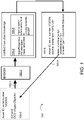
- Example 1 is illustrated by Fig. 1 and shows an example of an application of a method 100 for automatically supplying or locating data over a communication network according to the present disclosure.
- Data source OPC UA PA-DIM field device (e.g. temperature sensor) as data provider
- Data consumer Legacy condition monitoring system requiring metadata along with the measurement value.
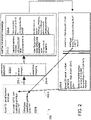
- Example 2 is illustrated by Fig. 2 an shows an example of an application of a method 200 for automatically supplying or locating data over a communication network according to the present disclosure.
- Data sources Automation ML file for engineering data, OPC UA device with PA DIM information model for online data
- Data consumer OPC UA client querying for both the online value (as is) and engineered value (as designed)
- a field device e.g. temperature sensor in field
- the plug and produce application needs to access the pre-configured (so called offline) device parameters (like upper range value) that are stored in file artifacts coming out from planning tools (in this example this is an AutomationML file).
- Those pre-configured parameters are
- a query may for example be "x stores data of field device DEVICE AND y stores data of field device DEVICE AND x is pre-configured and y is online data AND a is the upper-range value stored at x and b is the upper-range value stored at y".
- a comparison between returned values for a and b may indicate if a change in the parameters is required, e.g. adjusting an upper-range value.
- the present disclosure does not require a translation of the underlying data formats to an intermediate data format and queries do not need to be formulated in a common language.
- the present disclosure is open-ended with different query languages as well as underlying data formats, to support legacy and new data sources and consumers.
- the architecture of the present disclosure is open-ended with new translators to transform incoming queries to underlying data format.
- the present approach is able to cope with legacy applications without the need to change API of (possibly legacy) data source and data consumers.
- An intermediate language for translation between demand and source side applications together with the added possibility for direct mapping recommendations may not require changes in the original application data models.
- the present disclosure not only syntactic, but also semantic and ID translations may be considered.
- the present disclosure not only establishes a way to read and write information from various information sources, but also provides means to identify the same data elements which are called differently, but have same semantics.
- IDs can be translated to match the same asset in different information sources (e.g. one device may have one ID in the planning system and another ID during operations).
- FIG.3 illustrated details of a method for automatically supplying or locating data over a communication network according to methods of the present disclosure.
- a method for automatically supplying or locating data ( a , b ,...) 341 over a communication network comprising:
- the at least one solution ( a , b,... ) comprises at least a data identifier x that allows to access data for reading and/or writing.
- the at least one solution may be ( x ) returning an identifier x
- the at least one predicate ⁇ x , y ,... ⁇ D ( F ( x,y ,..., a,b, ...)) is obtained based on an information model and/or where the at least one solution ( a , b,... ) identifies an information model and/or where the data predicates P ( x ) , Q ( x,y ) , R ( x,a ) ,... are obtained from an information model, in particular an OPC UA information model.
- unary predicates like “x isVariable”, “x isObject”, “x isDeviceType” can be extracted and/or n-ary predicates like for example “x organizes A, B” "x has TypeReference C, D", etc.
- the predicate ⁇ x , y ,... ⁇ D ( F ( x , y ,..., a , b ,...)) and/or the data predicates P ( x ) , Q ( x,y ) , R ( x,a ) ,... are be expressed with an expression that is then translated to intermediate representations of the predicates based on translation rules, for example where the predicates can be expressed based on an information model.
- equivalence between predicates or likely equivalence between predicates is automatically detected, in particular for automatically obtaining a recommended intermediate representation of the predicates.
- the equivalence may be detected based on equivalence tables, ontologies, mappings, e.g. mapping both "meter” and “feet” to "x is Length”.
- the equivalence or likely equivalence between predicates is determined based on syntactic or semantic characteristics, in particular on strings matching regular expressions.
- some word or text similarity algorithms like Levenshtein similarity or token based similarity algorithms may be used after text stemming.
- the search is a parallel distributed search and the data identifier identifies a path in a graph to a node storing the identified data.
- Some embodiments relate to a system for automatically supplying or locating data over a communication network, the system comprising:
- the at least one predicate is obtained based on an information model and/or where the at least one solution identifies an information model and/or where the data predicates are obtained from an information model, in particular an OPC UA information model.
- the predicates and/or the data predicates are expressed with an expression that is then translated to intermediate representations of the predicates based on translation rules, for example where the predicates can be expressed based on an information model.
- equivalence between predicates or likely equivalence between predicates is automatically detected, in particular for automatically obtaining a recommended intermediate representation of the predicates.
- the equivalence or likely equivalence between predicates is determined based on syntactic or semantic characteristics, in particular on strings matching regular expressions.
- a third subsystem configured to search for the data performs a parallel distributed search and the at least one data identifier identifies a path in a graph to a node storing the identified data.
- the at least one solution comprises at least a data identifier that allows to access data for reading and/or writing.
- Methods and systems of the present disclosure allow to efficiently and automatically find information on a distributed system satisfying given requirements.
- the information broker may use one or more database to find/retrieve locations x in D satisfying a given predicate, e.g. P(x).
- a given predicate e.g. P(x)
- iterations over the domain D may be reduced and overall network traffic may be reduced, e.g. reducing the iterations over the domain D in order to locate/find/retrieve the required information.
Landscapes
- Engineering & Computer Science (AREA)
- Databases & Information Systems (AREA)
- Theoretical Computer Science (AREA)
- Data Mining & Analysis (AREA)
- Physics & Mathematics (AREA)
- General Engineering & Computer Science (AREA)
- General Physics & Mathematics (AREA)
- Computational Linguistics (AREA)
- Information Retrieval, Db Structures And Fs Structures Therefor (AREA)
Priority Applications (2)
| Application Number | Priority Date | Filing Date | Title |
|---|---|---|---|
| EP20202363.6A EP3985528A1 (de) | 2020-10-16 | 2020-10-16 | Aushandlung von informationsverträgen zwischen informationsanbietern und verbrauchern |
| US17/502,893 US20220121716A1 (en) | 2020-10-16 | 2021-10-15 | Negotiation of information contracts between information providers and consumers |
Applications Claiming Priority (1)
| Application Number | Priority Date | Filing Date | Title |
|---|---|---|---|
| EP20202363.6A EP3985528A1 (de) | 2020-10-16 | 2020-10-16 | Aushandlung von informationsverträgen zwischen informationsanbietern und verbrauchern |
Publications (1)
| Publication Number | Publication Date |
|---|---|
| EP3985528A1 true EP3985528A1 (de) | 2022-04-20 |
Family
ID=72943895
Family Applications (1)
| Application Number | Title | Priority Date | Filing Date |
|---|---|---|---|
| EP20202363.6A Pending EP3985528A1 (de) | 2020-10-16 | 2020-10-16 | Aushandlung von informationsverträgen zwischen informationsanbietern und verbrauchern |
Country Status (2)
| Country | Link |
|---|---|
| US (1) | US20220121716A1 (de) |
| EP (1) | EP3985528A1 (de) |
Cited By (1)
| Publication number | Priority date | Publication date | Assignee | Title |
|---|---|---|---|---|
| US20220121716A1 (en) * | 2020-10-16 | 2022-04-21 | Abb Schweiz Ag | Negotiation of information contracts between information providers and consumers |
Citations (1)
| Publication number | Priority date | Publication date | Assignee | Title |
|---|---|---|---|---|
| US20190147085A1 (en) * | 2016-09-26 | 2019-05-16 | Splunk Inc. | Converting and modifying a subquery for an external data system |
Family Cites Families (24)
| Publication number | Priority date | Publication date | Assignee | Title |
|---|---|---|---|---|
| EP1217540A1 (de) * | 2000-11-29 | 2002-06-26 | Lafayette Software Inc. | Methode zum Organisieren von Daten und zum Verarbeiten von Anfragen in einem Datenbanksystem, Datenbanksystem und Softwareprodukt zur Implementierung solcher Methode |
| US6946715B2 (en) * | 2003-02-19 | 2005-09-20 | Micron Technology, Inc. | CMOS image sensor and method of fabrication |
| US7996814B1 (en) * | 2004-12-21 | 2011-08-09 | Zenprise, Inc. | Application model for automated management of software application deployments |
| US20060212429A1 (en) * | 2005-03-17 | 2006-09-21 | Microsoft Corporation | Answering top-K selection queries in a relational engine |
| US7543004B2 (en) * | 2005-12-22 | 2009-06-02 | Oracle International Corporation | Efficient support for workspace-local queries in a repository that supports file versioning |
| US8122011B1 (en) * | 2008-03-12 | 2012-02-21 | Google Inc. | Identifying sibling queries |
| JP5833629B2 (ja) * | 2010-04-06 | 2015-12-16 | ジャストワン・データベース・インコーポレイテッドJustone Database,Inc. | データベースモデル非依存、スキーマ非依存および作業負荷非依存のデータ記憶ならびにアクセスモデルに基づくデータ記憶および/または検索 |
| US9218394B2 (en) * | 2010-10-19 | 2015-12-22 | International Business Machines Corporation | Reading rows from memory prior to reading rows from secondary storage |
| US8346804B2 (en) * | 2010-11-03 | 2013-01-01 | General Electric Company | Systems, methods, and apparatus for computer-assisted full medical code scheme to code scheme mapping |
| US9240021B2 (en) * | 2010-11-04 | 2016-01-19 | Digimarc Corporation | Smartphone-based methods and systems |
| US9501550B2 (en) * | 2012-04-18 | 2016-11-22 | Renmin University Of China | OLAP query processing method oriented to database and HADOOP hybrid platform |
| US9727606B2 (en) * | 2012-08-20 | 2017-08-08 | Oracle International Corporation | Hardware implementation of the filter/project operations |
| US9904579B2 (en) * | 2013-03-15 | 2018-02-27 | Advanced Elemental Technologies, Inc. | Methods and systems for purposeful computing |
| US9378065B2 (en) * | 2013-03-15 | 2016-06-28 | Advanced Elemental Technologies, Inc. | Purposeful computing |
| US9542221B2 (en) * | 2014-05-22 | 2017-01-10 | Oracle International Corporation | Dynamic co-scheduling of hardware contexts for parallel runtime systems on shared machines |
| US20170286456A1 (en) * | 2014-08-29 | 2017-10-05 | Akana, Inc | Dynamic ontology schema generation and asset management for standards for exchanging data |
| US10880322B1 (en) * | 2016-09-26 | 2020-12-29 | Agari Data, Inc. | Automated tracking of interaction with a resource of a message |
| US12346099B2 (en) * | 2018-11-20 | 2025-07-01 | Siemens Aktiengesellschaft | Method for transforming a data model for automation purposes into a target ontology |
| US20200210869A1 (en) * | 2018-12-28 | 2020-07-02 | Siemens Aktiengesellschaft | Gateway and method for transforming a description of an industrial process equipment into a data information model |
| CN109726292A (zh) * | 2019-01-02 | 2019-05-07 | 山东省科学院情报研究所 | 面向大规模多语种数据的文本分析方法和装置 |
| US12373213B2 (en) * | 2019-04-22 | 2025-07-29 | Whole Sky Technologies Company | Hardware enforcement of boundaries on the control, space, time, modularity, reference, initialization, and mutability aspects of software |
| EP3985528A1 (de) * | 2020-10-16 | 2022-04-20 | ABB Schweiz AG | Aushandlung von informationsverträgen zwischen informationsanbietern und verbrauchern |
| US11861409B2 (en) * | 2021-03-31 | 2024-01-02 | Amazon Technologies, Inc. | Distributed decomposition of string-automated reasoning using predicates |
| US11847121B2 (en) * | 2021-08-27 | 2023-12-19 | International Business Machines Corporation | Compound predicate query statement transformation |
-
2020
- 2020-10-16 EP EP20202363.6A patent/EP3985528A1/de active Pending
-
2021
- 2021-10-15 US US17/502,893 patent/US20220121716A1/en active Pending
Patent Citations (1)
| Publication number | Priority date | Publication date | Assignee | Title |
|---|---|---|---|---|
| US20190147085A1 (en) * | 2016-09-26 | 2019-05-16 | Splunk Inc. | Converting and modifying a subquery for an external data system |
Non-Patent Citations (2)
| Title |
|---|
| KAED CHARBEL EL ET AL: "FOrT�: A Federated Ontology and Timeseries Query Engine", 2017 IEEE INTERNATIONAL CONFERENCE ON INTERNET OF THINGS (ITHINGS) AND IEEE GREEN COMPUTING AND COMMUNICATIONS (GREENCOM) AND IEEE CYBER, PHYSICAL AND SOCIAL COMPUTING (CPSCOM) AND IEEE SMART DATA (SMARTDATA), IEEE, 21 June 2017 (2017-06-21), pages 983 - 990, XP033312293, DOI: 10.1109/ITHINGS-GREENCOM-CPSCOM-SMARTDATA.2017.151 * |
| MARTIN BAUER ET AL: "The Context API in the OMA Next Generation Service Interface", INTELLIGENCE IN NEXT GENERATION NETWORKS (ICIN), 2010 14TH INTERNATIONAL CONFERENCE ON, IEEE, PISCATAWAY, NJ, USA, 11 October 2010 (2010-10-11), pages 1 - 5, XP031805046, ISBN: 978-1-4244-7443-1 * |
Cited By (1)
| Publication number | Priority date | Publication date | Assignee | Title |
|---|---|---|---|---|
| US20220121716A1 (en) * | 2020-10-16 | 2022-04-21 | Abb Schweiz Ag | Negotiation of information contracts between information providers and consumers |
Also Published As
| Publication number | Publication date |
|---|---|
| US20220121716A1 (en) | 2022-04-21 |
Similar Documents
| Publication | Publication Date | Title |
|---|---|---|
| Novo et al. | Semantic interoperability in the IoT: Extending the web of things architecture | |
| US7823123B2 (en) | Semantic system for integrating software components | |
| McHugh et al. | Integrated access to big data polystores through a knowledge-driven framework | |
| US8640087B2 (en) | Semantic system for integrating software components | |
| KR102662252B1 (ko) | 자동화 목적들을 위한 데이터 모델을 타겟 온톨로지로 변환하기 위한 방법 | |
| US7877726B2 (en) | Semantic system for integrating software components | |
| US8489649B2 (en) | Extensible RDF databases | |
| US20080201359A1 (en) | Method and apparatus for mapping between xml and relational representations | |
| Müller et al. | From RESTful to SPARQL: A Case Study on Generating Semantic Sensor Data. | |
| Rula et al. | Data quality issues in linked open data | |
| Pauwels et al. | Linked data | |
| JP2016212839A (ja) | 多言語データティアのデータ制約 | |
| US9129035B2 (en) | Systems, methods, and apparatus for accessing object representations of data sets | |
| WO2000065486A2 (en) | A method of mapping semantic context to enable interoperability among disparate sources | |
| Zorgati et al. | QoC enhanced semantic IoT model | |
| Shelden et al. | Data standards and data exchange for Construction 4.0 | |
| El Kaed et al. | Forte: A federated ontology and timeseries query engine | |
| CN115203360B (zh) | 用于在工业数据网络中的服务器与客户端之间交换数据的系统和方法 | |
| US20220121716A1 (en) | Negotiation of information contracts between information providers and consumers | |
| Schmeyer et al. | Digital twin data broker with assisted mapping into a knowledge base | |
| Pauwels et al. | Open data standards and BIM on the cloud | |
| Zhu et al. | Integrating Spatial Data Linkage and Analysis Services in a Geoportal for C Hina Urban Research | |
| US7769750B2 (en) | Metadata based hypermedia management system | |
| US20040015542A1 (en) | Hypermedia management system | |
| Chang et al. | Prototyping an integrated information gathering system on CORBA |
Legal Events
| Date | Code | Title | Description |
|---|---|---|---|
| PUAI | Public reference made under article 153(3) epc to a published international application that has entered the european phase |
Free format text: ORIGINAL CODE: 0009012 |
|
| STAA | Information on the status of an ep patent application or granted ep patent |
Free format text: STATUS: THE APPLICATION HAS BEEN PUBLISHED |
|
| AK | Designated contracting states |
Kind code of ref document: A1 Designated state(s): AL AT BE BG CH CY CZ DE DK EE ES FI FR GB GR HR HU IE IS IT LI LT LU LV MC MK MT NL NO PL PT RO RS SE SI SK SM TR |
|
| STAA | Information on the status of an ep patent application or granted ep patent |
Free format text: STATUS: REQUEST FOR EXAMINATION WAS MADE |
|
| 17P | Request for examination filed |
Effective date: 20221020 |
|
| RBV | Designated contracting states (corrected) |
Designated state(s): AL AT BE BG CH CY CZ DE DK EE ES FI FR GB GR HR HU IE IS IT LI LT LU LV MC MK MT NL NO PL PT RO RS SE SI SK SM TR |
|
| STAA | Information on the status of an ep patent application or granted ep patent |
Free format text: STATUS: EXAMINATION IS IN PROGRESS |
|
| 17Q | First examination report despatched |
Effective date: 20231212 |