EP3986073A1 - Procédé et appareil d'indication d'accès aléatoire, et support de stockage - Google Patents
Procédé et appareil d'indication d'accès aléatoire, et support de stockage Download PDFInfo
- Publication number
- EP3986073A1 EP3986073A1 EP19933490.5A EP19933490A EP3986073A1 EP 3986073 A1 EP3986073 A1 EP 3986073A1 EP 19933490 A EP19933490 A EP 19933490A EP 3986073 A1 EP3986073 A1 EP 3986073A1
- Authority
- EP
- European Patent Office
- Prior art keywords
- target
- random access
- base station
- terminal
- antenna panel
- Prior art date
- Legal status (The legal status is an assumption and is not a legal conclusion. Google has not performed a legal analysis and makes no representation as to the accuracy of the status listed.)
- Granted
Links
Images


Classifications
-
- H—ELECTRICITY
- H04—ELECTRIC COMMUNICATION TECHNIQUE
- H04W—WIRELESS COMMUNICATION NETWORKS
- H04W36/00—Hand-off or reselection arrangements
- H04W36/0005—Control or signalling for completing the hand-off
- H04W36/0055—Transmission or use of information for re-establishing the radio link
- H04W36/0061—Transmission or use of information for re-establishing the radio link of neighbour cell information
-
- H—ELECTRICITY
- H04—ELECTRIC COMMUNICATION TECHNIQUE
- H04W—WIRELESS COMMUNICATION NETWORKS
- H04W36/00—Hand-off or reselection arrangements
- H04W36/0005—Control or signalling for completing the hand-off
- H04W36/0055—Transmission or use of information for re-establishing the radio link
- H04W36/0058—Transmission of hand-off measurement information, e.g. measurement reports
-
- H—ELECTRICITY
- H04—ELECTRIC COMMUNICATION TECHNIQUE
- H04W—WIRELESS COMMUNICATION NETWORKS
- H04W74/00—Wireless channel access
- H04W74/002—Transmission of channel access control information
- H04W74/006—Transmission of channel access control information in the downlink, i.e. towards the terminal
-
- H—ELECTRICITY
- H04—ELECTRIC COMMUNICATION TECHNIQUE
- H04B—TRANSMISSION
- H04B7/00—Radio transmission systems, i.e. using radiation field
- H04B7/02—Diversity systems; Multi-antenna system, i.e. transmission or reception using multiple antennas
- H04B7/04—Diversity systems; Multi-antenna system, i.e. transmission or reception using multiple antennas using two or more spaced independent antennas
- H04B7/0404—Diversity systems; Multi-antenna system, i.e. transmission or reception using multiple antennas using two or more spaced independent antennas the mobile station comprising multiple antennas, e.g. to provide uplink diversity
-
- H—ELECTRICITY
- H04—ELECTRIC COMMUNICATION TECHNIQUE
- H04B—TRANSMISSION
- H04B7/00—Radio transmission systems, i.e. using radiation field
- H04B7/02—Diversity systems; Multi-antenna system, i.e. transmission or reception using multiple antennas
- H04B7/04—Diversity systems; Multi-antenna system, i.e. transmission or reception using multiple antennas using two or more spaced independent antennas
- H04B7/06—Diversity systems; Multi-antenna system, i.e. transmission or reception using multiple antennas using two or more spaced independent antennas at the transmitting station
- H04B7/0686—Hybrid systems, i.e. switching and simultaneous transmission
- H04B7/0691—Hybrid systems, i.e. switching and simultaneous transmission using subgroups of transmit antennas
-
- H—ELECTRICITY
- H04—ELECTRIC COMMUNICATION TECHNIQUE
- H04B—TRANSMISSION
- H04B7/00—Radio transmission systems, i.e. using radiation field
- H04B7/02—Diversity systems; Multi-antenna system, i.e. transmission or reception using multiple antennas
- H04B7/04—Diversity systems; Multi-antenna system, i.e. transmission or reception using multiple antennas using two or more spaced independent antennas
- H04B7/08—Diversity systems; Multi-antenna system, i.e. transmission or reception using multiple antennas using two or more spaced independent antennas at the receiving station
- H04B7/0868—Hybrid systems, i.e. switching and combining
- H04B7/0874—Hybrid systems, i.e. switching and combining using subgroups of receive antennas
-
- H—ELECTRICITY
- H04—ELECTRIC COMMUNICATION TECHNIQUE
- H04B—TRANSMISSION
- H04B7/00—Radio transmission systems, i.e. using radiation field
- H04B7/02—Diversity systems; Multi-antenna system, i.e. transmission or reception using multiple antennas
- H04B7/04—Diversity systems; Multi-antenna system, i.e. transmission or reception using multiple antennas using two or more spaced independent antennas
- H04B7/08—Diversity systems; Multi-antenna system, i.e. transmission or reception using multiple antennas using two or more spaced independent antennas at the receiving station
- H04B7/0868—Hybrid systems, i.e. switching and combining
- H04B7/088—Hybrid systems, i.e. switching and combining using beam selection
-
- H—ELECTRICITY
- H04—ELECTRIC COMMUNICATION TECHNIQUE
- H04W—WIRELESS COMMUNICATION NETWORKS
- H04W16/00—Network planning, e.g. coverage or traffic planning tools; Network deployment, e.g. resource partitioning or cells structures
- H04W16/24—Cell structures
- H04W16/28—Cell structures using beam steering
-
- H—ELECTRICITY
- H04—ELECTRIC COMMUNICATION TECHNIQUE
- H04W—WIRELESS COMMUNICATION NETWORKS
- H04W36/00—Hand-off or reselection arrangements
- H04W36/0005—Control or signalling for completing the hand-off
- H04W36/0055—Transmission or use of information for re-establishing the radio link
- H04W36/0072—Transmission or use of information for re-establishing the radio link of resource information of target access point
-
- H—ELECTRICITY
- H04—ELECTRIC COMMUNICATION TECHNIQUE
- H04W—WIRELESS COMMUNICATION NETWORKS
- H04W36/00—Hand-off or reselection arrangements
- H04W36/0005—Control or signalling for completing the hand-off
- H04W36/0055—Transmission or use of information for re-establishing the radio link
- H04W36/0077—Transmission or use of information for re-establishing the radio link of access information of target access point
-
- H—ELECTRICITY
- H04—ELECTRIC COMMUNICATION TECHNIQUE
- H04W—WIRELESS COMMUNICATION NETWORKS
- H04W36/00—Hand-off or reselection arrangements
- H04W36/08—Reselecting an access point
-
- H—ELECTRICITY
- H04—ELECTRIC COMMUNICATION TECHNIQUE
- H04W—WIRELESS COMMUNICATION NETWORKS
- H04W36/00—Hand-off or reselection arrangements
- H04W36/24—Reselection being triggered by specific parameters
- H04W36/30—Reselection being triggered by specific parameters by measured or perceived connection quality data
- H04W36/305—Handover due to radio link failure
-
- H—ELECTRICITY
- H04—ELECTRIC COMMUNICATION TECHNIQUE
- H04W—WIRELESS COMMUNICATION NETWORKS
- H04W48/00—Access restriction; Network selection; Access point selection
- H04W48/08—Access restriction or access information delivery, e.g. discovery data delivery
- H04W48/12—Access restriction or access information delivery, e.g. discovery data delivery using downlink control channel
-
- H—ELECTRICITY
- H04—ELECTRIC COMMUNICATION TECHNIQUE
- H04W—WIRELESS COMMUNICATION NETWORKS
- H04W74/00—Wireless channel access
- H04W74/002—Transmission of channel access control information
- H04W74/004—Transmission of channel access control information in the uplink, i.e. towards network
-
- H—ELECTRICITY
- H04—ELECTRIC COMMUNICATION TECHNIQUE
- H04W—WIRELESS COMMUNICATION NETWORKS
- H04W74/00—Wireless channel access
- H04W74/08—Non-scheduled access, e.g. ALOHA
- H04W74/0833—Random access procedures, e.g. with 4-step access
Definitions
- Embodiments of the disclosure relate to a field of communications technologies, and particularly to a method and an apparatus for random access indication, and a storage medium.
- a terminal needs to initiate random access to a base station so as to successfully establish a wireless connection with the base station.
- the terminal In a conventional solution, the terminal generally has only one antenna panel, and the terminal initiates random access to the base station through the antenna panel.
- the base station and the terminal may each have a plurality of antenna panels.
- the plurality of antenna panels of the base station may belong to the same transmitter reception point (TRP), or may belong to a plurality of different TRPs.
- Embodiments of the disclosure provide a method and an apparatus for random access indication, and a storage medium.
- the technical solution is as follow:
- a method for random access indication includes: sending by a serving base station a random access indication signaling, wherein the random access indication signaling is configured to indicate to a terminal a target antenna panel and/or a target beam for sending a random access preamble.
- the random access indication signaling is a handover instruction, and the handover instruction is configured to instruct the terminal to hand over to a target cell.
- the method further includes: receiving by the serving base station a radio resource management (RRM) measurement report sent by the terminal, wherein the RRM measurement report includes a measurement report of at least one neighboring cell; selecting by the serving base station the target cell from the at least one neighboring cell; sending by the serving base station a handover request signaling to a target base station to which the target cell belongs, wherein the handover request signaling includes a measurement report of the target cell; and receiving by the serving base station a handover response signaling sent by the target base station, wherein the handover response signaling includes indication information of the target antenna panel and/or the target beam.
- RRM radio resource management
- the measurement report of the neighboring cell includes: an identifier of the neighboring cell, a measurement value of the neighboring cell, and measurement object information, wherein the measurement object information is configured to indicate a receiving antenna panel and/or a receiving beam used by the terminal to obtain the measurement value of the neighboring cell.
- the measurement object information includes: an identifier of the receiving antenna panel and/or an identifier of the receiving beam; or, an identifier of the receiving antenna panel and/or a first reference signal identifier, wherein the first reference signal identifier is configured to indicate the receiving beam; or, a first reference signal group identifier and/or a first reference signal identifier, wherein the first reference signal group identifier is configured to indicate the receiving antenna panel, and the first reference signal identifier is configured to indicate the receiving beam; or, a first reference signal identifier, wherein the first reference signal identifier is configured to indicate the receiving antenna panel and/or the receiving beam.
- the handover request signaling further includes configuration information of an uplink reference signal used by the terminal for uplink measurement.
- the method further includes: receiving by the serving base station candidate panel information sent by the terminal, wherein the candidate panel information indicates at least one candidate antenna panel for random access; sending by the serving base station the candidate panel information to the target base station; wherein the target antenna panel is selected from the at least one candidate antenna panel.
- the random access indication signaling is a radio link recovery instruction or a beam recovery instruction.
- the method further includes: receiving by the serving base station a radio link failure notification or a beam failure notification sent by the terminal, wherein the radio link failure notification is configured to notify the serving base station of a base station antenna panel where a radio link failure occurs, and the beam failure notification is configured to notify the serving base station of a base station antenna panel where a beam failure occurs.
- the random access indication signaling is a secondary cell adding instruction
- the secondary cell adding instruction is configured to instruct the terminal to access a target secondary cell.
- the method further includes: receiving by the serving base station a neighboring cell measurement report sent by the terminal, wherein the neighboring cell measurement report includes a measurement report of at least one neighboring cell; and selecting by the serving base station the target secondary cell from the at least one neighboring cell.
- the random access indication signaling includes: an identifier of the target antenna panel and/or an identifier of the target beam; or, an identifier of the target antenna panel and/or a second reference signal identifier, wherein the second reference signal identifier is configured to indicate the target beam; or, a second reference signal group identifier and/or a second reference signal identifier, wherein the second reference signal group identifier is configured to indicate the target antenna panel, and the second reference signal identifier is configured to indicate the target beam; or, a second reference signal identifier, wherein the second reference signal identifier is configured to indicate the target antenna panel and/or the target beam.
- the random access indication signaling further includes: indication information of an antenna panel and/or a beam configured to monitor a random access response (RAR) after the terminal sends the random access preamble.
- RAR random access response
- a method for random access indication includes: receiving by a terminal a random access indication signaling; and determining by the terminal a target antenna panel and/or a target beam for sending a random access preamble based on the random access indication signaling.
- the random access indication signaling is a handover instruction
- the handover instruction is configured to instruct the terminal to hand over to a target cell.
- the method further includes: sending by the terminal an RRM measurement report to a serving base station, wherein the RRM measurement report includes a measurement report of at least one neighboring cell; the measurement report of the neighboring cell includes: an identifier of the neighboring cell, a measurement value of the neighboring cell, and measurement object information, the measurement object information is configured to indicate a receiving antenna panel and/or a receiving beam used by the terminal to obtain the measurement value of the neighboring cell.
- the method further includes: sending by the terminal candidate panel information to the serving base station, wherein the candidate panel information indicates at least one candidate antenna panel for random access; the target antenna panel is selected from the at least one candidate antenna panel.
- the random access indication signaling is a radio link recovery instruction or a beam recovery instruction.
- the method further includes: sending by the terminal a radio link failure notification or a beam failure notification to a serving base station; wherein the radio link failure notification is configured to notify the serving base station of a base station antenna panel where a radio link failure occurs, and the beam failure notification is configured to notify the serving base station of a base station antenna panel where a beam failure occurs.
- the random access indication signaling is a secondary cell adding instruction
- the secondary cell adding instruction is configured to instruct the terminal to access a target secondary cell.
- the method further includes: sending by the terminal a neighboring cell measurement report to a serving base station, wherein the neighboring cell measurement report includes a measurement report of at least one neighboring cell; the target secondary cell is selected from the at least one neighboring cell.
- an apparatus for random access indication is provided.
- the apparatus is applied to a serving base station, and includes: an indication signaling sending module, configured to send a random access indication signaling, wherein the random access indication signaling is configured to indicate to a terminal a target antenna panel and/or a target beam for sending a random access preamble.
- the random access indication signaling is a handover instruction, and the handover instruction is configured to instruct the terminal to hand over to a target cell.
- the apparatus further includes: a measurement report receiving module, configured to receive an RRM measurement report sent by the terminal, wherein the RRM measurement report includes a measurement report of at least one neighboring cell; a target cell selecting module, configured to select the target cell from the at least one neighboring cell; a handover request sending module, configured to send a handover request signaling to a target base station to which the target cell belongs, wherein the handover request signaling includes a measurement report of the target cell; and a handover response receiving module, configured to receive a handover response signaling sent by the target base station, wherein the handover response signaling includes indication information of the target antenna panel and/or the target beam.
- a measurement report receiving module configured to receive an RRM measurement report sent by the terminal, wherein the RRM measurement report includes a measurement report of at least one neighboring cell
- a target cell selecting module configured to select the target cell from the at least one neighboring cell
- a handover request sending module configured to send a handover request signaling to a target base station to which
- the apparatus further includes: a panel information receiving module, configured to receive candidate panel information sent by the terminal, wherein the candidate panel information is configured to indicate at least one candidate antenna panel for random access; and a panel information sending module, configured to send the candidate panel information to the target base station; wherein the target antenna panel is selected from the at least one candidate antenna panel.
- a panel information receiving module configured to receive candidate panel information sent by the terminal, wherein the candidate panel information is configured to indicate at least one candidate antenna panel for random access
- a panel information sending module configured to send the candidate panel information to the target base station; wherein the target antenna panel is selected from the at least one candidate antenna panel.
- the random access indication signaling is a radio link recovery instruction or a beam recovery instruction.
- the apparatus further includes: a failure notification receiving module, configured to receive a radio link failure notification or a beam failure notification sent by the terminal; wherein the radio link failure notification is configured to notify the serving base station of a base station antenna panel where a radio link failure occurs, and the beam failure notification is configured to notify the serving base station of a base station antenna panel where a beam failure occurs.
- a failure notification receiving module configured to receive a radio link failure notification or a beam failure notification sent by the terminal; wherein the radio link failure notification is configured to notify the serving base station of a base station antenna panel where a radio link failure occurs, and the beam failure notification is configured to notify the serving base station of a base station antenna panel where a beam failure occurs.
- the random access indication signaling is a secondary cell adding instruction
- the secondary cell adding instruction is configured to instruct the terminal to access a target secondary cell.
- the apparatus further includes: a neighboring cell report receiving module, configured to receive a neighboring cell measurement report sent by the terminal, wherein the neighboring cell measurement report includes a measurement report of at least one neighboring cell; and a secondary cell selecting module, configured to select the target secondary cell from the at least one neighboring cell.
- a neighboring cell report receiving module configured to receive a neighboring cell measurement report sent by the terminal, wherein the neighboring cell measurement report includes a measurement report of at least one neighboring cell
- a secondary cell selecting module configured to select the target secondary cell from the at least one neighboring cell.
- an apparatus for random access indication is provided.
- the apparatus is applied to a terminal, and includes: an indication signaling receiving module, configured to receive a random access indication signaling; and a panel beam determining module, configured to determine a target antenna panel and/or a target beam for sending a random access preamble based on the random access indication signaling.
- the random access indication signaling is a handover instruction, and the handover instruction is configured to instruct the terminal to be handed over to a target cell.
- the apparatus further includes: a measurement report sending module, configured to send an RRM measurement report to a serving base station, wherein the RRM measurement report includes a measurement report of at least one neighboring cell; the measurement report of the neighboring cell includes: an identifier of the neighboring cell, a measurement value of the neighboring cell, and measurement object information, the measurement object information is configured to indicate a receiving antenna panel and/or a receiving beam used by the terminal to obtain the measurement value of the neighboring cell.
- a measurement report sending module configured to send an RRM measurement report to a serving base station, wherein the RRM measurement report includes a measurement report of at least one neighboring cell; the measurement report of the neighboring cell includes: an identifier of the neighboring cell, a measurement value of the neighboring cell, and measurement object information, the measurement object information is configured to indicate a receiving antenna panel and/or a receiving beam used by the terminal to obtain the measurement value of the neighboring cell.
- the apparatus further includes: a panel information sending module, configured to send candidate panel information to the serving base station, wherein the candidate panel information indicates at least one candidate antenna panel for random access; wherein the target antenna panel is selected from the at least one candidate antenna panel.
- a panel information sending module configured to send candidate panel information to the serving base station, wherein the candidate panel information indicates at least one candidate antenna panel for random access; wherein the target antenna panel is selected from the at least one candidate antenna panel.
- the random access indication signaling is a radio link recovery instruction or a beam recovery instruction.
- the apparatus further includes: a failure notification sending module, configured to send a radio link failure notification or a beam failure notification to a serving base station; wherein the radio link failure notification is configured to notify the serving base station of a base station antenna panel where a radio link failure occurs, and the beam failure notification is configured to notify the serving base station of a base station antenna panel where a beam failure occurs.
- a failure notification sending module configured to send a radio link failure notification or a beam failure notification to a serving base station; wherein the radio link failure notification is configured to notify the serving base station of a base station antenna panel where a radio link failure occurs, and the beam failure notification is configured to notify the serving base station of a base station antenna panel where a beam failure occurs.
- the random access indication signaling is a secondary cell adding instruction
- the secondary cell adding instruction is configured to instruct the terminal to access a target secondary cell.
- the apparatus further includes: a neighboring cell report sending module, configured to send a neighboring cell measurement report to a serving base station, wherein the neighboring cell measurement report includes a measurement report of at least one neighboring cell; wherein the target secondary cell is selected from the at least one neighboring cell.
- a neighboring cell report sending module configured to send a neighboring cell measurement report to a serving base station, wherein the neighboring cell measurement report includes a measurement report of at least one neighboring cell; wherein the target secondary cell is selected from the at least one neighboring cell.
- an apparatus for random access indication is provided.
- the apparatus is applied to a serving base station, and includes: a processor; and a memory configured to store instructions executable by the processor.
- the processor is configured to: send a random access indication signaling, wherein the random access indication signaling is configured to indicate to a terminal a target antenna panel and/or a target beam for sending a random access preamble.
- an apparatus for random access indication includes: a processor; and a memory configured to store instructions executable by the processor.
- the processor is configured to: receive a random access indication signaling; and determine a target antenna panel and/or a target beam for sending a random access preamble based on the random access indication signaling.
- a non-transitory computer readable storage medium stored with computer programs thereon is provided.
- the computer programs are configured to implement steps of the method provided in the first aspect of the disclosure when executed by the processor.
- a non-transitory computer readable storage medium stored with computer programs thereon is provided.
- the computer programs are configured to implement steps of the method provided in the second aspect of the disclosure when executed by the processor.
- the technical solution according to embodiments of the disclosure may include the following beneficial effects.
- the serving base station sends the random access indication signaling to the terminal, so that the terminal can determine the target antenna panel and/or the target beam for sending the random access preamble. Accordingly; in this way, when the terminal has a plurality of antenna panels, the terminal can accurately determine which antenna panel is used to initiate random access, thereby improving the accuracy and success rate of random access, and reducing the delay of random access.
- FIG. 1 is a diagram illustrating a network architecture according to an example embodiment.
- the network architecture may include a base station 110 and a terminal 120.
- the base station 110 is deployed in an access network.
- the access network in a 5G NR system may be referred to as a new generation-radio access network (NG-RAN).
- NG-RAN new generation-radio access network
- the base station 110 may communicate with the terminal 120 through some kind of air interface technology, for example, a cellar technology.
- the base station 110 is an apparatus deployed in an access network to provide a wireless communication function for the terminal 120.
- the base station 110 may include various forms of macro base stations, micro base stations, relay stations, access points, etc.
- the name of the devices with a base station function may vary, for example, in a 5G NR system, it is referred to as gNodeB or gNB. With evolution of communication technologies, the name "base station" may vary.
- the above apparatus that provides a wireless communication function for a terminal 120 is collectively referred to as a base station.
- the base station 110 also may be a vehicle device, which is applied to a scenario for communication between vehicles in an Internet of Vehicles. During communication between vehicles, the channel or signaling in the disclosure may be a channel or signaling applied to a sidelink.
- the number of the terminals 120 is generally multiple, and one or more terminals 120 may be distributed in cells managed by each base station 110.
- the terminal 120 may include various handheld devices with a wireless communication function, vehicle devices, wearable devices, computing devices or other processing devices connected to a wireless modem, as well as various forms of user equipment (UE), mobile stations (MS), terminal devices, etc.
- UE user equipment
- MS mobile stations
- terminal devices etc.
- the above device is collectively referred to as a terminal.
- the terminal 120 also may be a vehicle device, which is applied to a scenario for communication between vehicles in an Internet of Vehicles.
- the channel or signaling in the disclosure may be a channel or signaling suitable for a sidelink.
- the "5G NR system" in embodiments of the disclosure also may be referred to as a 5G system or an NR system, the meaning of which may be understood by those skilled in the art.
- the technical solution in embodiments of the disclosure may be applied to a 5G NR system, and also may be applied to a subsequent evolution system after a 5G NR system.
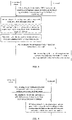
- FIG. 2 is a flowchart illustrating a method for random access indication according to an example embodiment. The method may be applied to a network architecture as illustrated in FIG. 1 . The method may include the following steps 201-202.
- a serving base station sends a random access indication signaling, wherein the random access indication signaling is configured to indicate to a terminal a target antenna panel and/or a target beam for sending a random access preamble.
- the serving base station sends the random access indication signaling to the terminal, and correspondingly, the terminal receives the random access indication signaling sent by the serving base station.
- the serving base station refers to a base station to which a serving cell accessed by the terminal belongs.
- the serving base station When the terminal only accesses one serving cell, the serving base station is the base station to which the serving cell belongs.
- the terminal accesses a plurality of serving cells simultaneously, for example, the terminal accesses one primary cell (PCell), and one or more secondary cells (SCell), in this case, if the PCell and the SCell share the same base station, the serving base station is the shared base station, and if the PCell and the SCell do not share the same base station, that is, there is a dual connection, namely, there is a peNB and an SeNB, the serving base station may be the base station to which the PCell belongs, and may also be the base station to which the primary secondary cell (PSCell) belongs.
- PCell primary cell
- SCell secondary cells
- the terminal has at least two antenna panels, and each antenna panel includes at least one beam.
- the serving base station indicates to the terminal the target antenna panel and/or the target beam for sending the random access preamble.
- the target antenna panel may include one antenna panel, and also may include a plurality of antenna panels.
- the target beam may be one beam, and also may include a plurality of beams. When the target beam include a plurality of beams, the plurality of beams may belong to the same antenna panel, and also may belong to a plurality of different antenna panels.
- the random access indication signaling includes a plurality of target antenna panels and a plurality of target beams simultaneously, it requires to indicate the target antenna panel corresponding to each target beam clearly.
- the random access indication signaling includes indication information of the target antenna panel and/or the target beam, and the indication information is configured to represent the target antenna panel and/or the target beam.
- the indication information includes an identifier of the target antenna panel and/or an identifier of the target beam. That is, the random access indication signaling includes an identifier of the target antenna panel and/or an identifier of the target beam.
- the identifier of the target antenna panel is configured to uniquely indicate the target antenna panel, and different antenna panels have different identifiers.
- the identifier of the antenna panel may be denoted as a panel ID, which may be a character string including at least one of numbers, letters, and characters.
- the identifier of the target beam is configured to uniquely indicate the target beam, and different beams have different identifiers.
- the identifier of the beam may be denoted as a beam ID, which may be a character string including at least one of numbers, letters, and characters.
- the random access indication signaling includes panel#1 and beam#5, thereby indicating to the terminal that the target antenna panel for sending the random access preamble is an antenna panel numbered 1, and the target beam for sending the random access preamble is a beam numbered 5.
- the indication information includes an identifier of the target antenna panel and/or a second reference signal identifier. That is, the random access indication signaling includes the identifier of the target antenna panel and/or the second reference signal identifier.
- the second reference signal identifier is configured to indicate the target beam.
- the terminal may determine the target beam for sending the random access preamble based on the second reference signal identifier.
- the second reference signal identifier is an identifier of a second reference signal, and the second reference signal may be an uplink reference signal, for example, a sounding reference signal (SRS), and also may be a downlink reference signal, such as a synchronization signal block(SSB) or a channel state information-reference signal (CSI-RS).
- SRS sounding reference signal
- CSI-RS channel state information-reference signal
- the serving base station When the second reference signal is an uplink reference signal, the serving base station notifies the terminal to use the sending beam for sending the uplink reference signal, as the target beam for sending the random access preamble.
- the second reference signal is a downlink reference signal
- the serving base station notifies the terminal to use the sending beam corresponding to the receiving beam for receiving the downlink reference signal, as the target beam for sending the random access preamble.
- the random access indication signaling includes panel# 1 and SRS#1, thereby indicating to the terminal that the target antenna panel for sending the random access preamble is an antenna panel numbered 1
- the target beam for sending the random access preamble is a sending beam for sending the SRS#1.
- the random access indication signaling includes panel#1 and SSB#1, thereby indicating to the terminal that the target antenna panel for sending the random access preamble is an antenna panel numbered 1, and the target beam for sending the random access preamble is a sending beam corresponding to the receiving beam for receiving the SSB#1.
- the indication information includes a second reference signal group (group or set) identifier and/or a second reference signal identifier. That is, the random access indication signaling includes a second reference signal group identifier and/or a second reference signal identifier.
- the second reference signal group identifier is configured to indicate the target antenna panel, and the second reference signal identifier is configured to indicate the target beam.
- the terminal can determine the target antenna panel for sending the random access preamble based on the second reference signal group identifier.
- the second reference signal group identifier may be an identifier of a second reference signal group, and the second reference signal group may include at least one reference signal.
- the terminal can determine the target beam for sending the random access preamble based on the second reference signal identifier.
- the second reference signal identifier is an identifier of a second reference signal.
- the reference signal here may be an uplink reference signal or a downlink reference signal.
- the indication information includes the second reference signal identifier. That is, the random access indication signaling includes the second reference signal identifier.
- the second reference signal identifier is configured to indicate the target antenna panel and/or the target beam.
- the terminal can determine the target antenna panel and/or the target beam for sending the random access preamble based on the second reference signal identifier.
- the second reference signal identifier is an identifier of a second reference signal. In this case, when the identifier of the reference signal on each antenna panel is different, the target antenna panel and/or the target beam for sending the random access preamble can be determined based on the second reference signal identifier.
- the terminal determines the target antenna panel and/or the target beam for sending the random access preamble based on the random access indication signaling.
- the terminal After receiving the random access indication signaling, the terminal can determine the target antenna panel and/or the target beam for sending the random access preamble based on the random access indication signaling, and send the random access preamble with the target antenna panel and/or the target beam, thereby initiating random access to a network side.
- the terminal when the random access indication signaling only indicates the target antenna panel, the terminal sends the random access preamble with the target antenna panel.
- the terminal when the target antenna panel includes only one beam, the terminal sends the random access preamble with the beam; when the target antenna panel includes a plurality of beams, the terminal may select at least one beam from the plurality of beams to send the random access preamble.
- the terminal can determine the target antenna panel to which the target beam belongs based on the mapping relationship between the antenna panel and the beam, so as to determine the target antenna panel and the target beam for sending the random access preamble.
- the terminal can directly determine the target antenna panel and the target beam for sending the random access preamble based on the random access indication signaling.
- the terminal when the random access indication signaling includes panel#0, the terminal sends the random access preamble with the antenna panel numbered 0, and further sends the random access preamble with at least one beam on the antenna panel numbered 0.
- the random access indication signaling includes beam#1, assuming that the beam#1 belongs to panel#1, the terminal sends the random access preamble with the beam numbered 1 on the antenna panel numbered 1.
- the random access indication signaling includes panel#1 and beam#1, the terminal sends the random access preamble with the beam numbered 1 on the antenna panel numbered 1.
- the random access indication signaling further includes an identifier of the target cell.
- the target beam refers to a cell to which the terminal is going to initiate random access.
- the identifier of the target cell is configured to uniquely indicate the target cell, and different cells have different identifiers.
- the identifier of the cell may be denoted as a cell ID, which may be a character string including at least one of a number, a letter, and a character.
- the terminal may know which cell to initiate random access after obtaining the identifier of the target cell.
- the random access indication signaling further includes indication information of an antenna panel and/or a beam configured to monitor a random access response (RAR) after the terminal sends the random access preamble.
- the implementation form of indication information of the antenna panel and/or the beam configured to monitor the RAR may be the same as the implementation form of above indication information of the target antenna panel and/or the target beam.
- the antenna panel configured to monitor the RAR may be indicated by the identifier of the antenna panel, and also may be indicated by the reference signal group identifier, and also may be indicated by the reference signal identifier; the beam configured to monitor the RAR may be indicated by the identifier of the beam, and also may be indicated by the reference signal identifier.
- the reference signal may also be an uplink reference signal or a downlink reference signal. In this way, the terminal can monitor the RAR fed back by the network side with a correct antenna panel and beam after sending the random access preamble, thereby improving random access efficiency.
- the serving base station sends the random access indication signaling to the terminal, so that the terminal can determine the target antenna panel and/or the target beam for sending the random access preamble. Accordingly; in this way, when the terminal has a plurality of antenna panels, the terminal can accurately determine which antenna panel is used to initiate random access, thereby improving the accuracy and success rate of random access, and reducing the delay of random access.
- the scenarios where the terminal initiates random access include:
- the random access indication signaling is a handover instruction
- the handover instruction is configured to instruct the terminal to hand over to the target cell.
- the handover instruction includes an identifier of the target cell, and further includes indication information of the target antenna panel and/or the target beam. Accordingly, the terminal can determine to send the random access preamble with the target antenna panel and/or the target beam, achieving initiating random access to the target cell.
- the method for random access indication provided in embodiments of the disclosure may include the following steps 301-306.
- the terminal sends an RRM measurement report to the serving base station, in which the RRM measurement report includes a measurement report of at least one neighboring cell.
- the terminal When the terminal measures a neighboring cell and a serving cell, and finds that the measurement value of the neighboring cell satisfies a certain measurement report triggering event, such as an Event A3 that the measurement value of the neighboring cell is one offset greater than the measurement value of the serving cell, the terminal may send the RRM measurement report to the serving base station, and correspondingly, the serving base station receives the RRM measurement report sent by the terminal.
- the RRM measurement report is configured to report the radio signal quality of the serving cell and/or the neighboring cell.
- the RRM measurement report includes the measurement report of at least one neighboring cell.
- the measurement report of the neighboring cell is configured to indicate the radio signal quality of the neighboring cell.
- the measurement report of the neighboring cell may include: an identifier of the neighboring cell, the measurement value of the neighboring cell, and measurement object information.
- the measurement value of the neighboring cell is configured to indicate the radio signal quality of the neighboring cell.
- the measurement value includes but is not limited to at least one of a reference signal received power (RSRP), a reference signal received quality (RSRQ), a signal to interference plus noise ratio (SINR).
- the RSRP may include LI-RSRP and/or L3-RSRP
- the RSRQ includes LI-RSRQ and/or L3-RSRQ
- the SINR includes LI-SINR and/or L3-SINR.
- L1 (Layer 1) refers to an instantaneous sampling value at a physical layer
- L3 (Layer 3) refers to an average value in a sliding window at an RRM layer, for example, a weighted average value.
- the measurement object information is configured to indicate a receiving antenna panel and/or a receiving beam used by the terminal to obtain the measurement value of the neighboring cell.
- any receiving beam of any receiving antenna panel may be used, and only when the receiving antenna panel and/or the receiving beam given in the measurement object information are used, the measurement value is maximum or satisfies a certain condition (for example, exceeding a preset threshold value).
- the receiving antenna panel and/or the receiving beam given in the measurement object information is the receiving antenna panel and/or the receiving beam when the terminal obtains the measurement value of the neighboring cell given in the measurement report, via which a downlink reference signal issued by the neighboring cell is received, and then the measurement value corresponding to the downlink reference signal is obtained.
- the indication object information includes an identifier of the receiving antenna panel and/or an identifier of the receiving beam.
- the measurement object information includes panel#0 and beam#3, which represents that the receiving antenna panel used by the terminal to perform a signal measurement on the neighboring cell is the antenna panel numbered 0, and the receiving beam used by the terminal to perform a signal measurement on the neighboring cell is beam numbered 3.
- the indication object information includes an identifier of the receiving antenna panel and/or a first reference signal identifier.
- the first reference signal identifier is configured to indicate the receiving beam.
- the serving base station can determine the receiving beam used by the terminal to perform the signal measurement based on the first reference signal identifier.
- the first reference signal identifier is an identifier of a first reference signal.
- the first reference signal may be a downlink reference signal, such as an SSB or a CSI-RS, and also may be an uplink reference signal, such as an SRS.
- the terminal When the first reference signal is a downlink reference signal, the terminal notifies the serving base station: the terminal measures the signal with the receiving beam for receiving the downlink reference signal; when the first reference signal is an uplink reference signal, the terminal notifies the serving base station: the terminal measures the signal with the receiving beam corresponding to the sending beam for sending the uplink reference signal.
- the measurement object information includes panel#0 and SSB#1, which represents that the receiving antenna panel used by the terminal to perform the signal measurement on the neighboring cell is the antenna panel numbered 0, and the receiving beam used by the terminal to perform the signal measurement on the neighboring cell is a beam for receiving the SSB#1.
- the measurement object information includes panel#0 and SRS#1, which represents that the receiving antenna panel used by the terminal to perform a signal measurement on the neighboring cell is the antenna panel numbered 0, and the receiving beam used by the terminal to perform the signal measurement on the neighboring cell is a receiving beam corresponding to the sending beam for sending the SSB#1.
- the measurement object information includes a first reference signal group (or set) identifier and/or a first reference signal identifier.
- the first reference signal group identifier is configured to indicate the receiving antenna panel, and the first reference signal identifier is configured to indicate the receiving beam.
- the serving base station can determine the receiving antenna panel used by the terminal to perform the signal measurement, based on the first reference signal group identifier.
- the first reference signal group identifier may be an identifier of a first reference signal group, and the first reference signal group may include at least one reference signal.
- the serving base station can determine the receiving beam used by the terminal to perform the signal measurement, based on the first reference signal identifier.
- the first reference signal identifier is an identifier of a first reference signal.
- the reference signal here also may be a downlink reference signal or an uplink reference signal.
- measurement object information includes a first reference signal identifier.
- the first reference signal identifier is configured to indicate the receiving antenna panel and/or the receiving beam.
- the serving base station can determine the receiving antenna panel and/or the receiving beam used by the terminal to perform the signal measurement, based on the first reference signal identifier.
- the first reference signal identifier is an identifier of a first reference signal. In this case, when the identifier of the reference signal on each antenna panel is different, the receiving antenna panel and the receiving beam may be determined based on the first reference signal identifier.
- the measurement report of a certain neighboring cell includes: Cell ID#1, panel# 0, beam#3 and RSRP
- the terminal measures a downlink reference signal issued by the neighboring cell with the receiving antenna panel panel#0 and the receiving beam beam#3
- the obtained measurement value is RSRP, which may be represented by a specific numerical value to reflect the radio signal quality of the neighboring cell.
- the RRM measurement report may include measurement reports of one or more neighboring cells, however, the measurement results of the neighboring cells need to satisfy a certain condition, for example, the measurement value of the neighboring cell is greater than a threshold, or compared with the measurement value of the serving cell, the measurement value of the neighboring cell is greater by more than one offset.
- the RRM measurement report does not carry the measurement report of the neighboring cell, and when no neighboring cell satisfies the above condition, the terminal will not send the RRM measurement report.
- the RRM measurement report further includes the measurement report of the serving cell, which is configured to indicate the radio signal quality of the serving cell.
- the content of the measurement report of the serving cell may be similar to the content of the measurement report of the neighboring cell, which will not be repeated here.
- the serving base station selects a target cell from the at least one neighboring cell.
- the serving base station selects a neighboring cell with the optimal radio signal strength as the target cell, based on the measurement values of respective neighboring cells.
- the serving base station sends a handover request signaling to a target base station to which the target cell belongs.
- the handover request signaling is configured to request a handover to the target cell.
- the handover request signaling includes the measurement report of the target cell, for example, including an identifier of the target cell, the measurement value of the target cell, and measurement object information.
- the target base station After receiving the handover request signaling, the target base station sends a handover response signaling to the serving base station when agreeing that the terminal hands over to the target cell.
- the serving base station receives the handover response signaling sent by the target base station.
- the handover response signaling includes indication information of the target antenna panel and/or the target beam. That is, the target base station determines the target antenna panel and/or the target beam used by the terminal for sending the random access preamble when initiating random access to the base station, and notifies serving base station by carrying the information in the handover response signaling. Then the serving base station notifies the terminal.
- the indication information of the target antenna panel and/or the target beam is configured to represent the target antenna panel and/or the target beam.
- the indication information may have various implementation forms.
- the indication information may include an identifier of the target antenna panel and/or an identifier of the target beam, or include an identifier of the target antenna panel and/or a second reference signal identifier, or include a second reference signal group identifier and/or a second reference signal identifier, or include a second reference signal identifier.
- the specific form of indication information included in the handover response signaling depends on the form of the measurement object information in the measurement report sent by the terminal.
- the form of indication information included in the handover response signaling is the same as the form of the measurement object information in the measurement report.
- the indication information in the handover response signaling includes the identifier of the target antenna panel and/or the identifier of the target beam.
- the indication information in the handover response signaling includes the identifier of the target antenna panel and/or the second reference signal identifier.
- the sending antenna panel and/or the sending beam corresponding to the receiving antenna panel and/or the receiving beam with the optimal signal are the optimal selection when the target base station sends an uplink signal.
- the receiving antenna panel with the optimal wireless signal strength is panel#1 and the receiving beam is beam#1
- the sending antenna panel corresponding to the receiving antenna panel panel#1 is panel#1
- the sending beam corresponding to the receiving beam beam#1 is beam#4.
- the receiving signal of the target base station when the terminal sends the random access preamble to the target base station with the panel# 1 and the beam#4, the receiving signal of the target base station also shall be the strongest.
- the target base station knows the optimal receiving antenna panel and the optimal receiving beam for the terminal to communicate with it based on the measurement report, correspondingly, the target base station also knows the optimal sending antenna panel and the optimal sending beam for the terminal to communicate with it, which are taken as the target antenna panel and the target beam used by the terminal for sending the random access preamble to the target base station.
- the serving base station may further include configuration information of an uplink reference signal used by the terminal for uplink measurement in the handover request signaling sent by the serving base station to the target base station.
- the target base station measures an uplink reference signal sent by the terminal to obtain a measurement value corresponding to each uplink reference signal, further to find the sending antenna panel and the sending beam with the optimal measurement value as the target antenna panel and the target beam used when the terminal sends the random access preamble to the target base station.
- the serving base station sends a handover instruction to the terminal.
- the handover instruction includes an identifier of a target cell, and further includes indication information of the target antenna panel and/or the target beam.
- the handover instruction further includes indication information of an antenna panel and/or a beam configured to monitor an RAR after the terminal sends the random access preamble.
- the terminal determines the target antenna panel and/or the target beam for sending the random access preamble based on the handover instruction.
- the terminal After receiving the handover instruction, the terminal can determine the target cell to which random access is initiated, and determine the target antenna panel and/or the target beam for sending the random access preamble, and send the random access preamble to the target base station to which the target cell belongs with the target antenna panel and/or target beam, thereby initiating random access.
- the number of the target antenna panel may be one or more, and the number of the target beam may also be one or more.
- the serving base station and the target base station may be the same or different, which are not limited here.
- the terminal sends an RRM measurement report to the serving base station, and the serving base station finds the neighboring cell with the optimal signal strength as the target cell to which the terminal is handed over, and the target base station to which the target cell belongs determines the target antenna panel and the target beam used by the terminal for sending the random access preamble, so that the terminal can initiate random access to the target cell with the optimal signal strength, and the terminal can use the optimal sending antenna panel and the optimal sending beam for initiating random access to the target cell, thereby fully ensuring a success rate of random access during cell handover.
- the random access indication signaling is a handover instruction.
- the terminal may reserve a part of antenna panels to communicate with the current serving cell, and hand over another part of antenna panels to another target cell.
- the terminal further needs to send candidate panel information to the serving base station, in which the candidate panel information is configured to indicate at least one candidate antenna panel for random access.
- the serving base station sends the candidate panel information to the target base station, so that the target base station selects the target antenna panel from the at least one candidate antenna panel.
- the terminal has 3 antenna panels, which are panel#0, panel#1 and panel#2 respectively, and the terminal selects the panel#0 and the panel#2 to be handed over to the target cell, and keeps the panel#1 unchanged
- the candidate panel information sent by the terminal to the serving base station may include identifiers of the two candidate antenna panels, such as panel#0 and panel#2, then the target base station selects one or more antenna panels from the two candidate panels as the target antenna panel used by the terminal for sending the random access preamble to the target base station, for example, the target base station selects the panel#0 as the target antenna panel used by the terminal to send the random access preamble.
- the terminal sends candidate panel information to a network side, so that the target base station selects the target antenna panel for sending the random access preamble from a plurality of candidate antenna panels that need to be handed over determined from the terminal, ensuring that the terminal initiates random access with a suitable antenna panel, thereby improving the accuracy and success rate of random access.
- the random access indication signaling is a radio link recovery instruction or a beam recovery instruction.
- the radio link recovery instruction is configured to trigger the terminal to initiate a radio link recovery procedure
- the beam recovery instruction is configured to trigger the terminal to initiate a beam recovery procedure.
- the radio link recovery instruction or the beam recovery instruction includes indication information of the target antenna panel and/or the target beam, so that the terminal initiates random access to the target base station (such as the serving base station) with the target antenna panel and/or the target beam, to perform radio link recovery or beam recovery.
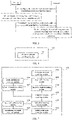
- the method for random access indication provided in embodiments of the disclosure may include the following steps 401-403.
- the terminal sends the radio link failure notification or the beam failure notification to the serving base station.
- the radio link failure notification is configured to notify the serving base station of a base station antenna panel where a radio link failure occurs, that is, to notify the serving base station of which antenna panel/antenna panels of the serving base station has occurred the radio link failure.
- the beam failure notification is configured to notify the serving base station of a base station antenna panel where a beam failure occurs, that is, to notify the serving base station of which antenna panel/antenna panels of the serving base station has occurred the beam failure.
- the radio link failure notification or the beam failure notification may include indication information of the base station antenna panel where the radio link failure or the beam failure occurs.
- the indication information of the base station antenna panel herein may be an identifier of the base station antenna panel, or may be represented by a reference signal group identifier and/or a reference signal identifier, and the reference signal may be a downlink reference signal or an uplink reference signal.
- the indication information is an identifier of the downlink reference signal
- the base station learns that a beam failure occurs on the TRP or the antenna panel for sending the downlink reference signal, in this case, the base station needs to send a downlink control signaling to the terminal in a new beam direction with the antenna panel.
- the serving base station sends a radio link recovery instruction or a beam recovery instruction to the terminal.
- the serving base station When the terminal sends the radio link failure notification to the serving base station, the serving base station sends the radio link recovery instruction to the terminal; when the terminal sends the beam failure notification to the serving base station, the serving base station sends the beam recovery instruction to the terminal.
- the radio link recovery instruction or the beam recovery instruction includes indication information of the target antenna panel and/or the target beam.
- the target antenna panel refers to an antenna panel used by the terminal to receive downlink information (for example, a downlink reference signal and/or a downlink control signaling) sent by the base station antenna panel where the radio link failure or the beam failure occurs.
- the indication information of the target antenna panel herein may be an identifier of the target antenna panel, or may be represented by a reference signal group identifier and/or a reference signal identifier, and the reference signal may be a downlink reference signal or an uplink reference signal.
- the terminal learns that the base station needs the terminal to initiate random access to the TRP or the antenna panel of the base station for sending the downlink reference signal with a new beam direction, so that the base station obtains a new beam direction for sending the downlink control signaling to the terminal.
- the terminal When the terminal does not send the random access preamble to the serving cell with the above target antenna panel, but for example, sends a scheduling request (SR) with a physical uplink control channel (PUCCH), or sends a medium access control (MAC) control element (CE) signaling with a physical uplink shared channel (PUSCH), or sends the random access preamble with other serving cells or other antenna panels, to notify the serving base station of the radio link failure or the beam failure of the base station antenna panel, then after receiving the radio link failure notification or the beam failure notification, the serving base station needs to notify the terminal to perform random access on the target antenna panel used when receiving downlink information (for example, the downlink reference signal and/or the downlink control signaling) sent by the base station antenna panel where the radio link failure or the beam failure occurs.
- the serving base station sends the radio link recovery instruction or the beam recovery instruction to the terminal, in which the radio link recovery instruction or the beam recovery instruction may include indication information of the target antenna panel.
- the radio link recovery instruction or the beam recovery instruction may be a Radio Resource Control (RRC) signaling, a MAC CE signaling or a downlink control information (DCI) signaling, which is not limited in embodiments of the present disclosure.
- RRC Radio Resource Control
- DCI downlink control information
- the terminal determines the target antenna panel and/or the target beam for sending the random access preamble based on the radio link recovery instruction or the beam recovery instruction.
- the terminal After receiving the radio link recovery instruction or the beam recovery instruction, the terminal can determine the target antenna panel and/or the target beam for sending the random access preamble based on this, and then send the random access preamble to the serving base station with the target antenna panel and/or the target beam, thereby initiating random access.
- the random access indication signaling is a secondary cell adding instruction configured to instruct the terminal to access a target secondary cell.
- the secondary cell adding instruction includes indication information of the target antenna panel and/or the target beam, so that the terminal initiates random access to the target base station (such as a base station to which the target secondary cell belongs) with the target antenna panel and/or the target beam, to access the target secondary cell.
- the method for random access indication provided in embodiments of the disclosure may include the following steps 501-503.
- the terminal sends a neighboring cell measurement report to the serving base station.
- the neighboring cell measurement report includes a measurement report of at least one neighboring cell.
- the measurement report of the neighboring cell is configured to indicate the radio signal quality of the neighboring cell.
- the measurement report of the neighboring cell may include: an identifier of the neighboring cell, a measurement value of the neighboring cell, and measurement object information.
- measurement report of the neighboring cell reference may be made to the above descriptions, which is not repeated here.
- the serving base station selects the target secondary cell from the at least one neighboring cell.
- the serving base station selects a neighboring cell with the optimal radio signal strength as the target secondary cell, based on the measurement values of respective neighboring cells.
- the serving base station sends the secondary cell adding instruction to the terminal.
- the secondary cell adding instruction is configured to instruct the terminal to access the target secondary cell.
- the secondary cell adding instruction includes an identifier of the target secondary cell.
- the secondary cell adding instruction further includes indication information of the target antenna panel and/or the target beam. For the form of the indication information of the target antenna panel and/or the target beam, reference may be made to descriptions in the above embodiments, which is not repeated here.
- the terminal determines the target antenna panel and/or the target beam for sending the random access preamble based on the secondary cell adding instruction.
- the terminal After receiving the secondary cell adding instruction, the terminal can determine the target secondary cell to which random access is initiated, and determine the target antenna panel and/or the target beam for sending the random access preamble, and send the random access preamble to the base station to which the target secondary cell belongs with the target antenna panel and/or the target beam, thereby initiating random access.
- the selection of the antenna panel is achieved when the terminal accesses the secondary cell, so that the terminal initiates random access to the secondary cell with a suitable antenna panel, thereby improving a success rate of accessing the secondary cell.
- the technical solution in the disclosure is described from the perspective of interaction between the terminal and the serving base station.
- the steps executed by the terminal may be independently implemented as a method for random access indication at a terminal side
- the steps executed by the serving base station may be independently implemented as a method for random access indication at a serving base station side.
- the apparatus embodiments of the disclosure may be configured to execute the method embodiments of the disclosure.
- the apparatus embodiments of the disclosure may be configured to execute the method embodiments of the disclosure.
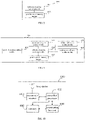
- FIG. 6 is a block diagram illustrating an apparatus for random access indication according to an example embodiment.
- the apparatus has functions for implementing the above method example on the serving base station side, which may be implemented by hardware or by hardware executing the corresponding software.
- the apparatus may be the above serving base station, or may be set in the serving base station.
- the apparatus 600 may include an indication signaling sending module 601.
- the indication signaling sending module 601 is configured to send a random access indication signaling, in which the random access indication signaling is configured to indicate to a terminal a target antenna panel and/or a target beam for sending a random access preamble.
- the random access indication signaling is a handover instruction, and the handover instruction is configured to instruct the terminal to hand over to a target cell.
- the apparatus 600 further includes: a measurement report receiving module 602, a target cell selecting module 603, a handover request sending module 604 and a handover response receiving module 605.
- the measurement report receiving module 602 is configured to receive an RRM measurement report sent by the terminal, in which the RRM measurement report includes a measurement report of at least one neighboring cell.
- the target cell selecting module 603 is configured to select the target cell from the at least one neighboring cell.
- the handover request sending module 604 is configured to send a handover request signaling to a target base station to which the target cell belongs, in which the handover request signaling includes a measurement report of the target cell.
- the handover response receiving module 605 is configured to receive a handover response signaling sent by the target base station, in which the handover response signaling includes indication information of the target antenna panel and/or the target beam.
- the measurement report of the neighboring cell includes: an identifier of the neighboring cell, a measurement value of the neighboring cell, and measurement object information.
- the measurement object information is configured to indicate a receiving antenna panel and/or a receiving beam used by the terminal to obtain the measurement value of the neighboring cell.
- the measurement object information includes: an identifier of the receiving antenna panel and/or an identifier of the receiving beam; or, an identifier of the receiving antenna panel and/or a first reference signal identifier, in which the first reference signal identifier is configured to indicate the receiving beam; or, a first reference signal group identifier and/or a first reference signal identifier, in which the first reference signal group identifier is configured to indicate the receiving antenna panel, and the first reference signal identifier is configured to indicate the receiving beam; or, a first reference signal identifier, in which the first reference signal identifier is configured to indicate the receiving antenna panel and/or the receiving beam.
- the handover request signaling further includes configuration information of an uplink reference signal used by the terminal for uplink measurement.
- the apparatus 600 further includes: a panel information receiving module 606 and a panel information sending module 607.
- the panel information receiving module 606 is configured to receive candidate panel information sent by the terminal, in which the candidate panel information is configured to indicate at least one candidate antenna panel for random access.
- the panel information sending module 607 is configured to send the candidate panel information to the target base station.
- the target antenna panel is selected from the at least one candidate antenna panel.
- the random access indication signaling is a radio link recovery instruction or a beam recovery instruction.
- the apparatus 600 further includes: a failure notification receiving module 608.
- the failure notification receiving module 608 is configured to receive a radio link failure notification or a beam failure notification sent by the terminal, in which the radio link failure notification is configured to notify the serving base station of a base station antenna panel where a radio link failure occurs, and the beam failure notification is configured to notify the serving base station of a base station antenna panel where a beam failure occurs.
- the random access indication signaling is a secondary cell adding instruction
- the secondary cell adding instruction is configured to instruct the terminal to access a target secondary cell.
- the apparatus 600 further includes: a neighboring cell report receiving module 609 and a secondary cell selecting module 610.
- the neighboring cell report receiving module 609 is configured to receive a neighboring cell measurement report sent by the terminal, in which the neighboring cell measurement report includes a measurement report of at least one neighboring cell.
- the secondary cell selecting module 610 is configured to select the target secondary cell from the at least one neighboring cell.
- the random access indication signaling includes: an identifier of the target antenna panel and/or an identifier of the target beam; or, an identifier of the target antenna panel and/or a second reference signal identifier, in which the second reference signal identifier is configured to indicate the target beam; or, a second reference signal group identifier and/or a second reference signal identifier, in which the second reference signal group identifier is configured to indicate the target antenna panel, and the second reference signal identifier is configured to indicate the target beam; or, a second reference signal identifier, in which the second reference signal identifier is configured to indicate the target antenna panel and/or the target beam.
- the random access indication signaling further includes indication information of an antenna panel and/or a beam configured to monitor an RAR after the terminal sends the random access preamble.
- the serving base station sends the random access indication signaling to the terminal, so that the terminal can determine the target antenna panel and/or the target beam for sending the random access preamble. Accordingly, in this way, when the terminal has a plurality of antenna panels, the terminal can accurately determine which antenna panel is used to initiate random access, thereby improving the accuracy and success rate of random access, and reducing the delay of random access.
- FIG. 8 is a block diagram illustrating an apparatus for random access indication according to another example embodiment.
- the apparatus may have functions for implementing the above method example on the terminal side, which may be implemented by hardware, or by hardware executing the corresponding software.
- the apparatus may be the above terminal, or may be set in the terminal.
- the apparatus 800 may include an indication signaling receiving module 801 and a panel beam determining module 802.
- the indication signaling receiving module 801 is configured to receive a random access indication signaling.
- the panel beam determining module 802 is configured to determine a target antenna panel and/or a target beam for sending a random access preamble based on the random access indication signaling.
- the random access indication signaling is a handover instruction, and the handover instruction is configured to instruct the terminal to hand over to a target cell.
- the apparatus 800 further includes: a measurement report sending module 803.
- the measurement report sending module 803 is configured to send a radio resource management (RRM) measurement report to a serving base station, in which the RRM measurement report includes a measurement report of at least one neighboring cell.
- RRM radio resource management
- the measurement report of the neighboring cell includes: an identifier of the neighboring cell, a measurement value of the neighboring cell, and measurement object information.
- the measurement object information is configured to indicate a receiving antenna panel and/or a receiving beam used by the terminal to obtain the measurement value of the neighboring cell.
- the apparatus 800 further includes: a panel information sending module 804.
- the panel information sending module 804 is configured to send candidate panel information to the serving base station.
- the candidate panel information indicates at least one candidate antenna panel for random access.
- the target antenna panel is selected from the at least one candidate antenna panel.
- the random access indication signaling is a radio link recovery instruction or a beam recovery instruction.
- the apparatus 800 further includes: a failure notification sending module 805.
- the failure notification sending module 8052 is configured to send a radio link failure notification or a beam failure notification to a serving base station, in which the radio link failure notification is configured to notify the serving base station of a base station antenna panel where a radio link failure occurs, and the beam failure notification is configured to notify the serving base station of a base station antenna panel where a beam failure occurs.
- the random access indication signaling is a secondary cell adding instruction
- the secondary cell adding instruction is configured to instruct the terminal to access a target secondary cell.
- the apparatus 800 further includes: a neighboring cell report sending module 806.
- the neighboring cell report sending module 806 is configured to send a neighboring cell measurement report to a serving base station, in which the neighboring cell measurement report includes a measurement report of at least one neighboring cell.
- the target secondary cell is selected from the at least one neighboring cell.
- the serving base station sends the random access indication signaling to the terminal, so that the terminal can determine the target antenna panel and/or the target beam for sending the random access preamble. Accordingly, in this way, when the terminal has a plurality of antenna panels, the terminal can accurately determine which antenna panel is used to initiate random access, thereby improving the accuracy and success rate of random access, and reducing the delay of random access.
- An example embodiment of the disclosure further provides an apparatus for random access indication.
- the apparatus may be applied to the above serving base station to implement the method for random access indication on the serving base station side in the disclosure.
- the apparatus may include a processor and a memory configured to store instructions executable by the processor.
- the processor is configured to: send a random access indication signaling, in which the random access indication signaling indicates a target antenna panel and/or a target beam for sending a random access preamble to a terminal.
- the random access indication signaling is a handover instruction, and the handover instruction is configured to instruct the terminal to hand over to a target cell.
- the processor is further configured to: receive an RRM measurement report sent by the terminal, in which the RRM measurement report includes a measurement report of at least one neighboring cell; select the target cell from the at least one neighboring cell; send a handover request signaling to a target base station to which the target cell belongs, in which the handover request signaling includes a measurement report of the target cell; and receive a handover response signaling sent by the target base station, in which the handover response signaling includes indication information of the target antenna panel and/or the target beam.
- the measurement report of the neighboring cell includes: an identifier of the neighboring cell, a measurement value of the neighboring cell, and measurement object information.
- the measurement object information is configured to indicate a receiving antenna panel and/or a receiving beam used by the terminal to obtain the measurement value of the neighboring cell.
- the measurement object information includes: an identifier of the receiving antenna panel and/or an identifier of the receiving beam; or, an identifier of the receiving antenna panel and/or a first reference signal identifier, in which the first reference signal identifier is configured to indicate the receiving beam; or, a first reference signal group identifier and/or a first reference signal identifier, in which the first reference signal group identifier is configured to indicate the receiving antenna panel, and the first reference signal identifier is configured to indicate the receiving beam; or, a first reference signal identifier, in which the first reference signal identifier is configured to indicate the receiving antenna panel and/or the receiving beam.
- the handover request signaling further includes configuration information of an uplink reference signal used by the terminal for uplink measurement.
- the processor is further configured to: receive candidate panel information sent by the terminal, in which the candidate panel information indicates at least one candidate antenna panel for random access; and send the candidate panel information to the target base station.
- the target antenna panel is selected from the at least one candidate antenna panel.
- the random access indication signaling is a radio link recovery instruction or a beam recovery instruction.
- the processor is further configured to: receive a radio link failure notification or a beam failure notification sent by the terminal, in which the radio link failure notification is configured to notify the serving base station of a base station antenna panel where a radio link failure occurs, and the beam failure notification is configured to notify the serving base station of a base station antenna panel where a beam failure occurs.
- the random access indication signaling is a secondary cell adding instruction
- the secondary cell adding instruction is configured to instruct the terminal to access a target secondary cell.
- the processor is further configured to: receive a neighboring cell measurement report sent by the terminal, in which the neighboring cell measurement report includes a measurement report of at least one neighboring cell; and select the target secondary cell from the at least one neighboring cell.
- the random access indication signaling includes: an identifier of the target antenna panel and/or an identifier of the target beam; or, an identifier of the target antenna panel and/or a second reference signal identifier, in which the second reference signal identifier is configured to indicate the target beam; or, a second reference signal group identifier and/or a second reference signal identifier, in which the second reference signal group identifier is configured to indicate the target antenna panel, and the second reference signal identifier is configured to indicate the target beam; or, a second reference signal identifier, in which the second reference signal identifier is configured to indicate the target antenna panel and/or the target beam.
- the random access indication signaling further includes: indication information of an antenna panel and/or a beam configured to monitor an RAR after the terminal sends the random access preamble.
- An example embodiment of the disclosure further provides an apparatus for random access indication.
- the apparatus may be applied to the above terminal to implement the method for random access indication on the terminal side in the disclosure.
- the apparatus may include a processor and a memory configured to store instructions executable by the processor.
- the processor is configured to: receive a random access indication signaling; and determine a target antenna panel and/or a target beam for sending a random access preamble based on the random access indication signaling.
- the random access indication signaling is a handover instruction, and the handover instruction is configured to instruct the terminal to be handed over to a target cell.
- the processor is further configured to: send an RRM measurement report to a serving base station, in which the RRM measurement report includes a measurement report of at least one neighboring cell; the measurement report of the neighboring cell includes: an identifier of the neighboring cell, a measurement value of the neighboring cell, and measurement object information, the measurement object information is configured to indicate a receiving antenna panel and/or a receiving beam used by the terminal to obtain the measurement value of the neighboring cell.
- the processor is further configured to: send candidate panel information to the serving base station, in which the candidate panel information is configured to indicate at least one candidate antenna panel for random access.
- the target antenna panel is selected from the at least one candidate antenna panel.
- the random access indication signaling is a radio link recovery instruction or a beam recovery instruction.
- the processor is further configured to: send a radio link failure notification or a beam failure notification to a serving base station; in which the radio link failure notification is configured to notify the serving base station of a base station antenna panel where a radio link failure occurs, and the beam failure notification is configured to notify the serving base station of a base station antenna panel where a beam failure occurs.
- the random access indication signaling is a secondary cell adding instruction
- the secondary cell adding instruction is configured to instruct the terminal to access a target secondary cell.
- the processor is further configured to: send a neighboring cell measurement report to a serving base station, in which the neighboring cell measurement report includes a measurement report of at least one neighboring cell; the target secondary cell is selected from the at least one neighboring cell.
- the base station and the terminal includes hardware structures and/or software modules to perform each function, in order to achieve the function.
- the units and algorithm steps of the examples described in connection with the embodiments disclosed herein may be implemented by hardware or a combination of hardware and computer software. Whether a certain function is performed by hardware or software depends on particular applications and design constraints of the technical solution. Those skilled in the art may implement the described functions for different particular applications in different ways, however, the implementation should not be considered beyond the scope of the technical solution in embodiments of the disclosure.
- FIG. 10 is a diagram illustrating a structure of a base station according to an example embodiment.
- the base station 1000 includes a transmitter/receiver 1001 and a processor 1002.
- the processor 1002 may also be a controller, and represented as "controller/processor 1002" in FIG. 10 .
- the transmitter/receiver 1001 is configured to support transmitting and receiving information between the base station and the terminal in the above embodiments, and support communication between the base station and other network entities.
- the processor 1002 executes various functions for communicating with the terminal. On an uplink, the uplink signal from the terminal is received via an antenna and demodulated by the receiver 1001 (for example, the high frequency signal is demodulated into a baseband signal), and further processed by the processor 1002 to recover service data and signaling information sent by the terminal.
- service data and signaling messages are processed by the processor 1002 and modulated by the transmitter 1001 (for example, the baseband signal is modulated into a high frequency signal) to generate a downlink signal and transmitted to a terminal via an antenna.
- the processor 1002 is further configured to execute various blocks at a base station side in the above method embodiments, and/or other blocks of the technical solutions described in embodiments of the present disclosure.
- the base station 1000 may further include a memory 1003 configured to store program codes and data of the base station 1000.
- the base station may further include a communication unit 1004.
- the communication unit 1004 is configured to support communication between a base station and other network devices (for example, a network device in a core network, etc.).
- the communication unit 1004 may be an NG-U interface configured to support a base station and a user plane function (UPF) entity for communication; or, the communication unit 1004 may be an NG-C interface configured to support an access and mobility management function entity for communication.
- UPF user plane function
- FIG. 10 only illustrates a simplified design of the base station 1000.
- the base station 1000 may include any number of transmitters, receivers, processors, controllers, memories, communication units, etc. and all base stations that may be implement embodiments of the disclosure are within the protection scope of embodiments of the disclosure.
- FIG. 11 is a diagram illustrating a structure of a terminal according to an example embodiment.
- the terminal 1100 includes a transmitter 1101, a receiver 1102 and a processor 1103.
- the processor 1103 may also be a controller, and represented as "a controller/processor 1103" in FIG. 11 .
- the terminal 1100 may further include a modem processor 1105 which may include an encoder 1106, a modulator 1107, a decoder 1108, and a demodulator 1109.
- the transmitter 1101 adjusts (for example, analog conversion, filter, amplify, and up-conversion, etc.) the output sample and generates an uplink signal transmitted to a base station via an antenna.
- the antenna receives a downlink signal transmitted by the base station.
- the receiver 1102 adjusts (for example, filter, amplify, down-conversion, and digitalize, etc.) signals received from the antenna and provides an input sample.
- the encoder 1106 receives service data and signaling messages to be sent on the uplink and processes (for example, format, encode, and interleave) them.
- the modulator 1107 further processes (for example, symbol mapping and modulation) encoded service data and signaling messages and provides an output sample.
- the demodulator 1109 processes (for example, demodulate) the input sample and provides symbol estimation.
- the decoder 1108 processes (for example, deinterleaving and decoding) the symbol estimation and provides decoded data and signaling message sent to the terminal 1100.
- the encoder 1106, the modulator 1107, the demodulator 1109, and the decoder 1108 may be implemented by a synthetic modem processor 1105.
- the units are processed based on radio access technologies (for example, 5G NR and access technologies of other evolved systems) employed by the radio access network. It should be noted that, when the terminal 1100 does not include the modem processor 1105, the functions of the modem processor 1105 may also be completed by the processor 1103.
- the processor 1103 controls and manages the actions of the terminal 1100, which is configured to execute the processing process executed by the terminal 1100 in the above embodiments of the disclosure.
- the processor 1103 is further configured to execute various blocks at a terminal side in the above method embodiments, and/or other blocks of the technical solutions described in embodiments of the disclosure.
- the terminal 1100 may further include a memory 1104 configured to store program codes and data of the terminal 1100.
- FIG. 11 only illustrates a simplified design of the terminal 1100.
- the terminal 1100 may include any number of transmitters, receivers, processors, modem processors, memories, etc. and all terminals that may be implement embodiments of the disclosure are within the protection scope of embodiments of the disclosure.
- Embodiments of the present disclosure further include a non-transitory computer readable storage medium with computer programs stored thereon.
- the computer programs are executed by the processor of the serving base station to implement the method for random access indication at the serving base station side.
- Embodiments of the present disclosure further include a non-transitory computer readable storage medium with computer programs stored thereon.
- the computer programs are executed by the processor of the terminal to implement the method for random access indication at the terminal side.
- the non-transitory computer readable storage medium may be a read-only memory (ROM), a random access memory (RAM), a CD-ROM, a magnetic tape, a floppy disk, an optical data storage device, etc.
- ROM read-only memory
- RAM random access memory
- CD-ROM compact disc-read only memory
- magnetic tape magnetic tape
- floppy disk magnetic tape
- optical data storage device etc.
Landscapes
- Engineering & Computer Science (AREA)
- Computer Networks & Wireless Communication (AREA)
- Signal Processing (AREA)
- Computer Security & Cryptography (AREA)
- Mobile Radio Communication Systems (AREA)
Applications Claiming Priority (1)
| Application Number | Priority Date | Filing Date | Title |
|---|---|---|---|
| PCT/CN2019/091601 WO2020252644A1 (fr) | 2019-06-17 | 2019-06-17 | Procédé et appareil d'indication d'accès aléatoire, et support de stockage |
Publications (3)
| Publication Number | Publication Date |
|---|---|
| EP3986073A1 true EP3986073A1 (fr) | 2022-04-20 |
| EP3986073A4 EP3986073A4 (fr) | 2022-06-15 |
| EP3986073B1 EP3986073B1 (fr) | 2025-09-10 |
Family
ID=68492767
Family Applications (1)
| Application Number | Title | Priority Date | Filing Date |
|---|---|---|---|
| EP19933490.5A Active EP3986073B1 (fr) | 2019-06-17 | 2019-06-17 | Procédé et appareil d'indication d'accès aléatoire, et support de stockage |
Country Status (8)
| Country | Link |
|---|---|
| US (1) | US20230098488A1 (fr) |
| EP (1) | EP3986073B1 (fr) |
| JP (1) | JP7335361B2 (fr) |
| KR (1) | KR20220019774A (fr) |
| CN (2) | CN110463264B (fr) |
| BR (1) | BR112021025182A2 (fr) |
| ES (1) | ES3053064T3 (fr) |
| WO (1) | WO2020252644A1 (fr) |
Cited By (1)
| Publication number | Priority date | Publication date | Assignee | Title |
|---|---|---|---|---|
| WO2023104800A1 (fr) * | 2021-12-10 | 2023-06-15 | Nokia Technologies Oy | Mesure de diversité |
Families Citing this family (19)
| Publication number | Priority date | Publication date | Assignee | Title |
|---|---|---|---|---|
| CN110463264B (zh) * | 2019-06-17 | 2021-10-08 | 北京小米移动软件有限公司 | 随机接入指示方法、装置及存储介质 |
| CN112312416B (zh) | 2019-07-26 | 2023-04-04 | 华为技术有限公司 | 一种通信方法及通信装置 |
| US11330668B2 (en) | 2019-11-22 | 2022-05-10 | Apple Inc. | 5G NR FR2 beam management enhancements |
| US12426119B2 (en) | 2019-12-13 | 2025-09-23 | Beijing Xiaomi Mobile Software Co., Ltd. | Method for communication processing |
| CN113260002B (zh) * | 2020-02-12 | 2022-05-24 | 维沃移动通信有限公司 | 小区切换方法和设备 |
| CN113271604B (zh) * | 2020-02-14 | 2023-03-24 | 展讯通信(上海)有限公司 | 波束失败恢复方法、终端设备、网络设备及存储介质 |
| CN113518471B (zh) * | 2020-04-10 | 2025-01-10 | 华为技术有限公司 | 通信方法和通信装置 |
| US20230232444A1 (en) * | 2020-06-03 | 2023-07-20 | Beijing Xiaomi Mobile Software Co., Ltd. | Method and apparatus for determining random access configuration, communication device, and storage medium |
| CN114070369B (zh) * | 2020-08-01 | 2025-05-06 | 华为技术有限公司 | 一种天线选择的方法及装置 |
| US20230379070A1 (en) * | 2020-10-14 | 2023-11-23 | Beijing Xiaomi Mobile Software Co., Ltd. | Method for sending and receiving beam measurement result report, and device |
| WO2022096543A1 (fr) * | 2020-11-09 | 2022-05-12 | Nokia Technologies Oy | Procédés et dispositifs de mesure de cellule dans un réseau cellulaire |
| US20220225188A1 (en) * | 2021-01-14 | 2022-07-14 | Qualcomm Incorporated | Techniques for non-serving cell reporting in wireless communications systems |
| WO2023272703A1 (fr) * | 2021-07-01 | 2023-01-05 | Apple Inc. | Procédé de mappage d'antenne de signal de sondage de livre de codes (srs) pour améliorer les performances de liaison montante |
| US12010571B2 (en) * | 2021-09-29 | 2024-06-11 | Nokia Technologies Oy | Spectral efficiency prediction with artificial intelligence for enhancing carrier aggregation and proactive radio resource management |
| CN116390262B (zh) * | 2021-12-30 | 2026-04-21 | 联发科技股份有限公司 | 毫米波系统的快速连线及维持的方法及其装置 |
| US20250358648A1 (en) * | 2022-06-20 | 2025-11-20 | Lg Electronics Inc. | Method of managing multiple receive chains |
| CN116170826A (zh) * | 2023-01-18 | 2023-05-26 | 中国信息通信研究院 | 一种物理层移动性波束失败恢复的指示方法和设备 |
| CN120034985A (zh) * | 2023-11-23 | 2025-05-23 | 华为技术有限公司 | 一种随机接入方法、装置及存储介质 |
| WO2025220230A1 (fr) * | 2024-04-19 | 2025-10-23 | 株式会社Nttドコモ | Nœud de communication sans fil et procédé de communication sans fil |
Family Cites Families (42)
| Publication number | Priority date | Publication date | Assignee | Title |
|---|---|---|---|---|
| CN103096372B (zh) * | 2011-11-02 | 2016-04-06 | 上海贝尔股份有限公司 | 一种用于在切换过程中计算波束成形因子的方法与设备 |
| CN109890054B (zh) * | 2012-01-21 | 2023-12-15 | 华为技术有限公司 | 无线通信系统中测量增强的方法和装置 |
| CN109560912A (zh) * | 2012-03-19 | 2019-04-02 | 上海诺基亚贝尔股份有限公司 | 随机接入从小区的方法和接收数据的方法 |
| CN104969485A (zh) * | 2013-02-14 | 2015-10-07 | 诺基亚通信公司 | 协作多点通信中的天线选择 |
| WO2015066847A1 (fr) * | 2013-11-06 | 2015-05-14 | 华为技术有限公司 | Procédé et appareil de détermination d'antenne de réception |
| KR102171561B1 (ko) * | 2014-04-07 | 2020-10-29 | 삼성전자주식회사 | 빔포밍 기반 셀룰러 시스템의 상향링크 빔 추적 방법 및 장치 |
| CN105637939B (zh) * | 2014-09-23 | 2020-03-20 | 华为技术有限公司 | 终端、基站、基站控制器及毫米波蜂窝通信方法 |
| KR102341215B1 (ko) * | 2014-11-26 | 2021-12-20 | 삼성전자주식회사 | 빔포밍을 이용하는 이동 통신 시스템에서의 랜덤 액세스 기법 |
| KR102363547B1 (ko) * | 2014-11-26 | 2022-02-17 | 삼성전자주식회사 | 빔포밍을 이용한 통신 방법 및 장치 |
| CN107925605B (zh) * | 2015-09-10 | 2021-01-15 | 苹果公司 | 针对5g rat中的基于波束的无小区操作的随机接入过程 |
| US10270514B2 (en) * | 2016-01-14 | 2019-04-23 | Samsung Electronics Co., Ltd. | Method and apparatus for generating beam measurement information in a wireless communication system |
| EP3473048B1 (fr) * | 2016-06-15 | 2024-03-27 | InterDigital Patent Holdings, Inc. | Procédures d'accès aléatoire dans des réseaux de prochaine génération |
| CN107635242B (zh) * | 2016-07-18 | 2021-01-15 | 华硕电脑股份有限公司 | 无线通信系统中随机接入的方法及装置 |
| US10368373B2 (en) * | 2016-07-25 | 2019-07-30 | Qualcomm Incorporated | Beam selection and refinement during a random access channel (RACH) procedure |
| KR102512849B1 (ko) * | 2016-09-29 | 2023-03-24 | 삼성전자 주식회사 | 측정을 수행하기 위한 장치 및 방법 |
| WO2018063436A1 (fr) * | 2016-09-29 | 2018-04-05 | Intel IP Corporation | Rapport de mesure comportant un nombre de faisceaux disponibles |
| WO2018058512A1 (fr) * | 2016-09-30 | 2018-04-05 | Telefonaktiebolaget Lm Ericsson (Publ) | Procédés et systèmes pour une mobilité basée sur des mesurages |
| US10728808B2 (en) * | 2016-09-30 | 2020-07-28 | Telefonaktiebolaget Lm Ericsson (Publ) | Methods and arrangements for measurement based mobility |
| US10687255B2 (en) * | 2016-10-06 | 2020-06-16 | Mitsubishi Electric Corporation | Beam transmission/reception method, base station, terminal, and wireless communication system |
| CN110115064B (zh) * | 2016-11-04 | 2021-12-07 | 瑞典爱立信有限公司 | 标识用于接入无线切换的目标小区的波束的方法和设备 |
| CN108023623B (zh) * | 2016-11-04 | 2022-05-27 | 维沃移动通信有限公司 | 一种终端信息上报、获取方法、终端及基站 |
| CN108282838B (zh) * | 2017-01-06 | 2019-10-29 | 维沃移动通信有限公司 | 一种波束测量方法、源网络侧设备、用户终端和系统 |
| CN108347749B (zh) * | 2017-01-24 | 2021-01-15 | 中国移动通信有限公司研究院 | 一种切换方法、用户设备及基站 |
| CN110226343B (zh) * | 2017-03-24 | 2021-11-09 | 瑞典爱立信有限公司 | 无线设备、无线电网络节点以及在其中执行的用于处理无线通信网络中的通信的方法 |
| TWI693841B (zh) * | 2017-03-24 | 2020-05-11 | 聯發科技股份有限公司 | 發送測量報告的方法和設備 |
| JP6793420B2 (ja) * | 2017-03-31 | 2020-12-02 | 深▲せん▼前海達闥云端智能科技有限公司Cloudminds (Shenzhen) Robotics Systems Co.,Ltd. | セル切り替え方法および装置 |
| CN107223361B (zh) * | 2017-05-05 | 2021-09-28 | 北京小米移动软件有限公司 | 控制随机接入网络的方法、用户设备及基站 |
| EP3646636B1 (fr) * | 2017-06-27 | 2024-11-06 | Telefonaktiebolaget LM Ericsson (publ) | Dispositif de communication sans fil et procédé de transfert basé sur un faisceau commandé par le réseau dans nr |
| CN109302720B (zh) * | 2017-07-25 | 2021-03-23 | 华为技术有限公司 | 一种选择波束的方法及设备 |
| US10887939B2 (en) * | 2017-08-10 | 2021-01-05 | Comcast Cable Communications, Llc | Transmission power control for beam failure recovery requests |
| CN109391993B (zh) * | 2017-08-10 | 2021-01-08 | 维沃移动通信有限公司 | 一种波束报告的发送方法及终端 |
| WO2019028736A1 (fr) * | 2017-08-10 | 2019-02-14 | Mediatek Singapore Pte. Ltd. | Appareil et mécanisme de transmission d'une demande de reprise après défaillance de faisceau dans un système nr fonctionnant avec plusieurs faisceaux |
| WO2019030731A1 (fr) * | 2017-08-11 | 2019-02-14 | Telefonaktiebolaget Lm Ericsson (Publ) | Sélection de faisceaux à inclure dans le rapport de mesure |
| EP3494726B1 (fr) * | 2017-09-27 | 2021-03-10 | Guangdong Oppo Mobile Telecommunications Corp., Ltd. | Procédé d'indication d'informations et dispositif terminal |
| CN117715231A (zh) * | 2017-10-30 | 2024-03-15 | 北京小米移动软件有限公司 | 随机接入方法及装置 |
| CN109788576B (zh) * | 2017-11-15 | 2020-10-23 | 华为技术有限公司 | 随机接入方法、装置及设备 |
| CN108934020B (zh) * | 2018-05-24 | 2021-10-08 | 广州海格通信集团股份有限公司 | 基于窄带波束定向天线的微波网络信道接入方法及系统 |
| CN109076556B (zh) * | 2018-07-25 | 2019-11-15 | 北京小米移动软件有限公司 | 随机接入方法、装置、电子设备和计算机可读存储介质 |
| US12108456B2 (en) * | 2018-08-07 | 2024-10-01 | Beijing Xiaomi Mobile Software Co., Ltd. | Information reporting method and apparatus, and terminal and storage medium |
| US12028144B2 (en) * | 2018-09-10 | 2024-07-02 | Beijing Xiaomi Mobile Software Co., Ltd. | Method and device for reporting beam failure of secondary serving cell, and storage medium |
| US12074814B2 (en) * | 2018-09-27 | 2024-08-27 | Beijing Xiaomi Mobile Software Co., Ltd. | Measurement configuration method, apparatus, devices, system, and storage medium |
| CN110463264B (zh) * | 2019-06-17 | 2021-10-08 | 北京小米移动软件有限公司 | 随机接入指示方法、装置及存储介质 |
-
2019
- 2019-06-17 CN CN201980001077.1A patent/CN110463264B/zh active Active
- 2019-06-17 CN CN202111044069.0A patent/CN113747531B/zh active Active
- 2019-06-17 ES ES19933490T patent/ES3053064T3/es active Active
- 2019-06-17 BR BR112021025182A patent/BR112021025182A2/pt unknown
- 2019-06-17 WO PCT/CN2019/091601 patent/WO2020252644A1/fr not_active Ceased
- 2019-06-17 US US17/619,034 patent/US20230098488A1/en active Pending
- 2019-06-17 JP JP2021572643A patent/JP7335361B2/ja active Active
- 2019-06-17 EP EP19933490.5A patent/EP3986073B1/fr active Active
- 2019-06-17 KR KR1020227000654A patent/KR20220019774A/ko not_active Ceased
Cited By (1)
| Publication number | Priority date | Publication date | Assignee | Title |
|---|---|---|---|---|
| WO2023104800A1 (fr) * | 2021-12-10 | 2023-06-15 | Nokia Technologies Oy | Mesure de diversité |
Also Published As
| Publication number | Publication date |
|---|---|
| US20230098488A1 (en) | 2023-03-30 |
| WO2020252644A1 (fr) | 2020-12-24 |
| CN110463264B (zh) | 2021-10-08 |
| ES3053064T3 (en) | 2026-01-19 |
| JP2022537122A (ja) | 2022-08-24 |
| JP7335361B2 (ja) | 2023-08-29 |
| CN110463264A (zh) | 2019-11-15 |
| BR112021025182A2 (pt) | 2022-02-01 |
| CN113747531B (zh) | 2024-06-14 |
| KR20220019774A (ko) | 2022-02-17 |
| EP3986073A4 (fr) | 2022-06-15 |
| EP3986073B1 (fr) | 2025-09-10 |
| CN113747531A (zh) | 2021-12-03 |
Similar Documents
| Publication | Publication Date | Title |
|---|---|---|
| EP3986073B1 (fr) | Procédé et appareil d'indication d'accès aléatoire, et support de stockage | |
| US11805436B2 (en) | Method, and device for reporting beam measurement report | |
| US20250016597A1 (en) | Method and device for reporting beam failure, and storage medium | |
| US11337189B2 (en) | Terminal, network device, and communication method to improve transmission reliability | |
| US11424797B2 (en) | Data transmission method and apparatus | |
| US20240381356A1 (en) | Downlink data receiving method and device, downlink data transmitting method and device, and storage medium | |
| KR20210110377A (ko) | 다운 링크 데이터 수신 방법, 송신 방법, 장치 및 저장 매체 | |
| KR102947822B1 (ko) | 비면허 스펙트럼에서의 bwp 전환 지시 방법, 장치 및 저장 매체 | |
| CN110291814A (zh) | Bwp切换方法、装置及存储介质 | |
| CN109314628B (zh) | Rs集合的配置方法、装置、设备及存储介质 | |
| JP2024081688A (ja) | ワイヤレス通信におけるリンク回復 | |
| US20250167921A1 (en) | Rate matching method and apparatus | |
| RU2788396C1 (ru) | Способ и устройство индикации произвольного доступа и носитель данных |
Legal Events
| Date | Code | Title | Description |
|---|---|---|---|
| STAA | Information on the status of an ep patent application or granted ep patent |
Free format text: STATUS: THE INTERNATIONAL PUBLICATION HAS BEEN MADE |
|
| PUAI | Public reference made under article 153(3) epc to a published international application that has entered the european phase |
Free format text: ORIGINAL CODE: 0009012 |
|
| STAA | Information on the status of an ep patent application or granted ep patent |
Free format text: STATUS: REQUEST FOR EXAMINATION WAS MADE |
|
| 17P | Request for examination filed |
Effective date: 20220110 |
|
| AK | Designated contracting states |
Kind code of ref document: A1 Designated state(s): AL AT BE BG CH CY CZ DE DK EE ES FI FR GB GR HR HU IE IS IT LI LT LU LV MC MK MT NL NO PL PT RO RS SE SI SK SM TR |
|
| A4 | Supplementary search report drawn up and despatched |
Effective date: 20220518 |
|
| RIC1 | Information provided on ipc code assigned before grant |
Ipc: H04W 74/00 20090101AFI20220512BHEP |
|
| DAV | Request for validation of the european patent (deleted) | ||
| DAX | Request for extension of the european patent (deleted) | ||
| STAA | Information on the status of an ep patent application or granted ep patent |
Free format text: STATUS: EXAMINATION IS IN PROGRESS |
|
| 17Q | First examination report despatched |
Effective date: 20240207 |
|
| GRAP | Despatch of communication of intention to grant a patent |
Free format text: ORIGINAL CODE: EPIDOSNIGR1 |
|
| STAA | Information on the status of an ep patent application or granted ep patent |
Free format text: STATUS: GRANT OF PATENT IS INTENDED |
|
| RIC1 | Information provided on ipc code assigned before grant |
Ipc: H04B 7/08 20060101ALN20250312BHEP Ipc: H04B 7/06 20060101ALN20250312BHEP Ipc: H04W 74/0833 20240101ALI20250312BHEP Ipc: H04W 36/08 20090101ALI20250312BHEP Ipc: H04W 36/00 20090101ALI20250312BHEP Ipc: H04W 48/12 20090101ALI20250312BHEP Ipc: H04W 74/00 20090101AFI20250312BHEP |
|
| INTG | Intention to grant announced |
Effective date: 20250402 |
|
| GRAS | Grant fee paid |
Free format text: ORIGINAL CODE: EPIDOSNIGR3 |
|
| GRAA | (expected) grant |
Free format text: ORIGINAL CODE: 0009210 |
|
| STAA | Information on the status of an ep patent application or granted ep patent |
Free format text: STATUS: THE PATENT HAS BEEN GRANTED |
|
| P01 | Opt-out of the competence of the unified patent court (upc) registered |
Free format text: CASE NUMBER: UPC_APP_1313_3986073/2025 Effective date: 20250729 |
|
| AK | Designated contracting states |
Kind code of ref document: B1 Designated state(s): AL AT BE BG CH CY CZ DE DK EE ES FI FR GB GR HR HU IE IS IT LI LT LU LV MC MK MT NL NO PL PT RO RS SE SI SK SM TR |
|
| REG | Reference to a national code |
Ref country code: GB Ref legal event code: FG4D |
|
| REG | Reference to a national code |
Ref country code: CH Ref legal event code: EP |
|
| REG | Reference to a national code |
Ref country code: DE Ref legal event code: R096 Ref document number: 602019075693 Country of ref document: DE |
|
| REG | Reference to a national code |
Ref country code: IE Ref legal event code: FG4D |
|
| REG | Reference to a national code |
Ref country code: NL Ref legal event code: FP |
|
| PG25 | Lapsed in a contracting state [announced via postgrant information from national office to epo] |
Ref country code: NO Free format text: LAPSE BECAUSE OF FAILURE TO SUBMIT A TRANSLATION OF THE DESCRIPTION OR TO PAY THE FEE WITHIN THE PRESCRIBED TIME-LIMIT Effective date: 20251210 |
|
| REG | Reference to a national code |
Ref country code: LT Ref legal event code: MG9D |
|
| PG25 | Lapsed in a contracting state [announced via postgrant information from national office to epo] |
Ref country code: FI Free format text: LAPSE BECAUSE OF FAILURE TO SUBMIT A TRANSLATION OF THE DESCRIPTION OR TO PAY THE FEE WITHIN THE PRESCRIBED TIME-LIMIT Effective date: 20250910 |
|
| PG25 | Lapsed in a contracting state [announced via postgrant information from national office to epo] |
Ref country code: HR Free format text: LAPSE BECAUSE OF FAILURE TO SUBMIT A TRANSLATION OF THE DESCRIPTION OR TO PAY THE FEE WITHIN THE PRESCRIBED TIME-LIMIT Effective date: 20250910 |
|
| PG25 | Lapsed in a contracting state [announced via postgrant information from national office to epo] |
Ref country code: GR Free format text: LAPSE BECAUSE OF FAILURE TO SUBMIT A TRANSLATION OF THE DESCRIPTION OR TO PAY THE FEE WITHIN THE PRESCRIBED TIME-LIMIT Effective date: 20251211 |
|
| REG | Reference to a national code |
Ref country code: ES Ref legal event code: FG2A Ref document number: 3053064 Country of ref document: ES Kind code of ref document: T3 Effective date: 20260119 |
|
| PG25 | Lapsed in a contracting state [announced via postgrant information from national office to epo] |
Ref country code: SE Free format text: LAPSE BECAUSE OF FAILURE TO SUBMIT A TRANSLATION OF THE DESCRIPTION OR TO PAY THE FEE WITHIN THE PRESCRIBED TIME-LIMIT Effective date: 20250910 |
|
| PG25 | Lapsed in a contracting state [announced via postgrant information from national office to epo] |
Ref country code: LV Free format text: LAPSE BECAUSE OF FAILURE TO SUBMIT A TRANSLATION OF THE DESCRIPTION OR TO PAY THE FEE WITHIN THE PRESCRIBED TIME-LIMIT Effective date: 20250910 |
|
| PG25 | Lapsed in a contracting state [announced via postgrant information from national office to epo] |
Ref country code: BG Free format text: LAPSE BECAUSE OF FAILURE TO SUBMIT A TRANSLATION OF THE DESCRIPTION OR TO PAY THE FEE WITHIN THE PRESCRIBED TIME-LIMIT Effective date: 20250910 Ref country code: PL Free format text: LAPSE BECAUSE OF FAILURE TO SUBMIT A TRANSLATION OF THE DESCRIPTION OR TO PAY THE FEE WITHIN THE PRESCRIBED TIME-LIMIT Effective date: 20250910 |
|
| PG25 | Lapsed in a contracting state [announced via postgrant information from national office to epo] |
Ref country code: RS Free format text: LAPSE BECAUSE OF FAILURE TO SUBMIT A TRANSLATION OF THE DESCRIPTION OR TO PAY THE FEE WITHIN THE PRESCRIBED TIME-LIMIT Effective date: 20251210 |
|
| REG | Reference to a national code |
Ref country code: AT Ref legal event code: MK05 Ref document number: 1837329 Country of ref document: AT Kind code of ref document: T Effective date: 20250910 |
|
| PG25 | Lapsed in a contracting state [announced via postgrant information from national office to epo] |
Ref country code: SM Free format text: LAPSE BECAUSE OF FAILURE TO SUBMIT A TRANSLATION OF THE DESCRIPTION OR TO PAY THE FEE WITHIN THE PRESCRIBED TIME-LIMIT Effective date: 20250910 |
|
| PG25 | Lapsed in a contracting state [announced via postgrant information from national office to epo] |
Ref country code: AT Free format text: LAPSE BECAUSE OF FAILURE TO SUBMIT A TRANSLATION OF THE DESCRIPTION OR TO PAY THE FEE WITHIN THE PRESCRIBED TIME-LIMIT Effective date: 20250910 |
|
| PG25 | Lapsed in a contracting state [announced via postgrant information from national office to epo] |
Ref country code: IS Free format text: LAPSE BECAUSE OF FAILURE TO SUBMIT A TRANSLATION OF THE DESCRIPTION OR TO PAY THE FEE WITHIN THE PRESCRIBED TIME-LIMIT Effective date: 20260110 |
|
| PG25 | Lapsed in a contracting state [announced via postgrant information from national office to epo] |
Ref country code: CZ Free format text: LAPSE BECAUSE OF FAILURE TO SUBMIT A TRANSLATION OF THE DESCRIPTION OR TO PAY THE FEE WITHIN THE PRESCRIBED TIME-LIMIT Effective date: 20250910 Ref country code: PT Free format text: LAPSE BECAUSE OF FAILURE TO SUBMIT A TRANSLATION OF THE DESCRIPTION OR TO PAY THE FEE WITHIN THE PRESCRIBED TIME-LIMIT Effective date: 20260112 |
|
| PG25 | Lapsed in a contracting state [announced via postgrant information from national office to epo] |
Ref country code: EE Free format text: LAPSE BECAUSE OF FAILURE TO SUBMIT A TRANSLATION OF THE DESCRIPTION OR TO PAY THE FEE WITHIN THE PRESCRIBED TIME-LIMIT Effective date: 20250910 Ref country code: SK Free format text: LAPSE BECAUSE OF FAILURE TO SUBMIT A TRANSLATION OF THE DESCRIPTION OR TO PAY THE FEE WITHIN THE PRESCRIBED TIME-LIMIT Effective date: 20250910 |