EP3989081A1 - Procédé et dispositif pour publier un contrat intelligent - Google Patents
Procédé et dispositif pour publier un contrat intelligent Download PDFInfo
- Publication number
- EP3989081A1 EP3989081A1 EP20868054.6A EP20868054A EP3989081A1 EP 3989081 A1 EP3989081 A1 EP 3989081A1 EP 20868054 A EP20868054 A EP 20868054A EP 3989081 A1 EP3989081 A1 EP 3989081A1
- Authority
- EP
- European Patent Office
- Prior art keywords
- smart contract
- function
- preset
- determining
- verification data
- Prior art date
- Legal status (The legal status is an assumption and is not a legal conclusion. Google has not performed a legal analysis and makes no representation as to the accuracy of the status listed.)
- Granted
Links
Images


Classifications
-
- H—ELECTRICITY
- H04—ELECTRIC COMMUNICATION TECHNIQUE
- H04L—TRANSMISSION OF DIGITAL INFORMATION, e.g. TELEGRAPHIC COMMUNICATION
- H04L9/00—Cryptographic mechanisms or cryptographic arrangements for secret or secure communications; Network security protocols
- H04L9/32—Cryptographic mechanisms or cryptographic arrangements for secret or secure communications; Network security protocols including means for verifying the identity or authority of a user of the system or for message authentication, e.g. authorization, entity authentication, data integrity or data verification, non-repudiation, key authentication or verification of credentials
- H04L9/3236—Cryptographic mechanisms or cryptographic arrangements for secret or secure communications; Network security protocols including means for verifying the identity or authority of a user of the system or for message authentication, e.g. authorization, entity authentication, data integrity or data verification, non-repudiation, key authentication or verification of credentials using cryptographic hash functions
-
- G—PHYSICS
- G06—COMPUTING OR CALCULATING; COUNTING
- G06F—ELECTRIC DIGITAL DATA PROCESSING
- G06F16/00—Information retrieval; Database structures therefor; File system structures therefor
- G06F16/20—Information retrieval; Database structures therefor; File system structures therefor of structured data, e.g. relational data
- G06F16/27—Replication, distribution or synchronisation of data between databases or within a distributed database system; Distributed database system architectures therefor
-
- G—PHYSICS
- G06—COMPUTING OR CALCULATING; COUNTING
- G06F—ELECTRIC DIGITAL DATA PROCESSING
- G06F21/00—Security arrangements for protecting computers, components thereof, programs or data against unauthorised activity
- G06F21/60—Protecting data
- G06F21/64—Protecting data integrity, e.g. using checksums, certificates or signatures
-
- G—PHYSICS
- G06—COMPUTING OR CALCULATING; COUNTING
- G06F—ELECTRIC DIGITAL DATA PROCESSING
- G06F21/00—Security arrangements for protecting computers, components thereof, programs or data against unauthorised activity
- G06F21/50—Monitoring users, programs or devices to maintain the integrity of platforms, e.g. of processors, firmware or operating systems
- G06F21/55—Detecting local intrusion or implementing counter-measures
- G06F21/56—Computer malware detection or handling, e.g. anti-virus arrangements
- G06F21/562—Static detection
- G06F21/563—Static detection by source code analysis
-
- G—PHYSICS
- G06—COMPUTING OR CALCULATING; COUNTING
- G06Q—INFORMATION AND COMMUNICATION TECHNOLOGY [ICT] SPECIALLY ADAPTED FOR ADMINISTRATIVE, COMMERCIAL, FINANCIAL, MANAGERIAL OR SUPERVISORY PURPOSES; SYSTEMS OR METHODS SPECIALLY ADAPTED FOR ADMINISTRATIVE, COMMERCIAL, FINANCIAL, MANAGERIAL OR SUPERVISORY PURPOSES, NOT OTHERWISE PROVIDED FOR
- G06Q40/00—Finance; Insurance; Tax strategies; Processing of corporate or income taxes
- G06Q40/04—Trading; Exchange, e.g. stocks, commodities, derivatives or currency exchange
-
- H—ELECTRICITY
- H04—ELECTRIC COMMUNICATION TECHNIQUE
- H04L—TRANSMISSION OF DIGITAL INFORMATION, e.g. TELEGRAPHIC COMMUNICATION
- H04L9/00—Cryptographic mechanisms or cryptographic arrangements for secret or secure communications; Network security protocols
- H04L9/50—Cryptographic mechanisms or cryptographic arrangements for secret or secure communications; Network security protocols using hash chains, e.g. blockchains or hash trees
-
- G—PHYSICS
- G06—COMPUTING OR CALCULATING; COUNTING
- G06F—ELECTRIC DIGITAL DATA PROCESSING
- G06F11/00—Error detection; Error correction; Monitoring
- G06F11/36—Prevention of errors by analysis, debugging or testing of software
- G06F11/3604—Analysis of software for verifying properties of programs
-
- G—PHYSICS
- G06—COMPUTING OR CALCULATING; COUNTING
- G06Q—INFORMATION AND COMMUNICATION TECHNOLOGY [ICT] SPECIALLY ADAPTED FOR ADMINISTRATIVE, COMMERCIAL, FINANCIAL, MANAGERIAL OR SUPERVISORY PURPOSES; SYSTEMS OR METHODS SPECIALLY ADAPTED FOR ADMINISTRATIVE, COMMERCIAL, FINANCIAL, MANAGERIAL OR SUPERVISORY PURPOSES, NOT OTHERWISE PROVIDED FOR
- G06Q2220/00—Business processing using cryptography
- G06Q2220/10—Usage protection of distributed data files
Definitions
- Embodiments of the present disclosure relate to the technical field of computers, and specifically to a method for issuing a smart contract and an apparatus for issuing a smart contract.
- the smart contract is a computer protocol for spreading, verifying, or executing a contract by an information-based approach.
- the smart contract allows for trusted transactions without a third party, which are traceable and irreversible.
- Embodiments of the present disclosure present a method for issuing a smart contract and an apparatus for issuing a smart contract.
- an embodiment of the present disclosure provides a method for issuing a smart contract, including: acquiring the smart contract; determining whether the smart contract includes a preset function; generating, in response to determining that the smart contract does not include the preset function, verification data of the smart contract based on a proof-of-work technology; and sending a request for issuing the smart contract based on the verification data.
- the preset function includes a function damaging the security of a blockchain system.
- the method further includes: outputting, in response to determining that the smart contract includes the preset function, a prompt message to prompt the smart contract being abnormal.
- the preset function includes at least one of: a function using a time-varying variable, a function executing an input/output (I/O) operation of a file, a function invoking a script to control a system, a function executing a network-related operation, or a function controlling an environment variable of a system.
- I/O input/output
- the generating the verification data of the smart contract based on the proof-of-work technology includes: generating the verification data of the smart contract based on the proof-of-work technology and based on identification data of the smart contract, where the identification data includes at least one of: a random array and a preset identifier of a blockchain system.
- the generating the verification data of the smart contract based on the proof-of-work technology and based on the identification data of the smart contract includes: executing the following computing steps: performing a hash operation on the identification data and the smart contract to obtain a computing result; determining whether the obtained computing result meets a preset workload requirement; determining, in response to determining that the obtained computing result meets the preset workload requirement, the obtained computing result as the verification data of the smart contract; and continuing, in response to determining that the obtained computing result does not meet the preset workload requirement, to execute the computing steps.
- the generating the verification data of the smart contract based on the proof-of-work technology and based on the identification data of the smart contract includes: generating, in response to determining that the smart contract is an officially issued smart contract, the verification data of the smart contract based on the proof-of-work technology and based on the identification data of the smart contract.
- the determining whether the smart contract includes the preset function includes: determining whether a target custom function in the smart contract includes the preset function, where the target custom function includes a function in the smart contract except for a library function and a preset inspection-free function.
- an embodiment of the present disclosure provides an apparatus for issuing a smart contract, including: an acquiring unit configured to acquire the smart contract; a determining unit configured to determine whether the smart contract includes a preset function; a generating unit configured to generate, in response to determining that the smart contract does not include the preset function, verification data of the smart contract based on a proof-of-work technology; and a sending unit configured to send a request for issuing the smart contract based on the verification data.
- the preset function includes a function damaging the security of a blockchain system.
- the apparatus further includes: an output unit configured to output, in response to determining that the smart contract includes the preset function, a prompt message to prompt the smart contract being abnormal.
- the preset function includes at least one of: a function using a time-varying variable, a function executing an input/output (I/O) operation of a file, a function invoking a script to control a system, a function executing a network-related operation, or a function controlling an environment variable of a system.
- I/O input/output
- the generating unit is further configured to generate the verification data of the smart contract based on the proof-of-work technology and based on identification data of the smart contract, where the identification data includes at least one of: a random array and a preset identifier of a blockchain system.
- the generating unit is further configured to execute the following computing steps: performing a hash operation on the identification data and the smart contract to obtain a computing result; determining whether the obtained computing result meets a preset workload requirement; determining, in response to determining that the obtained computing result meets the preset workload requirement, the obtained computing result as the verification data of the smart contract; and continuing, in response to determining that the obtained computing result does not meet the preset workload requirement, to execute the computing steps.
- the generating unit is further configured to generate, in response to determining that the smart contract is an officially issued smart contract, the verification data of the smart contract based on the proof-of-work technology and based on the identification data.
- the determining unit is further configured to determine whether a target custom function in the smart contract includes the preset function, where the target custom function includes a function in the smart contract except for a library function and a preset inspection-free function.
- an embodiment of the present disclosure provides a terminal device, including: one or more processors; and a storage apparatus configured to store one or more programs; where the one or more programs, when executed by the one or more processors, cause the one or more processors to implement the method according to any one implementation in the first aspect.
- an embodiment of the present disclosure provides a computer readable medium storing a computer program thereon, where the computer program, when executed by a processor, implements the method according to any one implementation in the first aspect.
- the method for issuing a smart contract and the apparatus for issuing a smart contract provided in embodiments of the present disclosure first check the smart contract to determine whether the smart contract includes a preset function before requesting for issuing the smart contract, thereby controlling a processing logic of the smart contract, and preventing the execution of the smart contract from causing unexpected results. After determining that the smart contract does not include the preset function, verification data of the smart contract may be further generated based on a proof-of-work technology, thereby guaranteeing the security of subsequent processes such as the issuance and execution of the smart contract.
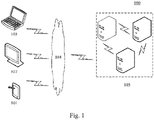
- Fig. 1 shows an example architecture 100 in which a method for issuing a smart contract or an apparatus for issuing a smart contract according to an embodiment of the present disclosure may be implemented.
- the system architecture 100 may include terminal devices 101, 102, and 103, a network 104, and a blockchain system 105.
- the blockchain system 105 may include one or more nodes, which are communicatively connectable.
- the network 104 serves as a medium providing a communication link between the terminal devices 101, 102, and 103, and the blockchain system 105.
- the network 104 may include various types of connections, such as wired or wireless communication links, or optical cables.
- the terminal devices 101, 102, and 103 interact with the blockchain system 105 via the network 104, for example, to receive or send a message.
- the terminal devices 101, 102, and 103 may be provided with various communication client applications, for example, a smart contract development platform and a blockchain application platform.
- the terminal devices 101, 102, and 103 may be hardware, or may be software.
- the terminal devices 101, 102, and 103 are hardware, the terminal devices may be various electronic devices, including but not limited to a smart phone, a tablet computer, an e-book reader, a laptop portable computer, a desktop computer, and the like.
- the terminal devices 101, 102, and 103 are software, the terminal devices may be installed in the above-listed electronic devices, may be implemented as a plurality of software programs or software modules (e.g., a plurality of software programs or software modules configured to provide distributed services), or may be implemented as a single software program or software module. This is not specifically limited here.
- One or more nodes in the blockchain system 105 may provide various services, for example, receiving a request for issuing the smart contract sent from the terminal devices 101, 102, and 103, and generating a corresponding smart contract execution transaction to complete the smart contract execution.
- the method for issuing a smart contract provided in the embodiment of the present disclosure is generally executed by the terminal devices 101, 102, and 103. Accordingly, the apparatus for issuing a smart contract is generally provided in the terminal devices 101, 102, and 103.
- the nodes in the blockchain system 105 may be a single server, or may be composed of a plurality of servers or a plurality of server clusters.
- the server may be hardware, or may be software.
- the server When the server is hardware, the server may be implemented as a distributed server cluster composed of a plurality of servers, or may be implemented as a single server.
- the server When the server is software, the server may be implemented as a plurality of software programs or software modules (e.g., a plurality of software programs or software modules for providing distributed services), or may be implemented as a single software program or software module. This is not specifically limited here.
- terminal devices, networks, and blockchain systems in Fig. 1 are merely illustrative. Any number of terminal devices, networks, and blockchain systems may be provided based on actual requirements.
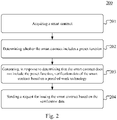
- a process 200 of a method for issuing a smart contract includes the following steps: Step 201: acquiring a smart contract.
- an executing body e.g., the terminal devices 101, 102, and 103 shown in Fig. 1
- the smart contract may be pre-developed by a skilled person based on actual application requirements.
- a development language of the smart contract may be flexibly selected based on actual application requirements.
- the development language may be various Turing-complete languages (such as Java, Python, C, and C++).
- Step 202 determining whether the smart contract includes a preset function.
- the preset function may be pre-specified by a skilled person based on actual application requirements. Therefore, by checking the smart contract, whether the smart contract includes a function that may cause an unexpectation may be known in time, and then a processing logic of the smart contract may be controlled before the issuance.
- the preset function includes a function damaging the security of the smart contract.
- the preset function may be at least one of: a function that may cause the smart contract to be invalid, a function that may cause an infinite loop, a function that may cause recursive stack exhaustion, a function that may cause leakage of important information, a function that may cause unauthorized access, a function that may cause a logical loophole of the smart contract, and the like.
- the preset function includes a function damaging the security of a blockchain system.
- the blockchain system may refer to a blockchain system for completing an operation of executing the smart contract.
- the preset function may be a function that influences consensus of each node in the blockchain system.
- the preset function includes at least one of: a function using a time-varying variable, a function executing an input/output (I/O) operation of a file, a function invoking a script to control a system, a function executing a network-related operation, and a function controlling an environment variable of a system.
- I/O input/output
- the preset function includes at least one of: a function using a time-varying variable, a function executing an input/output (I/O) operation of a file, a function invoking a script to control a system, a function executing a network-related operation, and a function controlling an environment variable of a system.
- the time-varying variable may refer to a variable with inconsistent executing results each time, for example, a random number or a timestamp.
- the function using a time-varying variable may cause inconsistent executing results of nodes that execute the smart contract simultaneously.
- the function executing an input/output (I/O) operation of a file tends to affect the data consistency, for example, may cause incorrect information to be written into a blockchain database.
- the function executing a network-related operation (such as a function instructing access to a network resource, or a function instructing to send a network request) tends to affect the communication security of the blockchain system.
- the function invoking a script to control a system, and the function controlling an environment variable of a system tend to affect access control of the blockchain system, for example, may cause occurrence of, e.g., unauthorized access, thereby resulting in hostile attacks on the blockchain system.
- the preset function may be flexibly set based on actual application requirements.
- various methods may be flexibly selected to inspect whether the smart contract includes the preset function.
- identifier information of each function included in the smart contract may be acquired using various program analysis methods or program analysis applications, and then whether the acquired identifier information of each function includes identifier information of the preset function is inspected.
- Identifier information of a function may be determined based on a class name of the function, a name of the function, parameter information of the function, and the like. For example, a triad composed of the class name of the function, the name of the function, and the parameter information of the function may be used as the identifier information of the function. It should be understood that, for different development languages, whether the smart contract includes the preset function may be inspected using different methods, or different identification methods may be designed to identify the function.
- the smart contract includes the preset function. Otherwise, if the acquired identifier information of the functions does not include the identifier information of the preset function, it is indicated that the smart contract does not include the preset function.
- the target custom function may include a function in the smart contract except for a library function and a preset inspection-free function.
- the library function may be an underlying function provided by the development language of the smart contract itself.
- the inspection-free function may refer to a function that is preset by a skilled person and does not need to be inspected.
- the target custom function may refer to various functions compiled by a developer in the smart contract. For example, the target custom function may be a function that meets a preset condition and is compiled by the developer.
- whether the smart contract includes the preset function may be determined through the following steps: first analyzing an entry function of the smart contract to determine internal functions invoked by the entry function, then determining the internal functions invoked by the entry function as a target internal function set, selecting an internal function from the target internal function set for use as a target function, and executing the following inspection steps: Step I: determining whether the target function has been inspected.
- Whether the target function has been inspected is first determined, to avoid failure to jump out of a loop in the case of recursive invoking or embedded invoking of the function.
- Step II selecting, in response to determining that the target function has been inspected and the number of unselected internal functions in the target internal function set is not 0, an unselected internal function from the target internal function set for use as the target function, and continuing to execute the above inspection steps; and determining, in response to determining that the target function has been inspected and the number of unselected internal functions in the target internal function set is 0, that the smart contract does not include the preset function.
- Step III determining, in response to determining that the target function has not been inspected, whether the target function is the preset function, and labeling the target function as having been inspected.
- Step IV outputting, in response to determining that the target function is the preset function, a prompt message to prompt the smart contract being abnormal.
- Step V determining, in response to determining that the target function is not the preset function, whether the target function is the library function or the preset inspection-free function.
- Step VI selecting, in response to determining that the target function is the library function or the preset inspection-free function and the number of unselected internal functions in the target internal function set is not 0, an unselected internal function from the target internal function set for use as the target function, and continuing to execute the above inspection steps; and determining, in response to determining that the target function is the library function or the preset inspection-free function and the number of unselected internal functions in the target internal function set is 0, that the smart contract does not include the preset function.
- Step VII analyzing and acquiring, in response to determining that the target function is not the library function or the preset inspection-free function, internal functions invoked by the target function for use as a target internal function set, selecting an internal function from the target internal function set for use as the target function, and executing the above inspection steps.
- Step 203 generating, in response to determining that the smart contract does not include the preset function, verification data of the smart contract based on a proof-of-work technology.
- Proof-of-Work is an economic countermeasure against service and resource abuse, or for blocking service attacks.
- a user is required to perform some moderately time-consuming complex computations, the answers may be quickly checked by a service party, and the time, device and energy thus consumed are used as guarantee costs to guarantee that the service and resources are used by real demands.
- a commonly used technical principle of the proof-of-work technology is a hash function.
- the proof-of-work technology is a prior art that is widely researched and applied at present. The description will not be repeated here.
- the verification data that can only be obtained by consumption of certain costs (such as time and computing resources) may be generated.
- the verification data may be used for verifying the smart contract in various subsequent processes of the smart contract, so as to avoid situations, e.g., malicious forgery of the smart contract by a criminal.
- proof-of-work technology may use diverse technical principles, and the proof-of-work technology using different technical principles may generate the verification data of the smart contract by different approaches.
- a hash operation may be performed continuously on the smart contract until obtaining a computing result that meets a preset requirement, and then the obtained computing result that meets the preset requirement may be used as the verification data of the smart contract.
- the preset requirement may be set by a skilled person based on an actual application scenario. For example, the preset requirement may be that: first N digits of the obtained computing result are 0.
- a prompt message in response to determining that the smart contract includes the preset function, may be outputted to prompt the smart contract being abnormal, such that the user may promptly inspect and adjust the smart contract.
- Step 204 sending a request for issuing the smart contract based on the verification data.
- the smart contract may be further compiled, and packaged in combination with the verification data, thereby sending a request based on a desired blockchain platform to complete the issuance of the smart contract.
- the sent request for issuing the smart contract may include information for indicating the verification data of the smart contract.
- the request for issuing the smart contract may include the verification data of the smart contract, and may also include identifier information (such as an address) of the verification data of the smart contract.
- Fig. 3 is a schematic application scenario 300 of the method for issuing a smart contract according to the present embodiment.
- a smart contract pre-compiled by a developer may be first acquired, then functions in the smart contract may be analyzed, and whether the functions in the smart contract include a preset function of pre-designated preset functions may be analyzed. If the functions in the smart contract do not include any one of the pre-designated preset function, a hash operation may be performed on the smart contract to obtain a computing result that meets a PoW requirement for use as verification data of the smart contract. Further, operations such as compiling and packaging the smart contract and the verification data may be requested to complete the issuance of the smart contract.
- the method for issuing a smart contract provided in the above embodiments of the present disclosure first inspects the smart contract to determine whether the smart contract includes a preset function before requesting for issuing the smart contract, thereby controlling a processing logic of the smart contract, and preventing the execution of the smart contract from causing unexpected results.
- verification data of the smart contract may be further generated based on a proof-of-work technology, to guarantee the security of subsequent processes such as the issuance and execution of the smart contract, and prevent the issuance of a smart contract that may harm a blockchain system.
- the process 400 of the method for issuing a smart contract includes the following steps:
- step 201 and step 202 in the corresponding embodiment of Fig. 2 may refer to specific execution processes of the above step 401 and step 402. The description will not be repeated here.
- Step 403 generating, in response to determining that the smart contract does not include the preset function, verification data of the smart contract based on a proof-of-work technology and based on identification data of the smart contract.
- the identification data may include at least one of: a random array and a preset identifier of a blockchain system.
- the random array may be generated using various existing random algorithms.
- the preset identifier of the blockchain system may refer to an identifier preset for the blockchain system.
- verification data that meets a preset workload requirement may be generated in combination with the identification data and the smart contract. Therefore, the difficulty of generating the verification data of the smart contract may be further increased, thereby further increasing the difficulty of forging the smart contract, and improving the security of subsequent processes of the smart contract.
- the proof of work may be realized based on operations such as hash operation, convolution derivation, and large prime number decomposition.
- the verification data of the smart contract may be generated through the following steps: executing following computing steps: performing a hash operation on the identification data and the smart contract to obtain a computing result; determining whether the obtained computing result meets a preset workload requirement; determining, in response to determining that the obtained computing result meets the preset workload requirement, the obtained computing result as the verification data of the smart contract; and continuing, in response to determining that the obtained computing result does not meet the preset workload requirement, to execute the above computing steps.
- the preset workload requirement may be that: first N digits of the obtained computing result are each 1.
- a first random array may be generated, and then a hash operation may be performed on the first random array, the preset identifier of the blockchain system, and the smart contract to obtain a first computing result.
- first N digits of the first computing result are not all 1, a second random array may be generated, and then a hash operation may be performed on the second random array, the preset identifier of the blockchain system and the smart contract to obtain a second computing result. If first N digits of the second computing result are each 1, the second computing result may be used as the verification data of the smart contract.
- whether the smart contract is an officially issued smart contract may be determined.
- the verification data of the smart contract may be generated based on the proof-of-work technology and based on the random array.
- the verification data may be generated based on the proof-of-work technology only using the smart contract, to reduce the resource consumption in the test issuance process.
- Step 404 sending a request for issuing the smart contract based on the verification data.
- the smart contract may be further compiled, and the verification data may be packaged in combination with the random array and/or a preset identifier of the blockchain system, thereby sending a request based on a desired blockchain platform to complete the issuance of the smart contract.
- a corresponding inspection approach may be set for issuing the smart contract.
- the random array corresponding to the smart contract, and/or the preset identifier of the blockchain system, and the verification data of the smart contract may be acquired based on the request for issuing the smart contract.
- the verification data of the smart contract is generated based on the random array
- the random array and the verification data corresponding to the smart contract may be acquired based on the request for issuing the smart contract; and if the verification data of the smart contract is generated based on the random array and the preset identifier of the blockchain system, the random array corresponding to the smart contract, the preset identifier of the blockchain system, and the verification data may be acquired based on the request for issuing the smart contract.
- whether the smart contract is abnormal may be verified based on the acquired random array corresponding to the smart contract, and/or the acquired preset identifier of the blockchain system, and the acquired verification data of the smart contract. For example, if the verification data of the smart contract is generated based on the random array and the preset identifier of the blockchain system, a hash operation result of the random array, the blockchain system, and the smart contract may be acquired by computing, and then whether the hash operation result obtained by computing is the same as the acquired verification data may be determined.
- the smart contract is abnormal (e.g., may be a smart contract forged by a criminal)
- a prompt message may be outputted to prompt the smart contract being abnormal, and the issuance cannot be completed temporarily.
- the hash operation result obtained by computing is the same as the acquired verification data, whether the acquired verification data meets a preset PoW requirement may be further verified. If the acquired verification data does not meet the preset PoW requirement, it is indicated that the smart contract is abnormal, then the prompt message may be outputted to prompt the smart contract being abnormal, and the issuance cannot be completed temporarily. If the acquired verification data meets the preset PoW requirement, it is indicated that the smart contract is normal, and the smart contract may be further processed to complete the issuance of the smart contract.
- the method provided in the above embodiments of the present disclosure may generate verification data of the smart contract based on a proof-of-work technology, and based on identification data of the smart contract, such as a random array and a preset identifier of a blockchain system, thereby increasing the difficulty of generating the verification data of the smart contract, and contributing to reducing random issuance of the smart contract. Further, before the smart contract is issued, the smart contract may be further verified based on a random array, a preset identifier of the blockchain system, and the like, thereby effectively inspecting a forged smart contract, and further guaranteeing the security of the issued smart contract.
- an embodiment of the present disclosure provides an apparatus for issuing a smart contract.
- the embodiment of the apparatus corresponds to the embodiment of the method shown in Fig. 2 .
- the apparatus may be specifically applied to various electronic devices.
- the apparatus 500 for issuing a smart contract of the present embodiment includes: a smart contract acquiring unit 501, a determining unit 502, a generating unit 503, and a sending unit 504.
- the smart contract acquiring unit 501 is configured to acquire the smart contract;
- the determining unit 502 is configured to determine whether the smart contract includes a preset function;
- the generating unit 503 is configured to generate, in response to determining that the smart contract does not include the preset function, verification data of the smart contract based on a proof-of-work technology;
- the sending unit 504 is configured to send a request for issuing the smart contract based on the verification data.
- step 201, step 202, step 203, and step 204 in the corresponding embodiment of Fig. 2 may be referred to for specific processing of the acquiring unit 501, the determining unit 502, the generating unit 503, and the sending unit 504 of the apparatus 500 for issuing a smart contract in the present embodiment and the technical effects thereof, respectively.
- the description will not be repeated here.
- the preset function includes a function damaging the security of a blockchain system.
- the apparatus 500 for issuing a smart contract further includes: an output unit (not shown in the figure) configured to output, in response to determining that the smart contract includes the preset function, a prompt message to prompt the smart contract being abnormal.
- the preset function includes at least one of: a function using a time-varying variable, a function executing an input/output (I/O) operation of a file, a function invoking a script to control a system, a function executing a network-related operation, and a function controlling an environment variable of a system.
- I/O input/output
- the generating unit 503 is further configured to generate the verification data of the smart contract based on the proof-of-work technology and based on identification data of the smart contract, where the identification data includes at least one of: a random array and a preset identifier of a blockchain system.
- the generating unit 503 is further configured to execute the following computing steps: performing a hash operation on the identification data and the smart contract to obtain a computing result; determining whether the obtained computing result meets a preset workload requirement; determining, in response to determining that the obtained computing result meets the preset workload requirement, the obtained computing result as the verification data of the smart contract; and continuing, in response to determining that the obtained computing result does not meet the preset workload requirement, to execute the computing steps.
- the generating unit 503 is further configured to generate, in response to determining that the smart contract is an officially issued smart contract, the verification data of the smart contract based on the proof-of-work technology and based on the identification data.
- the determining unit 502 is further configured to determine whether a target custom function in the smart contract includes the preset function, where the target custom function includes a function in the smart contract except for a library function and a preset inspection-free function.
- an acquiring unit acquires the smart contract; a determining unit determines whether the smart contract includes a preset function; a generating unit generates, in response to determining that the smart contract does not include the preset function, verification data of the smart contract based on a proof-of-work technology; and a sending unit sends a request for issuing the smart contract based on the verification data, thereby controlling a processing logic of the smart contract before requesting for issuing the smart contract, and preventing the execution of the smart contract from causing unexpected results.
- the terminal device in the embodiment of the present disclosure may include, but is not limited to, mobile terminals such as a mobile phone, a notebook computer, a digital broadcast receiver, a PDA (personal digital assistant), a PAD (tablet PC), a PMP (portable multimedia player), and a vehicle terminal (e.g., a vehicle navigation terminal), and fixed terminals such as a digital TV set, and a desktop computer.
- mobile terminals such as a mobile phone, a notebook computer, a digital broadcast receiver, a PDA (personal digital assistant), a PAD (tablet PC), a PMP (portable multimedia player), and a vehicle terminal (e.g., a vehicle navigation terminal), and fixed terminals such as a digital TV set, and a desktop computer.
- PDA personal digital assistant
- PAD tablet PC
- PMP portable multimedia player
- vehicle terminal e.g., a vehicle navigation terminal
- fixed terminals such as a digital TV set, and a desktop computer.
- the electronic device 600 may include a processing apparatus 601 (e.g., a central processing unit or a graphics processing unit), which may execute various appropriate actions and processes in accordance with a program stored in a read-only memory (ROM) 602 or a program loaded into a random access memory (RAM) 603 from a storage apparatus 608.
- the RAM 603 further stores various programs and data required by operations of the electronic device 600.
- the processing apparatus 601, the ROM 602, and the RAM 603 are connected to each other through a bus 604.
- An input/output (I/O) interface 605 is also connected to the bus 604.
- the following apparatuses may be connected to the I/O interface 605: an input apparatus 606 including a touch screen, a touch pad, a keyboard, a mouse, a camera, a microphone, an accelerometer, a gyroscope, or the like; an output apparatus 607 including a liquid crystal display device (LCD), a speaker, a vibrator, or the like; a storage apparatus 608 including a magnetic tape, a hard disk, or the like; and a communication apparatus 609.
- the communication apparatus 609 may allow the electronic device 600 to exchange data with other devices through wireless or wired communication. While Fig. 6 shows the electronic device 600 having various apparatuses, it should be understood that it is not necessary to implement or provide all of the apparatuses shown in the figure. More or fewer apparatuses may be alternatively implemented or provided. Each block shown in Fig. 6 may represent an apparatus, or represent a plurality of apparatuses as required.
- the process described above with reference to the flow chart may be implemented as a computer software program.
- the embodiments of the present disclosure include a computer program product, which includes a computer program that is tangibly embedded in a computer readable medium.
- the computer program includes a program code for executing the method as shown in the flow chart.
- the computer program may be downloaded and installed from a network via the communication apparatus 609, or be installed from the storage apparatus 608, or be installed from the ROM 602.
- the computer program when executed by the processing apparatus 601, implements the above functions as defined by the method of some embodiments of the present disclosure.
- the computer readable medium of some embodiments of the present disclosure may be a computer readable signal medium or a computer readable storage medium, or any combination of the above two.
- An example of the computer readable storage medium may include, but is not limited to: electric, magnetic, optical, electromagnetic, infrared, or semiconductor systems, apparatuses, elements, or a combination of any of the above.
- a more specific example of the computer readable storage medium may include, but is not limited to: an electrical connection with one or more pieces of wire, a portable computer disk, a hard disk, a random access memory (RAM), a read only memory (ROM), an erasable programmable read only memory (EPROM or flash memory), an optical fiber, a portable compact disk read only memory (CD-ROM), an optical memory, a magnetic memory, or any suitable combination of the above.
- the computer readable storage medium may be any tangible medium containing or storing programs which may be used by, or used in combination with, a command execution system, apparatus, or element.
- the computer readable signal medium may include a data signal in the base band or propagating as a part of a carrier wave, in which computer readable program codes are carried.
- the propagating data signal may take various forms, including but not limited to an electromagnetic signal, an optical signal, or any suitable combination of the above.
- the computer readable signal medium may also be any computer readable medium except for the computer readable storage medium.
- the computer readable signal medium is capable of transmitting, propagating, or transferring programs for use by, or use in combination with, a command execution system, apparatus, or element.
- the program codes contained on the computer readable medium may be transmitted with any suitable medium, including but not limited to: wire, an optical cable, a RF (radio frequency) medium etc., or any suitable combination of the above.
- the computer readable medium may be included in the above terminal device; or may be a stand-alone computer readable medium without being assembled into the terminal device.
- the computer readable medium carries one or more programs, where the one or more programs, when executed by the terminal device, cause the terminal device to: acquire the smart contract; determine whether the smart contract includes a preset function; generate, in response to determining that the smart contract does not include the preset function, verification data of the smart contract based on a proof-of-work technology; and send a request for issuing the smart contract based on the verification data.
- a computer program code for executing operations in the embodiments of the present disclosure may be compiled using one or more programming languages or combinations thereof.
- the programming languages include object-oriented programming languages, such as Java, Smalltalk, or C++, and also include conventional procedural programming languages, such as "C" language or similar programming languages.
- the program code may be completely executed on a user's computer, partially executed on a user's computer, executed as a separate software package, partially executed on a user's computer and partially executed on a remote computer, or completely executed on a remote computer or server.
- the remote computer may be connected to a user computer through any kind of networks, including a local area network (LAN) or a wide area network (WAN), or may be connected to an external computer (for example, connected through the Internet using an Internet service provider).
- LAN local area network
- WAN wide area network
- an Internet service provider for example, connected through the Internet using an Internet service provider
- each of the blocks in the flow charts or block diagrams may represent a module, a program segment, or a code portion, said module, program segment, or code portion including one or more executable instructions for implementing specified logic functions.
- the functions denoted by the blocks may occur in a sequence different from the sequences shown in the figures. For example, any two blocks presented in succession may be executed substantially in parallel, or sometimes be executed in a reverse sequence, depending on the functions involved.
- each block in the block diagrams and/or flow charts as well as a combination of blocks in the block diagrams and/or flow charts may be implemented using a dedicated hardware-based system executing specified functions or operations, or by a combination of dedicated hardware and computer instructions.
- the units involved in the embodiments of the present disclosure may be implemented by software, or may be implemented by hardware.
- the described units may also be provided in a processor, for example, described as: a processor including an acquiring unit, a determining unit, a generating unit, and a sending unit.
- a processor including an acquiring unit, a determining unit, a generating unit, and a sending unit.
- the names of the units do not constitute a limitation to such units themselves in some cases.
- the acquiring unit may be further described as "a unit configured to acquire a smart contract.”
Landscapes
- Engineering & Computer Science (AREA)
- Computer Security & Cryptography (AREA)
- Theoretical Computer Science (AREA)
- General Physics & Mathematics (AREA)
- Physics & Mathematics (AREA)
- General Engineering & Computer Science (AREA)
- Signal Processing (AREA)
- Computer Networks & Wireless Communication (AREA)
- Business, Economics & Management (AREA)
- Computer Hardware Design (AREA)
- Software Systems (AREA)
- Accounting & Taxation (AREA)
- Finance (AREA)
- General Health & Medical Sciences (AREA)
- Databases & Information Systems (AREA)
- Health & Medical Sciences (AREA)
- Development Economics (AREA)
- Economics (AREA)
- Marketing (AREA)
- Strategic Management (AREA)
- Technology Law (AREA)
- General Business, Economics & Management (AREA)
- Bioethics (AREA)
- Computing Systems (AREA)
- Virology (AREA)
- Data Mining & Analysis (AREA)
- Management, Administration, Business Operations System, And Electronic Commerce (AREA)
Applications Claiming Priority (2)
| Application Number | Priority Date | Filing Date | Title |
|---|---|---|---|
| CN201910904526.5A CN110688428B (zh) | 2019-09-24 | 2019-09-24 | 用于发布智能合约的方法和装置 |
| PCT/CN2020/082673 WO2021057005A1 (fr) | 2019-09-24 | 2020-04-01 | Procédé et dispositif pour publier un contrat intelligent |
Publications (4)
| Publication Number | Publication Date |
|---|---|
| EP3989081A1 true EP3989081A1 (fr) | 2022-04-27 |
| EP3989081A4 EP3989081A4 (fr) | 2023-06-21 |
| EP3989081C0 EP3989081C0 (fr) | 2026-01-21 |
| EP3989081B1 EP3989081B1 (fr) | 2026-01-21 |
Family
ID=69110037
Family Applications (1)
| Application Number | Title | Priority Date | Filing Date |
|---|---|---|---|
| EP20868054.6A Active EP3989081B1 (fr) | 2019-09-24 | 2020-04-01 | Procédé et dispositif pour l'émission d'un smart contract |
Country Status (5)
| Country | Link |
|---|---|
| US (1) | US12126729B2 (fr) |
| EP (1) | EP3989081B1 (fr) |
| JP (1) | JP2022541929A (fr) |
| CN (1) | CN110688428B (fr) |
| WO (1) | WO2021057005A1 (fr) |
Families Citing this family (5)
| Publication number | Priority date | Publication date | Assignee | Title |
|---|---|---|---|---|
| CN110688428B (zh) | 2019-09-24 | 2021-01-26 | 北京海益同展信息科技有限公司 | 用于发布智能合约的方法和装置 |
| CN111259395B (zh) * | 2020-01-16 | 2022-10-18 | 图灵人工智能研究院(南京)有限公司 | 智能合约的利用程序获取方法、装置及存储介质 |
| CN111309305B (zh) * | 2020-02-12 | 2023-06-02 | 扬州大学 | 面向智能合约的代码自动推荐方法、系统、计算机设备和存储介质 |
| KR102582307B1 (ko) * | 2021-08-17 | 2023-09-25 | 한일석 | 난수 생성 방법 |
| JP2024165559A (ja) | 2023-05-17 | 2024-11-28 | 富士通株式会社 | アカウント選択プログラム、アカウント選択装置、およびアカウント選択方法 |
Family Cites Families (30)
| Publication number | Priority date | Publication date | Assignee | Title |
|---|---|---|---|---|
| JP6648555B2 (ja) | 2016-02-29 | 2020-02-14 | 富士ゼロックス株式会社 | 情報処理装置及びプログラム |
| CN106100981B (zh) * | 2016-08-22 | 2019-08-23 | 布比(北京)网络技术有限公司 | 社交网络数据交互方法及装置 |
| JP6931999B2 (ja) | 2017-02-06 | 2021-09-08 | 株式会社日立製作所 | 信用度管理システムおよび信用度管理方法 |
| JP6952506B2 (ja) * | 2017-06-13 | 2021-10-20 | 株式会社野村総合研究所 | 検査装置 |
| EP3425874A1 (fr) * | 2017-07-03 | 2019-01-09 | Thomson Licensing | Transfert de contenu dans un réseau point à point |
| CN107392619B (zh) * | 2017-07-31 | 2020-12-29 | 众安信息技术服务有限公司 | 智能合约处理方法及装置 |
| CN109508981A (zh) * | 2017-09-15 | 2019-03-22 | 富士通株式会社 | 用于测试智能合约的方法和装置 |
| US11144893B2 (en) | 2017-10-30 | 2021-10-12 | Nec Corporation | Method and system for securing smart contracts in blockchains |
| CN107943469B (zh) * | 2017-11-17 | 2022-01-11 | 深圳圣马歌科技有限公司 | 一种智能合约的发布方法及装置 |
| US20190158275A1 (en) * | 2017-11-22 | 2019-05-23 | Michael Beck | Digital containers for smart contracts |
| CN107944868A (zh) * | 2017-12-07 | 2018-04-20 | 杭州趣链科技有限公司 | 一种基于区块链智能合约的电子存证系统和管理方法 |
| CN108074081A (zh) * | 2017-12-08 | 2018-05-25 | 上海策赢网络科技有限公司 | 一种虚拟资源的转移方法和装置 |
| CN108459860B (zh) * | 2018-03-28 | 2021-03-30 | 成都链安科技有限公司 | 区块链智能合约形式化验证代码转换器及转换方法 |
| CN108664787A (zh) * | 2018-05-15 | 2018-10-16 | 深圳市网心科技有限公司 | 合约部署、调用方法、合约审核设备、存储介质及系统 |
| CN108960830B (zh) * | 2018-07-16 | 2022-07-15 | 百度在线网络技术(北京)有限公司 | 智能合约的部署方法、装置、设备及存储介质 |
| CN108881312A (zh) * | 2018-08-24 | 2018-11-23 | 北京京东尚科信息技术有限公司 | 智能合约升级方法、系统和相关设备以及存储介质 |
| KR101963752B1 (ko) * | 2018-11-02 | 2019-03-29 | 세종대학교산학협력단 | 소프트웨어 취약점 분석 장치 및 방법 |
| CN109542421B (zh) | 2018-11-12 | 2021-09-07 | 夸克链科技(深圳)有限公司 | 一种模块化区块链智能合约 |
| US11250125B2 (en) * | 2018-12-03 | 2022-02-15 | Ebay Inc. | Highly scalable permissioned block chains |
| CA3052735C (fr) * | 2018-12-28 | 2021-06-22 | Alibaba Group Holding Limited | Listes blanches de contrats intelligents |
| CN109889498B (zh) * | 2019-01-16 | 2021-10-29 | 余炀 | 基于区块链的计算验证方法及系统 |
| CN109829296B (zh) * | 2019-01-29 | 2021-04-02 | 中化能源科技有限公司 | 基于联盟链的智能合约的沙箱实现方法 |
| CN111831532A (zh) * | 2019-04-15 | 2020-10-27 | 富士通株式会社 | 构建测试场景的方法以及信息处理设备 |
| US11507948B2 (en) * | 2019-04-22 | 2022-11-22 | Atrium Separate Ip Holdings Number 4, Llc | Blockchain architecture, system, method and device for automated cybersecurity and data privacy law compliance with delayed block posting protocol |
| CN110111104A (zh) | 2019-04-23 | 2019-08-09 | 矩阵元技术(深圳)有限公司 | 区块链智能合约实现方法、装置、计算机设备和存储介质 |
| CN110245514B (zh) * | 2019-04-30 | 2021-09-03 | 清华大学 | 一种基于区块链的分布式计算方法及系统 |
| US11176257B2 (en) * | 2019-08-13 | 2021-11-16 | International Business Machines Corporation | Reducing risk of smart contracts in a blockchain |
| CN110555320B (zh) * | 2019-08-21 | 2021-03-23 | 杭州趣链科技有限公司 | 一种基于区块链存证智能合约的形式验证方法 |
| US11315120B2 (en) * | 2019-08-29 | 2022-04-26 | International Business Machines Corporation | Implementing a marketplace for risk assessed smart contracts issuers and execution providers in a blockchain |
| CN110688428B (zh) | 2019-09-24 | 2021-01-26 | 北京海益同展信息科技有限公司 | 用于发布智能合约的方法和装置 |
-
2019
- 2019-09-24 CN CN201910904526.5A patent/CN110688428B/zh active Active
-
2020
- 2020-04-01 US US17/597,869 patent/US12126729B2/en active Active
- 2020-04-01 EP EP20868054.6A patent/EP3989081B1/fr active Active
- 2020-04-01 WO PCT/CN2020/082673 patent/WO2021057005A1/fr not_active Ceased
- 2020-04-01 JP JP2022504260A patent/JP2022541929A/ja active Pending
Also Published As
| Publication number | Publication date |
|---|---|
| US12126729B2 (en) | 2024-10-22 |
| EP3989081A4 (fr) | 2023-06-21 |
| CN110688428B (zh) | 2021-01-26 |
| EP3989081C0 (fr) | 2026-01-21 |
| CN110688428A (zh) | 2020-01-14 |
| JP2022541929A (ja) | 2022-09-28 |
| US20220261894A1 (en) | 2022-08-18 |
| WO2021057005A1 (fr) | 2021-04-01 |
| EP3989081B1 (fr) | 2026-01-21 |
Similar Documents
| Publication | Publication Date | Title |
|---|---|---|
| US12126729B2 (en) | Method and apparatus for issuing smart contract | |
| CN112948900A (zh) | 应用于区块链系统的链下数据获取方法和装置 | |
| US12231539B2 (en) | Method and apparatus for processing data request | |
| GB2589658A (en) | Method and apparatus for running an applet | |
| CN111949531A (zh) | 区块链网络的测试方法、装置、介质及电子设备 | |
| CN112463729A (zh) | 数据文件的入库方法、装置、电子设备和介质 | |
| US10482034B2 (en) | Remote attestation model for secure memory applications | |
| CN113886825A (zh) | 代码检测方法、装置、系统、设备及存储介质 | |
| CN113176907A (zh) | 接口数据调用方法、装置、计算机系统及可读存储介质 | |
| CN114039760B (zh) | 安全测试方法、装置、计算机设备和存储介质 | |
| CN118972431A (zh) | Ai模型的请求处理方法、计算机设备、介质及产品 | |
| CN112379967B (zh) | 模拟器检测方法、装置、设备及介质 | |
| CN112631590B (zh) | 组件库生成方法、装置、电子设备和计算机可读介质 | |
| CN118157957A (zh) | 网络安全漏洞扫描方法、装置、系统、介质及电子设备 | |
| CN115658186A (zh) | 接口调用方法及装置、电子设备和计算机可读存储介质 | |
| CN110516463A (zh) | 用于生成信息的方法和装置 | |
| CN110968497B (zh) | 基于树形拦截器的请求校验方法、装置、介质及电子设备 | |
| CN111796802B (zh) | 功能包生成方法、装置和电子设备 | |
| CN112015394B (zh) | 安卓功能模块开发方法和装置、计算机系统和存储介质 | |
| CN112559328B (zh) | 指令模拟引擎的判别方法、装置、设备及介质 | |
| CN111460020B (zh) | 用于解析消息的方法、装置、电子设备和介质 | |
| CN110688677B (zh) | 用于执行智能合约的方法和装置 | |
| CN120979899B (zh) | 用于业务风险控制的攻击证据链生成方法及相关装置 | |
| CN112506781A (zh) | 测试监控方法、装置、电子设备、存储介质及程序产品 | |
| CN115859355B (zh) | 日志脱敏方法、装置、电子设备和计算机可读介质 |
Legal Events
| Date | Code | Title | Description |
|---|---|---|---|
| STAA | Information on the status of an ep patent application or granted ep patent |
Free format text: STATUS: THE INTERNATIONAL PUBLICATION HAS BEEN MADE |
|
| PUAI | Public reference made under article 153(3) epc to a published international application that has entered the european phase |
Free format text: ORIGINAL CODE: 0009012 |
|
| STAA | Information on the status of an ep patent application or granted ep patent |
Free format text: STATUS: REQUEST FOR EXAMINATION WAS MADE |
|
| 17P | Request for examination filed |
Effective date: 20220119 |
|
| AK | Designated contracting states |
Kind code of ref document: A1 Designated state(s): AL AT BE BG CH CY CZ DE DK EE ES FI FR GB GR HR HU IE IS IT LI LT LU LV MC MK MT NL NO PL PT RO RS SE SI SK SM TR |
|
| DAV | Request for validation of the european patent (deleted) | ||
| DAX | Request for extension of the european patent (deleted) | ||
| REG | Reference to a national code |
Ref country code: DE Ref legal event code: R079 Free format text: PREVIOUS MAIN CLASS: G06F0016270000 Ipc: G06F0021640000 Ref country code: DE Ref legal event code: R079 Ref document number: 602020065647 Country of ref document: DE Free format text: PREVIOUS MAIN CLASS: G06F0016270000 Ipc: G06F0021640000 |
|
| A4 | Supplementary search report drawn up and despatched |
Effective date: 20230523 |
|
| RIC1 | Information provided on ipc code assigned before grant |
Ipc: G06F 11/36 20060101ALI20230516BHEP Ipc: G06F 21/56 20130101ALI20230516BHEP Ipc: H04L 9/00 20220101ALI20230516BHEP Ipc: H04L 9/32 20060101ALI20230516BHEP Ipc: G06F 21/64 20130101AFI20230516BHEP |
|
| GRAP | Despatch of communication of intention to grant a patent |
Free format text: ORIGINAL CODE: EPIDOSNIGR1 |
|
| STAA | Information on the status of an ep patent application or granted ep patent |
Free format text: STATUS: GRANT OF PATENT IS INTENDED |
|
| RIC1 | Information provided on ipc code assigned before grant |
Ipc: G06F 21/64 20130101AFI20250715BHEP Ipc: H04L 9/00 20220101ALI20250715BHEP Ipc: G06F 21/56 20130101ALI20250715BHEP Ipc: G06F 11/3604 20250101ALN20250715BHEP |
|
| INTG | Intention to grant announced |
Effective date: 20250807 |
|
| GRAS | Grant fee paid |
Free format text: ORIGINAL CODE: EPIDOSNIGR3 |
|
| GRAA | (expected) grant |
Free format text: ORIGINAL CODE: 0009210 |
|
| STAA | Information on the status of an ep patent application or granted ep patent |
Free format text: STATUS: THE PATENT HAS BEEN GRANTED |
|
| AK | Designated contracting states |
Kind code of ref document: B1 Designated state(s): AL AT BE BG CH CY CZ DE DK EE ES FI FR GB GR HR HU IE IS IT LI LT LU LV MC MK MT NL NO PL PT RO RS SE SI SK SM TR |
|
| REG | Reference to a national code |
Ref country code: CH Ref legal event code: F10 Free format text: ST27 STATUS EVENT CODE: U-0-0-F10-F00 (AS PROVIDED BY THE NATIONAL OFFICE) Effective date: 20260121 |
|
| REG | Reference to a national code |
Ref country code: IE Ref legal event code: FG4D |
|
| U01 | Request for unitary effect filed |
Effective date: 20260128 |
|
| U07 | Unitary effect registered |
Designated state(s): AT BE BG DE DK EE FI FR IT LT LU LV MT NL PT RO SE SI Effective date: 20260203 |
|
| U20 | Renewal fee for the european patent with unitary effect paid |
Year of fee payment: 7 Effective date: 20260317 |