EP3989082A1 - Procédé d'accès et de stockage de fichier multimédia - Google Patents
Procédé d'accès et de stockage de fichier multimédia Download PDFInfo
- Publication number
- EP3989082A1 EP3989082A1 EP20843920.8A EP20843920A EP3989082A1 EP 3989082 A1 EP3989082 A1 EP 3989082A1 EP 20843920 A EP20843920 A EP 20843920A EP 3989082 A1 EP3989082 A1 EP 3989082A1
- Authority
- EP
- European Patent Office
- Prior art keywords
- data
- encoding data
- container format
- video encoding
- audio encoding
- Prior art date
- Legal status (The legal status is an assumption and is not a legal conclusion. Google has not performed a legal analysis and makes no representation as to the accuracy of the status listed.)
- Ceased
Links
Images

Classifications
-
- G—PHYSICS
- G06—COMPUTING OR CALCULATING; COUNTING
- G06F—ELECTRIC DIGITAL DATA PROCESSING
- G06F16/00—Information retrieval; Database structures therefor; File system structures therefor
- G06F16/40—Information retrieval; Database structures therefor; File system structures therefor of multimedia data, e.g. slideshows comprising image and additional audio data
- G06F16/41—Indexing; Data structures therefor; Storage structures
-
- G—PHYSICS
- G06—COMPUTING OR CALCULATING; COUNTING
- G06F—ELECTRIC DIGITAL DATA PROCESSING
- G06F16/00—Information retrieval; Database structures therefor; File system structures therefor
- G06F16/20—Information retrieval; Database structures therefor; File system structures therefor of structured data, e.g. relational data
- G06F16/25—Integrating or interfacing systems involving database management systems
- G06F16/258—Data format conversion from or to a database
-
- G—PHYSICS
- G06—COMPUTING OR CALCULATING; COUNTING
- G06F—ELECTRIC DIGITAL DATA PROCESSING
- G06F16/00—Information retrieval; Database structures therefor; File system structures therefor
- G06F16/40—Information retrieval; Database structures therefor; File system structures therefor of multimedia data, e.g. slideshows comprising image and additional audio data
- G06F16/48—Retrieval characterised by using metadata, e.g. metadata not derived from the content or metadata generated manually
- G06F16/483—Retrieval characterised by using metadata, e.g. metadata not derived from the content or metadata generated manually using metadata automatically derived from the content
-
- G—PHYSICS
- G06—COMPUTING OR CALCULATING; COUNTING
- G06F—ELECTRIC DIGITAL DATA PROCESSING
- G06F16/00—Information retrieval; Database structures therefor; File system structures therefor
- G06F16/40—Information retrieval; Database structures therefor; File system structures therefor of multimedia data, e.g. slideshows comprising image and additional audio data
- G06F16/48—Retrieval characterised by using metadata, e.g. metadata not derived from the content or metadata generated manually
- G06F16/487—Retrieval characterised by using metadata, e.g. metadata not derived from the content or metadata generated manually using geographical or spatial information, e.g. location
-
- H—ELECTRICITY
- H04—ELECTRIC COMMUNICATION TECHNIQUE
- H04N—PICTORIAL COMMUNICATION, e.g. TELEVISION
- H04N21/00—Selective content distribution, e.g. interactive television or video on demand [VOD]
- H04N21/20—Servers specifically adapted for the distribution of content, e.g. VOD servers; Operations thereof
- H04N21/23—Processing of content or additional data; Elementary server operations; Server middleware
- H04N21/231—Content storage operation, e.g. caching movies for short term storage, replicating data over plural servers, prioritizing data for deletion
-
- H—ELECTRICITY
- H04—ELECTRIC COMMUNICATION TECHNIQUE
- H04N—PICTORIAL COMMUNICATION, e.g. TELEVISION
- H04N21/00—Selective content distribution, e.g. interactive television or video on demand [VOD]
- H04N21/80—Generation or processing of content or additional data by content creator independently of the distribution process; Content per se
- H04N21/83—Generation or processing of protective or descriptive data associated with content; Content structuring
-
- H—ELECTRICITY
- H04—ELECTRIC COMMUNICATION TECHNIQUE
- H04N—PICTORIAL COMMUNICATION, e.g. TELEVISION
- H04N21/00—Selective content distribution, e.g. interactive television or video on demand [VOD]
- H04N21/80—Generation or processing of content or additional data by content creator independently of the distribution process; Content per se
- H04N21/83—Generation or processing of protective or descriptive data associated with content; Content structuring
- H04N21/845—Structuring of content, e.g. decomposing content into time segments
- H04N21/8456—Structuring of content, e.g. decomposing content into time segments by decomposing the content in the time domain, e.g. in time segments
-
- H—ELECTRICITY
- H04—ELECTRIC COMMUNICATION TECHNIQUE
- H04N—PICTORIAL COMMUNICATION, e.g. TELEVISION
- H04N21/00—Selective content distribution, e.g. interactive television or video on demand [VOD]
- H04N21/80—Generation or processing of content or additional data by content creator independently of the distribution process; Content per se
- H04N21/85—Assembly of content; Generation of multimedia applications
- H04N21/854—Content authoring
- H04N21/85406—Content authoring involving a specific file format, e.g. MP4 format
Definitions
- the present application relates to the field of multimedia data processing, and in particular to a method of multimedia file storage and access.
- Multimedia files in multiple container formats required for different services need to be stored in a server, and the multimedia files in different container formats have the same audio encoding data and video encoding data, causing the duplicate storage of the same audio encoding data and video encoding data, and further causing a tremendous waste of a storage space.
- an objective of the present application is to provide a method of multimedia file storage and access, to solve the problem in the prior art of waste of a storage space due to the need to store multimedia files in multiple container formats required for different services.
- the present application provides a method of multimedia file storage, which includes:
- obtaining at least two multimedia files to be stored includes:
- performing format parsing for each of the at least two multimedia files separately to obtain audio encoding data, video encoding data, and container format data of each of the at least two multimedia files includes:
- storing the container format data of each of the at least two multimedia files separately, and storing one copy of the audio encoding data and video encoding data includes:
- the video encoding data storage is a local storage.
- establishing and storing index data identifying encoding offset information and storage address information of the container format data, audio encoding data, and video encoding data of each of the at least two multimedia files includes:
- the method of multimedia file storage further includes: saving storage addresses of the container format data , the audio encoding data , and the index data into a predetermined first database.
- an apparatus of multimedia file storage which includes:
- the present application provides a computer device, which includes a memory, a processor, and computer-readable instructions stored on the memory and executable on the processor, where the processor, upon executing the computer-readable instructions, performs the steps of:
- the present application provides a computer-readable storage medium having stored thereon computer-readable instructions, which upon executed by a processor, cause the processor to perform the steps of:
- the present application further provides a method of multimedia file access, for accessing a multimedia file stored according to the foregoing method, including:
- obtaining, according to the request information, index data corresponding to the target multimedia file includes: obtaining, from a predetermined index data storage and according to the request information, the index data corresponding to the target multimedia file.
- obtaining the container format data, audio encoding data, and video encoding data of the target multimedia file according to the storage address information of the container format data, audio encoding data, and video encoding data of the target multimedia file includes:
- the video encoding data storage is a local storage.
- assembling the obtained container format data, audio encoding data, and video encoding data according to the encoding offset information of the container format data, audio encoding data, and video encoding data of the target multimedia file to obtain the target multimedia file includes:
- downloading the obtained container format data, audio encoding data, and index data to the local storage further includes: caching the container format data, audio encoding data, and index data that is downloaded to the local storage.
- the request information includes a encoding offset range
- obtaining, according to the obtained index data, storage address information and encoding offset information of container format data, audio encoding data, and video encoding data of the target multimedia file includes:
- an apparatus of multimedia file access which includes:
- the present application provides a computer device, which includes a memory, a processor, and computer-readable instructions stored on the memory and executable on the processor, where upon executing the computer-readable instructions, performs the steps of:
- the present application provides a computer-readable storage medium having stored thereon computer-readable instructions, which upon executed by a processor, cause the processor to perform the steps of:
- the present application has the beneficial effects as follows.
- the present application for multiple multimedia files with the same content and different container formats, only one copy of the same audio encoding data and video encoding data is stored, different pieces of container format data are separately stored, and encoding offset information of the pieces of data is also stored.
- audio encoding data, video encoding data, and container format data of a target multimedia file, and encoding offset information of the data are obtained, and then the audio encoding data, video encoding data, and container format data are assembled according to the encoding offset information.
- the present application can solve the problem in the prior art that multimedia files in multiple container formats required for different services need to be saved, causing the duplicate storage of the same audio encoding data and video encoding data, and further causing a tremendous waste of the storage space.
- FIG. 1 it is a schematic diagram of an application environment for an embodiment of a method of multimedia file storage and access according to the present application.
- the schematic diagram of the application environment includes clients M, N, and L and a server P.
- the server P can exchange data with the clients M, N, and L by means of suitable technologies, such as a network and a near-field communication technology.
- the clients M, N, and L include, but are not limited to, any smart electronic product that can interact with a user by means of a keyboard, a mouse, a remote controller, a touch pad, or a voice-operated device, etc., for example, a mobile device such as a personal computer, a tablet computer, a smart phone, a personal digital assistant (PDA), a game console, a smart wearable device and a navigation apparatus, or a stationary terminal such as a digital TV, a desktop computer and a notebook computer.
- a mobile device such as a personal computer, a tablet computer, a smart phone, a personal digital assistant (PDA), a game console, a smart wearable device and a navigation apparatus, or a stationary terminal such as a digital TV, a desktop computer and a notebook computer.
- PDA personal digital assistant
- the server P may be a computer, or a single network server, a server group composed of multiple network servers, or a cloud composed of a large number of cloud computing-based hosts or network servers, where cloud computing is a type of distributed computing, and is a virtual supercomputer consisting of a cluster of loosely coupled computer sets.
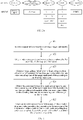
- This embodiment provides a method of multimedia file storage, which is applicable to a server. As shown in FIGS. 2 and 2A , the method includes the steps as follows.
- At least two multimedia files to be stored are obtained, where the at least two multimedia files have the same audio encoding data, the same video encoding data, and different container format data, that is, the two multimedia files to be stored having the same content and different container formats.
- the obtained multimedia files are a movie A.MP4 and a movie A.FLV, where the movies A.MP4 and A.FLV have exactly the same audio and video content and only different container formats.
- the multimedia files refer to audio and video files, and the container formats thereof may be MP4, FLV, RMVB, AVI, MOV, or WMV, etc.
- This step is specifically implemented by means of: receiving, after a data source uploads a multimedia source file in an original container format, the multimedia source file in the original container format that is uploaded by the data source; converting the multimedia source file into at least one target container format different from the original container format; and determining the multimedia source file in the original container format and the multimedia source file in the at least one target container format as the multimedia files to be stored.
- the target container format can be predetermined according to requirements. For example, a server receives a multimedia source file A.MP4 uploaded by a data source.
- the server is required to perform format conversion to obtain formats other than A.MP4, such as the FLV format.
- formats other than A.MP4, such as the FLV format are a technology known in the art, and the specific conversion process will not be repeated here.
- format parsing for each of the at least two multimedia files is performed separately to obtain audio encoding data, video encoding data, and container format data of each of the at least two multimedia files.
- the specific analysis process is as follows: parsing the audio encoding data of each of the at least two multimedia files according to the container format of each of the at least two multimedia files; parsing the video encoding data of each of the at least two multimedia files according to the container format of each of the at least two multimedia files; and generating the container format data of each of the at least two multimedia files according to data other than the audio encoding data and the video encoding data of each of the at least two multimedia files.
- the multimedia files to be stored are MP4 and FLV files which have the same content.
- audio encoding data V, video encoding data A, and container format data MP4C of the MP4 file are obtained, and audio encoding data V, video encoding data A, and container format data FLVC of the FLV file are also obtained, where the two files have the same audio encoding data V and video encoding data A and different container format data MP4C and FLVC.
- a data protocol of each container format has a unified international standard.
- Table 1 the data protocol of an MP4 format file with a file size of 100B
- Table 2 the data protocol of a FLV format file with a file size of 100B
- V represents a video encoding data block
- A represents an audio encoding data block
- C represents an container format data block
- the numbers in the tables represent the coding lengths of the corresponding data blocks. It should be understood that, according to a data protocol standard of a corresponding container format, the corresponding audio encoding data, video encoding data and container format data can be analyzed from each multimedia file.
- bits 0 to 34 are coded as an container format data block
- bits 35 to 49 are coded as an audio encoding data block
- bits 50 to 59 are coded as a video encoding data block
- bits 60 to 69 are coded as a video encoding data block
- bits 70 to 84 are coded as an audio encoding data block
- bits 85 to 94 are coded as a video encoding data block
- bits 95 to 99 are coded as an container format data block.
- the audio encoding data in the multimedia file is the data in all the audio encoding data blocks contained in the file
- the video encoding data in the multimedia file is the data in all the video encoding data blocks contained in the file
- the container format data in the multimedia file is the data in all the container format data blocks contained in the file.
- the audio and video encoding data are first analyzed from the file according to a data protocol of the MP4 format, and the data other than the audio and video encoding data of the file are then spliced to generate the container format data of the file (see Table 3 below); and when analyzing the file shown in Table 2, the audio and video encoding data are first analyzed from the file according to a data protocol of the FLV format, and the data other than the audio and video encoding data of the file are then spliced to generate the container format data of the file (see Table 4 below): Table 3 C C Table 4 C C C C C C C
- the container format data of each of the at least two multimedia files is separately stored, and one copy of the audio encoding data and video encoding data is stored.
- the container format data of each of the at least two multimedia files is separately stored in a predetermined container format data storage; one copy of the audio encoding data is stored in a predetermined audio encoding data storage; and one copy of the video encoding data is stored in a predetermined video encoding data storage.
- two multimedia files to be stored which have the same content and different container formats, are respectively a MP4 file and a FLV file.
- audio encoding data V, video encoding data A, and container format data MP4C of the MP4 file are obtained, and audio encoding data V, video encoding data A, and container format data FLVC of the FLV file are also obtained. Since the two files have the same audio encoding data V and video encoding data A, only one copy of the audio encoding data and video encoding data can be stored to save the storage space; and since the two files have different container format data MP4C and FLVC, the container format data of the two need to be separately stored.
- index data identifying encoding offset information and storage address information of the container format data, audio encoding data, and video encoding data of each of the at least two multimedia files are established and stored. Specifically, the index data is established first, the index data identifying the encoding offset information and storage address information of the container format data, audio encoding data, and video encoding data of each of the at least two multimedia files; and the established index data is then stored in a predetermined index data storage.
- the index data is established with reference to the following
- the method of multimedia file storage in this instance, only one copy of the same audio encoding data and video encoding data in multiple multimedia files can be stored, thereby the method can solve the problem in the prior art of repeated storage of the same audio encoding data and video encoding data due to the need to store multimedia files in multiple container formats required for different services, which causes a tremendous waste of a storage space.
- the data is pre-stored to avoid the problem in the prior art of taking a long time (usually between around ten seconds and several minutes) for the server to perform format conversion after the server receives a request from the client, which causes a slow response of the server.
- This embodiment provides a method of multimedia file access for accessing a multimedia file stored based on the method of Embodiment I, where the method is applicable to a server. As shown in FIG. 3 , the method includes the steps as follows.
- request information for accessing a target multimedia file is received.
- the request information includes an container format of the target multimedia file that is requested for access.
- index data corresponding to the target multimedia file is obtained according to the request information. Specifically, the index data corresponding to the target multimedia file is obtained from a predetermined index data storage according to the request information. For example, when the target multimedia file that is requested for access by the request information is a movie A.MP4, index data corresponding to the movie A.MP4 is obtained.
- storage address information and encoding offset information of container format data, audio encoding data, and video encoding data of the target multimedia file are obtained according to the obtained index data.
- the index data carries the encoding offset information of the container format data, audio encoding data, and video encoding data of the target multimedia file, and the storage address information of the container format data, audio encoding data, and video encoding data of the target multimedia file.
- the container format data, audio encoding data, and video encoding data of the target multimedia file are obtained according to the storage address information of the container format data, audio encoding data, and video encoding data of the target multimedia file.
- the container format data of the target multimedia file is obtained from a predetermined container format data storage and according to the storage address information of the container format data of the target multimedia file;
- the audio encoding data of the target multimedia file is obtained from a predetermined audio encoding data storage and according to the storage address information of the audio encoding data of the target multimedia file;
- the video encoding data of the target multimedia file is obtained from a predetermined video encoding data storage and according to the storage address information of the video encoding data of the target multimedia file.
- index data corresponding to the target multimedia file contains the following index content: starting from a storage address of 0, 48 bits of data are accessed as a container format data block.
- the obtained container format data, audio encoding data, and video encoding data are assembled according to the encoding offset information of the container format data, audio encoding data, and video encoding data of the target multimedia file to obtain the target multimedia file.
- the index data contains the following index content: the container format data block formed by the 48 bits of data accessed starting from the storage address of 0 is assembled to 48 encoding offsets of the target multimedia file that start from the bit 0, and by analogy, the assembly of the target multimedia file can be completed.
- step S22 includes: obtaining, from the index data, storage address information and data types corresponding to the encoding offset range, the data type including an container format data type, an audio encoding data type, and a video encoding data type; and obtaining, according to the storage address information and the data types corresponding to the encoding offset range, the storage address information and encoding offset information of the container format data, audio encoding data, and video encoding data of the target multimedia file.
- the request information involves requesting the access of the multimedia file in Table 1, and the request information carries a encoding offset range of 30 to 60
- storage address information and data types (including container format data, audio encoding data, and video encoding data types) corresponding to encoding offsets 30 to 60 are determined from the index data of the file first, and data of the corresponding types are then obtained from the determined storage address information, that is, taking 5 pieces of container format data from storage addresses corresponding to the encoding offsets 29 to 34, taking 15 pieces of audio encoding data from storage addresses corresponding to the encoding offsets 35 to 49, and taking 10 pieces of video encoding data from storage addresses corresponding to the encoding offsets 50 to 59.
- the container format data storage, the audio encoding data storage, the video encoding data storage, and the index data storage may be integrated into the same server, or two or three of the above data memories are integrated into the same server, or they may be separately arranged in different servers, depending on the amount of data required to be stored.
- the container format data storage, the audio encoding data storage, the video encoding data storage, and the index data storage are separately arranged in different servers.
- the video encoding data storage is preferably a local storage, i.e., the video encoding data is preferably stored locally to reduce data transmission overheads.
- storage addresses of the container format data storage, the audio encoding data storage, and the index data storage are saved in a predetermined first database, and when it is needed to access data, the address of the corresponding storage is obtained from the first database.
- step S25 includes: downloading the obtained container format data, audio encoding data, and index data to the local storage; and assembling the container format data, audio encoding data, and video encoding data at the local storage according to the encoding offset information of the container format data, audio encoding data, and video encoding data of the target multimedia file to obtain the target multimedia file.
- the step of downloading the obtained container format data, audio encoding data, and index data to the local storage further includes: caching the container format data, audio encoding data, and index data that is downloaded to the local storage, so that there is no need to repeatedly download the container format data, audio encoding data, and index data of the target multimedia file when the target multimedia file is accessed again in a short time.
- the container format data storage, the audio encoding data storage, the video encoding data storage, and the index data storage are separately arranged in different servers (denoted as a container format data server, an audio encoding data server, a video encoding server, and an index data server) as an example, the method of multimedia file access of the present application is further explained below. As shown in FIG. 4 , the method includes the steps of:
- the method of multimedia file access of this embodiment consumes only a time of millisecond-level, and solves the problem in the prior art of it taking a long time (usually between around ten seconds and several minutes) for the server to perform format conversion after the server receives a request from the client, thus having a large impact on the user experience.
- Embodiment I and Embodiment II are represented as a series of actions. However, it should be known to those skilled in the art that the present application is not limited to the order of describing the actions, because some steps may be performed in other orders or simultaneously according to the present application. In addition, it is also to be appreciated by those skilled in the art that all the embodiments described in the specification are preferred embodiments, and the related actions are not necessarily required in the present application.
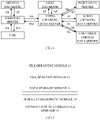
- This embodiment provides an apparatus of multimedia file storage 10. As shown in FIG. 5 , the apparatus includes:
- the file obtaining module 11 includes:
- the file analysis module 12 includes:
- the file data storage module 13 includes:
- the video encoding data storage is preferably a local storage.
- the index establishment module 14 includes:
- the apparatus 10 further includes: a storage address saving module for saving storage addresses of the container format data storage, the audio encoding data storage, and the index data storage into a predetermined first database.
- This embodiment provides an apparatus of multimedia file access 20 for accessing multimedia files stored based on the foregoing apparatus of multimedia file storage.
- the apparatus 20 includes:
- the index data obtaining module 22 is specifically configured to: obtain, from a predetermined index data storage and according to the request information, the index data corresponding to the target multimedia file.
- the file data obtaining module 24 includes:
- the video encoding data storage is preferably a local storage.
- the assembling module 25 includes:
- the data download unit is further used for: caching the container format data, audio encoding data, and index data that is downloaded to the local storage.
- the index analysis module 23 is specifically configured to:
- the present application further provides a computer device, for example, a smart phone, a tablet computer, a notebook computer, a desktop computer, a rack memory, a blade memory, a tower memory, or a cabinet memory (including an independent memory, or a memory cluster composed of a plurality of memories) that can execute programs, etc.
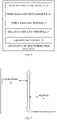
- the computer device 30 in this embodiment at least includes but is not limited to: a memory 31 and a processor 32 that can be communicatively connected to each other via a system bus, as shown in FIG. 7 . It should be noted that FIG. 7 shows only the computer device 30 having components 31 to 32, but it should be understood that implementing all of the shown components is not a requirement, and more or fewer components may be implemented instead.
- the memory 31 (i.e., a readable storage medium) includes a flash memory, a hard disk, a multimedia card, a card-type memory (e.g., an SD or DX memory, etc.), a random access memory (RAM), a static random access memory (SRAM), a read-only memory (ROM), an electrically erasable programmable read-only memory (EEPROM), a programmable read-only memory (PROM), a magnetic memory, a magnetic disk, an optical disc, etc.
- the memory 31 may be an internal storage unit of the computer device 30, for example, a hard disk or a memory of the computer device 30.
- the memory 31 may alternatively be an external storage device of the computer device 30, for example, a plug-in hard disk provided on the computer device 30, a smart media card (SMC), a secure digital (SD) card, a flash card, etc.
- the memory 31 may alternatively include both the internal storage unit of the computer device 30 and the external storage device thereof.
- the memory 31 is generally used to store an operating system and various types of application software installed in the computer device 30, such as the program code of the apparatus of multimedia file storage 10 in Embodiment III or the apparatus of multimedia file access 20 in Embodiment IV.
- the memory 31 may further be used to temporarily store various types of data that have been output or will be output.
- the processor 32 may be, in some embodiments, a central processing unit (CPU), a controller, a microcontroller, a microprocessor, or other data processing chips.
- the processor 32 is generally used to control the overall operation of the computer device 30.
- the processor 32 is used to run program code or processing data stored in the memory 31, for example, to run the apparatus of multimedia file storage 10 to implement the method of multimedia file storage in Embodiment I, or to run the apparatus of multimedia file access 20 to implement the method of multimedia file access in Embodiment II.
- the present application further provides a computer-readable storage medium, such as a flash memory, a hard disk, a multimedia card, a card-type memory (e.g., an SD or DX memory, etc.), a random access memory (RAM), a static random access memory (SRAM), a read-only memory (ROM), an electrically erasable programmable read-only memory (EEPROM), a programmable read-only memory (PROM), a magnetic memory, a magnetic disk, an optical disc, a memory, and an App application store, on which computer-readable instructions are stored to enable corresponding functions to be implemented when a program is executed by a processor.
- a computer-readable storage medium such as a flash memory, a hard disk, a multimedia card, a card-type memory (e.g., an SD or DX memory, etc.), a random access memory (RAM), a static random access memory (SRAM), a read-only memory (ROM), an electrically erasable programmable read-only memory (EEPROM),
- the computer-readable storage medium in this embodiment is used to store the apparatus of multimedia file storage 10 that, when executed by a processor, implements the method of multimedia file storage in Embodiment I, or the computer-readable storage medium in this embodiment is used to store the apparatus of multimedia file access 20 that, when executed by a processor, implements the method of multimedia file access in Embodiment II.
Landscapes
- Engineering & Computer Science (AREA)
- Theoretical Computer Science (AREA)
- Multimedia (AREA)
- Databases & Information Systems (AREA)
- Signal Processing (AREA)
- Data Mining & Analysis (AREA)
- Physics & Mathematics (AREA)
- General Engineering & Computer Science (AREA)
- General Physics & Mathematics (AREA)
- Library & Information Science (AREA)
- Software Systems (AREA)
- Computer Security & Cryptography (AREA)
- Information Retrieval, Db Structures And Fs Structures Therefor (AREA)
- Television Signal Processing For Recording (AREA)
Applications Claiming Priority (2)
| Application Number | Priority Date | Filing Date | Title |
|---|---|---|---|
| CN201910668459.1A CN112287127B (zh) | 2019-07-23 | 2019-07-23 | 多媒体文件存储、读取方法 |
| PCT/CN2020/084518 WO2021012723A1 (fr) | 2019-07-23 | 2020-04-13 | Procédé d'accès et de stockage de fichier multimédia |
Publications (2)
| Publication Number | Publication Date |
|---|---|
| EP3989082A1 true EP3989082A1 (fr) | 2022-04-27 |
| EP3989082A4 EP3989082A4 (fr) | 2022-08-10 |
Family
ID=74193113
Family Applications (1)
| Application Number | Title | Priority Date | Filing Date |
|---|---|---|---|
| EP20843920.8A Ceased EP3989082A4 (fr) | 2019-07-23 | 2020-04-13 | Procédé d'accès et de stockage de fichier multimédia |
Country Status (4)
| Country | Link |
|---|---|
| US (1) | US12210558B2 (fr) |
| EP (1) | EP3989082A4 (fr) |
| CN (1) | CN112287127B (fr) |
| WO (1) | WO2021012723A1 (fr) |
Families Citing this family (4)
| Publication number | Priority date | Publication date | Assignee | Title |
|---|---|---|---|---|
| CN113676769B (zh) * | 2021-08-23 | 2023-03-31 | 北京字跳网络技术有限公司 | 视频解码方法、设备及存储介质 |
| CN116304122A (zh) * | 2023-03-14 | 2023-06-23 | 抖音视界有限公司 | 媒体文件生成方法、装置、电子设备以及存储介质 |
| CN116610823B (zh) * | 2023-04-28 | 2024-05-07 | 江苏传智播客教育科技股份有限公司 | 一种统一访问多媒体资源的方法和系统 |
| CN117692706B (zh) * | 2023-12-18 | 2025-02-25 | 书行科技(北京)有限公司 | 一种视频处理方法、装置、设备、可读存储介质及产品 |
Family Cites Families (23)
| Publication number | Priority date | Publication date | Assignee | Title |
|---|---|---|---|---|
| US7110664B2 (en) * | 2001-04-20 | 2006-09-19 | Front Porch Digital, Inc. | Methods and apparatus for indexing and archiving encoded audio-video data |
| US8214516B2 (en) * | 2006-01-06 | 2012-07-03 | Google Inc. | Dynamic media serving infrastructure |
| CN101261865B (zh) * | 2007-04-20 | 2012-07-04 | 炬力集成电路设计有限公司 | 媒体电子文件的制作方法、装置及其播放设备及方法 |
| CN101917581A (zh) * | 2009-11-17 | 2010-12-15 | 新奥特(北京)视频技术有限公司 | 多媒体数据处理进度的展示方法及装置 |
| CN102447673A (zh) * | 2010-09-30 | 2012-05-09 | 突触计算机系统(上海)有限公司 | 一种用于解封装携有封装格式的多媒体文件的方法与设备 |
| CN102739417B (zh) * | 2011-04-01 | 2014-08-20 | 华为技术有限公司 | 流媒体业务处理系统及故障检测方法 |
| CN102769638B (zh) * | 2011-05-05 | 2016-08-24 | 腾讯科技(深圳)有限公司 | 一种下载文件的方法、装置及系统 |
| CN102256162B (zh) * | 2011-07-22 | 2013-11-06 | 网宿科技股份有限公司 | 基于实时文件格式转换的优化流媒体点播的方法和系统 |
| CN103002353B (zh) * | 2011-09-16 | 2015-09-02 | 杭州海康威视数字技术股份有限公司 | 对多媒体文件进行封装的方法及装置 |
| CN102510519A (zh) * | 2011-10-11 | 2012-06-20 | 成都市华为赛门铁克科技有限公司 | 流媒体数据的处理方法、播放方法以及装置 |
| CN102802022A (zh) | 2012-08-28 | 2012-11-28 | 曙光信息产业(北京)有限公司 | 编解码系统和方法 |
| US10761944B2 (en) * | 2014-02-11 | 2020-09-01 | Netapp, Inc. | Techniques for deduplication of media content |
| CN103929478B (zh) | 2014-04-10 | 2018-03-30 | 中央电视台 | 一种视音频文件存储、下载的方法及系统 |
| WO2015196394A1 (fr) * | 2014-06-25 | 2015-12-30 | SZ DJI Technology Co., Ltd. | Procédés et appareil de réparation de fichiers multimédias |
| CN104883626A (zh) * | 2015-05-22 | 2015-09-02 | 深圳市九洲电器有限公司 | 流媒体管理方法及系统 |
| CN105072368A (zh) * | 2015-08-25 | 2015-11-18 | 成都秋雷科技有限责任公司 | 一种视频解码数据存储方法 |
| WO2017035787A1 (fr) * | 2015-09-01 | 2017-03-09 | 深圳好视网络科技有限公司 | Procédé, dispositif et système pour stocker un fichier de contenu multimédia de diffusion en continu |
| CN105898551A (zh) * | 2015-12-18 | 2016-08-24 | 乐视云计算有限公司 | 网络视频播放方法及装置 |
| KR102125162B1 (ko) * | 2016-02-16 | 2020-06-22 | 노키아 테크놀로지스 오와이 | 미디어 캡슐화 및 캡슐 해제 기법 |
| CN107622067B (zh) * | 2016-07-13 | 2020-11-20 | 杭州海康威视数字技术股份有限公司 | 一种对多个多媒体文件的存储、读取和显示方法及装置 |
| CN107302715A (zh) * | 2017-08-10 | 2017-10-27 | 北京元心科技有限公司 | 多媒体文件的播放方法、封装方法以及相应的装置、终端 |
| US11553258B2 (en) * | 2018-07-10 | 2023-01-10 | Nokia Technologies Oy | Apparatus, a method and a computer program for video coding and decoding |
| CN109743614A (zh) * | 2019-01-03 | 2019-05-10 | 北京大米科技有限公司 | 一种数据存储的方法、装置及电子设备 |
-
2019
- 2019-07-23 CN CN201910668459.1A patent/CN112287127B/zh active Active
-
2020
- 2020-04-13 US US17/625,306 patent/US12210558B2/en active Active
- 2020-04-13 WO PCT/CN2020/084518 patent/WO2021012723A1/fr not_active Ceased
- 2020-04-13 EP EP20843920.8A patent/EP3989082A4/fr not_active Ceased
Also Published As
| Publication number | Publication date |
|---|---|
| US12210558B2 (en) | 2025-01-28 |
| CN112287127A (zh) | 2021-01-29 |
| WO2021012723A1 (fr) | 2021-01-28 |
| US20220365959A1 (en) | 2022-11-17 |
| EP3989082A4 (fr) | 2022-08-10 |
| CN112287127B (zh) | 2022-10-14 |
Similar Documents
| Publication | Publication Date | Title |
|---|---|---|
| US12210558B2 (en) | Multimedia file storage and access method | |
| CN111277869B (zh) | 视频播放方法、装置、设备和存储介质 | |
| US11490173B2 (en) | Switch of audio and video | |
| CN112653700B (zh) | 一种基于webrtc网页视频通信的方法 | |
| US11706498B2 (en) | Playback method, system, device and readable storage medium of live broadcast content | |
| CN104243430A (zh) | 一种流媒体播放方法及装置 | |
| WO2015106692A1 (fr) | Procédé, client, serveur, et système de poussée de page web | |
| US10419798B2 (en) | Method and apparatus for just-in-time transcoding | |
| US20180013813A1 (en) | Method and apparatus for cloud streaming service | |
| CN104079981A (zh) | 一种数据处理方法及装置 | |
| US8706803B1 (en) | Client-side generation of preliminary version of network page | |
| US20180035143A1 (en) | Popping-screen push system and method | |
| US8499055B2 (en) | File decoding system and method | |
| CN113742518B (zh) | 存储和提供视频的方法、设备和计算机程序产品 | |
| CN102542858B (zh) | 课程播放方法和系统 | |
| CN112449250A (zh) | 一种视频资源的下载方法、装置、设备和介质 | |
| CN112243158B (zh) | 媒体文件处理方法、装置、计算机可读介质及电子设备 | |
| CN101848366B (zh) | Iptv系统中时移分片文件的归档及节目播放方法和设备 | |
| US9705836B2 (en) | Method, server and SNS system for message interaction | |
| US20190124071A1 (en) | Access to network data from a plurality of sources using a single identification value | |
| CN112637626B (zh) | 推流方法、系统、装置、电子设备及存储介质 | |
| CN113726838A (zh) | 文件传输方法、装置、设备及存储介质 | |
| US8615548B1 (en) | System and method for deferred data downloading | |
| CN114697317A (zh) | 一种文件访问方法和系统 | |
| US10880583B2 (en) | Method, apparatus, terminal, and readable storage medium for offline caching |
Legal Events
| Date | Code | Title | Description |
|---|---|---|---|
| STAA | Information on the status of an ep patent application or granted ep patent |
Free format text: STATUS: THE INTERNATIONAL PUBLICATION HAS BEEN MADE |
|
| PUAI | Public reference made under article 153(3) epc to a published international application that has entered the european phase |
Free format text: ORIGINAL CODE: 0009012 |
|
| STAA | Information on the status of an ep patent application or granted ep patent |
Free format text: STATUS: REQUEST FOR EXAMINATION WAS MADE |
|
| 17P | Request for examination filed |
Effective date: 20220106 |
|
| AK | Designated contracting states |
Kind code of ref document: A1 Designated state(s): AL AT BE BG CH CY CZ DE DK EE ES FI FR GB GR HR HU IE IS IT LI LT LU LV MC MK MT NL NO PL PT RO RS SE SI SK SM TR |
|
| A4 | Supplementary search report drawn up and despatched |
Effective date: 20220707 |
|
| RIC1 | Information provided on ipc code assigned before grant |
Ipc: H04N 21/231 20110101ALI20220701BHEP Ipc: H04L 65/40 20220101ALI20220701BHEP Ipc: G06F 16/41 20190101AFI20220701BHEP |
|
| DAV | Request for validation of the european patent (deleted) | ||
| DAX | Request for extension of the european patent (deleted) | ||
| STAA | Information on the status of an ep patent application or granted ep patent |
Free format text: STATUS: EXAMINATION IS IN PROGRESS |
|
| 17Q | First examination report despatched |
Effective date: 20231009 |
|
| REG | Reference to a national code |
Ref country code: DE Ref legal event code: R003 |
|
| STAA | Information on the status of an ep patent application or granted ep patent |
Free format text: STATUS: THE APPLICATION HAS BEEN REFUSED |
|
| 18R | Application refused |
Effective date: 20250130 |