EP3989518B1 - Appareil, procédés et programmes informatiques - Google Patents
Appareil, procédés et programmes informatiques Download PDFInfo
- Publication number
- EP3989518B1 EP3989518B1 EP21203639.6A EP21203639A EP3989518B1 EP 3989518 B1 EP3989518 B1 EP 3989518B1 EP 21203639 A EP21203639 A EP 21203639A EP 3989518 B1 EP3989518 B1 EP 3989518B1
- Authority
- EP
- European Patent Office
- Prior art keywords
- cscf
- address
- network
- function
- interface
- Prior art date
- Legal status (The legal status is an assumption and is not a legal conclusion. Google has not performed a legal analysis and makes no representation as to the accuracy of the status listed.)
- Active
Links
Images


Classifications
-
- H—ELECTRICITY
- H04—ELECTRIC COMMUNICATION TECHNIQUE
- H04W—WIRELESS COMMUNICATION NETWORKS
- H04W60/00—Affiliation to network, e.g. registration; Terminating affiliation with the network, e.g. de-registration
-
- H—ELECTRICITY
- H04—ELECTRIC COMMUNICATION TECHNIQUE
- H04L—TRANSMISSION OF DIGITAL INFORMATION, e.g. TELEGRAPHIC COMMUNICATION
- H04L65/00—Network arrangements, protocols or services for supporting real-time applications in data packet communication
- H04L65/10—Architectures or entities
- H04L65/1016—IP multimedia subsystem [IMS]
-
- H—ELECTRICITY
- H04—ELECTRIC COMMUNICATION TECHNIQUE
- H04L—TRANSMISSION OF DIGITAL INFORMATION, e.g. TELEGRAPHIC COMMUNICATION
- H04L65/00—Network arrangements, protocols or services for supporting real-time applications in data packet communication
- H04L65/10—Architectures or entities
- H04L65/1045—Proxies, e.g. for session initiation protocol [SIP]
-
- H—ELECTRICITY
- H04—ELECTRIC COMMUNICATION TECHNIQUE
- H04L—TRANSMISSION OF DIGITAL INFORMATION, e.g. TELEGRAPHIC COMMUNICATION
- H04L65/00—Network arrangements, protocols or services for supporting real-time applications in data packet communication
- H04L65/1066—Session management
- H04L65/1073—Registration or de-registration
-
- H—ELECTRICITY
- H04—ELECTRIC COMMUNICATION TECHNIQUE
- H04W—WIRELESS COMMUNICATION NETWORKS
- H04W48/00—Access restriction; Network selection; Access point selection
- H04W48/16—Discovering, processing access restriction or access information
Definitions
- the present disclosure relates to apparatus, methods, and computer programs, and in particular but not exclusively to apparatus, methods and computer programs for network apparatuses.
- a communication system can be seen as a facility that enables communication sessions between two or more entities such as user terminals, access nodes and/or other nodes by providing carriers between the various entities involved in the communications path.
- a communication system can be provided for example by means of a communication network and one or more compatible communication devices.
- the communication sessions may comprise, for example, communication of data for carrying communications such as voice, electronic mail (email), text message, multimedia and/or content data and so on.
- Content may be multicast or uni-cast to communication devices.
- a user can access the communication system by means of an appropriate communication device or terminal.
- a communication device of a user is often referred to as user equipment (UE) or user device.
- the communication device may access a carrier provided by an access node, and transmit and/or receive communications on the carrier.
- the communication system and associated devices typically operate in accordance with a required standard or specification which sets out what the various entities associated with the system are permitted to do and how that should be achieved. Communication protocols and/or parameters which shall be used for the connection are also typically defined.
- UTRAN 3G radio
- Another example of an architecture that is known is the long-term evolution (LTE) or the Universal Mobile Telecommunications System (UMTS) radio-access technology.
- LTE long-term evolution
- UMTS Universal Mobile Telecommunications System
- NR new radio
- United States patent application publication number WO 2019/150324 A1 relates to enabling a UE to discover a P-CSCF in the IMS network based on the services offered by the P-CSCF or the area served by the P-CSCF when it establishes a data session.
- the P-CSCF registers with a discovery node in the wireless communication network and provides relevant information about the P-CSCF to the discovery node, such as the type of services provided, its network address and/or FQDN, a list of cells supported, and a list of tracking areas supported.
- the SMF in the wireless communication network queries the discovery node to fetch the P-CSCF information and forwards the P-CSCF information to the requesting UE.
- the UE selects a P-CSCF to use when it initiates IMS registration.
- FIG. 1 shows a schematic representation of a 5G system (5GS) 100.
- the 5GS may comprise a user equipment (UE) 102 (which may also be referred to as a communication device or a terminal), a 5G access network (AN) (which may be a 5G Radio Access Network (RAN) or any other type of 5G AN such as a Non-3GPP Interworking Function (N3IWF) /a Trusted Non3GPP Gateway Function (TNGF) for Untrusted / Trusted Non-3GPP access or Wireline Access Gateway Function (W-AGF) for Wireline access) 104, a 5G core (5GC) 106, one or more application functions (AF) 108 and one or more data networks (DN) 110.
- UE user equipment
- AN which may also be referred to as a communication device or a terminal
- AN which may be a 5G Radio Access Network (RAN) or any other type of 5G AN such as a Non-3GPP Interworking Function (N3I
- the 5G RAN may comprise one or more gNodeB (gNB) distributed unit functions connected to one or more gNodeB (gNB) centralized unit functions.
- the RAN may comprise one or more access nodes.
- the 5GC 106 may comprise one or more access management functions (AMF) 112, one or more session management functions (SMF) 114, one or more authentication server functions (AUSF) 116, one or more unified data management (UDM) functions 118, one or more user plane functions (UPF) 120, one or more unified data repository (UDR) functions 122, one or more network repository functions (NRF) 128, and/or one or more network exposure functions (NEF) 124.
- AMF access management functions
- SMF session management functions
- AUSF authentication server functions
- UDM unified data management
- UPF user plane functions
- UPF user plane functions
- URF unified data repository
- NRF network exposure functions
- NRF 128 is not depicted with its interfaces, it is understood that this is for clarity reasons and that NRF 128 may have a plurality of interfaces with other network functions.
- the 5GC 106 also comprises a network data analytics function (NWDAF) 126.
- NWDAF network data analytics function
- the NWDAF is responsible for providing network analytics information upon request from one or more network functions or apparatus within the network.
- Network functions can also subscribe to the NWDAF 126 to receive information therefrom.
- the NWDAF 126 is also configured to receive and store network information from one or more network functions or apparatus within the network.
- the data collection by the NWDAF 126 may be performed based on at least one subscription to the events provided by the at least one network function.
- the 5GC (5G Core network) has been defined as a Service Based Architecture (SBA).
- Service-Based Architectures provide a modular framework from which common applications can be deployed using components of varying sources and suppliers. Control plane functionality and common data repositories of a 5G network may thus be delivered by way of a set of interconnected Network Functions (NFs), each with authorization to access each other's services, with Network Function (NF) service producers exposing services to NF service consumers.
- NFs may act as service consumers and/or service providers.
- NF service providers register their NF profile in a Network Repository Function (NRF).
- NRF Network Repository Function
- An NRF maintains an updated repository of 5G elements available in the operator's network, along with the services provided by each of the elements in the 5G core that are expected to be instantiated, scaled and/or terminated without or minimal manual intervention.
- the NRF maintains a record of available NF instances and their supported services.
- the NRF allows other NF instances to subscribe and be notified of registrations from NF instances of a given type.
- the NRF may support service discovery, by receipt of Discovery Requests from NF instances and details which NF instances support specific services. Therefore NF Service consumers or Service Communication Proxies (SCP) (which obtain NF services on behalf of another network entity) may discover NF service producers by performing for example, an NF Discovery procedure towards the NRF.
- SCP Service Communication Proxies
- IP Multimedia Subsystem is an architectural framework for delivering IP multimedia services.
- IMS often uses Internet Engineering Task Force protocols (e.g., the Session Initiation Protocol (SIP)).
- SIP Session Initiation Protocol
- IMS is not intended to standardize applications across a communication network, but rather to aid the access of multimedia and voice applications from wireless and wireline terminals. This may be implemented by, for example, having a horizontal control layer that isolates the access network from the service layer in the 3GPP network. From a logical architecture perspective, services need not have their own control functions, as the control layer is a common horizontal layer.
- Figure 5 is a schematic diagram of an example of an IMS architecture that interfaces with a 5GS architecture. It is understood that, like Figure 1 , the arrangement of Figure 5 is merely illustrative, and omits several network features to assist in clarity.
- FIG. 5 shows a UE 501 that accesses a 5G core network through access point 502.
- the access point may interface with AMF 503, which may interface with SMF 504, Policy Control Function (PCF) 505, AUSF 506 and UDM 507.
- PCF Policy Control Function
- AUSF 506 AUSF 506
- UDM 507 User Plane Function
- the SMF 504 further comprises interfaces to the UDM 507, PCF 505 and a user plane function (UPF) 508.
- the PCF 505 further comprises interfaces to a P-CSCF 511 in an IMS network/infrastructure 510.
- the AUSF 506 further comprises an interface to the UDM 507.
- the UDM 507 further comprises an interface to a Telephony Application Server (TAS) 512 in the IMS architecture 510 and to at least one of an Interrogating-CSCF (I-CSCF) and a Serving Call Selection Control Function (S-CSCF) 513.
- TAS Telephony Application Server
- I-CSCF Interrogating-CSCF
- S-CSCF Serving Call Selection Control Function
- the access point 502 may also interface with the UPF 508.
- the UPF 508 may interface with a data network 509 that may provide a service to the UE 501.
- the UPF 508 may further interface with the IMS network/infrastructure 510 through P-CSCF 511 for providing a service to the UE 501.
- the P-CSCF 511 may interface with the I-CSCF/S-CSCF 513, which may in turn interface with TAS 512.
- Each of the CSCFs 511, 513 shown in Figure 5 are used to process SIP signaling packets in the IMS architecture, with the P-CSCF 511 acting as a first point of contact for the IMS terminal accessing the IMS architecture 510.
- the terminal accessing the IMS architecture may be, for example, a network entity in the core network and/or a user equipment).
- the P-CSCF 511 acts as a first point of contact, the IMS terminal uses a mechanism for discovering it.
- the UE 501 may discover the P-CSCF's 511 address through non-access stratum signalling via Protocol Configuration-Option Information element sent by the Packet Data Gateway (PGW) or through the Session Management Function (SMF) serving the UE's IMS Packet Data Network (PDN) connection or Protocol Data Unit (PDU) session.
- PGW Packet Data Gateway
- SMF Session Management Function
- the PGW and SMF may be configured with P-CSCF's addresses.
- NF Network Function
- NRF NF Repository Function
- the 5G SMF 504 may discover the P-CSCF's 511 address through the NRF provided the P-CSCF has registered its profile at the NRF.
- the NRF may store (or otherwise be able to access) a P-CSCF profile for a registered P-CSCF.
- the SMF 504 can then discover the P-CSCF through the NRF and learn the P-CSCF address from the P-CSCF profile at the NRF.
- the address may be, for example, in the form of a fully qualified domain name (FQDN) and/or in the form of an Internet Protocol (IP) address, such as IPv4 and/or IPv6.
- FQDN fully qualified domain name
- IP Internet Protocol
- P-CSCF selection functionality may be used by a SMF to select the P-CSCF for an IMS PDU Session of the UE.
- the SMF can utilize the Network Repository Function to discover the P-CSCF instance(s).
- the NRF provides the IP address and/or the FQDN of P-CSCF instance(s) to the SMF.
- the P-CSCF selection function in the SMF selects the P-CSCF instance(s) based on the available P-CSCF instances obtained from NRF or based on the configured P-CSCF information in the SMF. If the SMF receives FQDN(s) from the NRF or is configured with FQDN(s) the SMF may resolve these to IP addresses for sending to the UE in the Protocol Data Unit (PDU) session response.
- PDU Protocol Data Unit
- this information element may be modified to include at least one of the following attributes providing Gm addressing information of the P-CSCF: Gm Fqdn which is of type FQDN; Gm Ipv4 Addresses which is of type array(Ipv4Addr); and Gm Ipv6 Addresses which is of type array(Ipv6Addr).
- the SMF may consider the Gm address details for conveying P-CSCF address towards the UE.
- the existing IP address in the P-CSCF profile may be used only for SBI interface message exchange purpose (e.g. for network function/core network addressing of the P-CSCF).
- registering different Gm address information per Data Network Name (DNN) and/or per network slice may be performed using the absence of the "pcscfInfoList" attribute in a P-CSCF profile to indicate that the P-CSCF associated with the P-CSCF profile can be selected for any Data Network Name and Access Type, with the P-CSCF Gm Address being same as the P-CSCF address in the NF Profile.
- this may be performed by extending the pcscfInfo attribute within the P-CSCF profile registered in NRF with Gm addressing information (as described previously) per DNN and/or per network slice.
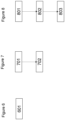
- Figure 6 illustrates potential operations that may be performed by an apparatus providing a P-CSCF functionality.
- the P-CSCF sends a first registration request to a network repository function for registering the P-CSCF with the network repository function.
- the first registration request may comprise at least one first identifier for the P-CSCF over an interface between the P-CSCF and a user equipment. This interface between the P-CSCF and the user equipment may be a Gm interface.
- the at least one first identifier may comprise at least one of a fully qualified domain name, an IPv6 address, and an IPv4 address.
- the at least one first identifier may comprise multiple identifiers for the interface between the P-CSCF and a user equipment.
- the at least one first identifier may be provided with an indication that it is an identifier for the Gm interface. This indication may be provided in the form of the at least one identifier being provided in a particular/designated information element in the registration request.
- the at least one first identifier may be provided in the form of a list.
- the P-CSCF may send a second registration request to the network repository function.
- the second registration request comprises at least one second identifier for the P-CSCF for use by network functions in a core network comprising the network repository function. These at least one second identifiers may be different to the at least one first identifiers.
- the first registration request and the second registration request may be sent as part of the same message and/or data packet. To this effect, the first registration request may be said to be comprised within the second registration request.
- the first registration request may comprise a data network name or a network slice identifier associated with the at least one first identifier.
- the P-CSCF may send multiple sets of "at least one first identifier", each set having a respective different data network name or network slice identifier. There need not be the same number of identifiers in each set, merely that each set be associated with a data network name or network slice identifier and be used for a Gm interface. These different sets may thus then be used in different data networks or network slices, with the network repository function using the data network names or network slice identifiers to determine which set of "at least one network name or network slice identifier" to provide in response to a request for a P-CSCF identifier.
- these different sets may be used in different data networks or network slices, with a network function and/or a session management function using the data network names or network slice identifiers received in the P-CSCF profile discovered from the NRF to determine which set of "at least one network name or network slice identifier" to use as Gm address for the UE.
- Figure 7 illustrates potential operations that may be performed by an apparatus providing the functionality of a network repository function in a core network. This apparatus may interact with the apparatus of Figure 6 .
- the NRF receives a first registration request from a Proxy Call Session Control Function (P-CSCF).
- the first registration request may comprise at least one first identifier for the P-CSCF over an interface between the P-CSCF and a user equipment. This interface may be a Gm interface.
- the at least one first identifier may comprise at least one of a fully qualified domain name, an IPv6 address, and an IPv4 address.
- the at least one first identifier may comprise multiple identifiers for the interface between the P-CSCF and a user equipment.
- the at least one first identifier may be provided with an indication that it is an identifier for the Gm interface. This indication may be provided in the form of the at least one identifier being provided in a particular/designated information element in the registration request.
- the at least one first identifier may be provided in the form of a list.
- the NRF registers the P-CSCF using the at least one first identifier.
- the NRF may add to (or create) a profile for the P-CSCF that may be used by the NRF to provide at least one identifier for the P-CSCF to at least one other network entity, such as a network function and/or a session management function.
- the NRF may receive a second registration request.
- the second registration request may comprise at least one second identifier for the P-CSCF for use by network functions in a core network comprising the network repository function. These at least one second identifiers may be different to the at least one first identifiers.
- the first registration request and the second registration request may be sent as part of the same message and/or data packet. To this effect, the first registration request may be said to be comprised within the second registration request.
- the first registration request may comprise a data network name or network slice identifier associated with the at least one first identifier.
- the NRF may receive multiple sets of "at least one first identifier" in respect of a single P-CSCF, each set having a respective different data network name or network slice identifier. There need not be the same number of identifiers in each set, merely that each set be associated with a data network name and be used for a Gm interface. These different sets may thus then be used in different data networks, with the network repository function using the data network names or network slice identifiers to determine which set of "at least one network name or network slice identifier" to provide in response to a request for a P-CSCF identifier.
- the NRF may store the data network name or network slice identifier with the associated at least one first identifier. For example, the NRF may store the data network name or network slice identifier as part of the profile for the P-CSCF.
- Figure 8 illustrates potential operations that may be performed by an apparatus providing functionality of a session management function. This apparatus may interact with the apparatus of Figure 7 .
- the SMF receives from a network repository function a profile for at least one Proxy Call Session Control Function (P-CSCF).
- P-CSCF Proxy Call Session Control Function
- the SMF selects at least one first identifier for the P-CSCF over an interface between the P-CSCF and a user equipment.
- the SMF may select at least one first identifier that may be used over a Gm interface.
- the at least one first identifier may comprise at least one of a fully qualified domain name, an IPv6 address, and an IPv4 address.
- the at least one first identifier may comprise multiple identifiers for the interface between the P-CSCF and a user equipment.
- the at least one first identifier may be provided with an indication that it is an identifier for the Gm interface. This indication may be provided in the form of the at least one identifier being provided in a particular/designated information element in the registration request.
- the SMF may be able to distinguish between identifiers for a Gm interface in the profile and identifiers for non-interfaces in the profile.
- the profile may comprise at least one second identifier for the P-CSCF for use by network functions in a core network comprising the network repository function.
- the at least one first identifier may be different to the at least one second identifier.
- the at least one first identifier may comprise at least one of a fully qualified domain name, an IPv6 address, and an IPv4 address.
- the at least one first identifier may comprise multiple identifiers for the interface between the P-CSCF and a user equipment.
- the SMF provides the selected at least one first identifier to the user equipment.
- the SMF may send a request to the network repository function to be notified when a change is made to the profile at the network repository function. This request may be sent before 801 is performed.
- the SMF may send a request to the network repository function for identifying at least one P-CSCF for facilitating provision of a service to the user equipment. This request may be sent before 801 is performed.
- the profile may comprise at least one of a data network name and a network slice identifier associated with the at least one first identifier.
- the selecting of 802 may be performed using at least one of said data network name and network slice identifier.
- the NRF may receive a discovery request for a P-CSCF from a session management function on behalf of a user equipment.
- the NRF may provide the at least one first identifier to the session management function in response to the discovery request.
- This provision may be made in response to a selection of at least one P-CSCF provided by the NRF.
- the selection may comprise determining which identifiers to use by using a data network name or network slice identifier associated with the SMF and with respective identifiers of a P-CSCF.
- Figure 2 shows an example of a control apparatus for a communication system, for example to be coupled to and/or for controlling a station of an access system, such as a RAN node, e.g. a base station, gNB, a central unit of a cloud architecture or a node of a core network such as an MME or S-GW, a scheduling entity such as a spectrum management entity, or a server or host, for example an apparatus hosting an NRF, NWDAF, AMF, SMF, UDM/UDR etc.
- the control apparatus may be integrated with or external to a node or module of a core network or RAN.
- base stations comprise a separate control apparatus unit or module.
- control apparatus can be another network element such as a radio network controller or a spectrum controller.
- the control apparatus 200 can be arranged to provide control on communications in the service area of the system.
- the apparatus 200 comprises at least one memory 201, at least one data processing unit 202, 203 and an input/output interface 204. Via the interface the control apparatus can be coupled to a receiver and a transmitter of the apparatus.
- the receiver and/or the transmitter may be implemented as a radio front end or a remote radio head.
- the control apparatus 200 or processor 201 can be configured to execute an appropriate software code to provide the control functions.
- a possible wireless communication device will now be described in more detail with reference to Figure 3 showing a schematic, partially sectioned view of a communication device 300.
- a communication device is often referred to as user equipment (UE) or terminal.
- An appropriate mobile communication device may be provided by any device capable of sending and receiving radio signals.
- Non-limiting examples comprise a mobile station (MS) or mobile device such as a mobile phone or what is known as a 'smart phone', a computer provided with a wireless interface card or other wireless interface facility (e.g., USB dongle), personal data assistant (PDA) or a tablet provided with wireless communication capabilities, or any combinations of these or the like.
- MS mobile station
- PDA personal data assistant
- a mobile communication device may provide, for example, communication of data for carrying communications such as voice, electronic mail (email), text message, multimedia and so on. Users may thus be offered and provided numerous services via their communication devices. Non-limiting examples of these services comprise two-way or multi-way calls, data communication or multimedia services or simply an access to a data communications network system, such as the Internet. Users may also be provided broadcast or multicast data. Non-limiting examples of the content comprise downloads, television and radio programs, videos, advertisements, various alerts and other information.
- a wireless communication device may be for example a mobile device, that is, a device not fixed to a particular location, or it may be a stationary device.
- the wireless device may need human interaction for communication, or may not need human interaction for communication.
- the terms UE or "user" are used to refer to any type of wireless communication device.
- the wireless device 300 may receive signals over an air or radio interface 307 via appropriate apparatus for receiving and may transmit signals via appropriate apparatus for transmitting radio signals.
- transceiver apparatus is designated schematically by block 306.
- the transceiver apparatus 306 may be provided for example by means of a radio part and associated antenna arrangement.
- the antenna arrangement may be arranged internally or externally to the wireless device.
- a wireless device is typically provided with at least one data processing entity 301, at least one memory 302 and other possible components 303 for use in software and hardware aided execution of tasks it is designed to perform, including control of access to and communications with access systems and other communication devices.
- the data processing, storage and other relevant control apparatus can be provided on an appropriate circuit board and/or in chipsets. This feature is denoted by reference 704.
- the user may control the operation of the wireless device by means of a suitable user interface such as key pad 305, voice commands, touch sensitive screen or pad, combinations thereof or the like.
- a display 308, a speaker and a microphone can be also provided.
- a wireless communication device may comprise appropriate connectors (either wired or wireless) to other devices and/or for connecting external accessories, for example hands-free equipment, thereto.
- Figure 4 shows a schematic representation of non-volatile memory media 400a (e.g. computer disc (CD) or digital versatile disc (DVD)) and 400b (e.g. universal serial bus (USB) memory stick) storing instructions and/or parameters 402 which when executed by a processor allow the processor to perform one or more of the steps of the methods of Figure 10.
- CD computer disc
- DVD digital versatile disc
- USB universal serial bus
- some embodiments may be implemented in hardware or special purpose circuits, software, logic or any combination thereof.
- some aspects may be implemented in hardware, while other aspects may be implemented in firmware or software which may be executed by a controller, microprocessor or other computing device, although embodiments are not limited thereto.
- firmware or software which may be executed by a controller, microprocessor or other computing device, although embodiments are not limited thereto. While various embodiments may be illustrated and described as block diagrams, flow charts, or using some other pictorial representation, it is well understood that these blocks, apparatus, systems, techniques or methods described herein may be implemented in, as non-limiting examples, hardware, software, firmware, special purpose circuits or logic, general purpose hardware or controller or other computing devices, or some combination thereof.
- the embodiments may be implemented by computer software stored in a memory and executable by at least one data processor of the involved entities or by hardware, or by a combination of software and hardware. Further in this regard it should be noted that any procedures, e.g., as in Figure 10, may represent program steps, or interconnected logic circuits, blocks and functions, or a combination of program steps and logic circuits, blocks and functions.
- the software may be stored on such physical media as memory chips, or memory blocks implemented within the processor, magnetic media such as hard disk or floppy disks, and optical media such as for example DVD and the data variants thereof, CD.
- the memory may be of any type suitable to the local technical environment and may be implemented using any suitable data storage technology, such as semiconductor-based memory devices, magnetic memory devices and systems, optical memory devices and systems, fixed memory and removable memory.
- the data processors may be of any type suitable to the local technical environment, and may include one or more of general purpose computers, special purpose computers, microprocessors, digital signal processors (DSPs), application specific integrated circuits (ASIC), gate level circuits and processors based on multi-core processor architecture, as non-limiting examples.
- circuitry may be configured to perform one or more of the functions and/or method steps previously described. That circuitry may be provided in the base station and/or in the communications device.
- circuitry may refer to one or more or all of the following:
- circuitry also covers an implementation of merely a hardware circuit or processor (or multiple processors) or portion of a hardware circuit or processor and its (or their) accompanying software and/or firmware.
- circuitry also covers, for example integrated device.
Landscapes
- Engineering & Computer Science (AREA)
- Computer Networks & Wireless Communication (AREA)
- Signal Processing (AREA)
- Multimedia (AREA)
- Business, Economics & Management (AREA)
- General Business, Economics & Management (AREA)
- Computer Security & Cryptography (AREA)
- Mobile Radio Communication Systems (AREA)
- Data Exchanges In Wide-Area Networks (AREA)
Claims (12)
- Appareil pour une fonction de contrôle de session d'appel mandataire, P-CSCF, l'appareil comprenant :des moyens pour envoyer une demande d'enregistrement à une fonction de référentiel de fonction de réseau pour enregistrer la P-CSCF avec la fonction de référentiel de fonction de réseau, la demande d'enregistrement comprenant au moins une première adresse pour la P-CSCF sur une interface entre la P-CSCF et un équipement utilisateur et au moins une deuxième adresse pour la P-CSCF à utiliser par des fonctions de réseau dans un réseau central comprenant la fonction de référentiel de fonction de réseau,caractérisé en ce que l'au moins une première adresse est différente de l'au moins une deuxième adresse.
- Appareil pour une fonction de référentiel de fonction de réseau, l'appareil comprenant :des moyens pour recevoir une demande d'enregistrement d'une fonction de contrôle de session d'appel mandataire, P-CSCF, la demande d'enregistrement comprenant au moins une première adresse pour la P-CSCF sur une interface entre la P-CSCF et un équipement utilisateur et au moins une deuxième adresse pour la P-CSCF à utiliser par des fonctions de réseau dans un réseau central comprenant la fonction de référentiel de fonction de réseau ; etdes moyens pour enregistrer la P-CSCF en utilisant l'au moins une première adresse et l'au moins une deuxième adresse ;caractérisé en ce que l'au moins une première adresse est différente de l'au moins une deuxième adresse.
- Appareil selon la revendication 2, comprenant en outre :des moyens pour recevoir une demande de découverte pour une P-CSCF à partir d'une fonction de gestion de session de la part d'un équipement utilisateur ; etdes moyens pour fournir l'au moins une première adresse à la fonction de gestion de session en réponse à la demande de découverte.
- Appareil pour une fonction de gestion de session, comprenant :des moyens pour recevoir d'une fonction de référentiel de fonction de réseau un profil pour au moins une fonction de contrôle de session d'appel mandataire, P-CSCF, dans lequel le profil comprend au moins une première adresse pour la P-CSCF sur une interface entre la P-CSCF et un équipement utilisateur et au moins une deuxième adresse pour la P-CSCF à utiliser par des fonctions de réseau dans un réseau central ;des moyens pour sélectionner, parmi l'au moins une première adresse et l'au moins une deuxième adresse, l'au moins une première adresse ; etdes moyens pour fournir l'au moins une première adresse sélectionnée à l'équipement utilisateur ;caractérisé en ce que l'au moins une première adresse est différente de l'au moins une deuxième adresse.
- Appareil selon la revendication 4, dans lequel le réseau central comprend la fonction de référentiel de fonction de réseau.
- Appareil selon la revendication 4 ou 5, comprenant en outre des moyens pour envoyer une demande à la fonction de référentiel de fonction de réseau à notifier lorsqu'une modification est apportée au profil dans la fonction de référentiel de fonction de réseau.
- Appareil selon l'une des revendications 4 à 6, comprenant des moyens pour envoyer une demande à la fonction de référentiel de fonction de réseau pour identifier au moins une P-CSCF afin de faciliter la fourniture d'un service à l'équipement utilisateur.
- Appareil selon l'une des revendications précédentes, dans lequel l'au moins une première adresse comprend au moins un parmi un nom de domaine entièrement qualifié, une adresse IPv6, et une adresse IPv4.
- Procédé pour un appareil pour une fonction de contrôle de session d'appel mandataire, P-CSCF, le procédé comprenant les étapes suivantes :envoyer une demande d'enregistrement à une fonction de référentiel de fonction de réseau pour enregistrer la P-CSCF avec la fonction de référentiel de fonction de réseau, la demande d'enregistrement comprenant au moins une première adresse pour la P-CSCF sur une interface entre la P-CSCF et un équipement utilisateur et au moins une deuxième adresse pour la P-CSCF à utiliser par des fonctions de réseau dans un réseau central comprenant la fonction de référentiel de fonction de réseau,caractérisé en ce que l'au moins une première adresse est différente de l'au moins une deuxième adresse.
- Procédé pour un appareil pour une fonction de référentiel de fonction de réseau, le procédé comprenant les étapes suivantes :recevoir une demande d'enregistrement d'une fonction de contrôle de session d'appel mandataire, P-CSCF, la demande d'enregistrement comprenant au moins une première adresse pour la P-CSCF sur une interface entre la P-CSCF et un équipement utilisateur et au moins une deuxième adresse pour la P-CSCF à utiliser par des fonctions de réseau dans un réseau central comprenant la fonction de référentiel de fonction de réseau ; etenregistrer la P-CSCF en utilisant l'au moins une première adresse et l'au moins une deuxième adresse ;caractérisé en ce que l'au moins une première adresse est différente de l'au moins une deuxième adresse.
- Procédé pour un appareil pour une fonction de gestion de session, le procédé comprenant les étapes suivantes :recevoir d'une fonction de référentiel de fonction de réseau un profil pour au moins une fonction de contrôle de session d'appel mandataire, P-CSCF, dans lequel le profil comprend au moins une première adresse pour la P-CSCF sur une interface entre la P-CSCF et un équipement utilisateur et au moins une deuxième adresse pour la P-CSCF à utiliser par des fonctions de réseau dans un réseau central ;sélectionner, parmi l'au moins une première adresse et l'au moins une deuxième adresse, l'au moins une première adresse ; etfournir l'au moins une première adresse sélectionnée à l'équipement utilisateur ;caractérisé en ce que l'au moins une première adresse est différente de l'au moins une deuxième adresse.
- Produit programme informatique comprenant des instructions qui, lorsqu'elles sont exécutées par un ordinateur, amènent l'ordinateur à mettre en œuvre un procédé selon l'une des revendications 9, 10 ou 11.
Applications Claiming Priority (1)
| Application Number | Priority Date | Filing Date | Title |
|---|---|---|---|
| IN202011046294 | 2020-10-23 |
Publications (2)
| Publication Number | Publication Date |
|---|---|
| EP3989518A1 EP3989518A1 (fr) | 2022-04-27 |
| EP3989518B1 true EP3989518B1 (fr) | 2025-06-25 |
Family
ID=78332599
Family Applications (1)
| Application Number | Title | Priority Date | Filing Date |
|---|---|---|---|
| EP21203639.6A Active EP3989518B1 (fr) | 2020-10-23 | 2021-10-20 | Appareil, procédés et programmes informatiques |
Country Status (3)
| Country | Link |
|---|---|
| US (1) | US12074920B2 (fr) |
| EP (1) | EP3989518B1 (fr) |
| CN (1) | CN114501611B (fr) |
Families Citing this family (7)
| Publication number | Priority date | Publication date | Assignee | Title |
|---|---|---|---|---|
| WO2022211686A1 (fr) * | 2021-03-31 | 2022-10-06 | Telefonaktiebolaget Lm Ericsson (Publ) | Premier nœud ims, premier nœud de réseau central, second nœud ims, et procédés exécutés dans ceux-ci |
| US12413434B1 (en) * | 2021-04-02 | 2025-09-09 | T-Mobile Usa, Inc. | Service aware proxy-call session control function (P-CSCF) traffic routing |
| EP4181465B1 (fr) * | 2021-11-12 | 2026-02-18 | Nokia Technologies Oy | Sécurité de réseau |
| US12150048B2 (en) * | 2021-12-06 | 2024-11-19 | T-Mobile Usa, Inc. | Proxy-call session control function (P-CSCF) selection by traffic type |
| US20250063073A1 (en) * | 2022-01-07 | 2025-02-20 | Telefonaktiebolaget Lm Ericsson (Publ) | Method and apparatus for p-cscf restoration and p-cscf information registration |
| US12250250B2 (en) * | 2022-05-03 | 2025-03-11 | At&T Intellectual Property I, L.P. | System to create and manage IMS functional resource profile groups for alignment with 5G slices |
| US12317181B2 (en) | 2022-06-28 | 2025-05-27 | At&T Intellectual Property I, L.P. | System and method for deployment of 5G and next-generation core with IMS core for real-time applications |
Family Cites Families (8)
| Publication number | Priority date | Publication date | Assignee | Title |
|---|---|---|---|---|
| US10791496B2 (en) * | 2016-06-30 | 2020-09-29 | T-Mobile Usa, Inc. | Restoration of serving call session control and application server function |
| CN109274512B (zh) | 2017-07-17 | 2021-12-07 | 中兴通讯股份有限公司 | 一种代理呼叫业务控制功能的管理方法及装置 |
| CN110086757B (zh) | 2018-01-26 | 2020-08-07 | 华为技术有限公司 | 通信方法和通信装置 |
| EP4401382A3 (fr) * | 2018-02-02 | 2024-07-31 | Telefonaktiebolaget LM Ericsson (publ) | Découverte de p-cscf à base de service |
| US11039018B2 (en) * | 2018-09-13 | 2021-06-15 | Ofinno, Llc | Charging control with SMF and PCF |
| US11050796B2 (en) | 2019-01-18 | 2021-06-29 | T-Mobile Usa, Inc. | Interface session discovery within wireless communication networks |
| US11129215B2 (en) | 2019-02-15 | 2021-09-21 | Ofinno, Llc | Location based selection of localized proxy application server |
| US20220201639A1 (en) | 2019-04-02 | 2022-06-23 | Telefonaktiebolaget Lm Ericsson (Publ) | Ims registration |
-
2021
- 2021-10-20 EP EP21203639.6A patent/EP3989518B1/fr active Active
- 2021-10-21 US US17/507,146 patent/US12074920B2/en active Active
- 2021-10-25 CN CN202111239506.4A patent/CN114501611B/zh active Active
Also Published As
| Publication number | Publication date |
|---|---|
| EP3989518A1 (fr) | 2022-04-27 |
| US12074920B2 (en) | 2024-08-27 |
| US20220131911A1 (en) | 2022-04-28 |
| CN114501611A (zh) | 2022-05-13 |
| CN114501611B (zh) | 2024-09-10 |
Similar Documents
| Publication | Publication Date | Title |
|---|---|---|
| EP3989518B1 (fr) | Appareil, procédés et programmes informatiques | |
| US11991660B2 (en) | Apparatus, methods, and computer programs | |
| US12160482B2 (en) | Apparatus, methods, and computer programs | |
| US8645408B2 (en) | Discovery of application server in an IP network | |
| US20230413214A1 (en) | Method, apparatus and computer program | |
| US9049202B2 (en) | Embedding user equipment information within third party registration messages | |
| US20230284292A1 (en) | Network repository function registration | |
| US20230008647A1 (en) | Connection establishment method, communication apparatus, and system | |
| KR20230107742A (ko) | 네트워크 기능 등록 방법, 발견 방법, 장치, 장비 및 매체 | |
| US20250175923A1 (en) | Apparatus, method, and computer program | |
| CN118891925A (zh) | 实现从无线电接入网络节点到5g核心网络功能的直接的基于服务的请求 | |
| US12200616B2 (en) | Edge computing | |
| US20240129837A1 (en) | Methods, apparatuses and computer program products for identifying an access network node | |
| US20250159025A1 (en) | Method, apparatus and computer program | |
| EP4665070A1 (fr) | Procédé d'établissement de canal de données, appareil, dispositif de réseau central et support de stockage | |
| EP4255001A1 (fr) | Mécanisme d'accès à des données d'abonnement | |
| JP2026500097A (ja) | 装置、方法、およびコンピュータプログラム | |
| WO2025180857A1 (fr) | Appareil, procédé et programme informatique | |
| WO2025153757A1 (fr) | Appareil, procédé et programme informatique pour exposition directe | |
| HK40048395B (zh) | 地址信息发送方法、获取方法、装置、设备及介质 | |
| WO2019092311A1 (fr) | Procédé, appareil, et programme informatique pour déterminer une application de services de proximité |
Legal Events
| Date | Code | Title | Description |
|---|---|---|---|
| PUAI | Public reference made under article 153(3) epc to a published international application that has entered the european phase |
Free format text: ORIGINAL CODE: 0009012 |
|
| STAA | Information on the status of an ep patent application or granted ep patent |
Free format text: STATUS: THE APPLICATION HAS BEEN PUBLISHED |
|
| AK | Designated contracting states |
Kind code of ref document: A1 Designated state(s): AL AT BE BG CH CY CZ DE DK EE ES FI FR GB GR HR HU IE IS IT LI LT LU LV MC MK MT NL NO PL PT RO RS SE SI SK SM TR |
|
| STAA | Information on the status of an ep patent application or granted ep patent |
Free format text: STATUS: REQUEST FOR EXAMINATION WAS MADE |
|
| 17P | Request for examination filed |
Effective date: 20221027 |
|
| RBV | Designated contracting states (corrected) |
Designated state(s): AL AT BE BG CH CY CZ DE DK EE ES FI FR GB GR HR HU IE IS IT LI LT LU LV MC MK MT NL NO PL PT RO RS SE SI SK SM TR |
|
| STAA | Information on the status of an ep patent application or granted ep patent |
Free format text: STATUS: EXAMINATION IS IN PROGRESS |
|
| 17Q | First examination report despatched |
Effective date: 20230531 |
|
| GRAP | Despatch of communication of intention to grant a patent |
Free format text: ORIGINAL CODE: EPIDOSNIGR1 |
|
| STAA | Information on the status of an ep patent application or granted ep patent |
Free format text: STATUS: GRANT OF PATENT IS INTENDED |
|
| INTG | Intention to grant announced |
Effective date: 20240827 |
|
| GRAJ | Information related to disapproval of communication of intention to grant by the applicant or resumption of examination proceedings by the epo deleted |
Free format text: ORIGINAL CODE: EPIDOSDIGR1 |
|
| STAA | Information on the status of an ep patent application or granted ep patent |
Free format text: STATUS: EXAMINATION IS IN PROGRESS |
|
| INTC | Intention to grant announced (deleted) | ||
| GRAP | Despatch of communication of intention to grant a patent |
Free format text: ORIGINAL CODE: EPIDOSNIGR1 |
|
| STAA | Information on the status of an ep patent application or granted ep patent |
Free format text: STATUS: GRANT OF PATENT IS INTENDED |
|
| INTG | Intention to grant announced |
Effective date: 20250206 |
|
| GRAS | Grant fee paid |
Free format text: ORIGINAL CODE: EPIDOSNIGR3 |
|
| GRAA | (expected) grant |
Free format text: ORIGINAL CODE: 0009210 |
|
| STAA | Information on the status of an ep patent application or granted ep patent |
Free format text: STATUS: THE PATENT HAS BEEN GRANTED |
|
| AK | Designated contracting states |
Kind code of ref document: B1 Designated state(s): AL AT BE BG CH CY CZ DE DK EE ES FI FR GB GR HR HU IE IS IT LI LT LU LV MC MK MT NL NO PL PT RO RS SE SI SK SM TR |
|
| REG | Reference to a national code |
Ref country code: GB Ref legal event code: FG4D |
|
| REG | Reference to a national code |
Ref country code: CH Ref legal event code: EP |
|
| REG | Reference to a national code |
Ref country code: CH Ref legal event code: EP |
|
| REG | Reference to a national code |
Ref country code: IE Ref legal event code: FG4D |
|
| REG | Reference to a national code |
Ref country code: DE Ref legal event code: R096 Ref document number: 602021032744 Country of ref document: DE |
|
| PG25 | Lapsed in a contracting state [announced via postgrant information from national office to epo] |
Ref country code: FI Free format text: LAPSE BECAUSE OF FAILURE TO SUBMIT A TRANSLATION OF THE DESCRIPTION OR TO PAY THE FEE WITHIN THE PRESCRIBED TIME-LIMIT Effective date: 20250625 |
|
| REG | Reference to a national code |
Ref country code: LT Ref legal event code: MG9D |
|
| PG25 | Lapsed in a contracting state [announced via postgrant information from national office to epo] |
Ref country code: NO Free format text: LAPSE BECAUSE OF FAILURE TO SUBMIT A TRANSLATION OF THE DESCRIPTION OR TO PAY THE FEE WITHIN THE PRESCRIBED TIME-LIMIT Effective date: 20250925 Ref country code: GR Free format text: LAPSE BECAUSE OF FAILURE TO SUBMIT A TRANSLATION OF THE DESCRIPTION OR TO PAY THE FEE WITHIN THE PRESCRIBED TIME-LIMIT Effective date: 20250926 |
|
| PGFP | Annual fee paid to national office [announced via postgrant information from national office to epo] |
Ref country code: IT Payment date: 20250922 Year of fee payment: 5 |
|
| PG25 | Lapsed in a contracting state [announced via postgrant information from national office to epo] |
Ref country code: BG Free format text: LAPSE BECAUSE OF FAILURE TO SUBMIT A TRANSLATION OF THE DESCRIPTION OR TO PAY THE FEE WITHIN THE PRESCRIBED TIME-LIMIT Effective date: 20250625 |
|
| PG25 | Lapsed in a contracting state [announced via postgrant information from national office to epo] |
Ref country code: HR Free format text: LAPSE BECAUSE OF FAILURE TO SUBMIT A TRANSLATION OF THE DESCRIPTION OR TO PAY THE FEE WITHIN THE PRESCRIBED TIME-LIMIT Effective date: 20250625 |
|
| PGFP | Annual fee paid to national office [announced via postgrant information from national office to epo] |
Ref country code: FR Payment date: 20250908 Year of fee payment: 5 |
|
| PG25 | Lapsed in a contracting state [announced via postgrant information from national office to epo] |
Ref country code: RS Free format text: LAPSE BECAUSE OF FAILURE TO SUBMIT A TRANSLATION OF THE DESCRIPTION OR TO PAY THE FEE WITHIN THE PRESCRIBED TIME-LIMIT Effective date: 20250925 |
|
| PG25 | Lapsed in a contracting state [announced via postgrant information from national office to epo] |
Ref country code: LV Free format text: LAPSE BECAUSE OF FAILURE TO SUBMIT A TRANSLATION OF THE DESCRIPTION OR TO PAY THE FEE WITHIN THE PRESCRIBED TIME-LIMIT Effective date: 20250625 |
|
| REG | Reference to a national code |
Ref country code: NL Ref legal event code: MP Effective date: 20250625 |
|
| PG25 | Lapsed in a contracting state [announced via postgrant information from national office to epo] |
Ref country code: NL Free format text: LAPSE BECAUSE OF FAILURE TO SUBMIT A TRANSLATION OF THE DESCRIPTION OR TO PAY THE FEE WITHIN THE PRESCRIBED TIME-LIMIT Effective date: 20250625 |
|
| PG25 | Lapsed in a contracting state [announced via postgrant information from national office to epo] |
Ref country code: PT Free format text: LAPSE BECAUSE OF FAILURE TO SUBMIT A TRANSLATION OF THE DESCRIPTION OR TO PAY THE FEE WITHIN THE PRESCRIBED TIME-LIMIT Effective date: 20251027 |
|
| REG | Reference to a national code |
Ref country code: AT Ref legal event code: MK05 Ref document number: 1807815 Country of ref document: AT Kind code of ref document: T Effective date: 20250625 |
|
| PG25 | Lapsed in a contracting state [announced via postgrant information from national office to epo] |
Ref country code: IS Free format text: LAPSE BECAUSE OF FAILURE TO SUBMIT A TRANSLATION OF THE DESCRIPTION OR TO PAY THE FEE WITHIN THE PRESCRIBED TIME-LIMIT Effective date: 20251025 |
|
| PGFP | Annual fee paid to national office [announced via postgrant information from national office to epo] |
Ref country code: DE Payment date: 20250902 Year of fee payment: 5 |
|
| PG25 | Lapsed in a contracting state [announced via postgrant information from national office to epo] |
Ref country code: AT Free format text: LAPSE BECAUSE OF FAILURE TO SUBMIT A TRANSLATION OF THE DESCRIPTION OR TO PAY THE FEE WITHIN THE PRESCRIBED TIME-LIMIT Effective date: 20250625 Ref country code: SM Free format text: LAPSE BECAUSE OF FAILURE TO SUBMIT A TRANSLATION OF THE DESCRIPTION OR TO PAY THE FEE WITHIN THE PRESCRIBED TIME-LIMIT Effective date: 20250625 |
|
| PG25 | Lapsed in a contracting state [announced via postgrant information from national office to epo] |
Ref country code: CZ Free format text: LAPSE BECAUSE OF FAILURE TO SUBMIT A TRANSLATION OF THE DESCRIPTION OR TO PAY THE FEE WITHIN THE PRESCRIBED TIME-LIMIT Effective date: 20250625 |
|
| PG25 | Lapsed in a contracting state [announced via postgrant information from national office to epo] |
Ref country code: PL Free format text: LAPSE BECAUSE OF FAILURE TO SUBMIT A TRANSLATION OF THE DESCRIPTION OR TO PAY THE FEE WITHIN THE PRESCRIBED TIME-LIMIT Effective date: 20250625 |
|
| PG25 | Lapsed in a contracting state [announced via postgrant information from national office to epo] |
Ref country code: EE Free format text: LAPSE BECAUSE OF FAILURE TO SUBMIT A TRANSLATION OF THE DESCRIPTION OR TO PAY THE FEE WITHIN THE PRESCRIBED TIME-LIMIT Effective date: 20250625 |
|
| PG25 | Lapsed in a contracting state [announced via postgrant information from national office to epo] |
Ref country code: SK Free format text: LAPSE BECAUSE OF FAILURE TO SUBMIT A TRANSLATION OF THE DESCRIPTION OR TO PAY THE FEE WITHIN THE PRESCRIBED TIME-LIMIT Effective date: 20250625 |
|
| PG25 | Lapsed in a contracting state [announced via postgrant information from national office to epo] |
Ref country code: ES Free format text: LAPSE BECAUSE OF FAILURE TO SUBMIT A TRANSLATION OF THE DESCRIPTION OR TO PAY THE FEE WITHIN THE PRESCRIBED TIME-LIMIT Effective date: 20250625 |
|
| PG25 | Lapsed in a contracting state [announced via postgrant information from national office to epo] |
Ref country code: RO Free format text: LAPSE BECAUSE OF FAILURE TO SUBMIT A TRANSLATION OF THE DESCRIPTION OR TO PAY THE FEE WITHIN THE PRESCRIBED TIME-LIMIT Effective date: 20250625 |
|
| PG25 | Lapsed in a contracting state [announced via postgrant information from national office to epo] |
Ref country code: DK Free format text: LAPSE BECAUSE OF FAILURE TO SUBMIT A TRANSLATION OF THE DESCRIPTION OR TO PAY THE FEE WITHIN THE PRESCRIBED TIME-LIMIT Effective date: 20250625 |
|
| PLBE | No opposition filed within time limit |
Free format text: ORIGINAL CODE: 0009261 |
|
| STAA | Information on the status of an ep patent application or granted ep patent |
Free format text: STATUS: NO OPPOSITION FILED WITHIN TIME LIMIT |