EP3991016B1 - Détection de proximité d'objet par détection de surface tactile et détection ultrasonore - Google Patents
Détection de proximité d'objet par détection de surface tactile et détection ultrasonore Download PDFInfo
- Publication number
- EP3991016B1 EP3991016B1 EP20830745.4A EP20830745A EP3991016B1 EP 3991016 B1 EP3991016 B1 EP 3991016B1 EP 20830745 A EP20830745 A EP 20830745A EP 3991016 B1 EP3991016 B1 EP 3991016B1
- Authority
- EP
- European Patent Office
- Prior art keywords
- touch sensitive
- touch
- audio signal
- interaction
- sensitive screen
- Prior art date
- Legal status (The legal status is an assumption and is not a legal conclusion. Google has not performed a legal analysis and makes no representation as to the accuracy of the status listed.)
- Active
Links
Images





Classifications
-
- G—PHYSICS
- G06—COMPUTING OR CALCULATING; COUNTING
- G06F—ELECTRIC DIGITAL DATA PROCESSING
- G06F3/00—Input arrangements for transferring data to be processed into a form capable of being handled by the computer; Output arrangements for transferring data from processing unit to output unit, e.g. interface arrangements
- G06F3/01—Input arrangements or combined input and output arrangements for interaction between user and computer
- G06F3/03—Arrangements for converting the position or the displacement of a member into a coded form
- G06F3/041—Digitisers, e.g. for touch screens or touch pads, characterised by the transducing means
- G06F3/043—Digitisers, e.g. for touch screens or touch pads, characterised by the transducing means using propagating acoustic waves
-
- G—PHYSICS
- G01—MEASURING; TESTING
- G01S—RADIO DIRECTION-FINDING; RADIO NAVIGATION; DETERMINING DISTANCE OR VELOCITY BY USE OF RADIO WAVES; LOCATING OR PRESENCE-DETECTING BY USE OF THE REFLECTION OR RERADIATION OF RADIO WAVES; ANALOGOUS ARRANGEMENTS USING OTHER WAVES
- G01S15/00—Systems using the reflection or reradiation of acoustic waves, e.g. sonar systems
- G01S15/02—Systems using the reflection or reradiation of acoustic waves, e.g. sonar systems using reflection of acoustic waves
- G01S15/50—Systems of measurement, based on relative movement of the target
- G01S15/52—Discriminating between fixed and moving objects or between objects moving at different speeds
- G01S15/523—Discriminating between fixed and moving objects or between objects moving at different speeds for presence detection
-
- G—PHYSICS
- G01—MEASURING; TESTING
- G01S—RADIO DIRECTION-FINDING; RADIO NAVIGATION; DETERMINING DISTANCE OR VELOCITY BY USE OF RADIO WAVES; LOCATING OR PRESENCE-DETECTING BY USE OF THE REFLECTION OR RERADIATION OF RADIO WAVES; ANALOGOUS ARRANGEMENTS USING OTHER WAVES
- G01S15/00—Systems using the reflection or reradiation of acoustic waves, e.g. sonar systems
- G01S15/02—Systems using the reflection or reradiation of acoustic waves, e.g. sonar systems using reflection of acoustic waves
- G01S15/50—Systems of measurement, based on relative movement of the target
- G01S15/58—Velocity or trajectory determination systems; Sense-of-movement determination systems
- G01S15/586—Velocity or trajectory determination systems; Sense-of-movement determination systems using transmission of continuous unmodulated waves, amplitude-, frequency-, or phase-modulated waves and based upon the Doppler effect resulting from movement of targets
-
- G—PHYSICS
- G06—COMPUTING OR CALCULATING; COUNTING
- G06F—ELECTRIC DIGITAL DATA PROCESSING
- G06F3/00—Input arrangements for transferring data to be processed into a form capable of being handled by the computer; Output arrangements for transferring data from processing unit to output unit, e.g. interface arrangements
- G06F3/01—Input arrangements or combined input and output arrangements for interaction between user and computer
- G06F3/03—Arrangements for converting the position or the displacement of a member into a coded form
- G06F3/033—Pointing devices displaced or positioned by the user, e.g. mice, trackballs, pens or joysticks; Accessories therefor
- G06F3/0354—Pointing devices displaced or positioned by the user, e.g. mice, trackballs, pens or joysticks; Accessories therefor with detection of two-dimensional [2D] relative movements between the device, or an operating part thereof, and a plane or surface, e.g. 2D mice, trackballs, pens or pucks
- G06F3/03545—Pens or stylus
-
- G—PHYSICS
- G06—COMPUTING OR CALCULATING; COUNTING
- G06F—ELECTRIC DIGITAL DATA PROCESSING
- G06F3/00—Input arrangements for transferring data to be processed into a form capable of being handled by the computer; Output arrangements for transferring data from processing unit to output unit, e.g. interface arrangements
- G06F3/01—Input arrangements or combined input and output arrangements for interaction between user and computer
- G06F3/03—Arrangements for converting the position or the displacement of a member into a coded form
- G06F3/041—Digitisers, e.g. for touch screens or touch pads, characterised by the transducing means
- G06F3/0416—Control or interface arrangements specially adapted for digitisers
-
- G—PHYSICS
- G06—COMPUTING OR CALCULATING; COUNTING
- G06F—ELECTRIC DIGITAL DATA PROCESSING
- G06F3/00—Input arrangements for transferring data to be processed into a form capable of being handled by the computer; Output arrangements for transferring data from processing unit to output unit, e.g. interface arrangements
- G06F3/01—Input arrangements or combined input and output arrangements for interaction between user and computer
- G06F3/03—Arrangements for converting the position or the displacement of a member into a coded form
- G06F3/041—Digitisers, e.g. for touch screens or touch pads, characterised by the transducing means
- G06F3/0416—Control or interface arrangements specially adapted for digitisers
- G06F3/0418—Control or interface arrangements specially adapted for digitisers for error correction or compensation, e.g. based on parallax, calibration or alignment
- G06F3/04186—Touch location disambiguation
-
- G—PHYSICS
- G01—MEASURING; TESTING
- G01S—RADIO DIRECTION-FINDING; RADIO NAVIGATION; DETERMINING DISTANCE OR VELOCITY BY USE OF RADIO WAVES; LOCATING OR PRESENCE-DETECTING BY USE OF THE REFLECTION OR RERADIATION OF RADIO WAVES; ANALOGOUS ARRANGEMENTS USING OTHER WAVES
- G01S15/00—Systems using the reflection or reradiation of acoustic waves, e.g. sonar systems
- G01S15/86—Combinations of sonar systems with lidar systems; Combinations of sonar systems with systems not using wave reflection
-
- G—PHYSICS
- G01—MEASURING; TESTING
- G01S—RADIO DIRECTION-FINDING; RADIO NAVIGATION; DETERMINING DISTANCE OR VELOCITY BY USE OF RADIO WAVES; LOCATING OR PRESENCE-DETECTING BY USE OF THE REFLECTION OR RERADIATION OF RADIO WAVES; ANALOGOUS ARRANGEMENTS USING OTHER WAVES
- G01S7/00—Details of systems according to groups G01S13/00, G01S15/00, G01S17/00
- G01S7/52—Details of systems according to groups G01S13/00, G01S15/00, G01S17/00 of systems according to group G01S15/00
- G01S7/523—Details of pulse systems
- G01S7/526—Receivers
- G01S7/53—Means for transforming coordinates or for evaluating data, e.g. using computers
-
- G—PHYSICS
- G06—COMPUTING OR CALCULATING; COUNTING
- G06F—ELECTRIC DIGITAL DATA PROCESSING
- G06F2203/00—Indexing scheme relating to G06F3/00 - G06F3/048
- G06F2203/041—Indexing scheme relating to G06F3/041 - G06F3/045
- G06F2203/04101—2.5D-digitiser, i.e. digitiser detecting the X/Y position of the input means, finger or stylus, also when it does not touch, but is proximate to the digitiser's interaction surface and also measures the distance of the input means within a short range in the Z direction, possibly with a separate measurement setup
-
- G—PHYSICS
- G06—COMPUTING OR CALCULATING; COUNTING
- G06F—ELECTRIC DIGITAL DATA PROCESSING
- G06F2203/00—Indexing scheme relating to G06F3/00 - G06F3/048
- G06F2203/041—Indexing scheme relating to G06F3/041 - G06F3/045
- G06F2203/04106—Multi-sensing digitiser, i.e. digitiser using at least two different sensing technologies simultaneously or alternatively, e.g. for detecting pen and finger, for saving power or for improving position detection
Definitions
- a touch display screen can respond to finger contact of a user to activate the display to enable access to applications, functions, or features of the electronic device and/or to enable further processes to be performed. Contact also can be made with the touch display screen using tools, such as a stylus, or other parts of the body, such as an ear, a face, a palm and/or various parts of the finger of the user.
- a touch display screen can sense user inputs, such as a finger(s) or a stylus, associated with the user that come in contact with and/or in proximity to the surface of the touch display screen.
- the touch display screen can encapsulate the intended actions of the user with respect to the touch display screen as touch events and can communicate such touch events to a system to respond appropriately (e.g., accordingly) to the touch events (e.g., to enable access to and perform operations in connection with the applications, functions, or features of the electronic device and/or to enable further processes associated with the electronic device to be performed).
- a system to respond appropriately (e.g., accordingly) to the touch events (e.g., to enable access to and perform operations in connection with the applications, functions, or features of the electronic device and/or to enable further processes associated with the electronic device to be performed).
- unintentional touch or hover interactions may be reported to the system.
- a method can comprise emitting, by a system comprising a processor, an audio signal, comprising at least a first frequency, from an electronic device, wherein the electronic device comprises a touch sensitive screen.
- the method also can comprise detecting, by the system, a reflected audio signal comprising at least a second frequency, wherein the audio signal is reflected off of an object in proximity to the touch sensitive screen to produce the reflected audio signal.
- the method further can include determining, by the system, a movement status of the object in relation to the touch sensitive screen, based at least in part on a frequency shift between the first frequency of the audio signal and the second frequency of the reflected audio signal, to facilitate classifying an interaction of the object with the touch sensitive screen.
- a system can comprise at least one speaker configured to emit an ultrasonic audio signal, comprising at least a first frequency, from an electronic device, wherein the electronic device comprises a touch sensitive screen.
- the system also can comprise at least one audio sensor configured to sense a reflected ultrasonic audio signal comprising at least a second frequency, wherein the ultrasonic audio signal is reflected off of an object in proximity to the touch sensitive screen to produce the reflected ultrasonic audio signal.
- the system further can include a memory that stores executable components, and a processor, operatively coupled to the memory, that executes the executable components.
- the executable components can include a classification component configured to determine a movement status of the object in relation to the touch sensitive screen, based at least in part on a frequency shift between the first frequency of the ultrasonic audio signal and the second frequency of the reflected ultrasonic audio signal, to facilitate classifying an interaction of the object with the touch sensitive screen.
- a classification component configured to determine a movement status of the object in relation to the touch sensitive screen, based at least in part on a frequency shift between the first frequency of the ultrasonic audio signal and the second frequency of the reflected ultrasonic audio signal, to facilitate classifying an interaction of the object with the touch sensitive screen.
- a machine-readable medium can comprise executable instructions that, when executed by a processor, facilitate performance of operations.
- the operations can comprise transmitting an ultrasonic audio signal, comprising a first frequency, from an electronic device, wherein the electronic device comprises a touch sensitive surface.
- the operations also can include sensing a reflected ultrasonic audio signal comprising a second frequency, wherein the ultrasonic audio signal is reflected off of an object in proximity to the touch sensitive surface to produce the reflected ultrasonic audio signal.
- the operations further can comprise determining movement activity of the object in relation to the touch sensitive surface, based at least in part on a frequency shift between the first frequency of the ultrasonic audio signal and the second frequency of the reflected ultrasonic audio signal, to facilitate classifying an interaction of the object with the touch sensitive surface.
- One or more embodiments may be implemented in numerous ways, including as a process, an apparatus, a system, a device, a method, a computer readable medium such as a computer readable storage medium containing computer readable instructions or computer program code, or as a computer program product comprising a computer usable medium having a computer readable program code embodied therein.
- a touch display screen can comprise a touch sensitive surface that can respond to finger contact to activate and/or utilize the touch display screen for further processes. Contact also can be made with the touch display screen using tools, such as a stylus, other parts of the hand of the user, such as the palm and/or various parts of the finger, or other parts of the body, such as an ear or face of the user.
- a user of an electronic device can unintentionally and undesirably touch the touch display screen to activate the touch display screen and/or cause unintentional and undesirable operations to be performed by the electronic device based on the unintentional and undesirable touching of the touch display screen.
- the user can be using the electronic device (e.g., smart or mobile phone) to make a phone call and can place the touch display screen against or near the ear or face of the user, as the device can comprise a speaker that can be placed in proximity to the touch display screen.
- the ear or face of the user can undesirably interact with the touch display screen while the user is making the phone call, wherein, for example, the ear or cheek of the user can be touching or pressing against a button or control on the touch display screen, which can result in undesired operations being performed by the device.
- the user can be gripping the device in the user's hand, and one or more fingers of the user can be wrapped around the device such that the one or more fingers can unintentionally come in contact with or sufficient proximity to the touch display screen, or the palm or other body part of the user can unintentionally come in contact with or sufficient proximity to the touch display screen, to unintentionally activate the touch display screen and/or cause an unintentional operation(s) to be performed by the device, in response to the unintentional touch or hover interaction by the one or more fingers, palm, or other body part with the touch display screen.
- the touch display screen and other components of the device can be in an on state and undesirably and unnecessarily utilizing resources, including consuming power from the battery of the device, which can divert resources from being available for other operations of the device and/or can reduce available battery power in the short term and can shorten battery life of the battery in the long term.
- undesired contact or other undesired interaction e.g., hovering interaction
- the touch display screen and other components of the device can be in an on state and undesirably and unnecessarily utilizing resources, including consuming power from the battery of the device, which can divert resources from being available for other operations of the device and/or can reduce available battery power in the short term and can shorten battery life of the battery in the long term.
- the user's ear and/or face can be touching or hovering in proximity to, and interacting with, the touch display screen, which can result in the touch display screen and other components of the device being in an on state and/or performing operations, even though the user is not desiring to use or interact with the touch display screen while the device is being held against or in proximity to the user's ear during the phone call.
- the device e.g., mobile phone
- the user's ear and/or face can be touching or hovering in proximity to, and interacting with, the touch display screen, which can result in the touch display screen and other components of the device being in an on state and/or performing operations, even though the user is not desiring to use or interact with the touch display screen while the device is being held against or in proximity to the user's ear during the phone call.
- the disclosed subject matter can comprise a classification component that can analyze the ultrasound data, including the reflected audio signal comprising the second distribution of frequencies, the audio signal comprising the first distribution of frequencies, and/or a distribution of frequency shifts between the first distribution of frequencies of the audio signal and the second distribution of frequencies of the reflected audio signal. Based at least in part on the results of the analysis of the ultrasound data, the classification component can determine a movement status of the object in relation to the touch sensitive surface, and/or can classify a touch or hover interaction of the object with the touch sensitive surface.
- the classification component can perform classifications of touch or hover interactions of objects with the touch sensitive surface based at least in part on the ultrasound data and/or other sensor data.
- the touch sensitive device can comprise surface-related sensors (e.g., touch sensors) that can be associated with the touch sensitive surface, an accelerometer, a gyroscope, an inertial measurement unit (IMU), and/or another type of sensor.
- the surface-related sensors can detect whether a touch interaction of an object with the touch sensitive surface has occurred, and/or the accelerometer, gyroscope, and/or IMU can detect whether a touch or hover interaction has occurred and/or detect motion and/or orientation of the object or device.
- the classification component can receive the other sensor data (e.g., touch surface data, accelerometer data, gyroscope data, and/or IMU data) from those other sensors.
- the classification component can analyze the ultrasound data and/or the other sensor data. Based at least in part on the results of the analysis of the ultrasound data and/or the other sensor data, the classification component can classify the touch or hover interaction of the object with the touch sensitive surface, in accordance with defined classification criteria.
- the classification component can classify a touch or hover interaction of an object with the touch sensitive surface as an intentional touch interaction or an unintentional touch or hover interaction, and/or can further classify the particular type of touch or hover interaction (e.g., intentional finger touch interaction, intentional stylus touch interaction, unintentional finger touch or hover interaction, unintentional ear or face touch or hover interaction, unintentional stylus touch or hover interaction, or unintentional palm touch or hover interaction, ... ).
- intentional finger touch interaction intentional stylus touch interaction
- unintentional finger touch or hover interaction unintentional ear or face touch or hover interaction
- unintentional stylus touch or hover interaction unintentional palm touch or hover interaction
- the classification component (e.g., a classification engine of the classification component) can be trained, using machine learning, to desirably perform classifications of touch or hover interactions of objects with the touch sensitive surface.
- the classification component can comprise a machine learning component that can be trained (e.g., by a training component) to distinguish between and identify different types of touch or hover interactions with the touch sensitive surface, including distinguishing between and identifying intentional touch interactions and unintentional touch or hover interactions, and distinguishing between and identifying particular types of touch or hover interactions.
- the disclosed subject matter also can comprise an operation management component that can control operations associated with the touch sensitive device, including operations associated with the touch sensitive surface. For instance, in response to the classification component detecting an unintentional touch or hover interaction, the operation management component can reject the unintentional touch or hover interaction, disable a function of the touch sensitive surface, place (e.g., switch or maintain) the touch sensitive surface in a locked state, place (e.g., switch or maintain) the touch sensitive surface (e.g., touch display screen) of the device in an off state, and/or otherwise prevent an operation being performed on the device due to the unintentional touch or hover interaction.
- place e.g., switch or maintain
- place e.g., switch or maintain
- the touch sensitive surface e.g., touch display screen
- the operation management component can place (e.g., switch or maintain) the touch sensitive surface in an on state, place (e.g., switch or maintain) the touch sensitive surface in an unlocked state, and/or enable (e.g., allow) a touch sensitive function of the touch sensitive surface of the touch display screen and/or the operation(s) associated with the intentional touch interaction to be performed by the device (e.g., by the touch display screen, application associated with the device, ... ).
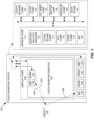
- FIG. 1 and FIG. 2 illustrate block diagrams of a front view and a side view, respectively, of an example touch sensitive device 100 that can utilize ultrasonic audio signals to determine a classification of a touch or hover interactions of an object with a touch sensitive surface of the touch sensitive device, in accordance with various aspects and embodiments of the disclosed subject matter.
- the touch sensitive device 100 can be or can comprise, for example, a mobile phone (e.g., a cellular phone and/or smart phone), a computer, a display table, a personal digital assistant (PDA), an electronic tablet or notebook (e.g., a touch sensitive graphic tablet or notebook), a web pad, electronic bodywear (e.g., a smart watch or other electronic bodywear that comprises a touch sensitive surface), an electronic gaming device, an electronic workstation, a television, an Internet protocol (IP) television, a set-top box, a device (e.g., touch sensitive device) in or integrated with a vehicle, a touch pad, a track pad, or other type of device.
- a mobile phone e.g., a cellular phone and/or smart phone
- PDA personal digital assistant
- an electronic tablet or notebook e.g., a touch sensitive graphic tablet or notebook
- a web pad e.g., a web pad
- electronic bodywear e.g., a smart watch or other electronic
- the touch sensitive device 100 can comprise a touch sensing component 102 (touch sensing comp. 102) that can comprise or be associated with a touch sensitive surface 104 that can sense when an object(s) 106 (e.g., finger(s) of a user, palm of the user, ear or face of the user, other body part of the user, or stylus) has been brought into contact with the touch sensitive surface 104 or is in proximity to (e.g., is hovering over and/or in proximity to) the touch sensitive surface 104.
- the touch sensitive surface 104 can be associated with (e.g., overlaid on) a display component 108 (display comp. 108), which can comprise a display screen that can present visual and/or textual content to a user.
- the touch sensitive surface 104 can have a size and shape that can be coextensive with or can correspond to, or at least can be substantially coextensive with or can substantially correspond to, the size and shape of a presentation area of the display screen of the display component 108.
- the touch sensitive device 100 also can comprise a sensor component 110 (sensor comp. 110) that can comprise a set of sensors, wherein respective sensors of the set of sensors can sense respective conditions (e.g., contact or hover conditions, pressure conditions, and/or motion conditions associated with the device 100, ... ) of or associated with the touch sensitive device 100.
- the set of sensors of the sensor component 110 can comprise surface-related sensors 112 (e.g., touch sensors) that can be part of or associated with the touch sensing component 102 and the touch sensitive surface 104.
- the surface-related sensors 112 can be configured to sense when an object(s) 106 is in contact with the touch sensitive surface 104 and generate sensor data, such as touch surface data (e.g., touch surface or touch screen data), relating to contact with the touch sensitive surface 104 by the object(s) 106, as more fully described herein.
- the surface-related sensors 112 can sense when an object(s) 106 is in proximity to (e.g., is hovering over and/or in proximity to) the touch sensitive surface 104.
- the sensor data can be employed to facilitate determining a classification relating to a contact or an association (e.g., hover) of an object(s) 106 with the touch sensitive surface 104, as more fully described herein.
- the set of sensors of the sensor component 110 also can include other sensors that can be configured to sense various conditions of or associated with the device 100.
- the sensor component 110 can comprise an ultrasound component 114 (ultrasound comp. 114) comprising an ultrasonic sensor, an accelerometer component 116 (acc. comp. 116) comprising one or more accelerometers, a gyroscope component 118 (gyro. comp. 118) comprising one or more gyroscopes, an IMU 120, and/or other sensors.
- ultrasound component 114 comprising an ultrasonic sensor
- an accelerometer component 116 acc. comp. 116
- a gyroscope component 118 gyro. comp. 118
- IMU 120 IMU 120
- the senor 106 can sense or detect motion (e.g., movement) of an object 106 in relation to the device 100, orientation of the device 100 or the object 106, a distance of the object 106 from the device 100 (e.g., a distance of the object 106 from the touch sensitive surface 104), and/or other conditions of or associated with the device 100 or object 106, as more fully described herein.
- the other sensor data can be employed to facilitate determining a classification relating to a contact (e.g., touch) or an association (e.g., hover) of an object(s) 106 with respect to the touch sensitive surface 104, as more fully described herein.
- the touch sensitive device 100 can comprise a classification component 122 (class. comp. 122) that can classify or determine touch or hover interactions of objects 106 with the touch sensitive surface 104 based at least in part on the results of analyzing sensor data received from the sensor component 110, in accordance with the defined classification criteria.
- the classification component 122 can monitor and receive sensor data (e.g., data streams from the various sensors of the sensor component 110), such as touch surface data, associated with the touch sensitive surface 104 obtained from the surface-related sensors 112, other sensor data (e.g., ultrasound data, accelerometer data, gyroscope data, and/or IMU data, ... ) obtained from the other sensors, and/or metadata associated with the device 100.
- sensor data e.g., data streams from the various sensors of the sensor component 110
- other sensor data e.g., ultrasound data, accelerometer data, gyroscope data, and/or IMU data, ...
- the classification component 122 can monitor the sensor data and the other sensor data to facilitate detecting touch or hover interactions or touch interactions of an object 106 with the touch sensitive surface 104 of the device 100.
- the classification component 122 can analyze the touch surface data, the other sensor data, and/or the metadata, and can generate analysis results based at least in part on the analysis of such data.
- the disclosed subject matter in addition to rejecting undesired (e.g., unintentional) touch or hover interactions, preventing undesired operations from being performed by the device 100 in response to undesired touch or hover interactions, and obviating having to use an infrared proximity sensor, the device 100, by employing the classification component 122, the ultrasound component 114, operations management component 124, and other components of the device 100, can reduce or minimize the undesired use of resources of the device 100, including the undesired consumption of power of the battery (not shown) of the device 100 and the undesired use of processing and other operation-performing resources of the device 100.
- the classification component 122, the ultrasound component 114, operations management component 124, and other components of the device 100 can reduce or minimize the undesired use of resources of the device 100, including the undesired consumption of power of the battery (not shown) of the device 100 and the undesired use of processing and other operation-performing resources of the device 100.
- the classification component 122 (or touch sensing component 102) can process and/or organize (e.g., arrange) the sensor data obtained from the surface-related sensors 112 of the sensor array 302 to generate frame data in the form of x, y dimensional data that can represent (e.g., correspond to) respective touch (or hover) interactions of an object(s) 106 with respective surface-related sensors 112 at the given time, wherein respective frame data associated with the respective surface-related sensors 112 can be or can comprise the respective sensor data of the respective surface-related sensors 112 or the respective frame data can be determined based at least in part on the respective sensor data.
- the other sensors of the sensor component 110 can comprise one or more motion-related sensors that can be employed to detect movement of an object 106 in relation to the touch sensitive surface 104, motion of the device 100 about or along one or more axes (e.g., x-axis, y-axis, and/or z-axis), and/or other motion-related characteristics of the object 106 or device 100, as well as orientation of the device 100, and can generate sensor data (e.g., ultrasound data, accelerometer data, or other motion-related sensor data) that can correspond to the movement of the object 106, motion of the device 100, other motion-related characteristics of the object 106 or device 100, and/or orientation of the device 100, detected by the one or more motion-related sensors.
- sensor data e.g., ultrasound data, accelerometer data, or other motion-related sensor data
- a multi-axis (e.g., two or three axis) motion-related sensor can generate first motion data relating to motion of the touch sensitive device along a first axis (e.g., x-axis), second motion data relating to motion of the touch sensitive device along a second axis (e.g., y-axis), and/or third motion data relating to motion of the touch sensitive device along a third axis (e.g., z-axis).
- first axis e.g., x-axis
- second motion data relating to motion of the touch sensitive device along a second axis
- third motion data relating to motion of the touch sensitive device along a third axis e.g., z-axis
- a motion-related sensor such as an accelerometer, gyroscope, IMU, and/or other type of motion-related sensor, can be a single-axis motion-related sensor or a multiple-axis (e.g., two-axis or three-axis) motion related sensor.
- the one or more motion-related sensors can monitor and sense motion of the device 100 at a desired sensing rate (e.g., a second or sub-second rate).
- the classification component 122 in response to determining that the device 100 is in an in-call state or an active state (e.g., the touch sensitive surface 104 is in an active state), can have the buffer component 138 store the motion data, the touch surface data (e.g., obtained from the surface-related sensors 112), or other desired data (e.g., orientation data) to facilitate analysis of such data by the classification component 122.
- the buffer component 138 store the motion data, the touch surface data (e.g., obtained from the surface-related sensors 112), or other desired data (e.g., orientation data) to facilitate analysis of such data by the classification component 122.
- Frame data can be conceptually understood as providing an image or frame image that can have higher-density portions representing areas of the touch sensitive surface 104 that are in contact with (or in proximity to) an object(s) 106 and other lower-density portions representing areas of the touch sensitive surface 104 that are not in contact with (or in proximity to) an object(s).
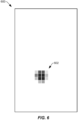
- FIG. 4 presents a diagram of an example frame image 400 as part of a visual representation 450 of a top view of an example touch sensitive device 100, the frame image 400 comprising or representing frame data associated with the touch sensitive surface 104, in accordance with various aspects and embodiments of the disclosed subject matter.
- a portion of the surface-related sensors 112 of the sensor array 302 that are located in the portion(s) of the touch sensitive surface 104 that is in contact with or proximity to the objects can detect such objects, and can generate sensor data representing such detection in response.
- the portion of the surface-related sensors 112 can communicate the sensor data to report that the objects are in contact with or proximity to the portion(s) of the touch sensitive surface 104 associated with the portion of the surface-related sensors 112, and a contrast pattern can emerge in a frame image representative of such a state of contact.
- the certain surface-related sensors 112 can generate sensor data, such as capacitance data (e.g., mutual capacitance data), that can correspond to the respective amounts of capacitance associated with respective portions of the touch sensitive surface 104 and can indicate respective levels of contact (e.g., no contact or respective states of intensity of contact) of an object 106 (e.g., finger(s), ear, or face of the user) with the touch sensitive surface 104 or respective proximity of the object 106, or portion thereof, to the touch sensitive surface 104.
- capacitance data e.g., mutual capacitance data
- the touch sensitive device 100 also can comprise other sensors of the sensor component 110, wherein the other sensors can include, for example, an ultrasound component 114, an accelerometer component 116, a gyroscope component 118, an IMU 120, and/or another type of sensor.
- the classification component 122 can receive other sensor data, such as, for example, ultrasound data from the ultrasound component 114, accelerometer data from the accelerometer component 116, gyroscope data from the gyroscope component 118, IMU data from the IMU 120, and/or other types of sensor data from one or more other types of sensors.
- the classification component 122 can determine or identify that the type of touch or hover interaction(s) of the object(s) 106 with the touch sensitive surface 104 and can further determine that whether the touch or hover interaction(s) is an intentional touch interaction or an unintentional touch or hover interaction, based at least in part on the results of analyzing the sensor data and/or other sensor data (e.g., raw sensor data and/or other raw sensor data) and/or analyzing the frame image generated from the sensor data and/or the other sensor data.
- sensor data and/or other sensor data e.g., raw sensor data and/or other raw sensor data
- the operations management component 124 can control the operation of the touch sensitive device 100 to perform an operation (e.g., selection of a button, control, or application, ...
- a touch interaction is an intentional touch interaction, or to reject the touch or hover interaction(s) and not perform a particular operation and/or disable the touch sensitive surface 104 and/or turn off the touch sensitive surface 104 or associated display screen of the device 100, in response to determining that a particular touch or hover interaction is an unintentional touch or hover interaction.
- the classification component 122 can receive the sensor data from the surface-related sensors 112. In some embodiments and under certain circumstances (as more fully described herein), the classification engine also can receive other sensor data (e.g., ultrasound data, accelerometer data, gyroscope data, and/or IMU data) from other sensors (e.g., ultrasound component 114, accelerometer component 116, gyroscope component 118, IMU 120, and/or another type of sensor) of the sensor component 110.
- sensor data e.g., ultrasound data, accelerometer data, gyroscope data, and/or IMU data
- an ear interaction of an ear of the user with the touch sensitive surface 104 can yield the interaction pattern 502
- a cheek interaction of the cheek of the user with the touch sensitive surface 104 can provide the relatively uniform interaction pattern 504, which can have an ovular shape and can correspond to the cheek interaction
- a hair or head interaction of the hair or head of the user can yield the interaction pattern 506, which can have some uniformity, but potentially can be influenced by the presence of elongated striations 508 due to contact of the hair of the user with the touch sensitive surface 104.
- the classification component 122 can determine or identify that the touch or hover interactions comprise the ear interaction, the cheek interaction, and the hair or head interaction of the user with respective regions of the touch sensitive surface 104 and can further determine (e.g., classify) that such touch or hover interactions are unintentional touch or hover interactions, based at least in part on the results of analyzing the sensor data (e.g., touch surface data) and/or the other sensor data (e.g., ultrasound data, accelerometer data, gyroscope data, and/or IMU data), and/or the results of analyzing the frame image 500 generated from the sensor data and/or the other sensor data, and the training of the classification component 122 (e.g., classification engine of the classification component 122), in accordance with the defined classification criteria.
- the sensor data e.g., touch surface data
- the other sensor data e.g., ultrasound data, accelerometer data, gyroscope data, and/or IMU data
- the classification component 122 e.g., classification engine of
- each of interaction patterns 502, 504, and 506 can provide a signature that viewed collectively or individually can be capable of being classified (e.g., by the classification component 122) or that can be capable of being used (e.g., by the classification component 122) to corroborate a classification of the hover or touch interaction(s) with the touch sensitive surface 104.
- a user may wear glasses that wrap around the rear of the ear and therefore are supported by the ear in ways that potentially can adjust the contact pattern sensed by the sensors (e.g., surface-related sensors 112, and/or ultrasound component 114, ... ) of or associated with the touch sensitive surface 104 when the touch sensitive device 100 (e.g., phone) is held up against an ear of the user.
- the sensors e.g., surface-related sensors 112, and/or ultrasound component 114, ...
- the user may wear headgear that at least potentially can be sensed (e.g., by the surface-related sensors 112, and/or ultrasound component 114, ...) or piercings and/or jewelry that can be sensed (e.g., by the surface-related sensors 112, and/or ultrasound component 114, ...) and can create particular touch (e.g., contact) or hover patterns with the touch sensitive surface 104, wherein such touch or hover interactions can be, or at least potentially can be, particularly useful in determining (e.g., by the classification component 122) when a head of a user is held against the touch sensitive surface 104 of the touch sensitive device 100.
- headgear that at least potentially can be sensed (e.g., by the surface-related sensors 112, and/or ultrasound component 114, ...) or piercings and/or jewelry that can be sensed (e.g., by the surface-related sensors 112, and/or ultrasound component 114, ...) and can create particular touch (e.g., contact) or hover patterns with the
- the operations management component 124 can receive a message regarding the unintentional touch or hover interaction(s) from the classification component 122 and can take appropriate action. For example, the operations management component 124 can reject the unintentional touch or hover interaction, prevent an operation from being performed by the device 100 in response to the unintentional touch or hover interaction, disable a touch-related function associated with the touch sensitive surface 104 and associated display screen of the display component 108, transition (or maintain) the display screen from an on state to (or in) an off state, transition (or maintain) the touch sensitive surface 104 from an unlock state to (or in) a locked state, and/or transition (or maintain) a component (e.g., a processor, such as an application processor) of the device 100 from an active state to (or in) an inactive state (e.g., sleep mode).
- a component e.g., a processor, such as an application processor
- FIG. 6 illustrates a diagram of an example frame image 600 that can be generated based at least in part on sensor data when certain surface-related sensors 112 of the sensor array 302 detect contact (e.g., relative intensities of contact) of a finger of the user with a certain portion (e.g., center portion) of the touch sensitive surface 104, in accordance with various aspects and embodiments of the disclosed subject matter.
- the frame image 600 can represent a frame associated with the touch sensitive surface 104 at a time during which a finger of the user is in contact with a particular portion (e.g., center portion) of the touch sensitive surface 104.
- the classification component 122 can receive the sensor data from the certain surface-related sensors 112 and/or the other sensor data from the other sensors of the sensor component 110. Based at least in part on the results of analyzing the respective sensor data from respective surface-related sensors of the certain surface-related sensors 112 and/or the other sensor data from the other sensors, the classification component 122 can generate the frame image 600 comprising the grayscale colored region 602 that can present grayscale information (e.g., corresponding to respective higher-density portions of the frame image 600) depicting respective intensities of contact of respective portions of the finger of the user with the respective portions of the touch sensitive surface 104 and/or respective proximities of respective portions of the finger of the user to the touch sensitive surface 104.
- grayscale information e.g., corresponding to respective higher-density portions of the frame image 600
- the grayscale colored region 602 can indicate that an object, which correspond to (e.g., be in the shape of) a finger (e.g., a tip, knuckle, or other portion of the finger), is in contact with the portion (e.g., a center or approximately center portion) of the touch sensitive surface 104 that can correspond to the location of the grayscale colored region 602 depicted in the frame image 600.
- a finger e.g., a tip, knuckle, or other portion of the finger
- the portion e.g., a center or approximately center portion
- the classification component 122 can determine or identify that the touch event is a finger touch of the user on such portion (e.g., center portion) of the touch sensitive surface 104 and can further determine that such finger touch is an intentional touch interaction (e.g., an intentional touch event), based at least in part on the results of analyzing the sensor data and/or other sensor data (e.g., raw sensor data and/or other raw sensor data) and/or analyzing the frame image 600 generated from the sensor data and/or the other sensor data.
- the sensor data and/or other sensor data e.g., raw sensor data and/or other raw sensor data
- the operations management component 124 can control the operation of the touch sensitive device 100 to perform an operation (e.g., selection of a button, control, or application, ... ) that can correspond to such touching of the touch sensitive surface 104.
- the classification component 122 can perform an initial classification of the touch or hover interaction of an object 106 with the touch sensitive surface 104, based at least in part on the results of an analysis of one or more types of sensor data (e.g., ultrasound data and/or touch surface data), in accordance with the defined classification criteria.
- sensor data e.g., ultrasound data and/or touch surface data
- the classification component 122 also can perform additional analysis of other sensor data (e.g., ultrasound data, accelerometer data, gyroscope data, IMU data, and/or other type of sensor data) to facilitate verifying or confirming the initial classification of the touch or hover interaction (e.g., to make a final or updated classification of the touch or hover interaction).
- sensor data e.g., ultrasound data, accelerometer data, gyroscope data, IMU data, and/or other type of sensor data
- the classification component 122 can determine that the other sensor data analysis confirms the initial classification of the touch interaction, and can determine (e.g., make a final determination) that the classification associated with the touch interaction of the object 106 with the touch sensitive surface 104 is an intentional finger touch of the touch sensitive surface 104.
- the classification component 122 can determine that the other sensor data analysis does not confirm the initial classification determined using the touch surface data, and can determine that no classification of the touch or hover interaction can be determined based on such sensor data, and/or can determine that other types of sensor data are to be analyzed, and/or can determine that additional touch surface data and/or other sensor data are to be collected and analyzed, to facilitate determining a classification of the touch or hover interaction of the object 106 with the touch sensitive surface 104.
- the analysis of the other sensor data e.g., ultrasound data, accelerometer data, gyroscope data, IMU data, and/or other type of sensor data
- the classification component 122 can be used by the classification component 122 to facilitate determining a classification of the touch or hover interaction of the object 106 with the touch sensitive surface 104, in accordance with the defined classification criteria.
- the classification component 122 can determine a classification of touch or hover interaction of an object 106 with the touch sensitive surface 104 based at least in part on the results of analyzing one or more types of sensor data (e.g., ultrasound data, and/or accelerometer data, ... ), without having to analyze touch surface data or certain other types of sensor data, in accordance with the defined classification criteria.
- sensor data e.g., ultrasound data, and/or accelerometer data, ...
- the device 100 also can comprise a processor component 140 (process. comp. 140) and a data store 142 that can be associated with (e.g., communicatively connected to) the other components (e.g., touch sensing component 102, touch sensitive surface 104, display component 108, sensor component 110, classification component 122, speakers 126, 128, and/or 130, microphones 132, 134, and/or 136, buffer component 138, ... ) of the device 100.
- the processor component 140 can operate in conjunction with the other components of the device 100 to facilitate performing the various functions of the device 100.
- the processor component 140 can employ one or more processors, microprocessors, or controllers that can process data, such as information relating to ultrasound data, touch surface data, accelerometer data, gyroscope data, IMU data, impact or force data, vibro-acoustic data, orientation data, and/or other sensor data, classifications of touch or hover interactions, events or responsive actions (e.g., in response to touch or hover interactions), training information, machine learning information, resources, user data, applications, algorithms (e.g., classification algorithm(s), machine learning and/or training algorithm(s), ... ), defined classification criteria, and/or other information, to facilitate operation of the device 100, as more fully disclosed herein, and control data flow between the device 100 and other components or devices of or associated with the device 100.
- data such as information relating to ultrasound data, touch surface data, accelerometer data, gyroscope data, IMU data, impact or force data, vibro-acoustic data, orientation data, and/or other sensor data, classifications of touch or hover interactions,
- the data store 142 can store data structures (e.g., user data, metadata), code structure(s) (e.g., modules, objects, hashes, classes, procedures) or instructions, information relating to ultrasound data, touch surface data, accelerometer data, gyroscope data, IMU data, impact or force data, vibro-acoustic data, orientation data, and/or other sensor data, classifications of touch or hover interactions, events or responsive actions (e.g., in response to touch or hover interactions), training information, machine learning information, resources, user data, applications, algorithms (e.g., classification algorithm(s), machine learning and/or training algorithm(s), ... ), defined classification criteria, and/or other information, to facilitate controlling operations associated with the device 100.
- data structures e.g., user data, metadata
- code structure(s) e.g., modules, objects, hashes, classes, procedures
- information relating to ultrasound data touch surface data
- accelerometer data e.g., accelerometer data, gyroscope data
- the processor component 140 can be functionally coupled (e.g., through a memory bus) to the data store 142 in order to store and retrieve information desired to operate and/or confer functionality, at least in part, to the touch sensing component 102, touch sensitive surface 104, display component 108, sensor component 110, classification component 122, speakers 126, 128, and/or 130, microphones 132, 134, and/or 136, buffer component 138, etc., and/or substantially any other operational aspects of the device 100.
- FIG. 7 depicts a block diagram of an example system 700 that can train a classification component (e.g., one or more classification engines of the classification component) to classify touch or hover interactions of objects with the touch sensitive surface of a touch sensitive device, in accordance with various aspects and embodiments of the disclosed subject matter.
- the system 700 can comprise a classification component 702 that can include one or more classification engines, such as classification engine 704.
- the classification component 702, employing the classification engine(s) 704 can classify touch or hover interactions of objects with the touch sensitive surface of the touch sensitive device, based at least in part on the results of the classification component 702 analyzing sensor data received from one or more sensors of the sensor component of the touch sensitive device, such as more fully described herein.
- the classification component 702 (e.g., the classification engine(s) 704 of the classification component 702) can use any number of approaches, including, but not limited to, basic heuristics, decision trees, a Support Vector Machine, Random Forest, naive Bayes, elastic matching, dynamic time warping, template matching, k-means clustering, K-nearest neighbors algorithm, neural networks, Multilayer perceptron, logistic regression (e.g., multinomial logistic regression), gaussian mixture models, and/or AdaBoost.
- basic heuristics e.g., decision trees, a Support Vector Machine, Random Forest, naive Bayes, elastic matching, dynamic time warping, template matching, k-means clustering, K-nearest neighbors algorithm, neural networks, Multilayer perceptron, logistic regression (e.g., multinomial logistic regression), gaussian mixture models, and/or AdaBoost.
- logistic regression e.g., multinomial logistic regression
- the system 700 also can comprise a trainer component 706 that can be associated with (e.g., communicatively connected to) the classification component 702 to the train the classification component 702, including the classification engine(s) 704, to identify, determine, and/or distinguish between different types of touch or hover interactions of objects with the touch sensitive surface of the touch sensitive device based at least in part on the results of analyzing touch surface data, ultrasound data, and/or the other sensor data (e.g., accelerometer data, gyroscope data, IMU data, and/or other type of sensor data) associated with the touch sensitive device.
- a trainer component 706 can be associated with (e.g., communicatively connected to) the classification component 702 to the train the classification component 702, including the classification engine(s) 704, to identify, determine, and/or distinguish between different types of touch or hover interactions of objects with the touch sensitive surface of the touch sensitive device based at least in part on the results of analyzing touch surface data, ultrasound data, and/or the other sensor data (e.g., acceler
- the classification component 702 can comprise a machine learning component 708 that can be associated with the classification engine(s) 704, wherein the machine learning component 708 can be utilized to facilitate training the classification component 702, including the classification engine(s) 704, to identify, determine, and/or distinguish between different types of touch or hover interactions of objects with the touch sensitive surface of the device.
- the trainer component 706 and the machine learning component 708 can employ desired machine learning techniques and algorithms to facilitate training the classification component 702 and associated classification engine(s) 704.
- the trainer component 706, employing desired machine learning techniques and algorithms can apply training information relating to touch and hover interactions of objects with a touch sensitive surface to the machine learning component 708, wherein the classification component 702, including the classification engine(s) 704, can be trained to identify, determine, and/or distinguish between different types of touch or hover interactions of objects with the touch sensitive surface based at least in part on training information.
- the trainer component 706 can apply positive examples of sensor data (e.g., touch surface data, ultrasound data, accelerometer data, gyroscope data, and/or IMU data, ... ) relating to intentional finger(s) touch interactions (e.g., single-point finger contacts, multi-point finger contacts) or finger(s) hover interactions (e.g., hovering finger(s) associated with an impending intentional touch interaction) with the touch sensitive surface of the touch sensitive device and positive examples of sensor data relating to unintentional touch or hover interactions of an object (e.g., unintentional finger(s) touch or hover interactions, unintentional ear or face touch or hover interactions, unintentional palm touch or hover interactions, ... ) with the touch sensitive surface to the machine learning component 708 to train the classification engine(s) 704 to identify and distinguish between various different types of touch or hover interactions of objects with the touch sensitive surface.
- sensor data e.g., touch surface data, ultrasound data, accelerometer data, gyroscope data, and/
- the positive examples of the sensor data relating to touch and hover interactions can comprise, for example, positive examples of patterns of touch or hover interactions relating to intentional finger(s) touch interactions or hover interactions (associated with an intentional impending finger(s) touch interaction) with the touch sensitive surface and positive examples of patterns of touch or hover interactions relating to unintentional touch or hover interactions (e.g., unintentional finger touch or hover interactions, unintentional ear or face touch or hover interactions, or unintentional palm touch or hover interactions) with the touch sensitive surface.
- positive examples of patterns of touch or hover interactions relating to intentional finger(s) touch interactions or hover interactions (associated with an intentional impending finger(s) touch interaction) with the touch sensitive surface
- positive examples of patterns of touch or hover interactions relating to unintentional touch or hover interactions e.g., unintentional finger touch or hover interactions, unintentional ear or face touch or hover interactions, or unintentional palm touch or hover interactions
- the classification component 702 employing the classification engine(s) 704, can desirably (e.g., accurately, suitably, or optimally) classify touch or hover interactions of objects with the touch sensitive surface, based at least in part on the results of analyzing one or more types of sensor data received from one or more sensors of the sensor component of the touch sensitive device, in accordance with the defined classification criteria.
- the classification engine(s) 704 can be updated and refined (e.g., automatically or dynamically update and refined) over time to enhance classifications of touch or hover interactions of objects with the touch sensitive surface.
- the machine learning component 708 can receive, from the trainer component 706, updates (e.g., updates of training information) relating to classifications of touch or hover interactions to apply to the classification engine(s) 704 to refine and enhance classifications of touch or hover interactions of objects with the touch sensitive surface by the classification engine(s) 704.
- the machine learning component 708 can train, update, refine, and/or enhance (e.g., automatically or dynamically train, update, refine, and/or enhance) the classification engine(s) 704 to refine and further improve classifications of touch or hover interactions of objects with the touch sensitive surface by the classification engine(s) 704.
- train, update, refine, and/or enhance e.g., automatically or dynamically train, update, refine, and/or enhance
- touch sensitive devices can be provided with improved ability to interpret patterns of contact or association (e.g., hovering) of an object with respect to a touch sensitive surface. It also is to be appreciated and understood that the ordering of and the number of method acts or operations can be changed.
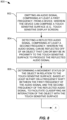
- FIG. 8 illustrates a flow diagram of an example method 800 that can determine a movement status of an object in relation to a touch sensitive surface of a touch sensitive device and/or classify a hover or touch interaction of the object with the touch sensitive surface, in accordance with various aspects and embodiments of the disclosed subject matter.
- the method 800 can be performed, for example, by a system or device (e.g., touch sensitive device) comprising a classification component, an ultrasound component, a speaker(s), a microphone(s), and/or a processor.
- an audio signal comprising at least a first frequency
- the device can comprise a touch sensitive surface (e.g., touch sensitive display screen).
- the ultrasound component can generate the audio signal, which can comprise at least the first frequency.
- the audio signal can be an ultrasonic audio signal, for example.
- One or more speakers of the device can be utilized to emit the audio signal from the device (e.g., from the speaker(s) of the device).
- a reflected audio signal comprising at least a second frequency can be detected, wherein the audio signal can be reflected off of an object that can or may be in proximity to the touch sensitive surface to produce the reflected audio signal.
- the device can comprise one or more microphones that can sense or detect the reflected audio signal, wherein the reflected audio signal can have at least the second frequency.
- the reflected audio signal can be a reflected ultrasonic audio signal.
- the second frequency of the reflected audio signal can be higher or lower than the first frequency of the audio signal if the object is moving towards or moving away from the touch sensitive surface, respectively, and the second frequency can be the same as the first frequency if the object is not moving in relation to the touch sensitive surface.
- the ultrasound component can receive the detected reflected audio signal via the one or more microphones.
- a movement status of the object in relation to the touch sensitive surface can be determined, based at least in part on a frequency shift between the first frequency of the audio signal and the second frequency of the reflected audio signal, to facilitate classifying an interaction of the object with the touch sensitive surface.
- the classification component can determine the movement status of the object in relation to the touch sensitive surface, based at least in part on the frequency shift between the first frequency of the audio signal and the second frequency of the reflected audio signal.
- the classification component can utilize the determined movement status of the object in relation to the touch sensitive surface to facilitate classifying the interaction of the object with the touch sensitive surface.
- FIG. 10 illustrates a flow diagram of an example method 1000 that can classify a hover or touch interaction of an object with a touch sensitive surface of a touch sensitive device, in accordance with various aspects and embodiments of the disclosed subject matter.
- the method 1000 can be performed, for example, by a system or device (e.g., touch sensitive device) comprising a classification component, a sensor component, a speaker(s), a microphone(s), and/or a processor.
- the sensor component can comprise, for example, an ultrasound component, surface-related sensors (e.g., touch sensors associated with the touch sensitive surface, such as a touch display screen), an accelerometer component, a gyroscope component, an IMU, and/or another desired type of sensor.
- the classification component can receive the other sensor data from the other sensors, in response to (e.g., asynchronously in response to) a touch or hover interaction occurring and/or being detected (e.g., hover interaction being detected by the ultrasound component or classification component; touch interaction being detected by the surface-related sensors) on or in proximity to the touch sensitive surface and/or an indication of the occurrence and/or detection of a touch or hover interaction by the other sensors.
- the sensor component can scan the other sensors to measure or detect changes in conditions associated with the other sensors due to, for example, touching of the touch sensitive surface by an object(s), wherein the other sensor data can be generated, based at least in part on the measured or detected changes in the conditions, and can be received by the classification component.
- the classification component can extract features from the ultrasound data, touch surface data, and/or other sensor data based at least in part on the analysis results.
- the features can comprise, for example, characteristics, shapes, dimensions, spectral centroid, spectral density, spherical harmonics, total average spectral energy, log spectral band ratios, and/or other features related to the contact or hovering of the object with the touch sensitive surface, with respect to the time domain or frequency domain, respectively.
- the classification component can generate a representational image (e.g., frame image) of (e.g., corresponding to) the respective features based at least in part on (e.g., from) the respective features extracted from the ultrasound data, touch surface data, and/or other sensor data.
- the representational image can be or comprise a pattern relating to (e.g., representing or corresponding to) the touch or hover interaction of the object with the touch sensitive surface.
- the classification component e.g., classification engine of the classification component
- the classification component can be trained to classify the touch or hover interaction of the object with the touch sensitive surface, including being trained to recognize and identify, and distinguish between, different characteristics of the representational image.
- the classification component can determine the classification of the touch or hover interaction of the object with the touch sensitive surface, in accordance with the defined classification criteria.
- the touch or hover interaction can be classified, for example, as an intentional touch interaction (e.g., an intentional finger touch, or an intentional stylus touch) or an unintentional touch or hover interaction (e.g., unintentional finger touch or hover interaction, unintentional ear or face touch or hover interaction, unintentional palm touch or hover interaction, and/or other unintentional touch or hover interaction by an object).
- operation of the touch sensitive device can be controlled (e.g., to process an operation relating to an intentional touch interaction, or to reject an unintentional touch or hover interaction) based at least in part on the classification of the touch or hover interaction.
- the operation management component can control operation of the touch sensitive device based at least in part on the classification of the touch or hover interaction. For instance, in response to the classification being an intentional touch interaction, the operation management component can control operation of the touch sensitive device to process the touch interaction, including processing an operation relating to the touch (e.g., intentional finger or object touch) of the touch sensitive surface.
- the operation management component can enable a touch function(s) of the touch sensitive surface, turn the display screen (e.g., touch display screen) to an on state (if it was in an off state), and/or unlock (if locked) the touch sensitive surface, for example.
- a touch function(s) of the touch sensitive surface turn the display screen (e.g., touch display screen) to an on state (if it was in an off state), and/or unlock (if locked) the touch sensitive surface, for example.
- the operation management component can control operation of the touch sensitive device to reject the unintentional touch or hover interaction, including preventing an operation relating to the touch (e.g., unintentional finger, palm, or object touch) (if there was a touch) of an object with the touch sensitive surface.
- the operation management component also can disable a touch function(s) of the touch sensitive surface, turn the display screen to an off state, and/or lock the touch sensitive surface, for example.
- FIG. 11 depicts a flow diagram of an example method 1100 that can train a classification component (e.g., a classification engine(s) of the classification component) to facilitate determining a movement status of an object in relation to a touch sensitive surface of a touch sensitive device and/or classifying a hover or touch interaction of the object with the touch sensitive surface, in accordance with various aspects and embodiments of the disclosed subject matter.
- the method 1100 can be performed, for example, by a system or device (e.g., touch sensitive device) comprising a classification component, which can comprise one or more classification engines, a machine learning component, a trainer component, a sensor component, a speaker(s), a microphone(s), and/or a processor.
- the classification component employing the machine learning component, can be trained to facilitate desirable (e.g., accurate, enhanced, or optimal) classification of interactions of objects with a touch sensitive surface of the touch sensitive device.
- the system can employ the trainer component to train the classification component (e.g., train the one or more classification engines, using the machine learning component) to facilitate desirable classification of interactions of objects with the touch sensitive surface.
- training data comprising a set of items of training information (e.g., items of example training information), can be generated to facilitate training the classification component to facilitate desirable classification of interactions of objects with the touch sensitive surface of the touch sensitive device.
- the trainer component can determine and generate the set of items of training information, which can be employed to facilitate such training of the classification component (e.g., training of the one or more classification engines of the classification component).
- the set of items of training information can include respective items of training information that can correspond to respective types of touch or hover interactions of objects with the touch sensitive surface.
- the set of items of training information can comprise positive examples of sensor data (e.g., touch surface data, ultrasound data, accelerometer data, gyroscope data, and/or IMU data, ... ) relating to intentional finger(s) touch interactions (e.g., single-point finger contacts, multi-point finger contacts) or finger(s) hover interactions (e.g., hovering finger(s) associated with an impending intentional touch interaction) with the touch sensitive surface and positive examples of sensor data relating to unintentional touch or hover interactions of an object (e.g., unintentional finger(s) touch or hover interactions, unintentional ear or face touch or hover interactions, unintentional palm touch or hover interactions, ...
- sensor data e.g., touch surface data, ultrasound data, accelerometer data, gyroscope data, and/or IMU data, ...
- intentional finger(s) touch interactions e.g., single-point finger contacts, multi-point finger contacts
- finger(s) hover interactions e.g., hover
- the positive examples of the sensor data relating to touch and hover interactions can comprise, for example, positive examples of patterns of touch or hover interactions relating to intentional finger(s) touch interactions or hover interactions (associated with an intentional impending finger(s) touch interaction) with the touch sensitive surface and positive examples of patterns of touch or hover interactions relating to unintentional touch or hover interactions (e.g., unintentional finger touch or hover interactions, unintentional ear or face touch or hover interactions, or unintentional palm touch or hover interactions) with the touch sensitive surface.
- the set of items of training information can comprise a first subset of items of training information regarding respective audio signals of respective first frequency distributions, a second subset of items of training information regarding respective reflected audio signals of respective second frequency distributions, and/or a third subset of items of training information regarding respective distributions of frequency shifts that relate to, and/or can be derived or obtained from, respective differences between the respective audio signals and the respective reflected audio signals.
- the trainer component can map respective items of the first subset, respective items of the second subset, and/or respective items of the third subset to each other, and can utilize such mapping to facilitate training the classification component and/or can provide such mapping to the classification component (e.g., to the machine learning component of or associated with the classification component).
- the trainer component can map a first frequency distribution of a training audio signal (e.g., an audio signal that can be emitted from the device) to a second frequency distribution of a training reflected audio signal that can be obtained when the training audio signal is reflected off of a particular object (e.g., a finger, or an ear) with a particular movement status in relation to the touch sensitive surface (e.g., moving towards the touch sensitive surface, or moving away from the touch sensitive surface, or not moving in relation to the touch sensitive surface) and to a training distribution of frequency shifts that can be determined, derived, or obtained based at least in part on the training audio signal and the training reflected audio signal (e.g., the difference between the first frequency distribution of the training audio signal and the second frequency distribution of the training reflected audio signal).
- a training audio signal e.g., an audio signal that can be emitted from the device
- a training reflected audio signal e.g., a particular movement status in relation to the touch sensitive surface
- the training data comprising a set of items of training information
- the classification component can be trained based at least in part on the applying of the training data to the classification component.
- the trainer component can apply the training data, comprising the set of items of training information, to the classification component (e.g., to the one or more classification engines, using the machine learning component), and the classification component (e.g., the one or more classification engines) can be trained based at least in part on the applying of the training data to the classification component and the use of machine learning techniques and algorithms, such as described herein.
- the classification component (e.g., as trained using the method 1100), employing the machine learning component (and the machine learning techniques and algorithms, such as disclosed herein), can desirably (e.g., suitably, acceptably, accurately, or optimally) determine classifications of touch or hover interactions of objects with the touch sensitive surface of the touch sensitive device.
- the training of the classification component can be updated and refined by applying updated and/or additional training data to the classification component to facilitate enhancing or refining the training of the classification component to desirably improve the ability of the classification component to desirably determine classifications of touch or hover interactions of objects with the touch sensitive surface.
- the illustrated aspects may also be practiced in distributed computing environments where tasks are performed by remote processing devices that are linked through a communications network. However, some, if not all aspects of this disclosure can be practiced on stand-alone computers. In a distributed computing environment, program modules may be located in both local and remote memory storage devices.
- ком ⁇ онент can refer to and/or can include a computer-related entity or an entity related to an operational machine with one or more specific functionalities.
- the entities disclosed herein can be either hardware, a combination of hardware and software, software, or software in execution.
- a component may be, but is not limited to being, a process running on a processor, a processor, an object, an executable, a thread of execution, a program, and/or a computer.
- an application running on a server and the server can be a component.
- One or more components may reside within a process and/or thread of execution and a component may be localized on one computer and/or distributed between two or more computers.
- respective components can execute from various computer readable media having various data structures stored thereon.
- the components may communicate via local and/or remote processes such as in accordance with a signal having one or more data packets (e.g., data from one component interacting with another component in a local system, distributed system, and/or across a network such as the Internet with other systems via the signal).
- a component can be an apparatus with specific functionality provided by mechanical parts operated by electric or electronic circuitry, which is operated by a software or firmware application executed by a processor.
- the processor can be internal or external to the apparatus and can execute at least a part of the software or firmware application.
- a component can be an apparatus that provides specific functionality through electronic components without mechanical parts, wherein the electronic components can include a processor or other means to execute software or firmware that confers at least in part the functionality of the electronic components.
- a component can emulate an electronic component via a virtual machine, e.g., within a cloud computing system.
- example and/or “exemplary” are utilized to mean serving as an example, instance, or illustration.
- subject matter disclosed herein is not limited by such examples.
- any aspect or design described herein as an “example” and/or “exemplary” is not necessarily to be construed as preferred or advantageous over other aspects or designs, nor is it meant to preclude equivalent exemplary structures and techniques known to those of ordinary skill in the art.
- aspects or features described herein can be implemented as a method, apparatus, system, or article of manufacture using standard programming or engineering techniques.
- various aspects or features disclosed in this disclosure can be realized through program modules that implement at least one or more of the methods disclosed herein, the program modules being stored in a memory and executed by at least a processor.
- Other combinations of hardware and software or hardware and firmware can enable or implement aspects described herein, including a disclosed method(s).
- article of manufacture as used herein can encompass a computer program accessible from any computer-readable device, carrier, or storage media.
- computer readable storage media can include but are not limited to magnetic storage devices (e.g., hard disk, floppy disk, magnetic strips%), optical discs (e.g., compact disc (CD), digital versatile disc (DVD), blu-ray disc (BD) %), smart cards, and flash memory devices (e.g., card, stick, key drive%), or the like.
- magnetic storage devices e.g., hard disk, floppy disk, magnetic strips
- optical discs e.g., compact disc (CD), digital versatile disc (DVD), blu-ray disc (BD)
- smart cards e.g., card, stick, key drive
- flash memory devices e.g., card, stick, key drive
- processor can refer to substantially any computing processing unit or device comprising, but not limited to, single-core processors; single-processors with software multithread execution capability; multi-core processors; multi-core processors with software multithread execution capability; multi-core processors with hardware multithread technology; parallel platforms; and parallel platforms with distributed shared memory.
- a processor can refer to an integrated circuit, an application specific integrated circuit (ASIC), a digital signal processor (DSP), a field programmable gate array (FPGA), a programmable logic controller (PLC), a complex programmable logic device (CPLD), a discrete gate or transistor logic, discrete hardware components, or any combination thereof designed to perform the functions described herein.
- ASIC application specific integrated circuit
- DSP digital signal processor
- FPGA field programmable gate array
- PLC programmable logic controller
- CPLD complex programmable logic device
- memory components entities embodied in a “memory,” or components comprising a memory. It is to be appreciated that memory and/or memory components described herein can be either volatile memory or nonvolatile memory, or can include both volatile and nonvolatile memory.
- nonvolatile memory can include read only memory (ROM), programmable ROM (PROM), electrically programmable ROM (EPROM), electrically erasable ROM (EEPROM), flash memory, or nonvolatile random access memory (RAM) (e.g., ferroelectric RAM (FeRAM)).
- Volatile memory can include RAM, which can act as external cache memory, for example.
- RAM is available in many forms such as synchronous RAM (SRAM), dynamic RAM (DRAM), synchronous DRAM (SDRAM), double data rate SDRAM (DDR SDRAM), enhanced SDRAM (ESDRAM), Synchlink DRAM (SLDRAM), direct Rambus RAM (DRRAM), direct Rambus dynamic RAM (DRDRAM), and Rambus dynamic RAM (RDRAM).
- SRAM synchronous RAM
- DRAM dynamic RAM
- SDRAM synchronous DRAM
- DDR SDRAM double data rate SDRAM
- ESDRAM enhanced SDRAM
- SLDRAM Synchlink DRAM
- DRRAM direct Rambus RAM
- DRAM direct Rambus dynamic RAM
- RDRAM Rambus dynamic RAM
- components as described with regard to a particular system or method, can include the same or similar functionality as respective components (e.g., respectively named components or similarly named components) as described with regard to other systems or methods disclosed herein.
Landscapes
- Engineering & Computer Science (AREA)
- Physics & Mathematics (AREA)
- General Engineering & Computer Science (AREA)
- Theoretical Computer Science (AREA)
- General Physics & Mathematics (AREA)
- Human Computer Interaction (AREA)
- Acoustics & Sound (AREA)
- Radar, Positioning & Navigation (AREA)
- Remote Sensing (AREA)
- Computer Networks & Wireless Communication (AREA)
- Position Input By Displaying (AREA)
- User Interface Of Digital Computer (AREA)
Claims (15)
- Procédé comprenant les étapes suivantes :émettre, par un système comprenant un processeur, un signal audio émis (202), comprenant au moins une première fréquence, à partir d'un dispositif électronique (100), où le dispositif électronique (100) comprend un écran tactile (104) ;détecter, par le système, un signal audio réfléchi (204) comprenant au moins une deuxième fréquence, le signal audio émis (202) étant réfléchi par un objet (106) à proximité de l'écran tactile (104) pour produire le signal audio réfléchi (204) ;déterminer, par le système, l'état de mouvement de l'objet (106) par rapport à l'écran tactile (104), en se basant au moins en partie sur un décalage de fréquence entre la première fréquence du signal audio émis (202) et la deuxième fréquence du signal audio réfléchi (204) ;obtenir des données de capteur, à partir des capteurs (112) associé au surface de l'écran tactile (104), en réponse à l'objet (106) étant en contact ou à proximité d'une ou de plusieurs parties de l'écran tactile (104) ; etclasser le type d'objet (106) qui interagit avec l'écran tactile (104) en fonction de l'état de mouvement, du signal audio émis (202), du signal audio réfléchi (204) et des données de capteur.
- Procédé selon la revendication 1, comprenant en outre les étapes suivantes :recevoir, par le système, des données de capteur supplémentaires provenant d'un accéléromètre (116), d'un gyroscope (118) ou d'une unité de mesure inertielle (120) ; etoù la classification de l'interaction de l'objet (106) avec l'écran tactile (104) est également basée sur les données supplémentaires de capteur.
- Procédé selon la revendication 1, comprenant en outre les étapes suivantes :déterminer, par le système, une action réactive à effectuer par le dispositif électronique (100) en réponse à la classification ; etexécuter, par le système, l'action réactive ;où la classification comprend en outre de déterminer si l'interaction de l'objet (106) avec l'écran tactile (104) est une interaction tactile intentionnelle ou non intentionnelle, et où la détermination de l'action réactive comprend les étapes suivantes :en réponse à la détermination que l'interaction de l'objet (106) avec l'écran tactile (104) est une interaction tactile intentionnelle, déterminer l'action réactive, ce qui comprend au moins l'une des étapes suivantes : traiter l'interaction de l'objet (106) avec l'écran tactile (104), faire passer l'écran tactile (104) à un état activé ou le maintenir dans cet état, faire passer l'écran tactile (104) à un état déverrouillé ou le maintenir dans cet état, ou exécuter, par le dispositif électronique, une opération basée, au moins en partie, sur l'interaction de l'objet (106) avec l'écran tactile (104) ; ouen réponse à la détermination que l'interaction de l'objet (106) avec l'écran tactile (104) est une interaction tactile non intentionnelle ou une interaction de survol non intentionnelle, déterminer l'action réactive, ce qui comprend au moins l'une des étapes suivantes : rejeter l'interaction de l'objet (106) avec l'écran tactile (104), faire passer l'écran tactile (104) à un état éteint ou le maintenir dans cet état, faire passer l'écran tactile (104) à un état verrouillé ou le maintenir dans cet état, ou empêcher l'exécution de l'opération en réponse à l'interaction de l'objet (106) avec l'écran tactile (104) ; etexécuter, par le système, de l'action réactive.
- Procédé selon l'une quelconque des revendications 1 à 3, dans lequel la classification comprend en outre de déterminer si l'interaction est l'une des suivantes : une interaction de toucher d'oreille par l'oreille d'un utilisateur en contact avec l'écran tactile (104), une interaction de survol d'oreille par l'oreille de l'utilisateur à proximité de l'écran tactile (104), une interaction de toucher de doigt par le doigt de l'utilisateur en contact avec l'écran tactile (104), une interaction de survol de doigt par le doigt de l'utilisateur à proximité de l'écran tactile (104), une interaction de toucher de stylet par un stylet en contact avec l'écran tactile (104), une interaction de survol de stylet par un stylet à proximité de l'écran tactile (104), ou aucune interaction de l'objet avec l'écran tactile (104).
- Procédé selon l'une quelconque des revendications 1 à 3, dans lequel l'émission du signal audio émis (202) comprend d'émettre le signal audio émis (202) comprenant une première distribution de fréquences, où la première distribution de fréquences comprend la première fréquence,dans lequel la détection du signal audio réfléchi (204) comprend de détecter le signal audio réfléchi (204) comprenant une deuxième distribution de fréquences, où la deuxième distribution de fréquences comprend la deuxième fréquence, etdans lequel la détermination de l'état de mouvement de l'objet (106) par rapport à l'écran tactile (104) comprend de déterminer l'état de mouvement de l'objet (106) par rapport à l'écran tactile (104) sur la base, au moins en partie, d'une troisième distribution du décalage de fréquence entre la première distribution de fréquences du signal audio émis (202) et la deuxième distribution de fréquences du signal audio réfléchi (204).
- Procédé selon l'une quelconque des revendications 1 à 3, comprenant en outre les étapes suivantes :entraîner, par le système, un composant d'apprentissage automatique du dispositif électronique (100) pour classer les interactions tactiles et les interactions de survol d'objets avec l'écran tactile (104), sur la base, au moins en partie, de données d'entraînement relatives aux interactions tactiles et aux interactions de survol des objets avec l'écran tactile (104), où les objets comprennent l'objet (106),dans lequel la classification comprend en outre de classer l'état d'interaction de l'objet (106) par rapport à l'écran tactile (104) sur la base, au moins en partie, de l'entraînement du composant d'apprentissage automatique et des données de capteur relatives à une interaction de l'objet (106) avec l'écran tactile (104), etdans lequel les données de capteur comprennent au moins l'un des signaux parmi le signal audio réfléchi (204) ou le signal audio émis (202), etdans lequel les données d'entraînement comprennent un ensemble d'exemples d'informations d'entraînement, et dans lequel le procédé comprend en outre les étapes suivantes :
appliquer, par le système, l'ensemble d'exemples d'informations d'entraînement au composant d'apprentissage automatique pour faciliter l'entraînement du composant d'apprentissage automatique, où l'ensemble d'exemples d'informations d'entraînement indique les relations respectives entre les interactions tactiles ou de survol respectives et au moins l'une des données de capteur ultrasonique respectives d'un capteur ultrasonique (114), des données de capteur tactile respectives d'un capteur tactile (112), des données d'accéléromètre respectives d'un accéléromètre (116), des données de gyroscope respectives d'un gyroscope (118), ou des données d'unité de mesure inertielle respectives d'une unité de mesure inertielle (120). - Système comprenant :au moins un haut-parleur (126, 128, 130) configuré pour émettre un signal audio ultrasonique (202), comprenant au moins une première fréquence, à partir d'un dispositif électronique (100), où le dispositif électronique (100) comprend un écran tactile (104) ;au moins un capteur audio (132, 134, 136) configuré pour détecter un signal audio ultrasonique réfléchi (204) comprenant au moins une deuxième fréquence, le signal audio ultrasonique émis (202) étant réfléchi par un objet (106) à proximité de l'écran tactile (104) pour produire le signal audio ultrasonique réfléchi (204) ;une pluralité de capteurs (112) associé au surface pour obtenir des données de capteur en réponse à l'objet (106) étant en contact ou à proximité d'une ou plusieurs parties de l'écran tactile (104) ;une mémoire qui stocke des composants exécutables ; etun processeur, couplé de manière fonctionnelle à la mémoire, qui exécute les composants exécutables, les composants exécutables comprenant :un composant de classification (122) configuré pour déterminer l'état de mouvement de l'objet (106) par rapport à l'écran tactile (104), sur la base, au moins en partie, d'un décalage de fréquence entre la première fréquence du signal audio ultrasonique émis (202) et la deuxième fréquence du signal audio ultrasonique réfléchi (204),où le composant de classification (122) est en outre configuré pour classer le type d'objet (106) qui interagit avec l'écran tactile (104) en fonction de l'état de mouvement, du signal audio émis (202), du signal audio réfléchi (204) et des données de capteur.
- Système selon la revendication 7, comprenant en outre un composant de capteur, où le composant de classification (122) est configuré pour recevoir des informations de capteur des composants de capteur, et procéder en outre à une classification en fonction des informations de capteur,
où les composants de capteur comprennent au moins l'un des composants suivants : un accéléromètre (116) du dispositif électronique, un gyroscope (118) du dispositif électronique ou une unité de mesure inertielle (120) du dispositif électronique. - Système selon la revendication 7, dans lequel l'au moins un capteur audio (132, 134, 136) comprend un premier capteur audio et un deuxième capteur audio du dispositif électronique (100), où le premier capteur audio est configuré pour détecter une première version du signal audio ultrasonique réfléchi (204) comprenant un premier ensemble de caractéristiques en relation avec le premier capteur audio et l'objet (106), où le deuxième capteur audio est configuré pour détecter une deuxième version du signal audio ultrasonique réfléchi (204) comprenant un deuxième ensemble de caractéristiques en relation avec le deuxième capteur audio et l'objet (106), dans lequel le composant de classification (122) est en outre configuré pour déterminer l'état de mouvement de l'objet (106) en relation avec l'écran tactile (104) et procéder à une classification, en se basant au moins en partie sur le premier ensemble de caractéristiques et le deuxième ensemble de caractéristiques,dans lequel le premier ensemble de caractéristiques comprend au moins l'un des éléments suivants : une première durée entre l'émission du signal audio ultrasonique émis (202) et la détection de la première version du signal audio ultrasonique réfléchi (204), un premier niveau d'intensité de la première version du signal audio ultrasonique réfléchi (204) ou un premier décalage de fréquence associé à la première version du signal audio ultrasonique réfléchi (204), etdans lequel le deuxième ensemble de caractéristiques comprend au moins l'un des éléments suivants : une deuxième durée entre l'émission du signal audio ultrasonore émis (202) et la détection de la deuxième version du signal audio ultrasonore réfléchi (204), un deuxième niveau d'intensité de la deuxième version du signal audio ultrasonore réfléchi (204) ou un deuxième décalage de fréquence associé à la deuxième version du signal audio ultrasonore réfléchi (204).
- Système selon l'une quelconque des revendications 7 à 9, dans lequel le composant de classification (122) est configuré pour :déterminer une action réactive à exécuter en réponse à la classification, et dans lequel les composants exécutables comprennent en outre un composant de réponse configuré pour exécuter l'action réactive ;classer si une interaction de l'objet (106) avec l'écran tactile (104) est une interaction tactile intentionnelle ou une interaction non intentionnelle ;en réponse à la détermination que l'interaction de l'objet (106) avec l'écran tactile (104) est une interaction tactile intentionnelle, déterminer l'action réactive, ce qui comprend au moins l'une des étapes suivantes : traiter l'interaction de l'objet (106) avec l'écran tactile (104), faire passer l'écran tactile (104) à un état activé ou le maintenir dans cet état, faire passer l'écran tactile (104) à un état déverrouillé ou le maintenir dans cet état, ou exécuter, par le dispositif électronique, une opération basée, au moins en partie, sur l'interaction de l'objet (106) avec l'écran tactile (104) ; ouen réponse à la détermination que l'interaction de l'objet (106) avec l'écran tactile (104) est une interaction tactile non intentionnelle ou une interaction de survol non intentionnelle, déterminer l'action réactive, ce qui comprend au moins l'une des étapes suivantes : rejeter l'interaction de l'objet (106) avec l'écran tactile (104), faire passer l'écran tactile (104) à un état éteint ou le maintenir dans cet état, faire passer l'écran tactile (104) à un état verrouillé ou le maintenir dans cet état, ou empêcher l'exécution de l'opération en réponse à l'interaction de l'objet (106) avec l'écran tactile (104).
- Système selon l'une quelconque des revendications 7 à 9, dans lequel le composant de classification (122) est configuré pour procéder à une classification en déterminant si l'interaction est l'une des suivantes : une interaction de toucher d'oreille par l'oreille d'un utilisateur en contact avec l'écran tactile (104), une interaction de survol d'oreille par l'oreille de l'utilisateur à proximité de l'écran tactile (104), une interaction de toucher de doigt par le doigt de l'utilisateur en contact avec l'écran tactile (104), une interaction de survol de doigt par le doigt de l'utilisateur à proximité de l'écran tactile (104), une interaction de toucher de doigt par le doigt de l'utilisateur en contact avec l'écran tactile (104), une interaction de toucher de stylet par un stylet en contact avec l'écran tactile (104), une interaction de survol de stylet par un stylet à proximité de l'écran tactile (104), ou aucune interaction de l'objet avec l'écran tactile (104).
- Système selon l'une quelconque des revendications 7 à 9, dans lequel l'au moins un haut-parleur (126, 128, 130) est configuré pour émettre le signal audio ultrasonique (202) comprenant une première distribution de fréquences qui inclut la première fréquence,dans lequel au moins un capteur audio (132, 134, 136) est configuré pour détecter le signal audio ultrasonique réfléchi (204) comprenant une deuxième distribution de fréquences qui inclut la deuxième fréquence, etdans lequel le composant de classification (122) est en outre configuré pour déterminer l'état de mouvement de l'objet (106) en relation avec l'écran tactile (104) sur la base, au moins en partie, d'une troisième distribution du décalage de fréquence entre la première distribution de fréquences du signal audio ultrasonique émis (202) et la deuxième distribution de fréquences du signal audio ultrasonique réfléchi (204).
- Système selon l'une quelconque des revendications 7 à 9, dans lequel les composants exécutables comprennent en outre un composant d'entraînement configuré pour entraîner un composant d'apprentissage automatique du dispositif électronique (100) afin de déterminer les interactions tactiles et les interactions de survol des objets avec l'écran tactile (104), sur la base, au moins en partie, des données d'entraînement relatives aux interactions tactiles et aux interactions de survol des objets avec l'écran tactile (104), où les objets comprennent l'objet (106),dans lequel la classification de l'état d'interaction de l'objet (106) par rapport à l'écran tactile (104) comprend la classification de l'état d'interaction de l'objet (106) par rapport à l'écran tactile (104) sur la base, au moins en partie, de l'entraînement du composant d'apprentissage automatique et des données de capteur relatives à une interaction de l'objet (106) avec l'écran tactile (104), etdans lequel les informations de capteur comprennent le signal audio émis (202) et le signal audio réfléchi (204), etdans lequel les données d'entraînement comprennent un ensemble d'exemples d'informations d'entraînement, et dans lequel le composant d'entraînement est en outre configuré pour appliquer l'ensemble d'exemples d'informations d'entraînement au composant d'apprentissage automatique afin de faciliter l'entraînement du composant d'apprentissage automatique, où l'ensemble d'exemples d'informations d'entraînement indique les relations respectives entre les interactions tactiles ou de survol et au moins l'une des informations de capteur à ultrasons respectives d'un capteur à ultrasons (114), des informations de capteur tactile respectives d'un capteur tactile (112), des informations d'accéléromètre respectives d'un accéléromètre (116), des informations de gyroscope respectives d'un gyroscope (118), ou des informations d'unité de mesure inertielle respectives d'une unité de mesure inertielle (120).
- Support lisible par une machine, comprenant des instructions exécutables qui, lorsqu'elles sont exécutées par un processeur, facilitent l'exécution d'opérations comprenant les étapes suivantes :transmettre un signal audio ultrasonique émis (202), comprenant une première fréquence, à partir d'un dispositif électronique (100), où le dispositif électronique (100) comprend une surface tactile (104) ;détecter un signal audio ultrasonique réfléchi (204) comprenant une deuxième fréquence, le signal audio ultrasonique étant réfléchi par un objet (106) à proximité de la surface tactile (104) pour produire le signal audio ultrasonique réfléchi (204) ;déterminer l'activité de mouvement de l'objet (106) par rapport à la surface tactile (104), sur la base, au moins en partie, d'un décalage de fréquence entre la première fréquence du signal audio ultrasonique émis (202) et la deuxième fréquence du signal audio ultrasonique réfléchi (204) ;obtenir des données de capteur, à partir des capteurs (112) associé au surface de l'écran tactile (104), en réponse à l'objet (106) étant en contact ou à proximité d'une ou de plusieurs parties de l'écran tactile (104) ;classer une interaction de l'objet (106) avec l'écran tactile (104) en fonction de l'état de mouvement, du signal audio émis (202), du signal audio réfléchi (204) et des données de capteur ; etclasser le type d'objet (106) qui interagit avec l'écran tactile (104) en fonction de l'état de mouvement, du signal audio émis (202), du signal audio réfléchi (204) et des données de capteur.
- Support lisible par machine selon la revendication 14, dans lequel la détermination de l'activité de mouvement de l'objet (106) en relation avec la surface tactile (104) comprend les étapes suivantes :déterminer que l'activité de mouvement est l'objet (106) se déplaçant vers la surface tactile (104), sur la base, au moins en partie, du décalage de fréquence déterminé pour indiquer que la deuxième fréquence du signal audio ultrasonique réfléchi (204) est supérieure à la première fréquence du signal audio ultrasonique émis (202) ;déterminer que l'activité de mouvement est l'objet (106) s'écartant de la surface tactile (104), sur la base, au moins en partie, du décalage de fréquence déterminé pour indiquer que la deuxième fréquence du signal audio ultrasonique réfléchi (204) est inférieure à la première fréquence du signal audio ultrasonique émis (202) ; oudéterminer que l'activité de mouvement est l'objet (106) ne se déplaçant pas par rapport à la surface tactile (104), sur la base, au moins en partie, de l'absence de décalage de fréquence déterminé entre la première fréquence du signal audio ultrasonique émis (202) et la deuxième fréquence du signal audio ultrasonique réfléchi (204).
Applications Claiming Priority (2)
| Application Number | Priority Date | Filing Date | Title |
|---|---|---|---|
| US16/457,293 US11231815B2 (en) | 2019-06-28 | 2019-06-28 | Detecting object proximity using touch sensitive surface sensing and ultrasonic sensing |
| PCT/US2020/039922 WO2020264371A1 (fr) | 2019-06-28 | 2020-06-26 | Détection de proximité d'objet par détection de surface tactile et détection ultrasonore |
Publications (3)
| Publication Number | Publication Date |
|---|---|
| EP3991016A1 EP3991016A1 (fr) | 2022-05-04 |
| EP3991016A4 EP3991016A4 (fr) | 2023-07-19 |
| EP3991016B1 true EP3991016B1 (fr) | 2025-03-05 |
Family
ID=74043305
Family Applications (1)
| Application Number | Title | Priority Date | Filing Date |
|---|---|---|---|
| EP20830745.4A Active EP3991016B1 (fr) | 2019-06-28 | 2020-06-26 | Détection de proximité d'objet par détection de surface tactile et détection ultrasonore |
Country Status (4)
| Country | Link |
|---|---|
| US (2) | US11231815B2 (fr) |
| EP (1) | EP3991016B1 (fr) |
| CN (1) | CN113939789A (fr) |
| WO (1) | WO2020264371A1 (fr) |
Families Citing this family (8)
| Publication number | Priority date | Publication date | Assignee | Title |
|---|---|---|---|---|
| US11231815B2 (en) * | 2019-06-28 | 2022-01-25 | Qeexo, Co. | Detecting object proximity using touch sensitive surface sensing and ultrasonic sensing |
| US11592423B2 (en) * | 2020-01-29 | 2023-02-28 | Qeexo, Co. | Adaptive ultrasonic sensing techniques and systems to mitigate interference |
| US11520437B2 (en) * | 2020-03-31 | 2022-12-06 | Hefei Boe Optoelectronics Technology Co., Ltd. | Touch device having switch circuits controlling between touch electrodes and drive chip, touch system and control method thereof |
| US11630556B2 (en) * | 2020-09-16 | 2023-04-18 | Kyndryl, Inc. | Finger control of wearable devices |
| US12111712B2 (en) * | 2021-03-24 | 2024-10-08 | Intel Corporation | Methods and apparatus to detect proximity of objects to computing devices using near ultrasonic sound waves |
| WO2023044156A1 (fr) * | 2021-09-20 | 2023-03-23 | Qorvo Us, Inc. | Système et procédé pour discerner une entrée humaine sur un dispositif de détection |
| CN115328306A (zh) * | 2022-08-08 | 2022-11-11 | 艾曲赛艾(苏州)科技有限公司 | 基于惯性测量单元的可穿戴输入交互方法及装置 |
| US12242672B1 (en) * | 2022-10-21 | 2025-03-04 | Meta Platforms Technologies, Llc | Triggering actions based on detected motions on an artificial reality device |
Family Cites Families (326)
| Publication number | Priority date | Publication date | Assignee | Title |
|---|---|---|---|---|
| US2008028A (en) | 1932-06-06 | 1935-07-16 | Chrysler Corp | Method of forming hard rubber coatings |
| US2430005A (en) | 1942-06-01 | 1947-11-04 | Ohio Crankshaft Co | Differential heat treating |
| US3354531A (en) | 1963-11-13 | 1967-11-28 | Olin Mathieson | Process for making hollow articles by differential heat treatment |
| US4686332A (en) | 1986-06-26 | 1987-08-11 | International Business Machines Corporation | Combined finger touch and stylus detection system for use on the viewing surface of a visual display device |
| US4561105A (en) | 1983-01-19 | 1985-12-24 | Communication Intelligence Corporation | Complex pattern recognition method and system |
| JPS606497A (ja) | 1983-06-27 | 1985-01-14 | オーベクス株式会社 | 合成樹脂製ペン体の製造方法 |
| JP2827612B2 (ja) | 1991-10-07 | 1998-11-25 | 富士通株式会社 | タッチパネル装置およびタッチパネル装置におけるオブジェクトの表示方法。 |
| US5483261A (en) | 1992-02-14 | 1996-01-09 | Itu Research, Inc. | Graphical input controller and method with rear screen image detection |
| US5544265A (en) | 1992-05-27 | 1996-08-06 | Apple Computer, Inc. | Shape recognizer for graphical computer systems |
| US5903668A (en) | 1992-05-27 | 1999-05-11 | Apple Computer, Inc. | Method and apparatus for recognizing handwritten words |
| WO1994004992A1 (fr) | 1992-08-20 | 1994-03-03 | Communication Intelligence Corporation | Procede de reconstitution dynamique de donnees manuscrites |
| US5596656B1 (en) | 1993-10-06 | 2000-04-25 | Xerox Corp | Unistrokes for computerized interpretation of handwriting |
| US6366697B1 (en) | 1993-10-06 | 2002-04-02 | Xerox Corporation | Rotationally desensitized unistroke handwriting recognition |
| US20020126161A1 (en) | 1994-07-05 | 2002-09-12 | Hitachi, Ltd. | Information processing system |
| US5666438A (en) | 1994-07-29 | 1997-09-09 | Apple Computer, Inc. | Method and apparatus for recognizing handwriting of different users of a pen-based computer system |
| US5625818A (en) | 1994-09-30 | 1997-04-29 | Apple Computer, Inc. | System for managing local database updates published to different online information services in different formats from a central platform |
| JPH0969137A (ja) | 1995-08-31 | 1997-03-11 | Toshiba Corp | 部首抽出方法、部首単位文字認識方法及びその装置 |
| US6028593A (en) | 1995-12-01 | 2000-02-22 | Immersion Corporation | Method and apparatus for providing simulated physical interactions within computer generated environments |
| US5867163A (en) | 1995-12-01 | 1999-02-02 | Silicon Graphics, Inc. | Graphical user interface for defining and invoking user-customized tool shelf execution sequence |
| US6707451B1 (en) | 1996-09-11 | 2004-03-16 | Pilot Precision Kabushiki Kaisha | Input pen |
| JP3624070B2 (ja) | 1997-03-07 | 2005-02-23 | キヤノン株式会社 | 座標入力装置及びその制御方法 |
| US6118435A (en) | 1997-04-10 | 2000-09-12 | Idec Izumi Corporation | Display unit with touch panel |
| JP3304290B2 (ja) | 1997-06-26 | 2002-07-22 | シャープ株式会社 | ペン入力装置及びペン入力方法及びペン入力制御プログラムを記録したコンピュータ読み取り可能な記録媒体 |
| US20070177804A1 (en) | 2006-01-30 | 2007-08-02 | Apple Computer, Inc. | Multi-touch gesture dictionary |
| US8479122B2 (en) | 2004-07-30 | 2013-07-02 | Apple Inc. | Gestures for touch sensitive input devices |
| KR100595926B1 (ko) | 1998-01-26 | 2006-07-05 | 웨인 웨스터만 | 수동 입력 통합 방법 및 장치 |
| US9292111B2 (en) | 1998-01-26 | 2016-03-22 | Apple Inc. | Gesturing with a multipoint sensing device |
| US7084884B1 (en) | 1998-11-03 | 2006-08-01 | Immersion Corporation | Graphical object interactions |
| WO2010030978A2 (fr) | 2008-09-15 | 2010-03-18 | Aman James A | Enregistrement automatisé de session avec un indexage, une analyse et une expression de contenu à base de règles |
| US6337698B1 (en) | 1998-11-20 | 2002-01-08 | Microsoft Corporation | Pen-based interface for a notepad computer |
| US6222465B1 (en) | 1998-12-09 | 2001-04-24 | Lucent Technologies Inc. | Gesture-based computer interface |
| US6246395B1 (en) | 1998-12-17 | 2001-06-12 | Hewlett-Packard Company | Palm pressure rejection method and apparatus for touchscreens |
| US6313825B1 (en) | 1998-12-28 | 2001-11-06 | Gateway, Inc. | Virtual input device |
| US7212197B1 (en) | 1999-02-01 | 2007-05-01 | California Institute Of Technology | Three dimensional surface drawing controlled by hand motion |
| EP1194872A1 (fr) | 1999-06-11 | 2002-04-10 | CCI Europe A/S (Stibo A/S) | Systeme informatique de gestion de contenus destine a la gestion d'objets a contenu d'edition |
| US6492979B1 (en) | 1999-09-07 | 2002-12-10 | Elo Touchsystems, Inc. | Dual sensor touchscreen utilizing projective-capacitive and force touch sensors |
| US6504530B1 (en) | 1999-09-07 | 2003-01-07 | Elo Touchsystems, Inc. | Touch confirming touchscreen utilizing plural touch sensors |
| US7050955B1 (en) | 1999-10-01 | 2006-05-23 | Immersion Corporation | System, method and data structure for simulated interaction with graphical objects |
| US6772396B1 (en) | 1999-10-07 | 2004-08-03 | Microsoft Corporation | Content distribution system for network environments |
| US6643663B1 (en) | 1999-10-08 | 2003-11-04 | The Belo Company | Method and system for operating a content management system |
| US20060031746A1 (en) | 1999-11-11 | 2006-02-09 | Toepfer John R | Publishing architecture system and method |
| US6748425B1 (en) | 2000-01-04 | 2004-06-08 | International Business Machines Corporation | System and method for browser creation and maintenance of forms |
| US6671757B1 (en) | 2000-01-26 | 2003-12-30 | Fusionone, Inc. | Data transfer and synchronization system |
| US6943665B2 (en) | 2000-03-21 | 2005-09-13 | T. Eric Chornenky | Human machine interface |
| FR2811107B1 (fr) | 2000-06-29 | 2002-10-18 | Jean Pierre Nikolovski | Plaque acoustique interactive de precision |
| US6803906B1 (en) | 2000-07-05 | 2004-10-12 | Smart Technologies, Inc. | Passive touch system and method of detecting user input |
| WO2002008948A2 (fr) | 2000-07-24 | 2002-01-31 | Vivcom, Inc. | Systeme et procede d'indexation, de recherche, d'identification et de mise en forme de portions de fichiers electroniques multimedia |
| US7870107B2 (en) | 2000-08-04 | 2011-01-11 | Agile Software Corporation | Data management system and method for propagating product manufacturing information to disparate information systems |
| US20050091666A1 (en) | 2000-08-14 | 2005-04-28 | Transvirtual Technologies, Inc. | Portable operating environment for information devices |
| AU2001287421A1 (en) | 2000-08-21 | 2002-03-04 | Thoughtslinger Corporation | Simultaneous multi-user document editing system |
| US7443396B2 (en) | 2000-11-29 | 2008-10-28 | National Instruments Corporation | Instrument having a virtual magnifying glass for displaying magnified portions of a signal waveform |
| US6801192B2 (en) | 2000-12-13 | 2004-10-05 | Wacom Company Ltd. | Pen-shaped coordinate pointing device |
| JP3988476B2 (ja) | 2001-03-23 | 2007-10-10 | セイコーエプソン株式会社 | 座標入力装置及び表示装置 |
| US7519546B2 (en) | 2001-04-30 | 2009-04-14 | General Electric Company | Maintaining synchronization of information published to multiple subscribers |
| GB0116310D0 (en) | 2001-07-04 | 2001-08-29 | New Transducers Ltd | Contact sensitive device |
| WO2003017244A1 (fr) | 2001-08-17 | 2003-02-27 | Multidigit, Inc. | Systeme et procede de selection d'actions sur la base de l'identification des doigts d'un utilisateur |
| US20030132922A1 (en) | 2002-01-17 | 2003-07-17 | Harald Philipp | Touch screen detection apparatus |
| EP2267582B1 (fr) | 2002-02-06 | 2012-05-09 | Soundtouch Limited | Pavé tactile |
| US7643015B2 (en) | 2002-05-24 | 2010-01-05 | Massachusetts Institute Of Technology | Systems and methods for tracking impacts |
| US8082241B1 (en) | 2002-06-10 | 2011-12-20 | Thomson Reuters (Scientific) Inc. | System and method for citation processing, presentation and transport |
| US20060184617A1 (en) | 2005-02-11 | 2006-08-17 | Nicholas Frank C | Method and system for the creating, managing, and delivery of feed formatted content |
| US7058902B2 (en) | 2002-07-30 | 2006-06-06 | Microsoft Corporation | Enhanced on-object context menus |
| US20040021681A1 (en) | 2002-07-30 | 2004-02-05 | Liao Chin-Hua Arthur | Dual-touch-screen mobile computer |
| US7814439B2 (en) | 2002-10-18 | 2010-10-12 | Autodesk, Inc. | Pan-zoom tool |
| JP4071620B2 (ja) | 2002-12-27 | 2008-04-02 | 株式会社日立製作所 | 情報処理装置 |
| US7098896B2 (en) | 2003-01-16 | 2006-08-29 | Forword Input Inc. | System and method for continuous stroke word-based text input |
| US20040225730A1 (en) | 2003-01-17 | 2004-11-11 | Brown Albert C. | Content manager integration |
| US7024548B1 (en) | 2003-03-10 | 2006-04-04 | Cisco Technology, Inc. | Methods and apparatus for auditing and tracking changes to an existing configuration of a computerized device |
| US20050289461A1 (en) | 2003-05-23 | 2005-12-29 | Manoel Amado | System and method for digital content processing and distribution |
| JP2005018611A (ja) | 2003-06-27 | 2005-01-20 | Yamatake Corp | コマンド入力装置及びコマンド入力方法 |
| US8200775B2 (en) | 2005-02-01 | 2012-06-12 | Newsilike Media Group, Inc | Enhanced syndication |
| US8952895B2 (en) | 2011-06-03 | 2015-02-10 | Apple Inc. | Motion-based device operations |
| US7735024B2 (en) * | 2003-10-29 | 2010-06-08 | Intel Corporation | Methods and apparatus to provide a handheld pointer-based user interface |
| US20050131778A1 (en) | 2003-12-11 | 2005-06-16 | International Business Machines Corporation | Customized subscription builder |
| US8271200B2 (en) | 2003-12-31 | 2012-09-18 | Sieracki Jeffrey M | System and method for acoustic signature extraction, detection, discrimination, and localization |
| US7277087B2 (en) | 2003-12-31 | 2007-10-02 | 3M Innovative Properties Company | Touch sensing with touch down and lift off sensitivity |
| WO2005089336A2 (fr) | 2004-03-15 | 2005-09-29 | Yahoo! Inc. | Integration de portails personnalises par syndication de contenu web |
| US7982724B2 (en) | 2004-05-20 | 2011-07-19 | 3M Innovative Properties Company | Multiple region vibration-sensing touch sensor |
| US7593593B2 (en) | 2004-06-16 | 2009-09-22 | Microsoft Corporation | Method and system for reducing effects of undesired signals in an infrared imaging system |
| US7519223B2 (en) | 2004-06-28 | 2009-04-14 | Microsoft Corporation | Recognizing gestures and using gestures for interacting with software applications |
| US7847789B2 (en) | 2004-11-23 | 2010-12-07 | Microsoft Corporation | Reducing accidental touch-sensitive device activation |
| WO2006070044A1 (fr) | 2004-12-29 | 2006-07-06 | Nokia Corporation | Procede et dispositif permettant de localiser une source sonore et d'effectuer une action associee |
| US7499039B2 (en) | 2005-01-10 | 2009-03-03 | 3M Innovative Properties Company | Iterative method for determining touch location |
| CN101576780A (zh) | 2005-01-30 | 2009-11-11 | 史翠克有限公司 | 电脑鼠标周边装置 |
| US8620988B2 (en) | 2005-03-23 | 2013-12-31 | Research In Motion Limited | System and method for processing syndication information for a mobile device |
| US8661459B2 (en) | 2005-06-21 | 2014-02-25 | Microsoft Corporation | Content syndication platform |
| KR100677613B1 (ko) | 2005-09-09 | 2007-02-02 | 삼성전자주식회사 | 멀티미디어 기기의 동작을 제어하는 방법 및 그 장치 |
| ATE522330T1 (de) | 2005-09-30 | 2011-09-15 | Irobot Corp | Robotersystem mit kabelloser kommunikation mittels tcp/ip übertragung |
| US7633076B2 (en) | 2005-09-30 | 2009-12-15 | Apple Inc. | Automated response to and sensing of user activity in portable devices |
| US7728316B2 (en) | 2005-09-30 | 2010-06-01 | Apple Inc. | Integrated proximity sensor and light sensor |
| US8018579B1 (en) | 2005-10-21 | 2011-09-13 | Apple Inc. | Three-dimensional imaging and display system |
| US20070100959A1 (en) | 2005-10-28 | 2007-05-03 | Yahoo! Inc. | Customizing RSS content for use over a network |
| US20070109279A1 (en) | 2005-11-15 | 2007-05-17 | Tyco Electronics Raychem Gmbh | Method and apparatus for identifying locations of ambiguous multiple touch events |
| US20070126716A1 (en) | 2005-11-17 | 2007-06-07 | Jonathan Haverly | Digital pen |
| US8725683B2 (en) | 2006-01-13 | 2014-05-13 | Microsoft Corporation | RSS feed generation using objects |
| US20070192674A1 (en) | 2006-02-13 | 2007-08-16 | Bodin William K | Publishing content through RSS feeds |
| US20070245020A1 (en) | 2006-04-18 | 2007-10-18 | Yahoo! Inc. | Publishing scheduler for online content feeds |
| US7966263B2 (en) | 2006-05-04 | 2011-06-21 | First Data Corporation | Wireless phone RF presentation instrument with sensor control |
| US7917848B2 (en) | 2006-06-14 | 2011-03-29 | Family Learn LLC | Online publishing tools |
| US20100214267A1 (en) | 2006-06-15 | 2010-08-26 | Nokia Corporation | Mobile device with virtual keypad |
| US8086971B2 (en) | 2006-06-28 | 2011-12-27 | Nokia Corporation | Apparatus, methods and computer program products providing finger-based and hand-based gesture commands for portable electronic device applications |
| US20080005666A1 (en) | 2006-06-29 | 2008-01-03 | Making Everlasting Memories, Llc | System and method for publishing information and content |
| JP5324440B2 (ja) | 2006-07-12 | 2013-10-23 | エヌ−トリグ リミテッド | デジタイザのためのホバリングおよびタッチ検出 |
| US8180114B2 (en) | 2006-07-13 | 2012-05-15 | Northrop Grumman Systems Corporation | Gesture recognition interface system with vertical display |
| US7813774B2 (en) | 2006-08-18 | 2010-10-12 | Microsoft Corporation | Contact, motion and position sensing circuitry providing data entry associated with keypad and touchpad |
| US8230361B2 (en) | 2006-09-28 | 2012-07-24 | Google Inc. | Content feed user interface |
| EP1909162A1 (fr) | 2006-10-02 | 2008-04-09 | Koninklijke Philips Electronics N.V. | Système pour dessiner virtuellement sur une surface physique |
| US20080103906A1 (en) | 2006-10-26 | 2008-05-01 | Gurvinder Singh | Online publishing of multimedia content |
| US8015189B2 (en) | 2006-11-08 | 2011-09-06 | Yahoo! Inc. | Customizable connections between media and meta-data via feeds |
| KR100790896B1 (ko) | 2006-11-17 | 2008-01-03 | 삼성전자주식회사 | 촬상부의 움직임을 이용한 어플리케이션의 제어 방법 및장치 |
| US9417758B2 (en) | 2006-11-21 | 2016-08-16 | Daniel E. Tsai | AD-HOC web content player |
| US20080155118A1 (en) | 2006-12-21 | 2008-06-26 | International Business Machines Corporation | Really simple syndication (rss) feed customization |
| US7643010B2 (en) | 2007-01-03 | 2010-01-05 | Apple Inc. | Peripheral pixel noise reduction |
| US8130203B2 (en) | 2007-01-03 | 2012-03-06 | Apple Inc. | Multi-touch input discrimination |
| US8054296B2 (en) | 2007-01-03 | 2011-11-08 | Apple Inc. | Storing baseline information in EEPROM |
| US7876310B2 (en) | 2007-01-03 | 2011-01-25 | Apple Inc. | Far-field input identification |
| US7877707B2 (en) | 2007-01-06 | 2011-01-25 | Apple Inc. | Detecting and interpreting real-world and security gestures on touch and hover sensitive devices |
| WO2008095139A2 (fr) | 2007-01-31 | 2008-08-07 | Perceptive Pixel, Inc. | Procédés d'interfaçage avec des dispositifs d'entrée multipoints et systèmes d'entrée multipoints faisant appel à des techniques d'interfaçage |
| US8478587B2 (en) | 2007-03-16 | 2013-07-02 | Panasonic Corporation | Voice analysis device, voice analysis method, voice analysis program, and system integration circuit |
| US8130202B2 (en) | 2007-05-01 | 2012-03-06 | International Business Machines Corporation | Infrared touch screen gated by touch force |
| US8144126B2 (en) | 2007-05-07 | 2012-03-27 | Cypress Semiconductor Corporation | Reducing sleep current in a capacitance sensing system |
| US20080288347A1 (en) | 2007-05-18 | 2008-11-20 | Technorati, Inc. | Advertising keyword selection based on real-time data |
| US7916126B2 (en) | 2007-06-13 | 2011-03-29 | Apple Inc. | Bottom-up watershed dataflow method and region-specific segmentation based on historic data to identify patches on a touch sensor panel |
| US7693806B2 (en) | 2007-06-21 | 2010-04-06 | Microsoft Corporation | Classification using a cascade approach |
| US7911453B2 (en) | 2007-06-29 | 2011-03-22 | Microsoft Corporation | Creating virtual replicas of physical objects |
| US9041659B2 (en) | 2007-07-26 | 2015-05-26 | N-Trig Ltd. | System and method for diagnostics of a grid based digitizer |
| US8564574B2 (en) | 2007-09-18 | 2013-10-22 | Acer Incorporated | Input apparatus with multi-mode switching function |
| US8600816B2 (en) | 2007-09-19 | 2013-12-03 | T1visions, Inc. | Multimedia, multiuser system and associated methods |
| EP2212764B1 (fr) | 2007-10-11 | 2017-06-14 | Microsoft Technology Licensing, LLC | Procédé permettant une identification d'un toucher de la paume dans des systèmes de numérisation à multiples touchers |
| EP2060967B1 (fr) | 2007-11-02 | 2009-07-08 | Research In Motion Limited | Dispositif électronique et écran tactile |
| US8069142B2 (en) | 2007-12-06 | 2011-11-29 | Yahoo! Inc. | System and method for synchronizing data on a network |
| GB0724005D0 (en) | 2007-12-07 | 2008-01-16 | Univ Glasgow | Controller |
| GB0724149D0 (en) | 2007-12-11 | 2008-01-23 | New Transducers Ltd | Touch-sensitive device |
| US8175728B2 (en) | 2007-12-13 | 2012-05-08 | Georgia Tech Research Corporation | Detecting user gestures with a personal mobile communication device |
| US8413075B2 (en) | 2008-01-04 | 2013-04-02 | Apple Inc. | Gesture movies |
| US20090174679A1 (en) | 2008-01-04 | 2009-07-09 | Wayne Carl Westerman | Selective Rejection of Touch Contacts in an Edge Region of a Touch Surface |
| US20090232355A1 (en) | 2008-03-12 | 2009-09-17 | Harris Corporation | Registration of 3d point cloud data using eigenanalysis |
| US9019237B2 (en) | 2008-04-06 | 2015-04-28 | Lester F. Ludwig | Multitouch parameter and gesture user interface employing an LED-array tactile sensor that can also operate as a display |
| US8326796B2 (en) | 2008-04-15 | 2012-12-04 | International Business Machines Corporation | Data retrieval and data feed generation from data sources |
| US8125469B2 (en) | 2008-04-18 | 2012-02-28 | Synaptics, Inc. | Passive stylus for capacitive sensors |
| CN101339477B (zh) | 2008-05-07 | 2012-04-18 | 骆航 | 一种声波接触板系统及其多次扫描的控制方法 |
| CA2727121C (fr) | 2008-06-18 | 2017-08-22 | Chalk Media Service Corp. | Procede et systeme de reedition de contenu mobile |
| US8154524B2 (en) | 2008-06-24 | 2012-04-10 | Microsoft Corporation | Physics simulation-based interaction for surface computing |
| US8487884B2 (en) | 2008-06-24 | 2013-07-16 | Freescale Semiconductor, Inc. | Touch screen detection and diagnostics |
| US8345014B2 (en) | 2008-07-12 | 2013-01-01 | Lester F. Ludwig | Control of the operating system on a computing device via finger angle using a high dimensional touchpad (HDTP) touch user interface |
| US8169414B2 (en) | 2008-07-12 | 2012-05-01 | Lim Seung E | Control of electronic games via finger angle using a high dimensional touchpad (HDTP) touch user interface |
| US8743091B2 (en) | 2008-07-31 | 2014-06-03 | Apple Inc. | Acoustic multi-touch sensor panel |
| US8909810B2 (en) | 2008-08-05 | 2014-12-09 | Isabella Products, Inc. | Systems and methods for multimedia content sharing |
| US8842097B2 (en) | 2008-08-29 | 2014-09-23 | Nec Corporation | Command input device, mobile information device, and command input method |
| US10185356B2 (en) | 2008-08-29 | 2019-01-22 | Nec Corporation | Information input device, information input method, and information input program |
| US8269744B2 (en) | 2008-09-05 | 2012-09-18 | Mitsubishi Electric Corporation | Touch screen, touch panel and display device |
| US8477463B2 (en) | 2008-10-02 | 2013-07-02 | Lsi Corporation | Vibration based user input for mobile devices |
| US20100123666A1 (en) | 2008-11-19 | 2010-05-20 | Sony Ericsson Mobile Communications Ab | User-modifiable casing for portable communication devices |
| US9477396B2 (en) | 2008-11-25 | 2016-10-25 | Samsung Electronics Co., Ltd. | Device and method for providing a user interface |
| US9552154B2 (en) | 2008-11-25 | 2017-01-24 | Samsung Electronics Co., Ltd. | Device and method for providing a user interface |
| WO2010064389A1 (fr) | 2008-12-04 | 2010-06-10 | 三菱電機株式会社 | Dispositif d’entrée d’affichage |
| EP2202619A1 (fr) | 2008-12-23 | 2010-06-30 | Research In Motion Limited | Dispositif électronique portable incluant un dispositif d'entrée tactile sensible au toucher et procédé de contrôle correspondant |
| JP4697558B2 (ja) | 2009-03-09 | 2011-06-08 | ソニー株式会社 | 情報処理装置、情報処理方法及び情報処理プログラム |
| US8170346B2 (en) | 2009-03-14 | 2012-05-01 | Ludwig Lester F | High-performance closed-form single-scan calculation of oblong-shape rotation angles from binary images of arbitrary size using running sums |
| JP4734435B2 (ja) | 2009-03-23 | 2011-07-27 | 株式会社スクウェア・エニックス | タッチパネル式ディスプレイを持った携帯型ゲーム装置 |
| US20100251112A1 (en) | 2009-03-24 | 2010-09-30 | Microsoft Corporation | Bimodal touch sensitive digital notebook |
| US9245033B2 (en) | 2009-04-02 | 2016-01-26 | Graham Holdings Company | Channel sharing |
| US20100265185A1 (en) | 2009-04-17 | 2010-10-21 | Nokia Corporation | Method and Apparatus for Performing Operations Based on Touch Inputs |
| JP5554517B2 (ja) | 2009-04-22 | 2014-07-23 | 富士通コンポーネント株式会社 | タッチパネルの位置検出方法及びタッチパネル装置 |
| US20100274622A1 (en) | 2009-04-28 | 2010-10-28 | Kennedy Meghan J | System and Method for Publishing collaboration |
| US8224392B2 (en) | 2009-04-29 | 2012-07-17 | Lg Electronics Inc. | Mobile terminal capable of recognizing fingernail touch and method of controlling the operation thereof |
| US8154529B2 (en) | 2009-05-14 | 2012-04-10 | Atmel Corporation | Two-dimensional touch sensors |
| US8386963B2 (en) | 2009-05-28 | 2013-02-26 | Microsoft Corporation | Virtual inking using gesture recognition |
| US8345707B2 (en) | 2009-06-03 | 2013-01-01 | Voxer Ip Llc | Method for synchronizing data maintained at a plurality of nodes |
| JP5158023B2 (ja) | 2009-06-09 | 2013-03-06 | 富士通株式会社 | 入力装置、入力方法及びコンピュータプログラム |
| FR2946660B1 (fr) | 2009-06-10 | 2011-07-22 | Inst Francais Du Petrole | Procede de reformage pregeneratif des essences comportant le recyclage d'au moins une partie de l'effluent de la phase de reduction du catalyseur. |
| US20110003550A1 (en) | 2009-07-03 | 2011-01-06 | Sony Ericsson Mobile Communications Ab | Tactile input for accessories |
| WO2011004135A1 (fr) | 2009-07-07 | 2011-01-13 | Elliptic Laboratories As | Commande à l'aide de mouvements |
| JP2011028555A (ja) | 2009-07-27 | 2011-02-10 | Sony Corp | 情報処理装置および情報処理方法 |
| US8723827B2 (en) | 2009-07-28 | 2014-05-13 | Cypress Semiconductor Corporation | Predictive touch surface scanning |
| FR2948787B1 (fr) | 2009-07-29 | 2011-09-09 | Commissariat Energie Atomique | Dispositif et procede de localisation d'un contact localement deformant sur une surface tactile deformable d'un objet |
| US8275590B2 (en) | 2009-08-12 | 2012-09-25 | Zugara, Inc. | Providing a simulation of wearing items such as garments and/or accessories |
| US8441790B2 (en) | 2009-08-17 | 2013-05-14 | Apple Inc. | Electronic device housing as acoustic input device |
| US20110057885A1 (en) | 2009-09-08 | 2011-03-10 | Nokia Corporation | Method and apparatus for selecting a menu item |
| US8269511B2 (en) | 2009-09-08 | 2012-09-18 | Synaptics Incorporated | Sensing and defining an input object |
| GB0916707D0 (en) | 2009-09-23 | 2009-11-04 | Elliptic Laboratories As | Acoustic motion determination |
| US9696856B2 (en) | 2009-09-29 | 2017-07-04 | Elo Touch Solutions, Inc. | Method and apparatus for detecting simultaneous touch events on a bending-wave touchscreen |
| US8514187B2 (en) | 2009-09-30 | 2013-08-20 | Motorola Mobility Llc | Methods and apparatus for distinguishing between touch system manipulators |
| US8970507B2 (en) | 2009-10-02 | 2015-03-03 | Blackberry Limited | Method of waking up and a portable electronic device configured to perform the same |
| KR20110061227A (ko) | 2009-12-01 | 2011-06-09 | 삼성전기주식회사 | 햅틱디바이스 |
| US8421634B2 (en) | 2009-12-04 | 2013-04-16 | Microsoft Corporation | Sensing mechanical energy to appropriate the body for data input |
| GB2468742B (en) | 2009-12-22 | 2011-01-12 | Celona Technologies Ltd | Error prevention for data replication |
| US8232990B2 (en) | 2010-01-05 | 2012-07-31 | Apple Inc. | Working with 3D objects |
| US8432368B2 (en) | 2010-01-06 | 2013-04-30 | Qualcomm Incorporated | User interface methods and systems for providing force-sensitive input |
| US8842096B2 (en) | 2010-01-08 | 2014-09-23 | Crayola Llc | Interactive projection system |
| US8487889B2 (en) | 2010-01-15 | 2013-07-16 | Apple Inc. | Virtual drafting tools |
| US8875038B2 (en) | 2010-01-19 | 2014-10-28 | Collarity, Inc. | Anchoring for content synchronization |
| US8624878B2 (en) | 2010-01-20 | 2014-01-07 | Apple Inc. | Piezo-based acoustic and capacitive detection |
| KR101678549B1 (ko) | 2010-02-02 | 2016-11-23 | 삼성전자주식회사 | 표면 음향 신호를 이용한 유저 인터페이스 제공 장치 및 방법, 유저 인터페이스를 구비한 디바이스 |
| US8531414B2 (en) | 2010-02-03 | 2013-09-10 | Bump Technologies, Inc. | Bump suppression |
| US20120056846A1 (en) | 2010-03-01 | 2012-03-08 | Lester F. Ludwig | Touch-based user interfaces employing artificial neural networks for hdtp parameter and symbol derivation |
| US10146427B2 (en) | 2010-03-01 | 2018-12-04 | Nri R&D Patent Licensing, Llc | Curve-fitting approach to high definition touch pad (HDTP) parameter extraction |
| US9003334B2 (en) | 2010-03-05 | 2015-04-07 | Adobe Systems Incorporated | Editing content using multiple touch inputs |
| US8327029B1 (en) | 2010-03-12 | 2012-12-04 | The Mathworks, Inc. | Unified software construct representing multiple synchronized hardware systems |
| US20110231290A1 (en) | 2010-03-17 | 2011-09-22 | Ebyline, Inc. | Online marketplace portal for content publishers and content creators |
| US8738563B2 (en) | 2010-03-28 | 2014-05-27 | International Business Machines Corporation | Comparing data series associated with two systems to identify hidden similarities between them |
| US8326880B2 (en) | 2010-04-05 | 2012-12-04 | Microsoft Corporation | Summarizing streams of information |
| US8996563B2 (en) | 2010-04-06 | 2015-03-31 | Tokutek, Inc. | High-performance streaming dictionary |
| US20110248948A1 (en) | 2010-04-08 | 2011-10-13 | Research In Motion Limited | Touch-sensitive device and method of control |
| US9092125B2 (en) | 2010-04-08 | 2015-07-28 | Avaya Inc. | Multi-mode touchscreen user interface for a multi-state touchscreen device |
| US8576253B2 (en) | 2010-04-27 | 2013-11-05 | Microsoft Corporation | Grasp simulation of a virtual object |
| US8595234B2 (en) | 2010-05-17 | 2013-11-26 | Wal-Mart Stores, Inc. | Processing data feeds |
| EP2583159B1 (fr) | 2010-06-21 | 2017-05-31 | Microsoft Technology Licensing, LLC | Système et procédé de résolution digitale dans des écrans tactiles |
| US8907929B2 (en) | 2010-06-29 | 2014-12-09 | Qualcomm Incorporated | Touchless sensing and gesture recognition using continuous wave ultrasound signals |
| US8412689B2 (en) | 2010-07-07 | 2013-04-02 | Microsoft Corporation | Shared log-structured multi-version transactional datastore with metadata to enable melding trees |
| CN102314295A (zh) | 2010-07-08 | 2012-01-11 | 富泰华工业(深圳)有限公司 | 屏幕解锁装置及方法 |
| US8754862B2 (en) | 2010-07-11 | 2014-06-17 | Lester F. Ludwig | Sequential classification recognition of gesture primitives and window-based parameter smoothing for high dimensional touchpad (HDTP) user interfaces |
| FR2962844B1 (fr) | 2010-07-16 | 2013-08-30 | Commissariat Energie Atomique | Dispositif d'aimant supraconducteur compact |
| US9459733B2 (en) | 2010-08-27 | 2016-10-04 | Inputdynamics Limited | Signal processing systems |
| WO2012030958A1 (fr) | 2010-08-31 | 2012-03-08 | Activate Systems, Inc. | Procédés et appareil pour une capture de mouvement améliorée |
| US8890818B2 (en) * | 2010-09-22 | 2014-11-18 | Nokia Corporation | Apparatus and method for proximity based input |
| US8495085B2 (en) | 2010-09-27 | 2013-07-23 | International Business Machines Corporation | Supporting efficient partial update of hierarchically structured documents based on record storage |
| US9122341B2 (en) | 2010-11-08 | 2015-09-01 | Microsoft Technology Licensing, Llc | Resolving merged touch contacts |
| KR101314262B1 (ko) | 2010-11-11 | 2013-10-14 | (주) 에스엔아이솔라 | 시각 장애인에 의한 객체 조작이 가능한 터치스크린 장치 및 그 장치에서의 객체 조작 방법 |
| US20120120000A1 (en) | 2010-11-12 | 2012-05-17 | Research In Motion Limited | Method of interacting with a portable electronic device |
| US8884916B2 (en) | 2010-12-09 | 2014-11-11 | Synaptics Incorporated | System and method for determining user input using polygons |
| US8655889B2 (en) | 2010-12-10 | 2014-02-18 | Microsoft Corporation | Autonomous mobile blogging |
| US9244545B2 (en) | 2010-12-17 | 2016-01-26 | Microsoft Technology Licensing, Llc | Touch and stylus discrimination and rejection for contact sensitive computing devices |
| US8660978B2 (en) | 2010-12-17 | 2014-02-25 | Microsoft Corporation | Detecting and responding to unintentional contact with a computing device |
| US8988398B2 (en) | 2011-02-11 | 2015-03-24 | Microsoft Corporation | Multi-touch input device with orientation sensing |
| CN102153776B (zh) | 2011-01-04 | 2013-04-03 | 沈勇 | 采用高分子量聚烯烃制备多孔薄膜的方法及其产品和应用 |
| AU2012214445A1 (en) | 2011-02-08 | 2013-08-01 | Haworth, Inc. | Multimodal touchscreen interaction apparatuses, methods and systems |
| EP2681671A4 (fr) | 2011-03-04 | 2014-08-20 | Scribble Technologies Inc | Systèmes et procédés facilitant la synchronisation de données |
| KR101220633B1 (ko) | 2011-03-04 | 2013-01-10 | 한국과학기술원 | 소리를 이용한 터치세기 검출방법, 이를 위한 입력장치 및 사용자 단말 |
| US9152306B2 (en) * | 2011-03-29 | 2015-10-06 | Intel Corporation | Techniques for touch and non-touch user interaction input |
| US9182882B2 (en) | 2011-04-12 | 2015-11-10 | Autodesk, Inc. | Dynamic creation and modeling of solid models |
| US20120280927A1 (en) | 2011-05-04 | 2012-11-08 | Ludwig Lester F | Simple touch interface and hdtp grammars for rapid operation of physical computer aided design (cad) systems |
| JP5803249B2 (ja) | 2011-05-06 | 2015-11-04 | ソニー株式会社 | 情報処理装置、情報処理方法、及びプログラム |
| US9898122B2 (en) | 2011-05-12 | 2018-02-20 | Google Technology Holdings LLC | Touch-screen device and method for detecting and ignoring false touch inputs near an edge of the touch-screen device |
| US8773374B2 (en) | 2011-05-13 | 2014-07-08 | Blackberry Limited | Identification of touch point on touch screen device |
| TWI478041B (zh) | 2011-05-17 | 2015-03-21 | Elan Microelectronics Corp | 於觸控面板上識別手掌區域方法及其更新方法 |
| US8896555B2 (en) | 2011-05-20 | 2014-11-25 | Robert H Duffield | Touch alphabet and communication system |
| US8760395B2 (en) | 2011-05-31 | 2014-06-24 | Microsoft Corporation | Gesture recognition techniques |
| US8890823B2 (en) | 2012-01-09 | 2014-11-18 | Motorola Mobility Llc | System and method for reducing occurrences of unintended operations in an electronic device |
| US8776213B2 (en) | 2011-07-07 | 2014-07-08 | Bottomline Technologies (De), Inc. | Mobile application security system and method |
| US20130009896A1 (en) | 2011-07-09 | 2013-01-10 | Lester F. Ludwig | 3d finger posture detection and gesture recognition on touch surfaces |
| US8199126B1 (en) | 2011-07-18 | 2012-06-12 | Google Inc. | Use of potential-touch detection to improve responsiveness of devices |
| US9075561B2 (en) | 2011-07-29 | 2015-07-07 | Apple Inc. | Systems, methods, and computer-readable media for managing collaboration on a virtual work of art |
| US9052772B2 (en) | 2011-08-10 | 2015-06-09 | Lester F. Ludwig | Heuristics for 3D and 6D touch gesture touch parameter calculations for high-dimensional touch parameter (HDTP) user interfaces |
| US9030498B2 (en) | 2011-08-15 | 2015-05-12 | Apple Inc. | Combining explicit select gestures and timeclick in a non-tactile three dimensional user interface |
| US9317156B2 (en) | 2011-09-30 | 2016-04-19 | Intel Corporation | Mobile device rejection of unintentional touch sensor contact |
| US9361342B2 (en) | 2011-10-10 | 2016-06-07 | Hewlett Packard Enterprise Development Lp | Query to streaming data |
| CN109582180A (zh) | 2011-10-18 | 2019-04-05 | 卡内基梅隆大学 | 用于分类触敏表面上的触摸事件的方法和设备 |
| JP5565399B2 (ja) | 2011-10-24 | 2014-08-06 | ヤマハ株式会社 | 電子音響信号発生装置およびその制御方法を実現するためのプログラム |
| US8769524B2 (en) | 2011-12-09 | 2014-07-01 | Disney Enterprises, Inc. | HTML directed adaptive features for mobile applications |
| US20130179773A1 (en) | 2011-12-12 | 2013-07-11 | Yu-Tai Lee | Method for online editing and publishing and device thereof |
| US8749485B2 (en) * | 2011-12-20 | 2014-06-10 | Microsoft Corporation | User control gesture detection |
| US9684379B2 (en) | 2011-12-23 | 2017-06-20 | Intel Corporation | Computing system utilizing coordinated two-hand command gestures |
| US20130176270A1 (en) | 2012-01-09 | 2013-07-11 | Broadcom Corporation | Object classification for touch panels |
| KR20130102298A (ko) | 2012-03-07 | 2013-09-17 | 주식회사 팬택 | 휴대용 단말기 및 휴대용 단말기의 디스플레이 제어 방법 |
| US9046958B2 (en) | 2012-03-15 | 2015-06-02 | Nokia Technologies Oy | Method, apparatus and computer program product for user input interpretation and input error mitigation |
| AU2013239179B2 (en) | 2012-03-26 | 2015-08-20 | Apple Inc. | Enhanced virtual touchpad and touchscreen |
| US9430107B2 (en) | 2012-03-30 | 2016-08-30 | Microchip Technology Incorporated | Determining touch locations and forces thereto on a touch and force sensing surface |
| KR101871714B1 (ko) | 2012-04-02 | 2018-06-27 | 엘지전자 주식회사 | 이동 단말기 및 그 제어방법 |
| US8814674B2 (en) | 2012-05-24 | 2014-08-26 | Supercell Oy | Graphical user interface for a gaming system |
| US20130285942A1 (en) | 2012-04-26 | 2013-10-31 | Acer Incorporated | Touch detection method and touch control device using the same |
| CN103376932B (zh) | 2012-04-26 | 2017-08-18 | 富泰华工业(深圳)有限公司 | 防误操作系统及方法 |
| TWI514231B (zh) | 2012-05-18 | 2015-12-21 | Egalax Empia Technology Inc | 電容式觸摸屏的偵測裝置與方法 |
| US8902183B2 (en) | 2012-05-21 | 2014-12-02 | International Business Machines Corporation | Display devices and methods for detecting user-intended touch input |
| US20130328813A1 (en) | 2012-06-11 | 2013-12-12 | Inputek Co., Ltd. | Unlocking Mechanism for a Touch Screen Device |
| CN102789362A (zh) | 2012-06-29 | 2012-11-21 | 鸿富锦精密工业(深圳)有限公司 | 电子设备及其智能计算控制方法 |
| US10437392B2 (en) | 2012-07-05 | 2019-10-08 | Samsung Electronics Co., Ltd. | Apparatus and method for detecting hard and soft touch by using acoustic sensors |
| US9513727B2 (en) | 2012-07-18 | 2016-12-06 | Sentons Inc. | Touch input surface microphone |
| WO2014017777A1 (fr) | 2012-07-26 | 2014-01-30 | Lg Electronics Inc. | Terminal mobile et son procédé de commande |
| JP2014043548A (ja) | 2012-07-31 | 2014-03-13 | Nitto Denko Corp | 粘着剤組成物、粘着剤層、粘着シート及び光学フィルム |
| IL221862A (en) | 2012-09-10 | 2015-03-31 | Elbit Systems Ltd | Attacking a physical touch event on optical touch screens |
| WO2014047161A2 (fr) | 2012-09-18 | 2014-03-27 | Google Inc. | Sélection adaptative à la posture |
| US9164658B2 (en) | 2012-10-12 | 2015-10-20 | Cellco Partnership | Flexible selection tool for mobile devices |
| US9632605B2 (en) | 2012-10-17 | 2017-04-25 | Perceptive Pixel, Inc. | Input classification for multi-touch systems |
| US20140104191A1 (en) | 2012-10-17 | 2014-04-17 | Perceptive Pixel, Inc. | Input Classification for Multi-Touch Systems |
| US9552673B2 (en) | 2012-10-17 | 2017-01-24 | Microsoft Technology Licensing, Llc | Grasping virtual objects in augmented reality |
| US20140168140A1 (en) | 2012-12-18 | 2014-06-19 | Logitech Europe S.A. | Method and system for discriminating stylus and touch interactions |
| US20140181710A1 (en) * | 2012-12-26 | 2014-06-26 | Harman International Industries, Incorporated | Proximity location system |
| US9019244B2 (en) | 2013-02-28 | 2015-04-28 | Qeexo, Co. | Input tools having viobro-acoustically distinct regions and computing device for use with the same |
| KR102118381B1 (ko) | 2013-03-06 | 2020-06-04 | 엘지전자 주식회사 | 이동 단말기 |
| CN103150019B (zh) | 2013-03-12 | 2016-12-28 | 深圳市国华识别科技开发有限公司 | 一种手写输入系统及方法 |
| US9436282B2 (en) | 2013-03-14 | 2016-09-06 | Immersion Corporation | Contactor-based haptic feedback generation |
| US9122332B2 (en) | 2013-03-15 | 2015-09-01 | Cellco Partnership | Automatic detection for touch through glove |
| KR20140114766A (ko) | 2013-03-19 | 2014-09-29 | 퀵소 코 | 터치 입력을 감지하기 위한 방법 및 장치 |
| US9612689B2 (en) | 2015-02-02 | 2017-04-04 | Qeexo, Co. | Method and apparatus for classifying a touch event on a touchscreen as related to one of multiple function generating interaction layers and activating a function in the selected interaction layer |
| US9013452B2 (en) | 2013-03-25 | 2015-04-21 | Qeexo, Co. | Method and system for activating different interactive functions using different types of finger contacts |
| JP5983503B2 (ja) | 2013-04-03 | 2016-08-31 | カシオ計算機株式会社 | 情報処理装置及びプログラム |
| US10082935B2 (en) | 2013-04-15 | 2018-09-25 | Carnegie Mellon University | Virtual tools for use with touch-sensitive surfaces |
| US20140331313A1 (en) | 2013-05-03 | 2014-11-06 | Vialab, Inc. | Authentication of signature using acoustic wave analysis |
| EP2992692B1 (fr) | 2013-05-04 | 2018-08-29 | DECHARMS, Christopher | Technologie de sécurité mobile |
| US10599250B2 (en) | 2013-05-06 | 2020-03-24 | Qeexo, Co. | Using finger touch types to interact with electronic devices |
| US9405379B2 (en) | 2013-06-13 | 2016-08-02 | Microsoft Technology Licensing, Llc | Classification of user input |
| US9411445B2 (en) | 2013-06-27 | 2016-08-09 | Synaptics Incorporated | Input object classification |
| US20150035759A1 (en) | 2013-08-02 | 2015-02-05 | Qeexo, Co. | Capture of Vibro-Acoustic Data Used to Determine Touch Types |
| TWI494827B (zh) * | 2013-08-28 | 2015-08-01 | Au Optronics Corp | 感測裝置與定位方法 |
| TWI514229B (zh) | 2013-11-22 | 2015-12-21 | Elan Microelectronics Corp | 圖形編輯方法以及電子裝置 |
| CN104735340A (zh) | 2013-12-24 | 2015-06-24 | 索尼公司 | 备用的相机功能控制 |
| CN105247461B (zh) | 2014-02-12 | 2019-05-31 | 齐科斯欧公司 | 为触摸屏交互确定俯仰和偏航 |
| US20150242009A1 (en) | 2014-02-26 | 2015-08-27 | Qeexo, Co. | Using Capacitive Images for Touch Type Classification |
| US9652044B2 (en) | 2014-03-04 | 2017-05-16 | Microsoft Technology Licensing, Llc | Proximity sensor-based interactions |
| US9933880B2 (en) * | 2014-03-17 | 2018-04-03 | Tactual Labs Co. | Orthogonal signaling touch user, hand and object discrimination systems and methods |
| KR20150118813A (ko) | 2014-04-15 | 2015-10-23 | 삼성전자주식회사 | 햅틱 정보 운용 방법 및 이를 지원하는 전자 장치 |
| CN104020878A (zh) | 2014-05-22 | 2014-09-03 | 小米科技有限责任公司 | 触摸输入控制方法及装置 |
| US9696859B1 (en) | 2014-06-17 | 2017-07-04 | Amazon Technologies, Inc. | Detecting tap-based user input on a mobile device based on motion sensor data |
| US9558455B2 (en) | 2014-07-11 | 2017-01-31 | Microsoft Technology Licensing, Llc | Touch classification |
| KR20160071264A (ko) | 2014-12-11 | 2016-06-21 | 엘지전자 주식회사 | 이동 단말기 및 그것의 제어방법 |
| US9785344B2 (en) | 2014-08-28 | 2017-10-10 | Winbond Electronics Corp. | Portable electronic apparatus and touch detecting method thereof |
| US9329715B2 (en) | 2014-09-11 | 2016-05-03 | Qeexo, Co. | Method and apparatus for differentiating touch screen users based on touch event analysis |
| US9430085B2 (en) | 2014-09-12 | 2016-08-30 | Microsoft Technology Licensing, Llc | Classification of touch input as being unintended or intended |
| US11619983B2 (en) | 2014-09-15 | 2023-04-04 | Qeexo, Co. | Method and apparatus for resolving touch screen ambiguities |
| US9864453B2 (en) | 2014-09-22 | 2018-01-09 | Qeexo, Co. | Method and apparatus for improving accuracy of touch screen event analysis by use of edge classification |
| US10606417B2 (en) | 2014-09-24 | 2020-03-31 | Qeexo, Co. | Method for improving accuracy of touch screen event analysis by use of spatiotemporal touch patterns |
| CN105487725B (zh) * | 2014-09-25 | 2019-07-26 | 联想(北京)有限公司 | 电子设备及其控制方法 |
| US10282024B2 (en) * | 2014-09-25 | 2019-05-07 | Qeexo, Co. | Classifying contacts or associations with a touch sensitive device |
| US10712858B2 (en) | 2014-09-25 | 2020-07-14 | Qeexo, Co. | Method and apparatus for classifying contacts with a touch sensitive device |
| US10095402B2 (en) | 2014-10-01 | 2018-10-09 | Qeexo, Co. | Method and apparatus for addressing touch discontinuities |
| US20160117015A1 (en) | 2014-10-28 | 2016-04-28 | Stmicroelectronics S.R.L. | Microelectromechanical vibration sensor |
| GB201421427D0 (en) * | 2014-12-02 | 2015-01-14 | Elliptic Laboratories As | Ultrasonic proximity and movement detection |
| US9817956B2 (en) | 2014-12-12 | 2017-11-14 | Excalibur Ip, Llc | User authentication and data encryption |
| CN107710111B (zh) | 2015-07-01 | 2021-05-25 | 奇手公司 | 确定用于接近敏感相互作用的俯仰角 |
| US10642404B2 (en) | 2015-08-24 | 2020-05-05 | Qeexo, Co. | Touch sensitive device with multi-sensor stream synchronized data |
| KR102489876B1 (ko) | 2015-11-26 | 2023-01-18 | 삼성전자주식회사 | 알림을 제공하기 위한 방법 및 그 전자 장치 |
| GB201602319D0 (en) * | 2016-02-09 | 2016-03-23 | Elliptic Laboratories As | Proximity detection |
| US11334196B2 (en) | 2017-05-24 | 2022-05-17 | Apple Inc. | System and method for acoustic touch and force sensing |
| CN109870697A (zh) * | 2018-12-27 | 2019-06-11 | 东莞理工学院 | 一种基于超声波声学的物体检测和分类方法 |
| US11231815B2 (en) * | 2019-06-28 | 2022-01-25 | Qeexo, Co. | Detecting object proximity using touch sensitive surface sensing and ultrasonic sensing |
-
2019
- 2019-06-28 US US16/457,293 patent/US11231815B2/en active Active
-
2020
- 2020-06-26 EP EP20830745.4A patent/EP3991016B1/fr active Active
- 2020-06-26 WO PCT/US2020/039922 patent/WO2020264371A1/fr not_active Ceased
- 2020-06-26 CN CN202080042044.4A patent/CN113939789A/zh active Pending
-
2021
- 2021-12-09 US US17/547,209 patent/US11543922B2/en active Active
Also Published As
| Publication number | Publication date |
|---|---|
| CN113939789A (zh) | 2022-01-14 |
| WO2020264371A1 (fr) | 2020-12-30 |
| EP3991016A4 (fr) | 2023-07-19 |
| US11543922B2 (en) | 2023-01-03 |
| EP3991016A1 (fr) | 2022-05-04 |
| US20220100298A1 (en) | 2022-03-31 |
| US11231815B2 (en) | 2022-01-25 |
| US20200409489A1 (en) | 2020-12-31 |
Similar Documents
| Publication | Publication Date | Title |
|---|---|---|
| EP3991016B1 (fr) | Détection de proximité d'objet par détection de surface tactile et détection ultrasonore | |
| US11009989B2 (en) | Recognizing and rejecting unintentional touch events associated with a touch sensitive device | |
| US12163923B2 (en) | Adaptive ultrasonic sensing techniques and systems to mitigate interference | |
| US10942603B2 (en) | Managing activity states of an application processor in relation to touch or hover interactions with a touch sensitive device | |
| US10282024B2 (en) | Classifying contacts or associations with a touch sensitive device | |
| US10712858B2 (en) | Method and apparatus for classifying contacts with a touch sensitive device | |
| US9244545B2 (en) | Touch and stylus discrimination and rejection for contact sensitive computing devices | |
| US10140499B1 (en) | Systems and methods for touch and press detection using a sensor | |
| US11880565B2 (en) | Touch screen display with virtual trackpad | |
| EP3521983A1 (fr) | Classification de contacts ou d'associations avec un dispositif tactile | |
| US10007304B2 (en) | Portable device and related vibration detecting method | |
| CN107533371A (zh) | 使用影响手势的用户接口控制 | |
| US20160357301A1 (en) | Method and system for performing an action based on number of hover events | |
| HK40060231A (en) | Detecting object proximity using touch sensitive surface sensing and ultrasonic sensing | |
| US12443314B1 (en) | Response to a typing input | |
| US12422960B1 (en) | Determining an unprompted input | |
| CN121597052A (zh) | 电容输入的噪声干扰 | |
| TW202609533A (zh) | 確定非提示輸入的電容模組、方法及電腦程式產品 |
Legal Events
| Date | Code | Title | Description |
|---|---|---|---|
| STAA | Information on the status of an ep patent application or granted ep patent |
Free format text: STATUS: THE INTERNATIONAL PUBLICATION HAS BEEN MADE |
|
| PUAI | Public reference made under article 153(3) epc to a published international application that has entered the european phase |
Free format text: ORIGINAL CODE: 0009012 |
|
| STAA | Information on the status of an ep patent application or granted ep patent |
Free format text: STATUS: REQUEST FOR EXAMINATION WAS MADE |
|
| 17P | Request for examination filed |
Effective date: 20211118 |
|
| AK | Designated contracting states |
Kind code of ref document: A1 Designated state(s): AL AT BE BG CH CY CZ DE DK EE ES FI FR GB GR HR HU IE IS IT LI LT LU LV MC MK MT NL NO PL PT RO RS SE SI SK SM TR |
|
| DAV | Request for validation of the european patent (deleted) | ||
| DAX | Request for extension of the european patent (deleted) | ||
| REG | Reference to a national code |
Ref country code: DE Ref legal event code: R079 Free format text: PREVIOUS MAIN CLASS: G06F0003010000 Ipc: G06F0003041000 Ref country code: DE Ref legal event code: R079 Ref document number: 602020047338 Country of ref document: DE Free format text: PREVIOUS MAIN CLASS: G06F0003010000 Ipc: G06F0003041000 |
|
| A4 | Supplementary search report drawn up and despatched |
Effective date: 20230620 |
|
| RIC1 | Information provided on ipc code assigned before grant |
Ipc: G01S 15/52 20060101ALI20230614BHEP Ipc: G01S 15/58 20060101ALI20230614BHEP Ipc: G06F 3/043 20060101ALI20230614BHEP Ipc: G06F 3/041 20060101AFI20230614BHEP |
|
| STAA | Information on the status of an ep patent application or granted ep patent |
Free format text: STATUS: EXAMINATION IS IN PROGRESS |
|
| 17Q | First examination report despatched |
Effective date: 20240403 |
|
| GRAP | Despatch of communication of intention to grant a patent |
Free format text: ORIGINAL CODE: EPIDOSNIGR1 |
|
| STAA | Information on the status of an ep patent application or granted ep patent |
Free format text: STATUS: GRANT OF PATENT IS INTENDED |
|
| RIC1 | Information provided on ipc code assigned before grant |
Ipc: G01S 7/53 20060101ALN20240911BHEP Ipc: G01S 15/52 20060101ALI20240911BHEP Ipc: G01S 15/58 20060101ALI20240911BHEP Ipc: G06F 3/043 20060101ALI20240911BHEP Ipc: G06F 3/041 20060101AFI20240911BHEP |
|
| RIC1 | Information provided on ipc code assigned before grant |
Ipc: G01S 7/53 20060101ALN20240918BHEP Ipc: G01S 15/52 20060101ALI20240918BHEP Ipc: G01S 15/58 20060101ALI20240918BHEP Ipc: G06F 3/043 20060101ALI20240918BHEP Ipc: G06F 3/041 20060101AFI20240918BHEP |
|
| INTG | Intention to grant announced |
Effective date: 20240927 |
|
| GRAS | Grant fee paid |
Free format text: ORIGINAL CODE: EPIDOSNIGR3 |
|
| GRAA | (expected) grant |
Free format text: ORIGINAL CODE: 0009210 |
|
| STAA | Information on the status of an ep patent application or granted ep patent |
Free format text: STATUS: THE PATENT HAS BEEN GRANTED |
|
| AK | Designated contracting states |
Kind code of ref document: B1 Designated state(s): AL AT BE BG CH CY CZ DE DK EE ES FI FR GB GR HR HU IE IS IT LI LT LU LV MC MK MT NL NO PL PT RO RS SE SI SK SM TR |
|
| REG | Reference to a national code |
Ref country code: GB Ref legal event code: FG4D |
|
| REG | Reference to a national code |
Ref country code: CH Ref legal event code: EP |
|
| REG | Reference to a national code |
Ref country code: IE Ref legal event code: FG4D |
|
| REG | Reference to a national code |
Ref country code: DE Ref legal event code: R096 Ref document number: 602020047338 Country of ref document: DE |
|
| P01 | Opt-out of the competence of the unified patent court (upc) registered |
Free format text: CASE NUMBER: APP_11956/2025 Effective date: 20250311 |
|
| PG25 | Lapsed in a contracting state [announced via postgrant information from national office to epo] |
Ref country code: RS Free format text: LAPSE BECAUSE OF FAILURE TO SUBMIT A TRANSLATION OF THE DESCRIPTION OR TO PAY THE FEE WITHIN THE PRESCRIBED TIME-LIMIT Effective date: 20250605 |
|
| PG25 | Lapsed in a contracting state [announced via postgrant information from national office to epo] |
Ref country code: FI Free format text: LAPSE BECAUSE OF FAILURE TO SUBMIT A TRANSLATION OF THE DESCRIPTION OR TO PAY THE FEE WITHIN THE PRESCRIBED TIME-LIMIT Effective date: 20250305 |
|
| PGFP | Annual fee paid to national office [announced via postgrant information from national office to epo] |
Ref country code: DE Payment date: 20250626 Year of fee payment: 6 |
|
| REG | Reference to a national code |
Ref country code: NL Ref legal event code: MP Effective date: 20250305 |
|
| PG25 | Lapsed in a contracting state [announced via postgrant information from national office to epo] |
Ref country code: ES Free format text: LAPSE BECAUSE OF FAILURE TO SUBMIT A TRANSLATION OF THE DESCRIPTION OR TO PAY THE FEE WITHIN THE PRESCRIBED TIME-LIMIT Effective date: 20250305 |
|
| PGFP | Annual fee paid to national office [announced via postgrant information from national office to epo] |
Ref country code: GB Payment date: 20250620 Year of fee payment: 6 |
|
| REG | Reference to a national code |
Ref country code: LT Ref legal event code: MG9D |
|
| PG25 | Lapsed in a contracting state [announced via postgrant information from national office to epo] |
Ref country code: NO Free format text: LAPSE BECAUSE OF FAILURE TO SUBMIT A TRANSLATION OF THE DESCRIPTION OR TO PAY THE FEE WITHIN THE PRESCRIBED TIME-LIMIT Effective date: 20250605 |
|
| PG25 | Lapsed in a contracting state [announced via postgrant information from national office to epo] |
Ref country code: HR Free format text: LAPSE BECAUSE OF FAILURE TO SUBMIT A TRANSLATION OF THE DESCRIPTION OR TO PAY THE FEE WITHIN THE PRESCRIBED TIME-LIMIT Effective date: 20250305 |
|
| PG25 | Lapsed in a contracting state [announced via postgrant information from national office to epo] |
Ref country code: LV Free format text: LAPSE BECAUSE OF FAILURE TO SUBMIT A TRANSLATION OF THE DESCRIPTION OR TO PAY THE FEE WITHIN THE PRESCRIBED TIME-LIMIT Effective date: 20250305 |
|
| PGFP | Annual fee paid to national office [announced via postgrant information from national office to epo] |
Ref country code: FR Payment date: 20250624 Year of fee payment: 6 |
|
| PG25 | Lapsed in a contracting state [announced via postgrant information from national office to epo] |
Ref country code: GR Free format text: LAPSE BECAUSE OF FAILURE TO SUBMIT A TRANSLATION OF THE DESCRIPTION OR TO PAY THE FEE WITHIN THE PRESCRIBED TIME-LIMIT Effective date: 20250606 Ref country code: BG Free format text: LAPSE BECAUSE OF FAILURE TO SUBMIT A TRANSLATION OF THE DESCRIPTION OR TO PAY THE FEE WITHIN THE PRESCRIBED TIME-LIMIT Effective date: 20250305 |
|
| REG | Reference to a national code |
Ref country code: AT Ref legal event code: MK05 Ref document number: 1773505 Country of ref document: AT Kind code of ref document: T Effective date: 20250305 |
|
| PG25 | Lapsed in a contracting state [announced via postgrant information from national office to epo] |
Ref country code: NL Free format text: LAPSE BECAUSE OF FAILURE TO SUBMIT A TRANSLATION OF THE DESCRIPTION OR TO PAY THE FEE WITHIN THE PRESCRIBED TIME-LIMIT Effective date: 20250305 |
|
| PG25 | Lapsed in a contracting state [announced via postgrant information from national office to epo] |
Ref country code: SE Free format text: LAPSE BECAUSE OF FAILURE TO SUBMIT A TRANSLATION OF THE DESCRIPTION OR TO PAY THE FEE WITHIN THE PRESCRIBED TIME-LIMIT Effective date: 20250305 |
|
| PG25 | Lapsed in a contracting state [announced via postgrant information from national office to epo] |
Ref country code: SM Free format text: LAPSE BECAUSE OF FAILURE TO SUBMIT A TRANSLATION OF THE DESCRIPTION OR TO PAY THE FEE WITHIN THE PRESCRIBED TIME-LIMIT Effective date: 20250305 |
|
| PG25 | Lapsed in a contracting state [announced via postgrant information from national office to epo] |
Ref country code: PT Free format text: LAPSE BECAUSE OF FAILURE TO SUBMIT A TRANSLATION OF THE DESCRIPTION OR TO PAY THE FEE WITHIN THE PRESCRIBED TIME-LIMIT Effective date: 20250707 |
|
| PG25 | Lapsed in a contracting state [announced via postgrant information from national office to epo] |
Ref country code: PL Free format text: LAPSE BECAUSE OF FAILURE TO SUBMIT A TRANSLATION OF THE DESCRIPTION OR TO PAY THE FEE WITHIN THE PRESCRIBED TIME-LIMIT Effective date: 20250305 Ref country code: IT Free format text: LAPSE BECAUSE OF FAILURE TO SUBMIT A TRANSLATION OF THE DESCRIPTION OR TO PAY THE FEE WITHIN THE PRESCRIBED TIME-LIMIT Effective date: 20250305 |
|
| PG25 | Lapsed in a contracting state [announced via postgrant information from national office to epo] |
Ref country code: AT Free format text: LAPSE BECAUSE OF FAILURE TO SUBMIT A TRANSLATION OF THE DESCRIPTION OR TO PAY THE FEE WITHIN THE PRESCRIBED TIME-LIMIT Effective date: 20250305 |
|
| PG25 | Lapsed in a contracting state [announced via postgrant information from national office to epo] |
Ref country code: EE Free format text: LAPSE BECAUSE OF FAILURE TO SUBMIT A TRANSLATION OF THE DESCRIPTION OR TO PAY THE FEE WITHIN THE PRESCRIBED TIME-LIMIT Effective date: 20250305 Ref country code: CZ Free format text: LAPSE BECAUSE OF FAILURE TO SUBMIT A TRANSLATION OF THE DESCRIPTION OR TO PAY THE FEE WITHIN THE PRESCRIBED TIME-LIMIT Effective date: 20250305 |
|
| PG25 | Lapsed in a contracting state [announced via postgrant information from national office to epo] |
Ref country code: RO Free format text: LAPSE BECAUSE OF FAILURE TO SUBMIT A TRANSLATION OF THE DESCRIPTION OR TO PAY THE FEE WITHIN THE PRESCRIBED TIME-LIMIT Effective date: 20250305 |
|
| PG25 | Lapsed in a contracting state [announced via postgrant information from national office to epo] |
Ref country code: SK Free format text: LAPSE BECAUSE OF FAILURE TO SUBMIT A TRANSLATION OF THE DESCRIPTION OR TO PAY THE FEE WITHIN THE PRESCRIBED TIME-LIMIT Effective date: 20250305 |
|
| PG25 | Lapsed in a contracting state [announced via postgrant information from national office to epo] |
Ref country code: IS Free format text: LAPSE BECAUSE OF FAILURE TO SUBMIT A TRANSLATION OF THE DESCRIPTION OR TO PAY THE FEE WITHIN THE PRESCRIBED TIME-LIMIT Effective date: 20250705 |
|
| REG | Reference to a national code |
Ref country code: DE Ref legal event code: R097 Ref document number: 602020047338 Country of ref document: DE |
|
| PLBE | No opposition filed within time limit |
Free format text: ORIGINAL CODE: 0009261 |
|
| STAA | Information on the status of an ep patent application or granted ep patent |
Free format text: STATUS: NO OPPOSITION FILED WITHIN TIME LIMIT |
|
| PG25 | Lapsed in a contracting state [announced via postgrant information from national office to epo] |
Ref country code: DK Free format text: LAPSE BECAUSE OF FAILURE TO SUBMIT A TRANSLATION OF THE DESCRIPTION OR TO PAY THE FEE WITHIN THE PRESCRIBED TIME-LIMIT Effective date: 20250305 |
|
| REG | Reference to a national code |
Ref country code: CH Ref legal event code: L10 Free format text: ST27 STATUS EVENT CODE: U-0-0-L10-L00 (AS PROVIDED BY THE NATIONAL OFFICE) Effective date: 20260114 |
|
| REG | Reference to a national code |
Ref country code: CH Ref legal event code: H13 Free format text: ST27 STATUS EVENT CODE: U-0-0-H10-H13 (AS PROVIDED BY THE NATIONAL OFFICE) Effective date: 20260127 |
|
| PG25 | Lapsed in a contracting state [announced via postgrant information from national office to epo] |
Ref country code: MC Free format text: LAPSE BECAUSE OF FAILURE TO SUBMIT A TRANSLATION OF THE DESCRIPTION OR TO PAY THE FEE WITHIN THE PRESCRIBED TIME-LIMIT Effective date: 20250305 |
|
| 26N | No opposition filed |
Effective date: 20251208 |
|
| PG25 | Lapsed in a contracting state [announced via postgrant information from national office to epo] |
Ref country code: LU Free format text: LAPSE BECAUSE OF NON-PAYMENT OF DUE FEES Effective date: 20250626 |
|
| REG | Reference to a national code |
Ref country code: BE Ref legal event code: MM Effective date: 20250630 |
|
| PG25 | Lapsed in a contracting state [announced via postgrant information from national office to epo] |
Ref country code: IE Free format text: LAPSE BECAUSE OF NON-PAYMENT OF DUE FEES Effective date: 20250626 |
|
| PG25 | Lapsed in a contracting state [announced via postgrant information from national office to epo] |
Ref country code: BE Free format text: LAPSE BECAUSE OF NON-PAYMENT OF DUE FEES Effective date: 20250630 |
|
| PG25 | Lapsed in a contracting state [announced via postgrant information from national office to epo] |
Ref country code: CH Free format text: LAPSE BECAUSE OF NON-PAYMENT OF DUE FEES Effective date: 20250630 |