EP3991773A1 - Urinkatheteranordnung - Google Patents
Urinkatheteranordnung Download PDFInfo
- Publication number
- EP3991773A1 EP3991773A1 EP20204166.1A EP20204166A EP3991773A1 EP 3991773 A1 EP3991773 A1 EP 3991773A1 EP 20204166 A EP20204166 A EP 20204166A EP 3991773 A1 EP3991773 A1 EP 3991773A1
- Authority
- EP
- European Patent Office
- Prior art keywords
- catheter
- urinary catheter
- protective sleeve
- compartment
- sleeve arrangement
- Prior art date
- Legal status (The legal status is an assumption and is not a legal conclusion. Google has not performed a legal analysis and makes no representation as to the accuracy of the status listed.)
- Withdrawn
Links
Images

Classifications
-
- A—HUMAN NECESSITIES
- A61—MEDICAL OR VETERINARY SCIENCE; HYGIENE
- A61M—DEVICES FOR INTRODUCING MEDIA INTO, OR ONTO, THE BODY; DEVICES FOR TRANSDUCING BODY MEDIA OR FOR TAKING MEDIA FROM THE BODY; DEVICES FOR PRODUCING OR ENDING SLEEP OR STUPOR
- A61M25/00—Catheters; Hollow probes
- A61M25/002—Packages specially adapted therefor ; catheter kit packages
-
- A—HUMAN NECESSITIES
- A61—MEDICAL OR VETERINARY SCIENCE; HYGIENE
- A61M—DEVICES FOR INTRODUCING MEDIA INTO, OR ONTO, THE BODY; DEVICES FOR TRANSDUCING BODY MEDIA OR FOR TAKING MEDIA FROM THE BODY; DEVICES FOR PRODUCING OR ENDING SLEEP OR STUPOR
- A61M25/00—Catheters; Hollow probes
- A61M25/0017—Catheters; Hollow probes specially adapted for long-term hygiene care, e.g. urethral or indwelling catheters to prevent infections
-
- A—HUMAN NECESSITIES
- A61—MEDICAL OR VETERINARY SCIENCE; HYGIENE
- A61M—DEVICES FOR INTRODUCING MEDIA INTO, OR ONTO, THE BODY; DEVICES FOR TRANSDUCING BODY MEDIA OR FOR TAKING MEDIA FROM THE BODY; DEVICES FOR PRODUCING OR ENDING SLEEP OR STUPOR
- A61M25/00—Catheters; Hollow probes
- A61M25/01—Introducing, guiding, advancing, emplacing or holding catheters
- A61M25/0105—Steering means as part of the catheter or advancing means; Markers for positioning
- A61M25/0113—Mechanical advancing means, e.g. catheter dispensers
-
- A—HUMAN NECESSITIES
- A61—MEDICAL OR VETERINARY SCIENCE; HYGIENE
- A61M—DEVICES FOR INTRODUCING MEDIA INTO, OR ONTO, THE BODY; DEVICES FOR TRANSDUCING BODY MEDIA OR FOR TAKING MEDIA FROM THE BODY; DEVICES FOR PRODUCING OR ENDING SLEEP OR STUPOR
- A61M25/00—Catheters; Hollow probes
- A61M25/01—Introducing, guiding, advancing, emplacing or holding catheters
- A61M2025/0175—Introducing, guiding, advancing, emplacing or holding catheters having telescopic features, interengaging nestable members movable in relations to one another
Definitions
- the present invention relates to a urinary catheter assembly, and in particular a hydrophilic urinary catheter assembly.
- Urinary catheters are commonly used for draining urine from the bladder.
- Urinary catheters can be of an indwelling type, for long term use, such as days or even weeks, or for intermittent use, whereby the catheters are used for a single draining procedure, typically lasting a few minutes.
- Intermittent urinary catheters are e.g. used by a large group of persons for self-catheterization, which is a daily-life procedure, taking place several times a day.
- catheters for intermittent catheterization are used by patients suffering from urinary retention, due to e. g. spinal cord injury, Multiple Sclerosis or Prostatic Hyperplasia.
- the bladder may be drained through a natural or artificial urinary canal.
- Many catheters, such as those for intermittent catheterization, are provided with a hydrophilic coating or the like, providing a smooth and slippery surface when wetted, for safe and comfortable insertion in the urinary canal.
- the intermittent catheters are provided in discrete packaging that is easy to open and manipulate, which are compact and portable, and wherein the catheter can be deployed and used in a way that alleviates concerns about inadvertent urine leakage or spillage and avoids pain or discomfort to the user.
- male catheters are relatively long, making the catheter assemblies large and difficult to handle.
- the assembly should preferably be relatively simple and cost-efficient to produce. Further, the assembly should be easy and intuitive to open and use, even for users with reduced dexterity. The assembly should also preferably be rather small, so that it can easily be carried around by the user in his/her daily life. Further, the product should preferably enable performing of the catheterization without contamination of at least the insertable parts of the product. Thus, there is a general need for a more simplified catheterization procedure, and for a urinary catheter assembly enabling this.
- a urinary catheter assembly comprising:
- proximal is used to indicate the end or portion of a catheter that is inserted into the body of the user, i.e. the end or portion of the catheter that during use is closer in proximity to the user's body and/or initially enters the user's body upon insertion.
- distal is used to refer to an end or portion of the catheter that is opposite the proximal end or portion and is typically further away from the user's body.
- distal and proximal are used in the context of other components, such as protective sleeve arrangement and its sleeves, which are not intended for introduction into the user's body, these terms are used in an analogous way.
- proximal refers to the end or portion that is closer to the proximal end of the catheter when the catheter is housed within the assembly
- distal refers to an end or portion located opposite to such proximal end or portion.
- the catheter is arranged in a curved or curled state.
- a curved or curled state here means that the catheter is arranged in a non-straight disposition, such as being bent, folded, or otherwise curved or curled.
- the curved or curled state in total forms at least a 180 degrees curvature.
- the length of the first compartment, and also the entire package can be much shorter than the ordinary length of the catheter.
- male catheters which conventionally has a length of about 40 cm
- the assembly of the present invention can have a length of less than 25 cm, and preferably less than 20 cm, less than 15 cm, or even shorter. This makes it easy to carry the urinary catheter assembly in a discreet way, e.g. in a small bag, a pocket, or the like.
- the present urinary catheter assembly can be made very compact.
- the protective sleeve arrangement not only serves as a protection for the catheter shaft, preventing contamination of it, but also serves as an outer reinforcement which straightens the catheter shaft, and maintains the catheter shaft in this straight condition during manipulation and insertion of the catheter into the urethra.
- this provides a reinforcement of the catheter, which prevents bending and kinking of the catheter as it is pushed into the urethra.
- the protective sleeve arrangement In the storage state, the protective sleeve arrangement is in a retracted, compacted state, and covers only a very limited part of the catheter, such as the distal part of the catheter. The remainder of the catheter, including the insertable part of the catheter shaft, resides in the first compartment of the package. During, or after, extraction of the catheter from the package/first compartment, the protective sleeve arrangement is extended into its extended state. In this state, the protective sleeve arrangement covers a significant length of the catheter shaft, including a significant length of the insertable part.
- the protective sleeve arrangement in this extended state covers at least 60% of the length of the catheter shaft, and preferably at least 70%, and more preferably at least 80%, and more preferably at least 90%, and more preferably at least 90%, and most preferably at least 95%.
- the protective sleeve arrangement may still be at least slightly shorter than the length of the catheter shaft, even in the extended state, so that a part of the catheter shaft extends out from the extended protective sleeve arrangement, to facilitate insertion of the catheter.
- the length of the protective sleeve arrangement may be less than 99% of the length of the catheter shaft, and more preferably less than 95%.
- the length of the protective sleeve arrangement may be in the range of 50-100% of the length of the catheter shaft, and preferably in the range of 60-99%, and most preferably in the range of 60-95%.
- the protective sleeve arrangement may have a length being essentially equal to the length of the catheter shaft.
- the user may use the extended protective sleeve arrangement as a handle, and grip the protective sleeve arrangement for clean manipulation and insertion of the catheter in order to guide it into the urethra. Due to the significant length of the protective sleeve arrangement, it is easy and convenient to grip. Further, the catheter shaft is maintained in a relatively straight state by the protective sleeve arrangement, thereby facilitating insertion of the catheter. Since only the protective sleeve arrangement need to be touched, the risk of contaminating the catheter during this procedure is greatly alleviated.
- the protective sleeve arrangement may again be compacted into its retracted state, thereby allowing the entire insertable length of the catheter shaft to be inserted.
- the compaction of the protective sleeve arrangement may here be obtained by manually moving the telescopic sleeves of the protective sleeve arrangement together, or automatically, by simply pulling the proximal end of the protective sleeve arrangement to the glans of the penis during insertion.
- the protective sleeve arrangement may again be enlarged, into its extended state, to facilitate handling of the catheter in a clean manner during subsequent activities, such as cleaning of the catheter, discarding of the catheter, or rearrangement of the catheter into the package.
- the new urinary catheter assembly present a compact and neat storage position.
- the catheter assembly could easily be carried around discretely, e.g. in a handbag, in a pocket or the like, without attracting notice.
- the catheter assembly can easily be transformed into the extended position, in which the protective sleeve arrangement is extended upon extraction of the catheter, for use as a catheter insertion aid, as discussed in the foregoing.
- the catheter assembly may be directly discarded. However, it may alternatively be returned to the closed position, so that the used catheter assembly can then be carried by the user in the same discrete way as the unopened assembly, and without the risk of spillage etc, to be discarded later.
- the distal part may have, at least partly, an enlarged diameter compared to the catheter shaft.
- the distal part may comprise of form a funnel shaped or flared connector.
- the connector may e.g. be a Standard Interface Connector (SIC).
- SIC Standard Interface Connector
- urine may also be discharged out from the distal part directly into a toilet or the like, and need for such applications not be provided with any connection interface.
- At least the distal part of the urinary catheter may form an extending part, extending out from the first compartment through the opening of the first compartment.
- the distal part may be arranged in a second compartment of the package, or be entirely outside the package.
- a proximal end of the protective sleeve arrangement may be releasably connected to the package, at or in the vicinity of the opening of the first compartment.
- the protective sleeve arrangement may automatically be extended to its extended position when the catheter is pulled out from the first compa rtment.
- the package may be formed of a sheet material, such as a foil.
- the package is preferably capable of maintaining the interior in a sterile state.
- the package, and in particular the first compartment is preferably liquid impermeable, and most preferably made of a gas impermeable material.
- the material may be a laminate, comprising a layer of a gas and/or liquid barrier material, such as SiOx, AlOx or a metal layer or metallized layer.
- an outer container such as a pouch, enclosing the package. In this case, the container and the package may in combination provide sufficient liquid and/or gas impermeability, even though neither the package nor the container are per se sufficiently gas and/or liquid impermeable.
- the catheter may be a hydrophilic catheter, having a hydrophilic surface.
- the hydrophilic surface may be arranged as a hydrophilic coating arranged on a substrate of the catheter, as is per se well known in the art.
- the hydrophilic surface may alternatively be arranged as an integrated part of the catheter, such as an integrated layer, or alternatively, the entire catheter, or part(s) of the catheter, may be made of a hydrophilic material.
- the hydrophilic surface is preferably arranged to provide low friction when wetted.
- the hydrophilic surface may be a surface provided with a hydrophilic coating, for example made in accordance with EP 0 093 093 and EP 0 217 771 .
- the catheter assembly may further comprise a wetting fluid, such as a wetting liquid, for wetting and activation of the hydrophilic surface.
- a wetting fluid such as a wetting liquid
- the wetting fluid may be arranged in a separate compartment within the assembly, to be released into the compartment housing the catheter shaft at a suitable time, such as immediately prior to use. This release may be obtained by provision of a certain release action, such as by compressing or twisting the compartment, or automatically following on another action, such as opening of the package/first compartment, initiation of extracting the catheter, or the like.
- the wetting fluid may also be provided within the same compartment as the catheter shaft, thereby maintaining the catheter in a wetted, activated state also during storage.
- This wetted state may be present immediately following closing and sealing of the package/first compartment, or be obtained after some time of storage.
- the activated state may thus be provided by pre-wetting of the catheter, prior to arrangement of the catheter in the package/first compartment, but may alternatively be provided after placement of the catheter in the package/first compartment.
- wetting of the hydrophilic surface may occur during a period of storage in a sealed container by provision of a humid atmosphere in the package/first compartment, as is per se known in the art, e.g. by being arranged within a hydration element, such as a chamber or sachet which is liquid impermeable and vapor permeable.
- the medical device Since the hydrophilic surface is then maintained in a wetted state during storage, the medical device is immediately ready-to-use upon removal from the package/first compartment, and needs not be wetted or treated in any way prior to use.
- the package, and at least the first compartment of the package is preferably impermeable to the wetting fluid, and preferably made of a gas and/or liquid impermeable material. This ensures that moisture does not penetrate out from the package/first compartment during storage, and enhances the shelf-life of the product.
- the wetting fluid is maintained separated from the catheter during storage, only the compartment holding the wetting fluid need to be gas impermeable.
- the wetting fluid may be a wetting liquid, and preferably an aqueous liquid, comprising at least 75% of weight of water, and preferably at least 80% of weight, and more preferably at least 85% of weight, and most preferably at least 90% of weight.
- the wetting liquid may be plain water.
- the wetting liquid may also comprise one or more additives, such as an anti-bacterial agent, a pharmaceutical active substance, or the like.
- the catheter is preferably a urinary catheter, and most preferably a urinary catheter for intermittent, short time use.
- the term "short term use” indicates a use that is limited in time, and in particular limited to a time period of less than 15 minutes, and preferably less than 10 minutes, and most preferably less than 5 minutes.
- the protective sleeve arrangement may contain only two sleeves. However, preferably the protective sleeve arrangement comprises at least three sleeves being telescopically displaceable in relation to each other.
- Each sleeve may have a length in the range of 4-15 cm, and preferably in the range of 6-13 cm, and most preferably in the range of8-12 cm.
- the total extracted length of the protective sleeve arrangement may be in the range of 8-40 cm, and preferably in the range of 20-40 cm, and most preferably in the range of 30-40 cm, such as in the range 35-40 cm.
- the sleeves may have equal lengths. However, it is also feasible to use sleeves of different lengths. For example, the outermost sleeve may be longer than the inner sleeves.
- a sleeve of said at least two sleeves having the greatest diameter may have an end releasably connected to the first compartment.
- the proximal end of the protective sleeve arrangement may also be loose in relation to the package.
- a sleeve of said at least two sleeves having the smallest diameter has an end connected to the urinary catheter.
- the protective sleeve arrangement will gradually increase in diameter towards the catheter insertion end when in the extended position.
- the protective sleeve arrangement in its extended position preferably has the sleeve with the smallest diameter arranged closest to the distal end of the catheter, and the sleeve with the largest diameter arranged closest to the proximal end of the catheter. This facilitates both manufacturing and handling, since the smallest sleeve can be connected to the catheter, and the other, larger, sleeves be arranged on the outside of the smallest sleeve.
- This also provides a sufficiently large opening for the catheter shaft, at the proximal end of the protective sleeve arrangement, avoiding the risk of damaging the hydrophilic surface and the like. Further, the arrangement of the largest sleeve closest to the proximal end of the catheter facilitates handling of the catheter, since it provides an easier and better grip for the user. Further, this arrangement facilitates a safe and reliable connection to the first compartment. However, it is also feasible to connect the sleeve having the largest diameter to the urinary catheter.
- the protective sleeve arrangement is preferably relatively rigid, so that it cannot be easily compressed or the like.
- the rigidity of the protective sleeve arrangement is preferably such that it cannot be bent during ordinary handling of the catheter. It is further preferably such that the protective sleeve arrangement cannot be compressed onto the catheter by moderate, or even high, finger pressure during handling.
- the at least two sleeves of said protective sleeve arrangement each has a rigidity which is greater than the rigidity of the tubular shaft of the urinary catheter.
- the sleeves are preferably rigid both in an axial direction and in cross-sectional direction, thus resisting deformation in both said directions.
- the protective sleeve arrangement is preferably releasably connected to the urinary catheter, and wherein the distal part of the urinary catheter is arranged telescopically displaceable in the protective sleeve arrangement.
- the distal part of the urinary catheter, or a part thereof may be telescoped out from the protective sleeve arrangement during extraction of the catheter from the package/first compartment, so that the protective sleeve arrangement then primarily covers the insertable part of the catheter when in the extended state.
- the protective sleeve arrangement can cover a larger length of the catheter shaft, or alternatively, a shorter protective sleeve arrangement may be used.
- the distal part of the urinary catheter, at a proximal part thereof, is preferably provided with an outwardly protruding part, such as a flange, arranged to engage with an inwardly protruding part, such as a flange, of an inner sleeve of said at least two sleeves.
- an outwardly protruding part such as a flange
- an inwardly protruding part such as a flange
- every sleeve being arranged outwardly of any other of the at least two sleeves preferably comprises an inward protrusion at or in the vicinity of a distal end, and wherein every sleeve being arranged inwardly of any other of the at least two sleeves comprises an outward protrusion at or in the vicinity of a proximal end.
- each inner sleeve will be brought into engagement with its closest outer sleeve, upon contact between the inward protrusion and the outward protrusion, thereby forming a connection between the sleeves. This prohibits complete extraction of any sleeve from its adjacent outer sleeve, and brings the sleeves sequentially away from the package/first compartment together with the catheter upon continued extraction, as the protective sleeve arrangement gradually assumes its extended state.
- the outward protrusion, or the outwardly protruding part may be provided as a narrowing section, providing a decreased internal diameter compared to at least an adjacent part, and the inward protrusion, or the inwardly protruding part, may be provided as an expanded section, providing an enlarged external diameter compared to at least an adjacent part.
- the narrowing sections and the expanded sections may form a stop abutment when brought together.
- the first compartment may be provided with an annular recession encircling said opening, said annular recession being arranged to receive and connect to the protective sleeve arrangement when in the retracted position. This facilitates a secure and reliable connection and seal between the protective sleeve arrangement and the first compartment. Further, this enables resealing of the first compartment, in case the catheter is rearranged in the package after use.
- the at least two sleeves, and preferably at least three sleeves, are preferably arranged essentially entirely overlying each other in the retracted position.
- the sleeves of the protective sleeve arrangement may have circular cross-sections, but alternative shapes, such as rectangular and semi-circular shapes are also feasible.
- the urinary catheter assembly may further comprise a removable or openable closure arranged over a drainage opening in a distal end of the urinary catheter, the closure together with the protective sleeve arrangement and the first compartment forming a closed interior space for the catheter, said closed interior space preferably forming a sterile and moisture proof compartment for the catheter.
- the closure may e.g. comprise a cap or lid arranged to close the drainage opening of the catheter.
- the cap or lid may further be connected to the catheter by a hinge or the like, so that it remains in place even after being opened. In this case, the cap or lid may also be used as a grip to initiate extraction of the catheter out from the package/first compartment.
- this closure could be omitted. It is also feasible to provide such a closure in the package, e.g. for closing of an opening in the second compartment.
- the catheter preferably comprises one or several drainage openings, so-called eyes or eyelets, arranged at or in the vicinity of the proximal insertion end.
- a part of, or the whole, catheter shaft may form an insertable part or insertable length of the catheter.
- At least the insertable part may further be provided with a hydrophilic coating, or in other ways been provided with a hydrophilic surface, which exhibits a lowered friction when wetted.
- the distal part may, at least on a part thereof, have larger cross-sectional dimensions than the catheter shaft.
- the distal part may e.g. be flared or funnel shaped, increasing in dimension towards the distal end, thereby enabling connection of a tube, collection bag or the like.
- a method for preparing a urinary catheter for use comprising:
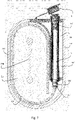
- a urinary catheter assembly as illustrated in Figs. 1 and 2 comprises a catheter 1 having an insertable section 11, comprising an insertable, proximal part, with an insertion tip, and a catheter shaft, and a non-insertable section 12, a distal part, forming a connector part.
- the non-insertable section 12 has a larger diameter than the insertable section 11 at least on a part thereof.
- the rear end of the non-insertable section may be flared or funnel-shaped, and may be arranged to be connected to a tapered connection part of a urine collection bag or the like. However, the non-insertable section may alternatively have a relatively uniform cross-sectional area.
- the catheter is accommodated in a first compartment 2a of a package 2, forming a closed cavity in which the catheter is arranged.
- the package may optionally be arranged in an outer container, such as a bag or pouch.
- At least a part of the insertable section 11 forms an insertable length to be inserted through a urethra of the user.
- the insertable section comprises a tubular shaft 13 and an insertion tip 14, which may be a closed, rounded end. Further the insertable section may comprise inlet openings (not shown), arranged in the vicinity of the insertion tip, so called catheter eyes or eyelets, leading into a lumen extending through the catheter, and into a discharge outlet or drainage opening 15 arranged at the rearward end of the non-insertable section.
- the insertable section may be 80-140 mm for a female user and 200-350 mm for a male user.
- the urinary catheter assembly is in particular suitable for male catheters.
- the insertable section 11 may comprise a hydrophilic surface, and form a hydrophilic catheter, as is per se well known in the art.
- the hydrophilic surface may be in the form of a hydrophilic surface coating, for example polyvinyl-pyrrolidone (PVP), and which provides a low-friction surface when wetted with a wetting fluid.
- PVP polyvinyl-pyrrolidone
- other hydrophilic materials may be used, such as polyethylene oxide, polyvinyl alcohol, and the like.
- the entire insertable section of the catheter may be formed of a hydrophilic material.
- the urinary catheter assembly may also comprise a wetting fluid.
- the wetting fluid for activation of the catheter need not be provided within the package/first compartment. Instead, a wetting fluid may be poured into the package/first compartment after opening of the package/first compartment, for wetting of the catheter while it still remains in the package/first compartment. In some occasions, the catheter may even be removed from the package/first compartment and wetted e.g. in a different container, even though this is normally not preferred.
- the wetting fluid is arranged within the assembly, and preferably within the package/first compartment, so that the hydrophilic surface of the catheter can be activated even before opening of the package/first comparment.
- the wetting fluid is arranged separated from the catheter, in a wetting fluid container (not shown), such as a pouch or a sachet, or in a separate wetting fluid compartment of the package.
- the wetting fluid container or compartment can be openable by means of e.g. exerting a pressure to the container or compartment, whereby the wetting fluid is released into the package/first compartment, thereby wetting the hydrophilic surface of the catheter.
- the wetting fluid container or compartment may also be arranged to open automatically when the catheter assembly is opened, when extraction of the catheter from the package/first compartment is initiated.
- the wetting fluid may alternatively be arranged in a wetting fluid compartment encircling a part of the catheter shaft, and preferably a distal part, not provided with the hydrophilic coating, so that wetting of the hydrophilic coating is obtained while the catheter shaft is pulled out through the wetting fluid compartment.
- the wetting fluid is arranged directly in the first compartment of the package accommodating the catheter, so that the hydrophilic surface of the catheter is in direct contact with the wetting fluid during storage, and thereby is maintained in an activated, ready-to-use state.
- the wetting fluid is preferably a liquid, and most preferably an aqueous liquid, such as water or saline.
- the wetting fluid may also be a gas, providing a moist atmosphere in the package/first compartment sufficient for activation of the hydrophilic surface.
- the wetting fluid may be any fluid, gas or liquid, that wets/activates a hydrophilic surface of the catheter.
- the catheter may be non-hydrophilic, and may e.g. be lubricated with gel prior to insertion.
- the urinary catheter assembly may comprise a supply of lubricant, such as a compartment arranged overlying the catheter shaft, so that the shaft is lubricated while being pulled out from the tubular case.
- the first compartment 2a is provided with an opening 21.
- the first compartment is arranged to enclose the proximal part, and at least a part of the tubular shaft therein, and preferably at least the entire insertable section 11.
- at least the distal, non-insertable part 12 of the urinary catheter forms an extending part extending out from the first compartment through the opening.
- an enlarged part 16 may be provided in the proximal end of the non-insertable part 12.
- This enlarged part preferably has a larger outer diameter than the catheter shaft, and preferably has an outer diameter essentially corresponding to an inner diameter of the opening 21.
- This enlarged part 16 may be inserted into the opening when in the storage position, and thereby releasably connected to the opening 21 and the first compartment 2a.
- the connection may be formed by a friction fit, but additional connection elements may also be used, such as an adhesive, welding or the like.
- the connection preferably forms a seal between the catheter and the package/first compartment.
- the non-insertable part 12 may further comprise a second enlarged part 17, arranged distally from the first enlarged part 16.
- the second enlarged part 17 has, at least at some positions, a greater diameter than the first enlarged part 16.
- the second enlarged part 17 extends laterally outwards from the first enlarged part.
- the second enlarged part 17 preferably has greater lateral dimensions than the opening 21.
- the second enlarged part 17 may e.g. be disc shaped, and form a flange on the non-insertable part 12.
- the second enlarged part 17 forms a stop, preventing the catheter from being moved further into the first compartment 2a. In the storage position, the second enlarged part 17 may be in abutment with the rim of the opening 21.
- the distal section 18 of the non-insertable part 12, which comprises the drainage opening 15 at the distal end, and which may e.g. be flared and generally funnel shaped, may be formed as an integral, monolithic element together with the proximal section 19 of the non-insertable part 12, comprising the first enlarged part 16 and the second enlarged part 17.
- the distal section 18 and the proximal section 19 may also be made as separate parts. These parts are then preferably non-releasably connected to each other, e.g. by means of an adhesive, welding or the like.
- the opening 21 of the first compartment is preferably arranged as a short tube of relatively rigid material, and which is integrally formed in, or otherwise attached to, the rest of the package/first compartment.
- the first compartment 2a is arranged to enclose the insertable part 11 of the catheter.
- the first compartment may also be arranged of a relatively rigid material.
- the first compartment is made of a flexible material.
- the first compartment 2a of the package 2 may be formed of a sheet material, such as a foil.
- the package/first compartment is preferably capable of maintaining the interior in a sterile state.
- the package/first compartment is preferably liquid impermeable, and most preferably made of a gas impermeable material.
- the material may be a laminate, comprising a layer of a gas and/or liquid barrier material, such as SiOx, AlOx or a metal layer, i.e. a metallized laminate.
- somewhat impermeable materials may also be used, in particular for assemblies where the package is arranged in an outer container.
- the first compartment 2a is arranged to maintain the urinary catheter, when arranged in the package/first compartment, in a state during storage.
- the container may have curved inner boundaries 23, forming a border which the catheter can follow, and thereby be maintained in the curled/curved state.
- these boundaries may e.g. be formed by welding, or alternatively by use of an adhesive or the like.
- boundaries having a similar curvature may also be obtained in other types of containers, such as in a tubular container made of a more rigid material.
- the tube may be arranged to follow the same path as the one intended for the catheter, such as being arranged in a shape resembling a U, a C, or the like.
- a shape resembling a U, a C, or the like such as being arranged in a shape resembling a U, a C, or the like.
- other bent, folded or otherwise curved shapes are also feasible.
- the first compartment 2a is made of a sheet material.
- the first compartment may be formed by two sheets being connected around the edges, or by a folded sheet, being connected together around the edges not formed by the fold.
- the inner boundary 23 of the first compartment contains, as seen from the opening 21, a first straight part 231, then a curved part 232, generally forming a semicircle, a second straight part 233, leading past the opening 21, a second curved part 234, also generally forming a semicircle, but with a slightly smaller diameter than the first curved part, and finally a straight part 235 leading back to the opening 21.
- the first compartment may be formed by a tube or the like, or partly comprise such a tube.
- the catheter is curled into about 1,5 turns, i.e. with a full and a half convolution. This generally reduces the length of the catheter to a third of its original length, allowing the catheter assembly to be correspondingly compacted.
- the cavity holding the catheter is open in the center, and only defined by the outer boundaries.
- additional boundaries e.g. formed by welds, may also be formed in the interior of the cavity.
- additional boundaries may e.g. be used to define channels extending along the intended curved/curled path of the catheter.
- the free area inside the curled catheter may comprise an additional inner boundary, e.g. defining a circle or ellipse, thereby reducing the space of the cavity.
- the catheter may also be arranged to be more or less curved/curled.
- the catheter may be arranged in less than a full convolution, such as generally forming the shape of a C or U.
- the catheter may be arranged in more than 1 or 1.5 convolutions, such as in about 2 or about three convolutions.
- the same container/first compartment as shown in Fig. 1 may still be used.
- the catheter will at places overlap itself, and at least parts of the convolutions will be in touch with each other.
- the boundaries may be used to define also the additional convolutions.
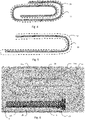
- Fig. 4 a schematic illustration is provided of an alternative embodiment, in which the insertable part 11 of the catheter is arranged in about two convolutions, where the second convolution extends inside the first convolution.
- the boundary 23' is arranged in a helix configuration, forming the paths for the catheter.
- the catheter is arranged in less than a full convolution, with a shape resembling a U.
- boundaries 23" are provided on both sides of the catheter path, defining a channel for receiving the insertable part 11 of the catheter.
- Such boundaries may also be realized by welds in a container formed by sheet materials.
- such channels may also be realized e.g. by a tubular container, made by a more rigid material.
- curved or curled shape of the catheter are merely exemplary, and many other ways of forming a compact shaped catheter are feasible, and may defined by different types of boundaries within the container/first compartment. However, it is generally preferred to have curves with a relatively large radius of curvature, thereby avoiding kinking of the catheter shaft, and also to reduce the permanent deformation of the catheter due to the memory effect of the catheter shaft material.
- the urinary catheter assembly further comprises a protective sleeve arrangement 3 arranged around the extending part of the urinary catheter, i.e. the non-insertable part 12.
- the protective sleeve arrangement functions as an insertion aid, facilitating manipulation of the catheter for insertion into the urethra.
- the protective sleeve arrangement provides protection for the catheter shaft against contamination, and enables manipulation of the catheter without touching it.
- the protective sleeve arrangement provides a reinforcement for the catheter, thereby avoiding kinking and deformation of the catheter, and also ensures that the catheter is relatively straight, despite any memory effect in the catheter shaft.
- the protective sleeve arrangement 3 comprises a plurality of sleeves.
- the protective sleeve arrangement comprises three sleeves, but it is also feasible to use only two sleeves, or to use four or more sleeves.
- the sleeves are telescopically displaceable in relation to each other, and are in a compacted storage state arranged essentially overlying each other.
- the length of the protective sleeve arrangement in this state essentially corresponds to the length of the longest sleeve.
- the sleeves In an expanded, extended position, the sleeves are telescopically displaced in relation to each other. In this extended state, the length of the protective sleeve arrangement generally corresponds to the sum of the lengths of the sleeves, apart from the small overlap areas formed between the sleeves.
- the protective sleeve arrangement comprises an inner sleeve 31, an intermediate sleeve 32 and an outer sleeve 33.
- the sleeves may be of generally the same length.
- the length of each sleeve may e.g. be in the range of 6-10 cm.
- the outer sleeve 33 having the greatest diameter, may have its proximal end releasably connected to the package/first compartment.
- the opening 21 of the first compartment 2a may be provided with an annular recession 24 encircling the opening tube.
- the annular recession may e.g. be formed in a flange surrounding the tube.
- the annular recession may be arranged to receive and connect to the protective sleeve arrangement when in the retracted position, and in particular to the outer sleeve 33.
- the inner sleeve 31, i.e. the sleeve having the smallest diameter, preferably has a distal end connected to the non-insertable part 12 of the urinary catheter, and preferably at, or in the vicinity of, the drainage opening 15. This connection may also be releasable.
- the protective sleeve arrangement 3, in its extended position preferably has the sleeve with the smallest diameter, i.e. the inner sleeve 31, arranged closest to the distal end of the catheter, the sleeve with the largest diameter, i.e. the outer sleeve 33, arranged closest to the proximal end of the catheter, and the intermediate sleeve 32 therebetween.
- the protective sleeve arrangement is preferably relatively rigid, so that it cannot be easily compressed or the like.
- the rigidity of the protective sleeve arrangement is preferably such that it cannot be bent during ordinary handling of the catheter. It is further preferably such that the protective sleeve arrangement cannot be compressed onto the catheter by moderate, or even high, finger pressure during handling.
- the at sleeves of the protective sleeve arrangement each has a rigidity which is greater than the rigidity of the tubular shaft of the urinary catheter.
- the inner sleeve 31 is preferably releasably connected to non-insertable part 12 of the urinary catheter, and the distal part of the urinary catheter is preferably arranged telescopically displaceable in the protective sleeve arrangement.
- the non-insertable part 12 of the urinary catheter may be telescoped out from the inner sleeve 31 during extraction of the catheter from the package/first compartment, so that the protective sleeve arrangement then primarily covers the insertable part of the catheter when in the extended state.
- At least one of the enlarged part 16 and the enlarged part 17, forming outwardly protruding parts may be arranged to interact with an inwardly protruding part 311 of the inner sleeve, arranged at, or in the vicinity of, the distal end of the inner sleeve 31.
- This inwardly protruding part 311 may be formed as a section with smaller cross-sectional diameter, such as an inwardly protruding flange.
- the distal part of the catheter will be brought into engagement with the inner sleeve, upon contact between the inwardly protruding part and the outwardly protruding part, thereby forming a connection between the distal part of the catheter and the inner sleeve.
- the inner sleeve 31 may comprise an outward protrusion 312 at, or in the vicinity of, a proximal end thereof, e.g. formed as a section with enlarged cross-sectional diameter, such as an outwardly protruding flange, arranged to engage with an inward protrusion 321 at, or in the vicinity of, the distal end of the intermediate sleeve 32.
- the inward protrusion 321 may in a similar way be arranged as a section with a smaller cross-sectional diameter, such as inwardly protruding flange.
- the intermediate sleeve 32 may comprise an outward protrusion 322 at, or in the vicinity of, a proximal end thereof, e.g. formed as a section with enlarged cross-sectional diameter, such as an outwardly protruding flange, arranged to engage with an inward protrusion 331 at, or in the vicinity of, the distal end of the outer sleeve 33.
- the inward protrusion 331 may in a similar way be arranged as a section with a smaller cross-sectional diameter, such as inwardly protruding flange.
- each inner sleeve will be brought into engagement with its closest outer sleeve, upon contact between the inward protrusion and the outward protrusion, thereby forming a connection between the sleeves.
- the outward protrusions, or the outwardly protruding parts may be provided as a narrowing section, providing a decreased internal diameter compared to at least an adjacent part, and the inward protrusions, or the inwardly protruding parts, may be provided as an expanded section, providing an enlarged external diameter compared to at least an adjacent part.
- the narrowing sections and the expanded sections may form a stop abutment when brought together.
- the sleeves are preferably formed by solid walls around their entire circumference, and along their entire lengths.
- the sleeves may e.g. be made of poly propene (PP), poly ethylene (PE), Sulpac ® , or the like.
- the protective sleeve arrangement can e.g. be produced by injection molding and/or extrusion.
- the urinary catheter assembly may further comprise a removable or openable closure 4 arranged over the drainage opening 15 in a distal end of the urinary catheter.
- the closure may e.g. comprise a cap or lid arranged to close the drainage opening of the catheter, and which may in a closed state be partly inserted into the drainage opening 15.
- the cap or lid may further be connected to the catheter by a hinge 41 or the like, so that it remains in place even after being opened. In this case, the cap or lid may also be used as a grip to initiate extraction of the catheter out from the package/first compartment.
- the cap or lid may also be connected to the package.
- a sealed compartment may be formed by the first compartment 2a, the sealed connection between the non-insertable part 12 of the catheter formed by the enlarged part 16 in the opening 21, and the closure 4.
- This sealed compartment may be arranged to maintain the insertable part of the catheter sterile, and may also be arranged to maintain the wetting liquid within the sealed compartment.
- the exterior of the rearward part and the protective sleeve arrangement are not maintained in a sterile state.
- the interior of the second compartment may 2b may also be sterile, in order to maintain the rearward part and the protective sleeve arrangement in a sterile state.
- the lid or cap may be connected to the drainage opening by a friction fit. However, it may also be connected by other means, such as by a screw connection. It is also possible to use other types of closures, such as a peel-off membrane, a flip-open cap or the like. Alternatively, or additionally, the second compartment 2b may have an opening, such as a tear opening, a peel opening or the like.
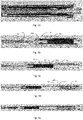
- the protective sleeve arrangement In the storage state, the protective sleeve arrangement is in a retracted, compacted state, and covers only a very limited part of the catheter, such as the connector or the non-insertable part of the catheter. Such a state is illustrated in Figs. 1, 2 and 3a .
- the remainder of the catheter, including the insertable part of the catheter shaft, resides in the first compartment of the package.
- the protective sleeve arrangement is extended into its extended state, and is released from the package/first compartment.
- the user pulls the rear, distal, end of the catheter away from the package/first compartment, for example by gripping the cap, or directly gripping the distal part of the catheter. This releases the connection between the catheter and the inner sleeve 31. Then, the catheter, and its non-insertable part 12, is telescopically displaced within the protective sleeve arrangement 3. After a while, one or both of the enlarged parts 16 and 17 close to or at the proximal end of the non-insertable part 12 will come into engagement with the inward protrusion 311 of the inner sleeve. This intermediate state is illustrated in Fig. 3b .
- the protective sleeve arrangement is fully extended, and covers a substantial part of the insertable part 11 of the catheter.
- at least a small part of the catheter shaft preferably extends out from the extended protective sleeve 3 arrangement after extraction of the catheter from the package/first compartment.
- the user may use the extended protective sleeve arrangement as a handle, and grip it for clean manipulation and insertion of the catheter into the urethra. Due to the significant length of the protective sleeve arrangement, it is easy and convenient to grip.
- the catheter shaft is maintained in a relatively straight state by the protective sleeve arrangement, thereby facilitating insertion of the catheter. Since only the protective sleeve arrangement need to be touched, the risk of contaminating the catheter during this procedure is greatly alleviated.
- the protective sleeve arrangement may again be compacted into its retracted state, thereby allowing the entire insertable length of the catheter shaft to be inserted.
- the compaction of the protective sleeve arrangement may here be obtained by manually moving the telescopic sleeves of the protective sleeve arrangement together, or automatically, by simply pulling the proximal end of the protective sleeve arrangement to the glans of the penis during insertion.
- the protective sleeve arrangement may again, optionally, be enlarged, into its extended state, to facilitate handling of the catheter in a clean manner during subsequent activities, such as cleaning of the catheter, discarding of the catheter, or rearrangement of the catheter into the package/first compartment.
- the package comprises only one compartment, the first compartment 2a, in which the proximal part of the catheter is enclosed.
- the distal part of the catheter hereby extends out from the package.
- a sterile environment for the proximal part of the catheter is here formed by the package 2/first compartment 2a, the protective sleeve arrangement 3 and the closure 4.
- the package may also comprise further compartments, e.g. enclosing also the distal part of the catheter.
- further compartments e.g. enclosing also the distal part of the catheter.
- the first compartment 2a may be formed and arranged essentially as in the first discussed embodiment.
- the first compartment 2a here has an inner boundary 23a, formed e.g. by a weld, forming the curved or curled shape of the catheter shaft 11 maintained during storage.
- the first compartment may comprise an additional boundary 23b, arranged inside the boundary 23a, and with a distance from the inner boundary 23a.
- the two boundaries 23a and 23b hereby form a channel in which the catheter shaft 11 is received.
- the arrangement of the first compartment 2a as shown in Fig. 1 may also be used.
- the package also comprises a second compartment 2b, adjacent the first compartment 2a, such that the opening 21 connects the first and second compartments, forming a passage between the compartments.
- the second compartment is arranged to enclose the distal part of the catheter, extending out from the first compartment, and the protective sleeve arrangement 3.
- the second compartment may e.g. be formed by a third weld 23c.
- the third weld 23c may e.g. be arranged as an extension of the inner boundary/weld 23a forming the first compa rtment.
- the distal part of the catheter, together with the protective sleeve arrangement 3, may be maintained in a sterile state in the second compartment 2b, and the proximal part of the catheter may be maintained in a sterile state in the first compartment.
- the opening 21 need not be closed, since both compartments may be sterile. However, the opening 21 may still be closed, e.g. in order to maintain the wetting fluid in the first compartment 2a, and avoid that the wetting fluid spreads into the second compartment 2b.
- a closure 4 may also be provided at the distal end of the catheter.
- the user may here first open the second compartment 2b, and thereby get access to the distal part of the catheter.
- the second compartment may be provided with a tear opening, a peel-opening or the like.
- the catheter may thereafter be removed from the first compartment 2a in the same way as discussed in relation to the first embodiment.
- the first compartment 2a may also be formed and arranged essentially as in the first discussed embodiment.
- the first compartment 2a here has an inner boundary 23a, formed e.g. by a weld, forming the curved or curled shape of the catheter shaft 11 maintained during storage.
- the first compartment may comprise an additional boundary 23b, arranged inside the boundary 23a, and with a distance from the inner boundary 23a.
- the two boundaries 23a and 23b hereby form a channel in which the catheter shaft 11 is received.
- the arrangement of the first compartment 2a as shown in Fig. 1 may also be used.
- the package also comprises a second compartment 2b, adjacent the first compartment 2a, such that the opening 21' connects the first and second compartments, forming a passage between the compartments.
- the second compartment is arranged to enclose the distal part of the catheter, extending out from the first compartment, and the protective sleeve arrangement 3.
- the second compartment may e.g. be formed by a third weld 23c.
- the third weld 23c may e.g. be arranged as an extension of the inner boundary/weld 23a forming the first compartment.
- the distal part of the catheter, together with the protective sleeve arrangement 3, may be maintained in a sterile state in the second compartment 2b, and the proximal part of the catheter may be maintained in a sterile state in the first compartment.
- the opening 21' need not be closed, since both compartments may be sterile. However, the opening 21' may still be closed, e.g. in order to maintain the wetting fluid in the first compartment 2a, and avoid that the wetting fluid spreads into the second compartment 2b.
- a closure 4 may also be provided at the distal end of the catheter. In the embodiment of Fig. 7 , this closure 4 also serves as a closure of an opening of the second compartment 2b.
- the non-insertable part of the catheter may comprise a distal section 18', forming e.g. a flared end, and an oppositely arranged enlarged part 16', having a diameter greater than the diameter of the shaft of the catheter.
- the enlarged part 16' may form a friction fit, or otherwise be connected to, the opening 21'.
- a tubular part 19' may be arranged between the distal section 18' and the enlarged part 16'.
- the user may here open closure 4, thereby opening the second compartment 2b, and also get access to the distal part of the catheter.
- the catheter may thereafter be removed from the first compartment 2a in the same way as discussed in relation to the previously discussed embodiments.
- wetting fluid in the described embodiments is arranged in direct contact with the catheter, it may alternatively be arranged separated from the catheter, in a wetting fluid container.
- more than three sleeves may be used in the protective sleeve arrangement, as well as only two.
- the arrangement of the catheter in a curved or curled state may be realized in many different ways.
Landscapes
- Health & Medical Sciences (AREA)
- Life Sciences & Earth Sciences (AREA)
- Biophysics (AREA)
- Pulmonology (AREA)
- Engineering & Computer Science (AREA)
- Anesthesiology (AREA)
- Biomedical Technology (AREA)
- Heart & Thoracic Surgery (AREA)
- Hematology (AREA)
- Animal Behavior & Ethology (AREA)
- General Health & Medical Sciences (AREA)
- Public Health (AREA)
- Veterinary Medicine (AREA)
- Epidemiology (AREA)
- Urology & Nephrology (AREA)
- External Artificial Organs (AREA)
- Media Introduction/Drainage Providing Device (AREA)
Priority Applications (3)
| Application Number | Priority Date | Filing Date | Title |
|---|---|---|---|
| EP20204166.1A EP3991773A1 (de) | 2020-10-27 | 2020-10-27 | Urinkatheteranordnung |
| PCT/EP2021/079242 WO2022090055A1 (en) | 2020-10-27 | 2021-10-21 | Urinary catheter assembly |
| US17/511,431 US11779727B2 (en) | 2020-10-27 | 2021-10-26 | Urinary catheter assembly |
Applications Claiming Priority (1)
| Application Number | Priority Date | Filing Date | Title |
|---|---|---|---|
| EP20204166.1A EP3991773A1 (de) | 2020-10-27 | 2020-10-27 | Urinkatheteranordnung |
Publications (1)
| Publication Number | Publication Date |
|---|---|
| EP3991773A1 true EP3991773A1 (de) | 2022-05-04 |
Family
ID=73029954
Family Applications (1)
| Application Number | Title | Priority Date | Filing Date |
|---|---|---|---|
| EP20204166.1A Withdrawn EP3991773A1 (de) | 2020-10-27 | 2020-10-27 | Urinkatheteranordnung |
Country Status (3)
| Country | Link |
|---|---|
| US (1) | US11779727B2 (de) |
| EP (1) | EP3991773A1 (de) |
| WO (1) | WO2022090055A1 (de) |
Cited By (6)
| Publication number | Priority date | Publication date | Assignee | Title |
|---|---|---|---|---|
| US11911571B2 (en) | 2020-04-24 | 2024-02-27 | Convatec Limited | Packaging for a medical device |
| US12011547B2 (en) | 2020-04-24 | 2024-06-18 | Convatec Limited | Wetting mechanism for a catheter |
| US12053593B2 (en) | 2020-04-24 | 2024-08-06 | Convatec Limited | Wetting mechanism for a catheter |
| US12064568B2 (en) | 2020-04-24 | 2024-08-20 | Convatec Limited | Catheter |
| US12171956B2 (en) | 2020-04-24 | 2024-12-24 | Convatec Limited | Wetting mechanism for a catheter |
| EP4628137A1 (de) * | 2024-04-05 | 2025-10-08 | Wellspect AB | Verfahren und system zur herstellung einer schutzhülsenanordnung für einen harnkatheter |
Families Citing this family (5)
| Publication number | Priority date | Publication date | Assignee | Title |
|---|---|---|---|---|
| FR3108380B1 (fr) * | 2020-03-20 | 2022-04-08 | Sterlab | Dispositif anti-flambement apte à guider un élément cylindrique poussé et déplacé sur une distance donnée dans la direction de son axe |
| PL4255546T3 (pl) * | 2020-12-04 | 2024-07-29 | Convatec Limited | Zapakowany zespół cewnika |
| GB202105822D0 (en) | 2021-04-23 | 2021-06-09 | Convatec Ltd | Intermittent catheter |
| WO2025180639A1 (en) | 2024-02-29 | 2025-09-04 | Wellspect Ab | Urinary catheter assembly |
| WO2025180638A1 (en) | 2024-02-29 | 2025-09-04 | Wellspect Ab | Urinary catheter assembly |
Citations (6)
| Publication number | Priority date | Publication date | Assignee | Title |
|---|---|---|---|---|
| EP0093093A1 (de) | 1982-04-22 | 1983-11-02 | Astra Meditec AB | Herstellung einer hydrophilischen Beschichtung |
| EP0217771A1 (de) | 1985-09-30 | 1987-04-08 | Astra Meditec AB | Verfahren zur Herstellung eines hydrofilen Überzugs auf einer polymeren Oberfläche |
| US20060025753A1 (en) * | 2004-08-02 | 2006-02-02 | Kubalak Thomas P | Urinary catheter assembly |
| EP2823845A1 (de) * | 2013-07-12 | 2015-01-14 | Curan Medical B.V. | Harnblasenkatheterverpackung für Männer |
| US9987464B1 (en) * | 2017-07-20 | 2018-06-05 | Donaco Medical Design, LLC | Urinary catheter insertion device and kit |
| US20190046767A1 (en) * | 2017-08-08 | 2019-02-14 | Cure Medical Llc | Packaged urinary catheter with catheter dispensing system |
Family Cites Families (7)
| Publication number | Priority date | Publication date | Assignee | Title |
|---|---|---|---|---|
| US3807408A (en) * | 1972-01-17 | 1974-04-30 | D Summers | Retention catheter |
| US4598834A (en) * | 1985-02-06 | 1986-07-08 | U.S. Clinical Products, Inc. | Flexible sterile closure system for a container with a side injection port |
| US5591194A (en) * | 1994-02-18 | 1997-01-07 | C. R. Bard, Inc. | Telescoping balloon catheter and method of use |
| US20060184105A1 (en) * | 2005-02-15 | 2006-08-17 | Townsend Gregory L | Thin wall catheter and method of placing same |
| WO2015028658A1 (en) * | 2013-09-02 | 2015-03-05 | Coloplast A/S | Catheter assembly with easy attachment for tube or bag |
| EP3148625B1 (de) * | 2014-05-30 | 2023-07-05 | Hollister Incorporated | Aufklappverpackung für katheter |
| US10869991B2 (en) * | 2016-11-09 | 2020-12-22 | Medtronic Vascular, Inc. | Telescoping catheter |
-
2020
- 2020-10-27 EP EP20204166.1A patent/EP3991773A1/de not_active Withdrawn
-
2021
- 2021-10-21 WO PCT/EP2021/079242 patent/WO2022090055A1/en not_active Ceased
- 2021-10-26 US US17/511,431 patent/US11779727B2/en active Active
Patent Citations (6)
| Publication number | Priority date | Publication date | Assignee | Title |
|---|---|---|---|---|
| EP0093093A1 (de) | 1982-04-22 | 1983-11-02 | Astra Meditec AB | Herstellung einer hydrophilischen Beschichtung |
| EP0217771A1 (de) | 1985-09-30 | 1987-04-08 | Astra Meditec AB | Verfahren zur Herstellung eines hydrofilen Überzugs auf einer polymeren Oberfläche |
| US20060025753A1 (en) * | 2004-08-02 | 2006-02-02 | Kubalak Thomas P | Urinary catheter assembly |
| EP2823845A1 (de) * | 2013-07-12 | 2015-01-14 | Curan Medical B.V. | Harnblasenkatheterverpackung für Männer |
| US9987464B1 (en) * | 2017-07-20 | 2018-06-05 | Donaco Medical Design, LLC | Urinary catheter insertion device and kit |
| US20190046767A1 (en) * | 2017-08-08 | 2019-02-14 | Cure Medical Llc | Packaged urinary catheter with catheter dispensing system |
Cited By (6)
| Publication number | Priority date | Publication date | Assignee | Title |
|---|---|---|---|---|
| US11911571B2 (en) | 2020-04-24 | 2024-02-27 | Convatec Limited | Packaging for a medical device |
| US12011547B2 (en) | 2020-04-24 | 2024-06-18 | Convatec Limited | Wetting mechanism for a catheter |
| US12053593B2 (en) | 2020-04-24 | 2024-08-06 | Convatec Limited | Wetting mechanism for a catheter |
| US12064568B2 (en) | 2020-04-24 | 2024-08-20 | Convatec Limited | Catheter |
| US12171956B2 (en) | 2020-04-24 | 2024-12-24 | Convatec Limited | Wetting mechanism for a catheter |
| EP4628137A1 (de) * | 2024-04-05 | 2025-10-08 | Wellspect AB | Verfahren und system zur herstellung einer schutzhülsenanordnung für einen harnkatheter |
Also Published As
| Publication number | Publication date |
|---|---|
| US20220126057A1 (en) | 2022-04-28 |
| WO2022090055A1 (en) | 2022-05-05 |
| US11779727B2 (en) | 2023-10-10 |
Similar Documents
| Publication | Publication Date | Title |
|---|---|---|
| US11779727B2 (en) | Urinary catheter assembly | |
| CN1795024B (zh) | 导尿管组件及制备导尿管装置的方法 | |
| US10449328B2 (en) | Packaged catheter assembly | |
| US10441454B2 (en) | Urinary catheter provided as a package | |
| CN100405995C (zh) | 导尿管装置 | |
| CN104114219B (zh) | 导尿管组件 | |
| US8556884B2 (en) | Compact catheter assembly | |
| US10265499B2 (en) | Compact urinary catheter | |
| CN108495681A (zh) | 导尿管组件 | |
| EP3701993A1 (de) | Harnkatheteranordnung mit integriertem schwenkbarem griff | |
| EP1578308A1 (de) | Vorrichtung zum öffnen der menschlichen blase | |
| EP2106821A1 (de) | Katheteranordnung mit einem rohrförmigen Mittel mit gefalteten Bereichen und Verfahren zur Aktivierung davon | |
| EP3711807A1 (de) | Urinkatheteranordnung | |
| US20240149016A1 (en) | Intermittent urinary catheter assembly with protective sleeve arrangement | |
| EP3711808A1 (de) | Urinkatheteranordnung | |
| EP3711806A1 (de) | Urinkatheteranordnung | |
| WO2025180638A1 (en) | Urinary catheter assembly | |
| WO2025180639A1 (en) | Urinary catheter assembly | |
| ES2694758T3 (es) | Dispositivo de catéter | |
| HK1125872A (en) | A catheter device |
Legal Events
| Date | Code | Title | Description |
|---|---|---|---|
| PUAI | Public reference made under article 153(3) epc to a published international application that has entered the european phase |
Free format text: ORIGINAL CODE: 0009012 |
|
| STAA | Information on the status of an ep patent application or granted ep patent |
Free format text: STATUS: THE APPLICATION HAS BEEN PUBLISHED |
|
| AK | Designated contracting states |
Kind code of ref document: A1 Designated state(s): AL AT BE BG CH CY CZ DE DK EE ES FI FR GB GR HR HU IE IS IT LI LT LU LV MC MK MT NL NO PL PT RO RS SE SI SK SM TR |
|
| STAA | Information on the status of an ep patent application or granted ep patent |
Free format text: STATUS: REQUEST FOR EXAMINATION WAS MADE |
|
| 17P | Request for examination filed |
Effective date: 20221026 |
|
| RBV | Designated contracting states (corrected) |
Designated state(s): AL AT BE BG CH CY CZ DE DK EE ES FI FR GB GR HR HU IE IS IT LI LT LU LV MC MK MT NL NO PL PT RO RS SE SI SK SM TR |
|
| RAP1 | Party data changed (applicant data changed or rights of an application transferred) |
Owner name: WELLSPECT AB |
|
| STAA | Information on the status of an ep patent application or granted ep patent |
Free format text: STATUS: THE APPLICATION IS DEEMED TO BE WITHDRAWN |
|
| 18D | Application deemed to be withdrawn |
Effective date: 20250501 |