EP3992016A1 - Verfahren und vorrichtung zur paarungssteuerung bei einer kraftübertragung - Google Patents
Verfahren und vorrichtung zur paarungssteuerung bei einer kraftübertragung Download PDFInfo
- Publication number
- EP3992016A1 EP3992016A1 EP20849585.3A EP20849585A EP3992016A1 EP 3992016 A1 EP3992016 A1 EP 3992016A1 EP 20849585 A EP20849585 A EP 20849585A EP 3992016 A1 EP3992016 A1 EP 3992016A1
- Authority
- EP
- European Patent Office
- Prior art keywords
- secc
- pairing
- information
- alternative
- control method
- Prior art date
- Legal status (The legal status is an assumption and is not a legal conclusion. Google has not performed a legal analysis and makes no representation as to the accuracy of the status listed.)
- Pending
Links
Images




Classifications
-
- B—PERFORMING OPERATIONS; TRANSPORTING
- B60—VEHICLES IN GENERAL
- B60L—PROPULSION OF ELECTRICALLY-PROPELLED VEHICLES; SUPPLYING ELECTRIC POWER FOR AUXILIARY EQUIPMENT OF ELECTRICALLY-PROPELLED VEHICLES; ELECTRODYNAMIC BRAKE SYSTEMS FOR VEHICLES IN GENERAL; MAGNETIC SUSPENSION OR LEVITATION FOR VEHICLES; MONITORING OPERATING VARIABLES OF ELECTRICALLY-PROPELLED VEHICLES; ELECTRIC SAFETY DEVICES FOR ELECTRICALLY-PROPELLED VEHICLES
- B60L53/00—Methods of charging batteries, specially adapted for electric vehicles; Charging stations or on-board charging equipment therefor; Exchange of energy storage elements in electric vehicles
- B60L53/10—Methods of charging batteries, specially adapted for electric vehicles; Charging stations or on-board charging equipment therefor; Exchange of energy storage elements in electric vehicles characterised by the energy transfer between the charging station and the vehicle
- B60L53/12—Inductive energy transfer
-
- B—PERFORMING OPERATIONS; TRANSPORTING
- B60—VEHICLES IN GENERAL
- B60L—PROPULSION OF ELECTRICALLY-PROPELLED VEHICLES; SUPPLYING ELECTRIC POWER FOR AUXILIARY EQUIPMENT OF ELECTRICALLY-PROPELLED VEHICLES; ELECTRODYNAMIC BRAKE SYSTEMS FOR VEHICLES IN GENERAL; MAGNETIC SUSPENSION OR LEVITATION FOR VEHICLES; MONITORING OPERATING VARIABLES OF ELECTRICALLY-PROPELLED VEHICLES; ELECTRIC SAFETY DEVICES FOR ELECTRICALLY-PROPELLED VEHICLES
- B60L53/00—Methods of charging batteries, specially adapted for electric vehicles; Charging stations or on-board charging equipment therefor; Exchange of energy storage elements in electric vehicles
- B60L53/60—Monitoring or controlling charging stations
- B60L53/66—Data transfer between charging stations and vehicles
-
- B—PERFORMING OPERATIONS; TRANSPORTING
- B60—VEHICLES IN GENERAL
- B60L—PROPULSION OF ELECTRICALLY-PROPELLED VEHICLES; SUPPLYING ELECTRIC POWER FOR AUXILIARY EQUIPMENT OF ELECTRICALLY-PROPELLED VEHICLES; ELECTRODYNAMIC BRAKE SYSTEMS FOR VEHICLES IN GENERAL; MAGNETIC SUSPENSION OR LEVITATION FOR VEHICLES; MONITORING OPERATING VARIABLES OF ELECTRICALLY-PROPELLED VEHICLES; ELECTRIC SAFETY DEVICES FOR ELECTRICALLY-PROPELLED VEHICLES
- B60L53/00—Methods of charging batteries, specially adapted for electric vehicles; Charging stations or on-board charging equipment therefor; Exchange of energy storage elements in electric vehicles
- B60L53/10—Methods of charging batteries, specially adapted for electric vehicles; Charging stations or on-board charging equipment therefor; Exchange of energy storage elements in electric vehicles characterised by the energy transfer between the charging station and the vehicle
- B60L53/12—Inductive energy transfer
- B60L53/126—Methods for pairing a vehicle and a charging station, e.g. establishing a one-to-one relation between a wireless power transmitter and a wireless power receiver
-
- B—PERFORMING OPERATIONS; TRANSPORTING
- B60—VEHICLES IN GENERAL
- B60L—PROPULSION OF ELECTRICALLY-PROPELLED VEHICLES; SUPPLYING ELECTRIC POWER FOR AUXILIARY EQUIPMENT OF ELECTRICALLY-PROPELLED VEHICLES; ELECTRODYNAMIC BRAKE SYSTEMS FOR VEHICLES IN GENERAL; MAGNETIC SUSPENSION OR LEVITATION FOR VEHICLES; MONITORING OPERATING VARIABLES OF ELECTRICALLY-PROPELLED VEHICLES; ELECTRIC SAFETY DEVICES FOR ELECTRICALLY-PROPELLED VEHICLES
- B60L53/00—Methods of charging batteries, specially adapted for electric vehicles; Charging stations or on-board charging equipment therefor; Exchange of energy storage elements in electric vehicles
- B60L53/10—Methods of charging batteries, specially adapted for electric vehicles; Charging stations or on-board charging equipment therefor; Exchange of energy storage elements in electric vehicles characterised by the energy transfer between the charging station and the vehicle
- B60L53/14—Conductive energy transfer
-
- B—PERFORMING OPERATIONS; TRANSPORTING
- B60—VEHICLES IN GENERAL
- B60L—PROPULSION OF ELECTRICALLY-PROPELLED VEHICLES; SUPPLYING ELECTRIC POWER FOR AUXILIARY EQUIPMENT OF ELECTRICALLY-PROPELLED VEHICLES; ELECTRODYNAMIC BRAKE SYSTEMS FOR VEHICLES IN GENERAL; MAGNETIC SUSPENSION OR LEVITATION FOR VEHICLES; MONITORING OPERATING VARIABLES OF ELECTRICALLY-PROPELLED VEHICLES; ELECTRIC SAFETY DEVICES FOR ELECTRICALLY-PROPELLED VEHICLES
- B60L53/00—Methods of charging batteries, specially adapted for electric vehicles; Charging stations or on-board charging equipment therefor; Exchange of energy storage elements in electric vehicles
- B60L53/10—Methods of charging batteries, specially adapted for electric vehicles; Charging stations or on-board charging equipment therefor; Exchange of energy storage elements in electric vehicles characterised by the energy transfer between the charging station and the vehicle
- B60L53/14—Conductive energy transfer
- B60L53/18—Cables specially adapted for charging electric vehicles
-
- B—PERFORMING OPERATIONS; TRANSPORTING
- B60—VEHICLES IN GENERAL
- B60L—PROPULSION OF ELECTRICALLY-PROPELLED VEHICLES; SUPPLYING ELECTRIC POWER FOR AUXILIARY EQUIPMENT OF ELECTRICALLY-PROPELLED VEHICLES; ELECTRODYNAMIC BRAKE SYSTEMS FOR VEHICLES IN GENERAL; MAGNETIC SUSPENSION OR LEVITATION FOR VEHICLES; MONITORING OPERATING VARIABLES OF ELECTRICALLY-PROPELLED VEHICLES; ELECTRIC SAFETY DEVICES FOR ELECTRICALLY-PROPELLED VEHICLES
- B60L53/00—Methods of charging batteries, specially adapted for electric vehicles; Charging stations or on-board charging equipment therefor; Exchange of energy storage elements in electric vehicles
- B60L53/30—Constructional details of charging stations
- B60L53/305—Communication interfaces
-
- B—PERFORMING OPERATIONS; TRANSPORTING
- B60—VEHICLES IN GENERAL
- B60L—PROPULSION OF ELECTRICALLY-PROPELLED VEHICLES; SUPPLYING ELECTRIC POWER FOR AUXILIARY EQUIPMENT OF ELECTRICALLY-PROPELLED VEHICLES; ELECTRODYNAMIC BRAKE SYSTEMS FOR VEHICLES IN GENERAL; MAGNETIC SUSPENSION OR LEVITATION FOR VEHICLES; MONITORING OPERATING VARIABLES OF ELECTRICALLY-PROPELLED VEHICLES; ELECTRIC SAFETY DEVICES FOR ELECTRICALLY-PROPELLED VEHICLES
- B60L53/00—Methods of charging batteries, specially adapted for electric vehicles; Charging stations or on-board charging equipment therefor; Exchange of energy storage elements in electric vehicles
- B60L53/60—Monitoring or controlling charging stations
- B60L53/65—Monitoring or controlling charging stations involving identification of vehicles or their battery types
-
- B—PERFORMING OPERATIONS; TRANSPORTING
- B60—VEHICLES IN GENERAL
- B60L—PROPULSION OF ELECTRICALLY-PROPELLED VEHICLES; SUPPLYING ELECTRIC POWER FOR AUXILIARY EQUIPMENT OF ELECTRICALLY-PROPELLED VEHICLES; ELECTRODYNAMIC BRAKE SYSTEMS FOR VEHICLES IN GENERAL; MAGNETIC SUSPENSION OR LEVITATION FOR VEHICLES; MONITORING OPERATING VARIABLES OF ELECTRICALLY-PROPELLED VEHICLES; ELECTRIC SAFETY DEVICES FOR ELECTRICALLY-PROPELLED VEHICLES
- B60L2240/00—Control parameters of input or output; Target parameters
- B60L2240/70—Interactions with external data bases, e.g. traffic centres
- B60L2240/72—Charging station selection relying on external data
Definitions
- the present disclosure relates to a method and apparatus for controlling a pairing in a power transfer and, more particularly, to a method and apparatus for controlling the pairing performed for a conductive or wireless power transfer to an electric vehicle.
- An electric vehicle is driven by an electric motor powered by a battery and has advantages of reducing pollutants such as exhaust gas and noise, less breakdown, longer life, and simpler driving operation compared with a conventional combustion engine vehicle.
- the EVs are classified into hybrid electric vehicles (HEVs), plug-in hybrid electric vehicles (PHEVs), and electric vehicles (EVs), based on a driving source.
- the HEV has an engine as a main power and a motor as an auxiliary power.
- the PHEV has a main power motor and an engine used when a battery is discharged.
- the EV has a motor, but the EV does not have an engine.
- An electric vehicle charging system may be defined as a system that charges a battery mounted in an electric vehicle using power obtained from a commercial power grid or stored in an energy storage device.
- Such an electric vehicle charging system may have various forms depending on a type of the electric vehicle.
- the electric vehicle charging system may include a conductive charging system using a cable or a non-contact wireless power transfer system.
- An electric vehicle charging control is performed through a communications protocol between the EV and a charging station.
- the power transfer from the charging station to the EV is performed after a pairing is established between an electric vehicle communication controller (EVCC) of the EV and a supply equipment communication controller (SECC) of the charging station.
- EVCC electric vehicle communication controller
- SECC supply equipment communication controller
- a pairing control method performed by a supply equipment communication controller (SECC) controlling a power transfer to an electric vehicle (EV).
- SECC supply equipment communication controller
- SECC supply equipment communication controller
- EV electric vehicle
- a pairing control method performed by the SECC controlling a power transfer to the EV includes: performing an initiation of a charging session with the EV; exchanging pairing messages with the EV; generating information on at least one alternative SECC when a pairing with the EV fails; and transmitting a pairing response message including the information on the at least one alternative SECC to the EV.
- the SECC may communicate with at least one other SECC using an Inter-Supply Equipment Protocol (ISEP).
- ISEP Inter-Supply Equipment Protocol
- the pairing control method may further include an operation of acquiring the information on the at least one alternative SECC by using the Inter-Supply Equipment Protocol (ISEP).
- ISEP Inter-Supply Equipment Protocol
- the operation of generating information on the at least one alternative SECC when a pairing with the EV fails may include an operation of examining SECC information included in an event announcement message that is broadcast by each of the at least one other SECC.
- the information on the at least one alternative SECC may include at least one of: a service set identifier (SSID), a basic service set identifier (BSSID), or a pair of IP address and port number.
- SSID service set identifier
- BSSID basic service set identifier
- IP address and port number IP address and port number
- the ISEP may include at least one of: a proactive type message, a reactive type message, or a triggering type message.
- the reactive type message may be optionally used when the proactive type message cannot fix a pairing failure.
- the triggering type message may be used when a pairing signal is generated by an electric vehicle supply equipment (EVSE).
- EVSE electric vehicle supply equipment
- a supply equipment communication controller (SECC) controlling a power transfer to an electric vehicle (EV) includes a processor and a memory storing at least one instruction to be executed by the processor.
- the at least one instruction when executed by the processor, causes the processor to: perform an initiation of a charging session with the EV; exchange at least one pairing messages with the EV; generate information on at least one alternative SECC when a pairing with the EV fails; and transmit a pairing response message including the information on the at least one alternative SECC to the EV.
- the SECC may communicate with at least one other SECC using an Inter-Supply Equipment Protocol (ISEP).
- ISEP Inter-Supply Equipment Protocol
- the at least one instruction may include instructions, when executed by the processor, causing the processor to acquire the information on the at least one alternative SECC by using the Inter-Supply Equipment Protocol (ISEP).
- ISEP Inter-Supply Equipment Protocol
- the instruction causing the processor to generate information on the at least one alternative SECC when a pairing with the EV fails may include instructions causing the processor to examine SECC information included in an event announcement message that is broadcast by each of the at least one other SECC.
- the information on the at least one alternative SECC may include at least one of: a service set identifier (SSID), a basic service set identifier (BSSID), or a pair of IP address and port number.
- SSID service set identifier
- BSSID basic service set identifier
- IP address and port number IP address and port number
- the ISEP may include at least one of: a proactive type message, a reactive type message, or a triggering type message.
- the reactive type message may be optionally used when the proactive type message cannot fix a pairing failure.
- the triggering type message may be used when a pairing signal is generated by an electric vehicle supply equipment (EVSE).
- EVSE electric vehicle supply equipment
- a power transfer control method performed by an electric vehicle includes: performing an initiation of a charging session with a supply equipment communication controller (SECC); exchanging pairing messages with the SECC; receiving a pairing response message related to a pairing result from the SECC; when a pairing with the SECC fails, extracting information on at least one alternative SECC included in the pairing response message; and attempting the pairing with another SECC by using the information on the alternative SECC.
- SECC supply equipment communication controller
- the information on the at least one alternative SECC may be acquired through communications between a plurality of SECCs using an Inter-Supply Equipment Protocol (ISEP).
- ISEP Inter-Supply Equipment Protocol
- the ISEP may include at least one of: a proactive type message, a reactive type message, or a triggering type message.
- the reactive type message may be optionally used when the proactive type message cannot fix a pairing failure.
- the triggering type message may be used when a pairing signal is generated by an electric vehicle supply equipment (EVSE).
- EVSE electric vehicle supply equipment
- the electric vehicle may establish a pairing with an alternative supply device by using the information on the alternative supply device when the electric vehicle fails in the pairing with a certain supply device.
- the exemplary embodiment of the present disclosure enables a stable pairing and power supply between electric vehicles and the supply device.
- first and second designated for explaining various components in this specification are used to discriminate a component from the other ones but are not intended to be limiting to a specific component.
- a second component may be referred to as a first component and, similarly, a first component may also be referred to as a second component without departing from the scope of the present disclosure.
- a component When a component is referred to as being “connected” or “coupled” to another component, the component may be directly connected or coupled logically or physically to the other component or indirectly through an object therebetween. Contrarily, when a component is referred to as being “directly connected” or “directly coupled” to another component, it is to be understood that there is no intervening object between the components.
- Electric Vehicle An automobile, as defined in 49 CFR 523.3, intended for highway use, powered by an electric motor that draws current from an on-vehicle energy storage device, such as a battery, which is rechargeable from an off-vehicle source, such as residential or public electric service or an on-vehicle fuel powered generator.
- the EV may be a four or more wheeled vehicle manufactured for use primarily on public streets or roads.
- the EV may include an electric vehicle, an electric automobile, an electric road vehicle (ERV), a plug-in vehicle (PV), a plug-in vehicle (xEV), etc.
- the xEV may be classified into a plug-in all-electric vehicle (BEV), a battery electric vehicle, a plug-in electric vehicle (PEV), a hybrid electric vehicle (HEV), a hybrid plug-in electric vehicle (HPEV), a plug-in hybrid electric vehicle (PHEV), etc.
- BEV plug-in all-electric vehicle
- BEV plug-in all-electric vehicle
- PEV plug-in electric vehicle
- HEV hybrid electric vehicle
- HPEV hybrid plug-in electric vehicle
- PHEV plug-in hybrid electric vehicle
- PEV Plug-in Electric Vehicle
- PV Plug-in Vehicle
- Light duty plug-in electric vehicle A three or four-wheeled vehicle propelled by an electric motor drawing current from a rechargeable storage battery or other energy devices for use primarily on public streets, roads, and highways and rated at less than 4,545 kg gross vehicle weight.
- WCS Wireless power charging system
- WPT Wireless power transfer
- Ultrapolitanility A set of systems which supply electrical energy and include a customer information system (CIS), an advanced metering infrastructure (AMI), rates and revenue system, etc.
- CIS customer information system
- AMI advanced metering infrastructure
- the utility may provide an EV with energy through rates table and discrete events. Also, the utility may provide information related to certification on EVs, interval of power consumption measurements, and tariff.
- Smart charging A system in which EVSE and/or PEV communicate with power grid to optimize charging ratio or discharging ratio of EV by reflecting capacity of the power grid or expense of use.
- Automatic charging A procedure in which inductive charging is automatically performed after a vehicle is located in a proper position corresponding to a primary charger assembly capable of transferring power.
- the automatic charging may be performed after obtaining necessary authentication and access.
- Interoperability A state in which components of a system interwork with corresponding components of the system to perform operations aimed by the system. Additionally, information interoperability may refer to capability that two or more networks, systems, devices, applications, or components may efficiently share and easily use information without causing inconvenience to users.
- Inductive charging system A system transferring energy from a power source to an EV via a two-part gapped core transformer in which the two halves of the transformer, i.e., primary and secondary coils, are physically separated from one another.
- the inductive charging system may correspond to an EV power transfer system.
- Inductive coupler A transformer formed by the coil in a ground assembly (GA) coil and the coil in a vehicle assembly (VA) coil that allows power to be transferred with galvanic isolation.
- Inductive coupling A magnetic coupling between two coils.
- One of the two coils may refer to the ground assembly (GA) coil, and the other one of the two coils may refer to the vehicle assembly (VA) coil.
- GA ground assembly
- VA vehicle assembly
- Ground assembly An assembly on the ground or infrastructure side including the GA coil, a power/frequency conversion unit, and GA controller as well as the wiring from the grid and between each unit, filtering circuits, housing(s) etc., necessary to function as the power source of wireless power charging system.
- the GA may include components suitable for controlling impedances and resonant frequencies including ferrites and electromagnetic shielding materials for enhancing magnetic flus paths.
- VA Vehicle assembly
- the VA may include components suitable for controlling impedances and resonant frequencies including ferrites and electromagnetic shielding materials for enhancing magnetic flus paths.
- the GA may be referred to as a supply device, a primary device, and so on, and the VA may be referred to as an EV device, a secondary device, and so on.
- Primary device An apparatus which provides a contactless coupling to the secondary device.
- the primary device may be an apparatus extraneous to an EV.
- the primary device may act as a source of the transferred power.
- the primary device may include the housing and all covers.
- Secondary device An apparatus mounted within the EV which provides the contactless coupling to the primary device.
- the secondary device may be installed within the EV. When the EV is receiving power, the secondary device may transfer the power from the primary to the EV.
- the secondary device may include the housing and all covers.
- GA controller A portion of the GA which regulates the output power level to the GA coil based on information from the vehicle.
- VA controller A portion of the VA which monitors certain in-vehicle parameters during charging and initiates communication with the GA to adjust an output power level.
- the GA controller may be referred to as a primary device communication controller (PDCC), and the VA controller may be referred to as an electric vehicle communication controller (EVCC).
- PDCC primary device communication controller
- EVCC electric vehicle communication controller
- Magnetic gap A vertical distance between the plane of the higher of the top of the litz wire or the top of the magnetic material in the GA coil to the plane of the lower of the bottom of the litz wire or the magnetic material in the VA coil when aligned.
- Ambient temperature A ground-level temperature of the air measured at the subsystem under consideration and not in direct sun light.
- Vehicle ground clearance A vertical distance between the ground surface and the lowest part of the vehicle floor pan.
- Vehicle magnetic ground clearance A vertical distance between the plane of the lower of the bottom of the litz wire or the magnetic material in the VA Coil mounted within a vehicle to the ground surface.
- VA Coil magnetic surface distance A distance between the plane of the nearest magnetic or conducting component surface to the lower exterior surface of the VA coil when mounted. This distance includes any protective coverings and additional items that may be packaged in the VA Coil enclosure.
- the VA coil may be referred to as a secondary coil, a vehicle coil, or a receive coil.
- the GA coil may be referred to as a primary coil, or a transmit coil.
- Exposed conductive component A conductive component of electrical equipment (e.g. an electric vehicle) that may be touched and which is not normally energized but which may become energized in case of a fault.
- electrical equipment e.g. an electric vehicle
- Halzardous live component A live component, which under certain conditions may output a harmful electric shock.
- Live component Any conductor or conductive component intended to be electrically energized in normal use.
- “Alignment” A process of detecting a relative position of primary device to secondary device and/or detecting the relative position of secondary device to primary device for the efficient power transfer that is specified.
- the alignment may direct to a fine positioning of the wireless power transfer system.
- Pairing A process by which a vehicle is correlated with the unique dedicated primary device, at which it is located and from which the power will be transferred. Pairing may include the process by which a VA controller and a GA controller of a charging spot are correlated. The correlation/association process may include the process of establishing a relationship between two peer communication entities.
- High level communication (HLC): A particular type of digital communication.
- the HLC is necessary for additional services which are not covered by command & control communication.
- the data link of the HLC may use a power line communication (PLC), but it is not limited.
- PLC power line communication
- LPE Low power excitation
- Service set identifier A unique identifier consisting of 32-characters attached to a header of a packet transmitted on a wireless LAN.
- the SSID identifies the basic service set (BSS) to which the wireless device attempts to connect.
- BSS basic service set
- the SSID distinguishes multiple wireless LANs. Therefore, all access points (APs) and all terminal/station devices that want to use a specific wireless LAN may use the same SSID. Devices that do not use a unique SSID are not able to join the BSS. Since the SSID is shown as plain text, it may not provide any security features to the network.
- Extended service set identifier A name of a network to which one desires to connect. It is similar to SSID but may be a more extended concept.
- BSSID Base service set identifier
- the BSSID typically consists of 48bits and is used to distinguish a specific BSS.
- the BSSID may be a medium access control (MAC) of the AP equipment.
- MAC medium access control
- the BSSID may be generated with any value.
- a charging station may include at least one GA and at least one GA controller configured to manage the at least one GA.
- the GA may include at least one wireless communication device.
- the charging station may refer to a location having at least one GA, which is installed in home, office, public place, road, parking area, etc.
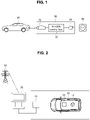
- FIG. 1 is a conceptual diagram illustrating an EV conductive charging system to which an exemplary embodiment of the present disclosure may be applied.
- the EV conductive charging may be performed based on an interworking of an EV charging cable 30, an EV 10, and a power outlet 40 installed in an existing building or charging stand.
- the EV 10 may be generally defined as an automobile that supplies an electric current from a rechargeable energy storage device such as a battery mounted on the EV 10 as an energy source of an electric motor.
- the EV 10 may be a hybrid electric vehicle (HEV) having an electric motor as well as an internal combustion engine. Also, the EV 10 may be not only an automobile but also a motorcycle, a cart, a scooter, or an electric bicycle.
- HEV hybrid electric vehicle
- the EV 10 may be not only an automobile but also a motorcycle, a cart, a scooter, or an electric bicycle.
- the EV 10 may include an inlet for the conductive charging of its battery.
- the EV 10 of which battery may be conductively charged may be referred to as a plug-in electric vehicle (PEV) as defined above.
- PEV plug-in electric vehicle
- the inlet provided in the EV 10 may support a slow charging or a rapid charging.
- the EV 10 may include either a single inlet that supports both of the slow charging and the rapid charging through a single plug connection, or inlets that respectively support the slow charging and the rapid charging.
- the EV 10 may further include an on-board charger (OBC) to support the slow charging by an alternating current (AC) power supplied from a general power system.
- OBC on-board charger
- the OBC may boost a level of the AC power supplied from the general power system and convert into a direct current (DC) power to supply the DC power to the battery of the EV 10 during the course of the slow charging.
- DC direct current
- the slow charging may be performed through the OBC.
- the DC power for the rapid charging is supplied to the inlet of the EV 10
- the rapid charging may be performed without an intervention of the OBC.
- the EV charging cable 30 may include at least one of a charging plug 31 connected to the inlet of the EV 10, an outlet plug 33 connected to the outlet 40, or an in-cable control box (ICCB) 32.
- ICCB in-cable control box
- the charging plug 11 may be a connection part that can be electrically connected to the inlet of the EV 10.
- the ICCB 12 may communicate with the EV 10 to receive status information of the EV or to control the electric power charging of the EV 10.
- the ICCB 12 is illustrated as being included in the EV charging cable 10, the ICCB 12 may be mounted in a place other than the EV charging cable 10 or may be combined with an SECC described below or replaced by the SECC.
- the outlet plug 13 which is suitable for being connected to the outlet of the charging stand to receive the power, may be an electrical connection member such as a general plug or a cord set.
- the electric power outlet 30 may refer to an outlet installed at various places such as a parking lot attached to a house of an owner of the EV 10, a parking area for charging an EV at a gas station, or a parking area at a shopping center or an office building, for example.
- a device referred to as a supply equipment communications controller may be installed in a building or place (e.g., a charging stand) where the outlet 30 is installed to control a charging procedure by communicating with one of the components of the ICCB 12 or the EV 10 (e.g., electric vehicle communications controller (EVCC)).
- SECC supply equipment communications controller
- the SECC may communicate with a power grid, an infrastructure management system that manages the power grid, a management server (hereinbelow, referred to as 'server') of the building in which the outlet 30 is installed, or an infrastructure server through wired or wireless communications.
- a management server hereinbelow, referred to as 'server'
- the power outlet 40 may supply the AC power of the power system as it is.
- the power outlet 40 may supply the AC power corresponding to at least one of single-phase twowire (1P2W) system or a three-phase four-wire (3P4W) system.
- the EV charging cable 30 may support the slow charging and supply the electric power for the slow charging to the EV 10.
- the electric power supplied to the EV 10 for the slow charging may be in a range of 3.3 to 7.7 kWh.
- the EV charging cable 30 may support the rapid charging and supply the electric power for the rapid charging to the EV 10.
- the electric power supplied to the EV 10 for the rapid charging may be in a range of 50 to 100 kWh.
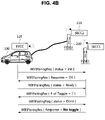
- FIG. 2 is a conceptual diagram illustrating a concept of a wireless power transfer (WPT) to which an exemplary embodiment of the present disclosure may be applied.
- WPT wireless power transfer
- a WPT may be performed by at least one component of an electric vehicle (EV) 10 and a charging station 20 and may be used for transferring power to the EV 10 without any wire.
- EV electric vehicle
- the EV 10 may be usually defined as a vehicle that supplies an electric power stored in the rechargeable energy storage including a battery 12 to an electric motor in a power train system of the EV 10.
- the EV 10 may include a hybrid electric vehicle (HEV) having an electric motor as well as an internal combustion engine, and may include not only an automobile but also a motorcycle, a cart, a scooter, and an electric bicycle.
- HEV hybrid electric vehicle
- the EV 10 may include a power reception pad 11 that has a reception coil suitable for receiving the electric power for charging the battery 12 wirelessly or and may include a plug receptacle suitable for receiving the electric power for conductively charging the battery 12.
- the EV 10 configured for conductively charging the battery 12 may be referred to as a plug-in electric vehicle (PEV).
- PEV plug-in electric vehicle
- the charging station 20 may be connected to the power grid 50 or a power backbone, and may provide the AC power to a power transmission pad 21 having a transmission coil via a power link.
- the charging station 20 may communicate with the power grid 50, or the infrastructure management system or an infrastructure server that manages the power grid, and may be configured to perform wireless communications with the EV 10.
- the wireless communications may be performed through Bluetooth, Zigbee, cellular, wireless local area network (WLAN), or the like.
- the charging station 20 may be located at various places including a parking area attached to the owner's house of the EV 10, a parking area for charging an EV at a gas station or the like, a parking area at a shopping center or a workplace, but is not limited thereto.
- the wireless power transfer to the battery 12 of the EV 10 may be performed as follows. First, the power reception pad 11 of the EV 10 is disposed in an energy field generated by the power transmission pad 21. Then the reception coil in the power reception pad 21 and the transmission coil in the power transmission pad 11 are coupled to and interacts each other. An electromotive force may be induced in the power reception pad 11 as a result of the coupling or the interaction, and the battery 12 may be charged by the induced electromotive force.
- the charging station 20 and the power transmission pad 21 as a whole or in part may be referred to as the ground assembly (GA), of which meaning and function were defined above.
- G ground assembly
- VA vehicle assembly
- the power transmission pad or the power reception pad may be configured to be non-polarized or polarized.
- the pad is non-polarized, there is one pole in a center of the pad and an opposite pole around an external periphery of the pad.
- the magnetic flux may be formed to exit from the center of the pad and return to external boundaries of the pad.
- the pad may have respective poles at opposite end portions of the pad.
- the magnetic flux may be formed based according to an orientation of the pad.
- the EV and EV supply equipment control an entire charging process by exchanging messages. That is, an electric vehicle communication controller (EVCC) and a supply equipment communication controller (SECC) may perform communications for charging the EV.
- EVCC electric vehicle communication controller
- SECC supply equipment communication controller
- the EV Before the communications, the EV first authenticates the EVSE to ensure that the EVSE is a trusted entity approved by a trust anchor, and establishes a secure channel with the EVSE to protect the communications from an unauthorized access.
- the security may be ensured by a Transport Layer Security (TLS) which is a standard protocol defined in IETF RFC 5246.
- TLS session may be established by a TLS session establishment procedure after an IP-based communication is established. The security of the TLS relies on the trust of the EV for the trusted operator to which the EVSE charger belongs.
- FIG. 3 illustrates communication schemes that may be used to control an electric vehicle power transfer according to an exemplary embodiment of the present disclosure.
- the communications between the electric vehicle communication controller (EVCC) and the supply equipment communication controller (SECC) may conform to IEEE standard 802.11. That is, the EV power transfer may involve communications between the EVCC and the SECC.
- EVCC electric vehicle communication controller
- SECC supply equipment communication controller
- the SECC supply equipment communication controller
- one SECC may be provided for each EVSE, or a single SECC may be provided for a plurality of EVSEs.
- the conductive power transfer through a wired cable may comply with an IEC 61851 standard.
- the wireless power transfer process performed between the VA (i.e., EVCC) and the GA (i.e., SECC) may include a WPT WLAN discovery operation, wireless communication association and charging spot discovery operations, positioning, authentication, authorization, and fine alignment operations, a pairing operation, an alignment check and WPT preparation operations, and a WTP operation.
- the pairing is a procedure to check that the EVCC is communicating with a correct SECC for the charging and is performed between the EVCC and the SECC.
- the pairing may be required for both the conductive power transfer and the wireless power transfer. However, the detailed procedure for the pairing in the conductive power transfer may be different from that in the wireless power transfer.
- FIG. 4A is a sequence diagram showing an example of a successful pairing procedure for the power transfer.
- FIG. 4A shows an example in which one EVSE and one SECC are used in a conductive power transfer environment. That is, a first EVSE (EVSE1) communicates with the EVCC through a first SECC (SECC1) allocated to the first EVSE (EVSE1).
- EVSE1 a first EVSE
- SECC1 a first SECC allocated to the first EVSE
- the pairing procedure is performed through a WIFI pairing request and response (WIFIPairingReq/Res) message loop, in which the EVCC transmits WIFI pairing request (WIFIPairingReq) messages to the first SECC (SECC1), and the first SECC (SECC1) of the first EVSE (EVSE1) sends WIFI pairing response (WIFIPairingRes) messages to the EVCC in response to the WIFIPairingReq messages.
- the WiFiPairingReq message sent by the EVCC to the SECC may include parameters related to a pairing status ('PairingStatus').
- the WiFiPairingRes message sent by the SECC to the EVCC may include parameters such as 'EVSEProcessing', 'Number Of Toggles', 'ResponseCode', and 'EVSEID'.
- the probability of a successful pairing may be high in case that there is one EVSE and one SECC corresponding the EVSE as shown in FIG. 4A .
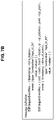
- FIG. 4B is a sequence diagram showing an example of an unsuccessful pairing procedure for the power transfer.
- the pairing procedure is performed through the WIFIPairingReq/Res message loop, similarly to the example of FIG. 4A , in which the EVCC transmits the WIFIPairingReq messages to the first SECC (SECC1), and the first SECC (SECC1) of the first EVSE (EVSE1) sends the WiFiPairingRes messages to the EVCC in response to the WIFIPairingReq messages.
- a probability that the pairing fails may increase when there exist a plurality of SECCs capable of communicating with the EVCC as shown in FIG. 4B .
- FIG. 5 is a sequence diagram showing a pairing method according to an exemplary embodiment of the present disclosure.
- the first SECC (SECC1) having determined the failure of the pairing with EV may provide the EVCC with a hint for the success in the pairing.
- the WiFiPairingRes message may include the ListOfAlternativeSECCs parameter.
- FIG. 6 illustrates an example of a hierarchical SECC arrangement architecture suitable for implementing the pairing method according to an exemplary embodiment of the present disclosure.
- the SECC arrangement architecture may include one or more proxy SECCs.
- Each of the proxy SECCs may communicate with one or more SECCs (e.g., SECC1 and SECC2) associated with the EVSEs.
- SECCs e.g., SECC1 and SECC2
- Each SECC may transmit its information to the proxy SECC and receive information on other SECCs located in its vicinity through the proxy SECC.
- the information of the first SECC (SECC1) including a pair of IP address and port number may be provided to the EVCC, as information about the alternative SECC, through the proxy SECC.
- the EVCC may select the first SECC (SECC1) corresponding to alternative SECC information (IP1, port 1) as a next pairing partner.
- a ListOfAlternativeSECCs parameter may be added to the WiFiPairingRes message to provide information useful for finding a SECC that controls the EVSE where the EV is plugged in or the EV is parked.
- the WiFiPairingReq message transmitted by the EVCC to the SECC may include a parameter indicating a pairing status, i.e. PairingStatus.
- the WiFiPairingRes message may include parameters such as EVSEProcessing, Number_Of Toggles, ResponseCode, and EVSEID.
- the EVSEProcessing parameter may have a value selected from a set of ⁇ "Ongoing", "Finished” ⁇ .
- the Number _Of Toggles parameter may have an integer value.
- the ResponseCode parameter may have a value selected from a set of ⁇ "OK", “Failed_Wrong_Number_of_Toggles", "Failed _No_StateB” ⁇ .
- the EVSEID parameter may have a value in the form of a string.
- the WiFiPairingRes message may also include the ListOfAlternativeSECCs parameter as mentioned above.
- the ListOfAlternativeSECCs parameter may include a list of information of SECCs in the order of higher probability of the success in the pairing.
- the information of each SECC in the ListOfAlternativeSECCs parameter may include a SSID, a BSSID, and the pair of IP address and port number.
- the basic service set identifier (BSSID) is a MAC address of the WiFi interface of the SECC. When several SECCs use the same SSID in one charging station, the SECCs may be identified using the BSSID.
- the ListOfAlternativeSECC parameter may provide the list of all SECCs recommended for the EV to connect in the order of their priorities when the pairing process with the current SECC fails.
- the values of the SSID, the BSSID, and the pair of IP address and port number may be filled with NULL or empty spaces.
- the EV may connect to the SECCs in the given order.
- the EV may connect to a wireless network using the provided SSID and initiate a Session Description Protocol (SDP) or connect directly to the SECC with the provided IP address and port number.
- SDP Session Description Protocol
- the SECC may have to transmit the WiFiPairingRes message by setting the EVSEProcessing parameter to "Ongoing” and setting the ResponseCode parameter to a value other than "OK".
- the EVCC and the SECC may check whether the EV is communicating with the SECC that controls the primary core where the EV is located through the pairing request and response messages in case of the wireless power transfer.
- pairing initiated by signaling by the EV There may be two types of pairing: one initiated by signaling by the EV and the other one initiated by signaling by the EVSE.
- the pairing initiated by signaling by the EV when the SECC receives a signal from the EV, the SECC shares the signal with another SECC.
- such a mechanism cannot be used in case of the pairing initiated by signaling by the EVSE.
- the ListOfAlternativeSECCs parameter may be added as an option to the PairingRes message used for the WPT pairing.
- the ListOfAlternativeSECCs parameter may include the list of the SSID, the BSSID, and the pair of IP address and port number of the SECCs in the order of higher probability of the success in the pairing.
- the values of the SSID, the BSSID, and the pair of IP address and port number may be filled with NULL or empty spaces.
- the ListOfAlternativeSECCs parameter may be added to the WiFiPairingRes message.
- the ListOfAlternativeSECCs parameter may be added to the PairingRes message.
- the ListOfAlternativeSECCs parameter added to the WiFiPairingRes message or the PairingRes message may include the list of the SSID, the BSSID, or the pair of IP address and port number of the SECCs in the order of the higher probability of the success in the pairing, and the information of each SECC in the ListOfAlternativeSECCs parameter may be applied selectively.
- the current SECC may find out which SECC the EV is connected to or whether the EV is parked on a wrong EVSE.
- ISEP Inter-Supply Equipment Protocol
- the ISEP may be implemented using a Universal Datagram Protocol (UDP).
- UDP Universal Datagram Protocol
- Each SECC may open a predefined UDP port (e.g., 151182) to be used for the ISEP.
- the ISEP may use JavaScript Object Notation (JSON) as an encoding scheme.
- JSON JavaScript Object Notation
- FIG. 7A shows a format of an ISEP event announcement message according to an exemplary embodiment of the present disclosure.
- the ISEP event announcement message shown in FIG. 7A is an example of a proactive ISEP message and may use a broadcast-based UDP protocol.
- Each SECC announces a list of BCB toggle/signal events that cannot be linked to any ongoing session of its own through the ISEP event announcement message.
- An AnnouncePeriod parameter may indicate a cancellation value of a period in which each SECC announces the event list.
- the SECC receiving the ISEP event notification message may use the received information to recommend to try with an alternative wireless network or the pair of IP address and port number of a SECC to the EV that has failed the pairing.
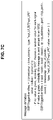
- FIG. 7B shows formats of ISEP event request and response messages according to an exemplary embodiment of the present disclosure.
- the ISEP event request and response messages shown in FIG. 7B are examples of a reactive ISEP message.
- the reactive ISEP message may be optional and may be sent only when the proactive message cannot solve the issue.
- the reactive message may also use the broadcast-response UDP protocol.
- One SECC may broadcast an inquiry for a specific event, and another SECC receiving the inquiry may respond to the SECC having broadcast the inquiry by sending a unicast message if the SECC has observed a toggle event matching the inquiry but not tied to any ongoing session of its own.
- FIG. 7C shows formats of triggering event request and response messages according to an exemplary embodiment of the present disclosure.
- the triggering event request and response messages shown in FIG. 7C are examples of a triggering ISEP message.
- the triggering messages may be used only when the pairing signal should be generated by the EVSE (for example, in case of a low power excitation (LPE) pairing).
- LPE low power excitation
- the triggering request and response messages may be in the form of a broadcast-response message, but may be in the form of a unicast-response message as well.
- a first SECC may broadcast a request to send a signal to the EV using a randomly chosen value.
- one or more second SECCs may send a signal with a random value at each unused EVSE of its own, and then may respond to the first SECC by sending a unicast message indicating the value used for the signal.
- the first SECC may unicast a request to transmit a signal to the EV using the value specified by the second SECC.
- the second SECC may transmit a signal to the EV using the specified value and respond to the first SECC.
- FIG. 8 is a sequence diagram showing a pairing method using the proactive messages according to an exemplary embodiment of the present disclosure.
- the EVCC may transmit the WiFiPairingRes message or the PairingRes message to the SECC according to the charging type. If the messages were exchanged according to the pairing loop but the pairing failed, the EVCC receives an incorrect toggle or signal from the SECC (S820). At this time, the SECC may examine the ISEP.AnnounceEvents messages acquired and maintained through the ISEP message exchanges with other SECCs in the vicinity. The SECC may examine recent events included in the messages, create the list including the SSID, the BSSID, or the pair of IP address and port number of the SECCs, and provide the WiFiPairingRes or PairingRes message including the list to the EVCC (S821).
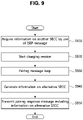
- FIG. 9 is a flowchart illustrating a pairing control method according to an exemplary embodiment of the present disclosure.
- the pairing control method shown in FIG. 9 may be performed by the supply equipment communication controller (SECC) or the electric vehicle supply equipment (EVSE) controlling the power transfer to an electric vehicle.
- SECC supply equipment communication controller
- EVSE electric vehicle supply equipment
- an operation S910 that the SECC acquires information on at least one of another SECCs using the ISEP message may be preceded.
- the procedure of acquiring the information on the other SECCs may be performed periodically or aperiodically as needed using the ISEP message exchanged between the SECCs as described above with reference to FIGS. 7A through 8 .
- the ISEP message may include at least one of a proactive type message, a reactive type message, or a triggering type message.
- the reactive type message may be used optionally when the problem cannot be solved with the proactive message.
- the triggering type message may be used when the pairing signal is generated the EVSE.
- the SECC may exchange one or more pairing messages with the electric vehicle (S930).
- the SECC may generate information on one or more alternative SECCs (S940) and transmit the pairing response message including the information on the alternative SECCs to the electric vehicle (S950).
- the SECC may examine the information on the other SECC included in the event notification message that is broadcast by each SECC. At this time, the information on the other SECC may include one or more of the SSID, the BSSID, or the pair of IP address and port number of the corresponding SECC.
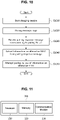
- FIG. 10 is a flowchart illustrating a charging control method according to an exemplary embodiment of the present disclosure.
- the charging control method shown in FIG. 10 may be performed by the electric vehicle communication controller (EVCC) or the electric vehicle.
- EVCC electric vehicle communication controller
- the electric vehicle may be performed by the electric vehicle communication controller (EVCC) or the electric vehicle.
- the electric vehicle may perform a charging session initiation procedure with the SECC (S1010), and may exchange pairing messages with the SECC (S1020).
- the electric vehicle may receive a pairing response message related to a pairing result from the SECC (S1030).
- the electric vehicle may extract information on one or more alternative SECCs included in the pairing response message (S 1040).
- the information on the other SECC may include one or more of the SSID, the BSSID, or the pair of IP address and port number of the corresponding SECC.
- the information on other SECCs may be obtained through communications between a plurality of SECCs using the Inter-Supply Equipment Protocol (ISEP).
- ISEP Inter-Supply Equipment Protocol
- the ISEP message may include at least one of the proactive type message, the reactive type message, or the triggering type message.
- the reactive type message may be used optionally when the problem cannot be solved with the proactive message.
- the triggering type message may be used when the pairing signal is generated the EVSE.
- the electric vehicle may attempt the pairing with another SECC by using the information on the alternative SECC (S1050).
- FIG. 11 is a block diagram of a power transfer control apparatus according to an exemplary embodiment of the present disclosure.
- the power transfer control apparatus 200 shown in FIG. 11 may be the supply equipment communication controller (SECC) or the electric vehicle supply equipment (EVSE).
- SECC supply equipment communication controller
- EVSE electric vehicle supply equipment
- the components of the power transfer control apparatus 200 are not limited to their names, but may be defined by their functions. Also, a plurality of the functions may be performed by a component, and a plurality of the components may perform one of the functions.
- the power transfer control apparatus 200 may include at least one processor 210, a memory 220 for storing at least one program instruction to be executed by the processor 210, and a communication module 230.
- the processor 210 may execute the program instructions stored in the memory 220.
- the processor 210 may include a central processing unit (CPU) or a graphics processing unit (GPU), or may be implemented by another kind of dedicated processor suitable for performing the methods of the present disclosure.
- the memory 220 may include, for example, a volatile memory such as a read only memory (ROM) and a nonvolatile memory such as a random access memory (RAM).
- the program instructions when executed by the processor 210, may cause the processor 210 to perform an initiation of a charging session with the EV, exchange at least one pairing messages with the EV, generate information on at least one alternative SECC when a pairing with the EV fails, and transmit a pairing response message including the information on at least one alternative SECC to the EV.
- the communication module 230 may enable the power transfer control apparatus 200 to perform communications with the electric vehicle communication controller (EVCC).
- EVCC electric vehicle communication controller
- the communication module 230 may include a communication interface capable of performing WiFi communications, and may also include a communication interface capable of performing 3G communications and 4G communications.
- the apparatus and method according to exemplary embodiments of the present disclosure may be implemented by computer-readable program codes or instructions stored on a non-transitory computer-readable recording medium.
- the non-transitory computer-readable recording medium includes all types of recording media storing data readable by a non-transitory computer system.
- the computer-readable recording medium may be distributed over computer systems connected through a network so that a computer-readable program or code may be stored and executed in a distributed manner.
- the non-transitory computer-readable recording medium may include a hardware device specially configured to store and execute program commands, such as ROM, RAM, and flash memory.
- the program commands may include not only machine language codes such as those produced by a compiler, but also high-level language codes executable by a computer using an interpreter or the like.
- blocks or the device corresponds to operations of the method or characteristics of the operations of the method.
- aspects of the present disclosure described above in the context of a method may be described using blocks or items corresponding thereto or characteristics of a device corresponding thereto.
- Some or all of the operations of the method may be performed, for example, by (or using) a hardware device such as a microprocessor, a programmable computer or an electronic circuit. In some exemplary embodiments, at least one of most important operations of the method may be performed by such a device.
- a programmable logic device such as a field-programmable gate array may be used to perform some or all of functions of the methods described herein.
- the field-programmable gate array may be operated with a microprocessor to perform one of the methods described herein.
- the methods of the present disclosure are preferably performed by a certain hardware device.
Landscapes
- Engineering & Computer Science (AREA)
- Power Engineering (AREA)
- Transportation (AREA)
- Mechanical Engineering (AREA)
- Computer Networks & Wireless Communication (AREA)
- Electric Propulsion And Braking For Vehicles (AREA)
- Charge And Discharge Circuits For Batteries Or The Like (AREA)
Applications Claiming Priority (4)
| Application Number | Priority Date | Filing Date | Title |
|---|---|---|---|
| US201962882744P | 2019-08-05 | 2019-08-05 | |
| US201962901477P | 2019-09-17 | 2019-09-17 | |
| KR1020200082546A KR102862278B1 (ko) | 2019-08-05 | 2020-07-06 | 전력 전송에서의 페어링 제어 방법 및 장치 |
| PCT/KR2020/008952 WO2021025306A1 (ko) | 2019-08-05 | 2020-07-08 | 전력 전송에서의 페어링 제어 방법 및 장치 |
Publications (2)
| Publication Number | Publication Date |
|---|---|
| EP3992016A1 true EP3992016A1 (de) | 2022-05-04 |
| EP3992016A4 EP3992016A4 (de) | 2023-06-07 |
Family
ID=74503401
Family Applications (1)
| Application Number | Title | Priority Date | Filing Date |
|---|---|---|---|
| EP20849585.3A Pending EP3992016A4 (de) | 2019-08-05 | 2020-07-08 | Verfahren und vorrichtung zur paarungssteuerung bei einer kraftübertragung |
Country Status (4)
| Country | Link |
|---|---|
| US (1) | US20220274503A1 (de) |
| EP (1) | EP3992016A4 (de) |
| CN (2) | CN118288812A (de) |
| WO (1) | WO2021025306A1 (de) |
Cited By (1)
| Publication number | Priority date | Publication date | Assignee | Title |
|---|---|---|---|---|
| TWI933499B (zh) | 2025-05-13 | 2026-07-21 | 光寶科技股份有限公司 | 用於充電站之控制設備、最佳化傳輸方法及其非暫態電腦可讀取儲存媒體 |
Families Citing this family (7)
| Publication number | Priority date | Publication date | Assignee | Title |
|---|---|---|---|---|
| WO2019223868A1 (en) * | 2018-05-24 | 2019-11-28 | Abb Schweiz Ag | A method for pairing electric vehicles and power terminals in a power station for electric vehicles |
| FI128976B (en) * | 2019-09-26 | 2021-04-15 | Liikennevirta Oy / Virta Ltd | ELECTRIC VEHICLE CHARGING MANAGEMENT |
| US20230382245A1 (en) * | 2020-10-21 | 2023-11-30 | Hyundai Motor Company | Active pairing method and device for wireless lan-based smart charging or smart charging and discharging |
| US11856622B2 (en) * | 2021-08-03 | 2023-12-26 | International Business Machines Corporation | Dynamic pairing of devices based on workflow history for wireless communication |
| US12472837B2 (en) * | 2022-02-21 | 2025-11-18 | Cyberswitchingpatents, Llc | Electric vehicle charging master controller |
| US12323796B2 (en) * | 2022-12-05 | 2025-06-03 | Siemens Industry, Inc. | Electric vehicle supply equipment (EVSE) configuration management system and method |
| US12659698B2 (en) * | 2023-06-15 | 2026-06-16 | Siemens Industry, Inc. | Automated electric vehicle supply equipment (EVSE) group commissioning system and method |
Family Cites Families (46)
| Publication number | Priority date | Publication date | Assignee | Title |
|---|---|---|---|---|
| NL88806C (de) * | 1950-02-01 | |||
| US6867688B2 (en) * | 1999-06-11 | 2005-03-15 | Safety Through Cellular, Inc. | Apparatus and method for providing weather and other alerts |
| CN101345986B (zh) * | 2007-07-12 | 2011-05-04 | 华为技术有限公司 | 通信网络中切换失败的处理方法及基站 |
| US10189359B2 (en) * | 2009-02-17 | 2019-01-29 | Chargepoint, Inc. | Transmitting notification messages for an electric vehicle charging network |
| JP5482580B2 (ja) * | 2010-09-03 | 2014-05-07 | トヨタ自動車株式会社 | 充電施設情報提供装置 |
| US9026813B2 (en) * | 2010-11-22 | 2015-05-05 | Qualcomm Incorporated | Establishing a power charging association on a powerline network |
| US20120173292A1 (en) * | 2011-01-05 | 2012-07-05 | James Solomon | Reservable electric vehicle charging groups |
| US9090173B2 (en) * | 2011-02-17 | 2015-07-28 | Pioneer Corporation | Charging control apparatus and method, charging system, correlation method, and computer program |
| EP2665618B1 (de) * | 2011-05-04 | 2020-11-04 | Siemens Aktiengesellschaft | Verfahren und vorrichtung zur bereitstellung elektrischer energie |
| EP2726317B1 (de) * | 2011-08-19 | 2021-04-07 | Siemens Aktiengesellschaft | Bereitstellung elektrischer energie |
| KR20140116376A (ko) * | 2011-10-20 | 2014-10-02 | 엘에스산전 주식회사 | 전기 자동차 및 그 동작 방법 |
| JP5920032B2 (ja) * | 2012-06-01 | 2016-05-18 | 神保電器株式会社 | 調光装置 |
| SG11201504747QA (en) * | 2012-12-27 | 2015-07-30 | Huawei Tech Co Ltd | Method and device for dual network backup and wireless communications system |
| CN103715729B (zh) * | 2013-05-23 | 2017-02-08 | 上海埃士工业科技有限公司 | 应用于电动汽车的充电网络系统 |
| CN104518533B (zh) * | 2013-09-27 | 2021-01-01 | 中兴通讯股份有限公司 | 一种无线充电方法及无线充电系统 |
| CN104519488A (zh) * | 2013-09-27 | 2015-04-15 | 中兴通讯股份有限公司 | 一种车载充电设备与服务网络交互的方法及相应设备 |
| JP6235036B2 (ja) * | 2013-10-31 | 2017-11-22 | パナソニック インテレクチュアル プロパティ コーポレーション オブ アメリカPanasonic Intellectual Property Corporation of America | 制御方法、プログラム、情報処理装置、および予約システム |
| JP2015198562A (ja) * | 2014-04-03 | 2015-11-09 | 株式会社豊田自動織機 | 非接触充電システム、車両、及び給電装置 |
| US9704409B2 (en) * | 2014-08-05 | 2017-07-11 | Qualcomm Incorporated | Piggybacking unmanned aerial vehicle |
| KR20160025314A (ko) * | 2014-08-27 | 2016-03-08 | 현대자동차주식회사 | 충전 방식 가변형 무선 전력 전송 시스템 |
| US20160075249A1 (en) * | 2014-09-17 | 2016-03-17 | Qualcomm Incorporated | Methods and apparatus for user authentication in electric vehicle wireless charging |
| KR101657899B1 (ko) * | 2015-06-03 | 2016-09-30 | 성균관대학교산학협력단 | Rf 에너지 하비스팅에 기반한 전기 자동차 충전 시스템 및 rf 에너지 하비스팅에 기반한 전기 자동차 충전 방법 |
| CN106571653A (zh) * | 2015-10-28 | 2017-04-19 | 中兴新能源汽车有限责任公司 | 充电控制装置及方法 |
| KR101816977B1 (ko) * | 2015-12-08 | 2018-01-09 | 현대자동차주식회사 | 전기차 전력공급장치의 프라이머리 디바이스 탐색 방법 및 장치와 전력공급장치 통신제어기의 작동 방법 |
| CN105491555A (zh) * | 2015-12-15 | 2016-04-13 | 深圳优克云联科技有限公司 | 一种网络接入的方法及装置 |
| CN105730276A (zh) * | 2016-02-04 | 2016-07-06 | 李勇妹 | 车辆身份识别自动计费充电桩 |
| CN107239837A (zh) * | 2016-03-29 | 2017-10-10 | 中国移动通信集团上海有限公司 | 一种充电桩调度方法、装置及系统 |
| US11064065B2 (en) * | 2016-04-14 | 2021-07-13 | Ford Global Technologies, Llc | Method and apparatus for cellular network backup connectivity |
| DE102016005630A1 (de) * | 2016-05-06 | 2017-11-09 | Audi Ag | Datenverarbeitungseinheit zur Kommunikation zwischen mindestens einem Kraftfahrzeug und zwischen einer Vielzahl von Ladestationen zum Aufladen einer Energiespeichereinrichtung eines Kraftfahrzeugs |
| US20170341519A1 (en) * | 2016-05-25 | 2017-11-30 | Delphi Technologies, Inc. | Method of pairing a transmitter and receiver of a wireless charging system and apparatus for performing same |
| JP2018042446A (ja) * | 2016-05-25 | 2018-03-15 | デルファイ・テクノロジーズ・インコーポレーテッド | ワイヤレス充電システムの送信機および受信機のペアリング方法、および、それを実行するための装置 |
| EP3266646A1 (de) * | 2016-07-01 | 2018-01-10 | Hyundai Motor Company | Auf einem ladekabel eines elektrofahrzeugs montierte kabelinterne steuerbox und verfahren zum laden eines elektrofahrzeugs damit |
| CN106373248A (zh) * | 2016-09-13 | 2017-02-01 | 珠海小可乐科技有限公司 | 充电桩排号方法及其系统 |
| US10076967B2 (en) * | 2016-10-17 | 2018-09-18 | Ford Global Technologies, Llc | Method and apparatus for wireless charging access point identification |
| DE102016220783A1 (de) * | 2016-10-24 | 2018-04-26 | Bayerische Motoren Werke Aktiengesellschaft | Robustes intelligentes Ladesystem für Elektrofahrzeuge |
| CN108859796B (zh) * | 2017-05-08 | 2021-08-17 | 中兴新能源科技有限公司 | 充电桩位与车辆配对方法、系统、无线充电桩及配对装置 |
| KR102394832B1 (ko) * | 2017-07-11 | 2022-05-06 | 현대자동차주식회사 | 커넥티비티 통합관리 방법 및 커넥티드 카 |
| CN107696888A (zh) * | 2017-08-30 | 2018-02-16 | 芜湖恒天易开软件科技股份有限公司 | 充电桩识别车辆自动充电的方法和系统 |
| CN107465234B (zh) * | 2017-09-15 | 2019-09-27 | 维沃移动通信有限公司 | 一种充电控制方法、移动终端及适配器 |
| CN107786548B (zh) * | 2017-10-13 | 2021-03-23 | 北京佰才邦技术有限公司 | 充电管理方法及装置、服务器和计算机可读存储介质 |
| CN108955710A (zh) * | 2018-07-26 | 2018-12-07 | 浙江吉利新能源商用车有限公司 | 一种充电桩导航方法及系统 |
| CN109050316B (zh) * | 2018-08-22 | 2021-05-14 | 北京车和家信息技术有限公司 | 充电方法及相关设备 |
| CN109050320A (zh) * | 2018-08-28 | 2018-12-21 | 上海电机学院 | 一种充电桩控制系统 |
| CN109466366B (zh) * | 2018-11-02 | 2021-03-05 | 东软睿驰汽车技术(沈阳)有限公司 | 一种电动车的充电认证方法和装置 |
| JP2019018612A (ja) * | 2019-02-05 | 2019-02-07 | 三菱自動車工業株式会社 | 内燃機関の制御装置 |
| US11731524B2 (en) * | 2019-05-28 | 2023-08-22 | GM Global Technology Operations LLC | Mobile direct current fast charger customer-vehicle-station matching system |
-
2020
- 2020-07-08 EP EP20849585.3A patent/EP3992016A4/de active Pending
- 2020-07-08 WO PCT/KR2020/008952 patent/WO2021025306A1/ko not_active Ceased
- 2020-07-08 CN CN202410550037.5A patent/CN118288812A/zh active Pending
- 2020-07-08 US US17/632,217 patent/US20220274503A1/en active Pending
- 2020-07-08 CN CN202080055604.XA patent/CN114206662B/zh active Active
Cited By (1)
| Publication number | Priority date | Publication date | Assignee | Title |
|---|---|---|---|---|
| TWI933499B (zh) | 2025-05-13 | 2026-07-21 | 光寶科技股份有限公司 | 用於充電站之控制設備、最佳化傳輸方法及其非暫態電腦可讀取儲存媒體 |
Also Published As
| Publication number | Publication date |
|---|---|
| CN114206662A (zh) | 2022-03-18 |
| WO2021025306A1 (ko) | 2021-02-11 |
| EP3992016A4 (de) | 2023-06-07 |
| CN114206662B (zh) | 2024-05-24 |
| US20220274503A1 (en) | 2022-09-01 |
| CN118288812A (zh) | 2024-07-05 |
Similar Documents
| Publication | Publication Date | Title |
|---|---|---|
| US20240380612A1 (en) | Cross-certificate method and device for electric vehicle charging | |
| US20220274503A1 (en) | Pairing control method and device in power transmission | |
| EP3962017B1 (de) | Verfahren und system zur autorisierung eines ev-benutzers | |
| US10675979B2 (en) | In-cable control box mounted on electric vehicle charging cable and method for charging electric vehicle using the same | |
| US11034246B2 (en) | Wireless communication method and apparatus for wireless power transfer to electric vehicle | |
| US10543754B2 (en) | Charging control apparatus and method for electric vehicle and billing system using the same | |
| US20200282859A1 (en) | Charging control method and apparatus for electric vehicle | |
| US10800283B2 (en) | Wireless power transfer method for electric vehicle based on auxiliary battery status and electric vehicle for the same | |
| KR20200106826A (ko) | 전기차 충전 제어 장치 및 방법 | |
| US20260014886A1 (en) | Position alignment apparatus and method for wireless charging | |
| US11059379B2 (en) | Position alignment apparatus and method for wireless charging | |
| EP4215406A1 (de) | Aktives paarungsverfahren und vorrichtung für wlan-basiertes intelligentes laden oder intelligentes laden und entladen | |
| KR20190011187A (ko) | 전기차 무선 전력 전송을 위한 무선 통신 방법 및 장치 | |
| US11407318B2 (en) | Method and apparatus for controlling wireless power transfer | |
| KR102768465B1 (ko) | 무선 전력 전송 제어 방법 및 장치 | |
| US20220379761A1 (en) | Apparatus and method for communication association, positioning, and pairing for wireless power transfer | |
| KR102862278B1 (ko) | 전력 전송에서의 페어링 제어 방법 및 장치 | |
| EP4606633A1 (de) | Drahtlose lan-basierte ladekommunikationsvorrichtung und verfahren für dynamische drahtlose stromübertragung und weiterreichungsverfahren |
Legal Events
| Date | Code | Title | Description |
|---|---|---|---|
| STAA | Information on the status of an ep patent application or granted ep patent |
Free format text: STATUS: THE INTERNATIONAL PUBLICATION HAS BEEN MADE |
|
| PUAI | Public reference made under article 153(3) epc to a published international application that has entered the european phase |
Free format text: ORIGINAL CODE: 0009012 |
|
| STAA | Information on the status of an ep patent application or granted ep patent |
Free format text: STATUS: REQUEST FOR EXAMINATION WAS MADE |
|
| 17P | Request for examination filed |
Effective date: 20220131 |
|
| AK | Designated contracting states |
Kind code of ref document: A1 Designated state(s): AL AT BE BG CH CY CZ DE DK EE ES FI FR GB GR HR HU IE IS IT LI LT LU LV MC MK MT NL NO PL PT RO RS SE SI SK SM TR |
|
| DAV | Request for validation of the european patent (deleted) | ||
| DAX | Request for extension of the european patent (deleted) | ||
| A4 | Supplementary search report drawn up and despatched |
Effective date: 20230509 |
|
| RIC1 | Information provided on ipc code assigned before grant |
Ipc: B60L 53/30 20190101ALI20230502BHEP Ipc: B60L 53/66 20190101ALI20230502BHEP Ipc: B60L 53/126 20190101AFI20230502BHEP |
|
| P01 | Opt-out of the competence of the unified patent court (upc) registered |
Effective date: 20230526 |
|
| STAA | Information on the status of an ep patent application or granted ep patent |
Free format text: STATUS: EXAMINATION IS IN PROGRESS |
|
| 17Q | First examination report despatched |
Effective date: 20260129 |