EP3992208A1 - Anticorps vhh qui lient pd-l1 - Google Patents
Anticorps vhh qui lient pd-l1 Download PDFInfo
- Publication number
- EP3992208A1 EP3992208A1 EP20205559.6A EP20205559A EP3992208A1 EP 3992208 A1 EP3992208 A1 EP 3992208A1 EP 20205559 A EP20205559 A EP 20205559A EP 3992208 A1 EP3992208 A1 EP 3992208A1
- Authority
- EP
- European Patent Office
- Prior art keywords
- antibody
- antigen
- binding portion
- seq
- sequence identity
- Prior art date
- Legal status (The legal status is an assumption and is not a legal conclusion. Google has not performed a legal analysis and makes no representation as to the accuracy of the status listed.)
- Withdrawn
Links
Images






Classifications
-
- C—CHEMISTRY; METALLURGY
- C07—ORGANIC CHEMISTRY
- C07K—PEPTIDES
- C07K16/00—Immunoglobulins [IG], e.g. monoclonal or polyclonal antibodies
- C07K16/18—Immunoglobulins [IG], e.g. monoclonal or polyclonal antibodies against material from animals or humans
- C07K16/28—Immunoglobulins [IG], e.g. monoclonal or polyclonal antibodies against material from animals or humans against receptors, cell surface antigens or cell surface determinants
- C07K16/2803—Immunoglobulins [IG], e.g. monoclonal or polyclonal antibodies against material from animals or humans against receptors, cell surface antigens or cell surface determinants against the immunoglobulin superfamily
- C07K16/2827—Immunoglobulins [IG], e.g. monoclonal or polyclonal antibodies against material from animals or humans against receptors, cell surface antigens or cell surface determinants against the immunoglobulin superfamily against B7 molecules, e.g. CD80, CD86
-
- C—CHEMISTRY; METALLURGY
- C07—ORGANIC CHEMISTRY
- C07K—PEPTIDES
- C07K2317/00—Immunoglobulins specific features
- C07K2317/20—Immunoglobulins specific features characterized by taxonomic origin
- C07K2317/22—Immunoglobulins specific features characterized by taxonomic origin from camelids, e.g. camel, llama or dromedary
-
- C—CHEMISTRY; METALLURGY
- C07—ORGANIC CHEMISTRY
- C07K—PEPTIDES
- C07K2317/00—Immunoglobulins specific features
- C07K2317/30—Immunoglobulins specific features characterized by aspects of specificity or valency
- C07K2317/33—Crossreactivity, e.g. for species or epitope, or lack of said crossreactivity
-
- C—CHEMISTRY; METALLURGY
- C07—ORGANIC CHEMISTRY
- C07K—PEPTIDES
- C07K2317/00—Immunoglobulins specific features
- C07K2317/60—Immunoglobulins specific features characterized by non-natural combinations of immunoglobulin fragments
- C07K2317/62—Immunoglobulins specific features characterized by non-natural combinations of immunoglobulin fragments comprising only variable region components
- C07K2317/622—Single chain antibody (scFv)
-
- C—CHEMISTRY; METALLURGY
- C07—ORGANIC CHEMISTRY
- C07K—PEPTIDES
- C07K2317/00—Immunoglobulins specific features
- C07K2317/70—Immunoglobulins specific features characterized by effect upon binding to a cell or to an antigen
- C07K2317/76—Antagonist effect on antigen, e.g. neutralization or inhibition of binding
-
- C—CHEMISTRY; METALLURGY
- C07—ORGANIC CHEMISTRY
- C07K—PEPTIDES
- C07K2317/00—Immunoglobulins specific features
- C07K2317/90—Immunoglobulins specific features characterized by (pharmaco)kinetic aspects or by stability of the immunoglobulin
- C07K2317/92—Affinity (KD), association rate (Ka), dissociation rate (Kd) or EC50 value
-
- C—CHEMISTRY; METALLURGY
- C07—ORGANIC CHEMISTRY
- C07K—PEPTIDES
- C07K2317/00—Immunoglobulins specific features
- C07K2317/90—Immunoglobulins specific features characterized by (pharmaco)kinetic aspects or by stability of the immunoglobulin
- C07K2317/94—Stability, e.g. half-life, pH, temperature or enzyme-resistance
Definitions
- Immune checkpoint molecules are molecules that regulate the activity of the immune system. The ability to self-regulate the activity of immune cell types is crucial in host survival; protecting the host against excessive tissue damage and preventing the development of autoimmune diseases; a group of diseases characterised by the immune system indiscriminately attacking the body's cells as opposed to cells of foreign origin.
- Programmed Cell Death Protein 1 (PD-1 or CD279), a 55-kD type 1 transmembrane protein, is a member of the CD28 family of T cell co-stimulatory receptors that include immunoglobulin superfamily member CD28, CTLA-4, inducible co-stimulator (ICOS), and BTLA.
- PD-1 is highly expressed on activated T cells and B cells. PD-1 expression can also be detected on memory T-cell subsets with variable levels of expression.
- Two ligands specific for PD-1 have been identified: programmed death- ligand 1 (PD-L1, also known as B7-H1 or CD274) and PD-L2 (also known as B7-DC or CD273).
- the present invention provides for an antibody or antigen-binding portion thereof, wherein the antibody or antigen-binding portion thereof comprises a heavy chain CDR having at least 70 % sequence identity to SEQ ID NO: 3.
- the present invention provides for a nucleic acid encoding the antibody, or antigen-binding portion thereof, as defined in the first aspect of the present invention, or a complementary sequence thereof.
- the present invention relates to therapeutic antibodies, or antigen-binding portions thereof, that target the programmed death-ligand 1 polypeptide in the context of cancer and infectious disease.
- a “checkpoint inhibitor” is an agent, which acts on surface proteins, which are members of either the TNF receptor or B7 superfamilies, including agents which bind to negative co-stimulatory molecules selected from CTLA-4, PD-1, TIM-3, BTLA, VISTA, LAG-3, and/or their respective ligands, including PD-L1.
- binding refers to an antibody, or antigen-binding portion thereof, binding to an antigen or an epitope of said antigen with greater affinity than for other antigens or epitopes.
- affinity is measured via the equilibrium dissociation constant (Kd) and may be measured using standard procedures known in the art.
- Antibodies or antigen-binding portions herein disclosed may have cross-reactivity to other related antigens, for example, to the same antigen from other species (homologs).
- complementarity-determining regions and “CDRs” are used interchangeably and refer to the antigen-binding region (or paratope) of an antibody.
- fragment refers to a polypeptide that substantially retains the same biological function or activity of an antibody of the invention.
- a polypeptide fragment, derivative or analog of the present invention may be (i) a polypeptide having one or more conservative or non-conservative amino acid residues (preferably conservative amino acid residues) substituted, and such substituted amino acid residues may or may not be encoded by the genetic code, or (ii) a polypeptide having a substituent group in one or more amino acid residues, or (iii) a mature polypeptide with another compound (such as a compound that extends the half-life of a polypeptide, such as (Polyethylene glycol) fusion polypeptide, or (iv) a polypeptide formed by fusing additional amino acid sequences to this polypeptide sequence (such as a leader sequence or a secretion sequence or a sequence or protein sequence used to purify this polypeptide, or 6His tag fusion protein).
- SEQ ID NO: 7 may comprise the heavy chains CDR1 and CDR3, the heavy chains CDR2 and CDR3, or the heavy chains CDR1 and CDR2. It is preferable that the heavy chain CDR3 according to SEQ ID NO: 3 is included within SEQ ID NO: 7.
- the antibody, or antigen-binding portion thereof has at least 90 %, at least 91 %, at least 92 %, at least 93 %, at least 94 %, at least 95 %, at least 96 %, at least 97 %, at least 98 %, at least 99 % sequence identity to SEQ ID NO: 1, SEQ ID NO: 2 and SEQ ID NO: 3.
- the present invention provides for nucleic acids/nucleotide sequences encoding the antibodies or antigen-binding portions thereof, or a complementary sequence thereof.
- the nucleic acids/nucleotide sequences may, for example, be DNA or RNA and may or may not contain intronic sequences.
- the present invention provides a nucleic acid that hybridises to the nucleic acid of the present invention under low and/or high stringency conditions.
- 'high stringency conditions' we include high temperature and low salt content in hybridisation buffers.
- 'low stringency conditions' we include lower temperatures and high salt content in hybridisation buffers.
- the present invention provides for a pharmaceutical composition comprising the antibody, or antigen-binding portion thereof or the nucleic acid herein disclosed.
- the pharmaceutical composition comprises a therapeutically effective amount of the present invention, in combination with a pharmaceutically acceptable carrier and/or a known therapeutic agent.
- the pharmaceutical composition comprises a sub-therapeutic amount of the present invention, in combination with a pharmaceutically acceptable carrier and/or a known therapeutic agent.
- the antibody or antigen-binding portion thereof herein disclosed may act in a synergistic manner with additional therapeutic agents. This may require lower doses of each therapeutic agent and is thus expected to reduce the incidence of any adverse effects that the subject may experience following said therapy/treatment.
- the pharmaceutical composition of the present invention may also include a pharmaceutically acceptable anti-oxidant.
- pharmaceutically acceptable antioxidants include: (1) water soluble antioxidants, such as ascorbic acid, cysteine hydrochloride, sodium bisulfate, sodium metabisulfite, sodium sulfite and the like; (2) oil-soluble antioxidants, such as ascorbyl palmitate, butylated hydroxyanisole (BHA), butylated hydroxytoluene (BHT), lecithin, propyl gallate, alpha-tocopherol, and the like; and (3) metal chelating agents, such as citric acid, ethylenediamine tetraacetic acid (EDTA), sorbitol, tartaric acid, phosphoric acid, and the like.
- water soluble antioxidants such as ascorbic acid, cysteine hydrochloride, sodium bisulfate, sodium metabisulfite, sodium sulfite and the like
- oil-soluble antioxidants such as ascorbyl palmitate, butylated
- the present invention may also include the presence of one or more immunogenic agents.
- immunogenic agents we intend any molecule that is capable of inducing an immune response.
- immunogenic agents include cancerous cells, purified tumour antigen and cells transfected with genes encoding immune stimulating cytokines.
- the use of these agents in combination with the antibody disclosed herein may be used to generate an enhanced immune response against a target, for example, tumour cells.
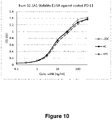
- the plate was once more washed with 6 x 300 ⁇ L/well of TBS-T and the signal was then developed by adding 50 ⁇ L /well of TMB reagent and incubating at room temperature for 20 min in the dark. Signal development was stopped by addition of 50 ⁇ L of 2N sulphuric acid. The optical density of each well was read at OD450nm.
Landscapes
- Health & Medical Sciences (AREA)
- Immunology (AREA)
- Chemical & Material Sciences (AREA)
- Organic Chemistry (AREA)
- Medicinal Chemistry (AREA)
- Biophysics (AREA)
- General Health & Medical Sciences (AREA)
- Genetics & Genomics (AREA)
- Biochemistry (AREA)
- Molecular Biology (AREA)
- Proteomics, Peptides & Aminoacids (AREA)
- Life Sciences & Earth Sciences (AREA)
- Medicines Containing Antibodies Or Antigens For Use As Internal Diagnostic Agents (AREA)
- Peptides Or Proteins (AREA)
- Medicines That Contain Protein Lipid Enzymes And Other Medicines (AREA)
- Semiconductor Lasers (AREA)
Priority Applications (7)
| Application Number | Priority Date | Filing Date | Title |
|---|---|---|---|
| EP20205559.6A EP3992208A1 (fr) | 2020-11-03 | 2020-11-03 | Anticorps vhh qui lient pd-l1 |
| EP21805915.2A EP4240763A1 (fr) | 2020-11-03 | 2021-11-02 | Inhibiteur de point de contrôle immunitaire |
| PCT/EP2021/080423 WO2022096470A1 (fr) | 2020-11-03 | 2021-11-02 | Inhibiteur de point de contrôle immunitaire |
| JP2023527013A JP2023547537A (ja) | 2020-11-03 | 2021-11-02 | 免疫チェックポイント阻害剤 |
| CA3199933A CA3199933A1 (fr) | 2020-11-03 | 2021-11-02 | Inhibiteur de point de controle immunitaire |
| AU2021373990A AU2021373990A1 (en) | 2020-11-03 | 2021-11-02 | Immune checkpoint inhibitor |
| US18/035,070 US20230406933A1 (en) | 2020-11-03 | 2021-11-02 | Immune checkpoint inhibitor |
Applications Claiming Priority (1)
| Application Number | Priority Date | Filing Date | Title |
|---|---|---|---|
| EP20205559.6A EP3992208A1 (fr) | 2020-11-03 | 2020-11-03 | Anticorps vhh qui lient pd-l1 |
Publications (1)
| Publication Number | Publication Date |
|---|---|
| EP3992208A1 true EP3992208A1 (fr) | 2022-05-04 |
Family
ID=73059633
Family Applications (2)
| Application Number | Title | Priority Date | Filing Date |
|---|---|---|---|
| EP20205559.6A Withdrawn EP3992208A1 (fr) | 2020-11-03 | 2020-11-03 | Anticorps vhh qui lient pd-l1 |
| EP21805915.2A Pending EP4240763A1 (fr) | 2020-11-03 | 2021-11-02 | Inhibiteur de point de contrôle immunitaire |
Family Applications After (1)
| Application Number | Title | Priority Date | Filing Date |
|---|---|---|---|
| EP21805915.2A Pending EP4240763A1 (fr) | 2020-11-03 | 2021-11-02 | Inhibiteur de point de contrôle immunitaire |
Country Status (6)
| Country | Link |
|---|---|
| US (1) | US20230406933A1 (fr) |
| EP (2) | EP3992208A1 (fr) |
| JP (1) | JP2023547537A (fr) |
| AU (1) | AU2021373990A1 (fr) |
| CA (1) | CA3199933A1 (fr) |
| WO (1) | WO2022096470A1 (fr) |
Citations (3)
| Publication number | Priority date | Publication date | Assignee | Title |
|---|---|---|---|---|
| WO2013079174A1 (fr) * | 2011-11-28 | 2013-06-06 | Merck Patent Gmbh | Anticorps anti-pd-l1 et utilisations associées |
| EP3330290A1 (fr) * | 2015-07-31 | 2018-06-06 | Suzhou Alphamab Co., Ltd | Anticorps à domaine unique pour le ligand du récepteur de mort cellulaire programmée (pd-l1) et protéine dérivée de celui-ci |
| WO2019166622A1 (fr) * | 2018-03-01 | 2019-09-06 | Vrije Universiteit Brussel | Immunoglobulines se liant au pd-l1 humain |
Family Cites Families (2)
| Publication number | Priority date | Publication date | Assignee | Title |
|---|---|---|---|---|
| JP7628764B2 (ja) * | 2015-09-29 | 2025-02-12 | アムジエン・インコーポレーテツド | Asgr阻害剤 |
| US11673954B2 (en) * | 2017-11-17 | 2023-06-13 | Nanjing Legend Biotech Co., Ltd. | Single-domain antibodies and variants thereof against PD-L1 |
-
2020
- 2020-11-03 EP EP20205559.6A patent/EP3992208A1/fr not_active Withdrawn
-
2021
- 2021-11-02 WO PCT/EP2021/080423 patent/WO2022096470A1/fr not_active Ceased
- 2021-11-02 AU AU2021373990A patent/AU2021373990A1/en not_active Abandoned
- 2021-11-02 US US18/035,070 patent/US20230406933A1/en active Pending
- 2021-11-02 CA CA3199933A patent/CA3199933A1/fr active Pending
- 2021-11-02 JP JP2023527013A patent/JP2023547537A/ja active Pending
- 2021-11-02 EP EP21805915.2A patent/EP4240763A1/fr active Pending
Patent Citations (3)
| Publication number | Priority date | Publication date | Assignee | Title |
|---|---|---|---|---|
| WO2013079174A1 (fr) * | 2011-11-28 | 2013-06-06 | Merck Patent Gmbh | Anticorps anti-pd-l1 et utilisations associées |
| EP3330290A1 (fr) * | 2015-07-31 | 2018-06-06 | Suzhou Alphamab Co., Ltd | Anticorps à domaine unique pour le ligand du récepteur de mort cellulaire programmée (pd-l1) et protéine dérivée de celui-ci |
| WO2019166622A1 (fr) * | 2018-03-01 | 2019-09-06 | Vrije Universiteit Brussel | Immunoglobulines se liant au pd-l1 humain |
Non-Patent Citations (7)
| Title |
|---|
| "GenBank", Database accession no. NP 054862.1 |
| FEI ZHANG ET AL: "Structural basis of a novel PD-L1 nanobody for immune checkpoint blockade", CELL DISCOVERY, vol. 3, 7 March 2017 (2017-03-07), pages 17004, XP055490308, DOI: 10.1038/celldisc.2017.4 * |
| HARMSEN MMRUULS RCNIJMAN IJNIEWOLD TAFRENKEN LGDE GEUS B: "Llama heavy chain V regions consist of at least four distinct subfamilies revealing novel sequence features", MOL. IMMUNOL, vol. 37, 2000, pages 579 - 590, XP002244235, DOI: 10.1016/S0161-5890(00)00081-X |
| LI SHUFENG ET AL: "Nanobody against PDL1", BIOTECHNOLOGY LETTERS, KLUWER ACADEMIC PUBLISHERS, DORDRECHT, vol. 42, no. 5, 31 January 2020 (2020-01-31), pages 727 - 736, XP037078325, ISSN: 0141-5492, [retrieved on 20200131], DOI: 10.1007/S10529-020-02823-2 * |
| MAASS DRSEPULVEDA JPERNTHANER ASHOEMAKER CB: "Alpaca, Lama pacos as a convenient source of recombinant camelid heavy chains", J. IMMUNOL. METHODS, vol. 324, no. 1-2, 2007, pages 13 - 25, XP022138109, DOI: 10.1016/j.jim.2007.04.008 |
| OKAZAKI ET AL., INT IMMUNOL., vol. 19, 2007, pages 813 - 824 |
| OKAZAKI THONJO T: "PD-1 and PD-1 ligands: from discovery to clinical application", INT IMMUNOL, vol. 19, no. 7, 2007, pages 813 - 824, XP002466284, DOI: 10.1093/intimm/dxm057 |
Also Published As
| Publication number | Publication date |
|---|---|
| US20230406933A1 (en) | 2023-12-21 |
| AU2021373990A1 (en) | 2023-06-15 |
| EP4240763A1 (fr) | 2023-09-13 |
| AU2021373990A9 (en) | 2024-06-06 |
| WO2022096470A1 (fr) | 2022-05-12 |
| JP2023547537A (ja) | 2023-11-10 |
| CA3199933A1 (fr) | 2022-05-12 |
Similar Documents
| Publication | Publication Date | Title |
|---|---|---|
| US20230340143A1 (en) | Compositions and methods for treating cancer | |
| JP7132981B2 (ja) | Cd73遮断 | |
| EP3362475B1 (fr) | Agents de blocage de cd73 | |
| EP3334431B1 (fr) | 5-bromo-2,6-di- (1h-pyrazol-1-yl) pyrimidin-4-amine pour une utilisation dans le traitement du cancer | |
| CN113784981B (zh) | Cd73阻断抗体 | |
| EP3692068B1 (fr) | Restauration de l'activité t cellulaire via l'axe cd39 / cd73 | |
| US20190153113A1 (en) | Cd39 vascular isoform targeting agents | |
| US11951172B2 (en) | Therapeutic molecules that bind to LAG3 and PD1 | |
| CA3020893A1 (fr) | Compositions comprenant une co-formulation d'anticorps anti-pd-l1 et anti-ctla-4 | |
| TWI870353B (zh) | 用於治療癌症之組合物及方法 | |
| US20180030144A1 (en) | Cd73 blockade | |
| TWI752952B (zh) | 投與結合至cd33及cd3之雙特異性建構體來用於治療骨髓樣白血病之方法中 | |
| US12466887B2 (en) | Antibody binding to PD-1 | |
| KR20210131997A (ko) | 항-btla 항체 | |
| EP3733708A1 (fr) | Inhibiteur de molécule de point de contrôle immunitaire | |
| US20230406933A1 (en) | Immune checkpoint inhibitor | |
| JP2023523890A (ja) | Hsp70を標的とするモノクローナル抗体およびその治療的使用 | |
| JP2015214569A (ja) | Fdf03抗体およびそれの使用 | |
| US20240190961A1 (en) | Combination of anti-garp antibody and immunomodulator | |
| EA044293B1 (ru) | Восстановление активности t-клеток посредством системы cd39/cd73 | |
| NZ751913A (en) | Anti-lag-3 antibodies and methods of use thereof | |
| NZ751913B2 (en) | Anti-lag-3 antibodies and methods of use thereof | |
| HK1249409A1 (en) | 5-bromo-2,6-di-(1h-pyrazol-l-yl)pyrimidin-4-amine for use in the treatment of cancer | |
| HK1249409B (en) | 5-bromo-2,6-di-(1h-pyrazol-l-yl)pyrimidin-4-amine for use in the treatment of cancer |
Legal Events
| Date | Code | Title | Description |
|---|---|---|---|
| PUAI | Public reference made under article 153(3) epc to a published international application that has entered the european phase |
Free format text: ORIGINAL CODE: 0009012 |
|
| STAA | Information on the status of an ep patent application or granted ep patent |
Free format text: STATUS: THE APPLICATION HAS BEEN PUBLISHED |
|
| AK | Designated contracting states |
Kind code of ref document: A1 Designated state(s): AL AT BE BG CH CY CZ DE DK EE ES FI FR GB GR HR HU IE IS IT LI LT LU LV MC MK MT NL NO PL PT RO RS SE SI SK SM TR |
|
| STAA | Information on the status of an ep patent application or granted ep patent |
Free format text: STATUS: THE APPLICATION IS DEEMED TO BE WITHDRAWN |
|
| 18D | Application deemed to be withdrawn |
Effective date: 20221105 |