EP3993530A1 - Informationsberichtverfahren und -vorrichtung, ressourcenkoordinationsverfahren und -vorrichtung und endgerät mit mehreren karten - Google Patents
Informationsberichtverfahren und -vorrichtung, ressourcenkoordinationsverfahren und -vorrichtung und endgerät mit mehreren karten Download PDFInfo
- Publication number
- EP3993530A1 EP3993530A1 EP19934962.2A EP19934962A EP3993530A1 EP 3993530 A1 EP3993530 A1 EP 3993530A1 EP 19934962 A EP19934962 A EP 19934962A EP 3993530 A1 EP3993530 A1 EP 3993530A1
- Authority
- EP
- European Patent Office
- Prior art keywords
- base stations
- sim terminal
- auxiliary information
- sub
- frame
- Prior art date
- Legal status (The legal status is an assumption and is not a legal conclusion. Google has not performed a legal analysis and makes no representation as to the accuracy of the status listed.)
- Granted
Links
Images

Classifications
-
- H—ELECTRICITY
- H04—ELECTRIC COMMUNICATION TECHNIQUE
- H04W—WIRELESS COMMUNICATION NETWORKS
- H04W76/00—Connection management
- H04W76/10—Connection setup
- H04W76/15—Setup of multiple wireless link connections
-
- H—ELECTRICITY
- H04—ELECTRIC COMMUNICATION TECHNIQUE
- H04W—WIRELESS COMMUNICATION NETWORKS
- H04W72/00—Local resource management
- H04W72/20—Control channels or signalling for resource management
- H04W72/21—Control channels or signalling for resource management in the uplink direction of a wireless link, i.e. towards the network
-
- H—ELECTRICITY
- H04—ELECTRIC COMMUNICATION TECHNIQUE
- H04W—WIRELESS COMMUNICATION NETWORKS
- H04W16/00—Network planning, e.g. coverage or traffic planning tools; Network deployment, e.g. resource partitioning or cells structures
- H04W16/02—Resource partitioning among network components, e.g. reuse partitioning
- H04W16/10—Dynamic resource partitioning
-
- H—ELECTRICITY
- H04—ELECTRIC COMMUNICATION TECHNIQUE
- H04W—WIRELESS COMMUNICATION NETWORKS
- H04W76/00—Connection management
- H04W76/10—Connection setup
- H04W76/19—Connection re-establishment
-
- H—ELECTRICITY
- H04—ELECTRIC COMMUNICATION TECHNIQUE
- H04W—WIRELESS COMMUNICATION NETWORKS
- H04W76/00—Connection management
- H04W76/20—Manipulation of established connections
- H04W76/28—Discontinuous transmission [DTX]; Discontinuous reception [DRX]
-
- H—ELECTRICITY
- H04—ELECTRIC COMMUNICATION TECHNIQUE
- H04W—WIRELESS COMMUNICATION NETWORKS
- H04W24/00—Supervisory, monitoring or testing arrangements
- H04W24/10—Scheduling measurement reports ; Arrangements for measurement reports
-
- H—ELECTRICITY
- H04—ELECTRIC COMMUNICATION TECHNIQUE
- H04W—WIRELESS COMMUNICATION NETWORKS
- H04W68/00—User notification, e.g. alerting and paging, for incoming communication, change of service or the like
- H04W68/02—Arrangements for increasing efficiency of notification or paging channel
-
- H—ELECTRICITY
- H04—ELECTRIC COMMUNICATION TECHNIQUE
- H04W—WIRELESS COMMUNICATION NETWORKS
- H04W72/00—Local resource management
- H04W72/20—Control channels or signalling for resource management
- H04W72/27—Control channels or signalling for resource management between access points
-
- H—ELECTRICITY
- H04—ELECTRIC COMMUNICATION TECHNIQUE
- H04W—WIRELESS COMMUNICATION NETWORKS
- H04W76/00—Connection management
- H04W76/20—Manipulation of established connections
- H04W76/27—Transitions between radio resource control [RRC] states
-
- H—ELECTRICITY
- H04—ELECTRIC COMMUNICATION TECHNIQUE
- H04W—WIRELESS COMMUNICATION NETWORKS
- H04W88/00—Devices specially adapted for wireless communication networks, e.g. terminals, base stations or access point devices
- H04W88/02—Terminal devices
- H04W88/06—Terminal devices adapted for operation in multiple networks or having at least two operational modes, e.g. multi-mode terminals
Definitions
- the disclosure relates to a field of communication technologies, and particularly to a method and an apparatus for reporting information, a method and an apparatus for coordinating resources, a multi-SIM terminal, a base station and a computer-readable storage medium.
- Each multi-SIM terminal may simultaneously maintain access to networks of a plurality of operators. However, there is no interface between networks of different operators.
- the network may page the UE, and if the UE does not reply within a time period, the network considers that the UE cannot be connected and the service fails.
- UE user equipment
- the network may configure discontinuous reception (DRX) for the UE, which includes a cycle and an active duration.
- DRX discontinuous reception
- the UE only needs to monitor a network downlink signal within the active duration of each cycle, and keeps in a sleep state within other durations during which the UE needs not to monitor the network downlink signal.
- the network also may configure a periodic semi-persistent schedule (SPS) uplink sending resource for the UE.
- SPS periodic semi-persistent schedule
- the multi-SIM UE cannot support data transmissions with a plurality of networks simultaneously, when the resources scheduled by the plurality of networks overlap, the UE has to give up data transmissions with some networks, resulting in data loss.
- the disclosure provides a method and an apparatus for reporting information, a method and an apparatus for coordinating resources, a multi-SIM terminal, a base station and a computer-readable storage medium, so as to coordinate wireless resources between networks and avoid data loss of the multi-SIM terminal as much as possible.
- a method for reporting information is provided.
- the method is applicable to a multi-SIM terminal, and includes: determining that access to a plurality of base stations is maintained simultaneously, the plurality of base stations belonging to different wireless network operators; and reporting auxiliary information to the plurality of base stations, the auxiliary information being configured to coordinate resources between the plurality of base stations.
- the auxiliary information includes connection states of the multi-SIM terminal in a plurality of networks where the plurality of base stations are located; reporting the auxiliary information to the plurality of base stations, includes: determining that the connection state of the multi-SIM terminal in a network where a base station is located is a connected state in case that the multi-SIM terminal is in a connected state, an idle state or a non-active state in the network; determining that the connection state of the multi-SIM terminal in the network where the base station is located is a non-connected state in case that the multi-SIM terminal is in a state other than any of the connected state, the idle state and the non-active state in the network; and reporting the connection states of the multi-SIM terminal in the plurality of networks to each of the plurality of base stations.
- the auxiliary information includes discontinuous reception (DRX) configuration information of the multi-SIM terminal in a plurality of networks where the plurality of base stations are located, and the DRX configuration information includes a starting sub-frame, a time offset, a cycle and an active duration.
- DRX discontinuous reception
- the starting sub-frame is a sub-frame at the beginning of the DRX cycle which is mapped to a sub-frame of a network where a reported base station is located
- the time offset is a time offset between a frame edge of a network where another base station is located and a frame edge of a network where the reported base station is located.
- the auxiliary information includes semi-persistent schedule (SPS) configuration information of the multi-SIM terminal in a plurality of networks where the plurality of base stations are located, and the SPS configuration information includes a starting sub-frame, a time offset, a cycle and a sending duration.
- SPS semi-persistent schedule
- the starting sub-frame is a sub-frame at the beginning of the SPS cycle which is mapped to a sub-frame of a network where a reported base station is located
- the time offset is a time offset between a frame edge of a network where another base station is located and a frame edge of a network where the reported base station is located.
- the auxiliary information is carried in a radio resource control (RRC) connection setup complete message, an RRC connection setup resume message, an RRC connection reestablishment message, or a user equipment (UE) auxiliary information message.
- RRC radio resource control
- the method further includes: reporting updated auxiliary information in response to detecting that the auxiliary information is updated.
- a method for coordinating resources is provided.
- the method is applicable to a base station, and includes: receiving auxiliary information reported by a multi-SIM terminal; and coordinating resources for the multi-SIM terminal and a plurality of base stations accessed by the multi-SIM terminal based on the auxiliary information.
- auxiliary information in response to the auxiliary information includes connection states of the multi-SIM terminal in a networks where the plurality of base stations are located, coordinating the resources for the multi-SIM terminal and the plurality of base stations accessed by the multi-SIM terminal based on the auxiliary information includes: increasing a paging response duration and waiting for a paging response of the multi-SIM terminal based on the increased paging response duration in response to the connection state is a connected state; or increasing a paging times and paging the multi-SIM terminal based on the increased paging times in response to the connection state is a connected state.
- auxiliary information in response to the auxiliary information includes discontinuous reception (DRX) configuration information of the multi-SIM terminal in a plurality of networks where other base stations of the plurality of base stations are located and the DRX configuration information includes a starting sub-frame, a time offset, a cycle and an active duration
- coordinating the resources for the multi-SIM terminal and the plurality of base stations accessed by the multi-SIM terminal based on the auxiliary information includes: determining a time period for scheduling a downlink data receiving resource by each of the other base stations within each cycle based on the starting sub-frame, the active duration, and the time offset; and scheduling the downlink data receiving resource for the multi-SIM terminal within a time period other than the time period for scheduling the downlink data receiving resource by each of the other base stations.
- auxiliary information in response to the auxiliary information includes semi-persistent schedule (SPS) configuration information of the multi-SIM terminal in a plurality of networks where other base stations of the plurality of base stations are located and the SPS configuration information includes a starting sub-frame, a time offset, a cycle and a sending duration
- coordinating the resources for the multi-SIM terminal and the plurality of base stations accessed by the multi-SIM terminal based on the auxiliary information includes: determining a time period for scheduling an uplink data sending resource by each of the other base stations within each cycle based on the starting sub-frame, the sending duration, and the time offset; and scheduling the uplink data sending resource for the multi-SIM terminal within a time period other than the time period for scheduling the uplink data sending resource by each of the other base stations.
- SPS semi-persistent schedule
- an apparatus for reporting information is provided.
- the apparatus is applicable to a multi-SIM terminal, and includes: a determining module, configured to determine that access to a plurality of base stations is maintained simultaneously, the plurality of base stations belonging to different wireless network operators; and a reporting module, configured to report auxiliary information to the plurality of base stations after the determining module determines that access to the plurality of base stations is maintained simultaneously, the auxiliary information being configured to coordinate resources between the plurality of base stations.
- the auxiliary information includes connection states of the multi-SIM terminal in a plurality of networks where the plurality of base stations are located;
- the reporting module includes: a first determining sub-module, configured to determine that the connection state of the multi-SIM terminal in a network where a base station is located is a connected state in case that the multi-SIM terminal is in a connected state, an idle state or a non-active state in the network; a second determining sub-module, configured to determine that the connection state of the multi-SIM terminal in the network where the base station is located is a non-connected state in case that the multi-SIM terminal is in a state other than any of the connected state, the idle state and the non-active state in the network; and a reporting sub-module, configured to report the connection states of the multi-SIM terminal in the plurality of networks determined by the first determining sub-module or the second determining sub-module to each of the plurality of base stations.
- the auxiliary information includes discontinuous reception (DRX) configuration information of the multi-SIM terminal in a plurality of networks where the plurality of base stations are located, and the DRX configuration information includes a starting sub-frame, a time offset, a cycle and an active duration.
- DRX discontinuous reception
- the starting sub-frame is a sub-frame at the beginning of the DRX cycle which is mapped to a sub-frame of a network where a reported base station is located
- the time offset is a time offset between a frame edge of a network where another base station is located and a frame edge of a network where the reported base station is located.
- the auxiliary information includes semi-persistent schedule (SPS) configuration information of the multi-SIM terminal in a plurality of networks where the plurality of base stations are located, and the SPS configuration information includes a starting sub-frame, a time offset, a cycle and a sending duration.
- SPS semi-persistent schedule
- the starting sub-frame is a sub-frame at the beginning of the SPS cycle which is mapped to a sub-frame of a network where a reported base station is located
- the time offset is a time offset between a frame edge of a network where another base station is located and a frame edge of a network where the reported base station is located.
- the auxiliary information is carried in a radio resource control (RRC) connection setup complete message, an RRC connection setup resume message, an RRC connection reestablishment message, or a user equipment (UE) auxiliary information message.
- RRC radio resource control
- the reporting module is further configured to report updated auxiliary information in response to detecting that the auxiliary information is updated.
- an apparatus for coordinating resources is provided.
- the apparatus is applicable to a base station, and includes: a receiving module, configured to receive auxiliary information reported by a multi-SIM terminal; and a coordinating module, configured to coordinate resources for the multi-SIM terminal and a plurality of base stations accessed by the multi-SIM terminal based on the auxiliary information received by the receiving module.
- the coordinating module in response to the auxiliary information includes a connection state of the multi-SIM terminal in a plurality of networks where the plurality of base stations are located, includes: a first coordinating sub-module, configured to increase a paging response duration and wait for a paging response of the multi-SIM terminal based on the increased paging response duration in response to the connection state is a connected state; or a second coordinating sub-module, configured to increase a paging times and page the multi-SIM terminal based on the increased paging times in response to the connection state is a connected state.
- the coordinating module in response to the auxiliary information includes discontinuous reception (DRX) configuration information of the multi-SIM terminal in a plurality of networks where the plurality of base stations are located and the DRX configuration information including a starting sub-frame, a time offset, a cycle and an active duration, the coordinating module includes: a first determining sub-module, configured to determine a time period for scheduling a downlink data receiving resource by each of other base stations in the plurality of base stations within each cycle based on the starting sub-frame, the active duration, and the time offset; and a first scheduling sub-module, configured to schedule the downlink data receiving resource for the multi-SIM terminal within a time period other than the time period for scheduling the downlink data receiving resource by each of the other base stations determined by the first determining sub-module.
- DRX discontinuous reception
- the coordinating module in response to the auxiliary information includes semi-persistent schedule (SPS) configuration information of the multi-SIM terminal in a plurality of networks where the plurality of base stations are located and the SPS configuration information includes a starting sub-frame, a time offset, a cycle and a sending duration, the coordinating module includes: a second determining sub-module, configured to determine a time period for scheduling an uplink data sending resource by each of other base stations in the plurality of base stations within each cycle based on the starting sub-frame, the sending duration, and the time offset; and a second scheduling sub-module, configured to schedule the uplink data sending resource for the multi-SIM terminal within a time period other than the time period for scheduling the uplink data sending resource by each of the other base stations determined by the second determining sub-module.
- SPS semi-persistent schedule
- a multi-SIM terminal includes: a processor; and a memory configured to store instructions executable by the processor; the processor is configured to: determine that access to a plurality of base stations is maintained simultaneously, the plurality of base stations belonging to different wireless network operators; and report auxiliary information to the plurality of base stations, the auxiliary information being configured to coordinate resources between the plurality of base stations.
- a base station includes: a processor; and a memory configured to store instructions executable by the processor; the processor is configured to: receive auxiliary information reported by a multi-SIM terminal; and coordinate resources for the multi-SIM terminal and a plurality of base stations accessed by the multi-SIM terminal based on the auxiliary information.
- a computer-readable storage medium stored with a computer instruction thereon is provided, the instruction implements the blocks of the method for reporting information when executed by a processor.
- a computer-readable storage medium stored with a computer instruction thereon is provided, the instruction implements the blocks of the method for coordinating resources when executed by a processor.
- the technical solution according to embodiments of the present disclosure may include the following beneficial effect.
- the multi-SIM terminal When a multi-SIM terminal maintains access to a plurality of base stations that belong to different wireless network operators simultaneously, the multi-SIM terminal reports auxiliary information to the plurality of base stations, so as to coordinate resources between the base stations, thereby avoiding data loss of the multi-SIM terminal.
- the base station receives the auxiliary information reported by the multi-SIM terminal, and coordinates resources for the multi-SIM terminal and the base stations accessed by the multi-SIM terminal based on the auxiliary information to avoid data loss of the multi-SIM terminal.
- FIG. 1 is a flowchart illustrating a method for reporting information according to an embodiment of the disclosure. The embodiment is described from a multi-SIM terminal side. As illustrated in FIG. 1 , the method for reporting information includes the following.
- a multi-SIM terminal has access to a base station 1 and a base station 2 simultaneously.
- the base station 1 belongs to an operator A
- the base station 2 belongs to an operator B.
- auxiliary information is reported to the plurality of accessed base stations.
- the auxiliary information is configured to coordinate resources between the plurality of accessed base stations.
- the multi-SIM terminal may report the auxiliary information to each accessed base station, also, the multi-SIM terminal may report the auxiliary information to some base stations of the plurality of accessed base stations, which is not limited herein.
- the auxiliary information may include connection states of the multi-SIM terminal in a plurality of networks where the plurality of accessed base stations are located.
- the connection states of the multi-SIM terminal in the plurality of networks where the plurality of accessed base stations are located includes a connection state of the multi-SIM terminal in each network of a plurality of networks where other base stations in the plurality of accessed base stations are located.
- the auxiliary information when the multi-SIM terminal reports the auxiliary information to the first base station, the auxiliary information includes a connection state of each of other base stations in addition to the first base station.
- reporting the auxiliary information to the plurality of accessed base stations may include: in case that the multi-SIM terminal is in a connected state, an idle state or a non-active state in a network where an accessed base station is located, determining that the connection state of the multi-SIM terminal in the network is a connected state; in case that the multi-SIM terminal is in a state other than the connected state, the idle state or the non-active state in the network where the accessed base station is located, determining that the connection state of the multi-SIM terminal in the network is a non-connected state; and reporting the connection states of the multi-SIM terminal in plurality of networks to each of the plurality of base stations.
- the auxiliary information also may include DRX configuration information of the multi-SIM terminal in a plurality of networks where other base stations are located, and the DRX configuration information includes a starting sub-frame, a time offset, a cycle and an active duration.
- the starting sub-frame is a sub-frame at the beginning of the DRX cycle which is mapped to a sub-frame of a network where a reported base station is located
- the time offset is a time offset between a frame edge of a network where another base station is located and a frame edge of a network where the reported base station is located.
- the DRX configuration information is configured to schedule a downlink data receiving resource by the base station.
- the auxiliary information also may include SPS configuration information of the multi-SIM terminal in a plurality of networks where other base stations are located, and the SPS configuration information includes a starting sub-frame, a time offset, a cycle and a sending duration.
- the starting sub-frame is a sub-frame at the beginning of the SPS cycle which is mapped to a sub-frame of a network where a reported base station is located
- the time offset is a time offset between a frame edge of a network where another base station is located and a frame edge of a network where the reported base station is located.
- the SPS configuration information is configured to schedule an uplink data sending resource by the base station.
- the auxiliary information may be carried in a radio resource control (RRC) connection setup complete message, an RRC connection setup resume message, an RRC connection reestablishment message, or a user equipment (UE) auxiliary information message, that is, the auxiliary information may be reported to the plurality of accessed base stations through the RRC connection setup complete message, the RRC connection setup resume message, the RRC connection reestablishment message, or the UE auxiliary information message.
- RRC radio resource control
- UE user equipment
- the method may further include: in response to detecting that the auxiliary information changes, reporting updated auxiliary information, so that the base station may coordinate resources based on the updated auxiliary information.
- the auxiliary information is reported to the plurality of accessed base stations, so as to coordinate resources between the base stations, thereby avoiding data loss of the multi-SIM terminal.
- FIG. 2 is a flowchart illustrating a method for coordinating resources according to an embodiment of the disclosure. The embodiment is described from a base station side. As illustrated in FIG. 2 , the method for coordinating resources includes the following.
- auxiliary information reported by a multi-SIM terminal is received.
- resources are coordinated for the multi-SIM terminal and a plurality of base stations accessed by the multi-SIM terminal based on the auxiliary information.
- coordinating the resources for the multi-SIM terminal and the plurality of base stations accessed by the multi-SIM terminal based on the auxiliary information may include: in response to the connection state is a connected state, increasing a paging response duration and waiting for a paging response of the multi-SIM terminal based on the increased paging response duration; and also may include: in response to the connection state is a connected state, increasing a paging times and paging the multi-SIM terminal based on the increased paging times. In this way, data loss of the multi-SIM terminal may be reduced.
- auxiliary information includes discontinuous reception (DRX) configuration information of the multi-SIM terminal in a plurality of network where other base stations in the plurality of base stations are located and the DRX configuration information includes a starting sub-frame, a time offset, a cycle and an active duration
- coordinating the resources for the multi-SIM terminal and the plurality of base stations accessed by the multi-SIM terminal based on the auxiliary information may include: determining a time period for scheduling a downlink data receiving resource by each of the other base stations within each cycle based on the starting sub-frame, the active duration and the time offset, and scheduling the downlink data receiving resource for the multi-SIM terminal within a time period other than the time period for scheduling the downlink data receiving resource by each of the other base stations.
- the auxiliary information reported by the multi-SIM terminal is DRX configuration information
- the DRX configuration information may be described as follows: the starting sub-frame is 2, the time offset is +0.1ms, the cycle is 20ms, and the active duration is 2ms, in this case, the time period for scheduling the downlink data receiving resource by the other base station obtained by the base station based on the auxiliary information is: a time period starting from sub-frame 2+0.1, a time period starting from sub-frame 3+0.1 and a time period starting from sub-frame 4+0.1 in each cycle, and the base station schedules the downlink data receiving resource in a time period other than the time period, thereby avoiding data loss of the multi-SIM terminal.
- auxiliary information includes SPS configuration information of the multi-SIM terminal in a plurality of networks where the other base stations are located and the SPS configuration information includes a starting sub-frame, a time offset, a cycle and a sending duration
- coordinating the resources for the multi-SIM terminal and the plurality of base stations accessed by the multi-SIM terminal based on the auxiliary information may include: determining a time period for scheduling an uplink data sending resource by each of other base stations within each cycle based on the starting sub-frame, the sending duration and the time offset, and scheduling the uplink data sending resource for the multi-SIM terminal within a time period other than the time period for scheduling the uplink data sending resource by each of the other base stations, thereby avoiding data loss of the multi-SIM terminal.
- the auxiliary information reported by the multi-SIM terminal is received, and resources are coordinated for the multi-SIM terminal and the base stations accessed by the multi-SIM terminal based on the auxiliary information, so as to avoid data loss of the multi-SIM terminal.
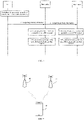
- FIG. 3 is a flowchart illustrating a signaling of a method for coordinating resources according to an embodiment. The embodiment is described from the perspective of interaction between a base station and a multi-SIM terminal. As illustrated in FIG. 3 , the method for coordinating resources includes the following.
- the multi-SIM terminal determines that access to a plurality of base stations is maintained simultaneously.
- the plurality of base stations belong to different wireless network operators.
- the multi-SIM terminal reports auxiliary information to the each accessed base station, and the auxiliary information is configured to coordinate resources between the base stations.
- the base station receives the auxiliary information reported by the multi-SIM terminal.
- the base station coordinates resources for the multi-SIM terminal and the base stations accessed by the multi-SIM terminal based on the auxiliary information.
- the base station interacts with the multi-SIM terminal, so that the base station may receive the auxiliary information reported by the multi-SIM terminal, and coordinate resources for the multi-SIM terminal and the base stations accessed by the multi-SIM terminal based on the auxiliary information, so as to avoid data loss of the multi-SIM terminal.
- a process of coordinating resources in the disclosure is described below in combination with FIG. 4 .
- a UE 41 is equipped with both a SIM card 1 of an operator A and a SIM card 2 of an operator B, the SIM card 1 is in a connected state in a network A where a base station 42 is located, the SIM card 2 is in an idle state in a network B where a base station 43 is located, and a time offset between the two networks is 0.5ms.
- DRX configured by the network A for the UE 41 can be described as follows: the cycle is 5ms, the active duration is 1ms, and the starting sub-frame is 5.
- DRX configuration information of the network A is carried in an RRC connection setup complete message, and the DRX configuration information indicates that: the cycle is 5ms, the active duration is 1ms, and the starting sub-frame is 7. and a time offset is 0.5ms.
- the base station 43 determines a time period for scheduling a downlink data receiving resource by the base station 42, and schedules the downlink data receiving resource for the UE 41 in a time period other than the time period for scheduling the downlink data receiving resource by the base station 42, and the UE 41 may receive downlink data on the downlink data receiving resource scheduled by the base station 42 in the network B, thereby avoiding data loss.
- the UE 41 when the UE 41 moves out of the coverage of the network A, the UE 41 sends a UE auxiliary information message to the network B carrying a connection state of the UE 41 in the network A which is a non-connected state, and after the base station 43 receives the auxiliary information message of the UE 41, the base station 43 obtains the connection state of the UE 41 in the network A which is a non-connected state, and on basis of this the base station 43 schedules a downlink data receiving resource for the UE 41.
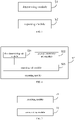
- FIG. 5 is a block diagram illustrating an apparatus for reporting information according to an embodiment.
- the apparatus is located at a multi-SIM terminal. As illustrated in FIG. 5 , the apparatus includes a determining module 51 and a reporting module 522.
- the determining module 51 is configured to determine that access to a plurality of base stations is maintained simultaneously, the plurality of base stations belonging to different wireless network operators.
- the reporting module 52 is configured to report auxiliary information to the plurality of accessed base stations after the determining module 51 determines that access to the plurality of base stations is maintained simultaneously, the auxiliary information being configured to coordinate resources between the plurality of accessed base stations.
- the reporting module may report the auxiliary information to each accessed base station, and also may report the auxiliary information to some of the plurality of accessed base stations.
- the auxiliary information may include connection states of the multi-SIM terminal in a plurality of networks where the plurality of accessed base stations are located.
- the connection states of the multi-SIM terminal in the plurality of networks where the plurality of accessed base stations are located include a connection state of the multi-SIM terminal in each network of a plurality of networks where other base stations in the plurality of accessed base stations are located.
- the reporting module reports the auxiliary information to a first base station
- the auxiliary information includes connection states of other base stations in addition to the first base station.
- reporting the auxiliary information to the plurality of accessed base stations may include: in case that the multi-SIM terminal is in a connected state, an idle state or an non-active state in a network where an accessed base station is located, determining that the connection state of the multi-SIM terminal in the network is a connected state; in case that the multi-SIM terminal is in a state other than the connected state, the idle state or the non-active state in the network where the accessed base station is located, determining that the connection state of the multi-SIM terminal in the network is a non-connected state; and reporting connection states of the multi-SIM terminal in the plurality of networks where the plurality of accessed base stations are located to each base station.
- the auxiliary information also may include DRX configuration information of the multi-SIM terminal in a plurality of networks where other base stations are located, and the DRX configuration information includes a starting sub-frame, a time offset, a cycle and an active duration.
- the starting sub-frame is a sub-frame at the beginning of the DRX cycle which is mapped to a sub-frame of a network where a reported base station is located
- the time offset is a time offset between a frame edge of a network where another base station is located and a frame edge of a network where the reported base station is located.
- the auxiliary information also may include SPS configuration information of the multi-SIM terminal in a plurality of networks where other base stations are located, and the SPS configuration information includes a starting sub-frame, a time offset, a cycle and a sending duration.
- the starting sub-frame is a sub-frame at the beginning of the SPS cycle which is mapped to a sub-frame of a network where a reported base station is located
- the time offset is a time offset between a frame edge of a network where another base station is located and a frame edge of a network where the reported base station is located.
- the auxiliary information may be carried in a radio resource control (RRC) connection setup complete message, an RRC connection setup resume message, an RRC connection reestablishment message, or a user equipment (UE) auxiliary information message, that is, the auxiliary information may be reported to the plurality of accessed base stations through the RRC connection setup complete message, the RRC connection setup resume message, the RRC connection reestablishment message, or the UE auxiliary information message.
- RRC radio resource control
- UE user equipment
- the method may further include: in response to detecting that the auxiliary information changes, reporting updated auxiliary information, so that the base station may coordinate resources based on the updated auxiliary information.
- the auxiliary information is reported to the plurality of accessed base stations, so as to coordinate resources between the base stations, thereby avoiding data loss of the multi-SIM terminal.
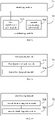
- FIG. 6 is a block diagram illustrating another apparatus for reporting information according to an embodiment.
- the reporting module 52 may include a first determining sub-module 521, a second determining sub-module 522 and a reporting sub-module 523.
- the first determining sub-module 521 is configured to determine that the connection state of the multi-SIM terminal in a network where an accessed base station is located is a connected state in case that the multi-SIM terminal is in a connected state, an idle state or a non-active state in the network.
- the second determining sub-module 522 is configured to determine that the connection state of the multi-SIM terminal in the network where the accessed base station is located is a non-connected state in case that the multi-SIM terminal is in a state other than any of the connected state, the idle state and the non-active state in the network.
- the reporting sub-module 523 is configured to report connection states of the multi-SIM terminal in the plurality of networks where the plurality of accessed base stations are located determined by the first determining sub-module 521 or the second determining sub-module 522 to the plurality of accessed base stations.
- connection states of the multi-SIM terminal in the plurality of networks where the plurality of accessed base stations are located are reported to the plurality of accessed base stations, so that the base station may coordinate resources based on the connection states of the multi-SIM terminal in the plurality of networks where the plurality of accessed base stations are located and the base stations accessed by the multi-SIM terminal, thereby avoiding data loss of the multi-SIM terminal.
- FIG. 7 is a block diagram illustrating an apparatus for coordinating resources according to an embodiment.
- the apparatus is located in a base station. As illustrated in FIG. 7 , the apparatus includes a receiving module 71 and a coordinating module 72.
- the receiving module 71 is configured to receive auxiliary information reported by a multi-SIM terminal.
- the coordinating module 72 is configured to coordinate resources for the multi-SIM terminal and a plurality of base stations accessed by the multi-SIM terminal based on the auxiliary information received by the receiving module 71.
- the auxiliary information reported by the multi-SIM terminal is received, and resources are coordinated for the multi-SIM terminal and the base stations accessed by the multi-SIM terminal based on the auxiliary information, so as to avoid data loss of the multi-SIM terminal.
- FIG. 8 is a block diagram illustrating another apparatus for coordinating resources according to an embodiment.
- the coordinating module 72 may include a first coordinating sub-module 721 or a second coordinating sub-module 722.
- the first coordinating sub-module 721 is configured to increase a paging response duration and wait for a paging response of the multi-SIM terminal based on the increased paging response duration in response to the connection state is a connected state.
- the second coordinating sub-module 722 is configured to increase a paging times and page the multi-SIM terminal based on the increased paging times in response to the connection state is a connected state.
- a paging response duration is increased and a paging response of the multi-SIM terminal is waited based on the increased paging response duration, or, a paging times is increased and the multi-SIM terminal is paged based on the increased paging times, so as to reduce data loss of the multi-SIM terminal.
- FIG. 9 is a block diagram illustrating another apparatus for coordinating resources according to an embodiment.
- the auxiliary information includes discontinuous reception (DRX) configuration information of the multi-SIM terminal in a plurality of networks where other base stations are located, and the DRX configuration information includes a starting sub-frame, a time offset, a cycle and an active duration
- the coordinating module 72 may include: a first determining sub-module 723 and a first scheduling sub-module 724.
- the first determining sub-module 723 is configured to determine a time period for scheduling a downlink data receiving resource by each of the other base stations within each cycle based on the starting sub-frame, the active duration and the time offset.
- the first scheduling sub-module 724 is configured to schedule the downlink data receiving resource for the multi-SIM terminal within a time period other than the time period for scheduling the downlink data receiving resource by each of the other base stations determined by the first determining sub-module 723.
- the auxiliary information reported by the multi-SIM terminal is the DRX configuration information
- the DRX configuration information can be described as follows: the starting sub-frame is 2, the time offset is +0.1ms, the cycle is 20ms, and the active duration is 2ms, in this case, the time period for scheduling the downlink data receiving resource by the other base station obtained by the base station based on the auxiliary information is a time period starting from sub-frame 2+0.1, a time period starting from sub-frame 3+0.1 and a time period starting from sub-frame 4+0.1 within each cycle, and the base station schedules the downlink data receiving resource within the time period other than the time period, thereby avoiding data loss of the multi-SIM terminal.
- the downlink data receiving resource is scheduled for the multi-SIM terminal in the time period other than the time period for scheduling the downlink data receiving resource by each of the other base stations, thereby avoiding data loss of the multi-SIM terminal.
- FIG. 10 is a block diagram illustrating another apparatus for coordinating resources according to an embodiment.
- the auxiliary information includes semi-persistent schedule (SPS) configuration information of the multi-SIM terminal in a plurality of network where other base stations are located, and the SPS configuration information includes a starting sub-frame, a time offset, a cycle and a sending duration
- the coordinating module 72 may include a second determining sub-module 725 and a second scheduling sub-module 726.
- the second determining sub-module 725 is configured to determine a time period for scheduling an uplink data sending resource by each of the other base stations within each cycle based on the starting sub-frame, the sending duration and the time offset.
- the second scheduling sub-module 726 is configured to schedule the uplink data sending resource for the multi-SIM terminal in a time period other than the time period for scheduling the uplink data sending resource by each of the other base stations determined by the second determining sub-module 725.
- the uplink data sending resource is scheduled for the multi-SIM terminal in the time period other than the time period for scheduling the uplink data sending resources by each of the other base stations, thereby avoiding data loss of the multi-SIM terminal.
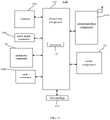
- FIG. 11 is a block diagram illustrating an apparatus suitable for reporting information according to an embodiment.
- the apparatus 1100 may be a user equipment such as a mobile phone, a computer, a digital broadcasting terminal, a messaging device, a game console, a tablet device, a medical equipment, a fitness equipment, a personal digital assistant.
- the apparatus 1100 may include one or more components of the followings: a processing component 1102, a memory 1104, a power supply component 1106, a multimedia component 1108, an audio component 1110, an input/output (I/O) interface 1112, a sensor component 1114, and a communication component 1116.
- the processing component 1102 generally controls the whole operation of the apparatus 1100, such as the operations related to display, phone call, data communication, camera operation and recording operation.
- the processing component 1102 may include one or more processors 1120 to perform instructions, to complete all or part of blocks of the above method.
- the processing component 1102 may include one or more modules for the convenience of interaction between the processing component 1102 and other components.
- the processing component 1102 may include a multimedia module for the convenience of interaction between the multimedia component 1108 and the processing component 1102.
- One processor 1120 in the processing component 1102 is configured to: determine that access to a plurality of base stations is maintained simultaneously, the plurality of base stations belonging to different wireless network operators; and report auxiliary information to the plurality of base stations, the auxiliary information being configured to coordinate resources between the plurality of base stations.
- the memory 1104 is configured to store all types of data to support the operation of the apparatus 1100. Examples of the data include the instructions of any applications or methods operated on the apparatus 1100, contact data, phone book data, messages, pictures, videos, etc.
- the memory 1104 may be implemented by any type of temporary or non-temporary storage devices or their combination, such as a static random access memory (SRAM), an electrically erasable programmable read-only memory (EEPROM), an electrically programmable read-only memory (EPROM), a programmable read-only memory (PROM), a read-only memory (ROM), a magnetic memory, a flash memory, a magnetic disk or an optical disk.
- SRAM static random access memory
- EEPROM electrically erasable programmable read-only memory
- EPROM electrically programmable read-only memory
- PROM programmable read-only memory
- ROM read-only memory
- the power supply component 1106 may provide power for all components of the apparatus 1100.
- the power supply component 1106 may include a power supply management system, one or more power supplies, and other units related to generating, managing and distributing power for the apparatus 1100.
- the multimedia component 1108 includes an output interface screen provided between the apparatus 1100 and the user.
- a screen may include a liquid crystal display (LCD) and a touch panel (TP).
- the screen may be implemented as a touch screen to receive an input signal from the user.
- the touch panel includes one or more touch sensors to sense touching, sliding and gestures on the touch panel. The touch sensor may not only sense the boundary of a touch or slide action, but also detect the duration and pressure related to the touch or slide operation.
- the multimedia component 1108 includes a front camera and/or a rear camera. When the apparatus 1100 is in an operation mode, such as a shooting mode or a video mode, the front camera or the rear camera may receive the external multimedia data.
- Each front camera and rear camera may be a fixed optical lens system or an optical lens system with a focal length and an optical zoom capacity.
- the audio component 1110 is configured to output and/or input an audio signal.
- the audio component 1110 includes a microphone (MIC).
- the microphone is configured to receive the external audio signal.
- the received audio signal may be further stored in the memory 1104 or sent via the communication component 1116.
- the audio component 1110 further includes a speaker configured to output an audio signal.
- the I/O interface 1112 provides an interface for the processing component 1102 and the peripheral interface module, and the peripheral interface module may be a keyboard, a click wheel, a button, etc.
- the button may include but not limited to a home button, a volume button, a start button and a lock button.
- the sensor component 1114 includes one or more sensors, configured to provide various aspects of status assessment for the apparatus 1100.
- the sensor component 1114 may detect the on/off state of the apparatus 1100 and the relative positioning of the component.
- the component is a display and a keypad of the apparatus 1100.
- the sensor component 1114 may further detect the location change of the apparatus 1100 or one component of the apparatus 1100, the presence or absence of contact between the user and the apparatus 1100, the orientation or acceleration/deceleration of the apparatus 1100, and the temperature change of the apparatus 1100.
- the sensor component 1114 may include a proximity sensor configured to detect the existence of the objects nearby without any physical contact.
- the sensor component 1114 may further include a light sensor such as CMOS or CCD image sensor, which is configured to use in imaging applications.
- the sensor component 1114 may further include an acceleration transducer, a gyroscope sensor, a magnetic sensor, a pressure sensor or a temperature sensor.
- the communication component 1116 is configured for the convenience of wire or wireless communication between the apparatus 1100 and other devices.
- the apparatus 1100 may access wireless networks based on communication standard, such as WiFi, 2G or 3G, or their combination.
- the communication component 1116 receives broadcast signals or broadcast-related information from an external broadcast management system via a broadcast channel.
- the communication component 1116 further includes a near field communication (NFC) module to facilitate short-range communication.
- NFC near field communication
- the NFC module may be achieved based on an RFID technology, an IrDA technology, a UWB technology, a BT technology and other technologies.
- the apparatus 1100 may be implemented by one or more application specific integrated circuits (ASIC), digital signal processors (DSP), digital signal processing devices (DSPD), programmable logic devices (PLD), field programmable gate arrays (FPGA), controllers, microcontrollers, microprocessors or other electronics components, which is configured to perform the above methods.
- ASIC application specific integrated circuits
- DSP digital signal processors
- DSPD digital signal processing devices
- PLD programmable logic devices
- FPGA field programmable gate arrays
- controllers microcontrollers, microprocessors or other electronics components, which is configured to perform the above methods.
- a non-transitory computer-readable storage medium which includes instructions, such as the memory 1104 including instructions, the instructions may be executed by the processor 1120 of the apparatus 1100 to complete the above methods.
- the non-transitory computer-readable storage medium may be a ROM, a random access memory (RAM), a CD-ROM, a magnetic tape, a floppy disk, an optical data storage device, etc.
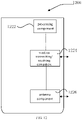
- FIG. 12 is a block diagram illustrating an apparatus suitable for coordinating resources according to an embodiment.
- the apparatus 1200 may be provided as a base station. As illustrated in FIG. 12 , the apparatus 1200 includes a processing component 1222, a wireless transmitting/receiving component 1224, an antenna component 1226 and a signal processing part peculiar to a wireless interface.
- the processing component 1222 may further include one or more processors.
- One processor in the processing component 1222 is configured to: receive auxiliary information reported by a multi-SIM terminal; and coordinate resources for the multi-SIM terminal and a plurality of base stations accessed by the multi-SIM terminal based on the auxiliary information.
- a non-transitory computer-readable storage medium is further provided which includes an instruction, the instruction may be executed by the processor 1222 of the apparatus 1200 to complete the above method for coordinating resources.
- the non-transitory computer-readable storage medium may be a ROM, a random access memory (RAM), a CD-ROM, a magnetic tape, a floppy disk, an optical data storage device, etc.
- the apparatus embodiments basically correspond to the method embodiments, please refer to part of descriptions of the method embodiments for relevant information.
- the above apparatus embodiments are merely schematic, the units described as separate components may or may not be physically separated, and components displayed as units may or may not be physical units, that is, may be located in one place, or may be distributed on a plurality of network units. Some or all of the modules may be selected according to actual requirements to achieve the solutions in the embodiments. Those skilled in the art may understand and implement the method without any creative effort.
Landscapes
- Engineering & Computer Science (AREA)
- Computer Networks & Wireless Communication (AREA)
- Signal Processing (AREA)
- Mobile Radio Communication Systems (AREA)
Applications Claiming Priority (1)
| Application Number | Priority Date | Filing Date | Title |
|---|---|---|---|
| PCT/CN2019/092853 WO2020258049A1 (zh) | 2019-06-25 | 2019-06-25 | 信息上报方法及装置、资源协调方法及装置、多卡终端 |
Publications (3)
| Publication Number | Publication Date |
|---|---|
| EP3993530A1 true EP3993530A1 (de) | 2022-05-04 |
| EP3993530A4 EP3993530A4 (de) | 2023-02-08 |
| EP3993530B1 EP3993530B1 (de) | 2025-12-17 |
Family
ID=68786099
Family Applications (1)
| Application Number | Title | Priority Date | Filing Date |
|---|---|---|---|
| EP19934962.2A Active EP3993530B1 (de) | 2019-06-25 | 2019-06-25 | Informationsberichtverfahren, ressourcenkoordinationsverfahren, endgerät mit mehreren karten und computerlesbares speichermedium |
Country Status (4)
| Country | Link |
|---|---|
| US (1) | US12048038B2 (de) |
| EP (1) | EP3993530B1 (de) |
| CN (1) | CN110574466B (de) |
| WO (1) | WO2020258049A1 (de) |
Cited By (1)
| Publication number | Priority date | Publication date | Assignee | Title |
|---|---|---|---|---|
| EP4087316A4 (de) * | 2020-01-23 | 2023-01-11 | Huawei Technologies Co., Ltd. | Kommunikationsverfahren und -vorrichtung |
Families Citing this family (7)
| Publication number | Priority date | Publication date | Assignee | Title |
|---|---|---|---|---|
| WO2021189376A1 (zh) * | 2020-03-26 | 2021-09-30 | 北京小米移动软件有限公司 | 寻呼消息处理方法、寻呼消息处理装置及存储介质 |
| US12069699B2 (en) | 2020-03-27 | 2024-08-20 | Qualcomm Incorporated | Joint broadcast and unicast design for multiple-input multiple-output systems |
| EP4128930A4 (de) * | 2020-03-27 | 2023-12-27 | Qualcomm Incorporated | Gemeinsamer broadcast- und unicast-entwurf für mimo-systeme |
| WO2021217452A1 (zh) * | 2020-04-28 | 2021-11-04 | 北京小米移动软件有限公司 | 信息处理方法及装置、通信设备及存储介质 |
| CN113676297B (zh) * | 2020-05-14 | 2022-11-18 | 展讯通信(上海)有限公司 | 多卡ue数据传输方法及装置、存储介质、用户设备、基站 |
| US12395960B2 (en) | 2020-07-31 | 2025-08-19 | Lg Electronics Inc. | Method and apparatus for handling resource collision between multiple networks in wireless communication system |
| WO2022027408A1 (en) | 2020-08-06 | 2022-02-10 | Zte Corporation | A system and method for multi-sim |
Family Cites Families (19)
| Publication number | Priority date | Publication date | Assignee | Title |
|---|---|---|---|---|
| WO2013170140A2 (en) | 2012-05-10 | 2013-11-14 | Interdigital Patent Holdings, Inc. | Paging and system information broadcast handling in virtualized networks |
| CN108684072B (zh) * | 2013-04-25 | 2021-07-09 | 华为技术有限公司 | 基站间载波聚合的上行发射功率控制方法、基站和设备 |
| CN104144528B (zh) * | 2013-05-09 | 2019-04-19 | 马维尔国际有限公司 | 一种用于解决多模多卡冲突的方法、设备和装置 |
| WO2015180129A1 (en) * | 2014-05-30 | 2015-12-03 | Apple Inc. | Methods and apparatus to manage data connections for multiple subscriber identities in a wireless communication device |
| US20160219608A1 (en) * | 2015-01-23 | 2016-07-28 | Qualcomm Incorporated | Network node configuration of communication parameters for a user equipment having a multiple subscriber identity module capability |
| US9474105B2 (en) * | 2015-01-23 | 2016-10-18 | Qualcomm Incorporated | User equipment having a multiple subscriber identity module capability understood by one or more networks |
| US10368355B2 (en) * | 2016-06-14 | 2019-07-30 | Samsung Electronics Co., Ltd | Method and apparatus for operation of multi-SIM device |
| US10104671B2 (en) * | 2016-06-15 | 2018-10-16 | Intel IP Corporation | Device and method for performance improvement with plurality of subscriber identity module awareness |
| US10959218B2 (en) * | 2016-11-14 | 2021-03-23 | Comcast Cable Communications, Llc | Semi-persistent scheduling confirmation |
| CN108124278A (zh) * | 2016-11-30 | 2018-06-05 | 展讯通信(上海)有限公司 | 基于双卡终端的缓存状态报告上报方法、装置及双卡终端 |
| US10568073B2 (en) * | 2016-12-07 | 2020-02-18 | Samsung Electronics Co., Ltd. | Methods and dual SIM dual standby (DSDS) devices for managing data communication |
| WO2018141081A1 (en) | 2017-02-02 | 2018-08-09 | Qualcomm Incorporated | Network assisted multi-subscription physical layer sharing |
| US10492169B2 (en) * | 2017-06-15 | 2019-11-26 | Qualcomm Incorporated | Mitigating page collisions in dual subscriber identity module devices |
| CN110383870B (zh) * | 2017-09-29 | 2022-06-28 | 华为技术有限公司 | 一种射频资源的处理方法及终端 |
| CN108650672A (zh) * | 2018-04-10 | 2018-10-12 | 珠海市魅族科技有限公司 | 通信控制方法、通信控制装置及终端 |
| WO2019222954A1 (zh) * | 2018-05-24 | 2019-11-28 | 华为技术有限公司 | 接收信号的方法和终端设备 |
| US11901999B2 (en) * | 2019-05-29 | 2024-02-13 | Apple Inc. | Multiplexing of PUCCH for beam failure recovery and other signals |
| EP3749000B1 (de) * | 2019-06-02 | 2023-07-12 | Apple Inc. | Verfahren und vorrichtungen für den zugriff auf dienste mehrerer drahtloser netzwerke durch eine drahtlose vorrichtung mit einem einzigen funkgerät und mehreren sim |
| WO2020247043A1 (en) * | 2019-06-07 | 2020-12-10 | Convida Wireless, Llc | Apparatus, system, method, and computer-readable medium for cellular system enhancements for the support of multi-sim user equipments |
-
2019
- 2019-06-25 WO PCT/CN2019/092853 patent/WO2020258049A1/zh not_active Ceased
- 2019-06-25 CN CN201980001142.0A patent/CN110574466B/zh active Active
- 2019-06-25 EP EP19934962.2A patent/EP3993530B1/de active Active
- 2019-06-25 US US17/620,802 patent/US12048038B2/en active Active
Cited By (1)
| Publication number | Priority date | Publication date | Assignee | Title |
|---|---|---|---|---|
| EP4087316A4 (de) * | 2020-01-23 | 2023-01-11 | Huawei Technologies Co., Ltd. | Kommunikationsverfahren und -vorrichtung |
Also Published As
| Publication number | Publication date |
|---|---|
| US12048038B2 (en) | 2024-07-23 |
| CN110574466B (zh) | 2022-05-20 |
| US20220369400A1 (en) | 2022-11-17 |
| EP3993530B1 (de) | 2025-12-17 |
| WO2020258049A1 (zh) | 2020-12-30 |
| CN110574466A (zh) | 2019-12-13 |
| EP3993530A4 (de) | 2023-02-08 |
Similar Documents
| Publication | Publication Date | Title |
|---|---|---|
| EP3993530B1 (de) | Informationsberichtverfahren, ressourcenkoordinationsverfahren, endgerät mit mehreren karten und computerlesbares speichermedium | |
| EP3833081B1 (de) | Konfigurationsverfahren und vorrichtung zur anzeige einer übertragungskonfiguration | |
| EP3771261B1 (de) | Funkrufsynchronisationsanzeigeverfahren und -vorrichtung, funkrufsynchronisationsverfahren sowie vorrichtung und basisstation | |
| EP3651529A1 (de) | Verfahren und vorrichtung zur interferenzkoordination, basisstation und benutzergerät | |
| US12369048B2 (en) | Measurement configuration method and method for reporting measurement information | |
| US20210022146A1 (en) | Method and apparatus for coordinating in-device coexistence interference, user equipment and communication device | |
| US12219607B2 (en) | Method and apparatus for random access | |
| WO2020232712A1 (zh) | 寻呼方法及装置 | |
| US11864190B2 (en) | Method and apparatus for configuring and determining transmission block scheduling interval, and base station | |
| US11284398B2 (en) | Communication link configuration method and device | |
| EP3678389A1 (de) | Verfahren und vorrichtung zum senden und empfangen von funkrufnachrichten, basisstation und benutzergerät | |
| WO2021022474A1 (zh) | Mdt信息发送方法和装置、mdt信息接收方法和装置 | |
| US20210251010A1 (en) | Method and device for determining an uplink-downlink switching point | |
| EP3716675A1 (de) | Verfahren und vorrichtung zur anzeige von intermodulationsverzerrung, basisstation und benutzergerät | |
| EP3836433B1 (de) | Überwachungsverfahren und -gerät, vorrichtung und speichermedium | |
| US12375972B2 (en) | Method for transmitting buffer status report, electronic device and computer-readable storage medium | |
| US12041590B2 (en) | Carrier configuration method and device | |
| US11956755B2 (en) | Method and apparatus for transmitting paging signaling | |
| EP3667938A1 (de) | Verfahren und vorrichtungen zur meldung und bestimmung eines optimalen strahls, benutzergerät und basisstation | |
| US12256367B2 (en) | Methods of sending paging signaling, paging methods, information sending methods and apparatuses thereof | |
| US12004016B2 (en) | Method and apparatus for transmitting configuration information | |
| US11696276B2 (en) | Data scheduling method and apparatus | |
| EP4333484A1 (de) | Ursachenbestimmungsverfahren und -vorrichtung sowie ursachenanzeigeverfahren und -vorrichtung | |
| US12349130B2 (en) | Coverage enhancement method | |
| US20240214983A1 (en) | Method for transceiving indication, method for determining response, and indication method |
Legal Events
| Date | Code | Title | Description |
|---|---|---|---|
| STAA | Information on the status of an ep patent application or granted ep patent |
Free format text: STATUS: THE INTERNATIONAL PUBLICATION HAS BEEN MADE |
|
| PUAI | Public reference made under article 153(3) epc to a published international application that has entered the european phase |
Free format text: ORIGINAL CODE: 0009012 |
|
| STAA | Information on the status of an ep patent application or granted ep patent |
Free format text: STATUS: REQUEST FOR EXAMINATION WAS MADE |
|
| 17P | Request for examination filed |
Effective date: 20220124 |
|
| AK | Designated contracting states |
Kind code of ref document: A1 Designated state(s): AL AT BE BG CH CY CZ DE DK EE ES FI FR GB GR HR HU IE IS IT LI LT LU LV MC MK MT NL NO PL PT RO RS SE SI SK SM TR |
|
| DAV | Request for validation of the european patent (deleted) | ||
| DAX | Request for extension of the european patent (deleted) | ||
| REG | Reference to a national code |
Ref country code: DE Ref legal event code: R079 Free format text: PREVIOUS MAIN CLASS: H04W0072040000 Ipc: H04W0016100000 Ref document number: 602019079431 Country of ref document: DE |
|
| A4 | Supplementary search report drawn up and despatched |
Effective date: 20230109 |
|
| RIC1 | Information provided on ipc code assigned before grant |
Ipc: H04W 88/06 20090101ALN20230102BHEP Ipc: H04W 76/28 20180101ALN20230102BHEP Ipc: H04W 76/27 20180101ALN20230102BHEP Ipc: H04W 72/04 20090101ALN20230102BHEP Ipc: H04W 68/02 20090101ALN20230102BHEP Ipc: H04W 24/10 20090101ALN20230102BHEP Ipc: H04W 76/15 20180101ALI20230102BHEP Ipc: H04W 16/10 20090101AFI20230102BHEP |
|
| STAA | Information on the status of an ep patent application or granted ep patent |
Free format text: STATUS: EXAMINATION IS IN PROGRESS |
|
| 17Q | First examination report despatched |
Effective date: 20241120 |
|
| REG | Reference to a national code |
Ref country code: DE Ref legal event code: R079 Free format text: PREVIOUS MAIN CLASS: H04W0016100000 Ipc: H04W0076150000 Ref document number: 602019079431 Country of ref document: DE |
|
| GRAP | Despatch of communication of intention to grant a patent |
Free format text: ORIGINAL CODE: EPIDOSNIGR1 |
|
| STAA | Information on the status of an ep patent application or granted ep patent |
Free format text: STATUS: GRANT OF PATENT IS INTENDED |
|
| RIC1 | Information provided on ipc code assigned before grant |
Ipc: H04W 76/15 20180101AFI20250701BHEP Ipc: H04W 16/10 20090101ALI20250701BHEP Ipc: H04W 24/10 20090101ALN20250701BHEP Ipc: H04W 68/02 20090101ALN20250701BHEP Ipc: H04W 72/21 20230101ALN20250701BHEP Ipc: H04W 72/27 20230101ALN20250701BHEP Ipc: H04W 76/27 20180101ALN20250701BHEP Ipc: H04W 76/28 20180101ALN20250701BHEP Ipc: H04W 88/06 20090101ALN20250701BHEP |
|
| INTG | Intention to grant announced |
Effective date: 20250718 |
|
| GRAS | Grant fee paid |
Free format text: ORIGINAL CODE: EPIDOSNIGR3 |
|
| GRAA | (expected) grant |
Free format text: ORIGINAL CODE: 0009210 |
|
| STAA | Information on the status of an ep patent application or granted ep patent |
Free format text: STATUS: THE PATENT HAS BEEN GRANTED |
|
| AK | Designated contracting states |
Kind code of ref document: B1 Designated state(s): AL AT BE BG CH CY CZ DE DK EE ES FI FR GB GR HR HU IE IS IT LI LT LU LV MC MK MT NL NO PL PT RO RS SE SI SK SM TR |
|
| P01 | Opt-out of the competence of the unified patent court (upc) registered |
Free format text: CASE NUMBER: UPC_APP_0012730_3993530/2025 Effective date: 20251110 |
|
| REG | Reference to a national code |
Ref country code: CH Ref legal event code: F10 Free format text: ST27 STATUS EVENT CODE: U-0-0-F10-F00 (AS PROVIDED BY THE NATIONAL OFFICE) Effective date: 20251217 Ref country code: GB Ref legal event code: FG4D |
|
| REG | Reference to a national code |
Ref country code: DE Ref legal event code: R096 Ref document number: 602019079431 Country of ref document: DE |
|
| REG | Reference to a national code |
Ref country code: NL Ref legal event code: FP |
|
| REG | Reference to a national code |
Ref country code: LT Ref legal event code: MG9D |
|
| PG25 | Lapsed in a contracting state [announced via postgrant information from national office to epo] |
Ref country code: NO Free format text: LAPSE BECAUSE OF FAILURE TO SUBMIT A TRANSLATION OF THE DESCRIPTION OR TO PAY THE FEE WITHIN THE PRESCRIBED TIME-LIMIT Effective date: 20260317 |
|
| PG25 | Lapsed in a contracting state [announced via postgrant information from national office to epo] |
Ref country code: HR Free format text: LAPSE BECAUSE OF FAILURE TO SUBMIT A TRANSLATION OF THE DESCRIPTION OR TO PAY THE FEE WITHIN THE PRESCRIBED TIME-LIMIT Effective date: 20251217 Ref country code: FI Free format text: LAPSE BECAUSE OF FAILURE TO SUBMIT A TRANSLATION OF THE DESCRIPTION OR TO PAY THE FEE WITHIN THE PRESCRIBED TIME-LIMIT Effective date: 20251217 |
|
| PG25 | Lapsed in a contracting state [announced via postgrant information from national office to epo] |
Ref country code: RS Free format text: LAPSE BECAUSE OF FAILURE TO SUBMIT A TRANSLATION OF THE DESCRIPTION OR TO PAY THE FEE WITHIN THE PRESCRIBED TIME-LIMIT Effective date: 20260317 |
|
| PG25 | Lapsed in a contracting state [announced via postgrant information from national office to epo] |
Ref country code: LV Free format text: LAPSE BECAUSE OF FAILURE TO SUBMIT A TRANSLATION OF THE DESCRIPTION OR TO PAY THE FEE WITHIN THE PRESCRIBED TIME-LIMIT Effective date: 20251217 |