EP3996311A1 - Procédé de transmission de données, procédé de réception de données et dispositif - Google Patents
Procédé de transmission de données, procédé de réception de données et dispositif Download PDFInfo
- Publication number
- EP3996311A1 EP3996311A1 EP20836051.1A EP20836051A EP3996311A1 EP 3996311 A1 EP3996311 A1 EP 3996311A1 EP 20836051 A EP20836051 A EP 20836051A EP 3996311 A1 EP3996311 A1 EP 3996311A1
- Authority
- EP
- European Patent Office
- Prior art keywords
- uplink grant
- target
- data packet
- uplink
- terminal device
- Prior art date
- Legal status (The legal status is an assumption and is not a legal conclusion. Google has not performed a legal analysis and makes no representation as to the accuracy of the status listed.)
- Pending
Links
Images



Classifications
-
- H—ELECTRICITY
- H04—ELECTRIC COMMUNICATION TECHNIQUE
- H04L—TRANSMISSION OF DIGITAL INFORMATION, e.g. TELEGRAPHIC COMMUNICATION
- H04L5/00—Arrangements affording multiple use of the transmission path
- H04L5/003—Arrangements for allocating sub-channels of the transmission path
- H04L5/0053—Allocation of signalling, i.e. of overhead other than pilot signals
-
- H—ELECTRICITY
- H04—ELECTRIC COMMUNICATION TECHNIQUE
- H04W—WIRELESS COMMUNICATION NETWORKS
- H04W72/00—Local resource management
- H04W72/20—Control channels or signalling for resource management
- H04W72/23—Control channels or signalling for resource management in the downlink direction of a wireless link, i.e. towards a terminal
-
- H—ELECTRICITY
- H04—ELECTRIC COMMUNICATION TECHNIQUE
- H04L—TRANSMISSION OF DIGITAL INFORMATION, e.g. TELEGRAPHIC COMMUNICATION
- H04L1/00—Arrangements for detecting or preventing errors in the information received
- H04L1/08—Arrangements for detecting or preventing errors in the information received by repeating transmission, e.g. Verdan system
-
- H—ELECTRICITY
- H04—ELECTRIC COMMUNICATION TECHNIQUE
- H04L—TRANSMISSION OF DIGITAL INFORMATION, e.g. TELEGRAPHIC COMMUNICATION
- H04L1/00—Arrangements for detecting or preventing errors in the information received
- H04L1/12—Arrangements for detecting or preventing errors in the information received by using return channel
- H04L1/16—Arrangements for detecting or preventing errors in the information received by using return channel in which the return channel carries supervisory signals, e.g. repetition request signals
- H04L1/18—Automatic repetition systems, e.g. Van Duuren systems
- H04L1/1812—Hybrid protocols; Hybrid automatic repeat request [HARQ]
-
- H—ELECTRICITY
- H04—ELECTRIC COMMUNICATION TECHNIQUE
- H04W—WIRELESS COMMUNICATION NETWORKS
- H04W28/00—Network traffic management; Network resource management
- H04W28/02—Traffic management, e.g. flow control or congestion control
- H04W28/04—Error control
-
- H—ELECTRICITY
- H04—ELECTRIC COMMUNICATION TECHNIQUE
- H04W—WIRELESS COMMUNICATION NETWORKS
- H04W72/00—Local resource management
- H04W72/04—Wireless resource allocation
- H04W72/044—Wireless resource allocation based on the type of the allocated resource
- H04W72/0446—Resources in time domain, e.g. slots or frames
-
- H—ELECTRICITY
- H04—ELECTRIC COMMUNICATION TECHNIQUE
- H04W—WIRELESS COMMUNICATION NETWORKS
- H04W72/00—Local resource management
- H04W72/12—Wireless traffic scheduling
- H04W72/1263—Mapping of traffic onto schedule, e.g. scheduled allocation or multiplexing of flows
- H04W72/1268—Mapping of traffic onto schedule, e.g. scheduled allocation or multiplexing of flows of uplink data flows
-
- H—ELECTRICITY
- H04—ELECTRIC COMMUNICATION TECHNIQUE
- H04L—TRANSMISSION OF DIGITAL INFORMATION, e.g. TELEGRAPHIC COMMUNICATION
- H04L5/00—Arrangements affording multiple use of the transmission path
- H04L5/003—Arrangements for allocating sub-channels of the transmission path
- H04L5/0053—Allocation of signalling, i.e. of overhead other than pilot signals
- H04L5/0055—Physical resource allocation for ACK/NACK
Definitions
- This disclosure relates to the field of communications technologies, and more specifically, to a method for data transmission, a method for data reception, and a device.
- a terminal device To transmit at least two independent uplink channels simultaneously, a terminal device needs to determine whether an uplink power of the terminal device is limited and whether the terminal device has a capability of transmitting uplink channels simultaneously. If the terminal device is incapable of transmitting a plurality of uplink channels simultaneously, the terminal device may transmit the uplink channels in a priority order for transmitting uplink channels of a physical layer specified in a protocol.
- a medium access control (Medium Access Control, MAC) layer of the terminal device selects a higher-priority uplink grant for transmission based on priorities of the plurality of uplink grants.
- a priority of uplink grant is determined by highest-priority data (for example, a highest-priority logical channel) in a plurality of pieces of data to be transmitted by using the uplink grant.
- the terminal device possibly discards some uplink grants.
- the terminal device has generated MAC protocol data units (Protocol Data Unit, PDU) for the discarded uplink grants. Therefore, how to transmit data in these MAC PDUs and avoid data loss is a problem that needs to be resolved.
- PDU Protocol Data Unit
- Embodiments of this disclosure are intended to provide a method for data transmission, a method for data reception, and a device, so as to resolve the problem of how a terminal device transmits data corresponding to a discarded uplink grant.
- a method for data transmission is provided and applied to a terminal device, and the method includes: in a case that a first data packet has been generated based on a first uplink grant and uplink transmission corresponding to the first uplink grant is given up, determining, according to a selection rule, a second uplink grant for transmitting the first data packet.
- a method for data transmission is provided and applied to a network device, and the method includes:
- a terminal device including: a processing module, configured to: in a case that a first data packet has been generated based on a first uplink grant and uplink transmission corresponding to the first uplink grant is given up, determine, according to a selection rule, a second uplink grant for transmitting the first data packet.
- a network device including:
- a terminal device including a processor, a memory, and a computer program stored in the memory and capable of running on the processor, where when the computer program is executed by the processor, the steps of the method according to the first aspect are implemented.
- a network device including a processor, a memory, and a computer program stored in the memory and capable of running on the processor, where when the computer program is executed by the processor, the steps of the method according to the second aspect are implemented.
- a computer-readable storage medium where a computer program is stored in the computer-readable storage medium, and when the computer program is executed by a processor, the steps of the method according to the first aspect are implemented.
- a computer-readable storage medium where a computer program is stored in the computer-readable storage medium, and when the computer program is executed by a processor, the steps of the method according to the second aspect are implemented.
- the terminal device after the terminal device has generated the first data packet based on the first uplink grant, if the uplink transmission corresponding to the first uplink grant is given up, the terminal device determines, according to the selection rule, the second uplink grant for transmitting the first data packet. In this way, the terminal device can autonomously select an uplink grant for transmitting a data packet corresponding to a discarded uplink grant, thereby avoiding data loss.
- GSM Global System for Mobile communications
- CDMA Code Division Multiple Access
- WCDMA Wideband Code Division Multiple Access
- GPRS General Packet Radio Service
- LTE Long Term Evolution
- LTE-A Long Term Evolution advanced
- New Radio New Radio, NR
- later evolved communications system such as a Global System for Mobile communications (Global System of Mobile communication, GSM), a Code Division Multiple Access (Code Division Multiple Access, CDMA) system, a Wideband Code Division Multiple Access (Wideband Code Division Multiple Access, WCDMA) system, a General Packet Radio Service (General Packet Radio Service, GPRS) system, a Long Term Evolution (Long Term Evolution, LTE)/Long Term Evolution advanced (Long Term Evolution-advanced, LTE-A) system, a New Radio (New Radio, NR) system, and a later evolved communications system.
- GSM Global System of Mobile communication
- CDMA Code Division Multiple Access
- WCDMA Wideband Code Division Multiple Access
- GPRS General Packet Radio
- the terminal device (User Equipment, UE) is also referred to as a mobile terminal (Mobile Terminal), mobile user equipment, and the like, and may communicate with one or more core networks through a radio access network (for example, Radio Access Network, RAN).
- the user equipment may be a mobile terminal, such as a mobile phone (or referred to as a "cellular" phone) or a computer with a mobile terminal.
- the user equipment may be a portable, pocket-sized, handheld, computer built-in, or in-vehicle mobile apparatus, which exchanges voice and/or data with the radio access network.
- a network device is an apparatus deployed in a radio access network to provide radio communication functions for terminal devices.
- the network device may be a base station, and the base station may be an evolved base station (eNB or e-NodeB, evolved Node B) in LTE and a 5G base station (gNB), or a network-side device of a later evolved version. This is not limited in this disclosure.
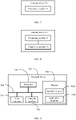
- FIG 1 illustrates a method for data transmission according to an embodiment of this disclosure.
- the method shown in FIG 1 is executed by a terminal device. As shown in FIG 1 , the method includes the following steps.
- a cause for giving up the uplink transmission corresponding to the first uplink grant by the terminal device is not limited in this embodiment of this disclosure.
- the terminal device may give up the uplink transmission corresponding to the first uplink grant.
- the terminal device may give up the uplink transmission corresponding to the first uplink grant.
- the first uplink grant and the second uplink grant correspond to a same hybrid automatic repeat request (Hybrid Automatic Repeat ReQuest, HARQ) process index; or the first uplink grant and the second uplink grant correspond to different HARQ process indexes.
- Hybrid Automatic Repeat ReQuest Hybrid Automatic Repeat ReQuest
- the selection rule includes one of the following rules: an uplink grant conflicting with the first uplink grant is determined as the second uplink grant; and determining a target uplink grant located after the first uplink grant in time domain as the second uplink grant.
- the following describes in detail the selection rule and a method for determining the second uplink grant by the terminal device according to the selection rule.
- the selection rule includes: determining the uplink grant conflicting with the first uplink grant as the second uplink grant. For example, the terminal device generates a MAC PDU 1 based on an uplink grant 1, and places the MAC PDU 1 into a buffer of a HARQ process 1 to wait for transmission. However, due to conflict between the uplink grant 1 and an uplink grant 2, the terminal device gives up uplink transmission corresponding to the uplink grant 1. In this case, the terminal device reconstructs the MAC PDU 1 into a MAC PDU 2 based on the uplink grant 2, and transmits the MAC PDU 2 by using the uplink grant 2.
- the uplink grant 1 herein may be a configured uplink grant (Configured Grant, CG), and the uplink grant 2 may be a dynamic uplink grant (Dynamic Grant, DG).
- the selection rule includes: determining the target uplink grant located after the first uplink grant in time domain as the second uplink grant.
- a type of the first uplink grant is a configured uplink grant
- the target uplink grant corresponds to first configuration information for configuring the first uplink grant
- a time interval between the target uplink grant and the first uplink grant or a time point of determining use of the target uplink grant is greater than or equal to target duration
- a time interval between the first uplink grant and another uplink grant, located before the target uplink grant in time domain, in uplink grants corresponding to the first configuration information is less than the target duration
- the target duration is minimum duration required for reconstructing a data packet by the terminal device.
- the time point of determining use of the target uplink grant can be understood as: a time point of giving up the uplink transmission corresponding to the first uplink grant; or the time point of determining use of the target uplink grant can be understood as: a time point at which the terminal device determines, after the uplink transmission corresponding to the first uplink grant is given up, to use the target uplink grant for transmitting the first data packet.
- the terminal device gives up uplink transmission corresponding to a CG 1, but has generated a MAC PDU 1 based on the CG 1.
- Configuration information for configuring the CG 1 is cgConfig-1
- CGs corresponding to cgConfig-1 includes a CG 2 and a CG 3.
- a time interval between the CG 2 and the CG 1 is excessively short, and the terminal device cannot reconstruct the MAC PDU 1 into a MAC PDU 2 based on the CG 2 (for example, a minimum time required for reconstructing a MAC PDU by the terminal device is 5 ms, but the time interval between the CG 2 and the CG 1 is 3 ms).
- the CG 3 meets a minimum time required for reconstructing the MAC PDU 1 by the terminal device (for example, a time interval between the CG 3 and the CG 1 is 6 ms), and therefore the terminal device reconstructs the MAC PDU 1 into a MAC PDU 3 based on the CG 3 for transmission.
- the CG 1 and the CG 2 may have a same HARQ process index, or the CG 1 and the CG 2 may have different HARQ process indexes.
- the CG 1 and the CG 3 may have a same HARQ process index, or the CG 1 and the CG 3 may have different HARQ process indexes.
- the selection rule includes: determining the target uplink grant located after the first uplink grant in time domain as the second uplink grant.
- a type of the first uplink grant is a configured uplink grant
- the target uplink grant corresponds to first configuration information for configuring the first uplink grant
- a time interval between the target uplink grant and the first uplink grant is less than a time interval between the first uplink grant and another uplink grant in uplink grants corresponding to the first configuration information.
- the type of the first uplink grant is a configured uplink grant
- configuration information for configuring the first uplink grant is the first configuration information
- the terminal device determines an uplink grant next to the first uplink grant in time domain in uplink grants corresponding to the first configuration information as the second uplink grant.
- uplink transmission corresponding to a CG 1 for the terminal device is given up, but the terminal device has generated a MAC PDU 1 based on the CG 1.
- Configuration information for configuring the CG 1 is cgConfig-1
- an uplink grant next to the CG 1 in CGs corresponding to cgConfig-1 is the CG 2 (the CG 1 and the CG 2 may have a same HARQ process index, or the CG 1 and the CG 2 may have different HARQ process indexes).
- the terminal device reconstructs the MAC PDU 1 into a MAC PDU 2 based on the CG 2 and transmits the MAC PDU 2 by using the CG 2, or the terminal device transmits the MAC PDU 1 by using the CG 2.
- the selection rule includes: determining the target uplink grant located after the first uplink grant in time domain as the second uplink grant.
- a type of the first uplink grant is a configured uplink grant
- the target uplink grant is a configured uplink grant
- the target uplink grant corresponds to second configuration information
- a time interval between the target uplink grant and the first uplink grant is less than a time interval between the first uplink grant and another uplink grant in uplink grants corresponding to the second configuration information
- the second configuration information includes at least one uplink grant configuration information (Configured Grant Configuration).
- the type of the first uplink grant is a configured uplink grant
- configuration information for configuring the first uplink grant is the first configuration information
- the terminal device determines an uplink grant next to the first uplink grant in time domain in uplink grants corresponding to the second configuration information as the second uplink grant.
- uplink transmission corresponding to a CG 1 for the terminal device is given up, but the terminal device has generated a MAC PDU 1 based on the CG 1.
- Configuration information for configuring the CG 1 is cgConfig-1
- a CG next to the CG 1 is a CG 2
- configuration information for configuring the CG 2 is cgConfig-2 (that is, a CG configured for retransmission may be different from the CG 1).
- the terminal device reconstructs the MAC PDU 1 into a MAC PDU 2 based on the CG 2 for transmission, or the terminal device transmits the MAC PDU 1 by using the CG 2.
- the network device may configure a plurality of pieces of uplink grant configuration information for the terminal device.
- a network device configures two pieces of uplink grant configuration information for the terminal device, and the two pieces of uplink grant configuration information are configuredGrantConfiguration-1 and configuredGrantConfiguration-2. In this case, both the two pieces of uplink grant configuration information belong to the second configuration information.
- the selection rule includes: determining the target uplink grant located after the first uplink grant in time domain as the second uplink grant.
- a type of the first uplink grant is a configured uplink grant
- the target uplink grant is a configured uplink grant
- the target uplink grant corresponds to second configuration information
- a time interval between the target uplink grant and the first uplink grant or a time point of determining use of the target uplink grant is greater than or equal to target duration
- a time interval between the first uplink grant and another uplink grant, located before the target uplink grant in time domain, in uplink grants corresponding to the second configuration information is less than the target duration
- the target duration is minimum duration required for reconstructing a data packet by the terminal device.
- the second configuration information includes at least one piece of uplink grant configuration information.
- the time point of determining use of the target uplink grant can be understood as: a time point of giving up the uplink transmission corresponding to the first uplink grant; or the time point of determining use of the target uplink grant can be understood as: a time point at which the terminal device determines, after the uplink transmission corresponding to the first uplink grant is given up, to use the target uplink grant for transmitting the first data packet.
- uplink transmission corresponding to a CG 1 for the terminal device is given up, but the terminal device has generated a MAC PDU 1 based on the CG 1.
- Configuration information for configuring the CG 1 is cgConfig-1
- a CG next to the CG 1 is a CG 2
- configuration information for configuring the CG 2 is cgConfig-2 (that is, a CG configured for retransmission may be different from the CG 1).
- a time interval between the CG 2 and the CG 1 is excessively short, and the terminal device cannot reconstruct the MAC PDU 1 into a MAC PDU 2 based on the CG 2 (for example, a minimum time required for reconstructing a MAC PDU by the terminal device is 5 ms, but the time interval between the CG 2 and the CG 1 is 3 ms).
- a CG next to the CG 1 is the CG 3
- configuration information for configuring the CG 3 is cgConfig-3
- a time interval between the CG 3 and the CG 1 meets a minimum time required for reconstructing the MAC PDU 1 by the terminal device (for example, the time interval between the CG 3 and the CG 1 is 6 ms), and therefore the terminal device reconstructs the MAC PDU 1 into a MAC PDU 3 based on the CG 3 for transmission.
- the selection rule includes: determining the target uplink grant located after the first uplink grant in time domain as the second uplink grant.
- the target uplink grant is an uplink grant with a smallest time interval from the first uplink grant resource in all uplink grants of the terminal device.
- the terminal device determines an uplink grant next to the first uplink grant as the second uplink grant.
- the first uplink grant may be a configured uplink grant or a dynamic uplink grant.
- the second configured grant may be a configured uplink grant or a dynamic uplink grant.
- a transport block size (Transport Block Size, TBS) for the second uplink grant is greater than or equal to a TBS for the first uplink grant.
- the method shown in FIG. 1 further includes: after the second data packet is generated based on the second uplink grant, clearing the first data packet, or continuing to store the first data packet, where the second data packet includes data of the first data packet.
- the terminal device gives up the uplink transmission corresponding to the uplink grant 1, but has generated the MAC PDU 1 based on the uplink grant 1.
- the terminal device may perform one of the following operations on the MAC PDU 1:
- the method shown in FIG. 1 further includes: if the retransmission indication information has not been received before the first data packet is transmitted by using the second uplink grant, transmitting the first data packet by using the second uplink grant, where the retransmission indication information indicates that the terminal device transmits the first data packet by using a third uplink grant.
- the terminal device transmitting the first data packet by using the second uplink grant may be directly transmitting the first data packet or may be transmitting a data packet reconstructed from the first data packet.
- the first data packet is transmitted in a target manner, where the target manner includes one of the following manners:
- the terminal device autonomously determines to use a subsequent uplink grant for transmitting the first data packet, and before the first data packet is transmitted, if a retransmission indication for the first data packet specified by the network device has been received, the terminal device transmits the first data packet in the target manner.
- the terminal device gives up uplink transmission corresponding to a CG 1 at a time point T1; however, a MAC PDU 1 has been generated based on the CG 1.
- the terminal device determines at a time point T2 to use a CG 2 for transmitting the MAC PDU 1, and a transmit time point for the CG 2 is T4.
- the terminal device receives a retransmission indication at a time point T3, where the retransmission indication indicates retransmitting the MAC PDU 1, and an uplink grant corresponding to the retransmission is a DG 3.
- the terminal device may transmit the MAC PDU 1 in one of the following manners:
- FIG. 4 is a schematic flowchart of a method for data reception according to an embodiment of this disclosure. The method shown in FIG. 4 is executed by a network device. As shown in FIG. 4 , the method includes the following steps.
- S210 If retransmission indication information has not been transmitted to a terminal device before a first data packet is received by using a second uplink grant, receive the first data packet by using the second uplink grant, where the retransmission indication information indicates that the terminal device transmits the first data packet by using a third uplink grant, and the second uplink grant is determined according to a selection rule in a case that the terminal device has generated the first data packet based on a first uplink grant and given up uplink transmission corresponding to the first uplink grant.
- the selection rule includes one of the following rules:
- a type of the first uplink grant is a configured uplink grant
- the target uplink grant corresponds to first configuration information for configuring the first uplink grant
- a time interval between the target uplink grant and the first uplink grant or a time point of determining use of the target uplink grant is greater than or equal to target duration
- a time interval between the first uplink grant and another uplink grant, located before the target uplink grant in time domain, in uplink grants corresponding to the first configuration information is less than the target duration
- the target duration is minimum duration required for reconstructing a data packet by the terminal device.
- a type of the first uplink grant is a configured uplink grant
- the target uplink grant corresponds to first configuration information for configuring the first uplink grant
- a time interval between the target uplink grant and the first uplink grant is less than a time interval between the first uplink grant and another uplink grant in uplink grants corresponding to the first configuration information.
- a type of the first uplink grant is a configured uplink grant
- the target uplink grant is a configured uplink grant
- the target uplink grant corresponds to second configuration information
- a time interval between the target uplink grant and the first uplink grant is less than a time interval between the first uplink grant and another uplink grant in uplink grants corresponding to the second configuration information.
- the second configuration information includes at least one piece of uplink grant configuration information.
- a type of the first uplink grant is a configured uplink grant
- the target uplink grant is a configured uplink grant
- the target uplink grant corresponds to second configuration information
- a time interval between the target uplink grant and the first uplink grant or a time point of determining use of the target uplink grant is greater than or equal to target duration
- a time interval between the first uplink grant and another uplink grant, located before the target uplink grant in time domain, in uplink grants corresponding to the second configuration information is less than the target duration
- the target duration is minimum duration required for reconstructing a data packet by the terminal device.
- the second configuration information includes at least one piece of uplink grant configuration information.
- the target uplink grant is an uplink grant with a smallest time interval from the first uplink grant resource in all uplink grants of the terminal device.
- the first uplink grant and the second uplink grant correspond to a same hybrid automatic repeat request HARQ process index; or the first uplink grant and the second uplink grant correspond to different HARQ process indexes.
- a transport block size TBS for the second uplink grant is greater than or equal to a TBS for the first uplink grant.
- the method shown in FIG. 4 further includes: if the retransmission indication information has been transmitted to the terminal device before the first data packet is received by using the second uplink grant, receiving the first data packet in a target manner.
- the target manner includes one of the following manners:
- FIG 5 is a schematic structural diagram of a terminal device according to an embodiment of this disclosure.
- the terminal device 50 includes: a processing module 51, configured to: in a case that a first data packet has been generated based on a first uplink grant and uplink transmission corresponding to the first uplink grant is given up, determine, according to a selection rule, a second uplink grant for transmitting the first data packet.
- the selection rule includes one of the following rules:
- a type of the first uplink grant is a configured uplink grant
- the target uplink grant corresponds to first configuration information for configuring the first uplink grant
- a time interval between the target uplink grant and the first uplink grant or a time point of determining use of the target uplink grant is greater than or equal to target duration
- a time interval between the first uplink grant and another uplink grant, located before the target uplink grant in time domain, in uplink grants corresponding to the first configuration information is less than the target duration
- the target duration is minimum duration required for reconstructing a data packet by the terminal device.
- a type of the first uplink grant is a configured uplink grant
- the target uplink grant corresponds to first configuration information for configuring the first uplink grant
- a time interval between the target uplink grant and the first uplink grant is less than a time interval between the first uplink grant and another uplink grant in uplink grants corresponding to the first configuration information.
- a type of the first uplink grant is a configured uplink grant
- the target uplink grant is a configured uplink grant
- the target uplink grant corresponds to second configuration information
- a time interval between the target uplink grant and the first uplink grant is less than a time interval between the first uplink grant and another uplink grant in uplink grants corresponding to the second configuration information.
- the second configuration information includes at least one piece of uplink grant configuration information.
- a type of the first uplink grant is a configured uplink grant
- the target uplink grant is a configured uplink grant
- the target uplink grant corresponds to second configuration information
- a time interval between the target uplink grant and the first uplink grant or a time point of determining use of the target uplink grant is greater than or equal to target duration
- a time interval between the first uplink grant and another uplink grant, located before the target uplink grant in time domain, in uplink grants corresponding to the second configuration information is less than the target duration
- the target duration is minimum duration required for reconstructing a data packet by the terminal device.
- the second configuration information includes at least one piece of uplink grant configuration information.
- the target uplink grant is an uplink grant with a smallest time interval from the first uplink grant in all uplink grants of the terminal device.
- the first uplink grant and the second uplink grant correspond to a same hybrid automatic repeat request HARQ process index; or the first uplink grant and the second uplink grant correspond to different HARQ process indexes.
- a transport block size TBS for the second uplink grant is greater than or equal to a TBS for the first uplink grant.
- the processing module 51 is further configured to: after a second data packet is generated based on the second uplink grant, clear the first data packet, or continue to store the first data packet, where the second data packet includes data of the first data packet.
- the terminal device 50 further includes: a transceiver module 52, configured to: if retransmission indication information has not been received before the first data packet is transmitted by using the second uplink grant, transmit the first data packet by using the second uplink grant.
- a transceiver module 52 configured to: if retransmission indication information has not been received before the first data packet is transmitted by using the second uplink grant, transmit the first data packet by using the second uplink grant.
- the retransmission indication information indicates that the terminal device transmits the first data packet by using a third uplink grant.
- the terminal device 50 further includes a transceiver module 52, configured to: if the retransmission indication information has been received before the first data packet is transmitted by using the second uplink grant, transmit the first data packet in a target manner.
- the target manner includes one of the following manners:
- the terminal device provided in this embodiment of this disclosure is capable of implementing the processes that are implemented by the terminal device in the method embodiments of FIG. 1 to FIG. 3 . To avoid repetition, details are not described herein again.
- FIG. 7 is a schematic structural diagram of a network device according to an embodiment of this disclosure.
- the network device 70 includes: a processing module 71, configured to: if retransmission indication information has not been transmitted to a terminal device before a first data packet is received by using a second uplink grant, receive the first data packet by using the second uplink grant.
- the retransmission indication information indicates that the terminal device transmits the first data packet by using a third uplink grant, and the second uplink grant is determined according to a selection rule in a case that the terminal device has generated the first data packet based on a first uplink grant and given up uplink transmission corresponding to the first uplink grant.
- the selection rule includes one of the following rules:
- a type of the first uplink grant is a configured uplink grant
- the target uplink grant corresponds to first configuration information for configuring the first uplink grant
- a time interval between the target uplink grant and the first uplink grant or a time point of determining use of the target uplink grant is greater than or equal to target duration
- a time interval between the first uplink grant and another uplink grant, located before the target uplink grant in time domain, in uplink grants corresponding to the first configuration information is less than the target duration
- the target duration is minimum duration required for reconstructing a data packet by the terminal device.
- a type of the first uplink grant is a configured uplink grant
- the target uplink grant corresponds to first configuration information for configuring the first uplink grant
- a time interval between the target uplink grant and the first uplink grant is less than a time interval between the first uplink grant and another uplink grant in uplink grants corresponding to the first configuration information.
- a type of the first uplink grant is a configured uplink grant
- the target uplink grant is a configured uplink grant
- the target uplink grant corresponds to second configuration information
- a time interval between the target uplink grant and the first uplink grant is less than a time interval between the first uplink grant and another uplink grant in uplink grants corresponding to the second configuration information.
- the second configuration information includes at least one piece of uplink grant configuration information.
- a type of the first uplink grant is a configured uplink grant
- the target uplink grant is a configured uplink grant
- the target uplink grant corresponds to second configuration information
- a time interval between the target uplink grant and the first uplink grant or a time point of determining use of the target uplink grant is greater than or equal to target duration
- a time interval between the first uplink grant and another uplink grant, located before the target uplink grant in time domain, in uplink grants corresponding to the second configuration information is less than the target duration
- the target duration is minimum duration required for reconstructing a data packet by the terminal device.
- the second configuration information includes at least one piece of uplink grant configuration information.
- the target uplink grant is an uplink grant with a smallest time interval from the first uplink grant resource in all uplink grants of the terminal device.
- the first uplink grant and the second uplink grant correspond to a same hybrid automatic repeat request HARQ process index; or the first uplink grant and the second uplink grant correspond to different HARQ process indexes.
- a transport block size TBS for the second uplink grant is greater than or equal to a TBS for the first uplink grant.
- the network device 70 further includes a transceiver module 72, configured to: if the retransmission indication information has been transmitted to the terminal device before the first data packet is received by using the second uplink grant, receive the first data packet in a target manner.
- a transceiver module 72 configured to: if the retransmission indication information has been transmitted to the terminal device before the first data packet is received by using the second uplink grant, receive the first data packet in a target manner.
- the target manner includes one of the following manners:
- the network device provided in this embodiment of this disclosure is capable of implementing the processes that are implemented by the network device in the method embodiment in FIG. 4 . To avoid repetition, details are not described herein again.
- FIG. 9 is a block diagram of a terminal device according to another embodiment of this disclosure.
- the terminal device 900 shown in FIG. 9 includes at least one processor 901, a memory 902, a user interface 903, and at least one network interface 904.
- the components of the terminal device 900 are coupled together by using a bus system 905.
- the bus system 905 is configured to implement connection communication between these components.
- the bus system 905 may include not only a data bus but also a power supply bus, a control bus, and a status signal bus. However, for clarity of description, various buses are marked as the bus system 905 in FIG. 9 .
- the user interface 903 may include a display, a keyboard, a click device (for example, a mouse or a trackball (trackball)), a touch board, or a touchscreen.
- a click device for example, a mouse or a trackball (trackball)
- a touch board for example, a touch screen, or a touchscreen.
- the memory 902 in this embodiment of this disclosure may be a volatile memory or a non-volatile memory, or may include both a volatile memory and a non-volatile memory.
- the non-volatile memory may be a read-only memory (Read-Only Memory, ROM), a programmable read only memory (Programmable ROM, PROM), an erasable programmable read-only memory (Erasable PROM, EPROM), and an electrically erasable programmable read-only memory (Electrically EPROM, EEPROM), or flash memory.
- the volatile memory may be a random access memory (Random Access Memory, RAM), which is used as an external cache.
- RAM random access memory
- SRAM static random access memory
- DRAM dynamic random access memory
- DRAM synchronous dynamic random access memory
- SDRAM double data rate synchronous dynamic random access memory
- Enhanced SDRAM ESDRAM
- Synchlink DRAM SLDRAM
- Direct Rambus RAM Direct Rambus RAM
- the memory 902 stores the following elements: an executable module or a data structure, or a subset thereof, or an extended set thereof: an operating system 9021 and an application program 9022.
- the operating system 9021 includes various system programs, such as a framework layer, a kernel library layer, and a driver layer, and is configured to implement various basic services and process hardware-based tasks.
- the application program 9022 includes various application programs, such as a media player (Media Player), and a browser (Browser), and is configured to implement various application services.
- a program that implements the methods of the embodiments of this disclosure may be included in the application program 9022.
- the terminal device 900 further includes: a computer program stored in the memory 902 and capable of running on the processor 901.
- a computer program stored in the memory 902 and capable of running on the processor 901.
- the processes of the foregoing method shown in FIG. 1 are implemented, with the same technical effects achieved. To avoid repetition, details are not described herein again.
- the foregoing methods disclosed by the embodiments of this disclosure may be applied to the processor 901, or be implemented by the processor 901.
- the processor 901 may be an integrated circuit chip and has a signal processing capability. In an implementation process, steps in the foregoing method can be implemented by using a hardware integrated logical circuit in the processor 901, or by using instructions in a form of software.
- the processor 901 may be a general-purpose processor, a digital signal processor (Digital Signal Processor, DSP), an application-specific integrated circuit (Application Specific Integrated Circuit, ASIC), a field programmable gate array (Field Programmable Gate Array, FPGA) or another programmable logical device, a discrete gate or transistor logical device, or a discrete hardware component.
- DSP Digital Signal Processor
- ASIC Application Specific Integrated Circuit
- FPGA Field Programmable Gate Array
- the processor 901 may implement or execute the methods, steps, and logical block diagrams disclosed in the embodiments of this disclosure.
- the general-purpose processor may be a microprocessor or any regular processor.
- the steps of the methods disclosed with reference to the embodiments of this disclosure may be directly implemented by a hardware decoding processor, or may be implemented by a combination of hardware and software modules in a decoding processor.
- the software module may be located in a computer readable storage medium that is mature in the art, such as a random access memory, a flash memory, a read-only memory, a programmable read-only memory, or an electrically erasable programmable memory, or a register.
- the computer readable storage medium is located in the memory 902, and the processor 901 reads information in the memory 902 and implements, in combination with its hardware, the steps of the foregoing methods.
- a computer program is stored in the computer-readable storage medium, and when the computer program is executed by the processor 901, the steps of the method embodiments described in FIG. 1 are implemented.
- the embodiments described in this disclosure may be implemented by hardware, software, firmware, middleware, microcode, or a combination thereof.
- the processing unit may be implemented in one or more application specific integrated circuits (Application Specific Integrated Circuit, ASIC), digital signal processors (Digital Signal Processor, DSP), digital signal processing devices (DSP Device, DSPD), programmable logic devices (Programmable Logic Device, PLD), field-programmable gate arrays (Field-Programmable Gate Array, FPGA), general purpose processors, controllers, microcontrollers, microprocessors, and other electronic units for performing the functions described in this disclosure, or a combination thereof.
- ASIC Application Specific Integrated Circuit
- DSP Digital Signal Processor
- DSP Device digital signal processing devices
- PLD programmable logic devices
- FPGA field-programmable gate array
- general purpose processors controllers, microcontrollers, microprocessors, and other electronic units for performing the functions described in this disclosure, or a combination thereof.
- the techniques described in the embodiments of this disclosure may be implemented by modules (such as processes and functions) that perform the functions described in the embodiments of this disclosure.
- Software code may be stored in the memory and executed by the processor.
- the memory may be implemented in or outside the processor.
- FIG 10 is a schematic structural diagram of a network device according to another embodiment of this disclosure.
- the network device 1000 includes a processor 1001, a transceiver 1002, a memory 1003, and a bus interface.
- the network device 1000 further includes: a computer program stored in the memory 1003 and capable of running on the processor 1001.
- a computer program stored in the memory 1003 and capable of running on the processor 1001.
- the processes of the foregoing method shown in FIG. 2 are implemented, with the same technical effects achieved. To avoid repetition, details are not described herein again.
- a bus architecture may include any quantity of interconnected buses and bridges, and specifically connects together circuits that are of one or more processors represented by the processor 1001 and of a memory represented by the memory 1003.
- the bus architecture may further interconnect various other circuits such as a peripheral device, a voltage regulator, and a power management circuit. These are all well known in the art, and therefore are not further described in this specification.
- the bus interface provides an interface.
- the transceiver 1002 may be a plurality of components, including a transmitter and a receiver, and provides units for communicating with a variety of other apparatuses on a transmission medium.
- the processor 1001 is responsible for management of the bus architecture and general processing, and the memory 1003 is capable of storing data that is used by the processor 1001 during operation.
- An embodiment of this disclosure further provides a computer-readable storage medium.
- the computer-readable storage medium stores a computer program, and when the computer program is executed by a processor, the processes of the method embodiments shown in FIG. 1 to FIG. 4 are implemented, with the same technical effect achieved. To avoid repetition, details are not described herein again.
- the computer-readable storage medium is, for example, a read-only memory (Read-Only Memory, ROM for short), a random access memory (Random Access Memory, RAM for short), a magnetic disk, or an optical disc.
- the software product is stored in a storage medium (such as a ROM/RAM, a magnetic disk, or an optical disc), and includes several instructions for instructing a terminal (which may be a mobile phone, a computer, a server, an air conditioner, a network device, or the like) to perform the methods described in the embodiments of this disclosure.
- a storage medium such as a ROM/RAM, a magnetic disk, or an optical disc
- a terminal which may be a mobile phone, a computer, a server, an air conditioner, a network device, or the like
Landscapes
- Engineering & Computer Science (AREA)
- Signal Processing (AREA)
- Computer Networks & Wireless Communication (AREA)
- Mobile Radio Communication Systems (AREA)
Applications Claiming Priority (2)
| Application Number | Priority Date | Filing Date | Title |
|---|---|---|---|
| CN201910606024.4A CN111800237B (zh) | 2019-07-05 | 2019-07-05 | 数据发送的方法、数据接收的方法和设备 |
| PCT/CN2020/100004 WO2021004374A1 (fr) | 2019-07-05 | 2020-07-02 | Procédé de transmission de données, procédé de réception de données et dispositif |
Publications (2)
| Publication Number | Publication Date |
|---|---|
| EP3996311A1 true EP3996311A1 (fr) | 2022-05-11 |
| EP3996311A4 EP3996311A4 (fr) | 2022-08-10 |
Family
ID=72805363
Family Applications (1)
| Application Number | Title | Priority Date | Filing Date |
|---|---|---|---|
| EP20836051.1A Pending EP3996311A4 (fr) | 2019-07-05 | 2020-07-02 | Procédé de transmission de données, procédé de réception de données et dispositif |
Country Status (6)
| Country | Link |
|---|---|
| US (2) | US12256402B2 (fr) |
| EP (1) | EP3996311A4 (fr) |
| JP (1) | JP7288987B2 (fr) |
| KR (1) | KR20220015487A (fr) |
| CN (1) | CN111800237B (fr) |
| WO (1) | WO2021004374A1 (fr) |
Families Citing this family (4)
| Publication number | Priority date | Publication date | Assignee | Title |
|---|---|---|---|---|
| CN111800237B (zh) * | 2019-07-05 | 2021-10-12 | 维沃移动通信有限公司 | 数据发送的方法、数据接收的方法和设备 |
| CN114765893A (zh) * | 2021-01-13 | 2022-07-19 | 维沃移动通信有限公司 | 上行数据发送方法、配置方法、终端及网络侧设备 |
| CA3255028A1 (fr) * | 2022-05-25 | 2023-11-30 | Nokia Technologies Oy | Activation de retransmission de transmission initiale de cg-sdt |
| US12323974B1 (en) * | 2024-11-07 | 2025-06-03 | Nokia Technologies Oy | Enabling retransmission of initial transmission of the CG-SDT |
Family Cites Families (25)
| Publication number | Priority date | Publication date | Assignee | Title |
|---|---|---|---|---|
| KR101570542B1 (ko) * | 2009-12-10 | 2015-11-19 | 삼성전자주식회사 | 이동 통신 시스템에서 경쟁 기반 액세스를 수행하는 방법 및 장치 |
| KR101721015B1 (ko) * | 2010-06-21 | 2017-03-29 | 삼성전자주식회사 | 이동 통신 시스템에서 블라인드 스케쥴링 장치 및 방법 |
| JP5927801B2 (ja) * | 2011-08-02 | 2016-06-01 | シャープ株式会社 | 基地局、端末および通信方法 |
| TWI632823B (zh) * | 2012-08-23 | 2018-08-11 | 內數位專利控股公司 | 在無線系統中多層操作之實體層操作 |
| CN111245561B (zh) * | 2013-01-18 | 2022-11-22 | 北京三星通信技术研究有限公司 | 一种处理灵活子帧的上下行传输的方法和设备 |
| US20200295884A1 (en) * | 2015-08-17 | 2020-09-17 | Telefonaktiebolaget Lm Ericsson (Publ) | A Network Node And A Terminal Device, And Methods Of Operating The Same |
| CN107371274B (zh) * | 2016-05-13 | 2022-07-19 | 北京三星通信技术研究有限公司 | 传输数据的方法及设备 |
| WO2018027656A1 (fr) * | 2016-08-10 | 2018-02-15 | 华为技术有限公司 | Procédé de requête automatique de répétition hybride, et dispositif terminal |
| CN107872897B (zh) * | 2016-09-23 | 2020-03-24 | 电信科学技术研究院 | 一种进行上行数据操作的方法和设备 |
| CN108173632B (zh) * | 2016-12-07 | 2020-12-04 | 华为技术有限公司 | 数据处理的方法、发送设备和接收设备 |
| US20180176937A1 (en) | 2016-12-16 | 2018-06-21 | Asustek Computer Inc. | Method and apparatus of handling multiple uplink resource collisions in a wireless communication system |
| CN108617001B (zh) | 2017-01-20 | 2022-11-18 | 中兴通讯股份有限公司 | 上行数据传输方法及装置 |
| CN109088704A (zh) * | 2017-06-14 | 2018-12-25 | 深圳市中兴微电子技术有限公司 | 基于窄带物联网的上行资源分配方法及系统 |
| US10674528B2 (en) * | 2017-06-15 | 2020-06-02 | Mediatek Singapore Pte. Ltd. | Method and apparatus for transmission without dynamic scheduling in mobile communications |
| CN109392097B (zh) | 2017-08-04 | 2020-10-30 | 维沃移动通信有限公司 | 一种数据传输方法及装置 |
| US10645610B2 (en) * | 2017-11-24 | 2020-05-05 | Mediatek Singapore Pte. Ltd. | Method and apparatus for skipping uplink transmission in mobile communications |
| CN110351020B (zh) * | 2018-04-03 | 2021-06-15 | 华为技术有限公司 | 一种传输数据的方法、装置和系统 |
| WO2020092126A1 (fr) * | 2018-11-01 | 2020-05-07 | Intel Corporation | Transmission, retransmission et processus harq destinés à une ressource de liaison montante préconfigurée en mode veille |
| CN111263464B (zh) * | 2019-01-30 | 2021-12-28 | 维沃移动通信有限公司 | 随机接入方法、设备及介质 |
| EP3694280A1 (fr) * | 2019-02-07 | 2020-08-12 | Comcast Cable Communications, LLC | Préemption de transmission de signaux |
| CA3071984A1 (fr) * | 2019-02-11 | 2020-08-11 | Comcast Cable Communications, Llc | Controle de puissance et retransmission |
| EP4482074A3 (fr) * | 2019-02-14 | 2025-04-02 | Ofinno, LLC | Transmission en liaison montante avec priorisation de traitement d'autorisation de liaison montante |
| CN113519188A (zh) * | 2019-04-30 | 2021-10-19 | Oppo广东移动通信有限公司 | 无线通信的方法、终端设备和网络设备 |
| CN111800237B (zh) * | 2019-07-05 | 2021-10-12 | 维沃移动通信有限公司 | 数据发送的方法、数据接收的方法和设备 |
| CN116456481A (zh) * | 2019-10-29 | 2023-07-18 | 维沃移动通信有限公司 | 上行传输的方法、上行传输指示的方法和设备 |
-
2019
- 2019-07-05 CN CN201910606024.4A patent/CN111800237B/zh active Active
-
2020
- 2020-07-02 WO PCT/CN2020/100004 patent/WO2021004374A1/fr not_active Ceased
- 2020-07-02 EP EP20836051.1A patent/EP3996311A4/fr active Pending
- 2020-07-02 JP JP2021577144A patent/JP7288987B2/ja active Active
- 2020-07-02 KR KR1020227000097A patent/KR20220015487A/ko active Pending
-
2021
- 2021-12-28 US US17/563,110 patent/US12256402B2/en active Active
-
2025
- 2025-02-17 US US19/055,256 patent/US20250193897A1/en active Pending
Also Published As
| Publication number | Publication date |
|---|---|
| KR20220015487A (ko) | 2022-02-08 |
| JP2022538276A (ja) | 2022-09-01 |
| CN111800237A (zh) | 2020-10-20 |
| WO2021004374A1 (fr) | 2021-01-14 |
| JP7288987B2 (ja) | 2023-06-08 |
| US12256402B2 (en) | 2025-03-18 |
| CN111800237B (zh) | 2021-10-12 |
| US20220124790A1 (en) | 2022-04-21 |
| EP3996311A4 (fr) | 2022-08-10 |
| US20250193897A1 (en) | 2025-06-12 |
Similar Documents
| Publication | Publication Date | Title |
|---|---|---|
| US12200760B2 (en) | Method for sharing channel occupancy time and device | |
| JP7018513B6 (ja) | Harq-ackフィードバック時間の特定方法と指示方法、端末機器及びネットワーク機器 | |
| US11641666B2 (en) | Uplink transmission method and device | |
| US20250193897A1 (en) | Method for data transmission, method for data reception, and device | |
| US12490304B2 (en) | Information transmission method with shared cot and communications device | |
| CN110139383B (zh) | 数据传输方法和设备 | |
| CN111263448A (zh) | 信息传输的方法和设备 | |
| JP2025072667A (ja) | プリエンプティブbsrの配置方法、装置及び電子機器 | |
| US12108452B2 (en) | Method for sharing channel occupancy time, terminal device, and network device | |
| US11039471B2 (en) | Method and device for random access | |
| US11252746B2 (en) | Method for data transmission, terminal device and network device | |
| HK40064726A (en) | Data transmission method, data reception method, and device | |
| CN111836389A (zh) | 上行资源调度方法、终端及网络侧设备 | |
| JP2023543124A (ja) | アップリンク伝送を向上させるためのシステムおよび方法 | |
| CN111600689A (zh) | Srs传输方法和设备 | |
| US20230137165A1 (en) | Wireless communication method and device | |
| CN111132379A (zh) | 数据传输方法和设备 | |
| CN110167065B (zh) | 一种取消上行调度请求的方法、终端设备和网络侧设备 | |
| HK40061594A (en) | Method for sharing channel occupancy time and device | |
| EP4662959A1 (fr) | Gestion de demandes de planification (sr) | |
| HK40061594B (en) | Method for sharing channel occupancy time and device |
Legal Events
| Date | Code | Title | Description |
|---|---|---|---|
| STAA | Information on the status of an ep patent application or granted ep patent |
Free format text: STATUS: THE INTERNATIONAL PUBLICATION HAS BEEN MADE |
|
| PUAI | Public reference made under article 153(3) epc to a published international application that has entered the european phase |
Free format text: ORIGINAL CODE: 0009012 |
|
| STAA | Information on the status of an ep patent application or granted ep patent |
Free format text: STATUS: REQUEST FOR EXAMINATION WAS MADE |
|
| 17P | Request for examination filed |
Effective date: 20220131 |
|
| AK | Designated contracting states |
Kind code of ref document: A1 Designated state(s): AL AT BE BG CH CY CZ DE DK EE ES FI FR GB GR HR HU IE IS IT LI LT LU LV MC MK MT NL NO PL PT RO RS SE SI SK SM TR |
|
| REG | Reference to a national code |
Ref country code: HK Ref legal event code: DE Ref document number: 40064726 Country of ref document: HK |
|
| A4 | Supplementary search report drawn up and despatched |
Effective date: 20220707 |
|
| RIC1 | Information provided on ipc code assigned before grant |
Ipc: H04W 72/04 20090101ALI20220701BHEP Ipc: H04L 5/00 20060101AFI20220701BHEP |
|
| DAV | Request for validation of the european patent (deleted) | ||
| DAX | Request for extension of the european patent (deleted) | ||
| STAA | Information on the status of an ep patent application or granted ep patent |
Free format text: STATUS: EXAMINATION IS IN PROGRESS |
|
| 17Q | First examination report despatched |
Effective date: 20250305 |
|
| REG | Reference to a national code |
Ref country code: DE Ref legal event code: R079 Free format text: PREVIOUS MAIN CLASS: H04L0005000000 Ipc: H04W0072230000 |
|
| GRAP | Despatch of communication of intention to grant a patent |
Free format text: ORIGINAL CODE: EPIDOSNIGR1 |
|
| STAA | Information on the status of an ep patent application or granted ep patent |
Free format text: STATUS: GRANT OF PATENT IS INTENDED |
|
| RIC1 | Information provided on ipc code assigned before grant |
Ipc: H04W 72/23 20230101AFI20260227BHEP Ipc: H04L 5/00 20060101ALN20260227BHEP |
|
| INTG | Intention to grant announced |
Effective date: 20260316 |
|
| RIC1 | Information provided on ipc code assigned before grant |
Ipc: H04W 72/23 20230101AFI20260309BHEP Ipc: H04L 5/00 20060101ALN20260309BHEP |