EP3996433B1 - Procédé et appareil de communication de groupe - Google Patents
Procédé et appareil de communication de groupe Download PDFInfo
- Publication number
- EP3996433B1 EP3996433B1 EP21199410.8A EP21199410A EP3996433B1 EP 3996433 B1 EP3996433 B1 EP 3996433B1 EP 21199410 A EP21199410 A EP 21199410A EP 3996433 B1 EP3996433 B1 EP 3996433B1
- Authority
- EP
- European Patent Office
- Prior art keywords
- message
- group
- terminal
- category
- additional information
- Prior art date
- Legal status (The legal status is an assumption and is not a legal conclusion. Google has not performed a legal analysis and makes no representation as to the accuracy of the status listed.)
- Active
Links
Images






Classifications
-
- H—ELECTRICITY
- H04—ELECTRIC COMMUNICATION TECHNIQUE
- H04B—TRANSMISSION
- H04B7/00—Radio transmission systems, i.e. using radiation field
- H04B7/24—Radio transmission systems, i.e. using radiation field for communication between two or more posts
-
- H—ELECTRICITY
- H04—ELECTRIC COMMUNICATION TECHNIQUE
- H04W—WIRELESS COMMUNICATION NETWORKS
- H04W76/00—Connection management
- H04W76/10—Connection setup
- H04W76/14—Direct-mode setup
-
- H—ELECTRICITY
- H04—ELECTRIC COMMUNICATION TECHNIQUE
- H04L—TRANSMISSION OF DIGITAL INFORMATION, e.g. TELEGRAPHIC COMMUNICATION
- H04L67/00—Network arrangements or protocols for supporting network services or applications
- H04L67/50—Network services
- H04L67/51—Discovery or management thereof, e.g. service location protocol [SLP] or web services
-
- H—ELECTRICITY
- H04—ELECTRIC COMMUNICATION TECHNIQUE
- H04W—WIRELESS COMMUNICATION NETWORKS
- H04W48/00—Access restriction; Network selection; Access point selection
- H04W48/16—Discovering, processing access restriction or access information
-
- H—ELECTRICITY
- H04—ELECTRIC COMMUNICATION TECHNIQUE
- H04W—WIRELESS COMMUNICATION NETWORKS
- H04W68/00—User notification, e.g. alerting and paging, for incoming communication, change of service or the like
- H04W68/02—Arrangements for increasing efficiency of notification or paging channel
-
- H—ELECTRICITY
- H04—ELECTRIC COMMUNICATION TECHNIQUE
- H04W—WIRELESS COMMUNICATION NETWORKS
- H04W72/00—Local resource management
- H04W72/04—Wireless resource allocation
-
- H—ELECTRICITY
- H04—ELECTRIC COMMUNICATION TECHNIQUE
- H04W—WIRELESS COMMUNICATION NETWORKS
- H04W72/00—Local resource management
- H04W72/20—Control channels or signalling for resource management
-
- H—ELECTRICITY
- H04—ELECTRIC COMMUNICATION TECHNIQUE
- H04W—WIRELESS COMMUNICATION NETWORKS
- H04W8/00—Network data management
- H04W8/005—Discovery of network devices, e.g. terminals
-
- H—ELECTRICITY
- H04—ELECTRIC COMMUNICATION TECHNIQUE
- H04W—WIRELESS COMMUNICATION NETWORKS
- H04W84/00—Network topologies
- H04W84/18—Self-organising networks, e.g. ad-hoc networks or sensor networks
Definitions
- the present invention relates to a method and terminal for group communication.
- FIG. 1 illustrates a network architecture for Proximity Services (ProSe).
- ProSe refers to a service that supports a data transfer path enabling two user equipments (UEs) to directly exchange data without use of the infrastructure of a mobile communication network.
- UEs user equipments
- ProSe enables proximate UEs to exchange data through a direct data path without help of the backhaul of a mobile communication network.
- a network coordinator can assign an association identifier (AID) and/or a group identifier (GID) to identify a client station to which a packet is to be transmitted and to enable the client station to determine whether to receive an incoming packet.
- the network coordinator can randomly generate a base AID that is representative of the network coordinator and can assign at least one AID to client stations to minimize the probability of client stations associated with proximate network coordinators being assigned the same AIDs.
- the network coordinator can also randomly assign at least one GID to a group of client stations to minimize the probability of groups of client stations associated with the proximate network coordinators being assigned the same GID.
- the client station can analyze indications of a received AID and/or received GID to determine whether to receive the packet or whether to switch to an inactive power state.
- An apparatus for an idle mode terminal is configured to perform a method for operating the idle mode terminal in a Machine to Machine (M2M) communication system.
- a paging message is received from the base station during a paging listening interval.
- the apparatus determines whether an indicator indicating receipt of multicast group data is included in the paging message.
- the indicator indicating the receiving of multicast group data is included, data transmitted via a downlink resource that uses an identifier mask of a multicast group to which a terminal belongs is received. Thereafter, a paging non-listening interval is entered.
- an aspect of the present invention is to provide a method and terminal that enable efficient group communication.
- a method of communication for a user equipment may include: receiving first resource information indicating a first resource region and second resource information indicating a second resource region from an evolved Node B (eNB); receiving a first message from a second UE via the first resource region; checking whether the contents of the first message match the UE; and sending, when the contents of the first message match the UE, a second message associated with the first message to the second UE via the second resource region.
- a user equipment UE
- the user equipment may include: a communication unit configured to receive first resource information indicating a first resource region and second resource information indicating a second resource region from an evolved Node B (eNB), and receive a first message from a second UE via the first resource region; and a control unit configured to check whether the contents of the first message match the UE.
- the communication unit may send a second message associated with the first message to the second UE via the second resource region.
- a method of communication for a user equipment may include: receiving first resource information indicating a first resource region and second resource information indicating a second resource region from an evolved Node B (eNB); sending a first message via the first resource region; and receiving a second message associated with the first message from a second UE via the second resource region.
- eNB evolved Node B
- a user equipment may include a communication unit that is configured to receive first resource information indicating a first resource region and second resource information indicating a second resource region from an evolved Node B (eNB), send a first message via the first resource region, and receive a second message associated with the first message from a second UE via the second resource region.
- eNB evolved Node B
- a base station may include: a control unit configured to generate first resource information indicating a first resource region used to transceive a first message containing contents for interest matching with user equipments, and generate second resource information indicating a second resource region used to transceive additional information associated with the first message; and a communication unit configured to send the first resource information and the second resource information.
- a method of communication for a base station may include: generating first resource information indicating a first resource region used to transceive a first message containing contents for interest matching with user equipments, and generating second resource information indicating a second resource region used to transceive additional information associated with the first message; and sending the first resource information and the second resource information.
- a method of communication for a user equipment may include: sending, by the UE wishing to send a group message, a group ID to be sent to a resource usage indication region before group message transmission, and sending, when resource usage indication is successful, a group message to the group indicated by the group ID.
- the method may further include: monitoring, by the UE wishing to receive a group message, the resource usage indication region for group message transmission; checking whether the UE is a member of the group indicated by a group ID received from the resource usage indication region; receiving, when the UE is a member of the group, a group message region to which a message destined for the group is sent; and sending, when the UE is not a member of the group, the resource usage indication region only without monitoring or receiving the group message region to which a message destined for the group is sent so as to save power.
- a method and apparatus are provided that enable efficient group communication.
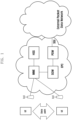
- FIG. 2 depicts a network configuration of the communication system according to an embodiment, which is not part of the present invention.
- the communication system includes an eNodeB (eNB) 110 and user equipment 1 (UE 1) 100, UE 2 (120) and UE 3 (130).
- the eNodeB may be referred to as a base station.
- the user equipment (UE) may be referred to as a terminal.
- the coverages of the eNB 110, UE 1 (100), UE 2 (120) and UE 3 (130) are indicated by reference symbols 115, 105, 125 and 135, respectively.
- UE 1 100
- UE 2 120
- UE 3 130
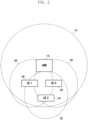
- FIG. 3 depicts a network configuration of the communication system according to another embodiment, which is not part of the present invention.
- the communication system includes eNB A (110), eNB B (111), UE 1 (100), UE 2 (120) and UE 3 (130).
- the coverages of eNB A (110), eNB B (111), UE 1 (100), UE 2 (120) and UE 3 (130) are indicated by reference symbols 115, 116, 105, 125 and 135, respectively.
- FIG. 3 is similar to FIG. 2 , but eNB B (111) is newly added.
- UE 1 (100), UE 2 (120) and UE 3 (130) are all within the coverage 115 of eNB A (110).
- UE 3 (130) belongs also to the coverage 116 of eNB B (111).
- UE 3 (130) is assumed to belong to the coverage 115 of eNB A (110), the same procedure described later may be applied if UE 3 (130) does not belong to the coverage 115 of eNB A (110). It is assumed that UE 1 (100), UE 2 (120) and UE 3 (130) are placed at a short distance so that a discover message sent by one of them may be received by each of the other ones.
- a UE wishing to be discovered may continuously send an announce message containing information on the UE.
- a receiving UE may receive the announce message for discovery, examine the sender information contained in the announce message, and send a communication request to the UE having sent the announce message if the sender information matches the receiver interest.
- the phrase “the sender information matches (corresponds to) the receiver interest” indicates that the information of the receiver or application of the receiver satisfies the condition contained in a message sent by the sender. This may also be represented by similar phrases such as “the sender interest matches the receiver interest”, “the requirements of the received message correspond to the attribute or state information of the receiver”, and “the received message matches the receiver”. Matching or correspondence is determined on the basis of the condition described in a received message and state information of the receiver.
- the receiver may have to verify whether the announcement of the sender is true.
- the receiver may have to obtain additional information necessary for communication with the sender. To this end, such additional information may have to be contained in the announce message sent by the sender.
- the size of the announce message increases.
- the additional information except for the information needed to examine interest matching is useless for the receivers. That is, when the additional information is large in volume and the number of receiving UEs having matching interests is small, the possibility of wasting radio resources to transmit unused information becomes high.
- the present specification discloses a discovery procedure in which a category 1 message is used to deliver the information needed to examine interest matching only and a category 2 message is used to deliver additional information needed for verification or communication establishment only when an interest match is found based on the category 1 message.
- a category 1 message and a category 2 message may be separated according to the message size and type.
- the category 1 message is used to contain information needed to examine interest matching only and is smaller in size than the category 2 message.
- the category 2 message is used to deliver additional information needed for verification or communication establishment after an interest match is found and is larger in size than the category 1 message.
- differently named messages e.g. type 1 message and type 2 message
- FIG. 4 is a sequence diagram of a procedure for message transmission according to a first embodiment, which is not part of the present invention.
- the embodiment of FIG. 4 may be applied to various communication network configurations including ones shown in FIG. 2 or FIG. 3 .
- the eNB 110 broadcasts system information regarding category 1 and category 2 messages.
- the system information may include radio resource information (e.g. radio resource locations) for the category 1 and category 2 messages.
- UE 1 (100) receives the system information broadcast by the eNB 110.
- UE 2 (120) receives the system information broadcast by the eNB 110.
- UE 3 (130) receives the system information broadcast by the eNB 110.
- ProSe enabled UEs such as UE 1 (100), UE 2 (120), UE 3 (130) may receive system information broadcast by the eNB 110 and obtain information on radio resources used for transmitting a category 1 message and category 2 message.
- UE 1 (100) identifies radio resource blocks to be used for category 1 message transmission on the basis of the radio resource information for a category 1 message received from the eNB 110.
- UE 1 (100) broadcasts a category 1 message by use of one or more of the identified radio resource blocks.
- UE 1 (100) applies preset back-off first and then re-broadcasts the category 1 message via an unused radio resource block. This rebroadcasting may be repeated up to k times. If k attempts all fail, UE 1 (100) may wait for the duration corresponding to k times the back-off value and then attempt to broadcast.
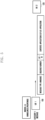
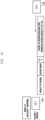
- FIG. 5 illustrates the format of a category 1 message according to the first embodiment.
- the format of the category 1 message sent by UE 1 (100) at step 250 may include a UE ID field, sequence number field, and contents field.
- the message contents may contain, for example, the identifier of an application running on UE 1 (100) for message transmission.
- the format of the category 1 message may further include a type field to identify the category 1 message type.
- the UE ID field may be set to the identifier of UE 1 (100).
- the sequence number may be assigned according to the sequence of messages sent by the UE 1 (100).
- the UE ID field and the sequence number field are used to identify the message itself and may be replaced with a different identifier field for message identification.
- UE 1 (100) After sending the category 1 message, at step 260, UE 1 (100) starts timer T1. Until expiration of timer T1, UE 1 (100) waits for an additional information request message sent by a UE having an interest matching the category 1 message.
- UE 2 (120) monitors the radio resource assigned to category 1 message transmission.
- UE 3 (130) monitors the radio resource assigned to category 1 message transmission.
- UE 2 (120) [UE 3 (130)] forwards the category 1 message to the corresponding ProSe application to check interest matching. Then, when an interest match is found, the ProSe application requests the communication unit of UE 2 (120) [UE 3 (130)] to send a category 2 message request message.
- UE 2 (120) [UE 3 (130)] generates a random value r1_UE2 [r1_UE3] ranging between T1-a and 0, and waits for the time duration corresponding to the random value r1_UE2 [r1_UE3] before sending the category 2 message request message. Thereafter, for the time duration corresponding to the random value r1_UE2 [r1_UE3], UE 2 (120) [UE 3 (130)] monitors reception of a category 2 message containing additional information for the category 1 message.
- UE 2 (120) and UE 3 (130) generate random values r1_UE2 and r1_UE3 respectively, waiting times may differ from each other.
- the random value r1_UE2 is smaller than r1_UE3 (the waiting time of UE 2 (120) is shorter than that of UE 3 (130)).
- UE 2 (120) sends an additional information request message.
- the additional information request message is destined for UE 1 (100), it may also be delivered to another UE (e.g. UE 3 (130)).
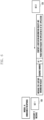
- FIG. 6 illustrates the format of an additional information request message according to the first embodiment.
- the format of the additional information request message may include a message type field, UE ID field, sequence number field, and contents field.
- the message type field is used to identify whether the category 2 message is a request message, additional information message or other type message.
- the message type field may contain an indication indicating the additional information request message.
- the UE ID field and sequence number field may contain information indicating the preceding message associated with the additional information request message.
- the additional information request message at step 290 may contain the UE ID (ID of UE 1) and sequence number contained in the category 1 message at step 250.
- an additional information request message contains information identifying the preceding message associated with additional information.
- the UE ID field and the sequence number field may be replaced with a different identifier field for message identification.
- the contents field may contain an indication indicating the requested additional information.
- the request message at step 290 may be sent by use of category 2 message resources. Similarly to the category 1 message at step 250, a collision detection and retransmission procedure may be applied to the request message at step 290.
- the message contents may contain the request issued by the application running on UE 2 (120) having examined interest matching. For example, the message contents may contain a request for information needed to verify the application ID of UE 1 (100) and/or to perform communication establishment.
- UE 2 After sending the additional information request message, at step 300, UE 2 (120) starts timer T2-UE2.
- UE 3 (130) waits for expiration of time r1_UE3 before sending an additional information request message. Before expiration of r1_UE3, UE 3 (130) may detect reception of the additional information request message sent by another UE (i.e. UE 2 (120)). Upon reception of the additional information request message, UE 3 (130) examines the contents thereof to check whether the contents contain all information to be requested by UE 3 (130). If the contents contain all information to be requested, UE 3 (130) does not issue an additional information request message.
- the communication unit of UE 3 (130) may detect an additional information request message destined for UE 1 (100) and containing the UE 1 sequence number and forward the message to the corresponding application having requested additional information.
- the corresponding application may examine the contents of the forwarded message and notify the communication unit or control unit that there is no need to send an additional information request message. Accordingly, at step 320, UE 3 (130) starts timer T2_UE3 without sending an additional information request message. Until expiration of timer T2_UE3, UE 3 (130) continues to monitor reception of a category 2 message.
- the procedure for requesting additional information may be summarized as follows.
- a receiving UE having received a category 1 message from a sending UE starts a timer set to a random value (waiting time) if an interest match is found.
- the receiving UE sends an additional information request message upon expiration of the timer.
- the receiving UE needs further information in addition to the information contained in the received additional information request message, the receiving UE sends an additional information request message upon expiration of the timer.
- the receiving UE waits for reception of an additional information message without sending an additional information request message.
- the receiving UE sends an additional information request message upon expiration of the timer only if the receiving UE needs further information in addition to the information contained in the multiple received additional information request messages.
- UE 1 (100) receives the additional information request message sent at step 290 before expiration of timer T1.
- UE 1 (100) sends a category 2 message containing requested additional information as a response to the additional information request message.
- the contents of the additional information request message may be forwarded to the application having triggered the category 1 message and the application may provide an answer to the requirements indicated by the message contents.
- the category 2 message at step 350 contains information answering the requirements.
- FIG. 7 illustrates the format of an additional information message according to the first embodiment.
- the format of the additional information message may include a message type field, sequence number field, UE ID field, and contents field.
- the additional information message is a category 2 message.
- the message type field may be set to an indication indicating a message containing additional information.
- the sequence number field may be set to a sequence number different from that of the message used at step 250 or step 290.
- the UE ID field may be set to the identifier of a UE (UE 1) sending the additional information message.
- the UE ID field and sequence number field are used to identify the message itself and may be replaced with a different identifier field for message identification.
- the contents field may contain additional information requested by the message used at step 290. For example, if the message used at step 290 is a message requesting verification information, the contents field may contain verification information. If the message used at step 290 is a message requesting a sender phone number, the contents field may contain a phone number.
- the category 2 message sent at step 350 reaches UE 2 (120) and UE 3 (130) monitoring the category 2 message radio resource.
- UE 2 (120) examines whether the additional information message is sent by UE 1 (100), and forwards the contents of the additional information message to the application having requested additional information if the additional information message is a desired one.
- the application on UE 2 (120) obtains desired additional information from the message contents.
- UE 3 (130) performs actions similar to those of UE 2 (120) at step 330 and the corresponding application on UE 3 (130) obtains desired additional information.
- UE 3 (130) may obtain the needed portion only and discard the remaining portion of the contents.
- a flow of announce/additional information request/announce is used in the embodiment described in FIGS. 4 to 7 .
- Discovery is performed in a flow of discover/announce in the following embodiment described in FIG. 8 to 10 .
- FIG. 8 is a sequence diagram of a procedure for message transmission according to a second embodiment, which is not part of the present invention.
- a UE wishing to perform discovery sends a category 1 discover message, and a receiving UE having received the discover message performs interest matching by checking whether the target information in the contents of the discover message matches the receiving UE and sends a category 2 message if an interest match is found.
- FIG. 8 may be applied to various communication network configurations including ones shown in FIG. 2 or FIG. 3 .
- the eNB 1110, UE 1 (1100), UE 2 (1120) and UE 3 (1130) correspond respectively to the eNB 110, UE 1 (100), UE 2 (120) and UE 3 (130) in FIG. 4 .
- As the embodiments shown in FIG. 4 and FIG. 8 are similar in overall structure but are different in specific operation, different reference symbols are used.
- the eNB 1110 broadcasts system information regarding category 1 and category 2 messages.
- the system information may include radio resource information (e.g. radio resource locations) for the category 1 and category 2 messages.
- UE 1 (1100) receives the system information broadcast by the eNB 1110.
- UE 2 (1120) receives the system information broadcast by the eNB 1110.
- UE 3 (1130) receives the system information broadcast by the eNB 1110.
- steps 1210 to 1240 are identical respectively to steps 210 to 240 of FIG. 4 , a description thereof is omitted.
- ProSe enabled UEs such as UE 1 (1100), UE 2 (1120), UE 3 (1130) may receive system information broadcast by the eNB 1110 and obtain information on radio resources used for transmitting a category 1 message and category 2 message.
- UE 1 (1100) wishing to send a category 1 message identifies radio resource blocks to be used for category 1 message transmission on the basis of the category 1 message radio resource information received from the eNB 1110.
- UE 1 (1100) broadcasts a category 1 message by use of one or more of the identified radio resource blocks. Collision detection and retransmission may be performed in a manner described in relation to step 250 of FIG. 4 .
- FIG. 9 illustrates the format of a discover message according to the second embodiment.
- the discover message sent at step 1250 is a category 1 message.
- the format of a discover message may include a message type field, sequence number field, UE ID field, and contents field.
- the message type field may contain an indication indicating a discover message.
- the UE ID field may be set to the identifier of a UE (UE 1) sending the message.
- Sequence numbers may be assigned in sequence according to the messages sent by UE 1 (1100).
- the contents field may contain information on a target to be discovered. For example, the contents field may contain an identifier of an application to be discovered or attribute information of an application running on a UE to be discovered (e.g. UE 2 (1120)).
- UE 1 (1100) After sending the category 1 message, at step 1260, UE 1 (1100) starts timer T1. Until expiration of timer T1, UE 1 (1100) waits for an additional information request message sent by a UE having an interest matching the category 1 message sent at step 1250.
- the category 1 message sent at step 1250 is delivered to UE 2 (1120) and UE 3 (1130).
- UE 2 (1120) [UE 3 (1130)] Upon reception of the category 1 message, at step 1270 [at step 1280], UE 2 (1120) [UE 3 (1130)] forwards the contents of the category 1 message to the corresponding ProSe application to check interest matching. Then, when an interest match is found (discover message contents match the interest of UE 2 [UE 3] or application interest), the ProSe application generates contents including target information on UE 2 (1120) [UE 3 (1130)] and requests the communication unit of UE 2 (1120) [UE 3 (1130)] to send the generated contents in the form of announcement.
- UE 2 (1120) [UE 3 (1130)] sends a category 2 message containing the generated contents.
- FIG. 10 illustrates the format of a response message according to the second embodiment.
- the format of a response message may include a message type field, sequence number field, UE ID field, and contents field.
- the message sent at step 1290 is a category 2 message.
- the message type field may be set to an indication indicating a response message.
- the sequence number field may be set to the sequence number of the discover message received at step 1250.
- the UE ID field may be set to the UE ID of the discover message received at step 1250.
- the contents field may contain target information generated by a corresponding application.
- UE 1 (1100) collects announce messages of category 2 until expiration of timer T1.
- a category 2 announce message (sent at step 1290 or step 1300) is received, if the UE ID of the received message is identical to the ID of UE 1 (1100) and the sequence number thereof is identical to that of the discover message sent at step 1250, UE 1 (1100) forwards the contents of the received message to the application having triggered the discover message at step 1250, enabling the application to receive a response for discovery.
- message contents may also be generated by the control units or operating systems of UEs.
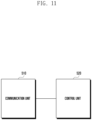
- FIG. 11 is a block diagram of a user equipment (UE) according to an embodiment of the present invention.
- the UE may include a communication unit 510 and a control unit 520.
- the communication unit 510 sends and receives radio signals to perform communication in accordance with one or more of the embodiments described above.
- the communication unit 510 may receive system information broadcast by the eNB.
- the communication unit 510 may send and receive one or more of the messages described in relation to FIGS. 5 to 7 or FIGS. 9 and 10 .
- the control unit 520 controls components of the UE so as to perform an operation in accordance with one or more of the embodiments described above.
- the control unit 520 may control a process of analyzing a message received through the communication unit 510, generating a message to be sent accordingly, and sending the generated message through the communication unit 510.
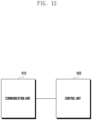
- FIG. 12 is a block diagram of a base station (eNB) according to an embodiment of the present invention.
- the eNB may include a communication unit 610 and a control unit 620.
- the control unit 620 may generate resource information for category 1 and category 2 messages and generate system information.
- the control unit 620 may control the communication unit 610 to send the resource information and the system information.
- FIG. 13 depicts a network configuration of the communication system according to an embodiment of the present invention.
- UE 1 (1000), UE 2 (1001), UE 3 (1002) and UE 4 (1003) are UEs capable of group communication, and communication ranges thereof overlap with each other.
- UE 1 (1000), UE 2 (1001), UE 3 (1002) and UE 4 (1003) belong to the same group, have the same group ID, and share a channel for group communication.
- UE 1 (1000), UE 2 (1001), UE 3 (1002) and UE 4 (1003) belonging to the same group perform synchronization by use of pulse-coupled oscillators.
- FIG. 14 illustrates procedures and message formats usable for the embodiment of the present invention.
- UE 1 (1000) to send group data after synchronization, UE 1 (1000) generates a random value ranging between 0 and t1 and waits for the time corresponding to the random value. After expiration of the waiting time, in a state wherein message transmission is allowed, UE 1 (1000) sends an alert message 1010 containing a group ID for the target group and message size information (step 1021).
- the message size information in the alert message indicates the size or transmission time of a group message to be sent later, and may be omitted when the size of the group message is fixed for all UEs.
- UE 1 (1000) After time t2 from successful transmission of the alert message, UE 1 (1000) sends a group message 1011 (step 1024).
- the group message 1011 may contain a group ID and group data.
- UE 2 (1001) To send group data after synchronization using a pulse-coupled oscillator, UE 2 (1001) generates a random value ranging between 0 and t1 and waits for the time corresponding to the random value. After expiration of the waiting time, in a state wherein message transmission is not allowed because the group communication channel is already used, UE 2 (1001) monitors the group communication channel (step 1020). Except for UE 1 (1000) sending a group message, UE 2 (1001), UE 3 (1002) and UE 4 (1003) monitor the group communication channel to receive the group message (step 1020).
- each of UE 2 (1001), UE 3 (1002) and UE 4 (1003) checks whether it is a member of the group indicated by the group ID in the alert message.
- UE 2 (1001) being a member of the indicated group waits for reception of a group message containing a group ID (step 1022) and receives the group message sent by UE 1 (1000).
- UE 2 (1001) having a group message to be sent generates a random value ranging between 0 and t1 and waits for the time corresponding to the random value (waiting for sending an alert message).
- UE 3 (1002) not having a group message to be sent starts monitoring to receive an alert message (step 1020).
- UE 4 (1003) being a non-member of the indicated group does not monitor the group communication channel for the group message transmission time by use of the message size information contained in the alert message (step 1023).
- UE 4 (1003) starts monitoring to receive an alert message (step 1020).
- blocks of a flowchart (or sequence diagram) and a combination of flowcharts may be represented and executed by computer program instructions.
- These computer program instructions may be loaded on a processor of a general purpose computer, special purpose computer or programmable data processing equipment. When the loaded program instructions are executed by the processor, they create a means for carrying out functions described in the flowchart.
- the computer program instructions may be stored in a computer readable memory that is usable in a specialized computer or a programmable data processing equipment, it is also possible to create articles of manufacture that carry out functions described in the flowchart.
- the computer program instructions may be loaded on a computer or a programmable data processing equipment, when executed as processes, they may carry out steps of functions described in the flowchart.
- a block of a flowchart may correspond to a module, a segment or a code containing one or more executable instructions implementing one or more logical functions, or to a part thereof.
- functions described by blocks may be executed in an order different from the listed order. For example, two blocks listed in sequence may be executed at the same time or executed in reverse order.
- unit may refer to a software component or hardware component such as an FPGA or ASIC capable of carrying out a function or an operation.
- unit or the like is not limited to hardware or software.
- a unit or the like may be configured so as to reside in an addressable storage medium or to drive one or more processors.
- Units or the like may refer to software components, object-oriented software components, class components, task components, processes, functions, attributes, procedures, subroutines, program code segments, drivers, firmware, microcode, circuits, data, databases, data structures, tables, arrays or variables.
- a function provided by a component and unit may be a combination of smaller components and units, and may be combined with others to compose large components and units.
- Components and units may be configured to drive a device or one or more processors in a secure multimedia card.
- the discovery apparatus may be a portable electronic device such as a mobile terminal, personal digital assistant (PDA), navigation aid, digital broadcast receiver, or portable multimedia player (PMP).
- PDA personal digital assistant
- PMP portable multimedia player
Landscapes
- Engineering & Computer Science (AREA)
- Computer Networks & Wireless Communication (AREA)
- Signal Processing (AREA)
- Computer Security & Cryptography (AREA)
- Mobile Radio Communication Systems (AREA)
Claims (10)
- Procédé exécuté par un premier terminal (1001) appartenant à un groupe dans un système de communication sans fil, le procédé comprenant :recevoir, à partir d'un deuxième terminal (1000), un message d'alerte (1010) sur la base de la surveillance (1020) d'un canal de communication de groupe pour la réception du message d'alerte,dans lequel le message d'alerte comprend un identifiant, ID, de groupe pour un groupe cible et des informations indiquant une heure de transmission de message de groupe ;déterminer si le premier terminal est membre du groupe cible indiqué par l'ID de groupe dans le message d'alerte ; etdans le cas où le premier terminal est le membre du groupe cible, recevoir (1022), depuis le deuxième terminal, un message de groupe (1011) sur le canal de communication de groupe.
- Procédé de la revendication 1, dans lequel le premier terminal ne reçoit pas le message de groupe s'il n'est pas membre du groupe cible.
- Procédé de la revendication 1, dans lequel le message de groupe comprend un ID de groupe et des données de groupe.
- Procédé exécuté par un deuxième terminal (1000) appartenant à un groupe dans un système de communication sans fil, le procédé comprenant :transmettre (1021) un message d'alerte (1010) sur un canal de communication de groupe, le message d'alerte comprenant un identifiant, ID, de groupe pour un groupe cible et des informations indiquant une heure de transmission de message de groupe ; ettransmettre un message de groupe (1011) sur le canal de communication de groupe,le message de groupe est délivré à un premier terminal (1001) qui est membre du groupe cible indiqué par l'ID de groupe dans le message d'alerte.
- Procédé de la revendication 4, dans lequel le message de groupe comprend un ID de groupe et des données de groupe.
- Premier terminal appartenant à un groupe dans un système de communication sans fil, le premier terminal comprenant :une unité de communication (510) ; etune unité de commande (520) configurée pour :commander l'unité de communication pour recevoir, depuis un deuxième terminal, un message d'alerte basé sur la surveillance d'un canal de communication de groupe pour recevoir le message d'alerte, dans lequel le message d'alerte comprend un identifiant, ID, de groupe, pour un groupe cible et des informations indiquant une heure de transmission de message de groupe,déterminer si le premier terminal est membre du groupe cible indiqué par l'ID de groupe dans le message d'alerte, etdans le cas où le premier terminal est membre du groupe cible, recevoir, depuis le deuxième terminal, un message de groupe sur le canal de communication de groupe.
- Premier terminal de la revendication 6, dans lequel, dans le cas où le premier terminal n'est pas membre du groupe cible, le premier terminal ne reçoit pas le message de groupe.
- Premier terminal de la revendication 6, dans lequel le message de groupe comprend un ID de groupe et des données de groupe.
- Premier terminal appartenant à un groupe dans un système de communication sans fil, le premier terminal comprenant :une unité de communication (510) ; etune unité de commande (520) configurée pour :commander l'unité de communication pour qu'elle transmette un message d'alerte comprenant un identifiant, ID, de groupe pour un groupe cible et des informations sur l'heure de transmission de message de groupe, etcommander l'unité de communication pour qu'elle transmette un message de groupe,dans lequel le message de groupe est délivré à un deuxième terminal qui est membre du groupe cible indiqué par l'ID de groupe dans le message d'alerte.
- Premier terminal de la revendication 9, dans lequel le message de groupe comprend un ID de groupe et des données de groupe.
Applications Claiming Priority (5)
| Application Number | Priority Date | Filing Date | Title |
|---|---|---|---|
| KR20130056713 | 2013-05-20 | ||
| KR1020130080875A KR102073134B1 (ko) | 2013-05-20 | 2013-07-10 | 디스커버리 방법 및 장치 |
| EP19195128.4A EP3595269B1 (fr) | 2013-05-20 | 2014-05-20 | Procédé et appareil de découverte |
| EP14801686.8A EP3001582B1 (fr) | 2013-05-20 | 2014-05-20 | Procédé et appareil de découverte |
| PCT/KR2014/004505 WO2014189263A1 (fr) | 2013-05-20 | 2014-05-20 | Procédé et appareil de découverte |
Related Parent Applications (2)
| Application Number | Title | Priority Date | Filing Date |
|---|---|---|---|
| EP19195128.4A Division EP3595269B1 (fr) | 2013-05-20 | 2014-05-20 | Procédé et appareil de découverte |
| EP14801686.8A Division EP3001582B1 (fr) | 2013-05-20 | 2014-05-20 | Procédé et appareil de découverte |
Publications (2)
| Publication Number | Publication Date |
|---|---|
| EP3996433A1 EP3996433A1 (fr) | 2022-05-11 |
| EP3996433B1 true EP3996433B1 (fr) | 2024-11-13 |
Family
ID=52456653
Family Applications (3)
| Application Number | Title | Priority Date | Filing Date |
|---|---|---|---|
| EP14801686.8A Active EP3001582B1 (fr) | 2013-05-20 | 2014-05-20 | Procédé et appareil de découverte |
| EP19195128.4A Active EP3595269B1 (fr) | 2013-05-20 | 2014-05-20 | Procédé et appareil de découverte |
| EP21199410.8A Active EP3996433B1 (fr) | 2013-05-20 | 2014-05-20 | Procédé et appareil de communication de groupe |
Family Applications Before (2)
| Application Number | Title | Priority Date | Filing Date |
|---|---|---|---|
| EP14801686.8A Active EP3001582B1 (fr) | 2013-05-20 | 2014-05-20 | Procédé et appareil de découverte |
| EP19195128.4A Active EP3595269B1 (fr) | 2013-05-20 | 2014-05-20 | Procédé et appareil de découverte |
Country Status (5)
| Country | Link |
|---|---|
| US (2) | USRE50279E1 (fr) |
| EP (3) | EP3001582B1 (fr) |
| KR (1) | KR102073134B1 (fr) |
| CN (1) | CN105247802B (fr) |
| WO (1) | WO2014189263A1 (fr) |
Families Citing this family (4)
| Publication number | Priority date | Publication date | Assignee | Title |
|---|---|---|---|---|
| CN108990063A (zh) * | 2013-06-28 | 2018-12-11 | 日本电气株式会社 | 通信系统、网络和用户设备及其通信方法 |
| KR102276858B1 (ko) * | 2015-06-26 | 2021-07-13 | 삼성전자주식회사 | 단말기들의 통신 방법 및 그 단말기 |
| KR102456934B1 (ko) | 2018-02-28 | 2022-10-21 | 삼성전자주식회사 | 무선 통신 시스템에서의 데이터 송수신 방법 및 장치 |
| US11596010B2 (en) * | 2018-06-12 | 2023-02-28 | Lg Electronics Inc. | Method for transmitting and receiving data in wireless communication system and terminal therefor |
Family Cites Families (15)
| Publication number | Priority date | Publication date | Assignee | Title |
|---|---|---|---|---|
| US7613426B2 (en) * | 2005-12-20 | 2009-11-03 | Microsoft Corporation | Proximity service discovery in wireless networks |
| US8478300B2 (en) * | 2005-12-20 | 2013-07-02 | Microsoft Corporation | Proximity service discovery in wireless networks |
| US8320398B2 (en) * | 2007-07-10 | 2012-11-27 | Qualcomm Incorporated | Paging a peer in a peer-to-peer communication network |
| US20090063686A1 (en) * | 2007-08-30 | 2009-03-05 | Schmidt Brian K | Automated service discovery and dynamic connection management |
| US8385823B2 (en) * | 2007-10-03 | 2013-02-26 | Samsung Electronics Co., Ltd | Method and system for communication in near field communication network |
| US8478776B2 (en) * | 2009-10-30 | 2013-07-02 | Qualcomm Incorporated | Methods and systems for peer-to-peer network discovery using multi-user diversity |
| US8812657B2 (en) * | 2010-04-15 | 2014-08-19 | Qualcomm Incorporated | Network-assisted peer discovery |
| US8553605B2 (en) * | 2010-09-10 | 2013-10-08 | Qualcomm Incorporated | Packet identification for power saving in wireless communication networks |
| KR101682956B1 (ko) | 2010-10-14 | 2016-12-07 | 삼성전자주식회사 | 기기 간 통신 시스템에서 페이징된 기기에서의 억세스 오버헤드를 감소하기 위한 방법 및 장치 |
| US9001693B2 (en) | 2011-06-13 | 2015-04-07 | Qualcomm, Incorporated | Enhanced discovery procedures in peer-to-peer wireless local area networks (WLANs) |
| US8576756B2 (en) * | 2011-06-28 | 2013-11-05 | International Business Machines Corporation | Continuous cache service in cellular networks |
| US20140254429A1 (en) | 2011-10-02 | 2014-09-11 | Broadcom Corporation | Signaling for device-to-device wireless communication |
| WO2013062310A1 (fr) * | 2011-10-24 | 2013-05-02 | 엘지전자 주식회사 | Procédé pour permettre à une station de base de prendre en charge une communication de dispositif à dispositif (d2d) dans un système de communication sans fil, et procédé pour permettre à un dispositif d2d d'émettre efficacement un signal de requête de communication d2d |
| GB2496153B (en) | 2011-11-02 | 2014-07-02 | Broadcom Corp | Device-to-device communications |
| US9185690B2 (en) * | 2012-02-29 | 2015-11-10 | Sharp Kabushiki Kaisha | Allocating and determining resources for a device-to-device link |
-
2013
- 2013-07-10 KR KR1020130080875A patent/KR102073134B1/ko active Active
-
2014
- 2014-05-20 EP EP14801686.8A patent/EP3001582B1/fr active Active
- 2014-05-20 EP EP19195128.4A patent/EP3595269B1/fr active Active
- 2014-05-20 EP EP21199410.8A patent/EP3996433B1/fr active Active
- 2014-05-20 CN CN201480029277.5A patent/CN105247802B/zh active Active
- 2014-05-20 WO PCT/KR2014/004505 patent/WO2014189263A1/fr not_active Ceased
- 2014-05-20 US US16/705,108 patent/USRE50279E1/en active Active
- 2014-05-20 US US14/893,022 patent/US9839059B2/en not_active Ceased
Also Published As
| Publication number | Publication date |
|---|---|
| EP3001582A1 (fr) | 2016-03-30 |
| EP3996433A1 (fr) | 2022-05-11 |
| CN105247802B (zh) | 2020-01-10 |
| EP3595269A1 (fr) | 2020-01-15 |
| USRE50279E1 (en) | 2025-01-21 |
| US9839059B2 (en) | 2017-12-05 |
| EP3595269B1 (fr) | 2021-09-29 |
| CN105247802A (zh) | 2016-01-13 |
| EP3001582A4 (fr) | 2017-01-18 |
| KR102073134B1 (ko) | 2020-02-04 |
| KR20140136360A (ko) | 2014-11-28 |
| US20160119964A1 (en) | 2016-04-28 |
| EP3001582B1 (fr) | 2019-09-04 |
| WO2014189263A1 (fr) | 2014-11-27 |
Similar Documents
| Publication | Publication Date | Title |
|---|---|---|
| US10887725B2 (en) | Proximity and interest determination by a wireless device | |
| US8437782B2 (en) | Method for contacting a group of terminals within a communication network, arrangement and terminal within a communication network | |
| US10178536B2 (en) | Update indication information | |
| WO2016188432A1 (fr) | Procédé de programmation de communication de type machine, station de base, et équipement d'utilisateur | |
| US20200077443A1 (en) | Random access method and apparatus | |
| US20240129095A1 (en) | Method for requesting system information block, and communication device | |
| EP3996433B1 (fr) | Procédé et appareil de communication de groupe | |
| EP3050333A1 (fr) | Découverte à la demande par demande/réponse dans des réseaux de poste à poste | |
| EP4072169B1 (fr) | Procédé et appareil de transmission d'un service de multidiffusion | |
| EP3165011A1 (fr) | Gestion de support mbms dans un système de communications de groupe | |
| EP3063965A1 (fr) | Découverte de services directs wi-fi au moyen d'une sonde de découverte | |
| US20250056656A1 (en) | Method and device for determining sidelink discontinuous reception configuration | |
| CN105557033B (zh) | 传输发现信号的方法、用户设备和基站 | |
| US11910355B2 (en) | Method and device of transmitting information and base station | |
| CN116419263A (zh) | 一种通信方法及装置 | |
| KR101203713B1 (ko) | 멀티캐스트 및 브로드캐스트 서비스 관리 방법 및 관리 장치 | |
| CN103999378A (zh) | 用于m2m无线通信的位置更新的方法和装置 | |
| CN114760596B (zh) | 数据传输方法、装置及网络侧设备 | |
| EP4672824A1 (fr) | Procédé et dispositif de mise en oeuvre de communication sensible au wi-fi dans une grappe | |
| CN119922700A (zh) | 寻呼方法、装置及系统 | |
| HK40005765B (en) | Proximity and interest determination by a wireless device | |
| HK40005765A (en) | Proximity and interest determination by a wireless device |
Legal Events
| Date | Code | Title | Description |
|---|---|---|---|
| PUAI | Public reference made under article 153(3) epc to a published international application that has entered the european phase |
Free format text: ORIGINAL CODE: 0009012 |
|
| STAA | Information on the status of an ep patent application or granted ep patent |
Free format text: STATUS: THE APPLICATION HAS BEEN PUBLISHED |
|
| AC | Divisional application: reference to earlier application |
Ref document number: 3001582 Country of ref document: EP Kind code of ref document: P Ref document number: 3595269 Country of ref document: EP Kind code of ref document: P |
|
| AK | Designated contracting states |
Kind code of ref document: A1 Designated state(s): AL AT BE BG CH CY CZ DE DK EE ES FI FR GB GR HR HU IE IS IT LI LT LU LV MC MK MT NL NO PL PT RO RS SE SI SK SM TR |
|
| STAA | Information on the status of an ep patent application or granted ep patent |
Free format text: STATUS: REQUEST FOR EXAMINATION WAS MADE |
|
| 17P | Request for examination filed |
Effective date: 20221111 |
|
| RBV | Designated contracting states (corrected) |
Designated state(s): AL AT BE BG CH CY CZ DE DK EE ES FI FR GB GR HR HU IE IS IT LI LT LU LV MC MK MT NL NO PL PT RO RS SE SI SK SM TR |
|
| GRAP | Despatch of communication of intention to grant a patent |
Free format text: ORIGINAL CODE: EPIDOSNIGR1 |
|
| STAA | Information on the status of an ep patent application or granted ep patent |
Free format text: STATUS: GRANT OF PATENT IS INTENDED |
|
| RIC1 | Information provided on ipc code assigned before grant |
Ipc: H04W 84/18 20090101ALN20240508BHEP Ipc: H04W 8/00 20090101ALN20240508BHEP Ipc: H04W 76/14 20180101ALI20240508BHEP Ipc: H04W 72/04 20090101ALI20240508BHEP Ipc: H04L 67/51 20220101ALI20240508BHEP Ipc: H04W 68/02 20090101AFI20240508BHEP |
|
| INTG | Intention to grant announced |
Effective date: 20240607 |
|
| GRAS | Grant fee paid |
Free format text: ORIGINAL CODE: EPIDOSNIGR3 |
|
| GRAA | (expected) grant |
Free format text: ORIGINAL CODE: 0009210 |
|
| STAA | Information on the status of an ep patent application or granted ep patent |
Free format text: STATUS: THE PATENT HAS BEEN GRANTED |
|
| AC | Divisional application: reference to earlier application |
Ref document number: 3001582 Country of ref document: EP Kind code of ref document: P Ref document number: 3595269 Country of ref document: EP Kind code of ref document: P |
|
| AK | Designated contracting states |
Kind code of ref document: B1 Designated state(s): AL AT BE BG CH CY CZ DE DK EE ES FI FR GB GR HR HU IE IS IT LI LT LU LV MC MK MT NL NO PL PT RO RS SE SI SK SM TR |
|
| REG | Reference to a national code |
Ref country code: GB Ref legal event code: FG4D |
|
| REG | Reference to a national code |
Ref country code: CH Ref legal event code: EP |
|
| REG | Reference to a national code |
Ref country code: IE Ref legal event code: FG4D |
|
| REG | Reference to a national code |
Ref country code: DE Ref legal event code: R096 Ref document number: 602014091187 Country of ref document: DE |
|
| REG | Reference to a national code |
Ref country code: LT Ref legal event code: MG9D |
|
| REG | Reference to a national code |
Ref country code: NL Ref legal event code: MP Effective date: 20241113 |
|
| PG25 | Lapsed in a contracting state [announced via postgrant information from national office to epo] |
Ref country code: PT Free format text: LAPSE BECAUSE OF FAILURE TO SUBMIT A TRANSLATION OF THE DESCRIPTION OR TO PAY THE FEE WITHIN THE PRESCRIBED TIME-LIMIT Effective date: 20250313 Ref country code: HR Free format text: LAPSE BECAUSE OF FAILURE TO SUBMIT A TRANSLATION OF THE DESCRIPTION OR TO PAY THE FEE WITHIN THE PRESCRIBED TIME-LIMIT Effective date: 20241113 Ref country code: IS Free format text: LAPSE BECAUSE OF FAILURE TO SUBMIT A TRANSLATION OF THE DESCRIPTION OR TO PAY THE FEE WITHIN THE PRESCRIBED TIME-LIMIT Effective date: 20250313 |
|
| PG25 | Lapsed in a contracting state [announced via postgrant information from national office to epo] |
Ref country code: NL Free format text: LAPSE BECAUSE OF FAILURE TO SUBMIT A TRANSLATION OF THE DESCRIPTION OR TO PAY THE FEE WITHIN THE PRESCRIBED TIME-LIMIT Effective date: 20241113 Ref country code: FI Free format text: LAPSE BECAUSE OF FAILURE TO SUBMIT A TRANSLATION OF THE DESCRIPTION OR TO PAY THE FEE WITHIN THE PRESCRIBED TIME-LIMIT Effective date: 20241113 |
|
| REG | Reference to a national code |
Ref country code: AT Ref legal event code: MK05 Ref document number: 1742611 Country of ref document: AT Kind code of ref document: T Effective date: 20241113 |
|
| PG25 | Lapsed in a contracting state [announced via postgrant information from national office to epo] |
Ref country code: BG Free format text: LAPSE BECAUSE OF FAILURE TO SUBMIT A TRANSLATION OF THE DESCRIPTION OR TO PAY THE FEE WITHIN THE PRESCRIBED TIME-LIMIT Effective date: 20241113 |
|
| PG25 | Lapsed in a contracting state [announced via postgrant information from national office to epo] |
Ref country code: ES Free format text: LAPSE BECAUSE OF FAILURE TO SUBMIT A TRANSLATION OF THE DESCRIPTION OR TO PAY THE FEE WITHIN THE PRESCRIBED TIME-LIMIT Effective date: 20241113 |
|
| PG25 | Lapsed in a contracting state [announced via postgrant information from national office to epo] |
Ref country code: NO Free format text: LAPSE BECAUSE OF FAILURE TO SUBMIT A TRANSLATION OF THE DESCRIPTION OR TO PAY THE FEE WITHIN THE PRESCRIBED TIME-LIMIT Effective date: 20250213 |
|
| PG25 | Lapsed in a contracting state [announced via postgrant information from national office to epo] |
Ref country code: LV Free format text: LAPSE BECAUSE OF FAILURE TO SUBMIT A TRANSLATION OF THE DESCRIPTION OR TO PAY THE FEE WITHIN THE PRESCRIBED TIME-LIMIT Effective date: 20241113 Ref country code: GR Free format text: LAPSE BECAUSE OF FAILURE TO SUBMIT A TRANSLATION OF THE DESCRIPTION OR TO PAY THE FEE WITHIN THE PRESCRIBED TIME-LIMIT Effective date: 20250214 Ref country code: AT Free format text: LAPSE BECAUSE OF FAILURE TO SUBMIT A TRANSLATION OF THE DESCRIPTION OR TO PAY THE FEE WITHIN THE PRESCRIBED TIME-LIMIT Effective date: 20241113 |
|
| PG25 | Lapsed in a contracting state [announced via postgrant information from national office to epo] |
Ref country code: PL Free format text: LAPSE BECAUSE OF FAILURE TO SUBMIT A TRANSLATION OF THE DESCRIPTION OR TO PAY THE FEE WITHIN THE PRESCRIBED TIME-LIMIT Effective date: 20241113 |
|
| PG25 | Lapsed in a contracting state [announced via postgrant information from national office to epo] |
Ref country code: RS Free format text: LAPSE BECAUSE OF FAILURE TO SUBMIT A TRANSLATION OF THE DESCRIPTION OR TO PAY THE FEE WITHIN THE PRESCRIBED TIME-LIMIT Effective date: 20250213 |
|
| PG25 | Lapsed in a contracting state [announced via postgrant information from national office to epo] |
Ref country code: SM Free format text: LAPSE BECAUSE OF FAILURE TO SUBMIT A TRANSLATION OF THE DESCRIPTION OR TO PAY THE FEE WITHIN THE PRESCRIBED TIME-LIMIT Effective date: 20241113 |
|
| PGFP | Annual fee paid to national office [announced via postgrant information from national office to epo] |
Ref country code: DE Payment date: 20250422 Year of fee payment: 12 |
|
| PG25 | Lapsed in a contracting state [announced via postgrant information from national office to epo] |
Ref country code: DK Free format text: LAPSE BECAUSE OF FAILURE TO SUBMIT A TRANSLATION OF THE DESCRIPTION OR TO PAY THE FEE WITHIN THE PRESCRIBED TIME-LIMIT Effective date: 20241113 |
|
| PG25 | Lapsed in a contracting state [announced via postgrant information from national office to epo] |
Ref country code: EE Free format text: LAPSE BECAUSE OF FAILURE TO SUBMIT A TRANSLATION OF THE DESCRIPTION OR TO PAY THE FEE WITHIN THE PRESCRIBED TIME-LIMIT Effective date: 20241113 |
|
| PG25 | Lapsed in a contracting state [announced via postgrant information from national office to epo] |
Ref country code: RO Free format text: LAPSE BECAUSE OF FAILURE TO SUBMIT A TRANSLATION OF THE DESCRIPTION OR TO PAY THE FEE WITHIN THE PRESCRIBED TIME-LIMIT Effective date: 20241113 |
|
| PG25 | Lapsed in a contracting state [announced via postgrant information from national office to epo] |
Ref country code: SK Free format text: LAPSE BECAUSE OF FAILURE TO SUBMIT A TRANSLATION OF THE DESCRIPTION OR TO PAY THE FEE WITHIN THE PRESCRIBED TIME-LIMIT Effective date: 20241113 |
|
| PG25 | Lapsed in a contracting state [announced via postgrant information from national office to epo] |
Ref country code: CZ Free format text: LAPSE BECAUSE OF FAILURE TO SUBMIT A TRANSLATION OF THE DESCRIPTION OR TO PAY THE FEE WITHIN THE PRESCRIBED TIME-LIMIT Effective date: 20241113 |
|
| PG25 | Lapsed in a contracting state [announced via postgrant information from national office to epo] |
Ref country code: IT Free format text: LAPSE BECAUSE OF FAILURE TO SUBMIT A TRANSLATION OF THE DESCRIPTION OR TO PAY THE FEE WITHIN THE PRESCRIBED TIME-LIMIT Effective date: 20241113 |
|
| REG | Reference to a national code |
Ref country code: DE Ref legal event code: R097 Ref document number: 602014091187 Country of ref document: DE |
|
| PG25 | Lapsed in a contracting state [announced via postgrant information from national office to epo] |
Ref country code: SE Free format text: LAPSE BECAUSE OF FAILURE TO SUBMIT A TRANSLATION OF THE DESCRIPTION OR TO PAY THE FEE WITHIN THE PRESCRIBED TIME-LIMIT Effective date: 20241113 |
|
| PLBE | No opposition filed within time limit |
Free format text: ORIGINAL CODE: 0009261 |
|
| STAA | Information on the status of an ep patent application or granted ep patent |
Free format text: STATUS: NO OPPOSITION FILED WITHIN TIME LIMIT |
|
| 26N | No opposition filed |
Effective date: 20250814 |
|
| REG | Reference to a national code |
Ref country code: CH Ref legal event code: H13 Free format text: ST27 STATUS EVENT CODE: U-0-0-H10-H13 (AS PROVIDED BY THE NATIONAL OFFICE) Effective date: 20251223 |
|
| PG25 | Lapsed in a contracting state [announced via postgrant information from national office to epo] |
Ref country code: LU Free format text: LAPSE BECAUSE OF NON-PAYMENT OF DUE FEES Effective date: 20250520 |
|
| PG25 | Lapsed in a contracting state [announced via postgrant information from national office to epo] |
Ref country code: CH Free format text: LAPSE BECAUSE OF NON-PAYMENT OF DUE FEES Effective date: 20250531 |
|
| REG | Reference to a national code |
Ref country code: BE Ref legal event code: MM Effective date: 20250531 |
|
| PG25 | Lapsed in a contracting state [announced via postgrant information from national office to epo] |
Ref country code: MC Free format text: LAPSE BECAUSE OF FAILURE TO SUBMIT A TRANSLATION OF THE DESCRIPTION OR TO PAY THE FEE WITHIN THE PRESCRIBED TIME-LIMIT Effective date: 20241113 |
|
| PGFP | Annual fee paid to national office [announced via postgrant information from national office to epo] |
Ref country code: GB Payment date: 20260324 Year of fee payment: 13 |
|
| PG25 | Lapsed in a contracting state [announced via postgrant information from national office to epo] |
Ref country code: IE Free format text: LAPSE BECAUSE OF NON-PAYMENT OF DUE FEES Effective date: 20250520 |
|
| PG25 | Lapsed in a contracting state [announced via postgrant information from national office to epo] |
Ref country code: BE Free format text: LAPSE BECAUSE OF NON-PAYMENT OF DUE FEES Effective date: 20250531 |
|
| PG25 | Lapsed in a contracting state [announced via postgrant information from national office to epo] |
Ref country code: FR Free format text: LAPSE BECAUSE OF NON-PAYMENT OF DUE FEES Effective date: 20250531 |