EP3996475A1 - Appareil, système et procédé d'atténuation de l'effet de fromage suisse sur des circuits imprimés à courant élevé - Google Patents
Appareil, système et procédé d'atténuation de l'effet de fromage suisse sur des circuits imprimés à courant élevé Download PDFInfo
- Publication number
- EP3996475A1 EP3996475A1 EP21153553.9A EP21153553A EP3996475A1 EP 3996475 A1 EP3996475 A1 EP 3996475A1 EP 21153553 A EP21153553 A EP 21153553A EP 3996475 A1 EP3996475 A1 EP 3996475A1
- Authority
- EP
- European Patent Office
- Prior art keywords
- unique
- sublaminate
- circuit board
- layers
- signal
- Prior art date
- Legal status (The legal status is an assumption and is not a legal conclusion. Google has not performed a legal analysis and makes no representation as to the accuracy of the status listed.)
- Withdrawn
Links
Images


Classifications
-
- H—ELECTRICITY
- H05—ELECTRIC TECHNIQUES NOT OTHERWISE PROVIDED FOR
- H05K—PRINTED CIRCUITS; CASINGS OR CONSTRUCTIONAL DETAILS OF ELECTRIC APPARATUS; MANUFACTURE OF ASSEMBLAGES OF ELECTRICAL COMPONENTS
- H05K1/00—Printed circuits
- H05K1/02—Details
- H05K1/0296—Conductive pattern lay-out details not covered by sub groups H05K1/02 - H05K1/0295
- H05K1/0298—Multilayer circuits
-
- H—ELECTRICITY
- H05—ELECTRIC TECHNIQUES NOT OTHERWISE PROVIDED FOR
- H05K—PRINTED CIRCUITS; CASINGS OR CONSTRUCTIONAL DETAILS OF ELECTRIC APPARATUS; MANUFACTURE OF ASSEMBLAGES OF ELECTRICAL COMPONENTS
- H05K1/00—Printed circuits
- H05K1/02—Details
- H05K1/0213—Electrical arrangements not otherwise provided for
- H05K1/0216—Reduction of cross-talk, noise or electromagnetic interference
- H05K1/0218—Reduction of cross-talk, noise or electromagnetic interference by printed shielding conductors, ground planes or power plane
-
- H—ELECTRICITY
- H05—ELECTRIC TECHNIQUES NOT OTHERWISE PROVIDED FOR
- H05K—PRINTED CIRCUITS; CASINGS OR CONSTRUCTIONAL DETAILS OF ELECTRIC APPARATUS; MANUFACTURE OF ASSEMBLAGES OF ELECTRICAL COMPONENTS
- H05K3/00—Apparatus or processes for manufacturing printed circuits
- H05K3/46—Manufacturing multilayer circuits
- H05K3/4611—Manufacturing multilayer circuits by laminating two or more circuit boards
- H05K3/4638—Aligning and fixing the circuit boards before lamination; Detecting or measuring the misalignment after lamination; Aligning external circuit patterns or via connections relative to internal circuits
-
- H—ELECTRICITY
- H05—ELECTRIC TECHNIQUES NOT OTHERWISE PROVIDED FOR
- H05K—PRINTED CIRCUITS; CASINGS OR CONSTRUCTIONAL DETAILS OF ELECTRIC APPARATUS; MANUFACTURE OF ASSEMBLAGES OF ELECTRICAL COMPONENTS
- H05K3/00—Apparatus or processes for manufacturing printed circuits
- H05K3/46—Manufacturing multilayer circuits
- H05K3/4611—Manufacturing multilayer circuits by laminating two or more circuit boards
- H05K3/4641—Manufacturing multilayer circuits by laminating two or more circuit boards having integrally laminated metal sheets or special power cores
-
- H—ELECTRICITY
- H05—ELECTRIC TECHNIQUES NOT OTHERWISE PROVIDED FOR
- H05K—PRINTED CIRCUITS; CASINGS OR CONSTRUCTIONAL DETAILS OF ELECTRIC APPARATUS; MANUFACTURE OF ASSEMBLAGES OF ELECTRICAL COMPONENTS
- H05K1/00—Printed circuits
- H05K1/02—Details
- H05K1/0213—Electrical arrangements not otherwise provided for
- H05K1/0263—High current adaptations, e.g. printed high current conductors or using auxiliary non-printed means; Fine and coarse circuit patterns on one circuit board
-
- H—ELECTRICITY
- H05—ELECTRIC TECHNIQUES NOT OTHERWISE PROVIDED FOR
- H05K—PRINTED CIRCUITS; CASINGS OR CONSTRUCTIONAL DETAILS OF ELECTRIC APPARATUS; MANUFACTURE OF ASSEMBLAGES OF ELECTRICAL COMPONENTS
- H05K2201/00—Indexing scheme relating to printed circuits covered by H05K1/00
- H05K2201/09—Shape and layout
- H05K2201/09209—Shape and layout details of conductors
- H05K2201/0929—Conductive planes
- H05K2201/093—Layout of power planes, ground planes or power supply conductors, e.g. having special clearance holes therein
-
- H—ELECTRICITY
- H05—ELECTRIC TECHNIQUES NOT OTHERWISE PROVIDED FOR
- H05K—PRINTED CIRCUITS; CASINGS OR CONSTRUCTIONAL DETAILS OF ELECTRIC APPARATUS; MANUFACTURE OF ASSEMBLAGES OF ELECTRICAL COMPONENTS
- H05K2201/00—Indexing scheme relating to printed circuits covered by H05K1/00
- H05K2201/09—Shape and layout
- H05K2201/09209—Shape and layout details of conductors
- H05K2201/0929—Conductive planes
- H05K2201/09309—Core having two or more power planes; Capacitive laminate of two power planes
-
- H—ELECTRICITY
- H05—ELECTRIC TECHNIQUES NOT OTHERWISE PROVIDED FOR
- H05K—PRINTED CIRCUITS; CASINGS OR CONSTRUCTIONAL DETAILS OF ELECTRIC APPARATUS; MANUFACTURE OF ASSEMBLAGES OF ELECTRICAL COMPONENTS
- H05K2201/00—Indexing scheme relating to printed circuits covered by H05K1/00
- H05K2201/09—Shape and layout
- H05K2201/09209—Shape and layout details of conductors
- H05K2201/095—Conductive through-holes or vias
- H05K2201/09509—Blind vias, i.e. vias having one side closed
- H05K2201/09518—Deep blind vias, i.e. blind vias connecting the surface circuit to circuit layers deeper than the first buried circuit layer
-
- H—ELECTRICITY
- H05—ELECTRIC TECHNIQUES NOT OTHERWISE PROVIDED FOR
- H05K—PRINTED CIRCUITS; CASINGS OR CONSTRUCTIONAL DETAILS OF ELECTRIC APPARATUS; MANUFACTURE OF ASSEMBLAGES OF ELECTRICAL COMPONENTS
- H05K2201/00—Indexing scheme relating to printed circuits covered by H05K1/00
- H05K2201/10—Details of components or other objects attached to or integrated in a printed circuit board
- H05K2201/10613—Details of electrical connections of non-printed components, e.g. special leads
- H05K2201/10621—Components characterised by their electrical contacts
- H05K2201/10734—Ball grid array [BGA]; Bump grid array
-
- H—ELECTRICITY
- H05—ELECTRIC TECHNIQUES NOT OTHERWISE PROVIDED FOR
- H05K—PRINTED CIRCUITS; CASINGS OR CONSTRUCTIONAL DETAILS OF ELECTRIC APPARATUS; MANUFACTURE OF ASSEMBLAGES OF ELECTRICAL COMPONENTS
- H05K2203/00—Indexing scheme relating to apparatus or processes for manufacturing printed circuits covered by H05K3/00
- H05K2203/06—Lamination
- H05K2203/061—Lamination of previously made multilayered subassemblies
-
- H—ELECTRICITY
- H05—ELECTRIC TECHNIQUES NOT OTHERWISE PROVIDED FOR
- H05K—PRINTED CIRCUITS; CASINGS OR CONSTRUCTIONAL DETAILS OF ELECTRIC APPARATUS; MANUFACTURE OF ASSEMBLAGES OF ELECTRICAL COMPONENTS
- H05K3/00—Apparatus or processes for manufacturing printed circuits
- H05K3/40—Forming printed elements for providing electric connections to or between printed circuits
- H05K3/42—Plated through-holes or plated via connections
- H05K3/429—Plated through-holes specially for multilayer circuits, e.g. having connections to inner circuit layers
Definitions
- telecommunications devices are continually evolving to meet customers' needs and/or demands.
- telecommunications equipment manufacturers often undertake efforts to increase the bitrates of their telecommunications devices. To do so, these manufacturers may also need to increase the power consumption of their telecommunications devices. Such increased power consumption may involve and/or necessitate conductive paths capable of carrying higher amounts of current throughout corresponding circuit boards.
- Some traditional circuit boards may include and/or necessitate various holes that facilitate connecting certain internal planes and/or layers (such as power planes, ground planes, and/or signal layers) to conductive contacts and/or traces on the top or bottom layers.
- Those holes may consume and/or occupy significant real estate on and/or within such circuit boards.
- Some of those holes may even combine with one another to form larger craters and/or openings, thereby potentially consuming and/or occupying more real estate on or within such circuit boards. This phenomenon is sometimes referred to as the "swiss cheese effect"-due to the resulting appearance of such combined holes.
- the swiss cheese effect may be responsible for limiting the amount of real estate available for conductive vias that facilitate connecting the internal power and/or ground planes to high-current devices mounted on the top and/or bottom layers of the circuit boards.
- those conductive vias may be unable to collectively support and/or carry the amount of current necessary to power certain high-current devices (e.g., certain next generation integrated circuits).
- the instant disclosure therefore, identifies and addresses a need for apparatuses, systems, and methods for mitigating the swiss cheese effect in high-current circuit boards.
- the instant disclosure generally relates to apparatuses, systems, and methods for mitigating the swiss cheese effect in high-current circuit boards.
- an apparatus for accomplishing such a task may be a circuit board that includes (1) a first unique sublaminate that includes a plurality of ground layers and a plurality of signal layers, (2) a second unique sublaminate that includes a plurality of power layers and another plurality of signal layers, and (3) a symmetry axis that bisects the circuit board between the first unique sublaminate and the second unique sublaminate, wherein the first unique sublaminate and the second unique sublaminate are distinct from one another.
- a system for accomplishing such a task may include (1) a circuit board that comprises (A) a first unique sublaminate that includes a plurality of ground layers and a plurality of signal layers, (B) a second unique sublaminate that includes a plurality of power layers and another plurality of signal layers, and (C) a symmetry axis that bisects the circuit board between the first unique sublaminate and the second unique sublaminate, wherein the first unique sublaminate and the second unique sublaminate are distinct from one another, and (2) an integrated circuit mounted atop the first unique sublaminate of the circuit board.
- a corresponding method may include (1) sequentially laminating a first unique sublaminate of a circuit board that includes a plurality of ground layers and a plurality of signal layers, (2) sequentially laminating a second unique sublaminate of the circuit board that includes a plurality of power layers and another plurality of signal layers, and (3) stacking the first unique sublaminate of the circuit board atop the second unique sublaminate of the circuit board such that the ground layers included in the first unique sublaminate and the power layers included in the second unique sublaminate mirror each other relative to a symmetry axis that bisects the circuit board between the first unique sublaminate and the second unique sublaminate.
- circuit boards may provide designs and/or configurations of circuit boards that effectively reduce the number and/or length of vias needed to connect internal planes and/or layers (such as power planes, ground planes, and/or signal layers) to conductive contacts and/or traces on the top or bottom layers.
- circuit boards may include and/or represent two sublaminates coupled together.
- circuit boards may also include and/or represent a symmetry axis between the two sublaminates.
- the two sublaminates may be similar or identical to one another in certain physical characteristics and/or attributes.
- the two sublaminates may each include and/or represent the same number of planes or layers and/or the same sized planes or layers.
- circuit boards may each represent and/or constitute a stack in which the two sublaminates effectively mirror each other relative to and/or across the symmetry axis.
- the mirrored sublaminates may be symmetrical with one another in terms of conductive material (e.g., copper).
- the two sublaminates may be different or district from one another in certain physical and/or electrical characteristics or attributes.
- such circuit boards may include and/or incorporate all the power planes and/or layers within one of the unique sublaminates and all the ground planes and/or layers within the other unique sublaminate.
- one sublaminate may include fewer drill holes and/or conductive vias than the other sublaminate. Accordingly, although the two sublaminates may share some physical characteristics and/or attributes in common, the two sublaminates may be distinguished from one another by other physical and/or electrical characteristics or attributes.
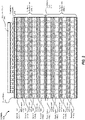
- FIG. 1 illustrates an example circuit board 100 that includes and/or represents various planes and/or layers that facilitate carrying and/or transferring electric current and/or signals.
- example circuit board 100 may include and/or represent ground layers 104(1), 104(2), 104(3), and/or 104(4).
- circuit board 100 may also include and/or represent power layers 102(1), 102(2), 102(3), and/or 102(4).
- circuit board 100 may include and/or represent signal layers 106(1), 106(2), and/or 106(3) as well as signal layers 108(1), 108(2), and/or 108(3).
- circuit board 100 may include and/or contain a variety of materials. Some of these materials may conduct electricity. Other materials included in circuit board 100 may insulate the conductive materials from one another.
- circuit board 100 may include and/or incorporate various electrically conductive layers, such as ground layers 104(1)-(4), power layers 102(1)-(4), signal layers 106(1)-(3), and/or signal layers 108(1)-(3).
- each electrically conductive layer may include and/or represent a plane of conductive material that is etched during the fabrication phase to produce various conductive paths and/or traces throughout circuit board 100.
- the etched conductive paths and/or traces may be separated from and/or interconnected with one another as necessary to form one or more circuits that incorporate electrical components and/or electronics across circuit board 100.
- Examples of such electrically conductive materials include, without limitation, copper, aluminum, silver, gold, alloys of one or more of the same, combinations or variations of one or more of the same, and/or any other suitable materials.
- circuit board 100 may include and/or incorporate insulating material that facilitates mounting (e.g., mechanical support) and/or interconnection (e.g., electrical coupling) of electrical and/or electronic components.
- circuit board 100 may include and/or represent a PCB.
- Examples of circuit board 100 include, without limitation, multilayer boards, motherboards, linecards, backplanes, midplanes, and/or any other suitable type of circuit board.
- Various components may be laminated, etched, attached, and/or otherwise coupled to circuit board 100.
- circuit board 100 may include and/or represent insulation material 120 that electrically insulates all ground layers 104(1)-(4), power layers 102(1)-(4), signal layers 106(1)-(3), and/or signal layers 108(1)-(3) from one another.
- insulation material 120 may be disposed, laid out, and/or applied as planes and/or layers between each of ground layers 104(1)-(4), power layers 102(1)-(4), signal layers 106(1)-(3), and/or signal layers 108(1)-(3).
- insulation material 120 may constitute and/or represent a dielectric substance that is a poor conductor of electricity and/or is polarized by an applied electric field.
- Dielectric substances may be implemented as solids, liquids, and/or gases.
- Examples of dielectric substances include, without limitation, porcelains, glasses, plastics, industrial coatings, silicon, germanium, gallium arsenide, mica, metal oxides, silicon dioxides, sapphires, aluminum oxides, polymers, ceramics, variations or combinations of one or more of the same, and/or any other suitable dielectric materials.
- circuit board 100 may be fabricated in any of a variety of ways, including sequential lamination. For example, as part of a sequential lamination process, circuit board 100 may be fabricated layer by layer, using certain subcomposites of copper and insulating materials. In this example, the sequential lamination process may facilitate trace routing and/or via drilling within internal planes and/or layers (such as ground layers 104(1)-(4), power layers 102(1)-(4), signal layers 106(1)-(3), and/or signal layers 108(1)-(3)).
- internal planes and/or layers such as ground layers 104(1)-(4), power layers 102(1)-(4), signal layers 106(1)-(3), and/or signal layers 108(1)-(3)).
- circuit board 100 may include and/or form a symmetry axis 110.
- symmetry axis 110 may bisect circuit board 100 such that the top part of circuit board 100 and the bottom part of circuit board 100 effectively mirror each other.
- ground layers 104(1)-(4) and power layers 102(1)-(4) may mirror one another relative to symmetry axis 110. More specifically, ground layer 104(4) and power layer 102(1) may mirror each other across symmetry axis 110, and ground layer 104(3) and power layer 102(2) may mirror each other across symmetry axis 110. Additionally or alternatively, ground layer 104(2) and power layer 102(3) may mirror each other across symmetry axis 110, and ground layer 104(1) and power layer 102(4) may mirror each other across symmetry axis 110.
- signal layers 106(1)-(3) and signal layers 108(1)-(3) may mirror one another relative to symmetry axis 110. More specifically, signal layer 106(3) and signal layer 108(1) may mirror each other across symmetry axis 110, and signal layer 106(2) and signal layer 108(2) may mirror each other across symmetry axis 110. Additionally or alternatively, signal layer 106(1) and signal layer 108(3) may mirror each other across symmetry axis 110.
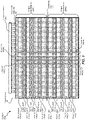
- FIG. 2 illustrates an example system 200 that includes and/or represents circuit board 100 and an integrated circuit 210.
- integrated circuit 210 may be electrically coupled to and/or mounted atop circuit board 100.
- integrated circuit 210 may include and/or represent one or more dies and/or chips on which one or more passive and/or active electronic components are implemented, disposed, etched, and/or deposited. Additionally or alternatively, such dies and/or chips may be electrically coupled and/or mounted to an internal substrate.
- the passive and/or active electronic components may collectively form and/or serve as an Application Specific Integrated Circuit (ASIC) and/or a Systems on a Chip (SoC).
- ASIC Application Specific Integrated Circuit
- SoC Systems on a Chip
- passive and/or active electronic components include, without limitation, processors, Field Programmable Gate Arrays (FPGAs), transistors, diodes, resistors, capacitors, inductors, transducers, sensors, antennas, resonators, switches, optical devices, conductors, traces, wires, combinations of one or more of the same, and/or any other suitable electronic components.
- integrated circuit 210 may include and/or represent a small, diced piece of semiconductor material.
- integrated circuit 210 may include and/or represent a silicon wafer.
- integrated circuit 210 may include and/or contain one or more circuits that consist of various passive and/or active components. These circuits may be etched into the semiconductor material.
- Integrated circuit 210 may be of various shapes and/or dimensions. In some examples, integrated circuit 210 may form a square, a rectangle, and/or a cube. Additional examples of shapes formed by integrated circuit 210 include, without limitation, ovals, circles, variations or combinations of one or more of the same, and/or any other suitable shapes.
- Integrated circuit 210 may be sized in a particular way to fit within a certain electrical component of a computing device. Integrated circuit 210 may include and/or contain any of a variety of materials.
- integrated circuit 210 may also include and/or incorporate a plurality of electrical contacts that facilitate electrical couplings.
- electrical contacts may be disposed on, along, and/or through integrated circuit 210.
- such electrical contacts may include and/or represent a set of high-density of Land Grid Array (LGA) pads.
- LGA Land Grid Array
- BGA Ball Grid Array
- circuit board 100 may include and/or represent unique sublaminates 220(1) and 220(2) that mirror one another relative to and/or across symmetry axis 110.
- unique sublaminate 220(1) may include and/or represent ground layers 104(1)-(4) as well as signal layers 106(1)-(3).
- ground layers 104(1)-(4) and signal layers 106(1)-(3) may be arranged, laid out, and/or disposed in an alternating configuration within unique sublaminate 220(1).
- the alternating configuration may entail and/or involve positioning or placing a signal layer between every set of two ground layers within unique sublaminate 220(1).
- the alternating configuration may entail and/or involve positioning or placing a ground layer between every set of two signal layers within unique sublaminate 220(1).
- unique sublaminate 220(2) may include and/or represent power layers 102(1)-(4) as well as signal layers 108(1)-(3).
- power layers 102(1)-(4) and signal layers 108(1)-(3) may be arranged, laid out, and/or disposed in an alternating configuration within unique sublaminate 220(2).
- the alternating configuration may entail and/or involve positioning or placing a signal layer between every set of two power layers within unique sublaminate 220(2).
- the alternating configuration may entail and/or involve positioning or placing a power layer between every set of two signal layers within unique sublaminate 220(2).
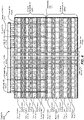
- FIG. 3 illustrates an example system 300 that includes and/or represents circuit board 100 and integrated circuit 210.
- Example system 300 in FIG. 3 may include and/or represent an implementation, extension, and/or expansion of system 200 in FIG. 2 .
- integrated circuit 210 may be electrically coupled to and/or mounted atop unique sublaminate 220(1) of circuit board 100.
- unique sublaminates 220(1) and 220(2) may be similar or identical to one another in certain physical characteristics and/or attributes.
- unique sublaminates 220(1) and 220(2) may each include and/or represent the same number of planes or layers and/or the same sized planes or layers.
- ground layers 104(1)-(4) and power layers 102(1)-(4) may each be of the same size and/or dimensions (e.g., width, thickness, etc.).
- unique sublaminates 220(1) and 220(2) may be symmetrical with one another in terms of conductive material (e.g., copper).
- the conductive material disposed and/or incorporated in circuit board 100 may be balanced between unique sublaminates 220(1) and 220(2), especially directly underneath integrated circuit 210.
- unique sublaminates 220(1) and 220(2) may be different or district from one another in certain physical and/or electrical characteristics or attributes.
- unique sublaminate 220(2) may include and/or incorporate all the power planes and/or layers of circuit board 100. Accordingly, unique sublaminate 220(1) may exclude and/or omit all power planes and/or layers of circuit board 100. In other words, unique sublaminate 220(1) may be devoid of power planes and/or layers.
- unique sublaminate 220(1) may include and/or incorporate all the ground planes and/or layers of circuit board 100. Accordingly, unique sublaminate 220(2) may exclude and/or omit all ground planes and/or layers of circuit board 100. In other words, unique sublaminate 220(2) may be devoid of ground planes and/or layers.
- circuit board 100 may include and/or incorporate power vias 302(1), 302(2), 302(3), and/or 302(4).
- power vias 302(1)-(4) may span and/or run across unique sublaminates 220(1) and 220(2) to provide electrical conductivity and/or continuity from power layers 102(1)-(4) to integrated circuit 210 mounted atop unique sublaminate 220(1).
- power vias 302(1)-(4) may carry and/or transfer power and/or electric current from power layers 102(1)-(4) of unique sublaminate 220(2) to integrated circuit 210 mounted atop unique sublaminate 220(1).
- power vias 302(1)-(4) may each include and/or represent a drilled hole that has been partially plated with electrically conductive material to create and/or form a conductive path and/or bridge from one or more of power layers 102(1)-(4) to integrated circuit 210.
- power vias 302(1)-(4) may be insulated from ground layers 104(1)-(4), signal layers 106(1)-(3), and/or signal layers 108(1)-(3). Accordingly, power vias 302(1)-(4) may fail to provide direct electrical conductivity and/or continuity to ground layers 104(1)-(4), signal layers 106(1)-(3), and/or signal layers 108(1)-(3).
- circuit board 100 may include and/or incorporate a plurality of conductive contacts 312 atop unique sublaminate 220(1).
- conductive contacts 312 may facilitate electrical couplings (by way of, e.g., soldering) between integrated circuit 210 and one or more of ground layers 104(1)-(4), power layers 102(1)-(4), signal layers 106(1)-(3), and/or signal layers 108(1)-(3).
- conductive contacts 312 may be disposed on, along, and/or through unique sublaminate 220(1) of circuit board 100.
- conductive contacts 312 may include and/or represent a set of high-density of LGA pads. Additionally or alternatively, conductive contacts 312 may include and/or represent a set of high-density of BGA pads.
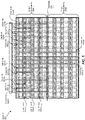
- FIG. 4 illustrates an example system 400 that includes and/or represents circuit board 100 and integrated circuit 210.
- Example system 400 in FIG. 4 may include and/or represent an implementation, extension, and/or expansion of system 300 in FIG. 3 .
- circuit board 100 of example system 400 may include and/or incorporate ground vias 402(1), 402(2), 402(3), 402(4), 402(5), and/or 402(6).
- ground vias 402(1)-(6) may span and/or run across unique sublaminate 220(1) to provide electrical conductivity and/or continuity from integrated circuit 210 mounted atop unique sublaminate 220(1) to ground layers 104(1)-(4).
- ground vias 402(1)-(6) may carry and/or transfer power and/or electric current from integrated circuit 210 to one or more of ground layers 104(1)-(4) of unique sublaminate 220(1).
- ground vias 402(1)-(6) may each include and/or represent a drilled hole that has been partially plated with electrically conductive material to create and/or form a conductive path and/or bridge from integrated circuit 210 to one or more of ground layers 104(1)-(4).
- ground vias 402(1)-(6) may be insulated from power layers 102(1)-(4), signal layers 106(1)-(3), and/or signal layers 108(1)-(3). Accordingly, ground vias 402(1)-(6) may fail to provide direct electrical conductivity and/or continuity to power layers 102(1)-(4), signal layers 106(1)-(3), and/or signal layers 108(1)-(3).
- ground vias 402(1)-(6) may be shorter and/or smaller than power vias 302(1)-(4).
- ground vias 402(1)-(6) may terminate within unique sublaminate 220(1) and/or at symmetry axis 110, as opposed to spanning both of unique sublaminates 220(1) and 220(2) like power vias 302(1)-(4).
- the drilled holes that form ground vias 402(1)-(6) may be limited to unique sublaminate 220(1) and/or may fail to reach and/or penetrate unique sublaminate 220(2). Accordingly, system 400 in FIG.
- system 400 may effectively reduce the number and/or length of vias needed to connect the internal planes and/or layers (such as ground planes) of circuit board 100 to conductive contacts and/or traces on the top or bottom layers of circuit board 100. By doing so, system 400 may be able to mitigate the swiss cheese effect in circuit board 100.
- FIG. 5 illustrates an example system 500 that includes and/or represents circuit board 100 and integrated circuit 210.
- Example system 500 in FIG. 5 may include and/or represent an implementation, extension, and/or expansion of system 400 in FIG. 4 .
- circuit board 100 of example system 500 may include and/or incorporate signal vias 502(1), 502(2), 502(3), 502(4), 502(5), 502(6), 502(7) and/or 502(8).
- signal vias 502(1)-(8) may span and/or run across unique sublaminate 220(1) to provide electrical conductivity and/or continuity from integrated circuit 210 mounted atop unique sublaminate 220(1) to signal layers 106(1)-(3).
- signal vias 502(1)-(8) may carry and/or transfer electrical signals between integrated circuit 210 and one or more of signal layers 106(1)-(3) of unique sublaminate 220(1).
- signal vias 502(1)-(8) may each include and/or represent a drilled hole that has been partially plated with electrically conductive material to create and/or form a conductive path and/or bridge from integrated circuit 210 to one or more of signal layers 106(1)-(3).
- signal vias 502(1)-(8) may be insulated from ground layers 104(1)-(4), power layers 102(1)-(4), and/or signal layers 108(1)-(3). Accordingly, signal vias 502(1)-(8) may fail to provide direct electrical conductivity and/or continuity to ground layers 104(1)-(4), power layers 102(1)-(4), and/or signal layers 108(1)-(3).
- signal vias 502(1)-(8) may be shorter and/or smaller than power vias 302(1)-(4) and/or ground vias 402(1)-(6).
- signal vias 502(1)-(8) may terminate within unique sublaminate 220(1) and/or at symmetry axis 110, as opposed to spanning both of unique sublaminates 220(1) and 220(2) like power vias 302(1)-(4).
- the drilled holes that form signal vias 502(1)-(8) may be limited to unique sublaminate 220(1) and/or may fail to reach and/or penetrate unique sublaminate 220(2). Accordingly, system 500 in FIG.
- system 500 may effectively reduce the number and/or length of vias needed to connect the internal planes and/or layers (such as ground planes and/or signal layers) of circuit board 100 to conductive contacts and/or traces on the top or bottom layers of circuit board 100. By doing so, system 500 may be able to mitigate the swiss cheese effect in circuit board 100.
- circuit board 100 may include and/or incorporate one or more additional signal vias that span and/or run from signal layers 108(1)-(3) included in unique sublaminate 220(2) to one or more conductive contacts and/or traces positioned either atop unique sublaminate 220(1) or beneath unique sublaminate 220(2).
- additional signal vias may carry and/or transfer electrical signals to or from integrated circuit 210.
- additional signal vias may emerge from unique sublaminate 220(1) outside the footprint and/or area of integrated circuit 210 to avoid further congesting that area of circuit board 100 and/or complicating or exacerbating the swiss cheese effect.
- additional signal vias may carry and/or transfer electrical signals to or from other electrical components or devices (not necessarily illustrated in FIGS. 1-5 ) coupled and/or mounted to circuit board 100.
- FIG. 6 is a flow diagram of an example method 600 for mitigating the swiss cheese effect in high-current circuit boards.
- Method 600 may include the step of sequentially laminating a first unique sublaminate of a circuit board that includes a plurality of ground layers and a plurality of signal layers (610).
- Step 610 may be performed in a variety of ways, including any of those described above in connection with FIGS. 1-5 .
- a computing equipment manufacturer or subcontractor may fabricate and/or manufacture a circuit board.
- the computing equipment manufacturer or subcontractor may sequentially laminate a first unique sublaminate of a circuit board that includes a plurality of ground layers and a plurality of signal layers.
- Method 600 may also include the step of sequentially laminating a second unique sublaminate of the circuit board that includes a plurality of power layers and another plurality of signal layers (620).
- Step 620 may be performed in a variety of ways, including any of those described above in connection with FIGS. 1-5 .
- the computing equipment manufacturer or subcontractor may sequentially laminate a second unique sublaminate of the circuit board that includes a plurality of power layers and another plurality of signal layers.
- Method 600 may further include the step of stacking the first unique sublaminate of the circuit board atop the second unique sublaminate of the circuit board such that the ground layers included in the first unique sublaminate and the power layers included in the second unique sublaminate mirror each other relative to a symmetry axis that bisects the circuit board between the first unique sublaminate and the second unique sublaminate (630).
- Step 630 may be performed in a variety of ways, including any of those described above in connection with FIGS. 1-5 .
- the computing equipment manufacturer or subcontractor may stack the first unique sublaminate of the circuit board atop the second unique sublaminate of the circuit board such that the ground layers included in the first unique sublaminate and the power layers included in the second unique sublaminate mirror each other relative to a symmetry axis that bisects the circuit board between the first unique sublaminate and the second unique sublaminate.
- an apparatus which may be a circuit board that includes (1) a first unique sublaminate that includes a plurality of ground layers and a plurality of signal layers, (2) a second unique sublaminate that includes a plurality of power layers and another plurality of signal layers, and (3) a symmetry axis that bisects the circuit board between the first unique sublaminate and the second unique sublaminate, wherein the first unique sublaminate and the second unique sublaminate are distinct from one another.
- Various other apparatuses, systems, and methods are also disclosed.
Landscapes
- Engineering & Computer Science (AREA)
- Microelectronics & Electronic Packaging (AREA)
- Manufacturing & Machinery (AREA)
- Physics & Mathematics (AREA)
- Electromagnetism (AREA)
- Structure Of Printed Boards (AREA)
- Production Of Multi-Layered Print Wiring Board (AREA)
Applications Claiming Priority (1)
| Application Number | Priority Date | Filing Date | Title |
|---|---|---|---|
| US17/088,623 US11412610B2 (en) | 2020-11-04 | 2020-11-04 | Apparatus, system, and method for mitigating the swiss cheese effect in high-current circuit boards |
Publications (1)
| Publication Number | Publication Date |
|---|---|
| EP3996475A1 true EP3996475A1 (fr) | 2022-05-11 |
Family
ID=74285297
Family Applications (1)
| Application Number | Title | Priority Date | Filing Date |
|---|---|---|---|
| EP21153553.9A Withdrawn EP3996475A1 (fr) | 2020-11-04 | 2021-01-26 | Appareil, système et procédé d'atténuation de l'effet de fromage suisse sur des circuits imprimés à courant élevé |
Country Status (3)
| Country | Link |
|---|---|
| US (1) | US11412610B2 (fr) |
| EP (1) | EP3996475A1 (fr) |
| CN (1) | CN114449731A (fr) |
Families Citing this family (3)
| Publication number | Priority date | Publication date | Assignee | Title |
|---|---|---|---|---|
| US20250240873A1 (en) * | 2024-01-19 | 2025-07-24 | Cisco Technology, Inc. | Multi-lamination structure that eliminates micro cavity resonance |
| CN119095258A (zh) * | 2024-03-27 | 2024-12-06 | 北京字跳网络技术有限公司 | 印刷电路板及其制造方法 |
| US20250393117A1 (en) * | 2024-06-24 | 2025-12-25 | Marvell Asia Pte Ltd | Integration of bga package on pcb with reduced crosstalk |
Citations (7)
| Publication number | Priority date | Publication date | Assignee | Title |
|---|---|---|---|---|
| US5574630A (en) * | 1995-05-11 | 1996-11-12 | International Business Machines Corporation | Laminated electronic package including a power/ground assembly |
| US5590030A (en) * | 1989-01-13 | 1996-12-31 | Hitachi, Ltd. | Circuit board capable of efficiently conducting heat through an inside thereof using thermal lands surrounding through-hole connections |
| US20120217987A1 (en) * | 2011-02-24 | 2012-08-30 | International Business Machines Corporation | Non-destructive determination of the moisture content in an electronic circuit board using comparison of capacitance measurements acquired from test coupons, and design structure/process therefor |
| US20130033827A1 (en) * | 2007-05-23 | 2013-02-07 | Endicott Interconnect Technologies, Inc. | Electrically conductive adhesive (eca) for multilayer device interconnects |
| US20170034904A1 (en) * | 2014-04-17 | 2017-02-02 | Massachusetts Institute Of Technology | Printed Circuit Board Assembly With Air Dielectric |
| US20170308627A1 (en) * | 2016-04-26 | 2017-10-26 | Hewlett Packard Enterprise | Determining parameters of pcb structures |
| US10244629B1 (en) * | 2017-11-03 | 2019-03-26 | Innovium, Inc. | Printed circuit board including multi-diameter vias |
Family Cites Families (10)
| Publication number | Priority date | Publication date | Assignee | Title |
|---|---|---|---|---|
| US6175088B1 (en) * | 1998-10-05 | 2001-01-16 | Avaya Technology Corp. | Multi-layer printed-wiring boards with inner power and ground layers |
| US7069646B2 (en) * | 2000-06-19 | 2006-07-04 | Nortel Networks Limited | Techniques for reducing the number of layers in a multilayer signal routing device |
| US6750403B2 (en) * | 2002-04-18 | 2004-06-15 | Hewlett-Packard Development Company, L.P. | Reconfigurable multilayer printed circuit board |
| US7626828B1 (en) * | 2003-07-30 | 2009-12-01 | Teradata Us, Inc. | Providing a resistive element between reference plane layers in a circuit board |
| US7075185B2 (en) * | 2004-09-14 | 2006-07-11 | Hewlett-Packard Development Company, L.P. | Routing vias in a substrate from bypass capacitor pads |
| US20080093726A1 (en) * | 2006-10-23 | 2008-04-24 | Francesco Preda | Continuously Referencing Signals over Multiple Layers in Laminate Packages |
| JP4492690B2 (ja) * | 2007-12-07 | 2010-06-30 | Tdk株式会社 | 貫通コンデンサの実装構造 |
| US7692101B2 (en) * | 2008-01-09 | 2010-04-06 | Xilinx, Inc. | Reduction of jitter in a semiconductor device by controlling printed circuit board and package substrate stackup |
| JP5579108B2 (ja) * | 2011-03-16 | 2014-08-27 | 株式会社東芝 | 半導体装置 |
| US10091873B1 (en) * | 2017-06-22 | 2018-10-02 | Innovium, Inc. | Printed circuit board and integrated circuit package |
-
2020
- 2020-11-04 US US17/088,623 patent/US11412610B2/en active Active
-
2021
- 2021-01-26 EP EP21153553.9A patent/EP3996475A1/fr not_active Withdrawn
- 2021-01-26 CN CN202110104242.5A patent/CN114449731A/zh active Pending
Patent Citations (7)
| Publication number | Priority date | Publication date | Assignee | Title |
|---|---|---|---|---|
| US5590030A (en) * | 1989-01-13 | 1996-12-31 | Hitachi, Ltd. | Circuit board capable of efficiently conducting heat through an inside thereof using thermal lands surrounding through-hole connections |
| US5574630A (en) * | 1995-05-11 | 1996-11-12 | International Business Machines Corporation | Laminated electronic package including a power/ground assembly |
| US20130033827A1 (en) * | 2007-05-23 | 2013-02-07 | Endicott Interconnect Technologies, Inc. | Electrically conductive adhesive (eca) for multilayer device interconnects |
| US20120217987A1 (en) * | 2011-02-24 | 2012-08-30 | International Business Machines Corporation | Non-destructive determination of the moisture content in an electronic circuit board using comparison of capacitance measurements acquired from test coupons, and design structure/process therefor |
| US20170034904A1 (en) * | 2014-04-17 | 2017-02-02 | Massachusetts Institute Of Technology | Printed Circuit Board Assembly With Air Dielectric |
| US20170308627A1 (en) * | 2016-04-26 | 2017-10-26 | Hewlett Packard Enterprise | Determining parameters of pcb structures |
| US10244629B1 (en) * | 2017-11-03 | 2019-03-26 | Innovium, Inc. | Printed circuit board including multi-diameter vias |
Also Published As
| Publication number | Publication date |
|---|---|
| US11412610B2 (en) | 2022-08-09 |
| CN114449731A (zh) | 2022-05-06 |
| US20220141952A1 (en) | 2022-05-05 |
Similar Documents
| Publication | Publication Date | Title |
|---|---|---|
| CN109075154B (zh) | 背侧钻孔嵌入式管芯衬底 | |
| US6818977B2 (en) | Semiconductor devices and semiconductor device components with peripherally located, castellated contacts, assemblies and packages including such semiconductor devices or packages | |
| EP3355349B1 (fr) | Élimination efficace de la chaleur d'un support de composant ayant une diode incorporée | |
| US6400573B1 (en) | Multi-chip integrated circuit module | |
| US5943216A (en) | Apparatus for providing a two-sided, cavity, inverted-mounted component circuit board | |
| EP2596689B1 (fr) | Éléments microélectroniques à planarisation post-montage | |
| US6759257B2 (en) | Structure and method for embedding capacitors in z-connected multi-chip modules | |
| US5432677A (en) | Multi-chip integrated circuit module | |
| US8324513B2 (en) | Wiring substrate and semiconductor apparatus including the wiring substrate | |
| EP0073149A2 (fr) | Module de montage pour puce semi-conductrice | |
| EP1981321A2 (fr) | Ensemble de substrats en circuit doté de puces semiconductrices internes empilées, son procédé de fabrication, ensemble électrique l'utilisant et système de manipulation d'informations l'utilisant | |
| US4237522A (en) | Chip package with high capacitance, stacked vlsi/power sheets extending through slots in substrate | |
| US11412610B2 (en) | Apparatus, system, and method for mitigating the swiss cheese effect in high-current circuit boards | |
| JP2004214646A (ja) | 低損失・高密度アレイ相互接続 | |
| WO1998010630A1 (fr) | Boitier de circuit integre | |
| JP2015135971A (ja) | インピーダンス制御ワイヤーボンド及び基準ワイヤーボンドを有するマイクロ電子アセンブリ | |
| US8791501B1 (en) | Integrated passive device structure and method | |
| TW201507556A (zh) | 具有散熱墊及電性突柱之散熱增益型線路板 | |
| JP2001274288A (ja) | 集積回路チップ・キャリア構造体 | |
| TWM472195U (zh) | 半導體晶片的測試裝置 | |
| WO1998010625A1 (fr) | Boitier de circuit integre | |
| US12315835B2 (en) | Pre-packaged chip, method of manufacturing a pre-packaged chip, semiconductor package and method of manufacturing a semiconductor package | |
| KR100550298B1 (ko) | 병렬 평면 기판 | |
| US20020048927A1 (en) | Embedded capacitor multi-chip modules | |
| US20060046529A1 (en) | High density space transformer and method of fabricating same |
Legal Events
| Date | Code | Title | Description |
|---|---|---|---|
| PUAI | Public reference made under article 153(3) epc to a published international application that has entered the european phase |
Free format text: ORIGINAL CODE: 0009012 |
|
| STAA | Information on the status of an ep patent application or granted ep patent |
Free format text: STATUS: THE APPLICATION HAS BEEN PUBLISHED |
|
| AK | Designated contracting states |
Kind code of ref document: A1 Designated state(s): AL AT BE BG CH CY CZ DE DK EE ES FI FR GB GR HR HU IE IS IT LI LT LU LV MC MK MT NL NO PL PT RO RS SE SI SK SM TR |
|
| STAA | Information on the status of an ep patent application or granted ep patent |
Free format text: STATUS: REQUEST FOR EXAMINATION WAS MADE |
|
| 17P | Request for examination filed |
Effective date: 20221109 |
|
| RBV | Designated contracting states (corrected) |
Designated state(s): AL AT BE BG CH CY CZ DE DK EE ES FI FR GB GR HR HU IE IS IT LI LT LU LV MC MK MT NL NO PL PT RO RS SE SI SK SM TR |
|
| GRAP | Despatch of communication of intention to grant a patent |
Free format text: ORIGINAL CODE: EPIDOSNIGR1 |
|
| STAA | Information on the status of an ep patent application or granted ep patent |
Free format text: STATUS: GRANT OF PATENT IS INTENDED |
|
| INTG | Intention to grant announced |
Effective date: 20240704 |
|
| GRAJ | Information related to disapproval of communication of intention to grant by the applicant or resumption of examination proceedings by the epo deleted |
Free format text: ORIGINAL CODE: EPIDOSDIGR1 |
|
| STAA | Information on the status of an ep patent application or granted ep patent |
Free format text: STATUS: REQUEST FOR EXAMINATION WAS MADE |
|
| INTC | Intention to grant announced (deleted) | ||
| P01 | Opt-out of the competence of the unified patent court (upc) registered |
Free format text: CASE NUMBER: APP_60261/2024 Effective date: 20241107 |
|
| GRAP | Despatch of communication of intention to grant a patent |
Free format text: ORIGINAL CODE: EPIDOSNIGR1 |
|
| STAA | Information on the status of an ep patent application or granted ep patent |
Free format text: STATUS: GRANT OF PATENT IS INTENDED |
|
| INTG | Intention to grant announced |
Effective date: 20241223 |
|
| STAA | Information on the status of an ep patent application or granted ep patent |
Free format text: STATUS: THE APPLICATION IS DEEMED TO BE WITHDRAWN |
|
| 18D | Application deemed to be withdrawn |
Effective date: 20250424 |