EP4000307B1 - Configuration du handover conditionnel dans un réseau de communication sans fil - Google Patents
Configuration du handover conditionnel dans un réseau de communication sans fil Download PDFInfo
- Publication number
- EP4000307B1 EP4000307B1 EP20746736.6A EP20746736A EP4000307B1 EP 4000307 B1 EP4000307 B1 EP 4000307B1 EP 20746736 A EP20746736 A EP 20746736A EP 4000307 B1 EP4000307 B1 EP 4000307B1
- Authority
- EP
- European Patent Office
- Prior art keywords
- conditional handover
- configurations
- network node
- radio network
- configuration
- Prior art date
- Legal status (The legal status is an assumption and is not a legal conclusion. Google has not performed a legal analysis and makes no representation as to the accuracy of the status listed.)
- Active
Links
Images







Classifications
-
- H—ELECTRICITY
- H04—ELECTRIC COMMUNICATION TECHNIQUE
- H04W—WIRELESS COMMUNICATION NETWORKS
- H04W36/00—Hand-off or reselection arrangements
- H04W36/0005—Control or signalling for completing the hand-off
- H04W36/0011—Control or signalling for completing the hand-off for data sessions of end-to-end connection
- H04W36/0016—Hand-off preparation specially adapted for end-to-end data sessions
-
- H—ELECTRICITY
- H04—ELECTRIC COMMUNICATION TECHNIQUE
- H04W—WIRELESS COMMUNICATION NETWORKS
- H04W36/00—Hand-off or reselection arrangements
- H04W36/0005—Control or signalling for completing the hand-off
- H04W36/0055—Transmission or use of information for re-establishing the radio link
- H04W36/0061—Transmission or use of information for re-establishing the radio link of neighbour cell information
-
- H—ELECTRICITY
- H04—ELECTRIC COMMUNICATION TECHNIQUE
- H04W—WIRELESS COMMUNICATION NETWORKS
- H04W36/00—Hand-off or reselection arrangements
- H04W36/0005—Control or signalling for completing the hand-off
- H04W36/0083—Determination of parameters used for hand-off, e.g. generation or modification of neighbour cell lists
- H04W36/00838—Resource reservation for handover
-
- H—ELECTRICITY
- H04—ELECTRIC COMMUNICATION TECHNIQUE
- H04W—WIRELESS COMMUNICATION NETWORKS
- H04W74/00—Wireless channel access
- H04W74/08—Non-scheduled access, e.g. ALOHA
- H04W74/0833—Random access procedures, e.g. with 4-step access
-
- H—ELECTRICITY
- H04—ELECTRIC COMMUNICATION TECHNIQUE
- H04W—WIRELESS COMMUNICATION NETWORKS
- H04W74/00—Wireless channel access
- H04W74/08—Non-scheduled access, e.g. ALOHA
- H04W74/0833—Random access procedures, e.g. with 4-step access
- H04W74/0838—Random access procedures, e.g. with 4-step access using contention-free random access [CFRA]
-
- H—ELECTRICITY
- H04—ELECTRIC COMMUNICATION TECHNIQUE
- H04W—WIRELESS COMMUNICATION NETWORKS
- H04W76/00—Connection management
- H04W76/10—Connection setup
- H04W76/11—Allocation or use of connection identifiers
Definitions
- E-UTRAN/LTE the functions of an RNC are distributed between the radio network nodes, e.g. eNodeBs in LTE, and the core network.
- the RAN of an EPS has an essentially "flat" architecture comprising radio network nodes connected directly to one or more core networks, i.e. they are not connected to RNCs.
- the E-UTRAN specification defines a direct interface between the radio network nodes, this interface being denoted the X2 interface.
- EPS is the Evolved 3GPP Packet Switched Domain.
- New radio (NR) is a new radio access technology being standardized in 3GPP.
- the UE while the UE evaluates the condition, it should continue operating per its current RRC configuration, i.e. without applying the conditional HO command.
- the UE determines that the condition is fulfilled, it disconnects from the serving cell, applies the conditional HO command and connects to the target cell.
- a conditional handover in some sense may therefore be defined as a UE having a network configuration for initiating access to a target cell based on configured condition(s). Usage of a conditional handover may be decided by the network, and the UE evaluates when the condition is valid.
- the baseline operation for the conditional HO procedure assumes a HO command type of message contains HO triggering condition(s) and dedicated RRC configuration(s). The UE may then access the prepared target when the relevant condition is met.
- the baseline operation for conditional HO may also assume the source RAN remains responsible for RRC until the UE successfully sends an RRC Reconfiguration Complete message to the target RAN.
- measurements by the UE may fulfil the HO condition of the conditional HO command.
- the UE thus triggers the pending conditional handover.
- the UE performs synchronization and random access with the target gNB in step 5, and HO confirm is exchanged in step 6.
- the target gNB informs the serving gNB that HO is completed.
- the target gNB may then exchange user plane (UP) data with the UE.
- UP user plane
- different ones of the multiple conditional configurations are respectively associated with different sets of random access preambles, different time-frequency resource allocations, or different cell radio network temporary identifiers, C-RNTIs.
- the indication comprises transmission of a random access preamble in the set associated with the executed conditional configuration, transmission using the time-frequency resource allocation associated with the executed conditional configuration, or transmission of the C-RNTI associated with the executed conditional configuration.
- two or more of the multiple conditional configurations are conditional configurations towards the same target node.
- different ones of the multiple conditional configurations are respectively associated with different sets of random access preambles, different time-frequency resource allocations, or different cell radio network temporary identifiers, C-RNTIs.
- the indication may comprise reception of a random access preamble in the set associated with the executed conditional configuration,
- reception using the time-frequency resource allocation associated with the executed conditional configuration or reception of the C-RNTI associated with the executed conditional configuration.
- Embodiments herein further include a radio network node, e.g., comprising a communication interface and processing circuitry.
- the radio network node is configured to configure, for a user equipment, multiple conditional configurations associated with respective conditions.
- the user equipment is to execute a conditional configuration upon fulfillment of an associated condition.
- the multiple conditional configurations are conditional configurations toward the radio network node as a target candidate radio network node.
- the radio network node is also configured to receive, from the user equipment, an indication that indicates which one of the multiple conditional configurations the user equipment executed.
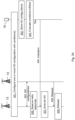
- wireless devices e.g. a user equipment (UE) 10 such as a mobile station, a non-access point (non-AP) station (STA), a STA, a UE and/or a wireless terminal, are connected via the one or more RANs, to the one or more CNs.
- UE is a non-limiting term which means any terminal, wireless communication terminal, communication equipment, Machine Type Communication (MTC) device, Device to Device (D2D) terminal, or user equipment e.g. smart phone, laptop, mobile phone, sensor, relay, mobile tablets or any device communicating within a cell or service area.
- MTC Machine Type Communication
- D2D Device to Device
- the UE 10 may receive and store the one or more handover configurations, such as conditional handover configuration(s), with associated one or more conditions, from the first radio network node 12, i.e. the serving radio network node.
- the one or more handover configurations may for instance be or correspond to one or more RRC Reconfigurations.
- each of these configurations is associated with the same candidate target cell, e.g. the second cell 14.
- at least one candidate target cell has more than one handover configuration associated with it, but the UE can be configured with additional handover configurations associated to other cells with one or more handover configurations associated to each cell.
- the UE 10 may evaluate whether one or more conditions, such as trigger conditions for conditional handovers, are fulfilled. Thus, the UE 10 in this example determines that a condition related to mobility of the UE is fulfilled, wherein the condition is part of a first handover configuration out of one or more handover configurations.
- the UE 10 upon triggering the condition, may execute a conditional handover according to the first handover configuration.
- Execution of the conditional handover according to the first handover configuration may for instance mean that the UE 10 applies the first handover configuration and executes the conditional handover upon that configuration.
- the UE 10 transmits an indication that the condition is fulfilled and also indicates that the condition is part of the first handover configuration.
- the indication thereby indicates which one of the one or more handover configurations the UE 10 executed.
- the UE may transmit a message such as an RRCReconfigurationComplete message (or similar, e.g. ConditionalReconfigurationComplete message) toward the target node/cell, e.g.
- the message may comprise the identifier associated with the executed (conditional) handover configuration.
- the UE 10 may omit the identifier from the complete message; alternatively, the UE uses a default value, e.g. 0, for the identifier.
- the second radio network node 13 also referred to as a candidate target node, may have received a request from the first radio network node 12 to configure CHO for the UE 10 e.g. receiving a CHO or HO REQUEST message over X2, Xn or any other inter-node interface.
- the second radio network node 13 may in response provide (transmit) one or multiple CHO configurations for the same target cell candidate for the UE 10.
- the second radio network node 13 may do so by transmitting a CHO or HO REQUEST ACK message over X2, Xn or any other inter-node interface, which comprises for each CHO configuration an RRCReconfiguration-like message with reconfiguration with synchronization (or at least the content of the message) for the same target cell candidate.
- the response may comprise recommended conditions of the CHO configuration associated to different configurations, e.g. relative or absolute conditions.
- the response may comprise an identifier associated to each CHO configuration.
- the response may comprise, for each CHO configuration, some distinguishing parameter configurations, such as different RACH configurations and/or different C-RNTIs for each CHO configuration for the same cell, as described above.
- the first radio network node 12 may prompt the release of UE context and/or radio resources associated with CHO configurations that were not executed. For example, in some embodiments, for each candidate target network node except the one in which the UE 10 executed the CHO, the first radio network node 12 may transmit a single message to release UE context and/or radio resources associated to all CHO configurations for that UE. In other embodiments, the first radio network node 12 may transmit one message per CHO configuration, comprising the conditional configuration identifier, to each candidate target network node to release the UE context and/or radio resources.
- the second radio network node 13 may receive a request from the first radio network node 12 to configure handover, also known as conditional handover, for a given UE e.g. receiving a CHO or HO REQUEST message over X2, Xn or any other inter-node interface.
- the second radio network node 13 may provide in response, one or multiple handover configurations for different target cells for the UE 10.
- the second radio network node 13 may do so by transmitting a CHO or HO REQUEST ACK message over X2, Xn or any other inter-node interface, where the message comprises for each handover configuration an RRCReconfiguration-like message with reconfiguration with synchronization, or at least the content of the message, for these different target cells.
- the response may comprise recommended conditions associated to different HO configurations (e.g. relative or absolute conditions).
- the response may comprise an identifier associated to each HO configuration.
- the second radio network node may further reserve radio resources for CHO for the UE 10 e.g. C-RNTI, contention-free RACH resources, etc.
- the second radio network node may use the resource reservations as a way to distinguish the target cell for which the UE has executed the conditional handover when the UE access the target node. For example, there could be different ways to distinguish the different target cell candidates: A RACH preamble, preamble to SSBs/CSI-RSs mapping, or time/frequency resource allocations.
- the second radio network node 12 may, upon the UE triggering a HO configuration associated to the second radio network node 13, receive an RRC message, e.g. RRCReconfigurationComplete, comprising the identifier.
- RRC message e.g. RRCReconfigurationComplete
- the identifier may be the cell identifier that is used as a way to indicate which cell the UE is accessing, in case common parameters for the different target cell candidates have been provided e.g. RACH, C-RNTI, etc. That allows the usage of CHO without security key refresh.
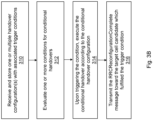
- Fig. 3B shows a method at a UE for handling (conditional) handover configurations when triggering a conditional handover according to some embodiments.
- the UE 10 may receive and store one or multiple handover configuration(s) with associated trigger conditions, from a source network node (Step 310). Each of these configurations are associated to a given target cell candidate (i.e. target PCell, PSCell, SpCell).
- target PCell i.e. target PCell, PSCell, SpCell
- each handover configuration has an identifier, also referred to as conditional configuration identifier.
- This identifier may be unique among all conditional handover configurations, unique among all conditional handover configuration(s) toward a specific cell, or unique among all conditional handover configuration(s) toward a specific radio network node. If there is only a single HO configuration associated to a candidate target network node, the conditional configuration identifier can be omitted.
- the identifier in these and other embodiments may be implemented as shown in the example below of a possible implementation of the handover configuration:
- Each of these configurations may contain the cell identity (e.g. the physical cell identity, PhysCellId ) of the target candidate cell (i.e. PCell, PSCell, SpCell) and a list of conditional configurations associated to that cell (e.g. conditionalConfigurationPerCellList )
- the identifier such as the conditionalConfigurationld may be the same as the RRC-Transactionldentifier of the RRCReconfiguration that is contained in the conditionalConfiguration IE.
- the UE 10 may evaluate one or more conditions for conditional handovers (Step 312) and upon triggering the condition, may execute the conditional handover according to the conditional handover configuration (Step 314).
- the UE 10 may evaluate according to normal CHO procedures, i.e. check if trigger conditions are fulfilled, and apply the one that fulfills the condition. However, in some cases, multiple configurations can fulfill the trigger condition at the same time.
- the UE 10 may then select a conditional configuration among multiple candidates of conditional configurations fulfilling their one or more conditions. For example, in case there are multiple HO configurations which are fulfilled at the same time, the UE 10 may select one among those candidate HO configurations to apply.
- the UE 10 may select which of the HO configurations to apply based on an indication from the first radio network node 12.
- This indication may for example be a prioritization indication received from the network.
- the first radio network node 12 may have provided to the UE 10 one HO configuration which configures the UE 10 to use multiple carriers, while another configuration which only configures one carrier for the UE 10. If the first radio network node 12 wants to maximize the amount of bandwidth the UE 10 uses, the first radio network node 12 may give higher priority to the HO configuration with multiple carriers.
- Such a prioritization-indication may be provided to the first radio network node 12 and/or the UE 10 together with the HO configurations. There could be a prioritization among different target cells as well.
- the UE 10 may select the HO configuration which has the lowest (or highest) identifier. This has the benefit of allowing the first radio network node 12 to decide which HO configuration the UE would select in case the conditions for the multiple candidates are fulfilled, while avoiding the overhead of an additional indication. In other embodiments, the UE 10 may select a HO configuration randomly among the candidates of HO configurations.
- the UE 10 If the UE 10 has not received an identifier for a certain conditional configuration, the UE 10 omits, or sets to a default value, e.g. 0, a configuration identity field in the complete message.
- a default value e.g. 0, a configuration identity field in the complete message.
- the first radio network node 12 may transmit a message to the UE 10 comprising the handover configuration(s) and the associated identifiers (Step 322).
- the candidate target network node may provide a unique identifier associated to each HO configuration. This will allow the UE 10 to report to the candidate target network node in e.g. RRCReconfigurationComplete message, which of the conditional configuration it has used.
- the identifier may be configured per cell, i.e. the same conditional configuration identifier value can be reused for different cells. This will allow the UE to report to the candidate target network node in e.g. RRCReconfigurationComplete message, which of the conditional configuration it has used. Since the target radio network node is aware of which cell the UE 10 has performed the HO towards, only the identifiers associated to that target cell/node are relevant.
- the first radio network node 12 may receive the handover configuration(s) from the candidate target network node(s), it creates an RRC message comprising the different conditional configurations, with the associated trigger conditions, and conditional configuration identities provided by the candidate target radio network node (if needed).
- the source radio network node may then send the RRC message to the UE.
- the identifier is determined implicitly for an HO configuration. This may be implemented by assigning identities based on the order the conditional configurations are provided. For example, if three conditional configurations are provided, the first configuration which is provided may be given index 1, the second one index 2, the third index 3.
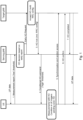
- the source radio network node 12 in other embodiments allocates a unique configuration identity for each handover configuration associated with a target cell/node, and may indicate to the target the identities to be used. This can be indicated from the source to the network during the CHO request message (message 2 in figure 1 ) or after the reception of the CHO request ack from the target (message 3 in figure 1 ).
- the second radio network node 13 may then execute the CHO configurations associated to the conditional configuration identifier indicated by the UE in the RRC message, e.g., the RRC Reconfiguration complete (Step 338).
- the second radio network node 13 may furthermore release the resources associated with other CHO configurations for the UE (Step 340).
- the second radio network node may receive a message from the source radio network node to release all CHO configurations (e.g. after the UE has executed a CHO to another node) and then release all HO configurations associated to the UE.
- the second radio network node 13 may receive one or more messages from the source radio network node 12 comprising an identifier, indicating to release a specific CHO configuration, and then may release the HO configurations associated to the UE as indicated by the conditional configuration identifier.
- the candidate target radio network node 13 may decide to configure multiple conditional configurations associated to one or more of the configured cells.
- These alternative configurations may comprise e.g., different set of secondary cells (SCells), different MIMO configurations, different beam configurations, etc.
- the candidate target radio network node may create a CHO configuration and may assign the identifier.
- the identifier may be placed in the same message carrying the configurations. This may for example be an XnAP-message where a field is of the type of a list where each entry in the list is carrying a CHO configuration and a configuration identity.
- the source radio network node may be aware of the identifier and must send the identifier alongside with the HO configuration.
- the identifier may be placed within the CHO configuration itself, i.e. within the message which terminates in the UE.
- the source node is not necessarily aware of the configuration identifier and since it is placed within a message which terminates in the UE, the source node does not need to take any action with respect to handling of the configuration identifier.
- the candidate target network node 13 may also provide different trigger conditions for each of these subsets of configurations (e.g. a relative condition where a better signal strength/quality would correspond to a higher number of MIMO layers, etc.).
- the candidate target network node then responds to the source network node with the conditional handover request acknowledgment comprising the set of CHO configurations.
- the UE 10 When the UE 10 triggers a conditional handover to a candidate target network node and selects one out of several CHO configuration associated to one cell, the UE performs a random access towards that cell and transmits an RRCReconfigurationComplete message.
- the RRCReconfigurationComplete message comprises a conditional configuration identifier and the candidate target network node uses this identifier to determine which of the CHO configurations the UE has executed.
- the target node When the target node prepared the multiple CHO configurations it may have allocated resources for the UE.
- the target may have prepared two CHOs for the UE; CHO1 which comprises a configuration without carrier aggregation (i.e. only a PCell) and CHO2 which comprises a configuration with carrier aggregation (i.e. both PCell and one or more SCells).
- the target may have assigned sounding reference signal (SRS) resources for the UE on the SCells.
- SRS sounding reference signal
- the target node may upon reception of an RRCReconfigurationComplete message with configuration identifier for CHO1 determine that the UE no longer considers CHO2 valid, e.g. the UE may have discarded it or for other reason will not execute CHO2.
- the target node may consider the resources associated with CHO2 to no longer be reserved for that UE.
- the target may consider the SRS-resource on the SCells to be free.
- a target radio network node may have cells at three different frequencies, fa, fb, and fc, where fa is the highest frequency and hence the smallest coverage, and fc the lowest frequency and the biggest coverage.
- the target radio network node may send three HO configurations, say CHO1, CHO2 and CHO3, where CHO1 is the case without CA (i.e. only PCell at fc), CHO2 is the case with CA with fb and fc (i.e. PCell at fc, SCell at fb) and CHO3 is the case with CA with all cells (i.e. PCell at fc, SCells at fb and fc).
- the target radio network node may also associate the preferred signal levels of the PCell with the three different CHOs. For example, if the PCell quality is above w but below x RSRP, configure CHO1; if between x and y, use CHO2; if greater than y, use CHO3. These thresholds can be sent to the source in absolute values, or relative to each other. The source, upon getting these three CHO configurations, each with associated relative or absolute targets, can take them into account on top of the source's preferred trigger condition to trigger a HO to the target and configure the UE with a final trigger condition/thresholds for each CHO configuration.
- embodiments herein relate to methods and apparatus such as a method performed by the UE 10 for handling communication of the UE, e.g. enabling mobility of the UE in the wireless communication network.
- the UE 10 may transmit an indication of HO configuration fulfilled. More particularly, the UE according to the method determines that a condition related to mobility of the UE is fulfilled, wherein the condition is part of a first handover configuration out of one or more handover configurations. The UE according to the method further transmits an indication that the condition is fulfilled and also indicates that the condition is part of the first handover configuration e.g. by using an identifier or indication of the first HO configuration.
- the UE 10 may comprise processing circuitry 401, e.g. one or more processors, configured to perform the methods herein.
- processing circuitry 401 e.g. one or more processors, configured to perform the methods herein.
- the UE 10 may comprise a configuring unit 402.
- the UE 10, the processing circuitry 401 and/or the configuring unit 402 is configured to setup or use one or more HO configurations e.g. received from the first radio network node 12.
- the UE 10 may comprise a determining unit 403.
- the UE 10, the processing circuitry 401 and/or the determining unit 403 may be configured to determine that the condition related to mobility of the UE is fulfilled, wherein the condition is part of a first handover configuration out of one or more handover configurations.
- the UE 10 may comprise a transmitting unit 404, e.g. a transmitter or transceiver.
- the UE 10, the processing circuitry 401 and/or the transmitting unit 404 is configured to transmit an indication that the condition is fulfilled and also indicates that the condition is part of the first handover configuration e.g. by using an identifier or indication of the first HO configuration.
- the UE 10 further comprises a memory 405.
- the memory comprises one or more units to be used to store data on, such as indications, conditions, HO configurations, applications to perform the methods disclosed herein when being executed, and similar.
- the UE 10 may comprise the processing circuitry and the memory, said memory comprising instructions executable by said processing circuitry whereby said wireless device 10 is operative to perform the methods herein.
- the UE may comprise a communication interface comprising e.g. a transmitter, a receiver, a transceiver and/or one or more antennas.
- the methods according to the embodiments described herein for the UE 10 are respectively implemented by means of e.g. a computer program 406 or a computer program product, comprising instructions, i.e., software code portions, which, when executed on at least one processor, cause the at least one processor to carry out the actions described herein, as performed by the UE 10.
- the computer program product 406 may be stored on a computer-readable storage medium 407, e.g. a disc, USB stick or similar.
- the computer-readable storage medium 407, having stored thereon the computer program product 406, may comprise the instructions which, when executed on at least one processor, cause the at least one processor to carry out the actions described herein, as performed by the UE 10.
- the computer-readable storage medium may be a non-transitory computer-readable storage medium.
- Embodiments herein further include a method performed by the first radio network node 12 for configuring the UE 10 and/or for handling communication of the UE 10, e.g. enabling mobility of the UE in the wireless communication network.
- the first radio network node 12 according to such method configures the UE 10 with one or more HO configurations and associated identifiers.
- the first radio network node 12 such as a radio base station may comprise processing circuitry 501, e.g. one or more processors, configured to perform the methods herein.
- processing circuitry 501 e.g. one or more processors, configured to perform the methods herein.
- the first radio network node 12 further comprises a memory 505.
- the memory comprises one or more units to be used to store data on, such as indications, HO configuration, identifiers, applications to perform the methods disclosed herein when being executed, and similar.
- the first radio network node 12 may comprise the processing circuitry and the memory, said memory comprising instructions executable by said processing circuitry whereby said radio network node is operative to perform the methods herein.
- the first radio network node 12 may comprise a communication interface comprising a transmitter, a receiver, a transceiver and/or one or more antennas.
- the methods according to the embodiments described herein for the first radio network node 12 are respectively implemented by means of e.g. a computer program product 506 or a computer program, comprising instructions, i.e., software code portions, which, when executed on at least one processor, cause the at least one processor to carry out the actions described herein, as performed by the first radio network node 12.
- the computer program product 506 may be stored on a computer-readable storage medium 507, e.g. a disc, a universal serial bus (USB) stick, or similar.
- the computer-readable storage medium 507, having stored thereon the computer program product 506, may comprise the instructions which, when executed on at least one processor, cause the at least one processor to carry out the actions described herein, as performed by the first radio network node 12.
- the computer-readable storage medium may be a non-transitory or a transitory computer-readable storage medium.
- embodiments herein relate to e.g. a method at a candidate target network node, such as the second radio network node 13, for conditional handover (CHO) for a given UE and neighbor node of a source network node that is configuring a UE with handover configurations.
- Embodiments herein alternatively or additionally include a method at a candidate target network node for conditional handover for a given UE and neighbor node of a source network node that is configuring a UE with conditional handover configurations.
- Fig. 6 shows a block diagram disclosing a method performed by a second radio network node 13 for handling communication of the UE, e.g. enabling mobility of the UE in the wireless communication network according to embodiments herein.
- the second radio network node 13 such as a radio base station may comprise processing circuitry 601, e.g. one or more processors, configured to perform the methods herein.
- processing circuitry 601 e.g. one or more processors, configured to perform the methods herein.
- the second radio network node 13 may comprise a configuring unit 602, e.g. a transmitter or transceiver.
- the second radio network node 13, the processing circuitry 601 and/or the configuring unit 602 is configured to configure the UE and/or the first radio network node 12 with one or more HO configurations and associated identifiers.
- the second radio network node 13 may comprise a reserving unit 603.
- the second radio network node 13, the processing circuitry 601 and/or the reserving unit 603 may be configured to reserve one or more radio resources based on HO configuration of the UE.
- the second radio network node 13 may comprise a receiving unit 604, e.g. a receiver or transceiver.
- the second radio network node 13, the processing circuitry 601 and/or the receiving unit 604 may be configured to receive the indication that the condition is fulfilled and also the indication that the condition is part of the first handover configuration e.g. by using the identifier or indication of the first HO configuration.
- the second radio network node 13 may comprise an executing unit 608.
- the second radio network node 13, the processing circuitry 601 and/or the executing unit 608 may be configured to execute handover related actions such as use the HO configuration of the UE 10.
- the second radio network node 13 further comprises a memory 605.
- the memory comprises one or more units to be used to store data on, such as indications, HO configuration, identifiers, applications to perform the methods disclosed herein when being executed, and similar.
- the second radio network node 13 may comprise the processing circuitry and the memory, said memory comprising instructions executable by said processing circuitry whereby said radio network node is operative to perform the methods herein.
- the second radio network node 13 may comprise a communication interface comprising a transmitter, a receiver, a transceiver and/or one or more antennas.
- the methods according to the embodiments described herein for the second radio network node 13 are respectively implemented by means of e.g. a computer program product 606 or a computer program, comprising instructions, i.e., software code portions, which, when executed on at least one processor, cause the at least one processor to carry out the actions described herein, as performed by the second radio network node 13.
- the computer program product 606 may be stored on a computer-readable storage medium 607, e.g. a disc, a universal serial bus (USB) stick, or similar.
- the computer-readable storage medium 607, having stored thereon the computer program product 606, may comprise the instructions which, when executed on at least one processor, cause the at least one processor to carry out the actions described herein, as performed by second radio network node 13.
- the computer-readable storage medium may be a non-transitory or a transitory computer-readable storage medium.
- conditional configuration may sometimes be associated with a handover procedure and the embodiments herein may be applicable both to the case when the conditional configuration is associated with a handover and when it is not. So if, in the description of some embodiment, the term conditional handover is used, it should not be understood as limiting but just an example, i.e. the embodiment could also be applicable to cases when the conditional configuration is not associated with a handover.
- the UE 10 may receive multiple HO configurations for one or more target nodes and/or cells and how the UE 10 receives one or more identifiers which the UE uses in such scenarios. Also, there are methods described for source and target nodes. However, it should be noted that some the embodiments described herein can also be applied to intra-node/intra-cell scenarios as well, i.e. scenarios in which the UE 10 applies a conditional configuration for the same radio network node as the UE 10 is connected to. For example, in such scenarios, the first radio network node 12 sends HO configurations to the UE 10 which applies for the first radio network node 12 itself. In intra-node/intra-cell scenarios, the methods which are described to be applied by the "source node” or "target node” may take place within the single node.
- embodiments herein are described within the context of 3GPP NR radio technology (3GPP TS 38.300 V15.2.0 (2018-06)). It is understood that the embodiments herein are equally applicable to wireless access networks and UEs implementing other access technologies and standards.
- NR is used as an example technology in the embodiments herein, and using NR in the description therefore is particularly useful for understanding the problem and solutions solving the problem.
- the embodiments herein are applicable also to 3GPP LTE, or 3GPP LTE and NR integration, also denoted as non-standalone NR.
- a conditional configuration in this sense may also be referred to as a conditional reconfiguration, e.g., in the form of a conditional RRC Reconfiguration.
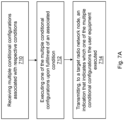
- this Step 810 may be exemplified by Step 301 in Fig. 3A .
- the method in Fig. 7B also includes transmitting, to the user equipment 10, identifiers or parameter configurations respectively associated with the multiple conditional configurations (Step 820).
- Fig. 7C shows a method performed by a second radio network node 13 (e.g., a target radio network node) according to some embodiments.
- the method as depicted includes configuring, for a user equipment 10, multiple conditional configurations (e.g., multiple CHO configurations) associated with respective conditions (Step 910).
- Two or more of the multiple conditional configurations may for example be conditional configurations towards the same target node (e.g., the second radio network node 13 as a target candidate radio network node) and/or towards the same target cell, e.g., with the same target primary cell (PCell).
- the user equipment 10 in any event is to execute a conditional configuration upon fulfillment of an associated condition.
- the received indication may comprise an indication of a parameter configuration associated with the executed conditional configuration.
- the indication may be included in a message that confirms successful completion of an RRC connection reconfiguration, e.g., an RRC Reconfiguration Complete message.
- ASIC application-specific integrated circuit
- Several of the functions may be implemented on a processor shared with other functional components of a radio network node, for example.
- processors or “controller” as used herein does not exclusively refer to hardware capable of executing software and may implicitly include, without limitation, digital signal processor (DSP) hardware, read-only memory (ROM) for storing software, random-access memory for storing software and/or program or application data, and non-volatile memory.
- DSP digital signal processor
- ROM read-only memory
- RAM random-access memory
- non-volatile memory non-volatile memory
- a communication system includes a telecommunication network 3210, such as a 3GPP-type cellular network, which comprises an access network 3211, such as a radio access network, and a core network 3214.
- the access network 3211 comprises a plurality of base stations 3212a, 3212b, 3212c, such as NBs, eNBs, gNBs or other types of wireless access points being examples of the radio network nodes herein, each defining a corresponding coverage area 3213a, 3213b, 3213c.
- Each base station 3212a, 3212b, 3212c is connectable to the core network 3214 over a wired or wireless connection 3215.
- a first user equipment (UE) 3291 being an example of the wireless device 10, located in coverage area 3213c is configured to wirelessly connect to, or be paged by, the corresponding base station 3212c.
- a second UE 3292 in coverage area 3213a is wirelessly connectable to the corresponding base station 3212a. While a plurality of UEs 3291, 3292 are illustrated in this example, the disclosed embodiments are equally applicable to a situation where a sole UE is in the coverage area or where a sole UE is connecting to the corresponding base station 3212.
- the telecommunication network 3210 is itself connected to a host computer 3230, which may be embodied in the hardware and/or software of a standalone server, a cloud-implemented server, a distributed server or as processing resources in a server farm.
- the host computer 3230 may be under the ownership or control of a service provider, or may be operated by the service provider or on behalf of the service provider.
- the connections 3221, 3222 between the telecommunication network 3210 and the host computer 3230 may extend directly from the core network 3214 to the host computer 3230 or may go via an optional intermediate network 3220.
- the intermediate network 3220 may be one of, or a combination of more than one of, a public, private or hosted network; the intermediate network 3220, if any, may be a backbone network or the Internet; in particular, the intermediate network 3220 may comprise two or more sub-networks (not shown).
- the communication system of Fig. 10 as a whole enables connectivity between one of the connected UEs 3291, 3292 and the host computer 3230.
- the connectivity may be described as an over-the-top (OTT) connection 3250.
- the host computer 3230 and the connected UEs 3291, 3292 are configured to communicate data and/or signaling via the OTT connection 3250, using the access network 3211, the core network 3214, any intermediate network 3220 and possible further infrastructure (not shown) as intermediaries.
- the OTT connection 3250 may be transparent in the sense that the participating communication devices through which the OTT connection 3250 passes are unaware of routing of uplink and downlink communications.
- a base station 3212 may not or need not be informed about the past routing of an incoming downlink communication with data originating from a host computer 3230 to be forwarded (e.g., handed over) to a connected UE 3291. Similarly, the base station 3212 need not be aware of the future routing of an outgoing uplink communication originating from the UE 3291 towards the host computer 3230.
- the host computer 3310 further comprises software 3311, which is stored in or accessible by the host computer 3310 and executable by the processing circuitry 3318.
- the software 3311 includes a host application 3312.
- the host application 3312 may be operable to provide a service to a remote user, such as a UE 3330 connecting via an OTT connection 3350 terminating at the UE 3330 and the host computer 3310. In providing the service to the remote user, the host application 3312 may provide user data which is transmitted using the OTT connection 3350.
- the communication system 3300 further includes a base station 3320 provided in a telecommunication system and comprising hardware 3325 enabling it to communicate with the host computer 3310 and with the UE 3330.
- the hardware 3325 may include a communication interface 3326 for setting up and maintaining a wired or wireless connection with an interface of a different communication device of the communication system 3300, as well as a radio interface 3327 for setting up and maintaining at least a wireless connection 3370 with a UE 3330 located in a coverage area (not shown in Fig.8 ) served by the base station 3320.
- the communication interface 3326 may be configured to facilitate a connection 3360 to the host computer 3310.
- connection 3360 may be direct or it may pass through a core network (not shown in Fig.8 ) of the telecommunication system and/or through one or more intermediate networks outside the telecommunication system.
- the hardware 3325 of the base station 3320 further includes processing circuitry 3328, which may comprise one or more programmable processors, application-specific integrated circuits, field programmable gate arrays or combinations of these (not shown) adapted to execute instructions.
- the base station 3320 further has software 3321 stored internally or accessible via an external connection.
- the host computer 3310, base station 3320 and UE 3330 illustrated in Fig. 9 may be identical to the host computer 3230, one of the base stations 3212a, 3212b, 3212c and one of the UEs 3291, 3292 of Fig. 8 , respectively.
- the inner workings of these entities may be as shown in Fig. 9 and independently, the surrounding network topology may be that of Fig. 8 .
- the OTT connection 3350 has been drawn abstractly to illustrate the communication between the host computer 3310 and the user equipment 3330 via the base station 3320, without explicit reference to any intermediary devices and the precise routing of messages via these devices.
- Network infrastructure may determine the routing, which it may be configured to hide from the UE 3330 or from the service provider operating the host computer 3310, or both. While the OTT connection 3350 is active, the network infrastructure may further take decisions by which it dynamically changes the routing (e.g., on the basis of load balancing consideration or reconfiguration of the network).
- the wireless connection 3370 between the UE 3330 and the base station 3320 is in accordance with the teachings of the embodiments described throughout this disclosure.
- One or more of the various embodiments improve the performance of OTT services provided to the UE 3330 using the OTT connection 3350, in which the wireless connection 3370 forms the last segment. More precisely, the teachings of these embodiments may improve mobility of the UE since correct HO configuration is indicated thereby provide benefits such as reduced user waiting time, and better responsiveness.
- a measurement procedure may be provided for the purpose of monitoring data rate, latency and other factors on which the one or more embodiments improve.
- the measurement procedure and/or the network functionality for reconfiguring the OTT connection 3350 may be implemented in the software 3311 of the host computer 3310 or in the software 3331 of the UE 3330, or both.
- sensors (not shown) may be deployed in or in association with communication devices through which the OTT connection 3350 passes; the sensors may participate in the measurement procedure by supplying values of the monitored quantities exemplified above, or supplying values of other physical quantities from which software 3311, 3331 may compute or estimate the monitored quantities.
- the reconfiguring of the OTT connection 3350 may include message format, retransmission settings, preferred routing etc.; the reconfiguring need not affect the base station 3320, and it may be unknown or imperceptible to the base station 3320. Such procedures and functionalities may be known and practiced in the art.
- measurements may involve proprietary UE signaling facilitating the host computer's 3310 measurements of throughput, propagation times, latency and the like.
- the measurements may be implemented in that the software 3311, 3331 causes messages to be transmitted, in particular empty or 'dummy' messages, using the OTT connection 3350 while it monitors propagation times, errors etc.
- Fig. 10 is a flowchart illustrating a method implemented in a communication system, in accordance with one embodiment.
- the communication system includes a host computer, a base station and a UE which may be those described with reference to Figures 8 and 9 .
- the host computer provides user data.
- the host computer provides the user data by executing a host application.
- the host computer initiates a transmission carrying the user data to the UE.
- the base station transmits to the UE the user data which was carried in the transmission that the host computer initiated, in accordance with the teachings of the embodiments described throughout this disclosure.
- the UE executes a client application associated with the host application executed by the host computer.
- Fig. 11 is a flowchart illustrating a method implemented in a communication system, in accordance with one embodiment.
- the communication system includes a host computer, a base station and a UE which may be those described with reference to Figures 8 and 9 .
- the host computer provides user data.
- the host computer provides the user data by executing a host application.
- the host computer initiates a transmission carrying the user data to the UE.
- the transmission may pass via the base station, in accordance with the teachings of the embodiments described throughout this disclosure.
- the UE receives the user data carried in the transmission.
- Fig. 12 is a flowchart illustrating a method implemented in a communication system, in accordance with one embodiment.
- the communication system includes a host computer, a base station and a UE which may be those described with reference to Figures 8 and 9 .
- the UE receives input data provided by the host computer.
- the UE provides user data.
- the UE provides the user data by executing a client application.
- the UE executes a client application which provides the user data in reaction to the received input data provided by the host computer.
- the executed client application may further consider user input received from the user.
- the UE initiates, in an optional third substep 3630, transmission of the user data to the host computer.
- the host computer receives the user data transmitted from the UE, in accordance with the teachings of the embodiments described throughout this disclosure.
- Fig. 13 is a flowchart illustrating a method implemented in a communication system, in accordance with one embodiment.
- the communication system includes a host computer, a base station and a UE which may be those described with reference to Figures 8 and 9 .
- the base station receives user data from the UE.
- the base station initiates transmission of the received user data to the host computer.
- the host computer receives the user data carried in the transmission initiated by the base station.
Landscapes
- Engineering & Computer Science (AREA)
- Computer Networks & Wireless Communication (AREA)
- Signal Processing (AREA)
- Mobile Radio Communication Systems (AREA)
Claims (22)
- Procédé réalisé par un équipement utilisateur (10), le procédé comprenant :la réception (310), depuis un noeud de réseau radio, de multiples configurations de transfert intercellulaire conditionnelles associées à des conditions respectives, dans lequel l'équipement utilisateur (10) doit exécuter une configuration de transfert intercellulaire conditionnelle à la satisfaction d'une condition associée ;l'exécution (314) de l'une des multiples configurations de transfert intercellulaire conditionnelles à la satisfaction d'une condition associée ; etla transmission (316), au noeud de réseau radio cible en tant que noeud de réseau radio candidat cible (13), d'une indication qui indique celle parmi les multiples configurations de transfert intercellulaire conditionnelles que l'équipement utilisateur (10) a exécutée.
- Procédé selon la revendication 1, dans lequel différentes configurations parmi les multiples configurations de transfert intercellulaire conditionnelles sont associées respectivement à différents identifiants, et dans lequel l'indication transmise comprend un identifiant associé à la configuration de transfert intercellulaire conditionnelle exécutée.
- Procédé selon la revendication 2, dans lequel la réception des multiples configurations de transfert intercellulaire conditionnelles comprend la réception d'un message qui indique les multiples configurations de transfert intercellulaire conditionnelles et qui inclut les différents identifiants associés aux multiples configurations de transfert intercellulaire conditionnelles, et dans lequel l'indication comprend un identifiant qui est reçu dans le message et qui est associé à la configuration de transfert intercellulaire conditionnelle exécutée.
- Procédé selon la revendication 2 ou 3, dans lequel les différents identifiants comprennent différents identifiants de configuration de transfert intercellulaire conditionnelle.
- Procédé selon la revendication 2, dans lequel la réception des multiples configurations de transfert intercellulaire conditionnelles comprend la réception d'un message qui indique les multiples configurations de transfert intercellulaire conditionnelles, et dans lequel l'indication transmise est un identifiant qui est basé sur un ordre de la configuration de transfert intercellulaire conditionnelle exécutée dans le message.
- Procédé selon la revendication 1, dans lequel différentes configurations parmi les multiples configurations de transfert intercellulaire conditionnelles sont associées respectivement à différentes configurations de paramètres, et dans lequel l'indication transmise comprend une indication d'une configuration de paramètres associée à la configuration de transfert intercellulaire conditionnelle exécutée.
- Procédé selon l'une quelconque des revendications 1 et 6, dans lequel différentes configurations parmi les multiples configurations de transfert intercellulaire conditionnelles sont associées respectivement à différents ensembles de préambules d'accès aléatoire, à différentes allocations de ressources de temps-fréquence ou à différents identifiants temporaires de réseau radio cellulaire, C-RNTI, et dans lequel l'indication comprend une transmission d'un préambule d'accès aléatoire dans l'ensemble associé à la configuration de transfert intercellulaire conditionnelle exécutée, une transmission à l'aide de l'allocation de ressources de temps-fréquence associée à la configuration de transfert intercellulaire conditionnelle exécutée, ou une transmission du C-RNTI associé à la configuration de transfert intercellulaire conditionnelle exécutée.
- Procédé selon l'une quelconque des revendications 1 à 7, dans lequel deux configurations ou plus parmi les multiples configurations de transfert intercellulaire conditionnelles sont des configurations de transfert intercellulaire conditionnelles vers le même noeud de réseau radio candidat cible.
- Procédé selon l'une quelconque des revendications 1 à 8, dans lequel deux configurations ou plus parmi les multiples configurations de transfert intercellulaire conditionnelles sont des configurations de transfert intercellulaire conditionnelles vers une même cellule cible.
- Procédé réalisé par un noeud de réseau radio (13), le procédé comprenant :la configuration (301), pour un équipement utilisateur (10), de multiples configurations de transfert intercellulaire conditionnelles associées à des conditions respectives, et l'envoi des multiples configurations de transfert intercellulaire conditionnelles à l'équipement utilisateur (10), dans lequel l'équipement utilisateur (10) doit exécuter une configuration de transfert intercellulaire conditionnelle à la satisfaction d'une condition associée, dans lequel les multiples configurations de transfert intercellulaire conditionnelles sont des configurations de transfert intercellulaire conditionnelles vers le noeud de réseau radio en tant que noeud de réseau radio candidat cible (13) ; etla réception (304), depuis l'équipement utilisateur (10), d'une indication qui indique celle parmi les multiples configurations de transfert intercellulaire conditionnelles que l'équipement utilisateur (10) a exécutée.
- Procédé selon la revendication 10, dans lequel différentes configurations parmi les multiples configurations de transfert intercellulaire conditionnelles sont associées respectivement à différents identifiants, et dans lequel l'indication reçue comprend un identifiant associé à la configuration de transfert intercellulaire conditionnelle exécutée.
- Procédé selon la revendication 11, comprenant en outre la transmission, à un autre noeud de réseau radio, ou la réception, depuis un autre noeud de réseau radio, d'un message qui inclut les différents identifiants associés aux multiples configurations de transfert intercellulaire conditionnelles, et dans lequel l'indication comprend un identifiant qui est inclus dans le message et qui est associé à la configuration de transfert intercellulaire conditionnelle exécutée.
- Procédé selon la revendication 11 ou 12, dans lequel les différents identifiants comprennent différents identifiants de configuration de transfert intercellulaire conditionnelle.
- Procédé selon la revendication 11, comprenant en outre la transmission d'un message qui indique les multiples configurations de transfert intercellulaire conditionnelles, et dans lequel l'indication reçue est un identifiant qui est basé sur un ordre de la configuration de transfert intercellulaire conditionnelle exécutée dans le message.
- Procédé selon la revendication 10, dans lequel différentes configurations parmi les multiples configurations de transfert intercellulaire conditionnelles sont associées respectivement à différentes configurations de paramètres, et dans lequel l'indication reçue comprend une indication d'une configuration de paramètres associée à la configuration de transfert intercellulaire conditionnelle exécutée.
- Procédé selon l'une quelconque des revendications 10 et 15, dans lequel différentes configurations parmi les multiples configurations de transfert intercellulaire conditionnelles sont associées respectivement à différents ensembles de préambules d'accès aléatoire, à différentes allocations de ressources de temps-fréquence ou à différents identifiants temporaires de réseau radio cellulaire, C-RNTI, et dans lequel l'indication comprend une réception d'un préambule d'accès aléatoire dans l'ensemble associé à la configuration de transfert intercellulaire conditionnelle exécutée, une réception à l'aide de l'allocation de ressources de temps-fréquence associée à la configuration de transfert intercellulaire conditionnelle exécutée, ou une réception du C-RNTI associé à la configuration de transfert intercellulaire conditionnelle exécutée.
- Procédé selon l'une quelconque des revendications 10 à 16, dans lequel deux configurations ou plus parmi les multiples configurations de transfert intercellulaire conditionnelles sont des configurations de transfert intercellulaire conditionnelles vers une même cellule cible.
- Procédé selon l'une quelconque des revendications 10 à 17, dans lequel deux configurations ou plus parmi les multiples configurations de transfert intercellulaire conditionnelles sont différentes configurations de transfert intercellulaire conditionnelles avec une même cellule primaire cible, PCell.
- Equipement utilisateur (10) configuré pour :recevoir, depuis un noeud de réseau radio (13), de multiples configurations de transfert intercellulaire conditionnelles associées à des conditions respectives, dans lequel l'équipement utilisateur (10) doit exécuter une configuration de transfert intercellulaire conditionnelle à la satisfaction d'une condition associée ;exécuter l'une des multiples configurations de transfert intercellulaire conditionnelles à la satisfaction d'une condition associée ; ettransmettre, au noeud de réseau radio cible en tant que noeud de réseau radio candidat cible (13), une indication qui indique celle parmi les multiples configurations de transfert intercellulaire conditionnelles que l'équipement utilisateur (10) a exécutée.
- Equipement utilisateur (10) selon la revendication 19, configuré pour réaliser le procédé selon l'une quelconque des revendications 2 à 9.
- Noeud de réseau radio (13) configuré pour :configurer, pour un équipement utilisateur (10), de multiples configurations de transfert intercellulaire conditionnelles associées à des conditions respectives, et envoyer les multiples configurations de transfert intercellulaire conditionnelles à l'équipement utilisateur (10), dans lequel chaque condition est une condition dont la satisfaction amène l'équipement utilisateur à exécuter une configuration de transfert intercellulaire conditionnelle associée, dans lequel les multiples configurations de transfert intercellulaire conditionnelles sont des configurations de transfert intercellulaire conditionnelles vers le noeud de réseau radio en tant que noeud de réseau radio candidat cible (13) ; etrecevoir, depuis l'équipement utilisateur (10), une indication qui indique celle parmi les multiples configurations de transfert intercellulaire conditionnelles que l'équipement utilisateur (10) a exécutée.
- Noeud de réseau radio (13) selon la revendication 21, configuré pour réaliser le procédé selon l'une quelconque des revendications 11 à 18.
Applications Claiming Priority (2)
| Application Number | Priority Date | Filing Date | Title |
|---|---|---|---|
| US201962875067P | 2019-07-17 | 2019-07-17 | |
| PCT/SE2020/050738 WO2021010890A1 (fr) | 2019-07-17 | 2020-07-17 | Configuration conditionnelle dans un réseau de communication sans fil |
Publications (2)
| Publication Number | Publication Date |
|---|---|
| EP4000307A1 EP4000307A1 (fr) | 2022-05-25 |
| EP4000307B1 true EP4000307B1 (fr) | 2024-07-10 |
Family
ID=71833397
Family Applications (1)
| Application Number | Title | Priority Date | Filing Date |
|---|---|---|---|
| EP20746736.6A Active EP4000307B1 (fr) | 2019-07-17 | 2020-07-17 | Configuration du handover conditionnel dans un réseau de communication sans fil |
Country Status (4)
| Country | Link |
|---|---|
| US (2) | US12156018B2 (fr) |
| EP (1) | EP4000307B1 (fr) |
| JP (1) | JP7498256B2 (fr) |
| WO (1) | WO2021010890A1 (fr) |
Families Citing this family (6)
| Publication number | Priority date | Publication date | Assignee | Title |
|---|---|---|---|---|
| WO2021015658A1 (fr) | 2019-07-19 | 2021-01-28 | Telefonaktiebolaget Lm Ericsson (Publ) | Configuration conditionnelle dans un réseau de communication sans fil |
| US11736995B2 (en) * | 2019-09-18 | 2023-08-22 | Intel Corporation | Apparatus, system and method to implement a configuration of a target node based on a change in the source node configuration during a conditional handover |
| AU2020378400B2 (en) * | 2019-11-07 | 2025-11-27 | Google Llc | Adding and modifying conditional configurations at a user device |
| CN121605702A (zh) | 2023-08-02 | 2026-03-03 | 欧摩威德国有限公司 | 用于ntn条件切换和无rach切换的方法 |
| WO2025027156A1 (fr) | 2023-08-03 | 2025-02-06 | Continental Automotive Technologies GmbH | Procédés de transfert conditionnel |
| JP2025131273A (ja) * | 2024-02-28 | 2025-09-09 | Kddi株式会社 | システム効率を改善する無線品質の測定及び報告のための端末装置、基地局装置、制御方法、及びプログラム |
Family Cites Families (11)
| Publication number | Priority date | Publication date | Assignee | Title |
|---|---|---|---|---|
| US9392504B2 (en) | 2007-06-19 | 2016-07-12 | Qualcomm Incorporated | Delivery of handover command |
| KR101178686B1 (ko) | 2008-08-08 | 2012-08-30 | 인터디지탈 패튼 홀딩스, 인크 | 서빙 고속 다운링크 공유 채널 셀 변경을 수행하기 위한 방법 및 장치 |
| US9155014B2 (en) | 2008-11-17 | 2015-10-06 | Qualcomm Incorporated | Conditional access terminal initiation of delayed handover |
| GB2484922B (en) * | 2010-10-25 | 2014-10-08 | Sca Ipla Holdings Inc | Infrastructure equipment and method |
| US10772045B2 (en) | 2016-05-01 | 2020-09-08 | Lg Electronics Inc. | Method and apparatus for controlling uplink power in RACH-less handover |
| CN108243469B (zh) * | 2016-12-23 | 2021-07-16 | 夏普株式会社 | 用户移动性方法和设备 |
| WO2020082344A1 (fr) | 2018-10-26 | 2020-04-30 | Oppo广东移动通信有限公司 | Procédé et dispositif de distinction entre des formats de données, et appareil de communication |
| KR102768755B1 (ko) * | 2018-12-14 | 2025-02-18 | 삼성전자 주식회사 | 차세대 무선 통신 시스템에서 조건부 핸드오버의 실패 타이머 운용방법 |
| CN113170368B (zh) * | 2018-12-18 | 2024-08-06 | 瑞典爱立信有限公司 | 有条件移动性选择 |
| CN113875175B (zh) * | 2019-05-09 | 2024-07-09 | 瑞典爱立信有限公司 | 用于处置信号质量变化的网络节点、用户设备和方法 |
| US11991539B2 (en) * | 2020-10-21 | 2024-05-21 | Samsung Electronics Co., Ltd. | Base station supporting self-configuration and self-optimization and method thereof |
-
2020
- 2020-07-17 WO PCT/SE2020/050738 patent/WO2021010890A1/fr not_active Ceased
- 2020-07-17 JP JP2022500913A patent/JP7498256B2/ja active Active
- 2020-07-17 US US17/626,869 patent/US12156018B2/en active Active
- 2020-07-17 EP EP20746736.6A patent/EP4000307B1/fr active Active
-
2024
- 2024-11-22 US US18/956,198 patent/US20250088918A1/en active Pending
Also Published As
| Publication number | Publication date |
|---|---|
| JP2022540592A (ja) | 2022-09-16 |
| WO2021010890A1 (fr) | 2021-01-21 |
| US20220377633A1 (en) | 2022-11-24 |
| US20250088918A1 (en) | 2025-03-13 |
| US12156018B2 (en) | 2024-11-26 |
| JP7498256B2 (ja) | 2024-06-11 |
| EP4000307A1 (fr) | 2022-05-25 |
Similar Documents
| Publication | Publication Date | Title |
|---|---|---|
| US12010735B2 (en) | Rach-report indicating rat or node in a dual-connectivity / multi-rat configuration | |
| US11950315B2 (en) | User equipment, radio network node and methods performed therein for handling communication | |
| US20220141739A1 (en) | Wireless device, radio network node, and methods performed therein for communicating in a wireless communication network | |
| US20250088918A1 (en) | Conditional configuration in a wireless communication network | |
| US11291068B2 (en) | Radio network node, wireless device and methods performed therein | |
| US12035180B2 (en) | First network node, wireless device and methods performed thereby for handling a link switch | |
| US20200359441A1 (en) | User Equipment, Network Node and Method in a Wireless Communications Network | |
| JP7404550B2 (ja) | マスタノード、セカンダリノード、ユーザ装置及び通信ネットワークで実行される方法 | |
| US9549351B2 (en) | Methods and nodes for fast handover using pre-allocation of resources in target nodes | |
| US9743448B2 (en) | Establishing simultaneous radio connection between a user equipment and two eNodeBs | |
| US11452013B2 (en) | Radio network node, wireless device and methods performed therein | |
| US20230110446A1 (en) | Radio network node, user equipment, and handover methods performed in a communication network | |
| US20190132783A1 (en) | Access method, user equipment, control device, and communications system | |
| EP4059266B1 (fr) | Resélection de cellule basée sur le groupe ue | |
| US20220183086A1 (en) | User Equipment, Radio Network Node and Methods Performed Therein for Handling Communication | |
| US20230164582A1 (en) | Beam Sweep Order Change due to RACH | |
| US20240073719A1 (en) | Network node and method in a wireless communications network | |
| US12483921B2 (en) | Radio network nodes, and methods performed in a wireless communication network | |
| CN118020332A (zh) | 无线电网络节点、用户设备和其中执行的方法 | |
| US20170325150A1 (en) | Base station and processor |
Legal Events
| Date | Code | Title | Description |
|---|---|---|---|
| STAA | Information on the status of an ep patent application or granted ep patent |
Free format text: STATUS: UNKNOWN |
|
| STAA | Information on the status of an ep patent application or granted ep patent |
Free format text: STATUS: THE INTERNATIONAL PUBLICATION HAS BEEN MADE |
|
| PUAI | Public reference made under article 153(3) epc to a published international application that has entered the european phase |
Free format text: ORIGINAL CODE: 0009012 |
|
| STAA | Information on the status of an ep patent application or granted ep patent |
Free format text: STATUS: REQUEST FOR EXAMINATION WAS MADE |
|
| 17P | Request for examination filed |
Effective date: 20211213 |
|
| AK | Designated contracting states |
Kind code of ref document: A1 Designated state(s): AL AT BE BG CH CY CZ DE DK EE ES FI FR GB GR HR HU IE IS IT LI LT LU LV MC MK MT NL NO PL PT RO RS SE SI SK SM TR |
|
| DAV | Request for validation of the european patent (deleted) | ||
| DAX | Request for extension of the european patent (deleted) | ||
| GRAP | Despatch of communication of intention to grant a patent |
Free format text: ORIGINAL CODE: EPIDOSNIGR1 |
|
| STAA | Information on the status of an ep patent application or granted ep patent |
Free format text: STATUS: GRANT OF PATENT IS INTENDED |
|
| RIC1 | Information provided on ipc code assigned before grant |
Ipc: H04W 76/11 20180101ALN20240221BHEP Ipc: H04W 36/00 20090101AFI20240221BHEP |
|
| INTG | Intention to grant announced |
Effective date: 20240306 |
|
| RIC1 | Information provided on ipc code assigned before grant |
Ipc: H04W 76/11 20180101ALN20240223BHEP Ipc: H04W 36/00 20090101AFI20240223BHEP |
|
| RIN1 | Information on inventor provided before grant (corrected) |
Inventor name: BERGSTROEM, MATTIAS Inventor name: TEYAB, OUMER Inventor name: DA SILVA, ICARO L. J. Inventor name: RUGELAND, PATRIK |
|
| GRAS | Grant fee paid |
Free format text: ORIGINAL CODE: EPIDOSNIGR3 |
|
| GRAA | (expected) grant |
Free format text: ORIGINAL CODE: 0009210 |
|
| STAA | Information on the status of an ep patent application or granted ep patent |
Free format text: STATUS: THE PATENT HAS BEEN GRANTED |
|
| AK | Designated contracting states |
Kind code of ref document: B1 Designated state(s): AL AT BE BG CH CY CZ DE DK EE ES FI FR GB GR HR HU IE IS IT LI LT LU LV MC MK MT NL NO PL PT RO RS SE SI SK SM TR |
|
| REG | Reference to a national code |
Ref country code: CH Ref legal event code: EP |
|
| REG | Reference to a national code |
Ref country code: DE Ref legal event code: R096 Ref document number: 602020033766 Country of ref document: DE |
|
| REG | Reference to a national code |
Ref country code: LT Ref legal event code: MG9D |
|
| REG | Reference to a national code |
Ref country code: NL Ref legal event code: MP Effective date: 20240710 |
|
| PG25 | Lapsed in a contracting state [announced via postgrant information from national office to epo] |
Ref country code: PT Free format text: LAPSE BECAUSE OF FAILURE TO SUBMIT A TRANSLATION OF THE DESCRIPTION OR TO PAY THE FEE WITHIN THE PRESCRIBED TIME-LIMIT Effective date: 20241111 |
|
| REG | Reference to a national code |
Ref country code: AT Ref legal event code: MK05 Ref document number: 1703117 Country of ref document: AT Kind code of ref document: T Effective date: 20240710 |
|
| PG25 | Lapsed in a contracting state [announced via postgrant information from national office to epo] |
Ref country code: NL Free format text: LAPSE BECAUSE OF FAILURE TO SUBMIT A TRANSLATION OF THE DESCRIPTION OR TO PAY THE FEE WITHIN THE PRESCRIBED TIME-LIMIT Effective date: 20240710 |
|
| PG25 | Lapsed in a contracting state [announced via postgrant information from national office to epo] |
Ref country code: PT Free format text: LAPSE BECAUSE OF FAILURE TO SUBMIT A TRANSLATION OF THE DESCRIPTION OR TO PAY THE FEE WITHIN THE PRESCRIBED TIME-LIMIT Effective date: 20241111 Ref country code: NL Free format text: LAPSE BECAUSE OF FAILURE TO SUBMIT A TRANSLATION OF THE DESCRIPTION OR TO PAY THE FEE WITHIN THE PRESCRIBED TIME-LIMIT Effective date: 20240710 |
|
| PG25 | Lapsed in a contracting state [announced via postgrant information from national office to epo] |
Ref country code: NO Free format text: LAPSE BECAUSE OF FAILURE TO SUBMIT A TRANSLATION OF THE DESCRIPTION OR TO PAY THE FEE WITHIN THE PRESCRIBED TIME-LIMIT Effective date: 20241010 |
|
| PG25 | Lapsed in a contracting state [announced via postgrant information from national office to epo] |
Ref country code: GR Free format text: LAPSE BECAUSE OF FAILURE TO SUBMIT A TRANSLATION OF THE DESCRIPTION OR TO PAY THE FEE WITHIN THE PRESCRIBED TIME-LIMIT Effective date: 20241011 Ref country code: FI Free format text: LAPSE BECAUSE OF FAILURE TO SUBMIT A TRANSLATION OF THE DESCRIPTION OR TO PAY THE FEE WITHIN THE PRESCRIBED TIME-LIMIT Effective date: 20240710 Ref country code: PL Free format text: LAPSE BECAUSE OF FAILURE TO SUBMIT A TRANSLATION OF THE DESCRIPTION OR TO PAY THE FEE WITHIN THE PRESCRIBED TIME-LIMIT Effective date: 20240710 |
|
| PG25 | Lapsed in a contracting state [announced via postgrant information from national office to epo] |
Ref country code: BG Free format text: LAPSE BECAUSE OF FAILURE TO SUBMIT A TRANSLATION OF THE DESCRIPTION OR TO PAY THE FEE WITHIN THE PRESCRIBED TIME-LIMIT Effective date: 20240710 |
|
| PG25 | Lapsed in a contracting state [announced via postgrant information from national office to epo] |
Ref country code: LV Free format text: LAPSE BECAUSE OF FAILURE TO SUBMIT A TRANSLATION OF THE DESCRIPTION OR TO PAY THE FEE WITHIN THE PRESCRIBED TIME-LIMIT Effective date: 20240710 |
|
| PG25 | Lapsed in a contracting state [announced via postgrant information from national office to epo] |
Ref country code: IS Free format text: LAPSE BECAUSE OF FAILURE TO SUBMIT A TRANSLATION OF THE DESCRIPTION OR TO PAY THE FEE WITHIN THE PRESCRIBED TIME-LIMIT Effective date: 20241110 Ref country code: AT Free format text: LAPSE BECAUSE OF FAILURE TO SUBMIT A TRANSLATION OF THE DESCRIPTION OR TO PAY THE FEE WITHIN THE PRESCRIBED TIME-LIMIT Effective date: 20240710 |
|
| PG25 | Lapsed in a contracting state [announced via postgrant information from national office to epo] |
Ref country code: HR Free format text: LAPSE BECAUSE OF FAILURE TO SUBMIT A TRANSLATION OF THE DESCRIPTION OR TO PAY THE FEE WITHIN THE PRESCRIBED TIME-LIMIT Effective date: 20240710 |
|
| PG25 | Lapsed in a contracting state [announced via postgrant information from national office to epo] |
Ref country code: RS Free format text: LAPSE BECAUSE OF FAILURE TO SUBMIT A TRANSLATION OF THE DESCRIPTION OR TO PAY THE FEE WITHIN THE PRESCRIBED TIME-LIMIT Effective date: 20241010 Ref country code: ES Free format text: LAPSE BECAUSE OF FAILURE TO SUBMIT A TRANSLATION OF THE DESCRIPTION OR TO PAY THE FEE WITHIN THE PRESCRIBED TIME-LIMIT Effective date: 20240710 |
|
| PG25 | Lapsed in a contracting state [announced via postgrant information from national office to epo] |
Ref country code: RS Free format text: LAPSE BECAUSE OF FAILURE TO SUBMIT A TRANSLATION OF THE DESCRIPTION OR TO PAY THE FEE WITHIN THE PRESCRIBED TIME-LIMIT Effective date: 20241010 Ref country code: PL Free format text: LAPSE BECAUSE OF FAILURE TO SUBMIT A TRANSLATION OF THE DESCRIPTION OR TO PAY THE FEE WITHIN THE PRESCRIBED TIME-LIMIT Effective date: 20240710 Ref country code: NO Free format text: LAPSE BECAUSE OF FAILURE TO SUBMIT A TRANSLATION OF THE DESCRIPTION OR TO PAY THE FEE WITHIN THE PRESCRIBED TIME-LIMIT Effective date: 20241010 Ref country code: LV Free format text: LAPSE BECAUSE OF FAILURE TO SUBMIT A TRANSLATION OF THE DESCRIPTION OR TO PAY THE FEE WITHIN THE PRESCRIBED TIME-LIMIT Effective date: 20240710 Ref country code: IS Free format text: LAPSE BECAUSE OF FAILURE TO SUBMIT A TRANSLATION OF THE DESCRIPTION OR TO PAY THE FEE WITHIN THE PRESCRIBED TIME-LIMIT Effective date: 20241110 Ref country code: HR Free format text: LAPSE BECAUSE OF FAILURE TO SUBMIT A TRANSLATION OF THE DESCRIPTION OR TO PAY THE FEE WITHIN THE PRESCRIBED TIME-LIMIT Effective date: 20240710 Ref country code: GR Free format text: LAPSE BECAUSE OF FAILURE TO SUBMIT A TRANSLATION OF THE DESCRIPTION OR TO PAY THE FEE WITHIN THE PRESCRIBED TIME-LIMIT Effective date: 20241011 Ref country code: FI Free format text: LAPSE BECAUSE OF FAILURE TO SUBMIT A TRANSLATION OF THE DESCRIPTION OR TO PAY THE FEE WITHIN THE PRESCRIBED TIME-LIMIT Effective date: 20240710 Ref country code: ES Free format text: LAPSE BECAUSE OF FAILURE TO SUBMIT A TRANSLATION OF THE DESCRIPTION OR TO PAY THE FEE WITHIN THE PRESCRIBED TIME-LIMIT Effective date: 20240710 Ref country code: BG Free format text: LAPSE BECAUSE OF FAILURE TO SUBMIT A TRANSLATION OF THE DESCRIPTION OR TO PAY THE FEE WITHIN THE PRESCRIBED TIME-LIMIT Effective date: 20240710 Ref country code: AT Free format text: LAPSE BECAUSE OF FAILURE TO SUBMIT A TRANSLATION OF THE DESCRIPTION OR TO PAY THE FEE WITHIN THE PRESCRIBED TIME-LIMIT Effective date: 20240710 |
|
| REG | Reference to a national code |
Ref country code: CH Ref legal event code: PL |
|
| PG25 | Lapsed in a contracting state [announced via postgrant information from national office to epo] |
Ref country code: LU Free format text: LAPSE BECAUSE OF NON-PAYMENT OF DUE FEES Effective date: 20240717 |
|
| PG25 | Lapsed in a contracting state [announced via postgrant information from national office to epo] |
Ref country code: LU Free format text: LAPSE BECAUSE OF NON-PAYMENT OF DUE FEES Effective date: 20240717 |
|
| REG | Reference to a national code |
Ref country code: DE Ref legal event code: R097 Ref document number: 602020033766 Country of ref document: DE |
|
| PG25 | Lapsed in a contracting state [announced via postgrant information from national office to epo] |
Ref country code: RO Free format text: LAPSE BECAUSE OF FAILURE TO SUBMIT A TRANSLATION OF THE DESCRIPTION OR TO PAY THE FEE WITHIN THE PRESCRIBED TIME-LIMIT Effective date: 20240710 Ref country code: SM Free format text: LAPSE BECAUSE OF FAILURE TO SUBMIT A TRANSLATION OF THE DESCRIPTION OR TO PAY THE FEE WITHIN THE PRESCRIBED TIME-LIMIT Effective date: 20240710 Ref country code: DK Free format text: LAPSE BECAUSE OF FAILURE TO SUBMIT A TRANSLATION OF THE DESCRIPTION OR TO PAY THE FEE WITHIN THE PRESCRIBED TIME-LIMIT Effective date: 20240710 |
|
| PG25 | Lapsed in a contracting state [announced via postgrant information from national office to epo] |
Ref country code: BE Free format text: LAPSE BECAUSE OF NON-PAYMENT OF DUE FEES Effective date: 20240731 Ref country code: CH Free format text: LAPSE BECAUSE OF NON-PAYMENT OF DUE FEES Effective date: 20240731 Ref country code: MC Free format text: LAPSE BECAUSE OF FAILURE TO SUBMIT A TRANSLATION OF THE DESCRIPTION OR TO PAY THE FEE WITHIN THE PRESCRIBED TIME-LIMIT Effective date: 20240710 Ref country code: EE Free format text: LAPSE BECAUSE OF FAILURE TO SUBMIT A TRANSLATION OF THE DESCRIPTION OR TO PAY THE FEE WITHIN THE PRESCRIBED TIME-LIMIT Effective date: 20240710 |
|
| PG25 | Lapsed in a contracting state [announced via postgrant information from national office to epo] |
Ref country code: CZ Free format text: LAPSE BECAUSE OF FAILURE TO SUBMIT A TRANSLATION OF THE DESCRIPTION OR TO PAY THE FEE WITHIN THE PRESCRIBED TIME-LIMIT Effective date: 20240710 |
|
| PG25 | Lapsed in a contracting state [announced via postgrant information from national office to epo] |
Ref country code: IT Free format text: LAPSE BECAUSE OF FAILURE TO SUBMIT A TRANSLATION OF THE DESCRIPTION OR TO PAY THE FEE WITHIN THE PRESCRIBED TIME-LIMIT Effective date: 20240710 Ref country code: SK Free format text: LAPSE BECAUSE OF FAILURE TO SUBMIT A TRANSLATION OF THE DESCRIPTION OR TO PAY THE FEE WITHIN THE PRESCRIBED TIME-LIMIT Effective date: 20240710 |
|
| PLBE | No opposition filed within time limit |
Free format text: ORIGINAL CODE: 0009261 |
|
| STAA | Information on the status of an ep patent application or granted ep patent |
Free format text: STATUS: NO OPPOSITION FILED WITHIN TIME LIMIT |
|
| REG | Reference to a national code |
Ref country code: BE Ref legal event code: MM Effective date: 20240731 |
|
| 26N | No opposition filed |
Effective date: 20250411 |
|
| PG25 | Lapsed in a contracting state [announced via postgrant information from national office to epo] |
Ref country code: FR Free format text: LAPSE BECAUSE OF NON-PAYMENT OF DUE FEES Effective date: 20240910 |
|
| PG25 | Lapsed in a contracting state [announced via postgrant information from national office to epo] |
Ref country code: IE Free format text: LAPSE BECAUSE OF NON-PAYMENT OF DUE FEES Effective date: 20240717 |
|
| PG25 | Lapsed in a contracting state [announced via postgrant information from national office to epo] |
Ref country code: SE Free format text: LAPSE BECAUSE OF FAILURE TO SUBMIT A TRANSLATION OF THE DESCRIPTION OR TO PAY THE FEE WITHIN THE PRESCRIBED TIME-LIMIT Effective date: 20240710 |
|
| PGFP | Annual fee paid to national office [announced via postgrant information from national office to epo] |
Ref country code: DE Payment date: 20250729 Year of fee payment: 6 |
|
| PGFP | Annual fee paid to national office [announced via postgrant information from national office to epo] |
Ref country code: GB Payment date: 20250728 Year of fee payment: 6 |
|
| PG25 | Lapsed in a contracting state [announced via postgrant information from national office to epo] |
Ref country code: CY Free format text: LAPSE BECAUSE OF FAILURE TO SUBMIT A TRANSLATION OF THE DESCRIPTION OR TO PAY THE FEE WITHIN THE PRESCRIBED TIME-LIMIT; INVALID AB INITIO Effective date: 20200717 |
|
| PG25 | Lapsed in a contracting state [announced via postgrant information from national office to epo] |
Ref country code: HU Free format text: LAPSE BECAUSE OF FAILURE TO SUBMIT A TRANSLATION OF THE DESCRIPTION OR TO PAY THE FEE WITHIN THE PRESCRIBED TIME-LIMIT; INVALID AB INITIO Effective date: 20200717 |