EP4000522B1 - System zur durchführung von urinalysen - Google Patents
System zur durchführung von urinalysen Download PDFInfo
- Publication number
- EP4000522B1 EP4000522B1 EP21210165.3A EP21210165A EP4000522B1 EP 4000522 B1 EP4000522 B1 EP 4000522B1 EP 21210165 A EP21210165 A EP 21210165A EP 4000522 B1 EP4000522 B1 EP 4000522B1
- Authority
- EP
- European Patent Office
- Prior art keywords
- uts
- detector
- urine
- urination
- area
- Prior art date
- Legal status (The legal status is an assumption and is not a legal conclusion. Google has not performed a legal analysis and makes no representation as to the accuracy of the status listed.)
- Active
Links
Images



Classifications
-
- A—HUMAN NECESSITIES
- A61—MEDICAL OR VETERINARY SCIENCE; HYGIENE
- A61B—DIAGNOSIS; SURGERY; IDENTIFICATION
- A61B5/00—Measuring for diagnostic purposes; Identification of persons
- A61B5/20—Measuring for diagnostic purposes; Identification of persons for measuring urological functions restricted to the evaluation of the urinary system
- A61B5/207—Sensing devices adapted to collect urine
-
- G—PHYSICS
- G01—MEASURING; TESTING
- G01N—INVESTIGATING OR ANALYSING MATERIALS BY DETERMINING THEIR CHEMICAL OR PHYSICAL PROPERTIES
- G01N33/00—Investigating or analysing materials by specific methods not covered by groups G01N1/00 - G01N31/00
- G01N33/48—Biological material, e.g. blood, urine; Haemocytometers
- G01N33/50—Chemical analysis of biological material, e.g. blood, urine; Testing involving biospecific ligand binding methods; Immunological testing
- G01N33/52—Use of compounds or compositions for colorimetric, spectrophotometric or fluorometric investigation, e.g. use of reagent paper and including single- and multilayer analytical elements
- G01N33/521—Single-layer analytical elements
-
- A—HUMAN NECESSITIES
- A47—FURNITURE; DOMESTIC ARTICLES OR APPLIANCES; COFFEE MILLS; SPICE MILLS; SUCTION CLEANERS IN GENERAL
- A47K—SANITARY EQUIPMENT; ACCESSORIES THEREFOR, e.g. TOILET ACCESSORIES
- A47K13/00—Seats or covers for all kinds of closets
- A47K13/24—Parts or details not covered in, or of interest apart from, groups A47K13/02 - A47K13/22
-
- A—HUMAN NECESSITIES
- A61—MEDICAL OR VETERINARY SCIENCE; HYGIENE
- A61B—DIAGNOSIS; SURGERY; IDENTIFICATION
- A61B5/00—Measuring for diagnostic purposes; Identification of persons
- A61B5/145—Measuring characteristics of blood in vivo, e.g. gas concentration or pH-value ; Measuring characteristics of body fluids or tissues, e.g. interstitial fluid or cerebral tissue
- A61B5/14507—Measuring characteristics of blood in vivo, e.g. gas concentration or pH-value ; Measuring characteristics of body fluids or tissues, e.g. interstitial fluid or cerebral tissue specially adapted for measuring characteristics of body fluids other than blood
-
- A—HUMAN NECESSITIES
- A61—MEDICAL OR VETERINARY SCIENCE; HYGIENE
- A61B—DIAGNOSIS; SURGERY; IDENTIFICATION
- A61B5/00—Measuring for diagnostic purposes; Identification of persons
- A61B5/145—Measuring characteristics of blood in vivo, e.g. gas concentration or pH-value ; Measuring characteristics of body fluids or tissues, e.g. interstitial fluid or cerebral tissue
- A61B5/14546—Measuring characteristics of blood in vivo, e.g. gas concentration or pH-value ; Measuring characteristics of body fluids or tissues, e.g. interstitial fluid or cerebral tissue for measuring analytes not otherwise provided for, e.g. ions, cytochromes
-
- A—HUMAN NECESSITIES
- A61—MEDICAL OR VETERINARY SCIENCE; HYGIENE
- A61B—DIAGNOSIS; SURGERY; IDENTIFICATION
- A61B5/00—Measuring for diagnostic purposes; Identification of persons
- A61B5/68—Arrangements of detecting, measuring or recording means, e.g. sensors, in relation to patient
- A61B5/6887—Arrangements of detecting, measuring or recording means, e.g. sensors, in relation to patient mounted on external non-worn devices, e.g. non-medical devices
- A61B5/6891—Furniture
-
- B—PERFORMING OPERATIONS; TRANSPORTING
- B01—PHYSICAL OR CHEMICAL PROCESSES OR APPARATUS IN GENERAL
- B01L—CHEMICAL OR PHYSICAL LABORATORY APPARATUS FOR GENERAL USE
- B01L13/00—Cleaning or rinsing apparatus
-
- B—PERFORMING OPERATIONS; TRANSPORTING
- B01—PHYSICAL OR CHEMICAL PROCESSES OR APPARATUS IN GENERAL
- B01L—CHEMICAL OR PHYSICAL LABORATORY APPARATUS FOR GENERAL USE
- B01L3/00—Containers or dishes for laboratory use, e.g. laboratory glassware; Droppers
- B01L3/50—Containers for the purpose of retaining a material to be analysed, e.g. test tubes
- B01L3/502—Containers for the purpose of retaining a material to be analysed, e.g. test tubes with fluid transport, e.g. in multi-compartment structures
- B01L3/5023—Containers for the purpose of retaining a material to be analysed, e.g. test tubes with fluid transport, e.g. in multi-compartment structures with a sample being transported to, and subsequently stored in an absorbent for analysis
-
- B—PERFORMING OPERATIONS; TRANSPORTING
- B01—PHYSICAL OR CHEMICAL PROCESSES OR APPARATUS IN GENERAL
- B01L—CHEMICAL OR PHYSICAL LABORATORY APPARATUS FOR GENERAL USE
- B01L3/00—Containers or dishes for laboratory use, e.g. laboratory glassware; Droppers
- B01L3/50—Containers for the purpose of retaining a material to be analysed, e.g. test tubes
- B01L3/508—Rigid containers without fluid transport within
- B01L3/5085—Rigid containers without fluid transport within for multiple samples, e.g. microtitration plates
- B01L3/50855—Rigid containers without fluid transport within for multiple samples, e.g. microtitration plates using modular assemblies of strips or of individual wells
-
- G—PHYSICS
- G01—MEASURING; TESTING
- G01N—INVESTIGATING OR ANALYSING MATERIALS BY DETERMINING THEIR CHEMICAL OR PHYSICAL PROPERTIES
- G01N21/00—Investigating or analysing materials by the use of optical means, i.e. using sub-millimetre waves, infrared, visible or ultraviolet light
- G01N21/75—Systems in which material is subjected to a chemical reaction, the progress or the result of the reaction being investigated
- G01N21/77—Systems in which material is subjected to a chemical reaction, the progress or the result of the reaction being investigated by observing the effect on a chemical indicator
- G01N21/78—Systems in which material is subjected to a chemical reaction, the progress or the result of the reaction being investigated by observing the effect on a chemical indicator producing a change of colour
-
- G—PHYSICS
- G01—MEASURING; TESTING
- G01N—INVESTIGATING OR ANALYSING MATERIALS BY DETERMINING THEIR CHEMICAL OR PHYSICAL PROPERTIES
- G01N33/00—Investigating or analysing materials by specific methods not covered by groups G01N1/00 - G01N31/00
- G01N33/48—Biological material, e.g. blood, urine; Haemocytometers
- G01N33/50—Chemical analysis of biological material, e.g. blood, urine; Testing involving biospecific ligand binding methods; Immunological testing
- G01N33/53—Immunoassay; Biospecific binding assay; Materials therefor
- G01N33/543—Immunoassay; Biospecific binding assay; Materials therefor with an insoluble carrier for immobilising immunochemicals
- G01N33/54366—Apparatus specially adapted for solid-phase testing
- G01N33/54386—Analytical elements
- G01N33/54387—Immunochromatographic test strips
- G01N33/54388—Immunochromatographic test strips based on lateral flow
-
- B—PERFORMING OPERATIONS; TRANSPORTING
- B01—PHYSICAL OR CHEMICAL PROCESSES OR APPARATUS IN GENERAL
- B01L—CHEMICAL OR PHYSICAL LABORATORY APPARATUS FOR GENERAL USE
- B01L2300/00—Additional constructional details
- B01L2300/02—Identification, exchange or storage of information
- B01L2300/023—Sending and receiving of information, e.g. using Bluetooth®
-
- B—PERFORMING OPERATIONS; TRANSPORTING
- B01—PHYSICAL OR CHEMICAL PROCESSES OR APPARATUS IN GENERAL
- B01L—CHEMICAL OR PHYSICAL LABORATORY APPARATUS FOR GENERAL USE
- B01L2300/00—Additional constructional details
- B01L2300/06—Auxiliary integrated devices, integrated components
- B01L2300/0627—Sensor or part of a sensor is integrated
- B01L2300/0663—Whole sensors
-
- B—PERFORMING OPERATIONS; TRANSPORTING
- B01—PHYSICAL OR CHEMICAL PROCESSES OR APPARATUS IN GENERAL
- B01L—CHEMICAL OR PHYSICAL LABORATORY APPARATUS FOR GENERAL USE
- B01L2300/00—Additional constructional details
- B01L2300/06—Auxiliary integrated devices, integrated components
- B01L2300/069—Absorbents; Gels to retain a fluid
-
- B—PERFORMING OPERATIONS; TRANSPORTING
- B01—PHYSICAL OR CHEMICAL PROCESSES OR APPARATUS IN GENERAL
- B01L—CHEMICAL OR PHYSICAL LABORATORY APPARATUS FOR GENERAL USE
- B01L2300/00—Additional constructional details
- B01L2300/14—Means for pressure control
-
- G—PHYSICS
- G01—MEASURING; TESTING
- G01N—INVESTIGATING OR ANALYSING MATERIALS BY DETERMINING THEIR CHEMICAL OR PHYSICAL PROPERTIES
- G01N21/00—Investigating or analysing materials by the use of optical means, i.e. using sub-millimetre waves, infrared, visible or ultraviolet light
- G01N21/75—Systems in which material is subjected to a chemical reaction, the progress or the result of the reaction being investigated
- G01N21/77—Systems in which material is subjected to a chemical reaction, the progress or the result of the reaction being investigated by observing the effect on a chemical indicator
- G01N2021/7756—Sensor type
- G01N2021/7759—Dipstick; Test strip
Definitions
- the presently disclosed subject matter relates to a system for conducting urinalysis.
- Urinalysis is the physical, chemical, and microscopic examination of urine. It involves several tests to detect and measure various compounds that pass through the urine. When done on a frequent basis, urinalysis allows tracking changes in a person's body chemistry on a day-to-day basis.
- PARK SEUNG-MIN ET AL "A mountable toilet system for personalized health monitoring via the analysis of excreta”, NATURE BIOMEDICAL ENGINEERING, NATURE PUBLISHING GROUP UK, LONDON, vol. 4, no. 6, 6 April 2020 (2020-04-06), pages 624-635, XP037524827,DOI: 10.1038/541551-020-0534-9 , discloses a fully automated urinalysis module that can be mounted on existing toilets. A deck of test strips are loaded into a cartridge, which was designed as an insert into the toilet system. The beginning of urination is automatically detected with a passive infrared motion sensor.
- a test strip is automatically loaded onto the deployment unit and strips are deployed using a unipolar stepper motor. After a sufficient amount of time for a user to fully saturate the strip with urine, the deployment unit is retracted into its original position, and then monitored by a video camera. After urination is complete, a strip-discarding servo motor attached to the deployment module releases the used strip such that the strip is discarded into the toilet bowl.
- the system includes a housing mountable on a urination device defining urination area; a dispenser mounted in the housing and being configured for holding a plurality of urine test strips (hereinafter "UTS").
- UTS urine test strips
- Each one of the UTS includes at least one reacting area configured for a chemical reaction with a substance in the urine.
- the system further includes a detector configured for detecting at least one property of the reacting area and a shifting mechanism having a rotating arm configured for extracting one UTS from the dispenser and moving the UTS to a urination position in which the UTS is disposed above the urination area, such that the reacting area is disposed along a urine path.
- a detector configured for detecting at least one property of the reacting area
- a shifting mechanism having a rotating arm configured for extracting one UTS from the dispenser and moving the UTS to a urination position in which the UTS is disposed above the urination area, such that the reacting area is disposed along a urine path.
- the shifting mechanism is further configured for moving the rotating arm to a testing position in which the UTS is disposed at a location with respect to the detector facilitating thereby detection of the at least one property.
- the urination device can be a seating toilet and the housing is a toilet seat.
- the dispenser can be disposed on a first side of the perimeter of the urination area and the detector is disposed on a second side of the perimeter, and wherein the rotating arm is configured for holding the UTS and rotating the arm between the dispenser and the urination area.
- the dispenser, the urination area and the detector can be disposed along a circular path, and wherein the shifting mechanism is configured for rotating the arm along the circular path.
- the system can further include a waste compartment configured to hold used UTS, and wherein the shifting mechanism is configured to release used UTS into the waste compartment.
- the system can further include an ejection aperture configured to allow access to used UTS, and wherein the shifting mechanism is configured to release used UTS into the ejection aperture.
- the system can further include a controller for controlling operation of the shifting mechanism and the detector and a pressure sensor configured to detect when urine impinges upon the UTS, and wherein the controller is configured to control an amount of urine impinges upon the UTS.
- the system can further include a disinfection device for cleaning the detector.
- the UTS can include a holding portion and a reacting area, and wherein the holding portion has a narrower width than the width of the reacting area.
- the UTS can be a colorimetric test strip and includes a plurality of pads each of which being configured for color change in response to reaction with the substance.
- the at least one property can be a color of the pads and wherein the detector includes an array of sensors, each of which is configured a color in one of the pads.
- the UTS can be a lateral flow test strip and wherein the reacting area includes a pad portion and an indicator portion, and wherein the shifting mechanism is configured to hold the UTS in the urination position, such that the pad portion is disposed along the urine path, and wherein the shifting mechanism is configured to hold the UTS in the testing position, such that the indicator portion is aligned with the detector and wherein the at least one property is a presence of the indicator.
- the system can further include a communication module for communication with a remote IoT device and wherein the controller is configured to be controlled by the remote IoT device.
- the detector can be configured to obtain an image of the UTS, and the communication module is configured to send the image to the remote IoT device.
- the system of can further include a server in communication with the remote IoT device, and wherein the server is configured to receive urinalysis data of one urine test and determine kind and schedule for future urinalysis tests in accordance with the urinalysis data.
- the UTS can be configured to detect at least one substance selected from the group consisting of calcium, UTIs, specific gravity, nitrites, blood, glucose, selenium, C peptide, chromium, pH, creatine, zinc, urobilinogen, bilirubin, leukocytes, microalbumin, urea, aldosterone total alkalinity, magnesium, potassium, hardness, iron, copper, lead, nitrate, fluoride, residual chlorine, breast cancer-specific antigen, prostate cancer-specific antigen, human chorionic gonadotropin, dopamine, serotonin, cortisol, luteinizing hormone, vitamin C, vitamin B12, vitamin B7, vitamin B9, heavy metals, estrogens, androgens, melatonin, progesterone, Testosterone, Sodium, chloride cortisone, Malondialdehyde, Peroxide, 8-OHdG free T3, free T4 drug abuse tests, and combinations thereof.
- substance selected from
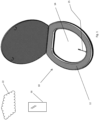
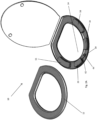
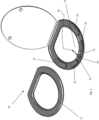
- Figs. 1-3 show a system 10 for conducting urinalysis of urine by using a urine test strip disposed along the urine path.
- the system 10 includes a housing 12 mountable on a urination device (not shown) defining urination area 14.
- the urination device is a seating toilet
- the housing 12 is a toilet seat mounted on the toilet.
- the urination device can be a squat toilet, urinal, female urinal etc.
- the housing can be a designated structure mounted on the urination device and defining a urination area 14.
- the housing 12 includes a dispenser 20, which can be mounted inside the housing.
- the dispenser 20 is configured for holding a plurality of urine test strips (hereinafter "UTS") 25, each of which having at least one reacting area 28 configured for a chemical reaction with a substance in the urine.
- UTS urine test strips
- the UTS can be a lateral flow test having a reacting area 28 configured to detect the presence of a certain substance.
- the UTS can be a colorimetric test strip which includes one or more reacting area 28 in the form of pads.
- the reacting area 28 can be configured to react to various substances, such as calcium, UTIs, specific gravity, nitrites, blood, glucose, selenium, C peptide, chromium, pH, creatine, zinc, urobilinogen, bilirubin, leukocytes, microalbumin, urea, aldosterone total alkalinity, magnesium, potassium, hardness, iron, copper, lead, nitrate, fluoride, residual chlorine, breast cancer-specific antigen, prostate cancer-specific antigen, human chorionic gonadotropin, dopamine, serotonin, cortisol, luteinizing hormone, vitamin C, vitamin B12, vitamin B7, vitamin B9, heavy metals, estrogens, androgens, melatonin
- the housing 12 further includes a detector 30 configured for detecting at least one property of the reacting area 28.
- the detector can be an optical sensor configured to detect a certain feature of the reacting area 28.
- the detector 30 can be configured to detect the presence of an indicator on the reacting area 28, such as one or more lines indicating the presence of a certain substance in the urine or the lack of such substance.
- the detector 30 can be configured to detect a predetermined color, a number of colors, or gray level on the reacting area 28.
- the detector 30 can be configured to detect absorbance or can include a spectrophotometer for detecting certain colors.
- the detector 30 includes an imaging device configured for obtaining an image of the reacting area 28, and an image processing apparatus for analyzing the obtained image. Analyzing the obtained image can be carried out by utilizing known methods of analyzing a urinalysis, for example the method disclosed in PCT publication WO2019221676 .
- the system 10 further includes a shifting mechanism 40 configured for extracting one UTS 25 from the dispenser 20 and moving the UTS 25 to a urination position in which the UTS 25 is disposed above the urination area 14 such that the reacting area 28 is disposed along a urine path, as shown in Fig. 3 .
- a shifting mechanism 40 configured for extracting one UTS 25 from the dispenser 20 and moving the UTS 25 to a urination position in which the UTS 25 is disposed above the urination area 14 such that the reacting area 28 is disposed along a urine path, as shown in Fig. 3 .
- the housing 12 can be provided with an opening (not shown) allowing removing of the dispenser 20, such that the latter can be periodically replenished.
- the shifting mechanism 40 can be further configured for moving the UTS 25 to a testing position in which the UTS 25 is disposed at a location with respect to the detector 30, facilitating thereby detection of properties of the reacting area 28, as described above.
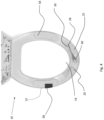
- the shifting mechanism 40 can be configured to shift the UTS 25 towards the detector 30 such that the reacting area 28 is disposed above the detector 30, as shown in Fig. 4 .
- the dispenser 20 is disposed on a first side of the perimeter of the urination area 14, and the detector 30 is disposed on a second side of the perimeter of the urination area 14.
- the shifting mechanism 40 includes an arm 42 configured for holding the UTS 25, and the shifting mechanism includes a rotating motor 44 configured for rotating arm 42 between the dispenser 20 and urination area 14.
- the are 42 can be further rotated towards the detector 30, shifting the UTS to the testing position, as shown in Fig. 4 .
- the dispenser 20 can include a slit allowing the arm 42 to enter the dispenser and grab one of the UTS 25 therein.
- the dispenser 20 can be provided with a spring mechanism urging the upper most UTS 25 to the slit facilitating thereby engagement of the arm 42 with the UTS 25.
- the shifting mechanism 40 may be configured to shift the UTS 25 from the dispenser 20 to the urination area 14 in other manners.
- the dispenser 20 and the urination area 14 can be disposed along an axis and the shifting mechanism 40 can include a line conveyor configured to displace the UTS 25 from the dispenser 20 to the urination area 14.
- the shifting mechanism 40 is further configured to release the UTS 25 after the completion of the test and detection by the detector 30.
- the shifting mechanism 40 can be configured to rotate the UTS 25 back to the urination area 14 and to release the UTS 25 into the toilet.
- the UTS 25 can be made from a biodegradable material or material which is decomposed and can be flashed in the toilet.
- the system 10 can include a waste compartment 50 configured to hold a plurality of used UTSs 25.
- the waste compartment 50 can be located in close proximity to the detector 30, and the shifting mechanism 40 can be configured to shift the used UTS 25 into the waste compartment 50.
- the waste compartment 50 is disposed along a straight line from the detector 30, such that when the shifting mechanism 40 releases the UTS 25, the latter falls into the waste compartment 50.
- the detector 30 and the waste compartment 50 can be disposed along the same rotational path, such that the UTS is first shifted to the testing position above the detector 30. Further shifting of the UTS 25 along the same rotational path brings the latter into the waste compartment 50, where it can be released.
- the housing can be provided with an opening allowing removing of the waste compartment 50, such that the latter can be periodically emptied.
- the housing 12 can include an ejection aperture (not shown) defined in close proximity of the detector 30. Upon completion of the test and detection of the UTS 25, the shifting mechanism 40 releases the UTS 25 into the ejection aperture, allowing the user to remove the used UTS 25.
- an ejection aperture (not shown) defined in close proximity of the detector 30.
- the housing 12 further includes a power source, such as a battery 55, and a controller 58 for controlling the operation of the shifting mechanism 40 and the detector 30.
- the controller 58 may include a pressure sensor configured to detect when urine impinges upon the UTS 25.
- the controller 58 can be configured to control the amount of urine that reaches the UTS 25, for example, by initiating the shifting of the UTS 25 towards the detector 30 after a predetermined time since the urination starts.
- the pressure sensor can be utilized for detecting when urination stopped and to assess whether or not a sufficient amount of urine has reached the UTS 25.
- the controller 58 can further include a processor for processing detection data received from the detector 30 and to determine health data in accordance with the detection data.
- the controller 58 can further include a communication module, such as WiFi or Bluetooth transceiver, etc., for transmitting the detection or health data to a remote server 22 (as shown in Fig. 1 ), as explained herein after.
- the housing 12 may be provided with a disinfection device, such as, UV light bulb for cleaning the detector 30, or the ejection aperture, as described above.
- a disinfection device such as, UV light bulb for cleaning the detector 30, or the ejection aperture, as described above.
- the UTS can be a colorimetric test strip 70 having a reacting area in the form of three or more pads 75, and a holding portion 78.
- the holding portion 78 is configured to be grasped by the shifting mechanism 40.
- the holding portion 78 is narrower relative to the reacting area, minimizing thereby the amount of urine impinging upon the holding portion 78. This way, the amount of urine entering areas around the detector 30 is reduced.
- the urine reacts with the pads and causes the color of the pads to change depending on the presence of certain substances in the urine.
- each of the pads 75 can be configured to detect a different substance and to provide an indication with a predetermined color.
- the detector 80 can be configured to detect each of the colors corresponding to the colors indicated by the pads 75.
- the detector 80 can include an array of sensors 82, each of which is configured to detect one color.
- the shifting mechanism 40 is configured to shift the UTS 70 towards the detector 80 such that the position of each of the pads 75 is aligned with the corresponding sensor 82.
- the UTS 90 can be a lateral flow test strip having a holding portion 98 and a reacting area 92.
- reacting area 92 includes a pad portion 95a and an indicator portion 95b.
- the shifting mechanism 40 is configured such that when the UTS 90 is in the urination position, the pad portion 95a is disposed along the urine path, allowing the urine to react with the pad portion 95a. However, when the UTS 90 is shitted to the testing position, the shifting mechanism 40 is configured to dispose the UTS 90 such that the indicator portion 95b is aligned with the detector.
- the system can be connected with IoT (Internet Of Things) devices 18, such as smartphones, watches, or other devices.
- IoT Internet Of Things
- the detector can be configured to obtain an image of the UTS and data of the image is sent to an external IoT device 18.
- the external IoT device can include a microprocessor for processing the captured images and determining the results of the test.
- the urinalysis system which is connected to IoT devices (e.g. Smartphones) is configured to allows the user to control and operate the urinalysis system using such devices wirelessly.
- the urinalysis system can be operated using physical buttons that may be attached to any part of the toilet seat.
- the IoT device 18 can include a designated application with a user interface allowing the user to control various features of the system 10.
- IoT device 18 can be configured to allow the user to alter the position of the arm 42.
- the arm 42 can be moved by the user to the appropriate location depending on the user's gender, height or preferences.
- a user can initiate a urinalysis test by clicking on the appropriate command or button on the manual button of a remote or IoT device 18.
- the IoT device can be configured to monitor the urine on a regular basis and provide the user with plans and wellness advice.
- the urinalysis system can be configured for performing automated or manual tests depending upon the input of the user.
- the IoT device 18 can be connected to a server 22 which collects test data and provides medical recommendations in accordance with the results. The server 22 and the IoT device 18 can thus provide a testing schedule depending on the data received from the tests.
- the system server 22 and the IoT device 18 can be configured to determine a specific schedule for further tests, which can include specific time of the day, frequency of tests and or the kind of test required for monitoring health of the user. It would be appreciated that the toilet seat containing the urinalysis apparatus can be mounted on commonly available toilet bowls in the market.
- the known toilets that are capable of performing urinalysis are complex to build and use.
- One of the major problems with the existing smart toilets or toilet bowls is that they require a separate urine collection chamber.
- a toilet has to be redesigned and rebuilt or at the least, the toilet bowl has to be replaced with a new smart toilet bowl.
- the process of redesigning and rebuilding toilets is expensive.
- cleaning such toilets with a urine collection chamber proves to be a difficult task for users.
- the existing smart toilets are also hard to operate.
- the present invention aims to solve this problem.
- the present invention can be easily be integrated into most of the toilet bowls in the market.
- the present invention has an adjustable urination structure.
- the invention is easy to operate since it can be operated with IoT (Internet of Things) devices such as mobile phones, tabs, smartwatches, etc.
- IoT Internet of Things
- the process is unlike the hospital or lab tests or manual at-home tests.
- the testing process is fully automated and the best part being, that no laboratory or clinical know-how is needed to perform or to analyze the test.
- the results can be analyzed and monitored on a mobile device. This will require no pre-requisite knowledge of technical know-how or clinical assistance for the user.
- the cartilage disposing mechanism designed in the invention urine strip waste can be disposed hygienically after the procedure.
Landscapes
- Health & Medical Sciences (AREA)
- Life Sciences & Earth Sciences (AREA)
- Chemical & Material Sciences (AREA)
- Engineering & Computer Science (AREA)
- Physics & Mathematics (AREA)
- Immunology (AREA)
- General Health & Medical Sciences (AREA)
- Molecular Biology (AREA)
- Biomedical Technology (AREA)
- Hematology (AREA)
- Pathology (AREA)
- Analytical Chemistry (AREA)
- Urology & Nephrology (AREA)
- Public Health (AREA)
- Chemical Kinetics & Catalysis (AREA)
- Surgery (AREA)
- Animal Behavior & Ethology (AREA)
- Medical Informatics (AREA)
- Veterinary Medicine (AREA)
- Heart & Thoracic Surgery (AREA)
- Biophysics (AREA)
- Biochemistry (AREA)
- Clinical Laboratory Science (AREA)
- General Physics & Mathematics (AREA)
- Biotechnology (AREA)
- Cell Biology (AREA)
- Microbiology (AREA)
- Food Science & Technology (AREA)
- Medicinal Chemistry (AREA)
- Optics & Photonics (AREA)
- Plasma & Fusion (AREA)
- Physiology (AREA)
- Investigating Or Analysing Biological Materials (AREA)
- Sampling And Sample Adjustment (AREA)
Claims (14)
- Ein System zur Durchführung von Urinanalysen, umfassend:ein Gehäuse, das an eine Urinierhilfe montiert werden kann, das den Urinierbereich definiert;ein im Gehäuse montierter und zum Halten mehrerer
Urinteststreifen (nachfolgend "UTS") konfigurierter Spender, wobei jeder dieser UTS mindestens einen Reaktionsbereich umfasst, der für eine chemische Reaktion mit einer Substanz im Urin ausgelegt ist;einen Detektor, der so eingerichtet ist, dass er wenigstens eine Eigenschaft des genannten Reaktionsbereichs erkennt;das System ist dadurch gekennzeichnet, dass es einen Verschiebemechanismus mit einem Dreharm umfasst, der so eingerichtet ist, dass er ein einen UTS aus dem Spender entnimmt und den UTS in eine Urinierposition bewegt, in welcher der UTS so über dem Urinierbereich angeordnet wird, dass der Reaktionsbereich entlang eines Urinpfads angeordnet ist;wobei dieser Verschiebemechanismus ferner zum Bewegen des Dreharms in eine Prüfposition eingerichtet ist, in der der UTS in Bezug auf den Detektor an einer Stelle angeordnet ist, in der die Erkennung der wenigstens einen Eigenschaft erleichtert wird. - System nach Anspruch 1, wobei der Spender auf einer ersten Seite des Perimeters des Urinierbereichs und der Detektor auf einer zweiten Seite des Perimeters angeordnet ist, und wobei der Dreharm Z zum Halten des UTS und Drehen des Arms zwischen dem Spender und dem Urinierbereich eingerichtet ist.
- System nach Anspruch 2, wobei der Spender, der Urinierbereich und der Detektor entlang eines kreisförmigen Pfades angeordnet sind, und wobei der Verschiebemechanismus zum Drehen des Arms entlang des kreisförmigen Pfades eingerichtet ist.
- System nach einem der Ansprüche 1 bis 3, das ferner ein Abfallfach umfasst, das so eingerichtet ist, dass es gebrauchte UTS aufnimmt, und wobei der Verschiebemechanismus so eingerichtet ist, dass er gebrauchte UTS in das Abfallfach freigibt.
- System nach einem der Ansprüche 1 bis 4, ferner umfassend ein Steuergerät zur Steuerung des Betriebs des Verschiebemechanismus und des Detektors sowie einen Drucksensor, der so eingerichtet ist, dass er erkennt, wenn Urin auf den UTS auftrifft, und wobei das Steuergerät so eingerichtet ist, dass es den Aufprall einer Urinmenge auf den UTS steuert.
- System nach einem der Ansprüche 1 bis 5, ferner umfassend eine Desinfektionsvorrichtung zur Reinigung des Detektors.
- System nach einem der Ansprüche 1 bis 4, wobei der UTS einen Halteabschnitt und einen Reaktionsbereich umfasst, und wobei die Breite des Halteabschnitts schmaler ist als die Breite des Reaktionsbereichs.
- System nach Anspruch 7, wobei UTS ein kolorimetrischer Teststreifen ist und eine Vielzahl von Pads umfasst, die jeweils für eine Farbänderung als Reaktion mit der besagten Substanz eingerichtet sind.
- System nach Anspruch 8, wobei die wenigstens eine Eigenschaft eine Farbe der Pads ist und wobei der Detektor eine Anordnung von Sensoren umfasst, von denen jeder als eine Farbe in einem der Pads eingerichtet ist.
- System nach einem der Ansprüche 7 bis 9, wobei der UTS ein seitlicher Durchflussteststreifen ist und wobei der Reaktionsbereich einen Padteil und einen Indikatorteil umfasst, und wobei der Verschiebemechanismus so eingerichtet ist, dass er den UTS so in der Urinierposition hält, dass der Padteil entlang des Urinpfads liegt, und wobei der Verschiebemechanismus so eingerichtet ist, dass er den UTS so in der Testposition hält, dass der Indikatorteil mit dem Detektor fluchtet und wobei die wenigstens eine Eigenschaft das Vorhandensein des Indikators darstellt.
- System nach Anspruch 5, ferner umfassend ein Kommunikationsmodul zur Kommunikation mit einer entfernten IoT-Gerät und wobei das Steuergerät so eingerichtet ist, dass es von dem entfernten IoT-Gerät gesteuert wird.
- System nach Anspruch 11, wobei der Detektor so eingerichtet ist, dass er ein Bild des UTS erhält, und das Kommunikationsmodul so eingerichtet ist, dass es das Bild an das entfernte IoT-Gerät sendet.
- System nach Anspruch 11 oder 12, ferner umfassend einen Server, der mit dem entfernten IoT-Gerät kommuniziert, und wobei der Server so eingerichtet ist, dass er Urinanalysedaten eines Urintests empfängt und Art und Zeitplan für zukünftige Urinanalysetests gemäß den Urinanalysedaten bestimmt.
- System nach einem der Ansprüche 1 bis 13, wobei der UTS so eingerichtet ist, dass er wenigstens eine Substanz erkennt, die aus der Gruppe ausgewählt ist, die aus Kalzium, Harnwegsinfektionen, spezifischem Gewicht, Nitriten, Blut, Glukose, Selen, C-Peptid, Chrom, pH, Kreatin, Zink, Urobilinogen, Bilirubin, Leukozyten, Mikroalbumin, Harnstoff, Aldosteron-Gesamtalkalinität, Magnesium, Kalium, Härte, Eisen, Kupfer, Blei, Nitrat, Fluorid, Restchlor, Brustkrebs-spezifisches Antigen, Prostatakrebs-spezifisches Antigen, humanes Choriongonadotropin, Dopamin, Serotonin, Kortisol, luteinisierendes Hormon, Vitamin C, Vitamin B12, Vitamin B7, Vitamin B9, Schwermetalle, Östrogene, Androgene, Melatonin, Progesteron, Testosteron, Natrium, Chloridkortison, Malondialdehyd, Peroxid, 8- OHdG freies T3, freies T4 Drogenmissbrauchstests und Kombinationen davon besteht.
Applications Claiming Priority (1)
| Application Number | Priority Date | Filing Date | Title |
|---|---|---|---|
| US202063117464P | 2020-11-24 | 2020-11-24 |
Publications (2)
| Publication Number | Publication Date |
|---|---|
| EP4000522A1 EP4000522A1 (de) | 2022-05-25 |
| EP4000522B1 true EP4000522B1 (de) | 2024-02-14 |
Family
ID=78789693
Family Applications (1)
| Application Number | Title | Priority Date | Filing Date |
|---|---|---|---|
| EP21210165.3A Active EP4000522B1 (de) | 2020-11-24 | 2021-11-24 | System zur durchführung von urinalysen |
Country Status (5)
| Country | Link |
|---|---|
| US (1) | US20220163514A1 (de) |
| EP (1) | EP4000522B1 (de) |
| JP (1) | JP2022083441A (de) |
| AU (1) | AU2021273584A1 (de) |
| CA (1) | CA3140311A1 (de) |
Families Citing this family (3)
| Publication number | Priority date | Publication date | Assignee | Title |
|---|---|---|---|---|
| JP7416098B2 (ja) * | 2022-01-28 | 2024-01-17 | Toto株式会社 | トイレ装置 |
| EP4338839A1 (de) * | 2022-09-14 | 2024-03-20 | Withings | Urinreagenz enthaltende vorrichtung zur urinanalyse |
| WO2025090837A1 (en) * | 2023-10-25 | 2025-05-01 | Starling Medical, Inc. | Bodily fluid management system |
Family Cites Families (6)
| Publication number | Priority date | Publication date | Assignee | Title |
|---|---|---|---|---|
| JPS6085133A (ja) * | 1983-10-14 | 1985-05-14 | 東陶機器株式会社 | 便座装置 |
| WO2009035599A1 (en) * | 2007-09-10 | 2009-03-19 | Rocona, Inc. | Urinalysis sensors and devices |
| EP2883037B1 (de) * | 2012-08-08 | 2023-06-07 | Healthy.io Ltd. | Verfahren und vorrichtung zur durchführung und quantifizierung von farbveränderungen durch spezifische konzentrationen von biologischen analyten in einer automatisch kalibrierten umgebung |
| CN111093494A (zh) * | 2017-06-23 | 2020-05-01 | 沃扬特诊断公司 | 医疗诊断系统和方法 |
| US20210208081A1 (en) | 2018-05-15 | 2021-07-08 | Vivosens Inc | Analysis of urine test strips with mobile camera analysys and providing recommendation by customising data |
| US10383606B1 (en) * | 2018-07-16 | 2019-08-20 | Bloom Health, Inc. | Toilet based urine analysis system |
-
2021
- 2021-11-24 EP EP21210165.3A patent/EP4000522B1/de active Active
- 2021-11-24 JP JP2021190378A patent/JP2022083441A/ja active Pending
- 2021-11-24 CA CA3140311A patent/CA3140311A1/en active Pending
- 2021-11-24 US US17/456,376 patent/US20220163514A1/en not_active Abandoned
- 2021-11-24 AU AU2021273584A patent/AU2021273584A1/en not_active Abandoned
Also Published As
| Publication number | Publication date |
|---|---|
| JP2022083441A (ja) | 2022-06-03 |
| EP4000522A1 (de) | 2022-05-25 |
| AU2021273584A1 (en) | 2022-06-09 |
| CA3140311A1 (en) | 2022-05-24 |
| US20220163514A1 (en) | 2022-05-26 |
Similar Documents
| Publication | Publication Date | Title |
|---|---|---|
| EP4000522B1 (de) | System zur durchführung von urinalysen | |
| US10383606B1 (en) | Toilet based urine analysis system | |
| US20230329642A1 (en) | Sterile Urine Collection Mechanism for Medical Diagnostic Systems | |
| US9757097B2 (en) | Urine specimen capture device with a capture flange | |
| US11604177B1 (en) | Smart toilet for human health monitoring | |
| CN107847225B (zh) | 马桶中排泄物的移动分析的设备和方法 | |
| KR101312559B1 (ko) | 건강을 진단하는 다기능 변기시스템 | |
| US9775586B2 (en) | Urine hat flush water capture device | |
| US10758169B2 (en) | Method and apparatus for collecting and analyzing urine samples | |
| US20230096779A1 (en) | Toilet, testing, and monitoring systems | |
| WO2012061650A2 (en) | All-in-one specimen cup with optically readable results | |
| US9788817B2 (en) | Urine specimen capture slit | |
| WO2020139577A1 (en) | Sterile urine collection mechanism for medical diagnostic systems | |
| CN110687105A (zh) | 一种用于马桶、便池的尿样检测装置及方法 | |
| US20180292381A1 (en) | Health diagnostic waste container | |
| CN106483309A (zh) | 自动分析装置 | |
| KR102225262B1 (ko) | 대소변 정보 수집을 통한 건강관리 서비스 장치 및 시스템 | |
| US10258261B2 (en) | System for analyzing customized test strips | |
| KR102174913B1 (ko) | 소변 분석이 가능한 비데 | |
| US20220390379A1 (en) | Cartridge-based biofluid monitoring and analysis | |
| JP2005172647A (ja) | トイレにおける生体情報測定システム | |
| TR2021011575A2 (tr) | İdrar numunesi̇ anali̇z si̇stemi̇ | |
| JP2005330791A (ja) | トイレ装置 | |
| US11119100B2 (en) | Reagent strips reader for analytes measurement in body fluids connected to a smartphone with emergency function | |
| HU231258B1 (hu) | Berendezés és eljárás anion- és kationszint automatikus meghatározására vizeletből |
Legal Events
| Date | Code | Title | Description |
|---|---|---|---|
| PUAI | Public reference made under article 153(3) epc to a published international application that has entered the european phase |
Free format text: ORIGINAL CODE: 0009012 |
|
| STAA | Information on the status of an ep patent application or granted ep patent |
Free format text: STATUS: THE APPLICATION HAS BEEN PUBLISHED |
|
| AK | Designated contracting states |
Kind code of ref document: A1 Designated state(s): AL AT BE BG CH CY CZ DE DK EE ES FI FR GB GR HR HU IE IS IT LI LT LU LV MC MK MT NL NO PL PT RO RS SE SI SK SM TR |
|
| STAA | Information on the status of an ep patent application or granted ep patent |
Free format text: STATUS: REQUEST FOR EXAMINATION WAS MADE |
|
| 17P | Request for examination filed |
Effective date: 20221125 |
|
| RBV | Designated contracting states (corrected) |
Designated state(s): AL AT BE BG CH CY CZ DE DK EE ES FI FR GB GR HR HU IE IS IT LI LT LU LV MC MK MT NL NO PL PT RO RS SE SI SK SM TR |
|
| GRAP | Despatch of communication of intention to grant a patent |
Free format text: ORIGINAL CODE: EPIDOSNIGR1 |
|
| STAA | Information on the status of an ep patent application or granted ep patent |
Free format text: STATUS: GRANT OF PATENT IS INTENDED |
|
| INTG | Intention to grant announced |
Effective date: 20230908 |
|
| RIN1 | Information on inventor provided before grant (corrected) |
Inventor name: RADMAN, GEORGE Inventor name: BENGISU KARACAOGLU, BALIM Inventor name: TAYFUN, MIRAY |
|
| GRAS | Grant fee paid |
Free format text: ORIGINAL CODE: EPIDOSNIGR3 |
|
| GRAA | (expected) grant |
Free format text: ORIGINAL CODE: 0009210 |
|
| STAA | Information on the status of an ep patent application or granted ep patent |
Free format text: STATUS: THE PATENT HAS BEEN GRANTED |
|
| AK | Designated contracting states |
Kind code of ref document: B1 Designated state(s): AL AT BE BG CH CY CZ DE DK EE ES FI FR GB GR HR HU IE IS IT LI LT LU LV MC MK MT NL NO PL PT RO RS SE SI SK SM TR |
|
| REG | Reference to a national code |
Ref country code: GB Ref legal event code: FG4D |
|
| REG | Reference to a national code |
Ref country code: CH Ref legal event code: EP |
|
| REG | Reference to a national code |
Ref country code: DE Ref legal event code: R096 Ref document number: 602021009364 Country of ref document: DE |
|
| REG | Reference to a national code |
Ref country code: IE Ref legal event code: FG4D |
|
| REG | Reference to a national code |
Ref country code: LT Ref legal event code: MG9D |
|
| REG | Reference to a national code |
Ref country code: NL Ref legal event code: MP Effective date: 20240214 |
|
| PG25 | Lapsed in a contracting state [announced via postgrant information from national office to epo] |
Ref country code: IS Free format text: LAPSE BECAUSE OF FAILURE TO SUBMIT A TRANSLATION OF THE DESCRIPTION OR TO PAY THE FEE WITHIN THE PRESCRIBED TIME-LIMIT Effective date: 20240614 |
|
| PG25 | Lapsed in a contracting state [announced via postgrant information from national office to epo] |
Ref country code: LT Free format text: LAPSE BECAUSE OF FAILURE TO SUBMIT A TRANSLATION OF THE DESCRIPTION OR TO PAY THE FEE WITHIN THE PRESCRIBED TIME-LIMIT Effective date: 20240214 |
|
| PG25 | Lapsed in a contracting state [announced via postgrant information from national office to epo] |
Ref country code: GR Free format text: LAPSE BECAUSE OF FAILURE TO SUBMIT A TRANSLATION OF THE DESCRIPTION OR TO PAY THE FEE WITHIN THE PRESCRIBED TIME-LIMIT Effective date: 20240515 |
|
| REG | Reference to a national code |
Ref country code: AT Ref legal event code: MK05 Ref document number: 1656329 Country of ref document: AT Kind code of ref document: T Effective date: 20240214 |
|
| PG25 | Lapsed in a contracting state [announced via postgrant information from national office to epo] |
Ref country code: HR Free format text: LAPSE BECAUSE OF FAILURE TO SUBMIT A TRANSLATION OF THE DESCRIPTION OR TO PAY THE FEE WITHIN THE PRESCRIBED TIME-LIMIT Effective date: 20240214 Ref country code: NL Free format text: LAPSE BECAUSE OF FAILURE TO SUBMIT A TRANSLATION OF THE DESCRIPTION OR TO PAY THE FEE WITHIN THE PRESCRIBED TIME-LIMIT Effective date: 20240214 Ref country code: RS Free format text: LAPSE BECAUSE OF FAILURE TO SUBMIT A TRANSLATION OF THE DESCRIPTION OR TO PAY THE FEE WITHIN THE PRESCRIBED TIME-LIMIT Effective date: 20240514 |
|
| PG25 | Lapsed in a contracting state [announced via postgrant information from national office to epo] |
Ref country code: ES Free format text: LAPSE BECAUSE OF FAILURE TO SUBMIT A TRANSLATION OF THE DESCRIPTION OR TO PAY THE FEE WITHIN THE PRESCRIBED TIME-LIMIT Effective date: 20240214 |
|
| PG25 | Lapsed in a contracting state [announced via postgrant information from national office to epo] |
Ref country code: AT Free format text: LAPSE BECAUSE OF FAILURE TO SUBMIT A TRANSLATION OF THE DESCRIPTION OR TO PAY THE FEE WITHIN THE PRESCRIBED TIME-LIMIT Effective date: 20240214 |
|
| PG25 | Lapsed in a contracting state [announced via postgrant information from national office to epo] |
Ref country code: RS Free format text: LAPSE BECAUSE OF FAILURE TO SUBMIT A TRANSLATION OF THE DESCRIPTION OR TO PAY THE FEE WITHIN THE PRESCRIBED TIME-LIMIT Effective date: 20240514 Ref country code: NO Free format text: LAPSE BECAUSE OF FAILURE TO SUBMIT A TRANSLATION OF THE DESCRIPTION OR TO PAY THE FEE WITHIN THE PRESCRIBED TIME-LIMIT Effective date: 20240514 Ref country code: NL Free format text: LAPSE BECAUSE OF FAILURE TO SUBMIT A TRANSLATION OF THE DESCRIPTION OR TO PAY THE FEE WITHIN THE PRESCRIBED TIME-LIMIT Effective date: 20240214 Ref country code: LT Free format text: LAPSE BECAUSE OF FAILURE TO SUBMIT A TRANSLATION OF THE DESCRIPTION OR TO PAY THE FEE WITHIN THE PRESCRIBED TIME-LIMIT Effective date: 20240214 Ref country code: IS Free format text: LAPSE BECAUSE OF FAILURE TO SUBMIT A TRANSLATION OF THE DESCRIPTION OR TO PAY THE FEE WITHIN THE PRESCRIBED TIME-LIMIT Effective date: 20240614 Ref country code: HR Free format text: LAPSE BECAUSE OF FAILURE TO SUBMIT A TRANSLATION OF THE DESCRIPTION OR TO PAY THE FEE WITHIN THE PRESCRIBED TIME-LIMIT Effective date: 20240214 Ref country code: GR Free format text: LAPSE BECAUSE OF FAILURE TO SUBMIT A TRANSLATION OF THE DESCRIPTION OR TO PAY THE FEE WITHIN THE PRESCRIBED TIME-LIMIT Effective date: 20240515 Ref country code: FI Free format text: LAPSE BECAUSE OF FAILURE TO SUBMIT A TRANSLATION OF THE DESCRIPTION OR TO PAY THE FEE WITHIN THE PRESCRIBED TIME-LIMIT Effective date: 20240214 Ref country code: ES Free format text: LAPSE BECAUSE OF FAILURE TO SUBMIT A TRANSLATION OF THE DESCRIPTION OR TO PAY THE FEE WITHIN THE PRESCRIBED TIME-LIMIT Effective date: 20240214 Ref country code: BG Free format text: LAPSE BECAUSE OF FAILURE TO SUBMIT A TRANSLATION OF THE DESCRIPTION OR TO PAY THE FEE WITHIN THE PRESCRIBED TIME-LIMIT Effective date: 20240214 Ref country code: AT Free format text: LAPSE BECAUSE OF FAILURE TO SUBMIT A TRANSLATION OF THE DESCRIPTION OR TO PAY THE FEE WITHIN THE PRESCRIBED TIME-LIMIT Effective date: 20240214 |
|
| PG25 | Lapsed in a contracting state [announced via postgrant information from national office to epo] |
Ref country code: PT Free format text: LAPSE BECAUSE OF FAILURE TO SUBMIT A TRANSLATION OF THE DESCRIPTION OR TO PAY THE FEE WITHIN THE PRESCRIBED TIME-LIMIT Effective date: 20240614 Ref country code: PL Free format text: LAPSE BECAUSE OF FAILURE TO SUBMIT A TRANSLATION OF THE DESCRIPTION OR TO PAY THE FEE WITHIN THE PRESCRIBED TIME-LIMIT Effective date: 20240214 |
|
| PG25 | Lapsed in a contracting state [announced via postgrant information from national office to epo] |
Ref country code: SE Free format text: LAPSE BECAUSE OF FAILURE TO SUBMIT A TRANSLATION OF THE DESCRIPTION OR TO PAY THE FEE WITHIN THE PRESCRIBED TIME-LIMIT Effective date: 20240214 Ref country code: PT Free format text: LAPSE BECAUSE OF FAILURE TO SUBMIT A TRANSLATION OF THE DESCRIPTION OR TO PAY THE FEE WITHIN THE PRESCRIBED TIME-LIMIT Effective date: 20240614 Ref country code: PL Free format text: LAPSE BECAUSE OF FAILURE TO SUBMIT A TRANSLATION OF THE DESCRIPTION OR TO PAY THE FEE WITHIN THE PRESCRIBED TIME-LIMIT Effective date: 20240214 Ref country code: LV Free format text: LAPSE BECAUSE OF FAILURE TO SUBMIT A TRANSLATION OF THE DESCRIPTION OR TO PAY THE FEE WITHIN THE PRESCRIBED TIME-LIMIT Effective date: 20240214 |
|
| PG25 | Lapsed in a contracting state [announced via postgrant information from national office to epo] |
Ref country code: DK Free format text: LAPSE BECAUSE OF FAILURE TO SUBMIT A TRANSLATION OF THE DESCRIPTION OR TO PAY THE FEE WITHIN THE PRESCRIBED TIME-LIMIT Effective date: 20240214 |
|
| PG25 | Lapsed in a contracting state [announced via postgrant information from national office to epo] |
Ref country code: SM Free format text: LAPSE BECAUSE OF FAILURE TO SUBMIT A TRANSLATION OF THE DESCRIPTION OR TO PAY THE FEE WITHIN THE PRESCRIBED TIME-LIMIT Effective date: 20240214 |
|
| PG25 | Lapsed in a contracting state [announced via postgrant information from national office to epo] |
Ref country code: CZ Free format text: LAPSE BECAUSE OF FAILURE TO SUBMIT A TRANSLATION OF THE DESCRIPTION OR TO PAY THE FEE WITHIN THE PRESCRIBED TIME-LIMIT Effective date: 20240214 Ref country code: EE Free format text: LAPSE BECAUSE OF FAILURE TO SUBMIT A TRANSLATION OF THE DESCRIPTION OR TO PAY THE FEE WITHIN THE PRESCRIBED TIME-LIMIT Effective date: 20240214 |
|
| PG25 | Lapsed in a contracting state [announced via postgrant information from national office to epo] |
Ref country code: SK Free format text: LAPSE BECAUSE OF FAILURE TO SUBMIT A TRANSLATION OF THE DESCRIPTION OR TO PAY THE FEE WITHIN THE PRESCRIBED TIME-LIMIT Effective date: 20240214 |
|
| PG25 | Lapsed in a contracting state [announced via postgrant information from national office to epo] |
Ref country code: SM Free format text: LAPSE BECAUSE OF FAILURE TO SUBMIT A TRANSLATION OF THE DESCRIPTION OR TO PAY THE FEE WITHIN THE PRESCRIBED TIME-LIMIT Effective date: 20240214 Ref country code: SK Free format text: LAPSE BECAUSE OF FAILURE TO SUBMIT A TRANSLATION OF THE DESCRIPTION OR TO PAY THE FEE WITHIN THE PRESCRIBED TIME-LIMIT Effective date: 20240214 Ref country code: RO Free format text: LAPSE BECAUSE OF FAILURE TO SUBMIT A TRANSLATION OF THE DESCRIPTION OR TO PAY THE FEE WITHIN THE PRESCRIBED TIME-LIMIT Effective date: 20240214 Ref country code: EE Free format text: LAPSE BECAUSE OF FAILURE TO SUBMIT A TRANSLATION OF THE DESCRIPTION OR TO PAY THE FEE WITHIN THE PRESCRIBED TIME-LIMIT Effective date: 20240214 Ref country code: DK Free format text: LAPSE BECAUSE OF FAILURE TO SUBMIT A TRANSLATION OF THE DESCRIPTION OR TO PAY THE FEE WITHIN THE PRESCRIBED TIME-LIMIT Effective date: 20240214 Ref country code: CZ Free format text: LAPSE BECAUSE OF FAILURE TO SUBMIT A TRANSLATION OF THE DESCRIPTION OR TO PAY THE FEE WITHIN THE PRESCRIBED TIME-LIMIT Effective date: 20240214 |
|
| REG | Reference to a national code |
Ref country code: DE Ref legal event code: R097 Ref document number: 602021009364 Country of ref document: DE |
|
| PG25 | Lapsed in a contracting state [announced via postgrant information from national office to epo] |
Ref country code: IT Free format text: LAPSE BECAUSE OF FAILURE TO SUBMIT A TRANSLATION OF THE DESCRIPTION OR TO PAY THE FEE WITHIN THE PRESCRIBED TIME-LIMIT Effective date: 20240214 |
|
| PLBE | No opposition filed within time limit |
Free format text: ORIGINAL CODE: 0009261 |
|
| STAA | Information on the status of an ep patent application or granted ep patent |
Free format text: STATUS: NO OPPOSITION FILED WITHIN TIME LIMIT |
|
| PG25 | Lapsed in a contracting state [announced via postgrant information from national office to epo] |
Ref country code: IT Free format text: LAPSE BECAUSE OF FAILURE TO SUBMIT A TRANSLATION OF THE DESCRIPTION OR TO PAY THE FEE WITHIN THE PRESCRIBED TIME-LIMIT Effective date: 20240214 |
|
| 26N | No opposition filed |
Effective date: 20241115 |
|
| PG25 | Lapsed in a contracting state [announced via postgrant information from national office to epo] |
Ref country code: SI Free format text: LAPSE BECAUSE OF FAILURE TO SUBMIT A TRANSLATION OF THE DESCRIPTION OR TO PAY THE FEE WITHIN THE PRESCRIBED TIME-LIMIT Effective date: 20240214 |
|
| REG | Reference to a national code |
Ref country code: DE Ref legal event code: R119 Ref document number: 602021009364 Country of ref document: DE |
|
| REG | Reference to a national code |
Ref country code: CH Ref legal event code: PL |
|
| PG25 | Lapsed in a contracting state [announced via postgrant information from national office to epo] |
Ref country code: MC Free format text: LAPSE BECAUSE OF FAILURE TO SUBMIT A TRANSLATION OF THE DESCRIPTION OR TO PAY THE FEE WITHIN THE PRESCRIBED TIME-LIMIT Effective date: 20240214 |
|
| PG25 | Lapsed in a contracting state [announced via postgrant information from national office to epo] |
Ref country code: LU Free format text: LAPSE BECAUSE OF NON-PAYMENT OF DUE FEES Effective date: 20241124 |
|
| REG | Reference to a national code |
Ref country code: CH Ref legal event code: PL |
|
| PG25 | Lapsed in a contracting state [announced via postgrant information from national office to epo] |
Ref country code: CH Free format text: LAPSE BECAUSE OF NON-PAYMENT OF DUE FEES Effective date: 20241130 |
|
| REG | Reference to a national code |
Ref country code: BE Ref legal event code: MM Effective date: 20241130 |
|
| PG25 | Lapsed in a contracting state [announced via postgrant information from national office to epo] |
Ref country code: DE Free format text: LAPSE BECAUSE OF NON-PAYMENT OF DUE FEES Effective date: 20250603 |
|
| PG25 | Lapsed in a contracting state [announced via postgrant information from national office to epo] |
Ref country code: BE Free format text: LAPSE BECAUSE OF NON-PAYMENT OF DUE FEES Effective date: 20241130 |
|
| PG25 | Lapsed in a contracting state [announced via postgrant information from national office to epo] |
Ref country code: FR Free format text: LAPSE BECAUSE OF NON-PAYMENT OF DUE FEES Effective date: 20241130 |
|
| PG25 | Lapsed in a contracting state [announced via postgrant information from national office to epo] |
Ref country code: IE Free format text: LAPSE BECAUSE OF NON-PAYMENT OF DUE FEES Effective date: 20241124 |
|
| PG25 | Lapsed in a contracting state [announced via postgrant information from national office to epo] |
Ref country code: HU Free format text: LAPSE BECAUSE OF FAILURE TO SUBMIT A TRANSLATION OF THE DESCRIPTION OR TO PAY THE FEE WITHIN THE PRESCRIBED TIME-LIMIT; INVALID AB INITIO Effective date: 20211124 |
|
| PG25 | Lapsed in a contracting state [announced via postgrant information from national office to epo] |
Ref country code: CY Free format text: LAPSE BECAUSE OF FAILURE TO SUBMIT A TRANSLATION OF THE DESCRIPTION OR TO PAY THE FEE WITHIN THE PRESCRIBED TIME-LIMIT; INVALID AB INITIO Effective date: 20211124 |