EP4000636A2 - Substances contenant des aucs, leur procédé de préparation et leur utilisation - Google Patents
Substances contenant des aucs, leur procédé de préparation et leur utilisation Download PDFInfo
- Publication number
- EP4000636A2 EP4000636A2 EP21218128.3A EP21218128A EP4000636A2 EP 4000636 A2 EP4000636 A2 EP 4000636A2 EP 21218128 A EP21218128 A EP 21218128A EP 4000636 A2 EP4000636 A2 EP 4000636A2
- Authority
- EP
- European Patent Office
- Prior art keywords
- aucs
- ligand
- cysteine
- modified
- mice
- Prior art date
- Legal status (The legal status is an assumption and is not a legal conclusion. Google has not performed a legal analysis and makes no representation as to the accuracy of the status listed.)
- Granted
Links
Images








Classifications
-
- A—HUMAN NECESSITIES
- A61—MEDICAL OR VETERINARY SCIENCE; HYGIENE
- A61P—SPECIFIC THERAPEUTIC ACTIVITY OF CHEMICAL COMPOUNDS OR MEDICINAL PREPARATIONS
- A61P25/00—Drugs for disorders of the nervous system
- A61P25/28—Drugs for disorders of the nervous system for treating neurodegenerative disorders of the central nervous system, e.g. nootropic agents, cognition enhancers, drugs for treating Alzheimer's disease or other forms of dementia
-
- C—CHEMISTRY; METALLURGY
- C07—ORGANIC CHEMISTRY
- C07C—ACYCLIC OR CARBOCYCLIC COMPOUNDS
- C07C323/00—Thiols, sulfides, hydropolysulfides or polysulfides substituted by halogen, oxygen or nitrogen atoms, or by sulfur atoms not being part of thio groups
- C07C323/50—Thiols, sulfides, hydropolysulfides or polysulfides substituted by halogen, oxygen or nitrogen atoms, or by sulfur atoms not being part of thio groups containing thio groups and carboxyl groups bound to the same carbon skeleton
- C07C323/51—Thiols, sulfides, hydropolysulfides or polysulfides substituted by halogen, oxygen or nitrogen atoms, or by sulfur atoms not being part of thio groups containing thio groups and carboxyl groups bound to the same carbon skeleton having the sulfur atoms of the thio groups bound to acyclic carbon atoms of the carbon skeleton
- C07C323/57—Thiols, sulfides, hydropolysulfides or polysulfides substituted by halogen, oxygen or nitrogen atoms, or by sulfur atoms not being part of thio groups containing thio groups and carboxyl groups bound to the same carbon skeleton having the sulfur atoms of the thio groups bound to acyclic carbon atoms of the carbon skeleton the carbon skeleton being further substituted by nitrogen atoms, not being part of nitro or nitroso groups
- C07C323/58—Thiols, sulfides, hydropolysulfides or polysulfides substituted by halogen, oxygen or nitrogen atoms, or by sulfur atoms not being part of thio groups containing thio groups and carboxyl groups bound to the same carbon skeleton having the sulfur atoms of the thio groups bound to acyclic carbon atoms of the carbon skeleton the carbon skeleton being further substituted by nitrogen atoms, not being part of nitro or nitroso groups with amino groups bound to the carbon skeleton
-
- A—HUMAN NECESSITIES
- A61—MEDICAL OR VETERINARY SCIENCE; HYGIENE
- A61K—PREPARATIONS FOR MEDICAL, DENTAL OR TOILETRY PURPOSES
- A61K33/00—Medicinal preparations containing inorganic active ingredients
- A61K33/24—Heavy metals; Compounds thereof
-
- A—HUMAN NECESSITIES
- A61—MEDICAL OR VETERINARY SCIENCE; HYGIENE
- A61K—PREPARATIONS FOR MEDICAL, DENTAL OR TOILETRY PURPOSES
- A61K33/00—Medicinal preparations containing inorganic active ingredients
- A61K33/24—Heavy metals; Compounds thereof
- A61K33/242—Gold; Compounds thereof
-
- A—HUMAN NECESSITIES
- A61—MEDICAL OR VETERINARY SCIENCE; HYGIENE
- A61K—PREPARATIONS FOR MEDICAL, DENTAL OR TOILETRY PURPOSES
- A61K38/00—Medicinal preparations containing peptides
- A61K38/04—Peptides having up to 20 amino acids in a fully defined sequence; Derivatives thereof
- A61K38/05—Dipeptides
-
- A—HUMAN NECESSITIES
- A61—MEDICAL OR VETERINARY SCIENCE; HYGIENE
- A61K—PREPARATIONS FOR MEDICAL, DENTAL OR TOILETRY PURPOSES
- A61K38/00—Medicinal preparations containing peptides
- A61K38/04—Peptides having up to 20 amino acids in a fully defined sequence; Derivatives thereof
- A61K38/06—Tripeptides
-
- A—HUMAN NECESSITIES
- A61—MEDICAL OR VETERINARY SCIENCE; HYGIENE
- A61K—PREPARATIONS FOR MEDICAL, DENTAL OR TOILETRY PURPOSES
- A61K38/00—Medicinal preparations containing peptides
- A61K38/04—Peptides having up to 20 amino acids in a fully defined sequence; Derivatives thereof
- A61K38/07—Tetrapeptides
-
- A—HUMAN NECESSITIES
- A61—MEDICAL OR VETERINARY SCIENCE; HYGIENE
- A61K—PREPARATIONS FOR MEDICAL, DENTAL OR TOILETRY PURPOSES
- A61K47/00—Medicinal preparations characterised by the non-active ingredients used, e.g. carriers or inert additives; Targeting or modifying agents chemically bound to the active ingredient
- A61K47/50—Medicinal preparations characterised by the non-active ingredients used, e.g. carriers or inert additives; Targeting or modifying agents chemically bound to the active ingredient the non-active ingredient being chemically bound to the active ingredient, e.g. polymer-drug conjugates
- A61K47/51—Medicinal preparations characterised by the non-active ingredients used, e.g. carriers or inert additives; Targeting or modifying agents chemically bound to the active ingredient the non-active ingredient being chemically bound to the active ingredient, e.g. polymer-drug conjugates the non-active ingredient being a modifying agent
- A61K47/54—Medicinal preparations characterised by the non-active ingredients used, e.g. carriers or inert additives; Targeting or modifying agents chemically bound to the active ingredient the non-active ingredient being chemically bound to the active ingredient, e.g. polymer-drug conjugates the non-active ingredient being a modifying agent the modifying agent being an organic compound
- A61K47/542—Carboxylic acids, e.g. a fatty acid or an amino acid
-
- A—HUMAN NECESSITIES
- A61—MEDICAL OR VETERINARY SCIENCE; HYGIENE
- A61K—PREPARATIONS FOR MEDICAL, DENTAL OR TOILETRY PURPOSES
- A61K47/00—Medicinal preparations characterised by the non-active ingredients used, e.g. carriers or inert additives; Targeting or modifying agents chemically bound to the active ingredient
- A61K47/50—Medicinal preparations characterised by the non-active ingredients used, e.g. carriers or inert additives; Targeting or modifying agents chemically bound to the active ingredient the non-active ingredient being chemically bound to the active ingredient, e.g. polymer-drug conjugates
- A61K47/51—Medicinal preparations characterised by the non-active ingredients used, e.g. carriers or inert additives; Targeting or modifying agents chemically bound to the active ingredient the non-active ingredient being chemically bound to the active ingredient, e.g. polymer-drug conjugates the non-active ingredient being a modifying agent
- A61K47/62—Medicinal preparations characterised by the non-active ingredients used, e.g. carriers or inert additives; Targeting or modifying agents chemically bound to the active ingredient the non-active ingredient being chemically bound to the active ingredient, e.g. polymer-drug conjugates the non-active ingredient being a modifying agent the modifying agent being a protein, peptide or polyamino acid
-
- A—HUMAN NECESSITIES
- A61—MEDICAL OR VETERINARY SCIENCE; HYGIENE
- A61K—PREPARATIONS FOR MEDICAL, DENTAL OR TOILETRY PURPOSES
- A61K47/00—Medicinal preparations characterised by the non-active ingredients used, e.g. carriers or inert additives; Targeting or modifying agents chemically bound to the active ingredient
- A61K47/50—Medicinal preparations characterised by the non-active ingredients used, e.g. carriers or inert additives; Targeting or modifying agents chemically bound to the active ingredient the non-active ingredient being chemically bound to the active ingredient, e.g. polymer-drug conjugates
- A61K47/51—Medicinal preparations characterised by the non-active ingredients used, e.g. carriers or inert additives; Targeting or modifying agents chemically bound to the active ingredient the non-active ingredient being chemically bound to the active ingredient, e.g. polymer-drug conjugates the non-active ingredient being a modifying agent
- A61K47/62—Medicinal preparations characterised by the non-active ingredients used, e.g. carriers or inert additives; Targeting or modifying agents chemically bound to the active ingredient the non-active ingredient being chemically bound to the active ingredient, e.g. polymer-drug conjugates the non-active ingredient being a modifying agent the modifying agent being a protein, peptide or polyamino acid
- A61K47/64—Drug-peptide, drug-protein or drug-polyamino acid conjugates, i.e. the modifying agent being a peptide, protein or polyamino acid which is covalently bonded or complexed to a therapeutically active agent
-
- A—HUMAN NECESSITIES
- A61—MEDICAL OR VETERINARY SCIENCE; HYGIENE
- A61K—PREPARATIONS FOR MEDICAL, DENTAL OR TOILETRY PURPOSES
- A61K47/00—Medicinal preparations characterised by the non-active ingredients used, e.g. carriers or inert additives; Targeting or modifying agents chemically bound to the active ingredient
- A61K47/50—Medicinal preparations characterised by the non-active ingredients used, e.g. carriers or inert additives; Targeting or modifying agents chemically bound to the active ingredient the non-active ingredient being chemically bound to the active ingredient, e.g. polymer-drug conjugates
- A61K47/69—Medicinal preparations characterised by the non-active ingredients used, e.g. carriers or inert additives; Targeting or modifying agents chemically bound to the active ingredient the non-active ingredient being chemically bound to the active ingredient, e.g. polymer-drug conjugates the conjugate being characterised by physical or galenical forms, e.g. emulsion, particle, inclusion complex, stent or kit
- A61K47/6921—Medicinal preparations characterised by the non-active ingredients used, e.g. carriers or inert additives; Targeting or modifying agents chemically bound to the active ingredient the non-active ingredient being chemically bound to the active ingredient, e.g. polymer-drug conjugates the conjugate being characterised by physical or galenical forms, e.g. emulsion, particle, inclusion complex, stent or kit the form being a particulate, a powder, an adsorbate, a bead or a sphere
- A61K47/6923—Medicinal preparations characterised by the non-active ingredients used, e.g. carriers or inert additives; Targeting or modifying agents chemically bound to the active ingredient the non-active ingredient being chemically bound to the active ingredient, e.g. polymer-drug conjugates the conjugate being characterised by physical or galenical forms, e.g. emulsion, particle, inclusion complex, stent or kit the form being a particulate, a powder, an adsorbate, a bead or a sphere the form being an inorganic particle, e.g. ceramic particles, silica particles, ferrite or synsorb
-
- A—HUMAN NECESSITIES
- A61—MEDICAL OR VETERINARY SCIENCE; HYGIENE
- A61K—PREPARATIONS FOR MEDICAL, DENTAL OR TOILETRY PURPOSES
- A61K47/00—Medicinal preparations characterised by the non-active ingredients used, e.g. carriers or inert additives; Targeting or modifying agents chemically bound to the active ingredient
- A61K47/50—Medicinal preparations characterised by the non-active ingredients used, e.g. carriers or inert additives; Targeting or modifying agents chemically bound to the active ingredient the non-active ingredient being chemically bound to the active ingredient, e.g. polymer-drug conjugates
- A61K47/69—Medicinal preparations characterised by the non-active ingredients used, e.g. carriers or inert additives; Targeting or modifying agents chemically bound to the active ingredient the non-active ingredient being chemically bound to the active ingredient, e.g. polymer-drug conjugates the conjugate being characterised by physical or galenical forms, e.g. emulsion, particle, inclusion complex, stent or kit
- A61K47/6921—Medicinal preparations characterised by the non-active ingredients used, e.g. carriers or inert additives; Targeting or modifying agents chemically bound to the active ingredient the non-active ingredient being chemically bound to the active ingredient, e.g. polymer-drug conjugates the conjugate being characterised by physical or galenical forms, e.g. emulsion, particle, inclusion complex, stent or kit the form being a particulate, a powder, an adsorbate, a bead or a sphere
- A61K47/6927—Medicinal preparations characterised by the non-active ingredients used, e.g. carriers or inert additives; Targeting or modifying agents chemically bound to the active ingredient the non-active ingredient being chemically bound to the active ingredient, e.g. polymer-drug conjugates the conjugate being characterised by physical or galenical forms, e.g. emulsion, particle, inclusion complex, stent or kit the form being a particulate, a powder, an adsorbate, a bead or a sphere the form being a solid microparticle having no hollow or gas-filled cores
- A61K47/6929—Medicinal preparations characterised by the non-active ingredients used, e.g. carriers or inert additives; Targeting or modifying agents chemically bound to the active ingredient the non-active ingredient being chemically bound to the active ingredient, e.g. polymer-drug conjugates the conjugate being characterised by physical or galenical forms, e.g. emulsion, particle, inclusion complex, stent or kit the form being a particulate, a powder, an adsorbate, a bead or a sphere the form being a solid microparticle having no hollow or gas-filled cores the form being a nanoparticle, e.g. an immuno-nanoparticle
-
- A—HUMAN NECESSITIES
- A61—MEDICAL OR VETERINARY SCIENCE; HYGIENE
- A61K—PREPARATIONS FOR MEDICAL, DENTAL OR TOILETRY PURPOSES
- A61K9/00—Medicinal preparations characterised by special physical form
- A61K9/48—Preparations in capsules, e.g. of gelatin, of chocolate
- A61K9/50—Microcapsules having a gas, liquid or semi-solid filling; Solid microparticles or pellets surrounded by a distinct coating layer, e.g. coated microspheres, coated drug crystals
- A61K9/51—Nanocapsules; Nanoparticles
- A61K9/5192—Processes
-
- A—HUMAN NECESSITIES
- A61—MEDICAL OR VETERINARY SCIENCE; HYGIENE
- A61P—SPECIFIC THERAPEUTIC ACTIVITY OF CHEMICAL COMPOUNDS OR MEDICINAL PREPARATIONS
- A61P25/00—Drugs for disorders of the nervous system
- A61P25/14—Drugs for disorders of the nervous system for treating abnormal movements, e.g. chorea, dyskinesia
- A61P25/16—Anti-Parkinson drugs
-
- B—PERFORMING OPERATIONS; TRANSPORTING
- B22—CASTING; POWDER METALLURGY
- B22F—WORKING METALLIC POWDER; MANUFACTURE OF ARTICLES FROM METALLIC POWDER; MAKING METALLIC POWDER; APPARATUS OR DEVICES SPECIALLY ADAPTED FOR METALLIC POWDER
- B22F1/00—Metallic powder; Treatment of metallic powder, e.g. to facilitate working or to improve properties
-
- C—CHEMISTRY; METALLURGY
- C01—INORGANIC CHEMISTRY
- C01G—COMPOUNDS CONTAINING METALS NOT COVERED BY SUBCLASSES C01D OR C01F
- C01G7/00—Compounds of gold
- C01G7/003—Preparation involving a liquid-liquid extraction, an adsorption or an ion-exchange
-
- C—CHEMISTRY; METALLURGY
- C07—ORGANIC CHEMISTRY
- C07C—ACYCLIC OR CARBOCYCLIC COMPOUNDS
- C07C319/00—Preparation of thiols, sulfides, hydropolysulfides or polysulfides
- C07C319/02—Preparation of thiols, sulfides, hydropolysulfides or polysulfides of thiols
-
- C—CHEMISTRY; METALLURGY
- C07—ORGANIC CHEMISTRY
- C07C—ACYCLIC OR CARBOCYCLIC COMPOUNDS
- C07C321/00—Thiols, sulfides, hydropolysulfides or polysulfides
- C07C321/02—Thiols having mercapto groups bound to acyclic carbon atoms
- C07C321/04—Thiols having mercapto groups bound to acyclic carbon atoms of an acyclic saturated carbon skeleton
-
- C—CHEMISTRY; METALLURGY
- C07—ORGANIC CHEMISTRY
- C07C—ACYCLIC OR CARBOCYCLIC COMPOUNDS
- C07C321/00—Thiols, sulfides, hydropolysulfides or polysulfides
- C07C321/24—Thiols, sulfides, hydropolysulfides, or polysulfides having thio groups bound to carbon atoms of six-membered aromatic rings
- C07C321/26—Thiols
-
- C—CHEMISTRY; METALLURGY
- C07—ORGANIC CHEMISTRY
- C07C—ACYCLIC OR CARBOCYCLIC COMPOUNDS
- C07C323/00—Thiols, sulfides, hydropolysulfides or polysulfides substituted by halogen, oxygen or nitrogen atoms, or by sulfur atoms not being part of thio groups
- C07C323/50—Thiols, sulfides, hydropolysulfides or polysulfides substituted by halogen, oxygen or nitrogen atoms, or by sulfur atoms not being part of thio groups containing thio groups and carboxyl groups bound to the same carbon skeleton
- C07C323/51—Thiols, sulfides, hydropolysulfides or polysulfides substituted by halogen, oxygen or nitrogen atoms, or by sulfur atoms not being part of thio groups containing thio groups and carboxyl groups bound to the same carbon skeleton having the sulfur atoms of the thio groups bound to acyclic carbon atoms of the carbon skeleton
- C07C323/57—Thiols, sulfides, hydropolysulfides or polysulfides substituted by halogen, oxygen or nitrogen atoms, or by sulfur atoms not being part of thio groups containing thio groups and carboxyl groups bound to the same carbon skeleton having the sulfur atoms of the thio groups bound to acyclic carbon atoms of the carbon skeleton the carbon skeleton being further substituted by nitrogen atoms, not being part of nitro or nitroso groups
- C07C323/58—Thiols, sulfides, hydropolysulfides or polysulfides substituted by halogen, oxygen or nitrogen atoms, or by sulfur atoms not being part of thio groups containing thio groups and carboxyl groups bound to the same carbon skeleton having the sulfur atoms of the thio groups bound to acyclic carbon atoms of the carbon skeleton the carbon skeleton being further substituted by nitrogen atoms, not being part of nitro or nitroso groups with amino groups bound to the carbon skeleton
- C07C323/59—Thiols, sulfides, hydropolysulfides or polysulfides substituted by halogen, oxygen or nitrogen atoms, or by sulfur atoms not being part of thio groups containing thio groups and carboxyl groups bound to the same carbon skeleton having the sulfur atoms of the thio groups bound to acyclic carbon atoms of the carbon skeleton the carbon skeleton being further substituted by nitrogen atoms, not being part of nitro or nitroso groups with amino groups bound to the carbon skeleton with acylated amino groups bound to the carbon skeleton
-
- C—CHEMISTRY; METALLURGY
- C07—ORGANIC CHEMISTRY
- C07D—HETEROCYCLIC COMPOUNDS
- C07D207/00—Heterocyclic compounds containing five-membered rings not condensed with other rings, with one nitrogen atom as the only ring hetero atom
- C07D207/02—Heterocyclic compounds containing five-membered rings not condensed with other rings, with one nitrogen atom as the only ring hetero atom with only hydrogen or carbon atoms directly attached to the ring nitrogen atom
- C07D207/04—Heterocyclic compounds containing five-membered rings not condensed with other rings, with one nitrogen atom as the only ring hetero atom with only hydrogen or carbon atoms directly attached to the ring nitrogen atom having no double bonds between ring members or between ring members and non-ring members
- C07D207/10—Heterocyclic compounds containing five-membered rings not condensed with other rings, with one nitrogen atom as the only ring hetero atom with only hydrogen or carbon atoms directly attached to the ring nitrogen atom having no double bonds between ring members or between ring members and non-ring members with hetero atoms or with carbon atoms having three bonds to hetero atoms with at the most one bond to halogen, e.g. ester or nitrile radicals, directly attached to ring carbon atoms
- C07D207/16—Carbon atoms having three bonds to hetero atoms with at the most one bond to halogen, e.g. ester or nitrile radicals
-
- C—CHEMISTRY; METALLURGY
- C07—ORGANIC CHEMISTRY
- C07K—PEPTIDES
- C07K5/00—Peptides containing up to four amino acids in a fully defined sequence; Derivatives thereof
- C07K5/02—Peptides containing up to four amino acids in a fully defined sequence; Derivatives thereof containing at least one abnormal peptide link
- C07K5/0215—Peptides containing up to four amino acids in a fully defined sequence; Derivatives thereof containing at least one abnormal peptide link containing natural amino acids, forming a peptide bond via their side chain functional group, e.g. epsilon-Lys, gamma-Glu
-
- C—CHEMISTRY; METALLURGY
- C07—ORGANIC CHEMISTRY
- C07K—PEPTIDES
- C07K5/00—Peptides containing up to four amino acids in a fully defined sequence; Derivatives thereof
- C07K5/04—Peptides containing up to four amino acids in a fully defined sequence; Derivatives thereof containing only normal peptide links
- C07K5/06—Dipeptides
- C07K5/06008—Dipeptides with the first amino acid being neutral
- C07K5/06017—Dipeptides with the first amino acid being neutral and aliphatic
- C07K5/0606—Dipeptides with the first amino acid being neutral and aliphatic the side chain containing heteroatoms not provided for by C07K5/06086 - C07K5/06139, e.g. Ser, Met, Cys, Thr
-
- C—CHEMISTRY; METALLURGY
- C07—ORGANIC CHEMISTRY
- C07K—PEPTIDES
- C07K5/00—Peptides containing up to four amino acids in a fully defined sequence; Derivatives thereof
- C07K5/04—Peptides containing up to four amino acids in a fully defined sequence; Derivatives thereof containing only normal peptide links
- C07K5/06—Dipeptides
- C07K5/06086—Dipeptides with the first amino acid being basic
- C07K5/06095—Arg-amino acid
-
- C—CHEMISTRY; METALLURGY
- C07—ORGANIC CHEMISTRY
- C07K—PEPTIDES
- C07K5/00—Peptides containing up to four amino acids in a fully defined sequence; Derivatives thereof
- C07K5/04—Peptides containing up to four amino acids in a fully defined sequence; Derivatives thereof containing only normal peptide links
- C07K5/08—Tripeptides
- C07K5/0802—Tripeptides with the first amino acid being neutral
- C07K5/0804—Tripeptides with the first amino acid being neutral and aliphatic
- C07K5/0806—Tripeptides with the first amino acid being neutral and aliphatic the side chain containing 0 or 1 carbon atoms, i.e. Gly, Ala
-
- C—CHEMISTRY; METALLURGY
- C07—ORGANIC CHEMISTRY
- C07K—PEPTIDES
- C07K5/00—Peptides containing up to four amino acids in a fully defined sequence; Derivatives thereof
- C07K5/04—Peptides containing up to four amino acids in a fully defined sequence; Derivatives thereof containing only normal peptide links
- C07K5/08—Tripeptides
- C07K5/0821—Tripeptides with the first amino acid being heterocyclic, e.g. His, Pro, Trp
- C07K5/0823—Tripeptides with the first amino acid being heterocyclic, e.g. His, Pro, Trp and Pro-amino acid; Derivatives thereof
-
- C—CHEMISTRY; METALLURGY
- C07—ORGANIC CHEMISTRY
- C07K—PEPTIDES
- C07K5/00—Peptides containing up to four amino acids in a fully defined sequence; Derivatives thereof
- C07K5/04—Peptides containing up to four amino acids in a fully defined sequence; Derivatives thereof containing only normal peptide links
- C07K5/10—Tetrapeptides
- C07K5/1002—Tetrapeptides with the first amino acid being neutral
- C07K5/1005—Tetrapeptides with the first amino acid being neutral and aliphatic
- C07K5/1008—Tetrapeptides with the first amino acid being neutral and aliphatic the side chain containing 0 or 1 carbon atoms, i.e. Gly, Ala
-
- C—CHEMISTRY; METALLURGY
- C12—BIOCHEMISTRY; BEER; SPIRITS; WINE; VINEGAR; MICROBIOLOGY; ENZYMOLOGY; MUTATION OR GENETIC ENGINEERING
- C12N—MICROORGANISMS OR ENZYMES; COMPOSITIONS THEREOF; PROPAGATING, PRESERVING, OR MAINTAINING MICROORGANISMS; MUTATION OR GENETIC ENGINEERING; CULTURE MEDIA
- C12N9/00—Enzymes; Proenzymes; Compositions thereof; Processes for preparing, activating, inhibiting, separating or purifying enzymes
- C12N9/14—Hydrolases (3)
- C12N9/48—Hydrolases (3) acting on peptide bonds (3.4)
- C12N9/50—Proteinases, e.g. Endopeptidases (3.4.21-3.4.25)
- C12N9/64—Proteinases, e.g. Endopeptidases (3.4.21-3.4.25) derived from animal tissue
- C12N9/6421—Proteinases, e.g. Endopeptidases (3.4.21-3.4.25) derived from animal tissue from mammals
- C12N9/6472—Cysteine endopeptidases (3.4.22)
-
- C—CHEMISTRY; METALLURGY
- C22—METALLURGY; FERROUS OR NON-FERROUS ALLOYS; TREATMENT OF ALLOYS OR NON-FERROUS METALS
- C22C—ALLOYS
- C22C5/00—Alloys based on noble metals
- C22C5/02—Alloys based on gold
-
- G—PHYSICS
- G01—MEASURING; TESTING
- G01N—INVESTIGATING OR ANALYSING MATERIALS BY DETERMINING THEIR CHEMICAL OR PHYSICAL PROPERTIES
- G01N33/00—Investigating or analysing materials by specific methods not covered by groups G01N1/00 - G01N31/00
- G01N33/48—Biological material, e.g. blood, urine; Haemocytometers
- G01N33/50—Chemical analysis of biological material, e.g. blood, urine; Testing involving biospecific ligand binding methods; Immunological testing
- G01N33/53—Immunoassay; Biospecific binding assay; Materials therefor
- G01N33/531—Production of immunochemical test materials
- G01N33/532—Production of labelled immunochemicals
- G01N33/533—Production of labelled immunochemicals with fluorescent label
-
- A—HUMAN NECESSITIES
- A61—MEDICAL OR VETERINARY SCIENCE; HYGIENE
- A61K—PREPARATIONS FOR MEDICAL, DENTAL OR TOILETRY PURPOSES
- A61K38/00—Medicinal preparations containing peptides
-
- A—HUMAN NECESSITIES
- A61—MEDICAL OR VETERINARY SCIENCE; HYGIENE
- A61K—PREPARATIONS FOR MEDICAL, DENTAL OR TOILETRY PURPOSES
- A61K9/00—Medicinal preparations characterised by special physical form
- A61K9/14—Particulate form, e.g. powders, Processes for size reducing of pure drugs or the resulting products, Pure drug nanoparticles
- A61K9/16—Agglomerates; Granulates; Microbeadlets ; Microspheres; Pellets; Solid products obtained by spray drying, spray freeze drying, spray congealing,(multiple) emulsion solvent evaporation or extraction
- A61K9/167—Agglomerates; Granulates; Microbeadlets ; Microspheres; Pellets; Solid products obtained by spray drying, spray freeze drying, spray congealing,(multiple) emulsion solvent evaporation or extraction with an outer layer or coating comprising drug; with chemically bound drugs or non-active substances on their surface
-
- A—HUMAN NECESSITIES
- A61—MEDICAL OR VETERINARY SCIENCE; HYGIENE
- A61K—PREPARATIONS FOR MEDICAL, DENTAL OR TOILETRY PURPOSES
- A61K9/00—Medicinal preparations characterised by special physical form
- A61K9/14—Particulate form, e.g. powders, Processes for size reducing of pure drugs or the resulting products, Pure drug nanoparticles
- A61K9/16—Agglomerates; Granulates; Microbeadlets ; Microspheres; Pellets; Solid products obtained by spray drying, spray freeze drying, spray congealing,(multiple) emulsion solvent evaporation or extraction
- A61K9/1682—Processes
-
- B—PERFORMING OPERATIONS; TRANSPORTING
- B22—CASTING; POWDER METALLURGY
- B22F—WORKING METALLIC POWDER; MANUFACTURE OF ARTICLES FROM METALLIC POWDER; MAKING METALLIC POWDER; APPARATUS OR DEVICES SPECIALLY ADAPTED FOR METALLIC POWDER
- B22F1/00—Metallic powder; Treatment of metallic powder, e.g. to facilitate working or to improve properties
- B22F1/05—Metallic powder characterised by the size or surface area of the particles
- B22F1/054—Nanosized particles
-
- B—PERFORMING OPERATIONS; TRANSPORTING
- B22—CASTING; POWDER METALLURGY
- B22F—WORKING METALLIC POWDER; MANUFACTURE OF ARTICLES FROM METALLIC POWDER; MAKING METALLIC POWDER; APPARATUS OR DEVICES SPECIALLY ADAPTED FOR METALLIC POWDER
- B22F1/00—Metallic powder; Treatment of metallic powder, e.g. to facilitate working or to improve properties
- B22F1/05—Metallic powder characterised by the size or surface area of the particles
- B22F1/054—Nanosized particles
- B22F1/0545—Dispersions or suspensions of nanosized particles
-
- B—PERFORMING OPERATIONS; TRANSPORTING
- B22—CASTING; POWDER METALLURGY
- B22F—WORKING METALLIC POWDER; MANUFACTURE OF ARTICLES FROM METALLIC POWDER; MAKING METALLIC POWDER; APPARATUS OR DEVICES SPECIALLY ADAPTED FOR METALLIC POWDER
- B22F1/00—Metallic powder; Treatment of metallic powder, e.g. to facilitate working or to improve properties
- B22F1/14—Treatment of metallic powder
- B22F1/145—Chemical treatment, e.g. passivation or decarburisation
-
- B—PERFORMING OPERATIONS; TRANSPORTING
- B22—CASTING; POWDER METALLURGY
- B22F—WORKING METALLIC POWDER; MANUFACTURE OF ARTICLES FROM METALLIC POWDER; MAKING METALLIC POWDER; APPARATUS OR DEVICES SPECIALLY ADAPTED FOR METALLIC POWDER
- B22F1/00—Metallic powder; Treatment of metallic powder, e.g. to facilitate working or to improve properties
- B22F1/14—Treatment of metallic powder
- B22F1/148—Agglomerating
-
- B—PERFORMING OPERATIONS; TRANSPORTING
- B22—CASTING; POWDER METALLURGY
- B22F—WORKING METALLIC POWDER; MANUFACTURE OF ARTICLES FROM METALLIC POWDER; MAKING METALLIC POWDER; APPARATUS OR DEVICES SPECIALLY ADAPTED FOR METALLIC POWDER
- B22F2999/00—Aspects linked to processes or compositions used in powder metallurgy
-
- B—PERFORMING OPERATIONS; TRANSPORTING
- B22—CASTING; POWDER METALLURGY
- B22F—WORKING METALLIC POWDER; MANUFACTURE OF ARTICLES FROM METALLIC POWDER; MAKING METALLIC POWDER; APPARATUS OR DEVICES SPECIALLY ADAPTED FOR METALLIC POWDER
- B22F9/00—Making metallic powder or suspensions thereof
- B22F9/16—Making metallic powder or suspensions thereof using chemical processes
- B22F9/18—Making metallic powder or suspensions thereof using chemical processes with reduction of metal compounds
- B22F9/24—Making metallic powder or suspensions thereof using chemical processes with reduction of metal compounds starting from liquid metal compounds, e.g. solutions
-
- B—PERFORMING OPERATIONS; TRANSPORTING
- B82—NANOTECHNOLOGY
- B82Y—SPECIFIC USES OR APPLICATIONS OF NANOSTRUCTURES; MEASUREMENT OR ANALYSIS OF NANOSTRUCTURES; MANUFACTURE OR TREATMENT OF NANOSTRUCTURES
- B82Y5/00—Nanobiotechnology or nanomedicine, e.g. protein engineering or drug delivery
-
- C—CHEMISTRY; METALLURGY
- C01—INORGANIC CHEMISTRY
- C01P—INDEXING SCHEME RELATING TO STRUCTURAL AND PHYSICAL ASPECTS OF SOLID INORGANIC COMPOUNDS
- C01P2004/00—Particle morphology
- C01P2004/60—Particles characterised by their size
- C01P2004/64—Nanometer sized, i.e. from 1-100 nanometer
-
- C—CHEMISTRY; METALLURGY
- C01—INORGANIC CHEMISTRY
- C01P—INDEXING SCHEME RELATING TO STRUCTURAL AND PHYSICAL ASPECTS OF SOLID INORGANIC COMPOUNDS
- C01P2004/00—Particle morphology
- C01P2004/90—Other morphology not specified above
Definitions
- the present invention relates to the technical field of nanometer nano-drugs, particularly to substances containing gold clusters (AuCs) and preparation method and application thereof.
- AuCs gold clusters
- AD Alzheimer's disease
- PD Parkinson's disease
- the clinical manifestations of AD are characterized by memory and cognitive dysfunction and changes in personality and behaviors, while the clinical manifestations of PD mainly include static tremor, bradykinesia, muscular rigidity, postural gait disorder and other dyskinesia.
- Both AD and PD mainly occur among old people, and the incidence increases with age. Taking AD for example, the incidence among the people above 65 is 5%, but above 30% among the people above 80.
- AD in particular, by far has affected more than 40 million patients, which would reach 150 million in 2050.
- U.S. dollars are spent on AD patients caring per year, as twice as cancer, which makes it the most expensive disease of the world.
- the number of PD patients of the world according to a conservative estimation, has exceeded 10 million.
- the etiology of these two diseases is still unknown.
- drugs have been approved by the US FDA to treat mild and moderate AD or PD, these drugs are neurotransmitter regulating drugs that can only temporarily improve the patient's cognitive or motor functions. The symptoms will rebound soon as soon as ceasing the drugs. Till now, no drug can terminate or reverse the pathological process of these two diseases. Therefore, it is extremely meaningful to develop new drugs for the treatment of AD or PD.
- the amyloid proteins in the brains of AD patients are mainly ⁇ -amyloid (A ⁇ ) protein and Tau protein, as well as a small amount of ⁇ - synuclein ( ⁇ -syn), and the initial site of onset is the hippocampus that performs the functions of memory and learning and spatial orientation in the brain.
- the brain damage of PD patients starts from the substantia nigra, which is responsible for somatic motor function.
- the difference in the initial site of onset determines different symptoms of the patients with these two diseases.
- studies indicate that more than half of AD patients have dyskinesia in the later stage, and most PD patients also share the same symptoms of AD patients in the later stage.
- a ⁇ is a polypeptide consisting of 36-43 amino acids, which is a hydrolysis product of amyloid precursor protein (APP), wherein the content of A ⁇ (1-40) accounts for more than 90% of the total amount of A ⁇ .
- APP amyloid precursor protein
- the pathological features of PD are mainly manifested as progressive loss of dopamine (DA)-ergic neurons in the nigrostriatal system, along with the production of Lewy bodies.
- the Lewy bodies mainly comprise hollow radial amyloid fibers formed by the aggregation of denatured ⁇ -syn.
- ⁇ -Syn is located at the presynaptic membrane terminal of neurons, and the natural state in the body is a soluble and unfolded state. Misfolding of ⁇ -Syn occurs under pathological conditions, generates ⁇ -sheet structures, which in turn are aggregated and fibrillated to form Lewy body lesions.
- MPP+ can also interfere with NADH dehydrogenase, an important substance in the respiratory chain of mitochondrial metabolism, then causes cell death and accumulation of free radicals.
- NADH dehydrogenase an important substance in the respiratory chain of mitochondrial metabolism
- the mass death of DA-ergic neurons caused by this process severely affects the cerebral cortex's motion control, resulting in similar symptoms of PD. Therefore, MPTP and MPP+ are widely used in the establishment of PD-related animal models and cell models as well as the research and development of PD medications.
- Gold nanoparticles are nanoscale gold particles (the diameter of the gold cores of the gold nanoparticles used in research is greater than 3 nm in general). Because of the unique optical and electric properties, good biocompatibility as well as convenient surface modification, gold nanoparticles are widely used in biology and related medical fields such as biosensors, medical imaging and tumor detection. Due to the chemical inertness and large specific surface area and the ability to penetrate the blood-brain barrier at low concentrations, gold nanoparticles are also used as drug carriers in the research of directional transport and controllable release of drugs, etc.
- AuCs are ultrafine gold nanoparticles with a gold core less than 3 nm in diameter. It contains only a few to hundreds of gold atoms, causing the face-centered cubic packing structure of the gold atoms in the conventional gold nanoparticles to collapse and the energy level to split, thus showing molecule-like properties that are completely different from the conventional gold nanoparticles of above 3 nm: On the one hand, due to energy level splitting, AuCs do not possess the surface plasmon effect and derived optical properties of conventional gold nanoparticles, but exhibit excellent fluorescence emission properties similar to semiconductor quantum dots.
- the plasmon resonance peak at 520 ⁇ 20 nm disappears, while one or more new absorption peaks appear above 560 nm, and such absorption peaks cannot be observed in conventional gold nanoparticles. Therefore, the disappearance of the plasmon resonance absorption peak (520 ⁇ 20 nm) and the appearance of the new absorption peaks above 560 nm in the UV-visible absorption spectrum are important indicators for judging whether AuCs are successfully prepared ( H.F. Qian, M.Z. Zhu, Z.K. Wu, R.C. Jin, Accounts of Chemical Research 2012, 45, 1470 ).
- AuCs also have magnetic, electrical and catalytic properties and photothermal effects that are significantly different from those of conventional gold nanoparticles, so they have broad application prospects in the fields of single-molecule optoelectronics, molecular catalysis, and photothermal conversion.
- AuCs have also been used in the fields of bioprobes and medical imaging due to their excellent fluorescence emission properties.
- Sandeep Verma team uses purine-modified AuCs as green fluorescent probes for nucleus imaging, ( J. R. Wallbank, D. Ghazaryan, A. Misra, Y. Cao, J. S. Tu, B. A. Piot, M. Potemski, S.Wiedmann, U. Zeitler, T. L. M. Lane, S.V. Morozov, M. T. Greenaway, L. Evaes, A. K. Geim, V. I. Falko, K. S. Novoselov, A. Mishchenko, ACS Applied Materials & Interfaces 2014, 6, 2185 ).
- This type of literatures utilizes the fluorescence properties of AuCs and does not involve the medicinal activity of AuCs themselves.
- the present invention provides an AuCs-containing substance that has medicinal activity and comprises AuCs and ligand Y coating AuCs externally.
- the gold core diameter of the AuCs is smaller than 3 nm, preferably 0.5-2.6 nm.
- the ligand Y includes, but not limited to, one or more of L(D)-cysteine and its derivatives, cysteine-containing oligopeptides and their derivatives, and other thiol-containing compounds.
- L(D)-cysteine and its derivatives are preferably L(D)-cysteine, N-isobutyryl-L(D)-cysteine (L(D)-NIBC) or N-acetyl-L(D)-cysteine (L(D)-NAC).
- cysteine-containing oligopeptides and their derivatives are preferably cysteine-containing dipeptides, cysteine-containing tripeptides or cysteine-containing tetrapeptides.
- the cysteine-containing dipeptides are preferably L-cysteine-L-arginine dipeptide (CR), L-arginine-L-cysteine dipeptide (RC), L-histidine-L-cysteine dipeptide (HC) or L-cysteine-L-histidine dipeptide (CH).
- CR L-cysteine-L-arginine dipeptide
- RC L-arginine-L-cysteine dipeptide
- HC L-histidine-L-cysteine dipeptide
- CH L-cysteine-L-histidine dipeptide
- the cysteine-containing tripeptides are preferably glycine-L-cysteine-L-arginine tripeptide (GCR), L-proline-L-cysteine-L-arginine tripeptide (PCR), L-lysine-L-cysteine-L-proline tripeptide (KCP) or L-glutathione (GSH).
- GCR glycine-L-cysteine-L-arginine tripeptide
- PCR L-proline-L-cysteine-L-arginine tripeptide
- KCP L-lysine-L-cysteine-L-proline tripeptide
- GSH L-glutathione
- the cysteine-containing tetrapeptides are preferably glycine-L-serine-L-cysteine-L-arginine tetrapeptide (GSCR) or glycine-L-cysteine-L-serine-L-arginine tetrapeptide (GCSR).
- GSCR glycine-L-serine-L-cysteine-L-arginine tetrapeptide
- GCSR glycine-L-cysteine-L-serine-L-arginine tetrapeptidetrapeptide
- thiol-containing compounds are preferably 1-[(2S)-2-methyl-3-thiol-1-oxopropyl]-L-proline, thioglycollic acid, mercaptoethanol, thiophenol, D-3-trolovol, N-(2-mercaptopropionyl)-glycine or dodecyl mercaptan.
- the substance is powder or floc.
- the present invention provides a method for preparing the AuCs-containing substance, said method comprising the following steps:
- step (3) Centrifuging the reaction solution in step (3) at 8000 ⁇ 17500 r/min for 10 ⁇ 100 min to obtain AuCs precipitate in different average particle sizes; preferably, using MWCO 3K ⁇ 30K ultrafiltration tubes to centrifuge the reaction solution in step (3) at 8000 ⁇ 17500 r/min by gradient for 10 ⁇ 100 min to obtain AuCs in different average particle sizes;
- step (4) Dissolving the AuCs precipitate in different average particle sizes obtained in step (4) in water, putting it in a dialysis bag and dialyzing it in water at room temperature for 1 ⁇ 7 days;
- the solvent in step (2) is one or more of methanol, ethyl acetate, water, ethanol, n-propanol, pentane, formic acid, acetic acid, diethyl ether, acetone, anisole, 1-propanol, 2-propanol, 1-butanol, 2-butanol, pentanol, ethanol, butyl acetate, tributyl methyl ether, isopropyl acetate, dimethyl sulfoxide, ethyl acetate, ethyl formate, isobutyl acetate, methyl acetate, 2-methyl1-propanol and propyl acetate.
- the present invention provides the application of the AuCs-containing substance in near-infrared fluorescent probes in the fields of catalyst preparation or molecular catalysis, chiral recognition, molecular detection, biomedical detection and imaging.
- the present invention provides the application of the AuCs-containing substance in the preparation of drugs for the disease associated with the aggregation and fibrosis of A ⁇ and for the disease associated with the aggregation and fibrosis of ⁇ -syn.
- the present invention provides the application of the AuCs-containing substance in the preparation of drugs for prevention and treatment of AD.
- the present invention provides the application of the AuCs-containing substance in the preparation of drugs for prevention and treatment of PD.
- the present invention provides the application of AuCs in the preparation of drugs for the disease associated with the aggregation and fibrosis of A ⁇ .
- AD The disease associated with the aggregation and fibrosis of A ⁇ is AD.
- the AuCs are modified with L-glutathione (GSH), N-acetyl-L(D)-cysteine (L(D)-NAC), N-isobutyryl-L(D)-cysteine (L(D)-NIBC), L-cysteine-L-arginine dipeptide (CR), L-arginine-L-cysteine dipeptide (RC), 1-[(2S)-2-methyl-3-thiol-1-oxopropyl]-L-proline (Cap) or L(D)-cysteine (L(D)-Cys).
- GSH L-glutathione
- L(D)-NAC N-acetyl-L(D)-cysteine
- L(D)-NIBC N-isobutyryl-L(D)-cysteine
- CR L-cysteine-L-arginine dipeptide
- RC L-arginine-L-cysteine dipeptide
- the present invention provides the application of AuCs in the preparation of medication for the disease associated with the ⁇ -syn aggregation and fibrosis.
- the disease associated with the A ⁇ aggregation and fibrosis is PD.
- the AuCs are modified with L-glutathione (GSH), N-acetyl-L(D)-cysteine (L(D)-NAC), N-isobutyryl-L(D)-cysteine (L(D)-NIBC), L-cysteine-L-arginine dipeptide (CR), L-arginine-L-cysteine dipeptide (RC), 1-[(2S)-2-methyl-3-thiol-1-oxopropyl]-L-proline (Cap) or L(D)-cysteine (L(D)-Cys).
- GSH L-glutathione
- L(D)-NAC N-acetyl-L(D)-cysteine
- L(D)-NIBC N-isobutyryl-L(D)-cysteine
- CR L-cysteine-L-arginine dipeptide
- RC L-arginine-L-cysteine dipeptide
- the AuCs-containing substance provided by the present invention shows excellent effect on inhibiting A ⁇ and ⁇ -syn aggregation in the in vitro experiment for A ⁇ and ⁇ -syn aggregation inhibition, and shows excellent effect on improving cell viability in A ⁇ induced cell AD model and MPP + induced cell PD model experiments.
- the AuCs-containing substance can significantly improve the cognitive behavioral ability of sick mice, and plays a significant role in inhibiting the formation of A ⁇ (1-40) and A ⁇ (1-42) plaques in the hippocampus and cerebral cortex of mice.
- the AuCs-containing substance can significantly ameliorate and correct the dyskinetic disorder of MPTP lesion model mice, improve the motor abilities of sick mice, and substantially inhibit MPTP-induced specific apoptosis of DA-ergic neurons of substantia nigra and striatum of mice. And it also has good biosafety at the cell level and animal level.
- the above results indicate that the AuCs-containing substance provided by the present invention not only affects the aggregation and fibrosis of fibrotic proteins, but also influences the process of neurodegenerative diseases at deeper levels such as signaling functions related to energy metabolism and neurotransmitter metabolism of nerve cells. Therefore, the AuCs-containing substance provided by the present invention is important for the research and development of new medication for neurodegenerative diseases such as AD and / or PD.
- the gold core diameter of the gold nanoparticles used in the research is greater than 3 nm, and when the diameter of the gold core is smaller than 3 nm, they are called AuCs.
- the disappearance of plasmon resonance absorption peak (520 ⁇ 20 nm) and the appearance of new absorption peaks above 560 nm in UV-visible absorption spectrum indicate that the AuCs are prepared successfully. Without ligands, AuCs cannot exist stably in a solution. It combines with thiol-containing ligand to form ligand-modified AuCs (or called AuCs) via Au-S bond.
- the existing ligand-modified AuCs disclosed in the literature include AuCs modified with L-glutathione (GSH), N-acetyl-L(D)-cysteine (L(D)-NAC), N-isobutyryl-L(D)-cysteine (L(D)-NIBC), etc.
- GSH L-glutathione
- L(D)-NAC N-acetyl-L(D)-cysteine
- L(D)-NIBC N-isobutyryl-L(D)-cysteine
- the present invention investigated the effects of AuCs on AD and / or PD, at least including: firstly, AuCs of different sizes containing different ligands (the ligands not having inhibitory effect on A ⁇ aggregation) were used as research objects.
- the purity of the raw materials used in the following embodiments shall be chemical purity or higher. They all may be purchased from the market.
- This embodiment discloses a method for preparing ligand-modified AuCs, said method comprising the following steps:
- the particle size of the powdery or flocculant substance obtained by the foregoing method is smaller than 3 nm (distributed in 0.5-2.6nm in general).
- the UV-visible absorption spectrum has one or more absorption peaks above 560 nm, and no obvious absorption peak at 520 nm. It is determined that the obtained powder or floc is AuCs.
- ligand L-NIBC modified AuCs Characterization experiment was conducted for the powder obtained above (ligand L-NIBC modified AuCs). Meanwhile, ligand L-NIBC modified gold nanoparticles are used as control.
- the method for preparing gold nanoparticles with ligand being L-NIBC refers to the reference ( W. Yan, L. Xu, C. Xu, W. Ma, H. Kuang, L. Wang and N. A. Kotov, Journal of the American Chemical Society 2012, 134, 15114 ; X. Yuan, B. Zhang, Z. Luo, Q. Yao, D. T. Leong, N. Yan and J. Xie, Angewandte Chemie International Edition 2014, 53, 4623 ).
- test powders (L-NIBC modified AuCs sample prepared in Embodiment 2 and L-NIBC modified gold nanoparticle sample) was dissolved in ultrapure water to 2 mg/L as samples, and then test samples were prepared by hanging drop method.
- the specific method 5 ⁇ L of the samples were dripped on an ultrathin carbon film, volatized naturally till the water drop disappeared, and then observe the morphology of the samples by JEM-2100F STEM/EDS field emission high-resolution TEM.
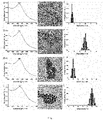
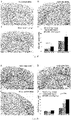
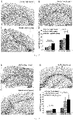
- the four TEM images of ligand L-NIBC modified gold nanoparticles are shown in panels B, E, H, and K of FIG. 1 ; the three TEM images of ligand L-NIBC modified AuCs are shown in panels B, E, and H of FIG. 2 .
- the images in FIG. 2 indicate that the L-NIBC-modified AuCs samples have a uniform particle size and good dispersibility, and the average diameter of L-NIBC-modified AuCs (refer to the diameter of gold core) is 1.1 nm, 1.8 nm and 2.6 nm respectively, in good accordance with the results in panels C, F and I of FIG. 2 .
- ligand L-NIBC modified gold nanoparticle samples have a larger particle size.
- Their average diameter (refer to the diameter of gold core) is 3.6 nm, 6.0 nm, 10.1 nm and 18.2 nm respectively, in good accordance with the results in panels C, F, I and L of FIG. 1 .
- test powder was dissolved in ultrapure water till the concentration was10mg ⁇ L -1 , and was measured by UV-vis absorption spectrum at room temperature.
- the scanning range was 190-1100 nm
- sample cell was a standard quartz cuvette with an optical path of 1 cm
- reference cell was filled with ultrapure water.
- UV-vis absorption spectra of the four ligand L-NIBC-modified gold nanoparticle samples with different sizes are shown in panels A, D, G and J of FIG. 1 , and the statistical distribution of particle size is shown in panels C, F, I and L of FIG. 1 ;
- UV-vis absorption spectra of three ligand L-NIBC modified AuCs samples with different sizes are shown in panels A, D and G of FIG. 2 , and the statistical distribution of particle size is shown in panels C, F and I of FIG. 2 .
- FIG. 1 indicates that due to the surface plasmon effect, ligand L-NIBC modified gold nanoparticles had an absorption peak at about 520 nm.
- the position of the absorption peak is relevant with particle size.
- the UV absorption peak appears at 516 nm; when the particle size is 6.0 nm, the UV absorption peak appears at 517 nm; when the particle size is 10.1 nm, the UV absorption peak appears at 520 nm, and when the particle size is 18.2 nm, the absorption peak appears at 523 nm. None of the four samples has any absorption peak above 560 nm.
- FIG. 2 indicates that in the UV absorption spectra of three ligand L-NIBC-modified AuCs samples with different particle sizes in Embodiment 2, the surface plasmon effect absorption peak at 520 nm disappeared, and two obvious absorption peaks appeared above 560 nm and the positions of the absorption peaks varied slightly with the particle sizes of AuCs. This is because AuCs exhibit molecule-like properties due to the collapse of the face-centered cubic structure, which leads to the discontinuity of the density of states of AuCs, the energy level splitting, the disappearance of plasmon resonance effect and the appearance of a new absorption peak in the long-wave direction. It could be concluded that the three powder samples in different particle sizes obtained in Embodiment 2 are all ligand-modified AuCs.
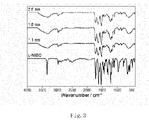
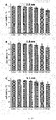
- Infrared spectra were measured on a VERTEX80V Fourier transform infrared spectrometer manufactured by Bruker in a solid powder high vacuum total reflection mode. The scanning range is 4000-400 cm -1 and the number of scans is 64. Taking the L-NIBC modified AuCs samples prepared in Embodiment 2 for example, the test samples were L-NIBC modified AuCs dry powder with three different particle sizes and the control sample was pure L-NIBC powder. The results are shown in FIG. 3 .
- FIG. 3 shows the infrared spectrum of L-NIBC modified AuCs with different particle sizes. Compared with pure L-NIBC (the curve at the top), the S-H stretching vibrations of L-NIBC modified AuCs with different particle sizes all disappeared completely at 2500-2600 cm -1 , while other characteristic peaks of L-NIBC were still observed, proving that L-NIBC molecules were successfully anchored to the surface of AuCs via Au-S bond. The figure also shows that the infrared spectrum of the ligand-modified AuCs is irrelevant with its size.
- AuCs modified by other ligand Y were prepared by a method similar to the above method, except that the solvent of solution B, the feed ratio between HAuCl4 and ligand Y, the reaction time and the amount of NaBH 4 added were slightly adjusted.
- L-cysteine, D-cysteine, N-isobutyryl-L-cysteine (L-NIBC) or N-isobutyryl-D-cysteine (D-NIBC) is used as ligand Y
- acetic acid is selected as the solvent
- dipeptide CR, dipeptide RC or 1-[(2S)-2-methyl-3-thiol-1-oxopropyl]-L-proline is used as ligand Y
- water is selected as the solvent, and so on and so forth; other steps are similar, so they won't be described in details here.
- the present invention prepared and obtained a series of ligand-modified AuCs by the foregoing method.
- the ligands and the parameters of the preparation process are shown in Table 1.
- Table 1 Preparation parameters of AuCs modified with different ligands in the present invention Embodiments
- Ligand Y Parameter Solvent used for solution B Feed ratio between HAuCl4 and Y Time of reaction in an ice bath under stirring before addition of NaBH 4 Mole ratio between HAuCl4 and NaBH 4 Time of reaction in an ice bath under stirring after addition of NaBH 4 1 L-cysteine Acetic acid 1:3 2h 1:2 0.5h 2 D-cysteine Acetic acid 1:3 2h 1:2 0.5h 3 N-acetyl-L-cysteine Ethanol 1:4 1h 1:1 0.5h 4 N-acetyl-D-cysteine Ethanol 1:4 1h 1:1 0.5h 5 L-NIBC Water 1:4 0.5h 1:2 0.5h 6
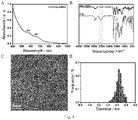
- FIG. 7-FIG. 11 are UV spectra (panel A in FIG. 7-FIG. 11 ), infrared spectra (panel B in FIG. 7-FIG. 11 ), transmission electron microscope (TEM ) images (panel C in FIG. 7-FIG. 11 ) and particle size distribution (panel D in FIG. 7-FIG. 11 ) of AuCs modified with ligand CR, RC, 1-[(2S)-2-methyl-3-thiol-1-oxopropyl]-L-proline (abbreviation: Cap), GSH and D-NIBC.
- This embodiment validated the functions of ligand-modified AuCs by in vitro experiment of A ⁇ aggregation kinetics, and compared the effects on A ⁇ aggregation kinetics with ligand-modified gold nanoparticles and independent use of ligand molecules to prove that the function is from AuCs other than ligand.
- the experiment used ThT fluorescent labeling method to characterize the kinetics of A ⁇ (1-40) aggregation and fibrosis.
- ThT Thioflavin T
- a ⁇ (1-40) is also a nucleation-controlled polymerization process.
- the growth curve of A ⁇ (1-40) fiber measured by ThT fluorescent labeling method is mainly divided into three stages: Initial stage, growth stage and platform stage.
- the initial stage is mainly a stage when A ⁇ (1-40) undergoes conformational transition to form misfolding and then aggregates and nucleates.
- the growth stage is a stage when A ⁇ (1-40) monomers are accumulated onto the cores of oligomers along the axial direction to form fibers and grow rapidly.
- the platform stage is a stage when all A ⁇ (1-40) molecules form mature long fibers, i.e., a stage when the fibers no longer grow.
- ThT fluorescent labeling method can conveniently monitor the kinetics process of fibrotic aggregation of A ⁇ (1-40) molecules.
- Freeze-dried powder of amyloid polypeptide A ⁇ (1-40) (Invitrogen Corp.) was dissolved in hexafluoroisopropanol (HFIP) to obtain a 1 g/L A ⁇ (1-40) solution, and the solution was inculated at room temperature for 2-4 h after sealing, then blowed to dry HFIP (for about 1 h) with high-purity nitrogen (N2, 99.9%) at an appropriate flow rate in a fume hood.
- HFIP hexafluoroisopropanol
- N2, 99.9% high-purity nitrogen
- PBS profuse phosphate buffer solution
- Ligand-modified AuCs and gold nanoparticles were added to 20 ⁇ M A ⁇ (1-40) PBS respectively to form samples of AuCs modified with different ligands at different concentrations and different particle sizes, and samples of gold nanoparticles modified with different ligands correspondingly.
- the samples were incubated continuously in a 96-well plate at 37°C by ThT fluorescent labeling method, and monitored the fluorescence intensity by microplate reader once every 10 minutes.
- the kinetic process of A ⁇ (1-40) aggregation was characterized through the change of fluorescence intensity of ThT.
- Every size of AuCs or gold nanoparticles were in six concentrations respectively, which were: 0 ppm (not containing AuCs, gold nanoparticles or L-NIBC, as blank control), 0.1 ppm, 1.0 ppm, 5.0 ppm, 10.0 ppm and 20.0 ppm respectively.
- L-NIBC molecules in two concentrations were used, which were: 1.0 ppm and 10.0 ppm respectively.
- FIG. 4 shows AFM topographies of A ⁇ (1-40) after coincubating with each experiment group and control group for 48 h.
- Panel A is the AFM topography after A ⁇ (1-40) was incubated alone for 48 h.
- Panel B is an AFM topography after A ⁇ (1-40) was coincubated with L-NIBC for 48 h.
- Panel C and panel D are AFM topographies after A ⁇ (1-40) was coincubated with gold nanoparticles with an average particle size of 6.0 nm and 3.6 nm respectively (modified with L-NIBC) for 48 h.
- panel E is an AFM topography after A ⁇ (1-40) was coincubated with AuCs in an average particle size of 1.8 nm (modified with L-NIBC) for 48 h.
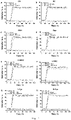
- the amyloidosis kinetics curve of A ⁇ (1-40) in different concentrations of L-NIBC is shown in panel A.
- the amyloidosis kinetics curves of A ⁇ (1-40) in different concentrations of gold nanoparticles with sizes of 18.2 nm, 10.1 nm, 6.0 nm and 3.6 nm respectively are shown in panel B-E.
- the amyloidosis kinetics curves of A ⁇ (1-40) in different concentrations of AuCs with sizes of 2.6nm, 1.8nm and 1.1nm respectively are shown in panel F-H.
- amyloidosis kinetics curves of A ⁇ in panels A-H are curves when A ⁇ (1-40) was coincubated gold nanoparticles or AuCs in different concentrations, ⁇ represented 0 ppm (i.e., no gold nanoparticles and AuCs), ⁇ represented 0.1 ppm, ⁇ represented 1 ppm, ⁇ represented 5 ppm, ⁇ represented 10 ppm, ⁇ represented 20 ppm.
- FIG. 4 is a qualitative experiment, but FIG. 5 is a quantitative experiment.
- the result of FIG. 5 indicates that the addition of L-NIBC had no obvious effect on A ⁇ (1-40) amyloidosis kinetics (panel A of FIG. 5 ); for gold nanoparticles, when the particle diameter was greater than or equal to 10.1 nm, the addition of L-NIBC-modified gold nanoparticles pushed forward both the growth stage and platform stage of A ⁇ aggregation kinetics (when the concentration of gold nanoparticles was 20 ppm, the growth stage of A ⁇ aggregation kinetics was pushed forward to 12 th h, and the platform stage was pushed forward to 16 th h), suggesting that L-NIBC-modified gold nanoparticles could accelerate A ⁇ aggregation (panels B and C of FIG.
- FIG. 5 indicates that even if the concentration was very high (20.0 ppm), the addition of L-NIBC-modified gold nanoparticles was unable to inhibit completely (i.e., no growth stage appeared, and the fluorescent curve was completely flat).
- the decrease of ThT fluorescent intensity observed here should be the partial quenching of the plasmon resonance effect of the gold nanoparticles to ThT fluorescence, but should not be attributed to the inhibitory effect of L-NIBC-modified gold nanoparticles on A ⁇ (1-40) aggregation.
- Panels F-H of FIG. 5 indicate that all the L-NIBC-modified AuCs could significantly inhibit A ⁇ aggregation (the starting time of the growth stage was postponed.
- the concentration of L-NIBC-modified AuCs was 5 ppm, the starting time of the growth stage in aggregation kinetics of 20 ⁇ M A ⁇ could be delayed to later than 50 h).
- the concentration of L-NIBC-modified AuCs was 10 ppm or above, A ⁇ aggregation could be completely inhibited (growth stage did not appear, and the fluorescent curve was completely flat).
- the minimum concentration of L-NIBC-modified AuCs needed for complete inhibition is relevant to the ligand type and the diameter of AuCs.
- L-NIBC-modified AuCs with sizes of 1.1 nm, 1.8 nm and 2.6 nm were 5.0 ppm, 5.0 ppm and 10.0 ppm respectively.
- L-NIBC-modified AuCs do not have plasmon resonance effect, they do not have quenching effect on ThT fluorescence. Therefore, the decrease in fluorescence intensity observed here was entirely due to the inhibitory effect of L-NIBC-modified AuCs on A ⁇ (1-40) aggregation.
- the quantitative results of FIG. 5 are in good agreement with the qualitative results of FIG. 4 .
- L-NIBC-modified gold nanoparticles when the size of L-NIBC-modified gold nanoparticles is smaller than or equal to 6.0 nm, they have certain inhibitory effect on A ⁇ aggregation and fibrosis, but limitedly; L-NIBC-modified AuCs has the function of completely inhibiting A ⁇ aggregation and fibrosis.
- L-NIBC molecules per se cannot influence the aggregation and fibrosis of A ⁇ (in view of panel B of FIG. 4 and panel A of FIG. 5 ), this function is from AuCs, but not L-NIBC ligand. This lays a foundation for the formation of medications for A ⁇ aggregation and fibrosis-related diseases, which can be classified as AuCs-containing substances as defined by the present invention.
- FIG. 12 shows the inhibitory effect of AuCs modified with CR, N-acetyl-L-cysteine (L-NAC), GSH, 1-[(2S)-2-methyl-3-thiol-1-oxopropyl]-L-proline (Cap), D-NIBC, RC or L-cysteine and D-cysteine (the dose is 10 ppm) on A ⁇ (1-40) aggregation and fibrosis.
- L-NAC N-acetyl-L-cysteine
- GSH 1-[(2S)-2-methyl-3-thiol-1-oxopropyl]-L-proline
- Cap 1-[(2S)-2-methyl-3-thiol-1-oxopropyl]-L-proline
- D-NIBC N-acetyl-L-cysteine
- Cap 1-[(2S)-2-methyl-3-thiol-1-oxopropyl]-L-proline
- the cell viability was used as an index in the experiment of this embodiment.
- the test result of CCK-8 method reflected the effects of ligand-modified AuCs or gold nanoparticle samples on the toxicity of A ⁇ (1-40), and showed if ligand-modified AuCs or gold nanoparticles had a neuroprotective effect on the pathogenesis of amyloid protein misfolding.
- the cells used in the experiment were SH-SY5Y neuroblastoma cell line.
- a ⁇ -induced AD cell model was established according to the description in the literature ( R. Liu, H. Barkhordarian, S. Emadi, C. B. Park, M. R. Sierks, Neurobiology of Disease 2005, 20, 74 ). Specific method:
- L-NIBC-modified AuCs in Embodiment 2 was taken for example, L-NIBC-modified gold nanoparticles were compared with AuCs and the results are shown in FIG. 6 .
- Panels A-C of FIG. 6 respectively shows the effects of L-NIBC-modified AuCs with a particle size of 1.1 nm, 1.8 nm or 2.6 nm at different concentrations on the cell viability in A ⁇ induced AD cell model;
- panels D-F respectively shows the effects of L-NIBC-modified gold nanoparticles with a particle size of 3.6 nm, 6.0 nm or 10.1 nm at different concentrations on the cell viability of the A ⁇ induced AD cell model.
- L-NIBC-modified AuCs with different sizes (the average sizes were 1.1, 1.8 and 2.6 nm respectively) raised the cell viability from nearly 60% to above 95% in A ⁇ -induced AD cell model (P values were all less than 0.05, in panels A-C of FIG. 6 ) even at a very low dose (0.1-1 ppm for instance).
- L-NIBC-modified gold nanoparticles in an average diameter of 3.6 nm raised the cell viability to some extent with the increase of concentrations in AD cell model (panel D of FIG. 6 ), but not obviously (P>0.05).
- L-NIBC-modified gold nanoparticles in average diameters of 6.0 nm and 10.1 nm respectively did not have effect on cell viability (panels E and F of FIG. 6 ).
- mice were administered consecutively for 100 days and 150 days, 10-12 mice were taken from each group to do immunohistochemistry of hippocampus and cerebral cortex. Here, the mice with 150 days of administration were those had completed the MWM experiment.
- mice were anesthetized by intraperitoneal injection of 5% chloral hydrate (10 ⁇ L/g), the limbs were fixed on the experiment table, and the chests were opened to expose the hearts fully. Pay attention to not cut the livers during thoracotomy.
- the left ventricles were washed with 50 mL 0.1 mol/L PBS for 5 min firstly to remove blood, and then 0.1mol/L PBS containing 4% paraformaldehyde was used for perfusion and fixation for 6 min.
- the brains were removed and placed in 4% paraformaldehyde at 4°C and were fixed overnight.
- the tissues were dehydrated with 10%, 20% and 30% sucrose solution by gradient in turn and stored at -80°C for future use.
- the tissues were embedded with paraffin.
- the midbrain hippocampus and cerebral cortex (8 ⁇ m thick) were sliced in reference to mouse brain map and used for immunohistochemical staining. The steps were as follows: the frozen 8 ⁇ m thick slices were kept at room temperature for 30 min, fixed in 4°C acetone for 20 min, washed with PBS for three times (5 min each time), and then incubated in 3% H 2 O 2 for 10 min to eliminate peroxidase activity.
- the slices were blocked with 10% normal goat serum for 40 min at room temperature (the slices used for A ⁇ (1-42) immunohistochemistry were incubated in 10% formic acid for 10 min before blocking to repair antigenic activity).
- the serum was poured out, anti-A ⁇ (1-40) (ab20068, 1:20 dilution) or anti-A ⁇ (1-42) working fluid (ab12267, 1:200 dilution) were added into the slices, and were incubated for 2 h at room temperature, were washed with PBS for three times (5 min a time).
- Horseradish enzyme labeled streptavidin (diluted with PBS) was added dropwise to the secondary antibody working solution, and was incubate at room temperature for 1 h. After washed with PBS for three times (5 min a time), nickel sulfate enhanced DAB blue reaction method was adopted for coloration for 10 min. When the positive product was dark blue and the background was clear, it was rinsed with distilled water for 3 times to stop coloration. After counter-stained with hematoxylin for 1 min, it was rinsed with tap water, was dried in a ventilated place, and sealed with neutral gum. The number of A ⁇ plaques in the entire hippocampus and cerebral cortex was observed and counted by a confocal microscope.
- Each sample included two slices containing both left and right ventricles as parallel samples. The average value was calculated for statistical analysis. All data were processed by SPSS software (SPSS 21), and undergone t test or one-way analysis of variance. P ⁇ 0.05 meaned that the difference is statistically significant.
- Panels A, B and C of FIG. 15 were results of typical immunohistochemical slices of the hippocampus and cerebral cortex of A ⁇ (1-40) in the high dose group, low dose group and model control group on the 100th day of administration.
- Panel D of FIG. 15 was the statistical result.
- the low dose group did not have a significant effect on the formation of A ⁇ (1-40) plaques in the hippocampus and cerebral cortex (P>0.05).
- FIG. 16 showed the corresponding results of A ⁇ (1-42).
- a ⁇ (1-40) and A ⁇ (1-42) plaques in the hippocampus and cerebral cortex of mice increased significantly in the model control group with 150 days of administration compared with 100 days of administration.
- a ⁇ (1-40) increased 57.2 ⁇ 7.2% in the hippocampus (P ⁇ 0.05), and 49.1 ⁇ 19.6% in the cerebral cortex (P ⁇ 0.05), and A ⁇ (1-42) increased 74.4 ⁇ 7.0% in the hippocampus (P ⁇ 0.05), and 65 ⁇ 11.1% in the cerebral cortex (P ⁇ 0.05). It was suggested that the older the model mice were, the greater the influence on memory and cognitive functions might be.
- FIG. 17 were results of typical immunohistochemical slices of the hippocampus and cerebral cortex of A ⁇ (1-40) in the high dose group, low dose group and model control group on the 150th day of administration respectively.
- Panel D of FIG. 17 was the statistical result.
- AuCs had a significant inhibitory effect on the formation of A ⁇ (1-40) plaques on the 150th day. This effect also showed a dose-dependent relationship.
- FIG. 18 shows the corresponding results of A ⁇ (1-42) upon 150-day AuCs administration.
- Administration at a low dose did not have an obvious effect on the formation of A ⁇ (1-42) plaques in the hippocampus and cerebral cortex of mice (P>0.05).
- AuCs could significantly improve the cognitive behavior of AD model mice, and inhibit the formation of A ⁇ (1-40) and A ⁇ (1-42) plaques in the hippocampus and cerebral cortex, thus AuCs could inhibit the development of the illness condition of sick mice, and be used to prevent and treat AD as AuCs-containing substances.
- This embodiment validated the functions of ligand-modified AuCs through in vitro ⁇ -syn aggregation kinetics experiment, and compared it with the effect of ligand molecules on ⁇ -syn aggregation kinetics when used alone, so as to prove that this function is from AuCs other than ligand.
- ThT Thioflavin T
- This embodiment utilizes ThT fluorescent labeling method to monitor the kinetics process of fibrosis aggregation of ⁇ -syn with the existence of AuCs. The specific experiment method was as follows:
- ⁇ -syn monomers Freeze-dried powder (Bachem Corp.) of ⁇ -syn was dissolved in HFIP to obtain a 1 g/L ⁇ -syn solution. The solution was incubated at room temperature for 2-4 h after sealing, then blowed to dry HFIP by high-purity nitrogen in a fume hood. Lastly the dried ⁇ -syn was dissolved in 200 ⁇ L DMSO, after sealing, the solution was kept in a refrigerator at -20°C for no more than one week for future use.
- PBS phosphate buffer solution
- Ligand-modified AuCs in different concentrations listed in Table 1 were added to 35 ⁇ M ⁇ -syn PBS solutions respectively, and incubated continuously in a 96-well plate at 37°C, by ThT fluorescent labeling method, and were monitored the fluorescence intensity by microplate reader once every 10 minutes. The kinetic process of ⁇ -syn aggregation was characterized through the change of fluorescence intensity of ThT.
- L-NIBC-modified AuCs with a particle size of 1.8nm prepared in Embodiment 2 were taken for example as experiment groups. L-NIBC molecules uncombined with AuCs were used as a ligand control group.
- AuCs modified with other different ligands listed in Table 1 were also studied.
- panels C-J of FIG. 19 showed the inhibitory effects of AuCs modified with D-NIBC, CR, RC, 1-[(2S)-2-methyl-3-thiol-1-oxopropyl]-L-proline (Cap), GSH, N-acetyl-L-cysteine (L-NAC), L-cysteine (L-Cys) and D-cysteine (D-Cys) (the dose were all 10 ppm) on ⁇ -syn aggregation and fibrosis.
- Experiment 1 The experiment uses cell viability as an indicator; the test results obtained from CCK-8 method reflect the resistence efficacy of ligand-modified AuCs or gold nanoparticles against the toxic effect of MPP + (a common-used neurotoxin) in SH-sy5y nerve cell model of PD, so as to demonstrate their neuroprotection effect on PD.
- MPP + a common-used neurotoxin
- the MPP + induced PD cell model is established according to the description in literatures ( Cassarino, D S; Fall, C P; Swerdlow, R H; Smith, T S; Halvorsen, E M; Miller, S W; Parks, J P; Parker, W D Jr; Bennett, J P Jr. Elevated reactive oxygen species and antioxidant enzyme activities in animal and cellular models of Parkinson's disease. Biochimica et biophysica acta. 1997.1362.77-86 ). Specific method was as follows:
- the experiment uses cell viability as an indicator.
- the test ps obtained from CCK-8 method reflect the resistence efficacy of ligand-modified AuCs or gold nanoparticles against the toxic effect of MPP + (a common-used neurotoxin) in SH-sy5y nerve cell model of PD, demonstrate their neuroprotection effect on PD.
- MPP + induced PD cell model is established according to the description in the reference ( D. S. Cassarino, C.P. Fall, R. H. Swerdlow, T. S. Smith, E. M. Halvorsen, S. W. Miller, J. P. Parks, W. D. Jr. Parker, J. P. Jr. Bennett, Biochimica et Biophysica Acta 1997, 1362, 77 ).
- the experimental results of L-NIBC-modified AuCs or gold nanoparticles were taken for example, as shown in FIG. 20 .
- the model control group P ⁇ 0.01 respectively, suggesting that the ligand-modified AuCs provided in the present invention had a protective effect on nerve cells in PD, and this effect was also originated from AuCs rather than the ligand.
- the corresponding gold nanoparticles with the same ligand did not help to improve the viability of the model cells at all experiment concentrations, indicating that the gold nanoparticles could not be used as a medicine for the prevention and treatment of PD.
- the model of MPP + (100 mM) induced apoptosis of PC12 cells was used, combining with the flow cytometry technique to observe the protective effect of AuCs on MPP + -induced cell injury and apoptosis in this experiment.
- the experiment results were shown in FIG. 21 .
- the cell cytometry detection results indicated that after incubation with MPP + for 24h, as indicated in the cell cytometry detection, the cell apoptosis percentage of the blank control group, without addition of MPP + , was 23.5 ⁇ 2.8%.
- the cell apoptosis percentage was 28.47 ⁇ 3.2%, which did not show a significant difference from the blank control group, suggesting that AuCs did not have apparent cytotoxic effect.
- the cell apoptosis percentage of the MPP + model group was 49.5 ⁇ 10.1%, which increased significantly compared with the blank control group (P ⁇ 0.001).
- Embodiment 7 and Embodiment 8 jointly indicated that AuCs could efficiently improve the cell viability and significantly inhibit the cell apoptosis of MPP + induced PD cell model.
- mice 80 C57bl/6 male mice, 8 weeks old, body weight 25-30 g; 3 mice in each cage, were all raised in an environment of room temperature 22-27°C, 12h circadian rhythms, with eating and drinking freely, and acclimated for 7 days.
- MPTP induced PD mice model Mice were randomly divided into four groups, 20 mice per group, including a blank control group, an AuCs normal control group, an MPTP model group and an AuCs treatment group. In the MPTP model group and the AuCs treatment group, 20 mg/kg (free base) MPTP was injected subcutaneously once every 2 h for four times. In the blank control group, 20 mg/kg normal saline was injected subcutaneously once every 2 h for four times.
- Rotarod test rotarod test requires animals to maintain balance and move continuously on a roller. It is a test widely used to test the motor coordination. Roller diameter is 6 cm and the rotation speed is 20 rpm. After the animals adapted to the roller for five times, the test was started at an interval of 1 min. The latency to fall off the rotarod was recorded consecutively for 5 times, and their average value was calculated.
- Neurotransmitter determination After behavioral test, the animals were sacrificed, and the mice striatum was taken and stored at -80°C. During measurement, the striatum was treated with 10 ⁇ L/mg (striatum) homogenate (0.1M perchloric acid, 0.1mM EDTA-2Na), was cracked by ultrasonication in an ice bath for 30 min, was centrifuged in a refrigerated centrifuge at 10000 r/min for 10 min. The supernatant was taken and filtered with a 0.25 ⁇ m filter, was injected into the liquid chromatographic column of HPLC.
- 10 ⁇ L/mg (striatum) homogenate 0.1M perchloric acid, 0.1mM EDTA-2Na
- DA dopamine
- DOPAC 3,4-dihydroxyphenylacetic acid
- HVA homovanillic acid
- tyrosine hydroxylase The brain tissues were taken out and fixed in 4wt%PFA+2wt% sucrose for 4-6 h, then were soaked in a 30wt% sucrose solution, were embed with OCT after the tissues sinked to the bottom, were continuous coronal sectioned by frozen slicer, were stained in ABC (Avidibiotin-peroxidase complex) method, took out the frozen tissues of substantia nigra and sectionedthem, were stained in TH and colored in diphenylamine, were observed under a microscope and taken photos.
- ABC Asvidibiotin-peroxidase complex
- mice 80 C57bl/6 male mice, 8 weeks old, body weight 25-30 g; 3 mice in each cage, were all raised in an environment of room temperature 22-27°C, 12h circadian rhythms, with eating and drinking freely, and acclimated for 7 days.
- MPTP induced PD mice model Mice were randomly divided into four groups, 20 mice per group, including a blank control group, AuCs control groups (based on the dose of AuCs, they were classified into low dose group and high dose group), an MPTP model group, AuCs treatment groups (based on the dose of AuCs, they were classified into low dose group and high dose group).
- AuCs control groups based on the dose of AuCs, they were classified into low dose group and high dose group
- an MPTP model group AuCs treatment groups (based on the dose of AuCs, they were classified into low dose group and high dose group).
- 30 mg/kg (free base) MPTP was injected intraperitoneally respectively once a day for 7 days consecutively.
- In the blank control group 30 mg/kg normal saline was injected subcutaneously once a day for 7 days consecutively.
- mice were shown in FIG. 22 .
- Three to five minutes after administration of MPTP mice showed tremor, decreased movement, arched back, hind limb opening, gait instability, vertical tail, and vertical hair.
- Individual epileptic seizures occurred after about 30 to 60 minutes. The above symptoms gradually reduced, and the mice returned to normal after 24 hours.
- the acute response was relieved, but after 24 hours, the performance of exercise decreased, gait instability and slow response became more obvious.
- the spontaneous activity distance and movement speed of the mice were significantly lower than those of the blank control group (P ⁇ 0.01), showing the symptoms of bradykinesia.
- mice were placed in a water tank to do the swimming test. Longer swimming time and farther swimming distance of mice indicate the mice had better motor coordination of limbs.
- the blank control group and the AuCs control group didn't have significant effect on the swimming time and swimming distance of mice (panels A and C of FIG. 23 ).
- MPTP model group showed significant decrease of swimming distance in 10 min (P ⁇ 0.05), and significant decrease of the swimming time in the water tank (P ⁇ 0.05), suggesting that MPTP significantly reduced the motor ability of swimming for the mice.
- the AuCs treatment group with administration of AuCs (high dose) and MPTP showed increase of swimming distance (P ⁇ 0.05) and significant increase of swimming time (P ⁇ 0.05) (panels B and D of FIG. 23 ), suggesting that AuCs significantly improved MPTP-induced motor behavior disorder of swimming for the mice.
- mice were injected with MPTP consecutively for 7 days, they were subjected to the rotarod test.
- the latency to fall off the rotarod and the percentage of mice falling off the rotarod were 12.1 ⁇ 4.6 min and 33.3 ⁇ 1.5% (panels A and C of FIG. 24 ).
- the rod drop latency of the mice in the MPTP model group was shortened significantly to 5.5 ⁇ 3.7 min, and the rod drop percentage increased significantly to 83.3 ⁇ 3.4%.
- the AuCs treatment group with administration of both MPTP and AuCs showed obvious increase of latency to fall off the rotarod (low dose group: P ⁇ 0.01; high dose group: P ⁇ 0.05), and significant decrease of the percentage falling off the rotarod (P ⁇ 0.001 for both the high dose group and the low dose group).
- the results were shown in panels B and D of FIG. 24 . This indicated that AuCs have the effect to improve MPTP-induced motor coordination dysfunction.
- the ligand-modified AuCs provided in the present invention could significantly improve the spontaneous locomotor activity, motor ability and body coordination ability of MPTP induced PD model mice, and had a significant protective effect against DA-ergic neuron loss in substantia nigra and striatum, indicating that substances containing AuCs can be used to treat PD.
- SH-sy5y cell line was adopted to evaluate the biosafety of the substances containing AuCs at the cell level.
- SH-sy5y cells in the logarithmic growth phase of cells were collected. The concentration of cell suspension was adjusted, and added 100 ⁇ L into each well. The cells were plated, and the cell density was adjusted to 1000-10000 per well.
- the cell cuture plates (the marginal wells of 96-well plates were filled with cell culture medium) were put in a cell incubator and incubated in a 5% CO 2 , 37°C environment for 24 h so that the cells attached to the wall. The 96-well plates were taken out, and then put in a biosafety cabinet after disinfection by alcohol.
- the original cell culture medium was sucked out, and then solutions of ligand-modified AuCs listed in Table 1 were added, which were diluted with cell culture medium to obtain a final concentration of 1 ppm, 10 ppm, 50 ppm, 100 ppm, 200 ppm and 500 ppm, respectively.
- An equal volume of fresh cell culture medium was added to the control group (no AuCs). And put it in a cell incubator, and incubated for 48h. 6 duplicate wells were set for each of the experiment group and the control group. After 48 h of incubation, the culture medium was removed by centrifuging, then washed with PBS for 2-3 times.
- L-NIBC-modified AuCs in Embodiment 2 were taken for example, the results were shown in FIG. 26 where panels A-C showed the effects of AuCs with particle sizes of 2.6 nm, 1.8 nm or 1.1 nm and at final concentrations of 1 ppm, 10 ppm, 50 ppm, 100 ppm, 200 ppm or 500 ppm on SH-sy5y cell viability. It was indicated that at a fairly high concentration (such as: 100 ppm), the addition of L-NIBC-modified AuCs almost didn't have any influence on cell viability.
- L-NIBC-modified AuCs At a higher concentration (such as: 200 and 500 ppm), the addition of L-NIBC-modified AuCs would cause slight cell injury (cell death rate is less than 20%). Since 100 ppm was much higher than the lowest effect concentration of the AuCs (0.1 ⁇ 1 ppm or lower), it could be concluded that L-NIBC-modified AuCs had high safety at the cell level.
- mice were taken, and divided into four groups with 15 mice in each group, whch were: a control group and three experiment groups.
- mice were fed normally, while in the three experiment groups, mice were fed with AuCs by oral administration (by gavage) at a dose of 0.1 g/Kg body weight, 0.3 g/Kg body weight and 1 g/Kg body weight a day respectively for one week under the condition of normal diet.
- the mice were fed normally for 30 days after the feeding of AuCs was finished. Abnormal responses of the mice were observed.
- mice experiment the ingestion of AuCs with different sizes at three concentrations had no influence on the survival and activity of mice. Even though for high dose intake of 1 g/Kg body weight, the mice still remained healthy.
- mice were randomly divided into four groups, 20 mice in each group, and fed with ligand-modified AuCs listed in Table 1 by oral administration (by gavage) at doses of 100 mg/kg, 20 mg/kg, 5 mg/Kg and 1 mg/kg respectively in the groups.
- the 20 mice in each group were randomly divided into 4 subgroups with 5 mice in each subgroup. They were sacrified at the time points of 2 h, 6 h, 24 h and 48 h respectively after feeding.
- Heart, liver, spleen, lung, kidney and brain tissues were taken separatly.
- tissue was weighed, and 2 mL water was added to homogenize, and then 2 mL aqua regia was added and mixed under vortex, and oscillated for 72 h on an oscillator. 2wt% nitric acid solution was added to a final volume of 10 mL, and centrifuged at 15000 rpm for 15 min. 4 mL of supernatant was sucked, and the content of gold element in the tissue fluid was measured by atomic absorption spectrometry.
- mice were randomly divided into four groups with 20 mice in each group, and injected intraperitoneally with ligand-modified AuCs listed in Table 1.
- the doses of AuCs (L-NIBC-modified AuCs with an average diameter of 1.8 nm were taken for example) in each group were 100 ppm, 20 mg ppm, 5 ppm and 1 ppm of mouse body weight respectively.
- the 20 mice in each group were randomly divided into 4 groups, 5 mice in each group. They were sacrified at time points of 2 h, 6 h, 24 h and 48 h respectively after feeding.
- Heart, liver, spleen, lung, kidney and brain tissues were taken separatly.
- tissue was weigh, and 2 mL water was added to homogenize, then 2 mL aqua regia was added and mixed under vortex, and oscillated for 72 h on an oscillator. 2wt% nitric acid solution was added to a final volume of 5 mL, and centrifuged at 15000 rpm for 15 min. 1 mL supernatant was sucked, and the content of gold element in the tissue fluid was measured by atomic absorption spectrometry.
- the substances containing AuCs provided in the present invention can improve mouse's cognitive behavior and motor behavior abilities and inhibit the formation of senile plaques in the brain in AD transgenic mouse model and MPTP induced PD mouse model, and have good biosafety at the animal level. They are suitable for industrial applications.
Landscapes
- Health & Medical Sciences (AREA)
- Chemical & Material Sciences (AREA)
- Life Sciences & Earth Sciences (AREA)
- Organic Chemistry (AREA)
- Engineering & Computer Science (AREA)
- General Health & Medical Sciences (AREA)
- Medicinal Chemistry (AREA)
- Bioinformatics & Cheminformatics (AREA)
- Veterinary Medicine (AREA)
- Public Health (AREA)
- Animal Behavior & Ethology (AREA)
- Pharmacology & Pharmacy (AREA)
- Epidemiology (AREA)
- Biomedical Technology (AREA)
- Proteomics, Peptides & Aminoacids (AREA)
- Molecular Biology (AREA)
- Immunology (AREA)
- Neurology (AREA)
- Neurosurgery (AREA)
- Genetics & Genomics (AREA)
- Biochemistry (AREA)
- Inorganic Chemistry (AREA)
- Biophysics (AREA)
- Chemical Kinetics & Catalysis (AREA)
- General Chemical & Material Sciences (AREA)
- Nuclear Medicine, Radiotherapy & Molecular Imaging (AREA)
- Nanotechnology (AREA)
- Gastroenterology & Hepatology (AREA)
- Zoology (AREA)
- Wood Science & Technology (AREA)
- Psychology (AREA)
- Psychiatry (AREA)
- Physics & Mathematics (AREA)
- Hospice & Palliative Care (AREA)
- Ceramic Engineering (AREA)
- Metallurgy (AREA)
- Mechanical Engineering (AREA)
- Materials Engineering (AREA)
- Biotechnology (AREA)
- Microbiology (AREA)
Applications Claiming Priority (3)
| Application Number | Priority Date | Filing Date | Title |
|---|---|---|---|
| CN201610635912 | 2016-08-05 | ||
| PCT/CN2017/093671 WO2018024111A1 (fr) | 2016-08-05 | 2017-07-20 | Méthode de préparation et d'utilisation d'un composé contenant un agrégat d'or |
| EP17836293.5A EP3449945B1 (fr) | 2016-08-05 | 2017-07-20 | Méthode de préparation et d'utilisation d'un composé contenant un agrégat d'or |
Related Parent Applications (1)
| Application Number | Title | Priority Date | Filing Date |
|---|---|---|---|
| EP17836293.5A Division EP3449945B1 (fr) | 2016-08-05 | 2017-07-20 | Méthode de préparation et d'utilisation d'un composé contenant un agrégat d'or |
Publications (4)
| Publication Number | Publication Date |
|---|---|
| EP4000636A2 true EP4000636A2 (fr) | 2022-05-25 |
| EP4000636A3 EP4000636A3 (fr) | 2022-08-03 |
| EP4000636B1 EP4000636B1 (fr) | 2025-09-03 |
| EP4000636C0 EP4000636C0 (fr) | 2025-09-03 |
Family
ID=61073450
Family Applications (2)
| Application Number | Title | Priority Date | Filing Date |
|---|---|---|---|
| EP21218128.3A Active EP4000636B1 (fr) | 2016-08-05 | 2017-07-20 | Substances contenant des aucs, leur procédé de préparation et leur utilisation |
| EP17836293.5A Active EP3449945B1 (fr) | 2016-08-05 | 2017-07-20 | Méthode de préparation et d'utilisation d'un composé contenant un agrégat d'or |
Family Applications After (1)
| Application Number | Title | Priority Date | Filing Date |
|---|---|---|---|
| EP17836293.5A Active EP3449945B1 (fr) | 2016-08-05 | 2017-07-20 | Méthode de préparation et d'utilisation d'un composé contenant un agrégat d'or |
Country Status (9)
| Country | Link |
|---|---|
| US (6) | US10729718B2 (fr) |
| EP (2) | EP4000636B1 (fr) |
| JP (6) | JP2019533636A (fr) |
| CN (6) | CN111848471A (fr) |
| AU (2) | AU2017306328B2 (fr) |
| DK (1) | DK3449945T3 (fr) |
| ES (1) | ES2908466T3 (fr) |
| PT (1) | PT3449945T (fr) |
| WO (1) | WO2018024111A1 (fr) |
Families Citing this family (33)
| Publication number | Priority date | Publication date | Assignee | Title |
|---|---|---|---|---|
| CN109986073B (zh) * | 2019-01-15 | 2021-06-15 | 温州医科大学附属第二医院、温州医科大学附属育英儿童医院 | 一种基于超滤的金团簇快速纯化方法 |
| WO2020147029A1 (fr) | 2019-01-16 | 2020-07-23 | Shenzhen Vast Conduct Science Research Co., Ltd. | Nanoagrégats de cuivre, acide hyaluronique modifié avec la thymine et poly(nanoagrégats de cuivre), leur procédé de préparation et leur application |
| CN114558029A (zh) * | 2019-01-16 | 2022-05-31 | 武汉广行科学研究有限公司 | 铜团簇、胸腺嘧啶修饰的透明质酸和多聚铜团簇、其制备方法和应用 |
| CN110016043B (zh) * | 2019-05-10 | 2021-05-25 | 西北工业大学 | 一种具有发射白光性质的金纳米团簇及其制备方法 |
| AU2020334128B2 (en) * | 2019-08-21 | 2025-10-23 | Brain Chemistry Labs | Compositions comprising a metal and L-serine, and uses thereof |
| CN112675196B (zh) * | 2019-10-18 | 2023-05-16 | 深圳深见医药科技有限公司 | 用于治疗糖尿病的组合物和方法 |
| US12310985B2 (en) | 2019-10-18 | 2025-05-27 | Shenzhen Profound View Pharmaceutical Technology | Composition and method for treatment of diabetes |
| WO2021072747A1 (fr) * | 2019-10-18 | 2021-04-22 | Shenzhen Profound View Pharmaceutical Technology Co., Ltd. | Composition et méthode de traitement du diabète |
| IT201900020724A1 (it) * | 2019-11-11 | 2021-05-11 | Univ Degli Studi Milano | Nanocluster d’oro nel trattamento atassia di Friedreich |
| CN115919895A (zh) * | 2019-12-27 | 2023-04-07 | 武汉广行科学研究有限公司 | 用于治疗多发性硬化症的组合物和方法 |
| CN110859827A (zh) * | 2019-12-27 | 2020-03-06 | 华北水利水电大学 | 一种金纳米团簇耦合体、其制备方法及微胶囊 |
| EP4045063B1 (fr) * | 2019-12-27 | 2024-10-02 | Wuhan Vast Conduct Science Foundation Co., Ltd. | Agrégats d'or (auc) pour le traitement de la sclerose en plaques |
| CN113398279B (zh) * | 2020-03-16 | 2022-09-20 | 武汉广行科学研究有限公司 | 用于治疗肝硬化的配体结合的金团簇,组合物和方法 |
| CN113398280B (zh) * | 2020-03-16 | 2022-10-14 | 武汉广行科学研究有限公司 | 配体结合的铜团簇、含配体结合的铜团簇的配伍及其治疗肝硬化中的应用 |
| KR102903284B1 (ko) * | 2020-03-16 | 2025-12-23 | 우한 바스트 컨덕트 사이언스 파운데이션 컴퍼니 리미티드 | 간경변증의 치료를 위한 금 클러스터(AuCs) 및 조성물 |
| KR102927722B1 (ko) * | 2020-05-09 | 2026-02-19 | 선전 프로파운드 뷰 파마슈티칼 테크놀로지 컴퍼니 리미티드 | 비정형 항정신병약물에 의해 유발되는 부작용의 치료 |
| CN111906328B (zh) * | 2020-08-11 | 2022-10-25 | 苏州大学 | 一种177Lu标记的金纳米团簇及其制备方法和应用 |
| CN114432340B (zh) * | 2020-11-03 | 2023-06-23 | 北京工业大学 | 一种Au与抗凋亡蛋白拮抗肽的复合物制备以及协同诱导肿瘤细胞凋亡的应用 |
| EP4203975A4 (fr) * | 2020-11-27 | 2024-01-03 | Shenzhen Profound View Pharmaceutical Technology Co., Ltd. | Agrégats d'or, compositions et méthodes de traitement d'un accident ischémique cérébral |
| CN116421739B (zh) * | 2020-11-27 | 2026-03-06 | 深圳深见医药科技有限公司 | 治疗脑卒中的金团簇、组合物和方法 |
| AU2021436167B2 (en) * | 2021-03-23 | 2025-01-23 | Wuhan Vast Conduct Science Foundation Co., Ltd. | Ligand-bound zinc sulfide nanoparticles, methods for making the same, and their use for treatment |
| CN113199035B (zh) * | 2021-04-21 | 2022-07-12 | 武汉理工大学 | 一种金纳米颗粒-金纳米团簇复合材料及其制备方法和应用 |
| BR112023022273A2 (pt) * | 2021-04-25 | 2024-01-23 | Shenzhen Profound View Pharmaceutical Tech Co Ltd | Agrupamentos de ouro, composições e métodos para tratamento de depressão |
| CN115317510B (zh) * | 2021-04-25 | 2023-12-01 | 深圳深见医药科技有限公司 | 治疗抑郁症的金团簇、组合物和方法 |
| CN113358528B (zh) * | 2021-06-08 | 2022-06-17 | 山东大学 | 一种基于悬滴法检测乙酰胆碱酯酶及其抑制剂的方法 |
| CN114472915B (zh) * | 2022-01-19 | 2023-07-28 | 东南大学 | 一种可拉伸仿生簇状金纳米线薄膜及制备方法与应用 |
| JP2025503046A (ja) * | 2022-01-20 | 2025-01-30 | 深▲セン▼深見医薬科技有限公司 | L-N-イソブチリルシステイン(L-NIBC)結合金クラスターAu18(L-NIBC)14、その組成物及び利用 |
| WO2023137671A1 (fr) * | 2022-01-20 | 2023-07-27 | Shenzhen Profound View Pharmaceutical Technology Co., Ltd. | Agrégat d'or lié à la l-n-isobutyryl cystéine (l-nibc) au15 (l-nibc) 13, compositions et applications associées |
| US20230248850A1 (en) * | 2022-01-28 | 2023-08-10 | The Board Of Trustees Of The Leland Stanford Junior University | Gold molecular clusters and methods of using same for near-infrared imaging |
| CN115121244B (zh) * | 2022-06-17 | 2023-04-25 | 武汉理工大学 | 硼氢化钠原位还原制备石墨烯负载金团簇纳米复合材料的方法及应用 |
| CN115870494B (zh) * | 2022-10-20 | 2024-05-28 | 武汉理工大学 | 一种戊烯酸-异丙基丙烯酰胺共聚物修饰超小金纳米材料及制备方法 |
| IT202300002310A1 (it) * | 2023-02-10 | 2024-08-10 | Univ Degli Studi Di Salerno | Uso di nanoparticelle di oro ricoperte con glutatione e funzionalizzate con litio (lig-aunps) per la modulazione dell’attività della glicogeno sintasi chinasi – 3 |
| CN116638082B (zh) * | 2023-04-27 | 2025-10-24 | 吉林大学 | 一种可逆调控荧光金纳米簇及其制备方法 |
Family Cites Families (30)
| Publication number | Priority date | Publication date | Assignee | Title |
|---|---|---|---|---|
| US6645464B1 (en) * | 1998-07-30 | 2003-11-11 | James F. Hainfeld | Loading metal particles into cell membrane vesicles and metal particular use for imaging and therapy |
| JP3859882B2 (ja) | 1998-09-14 | 2006-12-20 | 株式会社リコー | 新規なオリゴフェロセニレン誘導体及び電気化学的に活性なクラスター薄膜の製造方法 |
| EP1135682B1 (fr) * | 1998-11-30 | 2007-07-11 | Nanosphere, Inc. | Nanoparticules a enveloppes polymeres |
| WO2002001230A2 (fr) * | 2000-06-23 | 2002-01-03 | Minerva Biotechnologies Corporation | Detection rapide et sensible de l'agregation des proteines |
| AU2001249459A1 (en) * | 2000-03-24 | 2001-10-08 | The State Of Oregon, Acting By And Through The State Board Of Higher Education On Behalf Of The University Of Oregon | Scaffold-organized clusters and electronic devices made using such clusters |
| US7413770B2 (en) * | 2002-08-01 | 2008-08-19 | E.I. Du Pont De Nemours And Company | Ethylene glycol monolayer protected nanoparticles |
| JP2007297281A (ja) * | 2004-07-29 | 2007-11-15 | Ainobekkusu Kk | 体内活性酸素消去剤 |
| EP1793863B1 (fr) * | 2004-10-01 | 2017-04-12 | Midatech Ltd. | Nanoparticules contenant un antigene et un adjuvant activant les cellules t auxiliaires |
| CN101947235A (zh) * | 2007-04-18 | 2011-01-19 | 比奥克罗密克斯药业有限公司 | 共轭聚电解质的医药用途 |
| CA2721770A1 (fr) * | 2007-04-18 | 2008-10-30 | Biochromix Ab | Liaison de formes pathologiques de proteines utilisant des polyelectrolytes conjugues |
| CN101502880B (zh) * | 2009-03-02 | 2011-04-13 | 浙江大学 | 亚纳米金团簇分子的制备方法 |
| SG10202108051XA (en) * | 2009-07-08 | 2021-09-29 | Clene Nanomedicine Inc | Novel gold-based nanocrystals for medical treatments and electrochemical manufacturing processes therefor |
| KR101228106B1 (ko) * | 2010-01-21 | 2013-02-01 | 광주과학기술원 | 피부투과도, 세포유입 및 종양전달성이 증가된 나노운반체 |
| CN101905328B (zh) * | 2010-07-16 | 2011-12-21 | 浙江大学 | 一种水溶性Au10纳米团簇分子的制备方法 |
| US10012653B2 (en) * | 2011-06-15 | 2018-07-03 | Board Of Regents, The University Of Texas System | Nanoparticles for targeting acid tumor microenvironments |
| US9689826B2 (en) * | 2012-03-11 | 2017-06-27 | Technion Research And Development Foundation Ltd. | Detection of chronic kidney disease and disease progression |
| ITRM20120350A1 (it) * | 2012-07-19 | 2014-01-20 | Univ Degli Studi Milano | Nanocostrutti con attività farmacologica. |
| WO2014070769A1 (fr) * | 2012-10-29 | 2014-05-08 | The University Of North Carolina At Chapel Hill | Méthodes et compositions pour traiter des troubles du tissu mucosal |
| KR101999421B1 (ko) * | 2013-02-19 | 2019-07-11 | 내셔날 헬스 리서치 인스티튜트 | 항암 화학치료제를 위한 케이지된 백금 나노클러스터 |
| IN2013DE00866A (fr) * | 2013-03-22 | 2015-07-10 | Council Scient Ind Res | |
| WO2015069669A1 (fr) * | 2013-11-05 | 2015-05-14 | Elena Molokanova | Conjugués nanostructurés pour la modulation de sous-types spécifiques d'un emplacement de récepteurs et de canaux ioniques |
| CN103933583B (zh) * | 2014-04-14 | 2016-08-17 | 上海交通大学 | 抑制mgc-803细胞的手性金纳米团簇的制备及其用途 |
| CN105079782A (zh) * | 2014-05-13 | 2015-11-25 | 中国医学科学院放射医学研究所 | 一种金团簇作为肿瘤放疗增敏剂和ct造影剂的应用及其药物制剂 |
| US9655923B2 (en) * | 2014-07-16 | 2017-05-23 | Gnt Biotech & Medicals Corporation | Use of nano metal in promoting neurite outgrowth and treatment and/or prevention of neurological disorders |
| CN104215760B (zh) * | 2014-09-13 | 2016-06-29 | 福建医科大学 | 基于荧光金纳米团簇的脲酶抑制剂测定方法 |
| CN104689344B (zh) * | 2015-02-03 | 2017-06-16 | 东南大学 | 应用于老年痴呆症的早期快速检测及其多模态成像的影像制剂 |
| CN104667297B (zh) * | 2015-02-05 | 2017-12-29 | 华南师范大学 | 一种具有抑制神经细胞凋亡作用的金纳米粒复合物及其应用 |
| CN105061561B (zh) * | 2015-07-21 | 2019-03-26 | 天津大学 | 用于抑制β淀粉样蛋白聚集的多肽和多肽功能化的金纳米粒子及制备和应用 |
| TWI542710B (zh) * | 2015-09-30 | 2016-07-21 | 胡宇光 | 光致螢光金奈米粒子及其製造方法 |
| CN105527267A (zh) * | 2016-01-30 | 2016-04-27 | 山西大学 | 一种红色荧光金纳米团簇及其制备方法和应用 |
-
2017
- 2017-07-20 CN CN202010953800.0A patent/CN111848471A/zh active Pending
- 2017-07-20 CN CN202010953763.3A patent/CN111848470A/zh active Pending
- 2017-07-20 AU AU2017306328A patent/AU2017306328B2/en active Active
- 2017-07-20 EP EP21218128.3A patent/EP4000636B1/fr active Active
- 2017-07-20 CN CN202010955113.2A patent/CN111848472A/zh active Pending
- 2017-07-20 CN CN201710595548.9A patent/CN107684559B/zh active Active
- 2017-07-20 US US16/084,553 patent/US10729718B2/en active Active
- 2017-07-20 CN CN201710595672.5A patent/CN107684560B/zh active Active
- 2017-07-20 JP JP2018569147A patent/JP2019533636A/ja active Pending
- 2017-07-20 PT PT178362935T patent/PT3449945T/pt unknown
- 2017-07-20 EP EP17836293.5A patent/EP3449945B1/fr active Active
- 2017-07-20 WO PCT/CN2017/093671 patent/WO2018024111A1/fr not_active Ceased
- 2017-07-20 ES ES17836293T patent/ES2908466T3/es active Active
- 2017-07-20 DK DK17836293.5T patent/DK3449945T3/da active
- 2017-07-20 CN CN201710597787.8A patent/CN107693538B/zh active Active
-
2018
- 2018-09-13 US US16/129,896 patent/US20190030070A1/en not_active Abandoned
- 2018-09-13 US US16/129,884 patent/US11058717B2/en active Active
-
2019
- 2019-04-28 US US16/396,727 patent/US11000543B2/en active Active
-
2021
- 2021-04-05 US US17/222,229 patent/US20210220394A1/en active Pending
- 2021-04-05 US US17/222,310 patent/US20210220395A1/en active Pending
- 2021-04-19 JP JP2021070595A patent/JP7217046B2/ja active Active
- 2021-04-19 JP JP2021070598A patent/JP7290880B2/ja active Active
- 2021-04-19 JP JP2021070600A patent/JP7290881B2/ja active Active
- 2021-08-02 AU AU2021211975A patent/AU2021211975B2/en active Active
-
2023
- 2023-01-16 JP JP2023004293A patent/JP7522485B2/ja active Active
-
2024
- 2024-07-05 JP JP2024108600A patent/JP7802395B2/ja active Active
Non-Patent Citations (11)
| Title |
|---|
| C. V. VORHEESM. T. WILLIAMS, NATURE PROTOCOLS, vol. 1, 2006, pages 848 |
| D. LUOJ. ZHAOY CHENGS. M. LEEJ. RONG, MOLECULAR NEUROBIOLOGY, 2017 |
| D. S. CASSARINOC.P. FALLR. H. SWERDLOWT. S. SMITHE. M. HALVORSENS. W. MILLERJ. P. PARKSW. D. JR. PARKERJ. P. JR. BENNETT, BIOCHIMICA ET BIOPHYSICA ACTA, vol. 1362, 1997, pages 77 |
| J. R. WALLBANKD. GHAZARYANA. MISRAY CAOJ. S. TUB. A. PIOTM. POTEMSKIS.WIEDMANNU. ZEITLERT. L. M. LANE, ACS APPLIED MATERIALS & INTERFACES, vol. 6, 2014, pages 2185 |
| N. GAOH. SUNK. DONGJ. RENX. QU, CHEMISTRY-A EUROPEAN JOURNAL, vol. 21, 2015, pages 829 |
| S. HSIEHC. W. CHANGH. H. CHOU, COLLOIDS AND SURFACES B: BIOINTERFACES, vol. 112, 2013, pages 525 |
| V. N. UVERSKYJ. LIP. SOUILLACI. S. MILLETTS. DONIACHR. JAKESM. GEODERTA. L. FINK, JOURNAL OF BIOLOGICAL CHEMISTRY, vol. 277, 2002, pages 11970 |
| W. YANL. XUC. XUW. MAH. KUANGL. WANGN. A. KOTOV, JOURNAL OF THE AMERICAN CHEMICAL SOCIETY, vol. 134, 2012, pages 15114 |
| X. YUANB. ZHANGZ. LUOQ. YAOD. T. LEONGN. YANJ. XIE, ANGEWANDTE CHEMIE INTERNATIONAL EDITION, vol. 53, 2014, pages 4623 |
| Y D. ALVAREZJ. A. FAUERBACHJ. V. PELLEGROTTIT. M. JOVINE. A. JARES-ERIJMANF. D. STEFANI, NANO LETTERS, vol. 13, 2013, pages 6156 |
| Y H. LIAOY J. CHANGY YOSHIIKEY C. CHANGY R. CHEN, SMALL, vol. 8, 2012, pages 3631 |
Also Published As
Similar Documents
| Publication | Publication Date | Title |
|---|---|---|
| AU2021211975B2 (en) | Substance containing gold cluster and preparation method and use thereof | |
| WO2017133714A1 (fr) | Utilisation d'une structure à base de fullerène dans la préparation de médicaments pour le traitement de la maladie de parkinson | |
| Gao et al. | Focused ultrasound-mediated cerium-based nanoreactor against Parkinson's disease via ROS regulation and microglia polarization | |
| HK1250489A1 (en) | Substances containing gold clusters and preparation method and use thereof | |
| HK1250489B (zh) | 一种含金团簇的物质及其制备方法与应用 | |
| HK40039781A (en) | Substances containing gold clusters and preparation method and use thereof | |
| HK1250488B (zh) | 含金团簇的物质在制备预防和治疗帕金森症药物中的应用 | |
| HK1250488A1 (en) | Use of gold cluster-containing substances in preparation of a medicament for preventing and treating parkinson's disease | |
| HK40039780A (en) | Use of gold cluster-containing substances in preparation of a medicament for preventing and treating parkinson's disease | |
| HK1250487B (zh) | 含金团簇的物质在制备预防和治疗阿兹海默病药物中的应用 | |
| HK40039782A (en) | Use of gold cluster-containing substances in preparation of a medicament for preventing and treating alzheimer's disease |
Legal Events
| Date | Code | Title | Description |
|---|---|---|---|
| PUAI | Public reference made under article 153(3) epc to a published international application that has entered the european phase |
Free format text: ORIGINAL CODE: 0009012 |
|
| STAA | Information on the status of an ep patent application or granted ep patent |
Free format text: STATUS: REQUEST FOR EXAMINATION WAS MADE |
|
| 17P | Request for examination filed |
Effective date: 20211229 |
|
| AC | Divisional application: reference to earlier application |
Ref document number: 3449945 Country of ref document: EP Kind code of ref document: P |
|
| AK | Designated contracting states |
Kind code of ref document: A2 Designated state(s): AL AT BE BG CH CY CZ DE DK EE ES FI FR GB GR HR HU IE IS IT LI LT LU LV MC MK MT NL NO PL PT RO RS SE SI SK SM TR |
|
| PUAL | Search report despatched |
Free format text: ORIGINAL CODE: 0009013 |
|
| AK | Designated contracting states |
Kind code of ref document: A3 Designated state(s): AL AT BE BG CH CY CZ DE DK EE ES FI FR GB GR HR HU IE IS IT LI LT LU LV MC MK MT NL NO PL PT RO RS SE SI SK SM TR |
|
| RIC1 | Information provided on ipc code assigned before grant |
Ipc: G01N 33/533 20060101ALI20220630BHEP Ipc: B22F 9/24 20060101ALI20220630BHEP Ipc: B22F 1/00 20220101ALI20220630BHEP Ipc: A61P 25/28 20060101ALI20220630BHEP Ipc: A61K 47/50 20170101AFI20220630BHEP |
|
| STAA | Information on the status of an ep patent application or granted ep patent |
Free format text: STATUS: EXAMINATION IS IN PROGRESS |
|
| 17Q | First examination report despatched |
Effective date: 20230926 |
|
| REG | Reference to a national code |
Ref country code: DE Ref legal event code: R079 Free format text: PREVIOUS MAIN CLASS: A61K0047500000 Ipc: G01N0033533000 Ref country code: DE Ref legal event code: R079 Ref document number: 602017091668 Country of ref document: DE Free format text: PREVIOUS MAIN CLASS: A61K0047500000 Ipc: G01N0033533000 |
|
| GRAP | Despatch of communication of intention to grant a patent |
Free format text: ORIGINAL CODE: EPIDOSNIGR1 |
|
| STAA | Information on the status of an ep patent application or granted ep patent |
Free format text: STATUS: GRANT OF PATENT IS INTENDED |
|
| INTG | Intention to grant announced |
Effective date: 20250401 |
|
| RIC1 | Information provided on ipc code assigned before grant |
Ipc: B22F 9/24 20060101ALI20250321BHEP Ipc: B22F 1/00 20220101ALI20250321BHEP Ipc: C22C 5/02 20060101ALI20250321BHEP Ipc: A61P 25/28 20060101ALI20250321BHEP Ipc: A61P 25/16 20060101ALI20250321BHEP Ipc: A61K 47/69 20170101ALI20250321BHEP Ipc: A61K 47/62 20170101ALI20250321BHEP Ipc: A61K 47/54 20170101ALI20250321BHEP Ipc: A61K 33/242 20190101ALI20250321BHEP Ipc: G01N 33/533 20060101AFI20250321BHEP |
|
| GRAS | Grant fee paid |
Free format text: ORIGINAL CODE: EPIDOSNIGR3 |
|
| GRAA | (expected) grant |
Free format text: ORIGINAL CODE: 0009210 |
|
| STAA | Information on the status of an ep patent application or granted ep patent |
Free format text: STATUS: THE PATENT HAS BEEN GRANTED |
|
| AC | Divisional application: reference to earlier application |
Ref document number: 3449945 Country of ref document: EP Kind code of ref document: P |
|
| AK | Designated contracting states |
Kind code of ref document: B1 Designated state(s): AL AT BE BG CH CY CZ DE DK EE ES FI FR GB GR HR HU IE IS IT LI LT LU LV MC MK MT NL NO PL PT RO RS SE SI SK SM TR |
|
| REG | Reference to a national code |
Ref country code: CH Ref legal event code: EP |
|
| REG | Reference to a national code |
Ref country code: IE Ref legal event code: FG4D |
|
| U01 | Request for unitary effect filed |
Effective date: 20250903 |
|
| U07 | Unitary effect registered |
Designated state(s): AT BE BG DE DK EE FI FR IT LT LU LV MT NL PT RO SE SI Effective date: 20250909 |
|
| PG25 | Lapsed in a contracting state [announced via postgrant information from national office to epo] |
Ref country code: HR Free format text: LAPSE BECAUSE OF FAILURE TO SUBMIT A TRANSLATION OF THE DESCRIPTION OR TO PAY THE FEE WITHIN THE PRESCRIBED TIME-LIMIT Effective date: 20250903 |
|
| PG25 | Lapsed in a contracting state [announced via postgrant information from national office to epo] |
Ref country code: GR Free format text: LAPSE BECAUSE OF FAILURE TO SUBMIT A TRANSLATION OF THE DESCRIPTION OR TO PAY THE FEE WITHIN THE PRESCRIBED TIME-LIMIT Effective date: 20251204 |
|
| PG25 | Lapsed in a contracting state [announced via postgrant information from national office to epo] |
Ref country code: PL Free format text: LAPSE BECAUSE OF FAILURE TO SUBMIT A TRANSLATION OF THE DESCRIPTION OR TO PAY THE FEE WITHIN THE PRESCRIBED TIME-LIMIT Effective date: 20250903 |
|
| PG25 | Lapsed in a contracting state [announced via postgrant information from national office to epo] |
Ref country code: RS Free format text: LAPSE BECAUSE OF FAILURE TO SUBMIT A TRANSLATION OF THE DESCRIPTION OR TO PAY THE FEE WITHIN THE PRESCRIBED TIME-LIMIT Effective date: 20251203 |
|
| PG25 | Lapsed in a contracting state [announced via postgrant information from national office to epo] |
Ref country code: ES Free format text: LAPSE BECAUSE OF FAILURE TO SUBMIT A TRANSLATION OF THE DESCRIPTION OR TO PAY THE FEE WITHIN THE PRESCRIBED TIME-LIMIT Effective date: 20250903 |
|
| PG25 | Lapsed in a contracting state [announced via postgrant information from national office to epo] |
Ref country code: SM Free format text: LAPSE BECAUSE OF FAILURE TO SUBMIT A TRANSLATION OF THE DESCRIPTION OR TO PAY THE FEE WITHIN THE PRESCRIBED TIME-LIMIT Effective date: 20250903 |
|
| PG25 | Lapsed in a contracting state [announced via postgrant information from national office to epo] |
Ref country code: IS Free format text: LAPSE BECAUSE OF FAILURE TO SUBMIT A TRANSLATION OF THE DESCRIPTION OR TO PAY THE FEE WITHIN THE PRESCRIBED TIME-LIMIT Effective date: 20260103 |
|
| PG25 | Lapsed in a contracting state [announced via postgrant information from national office to epo] |
Ref country code: CZ Free format text: LAPSE BECAUSE OF FAILURE TO SUBMIT A TRANSLATION OF THE DESCRIPTION OR TO PAY THE FEE WITHIN THE PRESCRIBED TIME-LIMIT Effective date: 20250903 |
|
| PG25 | Lapsed in a contracting state [announced via postgrant information from national office to epo] |
Ref country code: SK Free format text: LAPSE BECAUSE OF FAILURE TO SUBMIT A TRANSLATION OF THE DESCRIPTION OR TO PAY THE FEE WITHIN THE PRESCRIBED TIME-LIMIT Effective date: 20250903 |