EP4000929A1 - Procédé de séchage de corps cru pour la fabrication additive après la réticulation induite par la lumière des nano particules inorganiques en suspension - Google Patents
Procédé de séchage de corps cru pour la fabrication additive après la réticulation induite par la lumière des nano particules inorganiques en suspension Download PDFInfo
- Publication number
- EP4000929A1 EP4000929A1 EP21208040.2A EP21208040A EP4000929A1 EP 4000929 A1 EP4000929 A1 EP 4000929A1 EP 21208040 A EP21208040 A EP 21208040A EP 4000929 A1 EP4000929 A1 EP 4000929A1
- Authority
- EP
- European Patent Office
- Prior art keywords
- liquid
- green body
- ceramic
- replacement
- drying
- Prior art date
- Legal status (The legal status is an assumption and is not a legal conclusion. Google has not performed a legal analysis and makes no representation as to the accuracy of the status listed.)
- Pending
Links
Images



Classifications
-
- B—PERFORMING OPERATIONS; TRANSPORTING
- B33—ADDITIVE MANUFACTURING TECHNOLOGY
- B33Y—ADDITIVE MANUFACTURING, i.e. MANUFACTURING OF THREE-DIMENSIONAL [3D] OBJECTS BY ADDITIVE DEPOSITION, ADDITIVE AGGLOMERATION OR ADDITIVE LAYERING, e.g. BY 3D PRINTING, STEREOLITHOGRAPHY OR SELECTIVE LASER SINTERING
- B33Y10/00—Processes of additive manufacturing
-
- B—PERFORMING OPERATIONS; TRANSPORTING
- B28—WORKING CEMENT, CLAY, OR STONE
- B28B—SHAPING CLAY OR OTHER CERAMIC COMPOSITIONS; SHAPING SLAG; SHAPING MIXTURES CONTAINING CEMENTITIOUS MATERIAL, e.g. PLASTER
- B28B1/00—Producing shaped prefabricated articles from the material
- B28B1/001—Rapid manufacturing of 3D objects by additive depositing, agglomerating or laminating of material
-
- B—PERFORMING OPERATIONS; TRANSPORTING
- B28—WORKING CEMENT, CLAY, OR STONE
- B28B—SHAPING CLAY OR OTHER CERAMIC COMPOSITIONS; SHAPING SLAG; SHAPING MIXTURES CONTAINING CEMENTITIOUS MATERIAL, e.g. PLASTER
- B28B11/00—Apparatus or processes for treating or working the shaped or preshaped articles
- B28B11/24—Apparatus or processes for treating or working the shaped or preshaped articles for curing, setting or hardening
- B28B11/243—Setting, e.g. drying, dehydrating or firing ceramic articles
-
- C—CHEMISTRY; METALLURGY
- C03—GLASS; MINERAL OR SLAG WOOL
- C03C—CHEMICAL COMPOSITION OF GLASSES, GLAZES OR VITREOUS ENAMELS; SURFACE TREATMENT OF GLASS; SURFACE TREATMENT OF FIBRES OR FILAMENTS MADE FROM GLASS, MINERALS OR SLAGS; JOINING GLASS TO GLASS OR OTHER MATERIALS
- C03C14/00—Glass compositions containing a non-glass component, e.g. compositions containing fibres, filaments, whiskers, platelets, or the like, dispersed in a glass matrix
-
- C—CHEMISTRY; METALLURGY
- C04—CEMENTS; CONCRETE; ARTIFICIAL STONE; CERAMICS; REFRACTORIES
- C04B—LIME, MAGNESIA; SLAG; CEMENTS; COMPOSITIONS THEREOF, e.g. MORTARS, CONCRETE OR LIKE BUILDING MATERIALS; ARTIFICIAL STONE; CERAMICS; REFRACTORIES; TREATMENT OF NATURAL STONE
- C04B35/00—Shaped ceramic products characterised by their composition; Ceramics compositions; Processing powders of inorganic compounds preparatory to the manufacturing of ceramic products
- C04B35/01—Shaped ceramic products characterised by their composition; Ceramics compositions; Processing powders of inorganic compounds preparatory to the manufacturing of ceramic products based on oxide ceramics
- C04B35/03—Shaped ceramic products characterised by their composition; Ceramics compositions; Processing powders of inorganic compounds preparatory to the manufacturing of ceramic products based on oxide ceramics based on magnesium oxide, calcium oxide or oxide mixtures derived from dolomite
- C04B35/057—Shaped ceramic products characterised by their composition; Ceramics compositions; Processing powders of inorganic compounds preparatory to the manufacturing of ceramic products based on oxide ceramics based on magnesium oxide, calcium oxide or oxide mixtures derived from dolomite based on calcium oxide
-
- C—CHEMISTRY; METALLURGY
- C04—CEMENTS; CONCRETE; ARTIFICIAL STONE; CERAMICS; REFRACTORIES
- C04B—LIME, MAGNESIA; SLAG; CEMENTS; COMPOSITIONS THEREOF, e.g. MORTARS, CONCRETE OR LIKE BUILDING MATERIALS; ARTIFICIAL STONE; CERAMICS; REFRACTORIES; TREATMENT OF NATURAL STONE
- C04B35/00—Shaped ceramic products characterised by their composition; Ceramics compositions; Processing powders of inorganic compounds preparatory to the manufacturing of ceramic products
- C04B35/01—Shaped ceramic products characterised by their composition; Ceramics compositions; Processing powders of inorganic compounds preparatory to the manufacturing of ceramic products based on oxide ceramics
- C04B35/10—Shaped ceramic products characterised by their composition; Ceramics compositions; Processing powders of inorganic compounds preparatory to the manufacturing of ceramic products based on oxide ceramics based on aluminium oxide
- C04B35/111—Fine ceramics
-
- C—CHEMISTRY; METALLURGY
- C04—CEMENTS; CONCRETE; ARTIFICIAL STONE; CERAMICS; REFRACTORIES
- C04B—LIME, MAGNESIA; SLAG; CEMENTS; COMPOSITIONS THEREOF, e.g. MORTARS, CONCRETE OR LIKE BUILDING MATERIALS; ARTIFICIAL STONE; CERAMICS; REFRACTORIES; TREATMENT OF NATURAL STONE
- C04B35/00—Shaped ceramic products characterised by their composition; Ceramics compositions; Processing powders of inorganic compounds preparatory to the manufacturing of ceramic products
- C04B35/01—Shaped ceramic products characterised by their composition; Ceramics compositions; Processing powders of inorganic compounds preparatory to the manufacturing of ceramic products based on oxide ceramics
- C04B35/14—Shaped ceramic products characterised by their composition; Ceramics compositions; Processing powders of inorganic compounds preparatory to the manufacturing of ceramic products based on oxide ceramics based on silica
-
- C—CHEMISTRY; METALLURGY
- C04—CEMENTS; CONCRETE; ARTIFICIAL STONE; CERAMICS; REFRACTORIES
- C04B—LIME, MAGNESIA; SLAG; CEMENTS; COMPOSITIONS THEREOF, e.g. MORTARS, CONCRETE OR LIKE BUILDING MATERIALS; ARTIFICIAL STONE; CERAMICS; REFRACTORIES; TREATMENT OF NATURAL STONE
- C04B35/00—Shaped ceramic products characterised by their composition; Ceramics compositions; Processing powders of inorganic compounds preparatory to the manufacturing of ceramic products
- C04B35/01—Shaped ceramic products characterised by their composition; Ceramics compositions; Processing powders of inorganic compounds preparatory to the manufacturing of ceramic products based on oxide ceramics
- C04B35/447—Shaped ceramic products characterised by their composition; Ceramics compositions; Processing powders of inorganic compounds preparatory to the manufacturing of ceramic products based on oxide ceramics based on phosphates, e.g. hydroxyapatite
-
- C—CHEMISTRY; METALLURGY
- C04—CEMENTS; CONCRETE; ARTIFICIAL STONE; CERAMICS; REFRACTORIES
- C04B—LIME, MAGNESIA; SLAG; CEMENTS; COMPOSITIONS THEREOF, e.g. MORTARS, CONCRETE OR LIKE BUILDING MATERIALS; ARTIFICIAL STONE; CERAMICS; REFRACTORIES; TREATMENT OF NATURAL STONE
- C04B35/00—Shaped ceramic products characterised by their composition; Ceramics compositions; Processing powders of inorganic compounds preparatory to the manufacturing of ceramic products
- C04B35/01—Shaped ceramic products characterised by their composition; Ceramics compositions; Processing powders of inorganic compounds preparatory to the manufacturing of ceramic products based on oxide ceramics
- C04B35/453—Shaped ceramic products characterised by their composition; Ceramics compositions; Processing powders of inorganic compounds preparatory to the manufacturing of ceramic products based on oxide ceramics based on zinc, tin, or bismuth oxides or solid solutions thereof with other oxides, e.g. zincates, stannates or bismuthates
-
- C—CHEMISTRY; METALLURGY
- C04—CEMENTS; CONCRETE; ARTIFICIAL STONE; CERAMICS; REFRACTORIES
- C04B—LIME, MAGNESIA; SLAG; CEMENTS; COMPOSITIONS THEREOF, e.g. MORTARS, CONCRETE OR LIKE BUILDING MATERIALS; ARTIFICIAL STONE; CERAMICS; REFRACTORIES; TREATMENT OF NATURAL STONE
- C04B35/00—Shaped ceramic products characterised by their composition; Ceramics compositions; Processing powders of inorganic compounds preparatory to the manufacturing of ceramic products
- C04B35/01—Shaped ceramic products characterised by their composition; Ceramics compositions; Processing powders of inorganic compounds preparatory to the manufacturing of ceramic products based on oxide ceramics
- C04B35/48—Shaped ceramic products characterised by their composition; Ceramics compositions; Processing powders of inorganic compounds preparatory to the manufacturing of ceramic products based on oxide ceramics based on zirconium or hafnium oxides, zirconates, zircon or hafnates
- C04B35/486—Fine ceramics
-
- C—CHEMISTRY; METALLURGY
- C04—CEMENTS; CONCRETE; ARTIFICIAL STONE; CERAMICS; REFRACTORIES
- C04B—LIME, MAGNESIA; SLAG; CEMENTS; COMPOSITIONS THEREOF, e.g. MORTARS, CONCRETE OR LIKE BUILDING MATERIALS; ARTIFICIAL STONE; CERAMICS; REFRACTORIES; TREATMENT OF NATURAL STONE
- C04B35/00—Shaped ceramic products characterised by their composition; Ceramics compositions; Processing powders of inorganic compounds preparatory to the manufacturing of ceramic products
- C04B35/01—Shaped ceramic products characterised by their composition; Ceramics compositions; Processing powders of inorganic compounds preparatory to the manufacturing of ceramic products based on oxide ceramics
- C04B35/48—Shaped ceramic products characterised by their composition; Ceramics compositions; Processing powders of inorganic compounds preparatory to the manufacturing of ceramic products based on oxide ceramics based on zirconium or hafnium oxides, zirconates, zircon or hafnates
- C04B35/486—Fine ceramics
- C04B35/488—Composites
- C04B35/4885—Composites with aluminium oxide
-
- C—CHEMISTRY; METALLURGY
- C04—CEMENTS; CONCRETE; ARTIFICIAL STONE; CERAMICS; REFRACTORIES
- C04B—LIME, MAGNESIA; SLAG; CEMENTS; COMPOSITIONS THEREOF, e.g. MORTARS, CONCRETE OR LIKE BUILDING MATERIALS; ARTIFICIAL STONE; CERAMICS; REFRACTORIES; TREATMENT OF NATURAL STONE
- C04B35/00—Shaped ceramic products characterised by their composition; Ceramics compositions; Processing powders of inorganic compounds preparatory to the manufacturing of ceramic products
- C04B35/01—Shaped ceramic products characterised by their composition; Ceramics compositions; Processing powders of inorganic compounds preparatory to the manufacturing of ceramic products based on oxide ceramics
- C04B35/48—Shaped ceramic products characterised by their composition; Ceramics compositions; Processing powders of inorganic compounds preparatory to the manufacturing of ceramic products based on oxide ceramics based on zirconium or hafnium oxides, zirconates, zircon or hafnates
- C04B35/49—Shaped ceramic products characterised by their composition; Ceramics compositions; Processing powders of inorganic compounds preparatory to the manufacturing of ceramic products based on oxide ceramics based on zirconium or hafnium oxides, zirconates, zircon or hafnates containing also titanium oxides or titanates
- C04B35/491—Shaped ceramic products characterised by their composition; Ceramics compositions; Processing powders of inorganic compounds preparatory to the manufacturing of ceramic products based on oxide ceramics based on zirconium or hafnium oxides, zirconates, zircon or hafnates containing also titanium oxides or titanates based on lead zirconates and lead titanates, e.g. PZT
-
- C—CHEMISTRY; METALLURGY
- C04—CEMENTS; CONCRETE; ARTIFICIAL STONE; CERAMICS; REFRACTORIES
- C04B—LIME, MAGNESIA; SLAG; CEMENTS; COMPOSITIONS THEREOF, e.g. MORTARS, CONCRETE OR LIKE BUILDING MATERIALS; ARTIFICIAL STONE; CERAMICS; REFRACTORIES; TREATMENT OF NATURAL STONE
- C04B35/00—Shaped ceramic products characterised by their composition; Ceramics compositions; Processing powders of inorganic compounds preparatory to the manufacturing of ceramic products
- C04B35/50—Shaped ceramic products characterised by their composition; Ceramics compositions; Processing powders of inorganic compounds preparatory to the manufacturing of ceramic products based on rare-earth compounds
-
- C—CHEMISTRY; METALLURGY
- C04—CEMENTS; CONCRETE; ARTIFICIAL STONE; CERAMICS; REFRACTORIES
- C04B—LIME, MAGNESIA; SLAG; CEMENTS; COMPOSITIONS THEREOF, e.g. MORTARS, CONCRETE OR LIKE BUILDING MATERIALS; ARTIFICIAL STONE; CERAMICS; REFRACTORIES; TREATMENT OF NATURAL STONE
- C04B35/00—Shaped ceramic products characterised by their composition; Ceramics compositions; Processing powders of inorganic compounds preparatory to the manufacturing of ceramic products
- C04B35/515—Shaped ceramic products characterised by their composition; Ceramics compositions; Processing powders of inorganic compounds preparatory to the manufacturing of ceramic products based on non-oxide ceramics
- C04B35/58—Shaped ceramic products characterised by their composition; Ceramics compositions; Processing powders of inorganic compounds preparatory to the manufacturing of ceramic products based on non-oxide ceramics based on borides, nitrides, i.e. nitrides, oxynitrides, carbonitrides or oxycarbonitrides or silicides
- C04B35/58007—Shaped ceramic products characterised by their composition; Ceramics compositions; Processing powders of inorganic compounds preparatory to the manufacturing of ceramic products based on non-oxide ceramics based on borides, nitrides, i.e. nitrides, oxynitrides, carbonitrides or oxycarbonitrides or silicides based on refractory metal nitrides
- C04B35/58014—Shaped ceramic products characterised by their composition; Ceramics compositions; Processing powders of inorganic compounds preparatory to the manufacturing of ceramic products based on non-oxide ceramics based on borides, nitrides, i.e. nitrides, oxynitrides, carbonitrides or oxycarbonitrides or silicides based on refractory metal nitrides based on titanium nitrides, e.g. TiAlON
-
- C—CHEMISTRY; METALLURGY
- C04—CEMENTS; CONCRETE; ARTIFICIAL STONE; CERAMICS; REFRACTORIES
- C04B—LIME, MAGNESIA; SLAG; CEMENTS; COMPOSITIONS THEREOF, e.g. MORTARS, CONCRETE OR LIKE BUILDING MATERIALS; ARTIFICIAL STONE; CERAMICS; REFRACTORIES; TREATMENT OF NATURAL STONE
- C04B35/00—Shaped ceramic products characterised by their composition; Ceramics compositions; Processing powders of inorganic compounds preparatory to the manufacturing of ceramic products
- C04B35/622—Forming processes; Processing powders of inorganic compounds preparatory to the manufacturing of ceramic products
- C04B35/626—Preparing or treating the powders individually or as batches ; preparing or treating macroscopic reinforcing agents for ceramic products, e.g. fibres; mechanical aspects section B
- C04B35/62605—Treating the starting powders individually or as mixtures
- C04B35/62625—Wet mixtures
- C04B35/6264—Mixing media, e.g. organic solvents
-
- C—CHEMISTRY; METALLURGY
- C04—CEMENTS; CONCRETE; ARTIFICIAL STONE; CERAMICS; REFRACTORIES
- C04B—LIME, MAGNESIA; SLAG; CEMENTS; COMPOSITIONS THEREOF, e.g. MORTARS, CONCRETE OR LIKE BUILDING MATERIALS; ARTIFICIAL STONE; CERAMICS; REFRACTORIES; TREATMENT OF NATURAL STONE
- C04B35/00—Shaped ceramic products characterised by their composition; Ceramics compositions; Processing powders of inorganic compounds preparatory to the manufacturing of ceramic products
- C04B35/622—Forming processes; Processing powders of inorganic compounds preparatory to the manufacturing of ceramic products
- C04B35/626—Preparing or treating the powders individually or as batches ; preparing or treating macroscopic reinforcing agents for ceramic products, e.g. fibres; mechanical aspects section B
- C04B35/62605—Treating the starting powders individually or as mixtures
- C04B35/6269—Curing of mixtures
-
- C—CHEMISTRY; METALLURGY
- C04—CEMENTS; CONCRETE; ARTIFICIAL STONE; CERAMICS; REFRACTORIES
- C04B—LIME, MAGNESIA; SLAG; CEMENTS; COMPOSITIONS THEREOF, e.g. MORTARS, CONCRETE OR LIKE BUILDING MATERIALS; ARTIFICIAL STONE; CERAMICS; REFRACTORIES; TREATMENT OF NATURAL STONE
- C04B35/00—Shaped ceramic products characterised by their composition; Ceramics compositions; Processing powders of inorganic compounds preparatory to the manufacturing of ceramic products
- C04B35/622—Forming processes; Processing powders of inorganic compounds preparatory to the manufacturing of ceramic products
- C04B35/626—Preparing or treating the powders individually or as batches ; preparing or treating macroscopic reinforcing agents for ceramic products, e.g. fibres; mechanical aspects section B
- C04B35/63—Preparing or treating the powders individually or as batches ; preparing or treating macroscopic reinforcing agents for ceramic products, e.g. fibres; mechanical aspects section B using additives specially adapted for forming the products, e.g.. binder binders
- C04B35/638—Removal thereof
-
- C—CHEMISTRY; METALLURGY
- C04—CEMENTS; CONCRETE; ARTIFICIAL STONE; CERAMICS; REFRACTORIES
- C04B—LIME, MAGNESIA; SLAG; CEMENTS; COMPOSITIONS THEREOF, e.g. MORTARS, CONCRETE OR LIKE BUILDING MATERIALS; ARTIFICIAL STONE; CERAMICS; REFRACTORIES; TREATMENT OF NATURAL STONE
- C04B38/00—Porous mortars, concrete, artificial stone or ceramic ware; Preparation thereof
- C04B38/06—Porous mortars, concrete, artificial stone or ceramic ware; Preparation thereof by burning-out added substances by burning natural expanding materials or by sublimating or melting out added substances
- C04B38/0615—Porous mortars, concrete, artificial stone or ceramic ware; Preparation thereof by burning-out added substances by burning natural expanding materials or by sublimating or melting out added substances the burned-out substance being a monolitic element having approximately the same dimensions as the final article, e.g. a porous polyurethane sheet or a prepreg obtained by bonding together resin particles
- C04B38/062—Porous mortars, concrete, artificial stone or ceramic ware; Preparation thereof by burning-out added substances by burning natural expanding materials or by sublimating or melting out added substances the burned-out substance being a monolitic element having approximately the same dimensions as the final article, e.g. a porous polyurethane sheet or a prepreg obtained by bonding together resin particles the burned-out substance being formed in situ, e.g. by polymerisation of a prepolymer composition containing ceramic powder
-
- G—PHYSICS
- G03—PHOTOGRAPHY; CINEMATOGRAPHY; ANALOGOUS TECHNIQUES USING WAVES OTHER THAN OPTICAL WAVES; ELECTROGRAPHY; HOLOGRAPHY
- G03F—PHOTOMECHANICAL PRODUCTION OF TEXTURED OR PATTERNED SURFACES, e.g. FOR PRINTING, FOR PROCESSING OF SEMICONDUCTOR DEVICES; MATERIALS THEREFOR; ORIGINALS THEREFOR; APPARATUS SPECIALLY ADAPTED THEREFOR
- G03F7/00—Photomechanical, e.g. photolithographic, production of textured or patterned surfaces, e.g. printing surfaces; Materials therefor, e.g. comprising photoresists; Apparatus specially adapted therefor
- G03F7/004—Photosensitive materials
- G03F7/0047—Photosensitive materials characterised by additives for obtaining a metallic or ceramic pattern, e.g. by firing
-
- G—PHYSICS
- G03—PHOTOGRAPHY; CINEMATOGRAPHY; ANALOGOUS TECHNIQUES USING WAVES OTHER THAN OPTICAL WAVES; ELECTROGRAPHY; HOLOGRAPHY
- G03F—PHOTOMECHANICAL PRODUCTION OF TEXTURED OR PATTERNED SURFACES, e.g. FOR PRINTING, FOR PROCESSING OF SEMICONDUCTOR DEVICES; MATERIALS THEREFOR; ORIGINALS THEREFOR; APPARATUS SPECIALLY ADAPTED THEREFOR
- G03F7/00—Photomechanical, e.g. photolithographic, production of textured or patterned surfaces, e.g. printing surfaces; Materials therefor, e.g. comprising photoresists; Apparatus specially adapted therefor
- G03F7/20—Exposure; Apparatus therefor
- G03F7/2051—Exposure without an original mask, e.g. using a programmed deflection of a point source, by scanning, by drawing with a light beam, using an addressed light or corpuscular source
- G03F7/2053—Exposure without an original mask, e.g. using a programmed deflection of a point source, by scanning, by drawing with a light beam, using an addressed light or corpuscular source using a laser
-
- G—PHYSICS
- G03—PHOTOGRAPHY; CINEMATOGRAPHY; ANALOGOUS TECHNIQUES USING WAVES OTHER THAN OPTICAL WAVES; ELECTROGRAPHY; HOLOGRAPHY
- G03F—PHOTOMECHANICAL PRODUCTION OF TEXTURED OR PATTERNED SURFACES, e.g. FOR PRINTING, FOR PROCESSING OF SEMICONDUCTOR DEVICES; MATERIALS THEREFOR; ORIGINALS THEREFOR; APPARATUS SPECIALLY ADAPTED THEREFOR
- G03F7/00—Photomechanical, e.g. photolithographic, production of textured or patterned surfaces, e.g. printing surfaces; Materials therefor, e.g. comprising photoresists; Apparatus specially adapted therefor
- G03F7/26—Processing photosensitive materials; Apparatus therefor
- G03F7/30—Imagewise removal using liquid means
- G03F7/32—Liquid compositions therefor, e.g. developers
-
- G—PHYSICS
- G03—PHOTOGRAPHY; CINEMATOGRAPHY; ANALOGOUS TECHNIQUES USING WAVES OTHER THAN OPTICAL WAVES; ELECTROGRAPHY; HOLOGRAPHY
- G03F—PHOTOMECHANICAL PRODUCTION OF TEXTURED OR PATTERNED SURFACES, e.g. FOR PRINTING, FOR PROCESSING OF SEMICONDUCTOR DEVICES; MATERIALS THEREFOR; ORIGINALS THEREFOR; APPARATUS SPECIALLY ADAPTED THEREFOR
- G03F7/00—Photomechanical, e.g. photolithographic, production of textured or patterned surfaces, e.g. printing surfaces; Materials therefor, e.g. comprising photoresists; Apparatus specially adapted therefor
- G03F7/26—Processing photosensitive materials; Apparatus therefor
- G03F7/30—Imagewise removal using liquid means
- G03F7/32—Liquid compositions therefor, e.g. developers
- G03F7/325—Non-aqueous compositions
-
- G—PHYSICS
- G03—PHOTOGRAPHY; CINEMATOGRAPHY; ANALOGOUS TECHNIQUES USING WAVES OTHER THAN OPTICAL WAVES; ELECTROGRAPHY; HOLOGRAPHY
- G03F—PHOTOMECHANICAL PRODUCTION OF TEXTURED OR PATTERNED SURFACES, e.g. FOR PRINTING, FOR PROCESSING OF SEMICONDUCTOR DEVICES; MATERIALS THEREFOR; ORIGINALS THEREFOR; APPARATUS SPECIALLY ADAPTED THEREFOR
- G03F7/00—Photomechanical, e.g. photolithographic, production of textured or patterned surfaces, e.g. printing surfaces; Materials therefor, e.g. comprising photoresists; Apparatus specially adapted therefor
- G03F7/26—Processing photosensitive materials; Apparatus therefor
- G03F7/40—Treatment after imagewise removal, e.g. baking
-
- G—PHYSICS
- G03—PHOTOGRAPHY; CINEMATOGRAPHY; ANALOGOUS TECHNIQUES USING WAVES OTHER THAN OPTICAL WAVES; ELECTROGRAPHY; HOLOGRAPHY
- G03F—PHOTOMECHANICAL PRODUCTION OF TEXTURED OR PATTERNED SURFACES, e.g. FOR PRINTING, FOR PROCESSING OF SEMICONDUCTOR DEVICES; MATERIALS THEREFOR; ORIGINALS THEREFOR; APPARATUS SPECIALLY ADAPTED THEREFOR
- G03F7/00—Photomechanical, e.g. photolithographic, production of textured or patterned surfaces, e.g. printing surfaces; Materials therefor, e.g. comprising photoresists; Apparatus specially adapted therefor
- G03F7/26—Processing photosensitive materials; Apparatus therefor
- G03F7/42—Stripping or agents therefor
- G03F7/427—Stripping or agents therefor using plasma means only
-
- B—PERFORMING OPERATIONS; TRANSPORTING
- B22—CASTING; POWDER METALLURGY
- B22F—WORKING METALLIC POWDER; MANUFACTURE OF ARTICLES FROM METALLIC POWDER; MAKING METALLIC POWDER; APPARATUS OR DEVICES SPECIALLY ADAPTED FOR METALLIC POWDER
- B22F10/00—Additive manufacturing of workpieces or articles from metallic powder
- B22F10/10—Formation of a green body
-
- B—PERFORMING OPERATIONS; TRANSPORTING
- B22—CASTING; POWDER METALLURGY
- B22F—WORKING METALLIC POWDER; MANUFACTURE OF ARTICLES FROM METALLIC POWDER; MAKING METALLIC POWDER; APPARATUS OR DEVICES SPECIALLY ADAPTED FOR METALLIC POWDER
- B22F2998/00—Supplementary information concerning processes or compositions relating to powder metallurgy
- B22F2998/10—Processes characterised by the sequence of their steps
-
- C—CHEMISTRY; METALLURGY
- C03—GLASS; MINERAL OR SLAG WOOL
- C03C—CHEMICAL COMPOSITION OF GLASSES, GLAZES OR VITREOUS ENAMELS; SURFACE TREATMENT OF GLASS; SURFACE TREATMENT OF FIBRES OR FILAMENTS MADE FROM GLASS, MINERALS OR SLAGS; JOINING GLASS TO GLASS OR OTHER MATERIALS
- C03C2214/00—Nature of the non-vitreous component
- C03C2214/32—Nature of the non-vitreous component comprising a sol-gel process
-
- C—CHEMISTRY; METALLURGY
- C04—CEMENTS; CONCRETE; ARTIFICIAL STONE; CERAMICS; REFRACTORIES
- C04B—LIME, MAGNESIA; SLAG; CEMENTS; COMPOSITIONS THEREOF, e.g. MORTARS, CONCRETE OR LIKE BUILDING MATERIALS; ARTIFICIAL STONE; CERAMICS; REFRACTORIES; TREATMENT OF NATURAL STONE
- C04B2111/00—Mortars, concrete or artificial stone or mixtures to prepare them, characterised by specific function, property or use
- C04B2111/00034—Physico-chemical characteristics of the mixtures
- C04B2111/00181—Mixtures specially adapted for three-dimensional printing (3DP), stereo-lithography or prototyping
-
- C—CHEMISTRY; METALLURGY
- C04—CEMENTS; CONCRETE; ARTIFICIAL STONE; CERAMICS; REFRACTORIES
- C04B—LIME, MAGNESIA; SLAG; CEMENTS; COMPOSITIONS THEREOF, e.g. MORTARS, CONCRETE OR LIKE BUILDING MATERIALS; ARTIFICIAL STONE; CERAMICS; REFRACTORIES; TREATMENT OF NATURAL STONE
- C04B2235/00—Aspects relating to ceramic starting mixtures or sintered ceramic products
- C04B2235/02—Composition of constituents of the starting material or of secondary phases of the final product
- C04B2235/50—Constituents or additives of the starting mixture chosen for their shape or used because of their shape or their physical appearance
- C04B2235/54—Particle size related information
- C04B2235/5418—Particle size related information expressed by the size of the particles or aggregates thereof
- C04B2235/5454—Particle size related information expressed by the size of the particles or aggregates thereof nanometer sized, i.e. below 100 nm
-
- C—CHEMISTRY; METALLURGY
- C04—CEMENTS; CONCRETE; ARTIFICIAL STONE; CERAMICS; REFRACTORIES
- C04B—LIME, MAGNESIA; SLAG; CEMENTS; COMPOSITIONS THEREOF, e.g. MORTARS, CONCRETE OR LIKE BUILDING MATERIALS; ARTIFICIAL STONE; CERAMICS; REFRACTORIES; TREATMENT OF NATURAL STONE
- C04B2235/00—Aspects relating to ceramic starting mixtures or sintered ceramic products
- C04B2235/02—Composition of constituents of the starting material or of secondary phases of the final product
- C04B2235/50—Constituents or additives of the starting mixture chosen for their shape or used because of their shape or their physical appearance
- C04B2235/54—Particle size related information
- C04B2235/5463—Particle size distributions
-
- C—CHEMISTRY; METALLURGY
- C04—CEMENTS; CONCRETE; ARTIFICIAL STONE; CERAMICS; REFRACTORIES
- C04B—LIME, MAGNESIA; SLAG; CEMENTS; COMPOSITIONS THEREOF, e.g. MORTARS, CONCRETE OR LIKE BUILDING MATERIALS; ARTIFICIAL STONE; CERAMICS; REFRACTORIES; TREATMENT OF NATURAL STONE
- C04B2235/00—Aspects relating to ceramic starting mixtures or sintered ceramic products
- C04B2235/60—Aspects relating to the preparation, properties or mechanical treatment of green bodies or pre-forms
- C04B2235/602—Making the green bodies or pre-forms by moulding
- C04B2235/6026—Computer aided shaping, e.g. rapid prototyping
-
- C—CHEMISTRY; METALLURGY
- C04—CEMENTS; CONCRETE; ARTIFICIAL STONE; CERAMICS; REFRACTORIES
- C04B—LIME, MAGNESIA; SLAG; CEMENTS; COMPOSITIONS THEREOF, e.g. MORTARS, CONCRETE OR LIKE BUILDING MATERIALS; ARTIFICIAL STONE; CERAMICS; REFRACTORIES; TREATMENT OF NATURAL STONE
- C04B2235/00—Aspects relating to ceramic starting mixtures or sintered ceramic products
- C04B2235/60—Aspects relating to the preparation, properties or mechanical treatment of green bodies or pre-forms
- C04B2235/606—Drying
-
- C—CHEMISTRY; METALLURGY
- C22—METALLURGY; FERROUS OR NON-FERROUS ALLOYS; TREATMENT OF ALLOYS OR NON-FERROUS METALS
- C22C—ALLOYS
- C22C29/00—Alloys based on carbides, oxides, nitrides, borides, or silicides, e.g. cermets, or other metal compounds, e.g. oxynitrides, sulfides
-
- Y—GENERAL TAGGING OF NEW TECHNOLOGICAL DEVELOPMENTS; GENERAL TAGGING OF CROSS-SECTIONAL TECHNOLOGIES SPANNING OVER SEVERAL SECTIONS OF THE IPC; TECHNICAL SUBJECTS COVERED BY FORMER USPC CROSS-REFERENCE ART COLLECTIONS [XRACs] AND DIGESTS
- Y02—TECHNOLOGIES OR APPLICATIONS FOR MITIGATION OR ADAPTATION AGAINST CLIMATE CHANGE
- Y02P—CLIMATE CHANGE MITIGATION TECHNOLOGIES IN THE PRODUCTION OR PROCESSING OF GOODS
- Y02P10/00—Technologies related to metal processing
- Y02P10/25—Process efficiency
Definitions
- the present invention relates to a drying process for green bodies that are produced additively by crosslinking a binder made of colloidally dispersed ceramic or metallic nanoparticles using laser-supported means of two or more photon absorption (2PP).
- the present invention sets itself the task of specifying a gentle drying process for nanostructured and/or microstructured green bodies.
- the drying method according to the invention enables the additive production of artificial ceramic components, ie ceramic components with a structure that is completely determined by data previously stored in a control program of a technical device.
- the stored data define the structural characteristics of a green body of the component on a scale of a few micrometers to millimeters with a resolution of several hundred nanometers to a few micrometers. Structures of this magnitude are referred to below as "filigree”. Taking into account other factors, for example shrinkage caused by specific sintering conditions, structural characteristics of the ceramic or metal component can be specified in the order of nanometers to millimeters with a resolution of several hundred nanometers to a few micrometers.
- a few nanometers is understood here to mean diameters, lengths, widths, heights and depths of 2 nm, 3 nm, 4 nm, 5 nm, 6 nm, 7 nm, 8 nm, 9 nm, 10 nm.
- centimeters and a few centimeters mean diameters, lengths, widths, heights and depths of 2 cm, 3 cm, 4 cm, 5 cm, 6 cm, 7 cm, 8 cm, 9 cm, 10 cm.
- the expression "several hundreds of nanometers” means diameters, lengths, widths, heights and depths of 200 nm, 300 nm, 400 nm, 500 nm, 600 nm, 700 nm, 800 nm, 900 nm.
- the term “few microns” means diameters, lengths, widths, heights and depths of 1 ⁇ m, 2 ⁇ m, 3 ⁇ m, 4 ⁇ m, 5 ⁇ m, 6 ⁇ m, 7 ⁇ m, 8 ⁇ m, 9 ⁇ m, 10 ⁇ m.
- colloid is used below for the suspensions of ceramic nanoparticles in/from which the green body is produced by means of 2PP, which are preferred according to the invention and described in more detail below, since this appears more suitable than the term slip, which otherwise typically includes microscale suspensions that are ready for technical use Ceramic particles is common.
- sol is also customarily used as a synonym for the colloid referred to.
- the green body drying method proposed here based on drying at the critical point or in its vicinity, for example above the same, used media (eg CO 2 ) is adapted to the drying of such green bodies that have ceramic and/or metallic nanoparticles.
- a packing density of the green body is at least 40%, preferably at least 50%, typically at least 60% of the specific density of the corresponding solid - i.e. the density of the respective material (metal or ceramic) that is present in the form of agglomerated nanoparticles in the green body to be dried.
- the green body to be dried has nanoparticles of different material nature, its density is accordingly at least 40%, preferably at least 50%, typically at least 60% of that density of a compact solid whose composition corresponds to the respective mass fractions of the nanoparticles present in the green body.
- B-TCP beta-tricalcium phosphate
- ATZ Aluminum oxide reinforced zirconium oxide ceramic
- one embodiment proposes drying the green body made up of nanoparticles by means of critical point drying (Critical Point Drying / CPD).
- the proposed drying process for green bodies produced by means of two- and/or multi-photon polymerization is adapted to the selected colloid, in particular to the use of ceramic or metallic nanoparticles.
- the critical point of water is 373.95 °C and 220.64 bar, generating the required to reach the critical point of water necessary pressure requires considerable technical effort.
- the replacement of the water content of the green body with (liquid) carbon dioxide, the critical point of which is 30.98° C. and 73.77 bar, and the subsequent removal of the CO 2 at or above its critical point can lead to non-destructive drying of the Green body are used.
- liquid CO 2 is immiscible with water, ie cannot be used directly to replace the water initially present in the green body, it is replaced according to the invention by a replacement liquid.
- Suitable replacement fluids are isopropanol (i-PrOH), ethanol, methanol or acetone. These solvents are miscible with both water and liquid CO 2 .
- the green body After replacing the water with the replacement liquid in a pre-critical point drying step and the subsequent step of replacing the selected replacement liquid (several times) with liquid CO 2 , the green body, which is now consistently moistened with liquid CO 2 that is largely water-free and free of replacement liquid, is heated and increased in pressure brought to and then above the critical point of CO 2 in a closed and temperature-controlled container.
- the phase diagram of the CO 2 specifies the parameter space that can be used for the critical point drying. If another gas is used for the critical point drying, for example a freon, then correspondingly different values are derived from the phase diagram of the freon for the pressure and temperature of the usable parameter space.
- the terms "above the critical point” and “above the critical point” used above refer to a region defined by temperature and pressure where "supercritical CO 2 ", or, for example, “supercritical Freon” is present ( cf. phase diagram of CO 2 or Freon). For the sake of simplicity, only the practically more important case of a critical point drying using CO 2 is described below.
- CO 2 is discharged from the container used at a defined volumetric flow rate, where the conditions required to maintain the supercritical state of the CO 2 - are maintained according to the pressure and temperature values known from the phase diagram until almost all of the liquid CO 2 has flowed out of the container.
- This can advantageously be done by monitoring the pressure drop at a gas outlet of the container. Under practical conditions, a pressure drop of no greater than 0.05 bar per second has proven itself. If the pressure in the entire working volume has been converted to (normal) atmospheric pressure, the completely dried green body is present. As a result of this sequence of process steps, the green body is completely water-free and therefore dried and can then be debound and sintered.
- wet-chemically produced or commercially available suspensions of completely dispersed nanoscale ceramic particles are converted into a colloid by adding a monomer which is soluble in the liquid suspension medium, optionally also a crosslinking agent, and a corresponding two-photon polymerisation initiator, which after polymerisation and/or Crosslinking of the dissolved monomer enables a reliable fixation of the ceramic particles and the formation of a green body in a working volume treated with laser light comprising the colloid used.
- colloids obtained are thus locally solidified by two-photon absorption in such a way that the formation of green bodies having filigree structures of corresponding components is made possible.
- the colloidal particles present in the dispersant are spatially fixed by locally polymerized binder with gradual formation of the green body, the colloid is frozen to a certain extent:
- Two-photon polymerization initiators contained in the colloid trigger a radical polymerization reaction after corresponding laser-induced absorption and radical formation, which leads to local polymerization of the polymerizable binder in the laser focus and ultimately to the formation of the green body if the laser focus is guided in the colloid, which in this context is synonymously referred to as the working volume.
- the guiding of the laser beam more precisely: the guiding of its focus, takes place according to a data set created using slicing software, which represents the component in question, for example using a mirror scanner.
- a colloidal liquid within the meaning of the present invention necessarily has ceramic particles, in particular nanoscale ceramic particles.
- Nanoscale ceramic particles are understood to mean those with a dvso in the range of 1-100 nm.
- Suitable colloids can have ceramic nanoparticles up to a size of 150 nm.
- the ceramic particles can be selected from the group consisting of: Al 2 O 3 , ATZ, CaCO 3 , CaO, CeO 2 , hydroxyapatite, Na 2 O, P 2 O 5 , PZT, SiO 2 , TiN, TiO 2 , B- TCP, Y 2 O 3 , YSZ, ZnO, ZrO 2 , or PZT and combinations thereof.
- a suitable lithium disilicate glass ceramic can be, for example, the VITA Mark II glass ceramic (VITA Zahnfabrik, Bad Sburgingen).
- nano-ZrO 2 doped and undoped zirconium oxide that is very well dispersed in water and solvents
- a sol-gel synthesis is carried out. It can also be used in combination with an yttrium salt in water to precipitate the zirconium alcoholate if ZrO 2 doped with yttrium is to be obtained.
- the zirconium alkoxide is placed in a stirred vessel and hydrolyzed with an acid, preferably HNO 3 diluted with water, or with water (and optionally an yttrium salt) with vigorous stirring.
- an acid preferably HNO 3 diluted with water, or with water (and optionally an yttrium salt) with vigorous stirring.
- the resulting mixture of water, n-propanol and amorphous zirconium dioxide (possibly with yttrium) is then autoclaved in an autoclave with stirring (200-250° C., 20-40 bar, 1-3 h).
- Nanoscale (possibly doped) ZrO 2 is formed in a mixture of water and alcohol. Using a filter press, the mixture obtained is compacted down to a proportion of at least 50% by mass of ZrO 2 and is then present as a moist filter cake.
- This filter cake is wetted with an acid (preferably acetic acid or 3,6,9-trioxadecanoic acid), slurried with water and ground with a ceramic-lined agitator ball mill with ZrO 2 grinding beads to a D90vol ⁇ 80 nm, preferably ⁇ 50 nm, particularly preferably ⁇ 30 nm.
- the ceramic lining of the agitator ball mill preferably comprises zirconium oxide or a similar ceramic.
- the primary particles of the nano-ZrO 2 have a diameter of ⁇ 10 nm, are monoclinic and/or tetragonal and, as described above, are suspended in water with 45% solids using a dispersant.
- the shape of the particles is round or almost round, in the dispersed state the particles of nano-ZrO 2 are 99% monodisperse, and in the dispersed state they have a size of less than 1% of the volume of the dispersion (mean diameter determined using DLS) of > 30 nm. If doping of the nano-ZrO 2 is desired, this is preferably done with yttrium, in the range of 1-10 mol%, preferably 3-8 mol%, more preferably 3 mol% or 8 mol%.
- calcium or magnesium salts can also be used for doping.
- preferred molar proportions of the doping are in the range of 2 mol %-8 mol %, with the same preferred ranges of molar proportions applying here.
- Preferentially densely sintered components of zirconium oxide which occurs in three modifications (monoclinic, tetragonal and cubic), can only be manufactured in cubic and/or tetragonal crystal modification: Since a jump in volume when a certain temperature is exceeded can cause cracking and, in the worst case, associated destruction of the ceramic the ZrO 2 stabilizers are added in the form of doping.
- Magnesium oxide (MgO), calcium oxide (CaO) or yttrium oxide (Y 2 O 3 ) advantageously stabilize the preferred crystal modification of zirconium oxide.
- Bioglas 45S5 is commercially available (Vitryxx, Schott AG, Mainz, Germany) and is composed of 45.5% by weight SiO 2 , 24.25% by weight CaO, 24.25% by weight Na 2 O and 6.0% by weight P 2 O 5 , based on the total weight. This combination has proven to be particularly advantageous in medical and biological applications.
- Combinations of Al 2 O 3 , CeO 2 and ZnO or of HA and BCP are also preferred. This combination has proven to be particularly advantageous in medical and biological applications.
- Combinations of ceramic particles consisting of Al 2 O 3 and ZrO 2 or of Al 2 O 3 and HA are also advantageous. These ceramics are characterized by particularly high strength for implants with high mechanical strength.
- Further preferred ceramic particles are combinations of CaCO 3 and AP40 glass.
- AP40 glass consists of 44.3% by weight SiO 2 , 31.89% by weight CaO, 11.21% by weight P 2 O 5 , 0.2% by weight K 2 O, 4.6% by weight Na 2 O, 2.8% by weight -% MgO, 5.0% by weight CaF 2 based on its total weight.
- nano-ZrO 2 in the additive manufacturing of filigree ceramic components, it is advantageous to convert the aqueous suspension obtained as described above into a solvent, eg an alcohol or an ester, in which additional components (eg photoinitiator and binder) are soluble.
- a solvent eg an alcohol or an ester
- additional components eg photoinitiator and binder
- preferred solvents are: ethanol, n-propanol, isopropanol and methoxypropanol.
- the procedure is as follows: First, the water is removed by evaporation or freeze-drying to a residual moisture content of ⁇ 5%, then the dried nano-ZrO 2 is suspended in the desired solvent. Additional post-dispersing can be carried out by means of ultrasound and/or using an attritor and/or an agitator ball mill.
- the particle size of the nano-ZrO 2 achieved in a solvent analogous to water, given as D90vol, in dispersion ⁇ 80 nm, preferably ⁇ 50 nm, particularly preferably ⁇ 30 nm - measured by DLS (dynamic light scattering) or PCS (photon correlation spectroscopy or laser diffraction).
- D90vol - value is the one Particle diameter of 90% of the cumulative volume to understand. Consequently, the D90vol value indicates the volumetric quantity of the particle diameter at 90% cumulative size, ie 90% by volume of the particles are smaller than this diameter.
- the nano-ZrO 2 can be converted into a solvent or dispersion medium with a higher boiling point than water. For this purpose, this is added to the previously aqueous suspension. The water is then distilled off, and the dispersed material remains in the new high-boiling dispersion medium while retaining the original particle size distribution, ie without the formation of undesirable agglomerates.
- the nano-ZrO 2 is present as a colloidal liquid in which other components required for the 2PP process are then dissolved.
- Colloids that can be used to produce the green bodies to be dried according to the invention comprise 0.05-20% by weight of a multi-photon polymerization initiator, at least one two-photon polymerization initiator, 10-30% by weight of polymerizable binder, and 30-90% by weight of ceramic particles, based on the total weight of the colloid.
- colloidal liquids comprising 0.5-1% by weight of at least one two-photon polymerization initiator or a multi-photon polymerization initiator, 20-25% by weight of polymerizable binder and 70-80% by weight of inorganic particles, in particular about 75 % by weight of ceramic or metal particles based on the total weight of the colloid.
- the particles present in each case completely dispersed in the colloid preferably have diameters in the range from 3 nm to ⁇ 150 nm.
- a further preferred size range of the arithmetically mean diameter of the particles which can be determined by means of dynamic light scattering, is between 2 nm and 100 nm, particularly preferably in the range from 2 nm to 35 nm.
- the metallic or ceramic particles present colloidally according to the invention have a dvso value in the range 1-100 nm. Suitable colloids can therefore have metallic or ceramic nanoparticles up to a size of 150 nm.
- a dried green body, ready for debinding and sintering, of a metallic or a ceramic component wherein at least one surface of the component has structures of a size of less than 10 ⁇ m.
- a green body can have a maximum dimension of 100 ⁇ m x 100 ⁇ m x 100 ⁇ m and pores of 5 ⁇ m -10 ⁇ m.
- At least one surface of the green body has structures on the order of 1-5 ⁇ m.
- green bodies comprising ceramic nanoparticles which have at least one surface comprising structures in the order of magnitude of 0.1-1 ⁇ m can particularly preferably be dried non-destructively.
- the present invention provides a method for producing ceramic components, in particular ceramic components having nanostructures and/or microstructures, by means of multiple or two-photon polymerization. Furthermore, the present invention provides suitable colloids for multi-photon or two-photon polymerization and a drying process for green bodies obtained therefrom by means of multi-photon polymerization.
- a diameter of the ceramic particles of the colloid which are assumed to be spherical and which can be determined, for example, by means of dynamic light scattering (DLS) (e.g. with the aid of a Zetasizer Nano ZS / Malvern), lies in a range of 3-150 nm, preferably in a range of 3-100 nm , more preferably in a range of 3-80 nm.
- DLS dynamic light scattering
- the suspension comprising the ceramic particles, a sol formed from the ceramic particles or the colloid containing the dispersed ceramic particles is free from agglomerates, so that the specified maximum particle size of 150 nm is not exceeded.
- slip, suspension, sol and colloid are used as synonyms in the present application.
- the colloids used to produce them can have an organic binder, a crosslinking agent, a solvent, a stabilizer, an inhibitor and/or a dispersing agent.
- Dispersing agents prevent the formation of agglomerates and the sedimentation of the ceramic particles. Prevent stabilizers and inhibitors a spontaneous polymerization.
- the number of components provided here and in the rest of the text and the claims with the indefinite article “a/an” is not limited to a single component in each case, but is used synonymously for "at least one".
- the "and/or" linking the elements of the above list denotes, as in other lists of the present description and claims, the possibility that one element or several elements optionally cannot or must not be present in order to obtain the result described in each case .
- the colloids according to the invention may contain other additives such as a defoamer, a debinding accelerator and/or an antiskinning agent.
- the 3 shows the surface of a component selected as an example as a model, in particular the model of a triple-periodic minimal surface, the so-called P-surface.
- the 4 Figure 12 shows a sintered model structure made from a colloid according to the invention by multiphoton polymerization and placed on a base to reduce shrinkage, the base collapsing during the drying, debinding and sintering steps.
- the structure on the base is not directly attached to the substrate and was therefore able to shrink evenly and was therefore not distorted.
- Figs. 5 and 6 show SEM images of a sintered collapsed model structure in plan view and at a 45° angle, which was produced from a colloid according to the invention by means of multiphoton polymerization, but collapsed before sintering due to insufficient drying and was sintered in a distorted manner.
- the porosity given by the SchwarzP structure is partially absent and irregular.
- the Critical Point Drying (CPD) utilized in the present invention prevents distortion from capillary forces and surface tension so that structural integrity can be maintained. Only the shrinkage due to the loss of material, initially water during the drying of the organic binder during debinding and due to the shrinkage during sintering, which has different effects on the substrate and in the volume, has to be taken into account.
- Isopropanol is advantageously used as the exchange medium for the CPD, since it is particularly miscible both with water and with liquid CO 2 .
- other alcohols and ketones can also be used, such as methanol, ethanol and acetone.
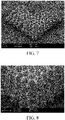
- the Figs. 7 and 8 show SEM images of a model structure that was produced by means of multi-photon polymerization of a colloid according to the invention and was only sintered after passing through a critical-point drying.
- the structure only shows distortion from mass loss and fading, but the integrity of the model is preserved. Due to the block-by-block creation of several sub-units of the larger target structure, the overlap during the writing process is defined as 1 ⁇ m between the individual structures and the resulting time difference and inaccuracies in positioning unintentionally lead to defects or predetermined breaking points during the printing process Break up debinding and sintering under the effect of the resulting stresses.
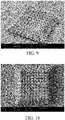
- the Figs. 9 and 10 show SEM images of a model structure that was produced by means of multi-photon polymerization of a colloid according to the invention, was sintered only after washing steps and subsequent passage through a critical-point drying process.
- the 12 individual models of the subunits of the target structure were assembled into a single STL file before printing, which ensured a continuous printing process.
- the formation of irregularities and predetermined breaking points can be prevented and the integrity of the structure can be maintained through the use of the CPD.
- the comparison of Figs. 5 and 9 illustrates the beneficial influence of critical-point drying on the sintering result.
- FIG. 11 shows two SEM images of the same detail 10 .
- the top right image was taken using the signals of emitted secondary electrons, and the bottom right image was taken using the signals of backscattered electrons.
- the backscatter image shows a different atomic composition with regions of different intensity, since the intensity of the backscattered electrons depends on the atomic number of the atoms, with elements with a higher atomic number backscattering more intensively.
- EDX Electronapergy Dispersive X-ray Spectroscopy
- the construction platform In order to free the polymerized structure with particles embedded in it from unpolymerized material (binder), it must be washed with the appropriate medium (water or an organic solvent). To do this, the construction platform is immersed in the liquid selected for washing and typically remains in this for 12 hours.
- the appropriate medium water or an organic solvent
- washing liquid being successively replaced by an exchange medium, for example i-PrOH, acetone or ethanol.
- an exchange medium for example i-PrOH, acetone or ethanol.
- washes are performed in a serial dilution of water with i-PrOH in volume (v/v) ratios of 80:20, 60:40, 40:60, 20:80, and 0:100, with each wash leaving the platform at least 1 hour remains in the respective mixture until the green body has been converted into anhydrous i-PrOH.
- the critical point drying for example using a Leica EM CPD300.
- the exchange medium is replaced by liquid CO 2 in at least 18 consecutive cycles.
- the pressure and temperature in the temperature-controlled container used for the critical-point drying are then regulated above the critical point of CO 2 (31 °C and 73.8 bar).
- the gaseous CO 2 is discharged at constant pressure and temperature via a constant volume flow of 10 ml/sec.
- the targeted control of the volume flow of the CO 2 discharged from the container offers the advantage that the conditions required for maintaining the supercritical state of the CO 2 are maintained until the supercritical CO 2 in the container has been completely consumed and the temperature of the specified critical equal to or higher than temperature. From a technological point of view, because no expensive mass flow controller is required, it proved to be advantageous to gradually lower the pressure (maximum by 0.05 bar/sec) until the CO 2 has been completely discharged.
- Controlling the drying via the volume flow and not via the drop in pressure basically allows faster and more controlled drying of the component, since the system automatically stays at the critical point as long as there is still CO 2 and the temperature is high enough.
- the construction platform removed from the working volume, on which the components (green bodies) fixed by means of 2PP are each fixed on their underside, is subjected to a washing procedure.
- the aim of the washing procedure is to gently remove the green body, comprising the polymerized binder and the ceramic particles fixed by the polymerized binder aqueous medium in an organic (exchange) medium, in particular in an organic solvent which is to be used for critical point drying (CPD), for example in i-PrOH, ethanol or acetone.
- CPD critical point drying
- the surface of the construction platform is first cleaned of the colloid used with water and advantageously remains in water for at least 12 hours.
- the construction platform with the green bodies fixed thereon is converted into anhydrous i-PrOH with the aid of a dilution series.
- the green body is immersed in mixtures of water for one hour: i-PrOH (v/v) 80:20, 60:40, 40:60, 20:80 and 0:100 (corresponding to 100% i-PrOH) incubated.
- the construction platform with the green bodies is then transferred to anhydrous i-PrOH in the sample container of a CPD apparatus (e.g. Leica EM CPD300), which is filled with the anhydrous exchange fluid, i.e. i-PrOH pa.
- a CPD apparatus e.g. Leica EM CPD300
- the green body produced in this way using multi- or two-photon polymerization and dried using CPD is then debound and sintered to obtain the desired three-dimensional component.
- “Debinding” in the sense of the present invention means the expulsion of the polymerized binder. This is preferably done by thermal treatment at approx. 90°C to 600°C, typically at a temperature of ⁇ 650°C.
- “Sintering” in this context means the compression and solidification of the particles of the green body fixed by multi-photon or two-photon polymerization, or in the broadest sense the solidification of a loosely joined ceramic powder or metal powder in the sintering furnace by exposure to temperatures below the melting temperature of the relevant Material, whereby the green body - due to the shrinkage of the polymer network - typically shrinks and its strength increases.
- Exemplary areas of application of the CPD described here are multi- or two-photon polymerization-based processes for the production of three-dimensional ceramic components for bone reconstruction or osteosynthesis, the production of biocompatible cell support structures, micro-optics, micro-actuators, micro-fluidics (micro-pumps and valves) and micro-mechanics to serve.
- Components according to the present invention in particular ceramic components that can be obtained using the drying method according to the invention, can preferably include implants, piezo actuators or freely movable micromechanics.
- an “implant” is an artificial element implanted in the body or attached to the outside of the body, which is intended to remain permanently (for the expected lifetime of the living being in question) or at least for the long term (at least over a period of 5 to 10 years).
- the term includes endoprostheses and exoprostheses as well as medical, plastic and functional implants.
- the present invention provides a manufacturing method that is flexible with regard to desired component properties for individualized three-dimensional ceramic components, medically usable structures or implants tailored to the needs of patients.
- freely movable micromechanical components that can be used particularly precisely, e.g. for microreactors, as well as piezo actuators for microvalves can be manufactured with particularly high accuracy, stability and reproducibility.
- the components according to the invention are distinguished both by high stability and advantageous biocompatibility.
- a green body drying process which comprises several process steps: In particular, washing the green body in a washing liquid so that residues of components used to produce the green body including non-solidified nanoparticles and non-polymerized binder are removed and/or residues of a suspension medium of the components used are replaced by the washing liquid.
- the proposed green body drying method also includes replacing the washing liquid with a replacement liquid, the replacement including a continuous or discontinuous increase in a concentration of the replacement liquid with a corresponding reduction in the concentration of the washing liquid until the washing liquid is replaced by the replacement liquid.
- the exchange is followed by drying of the green body that has been transferred to the exchange liquid by means of a critical-point drying with CO 2 , with the exchange liquid surrounding the green body being dried at least 10 times, preferably at least 15 times, more preferably at least 18 times, each time not previously in Contact with the replacement liquid standing liquid CO 2 is replaced and a reduction in an ambient pressure, which includes the critical point drying, to which the green body present in the CO 2 is exposed, does not exceed 0.05 bar/sec before the critical point drying is completed.
- the exchange based on diffusion allows a complete removal of the exchange liquid.
- the transition from supercritical CO 2 to liquid CO 2 and ultimately gaseous CO 2 takes place gently.
- the exchange takes place discontinuously using a dilution series comprising at least 5 exchange steps with different volume ratios of the washing liquid to the exchange liquid.
- a dilution series comprising at least 5 exchange steps with different volume ratios of the washing liquid to the exchange liquid.
- this can be done in ratios of (v/v) 80:20, 60:40, 40:60, 20:80, 0:100, it also being possible for the ratios used to deviate from the values given.
- ⁇ 5 or ⁇ 10 parts by volume with the proviso that the sum of the proportions of the washing liquid and the replacement liquid is 100% in each case.
- the replacement liquid replaces 100% of the washing liquid and thus ensures the subsequent critical point drying.
- the washing liquid is continuously replaced by the exchange liquid by continuously increasing the concentration of the exchange liquid up to 100% by volume.
- the exchange liquid serves at least partially as washing liquid and/or at least partially replaces it.
- the washing time before the successive or continuous supply of the exchange liquid can be shortened, since these processes are also provided with waiting/holding times in favor of diffusion, which allow the washing out of non-polymerized binders and residues of non-solidified, i.e. nanoparticles not fixed by binders carry.
- the green body comprises ceramic or metallic nanoparticles which have an arithmetic mean diameter in the range from 3 nm to 150 nm.
- the colloidally dispersed particles preferably have diameters of 3 to 100 nm, more preferably 3 to 80 nm, particularly preferably 3 to 35 nm.
- the dvso value that can be determined by means of dynamic light scattering can be used to select suitable particles.
- Sizes of the particles can be determined with other techniques, for example by means of electron microscopy.
- ceramic particles below 80 nm are advantageously suitable, since below this value the Rayleigh scattering, e.g. for a light source with a wavelength of 800 nm, disappears and the suspension is optically transparent despite the presence of the solid ceramic particles. This advantageously enables lossless penetration of the laser radiation into the working volume or polymerization of the binder in the laser focus and formation of the green body.
- ceramic nanoparticles are selected from the group consisting of: aluminum oxide (Al 2 O 3 ); silicon dioxide (SiO 2 ); sodium oxide (Na 2 O), calcium oxide (CaO); phosphorus pentoxide (P 2 O 5 ); a bioglass; beta-tricalcium phosphate (B-TCP); an alumina-reinforced zirconia ceramic (ATZ); titanium nitride (TiN); calcium carbonate (CaCO 3 ); a lithium disilicate glass ceramic; AP40 glass; a yttria stabilized zirconia (YSZ); a mesoporous bioactive glass (MGB); cerium oxide (CeO 2 ); zinc oxide (ZnO); zirconia (ZrO 2 ); hydroxyapatite (HA); biphasic calcium phosphate (BCP); and lead zirconate titanate (PZT).
- Al 2 O 3 aluminum oxide
- SiO 2 silicon dioxide
- Na 2 O sodium oxide
- Ceramic nano-suspensions are advantageously used as a particle source because the particles are homogeneously suspended in them and free from agglomerates.
- the particles are selected from metallic particles or metal oxide particles, for example gold, silver or iron oxide, and other inorganic particles, such as quantum dots comprising elements of I., III. and/or the V main group of the periodic table of the elements or lanthanides.
- the exchange liquid is selected from a ketone and an alcohol, in particular from acetone, ethanol, methanol and isopropanol.
- Ethanol or isopropanol are advantageously used because they are particularly miscible both with water and with liquid CO 2 and are also suitable as washing liquids for removing non-polymerized binder material.
- critical-point drying for drying a ceramic or a metallic or a metal-oxide green body comprising a polymerized binder and corresponding nanoparticles of the materials referred to, wherein the green body to be dried comprises at least one structure that has a linear extent ⁇ 10 ⁇ m, preferably from 1 to 5 ⁇ m, particularly preferably from 0.1 to 1 ⁇ m.
- the green body drying method described above is used for drying green bodies comprising metallic and/or ceramic nanoparticles and polymerized binder. Achievable advantages have already been described.
- the green body to be subjected to the above-described drying has been produced using a two-photon polymerization or using a multi-photon polymerization of a binder for fixing ceramic or metallic nanoparticles that are initially colloidal.
- a binder for fixing ceramic or metallic nanoparticles that are initially colloidal.
- the ceramics and glasses mentioned above, but also metals and their oxides, can be used as nanoparticles.
- Suitable metals colloidal with polymerizable binder are gold, silver, iron oxide, and other inorganic particles, e.g., quantum dots.
- finely dispersed suspended ceramic nanoparticles combine the advantages of homogeneously distributed and agglomeration-free colloids as well as the optical transparency at the wavelength used, which are conducive to the success of a two-photon polymerisation or multi-photon polymerisation to obtain delicately structured green bodies.
- the proposed green body drying process is part of a laser-based additive process for the production of a component having filigree structures, which—for example—is generated from and in a colloid containing nanoparticulate zirconium oxide—referred to here as nano-ZrO 2 .
- the manufacturing method described advantageously allows the laser-assisted formation of the entire green body in a working volume that is provided once.
- the laser beam, controlled by the software, penetrating the depth of the working volume causes a local 2PP-supported polymerisation of the polymerisable binder in its focus.
- the colloidally present ceramic particles are reliably fixed locally, so that one component of the green body is formed in the laser focus.
- the laser focus guided by the slicing software in the x, y and z directions has thus brought about the complete formation of the green body in the once provided working volume after the control program has run through completely.
- the green body can, for example, rest on a working platform that is rigidly fixed in the working volume or can be built directly on it. A working platform that can be moved in the z-direction is not required.
Landscapes
- Chemical & Material Sciences (AREA)
- Engineering & Computer Science (AREA)
- Ceramic Engineering (AREA)
- Manufacturing & Machinery (AREA)
- Materials Engineering (AREA)
- Structural Engineering (AREA)
- Organic Chemistry (AREA)
- Physics & Mathematics (AREA)
- General Physics & Mathematics (AREA)
- Composite Materials (AREA)
- Inorganic Chemistry (AREA)
- Mechanical Engineering (AREA)
- Plasma & Fusion (AREA)
- Dispersion Chemistry (AREA)
- Life Sciences & Earth Sciences (AREA)
- Chemical Kinetics & Catalysis (AREA)
- General Chemical & Material Sciences (AREA)
- Geochemistry & Mineralogy (AREA)
- Optics & Photonics (AREA)
- Compositions Of Oxide Ceramics (AREA)
Applications Claiming Priority (1)
| Application Number | Priority Date | Filing Date | Title |
|---|---|---|---|
| DE102020129911.7A DE102020129911A1 (de) | 2020-11-12 | 2020-11-12 | Grünkörpertrocknungsverfahren nach lichtinduziertem Vernetzen von suspendierten anorganischen Nano-Partikeln |
Publications (1)
| Publication Number | Publication Date |
|---|---|
| EP4000929A1 true EP4000929A1 (fr) | 2022-05-25 |
Family
ID=78821080
Family Applications (1)
| Application Number | Title | Priority Date | Filing Date |
|---|---|---|---|
| EP21208040.2A Pending EP4000929A1 (fr) | 2020-11-12 | 2021-11-12 | Procédé de séchage de corps cru pour la fabrication additive après la réticulation induite par la lumière des nano particules inorganiques en suspension |
Country Status (2)
| Country | Link |
|---|---|
| EP (1) | EP4000929A1 (fr) |
| DE (1) | DE102020129911A1 (fr) |
Cited By (2)
| Publication number | Priority date | Publication date | Assignee | Title |
|---|---|---|---|---|
| CN117164240A (zh) * | 2023-08-01 | 2023-12-05 | 大连工业大学 | 一种CsPbBr3/Cs4PbBr6量子点玻璃陶瓷复合发光材料及其制备方法和应用 |
| WO2025153525A1 (fr) * | 2024-01-15 | 2025-07-24 | Bundesrepublik Deutschland, vertreten durch den Bundesminister für Wirtschaft und Klimaschutz, dieser vertreten durch den Präsidenten der Bundesanstalt für Materialforschung und -prüfung (BAM) | Barbotine céramique photoréticulable et procédé de fabrication additive volumétrique d'un composant céramique |
Citations (6)
| Publication number | Priority date | Publication date | Assignee | Title |
|---|---|---|---|---|
| DE602005003198T2 (de) * | 2005-03-09 | 2008-08-28 | Degussa Novara Technology S.P.A. | Verfahren zur Herstellung von Monolithen durch ein Sol-Gel Verfahren |
| US20180127317A1 (en) * | 2015-05-28 | 2018-05-10 | 3M Innovative Properties Company | Sol containing nano zirconia particles for use in additive manufacturing processes for the production of 3-dimensional articles |
| US20180148378A1 (en) * | 2015-05-28 | 2018-05-31 | 3M Innovative Properties Company | Additive manufacturing process for producing ceramic articles using a sol containing nano-sized particles |
| WO2018151995A1 (fr) * | 2017-02-15 | 2018-08-23 | 3M Innovative Properties Company | Article en zircone à haute teneur en alumine, son procédé de production et son utilisation |
| WO2019209493A1 (fr) * | 2018-04-24 | 2019-10-31 | Lawrence Livermore National Security, Llc | Fabrication additive d'aérogels micro-structurés tridimensionnels hiérarchiques |
| WO2020053349A1 (fr) * | 2018-09-12 | 2020-03-19 | Basf Se | Procédé pour le séchage supercritique continu de particules d'aérogel |
Family Cites Families (2)
| Publication number | Priority date | Publication date | Assignee | Title |
|---|---|---|---|---|
| US20180088462A1 (en) | 2016-09-28 | 2018-03-29 | California Institute Of Technology | Additive manufacturing of architectured materials |
| KR20190065325A (ko) | 2016-09-30 | 2019-06-11 | 히타치가세이가부시끼가이샤 | 에어로겔 복합체의 제조 방법, 에어로겔 복합체 및 피단열체 |
-
2020
- 2020-11-12 DE DE102020129911.7A patent/DE102020129911A1/de active Pending
-
2021
- 2021-11-12 EP EP21208040.2A patent/EP4000929A1/fr active Pending
Patent Citations (6)
| Publication number | Priority date | Publication date | Assignee | Title |
|---|---|---|---|---|
| DE602005003198T2 (de) * | 2005-03-09 | 2008-08-28 | Degussa Novara Technology S.P.A. | Verfahren zur Herstellung von Monolithen durch ein Sol-Gel Verfahren |
| US20180127317A1 (en) * | 2015-05-28 | 2018-05-10 | 3M Innovative Properties Company | Sol containing nano zirconia particles for use in additive manufacturing processes for the production of 3-dimensional articles |
| US20180148378A1 (en) * | 2015-05-28 | 2018-05-31 | 3M Innovative Properties Company | Additive manufacturing process for producing ceramic articles using a sol containing nano-sized particles |
| WO2018151995A1 (fr) * | 2017-02-15 | 2018-08-23 | 3M Innovative Properties Company | Article en zircone à haute teneur en alumine, son procédé de production et son utilisation |
| WO2019209493A1 (fr) * | 2018-04-24 | 2019-10-31 | Lawrence Livermore National Security, Llc | Fabrication additive d'aérogels micro-structurés tridimensionnels hiérarchiques |
| WO2020053349A1 (fr) * | 2018-09-12 | 2020-03-19 | Basf Se | Procédé pour le séchage supercritique continu de particules d'aérogel |
Non-Patent Citations (1)
| Title |
|---|
| BOMMEL VAN M J ET AL: "DRYING OF SILICA GELS WITH SUPERCRITICAL CARBON DIOXIDE", JOURNAL OF MATERIAL SCIENCE, KLUWER ACADEMIC PUBLISHERS, DORDRECHT, vol. 29, 1 January 1994 (1994-01-01), pages 943 - 948, XP000867159, ISSN: 0022-2461, DOI: 10.1007/BF00351414 * |
Cited By (2)
| Publication number | Priority date | Publication date | Assignee | Title |
|---|---|---|---|---|
| CN117164240A (zh) * | 2023-08-01 | 2023-12-05 | 大连工业大学 | 一种CsPbBr3/Cs4PbBr6量子点玻璃陶瓷复合发光材料及其制备方法和应用 |
| WO2025153525A1 (fr) * | 2024-01-15 | 2025-07-24 | Bundesrepublik Deutschland, vertreten durch den Bundesminister für Wirtschaft und Klimaschutz, dieser vertreten durch den Präsidenten der Bundesanstalt für Materialforschung und -prüfung (BAM) | Barbotine céramique photoréticulable et procédé de fabrication additive volumétrique d'un composant céramique |
Also Published As
| Publication number | Publication date |
|---|---|
| DE102020129911A1 (de) | 2022-05-12 |
Similar Documents
| Publication | Publication Date | Title |
|---|---|---|
| Li et al. | The effect of the surfactants on the formulation of UV-curable SLA alumina suspension | |
| EP3659547B1 (fr) | Procédé et utilisation de barbotine destinés à la fabrication de corps moulés céramiques à partir de l'oxyde de zirconium par impression tridimensionnelle à jet d'encre | |
| EP1621217B1 (fr) | Poudre et matériau antimicrobiens | |
| EP3919092A1 (fr) | Suspension pour impression 3d à photopolymérisation, sa méthode de préparation et sa méthode d'utilisation | |
| EP1114006B1 (fr) | Particules spheriques d'ionomere et leur fabrication | |
| EP4000929A1 (fr) | Procédé de séchage de corps cru pour la fabrication additive après la réticulation induite par la lumière des nano particules inorganiques en suspension | |
| DE69914207T2 (de) | Schaumkeramik | |
| US20180044245A1 (en) | Gel compositions, shaped gel articles and a method of making a sintered article | |
| WO2008017472A2 (fr) | Procédé pour la préparation d'une couche superficielle céramique poreuse | |
| EP3659989A1 (fr) | Barbotine et procédé de fabrication de structures tridimensionnelles céramiques et vitrocéramiques | |
| Dai et al. | Electrospinning of hydroxyapatite fibrous mats | |
| EP3659574A1 (fr) | Procédé de production d'un lingot d'oxyde de zirconium | |
| EP3378628A1 (fr) | Procédé de fabrication générative d'un corps moulé dentaire | |
| DE19520448A1 (de) | Verfahren zur Herstellung von feinteiligen Multikomponenten-Glaspulvern zur Verwendung als Glasfluß für die Erzeugung von Schichten und Dekoren auf Glas, Glaskeramik oder Keramik | |
| EP3338814B1 (fr) | Composant en métal léger structuré | |
| EP3523364B1 (fr) | Mousse polymère nanostructurée hautement fluorée destinée à la fabrication de surfaces super-déperlantes | |
| EP3381479A1 (fr) | Composition de support pour matériau de substitution osseuse | |
| CH626269A5 (en) | Ceramic microparticles, process for the preparation thereof, and use thereof | |
| EP2049449B1 (fr) | Corps solide poreux avec distribution bimodale de la taille des pores et procédé pour sa préparation | |
| EP2473204B1 (fr) | Matériau d'hydroxylapatite et son procédé de préparation | |
| DE102005020781A1 (de) | Zirkondioxid und Aluminiumoxid enthaltender Schlicker und daraus erhältlicher Formkörper | |
| DE69003717T2 (de) | Verfahren zur Herstellung teilchenförmiger keramischer Materialien. | |
| DE10114496A1 (de) | Keramische Hohlfasern hergestellt aus nanoskaligen Pulverteilchen | |
| DE102022113425A1 (de) | Satz von Chemikalien für die Herstellung einer Keramikdispersion | |
| EP4108641A1 (fr) | Corps moulé en verre de quartz opaque, ainsi que son procédé de fabrication |
Legal Events
| Date | Code | Title | Description |
|---|---|---|---|
| PUAI | Public reference made under article 153(3) epc to a published international application that has entered the european phase |
Free format text: ORIGINAL CODE: 0009012 |
|
| STAA | Information on the status of an ep patent application or granted ep patent |
Free format text: STATUS: THE APPLICATION HAS BEEN PUBLISHED |
|
| AK | Designated contracting states |
Kind code of ref document: A1 Designated state(s): AL AT BE BG CH CY CZ DE DK EE ES FI FR GB GR HR HU IE IS IT LI LT LU LV MC MK MT NL NO PL PT RO RS SE SI SK SM TR |
|
| STAA | Information on the status of an ep patent application or granted ep patent |
Free format text: STATUS: REQUEST FOR EXAMINATION WAS MADE |
|
| 17P | Request for examination filed |
Effective date: 20220627 |
|
| RBV | Designated contracting states (corrected) |
Designated state(s): AL AT BE BG CH CY CZ DE DK EE ES FI FR GB GR HR HU IE IS IT LI LT LU LV MC MK MT NL NO PL PT RO RS SE SI SK SM TR |
|
| RAP1 | Party data changed (applicant data changed or rights of an application transferred) |
Owner name: CERANOVIS GMBH Owner name: BUNDESREPUBLIK DEUTSCHLAND, VERTRETEN DURCH DEN BUNDESMINISTER FUER WIRTSCHAFT UND ENERGIE, DIESER VERTRETEN DURCH DEN PRAESIDENTEN DER |
|
| STAA | Information on the status of an ep patent application or granted ep patent |
Free format text: STATUS: EXAMINATION IS IN PROGRESS |
|
| 17Q | First examination report despatched |
Effective date: 20250414 |