EP4001000A1 - Verfahren und vorrichtung zum laden eines elektrischen fahrzeugs mit verhinderung von einschaltstrom und vorrichtung dafür - Google Patents
Verfahren und vorrichtung zum laden eines elektrischen fahrzeugs mit verhinderung von einschaltstrom und vorrichtung dafür Download PDFInfo
- Publication number
- EP4001000A1 EP4001000A1 EP21806125.7A EP21806125A EP4001000A1 EP 4001000 A1 EP4001000 A1 EP 4001000A1 EP 21806125 A EP21806125 A EP 21806125A EP 4001000 A1 EP4001000 A1 EP 4001000A1
- Authority
- EP
- European Patent Office
- Prior art keywords
- charging
- electric vehicle
- charged
- current level
- modules
- Prior art date
- Legal status (The legal status is an assumption and is not a legal conclusion. Google has not performed a legal analysis and makes no representation as to the accuracy of the status listed.)
- Granted
Links
Images




Classifications
-
- B—PERFORMING OPERATIONS; TRANSPORTING
- B60—VEHICLES IN GENERAL
- B60L—PROPULSION OF ELECTRICALLY-PROPELLED VEHICLES; SUPPLYING ELECTRIC POWER FOR AUXILIARY EQUIPMENT OF ELECTRICALLY-PROPELLED VEHICLES; ELECTRODYNAMIC BRAKE SYSTEMS FOR VEHICLES IN GENERAL; MAGNETIC SUSPENSION OR LEVITATION FOR VEHICLES; MONITORING OPERATING VARIABLES OF ELECTRICALLY-PROPELLED VEHICLES; ELECTRIC SAFETY DEVICES FOR ELECTRICALLY-PROPELLED VEHICLES
- B60L53/00—Methods of charging batteries, specially adapted for electric vehicles; Charging stations or on-board charging equipment therefor; Exchange of energy storage elements in electric vehicles
- B60L53/60—Monitoring or controlling charging stations
- B60L53/62—Monitoring or controlling charging stations in response to charging parameters, e.g. current, voltage or electrical charge
-
- B—PERFORMING OPERATIONS; TRANSPORTING
- B60—VEHICLES IN GENERAL
- B60L—PROPULSION OF ELECTRICALLY-PROPELLED VEHICLES; SUPPLYING ELECTRIC POWER FOR AUXILIARY EQUIPMENT OF ELECTRICALLY-PROPELLED VEHICLES; ELECTRODYNAMIC BRAKE SYSTEMS FOR VEHICLES IN GENERAL; MAGNETIC SUSPENSION OR LEVITATION FOR VEHICLES; MONITORING OPERATING VARIABLES OF ELECTRICALLY-PROPELLED VEHICLES; ELECTRIC SAFETY DEVICES FOR ELECTRICALLY-PROPELLED VEHICLES
- B60L53/00—Methods of charging batteries, specially adapted for electric vehicles; Charging stations or on-board charging equipment therefor; Exchange of energy storage elements in electric vehicles
- B60L53/60—Monitoring or controlling charging stations
- B60L53/67—Controlling two or more charging stations
-
- H—ELECTRICITY
- H02—GENERATION; CONVERSION OR DISTRIBUTION OF ELECTRIC POWER
- H02J—ELECTRIC POWER NETWORKS; CIRCUIT ARRANGEMENTS OR SYSTEMS FOR SUPPLYING OR DISTRIBUTING ELECTRIC POWER; SYSTEMS FOR STORING ELECTRIC ENERGY
- H02J7/00—Circuit arrangements for charging or discharging batteries or for supplying loads from batteries
- H02J7/60—Circuit arrangements for charging or discharging batteries or for supplying loads from batteries including safety or protection arrangements
- H02J7/62—Circuit arrangements for charging or discharging batteries or for supplying loads from batteries including safety or protection arrangements against overcurrent
-
- B—PERFORMING OPERATIONS; TRANSPORTING
- B60—VEHICLES IN GENERAL
- B60L—PROPULSION OF ELECTRICALLY-PROPELLED VEHICLES; SUPPLYING ELECTRIC POWER FOR AUXILIARY EQUIPMENT OF ELECTRICALLY-PROPELLED VEHICLES; ELECTRODYNAMIC BRAKE SYSTEMS FOR VEHICLES IN GENERAL; MAGNETIC SUSPENSION OR LEVITATION FOR VEHICLES; MONITORING OPERATING VARIABLES OF ELECTRICALLY-PROPELLED VEHICLES; ELECTRIC SAFETY DEVICES FOR ELECTRICALLY-PROPELLED VEHICLES
- B60L53/00—Methods of charging batteries, specially adapted for electric vehicles; Charging stations or on-board charging equipment therefor; Exchange of energy storage elements in electric vehicles
- B60L53/30—Constructional details of charging stations
- B60L53/305—Communication interfaces
-
- B—PERFORMING OPERATIONS; TRANSPORTING
- B60—VEHICLES IN GENERAL
- B60L—PROPULSION OF ELECTRICALLY-PROPELLED VEHICLES; SUPPLYING ELECTRIC POWER FOR AUXILIARY EQUIPMENT OF ELECTRICALLY-PROPELLED VEHICLES; ELECTRODYNAMIC BRAKE SYSTEMS FOR VEHICLES IN GENERAL; MAGNETIC SUSPENSION OR LEVITATION FOR VEHICLES; MONITORING OPERATING VARIABLES OF ELECTRICALLY-PROPELLED VEHICLES; ELECTRIC SAFETY DEVICES FOR ELECTRICALLY-PROPELLED VEHICLES
- B60L53/00—Methods of charging batteries, specially adapted for electric vehicles; Charging stations or on-board charging equipment therefor; Exchange of energy storage elements in electric vehicles
- B60L53/60—Monitoring or controlling charging stations
- B60L53/64—Optimising energy costs, e.g. responding to electricity rates
-
- B—PERFORMING OPERATIONS; TRANSPORTING
- B60—VEHICLES IN GENERAL
- B60L—PROPULSION OF ELECTRICALLY-PROPELLED VEHICLES; SUPPLYING ELECTRIC POWER FOR AUXILIARY EQUIPMENT OF ELECTRICALLY-PROPELLED VEHICLES; ELECTRODYNAMIC BRAKE SYSTEMS FOR VEHICLES IN GENERAL; MAGNETIC SUSPENSION OR LEVITATION FOR VEHICLES; MONITORING OPERATING VARIABLES OF ELECTRICALLY-PROPELLED VEHICLES; ELECTRIC SAFETY DEVICES FOR ELECTRICALLY-PROPELLED VEHICLES
- B60L53/00—Methods of charging batteries, specially adapted for electric vehicles; Charging stations or on-board charging equipment therefor; Exchange of energy storage elements in electric vehicles
- B60L53/60—Monitoring or controlling charging stations
- B60L53/66—Data transfer between charging stations and vehicles
-
- H—ELECTRICITY
- H02—GENERATION; CONVERSION OR DISTRIBUTION OF ELECTRIC POWER
- H02J—ELECTRIC POWER NETWORKS; CIRCUIT ARRANGEMENTS OR SYSTEMS FOR SUPPLYING OR DISTRIBUTING ELECTRIC POWER; SYSTEMS FOR STORING ELECTRIC ENERGY
- H02J7/00—Circuit arrangements for charging or discharging batteries or for supplying loads from batteries
- H02J7/40—Circuit arrangements for charging or discharging batteries or for supplying loads from batteries characterised by the exchange of charge or discharge related data
-
- H—ELECTRICITY
- H02—GENERATION; CONVERSION OR DISTRIBUTION OF ELECTRIC POWER
- H02J—ELECTRIC POWER NETWORKS; CIRCUIT ARRANGEMENTS OR SYSTEMS FOR SUPPLYING OR DISTRIBUTING ELECTRIC POWER; SYSTEMS FOR STORING ELECTRIC ENERGY
- H02J7/00—Circuit arrangements for charging or discharging batteries or for supplying loads from batteries
- H02J7/50—Circuit arrangements for charging or discharging batteries or for supplying loads from batteries acting upon multiple batteries simultaneously or sequentially
-
- H—ELECTRICITY
- H02—GENERATION; CONVERSION OR DISTRIBUTION OF ELECTRIC POWER
- H02J—ELECTRIC POWER NETWORKS; CIRCUIT ARRANGEMENTS OR SYSTEMS FOR SUPPLYING OR DISTRIBUTING ELECTRIC POWER; SYSTEMS FOR STORING ELECTRIC ENERGY
- H02J7/00—Circuit arrangements for charging or discharging batteries or for supplying loads from batteries
- H02J7/90—Regulation of charging or discharging current or voltage
- H02J7/94—Regulation of charging or discharging current or voltage in response to battery current
-
- B—PERFORMING OPERATIONS; TRANSPORTING
- B60—VEHICLES IN GENERAL
- B60L—PROPULSION OF ELECTRICALLY-PROPELLED VEHICLES; SUPPLYING ELECTRIC POWER FOR AUXILIARY EQUIPMENT OF ELECTRICALLY-PROPELLED VEHICLES; ELECTRODYNAMIC BRAKE SYSTEMS FOR VEHICLES IN GENERAL; MAGNETIC SUSPENSION OR LEVITATION FOR VEHICLES; MONITORING OPERATING VARIABLES OF ELECTRICALLY-PROPELLED VEHICLES; ELECTRIC SAFETY DEVICES FOR ELECTRICALLY-PROPELLED VEHICLES
- B60L2270/00—Problem solutions or means not otherwise provided for
- B60L2270/20—Inrush current reduction, i.e. avoiding high currents when connecting the battery
-
- B—PERFORMING OPERATIONS; TRANSPORTING
- B60—VEHICLES IN GENERAL
- B60Y—INDEXING SCHEME RELATING TO ASPECTS CROSS-CUTTING VEHICLE TECHNOLOGY
- B60Y2200/00—Type of vehicle
- B60Y2200/90—Vehicles comprising electric prime movers
- B60Y2200/91—Electric vehicles
-
- H—ELECTRICITY
- H01—ELECTRIC ELEMENTS
- H01M—PROCESSES OR MEANS, e.g. BATTERIES, FOR THE DIRECT CONVERSION OF CHEMICAL ENERGY INTO ELECTRICAL ENERGY
- H01M10/00—Secondary cells; Manufacture thereof
- H01M10/42—Methods or arrangements for servicing or maintenance of secondary cells or secondary half-cells
- H01M10/44—Methods for charging or discharging
-
- H—ELECTRICITY
- H02—GENERATION; CONVERSION OR DISTRIBUTION OF ELECTRIC POWER
- H02M—APPARATUS FOR CONVERSION BETWEEN AC AND AC, BETWEEN AC AND DC, OR BETWEEN DC AND DC, AND FOR USE WITH MAINS OR SIMILAR POWER SUPPLY SYSTEMS; CONVERSION OF DC OR AC INPUT POWER INTO SURGE OUTPUT POWER; CONTROL OR REGULATION THEREOF
- H02M1/00—Details of apparatus for conversion
- H02M1/36—Means for starting or stopping converters
-
- Y—GENERAL TAGGING OF NEW TECHNOLOGICAL DEVELOPMENTS; GENERAL TAGGING OF CROSS-SECTIONAL TECHNOLOGIES SPANNING OVER SEVERAL SECTIONS OF THE IPC; TECHNICAL SUBJECTS COVERED BY FORMER USPC CROSS-REFERENCE ART COLLECTIONS [XRACs] AND DIGESTS
- Y02—TECHNOLOGIES OR APPLICATIONS FOR MITIGATION OR ADAPTATION AGAINST CLIMATE CHANGE
- Y02E—REDUCTION OF GREENHOUSE GAS [GHG] EMISSIONS, RELATED TO ENERGY GENERATION, TRANSMISSION OR DISTRIBUTION
- Y02E60/00—Enabling technologies; Technologies with a potential or indirect contribution to GHG emissions mitigation
- Y02E60/10—Energy storage using batteries
-
- Y—GENERAL TAGGING OF NEW TECHNOLOGICAL DEVELOPMENTS; GENERAL TAGGING OF CROSS-SECTIONAL TECHNOLOGIES SPANNING OVER SEVERAL SECTIONS OF THE IPC; TECHNICAL SUBJECTS COVERED BY FORMER USPC CROSS-REFERENCE ART COLLECTIONS [XRACs] AND DIGESTS
- Y02—TECHNOLOGIES OR APPLICATIONS FOR MITIGATION OR ADAPTATION AGAINST CLIMATE CHANGE
- Y02T—CLIMATE CHANGE MITIGATION TECHNOLOGIES RELATED TO TRANSPORTATION
- Y02T10/00—Road transport of goods or passengers
- Y02T10/60—Other road transportation technologies with climate change mitigation effect
- Y02T10/70—Energy storage systems for electromobility, e.g. batteries
-
- Y—GENERAL TAGGING OF NEW TECHNOLOGICAL DEVELOPMENTS; GENERAL TAGGING OF CROSS-SECTIONAL TECHNOLOGIES SPANNING OVER SEVERAL SECTIONS OF THE IPC; TECHNICAL SUBJECTS COVERED BY FORMER USPC CROSS-REFERENCE ART COLLECTIONS [XRACs] AND DIGESTS
- Y02—TECHNOLOGIES OR APPLICATIONS FOR MITIGATION OR ADAPTATION AGAINST CLIMATE CHANGE
- Y02T—CLIMATE CHANGE MITIGATION TECHNOLOGIES RELATED TO TRANSPORTATION
- Y02T10/00—Road transport of goods or passengers
- Y02T10/60—Other road transportation technologies with climate change mitigation effect
- Y02T10/7072—Electromobility specific charging systems or methods for batteries, ultracapacitors, supercapacitors or double-layer capacitors
-
- Y—GENERAL TAGGING OF NEW TECHNOLOGICAL DEVELOPMENTS; GENERAL TAGGING OF CROSS-SECTIONAL TECHNOLOGIES SPANNING OVER SEVERAL SECTIONS OF THE IPC; TECHNICAL SUBJECTS COVERED BY FORMER USPC CROSS-REFERENCE ART COLLECTIONS [XRACs] AND DIGESTS
- Y02—TECHNOLOGIES OR APPLICATIONS FOR MITIGATION OR ADAPTATION AGAINST CLIMATE CHANGE
- Y02T—CLIMATE CHANGE MITIGATION TECHNOLOGIES RELATED TO TRANSPORTATION
- Y02T90/00—Enabling technologies or technologies with a potential or indirect contribution to GHG emissions mitigation
- Y02T90/10—Technologies relating to charging of electric vehicles
- Y02T90/12—Electric charging stations
-
- Y—GENERAL TAGGING OF NEW TECHNOLOGICAL DEVELOPMENTS; GENERAL TAGGING OF CROSS-SECTIONAL TECHNOLOGIES SPANNING OVER SEVERAL SECTIONS OF THE IPC; TECHNICAL SUBJECTS COVERED BY FORMER USPC CROSS-REFERENCE ART COLLECTIONS [XRACs] AND DIGESTS
- Y02—TECHNOLOGIES OR APPLICATIONS FOR MITIGATION OR ADAPTATION AGAINST CLIMATE CHANGE
- Y02T—CLIMATE CHANGE MITIGATION TECHNOLOGIES RELATED TO TRANSPORTATION
- Y02T90/00—Enabling technologies or technologies with a potential or indirect contribution to GHG emissions mitigation
- Y02T90/10—Technologies relating to charging of electric vehicles
- Y02T90/16—Information or communication technologies improving the operation of electric vehicles
-
- Y—GENERAL TAGGING OF NEW TECHNOLOGICAL DEVELOPMENTS; GENERAL TAGGING OF CROSS-SECTIONAL TECHNOLOGIES SPANNING OVER SEVERAL SECTIONS OF THE IPC; TECHNICAL SUBJECTS COVERED BY FORMER USPC CROSS-REFERENCE ART COLLECTIONS [XRACs] AND DIGESTS
- Y02—TECHNOLOGIES OR APPLICATIONS FOR MITIGATION OR ADAPTATION AGAINST CLIMATE CHANGE
- Y02T—CLIMATE CHANGE MITIGATION TECHNOLOGIES RELATED TO TRANSPORTATION
- Y02T90/00—Enabling technologies or technologies with a potential or indirect contribution to GHG emissions mitigation
- Y02T90/10—Technologies relating to charging of electric vehicles
- Y02T90/16—Information or communication technologies improving the operation of electric vehicles
- Y02T90/167—Systems integrating technologies related to power network operation and communication or information technologies for supporting the interoperability of electric or hybrid vehicles, i.e. smartgrids as interface for battery charging of electric vehicles [EV] or hybrid vehicles [HEV]
Definitions
- the present disclosure relates to a method for charging an electric vehicle using a plurality of charging modules and a device for the same. Further, the present disclosure relates to a method for preventing an inrush current and a device for the same.
- a maximum output level of one charging module provided in the charger is 500 V and 20 A
- the charging output amount needs to be gradually reduced as the electric vehicle is gradually charged.
- the maximum output level of the charger is not fully used, the charge efficiency is not only reduced, but also the power waste will occur.
- An object of the present disclosure is to solve a power waste problem which may occur by using one charging module.
- a charging method of an electric vehicle charger including the steps of receiving first information on a charging current level requested by a first electric vehicle to be charged from the first electric vehicle to be charged; determining a charging mode of the first electric vehicle to be charged based on the first information, in which the charging mode includes an increase mode of charging the first electric vehicle to be charged by selectively activating at least one deactivating charging module among the plurality of charging modules and a decrease mode of selectively deactivating at least one charging module activated to charge the first electric vehicle to be charged; and charging the first electric vehicle to be charged in the determined charging mode.
- the plurality of charging modules may have all the same maximum output current.
- the charging mode may be determined as the increase mode when the charging current level requested by the first electric vehicle to be charged is larger than the sum of maximum output currents of the charging module while being currently connected to the first electric vehicle to be charged, and determined as the decrease mode when the charging current level requested by the first electric vehicle to be charged is smaller than the sum of maximum output currents of the charging module while being currently connected to the first electric vehicle to be charged.
- the charging of the first electric vehicle to be charged may include selectively activating the charging modules by the number of rounding up a result obtained by dividing the charging current level requested by the first electric vehicle to be charged by the maximum output current and charging the first electric vehicle to be charged using the activated charging modules.
- the maximum number of charging modules to be selectively activated may be limited to the number of charging modules which are currently being deactivated.
- the charging of the first electric vehicle to be charged may include selectively deactivating charging modules as large as a number obtained by rounding up a result obtained by dividing the charging current level requested by the first electric vehicle to be charged by the maximum output current from the number of charging modules activated for charging of the first electric vehicle to be charged.
- the maximum number of charging modules to be selectively deactivated may be limited to the number of charging modules which are being currently activated to charge the first electric vehicle to be charged.
- the charging method of the electric vehicle charger may further include using a charging module selectively deactivated as the decrease mode is applied for charging of a second electric vehicle to be charged which is a charging target with a lower priority.
- the charging method of the electric vehicle charger may further include storing second information on an activated number and/or an activating cycle of each of the plurality of charging modules.
- a charging module activated at the least number and/or the rarest cycle of the plurality of charging modules may be first selected and activated, and in the case of the decrease mode, a charging module activated at the most number and/or the most frequent cycle among the plurality of charging modules may be first selected and deactivated.
- the charging step may include the steps of decreasing a currently charging current level for the first electric vehicle to be charged at a predetermined ratio before activating or deactivating the at least one charging module; checking whether an inrush current occurs for a first time; activating or deactivating the at least one charging module when the inrush current does not occur; checking whether the inrush current occurs for a second time after activating or deactivating; and increasing the charging current level by the charging current level requested by the first electric vehicle to be charged, when the inrush current does not occur.
- the predetermined ratio may correspond to 10% of the currently charging current level.
- an electric vehicle charger including a charging unit including a plurality of charging modules; a communication unit performing communication with an electric vehicle to be charged; and a control unit controlling the charging unit and the communication unit, in which the control unit receives first information on a charging current level requested by a first electric vehicle to be charged from the first electric vehicle to be charged, determines a charging mode of the first electric vehicle to be charged based on the first information, in which the charging mode includes an increase mode of charging the first electric vehicle to be charged by selectively activating at least one deactivating charging module among the plurality of charging modules and a decrease mode of selectively deactivating at least one charging module activated to charge the first electric vehicle to be charged, and charges the first electric vehicle to be charged in the determined charging mode.
- a method for preventing an inrush current of an electric vehicle charger including the steps of determining whether there is a need for an increase or decrease in a charging current level while currently supplied to an electric vehicle to be charged according to a request of the electric vehicle to be charged; decreasing the charging current level at a predetermined ratio when it is determined that there is the need for the increase or decrease in the charging current level; checking whether an inrush current occurs for a first time; activating or deactivating at least one charging module to increase or decrease the charging current level according to the request of the electric vehicle to be charged, when the inrush current does not occur for the first time; checking whether the inrush current occurs for a second time; and increasing the charging current level by the charging current level requested by the electric vehicle to be charged, when the inrush current does not occur for the second time.
- the inrush current may correspond to a higher level of current than a predefined reference current by a predetermined level or more.
- the predetermined ratio may correspond to 10% of the charging current level.
- the determining of whether there is the need for the increase or decrease of the charging current level may include the steps of comparing a current level requested by the electric vehicle to be charged with the charging current level; determining that there is the need for the decrease of the charging current level when the requested current level is less than the charging current level; and determining that there is the need for the increase of the charging current level when the requested current level is more than the charging current level.
- the activating or deactivating of the at least one charging module may include the steps of selectively deactivating at least one of currently activating charging modules when it is determined that there is a need for the decrease of the charging current level; and selectively activating at least one of currently deactivating charging modules when it is determined that there is a need for the increase of the charging current level.
- the selectively deactivating of at least one of the currently activating charging modules may include selectively deactivating first at least one charging module activated at the most number and/or the most frequent cycle among the currently activating charging modules.
- the selectively activating of at least one of the currently deactivating charging modules may include selectively activating first at least one charging module activated at the least number and/or the rarest cycle among the currently deactivating charging modules.
- the method for preventing an inrush current of the electric vehicle charger may further include recording information on at least one of an activation number and an activation cycle of the at least one charging module.
- an electric vehicle charger including a charging unit including a plurality of charging modules; a communication unit performing communication with an electric vehicle to be charged; and a control unit controlling the charging unit and the communication unit, in which the control unit may determine whether there is a need for an increase or decrease in a charging current level while currently supplied to the electric vehicle to be charged according to a request of the electric vehicle to be charged received by the communication unit, decrease the charging current level at a predetermined ratio by controlling the charging unit when it is determined that there is the need for the increase or decrease in the charging current level, check whether an inrush current occurs for a first time, activate or deactivate at least one charging module by controlling the charging unit to increase or decrease the charging current level according to the request of the electric vehicle to be charged, when the inrush current does not occur for the first time, check whether the inrush current occurs for a second time, and increase the charging current level by the charging current level requested by the electric vehicle to be charged by controlling the charging unit, when the inrush current does not occur for the
- the inrush current may correspond to a higher level of current than a predefined reference current by a predetermined level or more.
- the predetermined ratio may correspond to 10% of the charging current level.
- the control unit may compare a current level requested by the electric vehicle to be charged with the charging current level, determine that there is the need for the decrease of the charging current level when the requested current level is less than the charging current level, and determine that there is the need for the increase of the charging current level when the requested current level is more than the charging current level.
- control unit may selectively deactivate at least one of currently activating charging modules when it is determined that there is a need for the decrease of the charging current level, and selectively activate at least one of currently deactivating charging modules when it is determined that there is a need for the increase of the charging current level.
- control unit may selectively deactivate first at least one charging module activated at the most number and/or the most frequent cycle among the currently activating charging modules.
- control unit may selectively activate first at least one charging module activated at the least number and/or the rarest cycle among the currently deactivating charging modules.
- the control unit may record information on at least one of an activation number and an activation cycle of the at least one charging module.
- a power sharing operation is enabled using a plurality of charging modules, it is possible to simultaneously charge a plurality of electric vehicles.
- first, second, A, B, and the like may be used for describing various components, but the components are not limited by the terms and the terms are used only for distinguishing one component from other components.
- a first component may be referred to as a second component, and similarly, the second component may also be referred to as a first component, without departing from the scope of the invention to be described below.
- a term 'and/or' includes a combination of a plurality of associated disclosed items or any item of the plurality of associated disclosed items.
- each component is only distinguished for each main function of each component. That is, two or more components to be described below may be combined into one component or one component may be divided into two or more components for each subdivided function. In addition, each of the components to be described below may additionally perform some or all of the functions that are handled by other components in addition to main functions that the corresponding component is responsible for, and some of the main functions of which the respective components are charged may be exclusively carried out by other components.
- respective processes of configuring the method may be performed differently from a specified order unless otherwise disclose a specific order in the context. That is, the respective processes may be performed similarly to the specified order, performed substantially simultaneously, and performed in an opposite order.
- FIG. 1 is a diagram illustrating a charger according to an exemplary embodiment of the present disclosure.
- a charger 130 proposed herein includes a plurality of charging modules 120-1 to 120-N.
- the present disclosure provides the charger 130 for performing charging by using the plurality of charging modules 120-1 to 120-N.
- the charger 130 may deactivate the charging module 120 one by one and charge the electric vehicle 110 by maximally using the maximum output power of the remaining activated charging modules 120.
- the overall charging efficiency is improved and the power waste is reduced.
- the plurality of charging modules 120-1 to 120-N may be easily used for a power sharing operation.
- each charging module 120 may operate independently of other charging modules 120.
- the charger 130 may perform the charging by using/activating all the charging modules 120-1 to 120-N or using/activating only one charging module 120 to use one electric vehicle 110.
- the charging modules 120 that are not used for charging may be used to charge other electric vehicles 110, which eventually corresponds to the power sharing operation.
- the plurality of charging modules 120-1 to 120-N may be the same as or different from each other in the maximum output current (or power) level. In this specification, for convenience of description, it is assumed that all of the plurality of charging modules 120-1 to 120-N in the charger 130 have the same maximum output current level.
- the charger 130 of the present disclosure first allocates the charging module to be used for charging to an electric vehicle 110-1 on which charging is first reserved (or charging is requested) and allocates the charging modules by comprehensively considering a requested charging amount of the corresponding electric vehicles 110-2 to 110-N, the number of charging modules 120 to be currently allocated (i.e., charging modules during deactivating/unusing), and the like with respect to lower-priority electric vehicles 110-2 to 110-N.
- an electric vehicle which is charging by the current charger 130 using at least one charging module is referred to as a 'first electric vehicle to be charged 110-1' and lower-priority electric vehicles to be charged 110-2 to 110-N are referred to as a 'second electric vehicle to be charged'.
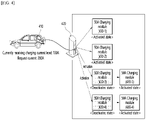
- the charger 130 of the present disclosure first determines a charging mode of the electric vehicle 110 requesting the charging and performs the charging based on the corresponding charging mode, and the charging mode will be described below with reference to FIG. 2 .
- FIG. 2 is a diagram illustrating a charging mode according to an exemplary embodiment of the present disclosure.
- the charger may charge the electric vehicle in an increase mode 210 or a decrease mode 220.
- the increase mode 210 corresponds to a mode of charging the first electric vehicle to be charged by selectively activating at least one charging module while being deactivated among the plurality of charging modules.
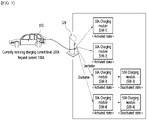
- the decrease mode 220 corresponds to a mode of selectively deactivating at least one of the charging modules activated to charge the first electric vehicle to be charged. A specific exemplary embodiment of each mode will be described below in detail with reference to FIGS. 3 to 5 .
- the charger determines in real time which mode is to be applied according to a charging request current level and a charging state (e.g., the number of charging modules to be used for current charging, and the like) of the electric vehicle to be charged and performs the charging operation according to a determined mode.
- a charging state e.g., the number of charging modules to be used for current charging, and the like
- FIG. 3 is a flowchart illustrating a charging method of a charger according to an exemplary embodiment of the present disclosure.
- FIG. 4 is a flowchart illustrating a charging method in an increase mode of the charger according to an exemplary embodiment of the present disclosure.
- FIG. 5 is a flowchart illustrating a charging method in a decrease mode of the charger according to an exemplary embodiment of the present disclosure.
- the charger may receive first information on the charging current level requested by the first electric vehicle to be charged from the first electric vehicle to be charged (S310). To this end, the charger may use various communication protocols according to the standard of the electric vehicle to be charged.
- the first electric vehicle to be charged may transmit 'EVTargetCurrent' corresponding to request current information included in a message 'CurrentDemand' to the charger using a programmable logic controller (PLC) communication protocol.
- PLC programmable logic controller
- the first electric vehicle to be charged may transmit a request current value included in 'CAN ID 0x102' to the charger using a controller area network (CAN) communication protocol.
- CAN controller area network
- the first electric vehicle to be charged may transmit a request current value included in a message 'CAN ID BLC' to the charger using a CAN communication protocol.
- the charger may determine a charging mode of the first electric vehicle to be charged based on the first information (S310).
- the charger may determine a charging mode of the first electric vehicle to be charged as an increase mode.
- a charger 420 includes four charging modules 430-1 to 430-4 having output current levels and a first electric vehicle to be charged 410 receives a charging current level of 100 A through two charging modules 430-1 and 430-2 from the current charger 420.
- the level of the current requested by the first electric vehicle to be charged 410 may be increased to 200 A by various causes (e.g., a case where the user inputs an increase command of a vehicle charging rate/amount, etc.).
- the charger 420 may determine the charging mode of the first electric vehicle to be charged 410 as the increase mode.
- the charger may determine a charging mode of the first electric vehicle to be charged as a decrease mode.
- a charger 510 includes four charging modules 530-1 to 530-4 having output current levels of 50 A and a first electric vehicle to be charged 510 receives a charging current level of 200A through the four charging modules 530-1 and 530-4 from the current charger.
- the level of the current requested by the first electric vehicle to be charged 510 may be decreased to 100 A by various causes (e.g., a case where the battery charging is completed by a predetermined ratio, etc.).
- a charger 520 may determine the charging mode of the first electric vehicle to be charged 510 as the decrease mode.
- the charger may charge the first electric vehicle to be charged in the charging mode determined in the previous step (S330).
- the charger may selectively activate the charging modules by the number of rounding up a result obtained by dividing the charging current level requested by the first electric vehicle to be charged by the maximum output current and charge the first electric vehicle to be charged using the activated charging modules.
- the charging current level requested by the first electric vehicle to be charged 410 is 200 A and the maximum output current level is 50 A
- the charger may selectively deactivate charging modules as large as a number obtained by rounding up a result obtained by dividing the charging current level requested by the first electric vehicle to be charged by the maximum output current from the number of charging modules activated for charging of the first electric vehicle to be charged.
- the charging current level currently provided to the first electric vehicle to be charged 510 is 200 A
- the requested charging current level is 100 A
- the maximum output current level is 50 A
- the charger 520 charges the first electric vehicle to be charged 510 by selectively deactivating two 530-3 and 530-4 of the four charging modules 530-1 to 530-4 activated. Accordingly, in the decrease mode, the maximum number of charging modules to be selectively deactivated is limited to the number of charging modules which are being currently activated to charge the first electric vehicle to be charged.
- the charger converts an activated/deactivated state of the charging modules according to the charging mode of the electric vehicle to be charged, and at this time, the charger may perform activation/deactivation of the charging modules selectively based on an activated number and/or an activating cycle of each charging module.
- the charger may first store second information on an activated number and/or an activating cycle of each of the plurality of charging modules. Based on the second information stored above, the charger may first select and activate a charging module activated at the least number and/or the rarest cycle of the plurality of charging modules when applying the increase mode. Further, the charger may first select and deactivate a charging module activated at the most number and/or the most frequent cycle among the plurality of charging modules when applying the decrease mode.
- the charger performs the activation/deactivation operation selectively by considering the activation cycle/frequency of each charging module, it is possible to prevent the intensive deterioration of some charging modules and equally manage the overall lifetime of the charging modules.
- FIG. 6 is a diagram illustrating a power sharing operation according to an exemplary embodiment of the present disclosure.
- a charger 620 of the present disclosure includes a plurality of charging modules, and since each of these charging modules enables an independent charging operation, the charger 620 may perform a power sharing function capable of simultaneously charging a plurality of electric vehicles 610-1 and 610-2 once. Accordingly, as the charging of a first electric vehicle to be charged 610-1 is completed, the sequentially deactivated charging module may be used to charge a second electric vehicle to be charged 610-2 which is a lower-priority charging target.
- a decrease mode may be applied, and as a result, two 50 A charging modules may be deactivated.
- the two charging modules deactivated as such may be used for charging the lower-priority electric vehicle to be charged 610-2.
- the current requested by the second electric vehicle to be charged 610-2 is 100 A, all of two charging modules may be used to charge the second electric vehicle to be charged 610-2.
- the request current of the second electric vehicle to be charged 610-2 is 50 A, only one charging module may be activated for the second electric vehicle to be charged 610-2, and the remaining charging modules may be used for charging the next lower-priority electric vehicle to be charged.
- FIG. 7 is a graph showing a current detected from the charger when an inrush current occurs according to an exemplary embodiment of the present disclosure.
- an inrush current as a high level of current may be suddenly introduced.
- the inrush current is a very higher level of current than a reference charging current, and safety and maintenance problems are caused in the charging process of the electric vehicle.
- an electric vehicle charger for supplying a three-phase alternating current to the electric vehicle an unnecessary operation of a circuit breaker and unnecessary tripping of an earth leakage breaker are caused in the charger due to the inrush current. Therefore, it is very important to prevent the inrush current in activating/deactivating the charging module.
- the present disclosure provides an operation of a charger for preventing the inrush current, and will be described below with reference to FIGS. 8 and 9 .
- FIG. 8 is a graph showing an inrush current prevention operation when applying a decrease mode of the charger according to an exemplary embodiment of the present disclosure.
- the charger may first reduce a currently charging current level to a predetermined ratio A0 when applying the decrease mode to prevent the inrush current.
- the predetermined ratio may correspond to, for example, 10% of the currently charging current level.
- the charger may check whether the inrush current occurs for a predetermined time t0. If it is checked that the inrush current does not occur for the predetermined time t0, the charger may deactivate the charging module which was intended to be deactivated. As a result, a maximum chargeable current of the charger is reduced by a maximum chargeable current of the deactivated charging module.
- the charger may check whether the inrush current occurs according to the deactivation of the charging module again for a predetermined time t1. If it is checked that the inrush current does not occur for the predetermined time t1, the charger increases a charging current level by a charging current level requested by the first electric vehicle to be charged to return to an original charging operation/algorithm.
- FIG. 9 is a graph showing an inrush current prevention operation when applying an increase mode of the charger according to an exemplary embodiment of the present disclosure.
- the charger may first reduce a currently charging current level to a predetermined ratio A0 when applying the increase mode to prevent an inrush current.
- the predetermined ratio may correspond to, for example, 10% of the currently charging current level.
- the charger may check whether the inrush current occurs for a predetermined time t0. If it is checked that the inrush current does not occur for the predetermined time t0, the charger may activate the charging module which was intended to be activated. As a result, a maximum chargeable current of the charger is increased by a maximum chargeable current of the activated charging module.
- the charger may check whether the inrush current occurs according to the activation of the charging module again for a predetermined time t1. If it is checked that the inrush current does not occur for the predetermined time t1, the charger increases a charging current level by a charging current level requested by the first electric vehicle to be charged to return to an original charging operation/algorithm.
- the charger of the present disclosure has advantages of lowering the charging current level by a predetermined ratio before activating or deactivating the charging module to prevent the inrush current in advance and continuously detecting the inrush current before and after activating/deactivating to minimize the damage according to the occurrence of the inrush current.
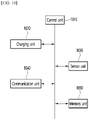
- FIG. 10 is a block diagram illustrating a charger according to an exemplary embodiment of the present disclosure.
- configurations to be described below may be implemented by at least one hardware/software components and may be used to perform the exemplary embodiments described above.
- the charger may include a control unit 1010, a charging unit 1020, a sensor unit 1030, a communication unit 1040, and/or a memory unit 1050.
- the control unit 1010 may not only communicate with other components included in the charger, but also may control the components.
- the control unit 1010 may subjectively perform various exemplary embodiments described in the present disclosure by controlling at least one component included in the charger. Accordingly, the charger of the present disclosure may be described to be identified with the control unit 1010.
- the control unit 1010 may be implemented by at least one processor.
- the charging unit 1020 may include a hardware component necessary for charging the electric vehicle.
- the charging unit 1020 may include a plurality of charging modules and a charging connection unit for connecting the electric vehicle and the charger to supply power.
- the sensor unit 1030 senses a peripheral environment inside/outside the charger and may transmit a sensing result to the control unit.
- the sensor unit 1030 may include at least one current/voltage detection sensor, and may monitor an internal current/voltage in real time to notify the result to the control unit.
- the sensor unit 1030 may sense the inrush current before and after activation/deactivation of the charging module and transmit the result to the control unit 1010.
- the communication unit 1040 may perform communication with the outside using at least one communication protocol.
- the communication unit 1040 may perform the communication using PLC, CAN, WiFi, Bluetooth, and NFC, as at least one communication protocol.
- the communication unit 1040 may transmit a signal/information/data transmitted and received through communication to the control unit and may transmit the signal/information/data received from the control unit 1010 to the outside.
- the memory unit 1050 may store various information/data/programs/applications, and the like.
- the memory unit 1050 may transmit the stored information/data to the control unit or receive the stored information/data from the control unit 1010.
- the memory unit 1050 according to the present disclosure may store information/data on frequency/number/period, and the like at which each charging module is activated (or deactivated).
- FIGS. 1 and 6 etc., an exemplary embodiment in which a plurality of connection terminals is provided in one charger and one charger is connected with a plurality of electric vehicles through the plurality of connection terminals has been illustrated, but is not limited thereto.
- a plurality of dispensers is provided in one charger and the charger may also be connected with the plurality of electric vehicles through the plurality of dispensers.
- the present disclosure may be applied to various electric vehicle charging technical fields and inrush current prevention technical fields.
Landscapes
- Engineering & Computer Science (AREA)
- Power Engineering (AREA)
- Transportation (AREA)
- Mechanical Engineering (AREA)
- Charge And Discharge Circuits For Batteries Or The Like (AREA)
- Electric Propulsion And Braking For Vehicles (AREA)
- Protection Of Static Devices (AREA)
Applications Claiming Priority (3)
| Application Number | Priority Date | Filing Date | Title |
|---|---|---|---|
| KR1020200122162A KR102267043B1 (ko) | 2020-09-22 | 2020-09-22 | 복수의 충전 모듈들을 이용한 전기 자동차 충전 방법 및 이를 위한 장치 |
| KR1020210076934A KR102319685B1 (ko) | 2020-09-22 | 2021-06-14 | 돌입 전류 방지 방법 및 이를 위한 장치 |
| PCT/KR2021/007759 WO2022065634A1 (ko) | 2020-09-22 | 2021-06-21 | 돌입 전류가 방지된 전기 자동차 충전 방법 및 이를 위한 장치 |
Publications (3)
| Publication Number | Publication Date |
|---|---|
| EP4001000A1 true EP4001000A1 (de) | 2022-05-25 |
| EP4001000A4 EP4001000A4 (de) | 2023-07-26 |
| EP4001000B1 EP4001000B1 (de) | 2024-10-30 |
Family
ID=76623746
Family Applications (1)
| Application Number | Title | Priority Date | Filing Date |
|---|---|---|---|
| EP21806125.7A Active EP4001000B1 (de) | 2020-09-22 | 2021-06-21 | Verfahren und vorrichtung zum laden eines elektrischen fahrzeugs mit verhinderung von einschaltstrom und vorrichtung dafür |
Country Status (6)
| Country | Link |
|---|---|
| US (1) | US11605958B2 (de) |
| EP (1) | EP4001000B1 (de) |
| JP (1) | JP7216844B2 (de) |
| KR (2) | KR102267043B1 (de) |
| GB (1) | GB2615437B (de) |
| WO (1) | WO2022065634A1 (de) |
Families Citing this family (5)
| Publication number | Priority date | Publication date | Assignee | Title |
|---|---|---|---|---|
| US12703262B2 (en) * | 2016-05-25 | 2026-08-11 | Chargepoint, Inc. | Dynamic allocation of power modules for charging electric vehicles |
| KR102267043B1 (ko) | 2020-09-22 | 2021-06-18 | (주)시그넷이브이 | 복수의 충전 모듈들을 이용한 전기 자동차 충전 방법 및 이를 위한 장치 |
| KR102406394B1 (ko) | 2021-09-01 | 2022-06-08 | 에스케이시그넷 주식회사 | 빅데이터 기반의 중앙 관제 충전 시스템, 방법 및 장치 |
| JP7831338B2 (ja) * | 2023-01-30 | 2026-03-17 | トヨタ自動車株式会社 | 管理装置 |
| WO2025226194A1 (en) * | 2024-04-26 | 2025-10-30 | Epiroc Rock Drills Aktiebolag | Inrush current controller for a mining/construction vehicle |
Family Cites Families (33)
| Publication number | Priority date | Publication date | Assignee | Title |
|---|---|---|---|---|
| JP2837307B2 (ja) * | 1992-03-13 | 1998-12-16 | 株式会社日立製作所 | 車両用充電発電機 |
| JP3267232B2 (ja) * | 1998-02-23 | 2002-03-18 | 日本電気株式会社 | 突入電流抑圧用の電源制御方法および電源制御装置 |
| JP2002017001A (ja) | 2000-06-30 | 2002-01-18 | Okamura Kenkyusho:Kk | ハイブリット電気自動車における蓄電装置の充電制御方法 |
| JP2003153588A (ja) * | 2001-11-09 | 2003-05-23 | Nissan Motor Co Ltd | モータ駆動装置 |
| US7756681B2 (en) * | 2005-03-10 | 2010-07-13 | Hewlett-Packard Development Company, L.P. | Power supply circuit |
| US7593265B2 (en) | 2007-12-28 | 2009-09-22 | Sandisk Corporation | Low noise sense amplifier array and method for nonvolatile memory |
| JP5158948B2 (ja) * | 2008-03-11 | 2013-03-06 | 矢崎総業株式会社 | 電気接続箱、電力供給遮断方法、及びプログラム |
| US8239700B2 (en) * | 2009-04-17 | 2012-08-07 | Lsi Corporation | Systems and methods for power dissipation control in a semiconductor device |
| US8315745B2 (en) * | 2009-04-24 | 2012-11-20 | Hunter Defense Technologies, Inc. | Mobile micro-grid power system controller and method |
| JPWO2011118187A1 (ja) * | 2010-03-23 | 2013-07-04 | パナソニック株式会社 | 充電制御装置、充電システムおよび充電制御方法 |
| CN102255347A (zh) * | 2010-05-19 | 2011-11-23 | 日立信息能源系统有限公司 | 充电装置 |
| JP5647057B2 (ja) * | 2010-05-19 | 2014-12-24 | 株式会社日立製作所 | 充電装置、充電制御ユニット及び充電制御方法 |
| JP5863015B2 (ja) * | 2011-10-17 | 2016-02-16 | シンフォニアテクノロジー株式会社 | 充電設備 |
| JP5524166B2 (ja) * | 2011-12-02 | 2014-06-18 | 中国電力株式会社 | 複数台の普通充電器に対応する充電制御装置 |
| NL2008058C2 (en) * | 2011-12-29 | 2013-07-03 | Epyon B V | Method, system and charger for charging a battery of an electric vehicle. |
| US8717001B2 (en) * | 2012-07-03 | 2014-05-06 | Infineon Technologies Austria Ag | Inrush current limiting circuit |
| US9616759B2 (en) * | 2012-10-15 | 2017-04-11 | Kawasaki Jukogyo Kabushiki Kaisha | Electric vehicle |
| CN104253464B (zh) | 2013-06-28 | 2017-05-03 | 比亚迪股份有限公司 | 电动汽车之间相互充电的系统及充电连接器 |
| US9180781B2 (en) * | 2013-11-13 | 2015-11-10 | Honda Motor Co., Ltd. | Electric automobile |
| JP6193475B2 (ja) * | 2014-03-27 | 2017-09-06 | 本田技研工業株式会社 | 車両給電方法 |
| JP5918330B2 (ja) | 2014-10-01 | 2016-05-18 | 株式会社東光高岳 | 電気移動体用充電装置 |
| KR102331727B1 (ko) | 2015-06-29 | 2021-11-26 | 삼성에스디아이 주식회사 | 배터리 팩 및 이를 포함하는 전기 자동차의 충전 제어 시스템 |
| JP2017103976A (ja) * | 2015-12-04 | 2017-06-08 | トヨタ自動車株式会社 | 充電装置 |
| US10259336B2 (en) * | 2016-10-18 | 2019-04-16 | Ford Global Technologies, Llc | Charging a battery using interpack switch |
| KR102072904B1 (ko) | 2017-02-28 | 2020-02-04 | 김홍식 | 전기차 자가발전 구동 시스템 |
| JP6474455B2 (ja) * | 2017-05-01 | 2019-02-27 | ファナック株式会社 | Dcリンクコンデンサの初期充電時間を最適化するコンバータ装置 |
| US10566787B2 (en) * | 2017-10-25 | 2020-02-18 | Abb S.P.A. | Inrush current detection and control with solid-state switching devices |
| KR102732818B1 (ko) | 2017-11-16 | 2024-11-20 | 르노코리아 주식회사 | 복수의 전기자동차를 동시에 충전할 수 있는 전기자동차 충전기 및 그 제어신호 생성 방법 |
| CN109455106B (zh) * | 2018-10-17 | 2022-07-26 | 国网浙江省电力有限公司杭州供电公司 | 一种电动汽车智能充电站 |
| KR20190078550A (ko) * | 2019-02-20 | 2019-07-04 | 김성두 | 충전 장치 |
| KR102003360B1 (ko) * | 2019-03-11 | 2019-07-24 | (주)시그넷이브이 | 전기차 충전 시스템의 전기차 충전 방법 |
| KR102782434B1 (ko) * | 2019-03-26 | 2025-03-18 | 삼성전자 주식회사 | 무선 전력 수신 장치 및 그 제어 방법 |
| KR102267043B1 (ko) * | 2020-09-22 | 2021-06-18 | (주)시그넷이브이 | 복수의 충전 모듈들을 이용한 전기 자동차 충전 방법 및 이를 위한 장치 |
-
2020
- 2020-09-22 KR KR1020200122162A patent/KR102267043B1/ko active Active
-
2021
- 2021-06-14 KR KR1020210076934A patent/KR102319685B1/ko active Active
- 2021-06-21 GB GB2305770.6A patent/GB2615437B/en active Active
- 2021-06-21 JP JP2021571516A patent/JP7216844B2/ja active Active
- 2021-06-21 WO PCT/KR2021/007759 patent/WO2022065634A1/ko not_active Ceased
- 2021-06-21 EP EP21806125.7A patent/EP4001000B1/de active Active
- 2021-11-29 US US17/536,949 patent/US11605958B2/en active Active
Also Published As
| Publication number | Publication date |
|---|---|
| KR102267043B1 (ko) | 2021-06-18 |
| US20220166240A1 (en) | 2022-05-26 |
| US11605958B2 (en) | 2023-03-14 |
| WO2022065634A1 (ko) | 2022-03-31 |
| JP2022548807A (ja) | 2022-11-22 |
| JP7216844B2 (ja) | 2023-02-01 |
| GB2615437A (en) | 2023-08-09 |
| EP4001000B1 (de) | 2024-10-30 |
| EP4001000A4 (de) | 2023-07-26 |
| KR102319685B1 (ko) | 2021-11-01 |
| GB202305770D0 (en) | 2023-05-31 |
| GB2615437B (en) | 2024-09-11 |
Similar Documents
| Publication | Publication Date | Title |
|---|---|---|
| EP4001000B1 (de) | Verfahren und vorrichtung zum laden eines elektrischen fahrzeugs mit verhinderung von einschaltstrom und vorrichtung dafür | |
| KR102474424B1 (ko) | 마스터 콘트롤러와 슬레이브 콘트롤러들 간의 통신 방법, 그를 위한 슬레이브 콘트롤러, 및 그를 이용한 배터리 관리 시스템 | |
| US10189367B2 (en) | Electric vehicle quick charge control apparatus | |
| US20180281616A1 (en) | Vehicle battery system and method of controlling charge of battery in the system | |
| KR20020097022A (ko) | 배터리 충전 및 방전을 제어하는 방법 | |
| US20120256611A1 (en) | Power supply apparatus and method of controlling the same | |
| JP5470193B2 (ja) | 急速充電装置 | |
| CN103326405A (zh) | 电动车低温加热充电方法和加热充电装置 | |
| CN107599867B (zh) | 双源电池包的充放电管理方法和系统 | |
| JP2012182892A (ja) | 電源装置 | |
| US9802503B2 (en) | Power management device | |
| US20250388098A1 (en) | Methods and apparatus for charging with direct current and alternating current | |
| KR20240011537A (ko) | 배터리 프리컨디셔닝 진입 여부 판단을 위한 정보 제공 방법 및 시스템 | |
| CN104369702A (zh) | 用于驾驶车辆的设备和方法 | |
| JP5880049B2 (ja) | 充電システム | |
| US20170054316A1 (en) | System and method of charging battery | |
| US20220016993A1 (en) | Vehicle and vehicle control method | |
| CN111016728B (zh) | 一种换电柜充电电池自动检测方法、装置及换电柜 | |
| US20200339006A1 (en) | System and method for controlling charging of battery of eco-friendly vehicle | |
| US12240333B2 (en) | Reducing switching-on and switching-off processes in an electric drivetrain | |
| KR101481215B1 (ko) | 전기 자동차, 전기 자동차의 충전 시스템 및 충전 방법 | |
| US20200274206A1 (en) | Battery device | |
| JP2018019575A (ja) | 電力供給システム、及び電力変換装置 | |
| EP4056403A1 (de) | Lade-/entladungs-steuervorrichtung mit einer trennfähigkeit zum trennen einer hochspannungsbatterie vom motor, wenn eine fahrzeuggeschwindigkeitsschwelle überschritten wird | |
| KR100270559B1 (ko) | 배터리 등가화 방법 |
Legal Events
| Date | Code | Title | Description |
|---|---|---|---|
| STAA | Information on the status of an ep patent application or granted ep patent |
Free format text: STATUS: UNKNOWN |
|
| STAA | Information on the status of an ep patent application or granted ep patent |
Free format text: STATUS: THE INTERNATIONAL PUBLICATION HAS BEEN MADE |
|
| PUAI | Public reference made under article 153(3) epc to a published international application that has entered the european phase |
Free format text: ORIGINAL CODE: 0009012 |
|
| STAA | Information on the status of an ep patent application or granted ep patent |
Free format text: STATUS: REQUEST FOR EXAMINATION WAS MADE |
|
| 17P | Request for examination filed |
Effective date: 20211124 |
|
| AK | Designated contracting states |
Kind code of ref document: A1 Designated state(s): AL AT BE BG CH CY CZ DE DK EE ES FI FR GB GR HR HU IE IS IT LI LT LU LV MC MK MT NL NO PL PT RO RS SE SI SK SM TR |
|
| RAP3 | Party data changed (applicant data changed or rights of an application transferred) |
Owner name: SK SIGNET INC. |
|
| A4 | Supplementary search report drawn up and despatched |
Effective date: 20230623 |
|
| RIC1 | Information provided on ipc code assigned before grant |
Ipc: B60L 53/62 20190101ALI20230619BHEP Ipc: B60L 53/30 20190101ALI20230619BHEP Ipc: B60L 53/64 20190101ALI20230619BHEP Ipc: B60L 53/67 20190101AFI20230619BHEP |
|
| DAV | Request for validation of the european patent (deleted) | ||
| DAX | Request for extension of the european patent (deleted) | ||
| GRAP | Despatch of communication of intention to grant a patent |
Free format text: ORIGINAL CODE: EPIDOSNIGR1 |
|
| STAA | Information on the status of an ep patent application or granted ep patent |
Free format text: STATUS: GRANT OF PATENT IS INTENDED |
|
| INTG | Intention to grant announced |
Effective date: 20240604 |
|
| GRAS | Grant fee paid |
Free format text: ORIGINAL CODE: EPIDOSNIGR3 |
|
| GRAA | (expected) grant |
Free format text: ORIGINAL CODE: 0009210 |
|
| STAA | Information on the status of an ep patent application or granted ep patent |
Free format text: STATUS: THE PATENT HAS BEEN GRANTED |
|
| AK | Designated contracting states |
Kind code of ref document: B1 Designated state(s): AL AT BE BG CH CY CZ DE DK EE ES FI FR GB GR HR HU IE IS IT LI LT LU LV MC MK MT NL NO PL PT RO RS SE SI SK SM TR |
|
| REG | Reference to a national code |
Ref country code: GB Ref legal event code: FG4D |
|
| REG | Reference to a national code |
Ref country code: CH Ref legal event code: EP |
|
| REG | Reference to a national code |
Ref country code: IE Ref legal event code: FG4D |
|
| REG | Reference to a national code |
Ref country code: DE Ref legal event code: R096 Ref document number: 602021021126 Country of ref document: DE |
|
| REG | Reference to a national code |
Ref country code: LT Ref legal event code: MG9D |
|
| REG | Reference to a national code |
Ref country code: NL Ref legal event code: MP Effective date: 20241030 |
|
| PG25 | Lapsed in a contracting state [announced via postgrant information from national office to epo] |
Ref country code: PT Free format text: LAPSE BECAUSE OF FAILURE TO SUBMIT A TRANSLATION OF THE DESCRIPTION OR TO PAY THE FEE WITHIN THE PRESCRIBED TIME-LIMIT Effective date: 20250228 Ref country code: HR Free format text: LAPSE BECAUSE OF FAILURE TO SUBMIT A TRANSLATION OF THE DESCRIPTION OR TO PAY THE FEE WITHIN THE PRESCRIBED TIME-LIMIT Effective date: 20241030 Ref country code: IS Free format text: LAPSE BECAUSE OF FAILURE TO SUBMIT A TRANSLATION OF THE DESCRIPTION OR TO PAY THE FEE WITHIN THE PRESCRIBED TIME-LIMIT Effective date: 20250228 |
|
| PG25 | Lapsed in a contracting state [announced via postgrant information from national office to epo] |
Ref country code: NL Free format text: LAPSE BECAUSE OF FAILURE TO SUBMIT A TRANSLATION OF THE DESCRIPTION OR TO PAY THE FEE WITHIN THE PRESCRIBED TIME-LIMIT Effective date: 20241030 Ref country code: FI Free format text: LAPSE BECAUSE OF FAILURE TO SUBMIT A TRANSLATION OF THE DESCRIPTION OR TO PAY THE FEE WITHIN THE PRESCRIBED TIME-LIMIT Effective date: 20241030 |
|
| REG | Reference to a national code |
Ref country code: AT Ref legal event code: MK05 Ref document number: 1736592 Country of ref document: AT Kind code of ref document: T Effective date: 20241030 |
|
| PG25 | Lapsed in a contracting state [announced via postgrant information from national office to epo] |
Ref country code: BG Free format text: LAPSE BECAUSE OF FAILURE TO SUBMIT A TRANSLATION OF THE DESCRIPTION OR TO PAY THE FEE WITHIN THE PRESCRIBED TIME-LIMIT Effective date: 20241030 |
|
| PG25 | Lapsed in a contracting state [announced via postgrant information from national office to epo] |
Ref country code: ES Free format text: LAPSE BECAUSE OF FAILURE TO SUBMIT A TRANSLATION OF THE DESCRIPTION OR TO PAY THE FEE WITHIN THE PRESCRIBED TIME-LIMIT Effective date: 20241030 |
|
| PG25 | Lapsed in a contracting state [announced via postgrant information from national office to epo] |
Ref country code: NO Free format text: LAPSE BECAUSE OF FAILURE TO SUBMIT A TRANSLATION OF THE DESCRIPTION OR TO PAY THE FEE WITHIN THE PRESCRIBED TIME-LIMIT Effective date: 20250130 |
|
| PG25 | Lapsed in a contracting state [announced via postgrant information from national office to epo] |
Ref country code: AT Free format text: LAPSE BECAUSE OF FAILURE TO SUBMIT A TRANSLATION OF THE DESCRIPTION OR TO PAY THE FEE WITHIN THE PRESCRIBED TIME-LIMIT Effective date: 20241030 Ref country code: LV Free format text: LAPSE BECAUSE OF FAILURE TO SUBMIT A TRANSLATION OF THE DESCRIPTION OR TO PAY THE FEE WITHIN THE PRESCRIBED TIME-LIMIT Effective date: 20241030 Ref country code: GR Free format text: LAPSE BECAUSE OF FAILURE TO SUBMIT A TRANSLATION OF THE DESCRIPTION OR TO PAY THE FEE WITHIN THE PRESCRIBED TIME-LIMIT Effective date: 20250131 |
|
| PG25 | Lapsed in a contracting state [announced via postgrant information from national office to epo] |
Ref country code: PL Free format text: LAPSE BECAUSE OF FAILURE TO SUBMIT A TRANSLATION OF THE DESCRIPTION OR TO PAY THE FEE WITHIN THE PRESCRIBED TIME-LIMIT Effective date: 20241030 |
|
| PGFP | Annual fee paid to national office [announced via postgrant information from national office to epo] |
Ref country code: IT Payment date: 20250107 Year of fee payment: 5 |
|
| PG25 | Lapsed in a contracting state [announced via postgrant information from national office to epo] |
Ref country code: RS Free format text: LAPSE BECAUSE OF FAILURE TO SUBMIT A TRANSLATION OF THE DESCRIPTION OR TO PAY THE FEE WITHIN THE PRESCRIBED TIME-LIMIT Effective date: 20250130 |
|
| PG25 | Lapsed in a contracting state [announced via postgrant information from national office to epo] |
Ref country code: SM Free format text: LAPSE BECAUSE OF FAILURE TO SUBMIT A TRANSLATION OF THE DESCRIPTION OR TO PAY THE FEE WITHIN THE PRESCRIBED TIME-LIMIT Effective date: 20241030 |
|
| PG25 | Lapsed in a contracting state [announced via postgrant information from national office to epo] |
Ref country code: DK Free format text: LAPSE BECAUSE OF FAILURE TO SUBMIT A TRANSLATION OF THE DESCRIPTION OR TO PAY THE FEE WITHIN THE PRESCRIBED TIME-LIMIT Effective date: 20241030 |
|
| PG25 | Lapsed in a contracting state [announced via postgrant information from national office to epo] |
Ref country code: EE Free format text: LAPSE BECAUSE OF FAILURE TO SUBMIT A TRANSLATION OF THE DESCRIPTION OR TO PAY THE FEE WITHIN THE PRESCRIBED TIME-LIMIT Effective date: 20241030 |
|
| PG25 | Lapsed in a contracting state [announced via postgrant information from national office to epo] |
Ref country code: RO Free format text: LAPSE BECAUSE OF FAILURE TO SUBMIT A TRANSLATION OF THE DESCRIPTION OR TO PAY THE FEE WITHIN THE PRESCRIBED TIME-LIMIT Effective date: 20241030 |
|
| PG25 | Lapsed in a contracting state [announced via postgrant information from national office to epo] |
Ref country code: SK Free format text: LAPSE BECAUSE OF FAILURE TO SUBMIT A TRANSLATION OF THE DESCRIPTION OR TO PAY THE FEE WITHIN THE PRESCRIBED TIME-LIMIT Effective date: 20241030 |
|
| PG25 | Lapsed in a contracting state [announced via postgrant information from national office to epo] |
Ref country code: CZ Free format text: LAPSE BECAUSE OF FAILURE TO SUBMIT A TRANSLATION OF THE DESCRIPTION OR TO PAY THE FEE WITHIN THE PRESCRIBED TIME-LIMIT Effective date: 20241030 |
|
| REG | Reference to a national code |
Ref country code: DE Ref legal event code: R097 Ref document number: 602021021126 Country of ref document: DE |
|
| PLBE | No opposition filed within time limit |
Free format text: ORIGINAL CODE: 0009261 |
|
| STAA | Information on the status of an ep patent application or granted ep patent |
Free format text: STATUS: NO OPPOSITION FILED WITHIN TIME LIMIT |
|
| PG25 | Lapsed in a contracting state [announced via postgrant information from national office to epo] |
Ref country code: SE Free format text: LAPSE BECAUSE OF FAILURE TO SUBMIT A TRANSLATION OF THE DESCRIPTION OR TO PAY THE FEE WITHIN THE PRESCRIBED TIME-LIMIT Effective date: 20241030 |
|
| 26N | No opposition filed |
Effective date: 20250731 |
|
| REG | Reference to a national code |
Ref country code: CH Ref legal event code: H13 Free format text: ST27 STATUS EVENT CODE: U-0-0-H10-H13 (AS PROVIDED BY THE NATIONAL OFFICE) Effective date: 20260127 |
|
| PG25 | Lapsed in a contracting state [announced via postgrant information from national office to epo] |
Ref country code: MC Free format text: LAPSE BECAUSE OF FAILURE TO SUBMIT A TRANSLATION OF THE DESCRIPTION OR TO PAY THE FEE WITHIN THE PRESCRIBED TIME-LIMIT Effective date: 20241030 |
|
| PG25 | Lapsed in a contracting state [announced via postgrant information from national office to epo] |
Ref country code: LU Free format text: LAPSE BECAUSE OF NON-PAYMENT OF DUE FEES Effective date: 20250621 |
|
| REG | Reference to a national code |
Ref country code: BE Ref legal event code: MM Effective date: 20250630 |
|
| PG25 | Lapsed in a contracting state [announced via postgrant information from national office to epo] |
Ref country code: IE Free format text: LAPSE BECAUSE OF NON-PAYMENT OF DUE FEES Effective date: 20250621 |
|
| PG25 | Lapsed in a contracting state [announced via postgrant information from national office to epo] |
Ref country code: BE Free format text: LAPSE BECAUSE OF NON-PAYMENT OF DUE FEES Effective date: 20250630 |
|
| PG25 | Lapsed in a contracting state [announced via postgrant information from national office to epo] |
Ref country code: CH Free format text: LAPSE BECAUSE OF NON-PAYMENT OF DUE FEES Effective date: 20250630 |
|
| PG25 | Lapsed in a contracting state [announced via postgrant information from national office to epo] |
Ref country code: LT Free format text: LAPSE BECAUSE OF FAILURE TO SUBMIT A TRANSLATION OF THE DESCRIPTION OR TO PAY THE FEE WITHIN THE PRESCRIBED TIME-LIMIT Effective date: 20241030 |
|
| PGFP | Annual fee paid to national office [announced via postgrant information from national office to epo] |
Ref country code: GB Payment date: 20260526 Year of fee payment: 6 |
|
| PGFP | Annual fee paid to national office [announced via postgrant information from national office to epo] |
Ref country code: DE Payment date: 20260623 Year of fee payment: 6 |
|
| PGFP | Annual fee paid to national office [announced via postgrant information from national office to epo] |
Ref country code: FR Payment date: 20260622 Year of fee payment: 6 |