EP4001041A1 - Procédés et systèmes pour déterminer une man uvre devant être exécutée par un véhicule autonome - Google Patents
Procédés et systèmes pour déterminer une man uvre devant être exécutée par un véhicule autonome Download PDFInfo
- Publication number
- EP4001041A1 EP4001041A1 EP20207784.8A EP20207784A EP4001041A1 EP 4001041 A1 EP4001041 A1 EP 4001041A1 EP 20207784 A EP20207784 A EP 20207784A EP 4001041 A1 EP4001041 A1 EP 4001041A1
- Authority
- EP
- European Patent Office
- Prior art keywords
- determining
- implemented method
- maneuvers
- computer implemented
- maneuver
- Prior art date
- Legal status (The legal status is an assumption and is not a legal conclusion. Google has not performed a legal analysis and makes no representation as to the accuracy of the status listed.)
- Granted
Links
Images

Classifications
-
- B—PERFORMING OPERATIONS; TRANSPORTING
- B60—VEHICLES IN GENERAL
- B60W—CONJOINT CONTROL OF VEHICLE SUB-UNITS OF DIFFERENT TYPE OR DIFFERENT FUNCTION; CONTROL SYSTEMS SPECIALLY ADAPTED FOR HYBRID VEHICLES; ROAD VEHICLE DRIVE CONTROL SYSTEMS FOR PURPOSES NOT RELATED TO THE CONTROL OF A PARTICULAR SUB-UNIT
- B60W60/00—Drive control systems specially adapted for autonomous road vehicles
- B60W60/001—Planning or execution of driving tasks
- B60W60/0011—Planning or execution of driving tasks involving control alternatives for a single driving scenario, e.g. planning several paths to avoid obstacles
-
- B—PERFORMING OPERATIONS; TRANSPORTING
- B60—VEHICLES IN GENERAL
- B60W—CONJOINT CONTROL OF VEHICLE SUB-UNITS OF DIFFERENT TYPE OR DIFFERENT FUNCTION; CONTROL SYSTEMS SPECIALLY ADAPTED FOR HYBRID VEHICLES; ROAD VEHICLE DRIVE CONTROL SYSTEMS FOR PURPOSES NOT RELATED TO THE CONTROL OF A PARTICULAR SUB-UNIT
- B60W60/00—Drive control systems specially adapted for autonomous road vehicles
- B60W60/001—Planning or execution of driving tasks
- B60W60/0015—Planning or execution of driving tasks specially adapted for safety
-
- B—PERFORMING OPERATIONS; TRANSPORTING
- B60—VEHICLES IN GENERAL
- B60W—CONJOINT CONTROL OF VEHICLE SUB-UNITS OF DIFFERENT TYPE OR DIFFERENT FUNCTION; CONTROL SYSTEMS SPECIALLY ADAPTED FOR HYBRID VEHICLES; ROAD VEHICLE DRIVE CONTROL SYSTEMS FOR PURPOSES NOT RELATED TO THE CONTROL OF A PARTICULAR SUB-UNIT
- B60W50/00—Details of control systems for road vehicle drive control not related to the control of a particular sub-unit, e.g. process diagnostic or vehicle driver interfaces
-
- B—PERFORMING OPERATIONS; TRANSPORTING
- B60—VEHICLES IN GENERAL
- B60W—CONJOINT CONTROL OF VEHICLE SUB-UNITS OF DIFFERENT TYPE OR DIFFERENT FUNCTION; CONTROL SYSTEMS SPECIALLY ADAPTED FOR HYBRID VEHICLES; ROAD VEHICLE DRIVE CONTROL SYSTEMS FOR PURPOSES NOT RELATED TO THE CONTROL OF A PARTICULAR SUB-UNIT
- B60W30/00—Purposes of road vehicle drive control systems not related to the control of a particular sub-unit, e.g. of systems using conjoint control of vehicle sub-units
- B60W30/08—Active safety systems predicting or avoiding probable or impending collision or attempting to minimise its consequences
- B60W30/095—Predicting travel path or likelihood of collision
-
- B—PERFORMING OPERATIONS; TRANSPORTING
- B60—VEHICLES IN GENERAL
- B60W—CONJOINT CONTROL OF VEHICLE SUB-UNITS OF DIFFERENT TYPE OR DIFFERENT FUNCTION; CONTROL SYSTEMS SPECIALLY ADAPTED FOR HYBRID VEHICLES; ROAD VEHICLE DRIVE CONTROL SYSTEMS FOR PURPOSES NOT RELATED TO THE CONTROL OF A PARTICULAR SUB-UNIT
- B60W60/00—Drive control systems specially adapted for autonomous road vehicles
- B60W60/001—Planning or execution of driving tasks
-
- G—PHYSICS
- G06—COMPUTING OR CALCULATING; COUNTING
- G06F—ELECTRIC DIGITAL DATA PROCESSING
- G06F9/00—Arrangements for program control, e.g. control units
- G06F9/06—Arrangements for program control, e.g. control units using stored programs, i.e. using an internal store of processing equipment to receive or retain programs
- G06F9/30—Arrangements for executing machine instructions, e.g. instruction decode
- G06F9/30003—Arrangements for executing specific machine instructions
- G06F9/30007—Arrangements for executing specific machine instructions to perform operations on data operands
- G06F9/3001—Arithmetic instructions
-
- G—PHYSICS
- G06—COMPUTING OR CALCULATING; COUNTING
- G06N—COMPUTING ARRANGEMENTS BASED ON SPECIFIC COMPUTATIONAL MODELS
- G06N3/00—Computing arrangements based on biological models
- G06N3/02—Neural networks
- G06N3/06—Physical realisation, i.e. hardware implementation of neural networks, neurons or parts of neurons
- G06N3/063—Physical realisation, i.e. hardware implementation of neural networks, neurons or parts of neurons using electronic means
-
- B—PERFORMING OPERATIONS; TRANSPORTING
- B60—VEHICLES IN GENERAL
- B60W—CONJOINT CONTROL OF VEHICLE SUB-UNITS OF DIFFERENT TYPE OR DIFFERENT FUNCTION; CONTROL SYSTEMS SPECIALLY ADAPTED FOR HYBRID VEHICLES; ROAD VEHICLE DRIVE CONTROL SYSTEMS FOR PURPOSES NOT RELATED TO THE CONTROL OF A PARTICULAR SUB-UNIT
- B60W50/00—Details of control systems for road vehicle drive control not related to the control of a particular sub-unit, e.g. process diagnostic or vehicle driver interfaces
- B60W2050/0001—Details of the control system
- B60W2050/0043—Signal treatments, identification of variables or parameters, parameter estimation or state estimation
-
- B—PERFORMING OPERATIONS; TRANSPORTING
- B60—VEHICLES IN GENERAL
- B60W—CONJOINT CONTROL OF VEHICLE SUB-UNITS OF DIFFERENT TYPE OR DIFFERENT FUNCTION; CONTROL SYSTEMS SPECIALLY ADAPTED FOR HYBRID VEHICLES; ROAD VEHICLE DRIVE CONTROL SYSTEMS FOR PURPOSES NOT RELATED TO THE CONTROL OF A PARTICULAR SUB-UNIT
- B60W50/00—Details of control systems for road vehicle drive control not related to the control of a particular sub-unit, e.g. process diagnostic or vehicle driver interfaces
- B60W2050/0062—Adapting control system settings
- B60W2050/0075—Automatic parameter input, automatic initialising or calibrating means
-
- B—PERFORMING OPERATIONS; TRANSPORTING
- B60—VEHICLES IN GENERAL
- B60W—CONJOINT CONTROL OF VEHICLE SUB-UNITS OF DIFFERENT TYPE OR DIFFERENT FUNCTION; CONTROL SYSTEMS SPECIALLY ADAPTED FOR HYBRID VEHICLES; ROAD VEHICLE DRIVE CONTROL SYSTEMS FOR PURPOSES NOT RELATED TO THE CONTROL OF A PARTICULAR SUB-UNIT
- B60W2520/00—Input parameters relating to overall vehicle dynamics
- B60W2520/10—Longitudinal speed
-
- B—PERFORMING OPERATIONS; TRANSPORTING
- B60—VEHICLES IN GENERAL
- B60W—CONJOINT CONTROL OF VEHICLE SUB-UNITS OF DIFFERENT TYPE OR DIFFERENT FUNCTION; CONTROL SYSTEMS SPECIALLY ADAPTED FOR HYBRID VEHICLES; ROAD VEHICLE DRIVE CONTROL SYSTEMS FOR PURPOSES NOT RELATED TO THE CONTROL OF A PARTICULAR SUB-UNIT
- B60W2552/00—Input parameters relating to infrastructure
- B60W2552/53—Road markings, e.g. lane marker or crosswalk
-
- B—PERFORMING OPERATIONS; TRANSPORTING
- B60—VEHICLES IN GENERAL
- B60W—CONJOINT CONTROL OF VEHICLE SUB-UNITS OF DIFFERENT TYPE OR DIFFERENT FUNCTION; CONTROL SYSTEMS SPECIALLY ADAPTED FOR HYBRID VEHICLES; ROAD VEHICLE DRIVE CONTROL SYSTEMS FOR PURPOSES NOT RELATED TO THE CONTROL OF A PARTICULAR SUB-UNIT
- B60W2556/00—Input parameters relating to data
- B60W2556/10—Historical data
Definitions
- the present disclosure relates to methods and systems for determining a maneuver to be executed by an autonomous vehicle.
- Vehicles which are capable of (at least partially) driving autonomously may take decisions which could compromise safety of the own vehicle or other vehicles (or their occupants).
- the present disclosure provides a computer implemented method, a computer system, a vehicle, and a non-transitory computer readable medium according to the independent claims. Embodiments are given in the subclaims, the description and the drawings.
- the present disclosure is directed at a computer implemented method for determining a maneuver to be executed by an autonomous vehicle, the method comprising the following steps performed (in other words: carried out) by computer hardware components: determining a plurality of potential maneuvers; determining a subset of the potential maneuvers based on a pre-determined condition; determining a mask based on the subset; determining an output of a fully connected layer of a neural network; determining a dot product of the output of the fully connected layer and the mask; and determining the maneuver to be executed based on the dot product.
- Machine Learning techniques for example Reinforcement Learning, RL
- Reinforcement Learning RL
- (artificial) neural networks may be used in control tasks with safety guarantees defined outside of a data-driven approach. While the RL-based planning module is no longer responsible for safety, objectives of optimization during training may concern only efficiency, comfort and reaching predefined goals which will yield useful policy.
- the agent while interacting with the environment, may be able to understand in a much more transparent way the relation between its actions and effect of them, since being limited only to acceptable actions. This may result in much shorter convergence time during training. Transparency may be improved because the agent action space is predefined and not silently filtered out after execution of a planning block.
- the agent which may be limited or bounded in its action, may try only possible and meaningful actions during training, which may result in better exploration and shortens training time.
- the method may provide a safety guaranteed usage of machine learning (for example RL) techniques in AD (autonomous driving) planning modules.
- the method provides a combination of safety constrains introduced by safety frameworks with a specific neural network architecture allowing to limit the action space upfront.
- the safety framework may be used to define what kinds of actions (or maneuvers) are legal, safe and possible to execute by RL-based planning agent. While utilizing the neural network architecture, it may be assured that only those available actions will be considered by the agent when making a decision. This mechanism guarantees safety (in terms of the safety framework) outside of the machine learning block in a deterministic manner and brings transparency with regards to effects of the actions.
- the pre-determined condition comprises at least one of lanes availability, legality of lane changes, objects appearance, or time constrains.
- the time constrains may include indicator timing and/ or state-machine based requirements.
- the mask comprises a value of "1" for safe actions and a value of "0" for non-safe actions. This indication may be given for every possible maneuver. Thus, by taking a dot product between the possible maneuver and the mask, the unsafe actions may be filtered out (wherein only safe actions pass the filter).
- the dot product is followed (for example directly followed, i.e. followed without any further intermediate processing) by a softmax activation function.
- the softmax activation function is followed (for example directly followed, i.e. followed without any further intermediate processing) by sampling.
- the softmax activation function is followed (for example directly followed, i.e. followed without any further intermediate processing) by an argmax function.
- the neural network is used in a reinforcement learning method.
- the subset of the potential maneuvers are possible, safe and legal maneuvers.
- the available distances may be based on the current speed.
- a probability distribution may be defined over only available (in other words: possible, safe, and legal) actions.
- the potential maneuvers comprise all maneuvers which the vehicle is able to perform (i.e. irrespective of whether they are safe or not).
- At least one of a lane bias, a distance to another vehicle (for example a vehicle in front of the autonomous vehicle), or a velocity set point is determined for the potential maneuvers.
- the present disclosure is directed at a computer system, said computer system comprising a plurality of computer hardware components configured to carry out several or all steps of the computer implemented method described herein.
- the computer system may comprise a plurality of computer hardware components (for example a processor, for example processing unit or processing network, at least one memory, for example memory unit or memory network, and at least one non-transitory data storage). It will be understood that further computer hardware components may be provided and used for carrying out steps of the computer implemented method in the computer system.
- the non-transitory data storage and/or the memory unit may comprise a computer program for instructing the computer to perform several or all steps or aspects of the computer implemented method described herein, for example using the processing unit and the at least one memory unit.
- the present disclosure is directed at a vehicle comprising the computer system described herein.
- the vehicle further comprises at least one sensor, wherein the subset of the potential maneuvers is determined based on an output of the at least one sensor. For example, based on the output of the at least one sensor, it may be determined whether a lane is occupied or available.
- the vehicle further comprises a map storage configured to store a map of a vicinity of the vehicle, wherein the subset of the potential maneuvers is determined based on the map. For example, based on the map, the road ahead and the need to change lanes may be determined.
- the present disclosure is directed at a non-transitory computer readable medium comprising instructions for carrying out several or all steps or aspects of the computer implemented method described herein.
- the computer readable medium may be configured as: an optical medium, such as a compact disc (CD) or a digital versatile disk (DVD); a magnetic medium, such as a hard disk drive (HDD); a solid state drive (SSD); a read only memory (ROM), such as a flash memory; or the like.
- the computer readable medium may be configured as a data storage that is accessible via a data connection, such as an internet connection.
- the computer readable medium may, for example, be an online data repository or a cloud storage.
- the present disclosure is also directed at a computer program for instructing a computer to perform several or all steps or aspects of the computer implemented method described herein.
- Allowing autonomous vehicle to negotiate with other road users and act in an intelligent, complex manner in various road scenarios may be provided using data driven approaches and artificial intelligence techniques, like Reinforcement Learning (RL), machine learning techniques (wherein Reinforcement Learning is a subfield for intelligent agent creation).
- RL Reinforcement Learning
- machine learning techniques wherein Reinforcement Learning is a subfield for intelligent agent creation
- Another approach could be to embed a RL-based block in deterministic safety envelope, which may validate the RL-based block outputs and may suppress illegal and dangerous actions. This however may bring a lot of confusion to the RL-agent itself, because it may make it a lot harder to understand effects of its own action which is filtered by safety envelope. This may also slow down the training process. Furthermore, effects of own actions from the agent perspective are not clear anymore, as they are filtered out by safety envelope afterwards.
- Safety Framework safety formalization framework
- RL agent a customized neural network architecture
- the safety framework may introduce a formalization of safety for autonomous driving application, and may define a set of constrains determining safe way of driving, for example based on an AD system.
- a behavioral and/or trajectory planning system may be provided which is responsible for defining a driving policy of an autonomous driving vehicle.
- the policy may include a control interface by which the behavior of the autonomous vehicle (for example car) may be changed.
- the Safety Framework and a general common-sense rules may be used to define possible, legal and safe action which may be marked as "available" to the RL-based planning block.
- the neural network may produce a probability distribution only over available actions, for example using mechanisms as described herein for various embodiments, for example using a dot product of an output of a fully connected layer of a neural network and a mask which is determined based on a subset of potential maneuvers).
- the RL-based planning block may be responsible for picking high-level semantic actions in form of a maneuver to execute. This block may be followed by one or more other blocks responsible for execution of such a maneuver.
- a set of possible maneuvers may be defined as a list of three actions:
- This mechanism may be based on one or more of the following considerations:
- this information may be used to define a probability distribution over only available actions.
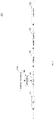
- Fig. 1 shows an illustration 100 of a methodology based on a neural network architecture for maneuver determination according to various embodiments.
- the methodology illustrated in Fig. 1 may provide an attention mechanism (which may be combined with a safety framework) which may be used to select a maneuver from available maneuvers list.
- a neural network may analyze a perception of a scene to generate a maneuver to execute. After prior processing, the agent at some stage of processing may have a basic understanding of what to do.
- the control head which may be responsible for maneuver selection is illustrated in Fig. 1 .
- a general hidden state may represent the current desire of policy, followed by a fully connected (FC) layer 102, responsible for parsing the general desire to the desired maneuver strategy.
- FC fully connected
- an available maneuvers mask may be used to pick related embeddings 106 (for example set of weights) based on the available maneuvers 104.
- a dot product 108, followed by a softmax activation function 110 may result in a probability distribution over only available actions.
- a final step by sampling from the resulting probability distribution or a picking action highest ranked maneuver may be determined, as illustrated by block 112, to obtain the maneuver 114 to be performed.
- control interfaces after discretization, may be considered. Those interfaces may be used as a separate control schemes or in parallel to each other, creating general planning system. Some among others are:
- the processing flow within the neural network itself may stay unchanged, but the rules used for determining which lane bias, distance or velocity are available may be changed.
- some small obstacles on a road may be analyzed, based on a maneuver (wherein for example lane biases in opposite direction to lane change may be forbidden) or based on other vehicles which may partially occupy our lane.
- For velocity (in both absolute and additive way of providing it) determination may be based on actual speed limit, leading vehicle distance and speed and velocities of nearby car(s) while performing other maneuvers.
- a safe reinforcement learning-based driving policy by deterministic action space predefinition may be provided.
- Fig. 2 shows a flow diagram 200 illustrating a method for determining a maneuver to be executed by an autonomous vehicle according to various embodiments.
- a plurality of potential maneuvers may be determined.
- a subset of the potential maneuvers may be determined based on a pre-determined condition.
- a mask may be determined based on the subset.
- an output of a fully connected layer of a neural network may be determined.
- a dot product of the output of the fully connected layer and the mask may be determined.
- the maneuver to be executed may be determined based on the dot product.
- the pre-determined condition may include or may be at least one of lanes availability, legality of lane changes, objects appearance, or time constrains.
- the mask may include a value of "1" for safe actions and a value of "0" for non-safe actions.
- the dot product may be followed by a softmax activation function.
- the softmax activation function may be followed by sampling.
- the softmax activation function may be followed by an argmax function.
- the neural network may be used in a reinforcement learning method.
- the subset of the potential maneuvers may include or may be possible, safe and legal maneuvers.
- the potential maneuvers may include or may be all maneuvers which the vehicle is able to perform.
- At least one of a lane bias, a distance to another vehicle or a velocity set point may be determined for the potential maneuvers.
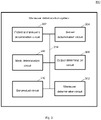
- Fig. 3 shows a maneuver determination system 300 according to various embodiments.
- the maneuver determination system 300 may include a potential maneuvers determination circuit 302, a subset determination circuit 304, a mask determination circuit 306, an output determination circuit 308, a dot product circuit 310, and a maneuver determination circuit 312.
- the maneuver determination system 300 may be a system for determining a maneuver to be executed by an autonomous vehicle.
- the potential maneuvers determination circuit 302 may be configured to determine a plurality of potential maneuvers.
- the subset determination circuit 304 may be configured to determine a subset of the potential maneuvers based on a pre-determined condition.
- the mask determination circuit 306 may be configured to determine a mask based on the subset.
- the output determination circuit 308 may be configured to determine an output of a fully connected layer of a neural network.
- the dot product circuit 310 may be configured to determine a dot product of the output of the fully connected layer and the mask.
- the maneuver determination circuit 312 may be configured to determine the maneuver to be executed based on the dot product.
- the potential maneuvers determination circuit 302, the subset determination circuit 304, the mask determination circuit 306, the output determination circuit 308, the dot product circuit 310, and the maneuver determination circuit 312 may be coupled with each other, e.g. via an electrical connection 314, such as e.g. a cable or a computer bus or via any other suitable electrical connection to exchange electrical signals.
- a “circuit” may be understood as any kind of a logic implementing entity, which may be special purpose circuitry or a processor executing a program stored in a memory, firmware, or any combination thereof.
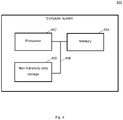
- Fig. 4 shows a computer system 400 with a plurality of computer hardware components configured to carry out steps of a computer implemented method for determining a maneuver to be executed by an autonomous vehicle according to various embodiments.
- the computer system 400 may include a processor 402, a memory 404, and a non-transitory data storage 406.
- the processor 402 may carry out instructions provided in the memory 404.
- the non-transitory data storage 406 may store a computer program, including the instructions that may be transferred to the memory 404 and then executed by the processor 402.
- the processor 402, the memory 404, and the non-transitory data storage 406 may be coupled with each other, e.g. via an electrical connection 408, such as e.g. a cable or a computer bus or via any other suitable electrical connection to exchange electrical signals.
- an electrical connection 408 such as e.g. a cable or a computer bus or via any other suitable electrical connection to exchange electrical signals.
- Coupled or “connection” are intended to include a direct “coupling” (for example via a physical link) or direct “connection” as well as an indirect “coupling” or indirect “connection” (for example via a logical link), respectively.
Landscapes
- Engineering & Computer Science (AREA)
- Physics & Mathematics (AREA)
- Automation & Control Theory (AREA)
- Transportation (AREA)
- Mechanical Engineering (AREA)
- Theoretical Computer Science (AREA)
- Human Computer Interaction (AREA)
- General Physics & Mathematics (AREA)
- Software Systems (AREA)
- Life Sciences & Earth Sciences (AREA)
- Health & Medical Sciences (AREA)
- Biomedical Technology (AREA)
- Biophysics (AREA)
- General Engineering & Computer Science (AREA)
- Mathematical Physics (AREA)
- Mathematical Analysis (AREA)
- Molecular Biology (AREA)
- Computing Systems (AREA)
- Data Mining & Analysis (AREA)
- Computational Linguistics (AREA)
- General Health & Medical Sciences (AREA)
- Neurology (AREA)
- Evolutionary Computation (AREA)
- Computational Mathematics (AREA)
- Artificial Intelligence (AREA)
- Mathematical Optimization (AREA)
- Pure & Applied Mathematics (AREA)
- Traffic Control Systems (AREA)
- Control Of Driving Devices And Active Controlling Of Vehicle (AREA)
Priority Applications (3)
| Application Number | Priority Date | Filing Date | Title |
|---|---|---|---|
| EP20207784.8A EP4001041B1 (fr) | 2020-11-16 | 2020-11-16 | Procédé et système pour déterminer une manoeuvre devant être exécutée par un véhicule autonome |
| US17/518,400 US12202519B2 (en) | 2020-11-16 | 2021-11-03 | Methods and systems for determining a maneuver to be executed by an autonomous vehicle |
| CN202111318433.8A CN114506337B (zh) | 2020-11-16 | 2021-11-09 | 用于确定要由自主车辆执行的操纵的方法和系统 |
Applications Claiming Priority (1)
| Application Number | Priority Date | Filing Date | Title |
|---|---|---|---|
| EP20207784.8A EP4001041B1 (fr) | 2020-11-16 | 2020-11-16 | Procédé et système pour déterminer une manoeuvre devant être exécutée par un véhicule autonome |
Publications (2)
| Publication Number | Publication Date |
|---|---|
| EP4001041A1 true EP4001041A1 (fr) | 2022-05-25 |
| EP4001041B1 EP4001041B1 (fr) | 2026-03-18 |
Family
ID=73452063
Family Applications (1)
| Application Number | Title | Priority Date | Filing Date |
|---|---|---|---|
| EP20207784.8A Active EP4001041B1 (fr) | 2020-11-16 | 2020-11-16 | Procédé et système pour déterminer une manoeuvre devant être exécutée par un véhicule autonome |
Country Status (3)
| Country | Link |
|---|---|
| US (1) | US12202519B2 (fr) |
| EP (1) | EP4001041B1 (fr) |
| CN (1) | CN114506337B (fr) |
Families Citing this family (1)
| Publication number | Priority date | Publication date | Assignee | Title |
|---|---|---|---|---|
| WO2023028437A1 (fr) * | 2021-08-27 | 2023-03-02 | Motional Ad Llc | Sélection de manœuvres à risque minimal |
Citations (2)
| Publication number | Priority date | Publication date | Assignee | Title |
|---|---|---|---|---|
| US20190113918A1 (en) * | 2017-10-18 | 2019-04-18 | Luminar Technologies, Inc. | Controlling an autonomous vehicle based on independent driving decisions |
| US20200139973A1 (en) * | 2018-11-01 | 2020-05-07 | GM Global Technology Operations LLC | Spatial and temporal attention-based deep reinforcement learning of hierarchical lane-change policies for controlling an autonomous vehicle |
Family Cites Families (10)
| Publication number | Priority date | Publication date | Assignee | Title |
|---|---|---|---|---|
| CN111353589B (zh) * | 2016-01-20 | 2024-03-01 | 中科寒武纪科技股份有限公司 | 用于执行人工神经网络正向运算的装置和方法 |
| CN106407931B (zh) * | 2016-09-19 | 2019-11-22 | 杭州电子科技大学 | 一种深度卷积神经网络运动车辆检测方法 |
| KR102224510B1 (ko) * | 2016-12-09 | 2021-03-05 | 베이징 호라이즌 인포메이션 테크놀로지 컴퍼니 리미티드 | 데이터 관리를 위한 시스템들 및 방법들 |
| WO2019005088A1 (fr) * | 2017-06-30 | 2019-01-03 | Intel Corporation | Multiplicateur hétérogène |
| US10678234B2 (en) * | 2017-08-24 | 2020-06-09 | Tusimple, Inc. | System and method for autonomous vehicle control to minimize energy cost |
| US11042163B2 (en) * | 2018-01-07 | 2021-06-22 | Nvidia Corporation | Guiding vehicles through vehicle maneuvers using machine learning models |
| US11467590B2 (en) * | 2018-04-09 | 2022-10-11 | SafeAI, Inc. | Techniques for considering uncertainty in use of artificial intelligence models |
| DE112020003043T5 (de) * | 2019-06-25 | 2022-08-18 | Nvidia Corporation | Erkennung und klassifizierung von kreuzungsregionen für autonome maschinenanwendungen |
| EP3798917A1 (fr) * | 2019-09-24 | 2021-03-31 | Naver Corporation | Réseau contradictoire génératif (gan) pour générer des images |
| US12572778B2 (en) * | 2020-06-01 | 2026-03-10 | Nvidia Corporation | Technique to perform neural network architecture search with federated learning |
-
2020
- 2020-11-16 EP EP20207784.8A patent/EP4001041B1/fr active Active
-
2021
- 2021-11-03 US US17/518,400 patent/US12202519B2/en active Active
- 2021-11-09 CN CN202111318433.8A patent/CN114506337B/zh active Active
Patent Citations (2)
| Publication number | Priority date | Publication date | Assignee | Title |
|---|---|---|---|---|
| US20190113918A1 (en) * | 2017-10-18 | 2019-04-18 | Luminar Technologies, Inc. | Controlling an autonomous vehicle based on independent driving decisions |
| US20200139973A1 (en) * | 2018-11-01 | 2020-05-07 | GM Global Technology Operations LLC | Spatial and temporal attention-based deep reinforcement learning of hierarchical lane-change policies for controlling an autonomous vehicle |
Non-Patent Citations (1)
| Title |
|---|
| CHENGLU WEN ET AL: "A deep learning framework for road marking extraction, classification and completion from mobile laser scanning point clouds", ISPRS JOURNAL OF PHOTOGRAMMETRY AND REMOTE SENSING, vol. 147, 1 January 2019 (2019-01-01), AMSTERDAM, NL, pages 178 - 192, XP055743244, ISSN: 0924-2716, DOI: 10.1016/j.isprsjprs.2018.10.007 * |
Also Published As
| Publication number | Publication date |
|---|---|
| US12202519B2 (en) | 2025-01-21 |
| CN114506337A (zh) | 2022-05-17 |
| CN114506337B (zh) | 2024-06-21 |
| EP4001041B1 (fr) | 2026-03-18 |
| US20220153303A1 (en) | 2022-05-19 |
Similar Documents
| Publication | Publication Date | Title |
|---|---|---|
| Ishihara et al. | Multi-task learning with attention for end-to-end autonomous driving | |
| US11899457B1 (en) | Augmenting autonomous driving with remote viewer recommendation | |
| CN110796856B (zh) | 车辆变道意图预测方法及变道意图预测网络的训练方法 | |
| US10739774B2 (en) | Keyframe based autonomous vehicle operation | |
| Haavaldsen et al. | Autonomous vehicle control: End-to-end learning in simulated urban environments | |
| EP4245629B1 (fr) | Procédé et système informatique pour commander le mouvement d'un véhicule hôte | |
| CN116991077A (zh) | 车辆自动驾驶决策方法、装置、设备及介质 | |
| Nosrati et al. | Towards practical hierarchical reinforcement learning for multi-lane autonomous driving | |
| Youssef et al. | Comparative study of end-to-end deep learning methods for self-driving car | |
| US12202519B2 (en) | Methods and systems for determining a maneuver to be executed by an autonomous vehicle | |
| Zhao et al. | Stable training via elastic adaptive deep reinforcement learning for autonomous navigation of intelligent vehicles | |
| CN119898364A (zh) | 决策规划算法的真值生成方法、装置、存储介质及设备 | |
| EP4219258A1 (fr) | Procédé, système informatique et support lisible par ordinateur non transitoire pour la sélection de cible dans le voisinage d'un véhicule | |
| US20250206343A1 (en) | Method For Determining Control Parameters For Driving A Vehicle | |
| Lu et al. | Data-driven diffusion models for enhancing safety in autonomous vehicle traffic simulations | |
| Zhang et al. | Learning how to avoiding obstacles for end-to-end driving with conditional imitation learning | |
| CN119975387A (zh) | 用于自主驾驶的规划器的情境意识优化 | |
| CN119142329A (zh) | 一种基于分布式的驾驶决策生成方法、系统及存储介质 | |
| CN116142193B (zh) | 车辆换道决策方法、装置、电子设备和存储介质 | |
| Faruffini et al. | Vehicle autonomous navigation with context awareness | |
| Hu et al. | Srd: balancing safety and optimality based on rss and reinforcement learning for autonomous driving | |
| Nakaya et al. | Exploration of deep reinforcement learning method for cooperative control of connected automated vehicles at a roundabout | |
| Miangoleh et al. | IRL-DAL: Safe and Adaptive Trajectory Planning for Autonomous Driving via Energy-Guided Diffusion Models | |
| KR102743894B1 (ko) | 자율주행 차량의 안전성 평가 방법 및 이를 실행하기 위하여 기록매체에 기록된 컴퓨터 프로그램 | |
| CN121794178A (zh) | 变道规划方法、装置、车辆、设备、存储介质及程序产品 |
Legal Events
| Date | Code | Title | Description |
|---|---|---|---|
| PUAI | Public reference made under article 153(3) epc to a published international application that has entered the european phase |
Free format text: ORIGINAL CODE: 0009012 |
|
| STAA | Information on the status of an ep patent application or granted ep patent |
Free format text: STATUS: THE APPLICATION HAS BEEN PUBLISHED |
|
| AK | Designated contracting states |
Kind code of ref document: A1 Designated state(s): AL AT BE BG CH CY CZ DE DK EE ES FI FR GB GR HR HU IE IS IT LI LT LU LV MC MK MT NL NO PL PT RO RS SE SI SK SM TR |
|
| STAA | Information on the status of an ep patent application or granted ep patent |
Free format text: STATUS: REQUEST FOR EXAMINATION WAS MADE |
|
| 17P | Request for examination filed |
Effective date: 20221124 |
|
| RBV | Designated contracting states (corrected) |
Designated state(s): AL AT BE BG CH CY CZ DE DK EE ES FI FR GB GR HR HU IE IS IT LI LT LU LV MC MK MT NL NO PL PT RO RS SE SI SK SM TR |
|
| RAP3 | Party data changed (applicant data changed or rights of an application transferred) |
Owner name: APTIV TECHNOLOGIES LIMITED |
|
| RAP1 | Party data changed (applicant data changed or rights of an application transferred) |
Owner name: APTIV TECHNOLOGIES AG |
|
| STAA | Information on the status of an ep patent application or granted ep patent |
Free format text: STATUS: EXAMINATION IS IN PROGRESS |
|
| 17Q | First examination report despatched |
Effective date: 20240627 |
|
| RAP3 | Party data changed (applicant data changed or rights of an application transferred) |
Owner name: APTIV TECHNOLOGIES AG |
|
| GRAP | Despatch of communication of intention to grant a patent |
Free format text: ORIGINAL CODE: EPIDOSNIGR1 |
|
| STAA | Information on the status of an ep patent application or granted ep patent |
Free format text: STATUS: GRANT OF PATENT IS INTENDED |
|
| INTG | Intention to grant announced |
Effective date: 20251020 |
|
| P01 | Opt-out of the competence of the unified patent court (upc) registered |
Free format text: CASE NUMBER: UPC_APP_0017737_4001041/2025 Effective date: 20251216 |
|
| GRAS | Grant fee paid |
Free format text: ORIGINAL CODE: EPIDOSNIGR3 |
|
| GRAA | (expected) grant |
Free format text: ORIGINAL CODE: 0009210 |
|
| STAA | Information on the status of an ep patent application or granted ep patent |
Free format text: STATUS: THE PATENT HAS BEEN GRANTED |
|
| AK | Designated contracting states |
Kind code of ref document: B1 Designated state(s): AL AT BE BG CH CY CZ DE DK EE ES FI FR GB GR HR HU IE IS IT LI LT LU LV MC MK MT NL NO PL PT RO RS SE SI SK SM TR |
|
| REG | Reference to a national code |
Ref country code: CH Ref legal event code: F10 Free format text: ST27 STATUS EVENT CODE: U-0-0-F10-F00 (AS PROVIDED BY THE NATIONAL OFFICE) Effective date: 20260318 Ref country code: GB Ref legal event code: FG4D |
|
| REG | Reference to a national code |
Ref country code: IE Ref legal event code: FG4D |
|
| REG | Reference to a national code |
Ref country code: DE Ref legal event code: R096 Ref document number: 602020068731 Country of ref document: DE |