EP4001243A1 - Procédé de fabrication de corps moulés par frittage - Google Patents
Procédé de fabrication de corps moulés par frittage Download PDFInfo
- Publication number
- EP4001243A1 EP4001243A1 EP20208200.4A EP20208200A EP4001243A1 EP 4001243 A1 EP4001243 A1 EP 4001243A1 EP 20208200 A EP20208200 A EP 20208200A EP 4001243 A1 EP4001243 A1 EP 4001243A1
- Authority
- EP
- European Patent Office
- Prior art keywords
- powder
- brown
- starting material
- isostatic pressing
- sintering
- Prior art date
- Legal status (The legal status is an assumption and is not a legal conclusion. Google has not performed a legal analysis and makes no representation as to the accuracy of the status listed.)
- Pending
Links
Images
Classifications
-
- B—PERFORMING OPERATIONS; TRANSPORTING
- B22—CASTING; POWDER METALLURGY
- B22F—WORKING METALLIC POWDER; MANUFACTURE OF ARTICLES FROM METALLIC POWDER; MAKING METALLIC POWDER; APPARATUS OR DEVICES SPECIALLY ADAPTED FOR METALLIC POWDER
- B22F10/00—Additive manufacturing of workpieces or articles from metallic powder
- B22F10/10—Formation of a green body
-
- B—PERFORMING OPERATIONS; TRANSPORTING
- B22—CASTING; POWDER METALLURGY
- B22F—WORKING METALLIC POWDER; MANUFACTURE OF ARTICLES FROM METALLIC POWDER; MAKING METALLIC POWDER; APPARATUS OR DEVICES SPECIALLY ADAPTED FOR METALLIC POWDER
- B22F10/00—Additive manufacturing of workpieces or articles from metallic powder
- B22F10/10—Formation of a green body
- B22F10/14—Formation of a green body by jetting of binder onto a bed of metal powder
-
- B—PERFORMING OPERATIONS; TRANSPORTING
- B22—CASTING; POWDER METALLURGY
- B22F—WORKING METALLIC POWDER; MANUFACTURE OF ARTICLES FROM METALLIC POWDER; MAKING METALLIC POWDER; APPARATUS OR DEVICES SPECIALLY ADAPTED FOR METALLIC POWDER
- B22F10/00—Additive manufacturing of workpieces or articles from metallic powder
- B22F10/10—Formation of a green body
- B22F10/16—Formation of a green body by embedding the binder within the powder bed
-
- B—PERFORMING OPERATIONS; TRANSPORTING
- B22—CASTING; POWDER METALLURGY
- B22F—WORKING METALLIC POWDER; MANUFACTURE OF ARTICLES FROM METALLIC POWDER; MAKING METALLIC POWDER; APPARATUS OR DEVICES SPECIALLY ADAPTED FOR METALLIC POWDER
- B22F10/00—Additive manufacturing of workpieces or articles from metallic powder
- B22F10/60—Treatment of workpieces or articles after build-up
-
- B—PERFORMING OPERATIONS; TRANSPORTING
- B22—CASTING; POWDER METALLURGY
- B22F—WORKING METALLIC POWDER; MANUFACTURE OF ARTICLES FROM METALLIC POWDER; MAKING METALLIC POWDER; APPARATUS OR DEVICES SPECIALLY ADAPTED FOR METALLIC POWDER
- B22F10/00—Additive manufacturing of workpieces or articles from metallic powder
- B22F10/60—Treatment of workpieces or articles after build-up
- B22F10/62—Treatment of workpieces or articles after build-up by chemical means
-
- B—PERFORMING OPERATIONS; TRANSPORTING
- B22—CASTING; POWDER METALLURGY
- B22F—WORKING METALLIC POWDER; MANUFACTURE OF ARTICLES FROM METALLIC POWDER; MAKING METALLIC POWDER; APPARATUS OR DEVICES SPECIALLY ADAPTED FOR METALLIC POWDER
- B22F10/00—Additive manufacturing of workpieces or articles from metallic powder
- B22F10/60—Treatment of workpieces or articles after build-up
- B22F10/64—Treatment of workpieces or articles after build-up by thermal means
-
- B—PERFORMING OPERATIONS; TRANSPORTING
- B22—CASTING; POWDER METALLURGY
- B22F—WORKING METALLIC POWDER; MANUFACTURE OF ARTICLES FROM METALLIC POWDER; MAKING METALLIC POWDER; APPARATUS OR DEVICES SPECIALLY ADAPTED FOR METALLIC POWDER
- B22F3/00—Manufacture of workpieces or articles from metallic powder characterised by the manner of compacting or sintering; Apparatus specially adapted therefor ; Presses and furnaces
- B22F3/02—Compacting only
- B22F3/04—Compacting only by applying fluid pressure, e.g. by cold isostatic pressing [CIP]
-
- B—PERFORMING OPERATIONS; TRANSPORTING
- B22—CASTING; POWDER METALLURGY
- B22F—WORKING METALLIC POWDER; MANUFACTURE OF ARTICLES FROM METALLIC POWDER; MAKING METALLIC POWDER; APPARATUS OR DEVICES SPECIALLY ADAPTED FOR METALLIC POWDER
- B22F3/00—Manufacture of workpieces or articles from metallic powder characterised by the manner of compacting or sintering; Apparatus specially adapted therefor ; Presses and furnaces
- B22F3/10—Sintering only
- B22F3/1017—Multiple heating or additional steps
- B22F3/1021—Removal of binder or filler
-
- B—PERFORMING OPERATIONS; TRANSPORTING
- B22—CASTING; POWDER METALLURGY
- B22F—WORKING METALLIC POWDER; MANUFACTURE OF ARTICLES FROM METALLIC POWDER; MAKING METALLIC POWDER; APPARATUS OR DEVICES SPECIALLY ADAPTED FOR METALLIC POWDER
- B22F3/00—Manufacture of workpieces or articles from metallic powder characterised by the manner of compacting or sintering; Apparatus specially adapted therefor ; Presses and furnaces
- B22F3/12—Both compacting and sintering
- B22F3/1208—Containers or coating used therefor
- B22F3/1216—Container composition
- B22F3/1233—Organic material
-
- B—PERFORMING OPERATIONS; TRANSPORTING
- B22—CASTING; POWDER METALLURGY
- B22F—WORKING METALLIC POWDER; MANUFACTURE OF ARTICLES FROM METALLIC POWDER; MAKING METALLIC POWDER; APPARATUS OR DEVICES SPECIALLY ADAPTED FOR METALLIC POWDER
- B22F3/00—Manufacture of workpieces or articles from metallic powder characterised by the manner of compacting or sintering; Apparatus specially adapted therefor ; Presses and furnaces
- B22F3/12—Both compacting and sintering
- B22F3/1208—Containers or coating used therefor
- B22F3/1258—Container manufacturing
- B22F3/1266—Container manufacturing by coating or sealing the surface of the preformed article, e.g. by melting
-
- B—PERFORMING OPERATIONS; TRANSPORTING
- B22—CASTING; POWDER METALLURGY
- B22F—WORKING METALLIC POWDER; MANUFACTURE OF ARTICLES FROM METALLIC POWDER; MAKING METALLIC POWDER; APPARATUS OR DEVICES SPECIALLY ADAPTED FOR METALLIC POWDER
- B22F3/00—Manufacture of workpieces or articles from metallic powder characterised by the manner of compacting or sintering; Apparatus specially adapted therefor ; Presses and furnaces
- B22F3/12—Both compacting and sintering
- B22F3/16—Both compacting and sintering in successive or repeated steps
-
- B—PERFORMING OPERATIONS; TRANSPORTING
- B22—CASTING; POWDER METALLURGY
- B22F—WORKING METALLIC POWDER; MANUFACTURE OF ARTICLES FROM METALLIC POWDER; MAKING METALLIC POWDER; APPARATUS OR DEVICES SPECIALLY ADAPTED FOR METALLIC POWDER
- B22F3/00—Manufacture of workpieces or articles from metallic powder characterised by the manner of compacting or sintering; Apparatus specially adapted therefor ; Presses and furnaces
- B22F3/20—Manufacture of workpieces or articles from metallic powder characterised by the manner of compacting or sintering; Apparatus specially adapted therefor ; Presses and furnaces by extruding
-
- B—PERFORMING OPERATIONS; TRANSPORTING
- B22—CASTING; POWDER METALLURGY
- B22F—WORKING METALLIC POWDER; MANUFACTURE OF ARTICLES FROM METALLIC POWDER; MAKING METALLIC POWDER; APPARATUS OR DEVICES SPECIALLY ADAPTED FOR METALLIC POWDER
- B22F3/00—Manufacture of workpieces or articles from metallic powder characterised by the manner of compacting or sintering; Apparatus specially adapted therefor ; Presses and furnaces
- B22F3/22—Manufacture of workpieces or articles from metallic powder characterised by the manner of compacting or sintering; Apparatus specially adapted therefor ; Presses and furnaces for producing castings from a slip
-
- B—PERFORMING OPERATIONS; TRANSPORTING
- B22—CASTING; POWDER METALLURGY
- B22F—WORKING METALLIC POWDER; MANUFACTURE OF ARTICLES FROM METALLIC POWDER; MAKING METALLIC POWDER; APPARATUS OR DEVICES SPECIALLY ADAPTED FOR METALLIC POWDER
- B22F3/00—Manufacture of workpieces or articles from metallic powder characterised by the manner of compacting or sintering; Apparatus specially adapted therefor ; Presses and furnaces
- B22F3/22—Manufacture of workpieces or articles from metallic powder characterised by the manner of compacting or sintering; Apparatus specially adapted therefor ; Presses and furnaces for producing castings from a slip
- B22F3/222—Manufacture of workpieces or articles from metallic powder characterised by the manner of compacting or sintering; Apparatus specially adapted therefor ; Presses and furnaces for producing castings from a slip by freeze-casting or in a supercritical fluid
-
- B—PERFORMING OPERATIONS; TRANSPORTING
- B22—CASTING; POWDER METALLURGY
- B22F—WORKING METALLIC POWDER; MANUFACTURE OF ARTICLES FROM METALLIC POWDER; MAKING METALLIC POWDER; APPARATUS OR DEVICES SPECIALLY ADAPTED FOR METALLIC POWDER
- B22F3/00—Manufacture of workpieces or articles from metallic powder characterised by the manner of compacting or sintering; Apparatus specially adapted therefor ; Presses and furnaces
- B22F3/22—Manufacture of workpieces or articles from metallic powder characterised by the manner of compacting or sintering; Apparatus specially adapted therefor ; Presses and furnaces for producing castings from a slip
- B22F3/225—Manufacture of workpieces or articles from metallic powder characterised by the manner of compacting or sintering; Apparatus specially adapted therefor ; Presses and furnaces for producing castings from a slip by injection molding
-
- B—PERFORMING OPERATIONS; TRANSPORTING
- B22—CASTING; POWDER METALLURGY
- B22F—WORKING METALLIC POWDER; MANUFACTURE OF ARTICLES FROM METALLIC POWDER; MAKING METALLIC POWDER; APPARATUS OR DEVICES SPECIALLY ADAPTED FOR METALLIC POWDER
- B22F3/00—Manufacture of workpieces or articles from metallic powder characterised by the manner of compacting or sintering; Apparatus specially adapted therefor ; Presses and furnaces
- B22F3/22—Manufacture of workpieces or articles from metallic powder characterised by the manner of compacting or sintering; Apparatus specially adapted therefor ; Presses and furnaces for producing castings from a slip
- B22F3/227—Manufacture of workpieces or articles from metallic powder characterised by the manner of compacting or sintering; Apparatus specially adapted therefor ; Presses and furnaces for producing castings from a slip by organic binder assisted extrusion
-
- B—PERFORMING OPERATIONS; TRANSPORTING
- B33—ADDITIVE MANUFACTURING TECHNOLOGY
- B33Y—ADDITIVE MANUFACTURING, i.e. MANUFACTURING OF THREE-DIMENSIONAL [3D] OBJECTS BY ADDITIVE DEPOSITION, ADDITIVE AGGLOMERATION OR ADDITIVE LAYERING, e.g. BY 3D PRINTING, STEREOLITHOGRAPHY OR SELECTIVE LASER SINTERING
- B33Y10/00—Processes of additive manufacturing
-
- B—PERFORMING OPERATIONS; TRANSPORTING
- B33—ADDITIVE MANUFACTURING TECHNOLOGY
- B33Y—ADDITIVE MANUFACTURING, i.e. MANUFACTURING OF THREE-DIMENSIONAL [3D] OBJECTS BY ADDITIVE DEPOSITION, ADDITIVE AGGLOMERATION OR ADDITIVE LAYERING, e.g. BY 3D PRINTING, STEREOLITHOGRAPHY OR SELECTIVE LASER SINTERING
- B33Y40/00—Auxiliary operations or equipment, e.g. for material handling
- B33Y40/20—Post-treatment, e.g. curing, coating or polishing
-
- C—CHEMISTRY; METALLURGY
- C04—CEMENTS; CONCRETE; ARTIFICIAL STONE; CERAMICS; REFRACTORIES
- C04B—LIME, MAGNESIA; SLAG; CEMENTS; COMPOSITIONS THEREOF, e.g. MORTARS, CONCRETE OR LIKE BUILDING MATERIALS; ARTIFICIAL STONE; CERAMICS; REFRACTORIES; TREATMENT OF NATURAL STONE
- C04B35/00—Shaped ceramic products characterised by their composition; Ceramics compositions; Processing powders of inorganic compounds preparatory to the manufacturing of ceramic products
- C04B35/622—Forming processes; Processing powders of inorganic compounds preparatory to the manufacturing of ceramic products
-
- C—CHEMISTRY; METALLURGY
- C04—CEMENTS; CONCRETE; ARTIFICIAL STONE; CERAMICS; REFRACTORIES
- C04B—LIME, MAGNESIA; SLAG; CEMENTS; COMPOSITIONS THEREOF, e.g. MORTARS, CONCRETE OR LIKE BUILDING MATERIALS; ARTIFICIAL STONE; CERAMICS; REFRACTORIES; TREATMENT OF NATURAL STONE
- C04B35/00—Shaped ceramic products characterised by their composition; Ceramics compositions; Processing powders of inorganic compounds preparatory to the manufacturing of ceramic products
- C04B35/622—Forming processes; Processing powders of inorganic compounds preparatory to the manufacturing of ceramic products
- C04B35/626—Preparing or treating the powders individually or as batches ; preparing or treating macroscopic reinforcing agents for ceramic products, e.g. fibres; mechanical aspects section B
- C04B35/63—Preparing or treating the powders individually or as batches ; preparing or treating macroscopic reinforcing agents for ceramic products, e.g. fibres; mechanical aspects section B using additives specially adapted for forming the products, e.g.. binder binders
- C04B35/632—Organic additives
-
- C—CHEMISTRY; METALLURGY
- C04—CEMENTS; CONCRETE; ARTIFICIAL STONE; CERAMICS; REFRACTORIES
- C04B—LIME, MAGNESIA; SLAG; CEMENTS; COMPOSITIONS THEREOF, e.g. MORTARS, CONCRETE OR LIKE BUILDING MATERIALS; ARTIFICIAL STONE; CERAMICS; REFRACTORIES; TREATMENT OF NATURAL STONE
- C04B35/00—Shaped ceramic products characterised by their composition; Ceramics compositions; Processing powders of inorganic compounds preparatory to the manufacturing of ceramic products
- C04B35/622—Forming processes; Processing powders of inorganic compounds preparatory to the manufacturing of ceramic products
- C04B35/626—Preparing or treating the powders individually or as batches ; preparing or treating macroscopic reinforcing agents for ceramic products, e.g. fibres; mechanical aspects section B
- C04B35/63—Preparing or treating the powders individually or as batches ; preparing or treating macroscopic reinforcing agents for ceramic products, e.g. fibres; mechanical aspects section B using additives specially adapted for forming the products, e.g.. binder binders
- C04B35/632—Organic additives
- C04B35/634—Polymers
-
- C—CHEMISTRY; METALLURGY
- C04—CEMENTS; CONCRETE; ARTIFICIAL STONE; CERAMICS; REFRACTORIES
- C04B—LIME, MAGNESIA; SLAG; CEMENTS; COMPOSITIONS THEREOF, e.g. MORTARS, CONCRETE OR LIKE BUILDING MATERIALS; ARTIFICIAL STONE; CERAMICS; REFRACTORIES; TREATMENT OF NATURAL STONE
- C04B35/00—Shaped ceramic products characterised by their composition; Ceramics compositions; Processing powders of inorganic compounds preparatory to the manufacturing of ceramic products
- C04B35/622—Forming processes; Processing powders of inorganic compounds preparatory to the manufacturing of ceramic products
- C04B35/626—Preparing or treating the powders individually or as batches ; preparing or treating macroscopic reinforcing agents for ceramic products, e.g. fibres; mechanical aspects section B
- C04B35/63—Preparing or treating the powders individually or as batches ; preparing or treating macroscopic reinforcing agents for ceramic products, e.g. fibres; mechanical aspects section B using additives specially adapted for forming the products, e.g.. binder binders
- C04B35/638—Removal thereof
-
- C—CHEMISTRY; METALLURGY
- C04—CEMENTS; CONCRETE; ARTIFICIAL STONE; CERAMICS; REFRACTORIES
- C04B—LIME, MAGNESIA; SLAG; CEMENTS; COMPOSITIONS THEREOF, e.g. MORTARS, CONCRETE OR LIKE BUILDING MATERIALS; ARTIFICIAL STONE; CERAMICS; REFRACTORIES; TREATMENT OF NATURAL STONE
- C04B35/00—Shaped ceramic products characterised by their composition; Ceramics compositions; Processing powders of inorganic compounds preparatory to the manufacturing of ceramic products
- C04B35/622—Forming processes; Processing powders of inorganic compounds preparatory to the manufacturing of ceramic products
- C04B35/64—Burning or sintering processes
- C04B35/645—Pressure sintering
-
- C—CHEMISTRY; METALLURGY
- C04—CEMENTS; CONCRETE; ARTIFICIAL STONE; CERAMICS; REFRACTORIES
- C04B—LIME, MAGNESIA; SLAG; CEMENTS; COMPOSITIONS THEREOF, e.g. MORTARS, CONCRETE OR LIKE BUILDING MATERIALS; ARTIFICIAL STONE; CERAMICS; REFRACTORIES; TREATMENT OF NATURAL STONE
- C04B41/00—After-treatment of mortars, concrete, artificial stone or ceramics; Treatment of natural stone
- C04B41/45—Coating or impregnating, e.g. injection in masonry, partial coating of green or fired ceramics, organic coating compositions for adhering together two concrete elements
- C04B41/4505—Coating or impregnating, e.g. injection in masonry, partial coating of green or fired ceramics, organic coating compositions for adhering together two concrete elements characterised by the method of application
- C04B41/4535—Coating or impregnating, e.g. injection in masonry, partial coating of green or fired ceramics, organic coating compositions for adhering together two concrete elements characterised by the method of application applied as a solution, emulsion, dispersion or suspension
-
- C—CHEMISTRY; METALLURGY
- C04—CEMENTS; CONCRETE; ARTIFICIAL STONE; CERAMICS; REFRACTORIES
- C04B—LIME, MAGNESIA; SLAG; CEMENTS; COMPOSITIONS THEREOF, e.g. MORTARS, CONCRETE OR LIKE BUILDING MATERIALS; ARTIFICIAL STONE; CERAMICS; REFRACTORIES; TREATMENT OF NATURAL STONE
- C04B41/00—After-treatment of mortars, concrete, artificial stone or ceramics; Treatment of natural stone
- C04B41/45—Coating or impregnating, e.g. injection in masonry, partial coating of green or fired ceramics, organic coating compositions for adhering together two concrete elements
- C04B41/46—Coating or impregnating, e.g. injection in masonry, partial coating of green or fired ceramics, organic coating compositions for adhering together two concrete elements with organic materials
- C04B41/48—Macromolecular compounds
-
- B—PERFORMING OPERATIONS; TRANSPORTING
- B22—CASTING; POWDER METALLURGY
- B22F—WORKING METALLIC POWDER; MANUFACTURE OF ARTICLES FROM METALLIC POWDER; MAKING METALLIC POWDER; APPARATUS OR DEVICES SPECIALLY ADAPTED FOR METALLIC POWDER
- B22F2201/00—Treatment under specific atmosphere
- B22F2201/10—Inert gases
-
- B—PERFORMING OPERATIONS; TRANSPORTING
- B22—CASTING; POWDER METALLURGY
- B22F—WORKING METALLIC POWDER; MANUFACTURE OF ARTICLES FROM METALLIC POWDER; MAKING METALLIC POWDER; APPARATUS OR DEVICES SPECIALLY ADAPTED FOR METALLIC POWDER
- B22F2998/00—Supplementary information concerning processes or compositions relating to powder metallurgy
-
- B—PERFORMING OPERATIONS; TRANSPORTING
- B22—CASTING; POWDER METALLURGY
- B22F—WORKING METALLIC POWDER; MANUFACTURE OF ARTICLES FROM METALLIC POWDER; MAKING METALLIC POWDER; APPARATUS OR DEVICES SPECIALLY ADAPTED FOR METALLIC POWDER
- B22F2998/00—Supplementary information concerning processes or compositions relating to powder metallurgy
- B22F2998/10—Processes characterised by the sequence of their steps
-
- B—PERFORMING OPERATIONS; TRANSPORTING
- B22—CASTING; POWDER METALLURGY
- B22F—WORKING METALLIC POWDER; MANUFACTURE OF ARTICLES FROM METALLIC POWDER; MAKING METALLIC POWDER; APPARATUS OR DEVICES SPECIALLY ADAPTED FOR METALLIC POWDER
- B22F2999/00—Aspects linked to processes or compositions used in powder metallurgy
-
- C—CHEMISTRY; METALLURGY
- C04—CEMENTS; CONCRETE; ARTIFICIAL STONE; CERAMICS; REFRACTORIES
- C04B—LIME, MAGNESIA; SLAG; CEMENTS; COMPOSITIONS THEREOF, e.g. MORTARS, CONCRETE OR LIKE BUILDING MATERIALS; ARTIFICIAL STONE; CERAMICS; REFRACTORIES; TREATMENT OF NATURAL STONE
- C04B2235/00—Aspects relating to ceramic starting mixtures or sintered ceramic products
- C04B2235/60—Aspects relating to the preparation, properties or mechanical treatment of green bodies or pre-forms
- C04B2235/602—Making the green bodies or pre-forms by moulding
- C04B2235/6026—Computer aided shaping, e.g. rapid prototyping
-
- C—CHEMISTRY; METALLURGY
- C04—CEMENTS; CONCRETE; ARTIFICIAL STONE; CERAMICS; REFRACTORIES
- C04B—LIME, MAGNESIA; SLAG; CEMENTS; COMPOSITIONS THEREOF, e.g. MORTARS, CONCRETE OR LIKE BUILDING MATERIALS; ARTIFICIAL STONE; CERAMICS; REFRACTORIES; TREATMENT OF NATURAL STONE
- C04B2235/00—Aspects relating to ceramic starting mixtures or sintered ceramic products
- C04B2235/60—Aspects relating to the preparation, properties or mechanical treatment of green bodies or pre-forms
- C04B2235/604—Pressing at temperatures other than sintering temperatures
-
- C—CHEMISTRY; METALLURGY
- C04—CEMENTS; CONCRETE; ARTIFICIAL STONE; CERAMICS; REFRACTORIES
- C04B—LIME, MAGNESIA; SLAG; CEMENTS; COMPOSITIONS THEREOF, e.g. MORTARS, CONCRETE OR LIKE BUILDING MATERIALS; ARTIFICIAL STONE; CERAMICS; REFRACTORIES; TREATMENT OF NATURAL STONE
- C04B2235/00—Aspects relating to ceramic starting mixtures or sintered ceramic products
- C04B2235/60—Aspects relating to the preparation, properties or mechanical treatment of green bodies or pre-forms
- C04B2235/616—Liquid infiltration of green bodies or pre-forms
-
- Y—GENERAL TAGGING OF NEW TECHNOLOGICAL DEVELOPMENTS; GENERAL TAGGING OF CROSS-SECTIONAL TECHNOLOGIES SPANNING OVER SEVERAL SECTIONS OF THE IPC; TECHNICAL SUBJECTS COVERED BY FORMER USPC CROSS-REFERENCE ART COLLECTIONS [XRACs] AND DIGESTS
- Y02—TECHNOLOGIES OR APPLICATIONS FOR MITIGATION OR ADAPTATION AGAINST CLIMATE CHANGE
- Y02P—CLIMATE CHANGE MITIGATION TECHNOLOGIES IN THE PRODUCTION OR PROCESSING OF GOODS
- Y02P10/00—Technologies related to metal processing
- Y02P10/25—Process efficiency
Definitions
- the present invention relates to a method for producing a shaped body by sintering according to the preamble of claim 1.
- the method is particularly suitable for the powder-metallurgical production of shaped bodies, but can also be used for the production of shaped bodies made of ceramic material, including sinter compaction and - hardening are used.
- the production of metallic shaped bodies by means of powder metallurgical processes is a procedure that has been known for a long time and is also practiced in mass production. The same applies to the sinter-based production of shaped ceramic bodies.
- methods are practiced in which a green part or a brown part is first produced from a provided starting material in the form of a mixture of a metal powder or a ceramic powder with binder material, a so-called feedstock.
- a starting material that only contains metal or ceramic powder can be arranged in a powder bed and a green part or a brown part can then be produced by deliberately introducing binder material into the powder bed.
- the raw part is sintered compressed and solidified.
- the green part and the brown part differ on the one hand by the content of binder material in the material structure and on the other hand by the type of binder.
- Green parts usually contain a higher proportion of binder and in any case always also such binder components as, for example, plasticizers and waxes, which can be chemically removed using a solvent.
- the green parts also contain a component of another binder, which is not chemically triggered but driven out by heating, i.e. thermally debindered, so they are formed from a starting material with a multi-component binder system and the metal or ceramic powder particles.
- brown part is immediately produced that does not contain any binder materials that can be removed chemically using solvents.
- brown parts are often made from a starting mass, a feedstock, which has a lower proportion of a binder material.
- the shaping to form the green part, or directly the brown part can be done in different ways. In simple variants, this is done by simple compression molding in press molds, from which the molded parts are formed, often directly as brown parts, thermally debindered and finally sintered. However, other shaping processes are also possible, such as MIM (Metal Injection Moulding ), slip casting, extrusion or - increasingly so - 3D printing processes.
- MIM Metal Injection Moulding
- a challenge in the sinter-based production of shaped bodies, in which the shaped bodies are compacted in a sintering step, is, in addition to considering the material shrinkage during sintering, achieving a desired high material density and strength of the sintered part.
- the starting material is interspersed with pores and sometimes also with defects before sintering.
- pores and imperfections stem from two types of formation mechanisms: On the one hand, in the course of shaping the green part or the brown part, process-related gaps, usually larger pores, also known as macropores, or transverse cavities occurring due to delamination, can appear in the material structure due to insufficient filling of the area formed by the molded parts (green part, brown part) enclosed space with the starting material in the shaping process or due to an insufficient connection of powder layers applied in layers. Such defects can occur both in 3D printing and in a pressing process, but also in MIM, slip casting or extrusion.
- micropores form when the green part or the brown part is debindered: where binder particles were initially arranged, these micropores form between the otherwise densely packed metal particles.
- the micropores that occur during debinding can usually be closed by choosing suitable parameters for the sintering process, and the material can be highly compacted during the sintering process, the defects that occur during the shaping process of the green part or the brown part, such as the macropores or Lateral cavities are a bigger problem. Because these can often no longer be completely closed in a sintering process that follows debinding. While the aforesaid micropores cannot be closed even by rearranging the powder particles, as clearances between closely packed ones Powder particles that are unavoidably found in the green part or the brown part are only closed during the sintering process due to the deformation of the powder particles that occurs there and the diffusion processes that connect the powder particles can be filled up. At the positions of such defects, one or even several powder particles of the material powder used are “missing”.
- sintered components are subjected to further treatment steps carried out after the sintering process, especially when compactness of the component and high density, i.e. low porosity, of the finished part are important To further increase material density and to close the remaining macropores.
- So-called hot isostatic pressing (HIP) is often used here.
- the finished sintered shaped bodies are subjected to a high pressure medium, typically an inert gas, in a treatment chamber and at the same time exposed to a high temperature.
- the defects to be closed such as macropores
- the defects to be closed are not enclosed in the interior of the shaped body but are exposed to the outside, the defects cannot be closed by hot isostatic pressing.
- the pressurized medium e.g. an inert gas such as argon
- the open defects also penetrates into the open defects and keeps them open.
- the molded part formed from the material powder held together with a binder is compressed in an isostatic pressing process in order, in particular, in the step b. to close defects that have occurred during the shaping process, such as macropores or other defects in the material structure, if necessary also to close macropores that have already been formed by chemical debinding of the green part. Since the pressing process is carried out isostatically, the pressure acts on the molded part from all sides and thus leads to uniform compression without causing the risk of a particular one-dimensional change in the given shape of the molded body. The pressing process is carried out in particular when the molded part is “exposed”.
- the individual particles of the powder material i.e. the metal and/or ceramic powder
- the shaped body has a particularly high material density.
- Post-treatment of the shaped body to increase the material density is often undertaken in the prior art, for example and in particular by hot isostatic pressing (HIP) of the finished metal part, is therefore not necessary.
- HIP hot isostatic pressing
- the pressing can be carried out with a much lower pressure than this is required in post-sintering hot isostatic pressing (HIP). It is also not necessary to increase the temperature to several 100° C. up to over 1000° C., as is customary and necessary in hot isostatic pressing (HIP). This not only results in a significantly lower energy requirement for such an isostatic pressing process according to the invention, carried out on the non-sintered molded part, compared to the energy requirement for hot isostatic pressing (HIP) after sintering.
- HIP hot isostatic pressing
- the amount of equipment required for the step of isostatic pressing of the not yet sintered molded part is also considerably lower than that for hot isostatic pressing (HIP).
- HIP hot isostatic pressing
- a temperature higher than the normal temperature can be used in order in particular to soften the binder material and to make it flowable or plastically deformable to a certain degree. Temperatures in the range of 20 °C to 200 °C, for example, are usually sufficient for the polymer materials typically used in powder-metallurgical production processes as binder materials or combined in binder systems. Due to the significantly lower temperature during the pressing process, the isostatic pressing carried out according to the invention before sintering, if a temperature increase is provided, can also be referred to as warm isostatic pressing (WIP) in contrast to the known hot isostatic pressing (HIP) carried out on the finished sintered shaped body .
- WIP warm isostatic pressing
- HIP hot isostatic pressing
- the pressure selected for the isostatic pressing process carried out according to the invention before the sintering step, under which the medium used to act on the molded part (green part and/or brown part) is, is, as mentioned, typically well below the pressure that is required for a standing position after the sintering step hot isostatic pressing (HIP) carried out in the prior art is used, and can in particular be in the range of >60 bar, preferably >80 bar, in particular >100 bar. Even if, in principle, significantly higher pressures can also be selected, especially when working at lower temperatures, these will not be set in practice, if only to avoid having to rely on the complex and expensive equipment for safely controlling such high pressures , as used in hot isostatic pressing, are required. Accordingly, at In the process according to the invention, as a rule no pressures above 500 bar are selected, usually even pressures below 300 bar.
- all possible media such as finely particulate solid particles, liquids or gases, can be considered as the medium with which the molded part (green part and/or brown part) is charged.
- a liquid or alternatively a gas is preferably selected as the medium. Care must be taken to ensure that the selected medium does not interact in an undesired manner under the given conditions of pressure and temperature during the pressing process with the material system of the molded part, in particular with the metal powder in the case of a molded part to be produced by powder metallurgy, but also generally with the binder , in particular does not enter into any undesirable chemical reactions or form residues or deposits.
- the pressing process according to the invention to be carried out before the sintering step, can be carried out, for example, with the ingress of water as the medium.
- gases in particular inert gases, can preferably also be used, for example argon or nitrogen.
- the defects to be closed by the pressing process to be carried out according to the invention before the sintering step, such as macropores, are open, ie have a connection through the surface of the molded part to the outside, or when, for example, after shaping in 3D printing observed defects in a surface connection (delamination) are to be repaired, it makes sense and is provided in an advantageous development according to the invention that the molded part (green part and/or brown part) is provided with a coating surrounding the outer surface of the molded part, in particular a polymer coating .
- Such a coating can be applied, for example, in a dipping process in which the molded part (green part and/or brown part) is dipped into a bath of a liquefied coating material, for example a polymer, and the coating then solidifies.
- a liquefied coating material for example a polymer
- such an applied coating closes existing gaps and openings on the surface of the molded part (green part and/or brown part), for example in an open pore system, so that such defects can also be compressed and closed by applying the pressurized medium.
- this coating also forms a protection around the molded part, so that if a medium is used that can react with the components of the green part and/or brown part or the residues of which could have a damaging effect on the sintering process, contact of this medium with the molded part can be prevented .
- a medium for example, the use of water as a medium can be made possible if such a coating is water-resistant and can be removed after the pressing process to be carried out before the sintering step, without water residues in an unwanted form coming into contact with the molded part, being stored there or can even react and introduce oxygen into the shaped body.
- the coating applied according to the development described above can be formed in particular from a chemically and/or solvent-based and/or thermally separable material. However, it can also be mechanically removable if, for example, a film or a comparable sleeve-like coating is used. If the coating is chemically and/or solvent-based and/or thermally separable, it can ideally be chemically and/or by a solvent and/or thermally debound or removed in a uniform process together with the binder material of the binder system holding the molded part together before the sintering process .
- the coating is preferably formed from a material that can be removed chemically and/or by a solvent, so that the coating can be removed chemically and/or by using a solvent after the isostatic pressing process and before the sintering step.
- a coating can be separated in some other way, for example by applying a negative pressure, by vacuum.
- the binder system used in the starting material (feedstock) contains a particularly strong binder or component of a binder, this can be made more ductile by introducing a softener, which can also be referred to as a plasticizer, before the isostatic pressing to be carried out according to the invention before the sintering step.
- a softener which can also be referred to as a plasticizer
- the plasticizer can also get into the interior of the molded part and increase the ductility of the binder there.
- a coating is applied to the molded part before the isostatic pressing step according to the invention is carried out before the actual sintering step, the treatment with the plasticizer takes place before this coating is applied.
- the plasticizer is advantageously selected in such a way that it is also removed and discharged before the actual sintering process, ideally in the debinding step(s) provided anyway.
- the usual and known plasticizers that are effective and can be used for the known binder systems and the polymers used therein can be used as plasticizers.
- Such a plasticizer can also be water, for example, if, for example, polyamides are used as binder components.
- softeners should volatilize at the latest at those temperatures that are intended for thermal debinding in the powder-metallurgical production process, or be expelled from the brown part or from the part to be sintered at these temperatures. It is also conceivable to remove a plasticizer used in a chemical and/or solvent-based step, in particular also together with a possible coating.
- a plasticizer can also be advantageous from another point of view: namely, a plasticizer can also impair an "adhesive effect" of the binder, can increase the "stickiness" of the binder. This can help to close the defects and keep them closed during the hot isostatic pressing of the brown part described here, since the binder then holds the defects together with its cohesive force once they have been closed.
- Shaping the green part or brown part in step b. of the method according to the invention can preferably be carried out by an additive molding process, in particular by MIM, by 3D printing, slip casting, extrusion or by a compression molding process.
- the method according to the invention can be carried out as a powder-metallurgical method and in principle with all possible metals and metal alloys, for example with steel, including high-grade steel, bronze, copper and the like.
- a powder metallurgical method for example with steel, including high-grade steel, bronze, copper and the like.
- it is also very well suited for the powder metallurgical production of shaped bodies from a reactive metal such as titanium, a titanium alloy, magnesium or a magnesium alloy, for which a metal powder corresponding to a reactive metal such as titanium powder, a titanium alloy powder, magnesium powder or a magnesium alloy powder is used.
- the method according to the invention can also be applied to other reactive metals such as so-called superalloys based on nickel or cobalt and to the refractory metals molybdenum, tungsten, rhenium and tantalum.
- base metals are referred to as “reactive metals”, in particular those with a standard potential E° of ⁇ 1.0 V.
- the method according to the invention can be used for the production of molded parts from hard metals or from a material with a metallic or ceramic base matrix and embedded therein Particles of hard metal, such as tungsten or cobalt carbide.
- the method according to the invention can also be used for the sinter-based production of shaped ceramic bodies, in which case green or brown parts containing a ceramic powder and binder are then produced formed and treated prior to sintering with the warm isostatic pressing disclosed herein.
- the hot isostatic pressing according to the invention before the sintering step can not only close the defects obtained during the shaping process, but with suitable pressure and temperature settings, an initial compaction of the green or brown part can already take place, i.e. an increase in the packing density of the material powder particles in the volume , thus an initial reduction in microporosity before the actual sintering.
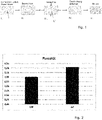
- a plate about 5 mm high was pressed from a Ti6Al4V powder and a starting material containing a polyamide-based binder system, a feedstock, and then sawed into strips or bars. These beams contained air pockets, so-called blowholes. This is in the representation labeled I figure 1 shown where a void is labeled L.
- the beams obtained were debindered in acetone. Then half of the beams (WIP) were infiltrated with a mixture of acetone and plasticizer. After drying, the beams treated in this way were wet-coated with a mixture of acetone and an acetone-soluble polymer and dried again. After this second drying process, a coating of the polymer remained on the outer surfaces of the beams treated in this way. This is in representation II of the figure 1 played back.
- the first half of the beams coated with the polymer was subjected to a pressing process according to the invention (warm isostatic pressing, WIP) carried out before a sintering step.
- WIP warm isostatic pressing
- This WIP treatment was carried out by applying argon at a pressure of 90 bar and initially at approx. 160°C. Then the pressure was held while the temperature was lowered.
- This WIP treatment is shown in Figure III of the figure 1 illustrated. After this treatment, the beams treated in this way were again debound in acetone in order to remove the plasticizer and the polymer coating (cf. illustration IV in figure 1 ).
- the test described above and illustrated in the figures merely represents one possible procedure for carrying out the method according to the invention.
- the process is not limited to powder-metallurgical production processes, and certainly not to those with the alloy specifically used in the experiment, but can also be carried out with ceramic material just as well.
- the coating of the molded part selected in the test before the WIP treatment is also not absolutely necessary. This coating is optional and will be chosen by those skilled in the art when beneficial as set forth in the foregoing description.
- the sole decisive factor is that a treatment step referred to here as warm isostatic pressing is carried out on the green part and/or brown part before the sintering step in order to obtain an increase in the material density even before sintering.
Landscapes
- Engineering & Computer Science (AREA)
- Chemical & Material Sciences (AREA)
- Manufacturing & Machinery (AREA)
- Ceramic Engineering (AREA)
- Materials Engineering (AREA)
- Mechanical Engineering (AREA)
- Structural Engineering (AREA)
- Organic Chemistry (AREA)
- Inorganic Chemistry (AREA)
- Physics & Mathematics (AREA)
- Fluid Mechanics (AREA)
- Dispersion Chemistry (AREA)
- Chemical Kinetics & Catalysis (AREA)
- General Chemical & Material Sciences (AREA)
- Thermal Sciences (AREA)
- Powder Metallurgy (AREA)
- Physical Or Chemical Processes And Apparatus (AREA)
Priority Applications (9)
| Application Number | Priority Date | Filing Date | Title |
|---|---|---|---|
| EP20208200.4A EP4001243A1 (fr) | 2020-11-17 | 2020-11-17 | Procédé de fabrication de corps moulés par frittage |
| IL302024A IL302024B2 (en) | 2020-11-17 | 2021-10-27 | Process for producing shaped bodies using sintering (sintering) |
| CN202180076414.0A CN116438150A (zh) | 2020-11-17 | 2021-10-27 | 通过烧结制造模制品的方法 |
| US18/249,127 US20240017323A1 (en) | 2020-11-17 | 2021-10-27 | Process for producing shaped bodies by sintering |
| ES21802235T ES3010182T3 (en) | 2020-11-17 | 2021-10-27 | Method for producing mouldings by means of sintering |
| PCT/EP2021/079821 WO2022106166A1 (fr) | 2020-11-17 | 2021-10-27 | Procédé de production de corps façonnés par frittage |
| PL21802235.8T PL4200264T3 (pl) | 2020-11-17 | 2021-10-27 | Sposób wytwarzania kształtek przez spiekanie |
| EP21802235.8A EP4200264B1 (fr) | 2020-11-17 | 2021-10-27 | Procédé de fabrication de corps moulés par frittage |
| CA3198502A CA3198502A1 (fr) | 2020-11-17 | 2021-10-27 | Procede de production de corps faconnes par frittage |
Applications Claiming Priority (1)
| Application Number | Priority Date | Filing Date | Title |
|---|---|---|---|
| EP20208200.4A EP4001243A1 (fr) | 2020-11-17 | 2020-11-17 | Procédé de fabrication de corps moulés par frittage |
Publications (1)
| Publication Number | Publication Date |
|---|---|
| EP4001243A1 true EP4001243A1 (fr) | 2022-05-25 |
Family
ID=73475900
Family Applications (2)
| Application Number | Title | Priority Date | Filing Date |
|---|---|---|---|
| EP20208200.4A Pending EP4001243A1 (fr) | 2020-11-17 | 2020-11-17 | Procédé de fabrication de corps moulés par frittage |
| EP21802235.8A Active EP4200264B1 (fr) | 2020-11-17 | 2021-10-27 | Procédé de fabrication de corps moulés par frittage |
Family Applications After (1)
| Application Number | Title | Priority Date | Filing Date |
|---|---|---|---|
| EP21802235.8A Active EP4200264B1 (fr) | 2020-11-17 | 2021-10-27 | Procédé de fabrication de corps moulés par frittage |
Country Status (8)
| Country | Link |
|---|---|
| US (1) | US20240017323A1 (fr) |
| EP (2) | EP4001243A1 (fr) |
| CN (1) | CN116438150A (fr) |
| CA (1) | CA3198502A1 (fr) |
| ES (1) | ES3010182T3 (fr) |
| IL (1) | IL302024B2 (fr) |
| PL (1) | PL4200264T3 (fr) |
| WO (1) | WO2022106166A1 (fr) |
Families Citing this family (2)
| Publication number | Priority date | Publication date | Assignee | Title |
|---|---|---|---|---|
| US12036606B2 (en) * | 2019-11-27 | 2024-07-16 | University Of Iowa Research Foundation | Hydrothermal-assisted transient jet fusion additive manufacturing |
| CN119703058B (zh) * | 2025-01-03 | 2025-11-18 | 广州众山轻合金有限公司 | 一种复合增材的后处理方法 |
Citations (3)
| Publication number | Priority date | Publication date | Assignee | Title |
|---|---|---|---|---|
| EP0995525A1 (fr) * | 1998-05-07 | 2000-04-26 | Injex Corporation | Procede pour realiser un produit fritte |
| US20170088471A1 (en) * | 2015-09-29 | 2017-03-30 | The Penn State Research Foundation | Cold sintering ceramics and composites |
| DE102018129162A1 (de) * | 2018-11-20 | 2020-05-20 | Samson Aktiengesellschaft | Verfahren zum Herstellen eines Bauteils aus Metall oder Werkstoffen der technischen Keramik |
Family Cites Families (3)
| Publication number | Priority date | Publication date | Assignee | Title |
|---|---|---|---|---|
| JP2796350B2 (ja) * | 1989-04-24 | 1998-09-10 | 日本発条株式会社 | セラミックスの成形方法 |
| EP1785408A1 (fr) * | 2005-11-15 | 2007-05-16 | L'AIR LIQUIDE, Société Anonyme pour l'Etude et l'Exploitation des Procédés Georges Claude | Procédé d'élaboration de supports poreux céramiques de microstructure contrôlée |
| DE102008039668B4 (de) * | 2008-08-26 | 2013-03-28 | H.C. Starck Gmbh | Ventilmetalloxidformulierung und Verfahren zu ihrer Herstellung |
-
2020
- 2020-11-17 EP EP20208200.4A patent/EP4001243A1/fr active Pending
-
2021
- 2021-10-27 WO PCT/EP2021/079821 patent/WO2022106166A1/fr not_active Ceased
- 2021-10-27 CA CA3198502A patent/CA3198502A1/fr active Pending
- 2021-10-27 PL PL21802235.8T patent/PL4200264T3/pl unknown
- 2021-10-27 ES ES21802235T patent/ES3010182T3/es active Active
- 2021-10-27 IL IL302024A patent/IL302024B2/en unknown
- 2021-10-27 US US18/249,127 patent/US20240017323A1/en active Pending
- 2021-10-27 CN CN202180076414.0A patent/CN116438150A/zh active Pending
- 2021-10-27 EP EP21802235.8A patent/EP4200264B1/fr active Active
Patent Citations (3)
| Publication number | Priority date | Publication date | Assignee | Title |
|---|---|---|---|---|
| EP0995525A1 (fr) * | 1998-05-07 | 2000-04-26 | Injex Corporation | Procede pour realiser un produit fritte |
| US20170088471A1 (en) * | 2015-09-29 | 2017-03-30 | The Penn State Research Foundation | Cold sintering ceramics and composites |
| DE102018129162A1 (de) * | 2018-11-20 | 2020-05-20 | Samson Aktiengesellschaft | Verfahren zum Herstellen eines Bauteils aus Metall oder Werkstoffen der technischen Keramik |
Non-Patent Citations (1)
| Title |
|---|
| ANONYMOUS: "ISO/ASTM 52900:15 Standard Terminology for Additive Manufacturing - General Principles - Terminology", ISO STANDARD, 1 January 2015 (2015-01-01), pages 947 - 955, XP055374490, Retrieved from the Internet <URL:https://www.astm.org/Standards/ISOASTM52900.htm> * |
Also Published As
| Publication number | Publication date |
|---|---|
| EP4200264B1 (fr) | 2024-12-25 |
| CA3198502A1 (fr) | 2022-05-27 |
| PL4200264T3 (pl) | 2025-06-09 |
| US20240017323A1 (en) | 2024-01-18 |
| EP4200264A1 (fr) | 2023-06-28 |
| CN116438150A (zh) | 2023-07-14 |
| IL302024B2 (en) | 2025-10-01 |
| EP4200264C0 (fr) | 2024-12-25 |
| ES3010182T3 (en) | 2025-04-01 |
| WO2022106166A1 (fr) | 2022-05-27 |
| IL302024B1 (en) | 2025-06-01 |
| IL302024A (en) | 2023-06-01 |
Similar Documents
| Publication | Publication Date | Title |
|---|---|---|
| DE3740547C2 (de) | Verfahren zum Herstellen von Extruderschnecken und damit hergestellte Extruderschnecken | |
| EP1523390B1 (fr) | Procede pour la production proche du contour final souhaite de corps moules metalliques tres poreux | |
| DE4338457C2 (de) | Bauteil aus Metall oder Keramik mit dichter Außenschale und porösem Kern und Herstellungsverfahren | |
| DE102015216802A1 (de) | Verfahren zum Herstellen einer Kapsel für ein heiß-isostatisches Pressen | |
| EP2952276B1 (fr) | Procede destine au traitement thermique d'une piece en alliage a base de nickel | |
| EP2990141B1 (fr) | Procédé de fabrication de composants en Titanaluminide (TiAI) | |
| DE10203283A1 (de) | Verfahren zur Herstellung von gesinterten Bauteilen aus einem sinterfähigen Material | |
| EP2709967B1 (fr) | Procédé de moulage d'éléments par injection de poudre | |
| EP2123377A1 (fr) | Procédé de fabrication d'une pièce à usiner, en particulier un outil de bloc de jeu de construction ou une pièce d'outil de bloc de jeu de construction | |
| EP4200264B1 (fr) | Procédé de fabrication de corps moulés par frittage | |
| DE19717894B4 (de) | Verfahren zur Herstellung von porösen Matrixmaterialien, insbesondere Formkörper auf Basis von Metallen, und von Halbzeug dafür | |
| WO2018134202A1 (fr) | Procédé de production de corps métalliques durs par impression 3d | |
| DE102005045698B4 (de) | Formkörper aus einer Dentallegierung zur Herstellung von dentalen Teilen | |
| DE19652223C2 (de) | Formkörper aus einem Werkstoffverbund, Verfahren zu seiner Herstellung und Verwendung | |
| DE2258485A1 (de) | Verfahren und vorrichtung zur herstellung von guss- und pressformen | |
| DE1533320C3 (de) | Verfahren zur pulvermetallurgischen Herstellung von porösen Metallkörpern | |
| DE102004042775B4 (de) | Verfahren zur Herstellung komplexer hochfester Bauteile oder Werkzeuge und dessen Verwendung | |
| DE112016001286T5 (de) | Maschinenkomponente und herstellungsverfahren dafür | |
| CH681516A5 (fr) | ||
| DE102009008685A1 (de) | Verfahren zum Herstellen eines Bauteils | |
| DE3907022C2 (fr) | ||
| DE3808123A1 (de) | Verfahren zur herstellung von sinterteilen aus feinkoernigen metall- oder keramikpulvern | |
| DE19921934B4 (de) | Verfahren zur Herstellung eines pulvermetallurgischen Sinterformteils mit hoher Grunddichte und hoher Oberflächendichte | |
| DE3018345A1 (de) | Verfahren zum erzeugen eines gewindegewalzten gesinterten zylindrischen metallerzeugnisses | |
| DE19641023A1 (de) | Titan-Graphit Sinterverbundwerkstoff mit verbesserter Verschleißfestigkeit und niedrigem Reibungskoeffizienten |
Legal Events
| Date | Code | Title | Description |
|---|---|---|---|
| PUAI | Public reference made under article 153(3) epc to a published international application that has entered the european phase |
Free format text: ORIGINAL CODE: 0009012 |
|
| STAA | Information on the status of an ep patent application or granted ep patent |
Free format text: STATUS: THE APPLICATION HAS BEEN PUBLISHED |
|
| AK | Designated contracting states |
Kind code of ref document: A1 Designated state(s): AL AT BE BG CH CY CZ DE DK EE ES FI FR GB GR HR HU IE IS IT LI LT LU LV MC MK MT NL NO PL PT RO RS SE SI SK SM TR |
|
| STAA | Information on the status of an ep patent application or granted ep patent |
Free format text: STATUS: REQUEST FOR EXAMINATION WAS MADE |
|
| 17P | Request for examination filed |
Effective date: 20221104 |
|
| RBV | Designated contracting states (corrected) |
Designated state(s): AL AT BE BG CH CY CZ DE DK EE ES FI FR GB GR HR HU IE IS IT LI LT LU LV MC MK MT NL NO PL PT RO RS SE SI SK SM TR |
|
| STAA | Information on the status of an ep patent application or granted ep patent |
Free format text: STATUS: EXAMINATION IS IN PROGRESS |
|
| 17Q | First examination report despatched |
Effective date: 20240918 |