EP4001298B1 - Composition polyvalente induisant l'immunogénicité pour papillomavirus humain - Google Patents
Composition polyvalente induisant l'immunogénicité pour papillomavirus humain Download PDFInfo
- Publication number
- EP4001298B1 EP4001298B1 EP20843624.6A EP20843624A EP4001298B1 EP 4001298 B1 EP4001298 B1 EP 4001298B1 EP 20843624 A EP20843624 A EP 20843624A EP 4001298 B1 EP4001298 B1 EP 4001298B1
- Authority
- EP
- European Patent Office
- Prior art keywords
- hpv
- protein
- seq
- virus
- sequence
- Prior art date
- Legal status (The legal status is an assumption and is not a legal conclusion. Google has not performed a legal analysis and makes no representation as to the accuracy of the status listed.)
- Active
Links
Images









Classifications
-
- A—HUMAN NECESSITIES
- A61—MEDICAL OR VETERINARY SCIENCE; HYGIENE
- A61K—PREPARATIONS FOR MEDICAL, DENTAL OR TOILETRY PURPOSES
- A61K39/00—Medicinal preparations containing antigens or antibodies
- A61K39/12—Viral antigens
-
- A—HUMAN NECESSITIES
- A61—MEDICAL OR VETERINARY SCIENCE; HYGIENE
- A61K—PREPARATIONS FOR MEDICAL, DENTAL OR TOILETRY PURPOSES
- A61K39/00—Medicinal preparations containing antigens or antibodies
- A61K39/39—Medicinal preparations containing antigens or antibodies characterised by the immunostimulating additives, e.g. chemical adjuvants
-
- A—HUMAN NECESSITIES
- A61—MEDICAL OR VETERINARY SCIENCE; HYGIENE
- A61P—SPECIFIC THERAPEUTIC ACTIVITY OF CHEMICAL COMPOUNDS OR MEDICINAL PREPARATIONS
- A61P15/00—Drugs for genital or sexual disorders; Contraceptives
-
- A—HUMAN NECESSITIES
- A61—MEDICAL OR VETERINARY SCIENCE; HYGIENE
- A61P—SPECIFIC THERAPEUTIC ACTIVITY OF CHEMICAL COMPOUNDS OR MEDICINAL PREPARATIONS
- A61P31/00—Antiinfectives, i.e. antibiotics, antiseptics, chemotherapeutics
- A61P31/12—Antivirals
- A61P31/20—Antivirals for DNA viruses
-
- A—HUMAN NECESSITIES
- A61—MEDICAL OR VETERINARY SCIENCE; HYGIENE
- A61P—SPECIFIC THERAPEUTIC ACTIVITY OF CHEMICAL COMPOUNDS OR MEDICINAL PREPARATIONS
- A61P35/00—Antineoplastic agents
-
- C—CHEMISTRY; METALLURGY
- C07—ORGANIC CHEMISTRY
- C07K—PEPTIDES
- C07K14/00—Peptides having more than 20 amino acids; Gastrins; Somatostatins; Melanotropins; Derivatives thereof
- C07K14/005—Peptides having more than 20 amino acids; Gastrins; Somatostatins; Melanotropins; Derivatives thereof from viruses
-
- A—HUMAN NECESSITIES
- A61—MEDICAL OR VETERINARY SCIENCE; HYGIENE
- A61K—PREPARATIONS FOR MEDICAL, DENTAL OR TOILETRY PURPOSES
- A61K39/00—Medicinal preparations containing antigens or antibodies
- A61K2039/51—Medicinal preparations containing antigens or antibodies comprising whole cells, viruses or DNA/RNA
- A61K2039/525—Virus
- A61K2039/5258—Virus-like particles
-
- A—HUMAN NECESSITIES
- A61—MEDICAL OR VETERINARY SCIENCE; HYGIENE
- A61K—PREPARATIONS FOR MEDICAL, DENTAL OR TOILETRY PURPOSES
- A61K39/00—Medicinal preparations containing antigens or antibodies
- A61K2039/555—Medicinal preparations containing antigens or antibodies characterised by a specific combination antigen/adjuvant
- A61K2039/55505—Inorganic adjuvants
-
- A—HUMAN NECESSITIES
- A61—MEDICAL OR VETERINARY SCIENCE; HYGIENE
- A61K—PREPARATIONS FOR MEDICAL, DENTAL OR TOILETRY PURPOSES
- A61K39/00—Medicinal preparations containing antigens or antibodies
- A61K2039/70—Multivalent vaccine
-
- C—CHEMISTRY; METALLURGY
- C12—BIOCHEMISTRY; BEER; SPIRITS; WINE; VINEGAR; MICROBIOLOGY; ENZYMOLOGY; MUTATION OR GENETIC ENGINEERING
- C12N—MICROORGANISMS OR ENZYMES; COMPOSITIONS THEREOF; PROPAGATING, PRESERVING, OR MAINTAINING MICROORGANISMS; MUTATION OR GENETIC ENGINEERING; CULTURE MEDIA
- C12N2710/00—MICROORGANISMS OR ENZYMES; COMPOSITIONS THEREOF; PROPAGATING, PRESERVING, OR MAINTAINING MICROORGANISMS; MUTATION OR GENETIC ENGINEERING; CULTURE MEDIA dsDNA viruses
- C12N2710/00011—Details
- C12N2710/20011—Papillomaviridae
- C12N2710/20022—New viral proteins or individual genes, new structural or functional aspects of known viral proteins or genes
-
- C—CHEMISTRY; METALLURGY
- C12—BIOCHEMISTRY; BEER; SPIRITS; WINE; VINEGAR; MICROBIOLOGY; ENZYMOLOGY; MUTATION OR GENETIC ENGINEERING
- C12N—MICROORGANISMS OR ENZYMES; COMPOSITIONS THEREOF; PROPAGATING, PRESERVING, OR MAINTAINING MICROORGANISMS; MUTATION OR GENETIC ENGINEERING; CULTURE MEDIA
- C12N2710/00—MICROORGANISMS OR ENZYMES; COMPOSITIONS THEREOF; PROPAGATING, PRESERVING, OR MAINTAINING MICROORGANISMS; MUTATION OR GENETIC ENGINEERING; CULTURE MEDIA dsDNA viruses
- C12N2710/00011—Details
- C12N2710/20011—Papillomaviridae
- C12N2710/20034—Use of virus or viral component as vaccine, e.g. live-attenuated or inactivated virus, VLP, viral protein
Definitions
- the present invention relates to a multivalent immunogenic composition for preventing human papillomavirus (HPV) related diseases or infections and uses thereof.
- HPV human papillomavirus
- Papilloma virus belongs to the Papillomaviridae Family and causes papillomas in humans, cattle, dogs, and rabbits.
- One of its members, human papilloma virus (HPV) is a non-enveloped DNA virus.
- the genome of this virus is a double-stranded closed circular DNA, about 7.2-8kb in size, with 8 open reading frames, which can be divided into three regions according to their functions: (1) early region (E), about 4.5kb, encoding E1, E2, E4-E7, a total of 6 non-structural proteins related to viral replication, transcription and transformation; (2) late region (L), about 2.5kb, encoding the major capsid protein L1 and the minor capsid protein L2; (3) long regulatory region (LCR), which is located between the end of the L region and the beginning of the E region, is about 800-900 bp long and does not encode any protein, serving as DNA replication and expression regulatory elements.
- E early region
- L late region
- LCR long regulatory region
- the L1 proteins and the L2 proteins are synthesized late in the HPV infection cycle.
- the L1 protein is the major capsid protein and has a molecular weight of 55-60 kDa.
- the L2 protein is the minor capsid protein.
- 72 L1 protein pentamers form the outer shell of the icosahedral HPV particle (45-55 nm in diameter), which encloses closed circular double-stranded DNA.
- the L2 protein is located on the inner side of the L1 protein (Structure of Small Virus-like Particles Assembled from the L1 Protein of Human Papillomavirus 16 Chen, X.S., R. L.Garcea, Mol.Cell.5(3):557-567, 2000).
- the ORF of the L1 protein can be used to identify new PV types.
- a new PV type is identified if its complete genome is cloned and its L1 ORF DNA sequence differs from the closest known PV type by more than 10%. Homologies with differences between 2% and 10% are defined as different subtypes, and differences of less than 2% are defined as different variants of the same subtype ( E.-M. de V Amsterdam et al. / Virology 324 (2004) 17-27 ).
- NLS nuclear localization signal
- HPV-15 high-risk (HR) HPV types can lead to cancers of cervix, anus, penis, vagina, vulva and oropharynx, among which HPV-16 and HPV-18 are by far the most common causes of cancers, accounting for approximately 70% of cervical cancers, and the other HR-HPV types (Types 31, 33, 35, 39, 45, 51, 52, 56, 58, 59, 68, 73, and 82) cause the rest.
- HPV-16 accounts for approximately 95% of HPV-positive oropharyngeal cancers (OPCs).
- HPV-6 and HPV-11 cause most anogenital warts and respiratory papillomas, but are rarely associated with cancers ( Human Papillomavirus in Cervical Cancer and Oropharyngeal Cancer: One Cause, Two Diseases Tara A. Bermanand John T. Schiller, PhD2 Cancer 2017;123:2219-29 ).
- the L1 protein can be recombinantly expressed by poxvirus, baculovirus, or yeast systems and then self-assembles to form virus-like particles (VLP) containing approximately 72 L1 proteins, similar to the virus capsid.
- VLP has no indication.
- VLP induces neutralizing antibodies in inoculated animals and protects experimental animals from subsequent attack by infectious viruses.
- papilloma virus vaccines Structure of Small Virus-like Particles Assembled from the L1 Protein of Human Papillomavirus 16 Chen, X.S. , R. L. Garcea, Mol. Cell. 5(3):557-567, 2000 ).
- Glaxo's CERVARIX ® a bivalent recombinant HPV vaccine, contains HPV Type 16 recombinant L1 protein and HPV Type 18 recombinant L1 protein.
- the L1 protein is obtained by expression of a recombinant baculovirus expression vector system in insect cells of the nocturnal moth ( Trichoplusia ni ) .
- the L1 protein self-assembles into virus-like particles for the prevention of cervical cancer, Grade 2 or 3 cervical intraepithelial neoplasia and adenocarcinoma in situ caused by HPV Types 16 and 18, and Grade 1 cervical intraepithelial neoplasia (oncogenic) in women aged 9-25 years (https://www.fda.gov/downloads/BiologicsBloodVaccines/Vaccines/ApprovedP roducts/UCM186981.pdf).
- GARDASIL ® is a human papilloma virus quadrivalent (Types 6, 11, 16 and 18) recombinant vaccine from Merck for the prevention of cervical cancer, genital warts (condyloma acuminata) and precancerous or proliferative abnormal lesions caused by HPV Types 6, 11, 16 and 18 in girls and women aged 9-26 years; and for the prevention of anal cancer, genital warts (condyloma acuminatum) and pre-cancerous or abnormal developmental lesions caused by HPV Types 6, 11, 16, and 18 in boys and men aged 9-26 (https://www.fda.gov/vaccines-blood-biologics/vaccines/gardasil).
- GARDASIL ® 9 is a nine-valent recombinant human papilloma virus vaccine from Merck that contains virus-like particles of L1 proteins of HPV Types 6, 11, 16, 18, 31, 33, 45, 52 and 58, the L1 protein is produced by fermentation of Saccharomyces cerevisiae and self-assembles into VLP.
- GARDASIL ® 9 The instruction for GARDASIL ® 9 announced that HPV Types 16 and 18 are the cause of about 70% of cervical cancers, with the remaining 20% of cases attributed to Types 31, 33, 45, 52 and 58, therefor GARDASIL ® 9 prevents 90% of cervical cancers (https://www.fda.gov/ BiologicsBloodVaccines/Vaccines/ApprovedProducts/ucm426445.htm).
- virus-like particles Industrial production of virus-like particles is critical to HPV vaccine development.
- the common systems for producing virus-like particles are mainly classified into the eukaryotic expression system and the prokaryotic expression system.
- HPV L1 protein expressed in eukaryotic expression systems can be spontaneously assembled to virus-like particles as its natural conformation is less disrupted, but the yield thereof is low.
- the HPV L1 protein expressed in prokaryotic expression systems mainly E. coli expression systems, is of high yields but mostly in the form of inclusion bodies, this form of protein cannot be easily purified thus makes the production process complicated.
- the present invention provides an HPV immunogenic composition for use in preventing HPV-related diseases or infections, comprising chimeric HPV L1 protein of HPV types 6, 11, 16, 18, 31, 35, 39, 45, 51, 52 , 56 and 58, HPV Type 33 L1 protein and HPV Type 59 L1 protein, wherein said chimeric HPV L1 protein of HPV Types 6, 11, 16, 18, 31, 35, 39, 45, 51, 52, 56 and 58 is shown in SEQ ID No: 3, SEQ ID No: 16, SEQ ID No: 29, SEQ ID No: 42, SEQ ID No: 55, SEQ ID No: 71, SEQ ID No: 84, SEQ ID No: 97, SEQ ID No: 110, SEQ ID No: 123, SEQ ID No: 136 and SEQ ID No: 149, respectively, and the HPV Type 33 L1 protein and HPV Type 59 L1 protein is shown in SEQ ID No: 66 and SEQ ID No: 160, respectively.
- the present disclosure provides a multivalent immunogenic composition for preventing papillomavirus-related diseases or infections.
- the papillomavirus may be human papillomavirus.
- the papillomavirus may be canine papillomavirus or rabbit papillomavirus.
- a multivalent HPV immunogenic composition for use in preventing HPV-related diseases or infections, comprising: HPV virus-like particles assembled from L1 proteins of HPV Types 6, 11, 16, 18, 31, 33, 45, 52, and 58; and one or more HPV virus-like particles assembled from L1 proteins of other pathogenic HPV types.
- said L1 protein of each HPV type can be a naturally occurring L1 protein, or a non-naturally occurring L1 protein, or a chimeric HPV L1 protein.
- said HPV virus-like particles can be assembled from a single type of HPV L1 protein to form monovalent HPV virus-like particles, or can be assembled from multiple types of HPV L1 proteins to form multivalent HPV virus-like particles.
- said one or more other pathogenic HPV types are selected from HPV Types 35, 39, 51, 56, and 59.
- At least one of said HPV virus-like particle is a chimeric HPV virus-like particle, said chimeric HPV virus-like particle comprises one or more chimeric HPV L1 proteins; said chimeric HPV L1 protein comprises, from its N-terminus to C-terminus orientation: a. an N-terminal fragment derived from L1 protein of the first papilloma virus type, wherein said L1 protein of the first papilloma virus type is selected from HPV Types 6, 11, 16, 18, 31, 35, 39, 45, 51, 52, 56, or 58, said N-terminal fragment maintains the immunogenicity of the L1 protein of the corresponding HPV type; and b.
- L1 protein of the second papilloma virus type has a better expression level and solubility compared to L1 proteins of other types; wherein the chimeric L1 protein of HPV Types 6, 11, 16, 18, 31, 35, 39, 45, 51, 52, 56, or 58 has the immunogenicity of the L1 protein of the corresponding HPV type.
- said chimeric HPV virus-like particle may be assembled from a single type of chimeric HPV L1 proteins to form monovalent HPV virus-like particles, or may be assembled from multiple types of chimeric HPV L1 proteins to form multivalent HPV virus-like particles.
- said C-terminal fragment and N-terminal fragment may be freely combined as needed.
- the chimeric HPV L1 protein may comprise one or plurality of C-terminal fragments. Said plurality of C-terminal fragments may be the same or different.
- said N-terminal fragment is a fragment obtained by truncating the C-terminus of the natural sequence of said L1 protein of the first papilloma virus type at any amino acid position within its ⁇ 5 region, and a fragment having at least 98% identity therewith; said C-terminal fragment is a fragment obtained by truncating the N-terminus of the natural sequence of the L1 protein of the second papilloma virus type at any amino acid position within its ⁇ 5 region and functional variants resulting from further mutations, deletions and/or additions to the fragment.
- said N-terminal fragment has at least 98.5%, 99%, 99.5% or 100% identity to a fragment obtained by truncating the C-terminus of the natural sequence of said L1 protein of the first papilloma virus type at any amino acid position within its ⁇ 5 region.
- said C-terminal fragment comprises one or plurality of nuclear localization sequences.
- said L1 protein of the second papilloma virus type is selected from L1 proteins of HPV Types 1, 2, 3, 4, 6, 7, 10, 11, 13, 16, 18, 22, 26, 28, 31, 32, 33, 35, 39, 42, 44, 45, 51, 52, 53, 56, 58, 59, 60, 63, 66, 68, 73 or 82.
- said L1 protein of the second papilloma virus type is selected from L1 proteins of HPV Types 16, 28, 33, 59, or 68.
- said L1 protein of the second papilloma virus type is an HPV Type 33 L1 protein
- said C-terminal fragment is SEQ ID No: 2; or a fragment having a length of m1 amino acids, preferably a fragment covering amino acids 1-m1 position of SEQ ID No: 2; wherein m1 is an integer of 8-26; or said C-terminal fragment is SEQ ID No: 135; or a fragment having a length of m2 amino acids, preferably a fragment covering amino acids 1-m2 position of SEQ ID No: 135; wherein m2 is an integer of 13-31.
- the C-terminal fragment of the HPV Type 33 L1 protein has a nuclear localization sequence or the C-terminal fragment of the HPV Type 33 L1 protein has two nuclear localization sequences.
- the amino acid sequences with amino acid No: 7-8 (KR) and the amino acid sequences amino with amino acid No: 20-23 (KRKK) of SEQ ID No: 2 are nuclear localization sequences of the C-terminal fragments of the HPV Type 33 L1 protein.
- said L1 protein of the second papilloma virus type is the HPV Type 59 L1 protein
- said C-terminal fragment is SEQ ID No: 13; or a fragment having a length of n amino acids, preferably covering amino acids 1-n position of SEQ ID No: 13; wherein n is an integer of 16-38.
- the C-terminal fragment of the HPV Type 59 L1 protein has a nuclear localization sequence or the C-terminal fragment of the HPV Type 59 L1 protein has two nuclear localization sequences.
- the chimeric HPV L1 protein comprises one or plurality of C-terminal fragments of the HPV Type 59 L1 protein. Said plurality of C-terminal fragments of the HPV Type 59 L1 protein may be the same or different.
- the amino acid sequence (RKR) of the 14 th to 16 th position of SEQ ID No: 13 and the amino acid sequence (KRVKRRK) of the 28 th to 34 th position of SEQ ID No: 13 are the nuclear localization sequences of the C-terminal fragment of the HPV Type 59 L1 protein.
- said chimeric HPV L1 protein comprises both a C-terminal fragment of the HPV Type 33 L1 protein and a C-terminal fragment of the HPV Type 59 L1 protein.
- said N-terminal fragment of said HPV Type 6 L1 protein has 98%, 98.5%, 99%, 99.5%, 99%, or 100% identity to the fragment obtained by truncating the C-terminus of the sequence shown in SEQ ID No: 1 at any amino acid site within its alpha 5 region.
- said N-terminal fragment of said HPV Type 11 L1 protein has 98%, 98.5%, 99%, 99.5%, 99% or 100% identity to the fragment obtained by truncating the C-terminus of the sequence shown in SEQ ID No: 14 at any amino acid site within its alpha 5 region.
- said N-terminal fragment of said HPV Type 16 L1 protein has 98%, 98.5%, 99%, 99.5%, 99% or 100% identity to the fragment obtained by truncating the C-terminus of the sequence shown in SEQ ID No: 27 at any amino acid site within its alpha 5 region.
- said N-terminal fragment of said HPV Type 18 L1 protein has 98%, 98.5%, 99%, 99.5%, 99% or 100% identity to the fragment obtained by truncating the C-terminus of the sequence shown in SEQ ID No: 40 at any amino acid site within its alpha 5 region.
- said N-terminal fragment of said HPV Type 31 L1 protein has 98%, 98.5%, 99%, 99.5%, 99% or 100% identity to the fragment obtained by truncating the C-terminus of the sequence shown in SEQ ID No: 53 at any amino acid site within its alpha 5 region.
- said N-terminal fragment of said HPV Type 35 L1 protein has 98%, 98.5%, 99%, 99.5%, 99% or 100% identity to the fragment obtained by truncating the C-terminus of the sequence shown in SEQ ID No: 69 at any amino acid site within its alpha 5 region.
- said N-terminal fragment of said HPV Type 39 L1 protein has 98%, 98.5%, 99%, 99.5%, 99% or 100% identity to the fragment obtained by truncating the C-terminus of the sequence shown in SEQ ID No: 82 at any amino acid site within its alpha 5 region.
- said N-terminal fragment of said HPV Type 45 L1 protein has 98%, 98.5%, 99%, 99.5%, 99% or 100% identity to the fragment obtained by truncating the C-terminus of the sequence shown in SEQ ID No: 95 at any amino acid site within its alpha 5 region.
- said N-terminal fragment of said HPV Type 51 L1 protein has 98%, 98.5%, 99%, 99.5%, 99% or 100% identity to the fragment obtained by truncating the C-terminus of the sequence shown in SEQ ID No: 108 at any amino acid site within its alpha 5 region.
- said N-terminal fragment of said HPV Type 52 L1 protein has 98%, 98.5%, 99%, 99.5%, 99% or 100% identity to the fragment obtained by truncating the C-terminus of the sequence shown in SEQ ID No: 121 at any amino acid site within its alpha 5 region.
- said N-terminal fragment of said HPV Type 56 L1 protein has 98%, 98.5%, 99%, 99.5%, 99% or 100% identity to the fragment obtained by truncating the C-terminus of the sequence shown in SEQ ID No: 134 at any amino acid site within its alpha 5 region;
- said N-terminal fragment of said HPV Type 58 L1 protein has 98%, 98.5%, 99%, 99.5%, 99% or 100% identity to the fragment obtained by truncating the C-terminus of the sequence shown in SEQ ID No: 147 at any amino acid site within its alpha 5 region.
- the C-terminus of said N-terminal fragment can be connected to the N-terminus of said C-terminal fragment directly or via a linker.
- the linker does not affect the immunogenicity of said N-terminal fragment and does not affect the expression level or solubility of the protein.
- said N-terminal fragment and said C-terminal fragment are connected via a linker comprising 1, 2, 3, 4, 5, 6, 7, 8, 9 or 10 amino acids.
- the linker is an artificial sequence or, the linker is a naturally occurring sequence in the HPV L1 protein.
- the linker may be a partial sequence of the HPV Type 33 L1 protein or, the linker may be a partial sequence of the HPV Type 59 L1 protein.
- RKFL preferably, within the range of plus or minus 6 amino acid positions of the connection point, there presents the following continuous amino acid sequence: LGRKFL.
- chimeric HPV L1 proteins of chimeric HPV Types 6, 11, 16, 18, 31, 35, 39, 45, 51, 52, 56, and 58 as shown in SEQ ID No: 3, SEQ ID No: 16, SEQ ID No: 29, SEQ ID No: 42, SEQ ID No: 55, SEQ ID No: 71, SEQ ID No: 84, SEQ ID No: 97, SEQ ID No: 110, SEQ ID No: 123, SEQ ID No: 136 and SEQ ID No: 149, respectively; and the HPV Type 33 L1 protein and the HPV Type 59 L1 protein as shown in SEQ ID No: 66 and SEQ ID No: 160, respectively are for use in preventing HPV-related diseases or infections.
- At least one of said HPV virus-like particles is composed of a single type of chimeric HPV L1 protein, preferably is composed of said single type of chimeric HPV L1 protein having the same amino acid sequence.
- the chimeric HPV virus-like particle is the icosahedron comprising 72 pentamers of said chimeric HPV L1 protein.
- the HPV virus-like particle has correctly formed disulfide bonds and thus has a good natural conformation.
- the chimeric HPV virus-like particles self-assemble in an in vivo expression system.
- said multivalent HPV immunogenic composition further comprises a physiologically acceptable carrier and, optionally, an adjuvant.
- the adjuvant comprises one or more of aluminum salt, lipid A derivative, and ISCOM.
- said adjuvant is an aluminum phosphate adjuvant.
- the present invention provides the multivalent HPV immunogenic composition as defined in the claims for use in preventing HPV-related diseases or infections.
- Papillomavirus L1 proteins expressed by eukaryotic expression systems can spontaneously assemble to virus-like particles, but the low expression level makes them not suitable for mass production.
- sequences of the L1 proteins of each HPV type can be easily obtained from https://www.uniprot.org.
- the L1 protein can be derived from different strains, thus the amino acid sequence thereof may have multiple versions, any version of the natural sequence can be used in the present invention. It is possible that the sequence of the HPV L1 protein of a given type used during the conception and design of the present invention may differ from the sequence used in the following examples, but such differences do not affect the decisions and conclusions of the inventors.
- the C-terminus of the L1 protein does not contain major neutralizing antigenic epitope and therefore attempts have been made to increase expression by truncating the C-terminus of the HPV L1 protein, for example Glaxo's US patent US6361778B1 , in which the C-terminus of the HPV16 L1 protein is truncated by 1-34 amino acids, preferably 26 amino acids, states that the yield of VLP is increased by many-fold, preferably at least by 10 folds, and in particular by about 10 to 100 folds.
- HPV 16 L1 the truncated protein as HPV 16 L1 (1-474).
- the protein is in high expression level but poor solubility, and is difficult to be extract and purified (see Comparative Example).
- HPV Type 16 L1 protein, HPV Type 28 L1 protein, HPV Type 33 L1 protein, HPV Type 59 L1 protein and HPV Type 68 L1 protein have better expression levels and solubility than other HPV types L1 proteins.
- the inventors replaced the C-terminus of specific HPV types L1 proteins that are less extractable or less soluble with the C-terminus of specific HPV types L1 protein having better expression levels and solubility.
- the inventors have constructed a chimeric protein: comprising, in the N-terminus to C-terminus orientation, an N-terminal fragment derived from the L1 protein of the first papilloma virus type (e.g. HPV L1 protein), which provides the immunogenicity of the first papilloma virus type (e.g. HPV), and a C-terminal fragment derived from the L1 protein of the second papilloma virus type (e.g. HPV L1 protein), which provides the features of better expression levels and solubility.
- these two fragments can be connected directly or via a linker.
- the length of the N-terminal fragment of the HPV L1 protein appropriate for maintaining the immunogenicity of the L1 protein of the first type and ensuring the formation of VLP is determined.
- the following reports relate to epitope studies of common HPV types.
- Each of the ⁇ -helix, ⁇ -fold sheets and Loop Region of each type of HPV L1 protein can be conveniently determined by sequence analysis software commonly used in the field.
- the ⁇ -helix regions contains the ⁇ 1 Region, ⁇ 2 Region, ⁇ 3 Region, ⁇ 4 Region and ⁇ 5 Region.
- the inventors performed sequence alignments of L1 proteins of 14 HPV types (Types 6, 11, 16, 18, 31, 33, 35, 39, 45, 51, 52, 56, 58, and 59) and then performed secondary structure prediction according to the literature cited above ( Crystal Structures of Four Types of Human Papillomavirus L1 Capsid Proteins UNDERSTANDING THE SPECIFICITY OF NEUTRALIZING MONOCLONAL ANTIBODIES, The Journal of Biological Chemistry, 282,31803-31811 ), the results of which are shown below, where the part between the downward-pointing arrows corresponds to the regions which had been deleted for preparing the variants in that literature.
- protein secondary structure prediction software that can be used for prediction includes, but is not limited to:
- the inventors determined the length of the N-terminal fragment derived from the L 1 protein of the first HPV type in the following manner: the natural sequence of the L1 protein is truncated within its ⁇ 5 region and nearby regions thereof, with the sequence from its N-terminus to the newly generated C-terminus within the ⁇ 5 region retained. Such a truncated sequence ensures that it has the immunogenicity of the first type and is capable of forming VLP.
- the N-terminal fragment of the HPV L1 protein derived from the first type can be further modified as long as it retains the immunogenicity of the first type and is capable of forming VLP.
- the length of the C-terminal fragment of the HPV L1 protein derived from the second type is determined in the following manner: The natural sequence of the L1 protein is truncated within its ⁇ 5 region and nearby regions thereof, then the sequence from the newly generated N-terminus within its ⁇ 5 region to the C-terminus is retained. Such a truncated sequence does not have the major neutralizing antigenic epitope so that does not interfere with the immunogenicity of the resulting chimeric protein.
- the C-terminal fragment of the HPV L1 protein derived from the second type can be further mutated, deleted and/or added, preferably retaining at least one of its nuclear localization sequences.
- Yang et al. predicted the nuclear localization sequences of 107 HPV subtypes ( Yang et al. Predicting the nuclear localization signals of 107 types of HPV L1 proteins by bioinformatic analysis. Geno. Prot. Bioinfo. Vol. 4 No. 1 2006 ).
- the nuclear localization sequences of each type of HPV L1 protein can be conveniently determined by sequence analysis software commonly used in the field.
- connection of the N-terminal fragment to the C-terminal fragment occurs at the newly generated C-terminus of the former and at the newly generated N-terminus of the latter.
- This can be a direct connection or a connection via a linker.
- the site where the connection occurs is defined as the origin coordinate, the N-terminal side of the origin is regarded as minus while the C-terminal side as plus.
- the inventors have completed C-terminus substitutions of L1 proteins between different HPV types by taking advantage of sequence similarity of the ⁇ 5 region and nearby regions between the HPV types.
- L1 protein of each HPV type has a tetrapeptide RKFL or, more advantageously, a hexapeptide LGRKFL, at a similar position.
- the inventors have skillfully exploited this highly conserved sequence to locate the chimeric protein connection point at any amino acid position within this oligopeptide.
- sequence starting from the N-terminus of the chimeric protein to RKFL or LGRKFL is identical to the sequence of the N-terminal fragment derived from the L1 protein of the first type, while on the other hand, the sequence starting from RKFL or LGRKFL to the C-terminus of the chimeric protein is identical to the sequence of the C-terminal fragment derived from the L1 protein of the second type.
- the chimeric protein thus produced maintains a high degree of similarity to the natural HPV L1 protein, and it can be expected to perform well in production and even in medical or prophylactic procedures thereafter.
- Variants of the chimeric proteins may be formed by mutations, deletions and/or additions of amino acid residues. These variants are likely to have the immunogenicity of the L1 protein of the first type, can form VLP, and have a good yield and solubility.
- the expression systems commonly used for producing virus-like particles are classified into eukaryotic expression systems and prokaryotic expression systems.
- the papilloma virus L proteins expressed by the eukaryotic expression systems can spontaneously assemble into viral-like particles, but have the disadvantage of low expression level thus are not suitable for mass production.
- the papilloma virus L protein expressed by the prokaryotic expression system requires in vitro processing to obtain virus-like particles because of often destroyed natural conformation, and has low yield, being difficult to be used in industrialization.
- the present invention modifies the C-terminus of the L protein of the papilloma virus (e.g. human papilloma virus), for example by replacing it with the C-terminal fragment of HPV Type 16 L1 protein, HPV Type 28 L1 protein, HPV Type 33 L1 protein, HPV Type 59 L1 protein or HPV Type 68 L1 protein, thus can be used in expression systems (e.g. host cells, e.g. insect cells) to improve the expression level and the solubility of the papilloma virus L protein in expression systems (for example, host cells, e.g. insect cells). This can be used for the mass production of vaccines such as HPV vaccines.
- expression systems e.g. host cells, e.g. insect cells
- This can be used for the mass production of vaccines such as HPV vaccines.
- HPV Type 16 L1 protein, the HPV Type 28 L1 protein, the HPV Type 33 L1 protein, the HPV Type 59 L1 protein and the HPV Type 68 L1 protein have increased expression level and increased solubility compared to L1 proteins of other HPV types, and that said increased protein expression level and increased solubility was found to be depend on the C-terminal sequence of said HPV L1 protein.
- HPV Type L1 proteins most of them have nuclear localization sequences at the C-termini, and the C-terminal sequences have some similarities.
- HPV Type 16 L1 protein For papilloma virus L proteins that are currently inexpressible, very low in expression level or insoluble after expression, replacement of their C-terminal fragments with C-terminal fragments of the HPV Type 16 L1 protein, HPV Type 28 L1 protein, HPV Type 33 L1 protein, HPV Type 59 L1 protein or HPV Type 68 L1 protein makes it possible for soluble expression and subsequent purification.
- This strategy can be used for the mass production of polyvalent vaccines (e.g. HPV vaccines), making it possible to provide more comprehensive protection against a wide range of papilloma virus infections, especially HPV.
- polyvalent vaccines e.g. HPV vaccines
- the virus-like particles assembled by the HPV L protein lack good conformation in yeast cells due to failure to form correct disulphide bonds .
- HPV L1 proteins that are poorly expressed and insoluble in insect cells, a significant increase in expression level and solubility can be resulted after the modification of its C-terminal fragment into the C-terminal fragment of the HPV Type 33 or 59 L1 protein, thus they could be used for mass production of HPV vaccines.
- HPV L1 proteins that are better expressed and better soluble in insect cells compared to L1 proteins of other HPV types, such as HPV Type 16 protein, HPV Type 28 L1 protein, HPV Type 68 L1 protein, etc.
- HPV Type 16 protein for HPV L1 proteins that are better expressed and better soluble in insect cells compared to L1 proteins of other HPV types, such as HPV Type 16 protein, HPV Type 28 L1 protein, HPV Type 68 L1 protein, etc.
- the expression level and the solubility of the modified chimeric HPV Type 16 protein are improved, which is conducive to the mass production of HPV vaccines.
- the chimeric HPV L1 proteins showed much higher expression level and solubility in insect cells compared to the unmodified HPV L1 protein. It can be used for the mass production of HPV vaccines.
- the chimeric HPV L1 proteins can correctly form disulfide bonds thus be assembled into HPV virus-like particles with good conformations in insect cells. This can improve the immunogenicity of HPV virus-like particles and trigger better immune responses.
- the multivalent vaccine of the present invention can be used to prevent diseases or infections related with a wide range of HPV, including those HPV types that are not currently preventable.
- immunogenicity refers to the ability of a substance, for example a protein or a peptide, to trigger an immune response, i.e. the ability to trigger the production of antibodies, in particular the ability to trigger humoral- or cell-mediated response.
- antibody refers to an immunoglobulin molecule that binds an antigen.
- Antibodies may be polyclonal mixtures or monoclonal.
- Antibodies may be intact immunoglobulins of natural origin or of recombinant origin or may be immunoreactive portions of intact immunoglobulins.
- Antibodies may be present in a variety of forms including, for example, Fv, Fab', F(ab')2 and as single chains.
- antigenicity refers to the ability of a substance, for example a protein or a peptide, to trigger the production of antibodies that bind specifically to it.
- epitope includes any protein determinant cluster that specifically binds to an antibody or T-cell receptor.
- Epitope determinants typically consist of chemically active surface groups (e.g. amino acids or sugar side chains, or combinations thereof) of the molecule and typically have specific three-dimensional structural characteristics as well as specific charge characteristics.
- subtype or “type” are used interchangeably herein to refer to genetic variant of virus that allows it can be recognized by the immune system as distinct antigen from type to type.
- HPV 16 is immunologically distinguishable from HPV 33.
- HPV L1 protein refers to envelope-free double-stranded DNA viruses of the Papillomavirus family. Their genomes are circular and approximately 8 kilobase pairs in size. Most HPVs encode eight major proteins, six in the “early” region (E1-E2) and two in the “late” region (L1 (major capsid protein) and L2 (minor capsid protein)). Over 120 HPV types have been identified and they are labelled by numbers (e.g. HPV-16, HPV-18, etc.).
- HPV or "HPV virus” refers to papilloma viruses of the Papillomaviridae Family, which are envelope-free DNA viruses with a double-stranded closed circular DNA genome of approximately 8 kb in size that is usually classified into three regions: (i) the early region (E ), which contains six open reading frames E1, E2, E4-E7, encoding non-structural proteins related to viral replication, transcription and transformation, as well as open reading frames E3 and E8; (ii) the late region (L), which contains reading frames encoding the major capsid protein L1 and the minor capsid protein L2; and (iii) the long regulatory region (LCR), which does not encode any proteins but has the origin of replication and multiple transcription factor binding sites.
- E early region
- E7 the late region
- L which contains reading frames encoding the major capsid protein L1 and the minor capsid protein L2
- LCR long regulatory region
- HPV L1 protein and HPV L2 protein refer to proteins encoded by the late region (L) of the HPV gene and synthesized late in the HPV infection cycle.
- the L2 protein is the minor capsid protein.
- 72 L 1 pentamers form the outer shell of the icosahedral HPV particles, which encloses the closed circular double-stranded DNA microchromosome.
- virus-like particle refers to a hollow particle containing one or plurality of structural proteins of a virus, without viral nucleic acids.
- HPV pseudovirus is an ideal model for in vitro neutralization of HPV, by taking advantages of the non-specific nucleic acid encapsulation property of HPV VLP, HPV pseudovirus is formed by wrapping free DNA or introducing an exogenous plasmid into a VLP composed of intracellularly-expressed HPV L1 and L2.
- the "pseudovirus neutralization assay” is a method for evaluating the neutralizing activity of antibodies. After incubation of immunized animal serum with a certain amount of pseudovirus and then infection of the cells, the amount of the cells decreases when serum neutralizing antibodies increases, showing a linear negative correlation in a certain range. The neutralizing activity of antibodies in serum can therefore be assessed by measuring changes in the amounts of cells.
- fragment thereof refers to a deletion, insertion and/or substitution of nucleotides or amino acids sequence of the present invention.
- fragment or variant of the polypeptide provided by the present invention is capable of triggering the humoral- and/or the cellular-immune response in animals or humans.
- chimeric means that sequences of polypeptides or nucleotides derived from different parental molecules are connected together by -CO-NH- or 3', 5'-phosphodiester bonds, respectively. Preferably, they are not spaced by additional linker sequences, but are directly adjacent to each other.
- truncation refers to the removal of one or plurality of amino acids from the N- and/or C-terminus of a polypeptide or the deletion of one or plurality of amino acids from the interior of a polypeptide.
- nuclear localization sequence refers to an amino acid sequence that directs the protein into the nucleus.
- two tight clusters of basic residues i.e. nuclear localization sequences
- nuclear localization sequences e.g. one is KRKR, KRKK, KRKRK, KRKKRK, KRVKRRK, etc. and the other is KR, RKR, KRK, etc.
- nuclear localization sequence is a tight cluster of basic residues formed by arginines and/or lysines.
- Nuclear localization sequences include, but are not limited to, examples of clusters of basic residues as described above. See Jun Yang et al, Predicting the Nuclear Localization Signals of 107 Types of HPV L1 Proteins by Bioinformatic Analysis, Genomics, Proteomics & Bioinformatics Volume 4, Issue 1, 2006, Pages 34-41 .
- the term "functional variant” refers to a version of a polypeptide or a protein that retains the desired activities or characteristics after truncation, mutation, deletion and/or addition.
- Sequence identity between two sequences of polypeptides or nucleic acids indicates the number of identical residues between said sequences as a percentage of the total number of residues, and is calculated based on the size of the smaller one of the compared molecules.
- the sequences being compared are matched in such a way as to produce the maximum match between the sequences, with the vacant positions (if present) in the match being resolved by a specific algorithm.
- Preferred computer program methods for determining identity between two sequences include, but are not limited to, GCG program packages including GAP, BLASTP, BLASTN and FASTA ( Altschul et al., 1990, J. Mol. Biol. 215: 403-410 ).
- the above programs are publicly available from the National Center of Biotechnology Information (NCBI) and other sources.
- NCBI National Center of Biotechnology Information
- the well-known Smith Waterman Algorithm can also be used to determine the identity.
- Non-critical amino acids can be conservatively substituted without affecting the normal function of the protein.
- Conservative substitution means replacing amino acids with chemically or functionally similar amino acids.
- Tables for conservative substitutions that provide similar amino acids are well known in the art. By way of example, in some embodiments, the groups of amino acids provided in Tables 1-3 are considered to be conservative substitutions for each other.
- other selected groups of amino acids considered to be conservative substitutions for each other Group 1 A, S and T Group 2 D and E Group 3 N and Q Group 4 R and K Group 5 I, L and M Group 6 F, Y and W Table 3
- amino acids refers to the twenty common naturally occurring amino acids.
- Naturally occurring amino acids include alanine (Ala; A), arginine (Arg; R), asparagine (Asn; N), aspartic acid (Asp; D), cysteine (Cys; C), glutamic acid (Glu; E), glutamine (Gln; Q), glycine (Gly; G), histidine (His; H), isoleucine (Ile; I), leucine (Leu; L), lysine (Lys; K), methionine (Met; M), phenylalanine (Phe; F), proline (Pro; P), serine (Ser; S), threonine (Thr; T), tryptophan (Trp; W), tyrosine (Tyr; Y) and valine (Val; V).
- Naturally occurring amino acids include alanine (Ala; A), arginine (Arg; R), asparagine (Asn; N),
- a “physiologically acceptable carrier” is non-toxic to cells or mammals at the dose and concentration used. Usually it is a pH buffered aqueous solution, non-limiting examples of which include buffers; antioxidants; oligopeptides; proteins; hydrophilic polymers; amino acids; monosaccharides, disaccharides and other carbohydrates; chelating agents; sugar alcohols; salt-forming counterions such as sodium; and/or nonionic surface active agents.
- adjuvant refers to a compound or mixture that enhances immune responses.
- a vaccine may comprise an adjuvant.
- Adjuvants for use in the present invention may include, but are not limited to, one or plurality of the following: mineral-containing adjuvant compositions, oil-emulsion adjuvants, saponin adjuvant formulations, derivatives of bacteria or microbes.
- vector refers to a nucleic acid molecule capable of proliferating another nucleic acid connected to it.
- the term includes vectors as self-replicating nucleic acid structures and as vectors integrated into the genome of host cells into which the vector has been introduced. Certain vectors are capable of directing the expression of nucleic acids to which such vectors are operatively connected.
- host cell refers to a cell into which an exogenous nucleic acid has been introduced, as well as to the progeny of such a cell.
- Host cells include “transformants” (or “transformed cells”), “transfectants” (or “transfected cells”) or “infectants” (or “infected cells”), each of which includes primary transformed, transfected or infected cells and the progeny derived from them.
- Such progeny may not be identical to the parental cells in terms of nucleic acid content and may contain mutations.
- the administration amount is preferably a "prophylactically effective amount" (herein the prophylaxis may be considered as treatment and the two may be used interchangeably), which is sufficient to show benefit to the individual.
- Example 1.1 Construction of a chimeric gene with the C-terminus of HPV6 L1 substituted with the C-terminus of HPV33 L1
- HPV6 L1 gene with the KpnI and XbaI cleavage sites at both ends of the synthesized sequences was synthesized by Thermo Fisher [formerly Invitrogen (Shanghai) Trading Co.], its sequence is shown in SEQ ID NO: 5.
- the plasmid pcDNA3-HPV6-L1 comprising the nucleotide sequence encoding amino acid 1-500 of HPV6 L1 was obtained by ligating the synthesized gene fragment with pcDNA3 vector (distributor: Thermo Fisher) at KpnI and XbaI cleavage sites.
- the obtained pcDNA3-HPV6-L1 plasmid was subjected to double enzyme digestion with KpnI and XbaI to obtain a gene fragment of HPV6 L1 (1-500).
- the fragment was then ligated with the KpnI / XbaI double digested pFastBac TM 1 vector (distributor: Thermo Fisher) to obtain a rod vector containing the HPV6 L1 (1-500) gene fragment, named as pFB-HPV6 L1.
- HPV33 L1 gene with the KpnI and XbaI cleavage sites at both ends of the synthesized sequences was synthesized by Thermo Fisher [formerly Invitrogen (Shanghai) Trading Co.), its sequence is shown as SEQ ID NO: 6.
- the plasmid pcDNA3-HPV33-L1 comprising the nucleotide sequence encoding amino acids 1-499 of HPV33 LL1 was obtained by ligating the synthesized gene fragment with pcDNA3 vector (distributor: Thermo Fisher) at Kpn I and XbaI cleavage sites.
- the pcDNA3-HPV33-L1 plasmid was subjected to double enzyme digestion with KpnI and Xbal to obtain a fragment of the HPV33 L1 (1-499) gene.
- the fragment was then ligated to the KpnI and XbaI double digested pFastBac TM 1 vector (distributor: Thermo Fisher) to obtain a rod vector containing the HPV33 L1 (1-499) gene fragment, named as pFB-HPV33 L1.
- Chimeric gene with HPV6 L1 C-terminus substituted with HPV33 L1 C-terminus the constructed recombinant plasmid pFB-HPV6 L1 was used as the gene template to amplify a 1426 bp gene fragment using primers F1 and R1, the primer sequence F1 is shown in SEQ ID No: 7 and R1 is shown in SEQ ID No: 8.
- This gene fragment contains a fragment encoding amino acids 1-469 of HPV6 L1, 10 bases overlapping with the gene fragment encoding amino acids 474-499 of HPV33 L1, and a fragment of the KpnI digest site (GGTAC ⁇ C), the amplified sequence is shown in SEQ ID No: 9.
- PCR amplification parameters pre-denaturation at 94°C for 5min; denaturation at 98°C for 10 s, annealing at 69°C for 15 s, 1 kb/1 min at 72°C, for 30 cycles; extension at 72°C for 5 min; end at 16°C.
- the recombinant plasmid pFB-HPV33 L1 was used as the gene template to amplify a gene fragment of 101 bp in length using primers F2 and R2, the primer sequence of F2 is shown in SEQ ID No: 10 and the primer sequence of R2 is shown in SEQ ID No: 11.
- This gene fragment contains a gene fragment encoding 26 C-terminal amino acids (474-499) of HPV33 L1, a 10 bp base overlapping with the gene fragment encoding the C-terminus of amino acids 1-469 of HPV6 L1 and the XbaI (T ⁇ CTAGA) digest site, the amplified sequence is shown in SEQ ID No: 12.
- PCR amplification parameters pre-denaturation at 94°C for 5min; denaturation at 98°C for 10 s, annealing at 69°C for 15 s, 1 kb/1 min at 72°C, for 30 cycles; extension at 72°C for 5min; end at 16°C.
- the ligating primers were F1 and R2, and the fragments amplified using the above primers (amplified fragments of F1 and R1, amplified fragments of F2 and R2) were used as templates.
- PCR ligating parameters pre-denaturation at 94°C for 5 min; denaturation at 98°C for 10 s, annealing at 52°C for 15 s, 72°C for 1 kb/1 min, for 5 cycles; denaturation at 98°C for 10 s, annealing at 68°C for 15 s, 72°C for 1 kb/1 min, for 25 cycles; extension at 72°C for 5 min; end at 16°C.
- SEQ ID NO: 4 a nucleotide sequence encoding amino acids 1-469 of HPV6 L1 and 26 C-terminal amino acids of HPV33 L1(aa 474-499), with KpnI and XbaI cleavage sites at both ends (hereafter referred to as the ligating sequence).
- the recombinant plasmid pFB-HPV6 L1: 33C was obtained by double digesting the pFastBac TM 1 vector and the ligating sequence fragment with KpnI+XbaI enzymes and cloning the ligating sequence into the pFastBac TM 1 vector to obtain pFB-HPV6 L1: 33C, which is a chimeric gene with the C-terminus of HPV6 L1 substituted by the C-terminus of HPV33 L1.
- Example 1.3 Construction of a chimeric gene with the C-terminus of HPV16 L1 substituted by the C-terminus of HPV33 L1
- Example 1.4 Construction of a chimeric gene with the C-terminus of HPV18 L1 substituted by the C-terminus of HPV33 L1
- Example 1.5 Construction of a chimeric gene with the C-terminus of HPV31 L1 substituted by the C-terminus of HPV33 L1
- HPV33L1 gene with the KpnI and XbaI cleavage sites at both ends of the synthesized sequences was synthesized by Thermo Fisher [formerly Invitrogen (Shanghai) Trading Co.], its sequence is shown in SEQ ID No: 68.
- the plasmid pcDNA3-HPV33-L1 comprising the nucleotide sequence encoding amino acid 1-499 of HPV33 L1 was obtained by ligating the synthesized gene fragment with pcDNA3 vector (distributor: Thermo Fisher) at KpnI and XbaI cleavage sites.
- the obtained pcDNA3-HPV33-L1 plasmid was subjected to double enzyme digestion with KpnI and XbaI to obtain a gene fragment of HPV33 L1 (1-499).
- the fragment was then ligated with the KpnI / XbaI double digested pFastBac TM 1 vector (distributor: Thermo Fisher) to obtain a rod vector containing the HPV33 L1 (1-499) gene fragment, named as pFB-HPV33 L1.
- HPV39 L1 gene with the KpnI and XbaI cleavage sites at both ends of the synthesized sequences was synthesized by Thermo Fisher [formerly Invitrogen (Shanghai) Trading Co.), its sequence is shown as SEQ ID NO: 86.
- the plasmid pcDNA3-HPV39-L1 containing a nucleotide sequence encoding amino acids 1-505 of HPV39 L1 was obtained by ligating the synthesized gene fragment with pcDNA3 vector (distributor: Thermo Fisher) at KpnI and XbaI cleavage sites.
- the pcDNA3-HPV39-L1 plasmid was subjected to double digestion with KpnI and XbaI to obtain a fragment of the HPV39 L1 (1-505) gene.
- the fragment was then ligated to the KpnI and XbaI double digested pFastBacTM1 vector (distributor: Thermo Fisher) to obtain a rod vector containing the HPV39 L1 (1-505) gene fragment, named as pFB-HPV39 L1.
- HPV59 L1 gene with the KpnI and XbaI cleavage sites at both ends of the synthesized sequences was synthesized by Thermo Fisher [formerly Invitrogen (Shanghai) Trading Co.), its sequence is shown as SEQ ID NO: 87.
- the plasmid pcDNA3-HPV59-L1 containing a nucleotide sequence encoding amino acids 1-508 of HPV59 L1 was obtained by ligating the synthesized gene fragment with pcDNA3 vector (distributor: Thermo Fisher) at KpnI and XbaI cleavage sites.
- the pcDNA3-HPV59-L1 plasmid was subjected to double digestion with KpnI and XbaI to obtain a fragment of the HPV59 L1 (1-508) gene.
- the fragment was then ligated to the KpnI and XbaI double digested pFastBacTM1 vector (distributor: Thermo Fisher) to obtain a rod vector containing the HPV59 L1 (1-508) gene fragment, named as pFB-HPV59 L1.
- This fragment contains a fragment encoding amino acids 1-469 of HPV39 L1, a 12-base overlapping with a fragment encoding amino acids 471-508 of HPV59 L1 and a segment of the KpnI digest site (GGTAC ⁇ C), the amplified sequence is shown in SEQ ID No: 90.
- PCR amplification parameters pre-denaturation at 94°C for 5min; denaturation at 98°C for 10 s, annealing at 69°C for 15 s, 1 kb/1 min at 72°C, for 30 cycles; extension at 72°C for 5min; end at 16°C.
- the recombinant plasmid pFB-HPV59 L1 was used as the gene template to amplify a gene fragment of 139 bp in length using primers F2 and R2.
- the primer sequence F2 is shown in SEQ ID No: 91 and R2 is shown in SEQ ID No: 92.
- This gene fragment contains a gene fragment encoding 38 C-terminal amino acids of the HPV59 L1(aa471-508), a 12 bp base overlapping with the gene fragment encoding amino acids 1-469 of HPV39 L1 and the XbaI (T ⁇ CTAGA) digest site, and the amplified sequence is shown in SEQ ID No: 93.
- PCR amplification parameters pre-denaturation at 94°C for 5min; denaturation at 98°C for 10 s, annealing at 69°C for 15 s, 1 kb/1 min at 72°C for 30 cycles; extension at 72°C for 5min; end at 16°C.
- the ligating primers were F1 and R2, and the fragments amplified by using the above primers (F1 and R1 amplified fragments, F2 and R2 amplified fragments) were used as templates.
- PCR ligating parameters pre-denaturation at 94°C for 5 min; denaturation at 98°C for 10 s, annealing at 52°C for 15 s, 72°C for 1 kb/1 min, for 5 cycles; denaturation at 98°C for 10 s, annealing at 68°C for 15 s, 72°C for 1 kb/1 min, for 25 cycles; extension at 72°C for 5 min; end at 16°C.
- SEQ ID NO: 85 a nucleotide sequence encoding amino acids 1-469 of HPV39 L1 and 38 C-terminal amino acids of HPV59 L1(471-508) with KpnI and XbaI enzyme cleavage sites at both ends (hereafter referred to as the ligating sequence).
- the recombinant plasmid pFB-HPV39 L1: 59C was obtained by double digesting the pFastBac TM 1 vector and the ligating sequence fragment with KpnI+XbaI enzymes and the ligating sequence was cloned into the pFastBac TM 1 vector o obtain pFB-HPV39 L1: 59C, which is a chimeric gene with the C-terminus of HPV39 L1 substituted by the C-terminus of HPV59 L1.
- Example 1 Construction of a chimeric gene with the C-terminus of HPV51 L1 substituted by the C-terminus of HPV33 L1
- Example 1.11 Construction of a chimeric gene with the C-terminus of HPV52 L1 substituted by the C-terminus of HPV33 L1
- Example 1.12 Construction of a chimeric gene with the C-terminus of HPV56 L1 substituted by the C-terminus of HPV33 L1
- HPV59 L1 gene with the KpnI and XbaI cleavage sites at both ends of the synthesized sequences was synthesized by Thermo Fisher [formerly Invitrogen (Shanghai) Trading Co.], its sequence is shown in SEQ ID No: 162.
- the plasmid pcDNA3-HPV59-L1 comprising the nucleotide sequence encoding amino acid 1-508 of HPV59 L1 was obtained by ligating the synthesized gene fragment with pcDNA3 vector (distributor: Thermo Fisher) at KpnI and XbaI cleavage sites.
- the obtained pcDNA3-HPV59-L1 plasmid was subjected to double enzyme digestion with KpnI and XbaI to obtain a gene fragment of HPV59 L1 (1-508).
- the fragment was then ligated with the KpnI / XbaI double digested pFastBac TM 1 vector (distributor: Thermo Fisher) to obtain a rod vector containing the HPV59 L1 (1-508) gene fragment, named as pFB-HPV59 L1.
- Example 2.1 HPV6 L1: 33C recombinant baculovirus packaging
- the recombinant plasmid of pFB-HPV6 L1: 33C constructed in Example 1 was identified and sequenced to be correct, and was transformed into DH10Bac bacteria competent cells (Bac-to-Bac ® kit, purchased from Thermo Fisher), incubated at 37°C for proliferation, and incubated in a flat dish for streak culture. White colonies was selected, incubated overnight. The bacterial culture was collected and the recombinant baculovirus DNA was extracted using alkaline lysis method.
- the recombinant baculovirus DNA was transfected into insect cells SF9 using a cationic transfection reagent (purchased from Sino Biological) to package the recombinant baculovirus virulent strains.
- the procedure was as follows:
- Virus supernatant was collected after visible lesions were observed in the transfected cells, typically after 7-11 days of culturing.
- the viral supernatant i.e., the P1 generation virus strain of HPV6 L1: 33C is collected aseptically with a pipette.
- SF9 cells at a density of 2 ⁇ 10 6 cells/mL, were infected using P1 generation virus strain of HPV6 L1: 33C at a ratio of 1: 50 (V/V), cultured at 27°C for 3 days, and centrifuged at 1000g ⁇ 200g for 10 min at room temperature.
- the collected virus supernatant was the P2 generation virus and could be used for infecting the host cells and production.
- Example 2.2 Packaging of HPV11 L1: 33C recombinant baculovirus
- Example 2.3 Packaging of HPV 16L1: 33C recombinant baculovirus
- Example 2.4 Packaging of HPV18 L1: 33C recombinant baculovirus
- Example 2.5 Packaging of HPV31 L1: 33C recombinant baculovirus
- Example 2.6 Packaging of HPV33 L1 recombinant baculovirus
- Example 2.7 Packaging of HPV35 L1: 33C recombinant baculovirus
- Example 2.8 Packaging of HPV39 L1: 59C recombinant baculovirus
- Example 2.9 Packaging of HPV45 L1: 33C recombinant baculovirus
- Example 2.10 Packaging of HPV51 L1: 33C recombinant baculovirus
- Example 2.11 Packaging of HPV52 L1: 33C recombinant baculovirus
- Example 2.12 Packaging of HPV56 L1: 33C recombinant baculovirus
- Example 2.13 Packaging of HPV58 L1: 33C recombinant baculovirus
- Example 2.14 Packaging of HPV59 L1 recombinant baculovirus
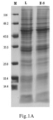
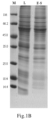
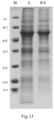
- High Five cells were infected with baculovirus containing the HPV6 L1: 33C recombinant gene obtained in Example 2 at a ratio of 1: 200 (V/V), and the cell precipitate was collected by centrifugation at 1000g ⁇ 100g at room temperature. The cells were broken up by sonication at low temperature for 3 min, centrifuged at >10,000g for 10 min and the supernatant was collected for SDS-PAGE. Lane 1: Marker (The marker is a mixture of 7 purified proteins with molecular weights ranging from 14.4 kDa to 116 kDa, produced by Thermo Scientific); Lane 2: cell lysate; Lane 3: supernatant of the lysate collected by centrifugation.
- HPV6 L1: 33C L1 protein prepared by this method has a yield of >100 mg/L and a protein size of approximate 56 KD, which can be used for mass production.
- HPV11 L1: 33C L1 protein prepared by this method has a yield of >100 mg/L and a protein size of approximate 56 KD, which can be used for mass production.
- HPV 16L1: 33C L1 protein prepared by this method has a yield of > 100 mg/L and a protein size of approximate 56 KD, which can be used for mass production.
- the HPV18 L1: 33C L1 protein prepared method has a yield of > 100 mg/L and a protein size of approximate 56 KD, which can be used for mass production.
- HPV31 L1: 33C L1 protein prepared by this method has a yield of >100 mg/L and a protein size of approximate 56 KD, which can be used for mass production.
- the HPV33 L1 L1 protein prepared by this method has a yield of > 100 mg/L and a protein size of approximate 56 KD, which can be used for mass production.
- HPV35 L1: 33C L1 protein prepared by this method has a yield of >100 mg/L and a protein size of approximate 56 KD, which can be used for mass production.
- the HPV39 L1: 59C L1 protein prepared by this method has a yield of >100 mg/L and a protein size of approximate 56 KD, which can be used for mass production.
- HPV45 L1: 33C L1 protein prepared by this method has a yield of >100 mg/L and a protein size of approximate 56 KD, which can be used for mass production.
- HPV51 L1: 33C L1 protein prepared by this method has a yield of >100 mg/L and a protein size of approximate 56 KD, which can be used for mass production.
- HPV52 L1: 33C L1 protein prepared by this method has a yield of >100 mg/L and a protein size of approximate 56 KD, which can be used for mass production.
- HPV56 L1: 33C L1 protein prepared by this method has a yield of >100 mg/L and a protein size of approximate 56 KD, which can be used for mass production.
- HPV58 L1: 33C L1 protein prepared by this method has a yield of >100 mg/L and a protein size of approximate 56 KD, which can be used for mass production.
- the HPV59 L1 L1 protein prepared by this method has a yield of > 100 mg/L and a protein size of approximate 56 KD, which can be used for mass production.
- HPV6 L1: 33C virus-like particles were purified by a two-step chromatography method, i.e. HS-MMA method, the supernatant collected in Example 3 was purified, and finally, high purity virus-like particles were obtained.
- Medium volume 150 mL of media volume, 30 mL/min of linear flow rate.
- Chromatography conditions equilibration buffer (pH 6.2, the salt concentration is 50 mM phosphate, 0.5 M NaCl); wash buffer (the salt concentration is 50 mM phosphate, 0.75 M NaCl, pH 6.2).
- the chromatography column was first equilibrated with 5 CV of equilibration buffer and then the sample was loaded. After loading, the column was then eluted with 5 CV of equilibration buffer and wash buffer, respectively, to remove the protein impurities.
- Elution conditions a 50 mM phosphate buffer containing 50 mM arginine hydrochloride, pH 6.2, with an elution salt concentration being of 1.25 M NaCl, was used.
- MMA ion exchange media produced by Bestchrom (Shanghai) Biosciences Co., Ltd was used.
- media volume is150 mL, while linear flow rate is 30 mL/min.
- equilibration buffer 50 mM PB, 1.25 M NaCl, pH 6.2.
- the chromatography column was first equilibrated with 4 CV equilibration buffer and then the sample was loaded. After loading, protein impurities were rinsed off with 5 CV equilibration buffer and then the target protein was eluted with elution buffer and collected.
- Elution conditions 100 mM NaAC, 150 mM NaCl, 0.01% Tween 80, pH 4.5.
- Example 4.4 Purification and preparation of HPV18 L1: 33C virus-like particles
- Example 4.5 Purification and preparation of HPV31 L1: 33C virus-like particles
- Example 4.8 Preparation of purified HPV39 L1: 59C virus-like particles
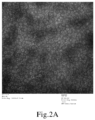
- FIG. 2A The electron microscopy observation is shown in Figure 2A .
- the C-terminal-modified HPV6 L1: 33C can form uniform-sized virus-like particles with an average diameter of approximate 60 nm.
- FIG. 2B The electron microscopy observation is shown in Figure 2B .
- the C-terminal-modified HPV11 L1: 33C can form uniform-sized virus-like particles, with an average diameter of approximate 60 nm.
- FIG. 2C The electron microscopy observation is shown in Figure 2C .
- the C-terminal-modified HPV 16L1: 33C can form uniform-sized virus-like particles with an average diameter of approximate 60 nm.
- FIG. 2D The electron microscopy observation is shown in Figure 2D .
- the C-terminal-modified HPV18 L1: 33C can form uniform-sized virus-like particles with an average diameter of approximate 60 nm.
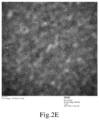
- FIG. 2E The electron microscopy observation is shown in Figure 2E .
- the C-terminal-modified HPV31 L1: 33C can form uniform-sized virus-like particles with an average diameter of approximate 60 nm.
- FIG. 2F The electron microscopy observation is shown in Figure 2F .
- the C-terminally modified HPV33 L1 can form uniform-sized virus-like particles with an average diameter of approximate 60 nm.
- the C-terminally modified HPV35 L1: 33C can form uniform-sized virus-like particles with an average diameter of approximate 60 nm.
- FIG. 2H The electron microscopy observation is shown in Figure 2H .
- the C-terminal-modified HPV39 L1: 59C can form uniform-sized virus-like particles with an average diameter of approximate 60 nm.
- FIG. 2I The electron microscopy observation is shown in Figure 2I .
- the C-terminal-modified HPV45 L1: 33C can form uniform-sized virus-like particles with an average diameter of approximate 60 nm.
- FIG. 2J The electron microscopy observation is shown in Figure 2J .
- the C-terminal-modified HPV51 L1: 33C can form uniform-sized virus-like particles with an average diameter of approximate 60 nm.
- FIG. 2K The electron microscopy observation is shown in Figure 2K .
- the C-terminal-modified HPV52 L1: 33C can form uniform-sized virus-like particles with an average diameter of approximate 60 nm.
- FIG. 2L The electron microscopy observation is shown in Figure 2L .
- the C-terminal-modified HPV56 L1: 33C can form uniform-sized virus-like particles with an average diameter of approximate 60 nm.
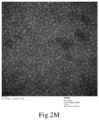
- FIG. 2M The electron microscopy observation is shown in Figure 2M .
- the C-terminal-modified HPV58 L1: 33C can form uniform-sized virus-like particles with an average diameter of approximate 60 nm.
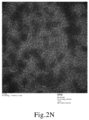
- FIG. 2N The electron microscopy observation is shown in Figure 2N .
- the C-terminal-modified HPV59 L1 : 33C can form uniform-sized virus-like particles with an average diameter of approximate 60 nm.
- HPV is difficult to be cultured in vitro and has a strong host specificity, it is difficult to be reproduced in organisms other than humans, thus there is a lack of suitable animal models. Therefore, there is a need to establish suitable and effective in vitro neutralization experimental models for the evaluation of vaccine immunoprotectivity.
- HPV pseudovirus is an ideal model for HPV in vitro neutralization: Thanks to the HPV VLP's characteristic of non-specifically encapsulating nucleic acids, HPV pseudovirus can be formed from the VLPs, composed of HPV L1 and L2 expressed in cells, by encapsulating free DNA or introducing exogenous plasmid.
- the immunogenicity of immunized animal serum samples was analyzed by pseudovirus neutralization assay.
- the animal immunized with HPV6 virus-like particles can produce neutralizing antibodies against HPV6 which can neutralize HPV6 pseudovirus.
- the immunized animal serum is incubated with a certain amount of pseudovirus and then infects cells, the number of cells capable of expressing GFP fluorescence decreases when neutralization antibodies in the serum increases, showing a linear negative correlation in a certain range, so the neutralizing activity of antibodies in the serum can be evaluated by detecting the change in the number of cells expressing GFP.
- HPV6 L1 33C virus-like particles were absorbed onto aluminum phosphate adjuvant, mixed, and used to immunize mice at a dose of 0.15 ⁇ g/200 ⁇ L per mouse, 10 mice in total. The mice were immunized with the diluted samples on Days 0, 7 and 21, with control mice immunized with blank serum. Blood was collected from the eyes of the mice on Day 28 and the sera were isolated for pseudovirus neutralization titers assay.
- mice EC50 assay of mice:
- the murine serum was inactivated at 56°C for 30 minutes, centrifuged at 6000g, 5 mins, and the supernatant was collected for assaying. 4-8 hours prior to the assay, 293FT cells were inoculated at a density of 15,000 cells/well into 96-well plates and incubated at 37°C in a CO 2 incubator with 5% CO 2 .
- the post-immune murine serum and blank control serum were serial diluted with neutralizing media respectively, then mixed with the HPV6 pseudovirus prepared in 6.1 at a volume ratio of 1:1, incubated at 2-8°C for 1 hrs. , then 100 ⁇ L/well of the mixture were added to 293FT cells, which had been inoculated for 4-8 hrs in advance.
- Each sample was in replicate, and blank serum control group, pseudovirus positive control group and pseudovirus negative control group were used.
- the cells infected by pseudovirus were incubated at 37°C in a CO 2 incubator with 5% CO 2 for 62-96 hrs , fluorescence scanning photographed and counted in an ELISPOT analyser (Model No.: S6 Universal-V Analyzer, Manufacturer: CTL).
- ELISPOT analyser Model No.: S6 Universal-V Analyzer, Manufacturer: CTL.
- the maximum dilution of the serum at 50% neutralization inhibition was calculated for each murine serum sample according to the Reed-Muench method, i.e. the half efficacy dilution EC50.
- HPV6 serum pseudovirus neutralization titer assay The results of the HPV6 serum pseudovirus neutralization titer assay are detailed in Table 4.
- GMT Geographic Mean Titer
- SEM Standard Error of Mean
- HPV6 L1: 33C virus-like particles have good immunogenicity and can produce neutralizing antibodies with high titers in animals, which can be used to prepare into a vaccine for preventing HPV infections.
- the experimental methods and procedures were the same as in Example 6.1.
- the L1 sequence was from Uniprot P04012 and the L2 sequence was from Uniprot P04013.
- HPV11 serum pseudovirus neutralization titer assay The results of HPV11 serum pseudovirus neutralization titer assay are detailed in Table 5.
- HPV11 L1: 33C virus-like particles have good immunogenicity, can produce high titers of neutralizing antibodies in animals, and can be used to prepare into a vaccine for the prevention of HPV infection.
- the experimental methods and procedures were the same as in Example 6.1.
- the L1 sequence was from Uniprot P03101 and the L2 sequence was from Uniprot P03107.
- HPV16 serum pseudovirus neutralization titer assay The results of HPV16 serum pseudovirus neutralization titer assay are detailed in Table 6. Table 6 EC50 of Serum Neutralization Titer Assay in Mice (GMT ⁇ SEM) HPV Type EC 50 Value Type 16 32449 ⁇ 7224
- HPV 16L1: 33C virus-like particles have good immunogenicity and can produce high titers of neutralizing antibodies in animals, which can be used to prepare into a vaccine for the prevention of HPV infection.
- the experimental methods and procedures were the same as in Example 6.1.
- the L1 sequence was from Uniprot Q80B70 and the L2 sequence was from Uniprot P06793.
- HPV18 serum pseudovirus neutralization titer assay The results of HPV18 serum pseudovirus neutralization titer assay are detailed in Table 7.
- HPV18 L1: 33C virus-like particles have good immunogenicity, can produce high titers of neutralizing antibodies in animals, and can be used to prepare into a vaccine for preventing HPV infection.
- the experimental methods and procedures were the same as in Example 6.1.
- the L1 sequence was from Uniprot P17388 and the L2 sequence was from Uniprot P17389.
- HPV31 serum pseudovirus neutralization titer assay The results of HPV31 serum pseudovirus neutralization titer assay are detailed in Table 8.
- HPV31 L1: 33C virus-like particles have good immunogenicity, can produce high titers of neutralizing antibodies in animals, and can be used to prepare into a vaccine for preventing HPV infection.
- HPV33 serum pseudovirus neutralization titer assay The results of HPV33 serum pseudovirus neutralization titer assay are detailed in Table 9. Table 9 EC50 of Serum Neutralization Titer Assay in Mice (GMT ⁇ SEM) HPV Type EC 50 Value Type 33 4666 ⁇ 1555
- HPV33 L1 virus-like particles have good immunogenicity, can produce high titers of neutralizing antibodies in animals, and can be used to prepare into a vaccine for preventing HPV infection.
- the experimental methods and procedures were the same as in Example 6.1.
- the L1 sequence was from Uniprot P27232 and the L2 sequence was from Uniprot P27234.
- HPV35 serum pseudovirus neutralization titer assay results are detailed in Table 10.
- HPV35 L1: 33C virus-like particles have good immunogenicity, can produce high titers of neutralizing antibodies in animals, and can be used to prepare into a vaccine for preventing HPV infection.
- the experimental methods and procedures were the same as in Example 6.1.
- the L1 sequence was from Uniprot P24838 and the L2 sequence was from Uniprot P24839.
- HPV39 serum pseudovirus neutralization titer assay results are detailed in Table 11.
- HPV39 L1: 59C virus-like particles have good immunogenicity, can produce high titers of neutralizing antibodies in animals, and can be used to prepare into a vaccine for preventing HPV infection.
- the experimental methods and procedures were the same as in Example 6.1.
- the L1 sequence was from Uniprot P36741 and the L2 sequence was from Uniprot P36761.
- HPV45 serum pseudovirus neutralization titer assay The results of HPV45 serum pseudovirus neutralization titer assay are detailed in Table 12.
- HPV45 L1: 33C virus-like particles have good immunogenicity, can produce high titers of neutralizing antibodies in animals, and can be used to prepare into a vaccine for preventing HPV infection.
- the experimental methods and procedures were the same as in Example 6.1.
- the L1 sequence was from Uniprot P26536 and the L2 sequence was from Uniprot P26539.
- HPV51 serum pseudovirus neutralization titer assay The results of HPV51 serum pseudovirus neutralization titer assay are detailed in Table 13. Table 13 EC50 of Serum Neutralization Titer Assay in Mice (GMT ⁇ SEM) HPV Type EC 50 Value Type 51 5528 ⁇ 1572
- HPV51 L1: 33C virus-like particles have good immunogenicity, can produce high titers of neutralizing antibodies in animals, and can be used to prepare into a vaccine for preventing HPV infection.
- the experimental methods and procedures were the same as in Example 6.1.
- the L1 sequence was from Uniprot Q05138 and the L2 sequence was from Uniprot F8S4U2.
- HPV52 L1: 33C virus-like particles have good immunogenicity, can produce high titers of neutralizing antibodies in animals, and can be used to prepare into a vaccine for preventing HPV infection.
- the experimental methods and procedures were the same as in Example 6.1.
- the L1 sequence was from Uniprot P36743 and the L2 sequence was from Uniprot P36765.
- HPV56 serum pseudovirus neutralization titer assay results are detailed in Table 15.
- HPV56 L1: 33C virus-like particles have good immunogenicity, can produce high titers of neutralizing antibodies in animals, and can be used to prepare into a vaccine for preventing HPV infection.
- the experimental methods and procedures were the same as in Example 6.1.
- the L1 sequence was from Uniprot P26535 and the L2 sequence was from Uniprot B6ZB12.
- HPV58 serum pseudovirus neutralization titer assay results are detailed in Table 16.
- HPV58 L1: 33C virus-like particles have good immunogenicity, can produce high titers of neutralizing antibodies in animals, and can be used to prepare into a vaccine for the prevention of HPV infection.
- the experimental methods and procedures were the same as in Example 6.1.
- the L1 sequence was from Uniprot Q81971 and the L2 sequence was from Uniprot Q81970.
- HPV59 serum pseudovirus neutralization titer assay The results of HPV59 serum pseudovirus neutralization titer assay are detailed in Table 17. Table 17 EC50 of Serum Neutralization Titer Assay in Mice (GMT ⁇ SEM) HPV Type EC 50 Value Type 59 1344 ⁇ 335
- HPV59 L1 virus-like particles have good immunogenicity, can produce high titers of neutralizing antibodies in animals, and can be used to prepare into a vaccine for the prevention of HPV infection.
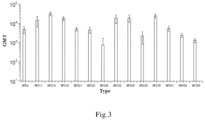
- a sample consisted of the aforementioned virus-like particles of 14 types (HPV Types 6, 11, 16, 18, 31, 33, 35, 39, 45, 51, 52, 56, 58, and 59) were diluted with aluminum phosphate adjuvant sterilely (for example, the HPV types which were of 20 ⁇ g in the sample, were diluted 80-fold to 0.5 ⁇ g/mL, the concentration of other HPV types in the samples being of different ration varied accordingly ), 200 ⁇ L of the diluted virus-like particle sample was used to immunize each mouse, and the doses are shown in Table 18.
- the murine serum was inactivated at 56°C for 30 minutes, centrifuged at 6000g, 5 mins, and the supernatant was collected for assaying. 4-8 hours prior to the assay, 293FT cells were inoculated at a density of 15,000 cells/well into 96-well plates and incubated at 37°C in a CO 2 incubator with 5% CO 2 .
- the immunized murine serum and blank control serum were serial diluted with neutralizing media respectively, then mixed with the diluted 14 types of pseudovirus samples (the 14 types of HPV pseudovirus are those of HPV types 6, 11, 16, 18, 31, 33, 35, 39, 45, 51, 52, 56, 58 and 59, prepared in Examples 6.1- 6.14) at a volume ratio of 1:1, incubated at 2-8°C for 1 h, then 100 ⁇ L/well of the mixture were added to 293FT cells, which had been inoculated for 4-8 h in advance. Each sample was in replicate; and blank serum control group, pseudovirus positive control group and pseudovirus negative control group were used.
- the cells infected by pseudovirus were incubated at 37°C in a CO 2 incubator with 5% CO 2 for 62-96 h, fluorescence scanning photographed and counted in an ELISPOT analyser (Model No.: S6 Universal-V Analyzer, Manufacturer: CTL).
- ELISPOT analyser Model No.: S6 Universal-V Analyzer, Manufacturer: CTL.
- the maximum dilution of the serum at 50% neutralization inhibition was calculated for each murine serum sample according to the Reed-Muench method, i.e. the half efficacy dilution EC50.
- the results are shown in Figure 3 .
- the 14-valent immunogenic composition of virus-like particles can produce high titers of neutralizing antibodies in animals, and can be used to prepare a vaccine for the prevention of HPV infection.
- HPV16 L1 (1-474) SEQ ID NO: 27.
- the truncated HPV16 L1 (1-474) protein was highly expressed but has very poor solubility, and is difficult to extract and purify, the detailed results of expression and extraction are shown in Figure 4 .
- SEQ ID No: 40 1801 The amino acid sequence of HPV type 18 L1 protein aa 1-470 SEQ ID No: 41 1802 The amino acid sequence of HPV type 33 L1 protein aa 474-499 KAKPKLKRAAPTSTRTSSAKRKKVKK SEQ ID No: 42 1803 Amino acid sequence of chimeric HPV type 18 L1 protein SEQ ID No: 43 1804 Nucleotide sequence of chimeric HPV type 18 L1 protein SEQ ID No: 44 1805 Synthetic HPV18 L1 gene SEQ ID No: 45 1806 Synthetic HPV33 L1 gene SEQ ID No: 46 1807HPV18 L1 F1 CTTGGTACCATGGCCCTCTGGAGACCATCCGATA SEQ ID No: 47 1808HPV18 L1 R1 GCTTGGCTTTGAGGAACTTCCTGCCCAATGGGTAC SEQ ID No: 48 1809 HPV18 L1 amplified sequence 1 [1]: Kpn I enzymatic cleavage site; [2]: the gene
- SEQ ID No: 82 3901 The amino acid sequence of HPV type 39 L1 protein aa 1-469 SEQ ID No: 83 3902 The amino acid sequence of HPV type 59 L1 protein aa 471-508 LQLGARPKPTIGPRKRAAPAPTSTPSPKRVKRRKSSRK SEQ ID No: 84 3903 Amino acid sequence of chimeric HPV type 39 L1 protein SEQ ID No: 85 3904 Nucleotide sequence of chimeric HPV type 39 L1 protein SEQ ID No: 86 3905 Synthetic HPV39 L1 gene SEQ ID No: 87 3906 Synthetic HPV59 L1 gene SEQ ID No: 88 3907HPV39 L1 F1 CTTGGTACCATGGCTATGTGGAGGTCCTCTGACAGTAT SEQ ID No: 89 3908HPV39 L1 R1 TCCAAGTTGGAGCAGGAACTTCCTGCCCAGTGGAAACT SEQ ID No: 90 3909 HPV39 L1 amplified sequence 1 [1]: K
- SEQ ID No: 108 5101 The amino acid sequence of HPV type 51 L1 protein aa 1-474 SEQ ID No: 109 5102 The amino acid sequence of HPV type 33 L1 protein aa 474-499 KAKPKLKRAAPTSTRTSSAKRKKVKK SEQ ID No: 110 5103
- Amino acid sequence of chimeric HPV type 51 L1 protein SEQ ID No: 111 5104 Nucleotide sequence of chimeric HPV type 51 L1 protein SEQ ID No: 112 5105 Synthetic HPV51 L1 gene SEQ ID No: 113 5106 Synthetic HPV33 L1 gene SEQ ID No: 114 5107HPV51 L1 F1 CTTGGTACCATGGCTCTGTGGAGGACCAATGACA SEQ ID No: 115 5108HPV51 L1 R1 GCTTGGCTTTGACTCCCACTTGGAGCAGGAAC SEQ ID No: 116 5109 HPV51 L1 amplified sequence 1 [1]: Kpn I enzymatic clea
Landscapes
- Health & Medical Sciences (AREA)
- Life Sciences & Earth Sciences (AREA)
- Chemical & Material Sciences (AREA)
- General Health & Medical Sciences (AREA)
- Medicinal Chemistry (AREA)
- Veterinary Medicine (AREA)
- Pharmacology & Pharmacy (AREA)
- Animal Behavior & Ethology (AREA)
- Public Health (AREA)
- Organic Chemistry (AREA)
- Virology (AREA)
- General Chemical & Material Sciences (AREA)
- Chemical Kinetics & Catalysis (AREA)
- Nuclear Medicine, Radiotherapy & Molecular Imaging (AREA)
- Microbiology (AREA)
- Epidemiology (AREA)
- Mycology (AREA)
- Immunology (AREA)
- Engineering & Computer Science (AREA)
- Molecular Biology (AREA)
- Reproductive Health (AREA)
- Oncology (AREA)
- Biophysics (AREA)
- Biochemistry (AREA)
- Gastroenterology & Hepatology (AREA)
- Bioinformatics & Cheminformatics (AREA)
- Proteomics, Peptides & Aminoacids (AREA)
- Biotechnology (AREA)
- Endocrinology (AREA)
- Communicable Diseases (AREA)
- Genetics & Genomics (AREA)
- Peptides Or Proteins (AREA)
- Medicines Containing Antibodies Or Antigens For Use As Internal Diagnostic Agents (AREA)
- Micro-Organisms Or Cultivation Processes Thereof (AREA)
- Medicines That Contain Protein Lipid Enzymes And Other Medicines (AREA)
Claims (4)
- Composition immunogène de HPV destinée à être utilisée dans la prévention des maladies ou infections associées au HPV, comprenant :une protéine L1 HPV chimère de HPV de type 6, 11, 16, 18, 31, 35, 39, 45, 51, 52, 56 et 58, une protéine L1 de HPV de type 33 et une protéine L1 de HPV de type 59,ladite protéine L1 HPV chimère de HPV de type 6, 11, 16, 18, 31, 35, 39, 45, 51, 52, 56 et 58 étant représenté dans SEQ ID n° : 3, SEQ ID n° : 16, SEQ ID n° : 29, SEQ ID n° : 42, SEQ ID n° : 55, SEQ ID n° : 71, SEQ ID n° : 84, SEQ ID n° : 97, SEQ ID n° : 110, SEQ ID n° : 123, SEQ ID n° : 136 et SEQ ID n° : 149, respectivement, etladite protéine L1 de HPV de type 33 et ladite protéine L1 de HPV de type 59 étant représentée dans SEQ ID n° : 66 et SEQ ID n° : 160, respectivement.
- Composition immunogène de HPV destinée à être utilisée selon la revendication 1,ladite protéine L1 HPV chimère de HPV de type 6 étant codée par SEQ ID n° : 4,ladite protéine L1 HPV chimère de HPV de type 11 étant codée par SEQ ID n° : 17,ladite protéine L1 HPV chimère de HPV de type 16 étant codée par SEQ ID n° : 30,ladite protéine L1 HPV chimère de HPV de type 18 étant codée par SEQ ID n° : 43,ladite protéine L1 HPV chimère de HPV de type 31 étant codée par SEQ ID n° : 56,ladite protéine L1 HPV chimère de HPV de type 35 étant codée par SEQ ID n° : 72,ladite protéine L1 HPV chimère de HPV de type 39 étant codée par SEQ ID n° : 85,ladite protéine L1 HPV chimère de HPV de type 45 étant codée par SEQ ID n° : 98,ladite protéine L1 HPV chimère de HPV de type 51 étant codée par SEQ ID n° : 111,ladite protéine L1 HPV chimère de HPV de type 52 étant codée par SEQ ID n° : 124,ladite protéine L1 HPV chimère de HPV de type 56 étant codée par SEQ ID n° : 137,ladite protéine L1 HPV chimère de HPV de type 58 étant codée par SEQ ID n° : 150,ladite protéine L1 HPV chimère de HPV de type 33 étant codée par SEQ ID n° : 67, ouladite protéine L1 HPV chimère de HPV de type 59 étant codée par SEQ ID n° : 161.
- Composition immunogène de HPV destinée à être utilisée selon la revendication 1 ou 2, ladite composition immunogène de HPV comprenant en outre un vecteur physiologiquement acceptable et, éventuellement, un adjuvant.
- Composition immunogène de HPV destinée à être utilisée selon la revendication 3, ledit adjuvant étant un adjuvant de phosphate d'aluminium.
Applications Claiming Priority (2)
| Application Number | Priority Date | Filing Date | Title |
|---|---|---|---|
| CN201910657255 | 2019-07-19 | ||
| PCT/CN2020/102601 WO2021013071A1 (fr) | 2019-07-19 | 2020-07-17 | Composition polyvalente induisant l'immunogénicité pour papillomavirus humain |
Publications (4)
| Publication Number | Publication Date |
|---|---|
| EP4001298A1 EP4001298A1 (fr) | 2022-05-25 |
| EP4001298A4 EP4001298A4 (fr) | 2023-03-15 |
| EP4001298B1 true EP4001298B1 (fr) | 2025-03-05 |
| EP4001298C0 EP4001298C0 (fr) | 2025-03-05 |
Family
ID=74193232
Family Applications (1)
| Application Number | Title | Priority Date | Filing Date |
|---|---|---|---|
| EP20843624.6A Active EP4001298B1 (fr) | 2019-07-19 | 2020-07-17 | Composition polyvalente induisant l'immunogénicité pour papillomavirus humain |
Country Status (15)
| Country | Link |
|---|---|
| US (1) | US12440549B2 (fr) |
| EP (1) | EP4001298B1 (fr) |
| JP (2) | JP7791078B2 (fr) |
| KR (1) | KR102878566B1 (fr) |
| CN (1) | CN114127092B (fr) |
| AU (1) | AU2020317321B2 (fr) |
| BR (1) | BR112022001070A2 (fr) |
| CA (1) | CA3147849A1 (fr) |
| ES (1) | ES3015251T3 (fr) |
| HU (1) | HUE071793T2 (fr) |
| MX (1) | MX2022000777A (fr) |
| MY (1) | MY207280A (fr) |
| PL (1) | PL4001298T3 (fr) |
| WO (1) | WO2021013071A1 (fr) |
| ZA (1) | ZA202201571B (fr) |
Families Citing this family (3)
| Publication number | Priority date | Publication date | Assignee | Title |
|---|---|---|---|---|
| US20240075124A1 (en) * | 2021-01-14 | 2024-03-07 | Sinocelltech Ltd | Stable formulation of human papillomavirus virus-like particle vaccine |
| CN115960178B (zh) * | 2022-12-28 | 2023-09-08 | 北京康乐卫士生物技术股份有限公司 | 人乳头瘤病毒hpv59 l1蛋白的表达和类病毒样颗粒及其制备方法 |
| KR20250152098A (ko) * | 2023-03-07 | 2025-10-22 | 베이징 헬스 가드 바이오테크놀러지 인크. | 인유두종 바이러스 백신 및 이의 응용 |
Family Cites Families (11)
| Publication number | Priority date | Publication date | Assignee | Title |
|---|---|---|---|---|
| DE122007000092I1 (de) * | 1994-10-07 | 2008-03-27 | Univ Loyola Chicago | Papillomavirusähnliche partikel, fusionsproteine sowie verfahren zu deren herstellung |
| US5821087A (en) * | 1995-03-30 | 1998-10-13 | Merck & Co., Inc. | Production of recombinant human papillomavirus type II protein utilizing papillomavirus 6/11 hybrid DNA |
| US6908613B2 (en) * | 2000-06-21 | 2005-06-21 | Medimmune, Inc. | Chimeric human papillomavirus (HPV) L1 molecules and uses therefor |
| GB0206359D0 (en) | 2002-03-18 | 2002-05-01 | Glaxosmithkline Biolog Sa | Viral antigens |
| DK2154149T3 (da) | 2007-05-29 | 2019-10-14 | Univ Xiamen | En trunkeret l1-protein af human papillomavirus 6 |
| CN101518647A (zh) * | 2008-02-29 | 2009-09-02 | 江阴艾托金生物技术有限公司 | 人乳头瘤病毒预防性疫苗、构建方法及应用 |
| WO2012000454A1 (fr) * | 2010-07-02 | 2012-01-05 | 厦门大学 | Protéine l1 tronquée du papillomavirus humain de type 52 |
| US9771397B2 (en) | 2011-12-01 | 2017-09-26 | University Of Cape Town | HPV chimaeric particle |
| CN102747047B (zh) * | 2012-02-28 | 2016-03-23 | 厦门大学 | 人乳头瘤病毒型别杂合病毒样颗粒及其制备方法 |
| CN104120088B (zh) * | 2013-04-26 | 2019-09-24 | 北京安百胜生物科技有限公司 | 用汉逊酵母表达系统产生hpv58 l1蛋白的方法 |
| WO2015196112A1 (fr) * | 2014-06-19 | 2015-12-23 | The Regents Of The University Of Colorado, A Body Corporate | Constructions de virus du papillome humain |
-
2020
- 2020-07-17 PL PL20843624.6T patent/PL4001298T3/pl unknown
- 2020-07-17 KR KR1020227005633A patent/KR102878566B1/ko active Active
- 2020-07-17 BR BR112022001070A patent/BR112022001070A2/pt active Search and Examination
- 2020-07-17 AU AU2020317321A patent/AU2020317321B2/en active Active
- 2020-07-17 EP EP20843624.6A patent/EP4001298B1/fr active Active
- 2020-07-17 CA CA3147849A patent/CA3147849A1/fr active Pending
- 2020-07-17 MX MX2022000777A patent/MX2022000777A/es unknown
- 2020-07-17 JP JP2022503540A patent/JP7791078B2/ja active Active
- 2020-07-17 WO PCT/CN2020/102601 patent/WO2021013071A1/fr not_active Ceased
- 2020-07-17 HU HUE20843624A patent/HUE071793T2/hu unknown
- 2020-07-17 ES ES20843624T patent/ES3015251T3/es active Active
- 2020-07-17 MY MYPI2022000336A patent/MY207280A/en unknown
- 2020-07-17 CN CN202080051322.2A patent/CN114127092B/zh active Active
-
2022
- 2022-01-19 US US17/579,459 patent/US12440549B2/en active Active
- 2022-02-04 ZA ZA2022/01571A patent/ZA202201571B/en unknown
-
2025
- 2025-10-16 JP JP2025174898A patent/JP2026009143A/ja active Pending
Also Published As
| Publication number | Publication date |
|---|---|
| KR102878566B1 (ko) | 2025-10-30 |
| CN114127092A (zh) | 2022-03-01 |
| MX2022000777A (es) | 2022-02-14 |
| WO2021013071A1 (fr) | 2021-01-28 |
| BR112022001070A2 (pt) | 2022-04-19 |
| EP4001298A4 (fr) | 2023-03-15 |
| EP4001298A1 (fr) | 2022-05-25 |
| MY207280A (en) | 2025-02-13 |
| AU2020317321A1 (en) | 2022-03-10 |
| JP2026009143A (ja) | 2026-01-19 |
| KR20220074855A (ko) | 2022-06-03 |
| JP7791078B2 (ja) | 2025-12-23 |
| JP2022540950A (ja) | 2022-09-20 |
| PL4001298T3 (pl) | 2025-06-16 |
| CA3147849A1 (fr) | 2021-01-28 |
| ES3015251T3 (en) | 2025-04-30 |
| HUE071793T2 (hu) | 2025-09-28 |
| EP4001298C0 (fr) | 2025-03-05 |
| US12440549B2 (en) | 2025-10-14 |
| US20220370590A1 (en) | 2022-11-24 |
| AU2020317321B2 (en) | 2023-07-27 |
| ZA202201571B (en) | 2025-05-28 |
| CN114127092B (zh) | 2024-04-16 |
Similar Documents
| Publication | Publication Date | Title |
|---|---|---|
| US20250171506A1 (en) | Chimeric papillomavirus l1 protein | |
| US12440549B2 (en) | Polyvalent immunogenicity composition for human papillomavirus | |
| CN114174319B (zh) | 嵌合的人乳头瘤病毒52型l1蛋白 | |
| WO2021013072A1 (fr) | Protéine l1 de papillomavirus humain de type 39 chimérique | |
| CN114127093B (zh) | 嵌合的人乳头瘤病毒45型l1蛋白 | |
| CA3147850C (fr) | Protéine l1 de papillomavirus chimérique | |
| WO2021013069A1 (fr) | Protéine l1 de papillomavirus humain de type 11 chimérique | |
| WO2021013077A1 (fr) | Protéine l1 de papillomavirus humain de type 58 chimérique | |
| WO2021013062A1 (fr) | Protéine l1 de papillomavirus humain de type 31 chimérique | |
| BR112022001075B1 (pt) | Proteína l1 quimérica de papilomavírus, partícula similar ao papilomavírus (vlp- virus like particle), composição imunogênica para prevenção de doenças ou infecções associadas ao papilomavírus, polinucleotídeo isolado, vetor, baculovírus e método in vitro para preparar uma partícula similar ao papilomavírus | |
| HK40066227B (zh) | 嵌合的人乳头瘤病毒39型l1蛋白 | |
| HK40066227A (zh) | 嵌合的人乳头瘤病毒39型l1蛋白 | |
| HK40066215A (zh) | 人乳头瘤病毒多价免疫原性组合物 | |
| HK40066215B (zh) | 人乳头瘤病毒多价免疫原性组合物 | |
| HK40066218B (zh) | 嵌合的乳头瘤病毒l1蛋白 | |
| HK40066218A (zh) | 嵌合的乳头瘤病毒l1蛋白 | |
| HK40066223B (zh) | 嵌合的人乳头瘤病毒35型l1蛋白 | |
| HK40066223A (zh) | 嵌合的人乳头瘤病毒35型l1蛋白 | |
| HK40066230A (zh) | 嵌合的人乳头瘤病毒16型l1蛋白 | |
| HK40066229A (zh) | 嵌合的人乳头瘤病毒51型l1蛋白 |
Legal Events
| Date | Code | Title | Description |
|---|---|---|---|
| STAA | Information on the status of an ep patent application or granted ep patent |
Free format text: STATUS: THE INTERNATIONAL PUBLICATION HAS BEEN MADE |
|
| PUAI | Public reference made under article 153(3) epc to a published international application that has entered the european phase |
Free format text: ORIGINAL CODE: 0009012 |
|
| STAA | Information on the status of an ep patent application or granted ep patent |
Free format text: STATUS: REQUEST FOR EXAMINATION WAS MADE |
|
| 17P | Request for examination filed |
Effective date: 20220209 |
|
| AK | Designated contracting states |
Kind code of ref document: A1 Designated state(s): AL AT BE BG CH CY CZ DE DK EE ES FI FR GB GR HR HU IE IS IT LI LT LU LV MC MK MT NL NO PL PT RO RS SE SI SK SM TR |
|
| DAV | Request for validation of the european patent (deleted) | ||
| DAX | Request for extension of the european patent (deleted) | ||
| A4 | Supplementary search report drawn up and despatched |
Effective date: 20230214 |
|
| RIC1 | Information provided on ipc code assigned before grant |
Ipc: A61P 15/00 20060101ALI20230208BHEP Ipc: A61P 35/00 20060101ALI20230208BHEP Ipc: A61P 31/20 20060101ALI20230208BHEP Ipc: A61K 39/12 20060101ALI20230208BHEP Ipc: C12N 15/37 20060101ALI20230208BHEP Ipc: C07K 14/025 20060101AFI20230208BHEP |
|
| STAA | Information on the status of an ep patent application or granted ep patent |
Free format text: STATUS: EXAMINATION IS IN PROGRESS |
|
| 17Q | First examination report despatched |
Effective date: 20240415 |
|
| GRAP | Despatch of communication of intention to grant a patent |
Free format text: ORIGINAL CODE: EPIDOSNIGR1 |
|
| STAA | Information on the status of an ep patent application or granted ep patent |
Free format text: STATUS: GRANT OF PATENT IS INTENDED |
|
| INTG | Intention to grant announced |
Effective date: 20240930 |
|
| GRAS | Grant fee paid |
Free format text: ORIGINAL CODE: EPIDOSNIGR3 |
|
| GRAA | (expected) grant |
Free format text: ORIGINAL CODE: 0009210 |
|
| STAA | Information on the status of an ep patent application or granted ep patent |
Free format text: STATUS: THE PATENT HAS BEEN GRANTED |
|
| AK | Designated contracting states |
Kind code of ref document: B1 Designated state(s): AL AT BE BG CH CY CZ DE DK EE ES FI FR GB GR HR HU IE IS IT LI LT LU LV MC MK MT NL NO PL PT RO RS SE SI SK SM TR |
|
| REG | Reference to a national code |
Ref country code: GB Ref legal event code: FG4D |
|
| REG | Reference to a national code |
Ref country code: CH Ref legal event code: EP |
|
| REG | Reference to a national code |
Ref country code: IE Ref legal event code: FG4D |
|
| REG | Reference to a national code |
Ref country code: DE Ref legal event code: R096 Ref document number: 602020047358 Country of ref document: DE |
|
| U01 | Request for unitary effect filed |
Effective date: 20250320 |
|
| REG | Reference to a national code |
Ref country code: ES Ref legal event code: FG2A Ref document number: 3015251 Country of ref document: ES Kind code of ref document: T3 Effective date: 20250430 |
|
| U07 | Unitary effect registered |
Designated state(s): AT BE BG DE DK EE FI FR IT LT LU LV MT NL PT RO SE SI Effective date: 20250326 |
|
| PG25 | Lapsed in a contracting state [announced via postgrant information from national office to epo] |
Ref country code: RS Free format text: LAPSE BECAUSE OF FAILURE TO SUBMIT A TRANSLATION OF THE DESCRIPTION OR TO PAY THE FEE WITHIN THE PRESCRIBED TIME-LIMIT Effective date: 20250605 |
|
| PGFP | Annual fee paid to national office [announced via postgrant information from national office to epo] |
Ref country code: PL Payment date: 20250411 Year of fee payment: 6 |
|
| PGFP | Annual fee paid to national office [announced via postgrant information from national office to epo] |
Ref country code: GB Payment date: 20250616 Year of fee payment: 6 |
|
| PGFP | Annual fee paid to national office [announced via postgrant information from national office to epo] |
Ref country code: NO Payment date: 20250422 Year of fee payment: 6 |
|
| PG25 | Lapsed in a contracting state [announced via postgrant information from national office to epo] |
Ref country code: HR Free format text: LAPSE BECAUSE OF FAILURE TO SUBMIT A TRANSLATION OF THE DESCRIPTION OR TO PAY THE FEE WITHIN THE PRESCRIBED TIME-LIMIT Effective date: 20250305 |
|
| PGFP | Annual fee paid to national office [announced via postgrant information from national office to epo] |
Ref country code: GR Payment date: 20250516 Year of fee payment: 6 |
|
| PGFP | Annual fee paid to national office [announced via postgrant information from national office to epo] |
Ref country code: TR Payment date: 20250513 Year of fee payment: 6 |
|
| PGFP | Annual fee paid to national office [announced via postgrant information from national office to epo] |
Ref country code: CZ Payment date: 20250410 Year of fee payment: 6 |
|
| PGFP | Annual fee paid to national office [announced via postgrant information from national office to epo] |
Ref country code: IE Payment date: 20250415 Year of fee payment: 6 |
|
| PGFP | Annual fee paid to national office [announced via postgrant information from national office to epo] |
Ref country code: HU Payment date: 20250520 Year of fee payment: 6 |
|
| U20 | Renewal fee for the european patent with unitary effect paid |
Year of fee payment: 6 Effective date: 20250715 |
|
| REG | Reference to a national code |
Ref country code: GR Ref legal event code: EP Ref document number: 20250400934 Country of ref document: GR Effective date: 20250613 |
|
| REG | Reference to a national code |
Ref country code: HU Ref legal event code: AG4A Ref document number: E071793 Country of ref document: HU |
|
| PG25 | Lapsed in a contracting state [announced via postgrant information from national office to epo] |
Ref country code: SM Free format text: LAPSE BECAUSE OF FAILURE TO SUBMIT A TRANSLATION OF THE DESCRIPTION OR TO PAY THE FEE WITHIN THE PRESCRIBED TIME-LIMIT Effective date: 20250305 |
|
| PGFP | Annual fee paid to national office [announced via postgrant information from national office to epo] |
Ref country code: ES Payment date: 20250806 Year of fee payment: 6 |
|
| PGFP | Annual fee paid to national office [announced via postgrant information from national office to epo] |
Ref country code: CH Payment date: 20250808 Year of fee payment: 6 |
|
| PG25 | Lapsed in a contracting state [announced via postgrant information from national office to epo] |
Ref country code: SK Free format text: LAPSE BECAUSE OF FAILURE TO SUBMIT A TRANSLATION OF THE DESCRIPTION OR TO PAY THE FEE WITHIN THE PRESCRIBED TIME-LIMIT Effective date: 20250305 |
|
| PG25 | Lapsed in a contracting state [announced via postgrant information from national office to epo] |
Ref country code: IS Free format text: LAPSE BECAUSE OF FAILURE TO SUBMIT A TRANSLATION OF THE DESCRIPTION OR TO PAY THE FEE WITHIN THE PRESCRIBED TIME-LIMIT Effective date: 20250705 |
|
| PLBE | No opposition filed within time limit |
Free format text: ORIGINAL CODE: 0009261 |
|
| STAA | Information on the status of an ep patent application or granted ep patent |
Free format text: STATUS: NO OPPOSITION FILED WITHIN TIME LIMIT |
|
| REG | Reference to a national code |
Ref country code: CH Ref legal event code: L10 Free format text: ST27 STATUS EVENT CODE: U-0-0-L10-L00 (AS PROVIDED BY THE NATIONAL OFFICE) Effective date: 20260114 |
|
| 26N | No opposition filed |
Effective date: 20251208 |