EP4001493A1 - Waschmaschine - Google Patents
Waschmaschine Download PDFInfo
- Publication number
- EP4001493A1 EP4001493A1 EP20841559.6A EP20841559A EP4001493A1 EP 4001493 A1 EP4001493 A1 EP 4001493A1 EP 20841559 A EP20841559 A EP 20841559A EP 4001493 A1 EP4001493 A1 EP 4001493A1
- Authority
- EP
- European Patent Office
- Prior art keywords
- washing machine
- user
- controller
- data
- door
- Prior art date
- Legal status (The legal status is an assumption and is not a legal conclusion. Google has not performed a legal analysis and makes no representation as to the accuracy of the status listed.)
- Granted
Links
Images






Classifications
-
- D—TEXTILES; PAPER
- D06—TREATMENT OF TEXTILES OR THE LIKE; LAUNDERING; FLEXIBLE MATERIALS NOT OTHERWISE PROVIDED FOR
- D06F—LAUNDERING, DRYING, IRONING, PRESSING OR FOLDING TEXTILE ARTICLES
- D06F37/00—Details specific to washing machines covered by groups D06F21/00 - D06F25/00
- D06F37/42—Safety arrangements, e.g. for stopping rotation of the receptacle upon opening of the casing door
-
- D—TEXTILES; PAPER
- D06—TREATMENT OF TEXTILES OR THE LIKE; LAUNDERING; FLEXIBLE MATERIALS NOT OTHERWISE PROVIDED FOR
- D06F—LAUNDERING, DRYING, IRONING, PRESSING OR FOLDING TEXTILE ARTICLES
- D06F34/00—Details of control systems for washing machines, washer-dryers or laundry dryers
- D06F34/04—Signal transfer or data transmission arrangements
-
- D—TEXTILES; PAPER
- D06—TREATMENT OF TEXTILES OR THE LIKE; LAUNDERING; FLEXIBLE MATERIALS NOT OTHERWISE PROVIDED FOR
- D06F—LAUNDERING, DRYING, IRONING, PRESSING OR FOLDING TEXTILE ARTICLES
- D06F33/00—Control of operations performed in washing machines or washer-dryers
- D06F33/30—Control of washing machines characterised by the purpose or target of the control
-
- D—TEXTILES; PAPER
- D06—TREATMENT OF TEXTILES OR THE LIKE; LAUNDERING; FLEXIBLE MATERIALS NOT OTHERWISE PROVIDED FOR
- D06F—LAUNDERING, DRYING, IRONING, PRESSING OR FOLDING TEXTILE ARTICLES
- D06F33/00—Control of operations performed in washing machines or washer-dryers
- D06F33/30—Control of washing machines characterised by the purpose or target of the control
- D06F33/32—Control of operational steps, e.g. optimisation or improvement of operational steps depending on the condition of the laundry
-
- D—TEXTILES; PAPER
- D06—TREATMENT OF TEXTILES OR THE LIKE; LAUNDERING; FLEXIBLE MATERIALS NOT OTHERWISE PROVIDED FOR
- D06F—LAUNDERING, DRYING, IRONING, PRESSING OR FOLDING TEXTILE ARTICLES
- D06F34/00—Details of control systems for washing machines, washer-dryers or laundry dryers
- D06F34/14—Arrangements for detecting or measuring specific parameters
-
- D—TEXTILES; PAPER
- D06—TREATMENT OF TEXTILES OR THE LIKE; LAUNDERING; FLEXIBLE MATERIALS NOT OTHERWISE PROVIDED FOR
- D06F—LAUNDERING, DRYING, IRONING, PRESSING OR FOLDING TEXTILE ARTICLES
- D06F34/00—Details of control systems for washing machines, washer-dryers or laundry dryers
- D06F34/14—Arrangements for detecting or measuring specific parameters
- D06F34/18—Condition of the laundry, e.g. nature or weight
-
- D—TEXTILES; PAPER
- D06—TREATMENT OF TEXTILES OR THE LIKE; LAUNDERING; FLEXIBLE MATERIALS NOT OTHERWISE PROVIDED FOR
- D06F—LAUNDERING, DRYING, IRONING, PRESSING OR FOLDING TEXTILE ARTICLES
- D06F34/00—Details of control systems for washing machines, washer-dryers or laundry dryers
- D06F34/14—Arrangements for detecting or measuring specific parameters
- D06F34/20—Parameters relating to constructional components, e.g. door sensors
-
- D—TEXTILES; PAPER
- D06—TREATMENT OF TEXTILES OR THE LIKE; LAUNDERING; FLEXIBLE MATERIALS NOT OTHERWISE PROVIDED FOR
- D06F—LAUNDERING, DRYING, IRONING, PRESSING OR FOLDING TEXTILE ARTICLES
- D06F34/00—Details of control systems for washing machines, washer-dryers or laundry dryers
- D06F34/28—Arrangements for program selection, e.g. control panels therefor; Arrangements for indicating program parameters, e.g. the selected program or its progress
-
- D—TEXTILES; PAPER
- D06—TREATMENT OF TEXTILES OR THE LIKE; LAUNDERING; FLEXIBLE MATERIALS NOT OTHERWISE PROVIDED FOR
- D06F—LAUNDERING, DRYING, IRONING, PRESSING OR FOLDING TEXTILE ARTICLES
- D06F39/00—Details of washing machines not specific to a single type of machines covered by groups D06F9/00 - D06F27/00
- D06F39/12—Casings; Tubs
- D06F39/14—Doors or covers; Securing means therefor
-
- G—PHYSICS
- G01—MEASURING; TESTING
- G01B—MEASURING LENGTH, THICKNESS OR SIMILAR LINEAR DIMENSIONS; MEASURING ANGLES; MEASURING AREAS; MEASURING IRREGULARITIES OF SURFACES OR CONTOURS
- G01B11/00—Measuring arrangements characterised by the use of optical techniques
- G01B11/02—Measuring arrangements characterised by the use of optical techniques for measuring length, width or thickness
- G01B11/026—Measuring arrangements characterised by the use of optical techniques for measuring length, width or thickness by measuring distance between sensor and object
-
- G—PHYSICS
- G01—MEASURING; TESTING
- G01B—MEASURING LENGTH, THICKNESS OR SIMILAR LINEAR DIMENSIONS; MEASURING ANGLES; MEASURING AREAS; MEASURING IRREGULARITIES OF SURFACES OR CONTOURS
- G01B11/00—Measuring arrangements characterised by the use of optical techniques
- G01B11/02—Measuring arrangements characterised by the use of optical techniques for measuring length, width or thickness
- G01B11/06—Measuring arrangements characterised by the use of optical techniques for measuring length, width or thickness for measuring thickness ; e.g. of sheet material
- G01B11/0608—Height gauges
-
- G—PHYSICS
- G01—MEASURING; TESTING
- G01B—MEASURING LENGTH, THICKNESS OR SIMILAR LINEAR DIMENSIONS; MEASURING ANGLES; MEASURING AREAS; MEASURING IRREGULARITIES OF SURFACES OR CONTOURS
- G01B21/00—Measuring arrangements or details thereof, where the measuring technique is not covered by the other groups of this subclass, unspecified or not relevant
- G01B21/16—Measuring arrangements or details thereof, where the measuring technique is not covered by the other groups of this subclass, unspecified or not relevant for measuring distance of clearance between spaced objects
-
- G—PHYSICS
- G01—MEASURING; TESTING
- G01G—WEIGHING
- G01G19/00—Weighing apparatus or methods adapted for special purposes not provided for in the preceding groups
- G01G19/52—Weighing apparatus combined with other objects, e.g. furniture
-
- G—PHYSICS
- G06—COMPUTING OR CALCULATING; COUNTING
- G06F—ELECTRIC DIGITAL DATA PROCESSING
- G06F18/00—Pattern recognition
- G06F18/20—Analysing
- G06F18/22—Matching criteria, e.g. proximity measures
-
- G—PHYSICS
- G06—COMPUTING OR CALCULATING; COUNTING
- G06F—ELECTRIC DIGITAL DATA PROCESSING
- G06F3/00—Input arrangements for transferring data to be processed into a form capable of being handled by the computer; Output arrangements for transferring data from processing unit to output unit, e.g. interface arrangements
- G06F3/16—Sound input; Sound output
- G06F3/167—Audio in a user interface, e.g. using voice commands for navigating, audio feedback
-
- G—PHYSICS
- G06—COMPUTING OR CALCULATING; COUNTING
- G06V—IMAGE OR VIDEO RECOGNITION OR UNDERSTANDING
- G06V40/00—Recognition of biometric, human-related or animal-related patterns in image or video data
- G06V40/10—Human or animal bodies, e.g. vehicle occupants or pedestrians; Body parts, e.g. hands
-
- G—PHYSICS
- G10—MUSICAL INSTRUMENTS; ACOUSTICS
- G10L—SPEECH ANALYSIS TECHNIQUES OR SPEECH SYNTHESIS; SPEECH RECOGNITION; SPEECH OR VOICE PROCESSING TECHNIQUES; SPEECH OR AUDIO CODING OR DECODING
- G10L15/00—Speech recognition
- G10L15/22—Procedures used during a speech recognition process, e.g. man-machine dialogue
-
- D—TEXTILES; PAPER
- D06—TREATMENT OF TEXTILES OR THE LIKE; LAUNDERING; FLEXIBLE MATERIALS NOT OTHERWISE PROVIDED FOR
- D06F—LAUNDERING, DRYING, IRONING, PRESSING OR FOLDING TEXTILE ARTICLES
- D06F2103/00—Parameters monitored or detected for the control of domestic laundry washing machines, washer-dryers or laundry dryers
-
- D—TEXTILES; PAPER
- D06—TREATMENT OF TEXTILES OR THE LIKE; LAUNDERING; FLEXIBLE MATERIALS NOT OTHERWISE PROVIDED FOR
- D06F—LAUNDERING, DRYING, IRONING, PRESSING OR FOLDING TEXTILE ARTICLES
- D06F2103/00—Parameters monitored or detected for the control of domestic laundry washing machines, washer-dryers or laundry dryers
- D06F2103/64—Radiation, e.g. microwaves
-
- D—TEXTILES; PAPER
- D06—TREATMENT OF TEXTILES OR THE LIKE; LAUNDERING; FLEXIBLE MATERIALS NOT OTHERWISE PROVIDED FOR
- D06F—LAUNDERING, DRYING, IRONING, PRESSING OR FOLDING TEXTILE ARTICLES
- D06F2105/00—Systems or parameters controlled or affected by the control systems of washing machines, washer-dryers or laundry dryers
- D06F2105/44—Opening, closing or locking of doors
-
- D—TEXTILES; PAPER
- D06—TREATMENT OF TEXTILES OR THE LIKE; LAUNDERING; FLEXIBLE MATERIALS NOT OTHERWISE PROVIDED FOR
- D06F—LAUNDERING, DRYING, IRONING, PRESSING OR FOLDING TEXTILE ARTICLES
- D06F33/00—Control of operations performed in washing machines or washer-dryers
- D06F33/30—Control of washing machines characterised by the purpose or target of the control
- D06F33/47—Responding to irregular working conditions, e.g. malfunctioning of pumps
-
- G—PHYSICS
- G06—COMPUTING OR CALCULATING; COUNTING
- G06V—IMAGE OR VIDEO RECOGNITION OR UNDERSTANDING
- G06V40/00—Recognition of biometric, human-related or animal-related patterns in image or video data
- G06V40/10—Human or animal bodies, e.g. vehicle occupants or pedestrians; Body parts, e.g. hands
- G06V40/16—Human faces, e.g. facial parts, sketches or expressions
- G06V40/168—Feature extraction; Face representation
-
- G—PHYSICS
- G10—MUSICAL INSTRUMENTS; ACOUSTICS
- G10L—SPEECH ANALYSIS TECHNIQUES OR SPEECH SYNTHESIS; SPEECH RECOGNITION; SPEECH OR VOICE PROCESSING TECHNIQUES; SPEECH OR AUDIO CODING OR DECODING
- G10L15/00—Speech recognition
- G10L15/22—Procedures used during a speech recognition process, e.g. man-machine dialogue
- G10L2015/223—Execution procedure of a spoken command
Definitions
- the present disclosure relates to a washing machine, and more particularly to a washing machine, the components of which are controlled based on identification of a user.
- a washing machine is an apparatus for washing laundry, such as contaminated clothing.
- the washing machine generally includes a washing tub, which is configured to receive water, a drum, which is rotatably mounted inside the washing tub and is configured to receive laundry, a motor, which is configured to generate a driving force for rotating the drum, and a door, which is configured to allow laundry to be introduced into the drum.
- a washing machine In such a washing machine, it is required to open or close the door in order to introduce or retrieve laundry into or from the washing machine and to perform a washing operation.
- a door safety function for controlling opening and closing of the door is required in order to prevent an accident in which a child or pet becomes trapped inside the washing machine.
- the washing machine may be configured such that the door thereof is automatically opened when a user approaches the washing machine. In this case, however, the door may be automatically opened even when a child approaches the washing machine, which may cause an accident in which the child enters the washing machine.
- the conventional washing machine may identify a child by measuring the user's height, and may activate a door safety function based thereon.
- Korean Patent Laid-Open Publication No. 10-2006-0120933 discloses a washing machine that stores user information in memory and identifies a user based thereon.
- the washing machine disclosed in Korean Patent Laid-Open Publication No. 10-2006-0120933 has an inconvenience in which a user needs to transmit information to the washing machine using a communication modem and to store the information in the washing machine so that the washing machine can identify the user.
- the conventional washing machine senses a communication device possessed by the user, rather than sensing the person.
- there is inconvenience in that only a person possessing a communication device can be recognized as a user of the washing machine.
- the washing machine disclosed in Korean Patent Laid-Open Publication No. 10-2006-0120933 does not disclose a configuration for controlling a door of the washing machine based on identification of a user.
- An aspect of the present disclosure is to solve a problem in which a door of a washing machine is not controlled to be opened based on identification of a user who actually desires to use the washing machine and a problem in which a child approaching the washing machine is not accurately sensed and thus there is a risk of an accident in which the child enters the washing machine.
- Another aspect of the present disclosure is to solve a problem in which, in the case in which the amount of laundry is large, if the door is unconditionally opened in order to prevent the generation of odors in the laundry after completion of washing operation, the laundry falls out of the washing machine and is thus contaminated.
- Still another aspect of the present disclosure is to solve a problem in which a user who is located far from the washing machine is not capable of easily recognizing the operation time of the washing operation.
- Still another aspect of the present disclosure is to solve a problem in which a user who has difficulty moving around is not capable of easily opening the door of the washing machine.
- Still another aspect of the present disclosure is to solve a problem in which, because the washing machine provides a fixed user interface, individual users are not capable of conveniently using user interfaces preferred thereby.
- Still another aspect of the present disclosure is to solve a problem in which a message stored in the washing machine is not accurately delivered to a recipient.
- Still another aspect of the present disclosure is to solve a problem in which a user is not capable of easily recognizing the amount of time that laundry has been left unattended after completion of the washing operation, and thus the laundry is left unattended for a long time, and odors are generated in the laundry.
- Still another aspect of the present disclosure is to solve a problem in which laundry is stolen by a person other than an owner of the laundry.
- Still another aspect of the present disclosure is to solve a problem in which a user needs to purchase a separate washing machine when he or she desires to use a washing machine having a user identification function.
- a washing machine includes an image capturer and a controller configured to control a door of the washing machine.
- the washing machine may include an image capturer configured to capture an image and to transmit image data to a controller, a storage configured to store therein stored data, the stored data including registered user data, which is image data of a registered user, and child data, which is image data of a child, and a controller configured to compare photographed data, which is an image captured by the image capturer, with the stored data to identify whether the photographed data and the stored data are identical to each other and configured to control the components of the washing machine.
- the controller may compare the registered user data and the child data, which are stored in the storage, with the photographed data.
- the controller may perform control such that a door is opened, and when the photographed user is identified to be a child, the controller may perform control such that a door safety function is activated.
- the washing machine may further include a distance detection sensor configured to sense a user and to measure the distance between the washing machine and the user.
- the controller may perform control such that the door is opened.
- the washing machine may further include a height detection sensor configured to measure the height of a user.
- the controller may perform control such that the door safety function is activated.
- the washing machine may further include a weight detection sensor configured to measure the weight of laundry or a height detection sensor configured to measure the height of the laundry.
- the controller may perform control such that the door is opened according to the amount of the laundry.
- the washing machine may have a voice recognition function to recognize the user's voice.
- the controller may control opening and closing of the door based on the recognized user's voice, and may recommend the user to store image data as the registered user.
- the controller may provide information on completion of the washing operation and the amount of time that the laundry has been left unattended.
- the controller may inquire the user about whether to open the door, and may open the door in response to a command input by the non-registered user.
- the image capturer may be configured so as to be freely mounted to and demounted from the washing machine.
- the storage may store therein a user who introduces laundry into the washing machine and operates the washing machine as a washing machine user. Only when the washing machine user approaches the washing machine after completion of the washing operation, the controller may perform control such that the door is opened.
- a washing machine includes an image capturer, a storage, a controller, and a display.
- the washing machine may include an image capturer configured to capture an image, a storage configured to store therein registered user data, which is image data of a registered user, and data on a registered user interface, which is a user interface changed and set by the registered user, as stored data, a controller configured to compare photographed data, which is image data captured by the image capturer, with the stored data to identify whether the photographed data and the stored data are identical to each other, and a display configured to display information on washing operation on a screen thereof.
- the controller may change the user interface of the washing machine to the stored registered user interface.
- the washing machine may further include a distance detection sensor configured to sense a user and to measure the distance between the washing machine and the user.
- the controller may perform control such that the configuration of the screen of the display changes according to the distance between the washing machine and the user.
- the controller may perform control such that the operation time of the washing operation is displayed in a larger size on the display, and as the distance between the washing machine and the user decreases, the controller may perform control such that a washing operation manipulation button provided in the display is activated and such that the operation time of the washing operation is displayed in a smaller size on the display.
- the controller may perform control such that the display provides information about the washing machine user.
- the washing machine may further include a voice output interface.
- the controller may recommend the non-registered user to store registered user image data in the washing machine by outputting a sound expressed in a human language through the voice output interface.
- the storage may change the sound of the voice output interface and may store therein the same as the registered user interface.
- the controller may provide a preset default user interface.
- the washing machine may have a voice recognition function.
- the controller may identify the designated recipient and may deliver the voice message or the image message to the designated recipient.
- FIG. 1 is a perspective view illustrating a washing machine according to an embodiment of the present disclosure
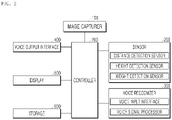
- FIG. 2 is a block diagram illustrating a part of a washing machine according to the present disclosure.
- a washing machine 1 of the present disclosure includes a main body 10, a door 20, an image capturer 100, a sensor 200, a voice recognizer 300, a voice output interface 400, a display 500, a storage 600, and a controller 700.
- the main body 10 and the door 20 may be configured as a main body and a door of a conventional washing machine.
- the image capturer 100 is provided to capture an image of the surroundings of the washing machine 1, and may include a photographing device such as a conventional camera, which is mounted in the outer surface of the main body 10 so as to expose a lens.
- the image capturer 100 may include a depth camera (a TOF camera) having a function for measuring the distance to an object.
- Image data on the image captured by the image capturer 100 (hereinafter referred to as a "photographed data”) may be transmitted to the storage 600 and the controller 700.
- the image capturer 100 may be mounted such that a lens of a camera is exposed at any of various positions in the main body 10 in order to effectively acquire image data on the surroundings of the washing machine 1.
- a lens of a camera constituting the image capturer 100 may be mounted so as to be exposed at an upper center position in the surface of the main body 10 in which the door 20 is mounted.
- the image capturer 100 may be configured to be inactivated in a state before the washing machine 1 operates and a state after the washing machine 1 completes washing (hereinafter referred to as a "standby state").
- the image capturer 100 may be configured so as to be freely mounted to and demounted from the washing machine of the present disclosure.
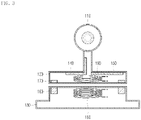
- FIG. 3 is a front view illustrating an example of the image capturer configured so as to be detachably mounted to the washing machine of the present disclosure.
- the image capturer 100 may include a lower box 130, which is made of a non-magnetic material, and an upper box 120, which includes a camera 110 and is made of a non-magnetic material.
- the lower box 130 and the upper box 120 may be freely attached to and detached from each other by means of a magnetic coupling element.
- a magnetic coupling element a permanent magnet 160 may be provided in the lower box 130, and a magnetic body 170, which is configured to receive magnetic force of the permanent magnet 160, may be provided in the upper box 120.
- the upper box 120 may be provided therein with a wireless communication module 140 to transmit data received from the camera 110 to the outside. Also, the upper box 120 may be provided therein with a battery 150 to supply power for operating the camera 110 and the wireless communication module 140.
- the battery 150 may be charged by means of a wireless charging element using a coil or the like.
- the wireless charging element may include an upper coil 190 provided in the upper box 120 and a lower coil 180 provided in the lower box 130.
- the wireless charging element is preferably mounted so as to be spaced apart from the magnetic coupling element in order to effectively charge the battery 150.
- a user may mount the lower box 130 in the washing machine 1, and may freely mount and demount the upper box 120 to and from the lower box 130.
- a user may mount the lower box 130 in a space near the washing machine 1, and may freely mount and demount the upper box 120 to and from the lower box 130.
- the sensor 200 is configured to sense a user who moves around the washing machine 1 and to measure the distance between the washing machine 1 and the user, the height of the user, the height of laundry introduced into the washing machine 1, and the weight of laundry introduced into the washing machine 1.
- the senor 200 may include a conventional distance detection sensor capable of sensing motion of an object and measuring the distance between objects, a conventional height detection sensor capable of measuring the height of an object, and a conventional weight detection sensor capable of measuring the weight of laundry.
- the distance detection sensor may be mounted in the washing machine 1 in order to sense a user moving around the washing machine 1 and to measure the distance between the washing machine 1 and the user.
- the height detection sensor may be mounted in the washing machine 1 in order to measure the height of the user.
- the weight detection sensor may be mounted in the washing machine 1 in order to measure the weight of laundry introduced into the washing machine 1.
- a separate height detection sensor may be mounted inside the washing machine 1 in order to measure the height of laundry introduced into the washing machine 1.
- Data obtained by the sensor 200 such as the distance between the washing machine 1 and the user, the height of the user, the weight of the laundry, and the height of the laundry, may be transmitted to the storage 600 and the controller 700.
- the voice recognizer 300 is configured to recognize a user's voice and to transmit a command for controlling the components of the washing machine 1 to the controller 700 based on the recognized user's voice, or to output the result of controlling the components of the washing machine 1 by the controller 700 so that the user is capable of recognizing the same.
- the voice recognizer 300 may be configured as a conventional voice recognition device.
- the voice output interface 400 is configured to output a sound expressed in a human language or a warning sound (hereinafter referred to as a voice).
- the voice output interface 400 may be configured as a well-known speaker or a well-known microphone, which is provided in the conventional washing machine.
- the voice output from the voice output interface 400 may take various different sound forms.
- FIG. 4 is a block diagram illustrating an example of a voice recognition control system of the present disclosure.
- the voice recognizer 300 may include a voice input interface 310, which receives the user's voice, and a voice signal processor 320, which transmits voice data transmitted from the voice input interface 310 or a command for controlling a washing operation, which is detected based on the voice data transmitted from the voice input interface 310, to the controller 700.
- the voice signal processor 320 may receive the result of control, and may output the same in the form of a sound through the voice output interface 400 or in the form of visual information through the screen of the display 500 so that the user is capable of recognizing the same.
- the display 500 is configured to output information and image data on the overall operation of the washing machine 1 (hereinafter referred to as "washing operation"), including a washing process, a rinsing process, a dehydrating process, and a drying process (hereinafter collectively referred to as “basic processes”) and further including parameters required to perform each of the basic processes, such as time, intensity, and temperature, on the screen so that the user is capable of recognizing the same.
- the display 500 may be mounted in the outer surface of the main body 10 of the washing machine 1.
- the display 500 is configured as any of various well-known devices, such as a liquid crystal display (LCD), a light-emitting diode (LED), and a touch panel. Accordingly, the display 500 may activate a washing operation manipulation button when the user applies a predetermined magnitude of force or touch (hereinafter referred to as "touch input") to the display 500.
- LCD liquid crystal display
- LED light-emitting diode
- touch input a predetermined magnitude of force or touch
- the display 500 may be configured to freely change the configuration of the screen for displaying information on the washing operation.
- FIG. 5 is a view illustrating an example of the display shown in FIG. 2 , in which the configuration of the screen changes according to the distance to the user
- FIG. 6 is a view illustrating an example of the display shown in FIG. 2 , which displays a message indicating completion of the washing operation.
- the display 500 may display information on time, such as the elapsed time or the remaining time of the washing operation of the washing machine 1 (hereinafter referred to as an "operation time"), in a large size or small size, and may activate or inactivate the washing operation manipulation button.
- time such as the elapsed time or the remaining time of the washing operation of the washing machine 1 (hereinafter referred to as an "operation time"), in a large size or small size, and may activate or inactivate the washing operation manipulation button.
- the display 500 may display a message indicating completion of the washing operation and the amount of time that has elapsed since the time of completion of the washing operation (hereinafter referred to as an "unattended time") in alphanumeric form.
- the storage 600 may store therein various data, including voice data and image data, as stored data, and may be configured as a well-known data storage element.
- the storage 600 may store therein image data, voice data, and user interface data specially designated by the user.
- the user may designate an image of the user captured by the image capturer 100 as image data of the registered user (hereinafter referred to as "registered user data"), and may store the registered user data in the storage 600.
- the user may designate an image of the child captured by the image capturer 100 as image data of the child (hereinafter referred to as "child data"), and may store the child data in the storage 600.
- child data image data of the child
- washing machine user in order to register himself or herself as a user who has introduced laundry into the washing machine 1 and has set the washing operation (hereinafter referred to as a "washing machine user"), the user may designate an image of the user captured by the image capturer 100 immediately before starting the washing operation as image data of the washing machine user (hereinafter referred to as "washing machine user data"), and may store the washing machine user data in the storage 600.
- the user may capture an image data using the image capturer 100, may designate the recipient to receive the image message from among registered users, and may store the image data and the recipient in the storage 600.
- the user may input a voice message through the voice recognizer 300, may designate the recipient to receive the voice message from among registered users, and may store the voice message and the recipient in the storage 600.
- the registered user may designate a user interface, such as a sound that is output from the voice output interface 400 or visual information that is output from the display 500, which was changed by the registered user, as the registered user interface, and may store the registered user interface in the storage 600.
- a user interface such as a sound that is output from the voice output interface 400 or visual information that is output from the display 500, which was changed by the registered user, as the registered user interface
- the user may designate the specific image data captured by the image capturer 100, the specific voice data input through the voice recognizer, or the specific user interface data changed and set by the user as the specific data by manipulating and touching the manipulation button provided in the display 500, and may store the specific data.
- the controller 700 may identify whether multiple pieces of data are identical to each other by comparing the multiple pieces of data with each other, and may determine the magnitude of numerical values, such as distances, by comparing a numerical value of data, such as a distance measured by the sensor 200, and a numerical value of data, such as a preset distance, with each other.
- controller 700 may control the components of the washing machine 1 based on the result of measurement by the sensor 200 and a user identification function that is executed by identifying the voice data recognized by the voice recognizer 300 (hereinafter referred to as an "identification function").
- the controller 700 may compare, contrast, and analyze the image data captured by the image capturer 100 and input to the controller 700 and the specific image data stored in the storage 600, and may identify whether the image data and the specific image data are identical to each other.
- the controller 700 may analyze the body features, such as a face contour, a height, a skin color, and a hair color, based on the image data stored in the storage 600, such as the registered user data, the child data, and the washing machine user data. Also, when the image capturer 100 photographs a user present in the vicinity of the washing machine 1, the controller 700 may analyze the body features based on image data of the photographed user, and may compare the image data of the photographed user with the image data stored in the storage 600 to identify whether the two pieces of image data are identical to each other.
- the body features such as a face contour, a height, a skin color, and a hair color
- the controller 700 may recognize the photographed user as the registered user, the child, or the washing machine user.
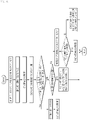
- FIG. 7 is a flowchart illustrating an example of the operation of the washing machine according to the present disclosure, which is performed when a user approaches the washing machine in order to start a washing operation.
- the sensor 200 measures the height of a user (hereinafter referred to as a "start-time user") who is sensed within a preset specific distance (hereinafter referred to as a "preset proximity distance") from the washing machine 1, and the image capturer 100 captures an image of the start-time user.
- a preset specific height hereinafter referred to as a "preset safety height”
- the controller 700 may perform control such that a safety function of the door 20 (hereinafter referred to as a "door safety function”) or a child lock function is activated in order to protect the child.
- the controller 700 may perform control such that the door 20 is not closed.
- the controller 700 may perform control such that the door 20 is not opened.
- the configuration for controlling the door 20 to be automatically opened or the configuration for controlling the door 20 not to be closed may employ the configuration of a conventional door-opening member that controls automatic opening and closing of a door of a washing machine.
- a conventional door-opening member that controls automatic opening and closing of a door of a washing machine.
- the configuration for automatically opening and closing a door of a washing machine disclosed in Korean Patent Laid-Open Publication No. 1997-0043488 may be employed.
- the door 20 may include an elastic member such as a spring, which is compressed when the door 20 is closed and which applies elastic force to the door 20 so that the door 20 is opened when closing of the door 20 is released.
- the child lock function is a function for preventing a child from manipulating the washing machine 1 by inactivating the manipulation button of the washing machine 1 or preventing the washing machine 1 from operating even when the child touches the manipulation button of the washing machine 1.
- the washing machine 1 of the present disclosure may employ a well-known child lock configuration.
- the controller 700 identifies whether the start-time user is the registered user.
- the controller 700 Upon identifying that the start-time user is the registered user, the controller 700 performs control such that the door 20 is opened. However, upon identifying that the start-time user is not the registered user, the controller 700 performs control such that the door 20 is not opened and such that an inquiry about whether to open the door 20 is output in the form of a voice through the voice output interface 400 or in the form of visual information through the screen of the display 50. In this case, when the start-time user inputs a command to open the door 20, the controller 700 performs control such that the door 20 is opened based on the voice recognized by the voice recognizer 300.
- FIG. 9 is a flowchart illustrating an example of the operation of the washing machine according to the present disclosure in which opening and closing of the door is controlled according to the amount of laundry after the washing operation is completed.
- the controller 700 performs control such that the door 20 is opened.
- the controller 700 When the measured height of the laundry is less than a height set as a reference indicating an amount of laundry that will not fall out of the washing machine when the door 20 is opened (hereinafter referred to as a "preset reference height"), the controller 700 performs control such that the door 20 is opened.
- the controller 700 performs control such that the door 20 is maintained in the closed state.
- FIG. 10 is a flowchart illustrating an example of the operation of the washing machine according to the present disclosure, which is performed when a user approaches the washing machine in the state in which the door is closed after the washing operation is completed.
- the sensor 200 measures the height of the first end-time user
- the image capturer 100 captures an image of the first end-time user
- the controller 700 identifies whether the first end-time user is a child.
- the controller 700 When the measured height of the first end-time user is equal to or less than the preset safety height, or when the first end-time user is identified to be a child by the identification function of the controller 700, the controller 700 performs control such that the door safety function is activated.
- the controller 700 performs control such that a message indicating completion of the washing operation and the unattended time are output in the form of a voice through the voice output interface 400 or in the form of visual information through the screen of the display 500. Also, the controller 700 performs control such that an inquiry about whether to open the door 20 is output to the first end-time user in the form of a voice through the voice output interface 400 or in the form of visual information through the screen of the display 500.
- the controller 700 when the first end-time user inputs a command to open the door 20, the controller 700 performs control such that the door 20 is opened based on the voice recognized by the voice recognizer 300. However, when the first end-time user does not input a command to open the door 20, the controller 700 performs control such that the door 20 is maintained in the closed state.
- FIG. 11 is a flowchart illustrating an example of the operation of the washing machine according to the present disclosure, which is performed when a user approaches the washing machine in the state in which the door is open after the washing operation is completed.
- the sensor 200 measures the height of the second end-time user
- the image capturer 100 captures an image of the second end-time user
- the controller 700 identifies whether the second end-time user is a child.
- the controller 700 When the measured height of the second end-time user is equal to or less than the preset safety height, or when the second end-time user is identified to be a child by the identification function of the controller 700, the controller 700 performs control such that the door safety function is activated.
- the controller 700 performs control such that a message indicating completion of the washing operation and the unattended time are output in the form of a voice through the voice output interface 400 or in the form of visual information through the screen of the display 500.
- FIG. 12 is a flowchart illustrating an example in which a laundry security function of the washing machine according to the present disclosure is executed.
- the image capturer 100 captures an image of the third end-time user, and the controller 700 identifies whether the third end-time user is the washing machine user.
- the controller 700 When the third end-time user is identified to be the washing machine user by the identification function of the controller 700, the controller 700 performs control such that the door 20 is unlocked, thereby enabling the third end-time user to open the door 20 and to retrieve the laundry.
- the controller 700 performs control such that the door 20 is maintained in the locked state, thereby preventing the laundry from being stolen by a person other than the washing machine user.
- the configuration for controlling the door 20 to be locked or the configuration for controlling the door 20 to be unlocked may employ the configuration for controlling the door of the conventional washing machine to be locked or unlocked.
- the controller 700 may perform control such that the registered user interface, which is designated by the start-time user and is stored in the data storage element, is provided.
- the preset visible distance may be set to be equal to the preset proximity distance.
- the controller 700 may perform control such that a male voice is output from the voice output interface 400 and such that yellow visual information is displayed through the display 500.
- the controller 700 may perform control such that a user interface set in the washing machine 1 as a default option (hereinafter referred to as a "default user interface"), which includes a sound that is output through the voice output interface 400 and visual information that is displayed through the display 500, is provided.
- a default user interface a user interface set in the washing machine 1 as a default option
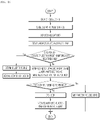
- FIG. 8 is a flowchart illustrating an example of the operation of the washing machine according to the present disclosure, which is performed when a user approaches the washing machine while the washing operation is being performed.
- the controller 700 executes a washing operation security function by controlling the user interface will be described with reference to FIG. 8 .
- the controller 700 performs control such that a washing operation manipulation button provided in the display 500 is activated so that the intermediate-time user is capable of changing the washing operation.
- the controller 700 performs control such that a washing operation security function is executed so as to prevent the washing operation manipulation button provided in the display 500 from being activated, thereby preventing the intermediate-time user from changing the washing operation.
- the controller 700 may perform control such that the usage fee of the washing machine 1 is automatically paid by the washing machine user using the identification function of the controller 700. For example, after identifying the washing machine user, the controller 700 may make the washing machine user pay the usage fee of the washing machine 1 together with a well-known automatic payment system.
- controller 700 may control the voice output interface 400 or the display 500 in order to deliver a message to a specific user.
- the controller 700 may perform control such that a voice message is output from the voice output interface 400 or an image message is output from the display 500.
- the controller 700 may perform control such that the image capturer 100 is turned off, and when a user approaching an area within the preset visible distance is sensed, the controller 700 may perform control such that the image capturer 100 is turned on.
- the controller 700 may control the display 500 according to the distance between the washing machine 1 and the user. For example, referring to FIGS. 5 and 8 , when the distance between the washing machine 1 and the user is measured to be equal to or greater than the preset visible distance by the sensor 200, the controller 700 may perform control such that the display 500 displays only the operation time of the washing operation in a large size. On the other hand, when the sensor 200 senses a user approaching an area within the preset visible distance from the washing machine 1, the controller 700 may perform control such that the display 500 displays the operation time of the washing operation in a small size and activates the washing operation manipulation button. Symbols such as letters and digits displayed on the display 500 may be controlled to increase in size in proportion to the distance between the washing machine 1 and the user.
- the controller 700 may perform control such that the display 500 displays a message indicating completion of the washing operation and the unattended time.
- the image capturer 100 is activated.
- the controller 700 identifies the user.
- the controller 700 performs control such that the door safety function is activated, and when identifying the user not to be a child, the controller 700 identifies whether the user is the registered user.
- the controller 700 When the user who is identified not to be a child is identified to be the registered user, the controller 700 performs control such that the door 20 is opened, and in the case in which the user has stored the registered user interface, the controller 700 performs control such that the stored registered user interface is provided. On the other hand, when the user who is identified not to be a child is identified not to be the registered user, the controller 700 performs control such that an inquiry about whether to open the door 20 is output to the user in the form of a voice through the voice output interface 400 or in the form of visual information through the screen of the display 500.
- the controller 700 In response to the inquiry about whether to open the door 20, when the user inputs a command to open the door 20, the controller 700 performs control such that the door 20 is opened and such that the default user interface is provided, and when the user does not input a command to open the door 20, the controller 700 performs control such that the image capturer 100 is inactivated.
- the image capturer 100 is activated.
- the controller 700 identifies the user.
- the controller 700 performs control such that the door safety function is activated, and when identifying the user not to be a child, the controller 700 identifies whether the user is the washing machine user.
- the controller 700 When the user who is identified not to be a child is identified to be the washing machine user, the controller 700 performs control such that the operation time of the washing operation is displayed in a small size on the display 500 and such that a washing operation change button is activated. On the other hand, when the user who is identified not to be a child is identified not to be the washing machine user, the controller 700 performs control such that information about the washing machine user is output in the form of a voice through the voice output interface 400 or in the form of visual information through the screen of the display 500.
- the controller 700 when the washing operation security function is being executed, the controller 700 performs control such that the image capturer 100 is inactivated without changing the information displayed on the display 500, and when the washing operation security function is not being executed, the controller 700 performs control such that the operation time of the washing operation is displayed in a small size on the display 500 and such that the washing operation change button is activated.
- opening and closing of the door 20 is controlled according to the amount of laundry introduced into the washing machine 1. Specifically, when the amount of laundry is small and thus the laundry does not fall out of the washing machine 1 when the door 20 is opened, the controller 700 performs control such that the door 20 is opened in order to prevent generation of odors in the laundry. When the amount of laundry is large, the controller 700 performs control such that the door 20 is not opened in order to prevent the laundry from falling out of the washing machine, thus preventing the laundry from being contaminated.
- the image capturer 100 is activated.
- the controller 700 identifies the user.
- the controller 700 performs control such that the door safety function is activated, and when identifying the user not to be a child, the controller 700 controls the notification function such that a message indicating completion of the washing operation and the unattended time are output in the form of a voice through the voice output interface 400 or in the form of visual information through the screen of the display 500.
- the controller 700 performs control such that an inquiry about whether to open the door 20 is output to the user in the form of a voice through the voice output interface 400 or in the form of visual information through the screen of the display 500.
- the controller 700 In response to the inquiry about whether to open the door 20, when the user inputs a command to open the door 20, the controller 700 performs control such that the door 20 is opened, and when the user retrieves the laundry, the controller 700 performs control such that the notification function is inactivated. When the user does not input a command to open the door 20, the controller 700 performs control such that the door 20 is not opened.
- the image capturer 100 is activated.
- the controller 700 identifies the user.
- the controller 700 performs control such that the door safety function is activated, and when identifying the user not to be a child, the controller 700 controls the notification function such that a message indicating completion of the washing operation and the unattended time are output in the form of a voice through the voice output interface 400 or in the form of visual information through the screen of the display 500.
- the controller 700 When the user retrieves the laundry from the washing machine 1, the controller 700 performs control such that the notification function is inactivated.
- the washing machine of the present disclosure when a person approaches the washing machine, whether the person is a user registered in the washing machine is identified, and the door of the washing machine is opened only for a user who desires to perform a washing operation, for convenience therefor. Also, opening and closing of the door of the washing machine is controlled based on accurate sensing of a child approaching the washing machine, and accordingly it is possible to effectively prevent an accident in which a child becomes trapped inside the washing machine.
- opening of the door is controlled according to the amount of laundry after completion of the washing operation, it is possible to prevent or minimize the generation of odors in the laundry. Also, when the amount of laundry is large, it is possible to prevent the laundry from falling out of the washing machine, thus preventing the laundry from being contaminated.
- the operation time of the washing operation is displayed in a larger size, thus enabling the user to easily recognize the operation time of the washing operation.
- each user is capable of storing his/her preferred user interface in the washing machine, and a user interface corresponding to the currently identified user is provided. Accordingly, each user is capable of conveniently using the washing machine.
- the washing machine delivers a message based on identification of a recipient, the message is accurately delivered to the designated recipient.
- the washing machine notifies the user of completion of the washing operation and the amount of time that the laundry has been left unattended, thereby enabling the user to retrieve the laundry without leaving the laundry unattended for a long time, thus preventing the generation of odors in the laundry.
- the image capturer for identifying a user is configured to be freely mounted to and demounted from the washing machine, it is possible to mount the image capturer to the existing washing machine, and accordingly it is not necessary to purchase a separate washing machine, thus reducing costs.
- the washing machine of the present disclosure when a person approaches the washing machine, whether the person is a user registered in the washing machine is identified, and the door of the washing machine is opened only for a user who desires to perform a washing operation, for convenience therefor. Also, opening and closing of the door of the washing machine is controlled based on accurate sensing of a child approaching the washing machine, and accordingly it is possible to effectively prevent an accident in which a child becomes trapped inside the washing machine.
- opening of the door is controlled according to the amount of laundry after completion of the washing operation, it is possible to prevent or minimize the generation of odors in the laundry. Also, when the amount of laundry is large, it is possible to prevent the laundry from falling out of the washing machine, thus preventing the laundry from being contaminated.
- the controller performs control such that the operation time of the washing operation is displayed in a larger size, thus enabling the user to easily recognize the operation time of the washing operation.
- the controller controls the operation of the door based on recognition of the user's voice by the voice recognizer, it is possible to enable a user who has difficulty moving around to conveniently open the door of the washing machine.
- each user is capable of storing his/her preferred user interface in the storage, and the controller provides a user interface corresponding to the currently identified user. Accordingly, each user is capable of conveniently using the washing machine.
- the washing machine delivers a message based on identification of a recipient, the message is accurately delivered to the designated recipient.
- the voice output interface or the display notifies the user of completion of the washing operation and the amount of time that the laundry has been left unattended, thereby enabling the user to retrieve the laundry without leaving the laundry unattended for a long time, thus preventing the generation of odors in the laundry.
- the image capturer for identifying a user is configured to be freely mounted to and demounted from the washing machine, it is possible to mount the image capturer to the existing washing machine, and accordingly it is not necessary to purchase a separate washing machine, thus reducing costs.
Landscapes
- Engineering & Computer Science (AREA)
- Textile Engineering (AREA)
- Physics & Mathematics (AREA)
- General Physics & Mathematics (AREA)
- Theoretical Computer Science (AREA)
- Multimedia (AREA)
- Human Computer Interaction (AREA)
- Health & Medical Sciences (AREA)
- Audiology, Speech & Language Pathology (AREA)
- Computational Linguistics (AREA)
- Acoustics & Sound (AREA)
- Data Mining & Analysis (AREA)
- General Engineering & Computer Science (AREA)
- Life Sciences & Earth Sciences (AREA)
- Artificial Intelligence (AREA)
- Bioinformatics & Cheminformatics (AREA)
- Bioinformatics & Computational Biology (AREA)
- Computer Vision & Pattern Recognition (AREA)
- Evolutionary Biology (AREA)
- Evolutionary Computation (AREA)
- General Health & Medical Sciences (AREA)
- Computer Networks & Wireless Communication (AREA)
- Control Of Washing Machine And Dryer (AREA)
Applications Claiming Priority (2)
| Application Number | Priority Date | Filing Date | Title |
|---|---|---|---|
| KR1020190086602A KR102808697B1 (ko) | 2019-07-17 | 2019-07-17 | 세탁기 |
| PCT/KR2020/009342 WO2021010756A1 (ko) | 2019-07-17 | 2020-07-15 | 세탁기 |
Publications (4)
| Publication Number | Publication Date |
|---|---|
| EP4001493A1 true EP4001493A1 (de) | 2022-05-25 |
| EP4001493A4 EP4001493A4 (de) | 2024-02-21 |
| EP4001493B1 EP4001493B1 (de) | 2025-11-26 |
| EP4001493C0 EP4001493C0 (de) | 2025-11-26 |
Family
ID=74211030
Family Applications (1)
| Application Number | Title | Priority Date | Filing Date |
|---|---|---|---|
| EP20841559.6A Active EP4001493B1 (de) | 2019-07-17 | 2020-07-15 | Waschmaschine |
Country Status (5)
| Country | Link |
|---|---|
| US (1) | US12054874B2 (de) |
| EP (1) | EP4001493B1 (de) |
| KR (1) | KR102808697B1 (de) |
| CN (1) | CN113891966A (de) |
| WO (1) | WO2021010756A1 (de) |
Families Citing this family (8)
| Publication number | Priority date | Publication date | Assignee | Title |
|---|---|---|---|---|
| CN113046993A (zh) * | 2021-03-19 | 2021-06-29 | 合肥美菱物联科技有限公司 | 一种智能洗衣机及其控制方法 |
| USD1017149S1 (en) * | 2021-10-15 | 2024-03-05 | Lg Electronics Inc. | Electric drying machine for laundry purpose |
| USD1045275S1 (en) * | 2021-10-15 | 2024-10-01 | Lg Electronics Inc. | Electric washing machine |
| CN118773869A (zh) * | 2023-04-06 | 2024-10-15 | 青岛海尔洗衣机有限公司 | 洗衣机的控制方法及洗衣机 |
| KR102833374B1 (ko) * | 2023-08-11 | 2025-07-11 | 전남대학교산학협력단 | 1인 가구를 위한 세탁물 자동 건조 시스템 |
| USD1102063S1 (en) * | 2024-04-26 | 2025-11-11 | Samsung Electronics Co., Ltd. | Washing machine |
| USD1110624S1 (en) * | 2024-08-02 | 2026-01-27 | Samsung Electronics Co., Ltd. | Washing machine |
| USD1111268S1 (en) * | 2024-08-20 | 2026-02-03 | Samsung Electronics Co., Ltd. | Washing machine |
Family Cites Families (25)
| Publication number | Priority date | Publication date | Assignee | Title |
|---|---|---|---|---|
| KR100213127B1 (ko) * | 1995-11-09 | 1999-08-02 | 김광호 | 세탁기 도어 자동개폐장치 |
| KR970043488A (ko) | 1995-12-27 | 1997-07-26 | 구자흥 | 전자동 세탁기의 도어 자동 개폐장치 및 제어방법 |
| KR101237189B1 (ko) * | 2005-03-17 | 2013-02-25 | 엘지전자 주식회사 | 오토 차일드 락 기능이 구비된 식기세척기 및 그 제어 방법 |
| KR20060120933A (ko) | 2005-05-23 | 2006-11-28 | 엘지전자 주식회사 | 사용자 인식기능이 구비된 세탁기 및 그 동작방법 |
| KR101019668B1 (ko) | 2008-12-15 | 2011-03-07 | 엘아이지넥스원 주식회사 | 세탁기의 도어 개방 장치 및 방법 |
| KR20100092764A (ko) * | 2009-02-13 | 2010-08-23 | 엘지전자 주식회사 | 의류 처리 장치의 도어 제어 장치 및 그 방법 |
| US20130057702A1 (en) * | 2010-07-06 | 2013-03-07 | Lg Electronics Inc. | Object recognition and tracking based apparatus and method |
| KR101797946B1 (ko) | 2011-05-25 | 2017-12-12 | 삼성전자주식회사 | 가전기기의 자가 진단 시스템 및 그 동작 방법 |
| KR20140001071A (ko) | 2012-06-25 | 2014-01-06 | 한양대학교 산학협력단 | 액정 조성물 |
| KR20140073197A (ko) | 2012-12-06 | 2014-06-16 | 삼성전기주식회사 | 이미지 인식을 이용한 세탁기 및 그 구동방법 |
| US20160203304A1 (en) * | 2013-08-29 | 2016-07-14 | Physio-Control, Inc. | Adaptive electronic device interface |
| KR20140001094U (ko) * | 2014-01-02 | 2014-02-19 | 권태경 | 자석식 홀더를 갖는 휴대용단말기의 무선충전장치 |
| US10657749B2 (en) * | 2014-04-25 | 2020-05-19 | Vivint, Inc. | Automatic system access using facial recognition |
| US20150356802A1 (en) * | 2014-06-10 | 2015-12-10 | Center For Integrated Smart Sensors Foundation | Low Power Door-Lock Apparatus Based On Battery Using Face Recognition |
| KR20160021509A (ko) * | 2014-08-18 | 2016-02-26 | 현대자동차주식회사 | 사용자 인터페이스 장치, 그를 가지는 차량 및 그의 제어 방법 |
| US20160269411A1 (en) * | 2015-03-12 | 2016-09-15 | Ronen MALACHI | System and Method for Anonymous Biometric Access Control |
| US10168678B2 (en) * | 2015-09-17 | 2019-01-01 | Laundry 2.0, LLC | Interfacing with laundry services and facilities |
| WO2017128382A1 (zh) * | 2016-01-30 | 2017-08-03 | 吕璇 | 具有防儿童误开功能的洗衣机及其控制方法 |
| CN106149288A (zh) * | 2016-09-08 | 2016-11-23 | 北京小米移动软件有限公司 | 智能洗衣方法和装置 |
| CN106337263B (zh) | 2016-11-14 | 2020-01-10 | Tcl集团股份有限公司 | 一种洗衣机控制方法及装置 |
| US10662578B2 (en) * | 2017-04-20 | 2020-05-26 | Casey B. Welsh | Laundry management devices, systems, and methods |
| US10303932B2 (en) * | 2017-07-05 | 2019-05-28 | Midea Group Co., Ltd. | Face recognition in a residential environment |
| US10373419B1 (en) * | 2017-10-19 | 2019-08-06 | LOCKED n' LOADED LLC | Integrated locking mechanism with electronic notification and billing |
| KR102448500B1 (ko) * | 2017-11-21 | 2022-09-27 | 엘지전자 주식회사 | 인공지능 세탁기 및 그 제어 방법 |
| EP3502981A1 (de) * | 2017-12-22 | 2019-06-26 | Carrier Corporation | Wäschedienstsystem zur planung und bezahlung |
-
2019
- 2019-07-17 KR KR1020190086602A patent/KR102808697B1/ko active Active
-
2020
- 2020-07-15 EP EP20841559.6A patent/EP4001493B1/de active Active
- 2020-07-15 US US17/611,722 patent/US12054874B2/en active Active
- 2020-07-15 CN CN202080039913.8A patent/CN113891966A/zh active Pending
- 2020-07-15 WO PCT/KR2020/009342 patent/WO2021010756A1/ko not_active Ceased
Also Published As
| Publication number | Publication date |
|---|---|
| US20220213632A1 (en) | 2022-07-07 |
| KR102808697B1 (ko) | 2025-05-15 |
| CN113891966A (zh) | 2022-01-04 |
| US12054874B2 (en) | 2024-08-06 |
| EP4001493A4 (de) | 2024-02-21 |
| WO2021010756A1 (ko) | 2021-01-21 |
| EP4001493B1 (de) | 2025-11-26 |
| KR20210009705A (ko) | 2021-01-27 |
| EP4001493C0 (de) | 2025-11-26 |
Similar Documents
| Publication | Publication Date | Title |
|---|---|---|
| US12054874B2 (en) | Washing machine | |
| CN106820908B (zh) | 智能邮箱、智能邮箱系统及相关方法 | |
| JP6696246B2 (ja) | 画像処理装置及びプログラム | |
| RU2701580C1 (ru) | Чехол мобильного устройства | |
| CN110685119B (zh) | 洗衣机及保障儿童安全的系统及方法 | |
| CN107134053A (zh) | 智能售货门店 | |
| MX2011003475A (es) | Dispositivo para desbloquear automaticamente un panel abrible de un vehiculo de motor. | |
| US20210406820A1 (en) | Doorbell, key management system, and intercom system | |
| MX2011003474A (es) | Dispositivo para desbloquear automaticamente un panel abrible de un vehiculo de motor. | |
| JP2003138817A (ja) | 車両のキーレスエントリーシステム、個人識別方法及び個人識別システム | |
| US11557162B2 (en) | Prestaging, gesture-based, access control system | |
| CN106510164B (zh) | 行李箱控制方法及装置 | |
| WO2019210032A1 (en) | Knocking gesture access control system | |
| WO2019210020A1 (en) | A gesture access control system and method of operation | |
| CN109079817A (zh) | 一种多功能机器人及其工作流程 | |
| CN115691020B (zh) | 基于人脸识别智能门锁的预警系统 | |
| US11195354B2 (en) | Gesture access control system including a mobile device disposed in a containment carried by a user | |
| WO2025232881A1 (zh) | 一种门禁的控制方法及装置 | |
| CN109636957A (zh) | 防盗安全门智能控制系统 | |
| CN118457501A (zh) | 一种车门控制方法、装置、计算机设备及存储介质 | |
| CN107485294B (zh) | 饮用水供给设备、方法及系统 | |
| CN212693074U (zh) | 测量人的体温的设备 | |
| CN110039995A (zh) | 预防酒驾的提醒方法及提醒装置、计算机可读存储介质 | |
| WO2019210031A1 (en) | Gesture access control system utilizing a device gesture performed by a user of a mobile device | |
| KR20080085108A (ko) | 근태관리용 출입문 통제장치 |
Legal Events
| Date | Code | Title | Description |
|---|---|---|---|
| STAA | Information on the status of an ep patent application or granted ep patent |
Free format text: STATUS: THE INTERNATIONAL PUBLICATION HAS BEEN MADE |
|
| PUAI | Public reference made under article 153(3) epc to a published international application that has entered the european phase |
Free format text: ORIGINAL CODE: 0009012 |
|
| STAA | Information on the status of an ep patent application or granted ep patent |
Free format text: STATUS: REQUEST FOR EXAMINATION WAS MADE |
|
| 17P | Request for examination filed |
Effective date: 20211218 |
|
| AK | Designated contracting states |
Kind code of ref document: A1 Designated state(s): AL AT BE BG CH CY CZ DE DK EE ES FI FR GB GR HR HU IE IS IT LI LT LU LV MC MK MT NL NO PL PT RO RS SE SI SK SM TR |
|
| DAV | Request for validation of the european patent (deleted) | ||
| DAX | Request for extension of the european patent (deleted) | ||
| REG | Reference to a national code |
Ref legal event code: R079 Free format text: PREVIOUS MAIN CLASS: D06F0037420000 Ipc: D06F0033320000 Ref country code: DE Ref document number: 602020062908 Country of ref document: DE |
|
| RIC1 | Information provided on ipc code assigned before grant |
Ipc: D06F 105/44 20200101ALN20231017BHEP Ipc: D06F 103/64 20200101ALN20231017BHEP Ipc: D06F 103/00 20200101ALN20231017BHEP Ipc: G06V 40/16 20220101ALN20231017BHEP Ipc: D06F 33/47 20200101ALN20231017BHEP Ipc: D06F 39/14 20060101ALN20231017BHEP Ipc: G06V 40/10 20220101ALI20231017BHEP Ipc: G06F 3/16 20060101ALI20231017BHEP Ipc: G01B 11/06 20060101ALI20231017BHEP Ipc: G01B 11/02 20060101ALI20231017BHEP Ipc: D06F 37/42 20060101ALI20231017BHEP Ipc: D06F 34/14 20200101ALI20231017BHEP Ipc: D06F 33/32 20200101AFI20231017BHEP |
|
| A4 | Supplementary search report drawn up and despatched |
Effective date: 20240123 |
|
| RIC1 | Information provided on ipc code assigned before grant |
Ipc: D06F 105/44 20200101ALN20240117BHEP Ipc: D06F 103/64 20200101ALN20240117BHEP Ipc: D06F 103/00 20200101ALN20240117BHEP Ipc: G06V 40/16 20220101ALN20240117BHEP Ipc: D06F 33/47 20200101ALN20240117BHEP Ipc: D06F 39/14 20060101ALN20240117BHEP Ipc: G06V 40/10 20220101ALI20240117BHEP Ipc: G06F 3/16 20060101ALI20240117BHEP Ipc: G01B 11/06 20060101ALI20240117BHEP Ipc: G01B 11/02 20060101ALI20240117BHEP Ipc: D06F 37/42 20060101ALI20240117BHEP Ipc: D06F 34/14 20200101ALI20240117BHEP Ipc: D06F 33/32 20200101AFI20240117BHEP |
|
| GRAP | Despatch of communication of intention to grant a patent |
Free format text: ORIGINAL CODE: EPIDOSNIGR1 |
|
| STAA | Information on the status of an ep patent application or granted ep patent |
Free format text: STATUS: GRANT OF PATENT IS INTENDED |
|
| RIC1 | Information provided on ipc code assigned before grant |
Ipc: D06F 33/32 20200101AFI20250718BHEP Ipc: D06F 34/14 20200101ALI20250718BHEP Ipc: D06F 37/42 20060101ALI20250718BHEP Ipc: G01B 11/02 20060101ALI20250718BHEP Ipc: G01B 11/06 20060101ALI20250718BHEP Ipc: G06F 3/16 20060101ALI20250718BHEP Ipc: G06V 40/10 20220101ALI20250718BHEP Ipc: D06F 39/14 20060101ALN20250718BHEP Ipc: D06F 33/47 20200101ALN20250718BHEP Ipc: G06V 40/16 20220101ALN20250718BHEP Ipc: D06F 103/00 20200101ALN20250718BHEP Ipc: D06F 103/64 20200101ALN20250718BHEP Ipc: D06F 105/44 20200101ALN20250718BHEP |
|
| INTG | Intention to grant announced |
Effective date: 20250805 |
|
| GRAS | Grant fee paid |
Free format text: ORIGINAL CODE: EPIDOSNIGR3 |
|
| GRAA | (expected) grant |
Free format text: ORIGINAL CODE: 0009210 |
|
| STAA | Information on the status of an ep patent application or granted ep patent |
Free format text: STATUS: THE PATENT HAS BEEN GRANTED |
|
| AK | Designated contracting states |
Kind code of ref document: B1 Designated state(s): AL AT BE BG CH CY CZ DE DK EE ES FI FR GB GR HR HU IE IS IT LI LT LU LV MC MK MT NL NO PL PT RO RS SE SI SK SM TR |
|
| REG | Reference to a national code |
Ref country code: CH Ref legal event code: F10 Free format text: ST27 STATUS EVENT CODE: U-0-0-F10-F00 (AS PROVIDED BY THE NATIONAL OFFICE) Effective date: 20251126 Ref country code: GB Ref legal event code: FG4D |
|
| REG | Reference to a national code |
Ref country code: DE Ref legal event code: R096 Ref document number: 602020062908 Country of ref document: DE |
|
| REG | Reference to a national code |
Ref country code: IE Ref legal event code: FG4D |
|
| U01 | Request for unitary effect filed |
Effective date: 20251218 |
|
| U07 | Unitary effect registered |
Designated state(s): AT BE BG DE DK EE FI FR IT LT LU LV MT NL PT RO SE SI Effective date: 20251223 |
|
| PG25 | Lapsed in a contracting state [announced via postgrant information from national office to epo] |
Ref country code: ES Free format text: LAPSE BECAUSE OF FAILURE TO SUBMIT A TRANSLATION OF THE DESCRIPTION OR TO PAY THE FEE WITHIN THE PRESCRIBED TIME-LIMIT Effective date: 20251126 |
|
| PG25 | Lapsed in a contracting state [announced via postgrant information from national office to epo] |
Ref country code: NO Free format text: LAPSE BECAUSE OF FAILURE TO SUBMIT A TRANSLATION OF THE DESCRIPTION OR TO PAY THE FEE WITHIN THE PRESCRIBED TIME-LIMIT Effective date: 20260226 |
|
| PG25 | Lapsed in a contracting state [announced via postgrant information from national office to epo] |
Ref country code: HR Free format text: LAPSE BECAUSE OF FAILURE TO SUBMIT A TRANSLATION OF THE DESCRIPTION OR TO PAY THE FEE WITHIN THE PRESCRIBED TIME-LIMIT Effective date: 20251126 |
|
| PG25 | Lapsed in a contracting state [announced via postgrant information from national office to epo] |
Ref country code: RS Free format text: LAPSE BECAUSE OF FAILURE TO SUBMIT A TRANSLATION OF THE DESCRIPTION OR TO PAY THE FEE WITHIN THE PRESCRIBED TIME-LIMIT Effective date: 20260226 |
|
| PG25 | Lapsed in a contracting state [announced via postgrant information from national office to epo] |
Ref country code: IS Free format text: LAPSE BECAUSE OF FAILURE TO SUBMIT A TRANSLATION OF THE DESCRIPTION OR TO PAY THE FEE WITHIN THE PRESCRIBED TIME-LIMIT Effective date: 20260326 |
|
| PG25 | Lapsed in a contracting state [announced via postgrant information from national office to epo] |
Ref country code: PL Free format text: LAPSE BECAUSE OF FAILURE TO SUBMIT A TRANSLATION OF THE DESCRIPTION OR TO PAY THE FEE WITHIN THE PRESCRIBED TIME-LIMIT Effective date: 20251126 |