EP4002020A1 - Procédé et système permettant de déterminer un résultat optimal dans un environnement dynamique - Google Patents
Procédé et système permettant de déterminer un résultat optimal dans un environnement dynamique Download PDFInfo
- Publication number
- EP4002020A1 EP4002020A1 EP20207831.7A EP20207831A EP4002020A1 EP 4002020 A1 EP4002020 A1 EP 4002020A1 EP 20207831 A EP20207831 A EP 20207831A EP 4002020 A1 EP4002020 A1 EP 4002020A1
- Authority
- EP
- European Patent Office
- Prior art keywords
- artificial intelligence
- behavior
- simulation
- determining
- optimal
- Prior art date
- Legal status (The legal status is an assumption and is not a legal conclusion. Google has not performed a legal analysis and makes no representation as to the accuracy of the status listed.)
- Granted
Links
Images



Classifications
-
- G—PHYSICS
- G05—CONTROLLING; REGULATING
- G05B—CONTROL OR REGULATING SYSTEMS IN GENERAL; FUNCTIONAL ELEMENTS OF SUCH SYSTEMS; MONITORING OR TESTING ARRANGEMENTS FOR SUCH SYSTEMS OR ELEMENTS
- G05B13/00—Adaptive control systems, i.e. systems automatically adjusting themselves to have a performance which is optimum according to some preassigned criterion
- G05B13/02—Adaptive control systems, i.e. systems automatically adjusting themselves to have a performance which is optimum according to some preassigned criterion electric
- G05B13/0265—Adaptive control systems, i.e. systems automatically adjusting themselves to have a performance which is optimum according to some preassigned criterion electric the criterion being a learning criterion
-
- G—PHYSICS
- G06—COMPUTING OR CALCULATING; COUNTING
- G06N—COMPUTING ARRANGEMENTS BASED ON SPECIFIC COMPUTATIONAL MODELS
- G06N3/00—Computing arrangements based on biological models
- G06N3/02—Neural networks
- G06N3/04—Architecture, e.g. interconnection topology
- G06N3/045—Combinations of networks
-
- G—PHYSICS
- G06—COMPUTING OR CALCULATING; COUNTING
- G06N—COMPUTING ARRANGEMENTS BASED ON SPECIFIC COMPUTATIONAL MODELS
- G06N3/00—Computing arrangements based on biological models
- G06N3/02—Neural networks
- G06N3/04—Architecture, e.g. interconnection topology
- G06N3/0464—Convolutional networks [CNN, ConvNet]
-
- G—PHYSICS
- G06—COMPUTING OR CALCULATING; COUNTING
- G06N—COMPUTING ARRANGEMENTS BASED ON SPECIFIC COMPUTATIONAL MODELS
- G06N3/00—Computing arrangements based on biological models
- G06N3/02—Neural networks
- G06N3/08—Learning methods
- G06N3/082—Learning methods modifying the architecture, e.g. adding, deleting or silencing nodes or connections
-
- G—PHYSICS
- G06—COMPUTING OR CALCULATING; COUNTING
- G06N—COMPUTING ARRANGEMENTS BASED ON SPECIFIC COMPUTATIONAL MODELS
- G06N3/00—Computing arrangements based on biological models
- G06N3/02—Neural networks
- G06N3/08—Learning methods
- G06N3/086—Learning methods using evolutionary algorithms, e.g. genetic algorithms or genetic programming
-
- G—PHYSICS
- G06—COMPUTING OR CALCULATING; COUNTING
- G06N—COMPUTING ARRANGEMENTS BASED ON SPECIFIC COMPUTATIONAL MODELS
- G06N3/00—Computing arrangements based on biological models
- G06N3/02—Neural networks
- G06N3/08—Learning methods
- G06N3/092—Reinforcement learning
-
- G—PHYSICS
- G05—CONTROLLING; REGULATING
- G05B—CONTROL OR REGULATING SYSTEMS IN GENERAL; FUNCTIONAL ELEMENTS OF SUCH SYSTEMS; MONITORING OR TESTING ARRANGEMENTS FOR SUCH SYSTEMS OR ELEMENTS
- G05B2219/00—Program-control systems
- G05B2219/30—Nc systems
- G05B2219/32—Operator till task planning
- G05B2219/32342—Real time simulation
-
- Y—GENERAL TAGGING OF NEW TECHNOLOGICAL DEVELOPMENTS; GENERAL TAGGING OF CROSS-SECTIONAL TECHNOLOGIES SPANNING OVER SEVERAL SECTIONS OF THE IPC; TECHNICAL SUBJECTS COVERED BY FORMER USPC CROSS-REFERENCE ART COLLECTIONS [XRACs] AND DIGESTS
- Y02—TECHNOLOGIES OR APPLICATIONS FOR MITIGATION OR ADAPTATION AGAINST CLIMATE CHANGE
- Y02P—CLIMATE CHANGE MITIGATION TECHNOLOGIES IN THE PRODUCTION OR PROCESSING OF GOODS
- Y02P90/00—Enabling technologies with a potential contribution to greenhouse gas [GHG] emissions mitigation
- Y02P90/02—Total factory control, e.g. smart factories, flexible manufacturing systems [FMS] or integrated manufacturing systems [IMS]
Definitions
- the present invention generally relates to adaptive control systems and more specifically to a method and system for determining an optimal artificial intelligence model to provide an optimal outcome in a dynamic environment.
- the present systems and methods utilizing such machine learning algorithms are rigid, non-scalable, difficult and time consuming to implement in different environments that are constantly changing and have unpredictable action spaces.
- the main disadvantages of these systems are their centralized or hierarchical control, which limits the amount of data that can be processed in real-time, in turn limiting the accuracy of adaptation, as well as reliance on expertise to install and maintain such systems.
- These systems also require significant manual pre-configuration (for example in case of traffic signal adaption configuration like selecting the traffic phases to be deployed, grouping junctions into subsystems etc.) as well as significant expertise and cost to configure and operate.
- the object of the invention is to provide a method and a system that is capable of determining an optimal outcome in a dynamic environment using reinforcement learning techniques by enhancing exploration of observation space of the environment, thereby improving accuracy of the controllers and enhancing scalability of controllers.
- the object of the invention is to provide a method of determining an optimal outcome in a dynamic environment.
- the method comprises generating, by a processing unit, a plurality of simulation instances of a controller.
- simulation instances refer to replicas of the artificial intelligence model in such a manner that each of the instance of the artificial intelligence model is capable of performing an action of the controller for which the controller is to be deployed for.
- Each of the plurality of simulation instances comprises an artificial intelligence model capable of performing at least one function of the controller.
- the method comprises computing a set of weights for respective artificial intelligence models corresponding to each of the plurality of simulation instances.
- the method comprises configuring each of the artificial intelligence models with the respective set of weights.
- the method comprises simulating a behavior of each of the configured artificial intelligence models in the simulation instances of the controller in a simulation environment.
- the method comprises analyzing results of simulation of the behavior of each configured artificial intelligence models.
- the method comprises determining an optimal artificial intelligence model from the configured artificial intelligence models corresponding to the plurality of simulation instances based on the analyzed results of simulation.
- the method further comprises deploying the optimal artificial intelligence model in one or more controllers in real-time.
- the method of analyzing the results of simulation of the behavior of each artificial intelligence model comprises configuring a set of behavior analysis units for analyzing the results of simulation of the behavior of each artificial intelligence model using neuro-evolution model.
- the method comprises analyzing the results of simulation of the behavior of respective artificial intelligence model using the configured set of behavior analysis units.
- the method comprises determining whether the behavior of respective artificial intelligence model is according to an expected behavior.
- the method of determining an optimal artificial intelligence model from the configured artificial intelligence models comprises determining whether the behavior of configured artificial intelligence models is according to an expected behavior.
- the method comprises determining a fitness score of the respective behavior analysis units if the analyzed behavior of configured artificial intelligence models exceeds the expected behavior.
- the method comprises determining the behavior analysis unit with a highest fitness score.
- the method comprises determining the optimal artificial intelligence model corresponding to the behavior analysis unit with the highest fitness score.
- the method further comprises determining a difference between the analyzed behavior and the expected behavior if the analyzed behavior of the respective artificial intelligence model is not according to the expected behavior.
- the method comprises computing a new set of weights corresponding to each of artificial intelligence models based on the determined difference.
- the method comprises configuring each of the artificial intelligence models with respective new set of weights.
- the method comprises simulating a behavior of each of the configured artificial intelligence models in the simulation environment.
- the method comprises repeating the steps of determining, computing, configuring, and simulating till the analyzed behavior of the artificial intelligence model meets the expected behavior.
- the method comprises repeating the steps of determining, computing, configuring, and simulating further comprises iteratively generating the plurality of simulation instances of a controller based on a number of behavior analysis units configured using neuro-evolution model at each iteration.
- the method further comprises determining one or more parameters from a dynamic environment in real-time.
- the method comprises determining an outcome of the controller based on the optimal artificial intelligence model and the determined one or more parameters such that the determined outcome meets an expected outcome in the dynamic environment.
- the invention relates in one aspect to a controller for determining optimal outcome in a dynamic environment.
- the controller comprises at least one processing unit and a memory communicatively coupled to the at least one processing unit.
- the memory comprising an optimal weight determination module configured to perform the aforementioned method steps
- the invention relates in another aspect to a system for determining optimal outcome in a dynamic environment.
- the system comprising one or more controllers, at least one processing unit communicatively coupled to the one or more controllers, and a memory communicatively coupled to the at least one processing unit.
- the memory comprising an optimal weight determination module configured to perform the aforementioned method steps.
- the invention relates in another aspect to a cloud computing system determining optimal outcome in a dynamic environment.
- the cloud computing system comprises one or more controllers and a server communicatively coupled to the one or more controllers via a communication network.
- the server comprises an optimal weight determination module configured to perform the aforementioned method steps.
- the system further comprising a plurality of sensing devices communicatively coupled to the server via the communication network.
- the sensing devices are configured to determine one or more parameters from the dynamic environment.
- the invention relates in another aspect to a computer-program product, having computer-readable instructions stored therein, that when executed by at least one processing unit, cause the at least one processing unit to perform the aforementioned method steps.
- the object of the present invention is achieved by a computer-readable medium, on which program code sections of a computer program are saved, the program code sections being loadable into and/or executable in a system to make the system execute the method described above when the program code sections are executed in the system.
- the realization of the invention by a computer program product and/or a computer-readable medium has the advantage that already existing management systems can be easily adopted by software updates in order to work as proposed by the invention.
- the computer program product can be, for example, a computer program or comprise another element apart from the computer program.
- This other element can be hardware, for example a memory device, on which the computer program is stored, a hardware key for using the computer program and the like, and/or software, for example a documentation or a software key for using the computer program.
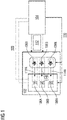
- FIG 1 is a schematic representation of an architectural overview of a reinforcement learning system 100 for determining optimal outcome in a dynamic environment, in accordance with an embodiment of the present invention.
- the reinforcement learning system 100 comprises a server 102 capable of intelligently learning and generating a desired outcome based on feedback from actions performed in a simulation environment 104.
- the reinforcement learning system 100 is configured to generate a plurality of simulation instances of a controller 106.
- Each the plurality of simulation instances comprises an artificial intelligence model 106A-N that is capable of generating an optimal outcome using reinforcement algorithms in conjunction with neuro-evolution algorithms.
- the reinforcement learning system 100 may be deployed in a dynamic environment.
- the dynamic environment refers to environments wherein action space and observation space are highly dynamic and change from time to time.
- system 100 may be employed in heavy industrial environments, manufacturing environments, supply chain management systems, robots and automation systems, autonomous vehicles, gaming environments and other dynamic environments such as traffic environments. It will be appreciated that the teachings of the invention are not limited to aforementioned environments and may be implemented in any dynamic environments having variable inputs and outputs.
- the server 102 is a reinforcement learning agent in communication with controller 106 that generates output control signals 108 for an environment 104 leading to a change of state in the environment 104 based on the output control signal 108. Furthermore, the reinforcement learning agent 102 selects an optimal artificial intelligence model from the plurality of instances of the artificial intelligence models 106A-N of the controller 106. The reinforcement learning agent 102 interacts with the environment 104 and determines actions of each of the instances of the artificial intelligence models 106A-N interacting with the environment 104. In order to interact with the environment, the reinforcement learning agent 102 receives data characterizing a current state of the environment and selects an action to be performed by the controller 106 from a set of actions in response to the received data. Once the action has been selected by the reinforcement learning agent 102, the agent performs the action to interact with the environment 104.
- the agent 102 interacts with the environment 104 in order to complete one or more objectives and the reinforcement learning system 100 selects actions in order to maximize the objectives of the controller 106 for which it is designed.
- the simulation environment 104 analyzes a behavior of each of the instances of the artificial intelligence models 106A-N and outputs the results of the simulation as fitness score 112A-N for each of the instances of the artificial intelligence models 106A-N.
- the fitness scores 112A-N are fed to respective behavior analysis units 106A'-N' that are configured to generate rewards 114A-N for respective instances of artificial intelligence models 106A-N.
- the term "rewards" 114A-N as used herein refers to numerical values that are provided as feedback inputs to the artificial intelligence model 106A-N as metric of performance of the artificial intelligence models 106A-N.
- the reward 114A-N can be positive or negative depending on the performance of the artificial intelligence model 106A-N.
- the behavior analysis units 106A'-N' are capable of generating rewards 114A-N depending on the corresponding fitness values 112A-N as outputted by the simulation environment 104. It will be appreciated that the system 100 is capable of intelligently determining rewards 114A-N over multiple iterations till the objective of the controller 106 is reached using a neuro-evolution technique which is discussed later in the description.
- the output control signal 108 leads to a change of state in the simulation environment 104.
- the next state as achieved by the simulation environment is fed as an input control signal 110 to the controller 106.
- the next state refers to parameters of the simulation environment 104 after the execution of output control signals 108 as implemented in the simulation environment 104.
- the goal in reinforcement learning is to control an agent attempting to maximize a reward which, in the context of a controller, denotes a task that may be defined by a user as to what the controller should try to accomplish.
- Reinforcement learning agent 102 finds the optimal policy or the optimal artificial intelligence model which maximizes the expected sum of rewards from an initial state distribution over a period of time. The reward is based on the reward which is dependent on the task to be accomplished. Accordingly, reinforcement learning seeks to learn an optimal policy for performance of a given task.
- the actions of the artificial intelligence model 106A-N are implemented on a simulation environment 104.
- the simulation environment 104 is capable of simulating one or more actions from a real-world environment and the reinforcement learning agent is configured to explore all possible actions in the simulated environment in order to train the controller to generate an optimal outcome in a real-world environment.
- the simulation environment 104 is a traffic signal controller for controlling traffic signals in a geographical location.
- the output control signal 108 is green time signal at an intersection of roads in a geographical location and the objective of the controller is to choose an optimal artificial intelligence model in order to maximize the green signal time in the geographical location.
- the simulation environment 104 is an autonomous vehicle navigating through an environment.
- the output signal is to generate output control signals 108 for the autonomous vehicles and the objective of the reinforcement learning agent 102 is to reach a destination, ensure the safety of any occupants of the vehicle, minimizing energy used in reaching the destination, maximizing the comfort of the occupants, and so on.
- the simulation environment 104 is to control one or more operations in an industrial set-up.
- the output control signal 108 is to generate control signals for controlling one or more operations of industrial devices in the industrial set-up and the objective of the reinforcement learning is to optimize process in the industrial set-up, determine a sequence of actions to be taken in the industrial set-up, preventing one or more anomalies in the industrial set-up and so forth.
- the server 102 is configured to generate a plurality of simulation instances of a controller.
- each of the plurality of simulation instances comprises an artificial intelligence model capable of performing at least one function of the controller.
- the server 102 is configured to compute a set of weights for respective artificial intelligence models corresponding to each of the plurality of simulation instances.
- the server 102 is configured to configure each of the artificial intelligence models with the respective set of weights.
- the server 102 is configured to simulate a behavior of each of the configured artificial intelligence models in the simulation instances of the controller in a simulation environment.
- the server 102 is configured to analyze results of simulation of the behavior of each configured artificial intelligence models.
- the server 102 is configured to determine an optimal artificial intelligence model from the configured artificial intelligence models corresponding to the plurality of simulation instances based on the analyzed results of simulation.
- FIG 2 illustrates a block diagram of a cloud computing system 200 for determining an optimal outcome in a dynamic environment, in accordance with an embodiment of the present invention.
- the cloud computing system 200 comprises a cloud platform 202 in communication with one or more controllers 204A-N via a communication network.
- Each of the controllers 204A-N comprise an artificial intelligence model for performing the at least one action of respective controllers 204A-N.
- Each of the controllers 204A-N is configured for communicating with the cloud platform 202 via the communication network 208.
- the controllers 204A-N may have an operating system and at least one software program for performing desired operations.
- the controllers 204A-N comprise an artificial intelligence model for performing at least one action of the respective controllers 204A-N.
- Each of the controllers 204A-N are communicatively coupled to respective simulation environments 206A-N.
- the simulation environments 206A-N may be from different areas of application and are capable of generating simulation results for respective controllers 204A-N.
- the cloud platform 202 may be remotely located from the controllers 204A-N and respective simulation environments 206A-N.
- the cloud platform 202 is configured to remotely train the controllers 204A-N and determine optimal artificial intelligence models for corresponding controllers 204A-N.
- the cloud platform 202 can be a cloud infrastructure capable of providing cloud-based services such as data storage services, data analytics services, data visualization services, etc. based on the plant data.
- the cloud platform 202 can be part of public cloud or a private cloud.
- the cloud platform 202 may enable data scientists/software vendors to provide software applications/firmware as a service, thereby eliminating a need for software maintenance, upgrading, and backup by the users.
- the software application can be full application, or software patch.
- the cloud platform 202 is further illustrated in greater detail in FIG 3 .
- the cloud platform 202 comprises an optimal weight determination module 208, a database 210 and a network interface 212.
- the optimal weight determination module 208 is configured to generate a plurality of simulation instances of each of the one or mor controllers 204A-N.
- each of the plurality of simulation instances comprises an artificial intelligence model capable of performing at least one function of the controllers 206A-N.
- the optimal weight determination module 208 is configured to compute a set of weights for respective artificial intelligence models corresponding to each of the plurality of simulation instances.
- the optimal weight determination module 208 is configured to configure each of the artificial intelligence models with the respective set of weights.
- the optimal weight determination module 208 is configured to simulate a behavior of each of the configured artificial intelligence models in the simulation instances of the controller 206A-N in a simulation environment 104.
- the optimal weight determination module 208 is configured to analyze results of simulation of the behavior of each configured artificial intelligence models.
- the optimal weight determination module 208 is configured to determine an optimal artificial intelligence model from the configured artificial intelligence models corresponding to the plurality of simulation instances based on the analyzed results of simulation.
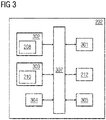
- FIG. 3 illustrates a block diagram of the cloud platform 202 for implementing one or more embodiments of the present invention.
- the cloud platform 202 comprises a processing unit 301, a memory 302, a storage unit 303, a network interface 212, a standard interface or bus 307.
- the cloud platform 202 may be an exemplary embodiment of a system.
- the system 202 can be a (personal) computer, a workstation, a virtual machine running on host hardware, a microcontroller, or an integrated circuit.
- the system 202 can be a real or a virtual group of computers (the technical term for a real group of computers is "cluster", the technical term for a virtual group of computers is "cloud").
- the processing unit 301 means any type of computational circuit, such as, but not limited to, a microprocessor, microcontroller, complex instruction set computing microprocessor, reduced instruction set computing microprocessor, very long instruction word microprocessor, explicitly parallel instruction computing microprocessor, graphics processor, digital signal processor, or any other type of processing circuit.
- the processing unit 301 may also include embedded controllers, such as generic or programmable logic devices or arrays, application specific integrated circuits, single-chip computers, and the like.
- a processing unit 301 can comprise hardware elements and software elements.
- the processing unit 301 can be configured for multithreading, i.e. the processing unit 301 can host different calculation processes at the same time, executing the either in parallel or switching between active and passive calculation processes.
- the memory 302 may be volatile memory and non-volatile memory.
- the memory 302 may be coupled for communication with the processing unit 301.
- the processing unit 301 may execute instructions and/or code stored in the memory 302.
- a variety of computer-readable storage media may be stored in and accessed from the memory 302.
- the memory 302 may include any suitable elements for storing data and machine-readable instructions, such as read only memory, random access memory, erasable programmable read only memory, electrically erasable programmable read only memory, a hard drive, a removable media drive for handling compact disks, digital video disks, diskettes, magnetic tape cartridges, memory cards, and the like.
- the memory 302 includes an optimal weight determination module 208 stored in the form of machine-readable instructions on any of the above-mentioned storage media and may be in communication to and executed by processing unit 301.
- the optimal weight determination module 208 causes the processing unit 301 to determine an optimal output in a dynamic environment.
- the optimal weight determination module 208 may further cause the processing unit 301 to automatically generate rewards for the artificial intelligence model using neuro-evolution technique.
- the storage unit 303 may be a non-transitory storage medium which stores a database 210.
- the database 210 may store output signals of the controller 106, a current state and previous state of the simulation environment 104, and so forth.
- the cloud platform 202 may further comprise an input unit 304 and an output unit 305.
- the input unit 304 may include input devices such as keypad, touch-sensitive display, camera (such as a camera receiving gesture-based inputs), etc. capable of receiving input signals such as inputs for initialization of artificial intelligence models in some cases, inputs for objectives of the controller 106, inputting threshold values for the artificial intelligence model and the like.
- the output unit 305 may be a device with a graphical user interface displaying results of simulation and progress of training of the controller 106 and the like.
- the bus 307 acts as interconnect between the processing unit 301, the memory 302, the storage unit 303, the input unit 304, and the output unit 305.
- FIG 3 may vary for particular implementations.
- peripheral devices such as an optical disk drive and the like, Local Area Network (LAN)/ Wide Area Network (WAN)/ Wireless (e.g., Wi-Fi) adapter, graphics adapter, disk controller, input/output (I/O) adapter also may be used in addition or in place of the hardware depicted.
- LAN Local Area Network
- WAN Wide Area Network
- Wireless Wireless
- graphics adapter disk controller
- I/O input/output
- a system in accordance with an embodiment of the present disclosure includes an operating system employing a graphical user interface.
- the operating system permits multiple display windows to be presented in the graphical user interface simultaneously with each display window providing an interface to a different application or to a different instance of the same application.
- a cursor in the graphical user interface may be manipulated by a user through the pointing device. The position of the cursor may be changed and/or an event such as clicking a mouse button, generated to actuate a desired response.
- One of various commercial operating systems such as a version of Microsoft Windows TM , a product of Microsoft Corporation located in Redmond, Washington may be employed if suitably modified.
- the operating system is modified or created in accordance with the present disclosure as described.
- the present invention is not limited to a particular computer system platform, processing unit, operating system, or network.
- One or more aspects of the present invention may be distributed among one or more computer systems, for example, servers configured to provide one or more services to one or more client computers, or to perform a complete task in a distributed system.
- one or more aspects of the present invention may be performed on a client-server system that comprises components distributed among one or more server systems that perform multiple functions according to various embodiments. These components comprise, for example, executable, intermediate, or interpreted code, which communicate over a network using a communication protocol.
- the present invention is not limited to be executable on any particular system or group of systems, and is not limited to any particular distributed architecture, network, or communication protocol.
- Disclosed embodiments provide systems and methods determining optimal artificial intelligence model in a dynamic environment.
- the systems and methods may train a controller 106 to achieve optimal outcome using reinforcement learning and generating award functions using neuro-evolution techniques.
- FIG 4 illustrates a flowchart 400 depicting steps of a method for determining optimal outcome in a dynamic environment, in accordance with an embodiment of the present invention.
- a plurality of simulation instances of the controller 106 are generated by the processing unit 301.
- each of the plurality of simulation instances comprises an artificial intelligence model 106AN capable of performing at least one function of the controller 106.
- artificial intelligence models 106A-N as used herein refers to any algorithm that can learn a model or a pattern based on existing information or knowledge and predict or estimate output using input of new information or knowledge.
- the artificial intelligence model 106A-N as used herein is not trained using a training dataset as in the conventional machine learning systems.
- the artificial intelligence models 106A-N are subjected to a continuous learning process and subsequent adaption of weights of the artificial intelligence model 106A-N based on the actions performed by the artificial intelligence model 106A-N and a reward that is received as a consequence of the action performed.
- the artificial intelligence models 106A-N are trained using a reinforcement learning technique wherein a sequence of actions of maximized or minimized based on a positive reward or a negative reward respectively.
- Exemplary artificial intelligence models may include deep neural network, convolutional neural networks and the like.
- the artificial intelligence model may be capable of performing specific actions in an environment for which the model is designed to operate.
- the artificial intelligence model 106A-N is designed to generate output traffic signals in traffic environment.
- the objective of the artificial intelligence model is to reduce an average delay time of vehicles at an intersection and to increase the green signal time.
- the artificial intelligence model will continuously learn a sequence of actions to be performed in the traffic environment such that the green signal time is maximized over a period of time.
- the controller 106 comprises an artificial intelligence model to perform a specific function.
- the artificial intelligence model is comprised of several layers such as an input layer, an output layer, and one or more hidden layers that are capable of performing a function.
- Each of the layers of the artificial intelligence model 106A-N is comprised of a plurality of neurons, each having a weight associated therewith.
- the number of layers of the artificial intelligence model and the number of neurons of the artificial intelligence model are designed to configure the artificial intelligence model to perform a specific function.
- the processing unit 301 is configured to generate a plurality of instances of the artificial intelligence model 106A-N.
- the processing unit 301 is configured to generate a number of replicas of the artificial intelligence model 106A-N in such a manner that each of the instance of the artificial intelligence model 106A-N is capable of performing an action of the controller 106 for which the controller 106 is to be deployed for.
- each of the instances of the controller 106 is configured to control lighting in an environment based on the input.
- the efficiency of each of the instance of the controller or the sequence of the actions that are to be performed for adaptive lighting control may vary for each of the instance, or may be same of two or more instances depending on an initial set of weights of each of the plurality of instances.
- a set of weights are computed for respective artificial intelligence models 106A-N corresponding to each of the plurality of simulation instances.
- the weights in an artificial intelligence model define a probability of certain action to be carried out in an environment.
- An initial set of weights is allotted to each of the neurons in each of the plurality of instance of the controller 106.
- the set of weights are randomly generated for each of the plurality of instances of the controller 106.
- the output signal generated from each of the plurality of instances is different.
- each of the artificial intelligence models is configured with the respective set of weights.
- each of the artificial intelligence models 106A-N are configured in accordance with the randomly generated set of weights.
- configuring the artificial intelligence model 106A-N refers to assigning weights to each of the neurons in the artificial intelligence model 106A-N.
- a behavior of each of the configured artificial intelligence models 106A-N in the plurality of instances of the controller is simulated in a simulation environment 104.
- a digital twin or a virtual model of various devices and/or elements in the environment 104 is simulated.
- the virtual model or the simulation model of an environment is capable of simulating one or more functions and/or operations of the one or more elements or participants in the simulation environment 104.
- the simulation environment 104 may have access to all data associated with an environment in which the controller 106 is to be deployed.
- the replication of a real environment to a simulation environment 104 is based on data associated with the environment.
- the simulation environment 104 may be designed movement of autonomous vehicle on rods.
- the data for generating a simulation environment may include an information of roads and maps of the area of operation of the autonomous vehicles, a visual and/or sensory data of other vehicles or objects on the roads, operating parameters of the autonomous vehicles such as speed, direction, acceleration, location of the autonomous vehicle and so forth.
- the simulation environment 104 may be designed for managing products in a supply chain management.
- the data for generating the simulation environment 104 may include information of all the products in different warehouses and in-transit, a condition of each of the products, location and estimated time of each products, and so forth.
- the simulation environment 104 is designed to mimic operations and challenges of real world environment such that the artificial intelligence model learns from the observations in the simulation environment 104 which are subsequently applied in the real-world environment. Furthermore, output signals as generated from each of the instances of the artificial intelligence models are simulated in the simulation environment 104. Each of the elements in the simulation environment 104 will behave in a particular manner when the generated output signal is simulated in the simulation environment 104. The behavioral changes in the simulation environment 104 lead to a change of state in the simulation environment 104. Notably, the simulation environment may react different to each of the instances of the artificial intelligence models 106A-N. In an example, for traffic simulation environment 104, the traffic density at a particular junction may increase for a first instance of the artificial intelligence model, and the traffic density at the particular junction may decrease for a second instance of the artificial intelligence model.
- results of simulation of the behavior of each configured artificial intelligence models 106A-N are analyzed.
- the state of the simulation environment 104 may change for each of the instances of the artificial intelligence models 106A-N, the observation state of the simulation environment 104 for each of the plurality of instances are analyzed.
- the results of the behavior of each of the configured artificial intelligence models 106A-N are observed as change of state in the simulation environment 104.
- the analysis of results of simulation is based on the average delay time at the intersection of roads.
- the results of the analysis determine how well each of the plurality of instances of artificial intelligence models 106A-N has performed in achieving the objective of the controller 104.
- the analysis of the results of simulation of each of the artificial models 106A-N includes automatically generating rewards for each of the instances using behavioral analysis units that is explained in greater detail later in the description.
- an optimal artificial intelligence model is determined from the configured artificial intelligence models 106A-N corresponding to the plurality of simulation instances based on the analyzed results of simulation.
- the results of the analysis of each of the plurality of instances determine how well a particular instance has performed to achieve a certain objective of the controller 106.
- highest performing instance of the configured artificial intelligence model is selected to be the optimal artificial intelligence model.
- the behavior analysis units 106A'-N' are configured to analyze the performance of each of the plurality of instances over multiple iterations and then determine the optimal artificial intelligence model that is explained in greater detail later in the description.
- the optimal artificial intelligence model is selected such that the average green signal time at the intersection is highest, thereby achieving the objective of the traffic signal controller.
- the plurality of instances of the artificial intelligence model 106A-N are generated and simulation in a simulation environment 104.
- the behavior analysis units 106A'-N' are configured to analyze the performance and actions of the corresponding instances of the artificial intelligence model 106A-N based on the results of the simulation.
- the behavior analysis units 106A'-N' are populated to generate new behavior analysis units over multiple iterations, and corresponding instances of the artificial intelligence model 106A-N are generated over multiple iterations.
- Each of the artificial intelligence models 106A-N compete with one another and the highest performing artificial intelligence model is selected when the iterations are terminated.
- Such a method ensures that the observation space or the simulation environment is entirely explored for any situation that might occur in the dynamic environment.
- the controller 106 learns from actions performed therein and is capable of handling unprecedented scenarios that might occur in the dynamic environment.
- the method further comprises deploying the optimal artificial intelligence model in one or more controllers 106 in real-time.
- the determined optimal artificial intelligence model is configured with the optimal set of weights to generate optimal output signals for an environment.
- the selected optimal artificial intelligence models may be deployed in one or more controllers and deployed in real world environment.
- the optimal artificial intelligence model is capable of generating control signals that would optimize the green time signals at the intersections may be deployed in various geographical locations.
- the method further comprises determining one or more parameters from a dynamic environment in real-time.
- the one or more parameters may include state of various elements such as traffic density at the intersection, speed of vehicles, and so forth.
- the method comprises determining an outcome of the controller based on the optimal artificial intelligence model and the determined one or more parameters such that the determined outcome meets an expected outcome or behavior in the dynamic environment.
- the expected outcome or behavior may the green signal time that needs to be maximized at the intersection.
- the optimal artificial intelligence model is deployed in real-time, the outcome of the controller 106 is continuously compared with expected outcome or behavior of the controller 106 to effectively monitor the operations of the controller 106.
- FIG 5 illustrates a flowchart 500 depicting steps of a method of analyzing the results of simulation of the behavior of each artificial intelligence model, in accordance with an embodiment of the present invention.
- the set of behavior analysis units 106A'-N' are configured for analyzing the results of simulation of the behavior of each artificial intelligence model 106A-N using neuro-evolution model.
- the term "neuro-evolution model” as used herein refers to artificial intelligence algorithms that use genetic evolution techniques to select a fittest model from a plurality of models performing an action in a given environment.
- the neuro-evolution models assess a performance of the artificial intelligence model over several iterations or populations and evolve to determine a highest performing model. In general, the neuro-evolution models or genetic algorithms imitate the evolutionary process in genes.
- the fittest From a given population with certain characteristics, the fittest have the highest probability in being transferred to the next generation. In order to explore further favorable characteristics, certain genes are slightly changed. As a starting point, a randomly generated population of behavior analysis units 106A'-N' that will generate rewards 114A-N for the performance of the artificial intelligence models, representing genes, are generated. These behavior analysis units 106A'-N' represent potential solutions to a problem. The degree to which a corresponding artificial intelligence model 106A-N is closer to the expected behavior, is represented by a fitness score. The expected behavior is the optimal outcome of controller 106 for which the artificial intelligence model 106A-N is designed for. The expected behavior is achieved when the objective of the controller 106 is attained.
- the expected behavior for a traffic controller is minimum average delay time at the intersection.
- fitter is the corresponding artificial intelligence model for evolving in subsequent populations of the artificial intelligence models.
- the neuro-evolution models apply operators such as selection, speciation, cross-over and mutation.
- selection operator the likelihood of selecting the fittest model is highest in subsequent populations.
- speciation operator the behavior analysis units 106A'-N' are divided into species based on their topological similarity. This operator improves the diversity of the behavior of the artificial intelligence models 106A-N.
- topologies of two or more behavior analysis units 106A'-N' are combined together in subsequent populations.
- mutation operator the neurons in one or more behavior analysis units 106A'-N' may be eliminated or flipped to generate new species in the next population.
- population may be interchangeably used with the term iteration in this context, as for each new iteration, a new population is generated.
- the algorithm evolves a new generation by applying the selection, cross-over and mutation operators and replacing some/all of the strings in the previous generation with the newly created strings. The number of iterations of this process equals the number of generations. This imitates the genetic process of inheritance.
- the behavior analysis units 106A'-N' are populated that analyze the behavior of each of the artificial intelligence models 106A-N by generating rewards 114A-N.
- the rewards 114A-N are numeric values that are a metric to define how well the corresponding artificial intelligence models 106A-N are performing to achieve an objective of the controller 106.
- Each of the behavior analysis units 106A'-N' is configured to generate the rewards 114A-N indicating the performance of the corresponding artificial intelligence models 106A-N.
- the configuration of the set of behavior analysis units 106A'-N' is done using operators of the neuro-evolution model for each iteration.
- each of the behavior analysis units 106A'-N' is associated with an instance of the artificial intelligence model and is configured to generate rewards 114A-N for the corresponding instance of the artificial intelligence model. Therefore, for each iteration corresponding instances of artificial intelligence models 106A-N are generated corresponding to each behavior analysis units 106A'-N'.
- the results of simulation of the behavior of respective artificial intelligence model 106A-N are analyzed using the configured set of behavior analysis units 106A'-N'.
- the behavior analysis units 106A'-N' receive the results of the simulation of the configured artificial intelligence models 106A-N and evaluate then to output rewards 114A-N for the artificial intelligence models 106A-N.
- the expected behavior is the objective of the controller 106.
- the behavior analysis units 106A'-N' determine whether the artificial intelligence model is performing towards achieving the expected behavior or not, and then generate reward 114A-N based on the analysis.
- the behavior analysis units 106A'-N' will generate positive rewards 114A-N or higher rewards for the corresponding instance of the artificial intelligence models 106A-N.
- a positive action will lead to positive reward for the instance of the artificial intelligence model.
- positive rewards 114A-N are generated when the difference between the result of the simulation and the expected behavior is decreasing.
- the behavior analysis units 106A'-N' will generate negative rewards or lower rewards for the corresponding instance of the artificial intelligence models 106A-N.
- behavior analysis units 106A'-N' that generate positive rewards 114A-N over a series of iterations are favored and corresponding artificial intelligence models 106A-N are evolved to be included in subsequent iterations.
- behavior analysis units 106A'-N' that generate negative rewards 114A-N over a series of iterations are not favored and corresponding artificial intelligence 106AN models are eliminated in subsequent iterations.
- FIG 6 illustrates a flowchart 600 depicting steps of a method of determining an optimal artificial intelligence model from the configured artificial intelligence models, in accordance with an embodiment of the present invention.
- step 602 it is determined whether the behavior of configured artificial intelligence models 106A-N is according to the expected behavior. For a particular iteration, it is determined whether one or more of the instances of the artificial intelligence models 106A-N are in accordance with the expected behavior. The results of simulation of each of the artificial intelligence models 106A-N in an iteration are compared with the expected behavior. If the results from simulation of at least one artificial intelligence model 106A-N meets the expected behavior, then any subsequent iterations are terminated.
- determining a fitness score of the respective behavior analysis units 106A'-N' if the analyzed behavior of configured artificial intelligence models exceeds the expected behavior.
- the fitness score 112A-N is calculated based on the results of the simulation of actions performed by the artificial intelligence models 106A-N in the simulation environment 104. Notably, better the results of the simulation, higher is the value of fitness score of the corresponding instance of the artificial intelligence model 106A-N.
- the behavior analysis unit 106A'-N' with a highest fitness score 112A-N is determined.
- the behavior analysis unit 106A'-N' with the highest fitness score 112A-N is capable of generating accurate rewards 114A-N for the corresponding artificial intelligence model.
- the optimal artificial intelligence model corresponding to the behavior analysis unit with the highest fitness score is determined.
- the artificial intelligence model corresponding to the behavior analysis units 106A'-N' having the highest fitness score is selected for deployment in real-time.
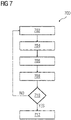
- FIG 7 illustrates a flowchart 700 depicting steps of a method of iteratively determining an optimal artificial intelligence model, in accordance with an embodiment of the present invention.
- a difference between the analyzed behavior and the expected behavior is calculated if the analyzed behavior of the respective artificial intelligence model is not according to the expected behavior.
- the results of simulations are outputted by the simulation environment for each of the instances of artificial intelligence models to determine the analyzed behavior. Further, a comparison is made between the analyzed behavior and the expected behavior of each of the instances of the artificial intelligence models 106A-N. If the analyzed behavior does not meet the expected behavior, then a difference between the expected behavior and analyzed behavior is calculated. The difference determines an offset value of diversion of the artificial intelligence from the expected behavior.
- a new set of weights corresponding to each of artificial intelligence models is computed based on the determined difference.
- the weights of the neurons of the artificial intelligence model are adjusted to a higher value or lower value based on the diversion of the analyzed behavior from the expected behavior.
- each of the artificial intelligence models are configured with respective new set of weights.
- a behavior of each of the configured artificial intelligence models is simulated in the simulation environment. Notably, the simulation environment is re-initialized with new set of weights to determine the behavior of the elements in the simulation environment.
- a decision is made whether the results of the behavior of the simulation with new weights meet the expected behavior or not.
- step 702 is executed till the analyzed behavior of the artificial intelligence model meets the expected behavior. If the analyzed behavior meets the expected behavior, then step 712 is executed to determine the optimal artificial intelligence model. According to an embodiment, further comprises iteratively generating the plurality of simulation instances of a controller 106 based on a number of behavior analysis units 106A'-N' configured using neuro-evolution model at each iteration
- An advantage of the invention is that the training of the controller is carried in a continuous learning manner, wherein the artificial intelligence model is not fed with a limited dataset that limits the capability and efficiency of the artificial intelligence algorithm.
- the controller is capable of exploring unprecedented scenarios in an environment and learn to adapt accordingly.
- controller 106 as trained using reinforcement learning technique is capable of performing equally efficiently in geographically different environments, thereby making the disclosed controller 106 scalable.
- a controller 106 that is trained for generating traffic control signals in a traffic environment is capable of being deployed in any geographical location without tuning the parameters of the artificial intelligence algorithm for that particular location.
- Another advantage of the present invention is automatic generation of rewards for analysis of performance of the artificial intelligence model. Furthermore, the present invention generates optimal rewards and optimal outcomes of the controller 106 in an efficient manner.
Landscapes
- Engineering & Computer Science (AREA)
- Physics & Mathematics (AREA)
- Theoretical Computer Science (AREA)
- Health & Medical Sciences (AREA)
- Artificial Intelligence (AREA)
- Evolutionary Computation (AREA)
- Life Sciences & Earth Sciences (AREA)
- Software Systems (AREA)
- General Physics & Mathematics (AREA)
- Computing Systems (AREA)
- General Health & Medical Sciences (AREA)
- Molecular Biology (AREA)
- Data Mining & Analysis (AREA)
- General Engineering & Computer Science (AREA)
- Computational Linguistics (AREA)
- Mathematical Physics (AREA)
- Biophysics (AREA)
- Biomedical Technology (AREA)
- Computer Vision & Pattern Recognition (AREA)
- Medical Informatics (AREA)
- Automation & Control Theory (AREA)
- Bioinformatics & Cheminformatics (AREA)
- Bioinformatics & Computational Biology (AREA)
- Evolutionary Biology (AREA)
- Physiology (AREA)
- Management, Administration, Business Operations System, And Electronic Commerce (AREA)
Priority Applications (2)
| Application Number | Priority Date | Filing Date | Title |
|---|---|---|---|
| EP20207831.7A EP4002020B1 (fr) | 2020-11-16 | 2020-11-16 | Procédé et système permettant de déterminer un résultat optimal dans un environnement dynamique |
| PCT/EP2021/081666 WO2022101467A1 (fr) | 2020-11-16 | 2021-11-15 | Procédé et système de détermination de résultat optimal dans un environnement dynamique |
Applications Claiming Priority (1)
| Application Number | Priority Date | Filing Date | Title |
|---|---|---|---|
| EP20207831.7A EP4002020B1 (fr) | 2020-11-16 | 2020-11-16 | Procédé et système permettant de déterminer un résultat optimal dans un environnement dynamique |
Publications (3)
| Publication Number | Publication Date |
|---|---|
| EP4002020A1 true EP4002020A1 (fr) | 2022-05-25 |
| EP4002020C0 EP4002020C0 (fr) | 2026-02-25 |
| EP4002020B1 EP4002020B1 (fr) | 2026-02-25 |
Family
ID=73452093
Family Applications (1)
| Application Number | Title | Priority Date | Filing Date |
|---|---|---|---|
| EP20207831.7A Active EP4002020B1 (fr) | 2020-11-16 | 2020-11-16 | Procédé et système permettant de déterminer un résultat optimal dans un environnement dynamique |
Country Status (2)
| Country | Link |
|---|---|
| EP (1) | EP4002020B1 (fr) |
| WO (1) | WO2022101467A1 (fr) |
Citations (3)
| Publication number | Priority date | Publication date | Assignee | Title |
|---|---|---|---|---|
| US20180012137A1 (en) * | 2015-11-24 | 2018-01-11 | The Research Foundation for the State University New York | Approximate value iteration with complex returns by bounding |
| US20190384273A1 (en) * | 2019-07-23 | 2019-12-19 | Lg Electronics Inc. | Artificial intelligence device and method of diagnosing malfunction using operation log and artificial intelligence model |
| US10792810B1 (en) * | 2017-12-14 | 2020-10-06 | Amazon Technologies, Inc. | Artificial intelligence system for learning robotic control policies |
-
2020
- 2020-11-16 EP EP20207831.7A patent/EP4002020B1/fr active Active
-
2021
- 2021-11-15 WO PCT/EP2021/081666 patent/WO2022101467A1/fr not_active Ceased
Patent Citations (3)
| Publication number | Priority date | Publication date | Assignee | Title |
|---|---|---|---|---|
| US20180012137A1 (en) * | 2015-11-24 | 2018-01-11 | The Research Foundation for the State University New York | Approximate value iteration with complex returns by bounding |
| US10792810B1 (en) * | 2017-12-14 | 2020-10-06 | Amazon Technologies, Inc. | Artificial intelligence system for learning robotic control policies |
| US20190384273A1 (en) * | 2019-07-23 | 2019-12-19 | Lg Electronics Inc. | Artificial intelligence device and method of diagnosing malfunction using operation log and artificial intelligence model |
Also Published As
| Publication number | Publication date |
|---|---|
| EP4002020C0 (fr) | 2026-02-25 |
| WO2022101467A1 (fr) | 2022-05-19 |
| EP4002020B1 (fr) | 2026-02-25 |
Similar Documents
| Publication | Publication Date | Title |
|---|---|---|
| US20260017521A1 (en) | Information processing apparatus and information processing method | |
| Agostinelli et al. | From reinforcement learning to deep reinforcement learning: An overview | |
| Duan et al. | Benchmarking deep reinforcement learning for continuous control | |
| Eiben et al. | From evolutionary computation to the evolution of things | |
| Kim et al. | From exploration to control: learning object manipulation skills through novelty search and local adaptation | |
| JP2007504576A (ja) | 人工知能を開発するためのシステム及び方法 | |
| US20220414460A1 (en) | Predictive Modeling of Aircraft Dynamics | |
| CN113614743B (zh) | 用于操控机器人的方法和设备 | |
| EP3938960A1 (fr) | Procédé et système à deux niveaux pour concevoir des systèmes et des simulateurs multi-agents | |
| EP3656513A1 (fr) | Procédé et système de prédiction d'une trajectoire de mouvement d'un robot se déplaçant entre une paire donnée d'emplacements robotiques | |
| Mendonca et al. | Graph-based skill acquisition for reinforcement learning | |
| CN112270398A (zh) | 一种基于基因编程的集群行为学习方法 | |
| CN118690835A (zh) | 一种基于符号回归的离线数据驱动优化方法及装置 | |
| Fountas et al. | Single and multi-objective optimization methodologies in CNC machining | |
| Aoun et al. | Particle swarm optimisation with population size and acceleration coefficients adaptation using hidden Markov model state classification | |
| He et al. | Reinforcement Learning for Multi-Objective Optimization: A Review | |
| EP4002020B1 (fr) | Procédé et système permettant de déterminer un résultat optimal dans un environnement dynamique | |
| Chidambaran et al. | Multi-criteria evolution of neural network topologies: Balancing experience and performance in autonomous systems | |
| CN120126550A (zh) | 一种种群更新方法、装置、设备、介质及产品 | |
| JAVIDI et al. | Research in random parameters of genetic algorithm and its application on TSP and optimization problems | |
| CN118013832A (zh) | 一种人机协同拆卸方法、装置、电子设备及介质 | |
| CN112734286B (zh) | 一种基于多策略深度强化学习的车间调度方法 | |
| Buruzs et al. | Fuzzy cognitive maps and bacterial evolutionary algorithm approach to integrated waste management systems | |
| Huang et al. | Learning to schedule dynamic job-shop problems by graph attention network with reinforcement learning | |
| Meystel | Learning Algorithms Generating Multigranular |
Legal Events
| Date | Code | Title | Description |
|---|---|---|---|
| PUAI | Public reference made under article 153(3) epc to a published international application that has entered the european phase |
Free format text: ORIGINAL CODE: 0009012 |
|
| STAA | Information on the status of an ep patent application or granted ep patent |
Free format text: STATUS: THE APPLICATION HAS BEEN PUBLISHED |
|
| AK | Designated contracting states |
Kind code of ref document: A1 Designated state(s): AL AT BE BG CH CY CZ DE DK EE ES FI FR GB GR HR HU IE IS IT LI LT LU LV MC MK MT NL NO PL PT RO RS SE SI SK SM TR |
|
| STAA | Information on the status of an ep patent application or granted ep patent |
Free format text: STATUS: REQUEST FOR EXAMINATION WAS MADE |
|
| 17P | Request for examination filed |
Effective date: 20221026 |
|
| RBV | Designated contracting states (corrected) |
Designated state(s): AL AT BE BG CH CY CZ DE DK EE ES FI FR GB GR HR HU IE IS IT LI LT LU LV MC MK MT NL NO PL PT RO RS SE SI SK SM TR |
|
| STAA | Information on the status of an ep patent application or granted ep patent |
Free format text: STATUS: EXAMINATION IS IN PROGRESS |
|
| 17Q | First examination report despatched |
Effective date: 20240719 |
|
| GRAP | Despatch of communication of intention to grant a patent |
Free format text: ORIGINAL CODE: EPIDOSNIGR1 |
|
| STAA | Information on the status of an ep patent application or granted ep patent |
Free format text: STATUS: GRANT OF PATENT IS INTENDED |
|
| INTG | Intention to grant announced |
Effective date: 20250923 |
|
| GRAS | Grant fee paid |
Free format text: ORIGINAL CODE: EPIDOSNIGR3 |
|
| GRAA | (expected) grant |
Free format text: ORIGINAL CODE: 0009210 |
|
| STAA | Information on the status of an ep patent application or granted ep patent |
Free format text: STATUS: THE PATENT HAS BEEN GRANTED |
|
| AK | Designated contracting states |
Kind code of ref document: B1 Designated state(s): AL AT BE BG CH CY CZ DE DK EE ES FI FR GB GR HR HU IE IS IT LI LT LU LV MC MK MT NL NO PL PT RO RS SE SI SK SM TR |
|
| REG | Reference to a national code |
Ref country code: CH Ref legal event code: F10 Free format text: ST27 STATUS EVENT CODE: U-0-0-F10-F00 (AS PROVIDED BY THE NATIONAL OFFICE) Effective date: 20260225 Ref country code: GB Ref legal event code: FG4D |
|
| REG | Reference to a national code |
Ref country code: IE Ref legal event code: FG4D |
|
| U01 | Request for unitary effect filed |
Effective date: 20260227 |
|
| U07 | Unitary effect registered |
Designated state(s): AT BE BG DE DK EE FI FR IT LT LU LV MT NL PT RO SE SI Effective date: 20260306 |