EP4002023B1 - Procédé de génération de modèle d'apprentissage, dispositif de génération de modèle d'apprentissage, procédé de commande de la température du fer en fusion dans un haut-fourneau, procédé de guidage de la régulation de la température du fer en fusion dans un haut-fourneau, et procédé de fabrication du fer en fusion - Google Patents
Procédé de génération de modèle d'apprentissage, dispositif de génération de modèle d'apprentissage, procédé de commande de la température du fer en fusion dans un haut-fourneau, procédé de guidage de la régulation de la température du fer en fusion dans un haut-fourneau, et procédé de fabrication du fer en fusion Download PDFInfo
- Publication number
- EP4002023B1 EP4002023B1 EP20844633.6A EP20844633A EP4002023B1 EP 4002023 B1 EP4002023 B1 EP 4002023B1 EP 20844633 A EP20844633 A EP 20844633A EP 4002023 B1 EP4002023 B1 EP 4002023B1
- Authority
- EP
- European Patent Office
- Prior art keywords
- molten iron
- blast furnace
- data
- learning model
- model generation
- Prior art date
- Legal status (The legal status is an assumption and is not a legal conclusion. Google has not performed a legal analysis and makes no representation as to the accuracy of the status listed.)
- Active
Links
Images



Classifications
-
- C—CHEMISTRY; METALLURGY
- C21—METALLURGY OF IRON
- C21B—MANUFACTURE OF IRON OR STEEL
- C21B5/00—Making pig-iron in the blast furnace
- C21B5/006—Automatically controlling the process
-
- G—PHYSICS
- G05—CONTROLLING; REGULATING
- G05B—CONTROL OR REGULATING SYSTEMS IN GENERAL; FUNCTIONAL ELEMENTS OF SUCH SYSTEMS; MONITORING OR TESTING ARRANGEMENTS FOR SUCH SYSTEMS OR ELEMENTS
- G05B13/00—Adaptive control systems, i.e. systems automatically adjusting themselves to have a performance which is optimum according to some preassigned criterion
- G05B13/02—Adaptive control systems, i.e. systems automatically adjusting themselves to have a performance which is optimum according to some preassigned criterion electric
- G05B13/04—Adaptive control systems, i.e. systems automatically adjusting themselves to have a performance which is optimum according to some preassigned criterion electric involving the use of models or simulators
-
- C—CHEMISTRY; METALLURGY
- C21—METALLURGY OF IRON
- C21B—MANUFACTURE OF IRON OR STEEL
- C21B5/00—Making pig-iron in the blast furnace
-
- G—PHYSICS
- G05—CONTROLLING; REGULATING
- G05B—CONTROL OR REGULATING SYSTEMS IN GENERAL; FUNCTIONAL ELEMENTS OF SUCH SYSTEMS; MONITORING OR TESTING ARRANGEMENTS FOR SUCH SYSTEMS OR ELEMENTS
- G05B13/00—Adaptive control systems, i.e. systems automatically adjusting themselves to have a performance which is optimum according to some preassigned criterion
- G05B13/02—Adaptive control systems, i.e. systems automatically adjusting themselves to have a performance which is optimum according to some preassigned criterion electric
- G05B13/0265—Adaptive control systems, i.e. systems automatically adjusting themselves to have a performance which is optimum according to some preassigned criterion electric the criterion being a learning criterion
-
- G—PHYSICS
- G06—COMPUTING OR CALCULATING; COUNTING
- G06N—COMPUTING ARRANGEMENTS BASED ON SPECIFIC COMPUTATIONAL MODELS
- G06N20/00—Machine learning
-
- G—PHYSICS
- G06—COMPUTING OR CALCULATING; COUNTING
- G06N—COMPUTING ARRANGEMENTS BASED ON SPECIFIC COMPUTATIONAL MODELS
- G06N3/00—Computing arrangements based on biological models
- G06N3/02—Neural networks
- G06N3/04—Architecture, e.g. interconnection topology
- G06N3/045—Combinations of networks
-
- G—PHYSICS
- G06—COMPUTING OR CALCULATING; COUNTING
- G06N—COMPUTING ARRANGEMENTS BASED ON SPECIFIC COMPUTATIONAL MODELS
- G06N3/00—Computing arrangements based on biological models
- G06N3/02—Neural networks
- G06N3/04—Architecture, e.g. interconnection topology
- G06N3/0464—Convolutional networks [CNN, ConvNet]
-
- G—PHYSICS
- G06—COMPUTING OR CALCULATING; COUNTING
- G06N—COMPUTING ARRANGEMENTS BASED ON SPECIFIC COMPUTATIONAL MODELS
- G06N3/00—Computing arrangements based on biological models
- G06N3/02—Neural networks
- G06N3/08—Learning methods
-
- G—PHYSICS
- G06—COMPUTING OR CALCULATING; COUNTING
- G06N—COMPUTING ARRANGEMENTS BASED ON SPECIFIC COMPUTATIONAL MODELS
- G06N3/00—Computing arrangements based on biological models
- G06N3/02—Neural networks
- G06N3/08—Learning methods
- G06N3/09—Supervised learning
-
- C—CHEMISTRY; METALLURGY
- C21—METALLURGY OF IRON
- C21B—MANUFACTURE OF IRON OR STEEL
- C21B2300/00—Process aspects
- C21B2300/04—Modeling of the process, e.g. for control purposes; CII
-
- G—PHYSICS
- G06—COMPUTING OR CALCULATING; COUNTING
- G06N—COMPUTING ARRANGEMENTS BASED ON SPECIFIC COMPUTATIONAL MODELS
- G06N3/00—Computing arrangements based on biological models
- G06N3/02—Neural networks
- G06N3/04—Architecture, e.g. interconnection topology
- G06N3/048—Activation functions
Definitions
- the present invention relates to a learning model generation method, a learning model generation device, a molten iron temperature control method for a blast furnace, a molten iron temperature control guidance method for a blast furnace, and a molten iron production method.
- a molten iron temperature is an important management indicator.
- blast furnace operations in recent years have been conducted under conditions of a low coke ratio and a high pulverized coal ratio in order to rationalize raw material and fuel costs, and thus a furnace condition becomes easily unstable. Accordingly, there is a great need for reducing variation in molten iron temperatures.
- various reactions such as coke gasification, and reduction and dissolution of ore occur.
- the heat capacity of the entire process is larger and a time constant for a response to action is longer. Therefore, in order to reduce the variation in the molten iron temperatures, a control rule for the molten iron temperature appropriately considering complex dynamics of a blast furnace is required.
- Patent Literature 1 describes a method for calculating a prediction value of a molten iron temperature using a physical model assuming that a current operational quantity is maintained, while adjusting a gas reduction rate parameter in the physical model so as to be consistent with a furnace top gas composition actually measured, and controlling the molten iron temperature based on the calculated prediction value.
- Patent Literature 2 describes a method for extracting an operation case similar to the current operation condition from past operation cases, calculating a prediction value of a molten iron temperature based on the extracted operation case, and controlling the molten iron temperature based on the calculated prediction value.
- Patent Literature 3 discloses a gripping system, learning device and gripping method of a robot.
- Patent Literature 4 discloses a process for controlling a metallurgical plant for producing steel or aluminum.
- Patent Literature 1 if a disturbance occurs that is difficult to consider in a physical model and difficult to measure online, such as a change in unloading speed (raw material drop rate) or a change in iron content in a raw material, there is a possibility that prediction accuracy of a molten iron temperature may be degraded, and as a result, control accuracy of the molten iron temperature may be degraded.
- the present invention is made in view of the above-described problems and an object of the present invention is to provide a learning model generation method and a learning model generation device that can generate a learning model capable of accurately controlling the state of a process or equipment. Another object of the present invention is to provide a molten iron temperature control method and a molten iron temperature control guidance method for a blast furnace that are capable of accurately controlling a molten iron temperature of the blast furnace. Still another object of the present invention is to provide a molten iron production method capable of producing molten iron in a high yield.
- a learning model generation method includes the steps of: machine learning a behavioral model with which an operator determines an operational quantity of a process or equipment, where input data is image data obtained by converting history data of one or more observable quantities indicating an operation state of a process or equipment; and output data is an operational quantity of a process or equipment determined by the operator based on the history data; and outputting the machine-learned behavioral model.
- the image data represents a two-dimensional image with time arranged on one axis and the history data on another axis.
- the history data of the image data is an image obtained by converting a trend graph of the observable quantities.
- the history data of the image data may be an image obtained by mapping a color and/or a shade of the color to a numerical value of each piece of the history data.
- the input data may be image data within a predetermined continuous certain time section, and the output data is the operational quantity after the certain time section.
- the input data may be image data in which one or more of the observable quantities defined as a control amount after a predetermined time has elapsed after changes of the operational quantities are within a certain range centered on a corresponding target value.
- the image data may include the history data of the operational quantities.
- the learning model generation method may include a step of applying normalization processing to the history data before converting the history data into the image data.
- the behavioral model may be a convolutional neural network.
- a convolutional operation of the convolutional neural network may be performed only in a time axis direction.
- the process is a blast furnace process, the observable quantity including at least one of a molten iron temperature, a tuyere embedment temperature, and a coke ratio, and the operational quantity is an operational quantity with which the molten iron temperature of the blast furnace is controlled.
- the operational quantity may be at least one of a pulverized coal ratio, a blast moisture content, and the coke ratio.
- a learning model generation device is defined in claim 10.
- a molten iron temperature control method for a blast furnace includes the steps of: determining an operational quantity with which a molten iron temperature of a blast furnace is controllable to a target temperature using a behavioral model generated by the learning model generation method according to the present invention, and controlling the blast furnace according to the determined operational quantity.
- a molten iron temperature control guidance method for a blast furnace includes the steps of: determining an operational quantity with which a molten iron temperature for a blast furnace is controllable to a target temperature using a behavioral model generated by the learning model generation method according to the present invention, and providing guidance for changing the operational quantity according to the determined operational quantity.
- a molten iron production method includes the steps of: producing molten iron in a blast furnace, and controlling the molten iron temperature by the method of claims 11 or 12.
- the learning model generation method and the learning model generation device can generate a learning model capable of accurately controlling the state of a process or equipment.
- the molten iron temperature control method and a molten iron temperature control guidance method for a blast furnace according to the present invention can accurately control a molten iron temperature of the blast furnace.
- the molten iron production method according to the present invention can produce molten iron in a high yield.
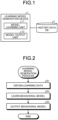
- FIG. 1 a configuration of the learning model generation device that is the embodiment of the present invention will be described.
- FIG. 1 is a block diagram illustrating a configuration of the learning model generation device that is the embodiment of the present invention.
- a learning model generation device 1 that is the embodiment of the present invention is a device configured to generate, by machine learning, a behavioral model by which an operator determines an operational quantity of a process or equipment, and includes a well-known information processing device provided with a processor, a memory, and the like.
- the learning model generation device 1 functions as a model learning unit 11 and a model output unit 12 by causing the processor to execute a computer program. Respective functions of the units are described later.
- the learning model generation device 1 is connected to a history data database (history data DB) 2 in a data-readable form, in which learning data used in machine learning is stored.
- the present embodiment includes the history data DB2, in which image data obtained by converting history data of one or more observable quantities that indicate an operation state of a process to be controlled or an operation state of equipment to be controlled, and the operational quantity of the process or the equipment determined by the operator based on the history data are associated with each other and stored as learning data.
- a form of the image data is two-dimensionally arranged image data of history data of observable quantities with time arranged on one axis and the observable quantities on the other axis, in which one or more observable quantities are arranged along the time axis and in a direction that differs from the time axis.
- History display of each of the observable quantities can be a line diagram like a normal trend graph, or can be a so-called contour diagram, which is an image obtained by mapping a color and/or a shade of the color to a numerical value of each piece of history data.
- the image data may include history data of operational quantities of the process or the equipment.
- the learning model generation device 1 executes learning model generation processing described below to generate, by machine learning, a behavioral model for an operator to determine the operational quantity of the process or the equipment.
- learning model generation processing described below to generate, by machine learning, a behavioral model for an operator to determine the operational quantity of the process or the equipment.
- FIG. 2 the following describes the operation of the learning model generation device 1 when the learning model generation processing is executed.
- FIG. 2 is a flowchart indicating a flow of the learning model generation processing that is the embodiment of the present invention.
- the flowchart in FIG. 2 starts at a timing when a command to execute the learning model generation processing is input to the learning model generation device 1, and the learning model generation processing proceeds to processing at step S1.
- the model learning unit 11 obtains learning data from the history data DB2. This completes the processing at step S1, and the learning model generation processing proceeds to processing at step S2.
- the model learning unit 11 uses the learning data acquired at the processing at step S1, and machine learns a behavioral model with which the operator determines the operational quantity of the process or the equipment, where input data is image data obtained by converting history data of one or more observable quantities indicating the operation state of the process to be controlled or the operation state of the equipment to be controlled, and output data is the operational quantity of the process or the equipment determined by the operator based on the history data.
- the behavioral model generated by machine learning be a convolutional neural network (CNN).
- CNN convolutional neural network
- the input data may be image data in a predetermined continuous certain time section
- the output data may be a value of an operational quantity immediately after the certain time section.
- the learning data it is desirable to use a combination of image data and operational quantities in which one or more the observable quantities defined as a control amount after a predetermined time has elapsed after changes of the operational quantities are within a certain range centered on a corresponding target value.
- the model output unit 12 outputs a behavioral model with which the operator determines the operational quantity of the process or the equipment, where input data is image data obtained by converting the history data of one or more observable quantities that indicate the operation state of the process to be controlled or the operation state of the equipment to be controlled is input data, which was been generated at the processing at step S2, and output data is the operational quantity of the process or the equipment determined by the operator based on the history data.
- the learning model generation device 1 that is the embodiment of the present invention machine learns the behavioral model with which the operator determines the operational quantity of the process or the equipment, where the input data is the image data obtained by converting the history data of one or more observable quantities indicating the operation state of the process to be controlled or the operation state of the equipment to be controlled, and the output data is the operational quantity of the process or the equipment determined by the operator based on the history data, and outputs the machine-learned behavioral model.
- the input data is the image data obtained by converting the history data of one or more observable quantities indicating the operation state of the process to be controlled or the operation state of the equipment to be controlled
- the output data is the operational quantity of the process or the equipment determined by the operator based on the history data
- model learning unit 11 updates the behavioral model by additionally learning the behavioral model using the newly added learning data as additional learning data.
- an action of molten iron temperature control by a skilled operator in a blast furnace process was modeled. Specifically, in the blast furnace process, the operator determines the next action based on process variables indicating the state of the blast furnace, such as the tuyere embedment temperature and gas utilization ratio, and the trend of operation variables over the past several hours. It can be said that such a flow of recognition, judgment, and an action by the operator enables output of an action as the next move, using trend images of the process variables or the operation variables as input variables. Therefore, from the fact that machine learning in recent years has been most proficient at image processing, a CNN, which is a method of deep learning specialized in image processing, was applied to modeling of an action.
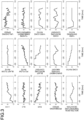
- FIG. 3 illustrates an example of trend data for items that the operator considers when determining an action.
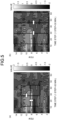
- FIG. 4 illustrates an example of a contour diagram of the same trend data as in FIG. 3 , with time (time steps) on a horizontal axis and items on a vertical axis, the operator does not determine an action by directly viewing such a contour diagram, but by viewing a plurality of pieces of data such as those illustrated in FIG. 3 . Therefore, it is also considered to directly input those pieces of trend data into the CNN, but in the present example, the contour diagram illustrated in FIG. 4 was used as the input data for the CNN.
- the horizontal axis of the contour diagram illustrated in FIG. 4 represents 32 hours of data (64 points), and the vertical axis represents 15 items.
- the CNN uses images with a vertical axis and a horizontal axis homogeneous like a Go board, as input data, and performs convolutional operations in directions of the vertical axis and the horizontal axis as illustrated by arrows in FIG. 5(a) .
- the CNN since items are on the vertical axis of the input image in the present example, it is not particularly meaningful to perform the convolutional operation along the vertical axis direction. Therefore, in the present example, a filter was machine-learned in which convolution is performed only in the time axis direction, which is the horizontal axis direction, as illustrated by arrows in FIG.
- FIG. 6 illustrates a structure of the CNN used.
- Blocks 31 to 37 in FIG. 6 respectively represent a convolution layer (Convolution), a normalized linear unit (Relu), a pooling layer (Pooling), a full combination layer (Affine), a normalized linear unit (Relu), a full combination layer (Affine), and a softmax function (Softmax).
- Numbers in the parentheses in FIG. 6 indicate a size of a data array. For example, (64,15) indicates a two-dimensional array of 64 ⁇ 15.
- the structure of the CNN illustrated in FIG. 6 is an example, and other structures than that illustrated in FIG. 6 may be used.
- a target variable to be predicted by the CNN a model was created to determine actions to control the molten iron temperature in the blast furnace to nearly a target temperature in three stages: raising, lowering, and watching.
- the pulverized coal ratio was used as an operation variable so as to control the molten iron temperature, and operations of raising, lowering, and watching the pulverized coal ratio were used as target variables.
- blast moisture content or a coke ratio may be used as the operation variable.
- the operator actions can include an incorrect action. For this reason, it is desirable to exclude data of the incorrect action in advance as preprocessing.
- FIG. 7(a) illustrates decision probability of the raising action, the lowering action, and the watching action output from the CNN.
- FIG. 7(b) illustrates comparison between a value obtained by subtracting the decision probability of the lowering action from the decision probability of the raising action output from the CNN (solid line: hereafter referred to as the action decision value) and an actual action of the operator (circled dot). As illustrated in FIG. 7(b) , it can be seen that the actual operator actions and the trend of the action decision values are consistent.
- a threshold was set for the action decision value thus obtained, and definition was made in which a value of +0.15 or larger to the threshold was judged as raising, -0.15 or smaller to the threshold as lowering, and other values as watching.
- Comparison between the action decision values (CNN) and the actual operator actions (actual result) is presented in Table 1 below. As presented in Table 1, an agreement rate between the action decision values and the actual operator actions was approximately 65%.
- Table 1 CNN Lowering Watching Raising Actual Result Lowering 28 34 5 Watching 40 261 60 Raising 4 35 32
- FIG. 8 illustrates values of filters 1 to 3 (weight coefficients) of the convolutional layer of the CNN obtained by machine learning as a trend for three hours.
- (a-1), (b-1), and (c-1) indicate changes in the values of the filters 1 to 3 with respect to the time variation of molten iron temperature deviation
- (a-2), (b-2), and (c-2) indicate changes in the values of the filters 1 to 3 with respect to the time variation of the coke ratio
- (a-3), (b-3), and (c-3) indicate changes in the values of the filters 1 to 3 with respect to the time variation of the tuyere embedment temperature.
- the values of the filters 1 and 3 are highly responsive to the tuyere embedment temperature, and as illustrated in FIG. 8 (b-1), the value of the filter 2 is responsive to deviation of the molten iron temperature. Since both the tuyere embedment temperature and the molten iron temperature deviation are information that the operator pays attention, it can be said that this result supports approach to the modeling of the operator action with the CNN.
- this makes it possible, by using the machine-learned model, to determine an operational quantity with which the molten iron temperature of the blast furnace is controllable to the target temperature, and providing a guidance for changing the operational quantity according to the determined operational quantity, to accurately control the molten iron temperature of the blast furnace, resulting in producing the molten iron in a high yield.
- the present invention it is possible to provide a learning model generation method and a learning model generation device that can generate a learning model capable of accurately controlling the state of a process or equipment. Moreover, according to the present invention, it is possible to provide a molten iron temperature control method and a molten iron temperature control guidance method for a blast furnace that are capable of accurately controlling the molten iron temperature of the blast furnace. Furthermore, the present invention provides a molten iron production method that can produce molten iron in a high yield.
Landscapes
- Engineering & Computer Science (AREA)
- Physics & Mathematics (AREA)
- Artificial Intelligence (AREA)
- Theoretical Computer Science (AREA)
- Software Systems (AREA)
- Evolutionary Computation (AREA)
- General Physics & Mathematics (AREA)
- Health & Medical Sciences (AREA)
- Data Mining & Analysis (AREA)
- Mathematical Physics (AREA)
- Computing Systems (AREA)
- General Engineering & Computer Science (AREA)
- Computer Vision & Pattern Recognition (AREA)
- Medical Informatics (AREA)
- Chemical & Material Sciences (AREA)
- Computational Linguistics (AREA)
- Molecular Biology (AREA)
- General Health & Medical Sciences (AREA)
- Biophysics (AREA)
- Biomedical Technology (AREA)
- Life Sciences & Earth Sciences (AREA)
- Automation & Control Theory (AREA)
- Manufacturing & Machinery (AREA)
- Materials Engineering (AREA)
- Metallurgy (AREA)
- Organic Chemistry (AREA)
- Manufacture Of Iron (AREA)
- Feedback Control In General (AREA)
Claims (13)
- Procédé de génération de modèle d'apprentissage comprenant les étapes de :apprentissage automatique d'un modèle comportemental (S2) avec lequel un opérateur détermine une quantité opérationnelle d'un processus ou d'un équipement, où des données d'entrée sont des données d'image obtenues en convertissant des données d'historique d'une ou plusieurs quantités observables indiquant un état de fonctionnement d'un processus ou d'un équipement ;et des données de sortie sont une quantité opérationnelle d'un processus ou d'un équipement déterminée par l'opérateur sur la base des données d'historique ; et livraison en sortie du modèle comportemental appris automatiquement (S3) ; moyennant quoi les données d'image représentent une image bidimensionnelle avec le temps disposé sur un axe et les données d'historique sur un autre axe, dans lequel les données d'historique des données d'image sont une image obtenue en convertissant un graphique de tendance des quantités observables ; et moyennant quoi le processus est un processus de haut fourneau, la quantité observable comporte au moins l'un d'une température de fer en fusion, d'une température d'encastrement de tuyère et d'un rapport de coke, et la quantité opérationnelle est une quantité opérationnelle avec laquelle la température du fer en fusion du haut fourneau est commandée.
- Procédé de génération de modèle d'apprentissage selon la revendication 1, dans lequel les données d'historique des données d'image sont une image obtenue en mettant en correspondance une couleur et/ou une nuance de la couleur avec une valeur numérique de chaque élément des données d'historique.
- Procédé de génération de modèle d'apprentissage selon la revendication 1 ou 2, dans lequel les données d'entrée sont des données d'image dans une certaine section de temps continue prédéterminée, et les données de sortie sont la quantité opérationnelle après la certaine section de temps.
- Procédé de génération de modèle d'apprentissage selon l'une quelconque des revendications 1 à 3, dans lequel les données d'entrée sont des données d'image dans lesquelles l'une ou plusieurs des quantités observables définies en tant que grandeur de commande après qu'un temps prédéterminé s'est écoulé après des changements des quantités opérationnelles se trouvent dans une certaine plage centrée sur une valeur cible correspondante.
- Procédé de génération de modèle d'apprentissage selon l'une quelconque des revendications 1 à 4, dans lequel les données d'image comportent les données d'historique des quantités opérationnelles.
- Procédé de génération de modèle d'apprentissage selon l'une quelconque des revendications 1 à 5, comprenant une étape d'application de traitement de normalisation aux données d'historique avant de convertir les données d'historique en données d'image.
- Procédé de génération de modèle d'apprentissage selon l'une quelconque des revendications 1 à 6, dans lequel le modèle comportemental est un réseau neuronal convolutif.
- Procédé de génération de modèle d'apprentissage selon la revendication 7, dans lequel une opération convolutive du réseau neuronal convolutif est effectuée uniquement dans une direction d'axe temporel.
- Procédé de génération de modèle d'apprentissage selon la revendication 1, dans lequel la quantité opérationnelle est au moins l'un d'un rapport de charbon pulvérisé, d'une teneur en humidité de vent et du rapport de coke.
- Dispositif de génération de modèle d'apprentissage (1) comprenant une unité (11, 12) configurée pour apprendre automatiquement un modèle comportemental avec lequel un opérateur détermine une quantité opérationnelle d'un processus ou d'un équipement, où des données d'entrée sont des données d'image obtenues par imagerie de données d'historique d'une ou plusieurs quantités observables indiquant un état de fonctionnement d'un processus ou d'un équipement, et des données de sortie sont une quantité opérationnelle d'un processus ou d'un équipement déterminée par l'opérateur sur la base des données d'historique, et délivrer en sortie le modèle comportemental appris automatiquement ; caractérisé en ce que les données d'image représentent une image bidimensionnelle avec le temps disposé sur un axe et les données d'historique sur un autre axe, dans lequel les données d'historique des données d'image sont une image obtenue en convertissant un graphique de tendance des quantités observables ; et en ce que le processus est un processus de haut fourneau, la quantité observable comporte au moins l'un d'une température de fer en fusion, d'une température d'encastrement de tuyère et d'un rapport de coke, et la quantité opérationnelle est une quantité opérationnelle avec laquelle la température du fer en fusion du haut fourneau est commandée.
- Procédé de commande de température de fer en fusion pour un haut fourneau, le procédé comprenant les étapes de : génération d'un modèle comportemental par l'un des procédés selon les revendications 1 à 9, détermination d'une quantité opérationnelle avec laquelle une température de fer en fusion d'un haut fourneau peut être commandée jusqu'à une température cible en utilisant le modèle comportemental généré, et commande du haut fourneau selon la quantité opérationnelle déterminée.
- Procédé permettant de guider la commande de température de fer en fusion pour un haut fourneau, le procédé comprenant les étapes de :
génération d'un modèle comportemental par l'un des procédés selon les revendications 1 à 9, détermination d'une quantité opérationnelle avec laquelle une température de fer en fusion d'un haut fourneau peut être commandée jusqu'à une température cible en utilisant le modèle comportemental généré, et fourniture de consignes pour changer la quantité opérationnelle selon la quantité opérationnelle déterminée. - Procédé de production de fer en fusion comprenant les étapes de :
production de fer en fusion dans un haut fourneau, et commande de la température de fer en fusion par le procédé selon les revendications 11 ou 12.
Applications Claiming Priority (2)
| Application Number | Priority Date | Filing Date | Title |
|---|---|---|---|
| JP2019133538A JP6897723B2 (ja) | 2019-07-19 | 2019-07-19 | 学習モデル生成方法、学習モデル生成装置、高炉の溶銑温度制御方法、高炉の溶銑温度制御ガイダンス方法、及び溶銑の製造方法 |
| PCT/JP2020/022126 WO2021014782A1 (fr) | 2019-07-19 | 2020-06-04 | Procédé de génération de modèle d'apprentissage, dispositif de génération de modèle d'apprentissage, procédé de commande de la température du fer en fusion dans un haut-fourneau, procédé de guidage de la régulation de la température du fer en fusion dans un haut-fourneau, et procédé de fabrication du fer en fusion |
Publications (3)
| Publication Number | Publication Date |
|---|---|
| EP4002023A1 EP4002023A1 (fr) | 2022-05-25 |
| EP4002023A4 EP4002023A4 (fr) | 2022-08-24 |
| EP4002023B1 true EP4002023B1 (fr) | 2024-09-25 |
Family
ID=74193755
Family Applications (1)
| Application Number | Title | Priority Date | Filing Date |
|---|---|---|---|
| EP20844633.6A Active EP4002023B1 (fr) | 2019-07-19 | 2020-06-04 | Procédé de génération de modèle d'apprentissage, dispositif de génération de modèle d'apprentissage, procédé de commande de la température du fer en fusion dans un haut-fourneau, procédé de guidage de la régulation de la température du fer en fusion dans un haut-fourneau, et procédé de fabrication du fer en fusion |
Country Status (5)
| Country | Link |
|---|---|
| EP (1) | EP4002023B1 (fr) |
| JP (1) | JP6897723B2 (fr) |
| KR (1) | KR102745513B1 (fr) |
| CN (1) | CN114341879B (fr) |
| WO (1) | WO2021014782A1 (fr) |
Families Citing this family (5)
| Publication number | Priority date | Publication date | Assignee | Title |
|---|---|---|---|---|
| JP7380604B2 (ja) * | 2021-01-12 | 2023-11-15 | Jfeスチール株式会社 | 学習モデル生成方法、学習モデル生成装置、高炉の制御ガイダンス方法、及び溶銑の製造方法 |
| CN113901886B (zh) * | 2021-09-16 | 2024-11-08 | 武汉理工大学 | 一种基于深度学习的铁水测温工序辅助方法及系统 |
| KR20240144969A (ko) * | 2022-03-07 | 2024-10-04 | 제이에프이 스틸 가부시키가이샤 | 고로의 용선 온도 예측 방법, 고로의 용선 온도 예측 모델의 학습 방법, 고로의 조업 방법, 고로의 용선 온도 예측 장치, 용선 온도 예측 시스템 및 단말 장치 |
| CN115130769B (zh) * | 2022-07-07 | 2024-03-01 | 青岛恒小火软件有限公司 | 一种高炉喷煤制粉系统温度智能自适应方法 |
| JP7732553B1 (ja) * | 2024-07-22 | 2025-09-02 | Jfeスチール株式会社 | 高炉のコークス比アクションガイダンス方法、高炉のコークス比アクションガイダンスシステム、高炉制御装置、高炉のコークス比アクションガイダンスプログラム、情報出力装置、高炉の操業方法、及び溶銑の製造方法 |
Family Cites Families (18)
| Publication number | Priority date | Publication date | Assignee | Title |
|---|---|---|---|---|
| JP3210473B2 (ja) * | 1993-03-11 | 2001-09-17 | 株式会社東芝 | ビジュアルフィードバック制御装置 |
| JPH08190407A (ja) * | 1995-01-12 | 1996-07-23 | Sumitomo Metal Ind Ltd | 高炉の操業管理方法及びそのシステム |
| DE19806267A1 (de) * | 1997-11-10 | 1999-05-20 | Siemens Ag | Verfahren und Einrichtung zur Steuerung einer hüttentechnischen Anlage |
| JPH11335710A (ja) | 1998-05-22 | 1999-12-07 | Sumitomo Metal Ind Ltd | 高炉炉熱予測方法 |
| JP4488964B2 (ja) | 2005-06-27 | 2010-06-23 | 新日本製鐵株式会社 | プロセスの操業状態の制御方法及びコンピュータプログラム |
| JP4653715B2 (ja) * | 2006-10-13 | 2011-03-16 | 新日本製鐵株式会社 | プラント操業支援装置、プラント操業支援方法、コンピュータプログラム及び記憶媒体 |
| JP4427074B2 (ja) * | 2007-06-07 | 2010-03-03 | 株式会社日立製作所 | プラントの制御装置 |
| JP6119515B2 (ja) * | 2013-09-02 | 2017-04-26 | 新日鐵住金株式会社 | 高炉羽口状態観察方法及び高炉羽口状態観察装置 |
| JP2018045360A (ja) * | 2016-09-13 | 2018-03-22 | アズビル株式会社 | ヒートマップ表示装置およびヒートマップ表示方法 |
| JP6298562B1 (ja) * | 2017-05-31 | 2018-03-20 | 伸和コントロールズ株式会社 | 状態監視装置、状態監視方法及びプログラム |
| US10755200B2 (en) * | 2017-09-22 | 2020-08-25 | International Business Machines Corporation | Automated control of circumferential variability of blast furnace |
| US10604814B2 (en) * | 2017-09-27 | 2020-03-31 | International Business Machines Coporation | Manufacturing process control with deep learning-based predictive model for hot metal temperature of blast furnace |
| US10997491B2 (en) * | 2017-10-04 | 2021-05-04 | Huawei Technologies Co., Ltd. | Method of prediction of a state of an object in the environment using an action model of a neural network |
| JP6676030B2 (ja) * | 2017-11-20 | 2020-04-08 | 株式会社安川電機 | 把持システム、学習装置、把持方法、及び、モデルの製造方法 |
| KR20190071370A (ko) * | 2017-12-14 | 2019-06-24 | 주식회사 포스코 | 고로의 노열 제어 장치 및 그 방법 |
| KR102075210B1 (ko) * | 2017-12-19 | 2020-02-07 | 주식회사 포스코 | 노황 관리 장치 및 방법 |
| US20190183428A1 (en) * | 2017-12-19 | 2019-06-20 | Hill-Rom Services, Inc. | Method and apparatus for applying machine learning to classify patient movement from load signals |
| JP2019175409A (ja) * | 2018-03-30 | 2019-10-10 | 国立大学法人横浜国立大学 | 水処理施設の運転制御装置及び運転制御方法 |
-
2019
- 2019-07-19 JP JP2019133538A patent/JP6897723B2/ja active Active
-
2020
- 2020-06-04 CN CN202080050757.5A patent/CN114341879B/zh active Active
- 2020-06-04 KR KR1020227000669A patent/KR102745513B1/ko active Active
- 2020-06-04 EP EP20844633.6A patent/EP4002023B1/fr active Active
- 2020-06-04 WO PCT/JP2020/022126 patent/WO2021014782A1/fr not_active Ceased
Also Published As
| Publication number | Publication date |
|---|---|
| EP4002023A1 (fr) | 2022-05-25 |
| KR102745513B1 (ko) | 2024-12-20 |
| CN114341879A (zh) | 2022-04-12 |
| BR112021025958A2 (pt) | 2022-02-08 |
| KR20220024450A (ko) | 2022-03-03 |
| JP6897723B2 (ja) | 2021-07-07 |
| JP2021018569A (ja) | 2021-02-15 |
| CN114341879B (zh) | 2025-05-09 |
| EP4002023A4 (fr) | 2022-08-24 |
| WO2021014782A1 (fr) | 2021-01-28 |
Similar Documents
| Publication | Publication Date | Title |
|---|---|---|
| EP4002023A1 (fr) | Procédé de génération de modèle d'apprentissage, dispositif de génération de modèle d'apprentissage, procédé de commande de la température du fer en fusion dans un haut-fourneau, procédé de guidage de la régulation de la température du fer en fusion dans un haut-fourneau, et procédé de fabrication du fer en fusion | |
| JP6729514B2 (ja) | 溶銑温度予測方法、溶銑温度予測装置、高炉の操業方法、操業ガイダンス装置、溶銑温度制御方法、及び溶銑温度制御装置 | |
| US11803165B2 (en) | Manufacturing support system for predicting property of alloy material, method for generating prediction model, and computer program | |
| JP6292309B2 (ja) | 圧延シミュレーション装置 | |
| CN113234874A (zh) | 一种基于动态贝叶斯网络的高炉故障监测与自愈控制系统 | |
| Trofimov | Automated expert systems in blast-furnace process control | |
| CN118829733A (zh) | 高炉的铁水温度预测方法、高炉的铁水温度预测模型的学习方法、高炉的操作方法、高炉的铁水温度预测装置、铁水温度预测系统及终端装置 | |
| CN115079567A (zh) | 控制装置、控制方法以及记录有控制程序的记录介质 | |
| TWI787954B (zh) | 鋼液溫度預測方法與電腦系統 | |
| WO2018195757A1 (fr) | Procédé et appareil d'estimation de flux de production de ligne de production | |
| JP7380604B2 (ja) | 学習モデル生成方法、学習モデル生成装置、高炉の制御ガイダンス方法、及び溶銑の製造方法 | |
| BR112021025958B1 (pt) | Método de geração de modelo de aprendizagem, dispositivo de geração de modelo de aprendizagem, método de controle de temperatura de ferro fundido para alto-forno, método de orientação de controle de temperatura de ferro fundido para alto-forno e método de produção de ferro fundido | |
| US20220358267A1 (en) | Adapting a production process for components of a component group | |
| JPH0637650B2 (ja) | 高炉送風流量制御方法 | |
| JP6933196B2 (ja) | 高炉の荷下り速度予測モデルの学習方法、高炉の荷下り速度予測方法、高炉の操業ガイダンス方法、高炉の荷下り速度制御方法、溶銑の製造方法、高炉の操業方法、及び高炉の荷下り速度予測モデルの学習装置 | |
| CN120891784B (zh) | 一种基于大模型与布谷鸟算法的磨矿系统控制方法 | |
| JP7779442B1 (ja) | 品質変化要因特定方法、品質変化要因特定装置、品質変化要因特定装置システム及び金属材料の製造方法 | |
| EP4617797A1 (fr) | Dispositif, procédé et programme | |
| JPH0733531B2 (ja) | 高炉々熱制御装置の支援システム | |
| CN120163281A (zh) | 一种高寒区早熟禾的种群动态预测方法及相关装置 | |
| CN122067679A (en) | Oriented electrical steel high-temperature annealing tissue evolution rapid prediction and process reverse design method, system and medium based on cellular automaton and bidirectional consistency deep learning agent model | |
| CN121327360A (zh) | 一种多周期高炉运行过程评价与预测方法及装置 | |
| CN121256216A (zh) | 基于趋势扰动双分支结构的高炉铁水硅预测方法及系统 | |
| CN121421215A (zh) | 一种松散回潮控制方法、装置、设备及存储介质 | |
| JP2026078254A (ja) | 制御装置、制御方法及びプログラム |
Legal Events
| Date | Code | Title | Description |
|---|---|---|---|
| STAA | Information on the status of an ep patent application or granted ep patent |
Free format text: STATUS: THE INTERNATIONAL PUBLICATION HAS BEEN MADE |
|
| PUAI | Public reference made under article 153(3) epc to a published international application that has entered the european phase |
Free format text: ORIGINAL CODE: 0009012 |
|
| STAA | Information on the status of an ep patent application or granted ep patent |
Free format text: STATUS: REQUEST FOR EXAMINATION WAS MADE |
|
| 17P | Request for examination filed |
Effective date: 20220113 |
|
| AK | Designated contracting states |
Kind code of ref document: A1 Designated state(s): AL AT BE BG CH CY CZ DE DK EE ES FI FR GB GR HR HU IE IS IT LI LT LU LV MC MK MT NL NO PL PT RO RS SE SI SK SM TR |
|
| A4 | Supplementary search report drawn up and despatched |
Effective date: 20220726 |
|
| RIC1 | Information provided on ipc code assigned before grant |
Ipc: G05B 13/04 20060101ALI20220720BHEP Ipc: C21B 5/00 20060101ALI20220720BHEP Ipc: G05B 13/02 20060101AFI20220720BHEP |
|
| DAV | Request for validation of the european patent (deleted) | ||
| DAX | Request for extension of the european patent (deleted) | ||
| GRAP | Despatch of communication of intention to grant a patent |
Free format text: ORIGINAL CODE: EPIDOSNIGR1 |
|
| STAA | Information on the status of an ep patent application or granted ep patent |
Free format text: STATUS: GRANT OF PATENT IS INTENDED |
|
| INTG | Intention to grant announced |
Effective date: 20240607 |
|
| GRAS | Grant fee paid |
Free format text: ORIGINAL CODE: EPIDOSNIGR3 |
|
| GRAA | (expected) grant |
Free format text: ORIGINAL CODE: 0009210 |
|
| STAA | Information on the status of an ep patent application or granted ep patent |
Free format text: STATUS: THE PATENT HAS BEEN GRANTED |
|
| AK | Designated contracting states |
Kind code of ref document: B1 Designated state(s): AL AT BE BG CH CY CZ DE DK EE ES FI FR GB GR HR HU IE IS IT LI LT LU LV MC MK MT NL NO PL PT RO RS SE SI SK SM TR |
|
| REG | Reference to a national code |
Ref country code: GB Ref legal event code: FG4D |
|
| REG | Reference to a national code |
Ref country code: CH Ref legal event code: EP |
|
| REG | Reference to a national code |
Ref country code: DE Ref legal event code: R096 Ref document number: 602020038461 Country of ref document: DE |
|
| REG | Reference to a national code |
Ref country code: IE Ref legal event code: FG4D |
|
| REG | Reference to a national code |
Ref country code: LT Ref legal event code: MG9D |
|
| PG25 | Lapsed in a contracting state [announced via postgrant information from national office to epo] |
Ref country code: NO Free format text: LAPSE BECAUSE OF FAILURE TO SUBMIT A TRANSLATION OF THE DESCRIPTION OR TO PAY THE FEE WITHIN THE PRESCRIBED TIME-LIMIT Effective date: 20241225 |
|
| PG25 | Lapsed in a contracting state [announced via postgrant information from national office to epo] |
Ref country code: GR Free format text: LAPSE BECAUSE OF FAILURE TO SUBMIT A TRANSLATION OF THE DESCRIPTION OR TO PAY THE FEE WITHIN THE PRESCRIBED TIME-LIMIT Effective date: 20241226 Ref country code: FI Free format text: LAPSE BECAUSE OF FAILURE TO SUBMIT A TRANSLATION OF THE DESCRIPTION OR TO PAY THE FEE WITHIN THE PRESCRIBED TIME-LIMIT Effective date: 20240925 |
|
| PG25 | Lapsed in a contracting state [announced via postgrant information from national office to epo] |
Ref country code: BG Free format text: LAPSE BECAUSE OF FAILURE TO SUBMIT A TRANSLATION OF THE DESCRIPTION OR TO PAY THE FEE WITHIN THE PRESCRIBED TIME-LIMIT Effective date: 20240925 |
|
| PG25 | Lapsed in a contracting state [announced via postgrant information from national office to epo] |
Ref country code: LV Free format text: LAPSE BECAUSE OF FAILURE TO SUBMIT A TRANSLATION OF THE DESCRIPTION OR TO PAY THE FEE WITHIN THE PRESCRIBED TIME-LIMIT Effective date: 20240925 |
|
| PG25 | Lapsed in a contracting state [announced via postgrant information from national office to epo] |
Ref country code: RS Free format text: LAPSE BECAUSE OF FAILURE TO SUBMIT A TRANSLATION OF THE DESCRIPTION OR TO PAY THE FEE WITHIN THE PRESCRIBED TIME-LIMIT Effective date: 20241225 |
|
| REG | Reference to a national code |
Ref country code: NL Ref legal event code: MP Effective date: 20240925 |
|
| PG25 | Lapsed in a contracting state [announced via postgrant information from national office to epo] |
Ref country code: RS Free format text: LAPSE BECAUSE OF FAILURE TO SUBMIT A TRANSLATION OF THE DESCRIPTION OR TO PAY THE FEE WITHIN THE PRESCRIBED TIME-LIMIT Effective date: 20241225 Ref country code: NO Free format text: LAPSE BECAUSE OF FAILURE TO SUBMIT A TRANSLATION OF THE DESCRIPTION OR TO PAY THE FEE WITHIN THE PRESCRIBED TIME-LIMIT Effective date: 20241225 Ref country code: LV Free format text: LAPSE BECAUSE OF FAILURE TO SUBMIT A TRANSLATION OF THE DESCRIPTION OR TO PAY THE FEE WITHIN THE PRESCRIBED TIME-LIMIT Effective date: 20240925 Ref country code: GR Free format text: LAPSE BECAUSE OF FAILURE TO SUBMIT A TRANSLATION OF THE DESCRIPTION OR TO PAY THE FEE WITHIN THE PRESCRIBED TIME-LIMIT Effective date: 20241226 Ref country code: FI Free format text: LAPSE BECAUSE OF FAILURE TO SUBMIT A TRANSLATION OF THE DESCRIPTION OR TO PAY THE FEE WITHIN THE PRESCRIBED TIME-LIMIT Effective date: 20240925 Ref country code: BG Free format text: LAPSE BECAUSE OF FAILURE TO SUBMIT A TRANSLATION OF THE DESCRIPTION OR TO PAY THE FEE WITHIN THE PRESCRIBED TIME-LIMIT Effective date: 20240925 |
|
| REG | Reference to a national code |
Ref country code: AT Ref legal event code: MK05 Ref document number: 1727153 Country of ref document: AT Kind code of ref document: T Effective date: 20240925 |
|
| PG25 | Lapsed in a contracting state [announced via postgrant information from national office to epo] |
Ref country code: NL Free format text: LAPSE BECAUSE OF FAILURE TO SUBMIT A TRANSLATION OF THE DESCRIPTION OR TO PAY THE FEE WITHIN THE PRESCRIBED TIME-LIMIT Effective date: 20240925 |
|
| PG25 | Lapsed in a contracting state [announced via postgrant information from national office to epo] |
Ref country code: PT Free format text: LAPSE BECAUSE OF FAILURE TO SUBMIT A TRANSLATION OF THE DESCRIPTION OR TO PAY THE FEE WITHIN THE PRESCRIBED TIME-LIMIT Effective date: 20250127 Ref country code: IS Free format text: LAPSE BECAUSE OF FAILURE TO SUBMIT A TRANSLATION OF THE DESCRIPTION OR TO PAY THE FEE WITHIN THE PRESCRIBED TIME-LIMIT Effective date: 20250125 |
|
| PG25 | Lapsed in a contracting state [announced via postgrant information from national office to epo] |
Ref country code: RO Free format text: LAPSE BECAUSE OF FAILURE TO SUBMIT A TRANSLATION OF THE DESCRIPTION OR TO PAY THE FEE WITHIN THE PRESCRIBED TIME-LIMIT Effective date: 20240925 Ref country code: SM Free format text: LAPSE BECAUSE OF FAILURE TO SUBMIT A TRANSLATION OF THE DESCRIPTION OR TO PAY THE FEE WITHIN THE PRESCRIBED TIME-LIMIT Effective date: 20240925 |
|
| PG25 | Lapsed in a contracting state [announced via postgrant information from national office to epo] |
Ref country code: ES Free format text: LAPSE BECAUSE OF FAILURE TO SUBMIT A TRANSLATION OF THE DESCRIPTION OR TO PAY THE FEE WITHIN THE PRESCRIBED TIME-LIMIT Effective date: 20240925 |
|
| PG25 | Lapsed in a contracting state [announced via postgrant information from national office to epo] |
Ref country code: EE Free format text: LAPSE BECAUSE OF FAILURE TO SUBMIT A TRANSLATION OF THE DESCRIPTION OR TO PAY THE FEE WITHIN THE PRESCRIBED TIME-LIMIT Effective date: 20240925 Ref country code: AT Free format text: LAPSE BECAUSE OF FAILURE TO SUBMIT A TRANSLATION OF THE DESCRIPTION OR TO PAY THE FEE WITHIN THE PRESCRIBED TIME-LIMIT Effective date: 20240925 |
|
| PG25 | Lapsed in a contracting state [announced via postgrant information from national office to epo] |
Ref country code: PL Free format text: LAPSE BECAUSE OF FAILURE TO SUBMIT A TRANSLATION OF THE DESCRIPTION OR TO PAY THE FEE WITHIN THE PRESCRIBED TIME-LIMIT Effective date: 20240925 Ref country code: CZ Free format text: LAPSE BECAUSE OF FAILURE TO SUBMIT A TRANSLATION OF THE DESCRIPTION OR TO PAY THE FEE WITHIN THE PRESCRIBED TIME-LIMIT Effective date: 20240925 |
|
| PG25 | Lapsed in a contracting state [announced via postgrant information from national office to epo] |
Ref country code: IT Free format text: LAPSE BECAUSE OF FAILURE TO SUBMIT A TRANSLATION OF THE DESCRIPTION OR TO PAY THE FEE WITHIN THE PRESCRIBED TIME-LIMIT Effective date: 20240925 Ref country code: SK Free format text: LAPSE BECAUSE OF FAILURE TO SUBMIT A TRANSLATION OF THE DESCRIPTION OR TO PAY THE FEE WITHIN THE PRESCRIBED TIME-LIMIT Effective date: 20240925 |
|
| REG | Reference to a national code |
Ref country code: DE Ref legal event code: R097 Ref document number: 602020038461 Country of ref document: DE |
|
| PG25 | Lapsed in a contracting state [announced via postgrant information from national office to epo] |
Ref country code: DK Free format text: LAPSE BECAUSE OF FAILURE TO SUBMIT A TRANSLATION OF THE DESCRIPTION OR TO PAY THE FEE WITHIN THE PRESCRIBED TIME-LIMIT Effective date: 20240925 |
|
| PGFP | Annual fee paid to national office [announced via postgrant information from national office to epo] |
Ref country code: FR Payment date: 20250611 Year of fee payment: 6 |
|
| PGFP | Annual fee paid to national office [announced via postgrant information from national office to epo] |
Ref country code: TR Payment date: 20250530 Year of fee payment: 6 |
|
| PLBE | No opposition filed within time limit |
Free format text: ORIGINAL CODE: 0009261 |
|
| STAA | Information on the status of an ep patent application or granted ep patent |
Free format text: STATUS: NO OPPOSITION FILED WITHIN TIME LIMIT |
|
| 26N | No opposition filed |
Effective date: 20250626 |
|
| PG25 | Lapsed in a contracting state [announced via postgrant information from national office to epo] |
Ref country code: SE Free format text: LAPSE BECAUSE OF FAILURE TO SUBMIT A TRANSLATION OF THE DESCRIPTION OR TO PAY THE FEE WITHIN THE PRESCRIBED TIME-LIMIT Effective date: 20240925 |
|
| REG | Reference to a national code |
Ref country code: DE Ref legal event code: R119 Ref document number: 602020038461 Country of ref document: DE |
|
| PG25 | Lapsed in a contracting state [announced via postgrant information from national office to epo] |
Ref country code: HR Free format text: LAPSE BECAUSE OF FAILURE TO SUBMIT A TRANSLATION OF THE DESCRIPTION OR TO PAY THE FEE WITHIN THE PRESCRIBED TIME-LIMIT Effective date: 20240925 |
|
| REG | Reference to a national code |
Ref country code: CH Ref legal event code: H13 Free format text: ST27 STATUS EVENT CODE: U-0-0-H10-H13 (AS PROVIDED BY THE NATIONAL OFFICE) Effective date: 20260127 |
|
| PG25 | Lapsed in a contracting state [announced via postgrant information from national office to epo] |
Ref country code: MC Free format text: LAPSE BECAUSE OF FAILURE TO SUBMIT A TRANSLATION OF THE DESCRIPTION OR TO PAY THE FEE WITHIN THE PRESCRIBED TIME-LIMIT Effective date: 20240925 |
|
| PG25 | Lapsed in a contracting state [announced via postgrant information from national office to epo] |
Ref country code: LU Free format text: LAPSE BECAUSE OF NON-PAYMENT OF DUE FEES Effective date: 20250604 |
|
| GBPC | Gb: european patent ceased through non-payment of renewal fee |
Effective date: 20250604 |
|
| REG | Reference to a national code |
Ref country code: BE Ref legal event code: MM Effective date: 20250630 |
|
| PG25 | Lapsed in a contracting state [announced via postgrant information from national office to epo] |
Ref country code: GB Free format text: LAPSE BECAUSE OF NON-PAYMENT OF DUE FEES Effective date: 20250604 |
|
| PG25 | Lapsed in a contracting state [announced via postgrant information from national office to epo] |
Ref country code: IE Free format text: LAPSE BECAUSE OF NON-PAYMENT OF DUE FEES Effective date: 20250604 Ref country code: DE Free format text: LAPSE BECAUSE OF NON-PAYMENT OF DUE FEES Effective date: 20260101 |
|
| PG25 | Lapsed in a contracting state [announced via postgrant information from national office to epo] |
Ref country code: BE Free format text: LAPSE BECAUSE OF NON-PAYMENT OF DUE FEES Effective date: 20250630 |
|
| PG25 | Lapsed in a contracting state [announced via postgrant information from national office to epo] |
Ref country code: CH Free format text: LAPSE BECAUSE OF NON-PAYMENT OF DUE FEES Effective date: 20250630 |